Feeds:
Posts
Comments

Posts Tagged ‘new york’

Here’s an unusual approach to art. Christopher Bollen at Interview magazine has the story.

“Since 2005, the 41-year-old [Marie] Lorenz has been navigating New York Harbor in her handmade plywood-and-fiberglass boat, taking friends, artists, and willing participants on nautical odysseys of the city’s rivers and islands.

“The project, Tide and Current Taxi … has its roots in multiple artistic practices — from traditional Romantic seascape and marine painting to more radical iterations of performance art …

“It helps that the Brooklyn-based artist, who could command a boat by the age of 6, is an adventurer at heart — the kind of avant-garde pioneer more often found on Manhattan’s dry land than in its surrounding waters. Lorenz has extensive knowledge of the city’s waterways. ‘When I got to New York, I realized that the tides were significant,’ she says. …

“Lorenz uses the tides like a motor to propel her boat, as well as the time-trusted manual labor of paddling. She usually sits at the stern, with passengers facing forward at the bow and in the middle.  …

“The boat trips themselves are often captured on video by a waterproof digital camera fixed to a metal pole jutting up from the stern. The camera’s eye is in the position of fellow traveler or a Charon-like ferryman through the derelict metropolis. Perhaps what is most arresting about her work is the way it destabilizes our usual perception of the city itself — specifically the hypnotic rocking of the Manhattan skyline.

” ‘You usually see the city on solid ground,’ Lorenz says. ‘I think when you’re floating, you see differently, your vision expands. You get to see the city from an in-between zone.’ ”

More here.

Sebastian Kim

Read Full Post »

Washington-Sq-is-where-I-came-inWashington Square, New York City

Random photos from my travels.

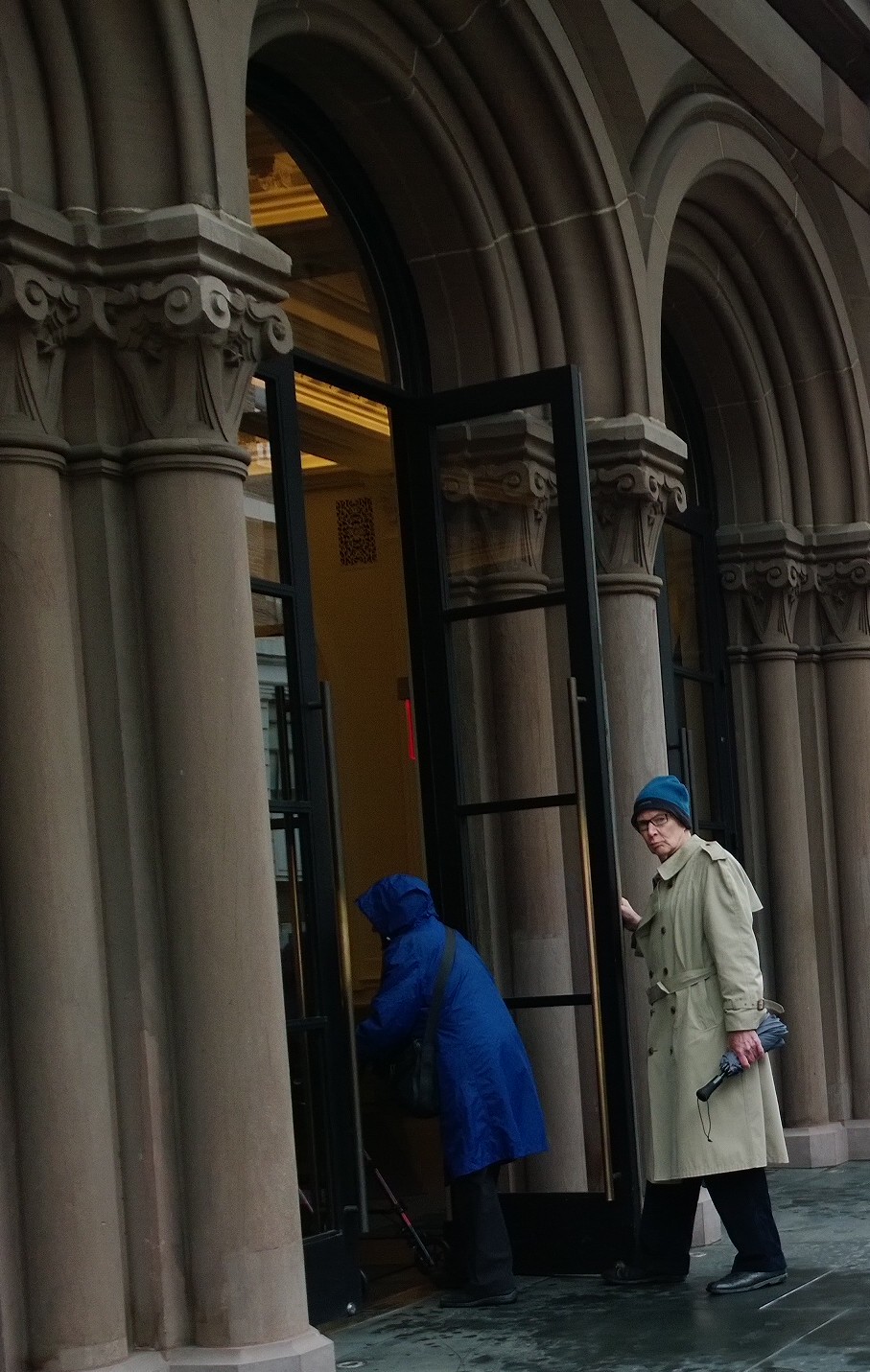
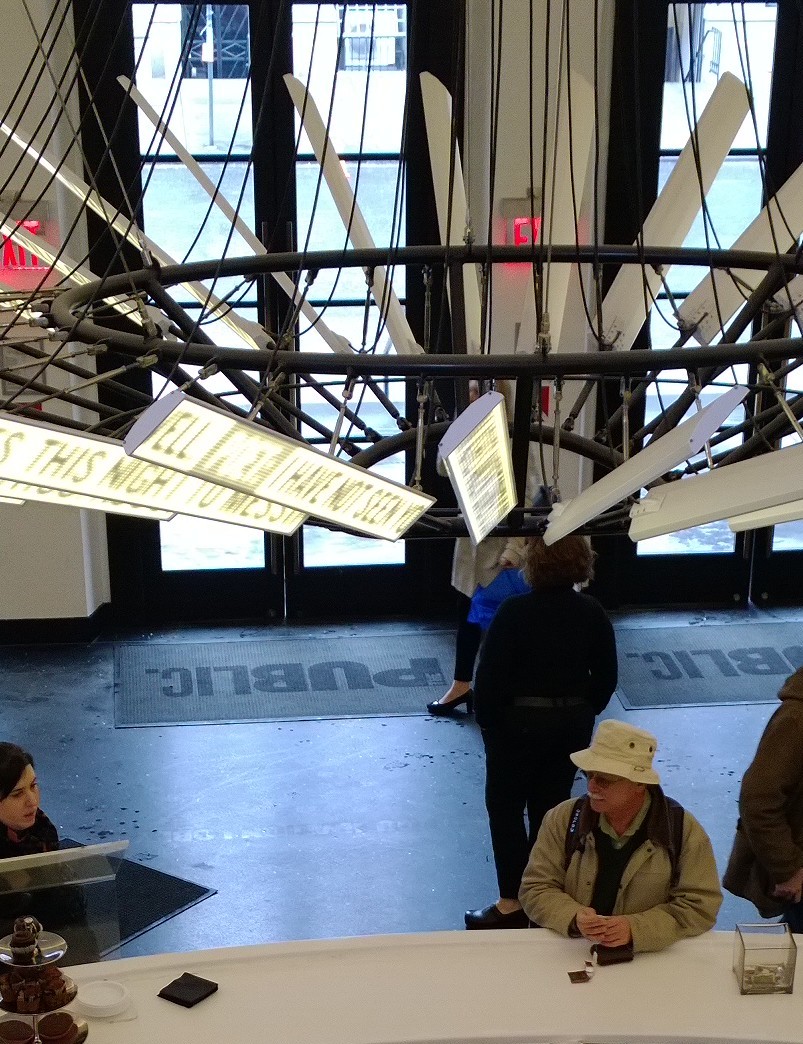
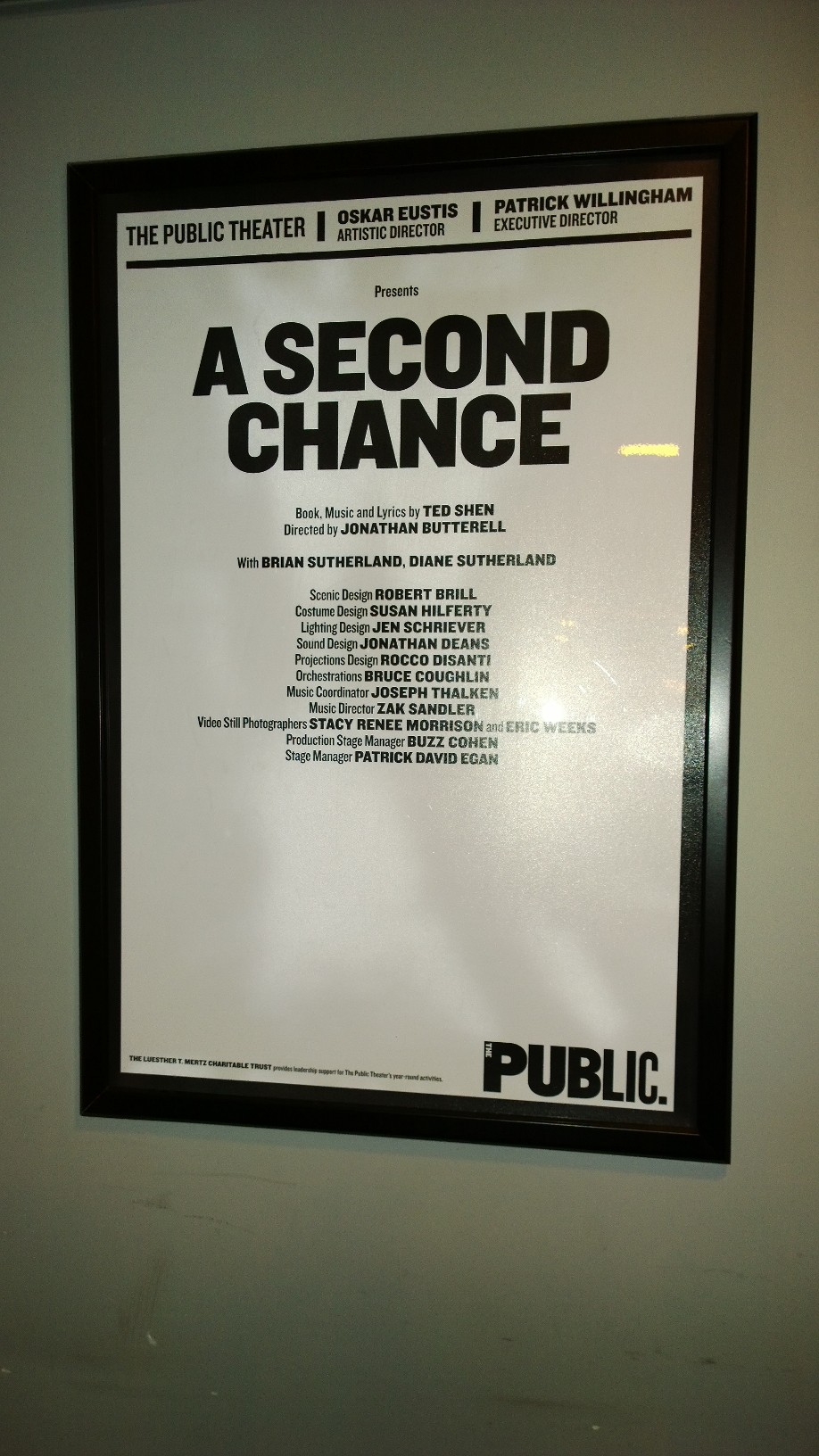
My husband going into the Public Theater to see classmate Ted Shen’s musical, A Second Chance. The Playbill for the show. A delightful chandelier at the Public, with paddles that illuminate changing phrases.

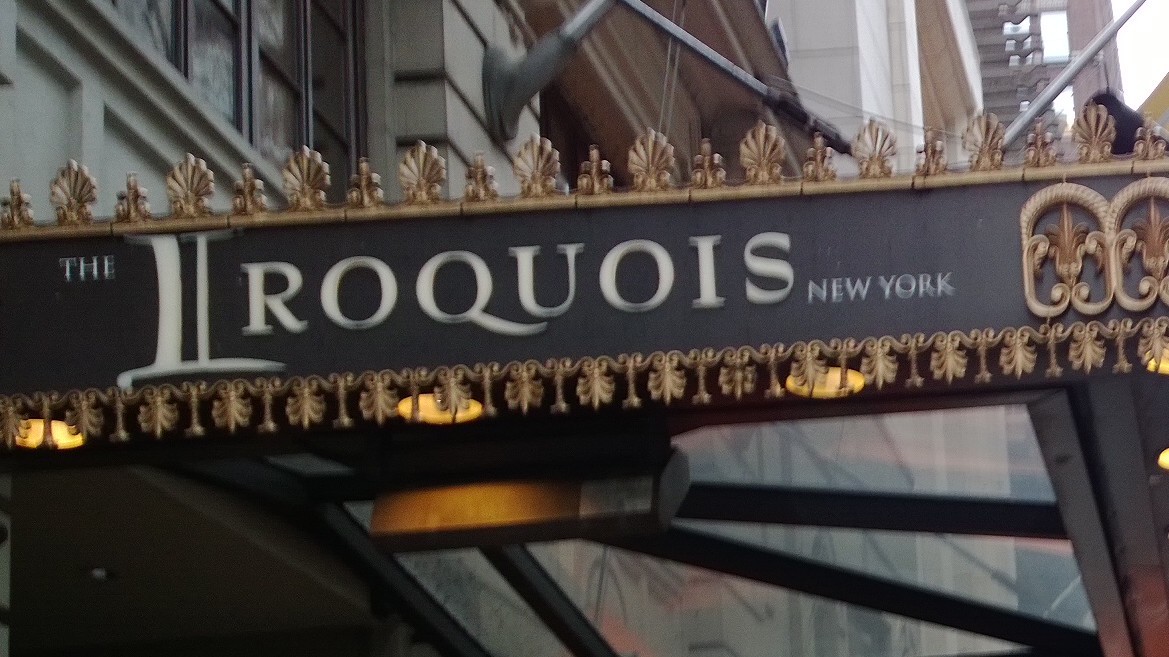
Subway buskers playing a grandson’s favorite song, “When the Saints Go Marchin’ In.” Grand Central Station. The charming Iroquois Hotel. A flower-themed mosaic in the Lexington Ave. subway.

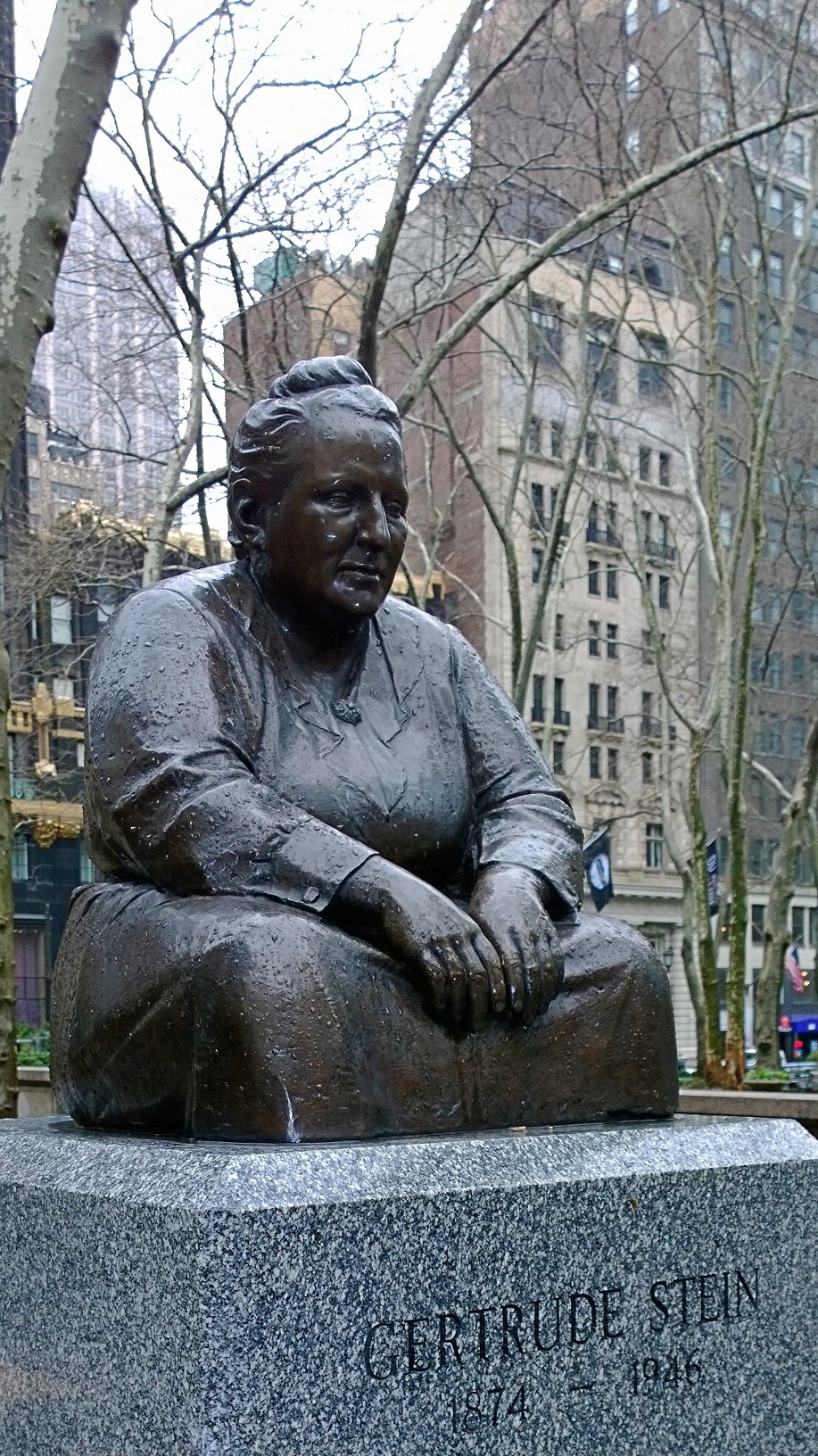
Gertrude Stein looking like herself in Bryant Park. And the Metropolitan Museum, where we saw a great photography show with my sister and brother-in-law. More on that later.

(Be watching for the relaunch of the Luna & Stella website, where one of the family pictures is of my sister at age 3, pictured with Suzanne’s maternal grandfather. … Did I mention this is a blog for Suzanne’s birthstone-jewelry company Luna & Stella?)

Public-Theater_NYC

Ted-Shen-Second-Chance-Playbill


The-Public_has-cool-chandelier

When-the-saints-go-marching-in


Grand-Central-NYC

Iroquois-hotel-treats-guests-right


Lex-Av-Subway-NYC

Met-Museum-NYC


Gertrude-Stein-Bryant-Park


Read Full Post »

Ted-Shen-Second-Chance-at-PublicWe went down to New York this weekend to see my husband’s classmate’s new musical.

Ted Shen wrote the book, lyrics, and music to A Second Chance, a lovely little cameo about a widower and a divorcee. The title refers to new beginnings for two people, but it’s hard for my husband and me not to think of new careers, too, since Shen was an investment banker for 30 years before turning to music so seriously.

At TheaterMania, where a couple of old reviews I wrote are still archived, Shen describes how he began to develop his musical after Stephen Sondheim gave him encouragement.

And he explains his style. “In my role as composer, my preference has been to emphasize the use of ‘action songs’ that show the characters interacting with each other and conversing primarily through lyrics rather than pure spoken dialog, and to limit the use of ‘introspection songs’ that stop the action to express feelings and inner thoughts. I have attempted to create a contemporary musical ‘language’ that is jazz-inflected rather than written in today’s predominant pop-based genre.’ ” More at TheaterMania.

Oskar Eustis, the artistic director of the Public Theater, where the show is being performed, says that Shen “has written some of the most elegant and sophisticated music I have heard in theater in many a moon.”

While in New York, we also saw the musical A Gentleman’s Guide to Love and Murder (based on the movie Kind Hearts and Coronets). It was pure Broadway fun, and we laughed a lot. But A Second Chance gave us more to talk about after.

Consider checking out the site for the Shen Family Foundation, here, which “concentrates its grant-making in the area of musical theater through its funding support of works of exceptionally gifted and highly original musical theater composers.”

Photo: Suzanne‘s Dad reconnects with his classmate decades after business school and asks him to sign a Playbill.

032914-John-and-Ted-Shen-at-Public-Theater

Read Full Post »

Kai the World Traveler and Titan of Industry knows the kind of story that catches my eye. He sent me this one from the New York Times about a street artist who spoofs Banksy, Tom Hanks, and a lot else.

John Leland writes, “This is a story about art in the age of social media

“In April 2011, a law school dropout in Bushwick, Brooklyn, newly arrived from the Midwest, had an idea that he thought might make a splash. He admired the street artist Banksy; he grew up on the movies of Tom Hanks. Why not mash up the two?

“Using simple computer software, he downloaded a Banksy painting of a rat holding a paint roller, then added an image of Mr. Hanks’s face. The whole thing took 10 or 15 minutes to create. He printed a cutout and pasted it on a wall at Mulberry and Kenmare Streets in Little Italy, signing it Hanksy.

“He photographed the wall for his Instagram and Twitter accounts, and emailed it to the Wooster Collective, a popular street art website. Then he went to sleep.

“ ‘And then it just went viral,’ Hanksy said the other day

“RJ Rushmore, who runs the street art blog Vandalog, said he was among many who initially dismissed Hanksy as an opportunist. ‘I thought it was not art, not brilliant, just taking the stupidest ideas and presenting them in ways that were very friendly for Tumblr and Instagram,’ Mr. Rushmore said. ‘It’s not art in the sense of a graffiti writer who spent 15 years developing his style.’

“Mr. Rushmore has since warmed to Hanksy, for comic relief in a scene that sometimes gets too serious. ‘He makes the best cat videos,’ he said. ‘That’s still something to be applauded.’

“Ellen Lupton, senior curator of contemporary design at the Smithsonian’s Cooper-Hewitt, National Design Museum, said more was at stake in Hanksy’s visual gags.

“ ‘It’s more than a pun,’ she said. ‘Banksy’s work is hypermasculine and serious about its underground, tough, outlaw image. And Tom Hanks is just not that guy. So the humor is putting that identity on this hyper-butch material. It’s the revenge of the nerd.’ ” More.

Photo: Nicole Bengiveno/The New York Times
Street artist Hanksy merged Banksy’s famous rat with Tom Hanks.

Read Full Post »

Of the various articles written recently about the elderly Koreans hanging out in a McDonald’s in Queens, the one I liked best and learned the most from was Michael Kimmelman’s at the NY Times. He asks an intriguing question.

“Why that McDonald’s?

“The kerfuffle started when word spread that the police were repeatedly evicting elderly Korean patrons from a McDonald’s in Queens. The Koreans have been milking their stays over $1.09 coffees, violating the restaurant’s 20-minute dining limit. The news made headlines as far away as Seoul. Last week, Ron Kim, a New York State assemblyman, brokered a détente: The restaurant promised not to call the police if the Koreans made room during crowded peak hours.

“Still, the question remains. The McDonald’s at issue occupies the corner of Parsons and Northern Boulevards, in Flushing. A Burger King is two blocks away. There are scores of fast-food outlets, bakeries and cafes near Main Street, a half-mile away

“So, in the vein of the urban sociologist William H. Whyte, who helped design better cities by watching how people use spaces, I spent some time in Flushing. What I found reinforced basic lessons about architecture, street life and aging neighborhoods.” Read it all.

My key takeaways: older people, especially those with canes, think two blocks from home is OK, but not four; elderly people like picture windows and a busy street corner with a constantly changing scene; they like looking in to see if people like them are inside (the McDonald’s on Main Street has older Chinese, not Koreans); they like little nooks where a group can gather comfortably.

As a longtime booster of walkable communities, I find it all makes perfect sense. If such naturally occurring communities continue to appear, perhaps they should be encouraged, with some kind of compensation for the business owner. What if the city redirected some money for senior programs to a business that provided space in downtimes? Crazy?

My husband frequents a coffee shop group where folks hang out but not all day. That group has had its differences with the proprietor, goodness knows. There ought to be ways to make everyone happy.

Photo: Damon Winter/The New York Times
Picture windows, lively traffic and easy access for the elderly: the McDonald’s at Northern and Parsons Boulevards in Queens.

Read Full Post »

On Saturday we watched the documentary Urbanized, about urban planning.

Although there were many discouraging notes (Mumbai slums, Beijing smog, destructive construction in Stuttgart), there were enough positive ones to give hope.

I liked the grassroots gardening efforts in Detroit, pedestrian/bike paths in Bogota (while cars were relegated to mud), miraculous transformations of aging infrastructure (the High Line in Manhattan), lighted paths in Cape Town, and bicycle commuting in Copenhagen.

The point was made that walkability (one of my favorite topics, as readers know) and similar quality-of-life improvements in cities can be hugely beneficial to the planet just because cities are so big and changes there affect so many people.

Doug Foy, who helped get Boston Harbor cleaned up and now consults with New York City’s Mayor Bloomberg, has spoken at my workplace a few times. He likes to talk about how New York avoided buying a whole new water supply simply by partnering with plumbers unions to get standard toilets gradually replaced with low-flush toilets.

Read Full Post »

In case you missed it (ICYMI, as they say on twitter), National Public Radio had a delightful story about Irish Jews last weekend:

“St. Patrick’s Day in New York now means parades and green beer. But 50 years ago, it also meant green matzo balls at the annual banquet of the Loyal League of Yiddish Sons of Erin. The league was a fraternal organization of Irish-born Jews.

“The major migration of Jews to Ireland started in the 1880s and ’90s, says Hasia Diner, who teaches history and Judaic studies at New York University. Thousands moved [to Ireland], primarily from Lithuania. …

” ‘Then the Irish Jews, as Jews historically did, they went to where there were better economic opportunities,’ Diner says.

“A lot of Irish Jews found those opportunities in New York. Like many immigrant groups, they kept their culture alive in the New World. And in the early 1960s, they formed the Yiddish Sons of Erin.

“According to member Rosalyn Klein, the whole thing started as a joke. … A restaurant took out a newspaper ad for a meeting of Irish Jews. Klein thinks they didn’t really expect people, but a lot of them showed up.

” ‘And most of them had lived in Dublin, so it was kind of this mishpocha getting together again,’ she says.”

For many years after, a big Jewish St. Patrick’s Day celebration was held in New York and was de rigeur for politicians and celebrities.

More here.

Photo: SmittenKitchen.com.
This is a normal matzo ball. I couldn’t find a green one.

Read Full Post »

Gregg, an inventor who works with John, tweeted today about a mega toy fair in New York City. (He didn’t say if he and John have any skin in the game, although I know that at least one toy is among their recent techy projects.)

Dante D’Orazio describes the trade show at The Verge (a website that covers “the intersection of technology, science, art, and culture”).

“Toy Fair isn’t what you would expect. The New York-based toy trade show is the largest in the Western hemisphere — it had nearly 30,000 attendees last year — but there are no children. Hundreds of thousands of square feet are dedicated to the things children love, like action figures, dolls, model cars, board games, arts and crafts, sports equipment, and video games, but there’s a strict rule: no admittance to anyone under 18 years of age. …

“The tech world has affected these toy companies greatly. We saw the beginnings of it last year, but at Toy Fair 2013 the largest companies are all integrating iPads and iPhones in some way into their product lines. Entire toys built around iPads were very popular; we saw everything from an iPad-enabled farm set for pre-schoolers to a magic Barbie mirror that takes advantage of Apple’s tablet. It’s no longer just ‘batteries not included’ — you’ll need to buy an iPad if you want to play with some of these toys.”

More.

Photographs: The Verge, which offers a lush array of toy fair pictures, here. Of course, not all toys need to be high tech to attract kids.

Read Full Post »

I liked a Nov. 19 editorial in the NY Times: “Day Laborers, Helping Hands.” It shows that attitudes about immigration can be affected by circumstances.

“About 50 or so people gathered outside a storm-ruined taco restaurant on Saturday morning in Coney Island, on a backstreet behind the Boardwalk near the Wonder Wheel. They were day laborers, Hispanic men and women who have been spending weekends as a volunteer brigade, helping other people chip away at the mountains of debris and accepting nothing in return except work gloves, face masks and safety information cards from the Occupational Safety and Health Administration. They came from all over the region, including a day labor hiring center in Bensonhurst, Brooklyn, that Hurricane Sandy had washed away.

“It’s not unusual to find day laborers looking for work after a disaster. What was striking was the warmth and gratitude they found. They even had an official welcome, from the local state assemblyman, Alec Brook-Krasny, and two City Council members — Domenic Recchia Jr. of Coney Island and Vincent Gentile of Bensonhurst.

“They thanked everyone for coming and pledged to get the Bensonhurst work center open again. A man from the laborers’ union gave a safety lecture. …  ‘We are all New Yorkers,’ said Mr. Recchia, who had brought a box of masks. An observer used to the anti-Latino screeds of politicians on Long Island, a few miles east, marveled at the sense of community — the feeling that after a disaster, immigration status didn’t matter, only a willingness to help.”

Although I took this photo in downtown Boston, the union mural seemed fitting, suggesting the importance of keeping fairness in mind after the crisis has passed.

Read Full Post »

I recently saw a National Geographic special about money and the central bank. The documentary took viewers into the vault at the NY Fed, where gold bars are stored. Although the security is really tight, anyone may sign up for a tour there. The film also went to places where cameras are usually not allowed, like the National Bureau of Engraving and Printing, which prints dollar bills.

It also went to offices deep underground in the gold and diamond district of New York City. I thought Suzanne would be interested to see the broker who buys gold. Being in the jewelry business with Luna & Stella, she naturally is aware that gold has been expensive since the economic downturn. The film showed the multilingual broker buying small bags of gold objects, which were then shown being melted down and made into a gold bar.

National Geographic has also blogged about the movie: “What Jake Ward of Popular Science magazine discovers in this one hour special is that without the engines that power the world’s financial systems, that world would grind to a halt.

America’s Money Vault follows 55 million dollars worth of gold as it makes its way down into the most valuable gold vault in the world. Hidden deep under the streets of New York City, hundreds of billion dollars in gold bars  …

“Jake goes behind the storefronts to see how everybody from the street level to the brokers make their money buying, selling and even finding gold. He meets Onikwa Thomas who calls himself the urban miner and claims to earn up to four hundred dollars a week off of gold specks found in the cracks of sidewalks.”  More from the documentary.

P.S. Speaking of Luna & Stella, Suzanne’s birthstone jewelry company, gold vermeil angel wings can make a lovely gift for the right person.

Photograph: National Geographic

Read Full Post »

Many flowering trees are early this year. I associate lilacs with Mother’s Day, the Lilac Festival in Rochester, New York, and Lilac Sunday at the Arnold Arboretum in Boston — events that occur May 13 this year. But here we are in April, and lilacs are delicious everywhere.

The unusually dark red of the Japanese Maple at Dunkin Donuts is hard to capture on film. But as amazing as the color is, even more amazing is the tree’s comeback after March’s unseasonal heat and frost blasted the first leaves to brown. I was sure that was it for this year, but the leaves are richer than ever.

Read Full Post »

I was interested in an article in today’s NY Times about a school that gives chronically failing students another chance. It succeeds against all odds, but success is a slow process. New York’s mayor is not a fan, because many kids take six years to graduate.

Aniah McAllister, once a lost and wandering soul, has one of the happier stories. Reporter Michael Powell writes that she seems amazed to have earned 46 credits and to be headed to college.

“ ‘This school made realize,’ she says, ‘that I am much better than I thought I was.’

“That’s a pretty fair bottom line for any school,” writes Powell, “although in the up-is-down world of public education in New York, it might just be an epitaph for this small marvel of a high school. Known as a transfer high school, Bushwick Community admits only those teenagers who have failed elsewhere. Most students enter at age 17 or 18, and most have fewer than 10 credits.

“You can muck around quite a bit trying to find someone who has walked the school’s corridors, talked to its students and faculty, and come away unmoved. Most sound like Kathleen M. Cashin, a member of the State Board of Regents and a former superintendent. ‘They care for the neediest with love and rigor,’ she said. ‘They are a tribute to public education.’ ”

Read the article. I’m hoping it will have an influence on the policymakers and let an initiative that sounds so positive keep going.

Aniah McAllister, left, Justin Soto and Kassandra Barrientos attend Bushwick Community High School. Photograph: Kirsten Luce, NY Times

Read Full Post »

I was chatting with a colleague in the washroom today, asking what she was doing this weekend, and she said she was going to New York to cheer for her brother in the marathon. She also mentioned in a proud but modest way that there was an article about him in today’s NY Times. We went and looked for the article, and I realized I had already read it word for word.

What an unusual brother! Kevin Dwyer decided as a child to be a dancer and had a ballet career, all while suffering from cystic fibrosis. The youngest in a family of seven children, he was the fourth to have CF. He didn’t tell people.

Although he and his siblings have a mutation of the disease that means it is not as severe as for many, it takes a real toll. Nevertheless, this weekend Kevin is running a marathon. His aim is to raise money for Team Boomer (started by the retired quarterback Boomer Esiason),  which funds much-needed CF research.

The NY Times writes that Kevin has “chronicled [his marathon training] in a lively blog, Kevin Running. When he goes out this Sunday, he will have lung capacity of 58 to 60 percent.

“ ‘I can beat this, in one little way,’ he said. ‘For at least one day, I can beat it. We’ve trained at 11-minute miles, but I think we will go kind of slow, maybe 11:45 or 12 minutes, so I can take everything in. Take everybody in. Make it a celebration.’ ” Read more.

I highly recommend chatting with colleagues in the washroom. I have learned so much that way!

P.S. Kevin was on the Early Show the next day.

Read Full Post »

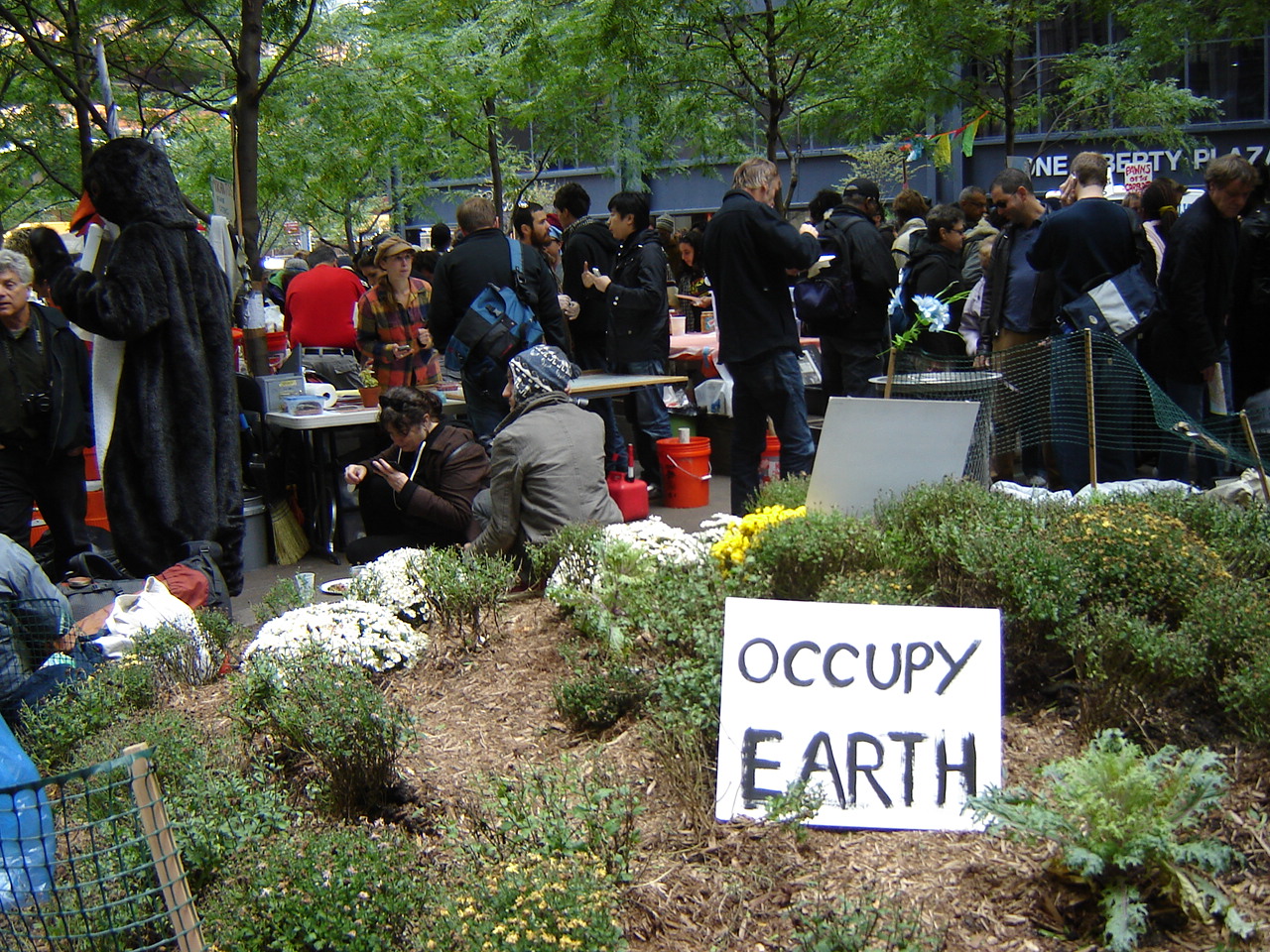
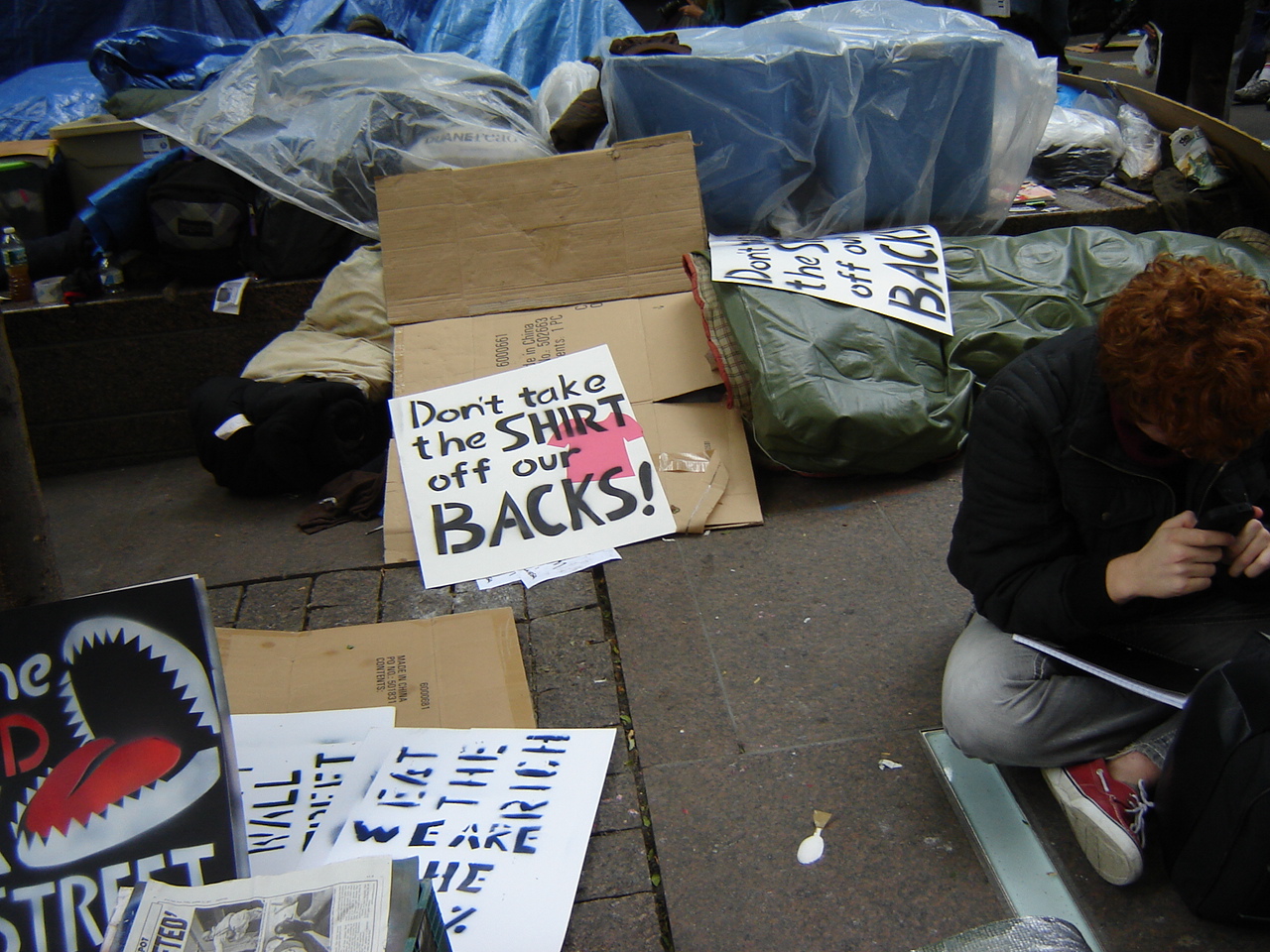
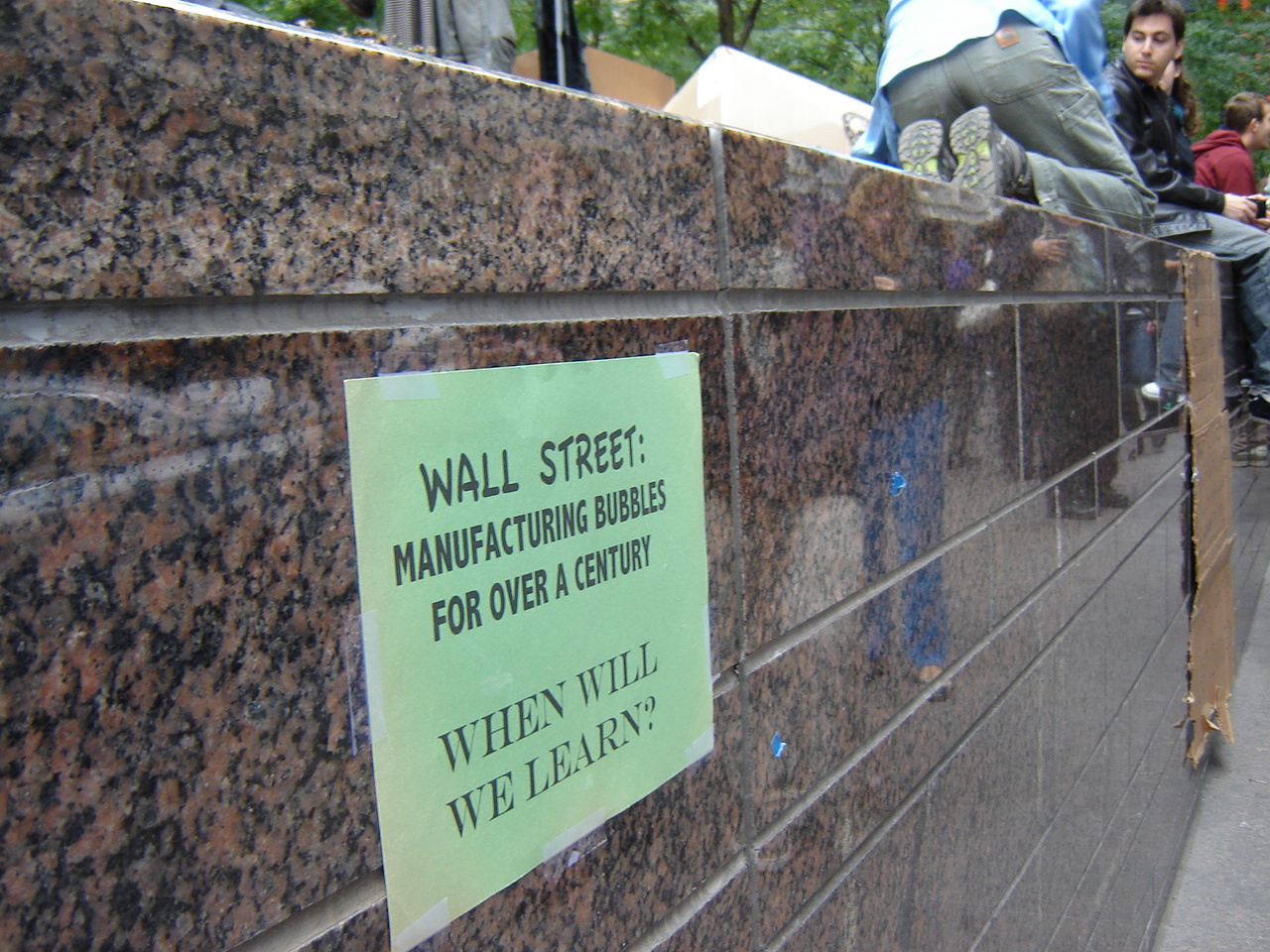
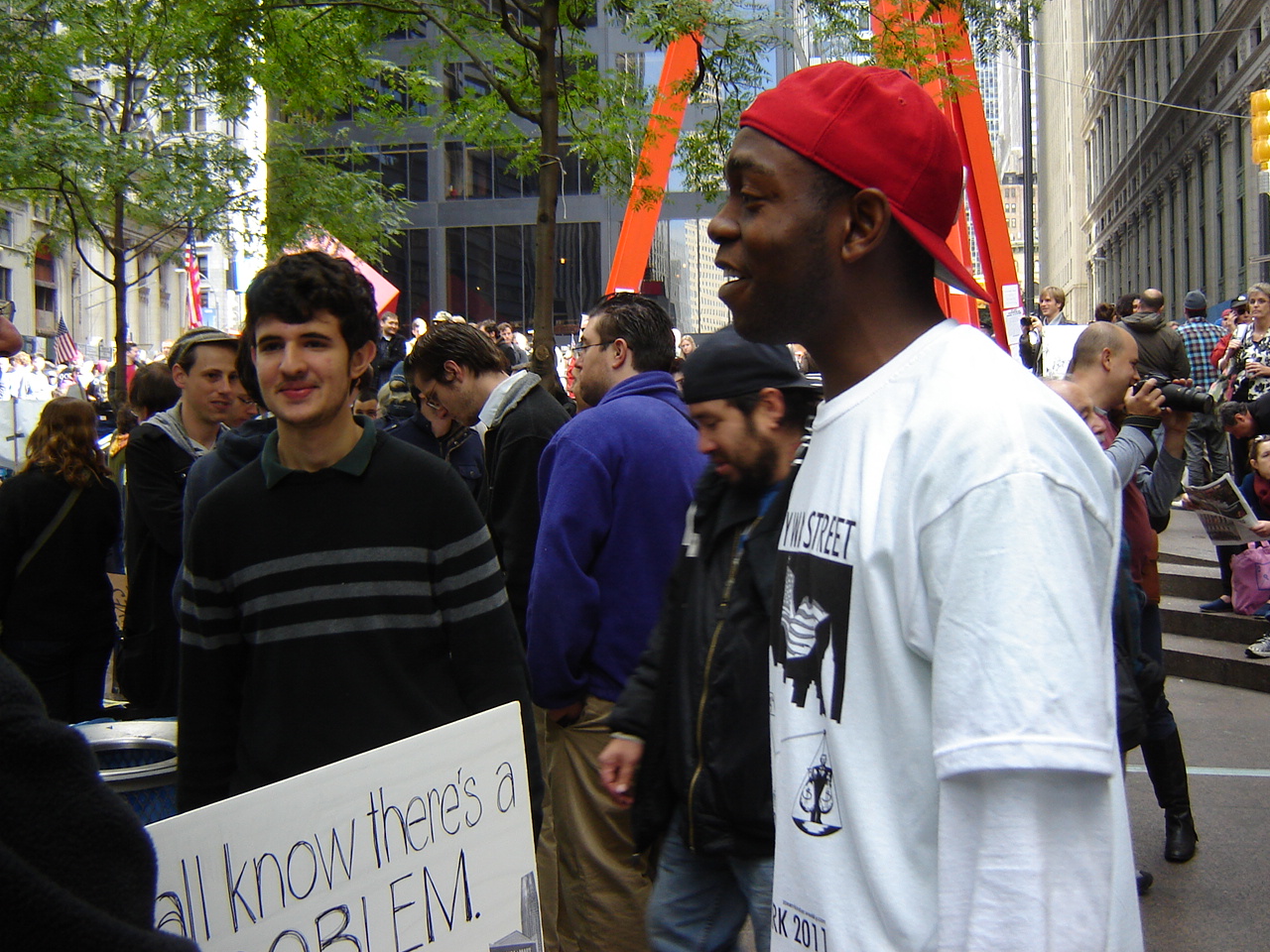
I couldn’t resist the pull of Occupy Wall Street yesterday, and I think that was true for most of the tourists in the Ground Zero area.

Everyone had a camera out, and most occupiers were taking advantage of being on display by holding up signs for their causes or handing out flyers. Souvenir buttons were on sale.  A brass band whooped it up. Both occupiers and visitors danced.

I got to thinking about the documentary I saw in September on how to start a revolution. The movie was about the work of 80-something Gene Sharp, an influential exponent nonviolent ways to overthrow despotic regimes. (See my blog entry here.) After the screening, I listened to Sharp as he answered audience questions. One thing he said was that he believed the uprising in China’s Tiananmen Square in 1989 failed because the organizers were winging it and didn’t have an adequate plan for next steps.

Today’s Occupiers also seem to be winging it. But they are not aiming to overthrow the government, and I’m not sure it matters that a central theme has yet to stand out. I’m willing to wait and see what emerges. In the meantime, here are pictures from Saturday.


Read Full Post »

I’m in Harlem this weekend with five other family members in a leafy neighborhood, mostly very quiet.

Well, not always quiet in the middle of the night when, on more than one occasion, I’ve woken up wondering, “Should I be calling 911?” Fortunately, last night’s commotion didn’t seem like a true 911 issue. Her: “Don’t touch me! Don’t touch me! Don’t touch me!” Him: “But I love you!”

I went back to sleep.

Margareta and Jimmy, mostly recovered from the jetlag caused by a long flight from Sweden on Wednesday, spent Friday afternoon wandering around Chelsea art galleries.

They got a kick out of taking the bus back north, watching as the mostly white clientele became the mostly black clientele, observing the people interactions, and trying to understand the rapid English conversations. (Of course, like most Swedes, they are great at English, and a whole bunch of other languages.)

Margareta was fascinated by one episode that took place as the bus approached Harlem. A boy of about 10 tried to sneak on behind his friend. It seemed that he did not have the bus pass that is routine for New York school children. Margareta was impressed that the driver was not too stern and just told him to have the pass next time. Meanwhile a woman on the bus, possibly from his school, told the boy not to worry, that the school would help him get a new pass.

A day in the life.

Read Full Post »

« Newer Posts - Older Posts »