Feeds:
Posts
Comments

Posts Tagged ‘ocean’

Image: Wallenius Wilhelmsen Logistics
Wallenius Wilhelmsen Logistics scooped two Singapore Environmental Achievement Awards for sustainability.

In The Sea Around Us, Rachel Carson suggested that Earth’s oceans might be too vast for humans to completely ruin. At least that’s what I remember, but I was only 14 when I tried to tackle the grown-up books on my new school’s summer reading list.

I wonder what Carson would say now, given that increased carbon dioxide is damaging reefs and many sea creatures.

She might also be concerned about shipping, but as Hannah Koh reports at Eco-Business, sustainable practices are starting to appear.

“Despite being in an industry that is predisposed towards environmental degradation, Swedish-Norwegian shipping company Wallenius Wilhelmsen Logistics (WWL) has not let the circumstances define it.

“The company has been proactively putting in place measures to reduce sea and airborne pollutant emissions and set up an international coalition to champion the enforcement of sulphur emission regulations – critical to minimising the impact of the shipping industry.

“Its initiatives impressed the judges of the Singapore Environmental Achievement Awards – which aims to increase the level of awareness and adoption of good environmental approaches within organisations, held by the non-profit Singapore Environment Council – that WWL won the SEC-CDL Outstanding Singapore Environmental Achievement Award and the SEC-MPA Singapore Environmental Achievement Award (Maritime).

“Speaking to Future Ready Singapore in a phone interview, WWL’s head of sustainability Anna Larsson shares that the company’s award-winning approach to sustainability is guided by a combination of its long-term vision as well as immediate-term targets.

“Having and acting on a sustainable vision for the future has reaped rewards for WWL, from saving costs to staff retention, and prepares WWL for the future of the shipping industry today, which challenges companies to balance their bottom lines against their environmental impacts. …

“Ship operators today are under pressure to clean up their act, especially after the United Nations shipping agency ruled in October 2016 to implement a global sulphur cap of 0.5 per cent by 2020. …

“Experts have estimated that this will cost the industry some US$35 to $40 billion alone for the container shipping industry, at a time when the shipping industry is suffering its worst downturn ever.” More here.

Gotta love those Swedes for biting the bullet!

Read Full Post »


Photo: We Believers

Here’s some good news from Elyse Wanshel at the Huffington Post. It seems that there is an alternative to the plastic six-pack rings that endanger sea turtles and other marine life when trash gets into the ocean.

Saltwater Brewery in Delray Beach, Florida, has created edible six-pack rings that feed, rather than kill, marine life if the rings end up in the ocean and an animal happens to eat it. The rings are created from beer by-products during the brewing process such as barley and wheat and are completely safe for humans and fish to eat. The rings are also 100 percent biodegradable and compostable, which just ups the product’s sustainability game. …

“The only drawback is that edible six-pack rings are more expensive to produce. But the company hopes that customers will be willing to pay a little more in order to help the environment and animal life. …

“The Ocean Conservancy’s 2015 Ocean Trash Index — which enlisted 561,895 volunteers to pick up 16,186,759 pounds of garbage — also offers a few staggering facts. It cites plastic as among the most common trash item ingested by sea turtles in 2015. Volunteers found 57 marine mammals, 440 fish and 22 sharks, skates and sting rays entangled in plastic. The index also explains that littering isn’t the sole culprit for plastic in the ocean. Plastic can also be blown by the wind from a trashcan or dump, end up in a storm drain and then travel through pipes into the ocean. Facts like these makes a concept like edible six-pack rings seem vital.

“ ‘We hope to influence the big guys,’ Chris Goves, Saltwater Brewery’s president, said. ‘And hopefully inspire them to get on board.’ ” More here.

If more breweries join up, the cost to create the rings would go down. Sounds like a worthy idea for a little consumer pressure.

Read Full Post »

Video: PBS NewsHour

Not long ago, Julia Griffin of PBS NewsHour interviewed an artist who has turned plastic trash into sculptures with a message.

“JULIA GRIFFIN: Octavia the octopus, Priscilla the parrot fish, and Flash the marlin, all sculptures now on display at Smithsonian’s National Zoo in Washington, D.C., and all made of trash pulled from the Pacific Ocean. …

“Angela Haseltine Pozzi is the lead artist and executive director of Washed Ashore, a nonprofit seeking to educate the public on the plastics polluting the word’s oceans.

“ANGELA HASELTINE POZZI: We create sculptures that can teach people about the problem. And, as an artist, it is a real challenge to use everything that comes up off the beach.

“JULIA GRIFFIN: In six years, Haseltine Pozzi and her team of volunteers have created 66 sculptures from more than 38,000 pounds of debris collected from a stretch of Oregon’s coastline.

“The countless bottle caps, flip-flops and beach toys are just a fraction of the more than 315 billion pounds of plastic estimated to be in the world’s oceans.

“Such plastics not only pose entanglement threats to Marine animals, but are often mistaken for food. …

“JULIA GRIFFIN: As scientists debate how to clean the water, Haseltine Pozzi hopes her sculptures will inspire visitors to curb pollution in the first place.”

The exhibit can be seen at the zoo until September 16, 2016. More at PBS here. Check out the Smithsonian’s site, too.

Photo: Smithsonian

Read Full Post »

There’s just one thing you probably can’t figure out from this picture story: what the guys are singing …

“All my exes live in Texas/ It’s why I hang my hat in Tennessee.”

160803_-Blues-on-Block

080316-Truck-Stop-Troubadors


080316-crowd-at-beach-concert

080316-beach-picnic


080316-dancing-on-beach

Read Full Post »

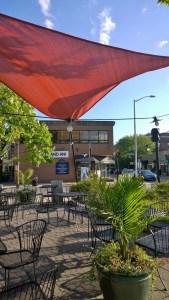
The first two photos today are from Wayland Square in Providence. My husband and I thought the shade covering at l’Artisan looked like something we could use at our house, but by the time we walked back from dinner at the Salted Slate, the pretty covering had gotten all twisted up by the wind.

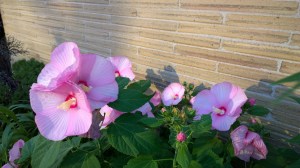
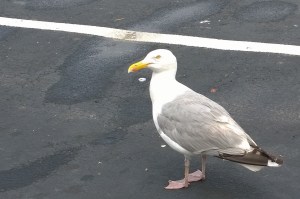
The flowers casting early shadows are Marsh Mallows. The little frog in New Shoreham also cast a long shadow. In the next photo, perhaps you can tell that the herring gull is looking for more of my sandwich.

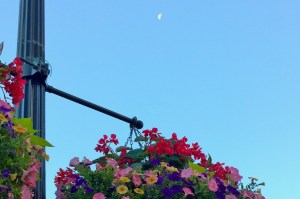
There’s a sliver of moon above the hanging basket. Hope you can see it. Next is a sample of New Shoreham’s lovely fields and stone walls.

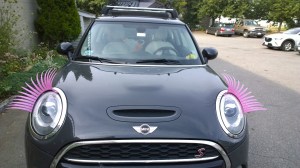
My older granddaughter wanted to know if the car with pink eyelashes was mine. No, but maybe I should think about getting eyelashes for the Fusion.

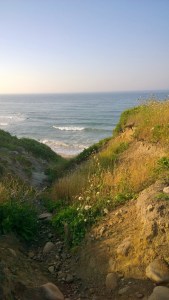
One of my favorite views is looking down the bluffs to the ocean. Often there are surfers riding the waves at this spot. Finally, see how my youngest grandchild cooks breakfast for me in the playhouse.

072716-Wayland-Square-Providence

072516-marsh-mallows-Wayland-Sq-Providence


072316-New-Shoreham-frog

072916-Pt-Judith-herring-gull


072616-moon-and-hanging-baskets

072316-stonewall


072816-car-with-pink-eyelashes

072816-playhouse-with-Mormor


072316-path-to-the-sea

Read Full Post »

Photo: National Oceanic and Atmospheric Administration
A sponge the size of a minivan was found in summer 2015 in the Papahānaumokuākea Marine National Monument off Hawaii.

One of Earth’s oldest living animals is a sea sponge. As big as a minivan, it has been growing for generations unnoticed and undisturbed in waters off Hawaii.

Elahe Izadi writes in the Washington Post that a remotely operated vehicle (ROV) “captured footage of the spectacularly large sponge during a National Oceanic and Atmospheric Administration deep-sea expedition, and the species was identified for the first time in a study published [in May] in the journal Marine Biodiversity. …

“There’s more to this sponge than its girth: It could also be among the oldest living animals on earth. … Sponges can live for hundreds or even thousands of years. ‘While not much is known about the lifespan of sponges, some massive species found in shallow waters are estimated to live for more than 2,300 years,’ the study authors write. …

“ ‘Finding such an enormous and presumably old sponge emphasizes how much can be learned from studying deep and pristine environments such as those found in the remote Papahānaumokuākea Marine National Monument,’ Daniel Wagner, Papahānaumokuākea research specialist, said in a statement. …

“Christopher Kelly, NOAA research scientist and co-lead for the expedition, said the sponge ‘just appeared’ on the ROV’s high-definition camera, Australia’s Pacific Beat radio reported.

” ‘We were looking for deep water corals and sponges, and we had just gotten some close ups of some corals, then turned away to continue the survey and the sponge appeared out of nowhere.’ ”

I can just picture that cinematic moment of discovery.

More at the Washington Post, here.

Read Full Post »

Although I didn’t get to see it in person, I was excited to learn from Timmons Roberts by way of Erik that the indigenous Hawaiian canoe Hōkūleʻa was making a stop in Rhode Island.

Lars Trodson writes at the Block Island Times, “The island welcomed the crew of the Polynesian catamaran Hōkūle‘a [June 21] at a ceremony held at the Block Island Maritime Center in New Harbor. The crew was greeted with songs sung by the students from the Block Island School, as well as greetings and tribal gifts from Loren Spears, an educator and former Council Member of the Narragansett Tribe of Rhode Island. Capt. Kalepa Baybayan of the Hōkūle‘a also offered brief remarks.

“The Hōkūle‘a is traveling around the world to teach about ocean conservation. ‘We live on a blue planet,’said capt. Baybayan. ‘Without the blue there would be no green.’ …

“Block Island is the Hōkūle‘a’s  only stop in Rhode Island.”

From the Hōkūleʻa website: “Our Polynesian voyaging canoes, Hōkūleʻa and Hikianalia, are traveling over 60,000 nautical miles around the earth, bringing people around the world together to set a course for a sustainable future.

“We are sailing like our ancestors have for a thousand years—using wayfinding. On board, there is no compass, sextant, or cellphone, watch, or GPS for direction. In wayfinding, the sun, moon, and stars are a map that surrounds the navigators. When clouds and storms make it impossible to see that map, wave patterns, currents, and animal behavior give a navigator directional clues to find tiny islands in the vast ocean. …

“Everyone can be the navigator our earth needs. Every person on earth can help navigate us to a healthy future where our Island Earth is safe and thriving again. …

“We are asking kids, families, governments, communities, and businesses to share how they mālama honua—take care of our Island Earth.  Please visit our Mālama Honua map, and help us grow the movement by adding stories of hope that can inspire and educate us all. …

“Hōkūleʻa, our Star of Gladness, began as a dream of reviving the legacy of exploration, courage, and ingenuity that brought the first Polynesians to the archipelago of Hawaiʻi. The canoes that brought the first Hawaiians to their island home had disappeared from earth. Cultural extinction felt dangerously close to many Hawaiians when artist Herb Kane dreamed of rebuilding a double-hulled sailing canoe similar to the ones that his ancestors sailed.

“Though more than 600 years had passed since the last of these canoes had been seen, this dream brought together people of diverse backgrounds and professions. Since she was first built and launched in the 1970s, Hōkūle’a continues to bring people together from all walks of life. She is more than a voyaging canoe—she represents the common desire shared by the people of Hawaii, the Pacific, and the World to protect our most cherished values and places from disappearing.”

Lots more at www-dot-hokulea-dot-com.

Photo: Block Island Times

Read Full Post »

I  noticed the Eric Carle picture book Mister Seahorse at Suzanne and Erik’s house today, and it got me thinking about seahorses as fathers.

Did you know seahorse fathers carry the babies from conception to birth, not the mothers?

According to Wikipedia, “The male seahorse is equipped with a pouch on the ventral, or front-facing, side of the tail. When mating, the female seahorse deposits up to 1,500 eggs in the male’s pouch. The male carries the eggs for 9 to 45 days until the seahorses emerge fully developed, but very small. Once the young are released into the water, the male’s role is done and he offers no further care.”

It’s kind of the reverse of today’s devoted fathers. With no direct role in giving birth to babies, they sure do get involved in the daily care and feeding. Grandfathers, too. My husband babysits regularly, and can handle most anything, including diapers.

For more on seahorses, and how to protect them, check out the Sea Horse Trust, here. And if you’re up for a refresher on how increased carbon dioxide in the atmosphere is endangering sea creatures with spines, including the pygmy seahorse, reread my review of the climate-change movie Revolution, here.

Art: Eric Carle

Read Full Post »

My friend Kristina is an artist with a long-time interest in shells. At a Harvard-based shell club that she frequents, she meets many interesting artists and scientists — including George Buckley, a Caribbean coral reef researcher who made the video below.

Buckley says, “Little did I know in 1976 that my first visit to Bonaire to study land snails … and dive with Captain Don Stewart would lead to a career interconnected with Bonaire and to some 100 more return trips!

“Bonaire became the focus of case study after case study of marine management and biodiversity in my Harvard University environmental management program. [Dozens] of research and study groups, students, magazine writers and photographers that I brought to the island all fell in love with the landscapes and the emerald sea of Bonaire.

“The early years of the Bonaire Marine Park [BMP] and STINAPA [Dutch acronym for national park] … were a great adventure and while my efforts with the Carco Project and Marecultura were not as successful as hoped, both helped to lay the groundwork for future efforts around the world as to best practices in that field.

“The BMP’s pioneering leadership in education, moorings, gloves policies, banning light sticks and spearfishing, creating the ‘Nature Fee’ and so much more led to Bonaire’s well-deserved world-wide recognition. The efforts to save Klein Bonaire were a testament to international collaboration and stand to this day as the Hallmark of what a committed group of concerned people can accomplish. It is indeed true that Bonaire is to conservation of nature as Greenwich is to time – with credit to Captain Don.”

If you are on Facebook, check out the rest of Buckley’s post.

Photo: Sand Dollar in Bonaire


Read Full Post »

What is going on with the oceans? Warming trends are bringing sea creatures further north and for longer periods.

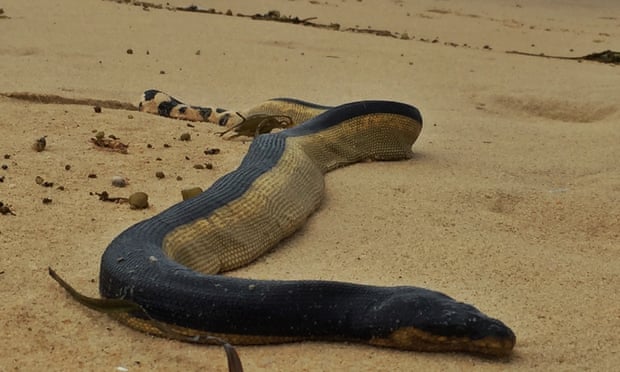
In January, Oliver Milman reported at the Guardian about a sea snake with a suggestive name (“Why you yellow-bellied sea snake, you …!”) that has suddenly shown up in California.

“California beachgoers have been urged to steer clear of a species of highly venomous sea snake following a third, and unprecedented, instance of an aquatic serpent washing up on to the state’s beaches.

“A 20-inch yellow-bellied sea snake was discovered on a beach near San Diego … The sighting was the third reported instance since October of the species, which prefers the tropical waters of the Pacific and Indian oceans, washing up on California’s beaches.

“The only previous verified sighting of a washed-up yellow-bellied sea snake was in 1972. Experts believe the snakes have ridden a warm current of water, fueled by the exceptionally strong El Niño climatic event, farther north than they have ever previously ventured. …

“ ‘It’s been an incredibly interesting year for southern California. We’ve seen tuna and marlin and tropical bird species such as red-footed boobies,’ said Greg Pauly, curator of herpetology at the Natural History Museum of Los Angeles County. …

“Yellow-bellied sea snakes are fully aquatic snakes capable of swimming vast distances. Although they are highly venomous, their targets are small fish and it’s thought they have yet to cause a recorded human death. However, Pauly said people should keep their distance if they encounter another washed-up snake.

“ ‘They are fairly docile and it’s unlikely for someone to be envenomated,’ he said. ‘It’s rare for them to bite people, it’s usually fishermen who are carelessly pulling up fishing nets.’ ”

More here.

Photo: Carolyn Larcombe/Wandiyali Images
Seen in California after el Niño, yellow-bellied sea snakes usually live in the deep waters of the Pacific and Indian oceans. 

Read Full Post »

Don’t you love it when something that is extinct turns out not to be extinct at all? Like coelacanths, which, according to Wikipedia, “were thought to have become extinct in the Late Cretaceous, around 66 million years ago, but were rediscovered in 1938 off the coast of South Africa.”

While I’m waiting for someone to prove unequivocally the existence of the Ivory Billed Woodpecker, I will regale myself with Lazarus-like sea snakes in Australia.

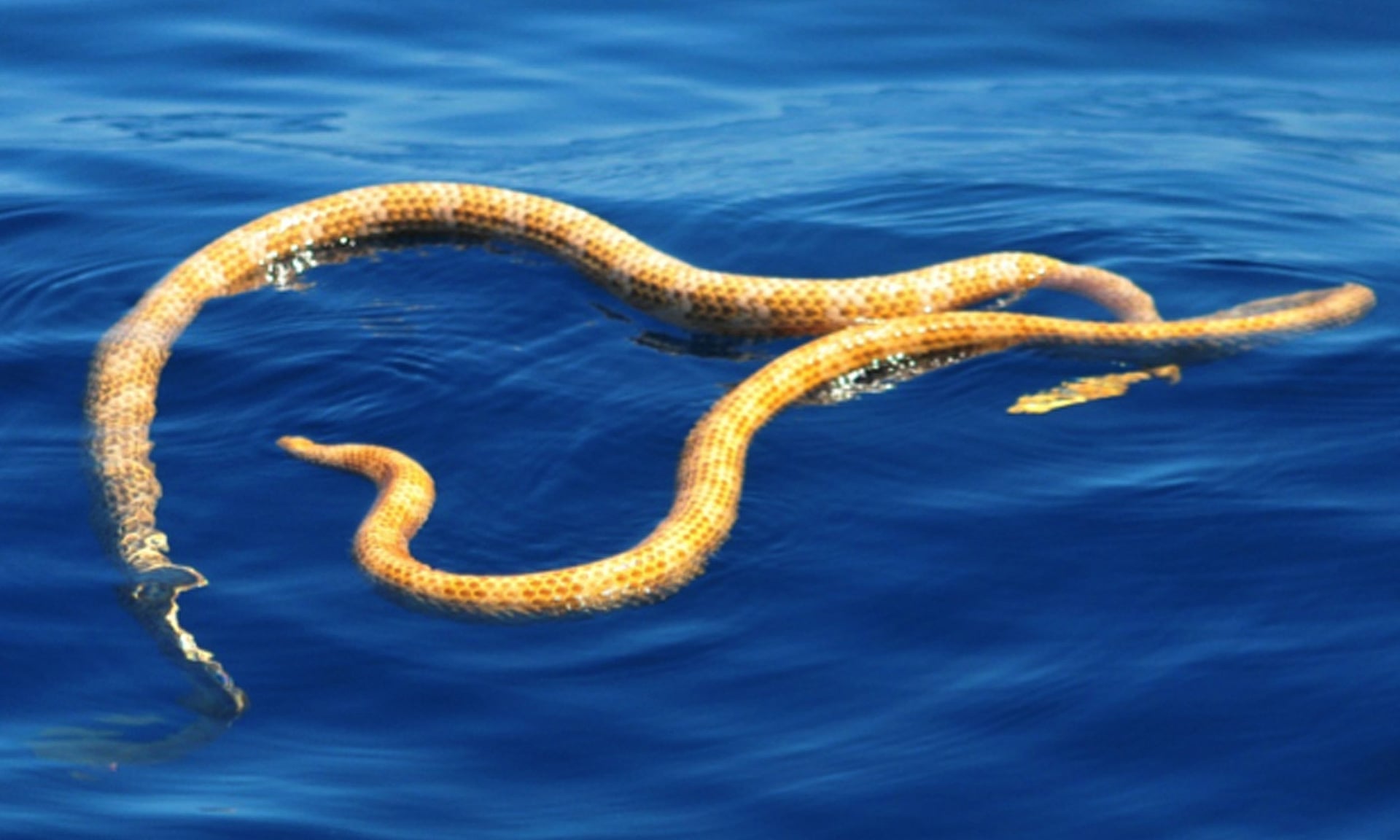
I saw this Australian Associated Press story at the Guardian: “A species of sea snake thought to be extinct has been rediscovered off the Western Australian coast. A wildlife officer spotted two courting short-nosed sea snakes while patrolling in Ningaloo marine park on the state’s mid-north coast. …

“The Western Australian environment minister, Albert Jacob, said the discovery was especially important because they had never been seen at Ningaloo reef.

“A Department of Parks and Wildlife officer photographed the snakes on Ningaloo Reef and James Cook university scientists identified them.”

Maybe marine creatures such as sea snakes and coelacanths are more likely to be preserved than woodpeckers — hidden away in the ocean’s unexplored depths. Still, as a movie I reviewed, Revolution, made clear, the seas are threatened, too.

More on courting sea snakes at the Guardian.

Photo: Grant Giffen/AFP/Getty Images
The discovery of the short-nosed sea snake, previously thought to have been extinct, is significant because the species had never been seen in the Ningaloo marine park in Western Australia before.

Read Full Post »

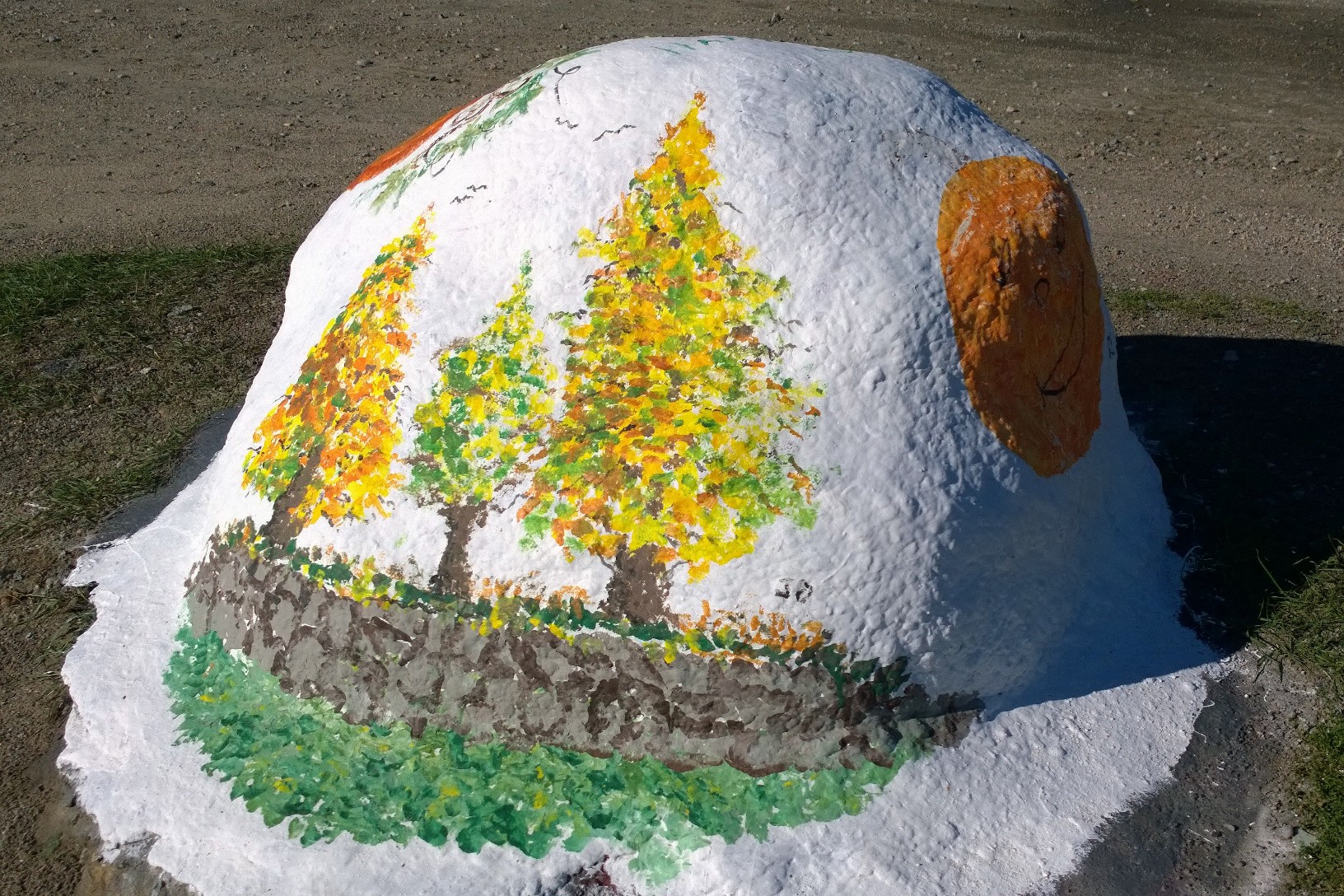
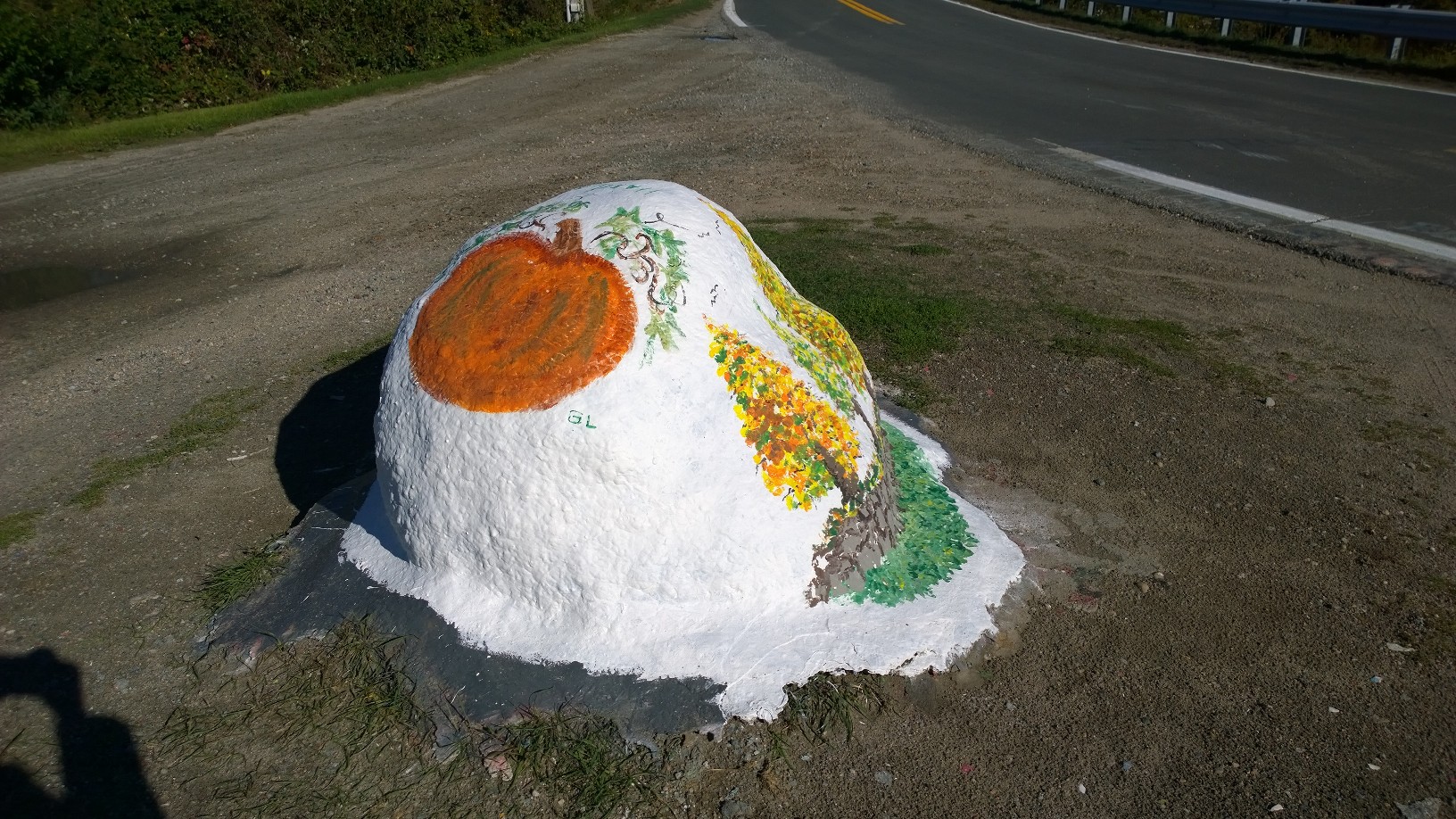
A bouncy boat ride in heavy rain last night. A warm sunny morning. Here are a few photos from my last island weekend of 2015.

An especially nice autumnal theme for the Painted Rock. Whoever painted it was lucky to have their artwork survive nearly three days. That would be unheard of in the summer, when birthday messages get painted over by wedding felicitations several times a day.

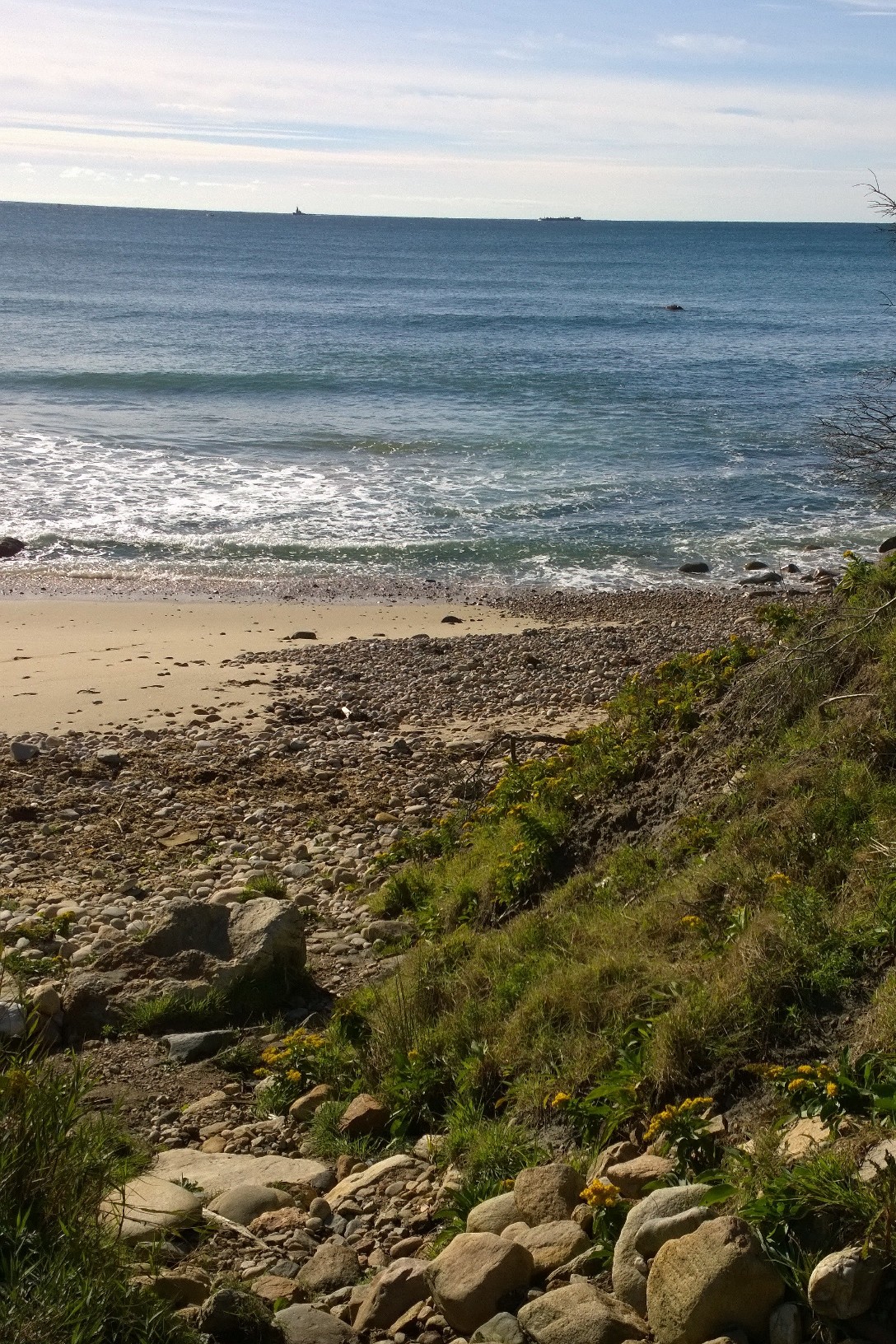
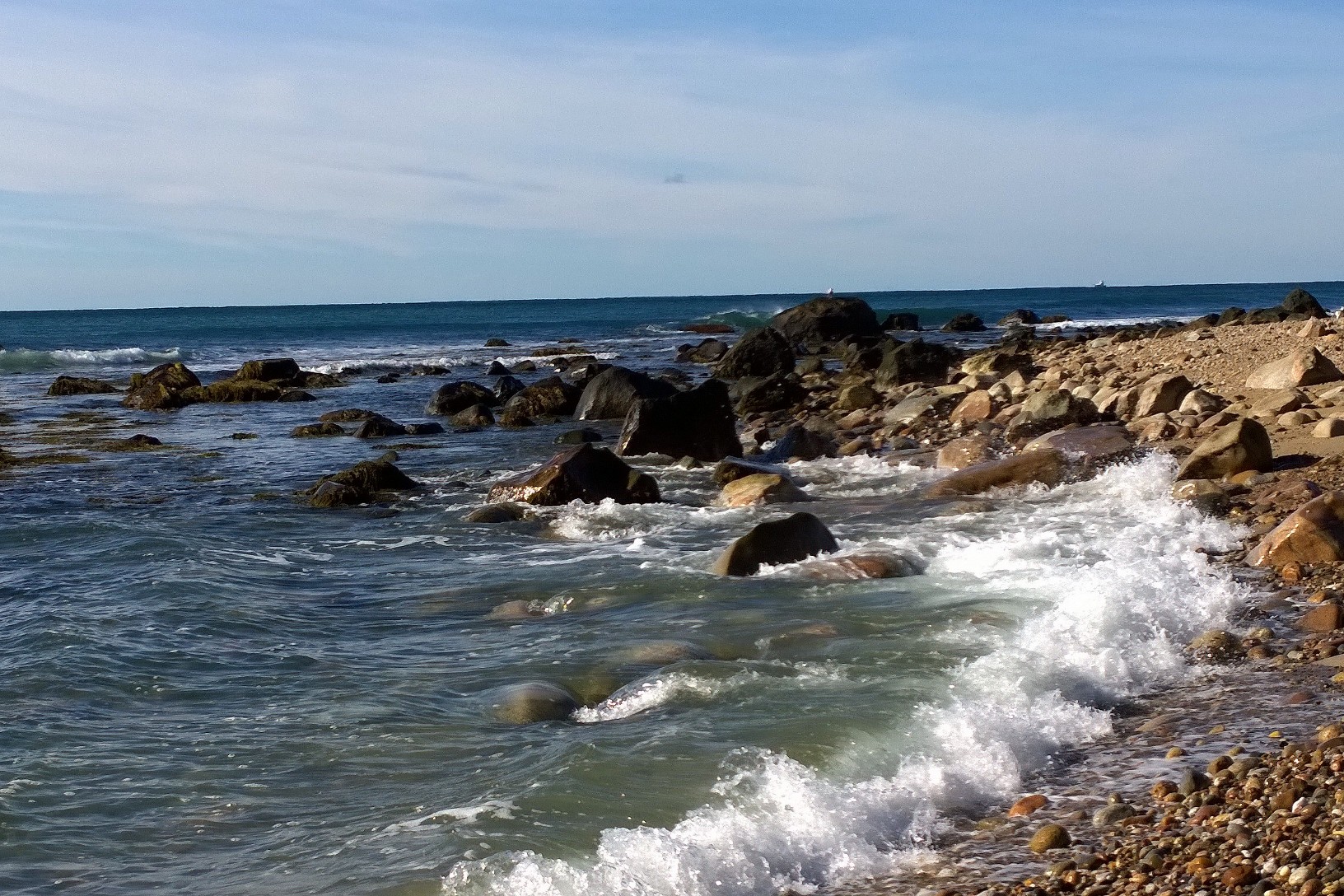
Down the bluffs on a steep path. Waves breaking on the beach. Tide pools.

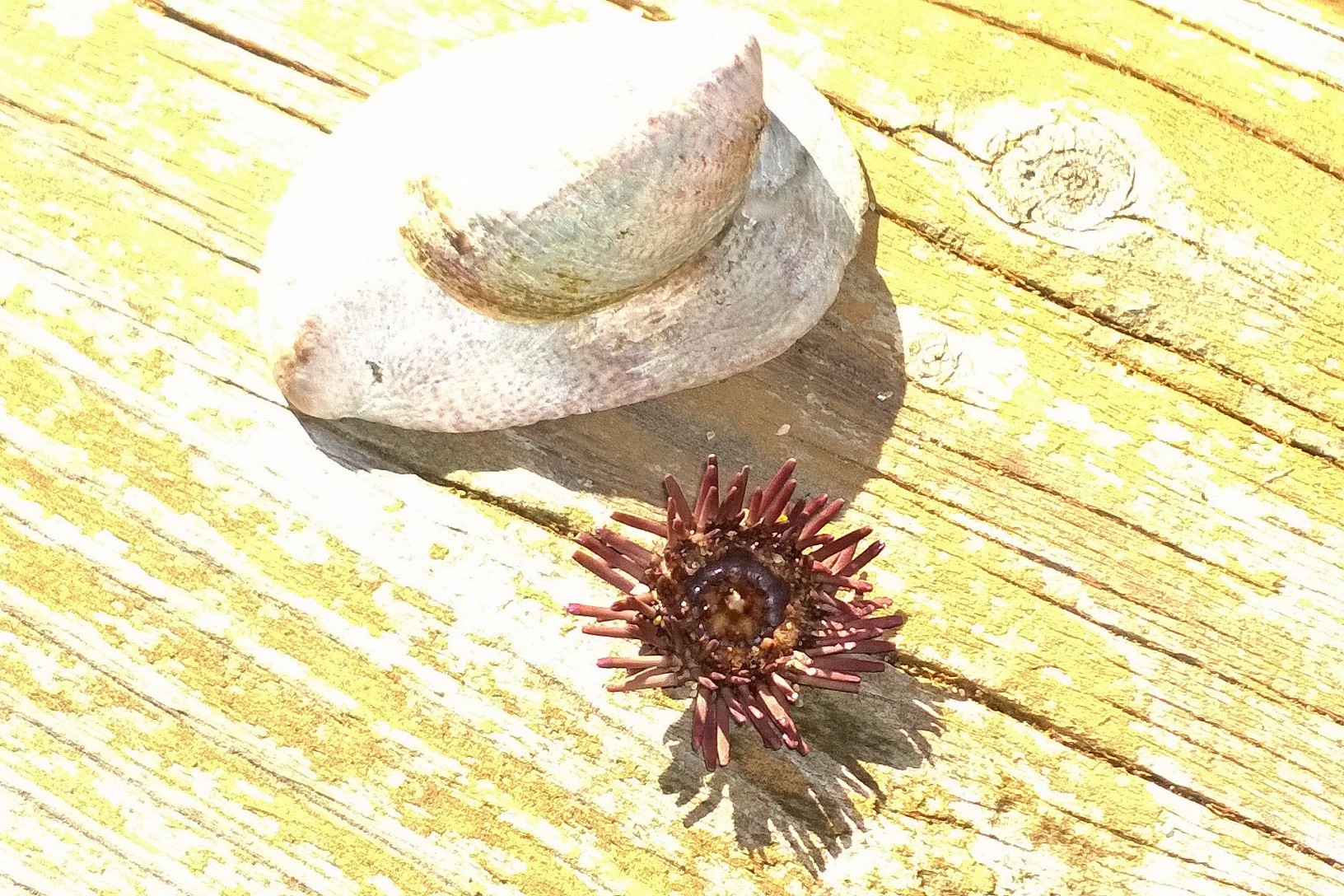
I was delighted to find a little urchin (I don’t think I ever had before) and a slipper shell with a smaller slipper shell hitching a ride.

101015-painted-rock-fall-colors

101015-painted-rock-fall

101015-steep-path-to-beach

101015-surf-at-bluffs

101015-tide-pools

101015-urchin-and-slipper-shell

Read Full Post »

Signs and portents. Summer is winding down. The writing is on the telephone wires. The sidewalk squirrel is gathering nuts. My neighbor’s garden is producing bounty. A dragon has appeared on the beach. We seized our last chance for a ladies’ lunch overlooking the harbor. I bought Jubali beet-cucumber-apple juice at the farmers market because it was called Beet Poet.

082915-written-in-the-birds

082515-stencil-river-rd

090515-Sandy-K-veggies

090415-sea-monster

082915-ladies-lunch-at-Surf

090415-beet-poet

Read Full Post »

Maria Popova linked to this story on twitter. It’s about how climate change is affecting a way of life for Fiji Islanders.

Meehan Crist writes at the blog Nautil.us, “The day that conservation biologist Joshua Drew, his two students, and I arrive in the Fijian village of Nagigi, the wind is blowing so hard that the coconut palms are bent sideways. ‘Trade winds,’ we are told. And, ‘El Nino. The villagers here also know that climate change is affecting the weather, but their more immediate problem, shared across the Pacific—and, indeed, the world—is an ocean ecosystem sorely depleted by overfishing.

“Nagigi is a village of about 240 people living in tin-roofed wooden homes strung along a sandy coastline. A single paved road runs the length of the village, parallel to the ocean, and along this road are homes clustered by family, painted in cheerful pastels, and connected by well-worn paths through the crab grass. ‘Before,’ said Avisake Nasi, a woman in her late 50s who has been fishing this reef her whole life, ‘you just go out and you find plenty fish. Now, you have to look.’ …

“If pressures mount from too many sides at once—rising ocean temperatures, acidification, pollution, overfishing—the combined pressure will be too much even for Fiji’s remarkably resilient reefs to bear. …

“Conservationists and humanitarian groups have recently united in the call for sustainable resource management, and in this trend, Nagigi is ahead of much of the Western world. Villagers have been discussing how they might use a traditional ban on fishing known as a tabu (tam-bu) to help manage their marine resources in new ways. …

“Drew presents his findings about how fish here are interconnected with other reefs, and how to best protect the species most important to the village in terms of food and income. He talks about how, for the last three years, he has been collecting baseline data about the species present on the reef so that if the village sets up a tabu, its effects can be measured.

“His audience is most interested in what Drew has to say about where to set up a tabu—include the mangroves at the left side of the village shore, because they act as fish nurseries—and for how long—three years would give crucial species enough time to mature and spawn. There has been some talk of a one-year tabu, which would be less of a hardship for villagers who will have to walk a mile or more to reach ocean where they are allowed to fish. But Drew’s data suggest this wouldn’t be long enough to make the sort of difference the village wants to see. ‘I can only offer information,’ Drew says at the end of his presentation, ‘the decision is yours.’ ”

The reporting for Crist’s  story was made possible by a grant from the Mindlin Foundation.

Try to see the related climate-change movie Revolution, which I wrote about here.

Photo: Meehan Crist
The view from Nagigi’s school to the sea, where many locals make their living

Read Full Post »

I was charmed by Sy Montgomery’s recent article in the Boston Globe on the intelligence of octopi (she says “octopuses”).

The author of The Soul of an Octopus: A Surprising Exploration into the Wonder of Consciousness, Montgomery describes getting to know a clever and apparently affectionate octopus called Octavia.

“Everyone wanted to pet Octavia,” she writes. “And no wonder. She was beautiful, graceful, and affectionate. The fact that she was boneless, slimy, and living in painfully cold, 47-degree water deterred none of us.

“What thrilled us — me, New England Aquarium volunteer Wilson Menashi, and four visitors from the environmental radio show Living on Earth was the surprising fact that Octavia, who clearly wanted to be petted, was a giant Pacific octopus.

“When her keeper, Bill Murphy, opened the top of her exhibit, Octavia recognized Menashi and me immediately; we’d been working with her for several weeks. Turning red with excitement, she flowed over toward us from the far side of her tank. When we put our hands in the water, her arms rose to meet ours, embracing us with dozens of her strong, sensitive, white suckers. Occasionally Wilson handed her a fish from the plastic bucket perched on the edge of her tank. …

“Then, as Menashi reached for another capelin to feed her, we realized the bucket of fish was gone. While no fewer than six people were watching, and three of us had our arms in her tank, Octavia had stolen the bucket right out from under us.

“ ‘Octopuses are phenomenally smart,’ Menashi says. And he should know: He has worked with them for 20 years, and is expert in keeping these intelligent invertebrates occupied. Otherwise, they become bored. Aquariums design elaborate escape-proof lids for their octopus tanks, and still they are often thwarted. Octopuses not infrequently slip out of their exhibits and turn up in other tanks to eat the inhabitants.

“Many aquariums give their octopuses Legos to dismantle, jars with lids to unscrew, and Mr. Potato Head to play with. Menashi, a retired inventor, designed a series of nesting Plexiglas cubes, each with a different lock, which Boston’s octopuses quickly learned to open to get at a tasty crab inside. And just this spring, New Zealand Sea Life aquarists teamed up with Sony engineers to teach a female octopus named Rambo to press the red shutter button on a waterproof camera to take photos of visitors, which the aquarium sells for $2 each to benefit its conservation programs. Rambo learned in three attempts.”

What a different perspective on the scary beast in the film 20,000 Leagues Under the Sea, which I saw as a child.

I’d love to copy the whole intriguing article, but I’m afraid that would not be “fair use.” So read it all here.

Photo: Tia Strombeck
Sy Montgomery pets Octavia, an octopus at the New England Aquarium in Boston.

Read Full Post »

« Newer Posts - Older Posts »