Feeds:
Posts
Comments

Posts Tagged ‘postaday’

Imagine how chuffed I was to see this article about Suzanne by Charmaine Gahan!

A close friend since kindergarten, Charmaine has been a huge support to Suzanne and the birthstone-jewelry company that hosts this blog, Luna & Stella.

In a delightful report, Charmaine describes how her whole family joined Suzanne’s family in New York City over school vacation to lend a hand at the Playtime trade show, a big deal for promoting new products to retail shops around the world.

Among the highlights of Suzanne’s growing collections are sweet Mama + Me bracelets, just in time for Mothers Day (May 8), and some stunning vintage lockets.

Notes the website, “All of the lockets in the Luna & Stella Vintage Collection were made in Providence, East Providence or Attleboro between 1880 and 1940.”

Why vintage mixed with contemporary? That’s kind of an interesting story, too, being the result of a hunt for beautiful hinges to use in new lockets. After the long search, Suzanne concluded that they just don’t make smooth and subtle hinges like they used to.

But sometimes an apparent dead end can lead to even better ideas, and Luna & Stella’s cool mixing of old and new seems to be an idea that is catching on.

At the Concord Journal (here), you can read more about the two friends and their families working the trade show in New York during the coldest week of the year.

Photo: Charmaine’s girls join Suzanne to look over the Mama + Me collection from Luna & Stella.

Read Full Post »

Do we praise the work of librarians enough? I started following the Ferguson Library on twitter and Facebook after reading how it was the calm eye of the storm in Ferguson, Missouri, amid the 2014 riots. As a result, I now get good leads about other libraries. Here is a report on Ohio librarians who go the distance — and beyond.

Katie Johnson at School Library Journal describes her experience with “Play, Learn and Grow, a pop-up storytime and early learning program created through a collaboration between Twinsburg (OH) Public Library and Akron Metropolitan Housing Authority (AMHA). …

“I noticed that none of the children living in the housing development were coming to storytime at our library. I reached out to AMHA representatives, hoping they would be open to the idea of the library hosting a weekly program at the development. They were, partnering me with one of their employees, Kellie Morehouse, who was already working with families within the complex.

“We set up Play, Grow, and Learn in an unused room behind the apartment leasing office. Our initial goal was to get to know children age five and younger and their families through storytime, crafts, and free play. As the weeks went on, we saw everything that these families lacked: employment, education, transportation, healthy food, proper healthcare, access to preschool, even reliable phone service.”

They got involved in all those areas — helping children get vaccinations and nutritious food, for example, and arranging for isolated young mothers to address depression.

“Early experiences with storytime revealed a desire of the young mothers to interact with one another.  This led the AMHA representative to suggest teaming storytime with one of the organization’s programs for moms.  AMHA and a local behavioral health agency had been working together to provide maternal depression support groups to low-income women in other parts of the county. …

“Twice a month, the moms in our storytime are able to meet in a group setting with a professional to discuss their frustrations and worries. Mom-ME Time has become key, as so many of our moms are dealing with heavy pressures every day, and most do not have a strong support network. Being able to vent and get helpful parenting advice can be crucial to the choices they are making for their young children.”

It is worthy of applause when a librarian sees the whole child, not just a child in storytime, and tries to tackle the barriers to a better life. More here.

Photo: Katie Johnson/School Library Journal
Moms are included in programming for children.

Read Full Post »

OK, here’s one I bet you don’t know about. Like a couple super fathers I know, the sandgrouse father is devote to parenting. But when the fathers I know give thirsty children some water, it is likely to arrive in a bottle or sippy cup. The sandgrouse papa delivers water in his feathers.

Rick Wright and Mary McCann report at Public Radio International’s Living on Earth, “Sandgrouse – pointy-tailed relatives of pigeons – live in some of the most parched environments on earth. To satisfy the thirst of newly hatched chicks, male sandgrouse bring water back to the nest by carrying it in their feathers. It sounds incredible, and for decades, scientists thought it was just a myth. But it’s not. In the cool of the desert morning, the male flies up to twenty miles to a shallow water hole, then wades in up to his belly.

“The water is collected by ‘rocking.’ The bird shifts its body side to side and repeatedly shakes the belly feathers in the water; fill-up can take as long as fifteen minutes. Thanks to coiled hairlike extensions on the feathers of the underparts, a sandgrouse can soak up and transport 25 milliliters of liquid. That’s close to two tablespoons.

“Once the male has flown back across the desert with his life-giving cargo, the sandgrouse chicks crowd around him and use their bills like tiny squeegees, ‘milking’ their father’s belly feathers for water they so desperately need.”

Listen here.

Photo: Ian White, Flickr CC
The Feathers of Burchell’s Sandgrouse carry water for miles back to the nest.

Read Full Post »

In environmental news, Lloyd Alter at Treehugger reports that an Irish county now requires new homes to meet the very high standard of energy efficiency called passive.

“In Ireland’s Dún Laoghaire-Rathdown County, a near suburb of Dublin, it’s now the law. …

“The building codes there are pretty tight already. And it’s not completely a done deal; the national Minister of the Environment, of all people, may challenge it out of concern that it might raise the cost of housing. However the local Passive House Association says that it’s not necessarily true, and showed case studies demonstrating that in fact they could build passive houses ‘at or below conventional build costs.’

“Writing in Passive House Plus, Pat Barry of the Irish Green Building Council noted that really, it’s all about just trades having the skills and doing the job right. …

“As many as 20,000 houses could be built in the county, houses that cost almost nothing to heat, produce almost no CO2, and are comfy as can be day or night, sun or no sun.”

More here.

Photo: Kelvin Gillmor
Irish passive house built on a budget
. Hmmm. Does it burn wood?

Read Full Post »

If the five unexpected salmon are a sign of a comeback in the Connecticut River, this could be really exciting.

Nate Schweber writes at Al Jazeera America, “By the fall of 2015, the salmon of the Connecticut River were supposed to be doomed. The silvery fish … went extinct because of dams and industrial pollution in the 1700s that turned the river deadly. In the late 1800s a nascent salmon stocking program failed. Then in 2012, despite nearly a half-century of work and an investment of $25 million, the federal government and three New England states pulled the plug on another attempt to resurrect the prized fish.

“But five Atlantic salmon didn’t get the memo. In November, fisheries biologists found something in the waters of the Farmington River — which pours into the Connecticut River — that historians say had not appeared since the Revolutionary War: three salmon nests full of eggs.

“ ‘It’s a great story,’ said John Burrows, of the Atlantic Salmon Federation, a conservation group, ‘whether it’s the beginning of something great or the beginning of the end.’ …

“The streamlined wild Atlantic salmon, genetically different from their fattened domesticated counterparts, which are mass-produced for human consumption, are so rare that anglers spend small fortunes chasing them across Canada, Iceland and Russia. …

“The stocked salmon continued to die off through the early 1970s. Gradually, scientists began to learn the importance of different strains of salmon and their close relatives, trout. In 1976 the program was able to acquire Atlantic salmon eggs from the Penobscot River in Maine, the closest surviving population both physically and genetically. This strain was still different from the lost native strain of the Connecticut River, but less so than their Canadian cousins, previously stocked there. In 1978, 90 fish from the Maine strain managed to make the two-year, 6,000-mile migration out to the food-rich Labrador Sea off of Greenland and then return to the Connecticut River. …

“As only 54 salmon returned to the Connecticut River in 2012, the U.S. Fish and Wildlife Service pulled out of the restoration program. New Hampshire, Vermont and Massachusetts followed. Connecticut opted to continue stocking a small number of salmon …

“Then in the fall of 2015, biologists found five adult Atlantic salmon swimming past the Rainbow Dam on the lower Farmington River. On a hunch, they searched likely upstream spawning habitat and there found the three nests full of eggs.

In the spring of 2016 they will hatch the first wild salmon into that river in two centuries.”

More here.

Photo: Design Pics Inc / Alamy Stock Photo
In North America, Atlantic salmon migrate up rivers and streams to reach spawning grounds in New England and Canada.

Read Full Post »

I’ve read before about inventive approaches to teaching math — and my daughter-in-law, who coaches teachers of math, probably knows most of them. But recently, the Washington Post examined a new method, one that uses dance.

Reporter Moriah Balingit described observing a kindergarten game that “actually was a serious math lesson about big and small and non-standard measurements. Dreamed up by [drama teacher Melissa] Richardson and kindergarten teacher Carol Hunt, it aims to get the children to think of animal steps as units of measurement, using them to mark how many it takes each animal to get from a starting line to the target.

“[Today] teachers are using dance, drama and the visual arts to teach a variety of academic subjects in a more engaging way. …

“The Wolf Trap Institute, based at the Wolf Trap Foundation for the Performing Arts, brought Richardson to Westlawn Elementary through a program that pairs art teachers with early-childhood educators to formulate math lessons. The program also provides professional development to teachers.

“And the program appears to have been effective: A study by the American Institutes for Research found that students in classes headed by Wolf Trap-trained teachers performed better on math assessments than did their peers being taught by teachers who were not in the program. …

“Researcher Mengli Song said the students in the program did not necessarily learn additional math content but they did demonstrate a better grasp of the material. And the effect was comparable to other early-childhood interventions. …

“Jennifer Cooper, director of the Wolf Trap Institute for Early Learning Through the Arts, said arts integration — particularly lessons where children get to move and play — is a good way to reach a lot of children who struggle with traditional book lessons.

“ ‘By embodying a concept . . . and putting it through your body in a multi-sensory way, you’re going to reach a lot of different kinds of learners,’ Cooper said.”

Read more at the Washington Post, here.

Photo: Bill O’Leary/The Washington Post
Teaching artist Melissa Richardson, right, from the Wolf Trap Institute, watches her kindergarten students at Westlawn Elementary School take large bear steps during a math lesson in Falls Church, Va.

Read Full Post »

There can be unexpected ramifications to keeping cats, as art forgers described in Science magazine discovered to their regret.

In an article on how experts check the authenticity of a putative Velázquez or a painting found along with mummies, Lizzie Wade writes, Investigations into the artist responsible for more modern works often have a specific goal: To figure out if the work in question is a forgery.

“Bonnie Magness-Gardine manages the Art Theft Program at the Federal Bureau of Investigation in Washington, D.C. For many years, she and other investigators had seen innumerable forgeries of the work of Clementine Hunter, a self-taught and incredibly prolific African-American painter from Louisiana.

“Many people tried to copy her distinctive folk-art style, but only two regularly succeeded: William Toye and his wife Beryl Ann Toye, a couple from New Orleans. They were so good at imitating Hunter’s style that ‘they got away with this for years,’ Magness-Gardine says.

“In 2009, the Federal Bureau of Investigation finally gathered enough evidence to confiscate the Toyes’ supposed Hunter collection, and during the raid they noticed that ‘they lived in a very modest house with approximately 30 cats,’ Magness-Gardine says.

“When forensic investigators analyzed the seized works, they found cat hair embedded in the paint — a characteristic not shared by Hunter’s authentic work. ‘That’s essentially what brought them down,’ Magness-Gardine says. William Toye pled guilty to art fraud in 2011.”

More here.

Art: Clementine Hunter/ Bridgeman Images
Picking Cotton, 1950s (oil on board), Minneapolis Institute of Art, The Ethel Morrison Van Derlip Fund. Hunter is a favorite of would-be forgers.

Read Full Post »

Here is my latest photo roundup, but the picture I’d hope to start with will not appear.

I thought I was in the 1960s film Blowup. I spent ages (well, at least 30 minutes) zooming in on a photo I took of what I’m pretty sure was a bluebird. When I finally found the bird in the background of woodland twigs and leaves, he was so blurry I couldn’t use the picture to confirm the identification. So no photo of a bluebird for this post.

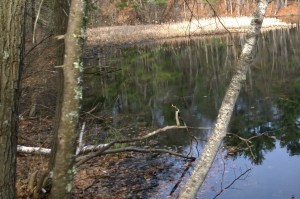
I have two other photos from walking in the town forest, one of Fairyland Pond and one of trail markers, including the Emerson-Thoreau Amble.

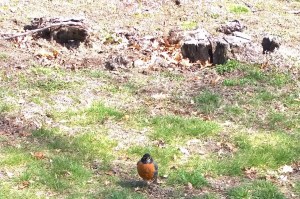
Next is my youngest granddaughter chasing a squirrel up a tree on Easter (love the shot my husband got). My oldest granddaughter is captured mid-Easter-egg hunt. The robin stayed stock-still for his portrait that afternoon.

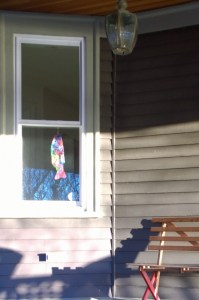
The window fish was painted by my younger grandson at his Montessori nursery school. As usual, I couldn’t resist shooting shadows.

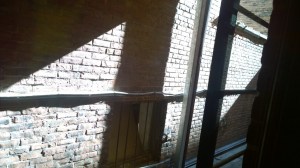
Now, about the shadows on brick. For nearly three months, until the moment when the sun shone through the alley (like the sun that shone on the keyhole to Smaug’s back door in The Hobbit), I thought the window in the renovated building was smack up against a wall and there was nothing to see there. What a lovely surprise!

I’m wrapping up today’s collection with a license plate from the Pawnee Nation. Since the Pawnee Nation is in Oklahoma and the car was in Providence, I’m intrigued and hope to learn more. Here’s the tribe’s website.

033116-pond-in-town-forest

033116-trail-in-woods


032716-squirrel-went-up-tree

032716-Easter-basket


032716-robin-Blackstone-Blvd

032916-grandson-fish-decoration


032216-sudden-light-narrow-alley

033016-Pawnee-Nation-car-license


Read Full Post »

The American Refugee Committee, or ARC, is a wonderful nonprofit that periodically sends me news from its headquarters in Minneapolis. Recently, I learned about its Welcome Home blog, which reports on the organization’s Changemaker initiatives, including this music collaboration in Thailand’s Dong Yang Refugee Camp.

“Every year,” writes ARC, “we hold a global ideas competition with our staff around the world. We love seeing the inspiring, new ideas that are submitted.

“This year, we were excited to see one of these ideas come to life in Thailand. Facilitated by ARC and Playing for Change, an organization using music to connect people around the world, this Changemaker idea brought together kids in Dong Yang refugee camp for a two day music workshop including creative, visual arts projects and music lessons.

“For young kids stuck inside the confines of a refugee camp, the workshop provided a much-needed creative outlet. One participating staff member remarked, ‘The participants so thoroughly enjoyed the activity and lost track of time while participating because they were so involved.’

“A group from Minneapolis had the chance to travel to Dong Yang to participate in the workshop and production of a music video.” More at blogspot.

Here’s hoping that the two days will lead to a lot more for these children.

Photo: American Refugee Committee

Read Full Post »

Ashifa Kassam reports at the Guardian that the town of Norman Wells in Canada’s far north is in need of a hairdresser.

“After two years of having to use sheep shears and scissors, Norman Wells is going public with their plight …

“Wanted: one hairdresser. Must be willing to withstand temperatures that can drop as low as -50°C (-58F) and be able to rectify years of DIY trims and amateur styling.

“After two years of making do without a hairdresser, the isolated northern Canadian town of Norman Wells in the Northwest Territories – population 800 – is going public with their plight …

“ ‘It’s been a long struggle for us,’ said Nicky Richards, the economic development officer leading the recruitment effort for this town that sits near the southern edge of the Arctic Circle. ‘We just don’t have anyone.’ …

“Many residents have had to turn to family members to cut their hair or attempt to do it themselves. ‘We’re trying to figure out ways to maintain ourselves,’ said Richards, who regularly gives the same buzz cut to her husband, a friend and her boss. ‘I’m not a hairdresser by any set of means, but I do have a set of clippers and that’s what I use,’ she told the Guardian. …

“Over the decades, several hairdressers have come and gone from Norman Wells, leaving behind a workspace in a local inn outfitted with chairs, mirrors and a sink. It’s currently available for lease, meaning any entrepreneurial hairstylist need only bring their tools and products. As the town serves as a hub for several surrounding communities, the potential clients number in the few thousand.

“The recruitment effort will hopefully get people thinking about the varied business opportunities available in Canada’s north,’ said Susan Colbeck, who works at the local branch of the Canadian Imperial Bank of Commerce, while also solving a longstanding grievance. ‘We definitely need someone. Anyone who came here would be loved so much.’ ”

More here.

Photo: Alamy
Many Norman Wells residents have had to turn to family members to cut their hair or attempt to do it themselves.

Read Full Post »

Tom Murphy wrote recently at the Providence Journal about a shop in North Kingstown that will teach you how to build your own guitar.

“Owner Dan Collins and his partner, Ariel Bodman, design and build guitars with the skill and dedication of artists,” writes Murphy. “They talk about the sound produced by different kinds of wood with terms like the ‘color’ and the ‘ring.’ …

“Dan and Ariel have brilliantly carved out a niche in the industry by sharing their deep knowledge and experience with student builders who pay a fee to craft their own custom instruments. With his background in art and hers in music, they give students a much deeper appreciation for their new instruments than they might get walking out of the average music store. …

“Many students become hooked on the experience and come back for a second, third, even a fourth build. ..

“The custom builds, the repairs and the teaching are the business side of Dan Collins’ unique shop, but from 7 to 10 p.m. on the last Saturday of each month, something really extraordinary happens.

“The floors are swept, tools are put away, equipment is pushed aside and the long work bench in the middle of the room is transformed into a banquet table as Shady Lea Guitars holds its ‘open mic night.’

“In a cleared portion of the workshop, there is a well-lit stage and an odd assortment of comfortable old chairs. It’s potluck, so students, customers, friends and enthusiasts alike can share their favorite recipes along with their music. The friendly audience always puts participants at ease, and they respond with heartfelt performances.” More here.

Read Full Post »

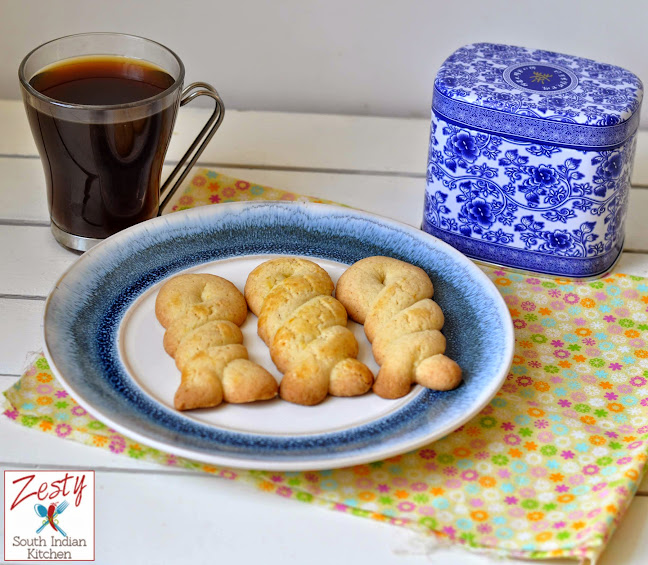
Back when Suzanne was a Girl Scout, one of the mothers (I think it was Grace) came up with a spring project, a recipe for a Greek cookie that the girls could mold into bunny shapes for Easter.

It was called koulourakia, and it was yummy. I still have a copy of the recipe the mom printed by hand. She had provided the girls with an extra challenge by listing all the ingredients as anagrams: trebut for butter, gusra for sugar, kilm for milk, and so on. They had to translate before getting started baking.

I looked online for relevant pictures. I love that the Greek recipe with the most rabbit-like photos was from a South Indian cooking site, here.

For the Girl Scout bunnies, we didn’t twist the dough as in the picture but instead formed it into fat bunny shapes.

Someone remind me to make this recipe next year.

Photo: Zesty South Indian Kitchen
Greek Easter Cookies (koulourakia)

Read Full Post »

Artists seem to think differently from people who aren’t artists, which is why Renée Loth likes the idea of embedding a few in government.

“Imagine a dancer working with police officers to better interpret a suspect’s gait,” she writes. “Or a musician teaching a city parking clerk how to listen deeply. Or an abstract painter rearranging a tangle of contradictory street signs. That’s the idea behind Boston’s new artist-in-residence program, which will embed local artists inside city departments to promote creative thinking about municipal government. …

“ ‘Artists are all about asking questions,’ says Julie Burros, Boston’s cabinet-level chief of arts and culture. ‘They bring a unique set of tools to solving problems.’

“A jury of seven arts professionals and partners from the Massachusetts College of Art and Design [met in February] to winnow a field of 10 finalists to three artists, who will each receive a $20,000 stipend for a six-month residency. …

“Boston is in the throes of a comprehensive planning process that is working to inject fresh ideas into city transportation, housing, and zoning policies. Burros is directing the city’s two-year cultural plan, Boston Creates, and is a prime force behind the artist-in-residence program.

“But Boston is hardly in the vanguard of this approach. The concept dates back to at least 1976, when activist Mierle Ukeles accepted a nonsalaried position as the first artist in residence of the New York City sanitation department.

“Over the decades, Ukeles created artworks that engage questions of nature, class, and culture; her ‘Flow City,’ a video installation at a Hudson River transfer station, confronts visitors with their own role in the massive waste management task of city government. Environmental education is a dull, dutiful business — until it’s in the hands of a performance artist. …

“In 16th century Europe, wealthy rulers of church and state often commissioned artists to live and work in their courts — you might say that Michelangelo was embedded in the Vatican. Today’s artists in residence may not paint the ceiling of City Hall, but they will surely contribute to Boston’s renaissance.”

More at the Boston Globe.

Art: Pep Montserrat for The Boston Globe

Read Full Post »

A friend on Facebook clicked “like” on an American Museum of Natural History story about youthful doodles covering original Origin of the Species pages. So I have to admit that Facebook is sometimes good for leads.

The museum reported, “We may have Charles Darwin’s children to thank for the surviving handwritten pages of the naturalist’s ‘On the Origin of Species’ manuscript. Most of the original 600 pages are lost, and of the 45 pages that exist today, many were repurposed by Darwin’s brood of 10 children as art supplies.

” ‘Darwin was done with those pages — he was throwing away sections of his draft and not caring about it because the book was published,’ said Darwin Manuscripts Project Director David Kohn.”

McKenna Stayner at the New Yorker magazine has more on the Darwin story, adding that the family lived at Down House “in rural Kent, England. … They had ten children … and Down House was by all accounts a boisterous place, with a wooden slide on the stairs and a rope swing on the first-floor landing. …

“What may seem like sacrilege now—turning the only handwritten copy of a seminal work of science into scratch paper—appears to have been normal then. Once Darwin had sent a fair copy of the manuscript off to his publisher, John Murray, he made the rest of his changes to the book directly on the galley proofs, and evidently he wasn’t precious about the originals. Paper being a hot commodity, the children co-opted the pages for themselves.”

And that, O, Best Beloved, is how some of Darwin’s original thinking got preserved for posterity.

Pretty talented children, if you ask me, with some of their father’s interest in animals and birds. Check out these pictures.

Art: Darwin’s children
From the American Museum of Natural History and Cambridge University Library.

Read Full Post »

I got to see some pretty cute videos this week. Suzanne and Erik had just returned from taking the the kids on a trip to warmer climes, and my one-year-old granddaughter learned to speak “goat.” How great to be able to capture her conversation on a smartphone!

Goat, as you may know, consists of a one-word vocabulary delivered with varying degrees of urgency: “Baaaaaaa.”

I’m thinking she and her brother will relate to this June 2015 story about some baby goats in Maine.

From WPTV.com: “Winifred and Monty are three-week-old Nigerian dwarf goat siblings who love to play together on Sunflower Farm.

“In a few weeks they’ll be moving to a new home as pets and milking goats, so their current owners like to spoil them.

“On this particular cold day, they were treated to some new pajamas!

“They had no interest in going out in the rain though. They preferred to keep their new clothes pristine!” More here.

Read Full Post »

« Newer Posts - Older Posts »