Feeds:
Posts
Comments

Posts Tagged ‘postaday’

Yesterday, as part of my organization’s participation in the United Way Community Care Day, several of us chose to volunteer in the Jewish Vocational Service’s refugee employment program. This service helps refugees learn basic English and works with local employers like Legal Sea Foods and Pret a Manger to find the immigrants jobs in four months. They have 80 percent job-placement success and more than 90 percent job retention after several months.

Each of the volunteers had a reason to be interested in this particular opportunity as opposed to, say, painting a day-care classroom or weeding in a community garden. One guy had lived in Germany for three years and knew what it was like not to understand the local language. Two women had parents who had been immigrants. Two other volunteers were naturalized citizens and had experienced challenges being an immigrant. In my case, I edit articles on low-income immigrant issues as one of the topics we cover where I work, and I am related to immigrants.

We were assigned either to a classroom where people spoke no English (and may not even have learned to read and write in their home country) or to a classroom where people had a little English. I was directed to a table of three adult learners in the latter classroom. The teacher gave me small cards with questions such as: What is your name? What is your favorite movie? What do you do on the weekend? How many people in your family?

We proceeded to get to know each other through these questions. The students asked me questions, too.

Then the teacher provided worksheets about the kind of things it is OK and not OK to talk about at work or to do in an interview. The worksheets also discussed body language in interviews. We practiced interviewing for a job.

Other staff showed up from time to time, reminding me of being in a hospital, where someone pops in to take your blood pressure and someone else suddenly arrives to check your chart or ask if you want to talk to a social worker. The people popping in at JVS were staff members focused on employment. A young man told my three students that on Saturday the restaurant Pret a Manger would be hiring people and did anyone want to come? He said it is a very supportive partner company. He noted that one person doesn’t eat pork and was able to ascertain that she wouldn’t want to work there as she might have to handle pork. She was a Christian from Ethiopia, and I found the prohibition against pork intriguing, especially has she later mentioned that she likes wine. The other woman said she would come Saturday. The man didn’t have his work papers yet, but another staff member popped in to help him take care of that.

Later, that student said I had helped him a lot and hoped I would come back again. All the volunteers had a wonderful time and are trying to figure out when they can volunteer again, although we will have to do it on our own time.

Photo: Jewish Vocational Service

Read Full Post »


John sent me the picture below of a corn maze designed to look like a scene from Alice in Wonderland.

It got me thinking about Alice’s other outdoor appearances, like the Mad Tea Party topiary at Disney or the statue in Central Park, New York City.

“Alice and her cast of storybook friends found their way to Central Park in 1959, when philanthropist George Delacorte commissioned this bronze statue as a gift to the children of New York City. … Engraved around the statue are lines from his nonsensical poem, The Jabberwocky. …

“Created by the Spanish-born American sculptor José de Creeft, the piece depicts Alice holding court from her perch on the mushroom. The host of the story’s tea party is the Mad Hatter, a caricature of George Delacorte. The White Rabbit is depicted holding his pocket watch, and a timid dormouse nibbles a treat at Alice’s feet.” More.

Photo: http://i.imgur.com/8uwnCKI
Aerial view of a corn maze commemorating the 150th year anniversary of
Alice’s Adventures in Wonderland.

Read Full Post »

Gaia Pianigiani wrote recently at the NY Times about an effort by new residents of a town in Italy to get to know neighbors through social media.

“When Laurell Boyers, 34, and her husband, Federico Bastiani, 37, moved in together in Bologna in 2012, they did not know any of their neighbors. It was a lonely feeling. …

“So Mr. Bastiani took a chance and posted a flier along his street, Via Fondazza, explaining that he had created a closed group on Facebook just for the people who lived there. He was merely looking to make some new friends.

“In three or four days, the group had about 20 followers. Almost two years later, the residents say, walking along Via Fondazza does not feel like strolling in a big city neighborhood anymore. Rather, it is more like exploring a small town, where everyone knows one another, as the group now has 1,100 members.

“The idea, Italy’s first ‘social street,’ has been such a success that it has caught on beyond Bologna and the narrow confines of Via Fondazza. There are 393 social streets in Europe, Brazil and New Zealand, inspired by Mr. Bastiani’s idea, according to the Social Street Italia website, which was created out of the Facebook group to help others replicate the project.”

The original meet-and-greet concept has evolved into neighbors helping neighbors in many ways.

“A few months back, Caterina Salvadori, a screenwriter and filmmaker who moved to Via Fondazza last March, posted on Facebook that her sink was clogged. Within five minutes, she said, she had three different messages.

“One neighbor offered a plunger, then another a more efficient plunger, and a third offered to unblock the sink himself. …

“Nothing comes at a cost in the Via Fondazza group. Some of the community’s facilities are donated, but most of the benefits stem from the members’ willingness to help, share and live better.” More here.

Photo: Nadia Shira Cohen/New York Times
Residents of Via Fondazza in Bologna, Italy, at a neighborhood bar. The street’s Facebook page has grown to 1,100 members.

Read Full Post »

About a week ago, I did something funny. I went to a Sing-along concert of Gilbert & Sullivan’s HMS Pinafore.

It convinced me that an awful lot of people have been in the show at some point in their lives, because many audience members brought dog-eared copies of the libretto — and all of them wore goofy grins on their faces for an hour and a half.

The leads were professionals, or quasi professionals. They dressed in costumes and affected English accents in their speaking roles on a raised platform where the orchestra was. It was nice that they were so professional, but I actually thought it was fun to read how different from performing their daily lives were.

According to the program notes, Thom Kenney (playing our hero Ralph Rackstraw) “has performed in musicals, operas and plays and is a member of the Tanglewood Chorus. He earned an MBA at Notre Dame and was deployed to Afghanistan.”

Beverly St Clair (Cousin Hebe) is a psychiatrist.

Ken Martin (HMS Pinafore’s Captain Corcoran) is a management consultant.

Conductor Alan Yost “is a percussionist and a research aircraft pilot and IT specialist with the US Department of Transportation. His true passion is conducting.”

The story in a nutshell: The captain’s daughter falls for a lowly “tar” (sailor) and plans to elope rather than marry the “ruler of the Queen’s Nav-ee,” the clueless Sir Joseph. The plot is discovered and Rackstraw ordered to a dungeon, when Buttercup, who comes on board periodically to sell notions and who has been hinting darkly about a desperate secret, announces that she was once nurse to Captain Corcoran and Ralph Rackstraw simultaneously and “mixed those babies up.”

So their social positions being suddenly switched, it’s OK for the new Captain Rackstraw to marry beneath him. Corcoran, now a lowly tar, decides to marry Buttercup, and no one seems to notice that she must be nearly 60 to his 40 (we are talking Gilbert & Sullivan, after all).

The young woman bouncing enthusiastically in the seat next to me had delightful hand gestures for every phrase she sang.

And did I mention that I sang the role of Sir Joseph’s Cousin Hebe when I was in junior high, which was long enough ago that television actress Tyne Daly, best known for talking tough on cop shows, played the ingenue.

Photo: borrowed from the Pittsburgh Savoyards by way of showbiz.com

Read Full Post »

Sometimes it’s hard to remember the details of what I did last week, or even today. If it’s a question of work, I can review my calendar, the e-mails I sent, or see what I checked off my checklist.

But the things that seem important and keep popping up in my head are shreds of conversations the details of which I can’t always remember. Who said that to me? And where? Was it in the hallway, the ladies room, the cafeteria, walking into the building, waiting to go through the security line? Was it someone I see a lot? A stranger at a food truck?

My new project is to do a better job of holding on to these brief but significant interactions.

One day, as I approached the cafeteria with a colleague, I asked if he went to his vacation home at this time of year. He said, “No. I rented it for the summer, and a new tenant is coming in for the winter. I had to remortgage it to pay for my mother’s care. She had Alzheimer’s.”

The woman in the office across the hall mentioned the supermoon and eclipse: “At first I thought it would be something huge and orange. We were going to make an event, take a blanket and a thermos to the beach and watch it from there. But after reading about it online, we scaled back our expectations about huge and orange and were happy watching from the front yard.”

Coming into the building with my lunch, I met another woman coming out. We hadn’t seen each other for weeks and stopped to chat. I admired her earrings. She said they were from the Rhode Island School of Design and told me her son just started grad school there. We talked about the wonderful craft sales RISD has, and I said I especially like the one where they block off several streets sometime around Mother’s Day.

Going home on the train, I sat next to a co-worker who had been strung out with anxiety about her only child, six months old, who had a fierce case of croup that got her hospitalized for a whole weekend. My colleague thought the baby was starting to pull out of it. As she talked about how cheerful the little girl is and how much she loves to carry her in the baby carrier next to her chest, the subway car seemed to fill with love and lift toward the heavens.

071415-clouds

Read Full Post »

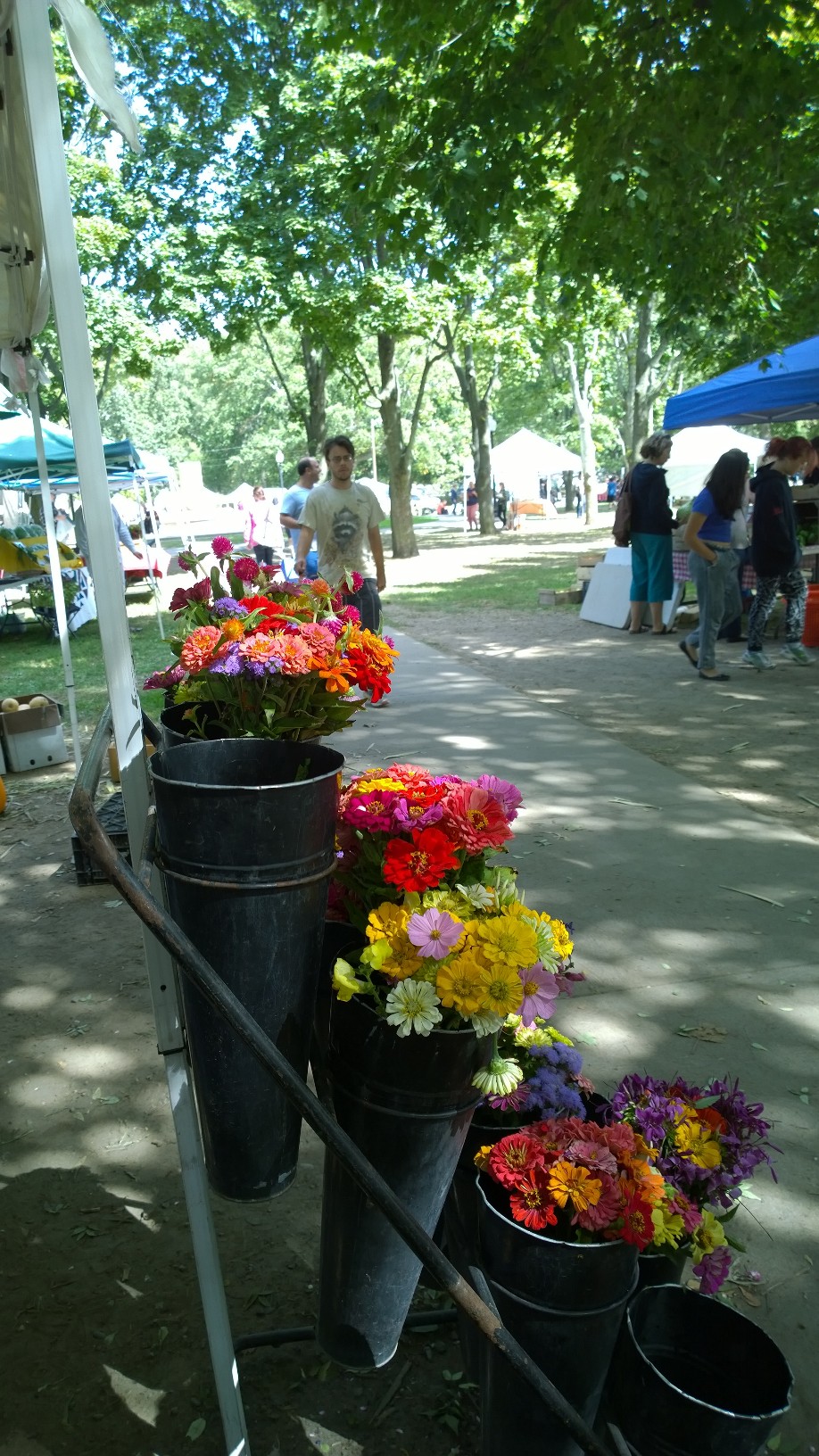
Who can resist a farmers market at this time of year? They are such joyful places.

Saturday we went with Erik and the kids to the Hope Street Farmers Market in Providence. It’s in a good-sized park where there is a playground as well as farmstands, crafts, live music, samosas, tacos, flowers, raw juices, fish, sausages, granola made by refugees …

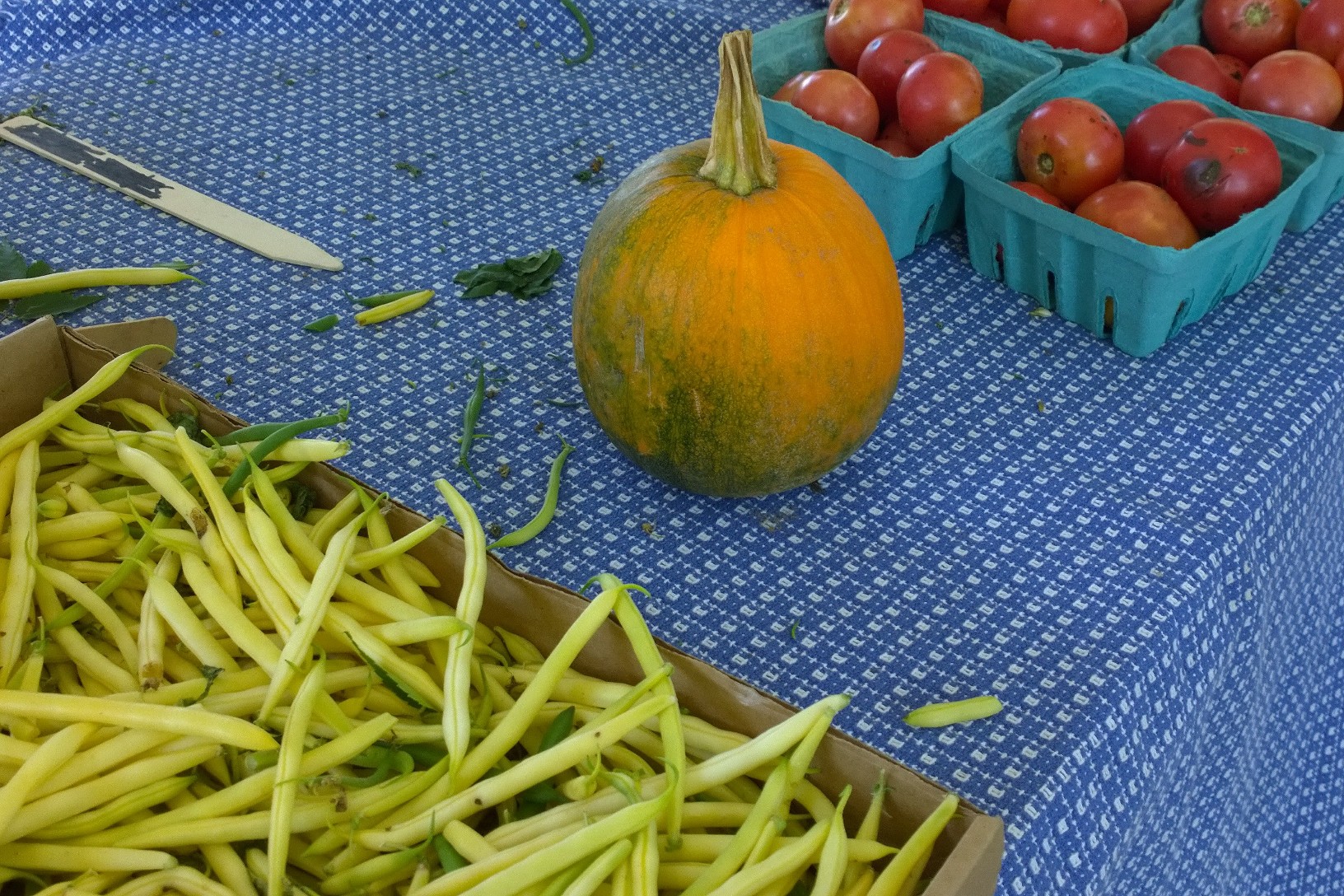
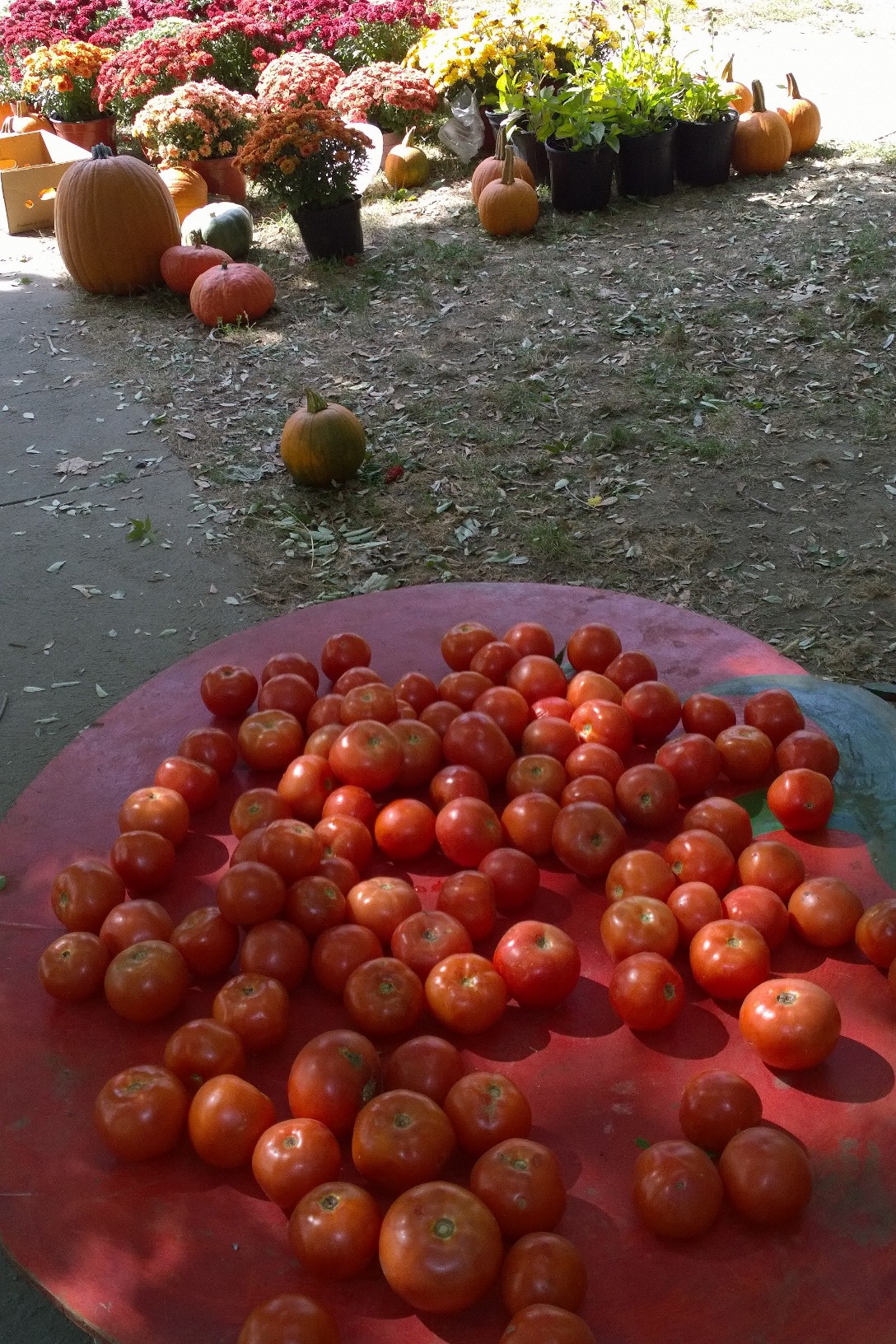
After his grilled cheese and his Del’s lemonade, our 3-year-old grandson chose the little green and orange pumpkin below. It’s now on his dining-room table at home. His sister, when she wasn’t sleeping, worked hard at inspecting everything on the ground and trying to put it in her mouth.

A few words from the website on extra offerings that might interest backers of other farmers markets: “For your convenience, here are some of the unique features of the Hope Street Farmers Market: The Bicycle Valet at the Saturday morning market, run by Recycle-A-Bike, a volunteer-based community organization that connects people with refurbished bikes, provides practical bike knowledge, and advocates bicycle use by safer, more confident cyclists. Anyone can drop off their bike while shopping and know that it will be safely watched and sometimes even tuned up, for a small fee, while they shop. http://www.recycleabike.org gives a full description and mission of the organization.

“Knife Sharpening while you shop is another new feature of our Saturday market. You can drop our your knives (wrap them carefully and mark them with your name please!) to be professionally sharpened for a small fee while you shop.

“Live music at the markets features local musicians or acoustic bands playing every Saturday and some Wednesdays, so feel free to bring a blanket, buy your picnic lunch or supper and enjoy the entertainment.”

092615-RI-farmers-market

092615-Prov-Farmers-Market

092615-market-Providence

Read Full Post »

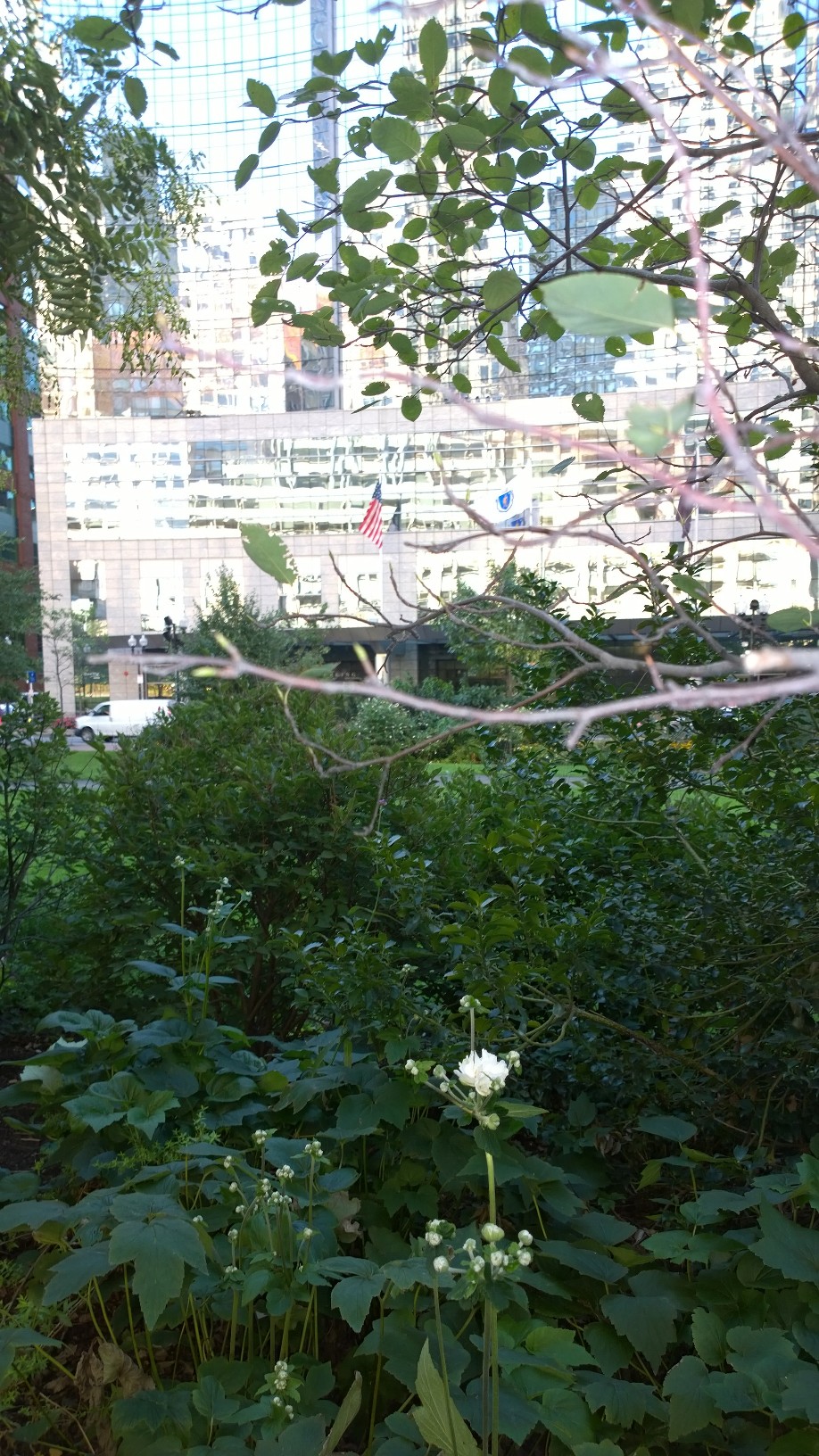
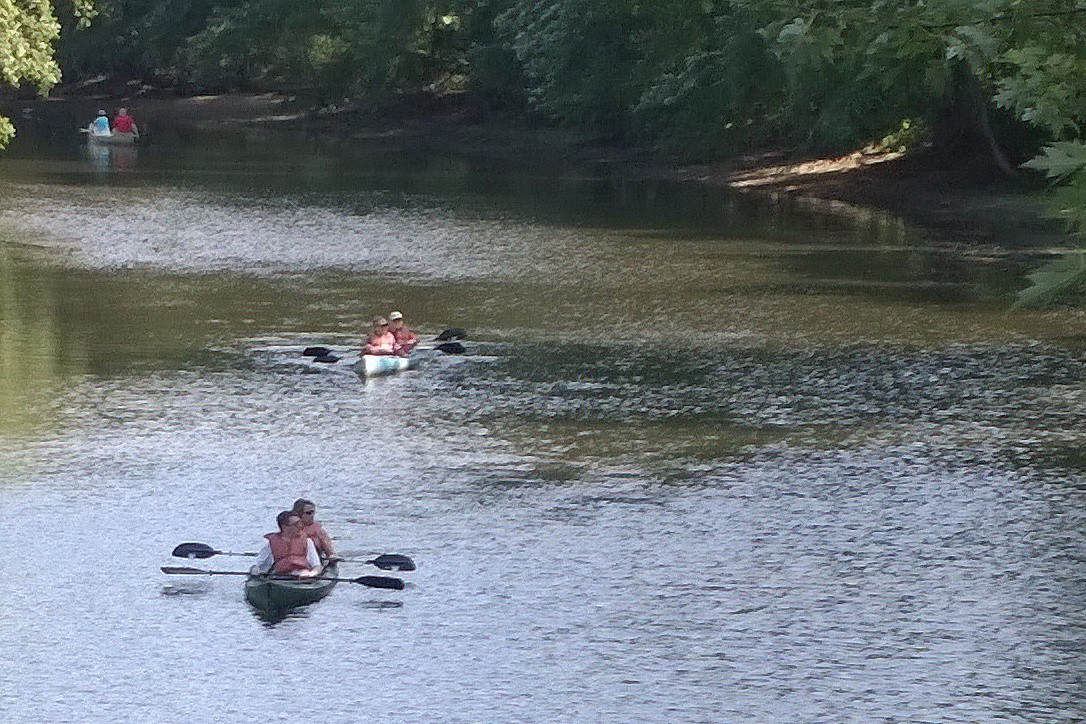
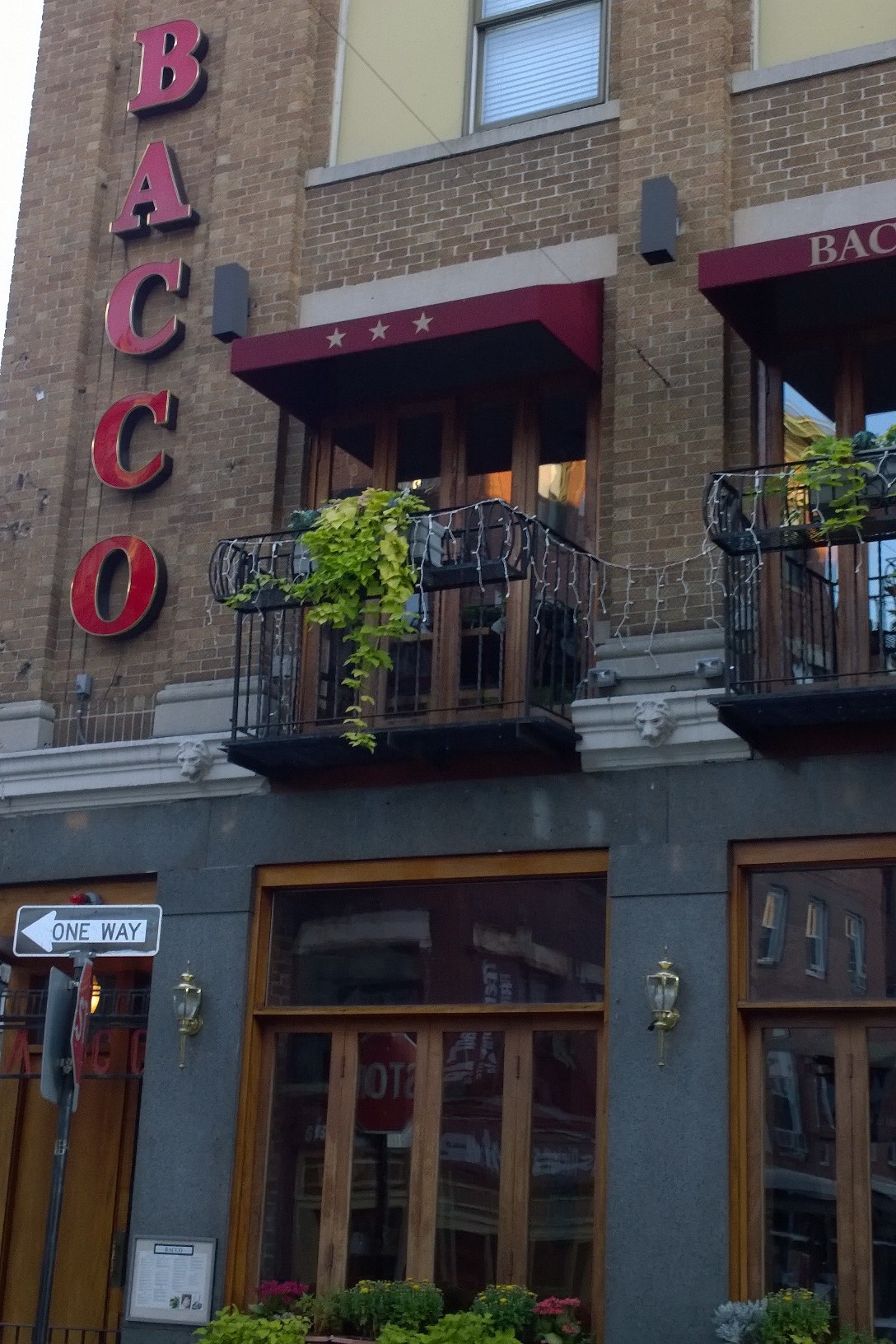
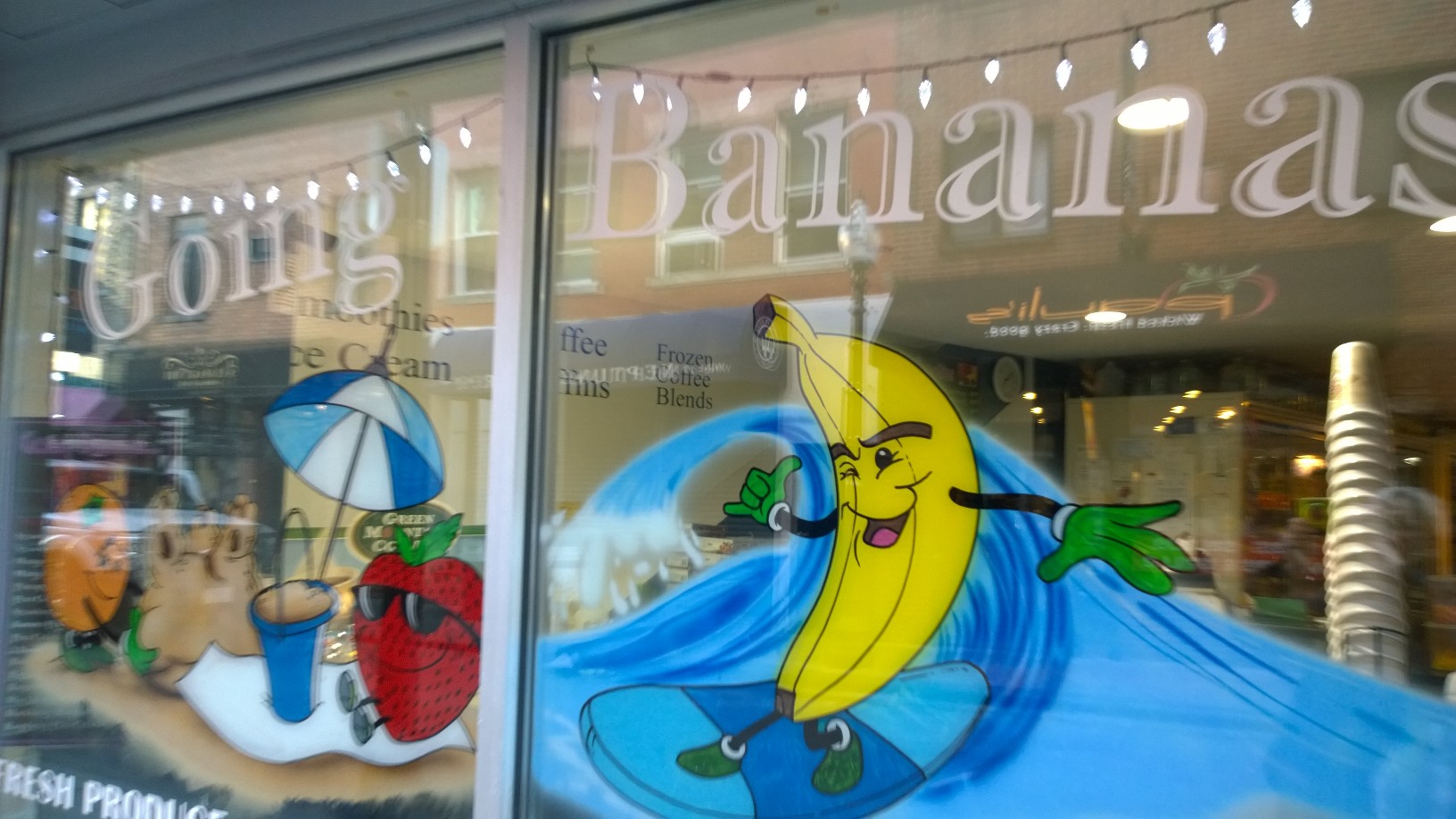
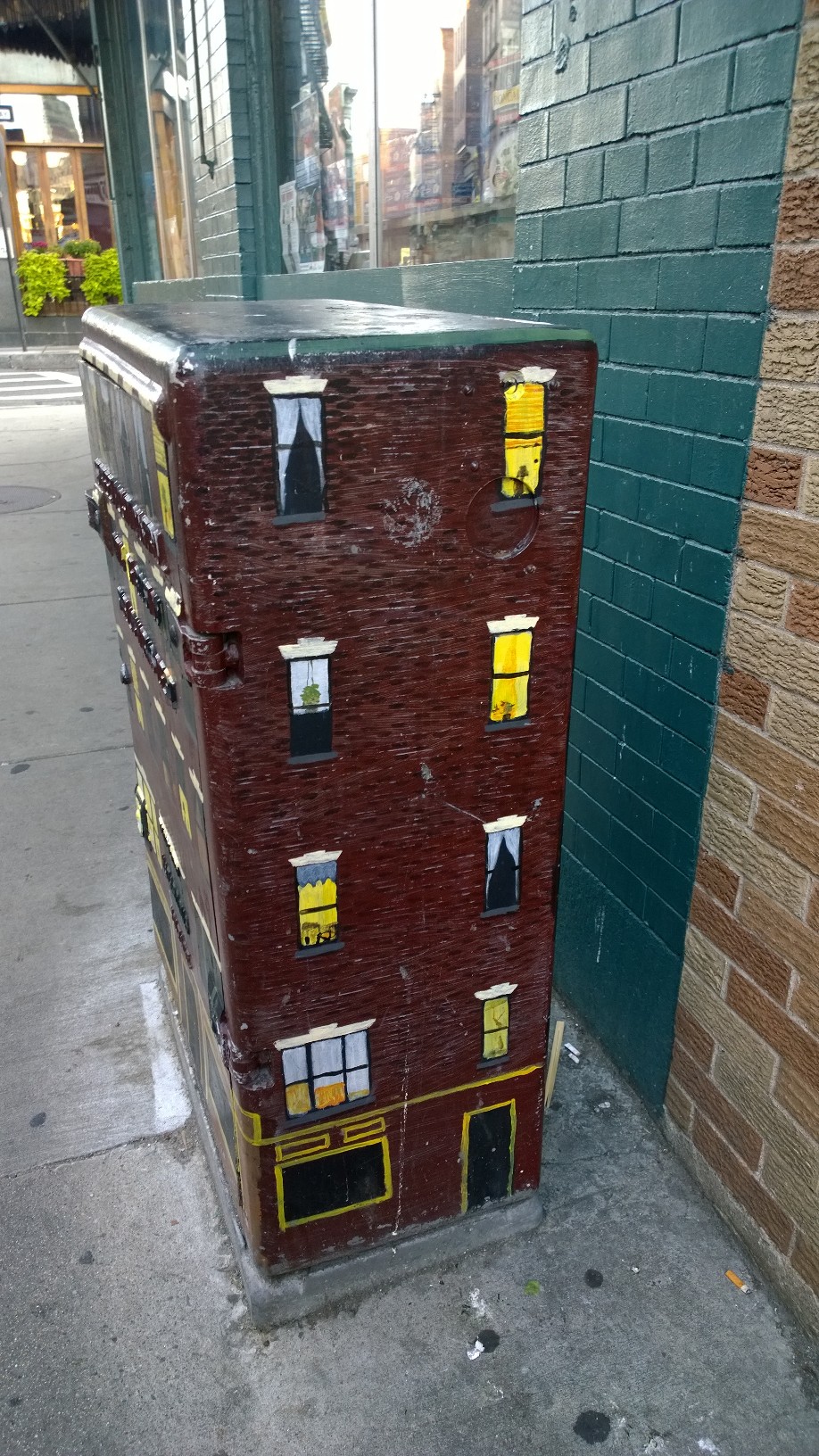
A few recent shots. The beautiful Zakim Bridge, late summer flower in the Greenway, water bugs on the Sudbury River, four scenes from Boston’s North End (which can still feel a bit like stepping into Italy), mysterious “pasta” along the railroad track, and my selfie shadow.

WP_20150924_06_52_11_Pro

091715-greenway

090715-canoes-Sudbury-River

090715-paddleboarding-Sudury-River

092415-North-End-Boston

092415-Going-Bananas-store

092415-North-End-utility-box

092415-North-End-Mural

092315-strange-RR-pasta

091915-shadow-selfie

Read Full Post »

Last month, Steve Curwood of the radio show Living on Earth covered a special conference on climate change.

“Curwood: A coalition of 80 leading Islamic clerics, scholars and officials meeting in Istanbul has issued a declaration on climate change, ‘calling on all nations and peoples to phase out greenhouse gas emissions as soon as possible.’ …

“Islamic nations, including wealthy oil-producing states, are taking action on global warming, says Wael Hmaidan. He’s director of Climate Action Network International, one of the conference organizers and joins us now from Istanbul. …

“Hmaidan: I was really happily surprised by how rigorous the Koran and the Islamic teachings on the environment and the care for the planet. It’s a core function of Islam to care for the planet. It’s a responsibility. … It talks about the delicate balance that all the creatures have on Earth and it’s the responsibility of humans to protect this balance.

“It also talks actually about how humankind should not think that they are more important than other creatures. It talks about the role of all creatures and the need of respect, this diversity in the planet. So all of these kinds of proverbs from the Koran and the Islamic teachings, as well as stories about Prophet Mohammed’s life and his care for the environment clearly [makes] environmental care and climate change key issue for an Islamic teaching. And hearing strong statements saying that it is forbidden not to phase out greenhouse gas emissions coming from Islamic scholars is something very inspiring, even for climate activists. …

“There’s an agreement to establish an informal group … that will follow up on all the ideas that came out from the conference. And the ideas are varied, some of them are high-level, like I mentioned going to the UN agencies, to governments, but also the representatives of the organizations that attended want to create action plans in their communities of influence, to bring the declaration. … We need to transform all mosques to renewable energy, and so on. So a lot of ideas, and they’ve created this platform Muslims for Climate to continue the dialogue.”

More here.

Photo: Islamic Relief
Mohamed Ashmawey, CEO of Islamic Relief Worldwide and one of the Climate Change Symposium organizers addresses attendees.

Read Full Post »

Ken Shulman reports at WBUR’s Only a Game that skateboarding often means a lot to kids on reservations.

The story starts with an Apache artist, Doug Miles.

“Miles paints mainly on found objects: fuel cans, car hoods, panels from a trailer home. But there’s one outlier among the surfaces, a curious artifact that migrated from California to America’s inner cities to the suburbs and, finally, to the reservation: the skateboard. …

“Miles said. ‘My son needed a skateboard. I didn’t have enough money. So I painted him one. And then he rode it all around the rez. And I knew what was going to happen. I knew. So when he got home I said, “What did everybody say?” And he said, “Dad, Dad, everybody wants one.” ‘

“Today Miles’ skateboards hang in private collections and museums. Some of them sell for hundreds of dollars. But the former social worker is most proud of APACHE Skateboards — a skateboard team, shop and artist collaborative he founded on the San Carlos Reservation, about 90 miles east of Phoenix.

“Miles said that making skateboards helps his kids connect with their Apache heritage.

“We’ve been making things for centuries as native people,” he explained. …

“The San Carlos team has a thriving skate park — with colorful murals painted by Miles and his crew. The team also travels to compete against other tribes and against big city skaters. Miles said the travel is mind opening.

“ ‘The kids in the South Bronx and the other reservations and East LA, they’re just like our kids,’ he said. ‘These are all communities that are struggling. So when they meet our kids they’re really meeting themselves. And so I think it empowers kids to know that we’re struggling here, too, but we’re also making art and skateboarding and having a lot of fun in the process.’ ”

More here.

Photo: Ken Shulman/Only A Game
For some Native Americans living on Indian reservations in the American Southwest, skateboarding is more than just a recreational activity.

Read Full Post »

You’ve heard of working vacations to learn about farm life and milking cows or to help Earthwatch study sea lions. A new and unusual vacation offering involves running a bookshop.

‘Literature lovers often dream about owning a bookshop ,” writes Jess Denham at The Independent, “and now, the opportunity is there if you’re willing to fork out £150 for the privilege.

“The Open Book shop in Scotland’s ‘national book town’ of Wigtown has been listed on room-letting website AirBnB offering wordy holidaymakers the chance to work a 40-hour week selling books and customising the store with their ‘own stamp.’ ”

“Local book experts will be on hand to train guests in the seaside town …

“Some ten guests have already hired the bookshop and apartment above, including an elderly couple fulfilling a lifelong ambition, two members of a band that writes and performs songs about books, a librarian from Oregon and a Dutch civil servant. … Guests are encouraged to blog about their experience while carrying out ‘all the normal duties of a bookseller’ …

“Independent authors are invited to sell their own books in the store and set up their own promotional displays.”

More here.

Photo: The Open Book
The Open Book store in Wigtown, Scotland, is opening its doors to holidaymakers.

Read Full Post »

Recently, Simone Orendain wrote a story for the Christian Science Monitor‘s “People Making a Difference” series on a Philippine man who helps kids.

“For the past 30 years [Harnin] Manalaysay has been a father figure and mentor to hundreds of youths in Cavite City, just south of Manila. … Half the young people he has helped were out of school and on the streets – neglected, abused, or abandoned. The other half were in school but on the verge of slipping into gang life …

“A majority of the young people [he has helped] have gone on to become professionals in fields such as finance, education, marketing, and psychology, Manalaysay says.

“Some have become rock stars of the philanthropic world. Kesz Váldez, his 16-year-old adopted son, won the 2012 International Children’s Peace Prize – the children’s equivalent of the Nobel Peace Prize – for starting, at the age of 7, a foundation to help street children live with dignity and understand their rights.”

Manalaysay began his good works at 17, when, having run away from a violent father and some risky behaviors of his own, he found religion and “came across some kids in ragged clothes outside his new church making a lot of noise as they gambled with the loose change they had just begged for. He felt bold enough to scold them for making a ruckus.

“He asked if they were in school. They said no, so he started giving them basic lessons in reading and ABCs. The number of students grew, and he decided to tap some high school teachers, who recommended student volunteers. But he found that even those kids came from unstable families and needed help, too, including lessons in self-esteem and self-respect. Club 8586 was born. …

“Manalaysay credits his mother with this philosophy.

His earliest memories were of her selling home-cooked snacks that she would then give away to the poor once she earned enough to pay for the family’s needs.

That lesson in selflessness and love has stuck with him, and he has tried to pass it along to all of the kids whose lives he has touched.”

More here.

Photo: Simone Orendain
Harnin Manalaysay founded an outreach organization that helps street children in Cavite City, Philippines.


Read Full Post »

Last spring, Sandra and Pat were in Italy, and on one adventure, they toured a company that is very serious about the art of making balsamic vinegar. They learned that a special barrel is started when a new baby is born and ages slowly for years under careful surveillance.

From the website: “Boni’s Acetaia is located, together with its almost 100 years tradition, in the first hills just outside of Modena, in Solignano di Castelvetro. Grandfather Arturo, at the beginning of XX century, started taking lovely care of wooden barrels in which he produced Traditional Balsamic Vinegar in its acetaia in Castelvetro. …

“There are many varieties of Balsamic Vinegars that differ one from the other because of the age and aromas. Boni’s Acetaia apart from Balsamic Vinegars aged in casks made with commonly used woods offers precious products aged in casks made of special local and now rare woods.”

On their next trip, Sandra says, she hopes to get to the new balsamic vinegar museum, also located in Modena.

From the museum site: “The visitor enters a section in which he can see the processing steps for the production of Balsamic vinegar, from the grape harvest … The visitor can see the tools used in the grape collection, the pressing machines and the vats, the copper pot ready for the [cooking] and the barrels under construction. In the attic reconstruction the visitor can smell the balsamic perfume of the vinegar in the barrels, among which the barrels of a very ancient set of vessels belonging to the Fabriani family, which lived here. …

“Finally comes the aging stage, during which the vinegar’s characteristics reach true perfection. These three stages take place in a series of barrels of different woods (cherry, chestnut, mulberry, oak, false acacia, ash tree and juniper) and decreasing size. Each type of wood gives to the vinegar a specific characteristic such as a certain colour, flavour or taste.

“Only after 12 or 25 years of maturing the product reaches that surprising balance of aromas and flavours that allows it to bear the title of ‘protected origin denomination’ (DOP). Walking into the following room the visitor can admire the tools used for the annual operations to carry on in the Acetaia. Here there is a 1785 bottle of Balsamic Vinegar, and its content was tasted a few years ago.” More.

I am learning there is more to vinegar than meets the eye.

Photo: Boni Balsamic Vinegar, Italy

Read Full Post »

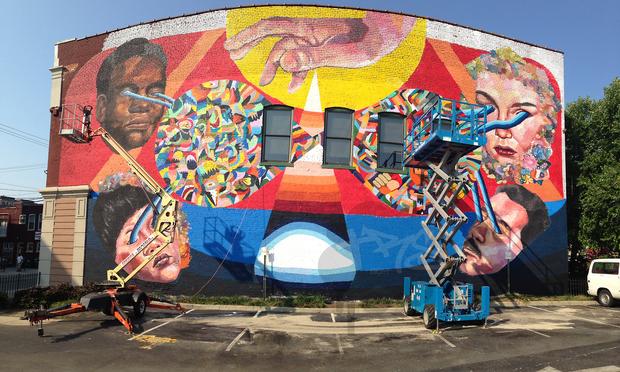
Graffiti is not what it used to be. At the Studio 360 radio show, Jack D’Isidoro recently reported on an American city that wanted to be a tourist destination for murals on every wall.

“For decades, street art was bemoaned as a symptom of urban decay and detritus — a sign that system had lost control. …

“Times have changed, however; mainstream culture now recognizes that street art can be iconic, sensational, and good for business.

“But what if it was created with the intention of being a public good, as a tool that could revitalize and beautify a neighborhood? Richmond, the capital of Virginia, decided to find out.

“Now in its fourth year, the Richmond Mural Project brings internationally renowned mural artists to install pieces (with the building owners’ permission) throughout the city. The mission: create the highest concentration of murals in the world, turning Richmond into a global destination for street art lovers.

” ‘I thought, “I can make a change in Richmond,” ‘recalls Shane Pomajambo, a Washington, D.C., art gallery owner and organizer of the project. Initially, he had met with the mayor and city council members with the intention of creating an arts district within the city, but it quickly expanded into a wider effort …

“With a total of 84 murals since the project’s inception, it’s inspired local artists as well, who have added to the impressive displays across Richmond’s brick walls.”

More at Studio 360, where you can also see more Richmond murals.

Photo: Richmond Mural Project
A mural by the artist Ever in the city of Richmond, Virginia

Read Full Post »

Some readers of Suzanne’s Mom’s Blog (Asakiyume, for example) share my interest in obscure, threatened languages. Here is an ancient one that was new to me: Whistling Turkish.

Jay Walz reported in a 1964 NY Times article, “The whistler forms his ‘speech’ with tongue curled around his teeth so that the ‘words’ are forced through lips that are not puckered in the conventional whistling style; they are tensely drawn flat across the face. The palm of the left hand is cupped about the mouth, and high pressure is applied from the lungs.”

Sindya N. Bhanoo added to the science in the September 3, 2015, NY Times, “Unlike all other spoken languages, a whistled form of Turkish requires that ‘speakers’ rely as heavily on the right side of their brains as on the left side.”

In the New Yorker, Michelle Nijhuis describes a town that is unfortunately losing its whistling, “Kuşköy is remarkable not for how it looks but for how it sounds: here, the roar of the water and the daily calls to prayer are often accompanied by loud, lilting whistles — the distinctive tones of the local language. Over the past half-century, linguists and reporters curious about what locals call kuş dili, or ‘bird language,’ have occasionally struggled up the footpaths and dirt roads that lead to Kuşköy. So its thousand or so residents were not all that surprised when, a few years ago, a Turkish-born German biopsychologist named Onur Güntürkün showed up and asked them to participate in a study. …

“In 1964, a stringer for the Times reported that children in Kuşköy were learning to communicate by whistling before they started school, and that both men and women regularly gossiped, argued, and even courted via whistle. Three years later, a team of visiting linguists observed that whistling was widely used in both the village and the surrounding countryside. But Güntürkün found that few, if any, young women had learned the language, and that, although some young men were fluent whistlers, they had learned the skill as teen-agers, more out of pride than any practical need. … In a small town filled with nosy neighbors, texting affords a level of privacy that whistling never did.”

Read Full Post »

I liked this Marketplace radio story on Duluth, a very cold place where people are managing to grow lettuce and fish in the same water year-round.

Chris Julin reports, “Tony Beran is standing in the kitchen at the Lake Avenue Restaurant in Duluth, Minnesota, with a head of romaine lettuce in one hand and a clump of curly lettuce in the other.

” ‘They’re beautiful,’ he says.

“Beran’s the executive chef, and one thing he likes about these bunches of lettuce is how clean they are. ‘They’re grown aquaponically instead of in dirt,’ he says. ‘Which is wonderful in the kitchen. It’s less labor for us.’

“Another thing he likes about this lettuce is that it was grown just up the road. The restaurant features local ingredients, and Beran serves locally grown lettuce all year, which is a bit of a trick in a place like Duluth. Last winter, the temperature was below zero 23 days in a row.

“But it’s always warm in the greenhouse at Victus Farms, where Beran’s lettuce came from. It’s about an hour’s drive from Duluth in a little mining town called Silver Bay.

” ‘These are all our babies,’ says Mike Mageau, as he shows off his latest lettuce crop. [He’s a] professor of geography at the University of Minnesota Duluth. He runs a program in environment and sustainability, and this indoor farm is a research project. …

“Most of Mageau’s lettuce is floating. Each plant is stuck into a hole in an inch-and-a-half-thick sheet of polystyrene foam. The foam rafts float in pools in the greenhouse, and the lettuce roots dangle through the foam into the water.

“The fish live in a neighboring room. They’re tilapia, and they swim in nine round plastic tanks, each one about six feet tall. Waste from the fish gets pumped over to fertilize the plants in the greenhouse, and some of the pools in the greenhouse grow algae and duckweed that come back into this room to feed the fish.”

Learn more about this continuous loop and the cost to set one up at Marketplace. People commenting on the website say the concept isn’t new, but it was new to me.

Photo: Chris Julin
Mike Mageau, a professor at the University of Minnesota Duluth, grows lettuce year-round — indoors.

Read Full Post »

« Newer Posts - Older Posts »