Feeds:
Posts
Comments

Posts Tagged ‘postaday’

Two grandsons are starting school this week and overcoming shyness, which got me talking to John about what happened one time when I was a shy first grader.

My family had stayed an extra month on Fire Island that year, which meant that when I got to first grade on the mainland, I didn’t know any of the routines. For example, I didn’t know what the lined paper that appeared on my desk after recess was for. (It turned out it was not for drawing a picture of a girl.)

Another routine was morning attendance. We would all sit quietly at our desks, and when Miss Dobbins called our name, we would say, “Here.”

This particular morning, I was really not feeling at all well but was too shy to raise my hand in the middle of a ritual. I didn’t want anyone to look at me.

But becoming increasingly desperate, I made up my mind that when my name was called, I would go up to the teacher’s desk and tell her I felt sick.

Miss Dobbins called my name. I got out of my seat quickly and hurried up to her desk and opened my mouth to say, “I feel sick,” and vomited all over her lap.

She didn’t get mad, just asked another teacher to hold the fort while she cleaned up and got me some help.

People looked at me after all.

(One always feels an urge to come up with a moral for every tale one tells children, but I don’t think this tale has one. Stuff happens to everyone. Even grandmas.)

Read Full Post »

Swedish friends of ours have a home on the Greek island of Samos, where boatloads of refugees are landing every day. The family is collecting donations, buying bread, water bottles, diapers, and such, and delivering them to exhausted but grateful families. I will paste here the Facebook translation of the Swedish post, which may not be quite accurate, but you get the picture.

My Mom wrote yesterday:
It has blown hard in the last few days. Looking from the terrace, you can see the coast guard boat coming with inflatable boats on a trailer full of refugees. In the night 200 came, many families with children. Got together with J– and shared out approximately 100 bagettes without meat (Bedun Lachum) but with potatoes, eggs and mayonnaise, croissants, biscuits — also gave out diapers and wipes. The kids have priority always. The next delivery is 50 packages of diapers and 120 packages biscuits. Another 2000 Bottles of water were ordered.”

Read Full Post »

I love the idea of making use of perfectly good food that otherwise would be thrown out. Despite initial skepticism from the neighborhood where the Daily Table grocery was to open, customers are really grateful for the access and the low prices.

Taryn Luna the Boston Globe quotes the founder: ” ‘Our job at Daily Table is to provide healthy meals that are no more expensive than what people are already buying,’ said Doug Rauch, the founder of Daily Table and former president of Trader Joe’s. ‘We’re trying to reach a segment of the population that is hard to reach. It’s the working poor who are out buying food, but who can’t afford the food they should be eating.’ …

“Rauch has built relationships with suppliers to divert garbage-bound products to his shelves. He’s careful to point out that it doesn’t mean the food is ‘bad,’ expired, or unsafe to eat.

“A vendor at Haymarket, for example, donated a couple hundred pounds of summer squash he intended to throw away after the food didn’t sell. Daily Table expects to sell it for 59 cents a pound. Rauch said he has also purchased vegetables that grocery stores reject because of blemishes or other cosmetic problems that don’t affect the quality of the product.”

The Globe’s Yvonne Abraham visited after the opening: “They can’t keep the cucumber-pear-mint smoothies and salisbury steak on the shelves at Daily Table. The food emporium in Dorchester’s Four Corners has been slammed in its first week, with 300 customers a day, and three times more locals than expected signing up for free memberships.

“Everybody who works at the store — the managers wheeling out food, the white-coated kitchen staff making carrot soup behind the big picture window, the cashiers in bright T-shirts — looks exhausted, and happy.”

From the Daily Table website: “Daily Table is a not-for-profit retail store that offers our community a variety of tasty, convenient and affordable foods that will help you feel and be your best; food that will keep you moving forward, not hold you back.  We provide both ‘grab-n-go’ ready to eat meals, and a selection of produce, bread, dairy and grocery items all at prices that will put a smile on your face, and designed to fit within every budget.  Many of our items are prepared fresh daily in our own kitchen onsite. …

“There are plans to open additional stores in both the greater Boston area and additional cities across the country.

“Working together we can help reduce both the effects of poor eating habits caused by challenging economics, and the impact that wasted food and its precious resources has on our environment.”

More here.

Photo: Daily Table
Opening day in Dorchester, June 4, 2015.

Read Full Post »

The Christian Science Monitor series People Making a Difference (“ordinary people taking action for extraordinary change”) has so many great leads, I have to restrain myself from using one every day. The Monitor staff don’t write all the stories but, like me, harvest from hither and yon.

This story, about “sack farming,” is from the Thomson Reuters Foundation, which I wouldn’t have known about either but for the Monitor.

Caroline Wambui writes, “Central Kenya’s Nturukuma region is not kind to farmers – its erratic rainfall, desert vegetation, and drying riverbeds push most people into making a living through trade rather than agriculture.

“Jane Kairuthi Kathurima toiled for years as an animal herder in the semi-arid conditions of Laikipia County, but struggled to feed her family – until she discovered sack farming, which has transformed her life and those of her children.

“ ‘Being in an environment where food was scarce and lacking in nutrition, I had to find an alternative way to survive,’ said Kathurima. …

“Sack farming involves filling a series of bags with soil, manure, and pebbles for drainage, and growing plants on the top and in holes in the sides. The sacks allow people to grow food in places with limited access to arable land and water.

“Two years after setting up her sack farm, Kathurima now grows enough vegetables – including spinach, lettuce, beets, and arugula to feed her family and sell the surplus to the community. … Now she is supporting other food-insecure farmers by encouraging them to think differently.

“The group behind sack farming in Kenya is GROOTS (Grassroots Organizations Operating Together in Sisterhood), a global network of women-led groups which help women solve problems in their communities by changing the way they do things.

“Rahab Ngima Githaiga, vice chairman of one of the GROOTS member organizations, says sack farming has empowered women and changed lives by improving family nutrition and enabling children to go to school.”

More here.

Photo: Thomson Reuters Foundation/Caroline Wambui
Jane Kairuthi Kathurima cuts kale at her sack farm in central Kenya. She grows enough vegetables to feed her family, selling the surplus to the community. 

Read Full Post »

I was delighted when Will McMillan asked me to review his Blame Those Gershwins CD, with music composed by Steve Sweeting, who also is on piano.

I think the first time I became aware of singer McMillan was in a production of the musical Tortoise, in which he played a sweet, low-key guy unimpressed by the hectic modern world. But I may have seen him in television ads when he was a little boy. He’s been performing that long.

I’ve listened to this CD several times now, and I’m really loving it. The title song playfully borrows themes from the greats — the Gershwins, Cole Porter, Johnny Mercer, Jerome Kern, Irving Berlin, and more. It tells the story of a fan who finds more comfort in the American Songbook than in the unreliable world of romance (but who is also able to poke fun at himself).

I ought to think twice;/Should I really be relying on Kurt Weill for advice?/Life doesn’t rhyme like lyrical knowledge/You get from Rodger and Hartenstein College.

The lyrics for that song are written by Sweeting, who wrote the words for several of the other songs. The joyful “Bounce to the Wave,” with words by Betina Hershey, had me thinking of swing dancing but may suggest other bouncy activities to you, including children jumping on a new mattress. One tune was created for a lovely ee cummings poem that I wish we had known about when Suzanne and Erik got married. The cummings poem we chose was more obscure. In fact, I told the congregation, “We don’t know what it means, but we like the way it sounds.” (“Not even the rain has such small hands.)

McMillan wrote the lyrics to several songs, including “Stuff,”  in which he ponders his good fortune in experiencing the beauty and peace of nature and compares those wonders to other “stuff” we collect in our getting and spending world. He asks, “What have I done in some other life, to be blessed with this stuff,” reminding me of an uncharacteristically plaintive Elaine Stritch singing “somewhere in my youth and childhood/I must have done something good.”

Sweeting’s gentle, wistful persona in “Wait” is self-critical for hoping that something wonderful will happen without action on his part — and for being so resigned. “I sit and watch a year or ten just slip away/I let life come to me,/If it doesn’t,/Say it wasn’t meant to be.”

I really loved each song for its different strengths: the carefree “Let’s Go to the River,” the hopeful “What Am I Doing Alone,” the wise and accepting “Let It All Go,” in which Sweeting suggests that if a poem fails to flow and a friend fails to know when you need a friend, “Maybe the answer/is to love a poem and to write a friend.”

This is music for the thinking music lover. It is thoughtful without being cerebral. It doesn’t talk down to the listener. The questioning, patient vibe suggests a tentativeness that is a kind of strength, a self-knowledge that is OK with not having all the answers and an openness to receiving the joy that is offered. Amazon has the CD. And iTunes. It’s going to be my companion in the car at least until I have all the lyrics memorized.

Oh, and kudos to Doug Hammer, McMillan’s longtime piano collaborator, for the recording and mixing on this one.

McMillan and Sweeting’s launch party is October 2 in Somerville, Mass. Call 617 628 0916. Or check Brown Paper Tickets online.

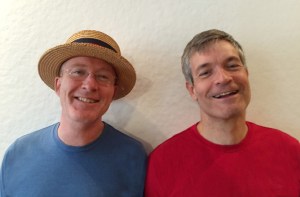
Will McMillan and Steve Sweeting, the guys behind the jazzy, bluesy CD Blame Those Gershwins
Will McMillan & Steve SweetingA

Read Full Post »

Nice to run into Judith and Paul at the annual downtown farmers market. We always talk shop a little because we worked together in the ’90s. I was interested to hear she is back doing writing for our former colleague Kate, currently a principal at leadership consultancy SweetmanCragun.

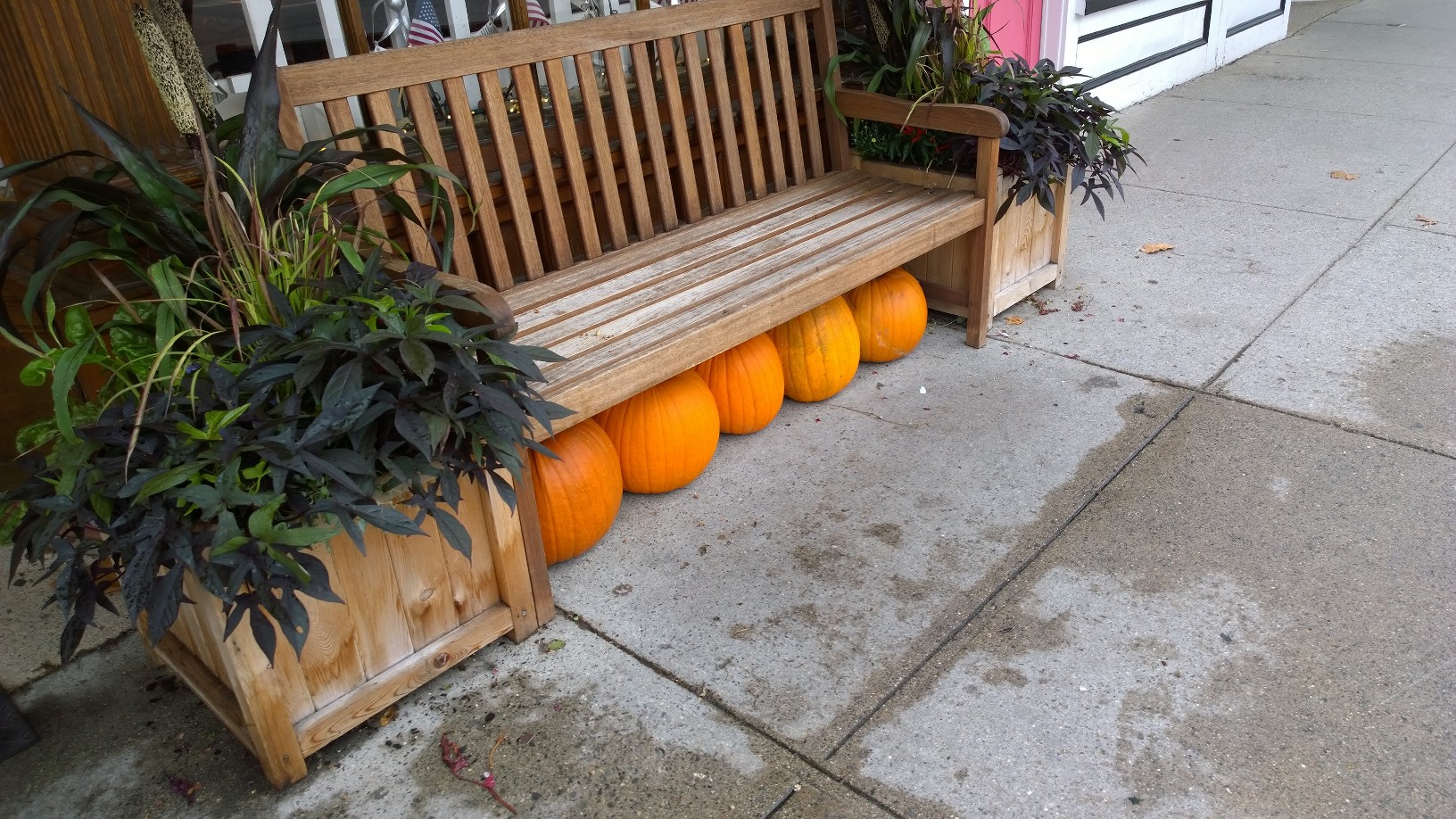
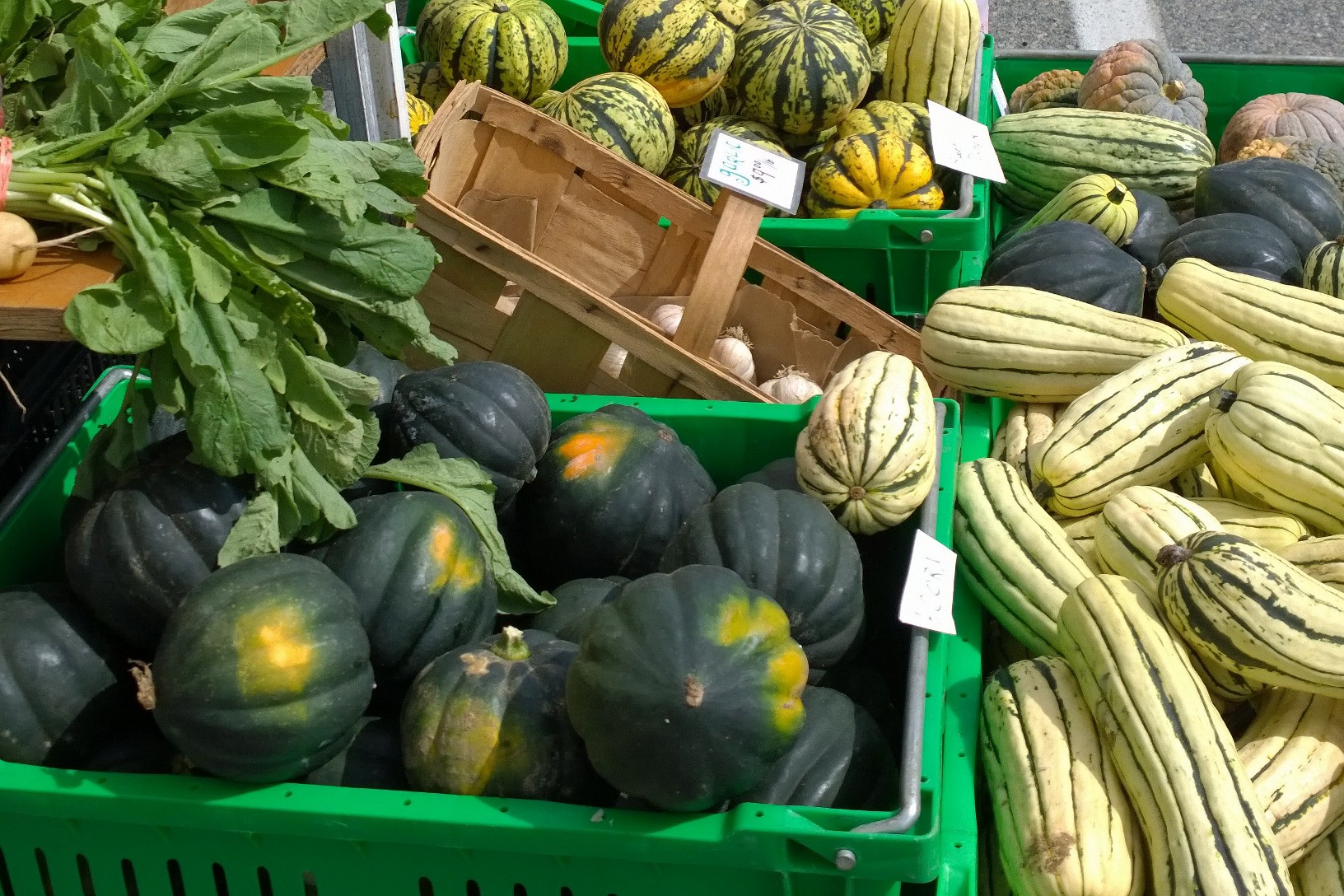
Now about these pictures: Main Streets Café is always creative with their seasonal displays. I don’t know that I would think of lining up pumpkins under a bench. The squashes are from Hutchins Farm. First Root Farm’s display includes radishes, beets, and carrots. The chrysanthemums and asters were tempting, but the car was parked too far away for me to carry a big plant.

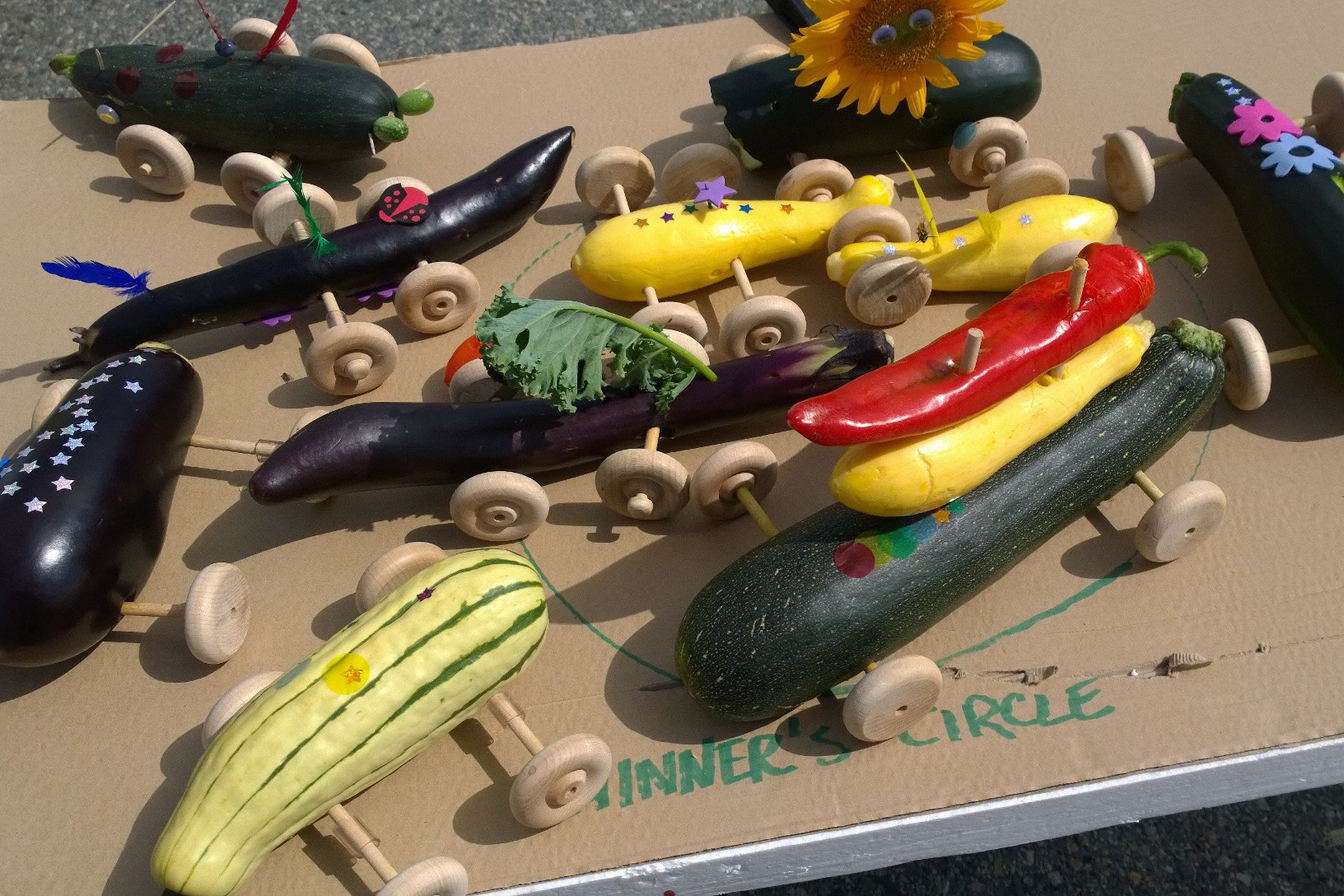
Finally, please note the funny vehicles the kids are racing. I include a close-up of several late-model vegetable cars. (Pick a squash; add wheels.)

091215-changing-seasons

091215-farmers-market

091215-first-root-farm-concord

091215-fall-flowers

091215-veggie-cars-racing

091215-late-model-veggie-cars

Read Full Post »

If you are in Providence on Sunday, do stop by the flea market and see what Suzanne is selling. As she writes on the Luna & Stella website, bargains will be had.

“My husband gazing at a tray of rings I have prepared for our first sample sale, asks, what’s wrong with them?

“What’s wrong with them?  Well, nothing.  A slightly included emerald, a band that came in a millimeter to wide or too flat, a bale a tiny bit too large, a style we decided not to put in the assortment because we already had something similar.

“They’re beautiful, he says.

“We are having our first ever sample at the Providence Flea at 345 South Main Street in Providence this Sunday, September 13.  If you have never been to the Flea, it’s a outdoor juried market inspired by the wildly popular Brooklyn Flea. We love the vintage/modern mix of the Flea, and the idea a shopper could find a great vintage charm from one of the other sellers and mix it on a necklace or bracelet with one of our charms.

“In addition to our full price line … we’ll be selling our almost perfect samples for 50 – 80% off the original prices.  That ring of trays you see?  With genuine rubies, emeralds, aquamarine, etc set in sterling silver or dipped in 18K gold?  Most will be $30, nothing over $50.  These are prices you will never see on our website. ”

More at Luna & Stella, the contemporary birthstone-jewelry company for which I blog. (“Write whatever interests you, Mom.”)

Read Full Post »
 

Ronnie Hess

Two people I know got attention for their writing this week.

Ronnie Hess, a friend from childhood summers on Fire island, won a 2015 Hal Prize from Write On, Door County, Wisconsin, for a story about Tina Hess, her mother. “Judge Michael Perry awarded the prize to ‘The Red Shoes,’ ” says the nonprofit’s website.

The mission of Write On, by the way, “is to facilitate and promote writing in Door County by nurturing the work of writers, supporting readers and audiences, and developing opportunities that encourage broad participation. …

“Write On received our nonprofit status in January, 2014. Since then, over 100 programs have been offered, reaching over 1,000 people in every portion of the county and beyond.” More here. And you can read Ronnie’s essay here, starting on p. 48.

In other news, poet Kate Colby, a friend of Suzanne and Erik, got a Publishers Weekly (PW) star for her latest collection, I Mean.

Says PW, “The book’s parts function in tandem as tools via which the author, in various degrees of obsession, contextualizes and re-contextualizes her life, her experiences, and her work: ‘I mean the walls/ are braced/ against themselves// I mean brace yourself// I mean to take the house down/ with its own components.’ ” More from Publishers Weekly.

Although I can’t use everything, I am interested in posting excerpts from your poems or your other writing. Feel free to send something small to suzannesmom@lunaandstella.com.

Kate Colby

Read Full Post »

“In rural Uganda,” writes Madeline Bishop for Global Envision, “light streams from the Ssenyonjo family’s windows through the night. The children inside sleep soundly, free from worry of snakes and thieves. They are prepared for the morning’s classes after an evening of study. What’s more, their lungs are healthy – no one wakes with coughing fits or fevers.

“But for nearly one-fifth of the world’s population that does not yet have solar power like the Ssenyonjo family, this vision of clean energy is still a dream. Some 1.3 billion people live without access to electricity. …

“Many companies are now taking on the achievable goal of increasing access to clean energy across the globe.

“For their solar programs to be successful, these companies focus on tailored marketing strategies to make sure the products are affordable, accepted, and culturally appropriate for the people who could most benefit from them. …

“Some solar manufacturers and energy distributors are helping people skirt [up-front] costs through creative financing models. …

“Customers can finance their own solar systems for less than what they would otherwise be spending on kerosene. [African solar company] M-KOPA reports a savings of $750 per household over the course of four years and 125 hours of fume-free lighting each month.”

Read about the wide variety of approaches to this work in developing countries here, including why Barefoot College has a “training program for grandmothers, who are more likely to stay put and use their knowledge for the good of their communities. … They learn how to install, maintain, and repair the solar systems and, upon graduation, receive a monthly salary for their work.” Hear, Hear!

Photo: Romeo Ranoco/Reuters

Read Full Post »

Casey Kelly has a story at WBUR’s Only a Game on a sport enabled by the removal of dams on the Penobscot River in Maine.

The recent removal of two dams (and upgrades to others) in Maine’s Penobscot River made available over 1,000 miles of habitat for Atlantic salmon and other fish — and also made the river available to whitewater enthusiasts.

“The dam removal was the culmination of years of restoration efforts by several groups. The Penobscot Nation, for whom the river has been vital for centuries, helped lead that effort.

“ ‘The creator put us here, in the Penobscot River Valley,’ said James Eric Francis, Sr., the director of cultural and historic preservation for the Penobscot Nation. ‘We are surrounded by the sacred river.’

“Last month, paddlers from all over the country gathered for a race celebrating the removal of the dams.” More here, including a video.

Here’s how freeing the river came about. It was a major collaboration by disparate groups committed to identifying and acting on the values they held in common.

Photo: Craig Dilger for The New York Times  
The dismantling of the Veazie Dam is also giving 11 species of fish better access to 1,000 miles of spawning habitat.

Read Full Post »

No, I’m not thinking of the 19th century, of George Eliot (Mary Ann Evans), Currer Bell (Charlotte Brontë), or George Sand (Amantine-Lucile-Aurore Dupin). Masculine names are taken more seriously than feminine ones nowadays, too.

Here is a woman who put it to the test.

Catherine Nichols writes at the Jezebel blog, “The plan made me feel dishonest and creepy, so it took me a long time to send my novel out under a man’s name. But each time I read a study about unconscious bias, I got a little closer to trying it.

“I set up a new e-mail address under a name—let’s say it was George [Suzanne’s Mom asks, ‘What is it about the name George?’] Leyer, though it wasn’t—and left it empty. Weeks went by without word from the agents who had my work. I read another study about how people rate job applicants they believe are female and how much better they like those they believe are male. …

“So, on a dim Saturday morning, I copy-pasted my cover letter and the opening pages of my novel from my regular e-mail into George’s account. I put in the address of one of the agents I’d intended to query under my own name. I didn’t expect to hear back for a few weeks, if at all. It would only be a few queries and then I’d close out my experiment. I began preparing another query, checking the submission requirements on the agency web site. When I clicked back, there was already a new message, the first one in the empty inbox. Mr. Leyer. Delighted. Excited. Please send the manuscript.

“Almost all publishers only accept submissions through agents, so they are essential gatekeepers for anyone trying to sell a book in the traditional market rather than self-publishing. …

“I sent the six queries I had planned to send that day. Within 24 hours George had five responses — three manuscript requests and two warm rejections praising his exciting project. For contrast, under my own name, the same letter and pages sent 50 times had netted me a total of two manuscript requests. …

“I wanted to know more of how the Georges of the world live, so I sent more. Total data: George sent out 50 queries, and had his manuscript requested 17 times.

He is eight and a half times better than me at writing the same book.

“Fully a third of the agents who saw his query wanted to see more, where my numbers never did shift from one in 25. …

“Most of the agents only heard from one or the other of us, but I did overlap a little. One who sent me a form rejection as Catherine not only wanted to read George’s book, but instead of rejecting it asked if he could send it along to a more senior agent. Even George’s rejections were polite and warm on a level that would have meant everything to me, except that they weren’t to the real me. George’s work was ‘clever,’ it’s ‘well-constructed’ and ‘exciting.’ No one mentioned his sentences being lyrical or whether his main characters were feisty. …

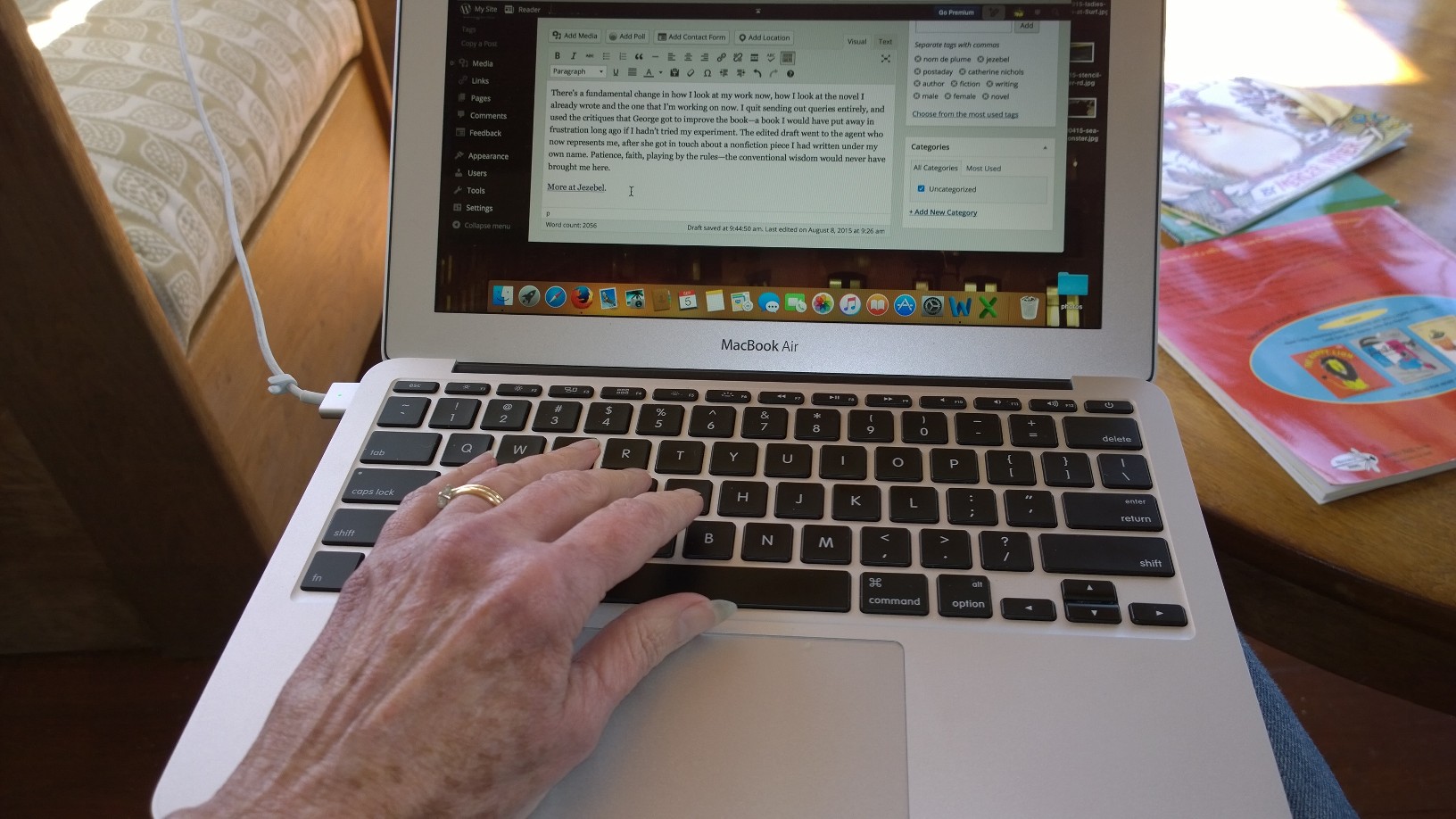
“I quit sending out queries entirely, and used the critiques that George got to improve the book — a book I would have put away in frustration long ago if I hadn’t tried my experiment. The edited draft went to the agent who now represents me, after she got in touch about a nonfiction piece I had written under my own name. Patience, faith, playing by the rules—the conventional wisdom would never have brought me here.” More at Jezebel.

Whew. Now I’m wondering if the fantastic (male) nonfiction writer ML Elrick got some rejection letters because recipients thought he was a female masquerading as a male.  Like JK Rowling. Who now writes mysteries as Robert Galbraith.

090515-typing

Read Full Post »

You may have heard tell of the town that banned single-serving plastic water bottles. The Huffington Post was one of the many news outlets that reported on the law when it took effect in early 2013.

“Concord, Massachusetts, has become one of the first communities in the U.S. to ban the sale of single-serving plastic water bottles. According to the Associated Press, the plastic bottle ban resulted from a three-year campaign by local activists. The activists pushed to reduce waste and fossil fuel use. …

“The campaign Ban the Bottle claims that ‘It takes 17 million barrels of oil per year to make all the plastic water bottles used in the U.S. alone. That’s enough oil to fuel 1.3 million cars for a year.’ Their website also states: ‘In 2007, Americans consumed over 50 billion single serve bottles of water. With a recycling rate of only 23%, over 38 billion bottles end up in landfills.’ According to the EPA, in 2010, the U.S. generated 31 million tons of plastic waste. …

“Not everyone is happy with the ban. WHDH reports that some businesses are also working around it by selling larger bottles, since the rule only focuses on smaller ones. Local Jenny Fioretti voiced one concern to the news group: “Towns are close enough that people can walk two minutes and go get it from Acton or Bedford. It doesn’t really help I don’t think.” More here.

Many bikers and runners were not happy either. What to do?

Crosby’s supermarket began selling water in cardboard cartons instead of plastic. And it put a faucet on the outside wall of the store so that thirsty people could refill their reusable bottles even when the market was closed. And now, after 2-1/2 years, the town has installed a water fountain near the train station.

So if you were afraid of fainting from dehydration after you took the train to Concord for the long hike to Walden Pond, fear no longer.

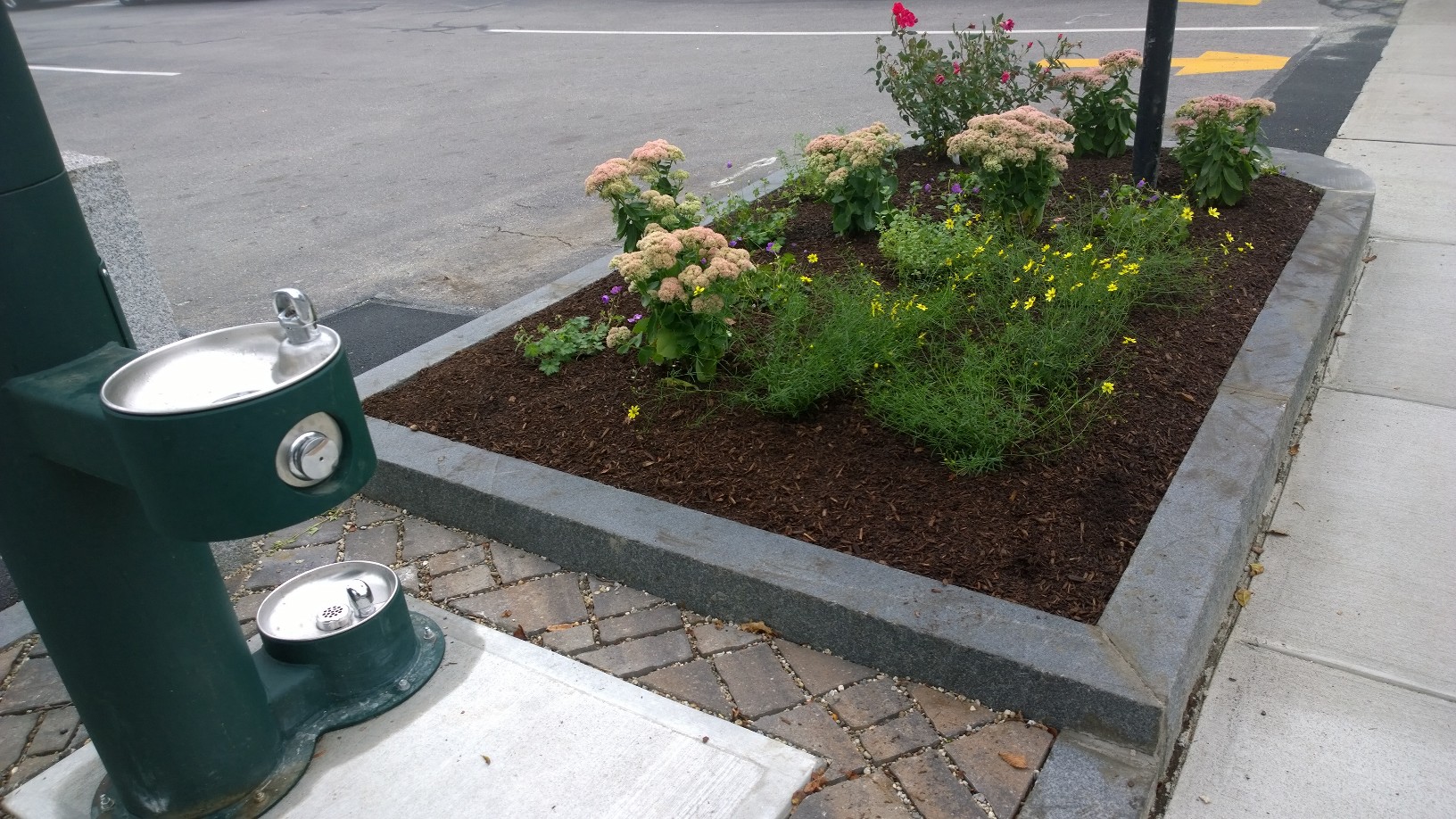
Water fountain as a work in progress, left. Finished fountain, right, offers three opportunities for quenching thirst: water to refill your reusable bottle, water to drink directly, water for your dog. All working well.

081015-fountain-to-be

080415-town-with-no-plastic-water-bottles

091215-fountain-gets-flowerss

Read Full Post »

Back when Netscape was the browser of choice, I clicked every day on What’s Cool, and I think that is how I learned about the Museum Of Bad Art (MOBA), “a community-based, private institution dedicated to the collection, preservation, exhibition and celebration of bad art in all its forms and in all its glory.” I read that many pieces were pulled out of dumpsters and attics — or found abandoned by the side of the road.

Twenty years later, I got to wondering if MOBA was still around. I found lots of information on their expanded website.

“MOBA was founded in the fall of 1993 and presented its first show in March 1994. The response was overwhelming. Since then, MOBA’s collection and ambitions have grown exponentially.

“Initially, MOBA was housed in the basement of a private home in Boston. This meager exhibition space limited the museum to being a regional cultural resource for the New England area.

“As the only museum dedicated to bringing the worst of art to the widest of audiences we felt morally compelled to explore new, more creative ways of bringing this priceless collection of quality bad art to a global audience. Another Boston-area cultural institution, Dedham Community Theatre, generously allowed MOBA the use of their basement. Our first permanent gallery is now conveniently located just outside the men’s room in a 1927 movie theatre.

“The ambiance created such a convivial atmosphere, that when we went looking for a second location, the only place that was up to our quality standards was another theatre basement. The Somerville Theater in Davis Square, Somerville MA is now our second gallery.”

MOBA now exhibits online, publishes an email newsletter called MOBA News, and offers the book Museum of Bad Art : Masterworks. More here.

It was hard to pick one piece of art to show you from the many great examples online. But what’s not to love about the landscape below?

Says MOBA, “The wild westerly wind that devastated this peaceful bucolic landscape was strong enough to denude mature trees, grossly distort fair weather clouds, rend the fur from a cow, bend a wrought iron weather vane, and induce panic in a basset hound whose ears and tongue point due east. …

“In the note accompanying his donation, Mr. Roots wrote, ‘I was happy with the way the barn turned out. It was when I started animals and people that [I realized] I was having problems with proportions.’

“He enjoys other creative pursuits in addition to painting. ‘I have won the World’s Worst Poetry Contest in Pismo Beach, CA, placing 1st, 2nd, and 4th in separate years., [and] I have made many bottles of home brew and wine.’ ”

Art: Bob “Grandpa” Roots
“On a Windy Day,” Donated to the Museum of Bad Art

Read Full Post »

I liked this story about a 91-year-old artist having his first solo show. John sent it to me. I hope the Arlington Advocate leaves it up for a while. (I know that all the profiles I wrote for the newspaper chain of which the Advocate is a part — and all my theater reviews — are long gone.)

A solo exhibition called ‘Umberto Centofante: A Life’s Work” was featured at the Arlington Center for the Arts (ACA) until last week and highlighted 40 years of still lifes, portraits and landscapes.

Heather Beasley Doyle writes, “When Umberto Centofante tells a story about his life or talks about his art, a distinct, almost palpable energy underscores his words. His eyes light up, his body springs lightly and a hearty laugh punctuates his paragraphs. …

“Centofante’s life began in Pontecorvo, Italy, where he grew up on his family’s farm. When he was eight years old, he says, his teacher gave him a sketchbook to take home with him.

“ ‘All of a sudden some ideas came into my head,’ Centofante recalled, and he filled the book with drawings of farm life. …

“The drawings earned him a prize and the opportunity to receive professional art instruction — a chance he had to pass up so he could help work the farm. Eventually, Centofante became a police officer and worked in Rome. After World War Two ended, he emigrated from Italy, bound for the Boston area and a job as a truck mechanic at Garwood Industries in Brighton he secured with help from an uncle who lived in Milton. Centofante had never been a mechanic, but he learned with the same intuition that had enabled him to fill the sketchbook.

“Centofante is ‘self-taught in everything,’ including painting, according to the oldest of his four children, Elaine Gleason. …

“In the Gibbs Gallery, Centofante’s paintings of boats ferrying passengers through white-capped brilliant blue seas share space with glowing, color-soaked portraits of children and exacting, nearly monochromatic nature scenes such as ‘High Moon.’ …

“Centofante says he never sketches out a project ahead of time — that he spends more time thinking and planning a painting than setting paint to canvas.

“ ‘I don’t design; I just start. I find the resolution very quickly,’ he explained. …

“Asked why he paints, he replied simply: ‘It makes me feel good.’ ”

Read more of the story at the Arlington Advocate.

Photo: Arlington.Wicked.Local.com

Read Full Post »

This story comes from Heather Dockray at Good magazine (by way of the Huffington Post). It’s about a life-affirming project in Atlanta.

“Good, local, nutritious food shouldn’t be expensive,” she writes, “and shouldn’t only be enjoyed by people who can afford it.  A homeless shelter in Atlanta decided that their residents desperately needed access to healthy food — but instead of sourcing out, encouraged residents to grow their own. Now, the shelter is home to a huge rooftop garden planted by the residents themselves, which is expected to yield hundreds of pounds of great quality greens. …

“While eating discounted snacks might give homeless residents short-term financial benefits, the long-term health consequences are substantial. The Metro Atlanta Task Force for the Homeless, who runs the gardening program, wanted to give homeless people access to food previously considered out-of-reach. Now, residents are responsible for 80 garden beds, producing kale, carrots, chard, and squash, among other vegetables.” More here.

Dockray doesn’t mention how gardening and donating to the shelter makes residents feel, but I am going to guess it builds their self image and confidence.

Photo: Metro Atlanta Task Force for the Homeless

Read Full Post »

« Newer Posts - Older Posts »