Feeds:
Posts
Comments

Posts Tagged ‘postaday’

I was not surprised to note in the Beatrix Potter biography I’m reading that although Potter worked hard to get rid of rat infestations in her Hill Top Farm house, she had a soft spot for rats. An artist who could draw all sorts of bugs and wildlife with meticulous care, she kept a pet rat as part of her menagerie and even wrote an indulgent story about Samuel Whiskers.

Rats turn out to be good for other things, too: for example, saving people from land mines.

Michael Sullivan writes at National Public Radio (NPR), “It’s 5:45 in the morning, and in a training field outside Siem Reap, home of Angkor Wat, Cambodia’s demining rats are already hard at work. Their noses are close to the wet grass, darting from side to side, as they try to detect explosives buried just beneath the ground.

“Each rat is responsible for clearing a 200-square-meter (239-square-yard) patch of land. Their Cambodian supervisor, Hulsok Heng, says they’re good at it.

“T ‘hey are very good,’ he says. ‘You see this 200 square meters? They clear in only 30 minutes or 35 minutes. If you compare that to a deminer, maybe two days or three days. The deminer will pick up all the fragmentation, the metal in the ground, but the rat picks up only the smell of TNT.’ …

“These are not kitchen rats, but African giant pouched rats, also known as Gambian pouched rats, about 2 feet long from head to tail. Their eyesight is terrible. But their sense of smell is extraordinary. The rats can detect the presence of TNT in amounts starting at 29 grams (about 1 ounce).

“A Belgian nonprofit called Apopo began harnessing the rodents’ olfactory prowess 15 years ago. (The group also trains rats to detect tuberculosis). The organization set up a breeding program and training center in Tanzania and began deploying rats to post-conflict countries, first to Mozambique and Angola. Apopo’s Cambodia program began in April, in partnership with the Cambodian Mine Action Center.

” ‘The idea was very strange,’ says operations coordinator Theap Bunthourn. ‘Cambodian people kill rats, don’t like rats. But they’re cost-efficient, they’re easy to transport, they’re easy to train, and they don’t set off the mines because they’re too light.’ ”

Gosh, they detect TB, too? Who knew?

Read more at NPR, here.

Photo: Michael Sullivan for NPR
Victoria, a 2-year-old rat, sniffs for TNT, sticking her nose high in the air to indicate she’s found some. She is able to detect the presence of TNT at a distance of approximately half a yard.

Read Full Post »

I realized we hadn’t done any poetry for a while. So after I heard poet Mary Jo Bang on the radio show Studio 360, I thought I would share an unusual thing she has done. She has created a modern version of Dante’s Inferno — relying on poetic license and others’ translations to make it more accessible.

Studio 360’s host calls Bang a “poet’s poet, one whose books regularly make year-end best-of lists. Her latest book of poetry is called The Last Two Seconds, and it couldn’t be farther from the stereotypical pretty nature poetry. The collection is full of a sense of impending environmental collapse: natural disaster, extinction, climate change, and cataclysmic violence. …

“The book’s title is also connected to Bang’s sense of her own mortality. ‘Once you get into your 60s you know you have x amount of time. …’

“Bang also recently produced a new translation of Dante’s Inferno — a feat she accomplished without knowing Italian. She worked from previous translations, she explains, comparing the work of other scholarly translators to get an idea of the literal meaning of the original. ‘I could see what was going on; I could see the liberties that each of these translators had taken,’ she says. ‘That gave me permission to come up with my own way of saying it, but it established the borders.’

“Bang also updated Dante’s hell to include [more-recent fiends, including] South Park’s Eric Cartman, who is condemned for the sin of gluttony. ‘Dante wrote the Inferno in the vernacular. He wanted everyone to be able to read it. I wanted to do the equivalent,’ she explains.

“Bang teaches at Washington University in St. Louis, and she says her students appreciate the contemporary references. ‘They tell me things like, “I always wanted to read this and I tried several times and I couldn’t.” That’s exactly the person for whom I wrote this, because I was one of those people, too.’ ”

Maybe me, too.

Hear Bang read her work at Studio 360, here.

Photo: Matt Valentine
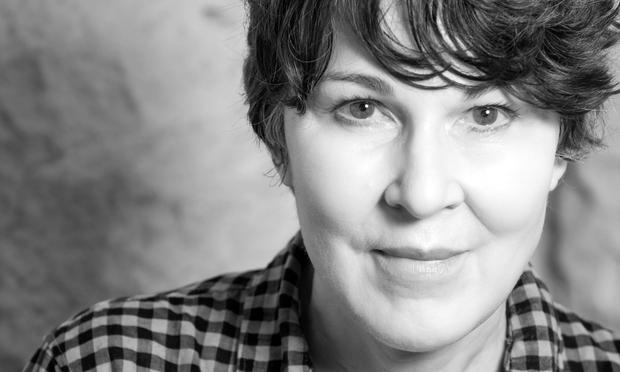
Poet Mary Jo Bang. (Does this woman look like she hit 60?)

Read Full Post »

An experimental theater piece to test the Theory of Purposefully Divided Attention to Fend Off Meltdowns.
Cast: Grandma (G), Adult One (1), Adult Two (2), Adult Three (3), Small Child (Small)
Setting: Dinner table

G: Why is your hairdresser your hero?

1: She’s a real bootstrap entrepreneur. She’ll try anything.

G: Is that a blackberry in your popsicle?

Small: No, a blueberry.

2: Well, when you have kids, you can’t participate in every charity event or random partnership.

3: You have to prioritize, be strategic. Know when to say no.

1: But she has a great community reputation. She’s so upbeat.

G: I really think that’s a blackberry. Like Mrs. Rabbit’s in Peter Rabbit. Supporting everything in the community can add up.

1: It rolls up.

3: But you can waste a lot of time.

2: And energy.

G: People are grateful, though. If you’re strategic, you miss the kind of opportunities that you have no idea where they will lead. I like the way that popsicle drips right into the holder. It’s less messy.

Small: Do you want one?

G: I don’t want to take your last popsicle.

Small: We can make more.

G: Maybe after dinner.

Small: Let’s do it!

G: Careful — the juice is spilling. One and one and 50 make a million. It’s good to be open to serendipity if you possibly can.

2: There are only so many hours in the day.

3: Numerous small investments can’t get what one big investment would.

G: Do you want a napkin?

Small: I got a green popsicle at Whole Foods, but it dripped all over my dragon shirt. It was green.

G: There is nothing like a reputation for being upbeat and cooperative. I know where we can pick blackberries for the next batch of popsicles.

Small: But you have to add juice so it sticks together.

1: We now trade services. She does that with almost everyone. I feel like she could teach a class in entrepreneurship.

G: Teach one together, how about?

Small: Do you want a popsicle? Do you want one now?

G: Maybe after dinner. Look, that’s a raspberry. Or do you think it’s a strawberry?

Small: Do you want a popsicle now? I can go get it. We can make more later. Yes or no?

G: OK. Yes.

Small: Say, Please.

G: Yes, please.

Photo: Matthew Klein

Read Full Post »

The Institute for the Study and Practice of Nonviolence is an outstanding Providence nonprofit that takes a holistic approach to ending violence in poor communities.

On Thursday, I went to an open house and barbecue organized by the students in the Institute’s work program, and was mightily impressed. I shook hands with Mayor Jorge Elorza and chatted at some length with Chief of Police Hugh Clements and the Institute’s executive director, Teny Gross. Not to mention the retired priest who was a founding member, the youth themselves, and the dedicated staff. I heard some pretty inspiring stories!

The young organizers provided a tour of their headquarters, a lovely converted convent on Oxford St.

It was a great event. But here is something sad. In the five years since I visited the Institute’s old quarters, the vagaries of funding sources have forced cutbacks. They no longer have 17 streetworkers turning youth from violence toward work and better lives. They can afford only four. It seems a shame when the need is still significant.

The Institute is advertising for a development director, and they sure need a way to get more support. A big endowment to protect the work from shifts in the winds would be ideal. Read more here.

By the way, Teny Gross has been called to teach nonviolence techniques around the nation and world. He has received many acknowledgments for his success. An unusual honor this month gave him one of his proudest moments. It relates to a George Washington letter about religious tolerance.

“225 years ago, George Washington wrote a letter ‘To the Hebrew Congregation in Newport,’ which is now known as the Touro Synagogue in Newport, Rhode Island. To mark the historic importance of the letter, the congregation and the Touro Synagogue Foundation conduct an annual ‘Letter Reading,’ around the time that the letter was sent. The setting is the beautifully restored Touro Synagogue, built in 1763.

“The letter was only four paragraphs long, but they were four powerful and significant paragraphs and they are regarded as critical in the history of the Jewish people in the Colonial United States.  The letter reading evolved into today’s two hour event filled with greetings from dignitaries, announcements of scholarships and an award to Teny Gross, leader in the Institute for the Study of the Practice of Nonviolence.”

Goes to show that teaching nonviolence can spread out in many unexpected ripples.

Read the details here.

Photo: Institute for the Study and Practice of Nonviolence

Read Full Post »

Bill Littlefield, at Only a Game on WBUR radio, got a lesson in the subtleties of Finnish baseball when he interviewed the Wall Street Journal’s Brian Costa recently. Costa went to Finland to report on pesäpallo, a game whose players are sometimes scouted by US baseball teams.

“Brian Costa: The biggest difference is the pitcher, instead of throwing the ball from a mound at the batter, stands beside him and throws it up in the air and sort of gets out of the way. But there are base paths, there’s four bases, there’s home plate, players field with gloves. …

“Bill Littlefield: Critics of baseball in the U.S. say the games are too long. It’s too slow. There’s not enough action. Would such critics be happier with pesäpallo?

“Brian: Oh, they would love pesäpallo. There are very, very few strikeouts, very few swings and misses, so pretty much every ball that gets pitched gets put into play. …

“Bill: What’s it like for fans attending a game of pesäpallo? And how many are there? Is this a big popular attraction?

“Brian: This is really not a city sport, so [in] Helsinki, you won’t see that much of it. But it is the sport of the Finnish countryside. You’ll have towns where the local population may be 3,000 people, and they’ll get 3,500 at a game. …

“Bill: You note that a scout from the New York Yankees was in Finland last month for All-Star weekend there. … [But] Finnish players, I gather, do not seem very interested in playing baseball as we know it?

“Brian: No they’re not. It’s very interesting. … None of them seemed to really follow Major League Baseball. The people who I asked about their impressions of it kind of smirked or winced or just said, ‘eh.’ I mean, they feel like they’ve got a better version of it.”

More here.

Video: PattijoenUrheilijat

Read Full Post »

Two of my grandchildren just got back from a month in Scandinavia with their parents, visiting the Swedish side of the family. It’s amazing how much kids can develop in one month.

The baby left here with four teeth and came back with eight. She could barely reach for something without falling over and now crawls like a demon. Her older brother is more of a conversationalist than ever and has returned with new ideas for playing with old toys.

The children bloomed and blossomed with all the love and attention of their Swedish family.

The lotus below was also blooming during the past month.

080915-lotus-to-be

082315-bud-opening

082215-lotus-bud

082415-almost-blooming

082415-lotus-blooming

Read Full Post »

Maura Judkis of the Washington Post blogged recently about an actor who wants the opportunity to perform in your home and will throw in a surprising service.

Judkis writes, “Fringe Festival audiences have opened their homes to Brian Feldman. He has met their families and friends, admired their art, eaten their food, handled their precious china. …

“The premise for Feldman’s show, ‘Dishwasher,’ is this: He will come to a person’s house, wash all of the dirty dishes, perform a monologue of the audience’s choosing and then conclude with a single question: ‘Am I a better actor or dishwasher?’ The answer can depend on the monologue that he cold-reads — and on how crusty that casserole dish in the sink has become. The show — the first Fringe show to take place in private homes — has sold out its entire run. …

“His [work] follows in the tradition of great performance artists such as Tehching Hsieh and Marina Abramovic, but it’s more playful — and in his opinion, more theatrical.

“ ‘It’s hard to define — I’m straddling the middle, and I’m always pitching it as theater,’ he said. ‘I was always more interested in theater that had a concept that was hard to define, or things that didn’t have an ending, and didn’t necessarily have a beginning.’ …

“In the week of performing the show so far, he’s dealt with messes big and small. There was the Cleveland Park home with the too-small sink.

“ ‘It was hard to wash anything,’ he said. ‘They had a door that you could enclose yourself in the kitchen. I used it to comic effect, it was almost like “Noises Off.” ‘ …

“So far, five of his hosts have told him he’s better at acting, one has said he’s better at dishwashing, and two couldn’t decide.

“ ‘I’m trying to do as good a job dishwashing as I am acting,’ he said. ‘It’s subjective, just like art.’ ”

Read how Judkis and her friends got him to read “the character of Mrs. Pringle, who is fretting about a disappointing party, from the play ‘Fourteen’ by Alice Gerstenberg. ‘This is my last dinner party — my very last — a fiasco — an utter fiasco!’ ” here.

Photo: Maura Judkis/The Washington Post
Brian Feldman performs a monologue in the writer’s home.

Read Full Post »

Kimberley Mok reports at Treehugger about how a prize-winning architect plans to repurpose the rubble from the recent earthquake to rebuild Nepal in an adaptable style based on traditional Nepalese architecture.

“Japanese architect and recent Pritzker Prize winner Shigeru Ban announced back in May that he would be part of the humanitarian effort in rebuilding post-earthquake Nepal. In addition to employing his signature cardboard tube architecture, Ban has announced that he intends to re-use brick rubble from the disaster, in order to speed up the rebuilding process.

“According to Designboom, Ban’s design for relief housing will consist of a modular wooden framework measuring 3 feet by 7 feet. Immediate occupation will be made possible by tossing temporary tarps over the structure, which will allow residents and builders to rebuild at their pace, u sing rubble or other materials for the infill. Walls could be then mortared with whatever is locally available. …

“Ban studied traditional Nepalese methods of building, and used this research in the design of the operable window frames. … For the long-term, there are plans to implement some sort of prefabricated housing, which the architect has done before in the Philippines.”

More here.

Photo: Shigeru Ban

Read Full Post »

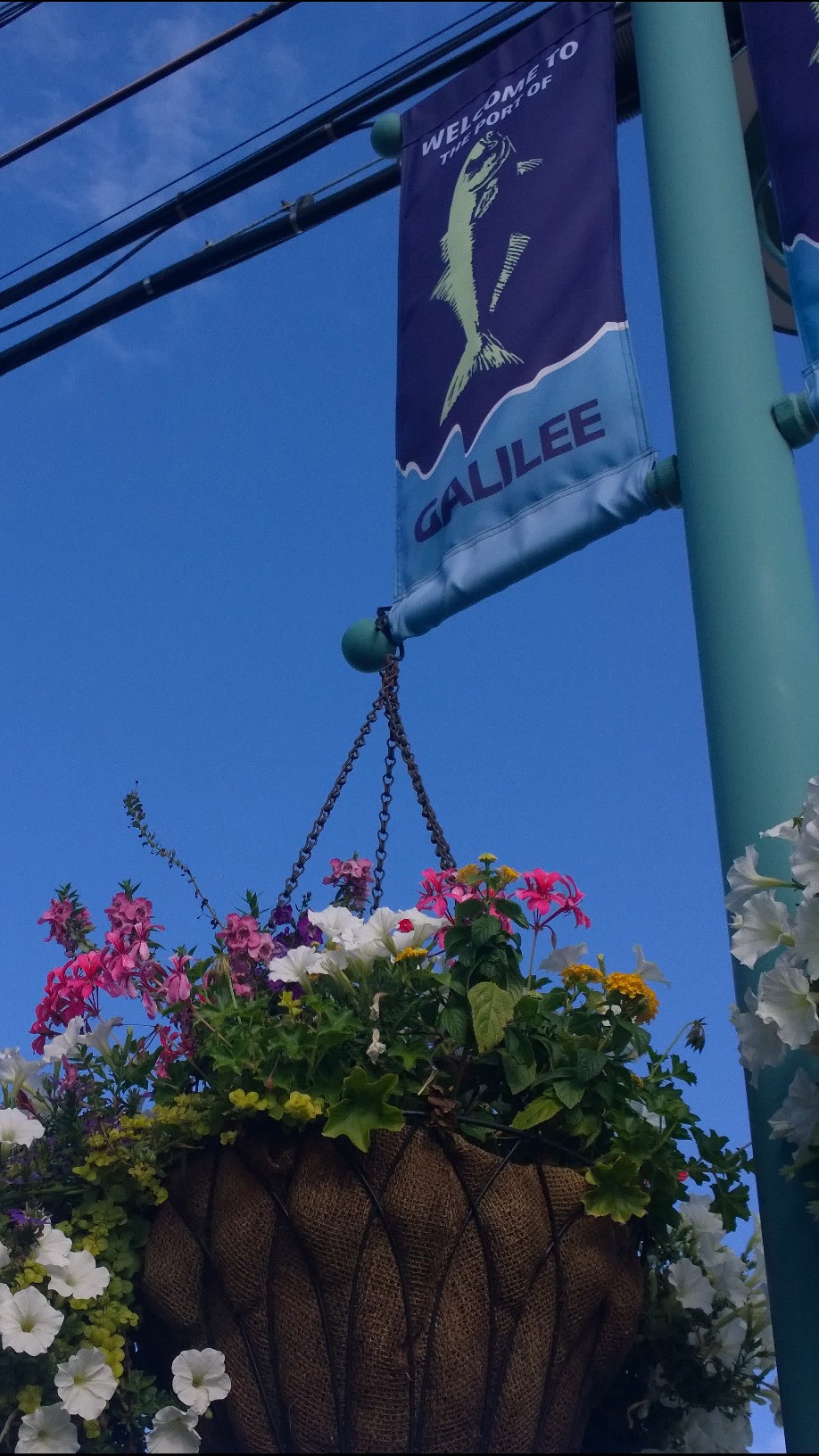
I spent my first couple decades vacationing on Fire Island, a barrier beach off New York’s Long Island. Once you get islands in your system, you never want to get them out.

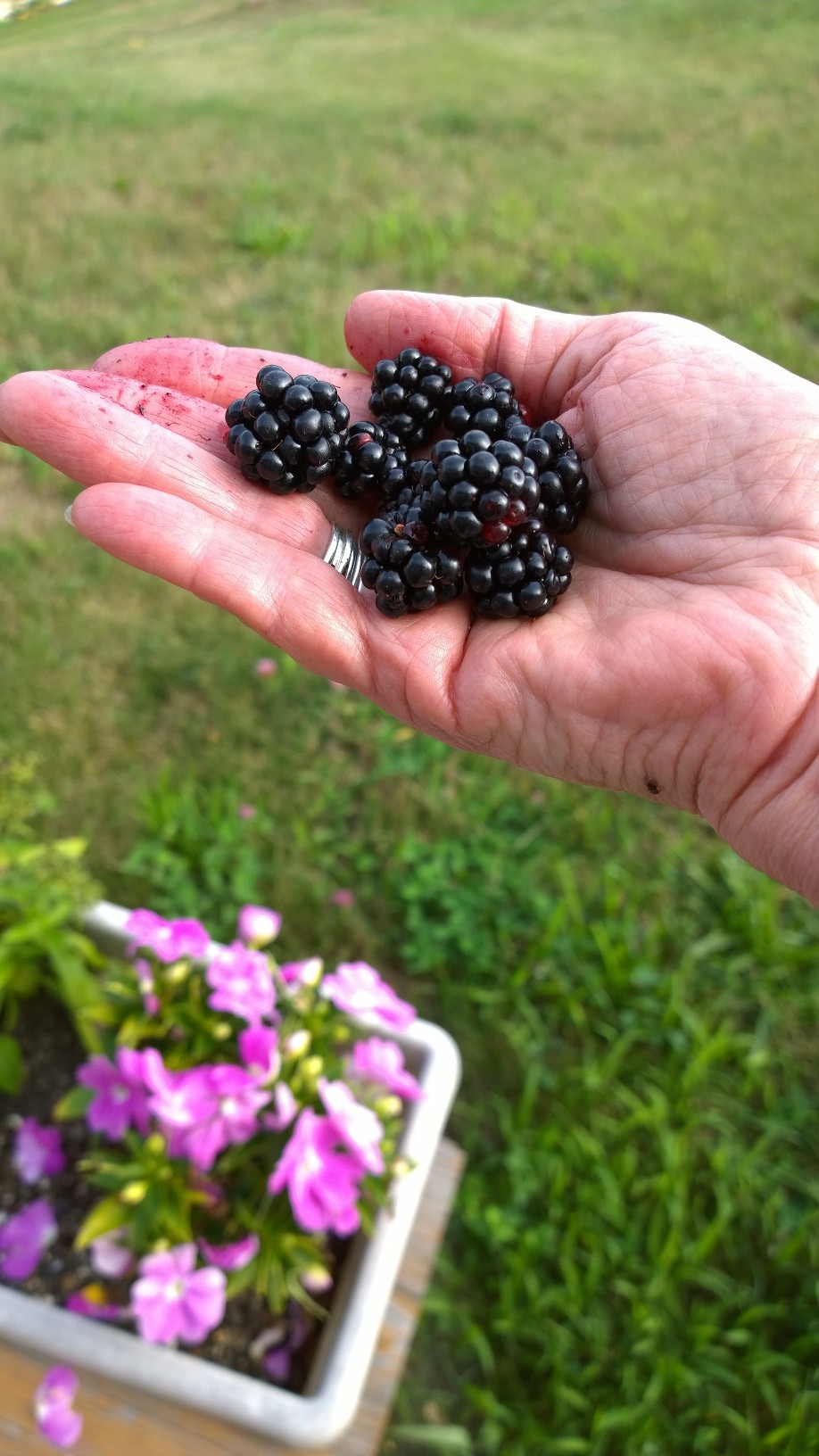
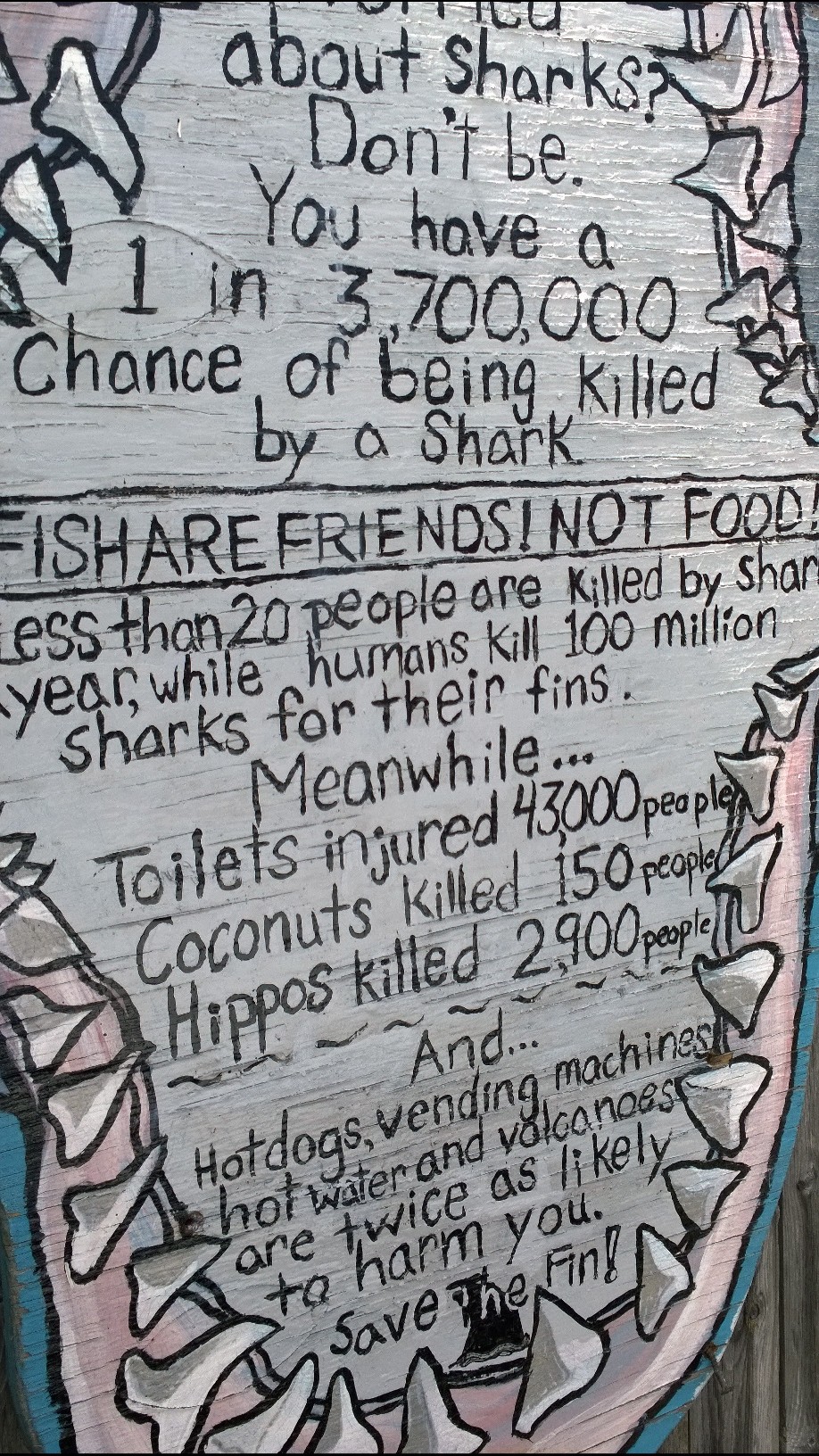
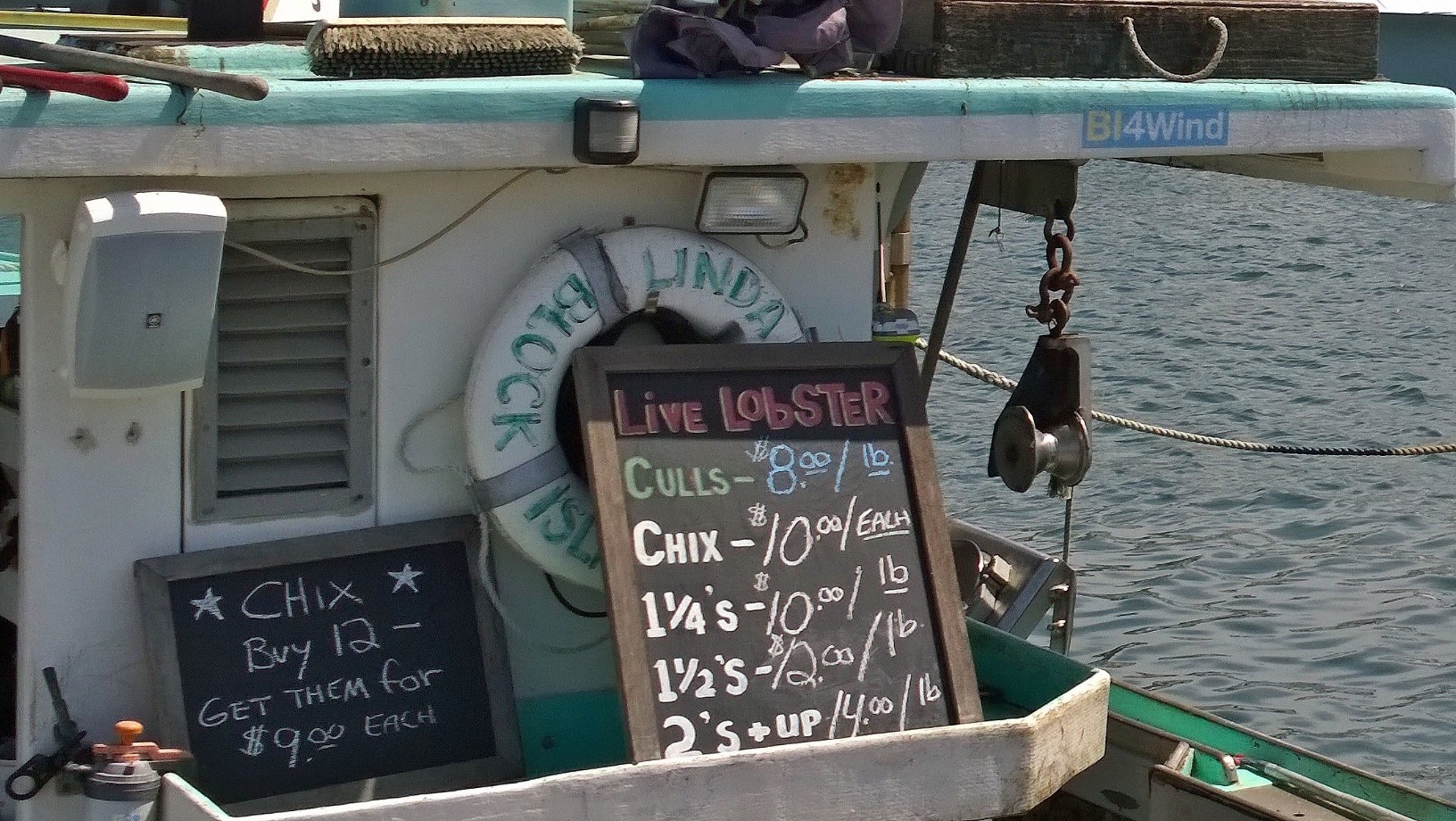
Nowadays I frequent an island that is part of a state that calls itself an island, too: Rhode Island. Here are some pictures from my latest visit.

The photos are mostly self-explanatory, but I would like to draw your attention to the carrot. The young man in the photo pulled that carrot out of the ground for a neighbor, who gave it to him. His mother washed it, and he ate most of it in one sitting.

And he didn’t even feel like he had overdone the eating the way Peter Rabbit did. No need for a dose of chamomile tea.

2115-Galilee-for-fishing

082315-sheltered-harbor

082215-vase-on-deck

082315-one-big-carrot

2215-fuzzy-fruit

082215-blackberries

082315-about-sharks

082315-lobster-boat

082315-sold-to-pirates

082315-Southeast-Light

082215-sunset-RI

Read Full Post »

You know that Adam named the animals and T.S. Eliot the cats. Now Maria Popova at Brain Pickings delves into a Native American author’s book on the naming of mosses and other aspects of the natural environment.

“To name a thing is to acknowledge its existence as separate from everything else that has a name,” says Popova, “to confer upon it the dignity of autonomy while at the same time affirming its belonging with the rest of the nameable world; to transform its strangeness into familiarity, which is the root of empathy. …

“And yet names are words, and words have a way of obscuring or warping the true meanings of their objects. ‘Words belong to each other,’ Virginia Woolf observed in the only surviving recording of her voice, and so they are more accountable to other words than to the often unnameable essences of the things they signify.

“That duality of naming is what Robin Wall Kimmerer, a Thoreau of botany, explores with extraordinary elegance in Gathering Moss: A Natural and Cultural History of Mosses (public library) — her beautiful meditation on the art of attentiveness to life at all scales.

“As a scientist who studies the 22,000 known species of moss — so diverse yet so unfamiliar to the general public that most are known solely by their Latin names rather than the colloquial names we have for trees and flowers — Kimmerer sees the power of naming as an intimate mode of knowing. As the progeny of a long lineage of Native American storytellers, she sees the power of naming as a mode of sacramental communion with the world. …

“Drawing on her heritage — her family comes from the Bear Clan of the Potawatomi — Kimmerer adds:

In indigenous ways of knowing, all beings are recognized as non-human persons, and all have their own names. It is a sign of respect to call a being by its name, and a sign of disrespect to ignore it. Words and names are the ways we humans build relationships, not only with each other, but also with plants.

[…]

Intimate connection allows recognition in an all-too-often anonymous world… Intimacy gives us a different way of seeing.

More at Brain Pickings.

At the suggestion of Brain Pickings, I am deep into a biography of Beatrix Potter and her scientific work drawing and learning the names of mushrooms. Like mosses, they are multitudinous but generally lacking common names.

Photo: Robin Wall Kimmerer

Read Full Post »

Treehugger recently featured some rather magical lamps in the shape of mushrooms.

Kimberley Mok writes, “Whether they glow in the dark or are uncommonly rare, mushrooms are the incredible, unsung heroes of the natural world. They can bio-remediate oil spills, potentially cure diseases, and when used in your garden, can lessen its need for watering. Now, thanks to Japanese artist Yukio Takano, you can even have a LED version of them on your desk, transforming any mundane workspace into one of glowing, fungal wonder.

“Made with glass, salvaged driftwood and outfitted with energy-efficient LEDs and unique little light switches, Takano — who creates under the name The Great Mushrooming — seems to get the little details right enough to make these lamps look like the real thing (they come with hidden battery packs, to up the authentic-look factor, apparently). …

“Takano’s mushroom lights are one-of-a-kind, and while he sells at design fairs like Tokyo’s Design Festa, according to blogger tokyobling he doesn’t ship them abroad, due to the fragility of these glassworks. You can always feast your eyes over at Yukio Takano’s site The Great Mushrooming and visit the portfolio.”

More styles at Treehugger, here.

 Photo: Yukio Takano

Read Full Post »

In case you missed it, the NY Times had a great story on the discovery of ancient fragments of the Quran (or Koran) in Birmingham, England, of all places, where they had been long overlooked.

Dan Bilefsky writes, “The ancient manuscript, written on sheep or goat skin, sat for nearly a century at a university library, with scholars unaware of its significance.

“That is, until Alba Fedeli, a researcher at the University of Birmingham studying for her doctorate, became captivated by its calligraphy and noticed that two of its pages appeared misbound alongside pages of a similar Quranic manuscript from a later date.

“The scripts did not match. Prodded by her observations, the university sent the pages out for radiocarbon testing.

“[In July], researchers at the University of Birmingham revealed the startling finding that the fragments appeared to be part of what could be the world’s oldest copy of the Quran, and researchers say it may have been transcribed by a contemporary of the Prophet Muhammad.

” ‘We were bowled over, startled indeed,’ said David Thomas, a professor of Christianity and Islam at the University of Birmingham, after he and other researchers learned recently of the manuscript’s provenance.”

The manuscript fragments are estimated to be at least 1,370 years old.

Lots more here.

Video: BBC, by way of Youtube

Read Full Post »

I got started following @MassChallenge on twitter after Erik won a prize for his startup, and I still see items worth noting. Recently Mass Challenge linked to a Boston magazine article on one of the companies the business incubator helped launch. It unshrinks your ruined sweaters.

Lauren Landry reports, “Two Harvard Business School graduates are determined to unshrink your clothing.

Desiree Stolar and Nate Barbera sold out of their first 200 units of Unshrinkit on the Somerville-based product discovery site The Grommet in one hour. The patent-pending solution interacts with proteins in wool and, with the help of a cold-water rinse, causes them to revert to their original shape. …

“A shrunken cashmere sweater spawned the idea. … Around the same time [it shrank], a team of her Harvard Business School classmates were given $5,000 and told to launch a startup, as part of the school’s FIELD 3 program. … Barbera, with a background in mechanical engineering, set out to try and develop a chemically based solution capable of unshrinking wool clothing. …

“ ‘We tested out at least 20 ideas, one of which happened to work incredibly well—with no side effects and a relatively inexpensive ingredient.’ ”

The startup grew very fast and soon heard from customers that the magic potion didn’t work on very tightly woven wool.

“So, the founders launched into another round of R&D this past February to develop a new solution. Within the next month, the company plans to launch a ‘professional version’ of Unshrinkit, made with the same active ingredients, but with a few additives and a nice, fresh linen scent. …

“Now the team is focused on growing that community of supporters.

‘A lot of people don’t know they can unshrink their clothing,’ Stolar says. ‘We have to disrupt that mental state.’ ”

More here.

For relative beginners, they have a pretty professional ad.

Read Full Post »

The latest thing in tiny houses is taking a vacation in one. The Boston Globe suggests that if you have been intrigued about downsizing (way, way down sizing) to a tiny house, you could test one out. Or maybe you just want to simplify your life for a week.

Jessica Geller writes, “Getaway, a new startup out of Harvard, is taking the off-the-grid retreat and miniaturizing it. …

“For $119 a night, a group of four can book a cabin complete with hotel basics, such as towels and sheets. The tiny house is stocked with snacks, bicycles, firewood, and playing cards, all available for purchase via Venmo, a mobile payment system.

“Getaway … is one of the first projects out of the Millennial Housing Lab — a collaboration among the business, law, and design schools [at Harvard] — with the goal of developing fresh housing ideas for a new generation. …

“But are they too cramped for comfort? Jon Staff, a cofounder of the Millennial Housing Lab, says no. They’re full of conveniences. And they might just teach visitors a thing or two about scaling back. …

“In addition to Getaway, the Millennial Housing Lab plans to build tiny houses for the homeless and create kits for anyone to be able to build a house in 30 days.

“At 160 square feet, the 8×20-foot Getaway cabin is larger than the average minivan, 90 square feet, and a little smaller than a school bus, 245 square feet.”

Check out a few of my past posts on tiny houses: here, here, here, and here. And be watching for a series of photographs I’m taking of a tiny house going up gradually over the summer at the Umbrella Arts Center.

Photo: Kataram Studios

Read Full Post »

I like this story about a couple of idealistic young men who have created fair-wage, environmentally sustainable textile jobs in the United States with the help of customers’ T-shirt collections. Their company, Project Repat, is “repatriating” some textile jobs lost overseas years ago.

From the website: “Project Repat story starts in Nairobi, Kenya, where Project Repat co-founder Ross Lohr was doing non-profit education work. After sitting in traffic for 2 hours, he discovered the cause of the jam: an overturned fruit and vegetable rickshaw pushed by a Kenyan man wearing a t-shirt that said ‘I Danced My Ass Off at Josh’s Bar Mitzvah.’

“Amazed by all the incredible t-shirts that get sold off and sent overseas by non-profit and for-profit companies in America, [Nathan Rothstein and I] began working with Kenyan artisans to design new products out of castaway t-shirts, including bags, scarves, and re-fabricated t-shirts. Those products were ‘repatriated’ (or returned to the country of origin) back to the United States and sold to raise money for non-profits working in East Africa.

“When trying to sell our upcycled products at markets in Boston, we quickly discovered the difference between a ‘good idea’ and a real business: while potential customers liked the idea of a repatriated upcycled t-shirt bag, they didn’t like it enough to actually buy it. What customers did ask for, time and time again, was an affordable t-shirt quilt.

“We had heard enough: instead of shipping goods all around the country, why not create fair wage jobs in the United States and create a product that has a lot of meaning for customers? As they say, the rest is history. Rather than ‘repatriating’ t-shirts back to the United States, Project Repat creates a high quality, affordable t-shirt quilt with minimal carbon impact.”

The factories are located in cities once-renowned for textiles: Fall River, Massachusetts (where “Precision Sportswear has been able to succeed by specializing in custom work and smaller production runs for made-in-USA. companies”), and Morgantown, North Carolina (where “each worker at Opportunity Threads is part of a collaborative working model, [and] each employee adds input to the production process and has the opportunity to earn an ownership stake in the company”).

I was not able to find on the website what happened to the artisans in Africa when the company’s focus changed. Ping @lunastellablog1 if you know.

On this Repat page, you tell the company what size quilt to make with your T-shirts, what size panels, and what color PolarTec backing you want.

Photo: Project Repat

Read Full Post »

« Newer Posts - Older Posts »