Feeds:
Posts
Comments

Posts Tagged ‘postaday’

The first time I really got into the Internet and computers was in 1994 when I was working at HBR. We all loved experimenting with kooky screen savers. Do you remember flying toasters?

Flying toasters are what I think of when I look at what reader Rob Moses is doing with his camera on a drone. Here are photos from a flight over the Calgary Zoo. (Rob lives in Canada.)

He writes, “I have been flying around this DJi Phantom 3 Professional Quadcopter lately. I took this picture with it flying over the Calgary Zoo. One of the most fun things around flying one of these things is having the ability to shoot photos of views people don’t really see. This picture is a good example of a view not seen. I only wish there was some animals walking around in the picture haha.”

Seeing what your flying camera picked up must feel similar to riding on a train through people’s backyards, where you get a sense of lives as they are lived that you never get from a front lawn.

Be sure to check out the Rob Moses Photography blog, here.

Photo: Rob Moses Photography


Read Full Post »

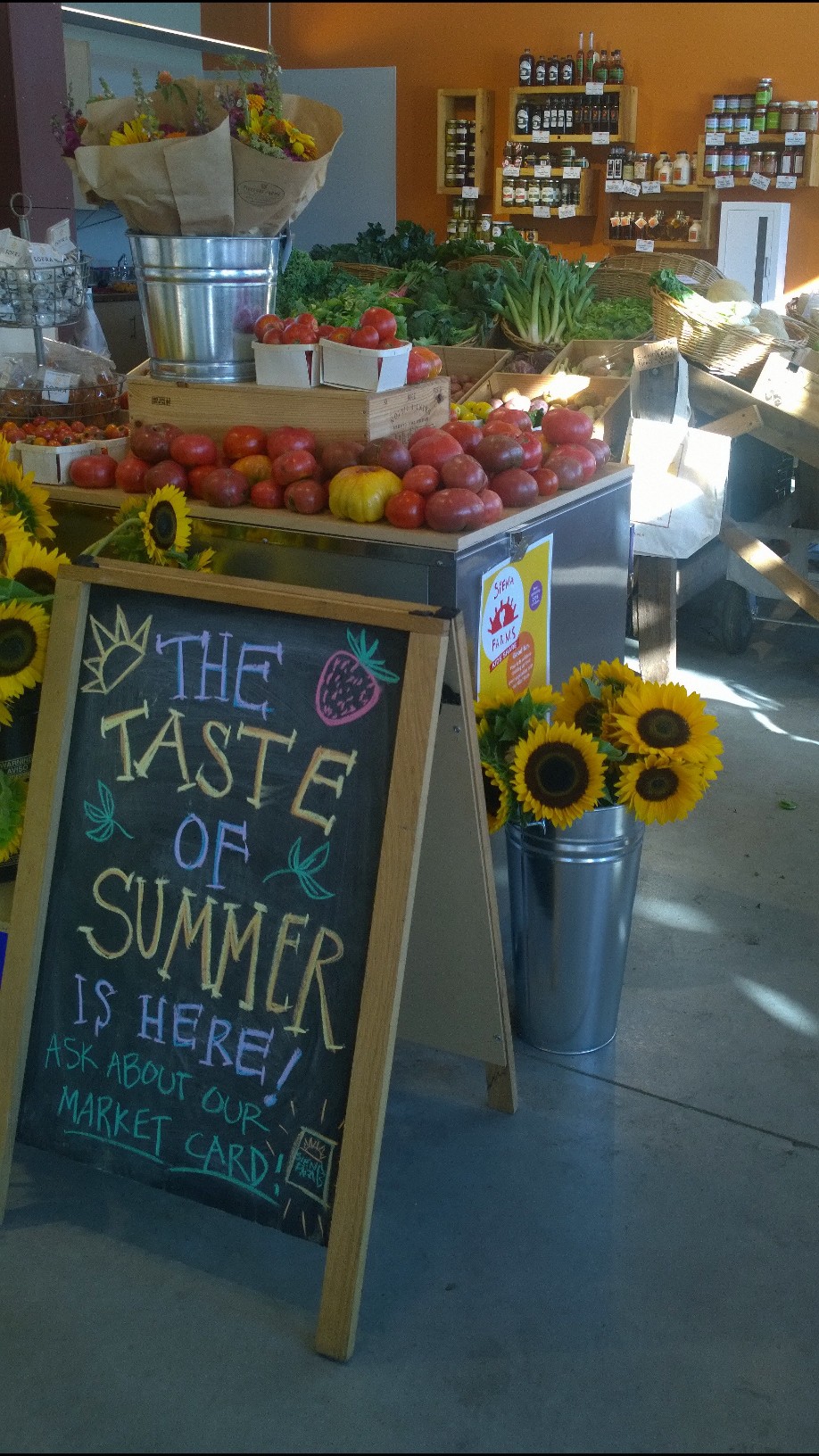
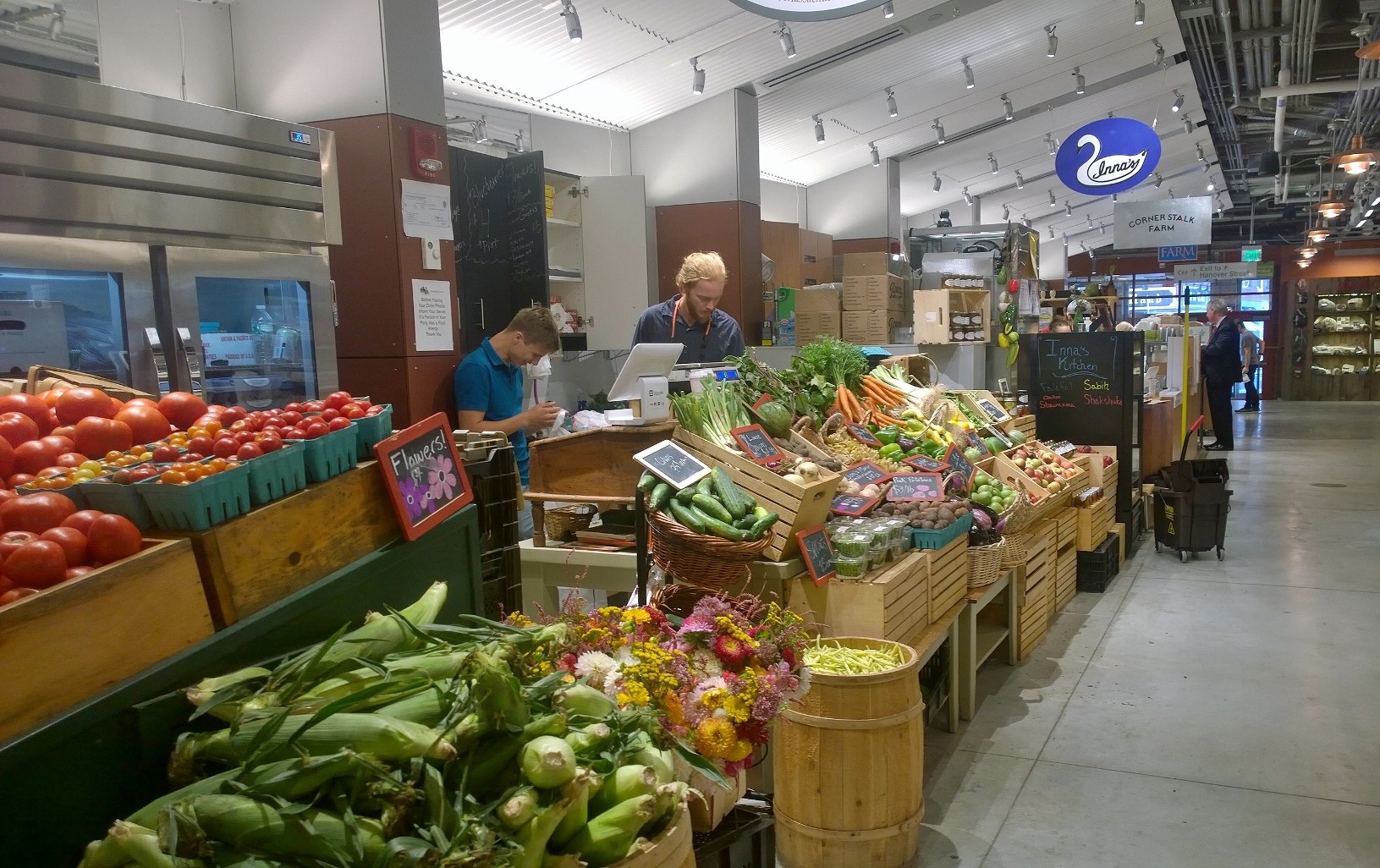
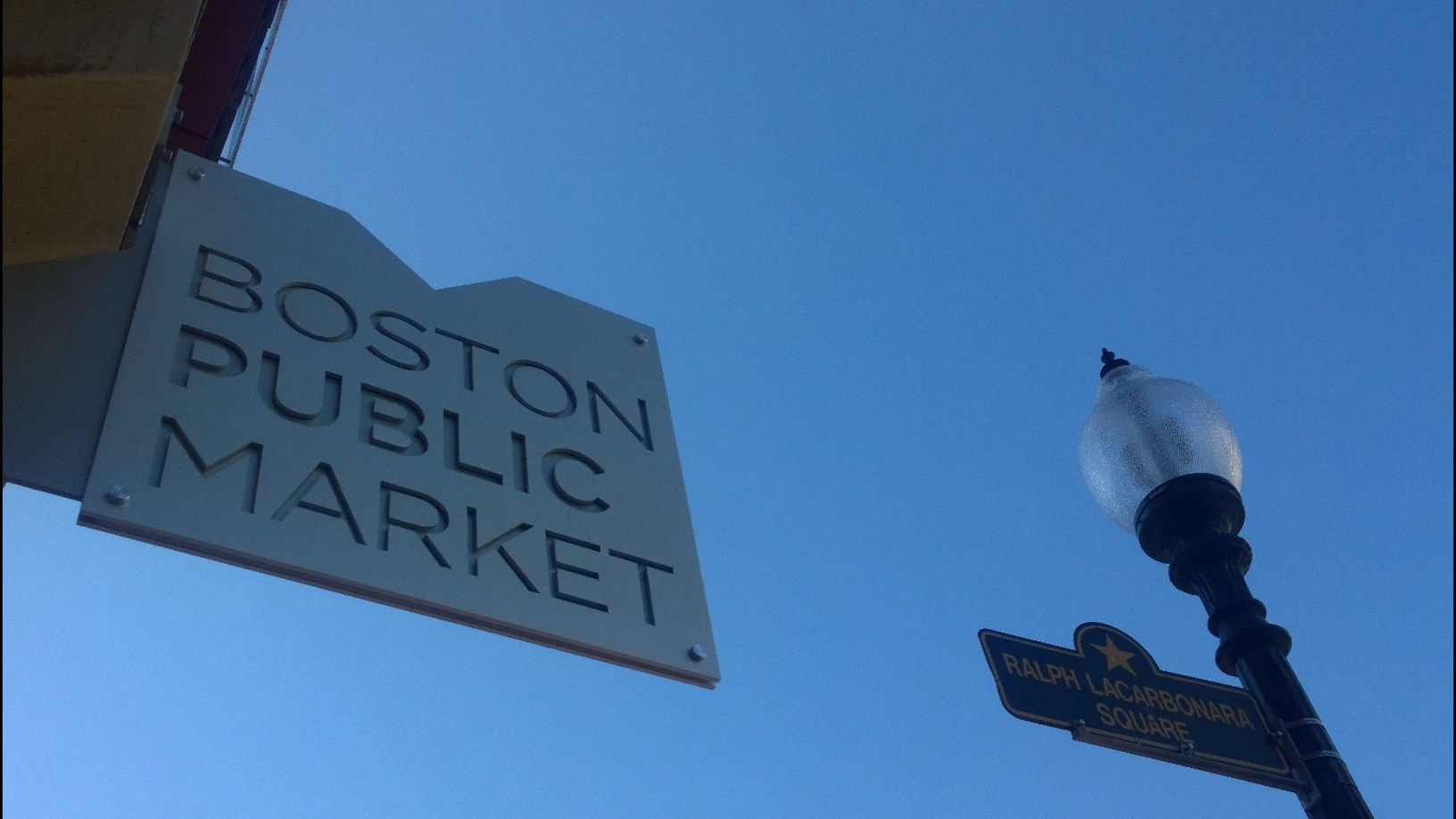
The original idea when the grandchildren visited my workplace was to walk to the new Boston Public Market, but it was too far and there were so many other interesting things along the way.

We will go as a family another day, but I thought I would zip over there Thursday and take some pictures. I arrived at 8 a.m. The market is open Wednesdays to Sundays, 8 to 8, and since the activity wasn’t in full swing, it was a good time to look around.

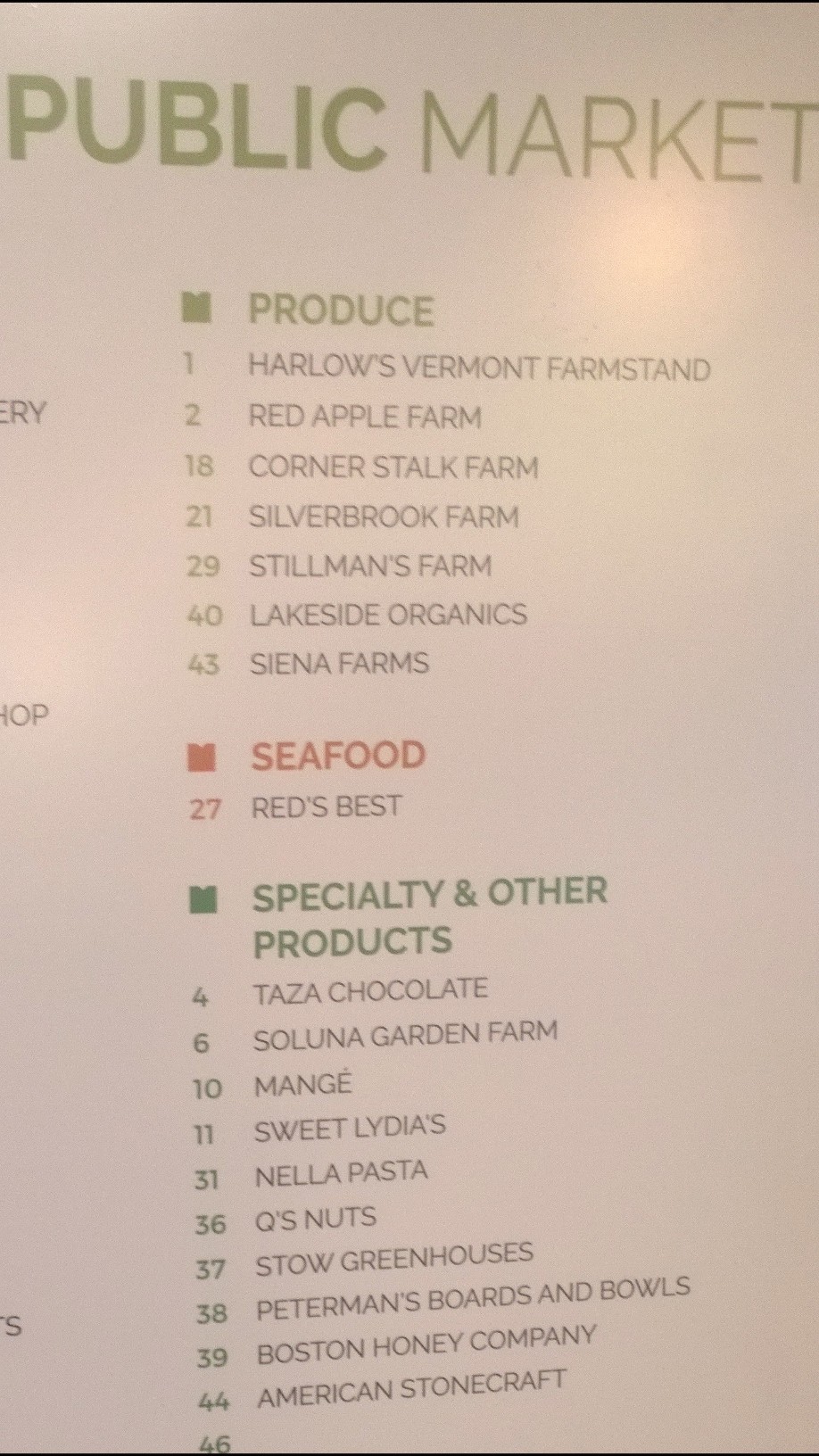
The Boston Public Market is not as big, as noisy, or as messy as the famed Reading Terminal Market in Philadelphia (and there are no Amish), but it shows real promise. Although the market was fairly quiet at 8 a.m., there was already a line at MotherJuice and George Howell’s Coffee — people getting revved up for work at Government Center and environs. At a farmstand, I bought two small squashes. Fifty cents.

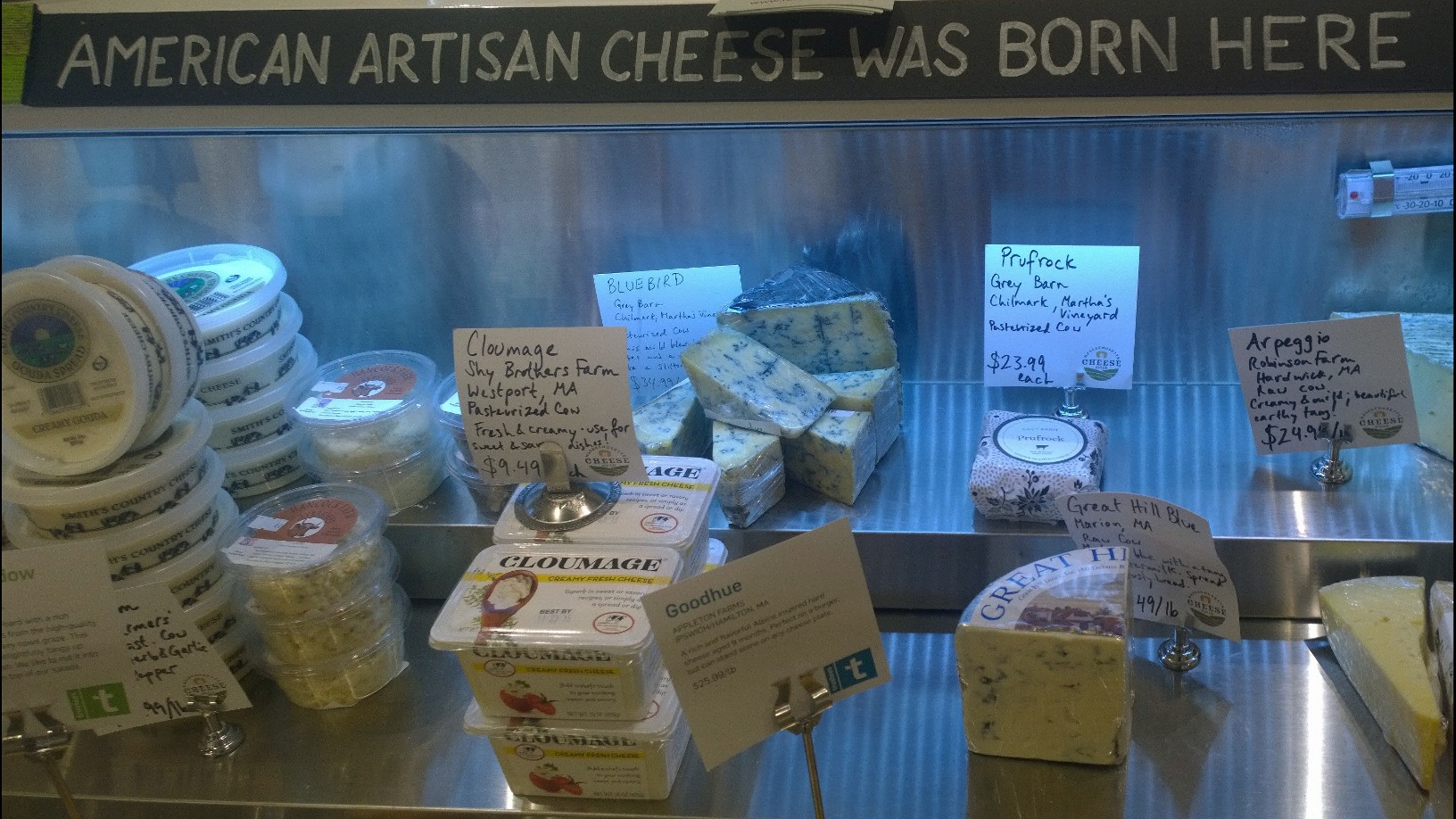
The Vietnamese restaurant Bon Me had a counter, and I saw local honey, fruits, vegetables, artisan cheese, and crafts. The crafts gave me pause as the market is supposed to be mainly an outlet for regional farmers, and much as I love crafts, I have seen them overwhelm another farmers market. As long as there is a good balance, it will be fine.

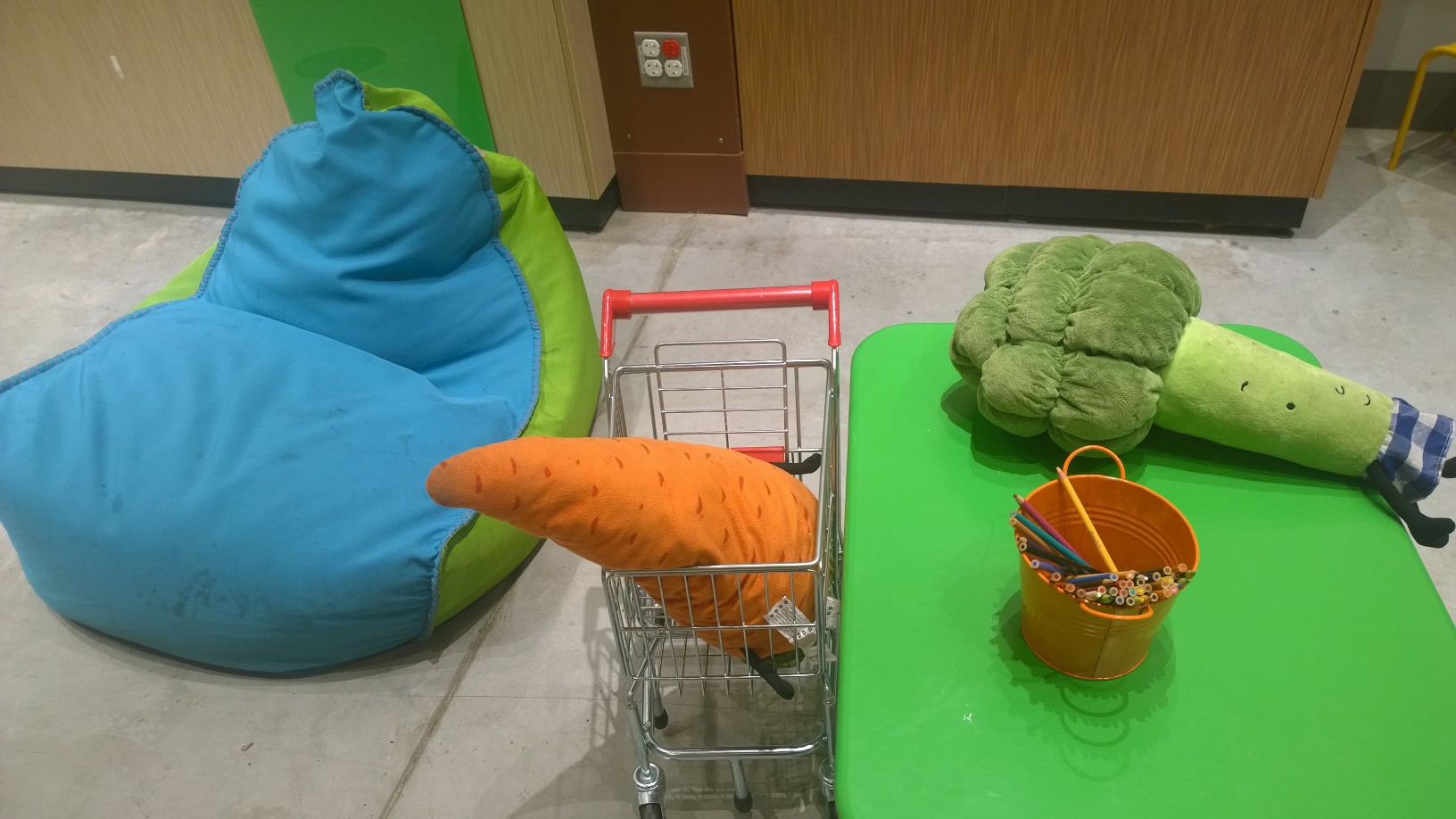
Note the vegetable soft toys in the children’s play area.

081315-market-window

081315-indoor-farmstand

081315-market-overview

081315-public-market-play-area

081315-cheese-at-market

081315-fresh-produce

081315-public-market

Read Full Post »

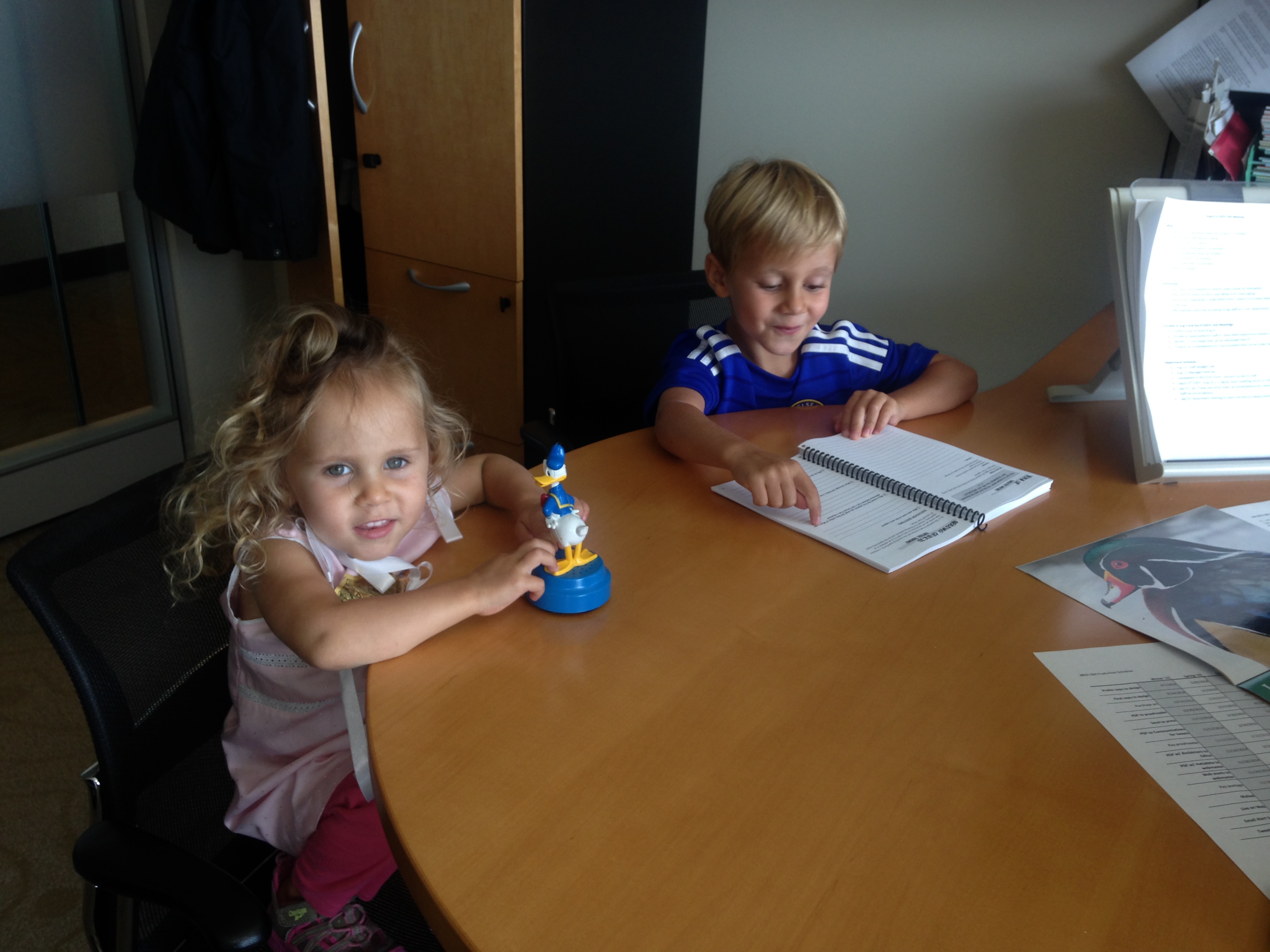
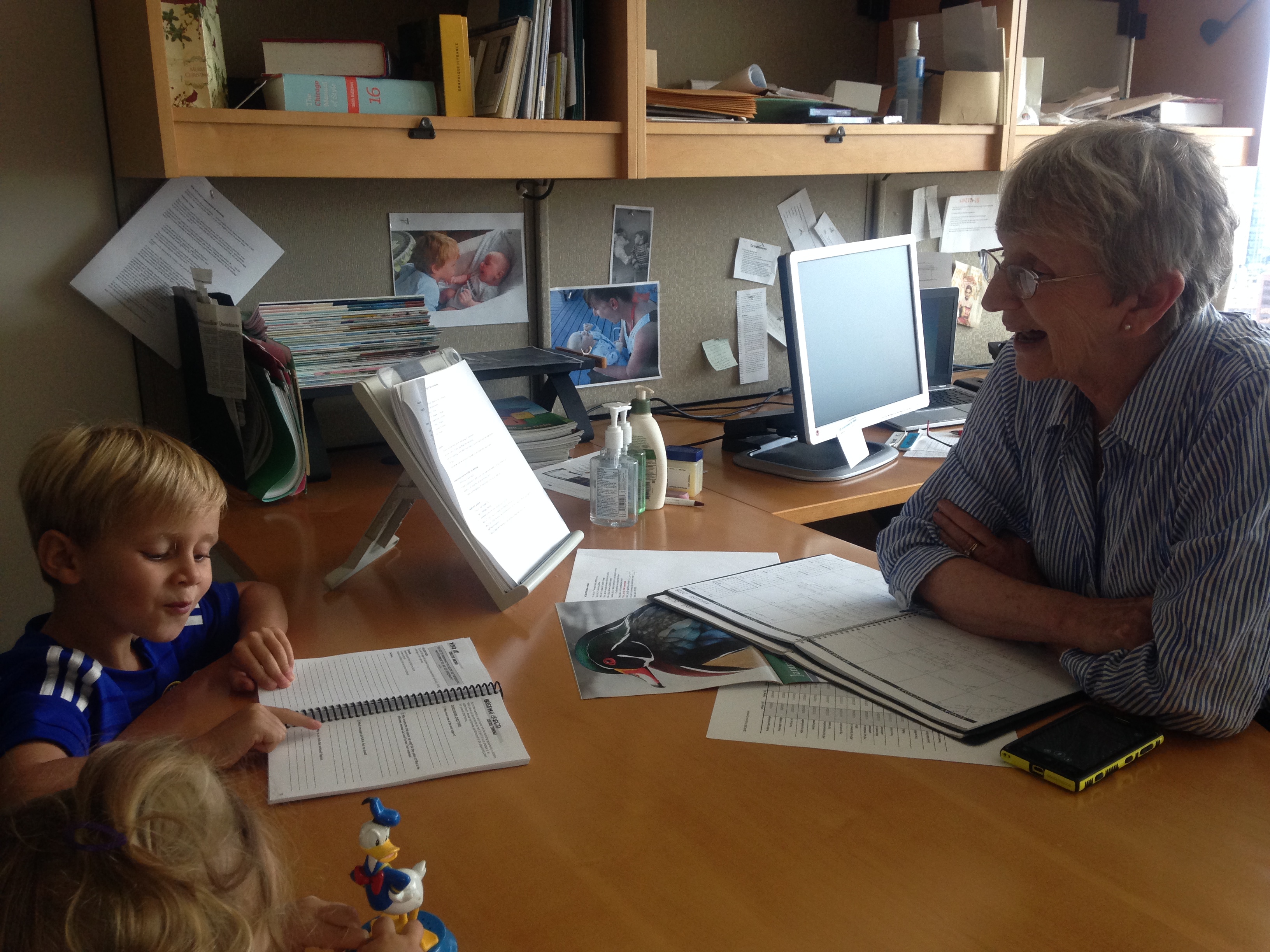
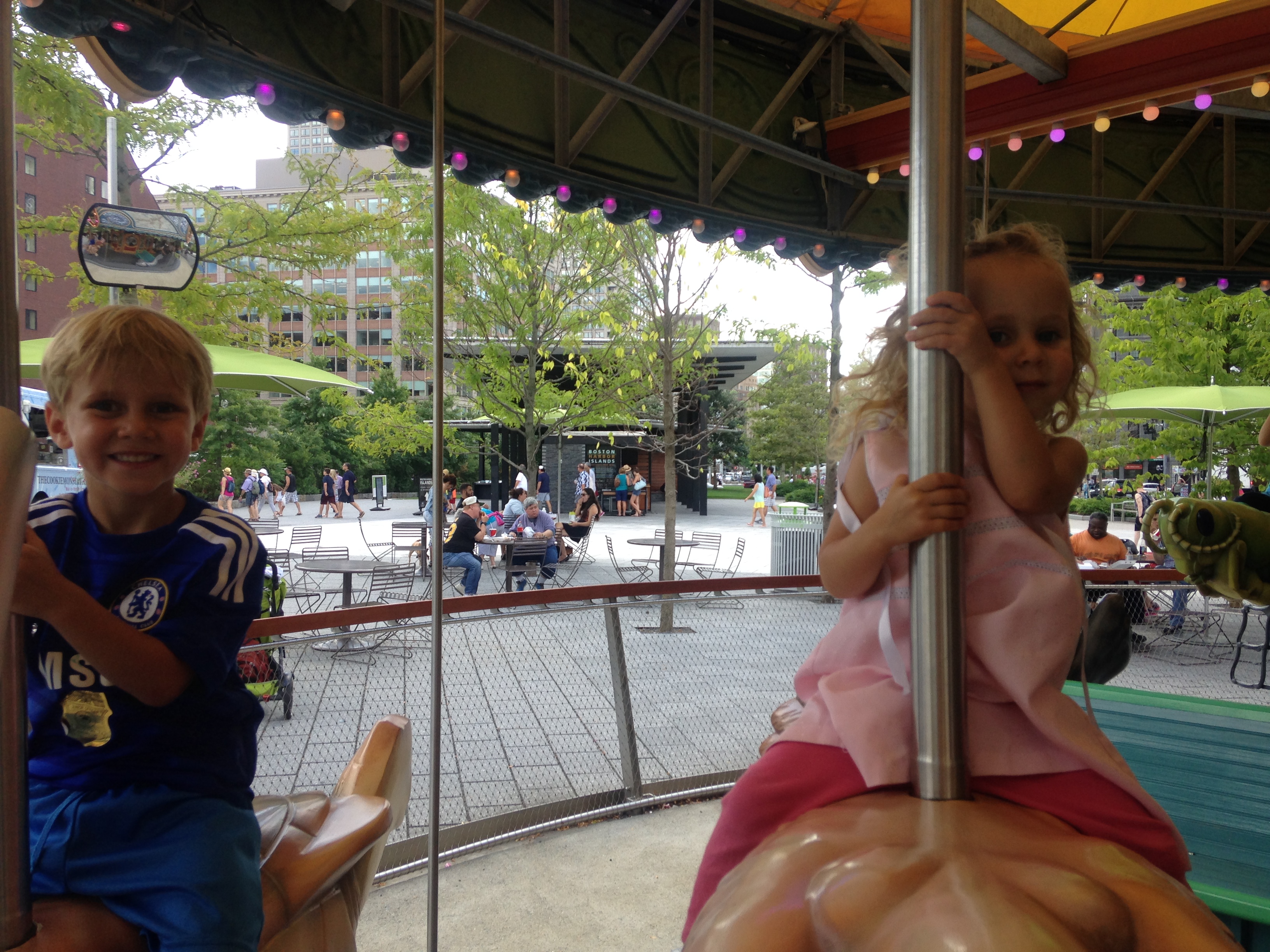
Yesterday two of my grandchildren came to where I work prior to setting out on a downtown exploration with their mom. What a treat for me! Co-workers who missed seeing them were kicking themselves today. Fortunately, my daughter-in-law took pictures I could share.

After the kids pretended to work at my desk (assisted by a colleague’s Donald Duck — push the button and he talks like the real thing), we went out into the Greenway. There is always something going on there in the summer, and we were surprised to find a good band concert surrounded by lounging chairs, tables, couches, bouquets, and beach floats.

I had to go back to work, but the kids got to ride on the wonderful marine-themed carousel and get wet in the crazy fountain. Everyone was impressed with all the food trucks along the Greenway and sampled a couple.

I was just running out to put more coins in the meter where my savvy daughter-in-law had parked (she actually found street parking!) when they returned from their adventures, just in time. That takes talent.

081215-at-office-with-Donald-Duck

081215-at-Grandma-office

081215-band-sets-up-in-Greenway

081215-relaxing-at-Greenway-concert

081215-couch-in-greenway

081215-Greenway-carousel

Read Full Post »

Good things continue to happen in the West End of Providence, thanks in large part to the vision and community responsiveness of West Elmwood Housing Development Corporation (WEHDC) under the direction of Sharon Conard-Wells.

Tuesday, WEHDC held a reception to celebrate past accomplishments and the new mixed-income housing development they are about to build. The mayor came. Community members came. Many of Rhode Island’s movers and shakers came. I came.

It was impressive to see how WEHDC’s projects have flourished when you consider that 10 years ago, the nonprofit was tackling the cleanup of a nearby industrial site and hoping to turned the blighted Rau Fastener factory into beautiful mixed-income housing — keeping their fingers crossed that the market would respond.

The market sure did respond, and now WEHDC is starting the second phase. At the same time, it continues community work of many kinds. Antoine started out doing lead abatement and now works with young people in the neighborhood. Adeline works with the community farm and the Sankofa World Market. Rosa and Debra do housing counseling and lending. Rachel manages WEHDC’s many partnerships and is always looking for more.

The energy and optimism are tangible, and it was good to see the recognition the nonprofit is getting from people in a position to ensure that the good work keeps going. The current wish list includes new laptops and web design work (in case you know anyone interested in offering help that is sure to be used wisely). Check out WEHDC here.

Photo: Sankofa Initiative

Read Full Post »

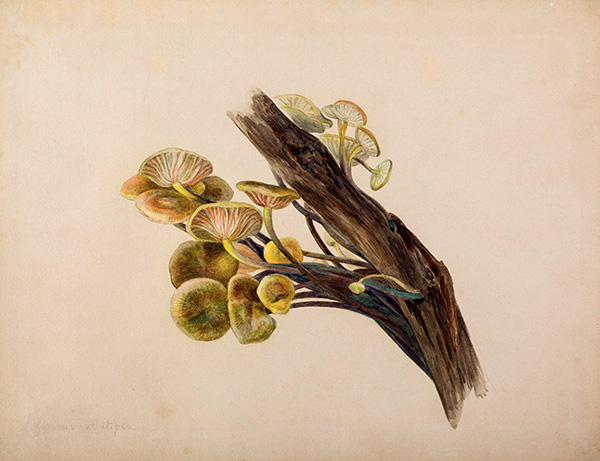
There was more to Beatrix Potter than Flopsy, Mopsy, and Cottontail. Her meticulous drawings of flora and fauna made serious contributions to the science of the day.

Maria Popova at Brain Pickings shares Potter’s mushroom drawings and more.

“At a time when women had no right to vote and virtually no access to higher education, very rarely owned property and were themselves considered the property of their husbands, Potter became a commercially successful writer and artist, using the royalties from her books to purchase her famed Hill Top Farm, where she lived simply and with great love for the land for the remaining four decades of her life. …

“Linda Lear’s altogether magnificent Beatrix Potter: A Life in Nature (public library) — [is] by far the best book on Potter and one of the finest biographies ever written, Lear’s prose itself a supreme work of art.

“A formal scientific education was virtually inaccessible to women, except for the rare Ada Lovelace or Maria Mitchell, and membership in scientific societies was strictly reserved for men. But Potter’s scientific work was exceptional in that she deliberately tried to penetrate the very institutions that dismissed women’s scientific labor solely on the basis of gender. …

“By her early twenties, Potter had developed a keen interest in mycology and began producing incredibly beautiful drawings of fungi, collecting mushroom specimens herself and mounting them for careful observation under the microscope. … Lear writes:

Beatrix’s interest in drawing and painting mushrooms, or fungi, began as a passion for painting beautiful specimens wherever she found them. She never saw art and science as mutually exclusive activities, but recorded what she saw in nature primarily to evoke an aesthetic response. She was drawn to fungi first by their ephemeral fairy qualities and then by the variety of their shape and colour and the challenge they posed to watercolour techniques. Unlike insects or shells or even fossils, fungi also guaranteed an autumn foray into fields and forests, where she could go in her pony cart without being encumbered by family or heavy equipment.

More here.

Art: Beatrix Potter
Flammulina velutipes (Armitt Museum and Library)

Read Full Post »

Someone posted a chair by Jeffro Uitto on Facebook, and I had to know more.

Uitto’s About page says, “On the Washington coast there’s a place where nature’s leftovers get a second chance at stardom. The place is Knock on Wood, and Jeffro Uitto is the artist making the magic happen.

“Since high school Jeffro has been creating with wood, his favorite medium. This stuff isn’t from a lumber mill either. Each piece is found and rescued from the shores of Tokeland, the banks of Smith Creek, or the valleys between the Willapa Hills. In due time the varied sticks, slabs, and roots are cured and then found a fitting home. …

“Not everything is built right in the shop though. Clients have brought Jeffro on site to build one-off creations in places like Alaska and Hawaii.

“Jeffro’s shop is located near the historic Tokeland Hotel, a stone’s throw from Willapa Bay. … Visitors are surprised to see that many of Jeffro’s tools are hand made by the artist himself. After you get to know him, this isn’t surprising at all.”

Be sure to check out the amazing sculptures at Jeffro Uitto’s website, here.

Photos: Jeffro Uitto

Read Full Post »

I have another unusual library story — this time from China. It’s about a small village that built a magnificent library, drawing admiring visitors and boosting the local economy.

Jane Perlez writes at the New York Times, “The tiny village of Jiaojiehe suffers from being close to the nation’s capital. The young flee easily to the big city, leaving the elderly behind, lonely and poor.

“In today’s China, villages like this often try to engineer a sense of well-being by opening a new medical clinic, say, or by upgrading the water supply.

“But Li Xiaodong, an award-winning architect who fuses traditional Chinese ideas of design with Western themes, had a different idea for Jiaojiehe. He was captivated by the potential he saw in the village’s most abundant natural resource, the branches of its thousands of trees, which the locals harvest for fuel.

“So he built a library — with a twist. At its base, it is a steel and glass box in the vein of a Philip Johnson open-plan creation from the 1950s, but its exterior walls and roof are clad with fruit-tree twigs.

“The spindly sticks are arranged in vertical rows, and their uneven shapes allow natural light to filter into the library’s reading room, while keeping the building cool in the summer and cozy in the winter. They also act as a kind of camouflage, making the library’s rectangular edges barely noticeable in the landscape as visitors approach the village on a narrow, twisting road. …

“The library has a presence on social media, and many of the visitors on the weekend are university students or young professionals. They wander around the village, snap photos of themselves and order the local delicacy, stewed chicken with chestnuts, at one of the restaurants.

“And some of them actually read. Sun Liyang, 27, an automotive journalist, said a friend in Beijing had donated some books after hearing about the library online, and he decided to come for a look. ‘I am sitting here reading “The Adventures of Tintin,” ‘ he said. ‘It’s taking me back to my childhood.’

“Wang Fuying, 57, who used to grow crops in the area, is now the librarian, even though she can barely read. ‘All the library visitors are from the city,’ she said. ‘We have up to 200 visitors a day over the weekend. They come for fun, take a look, take some pictures and take a walk.’

“There are a few flaws. To preserve the wood floor, patrons must remove their shoes at the front door, but in the summer when there are many visitors, the reading room becomes smelly from all the socks, Ms. Wang said. …

“Mr. Li’s projects in other parts of China where he has built small structures in rural areas — including a school built high over a creek — have won many prizes. But few honors seem to have pleased him more than last year’s Moriyama R.A.I.C. International Prize, named for the Canadian-Japanese architect Raymond Moriyama. …

“On a recent weekend, Mr. Moriyama, 85, was one of the visitors to the library. He liked what he saw. ‘I was so happy this particular project won,’ he said. ‘It was all about picking one that represents service to the people. The sense of humanity of the library is so great.’

“The older architect patted Mr. Li on the back. ‘You did good,’ he said. ‘I was not on the jury, and quite often, I disagree with the jury. But in this case, I believe it was 150 percent right.’ ”

More here.

Photo: Sim Chi Yin for The New York Times
Li Xiaodong, a prize-winning architect, was inspired by the branches of local fruit trees, which he used to cover the Liyuan library’s roof and exterior walls.

Read Full Post »

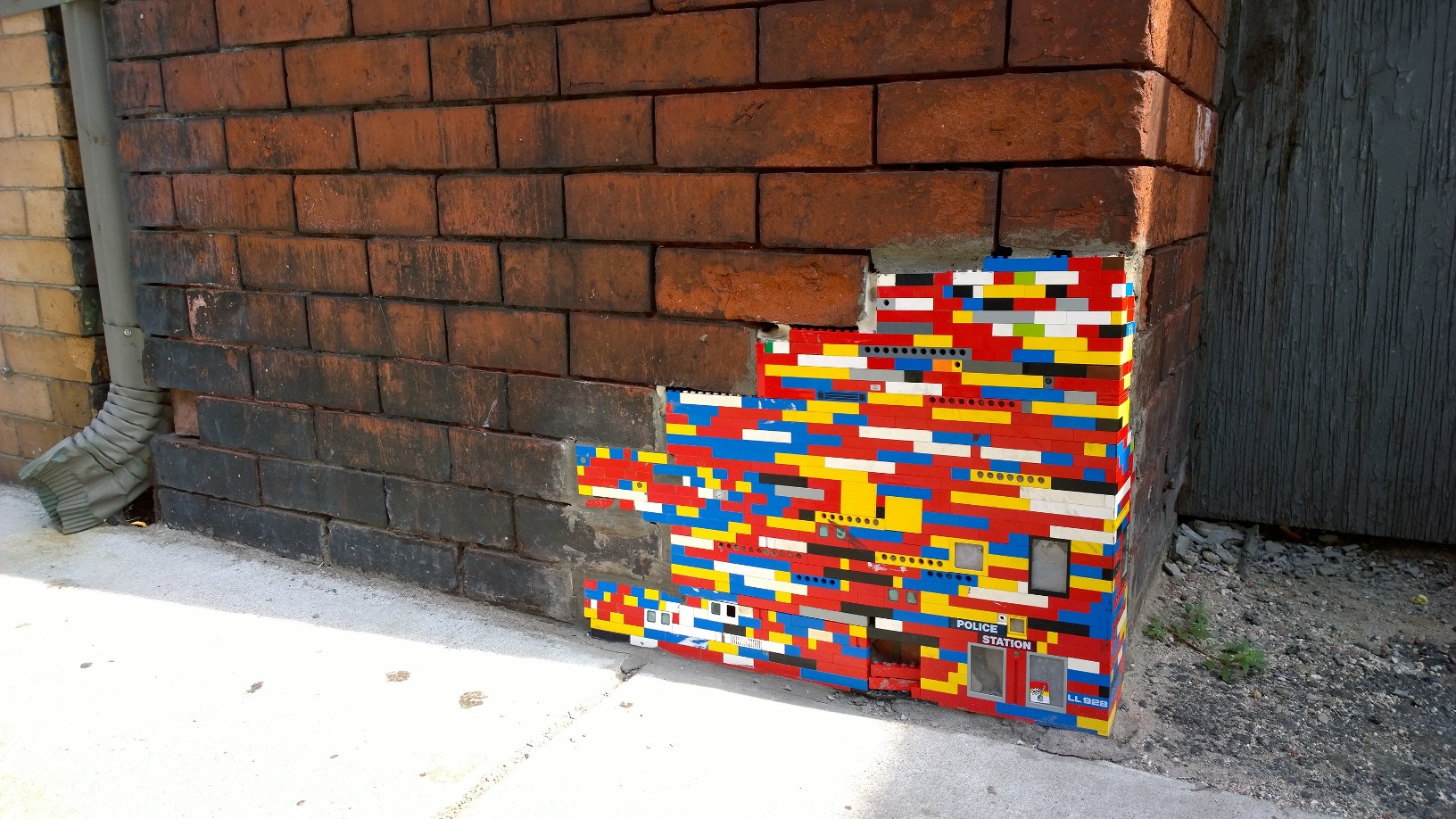
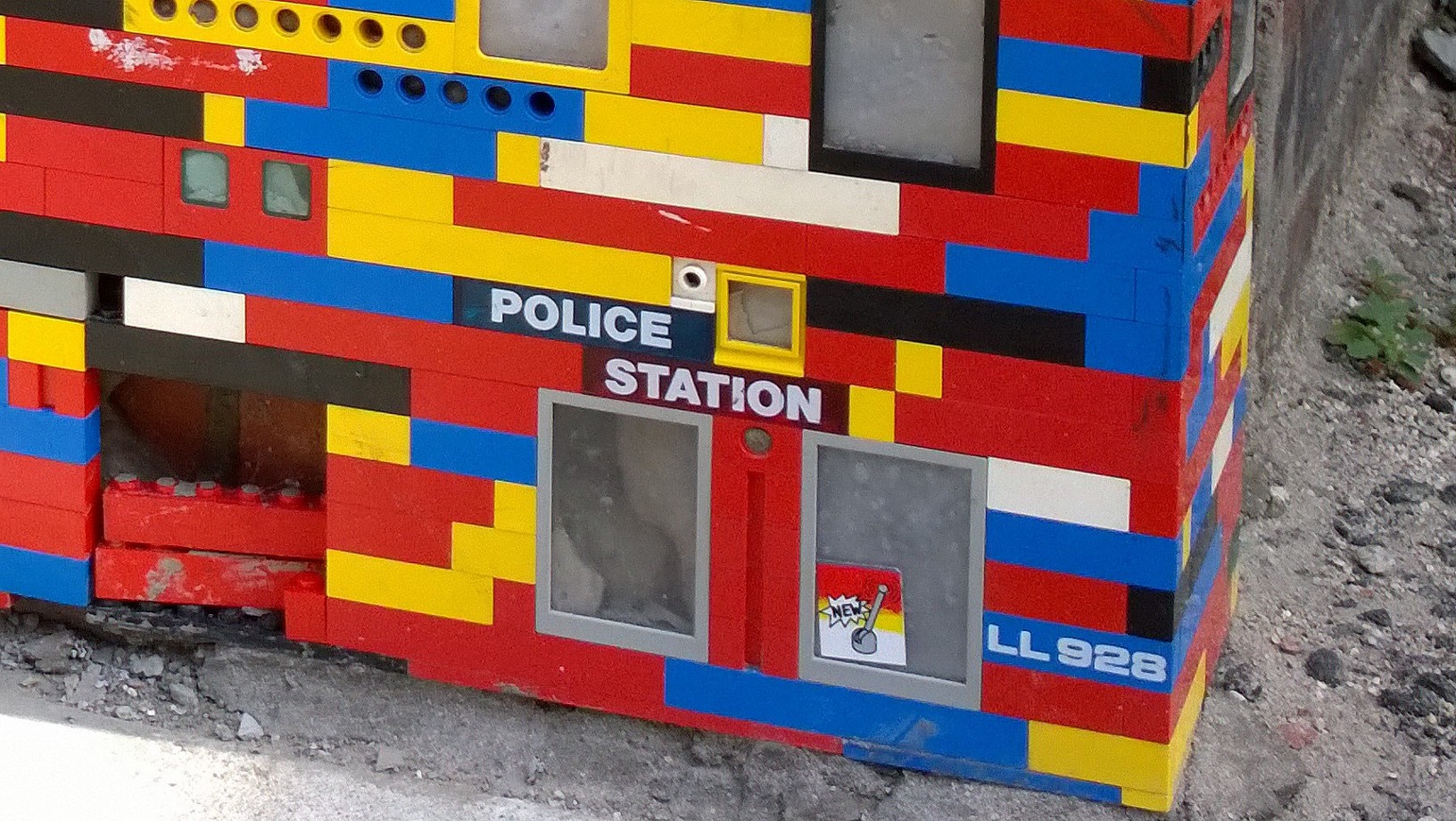
On the corner of Congress and Farnsworth, there is a parking lot, and on the Fort Point Channel side of the parking lot, there is a Lego-size police station. In case you are ever lost around there and need to ask for directions. If LL Bean is more your thing, there’s one by the parking lot, too. I took two pictures.

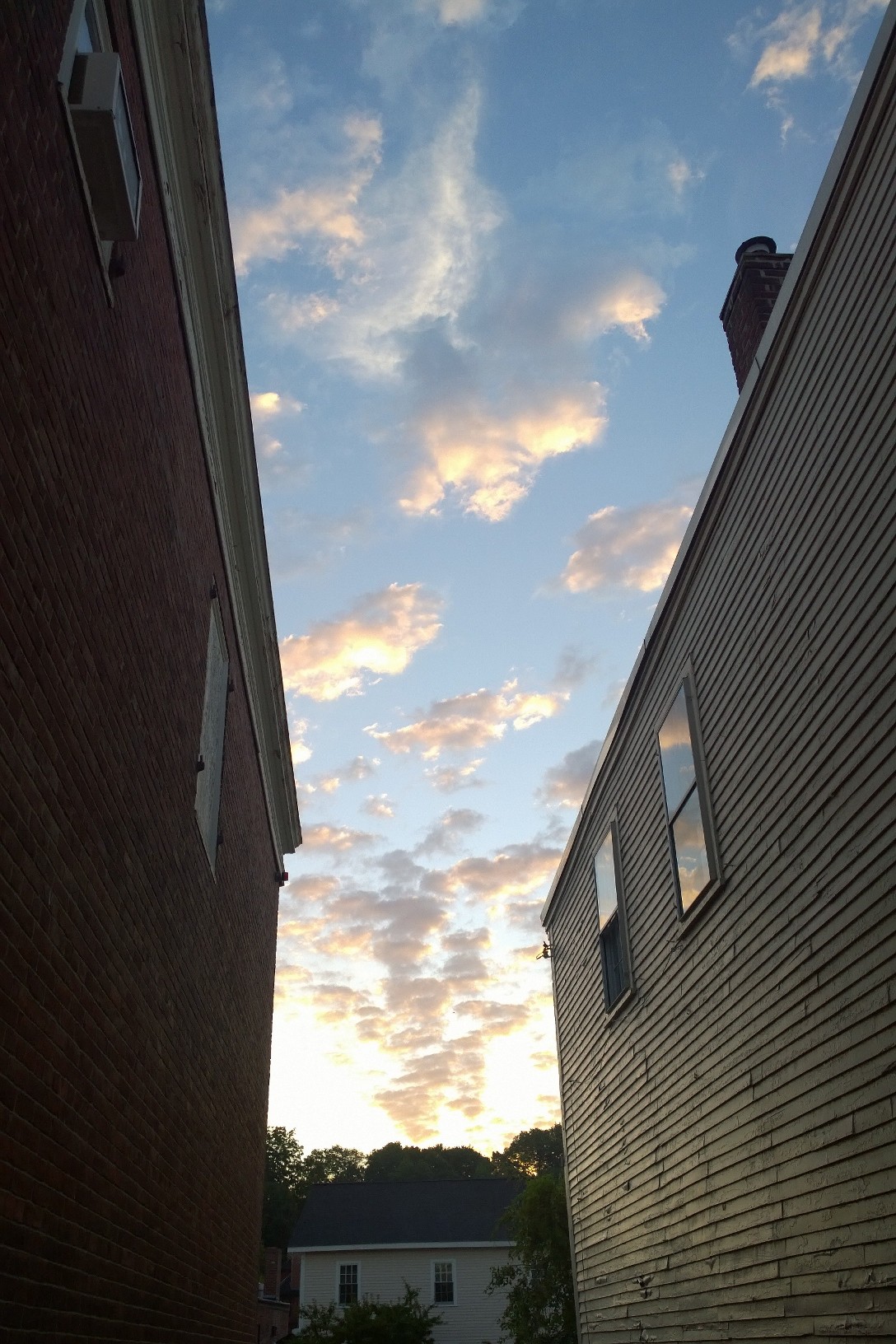
The clouds at dawn have been especially good lately. I include two shots in case you are not up early. Roses need no elaboration, but I am quite proud of how the yellow mullein turned out the second time I tried to capture it. A granddaughter was with me at the time, in the stroller.

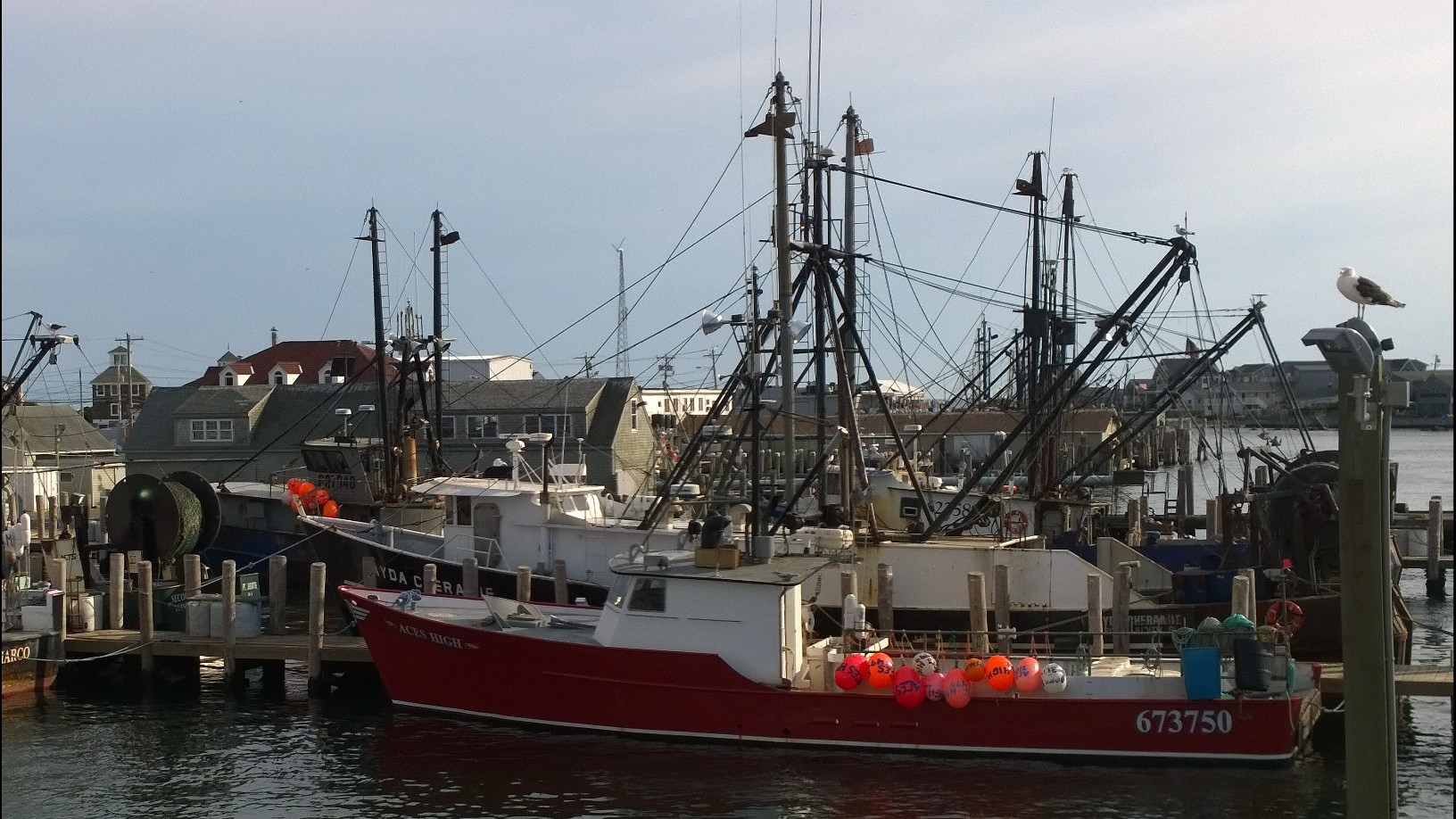
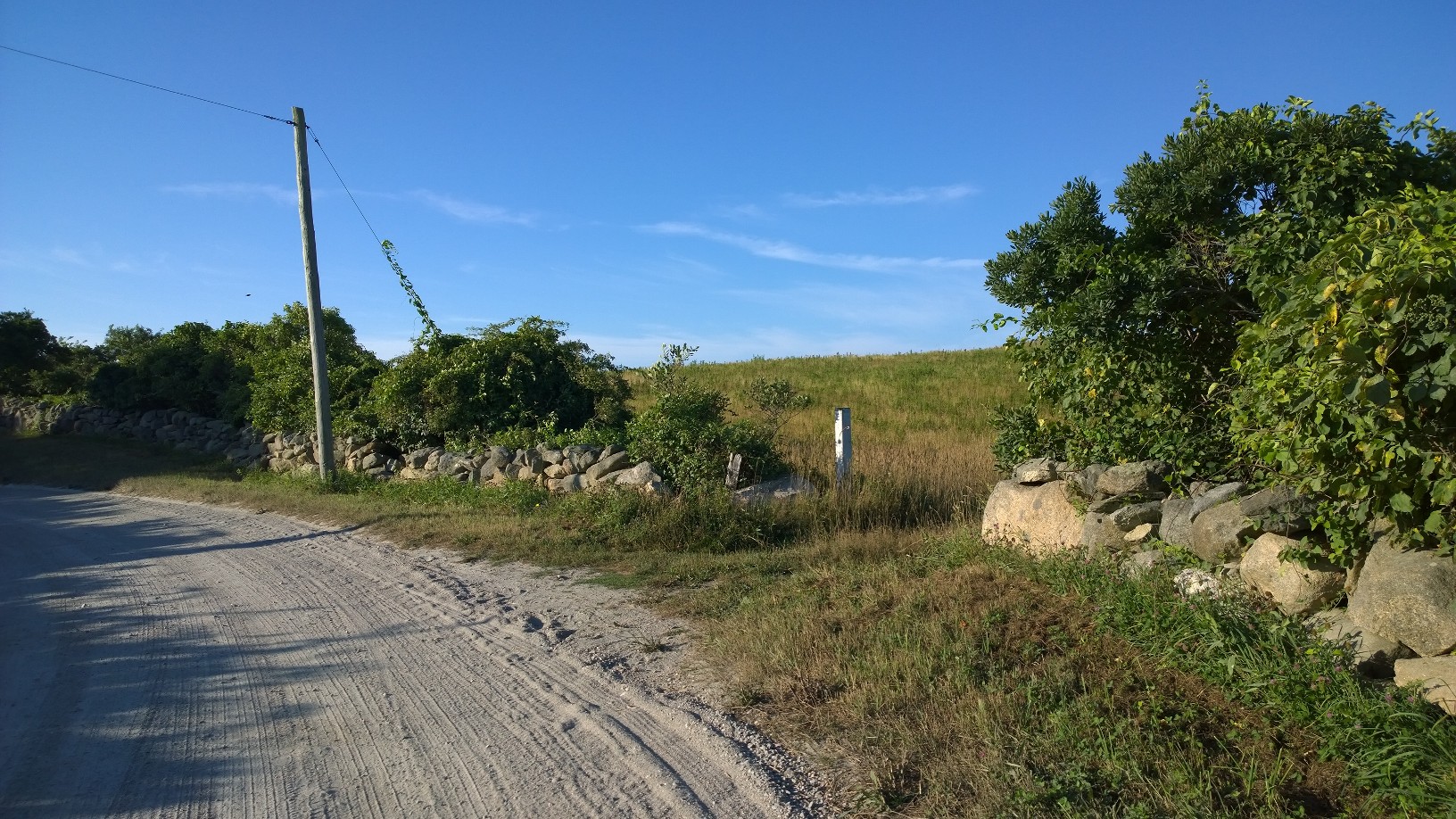
Moving right along, there is a shot of the fishing fleet in Rhode Island. The country road photo was supposed to show you a goldfinch, but even when I zoom in, it is too tiny to see. The still pond is called John E’s Tughole. A tughole is a place where peat is harvested, but I don’t think it happens much anymore. Maybe in Ireland. I know James used to harvest peat. And burn it, too.

080415-legos-built-into-corner

080415-Congress-St-nr-Farnsworth


080515-clouds-between-bldgs

080515-clouds-Concord-dawn


080815-rose-and-hydrangea

080315-mullein


080715-Point-Judith-boats

080815-dirt-road-RI


080815-John-E-Tug-Hole


Read Full Post »

My husband’s new favorite news source is the US edition of the Guardian, and I can see why. It covers national and world affairs well and has some really unusual articles.

This one by Johanna Derry on Native American cuisine appealed to us both because of several years spent in Minneapolis. Back in the 1990s, there was no Native American food truck, but there was a nice restaurant on Franklin Street next to a Native American store, and we ate there a few times.

Derry writes, “Travel across the US and the cuisine doesn’t change much from state to state. It has a reputation for being sodium-filled, sweetened and glutenous (though, arguably, delicious) food. But chef Sean Sherman, known as the Sioux Chef, is hoping to redefine what we think of as ‘American’ food.

“At his newly launched Minneapolis food truck Tatanka, named after the American bison, dishes are made with ingredients that could be found living or growing locally before the arrival of European settlers. So you can forget processed sugars, wheat flour, beef, chicken and pork, Sherman serves wild rice and taco-style cornflour cakes with bison, turkey or rabbit, topped with wild greens and washed down with maple water. As well as being truly American, the food is super-healthy, organic – and local.

“ ‘We’ve worked with a couple of native-run farms to grow back some heirloom varieties of beans, squash, melon and corn,’ says Sherman.

“As well as introducing Minnesotan foodies to indigenous foods, the truck – which is supported by Little Earth, an urban Native American community – will head out to reservations, too, to reintroduce native populations to the healthier diet of their ancestors.”

Read more at the Guardian.

Photo: The Guardian
Tatanka Food truck, Native-American cuisine in Minneapolis

Read Full Post »

Maybe I could be a clown. One of my brothers has clowned for years, mostly at his church in Wisconsin. He really enjoys it.

This story by Elianna Bar-El story at Good magazine makes me want to know the same satisfaction medical clowns get from helping sick children. But clearly, it takes lots of training.

“On a recent visit to Wolfson Medical Center on the outskirts of Tel Aviv, Israel, Yolana Zimmerman is met with audible sighs of relief.

“ ‘Great! You’re here! We need you,’ says a nurse.

“Zimmerman is not a medical doctor. In fact, she casts quite a contrast to the typical image of a doctor with her pink leggings, cupcake apron, and eyelet bloomers — not to mention the underwear on her head and the stuffed monkey in her hands.

“Yolana ‘Yoyo’ Zimmerman is part of a team of medical clowns called Dream Doctors. The pioneering organization started in 2002 with three medical clowns at one hospital and today facilitates the work of more than 110 clowns across 28 hospitals in a country increasingly recognized as the vanguard of medical clowning. After this past April’s devastating earthquake in Nepal, for instance, the Israeli government sent an envoy from Dream Doctors to Kathmandu to work with affected children. As you might expect, the medical community is taking notice of the tiny nation’s zany medical practitioners. …

“ ‘Medical clowning has developed in Israel in a different way than anywhere else in the world,’ says Professor Ati Citron, creator and director of University of Haifa’s Medical Clowning program. ‘Medical clowns were absorbed into the medical system as part of the staff.’ …

“Walking into [a] hospital room, without missing a beat, Yoyo directs her attention to a religious man sitting beside his daughter who is sleeping in a hospital bed. He is obviously reading from the Bible. ‘Is that a good book?’ Yoyo asks. ‘I think I’ve heard something about it. … Who wrote it again?’ The father looks up at her, grinning in surprise. In the same moment Yoyo doubles over with genuine laughter, igniting a cacophony of noises from a squeezable rooster in her apron. …

“In Israel, medical clowns are involved in over 40 medical procedures, including accompanying patients to CT scans, X-rays, MRIs, chemotherapy, radiation treatment, physiotherapy, and rehabilitation. Clowns in Israel also work solo to initiate a more interactive, one-on-one relationship with patients. … Dream Doctors, which works closely with Israel’s Ministry of Health and the University of Haifa … also hosts monthly workshops for the clowns where medical staff provide them with a range of medical knowledge and training on hygiene, vaccinations, before-and-after procedures for entering a room, role-playing, case studies, and more.”

Read all the details at Good.

Photo: Ziv Sade

Read Full Post »

Here’s a use for drones that pretty much everyone but a poacher could celebrate. I got the story from Living on Earth.

“Poaching is a threat to the survival of rhinos worldwide, and anti-poaching efforts have always been one step behind. Now, park rangers in South Africa have a leg up. John Petersen from the Air Shepherd program tells host Steve Curwood how the power of predictive analytics combined with drone technology could help to rescue the rhinos. …

“Curwood: The Air Shepherd uses military-style computer analytics to identify poaching hot spots, and then sends silent drones equipped with night vision to track down poachers, who like to work after dark, when people can’t see them. …

“Petersen: Some of these game parks are the size of Connecticut. And if you’ve got a little model airplane and you’re trying to figure out where to fly that airplane in that size of a piece of land, and you don’t have any idea about particularly where to fly, then you’re wasting your time. That’s where the experience of the University of Maryland comes into play, because they have developed a predictive analytic tool to tell us on a daily basis where the animals are likely to be and where the poachers are likely to be. …

“You build databases that have all of the topography of the land that you’re looking at. It has all the historical information about where poaching has happened in the past, so that you get patterns on where they happened. You figure out the time of the day and the time of the year, and whether it was wet and what the weather was like, and whether there were waterholes close by, and whether there was a full moon, and how close to roads they were, and other such things. And the combination of all of this allows you to say with a high degree of confidence that, tonight, you should fly your aircraft over the top — you’re going to know that this is where the poachers will come if they come tonight. …

“You can alert the rangers, because they’re positioned close by. They can get there in a hurry and they can capture the person and arrest them before they have a chance to kill the animal.”

More at Living on Earth.

This is clearly a tool in the tool box. But attacking the demand is going to be just as important. Especially since, according to Curwood,  “traditional Asian doctors believe that rhino horns have curative power, and market demand has driven some rhino species to the edge of extinction.”

Photo: Michael Romondo
Staff members of South Africa-based UAV & Drone Solutions hold one of their drones. UAV supplies the drones and the ground crew for Air Shepherd.

Read Full Post »

At the NY Times, Sindya N. Bhanoo notes some cool research on young children’s sense of fairness.

“Children as young as age 3 will intervene on behalf of a victim, reacting as if victimized themselves, scientists have found.

“With toys, cookies and puppets, Keith Jensen, a psychologist at the University of Manchester in England, and his colleagues [Katrin Riedl, Josep Call, and Michael Tomasello] tried to judge how much concern 3- and 5-year-olds had for others, and whether they had a sense of so-called restorative justice.

“In one experiment, when one puppet took toys or cookies from another puppet, children responded by pulling a string that locked the objects in an inaccessible cave. When puppets took objects directly from the children themselves, they responded in the same way.

“ ‘The children treated these two violations equally,’ said Dr. Jensen, a co-author of the study published in the journal Current Biology.

“In another experiment, when an object was lost or stolen, children tried to right the wrong by returning the object to the puppet it belonged to.

“ ‘Their sense of justice is victim-focused rather than perpetrator focused,’ Dr. Jensen said.” More at the NY Times, here.

The abstract for “Restorative Justice in Children” is posted at Cell.com.

Photo: Keith Jensen
Two puppets used in a study that aimed to learn how much concern young children have for others. 

Read Full Post »
Four years ago, I blogged about some beautiful manhole covers is Japan. Now I learn that Minneapolis also has discovered the artistic possibilities of heavy, round metal that lots of people see as they cross the street.

Eric Grundhauser writes at Slate‘s Atlas Obscura blog, “Minneapolis has made its underfoot sewer covers a point of artistic pride, with designs that celebrate the area’s art, history, and wildlife.

“In the early 1980s, Minneapolis began asking artists to design iconic manhole covers for the city. … From David Atkinson’s whimsical summer grill design to Stuart D. Kippler’s introspective geography marker, each of the covers turned what was once a mundane city feature into a unique piece of art. …

“[Kate] Burke created sculpted images of regional icons like the Minnesota state fish (the walleye), the state fruit (Halverson apple), and the state bird (loon). The detailed pieces of steel each feature tableaux of their subject that make most municipal equipment look lazy by comparison.

“Some of the covers even feature small hidden details such as a worm in the state apple, or a pheasant erupting from the bronzed image of the state grain (wild rice).” More here.

I love that the Minnesotan sense of humor is part of the artistic effort. Reminds me of Massachusetts sculptor Mags Harries, who is still associated with the bronze banana peels, orange skins, and broken crates she embedded among the produce vendors in the Haymarket in 1976.

Photo: J Wynia/Creative Commons
Manhole cover in Minneapolis.

Read Full Post »
One of the websites I check for cool stories is the one for Living on Earth, an excellent environmental news magazine from Public Radio International. In a recent episode, host Steve Curwood interviewed the author of a new book on the rare Asian “unicorn.”

“CURWOOD: Deep in the forests of southeast Asia lives a creature nicknamed the Asian Unicorn, and it’s nearly as rare as the mythical creature, as well. … And it is right at the edge of extinction. Writer William deBuys accompanied conservationists on an expedition to study the saola, and his book The Last Unicorn lays out the story and the challenges of saving a species so rare. …

“DEBUYS: The saola was discovered to Western science only in 1992. Local villagers in the habitat of the saola [such as Laos] have known it was there forever, but this new discovery was made when scientists saw a rack of horns on the wall of a hunter’s shack. And these horns are the most distinctive features of the saola. They’re long, almost straight, and beautifully tapered to a very sharp point, so that when the saola stands profile, the two horns in perspective merge into one, and it appears to have only one horn, it appears to be a unicorn. Perhaps only dozens to a few hundred still exist, and there are none in captivity. …

“CURWOOD: Tell us what it’s like there in the forest. What would you hear in the forest?

“DEBUYS: Oh, the music of the forest was constantly inspiring and entertaining. The birdcalls never ceased. We heard laughing thrushes, and we heard drongos and Indian cuckoos and all kinds of birds with really distinctive calls. There was a kind of chorus behind us all the time.

“But the most marvelous thing occurred at first light, almost every morning. We heard the calls of gibbons. Gibbons are small apes, beautiful, slender animals that swing through the trees, so gracefully, and their calls are ethereal. And they call, male to female and female to male, in mated couples, and you can think of it as almost a kind of love song that you hear echoing through the forest. …

“Our expedition basically had three purposes: one was to look for saola habitat and for saola in that habitat. A second was to evaluate the poaching pressure on the landscape. And a third was to conduct a kind of conservation diplomacy in the villages of the forest. …

“CURWOOD: How many saola did you see?

“DEBUYS: Well, we saw none. No Westerner has yet seen a saola in the wild, and the joke is that saola are so like unicorns, and everybody knows that in the Middle Ages, the only people who had an outside chance of seeing a unicorn had to be absolutely pure of heart. And Robichaud and I joke that if that applies also to saola, then we were disqualified from the get-go.” More here.

Note the thoughtful discussion at Living on Earth about the rights and sensitivities of native peoples where the conservation efforts are focused.

Photo: William Robichaud / Wildlife Conservation Society
The first adult saola to be observed outside of its habitat.

Read Full Post »

Here’s a good one from The Atlantic’s City Lab on how Cleveland is turning a traffic circle into a park.

Eric Jaffe writes, “To hear Clevelanders talk, Public Square is a place you pass through to reach somewhere else. When Moses Cleaveland laid out the town in 1796, he imagined the open area at its center as a New England-style commons: a gathering space for settlers, a grazing area for livestock. …

” ‘Over the years, it just turned into more like a series of big traffic islands,’ says the landscape architect James Corner. …

“Locals who find themselves in one of the quadrants have a tough time getting to another. If the cars aren’t enough of a hindrance, the lack of things to do or see in the area is: of the square’s 10 acres, more than six are paved over with concrete or asphalt. …

“By the time Cleveland engaged Corner’s help, in 2008, many ideas for how to revamp the square had come and gone.

“They all suffered from the assumption that traffic around the site could not be disturbed. Corner came in with a bold idea: if we can’t remove the streets, let’s build an elevated park above them.

“The hilltop-park concept didn’t pan out, because of the cost and complexity, but [Land Studio executive director Ann Zoller] says it got locals reimagining Public Square as a place prioritizing people over cars. A traffic analysis determined that the city could close one of the streets and narrow the other to a passage for buses, which could be rerouted during major events. Construction started this spring on Corner’s final design, which is estimated to cost $32 million.”

Read more here on how cities are thinking about improved public spaces.

Image: James Corner Field Operations
A rendering of the new design  for Public Square in Cleveland

Read Full Post »

« Newer Posts - Older Posts »