Feeds:
Posts
Comments

Posts Tagged ‘postaday’

One of Studio 360‘s regular hosts spoke recently with a woman who believes good design can and should be used to enhance the most mundane and cheerless places.

The radio show’s website says, “Going to the DMV, doing the dishes, commuting to work: what would you change if you could? Kurt talked with designer Ingrid Fetell about how better design can make all the difference.

“Fetell wants to ‘create principles that are informed by what the cognitive sciences are showing us about the way that objects, surfaces, colors, textures, patterns make us feel, and use those as principles for designing things that really make us feel good,’ she tells Kurt Andersen. Her curiosity stems from noticing that certain things seem to universally make people feel a sense of joy — like confetti, balloons, and bubbles. ‘It was really born out of a curiosity to understand why certain things make even babies smile.’

“She points to Edi Rama as a real-life example of putting these ideas into practice. Rama, who is now Prime Minister of Albania, was named the World Mayor in 2004 after painting much of Tirana in bright colors. The results were remarkable. ‘He found that people actually started paying their taxes after the painting,’ she tells Kurt. ‘People stopped littering as much and the shopkeepers started taking the metal grates off their windows and opening glass window fronts back out to the street.’ ” More here.

I like the idea of trying to understand what makes a baby smile. Or laugh. There are so many wonderful YouTube videos of babies laughing hysterically when someone tears paper or when a dog eats popcorn. Why is that hilarious? Because it’s startling?

By the way, Studio 360 is collaborating with Fetell and IDEO “to redesign a thing, place, or experience that is unnecessarily joyless.” Send your ideas on Twitter or Instagram, and tag #bringjoy. I sent “homeless shelter.”

Paint job: Edi Rama, who became prime minister of Albania

Read Full Post »

It always seems so limiting to put anything in a category. Some WordPress bloggers are good at categorizing their posts, and I’m sure that helps many readers, but my posts are never about one thing only.

Netflix makes movie recommendations based on categories that pigeonhole movies we’ve rated highly. But the approach seems clunky. Just because we have liked a lot of foreign films (Wadjda, Son of Rambow, Princess Mononoke), that doesn’t mean we like all foreign films. Maybe we like the ones we’ve seen for some other reason than being foreign. Maybe they are less glitzy, more honest, or more entertaining.

He are some funny categories Netflix recommended for my husband and me: “emotional, independent films based on books,” “critically acclaimed foreign movies,” “mind bending movies,” “anime,” “musicals,” “social & cultural documentaries,” “critically acclaimed emotional movies,” and “horror movies.” Horror!? Where did they get that?

At the late, lamented Kate’s Mystery Books in Cambridge, you could get pretty sound advice on books from Kate herself. She would ask you to name some mysteries you liked, and you might say you had read all of Tony Hillerman and Arthur Upfield. Then she would say, “Different cultures.”

Well, ye-es. But what kept me coming back to those authors were detectives who were likable and endings that were positive in some way. no matter how small. Kate did give me some authors I loved, like Eliot Pattison (mysteries about Tibet and, more recently, several about 18th century American Indians), but other books about different cultures might be too noir for me or too fluffhead, like mysteries with animal detectives.

I suppose categories help a bit. I just think they are clunky. Where would I file this post, now? Movies? Books? Retail? Misconceptions? Colin Cotterill, Dr. Siri, Laos?

Colin Cotterill writes a series that is both funny and deadly serious about a 70+ coroner in Laos, Dr. Siri, a likable antihero with an offbeat bunch of equally likable cronies.

Read Full Post »

Although my husband and I are not in any design field, we’ve enjoyed watching videos like Gary Hustwit’s Helvetica (the history of a typeface) and his Objectified (on industrial design). It’s  interesting to see how designers think about things like a new font or machine.

Recently at National Public Radio’s Weekend Edition, Ari Shapiro talked about a new typeface meant to represent Sweden.

He reports, “Nearly every country has a national flag, a national anthem, a national bird. Not many countries have a national typeface. Sweden recently commissioned a team of designers to come up with a font to represent the country on its websites, press releases, tourism brochures and more. …

“The typeface that [Soderhavet] designers created looks pretty much the way you would expect a Scandinavian typeface to look, too.

” ‘The Scandinavian tradition is pretty humble, easygoing and clean,’ says Stefan Hattenbach, one of the designers of the new Sweden Sans. Less is more, you could say.’

“He started by collecting images of old Swedish street signs and company logos. He pulled images of Swedish wallpaper, cars and furniture, and looked for what he calls the red thread running through it all.

” ‘There’s an expression in Sweden, too,’ Hattenbach says. ‘We say lagom, which is not too much and not too little.’ ”

The ancient Greeks had a similar expression: “Nothing in excess.” The only letter with a flourish is q. Says Hattenback, “Q is not used that much, so you can often be a little more playful with that.”

See what you think of Swedish Sans, below, and read the rest of the NPR story here.

Swedish Sans, by Soderhavet
A typeface to represent official Sweden

Read Full Post »

Time to share my travels on foot again.

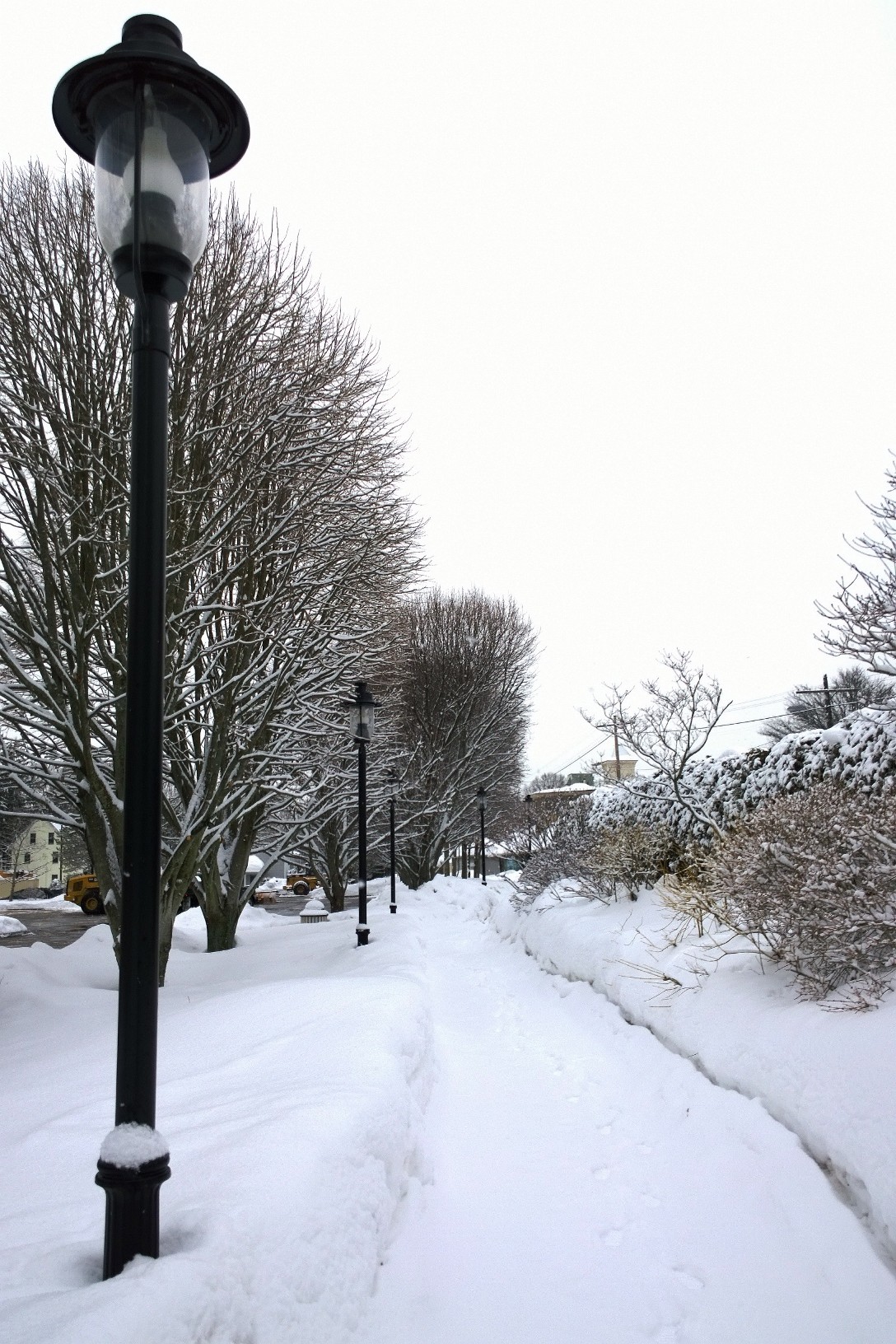
First up, plain folk waiting for their train. Next the street lamp in Narnia’s endless winter on the other side of the wardrobe.

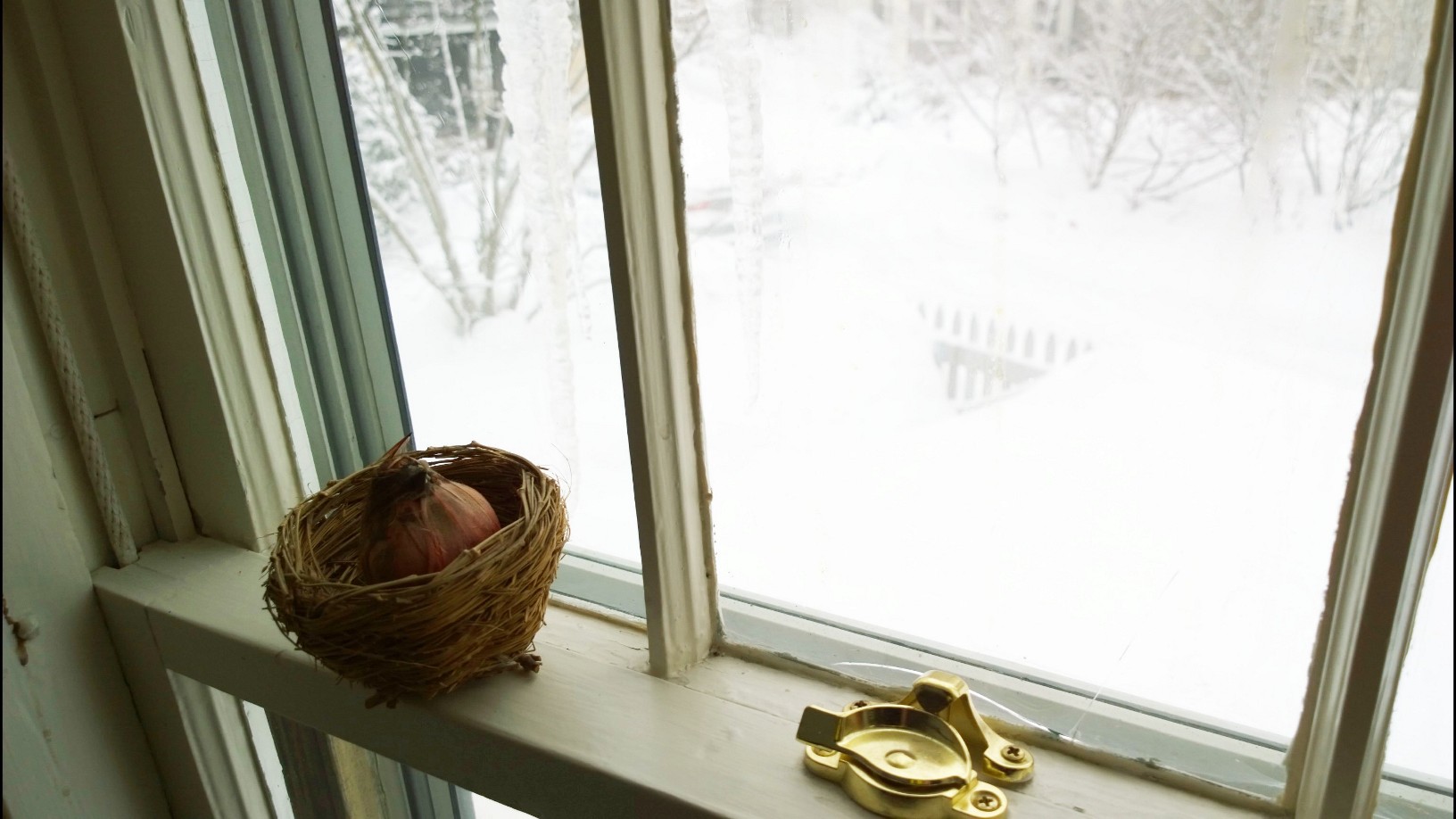
The bird in the nest was given to me by an expectant mother as a thank you for “helping to feather my baby’s nest.” The baby is now in his late 20s.

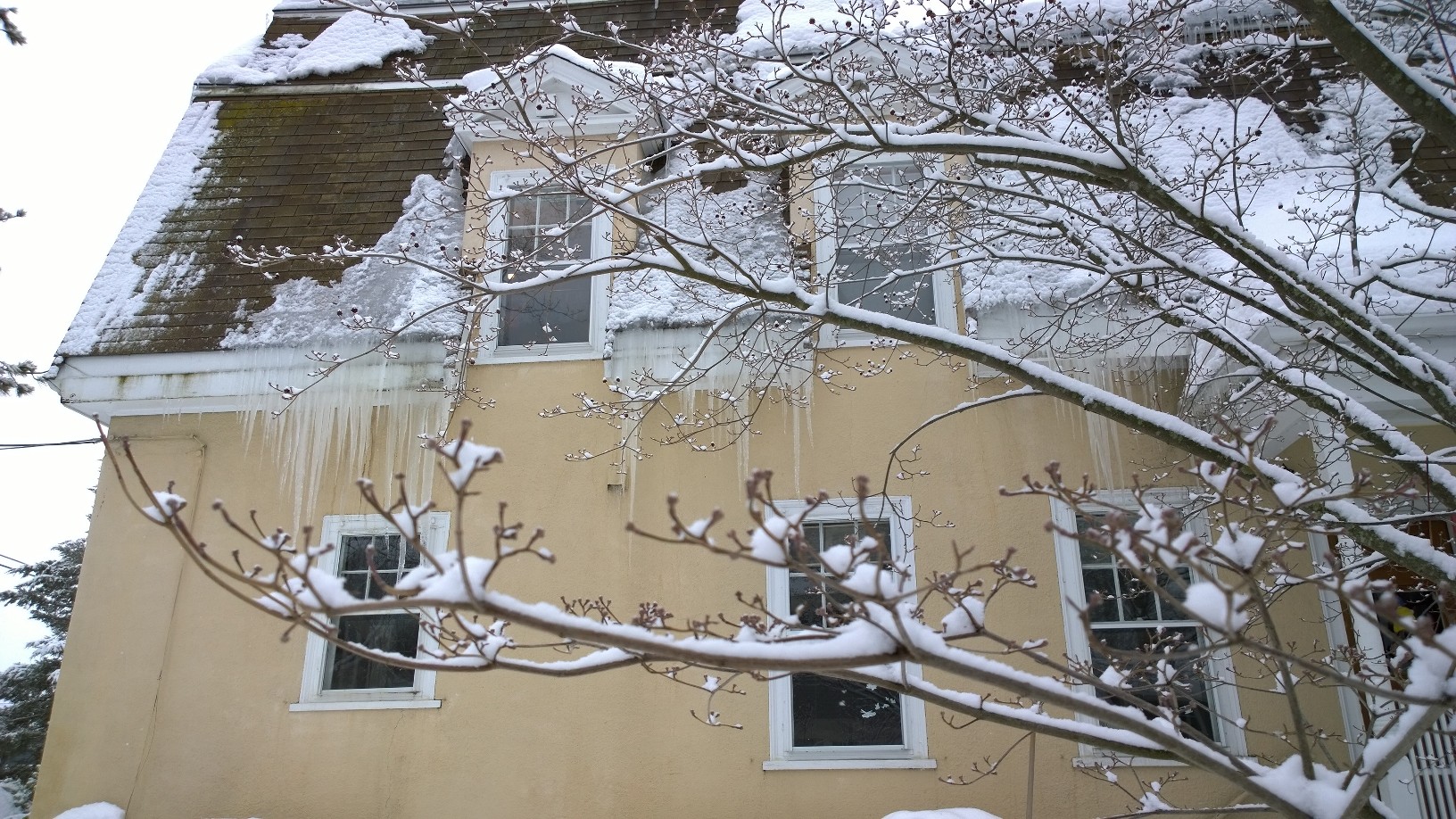
I thought the snowy dogwood branches had a hopeful lift to them.

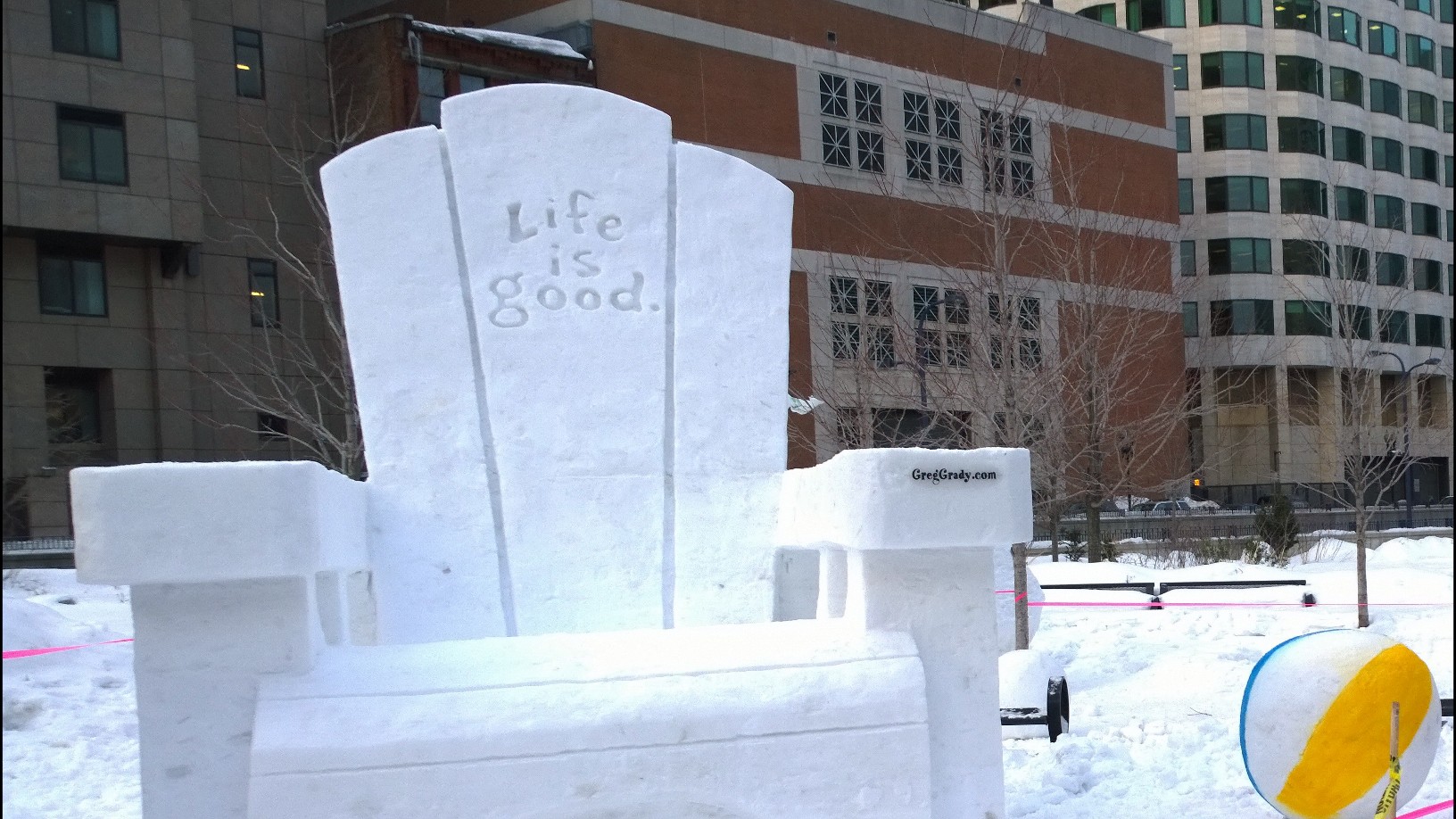
Finally, a team from the company Life is good put a lot of energy into building this giant Adirondack chair beside a beach ball, encouraging photographers to tweet pictures with the hashtag #ligbeachday. I saw a lot of homeward commuters snapping away en route to their trains. Quite a lot of advertising potential in this playful installation in Dewey Square, Boston.

Feb2015-plain-folk-taking-amtrak

Narnia-endless-winter-022215


bird-in-nest

022215-hopeful-dogwood


WP_20150226_16_38_20_Pro

Read Full Post »

One of the sources I check for ideas to share with you is the website for the delightful environmental radio show, Living on Earth.

A story about the healthy coral reefs in the deep water off Cuba caught my eye, especially as there has been a resurgence of interest in Cuba lately.

Living on Earth host Steve Curwood interviews Robert Wintner about his latest book, Reef Libre: The Last, Best Reefs in the World.

“CURWOOD: Now, your book is very timely. Come on, tell me … you got some kind of tip off on this political thaw? …

“WINTNER: I thank Neptune for that. We got word of this particular reef system [that was] called the last best reef system in the world. And the three qualifiers for that rating were 100 percent biodiversity (that means all the species that were ever there are there now, and in fact some they thought were extinct), 100 percent coral cover and 100 percent host of apex predators, and that was the key right there to restoring these reefs to healthy conditions. No natural system can survive intact without apex predators, that’s what allows every level of the food chain beneath it to be at optimum balance. And the glaring example in the world today is Cuban reefs, our Jardines de la Reina. That’s the ocean people talk about, that the world used to have, that we used to love. It’s there in in Cuba.”

Read all about it here., or listen to the broadcast. Lots of amazing photos. And be sure to note how the Cubans control the invasive lionfish by removing the spines and conditioning bigger predators to the taste.

Photo: Robert Wintner at Living on Earth
Reef Libre: The Last, Best Reefs in the World is diver and photographer Robert Wintner’s most recently published book.

Read Full Post »

Maria Popova at Brain Pickings has wide-ranging interests, and one of her special strengths is finding charming children’s books. In a recent post, she wrote about an alphabet book you can get at the library.

“I was instantly taken with Work: An Occupational ABC (public library) by Toronto-based illustrator and designer Kellen Hatanaka — a compendium of imaginative, uncommon, stereotype-defying answers to the essential what-do-you-want-to-be-when-you-grow-up question.

“With a sensibility between mid-century children’s books and Blexbolex [a French graphic artist described here], Hatanaka weaves bold graphics and soft shades into a tapestry of tender vignettes about people of all shapes, sizes, and colors. There is the K-9 officer (female) training her trusty dog on an obstacle course; the Butcher (heavy-set) chasing after a mischievous raccoon that got away with the sausage; the Naval Architect (female) oversees the construction of a large ship near the shore as the Oceanographer (female, dark-skinned) explores the marine world below the surface.”

Canadian independent children’s-book publisher Groundwood Books is to be commended for this little treasure. You can see most of the pictures in Popova’s blog post, here. They are completely delightful.

Art: Kellen Hatanaka
Vibraphonist from Work: An Occupational ABC

Read Full Post »

On the other hand, your living room could be a perfectly good performance venue. In fact, the Guardian calls your living room the “hottest new arts venue.”

The newspaper’s Darryn King writes, “On a recent Friday night in Manhattan, around 20 people and one terrier gathered in the living room of an Upper East Side apartment to listen to a string quartet perform Beethoven, Ravel and Tchaikovsky.

“The guests sampled cheese and wine – several had brought bottles to share – and asked strangers: ‘Is this your first time?’ …

“There are similar events to this performance, organised by Boston-based chamber music concert community Groupmuse, happening in New York, San Francisco and four other cities every week: intimate shows taking place in living rooms of all shapes, sizes and levels of cleanliness, a paradoxically homely and exciting alternative to traditional theatres, concert venues and comedy clubs.

“And it isn’t limited to classical music. Thanks to a range of organisations putting on events in the home, there’s a good chance that, if you were so inclined, you could enjoy standup comedy, live theatre and rock gigs in the comfort of someone else’s residence tonight. Welcome to the latest and greatest nontraditional venue invigorating the city’s live performance scene: the humble living room.

“A lot of folks seek out live music to feel like they are actively contributing to and sharing in something larger than themselves – not just standing by, observing the experience,” says Groupmuse founder Sam Bodkin. “Living rooms are just the best way to do that.”…

“The New Place Players, a troupe of Shakespearean performers-for-hire, have also been busy immersing audiences. The group has staged their productions of Twelfth Night and A Midsummer Night’s Dream in homes all over the city, while also putting on regular supper-and-show performances in the sumptuous living room of the historic Casa Duse residence in Park Slope, Brooklyn.

“The productions are a harmonious blend of music, lighting, theatre, food and drink, amounting to a communal atmosphere that harks back to the experience of catching a theatre performance in Elizabethan times.” More here.

Photo: Groupmuse
A Groupmuse gig.

Read Full Post »

Looking for an affordable venue for your chamber music group, your living-room theatrical production, your poetry group’s public readings? Need a performance space with a cat to give your book promotion that certain je ne sais quoi?

Nidhi Subbaraman has a nice piece at the Boston Globe‘s betaboston site on a tool that can help you find the perfect space.

“Gregorian Oriental Rugs opens at 10 a.m. every weekday, and with wood floors and high ceilings, this converted paper mill in Newton is an airy showroom for antique Turkish flat-weaves, Ikats from India, and countless other intricate, handmade imports from the Far East and Middle East. Some evenings, however, the expensive carpets and rugs are folded, stacked, and put aside, and the store is transformed into an intimate performance venue for local artists. …

“Most people hear about this unusual event space from friends. But to reach community art groups, Gregorian recently listed his venue on SpaceFinder Mass, a kind of Airbnb for the performance world that came to Massachusetts in January. The service connects artists hunting for budget performance or rehearsal space with unusual, informal, and affordable venues.

“ ‘We talk about SpaceFinder being a discovery tool,’ said Lisa Niedermeyer, its program director. Venues can share their calendar for availability, and artists can search by square footage, rates, and timing. The website also handles payments for the bookings.

“Started in New York three years ago, SpaceFinder was developed by Fractured Atlas, a nonprofit group that supports artists. SpaceFinder lists more than 6,600 spaces in 11 cities in the United States, plus Toronto, where you can rent a pirate ship. In Philadelphia, artists can rent a mosaic sculpture garden. …

“SpaceFinder was launched in Massachusetts in partnership with the Arts and Business Council of Boston, and more than 200 venues in the state are listed, most of which are themselves in the arts business — small museums and theaters, for example, dance studios and art galleries.

“In addition to Gregorian, other outliers include a fitness club in Dorchester and a winery in Southampton. …

“To connect with active art communities in far-flung corners of the state, Fractured Atlas reached out to Seth Lepore, an independent artist in Easthampton, to spread the word about the service among artists and to enlist venues.

“ ‘Space is a huge issue here in Western Massachusetts,’ said Lepore, who helped connect SpaceFinder with local studios.” More here.

Photo: Jessica Renaldi/Globe staff
Gregorian Oriental Rugs on a regular work day.

Read Full Post »

While we’re on the subject, here are two more poetry events scheduled for spring.

Nancy writes, “Some of your readers may also be interested in the Massachusetts Poetry Festival, in Salem, May 1 – 3. Marge Piercy and Richard Blanco will be among the many well-known poets reading.”

She also notes that if you are near Providence in March, you may want to attend the Poetry Out Loud recitation competition for high school students. The statewide competition will be held at Rhode Island School of Design in Providence, with 15 students from schools across Rhode Island reciting poems (by such people as Shakespeare, Mary Oliver, Robert Frost, etc.) in hopes of qualifying for nationals. Info here.

Another inspiring poetry competition for youth is the one depicted by the movie Louder than a Bomb, in which students compose their own poems and perform them. My husband and I were impressed by what the creative opportunity and the discipline did for some at-risk kids. You can get the movie from Netflix, which describes it thus: “Capturing the combined creative spirit of more than 600 Chicago-area teenagers who are participating in what’s billed as the world’s largest youth poetry slam, this documentary highlights the joy of language and the power of collaboration.”

Read Full Post »

I have mentioned the Block Island Poetry Project in past years, and I wanted to let you know that I just got the scoop on this year’s theme.

Nancy writes, “The Block Island Poetry Project weekend will be April 16-19 and will focus on Poetry of the Wild, a project of Ana Flores, who visited just a few days ago to show us examples of what she’s been doing around the country for the last twelve years. … I’m in the process of developing my Poetry of the Wild poetry box project for the school.”

The Poetry of the Wild website explains, “Poetry of the Wild invites the public out for a walk to see their world anew through the keenly felt perspectives of poets and artists. Using a unique presentation of ‘poetry boxes’ that combine art and poetry, the project serves as a catalyst for exploring our towns and considering how place informs mindfulness. The public becomes engaged by finding the boxes which are sited as a network on mapped trails, reading the poems, and responding in the public journals contained in each.

“The sculptor Ana Flores created Poetry of the Wild in 2003 while she was the first artist in residence for the Wood-Pawcatuck Watershed Association in Southern Rhode Island. Her mission was to use the arts to foster public awareness and stewardship of the land and waterways protected by the Association. That first project had a dozen boxes created by students from area schools, members of the environmental group and other artists. The public response was overwhelming during its three month tenure. It turned out that many people roaming the trails were poetic– but they had had no place to express themselves. Journals were replaced three times and the trails leading to boxes also became less littered.”

For more about Ana’s work, see earthinform.com. And for more about the Block Island Poetry Project (founded by 2008-2013 Rhode Island poet laureate Lisa Starr), click here.

Ana Flores

Read Full Post »

Sometimes it just takes one person to be a catalyst. Internationally known jazz musician Danilo Pérez is a catalyst for a growing jazz scene in his native Panama. He has a special focus on getting young people excited about jazz and giving them a chance to become musicians.

At the NY Times, Melena Ryzik writes, “Even in jazz, which has a long tradition of mentorship, Mr. Pérez, 49, has emerged as a singular figure. Nearly 30 years after he left his native Panama to study jazz composition at Berklee [College of Music in Boston], he has made promoting musicianship in Panama — using music as a springboard, cultural unifier and teaching tool — his life’s work.

“In 2005, a year after he started [a] jazz festival with his family, he created the Danilo Pérez Foundation, a nonprofit center for music education and outreach; the festival, which draws as many as 30,000 people over its six-day run each January, provides money for the foundation. The club, which opened last February at the new American Trade Hotel, a luxe outpost of the Ace Hotel chain, is, in his view, the last piece of the puzzle.”

Read more.

Photo: Jennifer Shanley
Danilo Pérez (right) directs the Berklee Global Jazz Institute inaugural class.

Read Full Post »

A New York Times blog called “Well” recently had a post on the value of a walk at lunch.

Gretchen Reynolds wrote, “A new study finds that even gentle lunchtime strolls can perceptibly — and immediately — buoy people’s moods and ability to handle stress at work.

“It is not news, of course, that walking is healthy and that people who walk or otherwise exercise regularly tend to be more calm, alert and happy than people who are inactive. But many past studies of the effects of walking and other exercise on mood have focused on somewhat long-term, gradual outcomes, looking at how weeks or months of exercise change people emotionally.”

For a new study “published in the Scandinavian Journal of Medicine and Science in Sports … researchers at the University of Birmingham and other universities began by recruiting sedentary office workers at the university.

“A common problem with studies of the effect of exercise on mood, [researcher Cecilie] Thogersen-Ntoumani said, is that they rely on recall. People are asked to remember hours or days after the fact how exercise made them feel.” So participants were given a special app to record how they felt in the moment.

“On the afternoons after a lunchtime stroll, walkers said they felt considerably more enthusiastic, less tense, and generally more relaxed and able to cope than on afternoons when they hadn’t walked and even compared with their own moods from a morning before a walk.” More here.

Makes perfect sense to me. But until we get rid of some of our ice, my own lunchtime walks are indoors in South Station — under the disconcerting fish eye of the suspicious security guard.

Photo: Getty Images
I love the cobblestones here. But where I am at lunchtime may not get down to cobblestones for many, many weeks.

Read Full Post »

The New York Times Science section had a cute piece in January about surprising friendships among different species of animals. Perhaps you saw it.

Erica Goode reported, “Videos of unlikely animal pairs romping or snuggling have become so common that they are piquing the interest of some scientists, who say they invite more systematic study. Among other things, researchers say, the alliances could add to an understanding of how species communicate, what propels certain animals to connect across species lines and the degree to which some animals can adopt the behaviors of other species.

” ‘There’s no question that studying these relationships can give you some insight into the factors that go into normal relationships,’ said Gordon Burghardt, a professor in the departments of psychology and ecology and evolutionary biology at the University of Tennessee, who added that one video he liked to show students was of a small and persistent tortoise tussling over a ball with a Jack Russell terrier. …

“Until recently, any suggestion that interspecies relationships might be based simply on companionship would probably have been met with derision, dismissed as Pixar-like anthropomorphism. That has changed as research has gradually eroded some boundaries between homo sapiens and other animals. Other species, it turns out, share abilities once considered exclusive to humans, including some emotions, tool use, counting, certain aspects of language and even a moral sense. …

Barbara J. King, an anthropologist at the College of William and Mary, said that she hoped researchers would begin to collect examples of cross-species interactions to build a database that would merit scientific scrutiny. ‘I think we’re not even at the point of being able to extract patterns because the database is so small,’ she said, adding that the topic could also benefit from a rigorous definition of what constitutes a ‘friendship’ between members of different species.” More here.

Photo: Noah’s Ark Animal Sanctuary by way of Africa Geographic.

Read Full Post »

I learned about a sustainable, low-maintenance type of gardening from an article by Matthew Wilson in the Financial Times.

“Forest gardening is an ancient system with modern relevance,” he writes, “based on planting fruit, herbs and vegetables in distinct layer.

“This March marks the 15th anniversary of the death of Robert Adrian de Jauralde Hart, a man who quietly, and without outside recognition for much of his life, created a garden that was at once cutting edge but also rooted in ancient traditions and techniques. Hart was a pioneer in temperate forest gardening, and spent 40 years creating and tending to his eighth of an acre plot in Wenlock Edge, Shropshire.

“Hart had initially set out to make a traditional smallholding, with orderly beds of vegetables, a small orchard and assorted livestock. His aim was to provide healthy, health-giving food for him and his brother Lacon, who was born with severe learning difficulties and for whom Hart was the primary carer. Realising that the combined challenges of the smallholding and his responsibilities towards his brother were beyond him, he observed a planting of herbs and perennial vegetables in one corner of the smallholding that seemed to thrive in spite of a lack of intervention. Taking these observations further, Hart gradually converted the entire orchard into a forest garden, establishing one of the first prototypes for temperate climates.

“The principles of forest gardening are as ancient as the notion of cultivating plants for food. It is an agroforestry system, [composed] of planted layers with large trees at the apex and small, ground-covering herbs at the base. The spiritual descendants of ancient forest gardens can still be found across the world, in the ‘home gardens’ of Kerala, Zambia, and Nepal.” Read about how it works here.

Sometimes when you don’t have time to do things “right,” you discover shortcuts that work as well or better. Like boiling the corn cobs and the spaghetti together in the same pot.

Photo: Danita Delimont/Alamy
Avocado “family orchard” in Mexico

Read Full Post »

I followed the consummate eclectic blogger Andrew Sullivan from 2004 until a couple weeks ago, when he closed up shop. I can’t begin to say what a loss it is, but at least he decided to leave up all his previous posts. I had planned to link to this one some time ago. It’s a good example of the kind of story I probably would have missed but for Andrew and his team.

In the post, we are directed to a Wired story about a series of Fabrice Fouillet photographs featuring giant statues. Zachary Slobig wrote, “Enormous statues have been erected around the globe for centuries, omnipresent memorials to historical figures and events. Fabrice Fouillet’s series Colosses—a collection of photographs of the world’s most imposing monuments—makes these familiar sights downright strange through a simple shift in perspective. It’s not the size and scale that interests him, but their place in the surrounding landscape. The result can be dizzying and disorienting. …

“ ‘It was important to me to extract the monument from its formal touristic and religious surroundings,’ said Fouillet. ‘It is not about a description of monumental symbol but more to observe how and where it takes place.’ ”

The Andrew Sullivan post, Face of the Day, is still available here. Photographer Fouillet’s website is here.

Image: Fabrice Fouillet
Grand Byakue. Takazaki, Japan

Read Full Post »

« Newer Posts - Older Posts »