Feeds:
Posts
Comments

Posts Tagged ‘postaday’

A husband and wife who run a restaurant in Norfolk, Mass., have opened their hearts to worthy causes, offering to assist through sales of a Brazilian dough boy.

Bella English writes at the Boston Globe, ” ‘We know the stresses of running a restaurant,” says Jennifer [Lima], 37. ‘But we promised each other we would also use it to do some good.’ …

“They donate bread weekly to the Wrentham Food Pantry. Their first Easter brunch, they donated much of the sales to the local fire department. They’re constantly giving gift cards to this or that raffle.

“When a friend was diagnosed with breast cancer, struggling to work while raising her son and undergoing treatment, they donated a percentage of their earnings to Project Princess, which a friend organized on the woman’s behalf.

“And when the family of a young Marine just back from Afghanistan wanted to book a welcome home party, the Limas told them no problem. In late December, a peak holiday time, they closed the restaurant and donated the entire party. They hung signs and strung red, white, and blue lights around the bar.

“ ‘Who else closes on a busy Saturday night?’ asks Lauren Eliopoulos, the Marine’s sister. ‘They would not take anything in return. It touched my entire family.’ …

“Rolling in the Dough, [is] the couple’s latest endeavor. Their ‘Doughboy,’ take my word for it, is the best piece of fried dough you’ll ever eat. … The box notes that 100 percent of the proceeds from Doughboy sales will go to a person, family, or cause in need. ‘Do you know a deserving cause? E-mail lima@novatosgrill.com.’ ”

Read more here.

Photo: Bella English

Read Full Post »

Photo: AP Images/Associated Press

You can’t make these things up.

Jenni Ryall writes at Mashable, “Australia’s oldest man has spent a lot of his days knitting sweaters for little penguins. Alfred ‘Alfie’ Date spoke to 9 Stories about how his inability to say ‘no’ to favours got him into making the miniature animal clothes.

“The jerseys were requested from Victoria’s Phillip Island Penguin Foundation in 2013, to assist the survival of little penguins after an oil spill. Little penguins are a species of penguin only found in southern Australia and New Zealand, with a lone colony of 32,000 remaining on Phillip Island.

“The 109-year-old, who lives in a retirement home on the New South Wales Central Coast, was asked by two nurses to help make the sweaters, as they had heard he was an experienced knitter. It was a request he could not refuse. Using heavy wool provided by the nurses, Alfie put his 80 years of knitting skills to good use and got to work. …

“When oiled penguins arrive at the foundation, they are given a jacket to wear so that they don’t consume the toxins or preen their feathers. In 2001, 438 penguins were affected in an oil spill at Phillip Island and by using the knitted outfits, 96% of the penguins were rehabilitated at the clinic, according to the foundation’s website.”

More at Mashable, here.

Photo: PINP/AAT Kings/Spotlight/Rex Feat
Penguin sweaters worn by stuffed toys at Phillip Island.

Read Full Post »

The Red Line was telling people not to take the Red Line but to go North Station and walk. So I did.

Between Porter Square, Cambridge, and North Station, Boston, the young conductor sat down near me. I said, “How’s it been going for you?”

He said it’s OK, but he doesn’t like it when passengers start screaming at him like it’s all his fault. He said one day the train had to stop because snow was packed around a switch, and a passenger was angry with him. He got out in the snow, came back with snow up to his chest, and said, “I cleared the switch.”

He wishes passengers could take the same two-month class he took before he started. They would be amazed about all the rules and regulations. Our route passes through three track jurisdictions (I think he said three, maybe more.) At each one, the engineer has to ask permission to pass, and he has to write down the interaction in a book. Sometimes he asks the conductor to come help.

The conductor pointed out a light low down in the snow-covered track. Someone had dug it out. He told me that if the engineer can’t see a track light, he is obliged to treat it as malfunctioning and just stop.

I asked how long the conductor had worked for the system. He said he started New Year’s Eve. It’s been a real trial by ice. But he says he thinks it will get better and he actually likes it. I told him most passengers don’t blame the conductor for snow or aging train equipment.

The walk to work took longer than it should as the sidewalks were not equally clear. Charles Schwab did a lovely job with its sidewalk. Fidelity not so much. I’m thinking of switching my account.

Railroad track near my home.

012715-train-track-in-snow

Read Full Post »

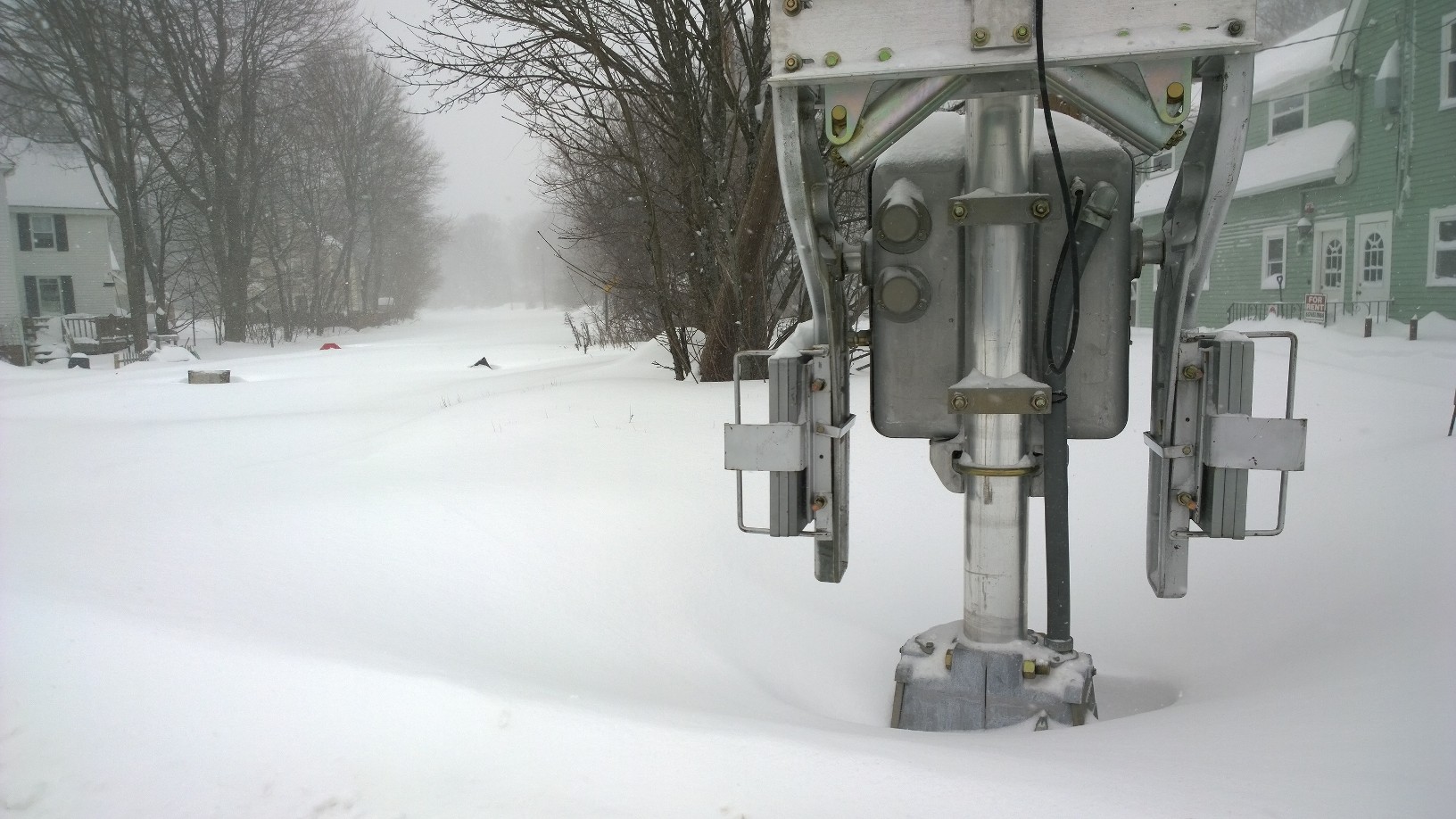
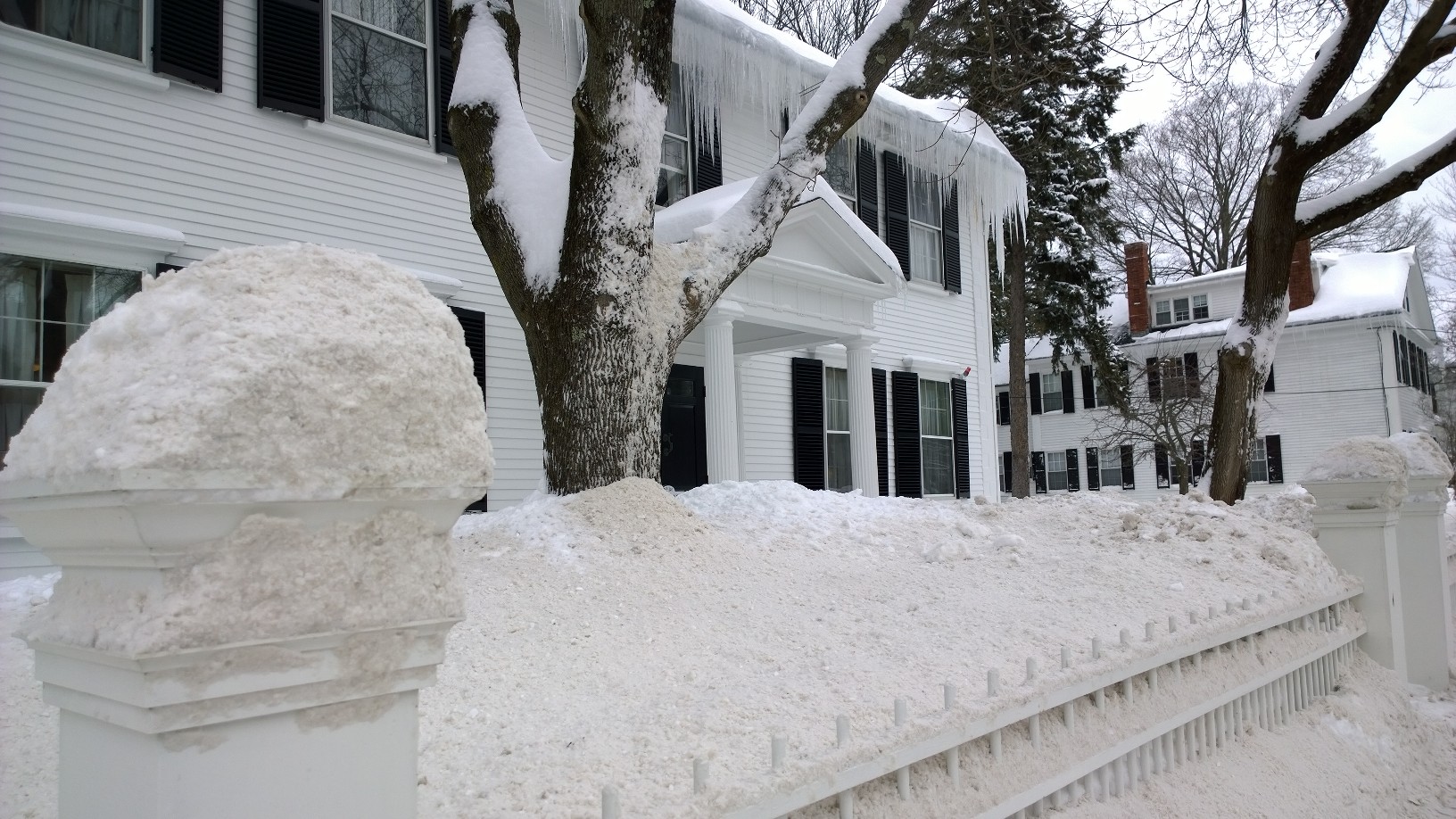
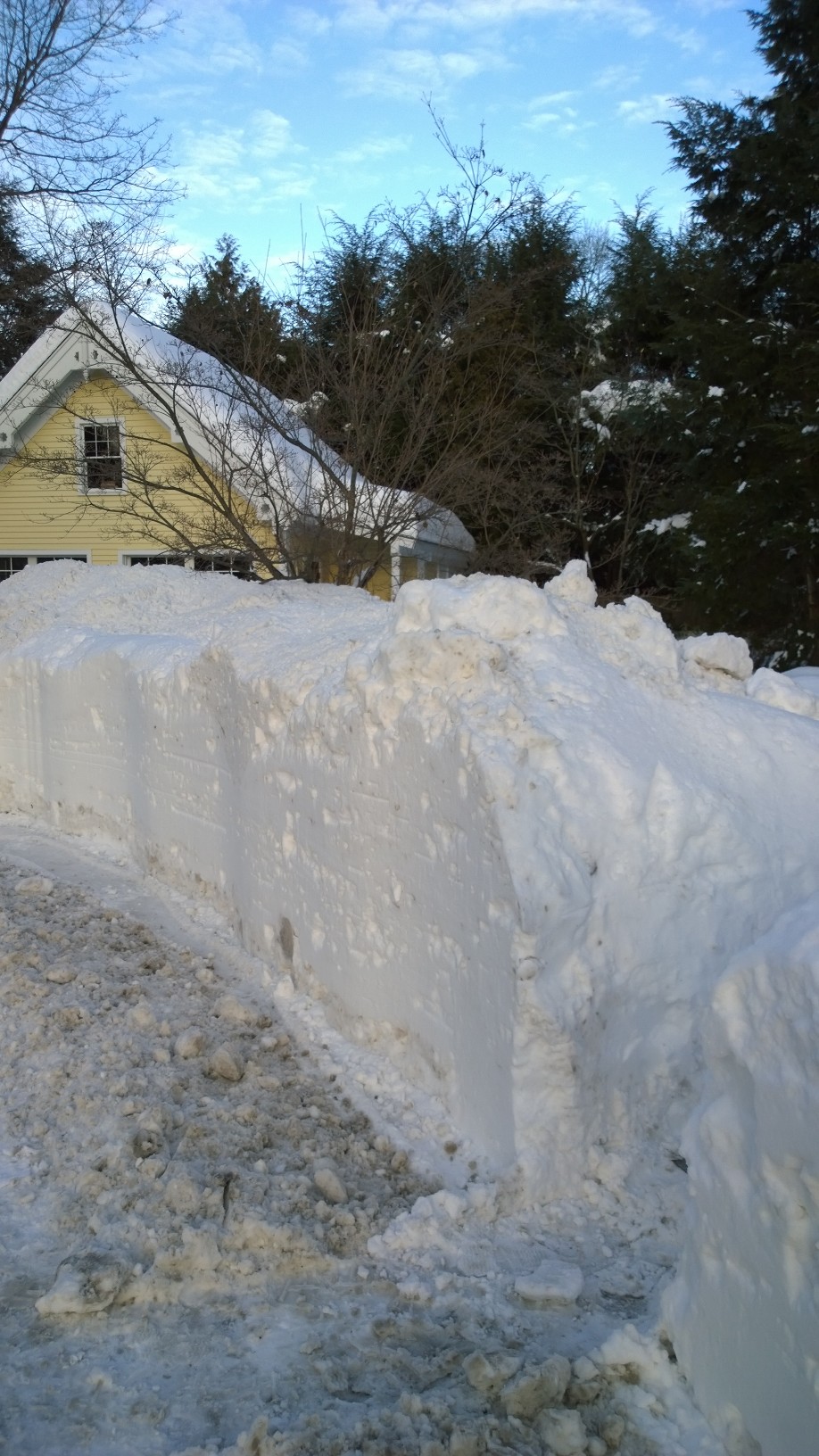
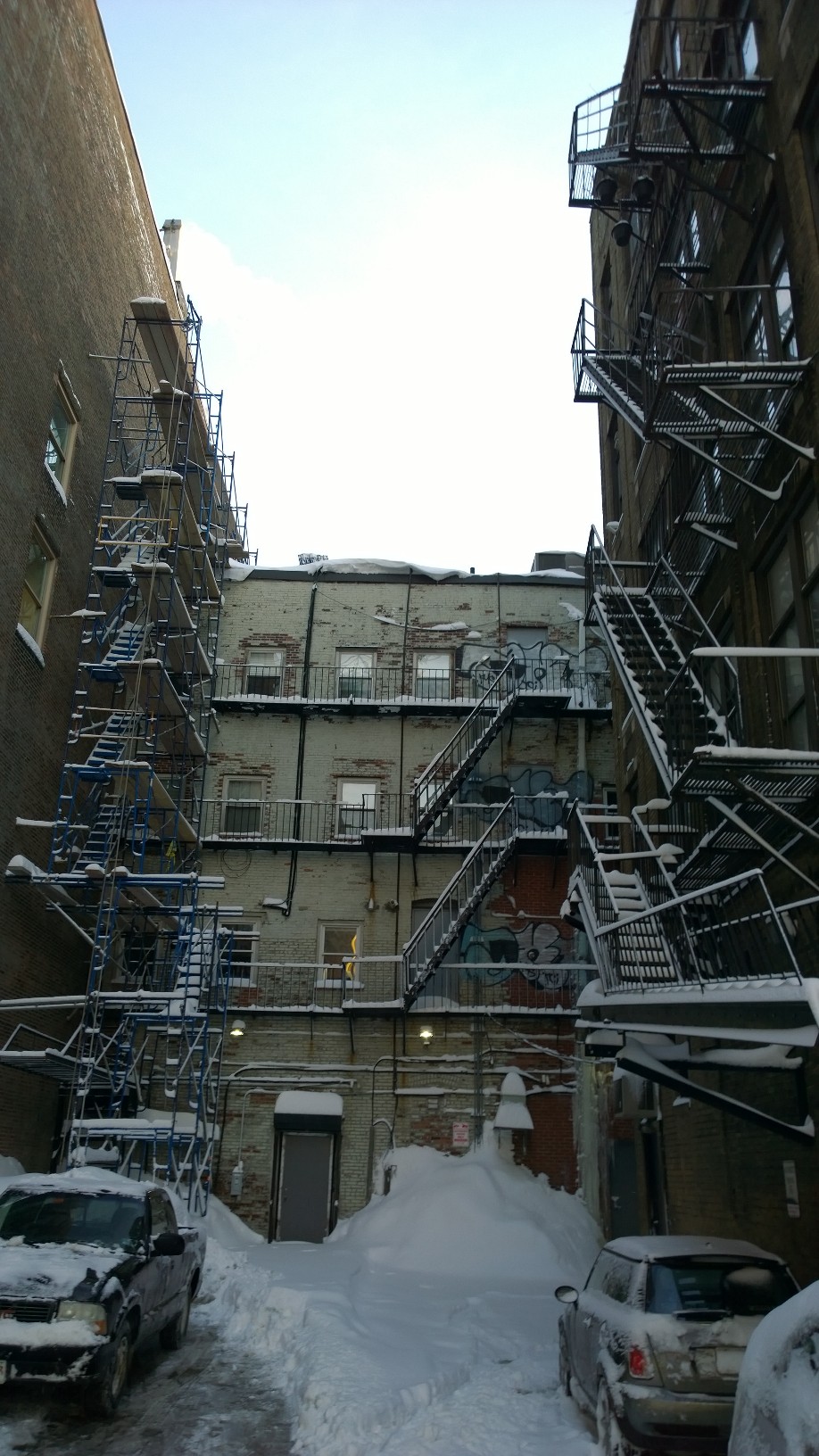
Public transit in Greater Boston didn’t run today as MBTA staff tried to dig out tracks, switches, and signals. We were told to work at home for the 5th time in two weeks. I went for a walk at lunch. Where sidewalks were plowed, the snow was often piled shoulder high on either side. I like walking in recently plowed snow because boots have more traction. The texture is like pie dough that’s a little too dry. Once the snow gets packed down, it makes for slippery walking. In the town, where merchants went bananas with salt, the sidewalk and crosswalks were unpleasantly soupy.

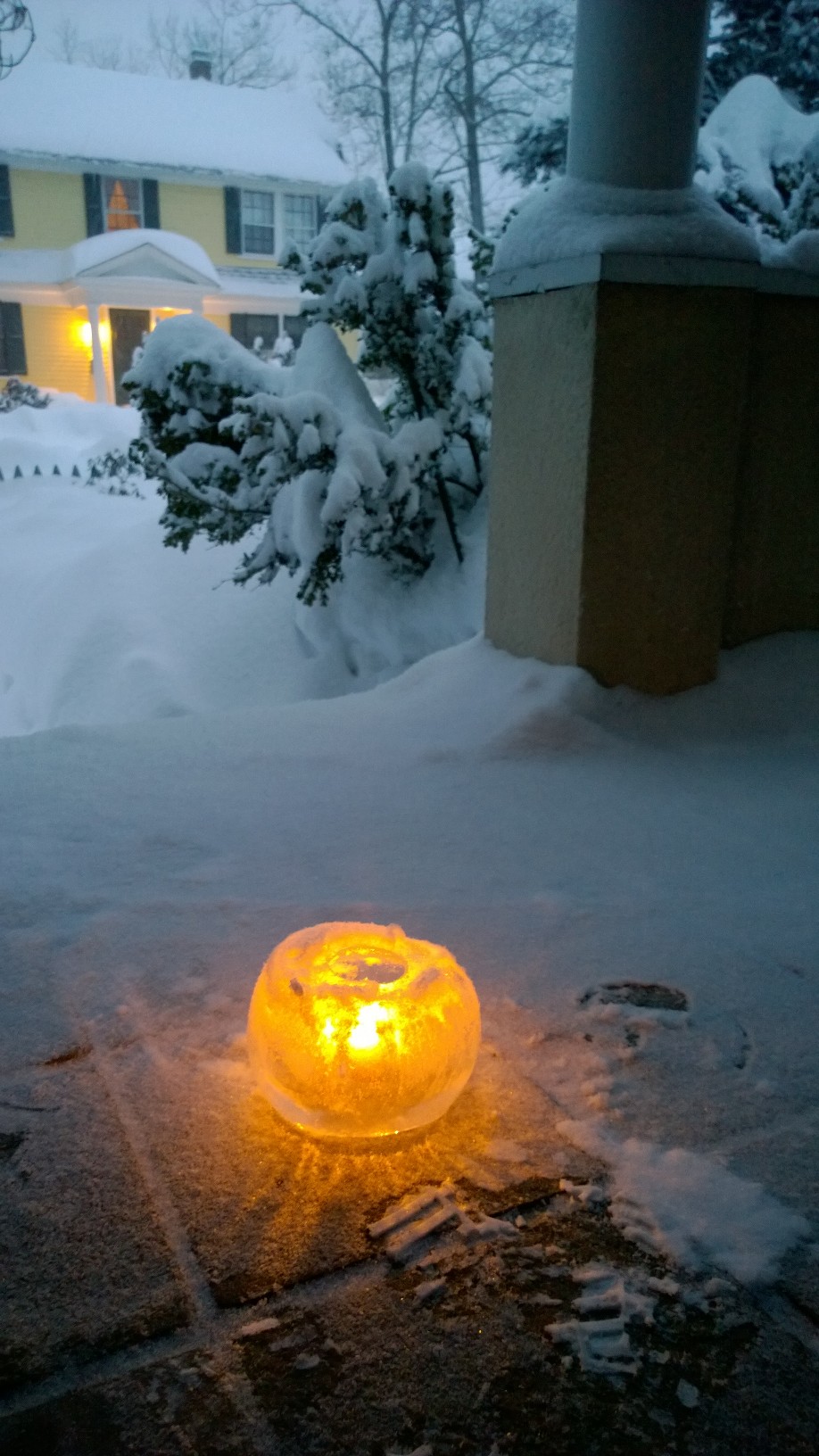
The first photo is from today. It’s Concord Academy. The others were taken in the past week and include a tree on Congress Street in Boston, a snowbank that the plow cut through as if slicing cake, snowy fire escapes near the TD Garden, a view of the Boston Seaport District from a roof garden, and my ice lantern (still going after more than a week of evening lighting).

021015-concord-academy

Congress-St-Boston


like-slicing-thru-cake

Snowscape-fire-escape


view-of-Seaport-Boston

020215-night-3-for-the-ice-lantern

Read Full Post »

People do come up with some pretty far-out ideas.

Aisha Gani writes at the Guardian about one recent idea — to put a public swimming pool in the Thames River.

“An online crowd-funding campaign to build a £10m open-air swimming pool in the middle of the river Thames in central London is to launch [this] month. Initial designs for the Thames Baths, which is to open next year on the Victoria Embankment if planning permission is granted, feature a 25-metre by 10-metre main pool, filtration system and pool-side decking.

Chris Romer-Lee, 42, an architect from Studio Octopi said the group was looking for sponsorship and wanted Londoners to get behind the scheme. The London swimming-pool designs have received high-profile backers, such as The Outdoor Swimming Society and award-winning British artist Tracey Emin, who is to feature in the promotional video.”

Romer-Lee says, “There’s something very wild and liberating being in open water. I don’t get this so much swimming inside indoor pools where it’s hot and smelly. The decked areas are open to anyone who wants to come along, so you don’t have to come along just to swim.”

The #backthebaths campaign can be found at Kickstarter. More here.

Photograph: Picture Plane Ltd/Thames Baths Project
Artist’s impression of the proposed Thames Baths project.

Read Full Post »

From time to time I hear about a growing interest in play areas that focus less on safety and more on creativity and fending for yourself. Safety has always been important to me, but maybe children (grownups, too) get in more trouble when they leave the safety issues to authorities. Maybe there’s something to be said for learning to handle tricky situations by being in tricky situations.

In any case, woodland nursery schools, wild parks, and junky playgrounds are getting attention.

Amy Fusselman, adapting her book Savage Park for the Atlantic, describes her family’s reaction to a wild park in Japan.

“As the eight of us walked, first up a slight dirt hill, then past a gaggle of unlocked bicycles, we smelled it: smoke. The smell became stronger as we went ahead. We followed it until at last we were all standing beside a traditional Japanese hut that was perched atop a downward-sloping one-acre patch of dirt and trees.

“The hut’s front porch was completely overflowing with crap, including a pink-painted piano at which a girl, five, was sitting and playing a John Cage-ian ditty. It was a strangely radiant sound to be hearing as we stood there looking down through the smoke—we could see it as well as smell it now—to the smoke’s source: open fires.

“There were three of them. At one, a boy about eight years old was kneeling, poking at the flames with paper fans; at another, a father was sitting and roasting marshmallows with his toddler son. A third fire seemed to be unattended. …

“We stood there, dumbfounded, staring at the dirt and trees and the structures that were woven around and between them, structures that were clearly not made in any place where safety surfacing had ever been a subject of serious discussion. These were structures that looked like what remained when my sons decided to build an airport out of Legos and then abandoned the project halfway through, only these half-made baggage carts and control towers were much larger and crafted not from nicely interlocking plastic rectangles but from scraps of wood and nails. …

“At one point, I looked up at the trees. I was astonished to see that there were children in them. The more I looked, the more children I saw. There were children 15 feet high in the air. …

“I sat on a log, eating warm, white gooey marshmallows. The park was around us, and the trees were around us, and the dirt was around us, and the smoke, and the music. The children were in the trees, and were flying in the air. We stayed there as long as we could.”

More here.

Photo: Associated Press


Read Full Post »

Good news for Letterbox Farm Collective in New York State! The environmental nonprofit Scenic Hudson’s interest in protecting a Hudson River tributary has enabled the young farmers to purchase land.

Scenic Hudson’s Jay Burgess writes, “Scenic Hudson has acquired a conservation easement protecting 62 acres of productive farm fields and watershed lands in Greenport, just south of the City of Hudson. The easement’s purchase enabled a group of young farmers who had been leasing the property to purchase it, securing the future of their farm operations.

“Known as the Letterbox Farm Collective, the farm partners supply specialty vegetables, herbs, pork, poultry, rabbits and eggs to a variety of regional and New York City markets — local bakeries and food trucks, many restaurants (including New York City’s renowned Momofuku restaurants) and two farmers’ markets. In the spring the farmers will launch a diversified Community Supported Agriculture (CSA) operation. …

“ ‘Achieving the goal of Scenic Hudson’s Foodshed Conservation Plan — meeting the growing demand for fresh, local food in the Hudson Valley and New York City — depends on successful partnerships like this, which provides a stable base of operations for the dedicated young farmers in the Letterbox Farm Collective. We also thank these farmers for enabling a future public access point to our protected lands along South Bay Creek, which present exciting opportunities for Hudson residents and visitors to enjoy the outdoors,’ said Steve Rosenberg, executive director of The Scenic Hudson Land Trust. …

“ ‘We were lucky to have Scenic Hudson with us while we gathered our financing and at the closing table when the moment came and we were able to buy our land,” said Letterbox’s Faith Gilbert.” More here.

Thanks to Sandy and Pat for letting me know and congrats to their niece for being successfully launched in farming.

Photo: Nathaniel Nardi-Cyrus

Read Full Post »

Everything old is new again. Here’s a story about a type of teaching that is coming back in vogue.

Peter Balonon-Rosen writes for WBUR radio, “Closing the gap between the achievements of low-income students and their peers is such a formidable challenge that some experts say it cannot be done without eliminating poverty itself. By the time children enter kindergarten, there is already a significant skills gap across socioeconomic lines that manifests in an income achievement gap that has widened dramatically over the past 25 years.

“In Revere [MA], a high-poverty school district, school officials have turned internally to raise outcomes for kids in poverty. Their notion is that school success can begin with a successful teaching model.

“ ‘What is this?’ kindergartner Thea Scata asks. She taps the picture of a rabbit with a wooden pointer and looks to the three other girls seated at her table.

“The group of four kindergartners at Revere’s A.C. Whelan Elementary School is learning about the letter ‘R’ — writing its shape and reviewing words that begin with the letter.

“ ‘Bunny!’ replies Bryanna Mccarthy.

“ ‘No, what’s the first sound? “R”— rabbit,’ Scata says to the group. …

“Whelan is one of 43 public elementary schools in the state that Bay State Reading Institute (BSRI), a Holliston-based education nonprofit organization, partners with to implement this teaching model into Massachusetts schools.”

Said “Kimberlee Clark, a first grade teacher at Whelan, ‘I’m really able to target those that need to be challenged and go above and beyond and I’m able to work with those students that need the extra support to get onto grade level.’ …

“Core to BSRI’s approach is independent student learning. As teachers work closely with small groups of students, the other students are expected to work by themselves on separate tasks.

“ ‘Students then own a piece of the learning,’ said Ed Moscovitch, chairman and co-founder of BSRI. ‘They learn how to learn from an independent perspective.’

“ ‘When they’re working together it’s not so much that students are teaching students, but they’re discovering and coming to the knowledge together,’ said Lenore Diliegro, a fifth grade teacher at Whelan.” More here.

Photo: Peter Balonon-Rosen/WBUR
Thea Scata, left, leads a group of kindergarten peers at A.C. Whelan Elementary School in Revere.

Read Full Post »

Asakiyume and Mary Ann have been keeping me updated on book sculptures that materialize anonymously.

This latest news, however, refers to named book artists and came by way of the Ferguson, Missouri, library, which retweeted it from something called the Ouch Club, which linked to a story at SomeDaily. (Don’t you love how one thing leads to another in social media?)

SomeDaily writes, “Old and heavy books always seem like a mysterious and infinite well of wisdom and imagination for me. That moment, when you pick up an old book from a shelf and wipe away thick layer of dust from it‘s cover, is full of magic. However, book is so much more than pages full of words.

“I’ve always thought that it would be wonderful to give old books a second life. Some artists make it happen by turning old books, dictionaries and encyclopedias into admirable sculptures.”

There are photos of 20 book sculptures at SomeDaily, here, each one as extraordinary as the one below. (If you know who writes SomeDaily, please let me know so I can give credit.)

Art: David Kracov/Galerie Beauchamp
“The Book of Life”

Read Full Post »

I’m running out of things to say about snowstorms. Today was the third day in one week that we were told to work at home.

Asakiyume was doing a project for us and went to her Post Office on foot to mail it back, walking in the street because the sidewalks weren’t clear. She said it was good, though, as she got to see two igloos and some kids playing in the snow.

I walked as far as my own Post Office for the exercise — a little too much exercise as I tried to stay out of the way of snowplows. A few folks out on cross-country skis probably shouldn’t have been, although I confess that my husband and I did that in a past snowstorm.

I kept thinking about the blizzard when I was in nursery school and it was my mother’s turn to do the carpool. Her car broke down, and there she was with a bunch of 4-year-olds on the side of the road wondering what to do. She flagged down the dry-cleaner delivery man and talked him into letting us ride in back among the coats and suits and hangers while he did his rounds. No doubt it was against all sorts of company insurance regulations and child-safety laws, but somehow we all made it.

In my town center today only the bookshop and a cafe were open. On Thoreau Street, the gas station, Cumberland Farms, a liquor store, and Dunkin Donuts were functioning reliably as ever.

I was winded from climbing over snow banks when I got home. I decided to make hot cider. Later in the afternoon, I decided to make hot cocoa.

Then I went out and lit the ice lantern.

Read Full Post »

Last year my Wisconsin brother told me how he makes ice lanterns. (See post.) I really wanted to try my hand at this, but my first two attempts failed. Finally, yesterday, after 52 hours in the cold, my balloon produced a successful lantern. Psyched!

Among today’s other pictures is the Japanese Maple at my workplace, glorious in every season. The reflection photo was taken at Fort Point Channel in Boston. That ice is made of saltwater. If you live inland, you may not know that for saltwater to freeze, it has to be extra cold for an extra long time.

The construction scene is from the nearby Seaport area, which as everybody knows, is being recklessly overbuilt, given that it’s low-lying area exposed to hurricanes.

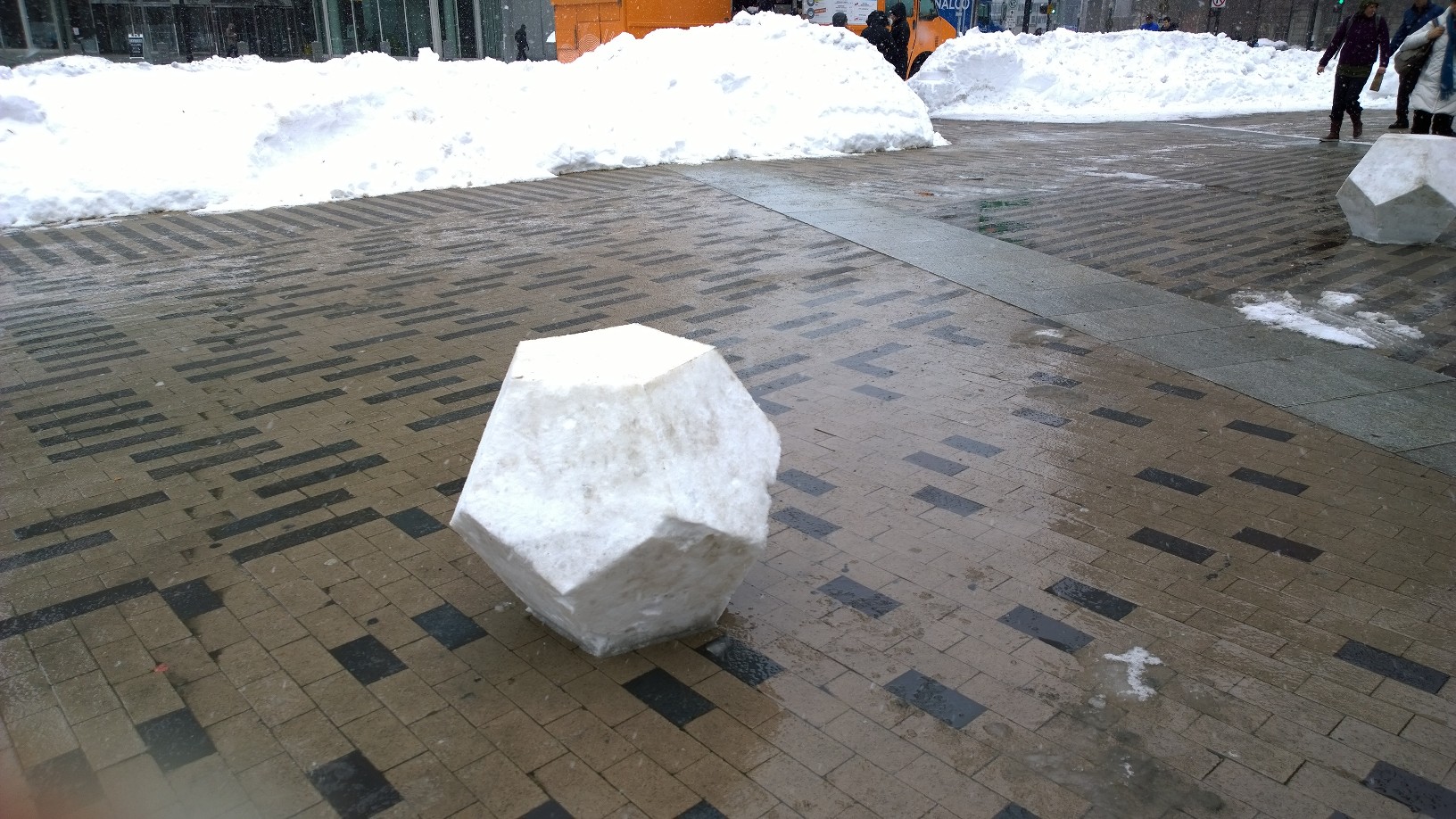
The gingerbread houses were at the Boston Society of Architects and featured Boston buildings, including the state house with its gold dome. The giant geometric snowballs in Dewey Square are courtesy of New American Public Art, about which, more anon.

Created with Nokia Smart Cam

my-favorite-tree


012915-saltwater-ice-boston

012915-seaport-district-boston


Gingerbread-at-BSA

Gingerbread-Statehouse


NewAmPublicArt-giant-snow-balls-art


Read Full Post »

Every Christmas my Wisconsin sister-in-law makes turtles. These are tasty treats consisting of pecans, caramel, and chocolate. When Suzanne and John were small, they looked forward to the package of turtles that arrived every year at our house. Now that they have their own houses and their own children, they are so grateful that their aunt seems willing to add to her annual workload by sending turtles to their houses — and the houses of all her nieces and nephews — as well as the past recipients, her siblings, her mother, and her in-laws.

Every once in a while, she ponders whether she should keep making them. She wonders if people still like them (!). That is, until last year’s Great Turtle Caper.

That was the year that several nieces and nephews  whispered among themselves, “Did you get the feeling that the turtle packages had been tampered with this year?” The whispers gradually built to a roar, and my brother Bo was called in to investigate, a supposedly impartial observer. A quorum of family members happening to be together, he turned his gimlet eye upon them. We need to get to the bottom of this, he said, amid much irreverent laughter.

Could a bent postman have gotten wind of the Wisconsin turtles’ fame and decided to taste one, then two, then three? (They’re a little addictive.) Could someone have filched a few before the packages went to the post office? A very small child perhaps?

The pressure grew. Suddenly, the true culprit confessed. I won’t name him other than to say it was a grown man, a close relative of the candy maker. Exposed and contrite, he vowed in the presence of witnesses never again to take unfair advantage of his access and deprive his cousins.

That is how Aunt Deb learned that her turtles are still in demand. And in case the rabid fan base isn’t enough to convince her of the high value the family places on her turtles, John snapped a photo in local market to convey what turtles would cost us if we were forced to buy them.

pecan-turtles-costly

Read Full Post »

It’s hard to read about the deprivations of refugees, especially the children and especially in winter. That’s why I appreciate hearing about any kindness extended to them. National Public Radio recently had a story on the kindness of Clowns without Borders.

Laura Secorun-Palet writes, “On a cold November morning, 300 children gather in a soccer field in Zaatari, a Jordanian village next to the country’s largest refugee camp. …

“Today the children are not lining up to collect food coupons or clothes from NGOs: They are here to watch the clowns.

“On the ‘stage’ — a space in front of a velvet curtain covering the goal — a tall, blond woman performs a handstand while doing the splits, while two other performers run around clapping and making funny faces. As the upside-down woman pretends to fall, the children burst into laughter.

“The performers are circus artists from Sweden …

“Clowns Without Borders is a global network of nonprofit organizations that, for the past 20 years, has been spreading laughter in the world’s saddest places. The group’s most recent annual report says more than 385 artists performed 1,164 shows for its chapters in 2012 in 38 countries, both in the developing world and for refugees and other disadvantaged children in Western countries.

” ‘It’s very important to give kids a chance to be kids again,’ explains Lilja Fredriksson, one of the Swedish performers.” More here.

Another way to help refugees is through the wonderful Minneapolis-based nonprofit American Refugee Committee.

Photo: Bilal Hussein/AP
Lebanese clown Sabine Choucair, a member of “Clowns Without Borders,” performs for children in June at a Syrian refugee camp in the eastern town of Chtoura, Lebanon.

Read Full Post »

I do like stories about people who love their work so much that they never want to stop.

Perhaps it helps to have a talent like muralist Eric Bransby, who got to study with one of my favorite artists, Thomas Hart Benton. (Suzanne says I have a personal aesthetic, which is a polite way of saying I’m crazy about anything wavy, like Benton’s energetic American landscapes.)

Chloe Veltman writes at National Public Radio, “Eric Bransby is one of the last living links to the great age of American mural painting. He studied with one of this country’s most famous muralists — Thomas Hart Benton — and went on to create his own murals in prominent buildings across the west. The artist is now 98 and still painting.

“At his Colorado Springs studio, Bransby attacks a drawing with tight, sharp strokes, a pastel pencil grasped between gnarled fingers. His studio is unheated, but he doesn’t seem to notice the cold. He’s completely engrossed in the image taking shape on his easel. It’s a study for a new mural that he hopes to install at nearby Colorado College. He says he draws between two and eight hours every day.

” ‘Drawing has been a continuous thing for me, like exercises for a musician,’ he says. ‘It’s refreshing. I draw better. I paint better.’ …

“His parents didn’t encourage his artistic pursuits. It was during the Depression, and when he demanded that he get sent to art school, he remembers his parents said: ‘Well, he’ll do one year and he’ll come back so discouraged that we’ll make something else out of him.’

” ‘But that didn’t happen,’ Bransby says. ‘I found heaven.’ ” Read more here.

Photo: Nathaniel Minor/Colorado Public Radio
Eric Bransby, pictured above in his home in Colorado Springs, is still creating art at 98. “I try to make each mural a project that will somehow expand my abilities a little bit more,” he says.

Read Full Post »

Now, here’s an idea. You’ve heard of Uber-type services that you contact when you need a ride and that charge on the basis of demand?

Well, according to Patrick Clark at Bloomberg, the time may have arrived for calling a snowplow just when you need a snowplow.

“With a blizzard gathering over the ocean,” he reports, “J and R Lawn and Landscape decided to send part of its snowplow fleet on a 300-mile drive. The landscaping company operates 20 snowplows in and around Cicero, N.Y. A tech startup called Plows and Mowz—sort of an Uber for snowplows—had promised there would be lucrative work in Boston. ‘It only snows where it snows,’ says Ted Hoffman, who handles sales and marketing for J and R. His small company was willing to bet four plows, eight workers, and money for gas and hotel rooms on a faraway post-blizzard boom. …

“Plowz and Mowz caters to homeowners who don’t pay for a regular service but want occasional help clearing a driveway. To meet customer demand, the startup uses software to assign new jobs to drivers who are already planning to be in the area. …

“Plowz isn’t the only entrepreneur with a vision for the future of snow removal. ‘On-demand is cute, but it’s not snowplowing,’ says Yeh Diab, co-founder of Boston-based PlowMe, a second startup trying to using technology to improve an age-old business. The snowplow, as he sees it, is less like a taxi (seeking customers, wherever they might be) and more like a bus (serving customers along a set path). …

“Plow drivers needed to improve their efficiency with regular customers along set routes, he determined, while an on-demand system offered a succession of one-time customers. PlowMe is designed to be a route-management tool and a marketplace in which drivers can trade or sell parts of their routes to others.”

My grandchildren know that in Geopolis, a really big snow calls for bringing out the supremely competent, cool, and collected truck called Katy (see Virginia Lee Burton’s classic Katy and the Big Snow), but if you don’t live in Geopolis, other options do exist.

Lots more snowplowing angles here.

Read Full Post »

« Newer Posts - Older Posts »