Feeds:
Posts
Comments

Posts Tagged ‘refugee’

pssikk5

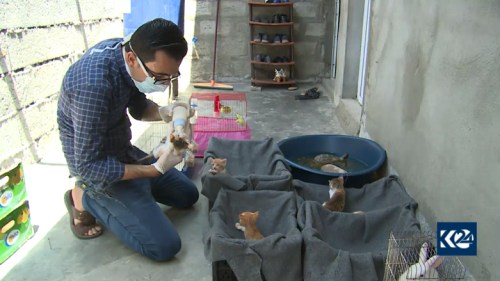
Photo: Kurdistan 24
There are many strays in the Kurdistan Region, with few resources available for animal care and protection. In a refugee camp, a young man whose veterinary education was cut off by war does what he can with what he’s got.

Although it’s true that some refugees are crushed by loss and dislocation, others face up cheerfully to the way things are. A story from Kurdistan24, a television station, provides a moving example.

With contributions from Chiman Adil, Nadia Riva reports from Erbil, “A young Syrian Kurdish refugee has been appealing for other animal-lovers to help in bettering the fate of stray animals in the Kurdistan Region while running a veterinary clinic in a camp.

“Ayaz, a Syrian Kurd living in the Kawergosk camp near the Kurdistan Region’s capital of Erbil, fled the civil war which has been plaguing his country for nearly eight years.

“Before popular Syrian protests erupted across Damascus and other cities, Ayaz was a fourth-year student at the Faculty of Veterinary Medicine. The conflict, however, prevented him from completing his studies, with universities closing down and violence spreading. …

“Ayaz sought refuge in the Kurdistan Region, as hundreds of thousands of other Syrian Kurds have done, but did not let his situation affect his care of animals. … He has called for the promotion of animal rights at the camp, hoping to raise awareness and change the culture among the newer generation toward animals. … Ayaz has rescued cats, birds, turtles, and rabbits, which he keeps in his shelter at the Kawergosk camp.”

On twitter, Glenn Greenwald has been trying to raise money for this cash-strapped operation. You may remember that I wrote about Greenwald’s own animal-welfare efforts last month in a post describing how he hires homeless people to care for stray dogs.

More here.

Read Full Post »

Photo: Daniella Cheslow/NPR
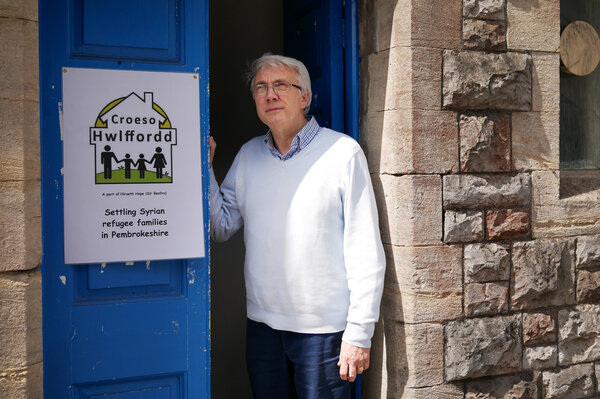
Jeff Britten stands in the doorway of the Baptist chapel in Haverfordwest, Wales, where he meets regularly with other members of his group sponsoring a refugee family. The name of the group is Croeso Hwlffordd, or Welcome Haverfordwest in Welsh.

What can I say? There are kind people everywhere. This story is about the efforts of residents of a small village in Wales to welcome refugee families from Syria. It’s not necessarily an easy thing to do — there are so many differences in experience and culture. But these people knew it was the right thing to do.

Daniella Cheslow writes at National Public Radio, “Back in February, Jeff Britten sent a description of Haverfordwest, his town of 13,000 people in southwestern Wales, to a family of Syrian refugees living in Jordan.

” ‘I ran around town and took pictures of the castle, the best bits, the River Cleddau,’ Britten says. ‘I produced a map which showed the location of the house, and that everything was in walking distance, supermarkets, schools, a mosque. It was all there for them.’

“He hoped the family, whom he contacted with the help of the Home Office, which controls U.K. immigration, would come live in Wales. At that stage, he knew little about them, only that they were Syrians recognized as refugees by the United Nations.

“Britten is 71 and retired from the pharmaceutical industry. The idea to reach out to Syrian refugees came in late 2016, when he heard that two other Welsh villages had adopted refugees from the country, and he called a meeting in a Baptist chapel in his own town to inspire his neighbors to do the same. …

“The refugees have come to Wales as part of a community sponsorship program that began in the U.K. in 2016. A group of British citizens can commit to providing refugees help with housing, navigating schools and doctors, language and the job search.

“Twenty-five Syrian refugee families have arrived and been settled so far in the U.K. via community sponsorship; of those, six families went to Wales. …

“In Haverfordwest, about 30 residents answered Britten’s call and signed up to sponsor the newcomers. … Jenny Blackmore had worked with Syrian refugees in the nearby town of Narberth and noticed that housing was often a stumbling block to fulfilling the government’s conditions. Landlords had to keep their homes open while the Home Office processed the resettlement application, and the government paid a lower rental rate than the market could offer.

“Blackmore’s mother had recently died and left her an inheritance. She invested it in a three-bedroom, two-story rowhouse in the center of Haverfordwest, with the aim of housing a refugee family.

” ‘I decided it would be a sort of fitting legacy, really, to my mum and dad’s memory, to do something — yeah, it’s an investment for my family, but it’s also a kind of investment in people’s lives,’ she says.”

More here.

Read Full Post »

Photo: Josh Reynolds for The Boston Globe
Volunteers try to find housing and employment opportunities for asylum seekers in Arlington, Cambridge, and Somerville, Mass. Refugees have government-approved supports. Asylum seekers have nothing.

In the last couple years, since I’ve been volunteering in ESL classes, I have learned there is a differences between refugees, who arrive in this country fully vetted and eligible for official support, and asylum seekers.

Asylum seekers are generally fleeing persecution and danger. One woman I heard about knew that the government in her country intended to arrest her after disappearing her husband for his vocal opposition. When she arrived here, she had nothing.

Numerous groups of US citizens are now organizing to help such people.

Zipporah Osei reports at the Boston Globe, “With more attention than ever on the crisis and issues of immigration, Fowkes knew what he needed to do was to effect direct change. …

“Said Fowkes, “I wanted to do more than just mail a check to an organization. I wanted to have a hand in changing someone’s life.’

“Fowkes and his wife joined ArCS Cluster, a group of volunteers helping refugees and asylum seekers in Arlington, Cambridge, and Somerville. The group started in the spring of 2016 as an arm of the Malden-based nonprofit Refugee Immigration Ministry, with a mission of helping through person-to-person connection

“Asylum seekers come to the United States to escape issues such as war, persecution, or domestic violence. Once here, they must apply for asylum and then wait at least five months to apply for a work permit.

“While they wait to be approved, individuals can lack access to medical care and face housing insecurity and social barriers that make the process even more difficult. The group attempts to make the transition as smooth as possible. …

“The cluster, which has over 250 members with roughly 50 active volunteers, provides services to asylum seekers from countries including Saudi Arabia, Libya, Liberia, and Rwanda. It is the first explicitly LGBT-friendly cluster in the Refugee Immigration Ministry. Although the cluster was formed out of First Parish Unitarian Universalist of Arlington, all volunteers are welcome whether or not they are affiliated with any religious organization. …

“For many of the volunteers, the connections made with asylum seekers are long-lasting.

“ ‘I have so enjoyed forming relationships with these people. We develop friendships together,’ said [Sarah Trilling, co-coordinator]. …

“The cluster helps the asylum seekers in seemingly small ways as well. After finding out that one of their guests was uncomfortable taking the bus late at night, volunteers took turns driving her home from appointments.

“ ‘They support me morally and financially. This is a blessed group,’ she said of the coordinating team. ‘I love them for all they do.’

“Fowkes and his wife, who live in Medford, have been members of First Parish for more than 20 years. He recently retired and felt he had more time to invest in charity work. The experience of housing an asylum seeker has also had a positive impact on him.

“ ‘This kind of work suits me,’ said Fowkes. ‘You can do a small thing for a great many people or you can do a huge thing for one person, and I just know I’m making a tremendous impact on someone’s life.’

“The couple took in an asylum seeker who had been living on the street. The guest has been living with the pair for more than a year now. The three have dinner together every night, and the couple has introduced him to his family and friends. Fowkes said they have formed a deep connection.

“ ‘He introduces me to people as his American dad,’ said Fowkes.”

More.

Read Full Post »

Photo:  Diana Markosian / Magnum Photos
Yazidi refugee children are overcoming fear of the water in Germany.

One reason I was interested in the following story is that I have worked with Yazidi refugees from Iraq like these. One of the people in the family I know actually has relatives in Germany, where the story takes place.

Philip Oltermann writes at the Guardian, “When Hanan Elias Abdo looked over the side of the rubber boat into the deep blue sea, she could make out two large shapes, moving at speed. Were those dolphins? Or sharks? ‘Did you see the fishes?’ she shouted at her siblings.

“Six-year-old Sulin, the youngest, … was lying on top of a thin patch on the boat’s floor and could feel the water moving underneath her. At home, in the Sinjar mountains in Iraq, she had never more than splashed through an ankle-deep brook. What if the floor gave way and she got pushed into the bottomless depths? What, she thought, if the fishes started nibbling at her feet?

“That was in September 2015. Two and a half years later, Sulin stands atop a starting block in northern Germany, takes a two-step run-up, waggles her arms and legs mid-air, before landing in the 2-metre-deep turquoise water and splashing her giggling sisters who are paddling near the edges. Surfacing, she pulls a funny face at the man with the white beard and white slippers applauding her from the side of the pool. ‘That’s it!’ says Günter Schütte, Germany’s first swimming instructor to specialise in helping to cure refugees’ fear of water.

“Schütte is a teacher with 40 years’ experience teaching politics and sport at schools in Wolfsburg, and a passionate swimmer since he was 13. Throughout his career, he says with pride, he made sure that by the end of the school year there was never a non-swimmer in any of his classes. …

“When Schütte realised that many refugees who arrived in Wolfsburg were families from countries with little open water, and that many children had been traumatised by the journey across the Mediterranean, he decided that swimming could become a tool for better integration.

“From October 2015, he booked a two-hour slot every Sunday at a municipal swimming pool and handed out flyers advertising the course at asylum seekers’ shelters in the area. …

” ‘We take our time,’ he says, ‘because when you are scared, time-pressure is the last thing you need.’

“The purpose of the course was to help the new arrivals ease into an unfamiliar element – in a metaphorical sense, too. ‘By learning how to swim, refugees are no longer shut out from the sports lessons at school,” Schütte says. ‘Some of them also get a head start on their German peers – they have a sense of achievement.’ …

“Sinjar province, where Hanan, Helin and Sulin, now nine years old, grew up, is a traditional stronghold of the Yazidi minority who were declared infidels by al-Qaida and actively targeted by Isis in 2014. Helin, now 12, recalls a phone call late that summer from her grandmother, who lived in the next valley along: Isis fighters were approaching and the villagers had run out of ammunition. …

“There was no time to wait any longer. Their mother, the six siblings and a neighbouring couple all piled into a single car and headed for the Turkish border, leaving behind the two family goats and the cherry and orange trees in their garden. Months later, after crossing the Mediterranean and seven different countries, someone sent Helin a photograph of their village. ‘The war had flattened everything,’ she says. …

“For now, the pool can suspend the pressures bearing on them outside. … Hanan wants to go a step further and get the rescue swimming badge in silver, for which she has to take a jump from a 3-metre board, swim 25 metres underwater in one breath, and rescue a drowning person with pull stroke. Asked what she wants to do when she grows up, she doesn’t take long to come up with an answer. ‘I want to become a sports teacher.’ ”

More here.

Read Full Post »

Photo: Elissa Nadworny/NPR  
Cathy Meaney (right), a volunteer with International Neighbors, has befriended an Afghan refugee family in Charlottesville, Va.

Here’s a story of how one person can make a big difference. The one person I’m thinking of is a teacher who started a nonprofit to help refugees in Virginia. After launch, there was another “one person” and another and another.

In fact, quite a few kind Virginians were concerned to learn that refugees have to start taking care of their own needs in 90 days — a nearly impossible task in a strange place where you don’t know the language.

Elissa Nadworny has a report at National Public Radio (NPR).

“Here’s a number: 90. That’s how many days most refugees arriving in this country have before the basic resettlement money they get from the government runs out.

“But once that three months is over, there are still so many things recent arrivals need. That’s what Kari Miller saw over and over as a teacher in the public schools in Charlottesville, Va.

“In her classes, students who had recently arrived in the U.S. as refugees were struggling with all kinds of problems, like serious dental issues, or a lack of winter clothes or just the challenge of adjusting to life and school in a new land and a strange language. …

“She asked her principal for permission to take children to clinics, to buy them winter coats, to go home and meet their families. … Seeing them every day at school gave her an idea: Connect these families to their Charlottesville neighbors.

“Working out of her garage, Miller started the nonprofit International Neighbors. That was two years ago, and the organization has now grown to more than 200 volunteers. Many of them work full-time jobs but are ready to jump in to help families in that crucial period after the government aid runs out. …

“There are so many questions: Where can I get a car? Is school closed today? How do I turn on my shower? And, please, help me fill out all this paperwork!

“Paperwork, that’s the real currency in the United States, says Liza Fields, a member of International Neighbors’ board. … Fields helps refugees fill out those many, many forms — mostly for medical care but also dental work, school needs and, of course, paying bills. …

“The No. 1 request refugees make of International Neighbors is for a car. That’s usually followed closely by another related request: driving lessons. The organization provides money for lessons. But some volunteers like Helga Hiss are willing and able to give lessons. That, says Kari Miller, is the sweet spot. …

“Last fall, Hiss started giving driving lessons to a woman named Neegeeta, who moved to Charlottesville with her family from Afghanistan about 2 1/2 years ago.

” ‘It was very, very difficult life,’ Neegeeta says as her 18-month-old son, Musadiq, crawls into her lap. She asked that we use only her first name in order to protect family members who remain in Afghanistan.

“That first year in the U.S. was so hard, Neegeeta says, that they thought about moving back to Afghanistan. She felt isolated. She was working on her English, taking care of her three children, and dependent on a bus transfer to get her to appointments. …

“But, month by month, things got better. Her husband got a good job. The family got a car. They moved into an apartment downtown.

“Neegeeta credits much of this newfound confidence to volunteers like Hiss, who she says helped her feel welcome as she drove around her new city, laughing — and praying — in Hiss’s Toyota Camry.

“Those lessons, Neegeeta says, changed everything. Gave her freedom.”

Read about the nonprofit’s varied programs — including the one that pairs Charlottesville and refugee families who have similar characteristics — at NPR, here.

Read Full Post »
header-1-1068x400

Photo: Rhode Island Inno
Refugees learn US workplace skills thanks to a nonprofit called Beautiful Day.

For my taste, there can never be too many admiring articles about Beautiful Day (aka Providence Granola Project). I find the nonprofit’s model to be both wise and kind, and my only wish is that more markets would carry the products and more employers would hire the refugees after graduation.

I’ve known a number of immigrants who have gone through the training (including the somber Congolese girl above, who is still learning to share her radiant side more often).

Bram Berkowitz writes at Rhode Island Inno, “On many accounts, granola is considered a nutritious, lightweight and high-energy snack that has become a popular breakfast item, as well as a pick-me-up for hikers and campers.

“But at the Providence-based nonprofit Beautiful Day, the crumbled, whole-grain based food has become a path to the labor market for many refugees that come to this country lacking the skills needed to obtain a job.

“Keith Cooper, a former campus ministry veteran, founded Beautiful Day about 10 years ago as a granola business that employs refugees in order to give them hands-on experience and training they can use later on to gain permanent employment.

“As the United States prepares to take in the least amount of refugees since the 1980s, Cooper is gearing up to double growth at Beautiful Day so the organization can expand its services by taking on more refugees or train refugees for longer periods of time. …

“The organization finds refugees through various agencies, such as the Dorcas International Institute of Rhode Island. Cooper said typical candidates are those that have extremely high barriers to entry, whether its lacking cultural literacy or English speaking skills.

“Cooper said he chose granola because its non-perishable, healthy and a food that requires a lot of work to make, but not a lot of finesse.

“ ‘I had never run a food production company, but we have been determined to become our state’s premier granola company,’ he said, adding that the organization uses local distributors and suppliers when possible. ‘We try to use the highest quality ingredients we can to make granola people will really like.’

“Beautiful Day provides 200 hours of work to refugees in various parts of the granola business, which gives them experience for when they apply to their next job. The placement also comes with a stipend and has opportunities for refugees to interact with others in the community when the company goes to public places like farmer markets to sell the granola. … Cooper said most of the kitchen workers go onto entry level jobs such as working at a laundromat, in a warehouse, as a janitor or sometimes in food production.

“ ‘Most lack English language, but they can still learn pretty quickly how to look someone in the eyes during an interview,’ he said, adding that all of the program participants, many of whom lived for years in refugee camps, are extremely eager to work. ‘The primary skill we teach is confidence … In a lot of work settings you may not need much English, but you absolutely have to be able to communicate when you do or you don’t understand something. That takes confidence.’ …

“Cooper sees huge scalability through online subscriptions and consumer sales. He is also looking to sell directly to universities and law offices, which will also help spread Beautiful Day’s mission because subscribers receive a postcard each month with a story about a new trainee. …

“ ‘People can do something about refugee resettlement. … By making a small choice about what you eat for breakfast or for a snack, you can provide crucial on-the-job training for someone who otherwise can’t get a job.’ ”

More here.

Read Full Post »

Photo: UNHCR/Benjamin Loyseau
Ablaye Mar, an embroiderer from Sénégal, collaborates with Sabatina Leccia, a French artist and fashion designer, as part of a refugee program in France called La Fabrique Nomade. 

One of the hardest necessities facing migrants is leaving behind careers that took years to develop. That’s why a program started in France is so inspiring. La Fabrique Nomade gives one group of refugees — artisans — a chance to make a living from what they know best.

Kamilia Lahrichi and Bela Szandelszky write about the initiative for the UN Refugee Agency, UNHCR.

“Many hands are at work in Yasir Elamine’s pottery workshop in Paris. They cut, pound, squeeze, stencil and shape. Yasir, a potter from Sudan, and his French students swap ideas and aesthetics. As a refugee, he thought his life as an artist was over. The work of La Fabrique Nomade, a UNHCR-supported NGO, helped change his mind.

“La Fabrique Nomade encourages artisans among refugee and immigrant communities to retain and pass on their traditional crafts, from weaving and embroidery to pottery and woodworking.

“The group promotes their work and showcases it at design fairs. It supports the artists themselves, helping them to make connections in the art and design scene in France. It helps equip them with basic job-seeking skills such as building a portfolio and CV.

“The founder of La Fabrique Nomade, Inès Mesmar, says the goal is not just to enable refugees to use their talents but also to share valuable skills with the local community. For refugees, she says, it is about changing attitudes, ‘to allow them to transmit their knowledge, rather than being people who just receive help and assistance.’ ”

The UNHCR story is here. Check out DW for more detail, here.

Read Full Post »

Water for Congo

Photo: Ideo
Asili, an enterprise designed by the American Refugee Committee (ARC), IDEO.org, and the people of Kabare in the Congo, has distributed millions of liters of clean water to people who didn’t have any. In the photo, a prototype offers sample cups of Asili water outside a Sunday church service. 

One of my favorite organizations is the Minneapolis-based American Refugee Committee, which does good work all around the world. In this story about bringing clean water to people in the Congo, they demonstrate the importance of asking the local people what they want, consulting with them on how work should be done, and enabling them to take charge.

In the Congo’s Kabare region, ARC partnered with residents and USAID to create a community-run business called Asili, and Asili partnered with residents and the design firm Ideo to launch a clean water initiative.

The project is described at Ideo.

“The Democratic Republic of Congo (DRC) has been beset by decades of war, deep poverty, and an underdeveloped infrastructure for international development projects. Yet Asili — a community-run business delivering essential services in the Kabare region — is flourishing, thanks to the pride, strength, and ingenuity of the Kabare locals.

“[It] offers clean water, agricultural services, and a health clinic to area communities. Designed by the American Refugee Committee (ARC), IDEO.org, and the people of Kabare themselves, Asili has distributed millions of liters of water, seen local farmers’ incomes and outputs jump tremendously, and had thousands of patients at its three health clinics since they were established in 2014.

“Perhaps what’s most important, especially in a landscape of failed international development projects, is that Asili was born from — and is run by — the people of Kabare.

“In 2013, the American Refugee Committee (ARC) approached IDEO.org with a bold challenge: How might we build a community-owned, for-profit business in eastern DRC to support better health and improved livelihoods? …

“The early results have been truly remarkable. Since Asili was launched, 60 kilometers of pipeline have brought 5.3 million liters of clean water to previously overlooked villages, and this influx has helped cultivate a new local agriculture ecosystem. In addition, world-class healthcare has been delivered to over 3,000 people in some of the most vulnerable communities on earth….

“The Asili team have totally embraced human-centered design, and Congolese staff are hard at work building prototypes, iterating on what’s working, and using a design approach to build the next steps for this remarkable organization.” Wow.

In my ESL volunteering, I have had the privilege of meeting many Congolese refugees. To say that life in Congo is hard would be a gross understatement. Projects by Asili represent hope.

More at the American Refugee Committee website, here, and at Ideo, here.

Read Full Post »

Photo: Rahmat Gul/AP
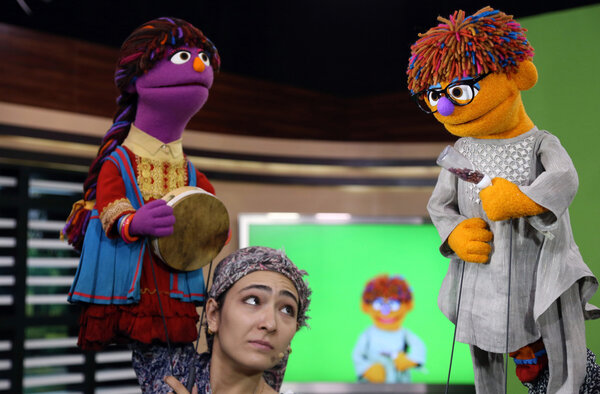
Characters from the Afghan Sesame Street. A MacArthur Foundation grant will enable the Sesame Workshop and the International Rescue Committee to roll out a version for Syrian refugee children.

Even if they make it to relative safety, children often suffer the most from wars and dislocation. In addition to the trauma, there is the problem of education, which is unavailable or spotty in refugee camps.

That is why people of goodwill are reaching out with programs that can both comfort and teach. Jason Beaubien reports on one example at National Public Radio.

“The MacArthur Foundation will give $100 million to Elmo, Big Bird and their buddies to massively scale up early childhood development programs for Syrian refugees.

“Sesame Workshop and the International Rescue Committee won a global competition by the MacArthur Foundation seeking solutions to what the judges called ‘a critical problem of our time.’

” ‘The most important thing to remember is that the humanitarian system is designed to reach people’s immediate needs — to keep people alive, feed them, make sure that they have shelter,’ says Sarah Smith, senior director of education at the IRC. The global humanitarian system, she says, isn’t very good at supporting displaced children. ‘And the fact is these children are likely to stay as refugees for their entire childhood.’ …

“The IRC and Sesame Workshop plan to launch what they’re describing as the ‘largest early childhood intervention program ever created in a humanitarian setting.’ …

“It will be distributed over traditional television channels, the internet and mobile phones. It will also serve as an educational curriculum for childcare centers, health clinics and outreach workers visiting the shelters where refugees live. The workers will deliver books to kids and caregivers.

“Sherrie Westin of Sesame Workshop says … ‘These Muppets will be created to reflect the children’s reality so that children can relate with them. … One of the Muppets may have had to leave home. She may live in a tent. She may become best friends with her new neighbors.’ …

” ‘We know that in their first years of life the trauma that children are experiencing has the greatest impact on them,’ Westin at Sesame Workshop says. ‘And yet they receive the least support.’ ”

More at NPR, here.

Read Full Post »


Photo: Alicia Canter/The Guardian
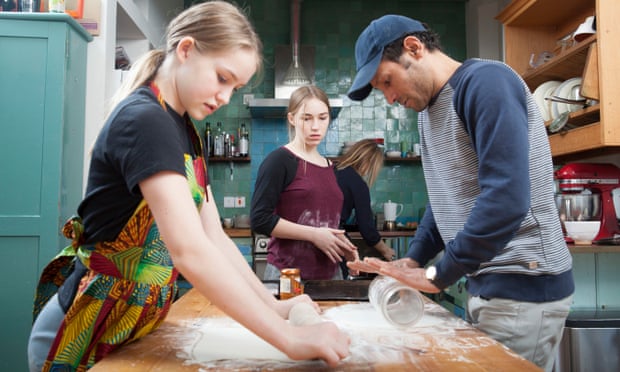
Mohammed, a Palestinian, bakes cheese twists with his host family in London.

Here’s another example of individuals in the UK stepping up to give refugees a welcome — while providing themselves with an experience that feels more meaningful than donating money or sending “thoughts and prayers.”

Alicia Canter, Kate Lyons and Matt Fidler write at the Guardian,
“It’s a simple premise: people with a spare room in their house are matched with a refugee or asylum seeker in need of somewhere to stay.

“And it’s a popular one: before 2015, Robina Qureshi’s organisation, called Positive Action in Housing (PAIH), used to provide about 600 nights of shelter a year to people with nowhere to go. In the 18 months since September 2015 this has risen to 29,000 nights.

“ ‘We were getting bombarded with people. … They said, “I want to do something.” ‘ …

“There are numerous points in the asylum process that asylum seekers and refugees can find themselves becoming destitute and homeless. Perhaps the most common is when they have their claim refused – at which point support payments stop and they are forced to leave their accommodation.

“People in this situation often find themselves homeless, without the right to work or receive benefits, unable to approach the local authority for help, and yet, in many cases, feeling unable to return to their home country. …

“ ‘The ones I feel really sorry for are the people who have been left destitute for years on end. People take them in and let them be human, and take them into a warm home where people care for them,’ says Qureshi.

‘What the hosts found out was that they were meeting a need in themselves – a need to give. Our society is so wealthy and our houses are stuffed full, but there’s that need to help others.’

“Mohammed, 35, from Palestine, [lives] with Joanne MacInnes, an actor and activist, in west London, and on weekends her daughters Malila, 12, and Eve, 14. …

“MacInnes has hosted six people in her house, but Mohammed is, she and her girls agree, their favourite. ‘He’s the nicest of them all,’ says Eve.

“Currently the family are trying to find Mohammed a wife. He uses his local mosque’s dating service, but says that because of his precarious immigration status he is not considered a desirable match. …

“Mohammed says he was shy when he moved in and nervous about how the family would respond to him.

“ ‘First time I come in here, I’ll never forget, Malila gave me a hug and speak with me,’ says Mohammed. ‘I was shy, Malila come in straight away, hug and speak with me and is not shy, you know. Eve is shy and Eve after two weeks spoke with me. And Joanne spoke with me. I feel family. Listen, I don’t speak English, but I hope you understand me. My dad is dead, my mother is dead [and] my sister. Joanne, Mali and Eve are my family.’ ”

More here.

Read Full Post »

Photo: UNHCR/Benjamin Loyseau
“When you see their desire to learn, it gives you a boost of energy,” says Brigitte Dubosclard, who volunteers with refugees.

I can never get enough of stories about people helping people. A good example is seen in this article on a French village welcoming refugees.

Céline Schmitt wrote for the refugee agency UNHCR, “In November 2015, Pessat-Villeneuve, which has a population of 550, opened the doors of the château as a reception and guidance centre for refugees from Calais and Paris. [As of April 2017], it has hosted 136 refugees. …

“[Mayor] Gerard Dubois strongly believes in solidarity, in mutual support, and while it was an easy decision for him to open a reception centre for refugees in Pessat-Villeneuve, he had to persuade residents that it was the right thing to do. It was not as easy task. At a public meeting, organized in November 2015 when the centre was opened, he says he felt like a ‘bull in the ring.’ In the weeks afterwards, he even received death threats, but solidarity was stronger.

“Hatred is noisy,’ he says. ‘Solidarity is quiet, but inspiring and effective.’ …

“Dubois believes that initial fears stemmed from the fact that locals did not know the new arrivals. Any apprehension, he says, disappeared once they had met them. ‘Meeting and getting to know each other changes everything. It’s as simple as that. I don’t call them refugees, but guests.’ …

“Brigitte Dubosclard is a volunteer at the reception centre in Pessat-Villeneuve. A retired teacher, she gives French lessons to the refugees and also runs a clothing store. She was the first to volunteer to help during the public meeting organized by the mayor when the centre opened.

“ ‘When I realized that there was a general feeling of fear, I immediately said that we are here to help, that France is a country that has always welcomed refugees for many years,’ she says. ‘I asked just one question: What do they need?’

“Brigitte opened the clothing store with help from non-profit organizations Secours Populaire Français and Secours Catholique, as well as donations from the public and local shops. …

“Sandrine Menuge has been the head of Pessat-Villeneuve primary school since 2000 and saw the arrival of refugees as an opportunity to talk about diversity with the children in her class. She tasked them to find faces of 100 children throughout the world in 100 days.

“ ‘We searched for photos to see where they come from, what they look like, how they live,’ says Sandrine. …

“One afternoon, she invited two refugees, Mary from Eritrea and Ali from Sudan, to come to the school. The local children asked them about their journey. ‘We looked on the map to see all the countries they had to go through to come to France. They found them very brave.’

“The children also understood why the refugees had to leave their homes. ‘They realized that in some countries, children are afraid that bombs will fall on their heads. It was a wonderful shared moment.’ …

“[Amir, a 27-year-old from Afghanistan,] travelled on foot, by truck and boat, by any means possible, to reach safety.

“ ‘I feel better now,’ he says, from the reception centre in Pessat-Villeneuve. ‘I have accommodation. I have friends. There are good people here. It is important that people understand why we are here. We are refugees. I don’t want to take benefits from the government. I want to start my life for myself.’ ”

More at UNHCR, here. And thanks to my twitter friend Jane for passing this story along.

Read Full Post »

wiggs_immigrants_04

Photo: Jonathan Wiggs/Globe Staff
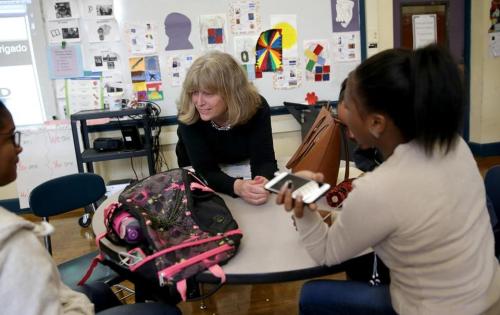
Attorney Elizabeth Read led a session at “Know Your Rights Day” at Boston International Newcomers Academy, a high school.

The lawyer in the photo above is someone I met in April, when we were both volunteering in a Jewish Vocational Service class for Haitians learning English. I was surprised to see her picture the very next day in the Boston Globe, doing a related kind of volunteer work. She certainly has found multiple ways to serve.

Evan Allen wrote, “Attorney Elizabeth Read stood before the classroom full of teenage immigrants at Boston International Newcomers Academy [and] explained their rights if they are ever detained by an immigration official.

“ ‘You have the right to make a phone call,’ she told them Friday afternoon, as their teacher translated into Spanish.

If you are detained, they can take your cell. You must memorize phone numbers. It’s hard! But you must.’ …

“The talks were organized by the Political Asylum/Immigration Representation Project and conducted by volunteer lawyers. …

“The PAIR Project has trained more than 300 lawyers across the state, and delivered 250 presentations to 10,000 people in community centers, health centers, churches, and schools. …

“ ‘I feel sad,’ said 15-year-old Alvaro … ‘I’m with my dad here, and at any minute, immigration could come and there’s nothing we can do.’

“All the students were given red cards to hand to immigration authorities that outline their rights, including the right to remain silent and to refuse to allow authorities to enter their homes. Alvaro said feeling prepared was a relief. …

“[Headmaster Tony] King said he has tried to reassure students by explaining their rights, reminding them that politicians in Massachusetts support immigrants, and talking to Muslim girls who wear head scarves about what to do if someone becomes aggressive. He gave them numbers to call — including his own — if they need help. …

“Sowda Roble, a 16-year-old Somali refugee wearing a sparkling silver headscarf and a Red Sox shirt, said through a translator that America is a country where ‘every opportunity — education, everything — is available.’

“She arrived here from a refugee camp in February 2016 with her mother and two brothers; four other siblings and her father stayed behind. …

“ ‘I know what it feels like to be in a refugee camp, and wait for hope. It hurts. [All of a sudden,] you are told the hope dies.’ Sowda started to cry. She had walked for days through the desert to the refugee camp, people dying around her, she said.

“The Know Your Rights presentation from the attorney, she said, was helpful. And she still loves America. The people ‘have good hearts.’ ”

More at the Globe, here.

Read Full Post »

Photo: Douglas Trattner
A Cleveland co-op trains refugees and others for produce-growing jobs.

I continue to find it fascinating that so many people who are making products for sale are also intent on providing job opportunities for refugees, ex-offenders, and others with challenges.

Douglas Trattner writes about one such effort at Cleveland Scene.

“It’s a brisk late-winter morning in Cleveland, but inside the greenhouses of Green City Growers it feels more like Tampa. …

“At 3.25 acres, this site is one of the largest urban greenhouses in the country, and it happens to sit in the heart of the economically depressed Central neighborhood. Inside the state-of-the-art hydroponic greenhouse, some 300,000 plants at various stages of growth float in shallow pools of nutrient-rich water. There are leafy heads of butter lettuce, colorful mixed-green blends, peppery upland cress and fragrant Italian basil.

“Opened in 2012, Green City Growers has had a promising, albeit challenging, run. Part of the ambitious Evergreen Cooperatives, which includes Evergreen Cooperative Laundry and Ohio Cooperative Solar, the greenhouse was the only one of the three employee-owned companies to not be profitable. That should change this year, says Jeremy Lisy, VP of sales. …

“As a chef and former owner of the specialty produce company KJ Greens, Lisy reached out to his former colleagues to see what types of products they were interested in. He added different lettuces and blends and beefed up sales. This year, the company is expected to hit $3 million in sales, doubling what it was just two years prior. …

“Green City Growers provides 38 people with living-wage jobs and a path to ownership. Working with programs like Refugee Response and Towards Employment, the greenhouse employs many people who might otherwise find it hard to secure gainful employment. On the current roster are people with nonviolent criminal records and immigrants from Bhutan, Guatemala and the Democratic Republic of the Congo.

“After one year of employment, workers get to join the co-op, which includes benefits like credit management and car and mortgage assistance. When the company begins to turn a profit, that money goes to the worker-owners in the form of bonuses and savings for retirement.

“Laurie ‘Spike’ Cook did [time] in the state pen but she currently is the transplant supervisor at the greenhouse and she sits on the board of the co-op. After leaving prison she searched in vain for a job for a full year until she took a class with Towards Employment. A week later she had a full-time job.

” ‘I haven’t missed a day of work in over a year,’ says Cook, who arrives an hour and half before her shift begins every day.

This place gave me a second chance. It makes me want to do better, stay better and do the right thing. Without this job I might have messed up. This job, right here, is the reason I wake up every morning. I plan on staying here until I retire.’

More here.

Photo: James Alan Edward
The nonprofit Beautiful Day trains refugees for the US job market. But if a refugee has a learning disability, the speed of doing even simple tasks may be too slow for a future employer. Let me know if you have a Providence-area job for a cheerful but challenged refugee. There’s someone I’d like to help.

033017-BeautifulDayRI-trainees-photo-by-James-Alan-Edward

Read Full Post »

Photo: Anna Mindess
One of Ba-Bite’s colorful salads: red cabbage with mung bean sprouts, dried figs, arugula and feta and the creamiest hummus. The restaurant is like a welcoming family for immigrant workers.

Lisa, who lives in Oakland, California, put this nice story about an Oakland restaurant on Facebook. If I ever go to Oakland, I’m going to visit Ba-Bite in person.

Anna Mindess writes at KQED Food, “They’ve won accolades for their silken hummus and rainbow of organic salads, but for the owners of Oakland’s Ba-Bite, the most precious thing the almost two-year old restaurant can display right now may be the Sanctuary Restaurant poster on their front door. …

“Ba-Bite is Hebrew for ‘at home.’ Even though most of Mica Talmor and Robert Gott’s employees don’t speak Hebrew, (besides English, they speak Spanish, Maya, and Arabic) they completely understand the concept. The majority of them — like most food service workers in the Bay Area — are immigrants. After walking across deserts at night, being shortchanged or abused in other restaurants where they could not complain, working at Ba-Bite feels like they have found a family.

“Russell Chable manages the kitchen at Ba-Bite and is responsible for set up, prepping, and cooking. He grew up in a tiny town in Mexico’s Yucatan. … He started as a dishwasher and worked his way up to his lead position in Ba-Bite.

“After eight years away from home, Russell missed his mom. Sure, he would talk to her on the phone every week, but he wanted to see her face. So this determined young man decided to build his parents a cell tower so that he could FaceTime with his mom. Six months ago, he made contact with a man back in Mexico who outlined what would be needed: laptops, cables and a cell tower. Russell had his uncle check out the man and then sent money. Now he uses FaceTime to talk to his mom every week, and his parents have a small business renting out computer and internet time. …

“Fatima Abudamos is from Jordan and works as cashier. She also holds the distinction as Ba-Bite’s best falafel shaper. As she stuffs the green balls with sheep’s milk feta, she says, ‘This is an amazing place, just like a family. I’ve worked here almost two years. Mica is not like a boss, she’s more like a friend. She doesn’t scream if you make a mistake; she explains things. I feel safe here; it’s my second family.’ …

““We pay all of our workers well,” says Gott. “Partly because we know how expensive it is to live here. My experience is that more often than not, immigrants are working multiple jobs or longer hours, and forgo taking time off at all costs, as they want to or need to make money. …

“[Food runner Kasandra Molina says,] ‘This space here doesn’t feel like a workplace, it feels like home. We all get along. They care about our opinions and feelings. They don’t treat us just as employees; it’s more like a family.’ ”

More at KQED, here.

Are you in Oakland? Check out Ba-Bite at 3905 Piedmont Ave. Phone: (510) 250-9526

Read Full Post »

Photo: Kate Holt for the Guardian
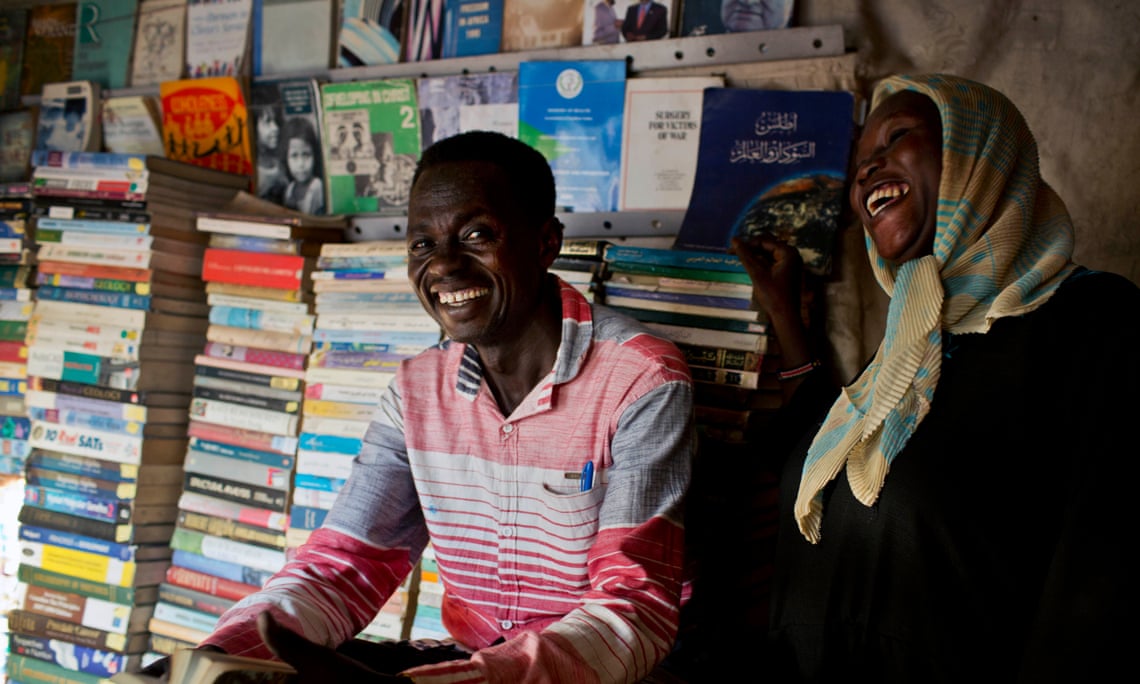
Juma’a Ali, 34, centre, a Christian from the Nuba mountains in Sudan, who fled to Malakal in South Sudan. Here, he is pictured in his bookshop in Malakal’s camp. 

Sometimes refugees take it upon themselves to improve life in the camps where they hope to live only temporarily. I have read in the past about adults who teach the children who are missing out on school. In fact, I once met a man who did that in a Nepalese camp in India. In this story, a refugee offers books.

Ben Quinn writes at the Guardian, “Juma’a Ali glances fondly at the ceiling-high stacks of titles in his makeshift bookshop, a collection that ranges from Virginia Woolf to Canadian Tax Law (1995 edition).

“Just over three years ago, carrying as many books as he could bring, he sought refuge in war-torn South Sudan following the persecution that he says he experienced as a Christian, across the border in Sudan’s Nuba mountains.

“The books were gathered along the way in Sudan and South Sudan. Most are second-hand copies from libraries in South Sudan and donations from abroad. He wasn’t a bookseller in his home country; he worked with his local church. …

“He sells the books at the camp for very small amounts of money, and is fiercely proud of his role as the bookseller of Malakal. His little shop stands as a source of education and distraction from the often unbearable conditions the camp’s residents live with on a daily basis. …

“Among the most sought-after titles by the more than 33,000 residents of the camp are the Bible and the Oxford English Dictionary, although collections of love poems also find takers. ‘Whenever there is conflict or war, people are reading books about politics and religion. When there is peace, there is also more love,’ says Ali…

“Some day, he says, he wants to leave the camp, adding: ‘Europe is a place I think about, but how to get there? It’s locked up and is closed off to us. I want to be positive and I hope for peace here some day. The problem is how to bring people together after so much has happened.’ ”

Although this story was published as recently at January 4, even more recent news about impending famine in South Sudan has me fearful for Ali and those he serves with his books. I will try to find a follow-up story.

More here.

Read Full Post »

« Newer Posts - Older Posts »