Feeds:
Posts
Comments

Posts Tagged ‘sheep’

Photo: Farmingdale Observer.
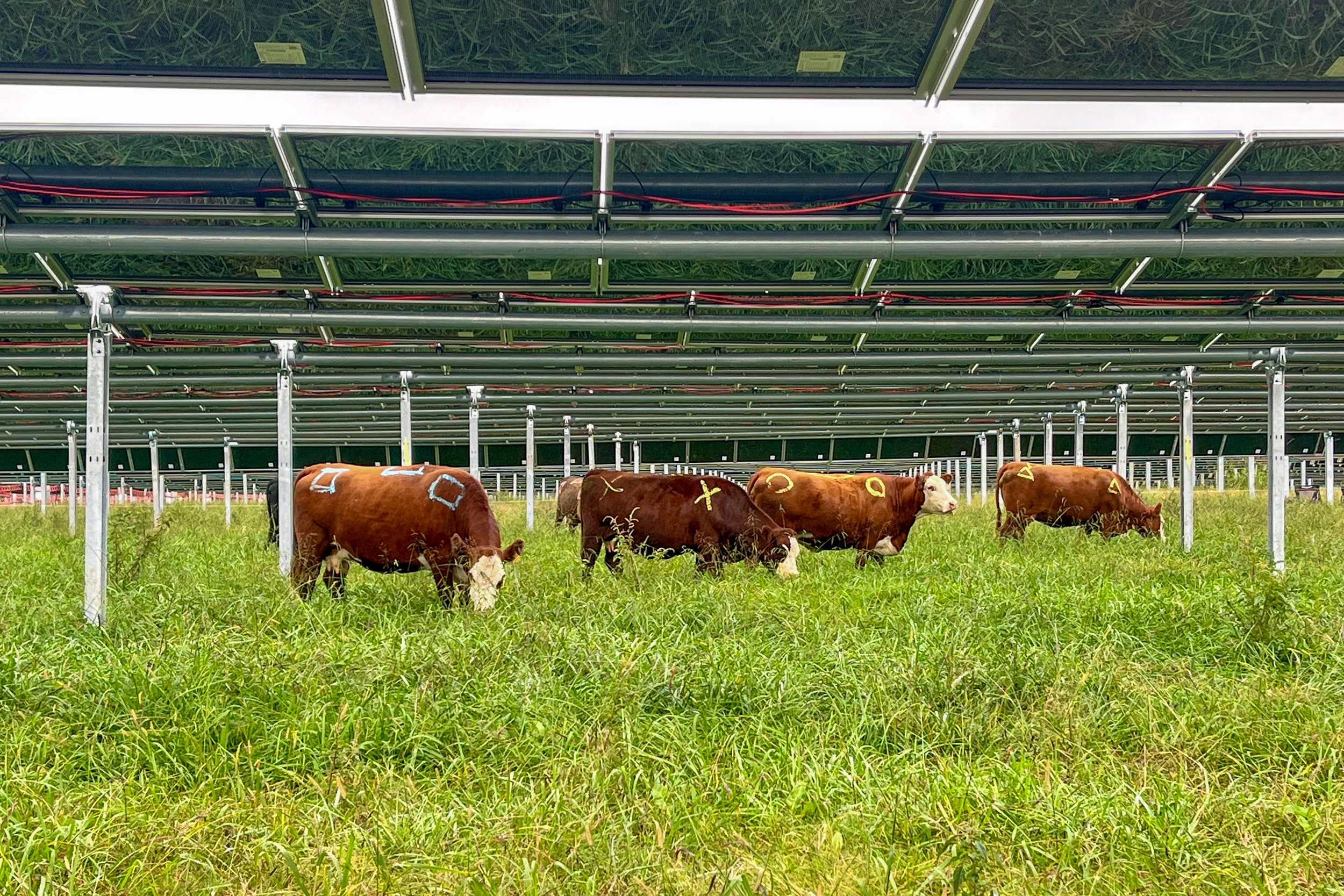
Merino sheep are said to show improved wool quality under solar arrays.

Here’s a win-win-win for the environment, sheep grazing, and agrivoltaic farming practices in general. One caveat: you need to place solar arrays on already open land. Cutting down trees to put in solar is actually a loss for the environment as trees are so good at carbon capture.

Bob Rubila writes at the Farmingdale Observer, “In a groundbreaking study that combines renewable energy with traditional farming practices, researchers have observed remarkable changes in 1,700 sheep grazing amidst solar panels. This innovative approach, known as agrivoltaics, is revolutionizing how we think about land use while yielding unexpected benefits for the animals involved.

“A comprehensive three-year study conducted at Wellington Solar Farm in New South Wales, Australia, has revealed fascinating results about sheep and solar panel coexistence. The research team from Lightsourcebp, in partnership with EMM Consulting and Elders Rural Services, monitored 1,700 Merino sheep divided into two groups: one grazing in traditional pastures and another among solar panels.

“The findings challenge conventional assumptions about livestock welfare in modified environments. Sheep grazing between solar arrays showed no negative health impacts. Instead, researchers documented enhanced wool quality with increased fiber strength and growth rates. The solar infrastructure created microhabitats that benefited both the animals and the underlying vegetation.

“ ‘The promising results indicate we’re on the right track,’ explained Brendan Clarke, acting environmental planning manager at Lightsourcebp for Australia and New Zealand. …

“The solar arrays provide critical shelter during extreme weather events, protecting sheep from both intense heat and adverse weather conditions. This protection creates a more stable environment for the animals throughout seasonal variations. The panels’ shade effect helps retain soil moisture, which promotes healthier grass growth and more nutritious forage for the grazing animals.

Interestingly, researchers noted reduced parasite presence in the solar grazing areas, contributing to improved overall animal health.

“This unexpected benefit appears to stem from altered ground conditions beneath the panels, creating an environment less hospitable to [common] parasites. …

“The relationship between energy infrastructure and animal welfare continues evolving as more long-term studies emerge. While some regions face environmental challenges like the dormant volcano showing signs of awakening after 250,000 years, these sheep-solar partnerships represent positive ecological developments.

“The Australian findings align with similar research conducted in France, where INRAE (National Research Institute for Agriculture, Food and Environment) collaborated with renewable energy producers Statkraft and CVE. Their two-year study involving 24 ewes confirmed beneficial effects on flock welfare, improved thermal comfort, and enhanced forage quality.

“ ‘The thermal comfort of the animals improves significantly, and the availability of quality fodder increases, among other benefits,’ noted Véronique Deiss, INRAE researcher. These correlated results across continents suggest universally applicable principles for successful agrivoltaic implementation.

“Beyond animal welfare, agrivoltaics offers economic advantages for both energy and agricultural sectors. Solar farms benefit from reduced vegetation management costs as sheep naturally control grass growth, eliminating the need for mechanical mowing or chemical treatments. For farmers, access to otherwise unused land provides additional grazing opportunities without purchasing or leasing additional property. …

“With these 1,700 sheep demonstrating improved wool quality while maintaining solar farms, agrivoltaics exemplifies how innovation can simultaneously address energy production, land management challenges, and animal welfare – creating sustainable solutions that benefit multiple stakeholders across agricultural and energy sectors.”

More at Farmingdale Observer, here.

Read Full Post »

Photo: A nonprofit called Don’t Forget Us, Pet Us.
Kiki on her cart, which she moves around on her own.

Today’s article is from that section of the Washington Post that focuses on cheery stories, often about animals. We learn about a rescued sheep with a talent for learning new tricks.

Sydney Page writes at the Washington Post, “A sheep named Kiki zips around the yard of an animal sanctuary in a motorized wheelchair. She navigates on her own, tilting a joystick with her head to move forward and back, left and right.

“ ‘She’s like a crazy teenager; she wants to go very fast,’ said Deb Devlin, president of the Don’t Forget Us, Pet Us sanctuary in North Dartmouth, Massachusetts.

“Kiki was born with limited mobility and cannot walk. … At birth, Kiki’s mother rejected her and refused to feed her, which is not uncommon when a lamb is sick or disabled. The farm where Kiki was born didn’t have the resources to look after her and contacted Don’t Forget Us, Pet Us to see if they could help. Devlin went right away, in December 2021, to see the 11-day-old lamb.

“ ‘When I first saw her, I felt so sad for her,’ said Devlin, who co-founded the nonprofit sanctuary in 2016. ‘She was on this gentleman’s lap, she was wrapped in a blanket, and she was shivering.’

“Kiki can feel sensations from her neck down, though she is unable to move herself. During Kiki’s first months at the sanctuary, Devlin and other volunteers tried physical therapy, chiropractic treatments, laser therapy and even tendon release surgery. None of it worked.

“[So] Devlin began focusing on what Kiki could already do. She decided to experiment with toys as enrichment. … She got interactive, press-and-play children’s toys and quickly noticed that Kiki was able to operate them using her head.

“ ‘When she got the hang of the toy, she would press through the buttons until she got to her favorite song, “Twinkle, Twinkle,” ‘ Devlin said. ‘She would stop and put her head on it and gaze up, listening to the music.’

“Then Kiki began to dance. … Seeing how easily Kiki controlled the toys, Devlin suspected she might also be able to use a joystick to navigate. …

“Devlin and her team of five volunteers experimented with trying to adapt Kiki’s stroller into something she could maneuver herself, but they struggled to come up with a design. …

“After joining e-bike groups on social media for advice, Devlin tried a motorized wheelchair. She reached out to Mobility Equipment Recyclers of New England — a wheelchair store in North Kingston, Rhode Island — and secured a motorized chair for Kiki with the help of donations.

“Devlin then zip-tied a cargo stroller body to the wheelchair base and repositioned the joystick so Kiki could reach it with her head. The result was a cart Kiki could move on her own. …

“When Kiki took control of the wheelchair for the first time, everyone was stunned.

“ ‘It took seconds for her to start driving it,’ Devlin said [adding] it was clear Kiki knew what she was doing.

“ ‘She knows the cause and effect of that joy stick and that she is moving herself,’ she said. …

A video the sanctuary shared on social media of Kiki driving around the yard went viral, drawing thousands of comments.

“Everybody online finds her so inspirational,” Devlin said. “The only thing we were really lacking with Kiki was independent mobility, and now she has it.”

Of the more than 7,000 comments on a Facebook post of the video, Devlin said, the majority are positive. … Still, some commenters questioned her quality of life.

“ ‘For me, those reactions were very hard,’ Devlin said, explaining that Kiki gets regular wellness checks to ensure she isn’t in pain or discomfort. …

“Kiki eats and drinks, grazes, sunbathes, makes music with a chime set, watches Disney shows, listens to Taylor Swift and even kayaksShe dances and visits schools and meets with children who have disabilities, helping them feel less alone. …

“Now that Kiki can drive on her own, volunteers said she’s developed a sassy side.

“ ‘You tell her it’s time to stop and she’ll look at you and drive away,’ said volunteer Jess Bullock. … Bullock said despite her mobility challenges, Kiki seems like a very happy girl. …

“Devlin said Kiki’s story is one of resilience and hope. ‘She has had such an impact on so many,’ she said. ‘Everyone is just so taken by Kiki and her journey.’ ”

More at the Post, here. I guess I’m guilty of speciesism, but I admit that the thing I like best about Kiki is that her success cheers human children who have disabilities. What is your take?

Read Full Post »

Photo: Jean Ogden via Wikimedia.
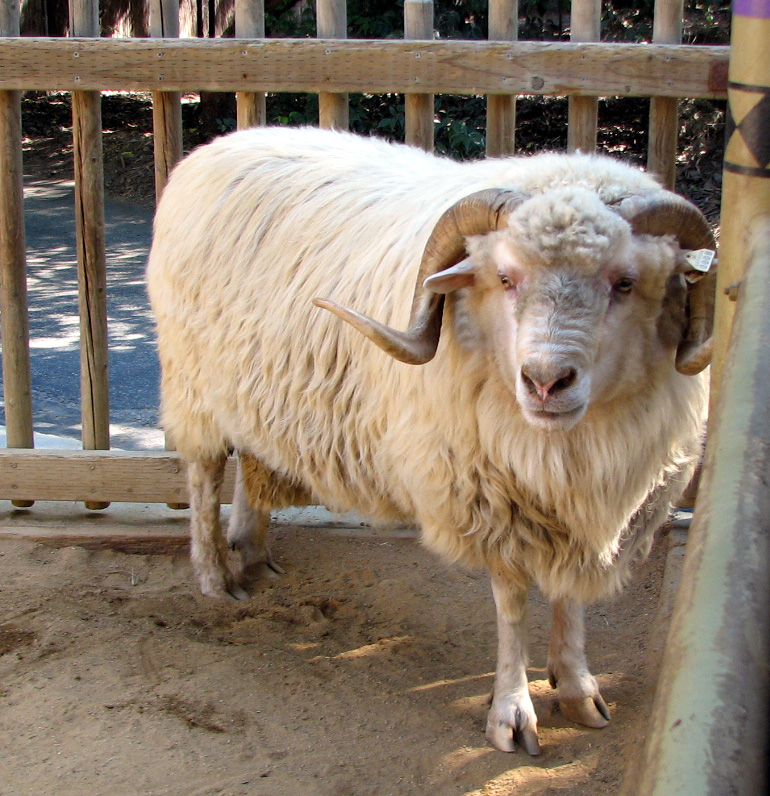
Navajo Churro sheep.

There’s a story at National Public Radio about the special relationship between a kind of sheep and the Navajo people, or Diné. Ayesha Rascoe hosts the NPR program, which you can listen here, if you prefer.

Ayesha Rascoe: For centuries, the lives of Navajo people have been intertwined with livestock — specifically, one particular breed of sheep they’ve relied on for meat and wool. The tribe is well known for weaving the wool of Churro sheep into colorful clothing and tapestries. Those weavings can fetch thousands of dollars from collectors, but they have far more than monetary value. Raising Churro sheep and weaving their wool is an important way Navajo people pass cultural knowledge from generation to generation. KSJD’s Chris Clements visited a Navajo Churro sheep celebration.

Chris Clements: Inside a crowded farmhouse on the edge of the Navajo Nation, weavers are demonstrating how to spin, dye and treat wool from Churro sheep, which they consider sacred.

Roy Kady: Hello. My name is Roy Kady. I am from Goat Springs, Ariz.

Clements: Kady, who’s in his 60s, is standing outside, wearing an ornate turquoise necklace, earrings, bracelets, and a white hat. He’s considered a master weaver, part of centuries of Navajo citizens who’ve carried on traditional beliefs that date back to the 1500s when Churro sheep arrived with early Spanish colonists.

Kady: I’m filling these big shoes that my mother wore as an agropastoralist.

Clements: Tyrrell Tapaha is Kady’s student and his grandson, who’s here at the event. …

“Tyrrell Tapaha: There’s always been weaving in my life, whether it be his work, my grandma’s work, or my great-grandma’s work. ..

“Kady: Tyrrell [says] I want to weave a human form. Do you have any ideas how I could do that? And so I just share with him. …

“Clements: Tapaha has been learning the tricks of the trade since he was very young. When he was only 8, Kady had him teach a class on the art of finger weaving at a nearby chapterhouse. … Tapaha knows that Kady’s teachings will live on with him.

“Tapaha: At least it’ll last my lifetime, you know? And I kind of hear that in how Roy talks about his contribution to the space is like him being an older person now and kind of seeing that handed off.

“Clements: After the morning’s presentations, it’s time for lunch. The weavers roast mutton, a Churro sheep they slaughtered earlier in the day. Participants of the sheep celebration gather around the grill, watching the fire hiss and sputter as the mutton cooks. It’s common for every part of the animal to be used. Nothing, not even its hooves goes to waste.

“In 1863, the U.S. military forced Navajo people to leave their ancestral homelands and relocate to an internment camp. It’s known as the Long Walk. … It almost led to the extinction of the Churro sheep.

“Navajo people were allowed to return home four years later. Some tribal members who’d managed to escape the Long Walk, kept some Churro alive. And today, thousands of Churro sheep live on or near the Navajo Nation.”

Read more about the sheep and the passing along of Diné culture at NPR, here.

Read Full Post »

Weaver and Shepherd

Photo: John Burcham.
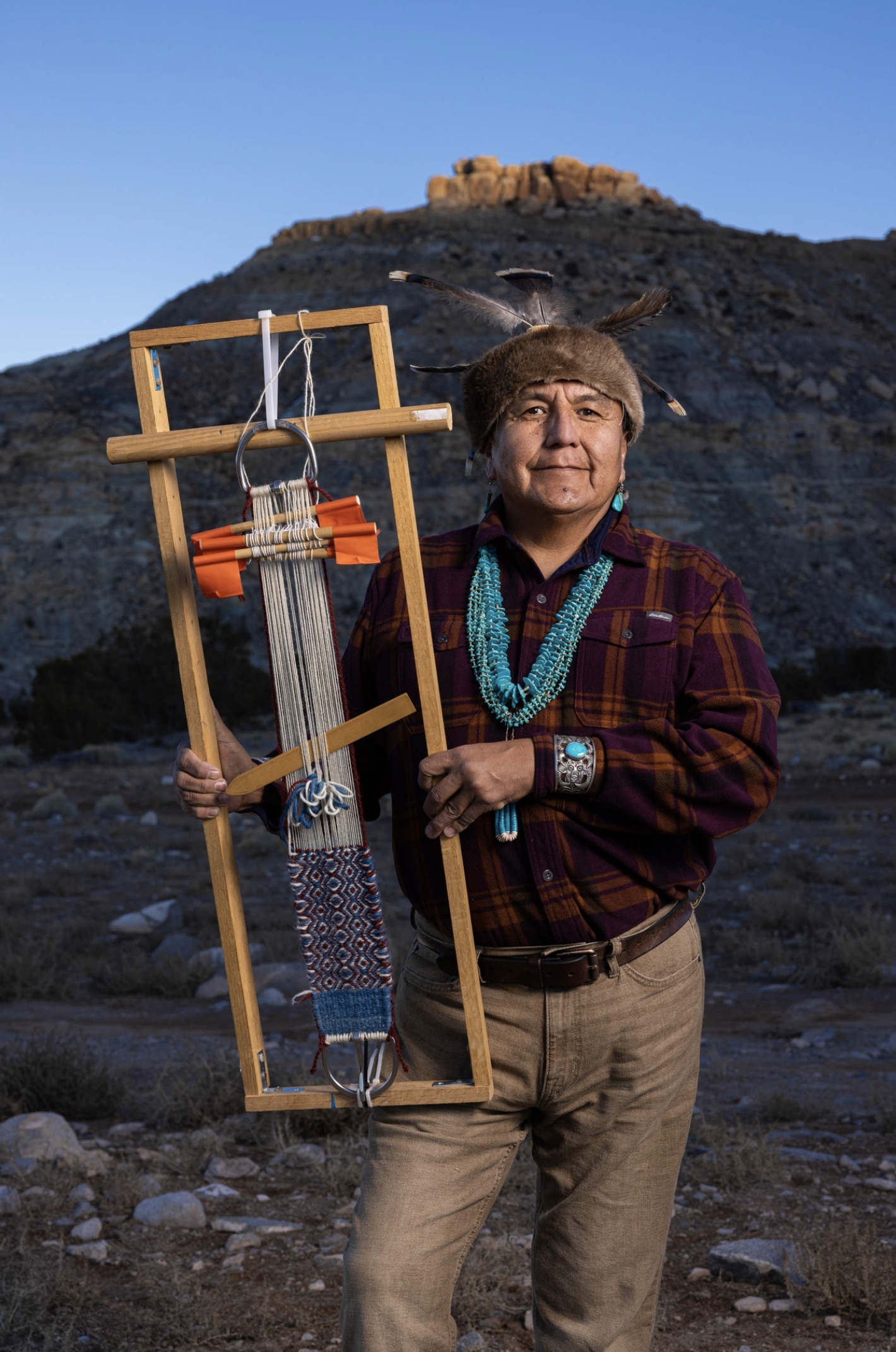
Textile weaver and fiber artist Roy Kady.

Today’s story is about a man for whom work and art are inseparable: Navajo weaver Roy Kady.

Elaine Velie at Hyperallergic conducted the interview.

“Diné weaver and fiber artist Roy Kady sat down for a video interview wearing a shirt that read ‘Sheep is life.’ Kady is a shepherd and an artist, roles he sees as definitively intertwined. ‘I am first a shepherd, then art comes with it,’ he said.

“Kady’s decades-long career has been one of constant learning, and in recent years, teaching. He shares weaving techniques and Diné stories that he says are too often missing from younger generations. Kady spoke to Hyperallergic about Diné conceptions of gender, apprenticeship in his small Arizona town, and being accepted as a gay man in his community.

Hyperallergic: What are your earliest memories of weaving, and how did your mother’s practice influence your own?

Roy Kady: My sisters and I grew up in a single-parent household where my mother brought us up, so we were taught everything from building a house to repairing a roof to working under the hood of a vehicle, the sort of things the colonized world would call ‘man’s work.’ We learned inside, too. From washing dishes and getting the house tidied up to cooking and baking, we did what would be considered ‘women’s work.’ But for us, it’s not.

“I was taught about weaving at the young age of nine years old. I have some recollections before that of sitting by my grandmother, grandfather, and mother, who all also partook in fiber arts — weaving and processing the fiber. My mom gifted and shared weaving techniques with me: vegetable dyeing and some of the family designs that came with it. I was fortunate; I was given the tools she and our kin relations had, and that’s what inspired me to become an artist. We learned farming and goat and sheep herding, too. …

“Sheep provide you with sustainability, food, and the opportunity to learn how to maintain the land. We take care of them so that they can take care of us.

“As a shepherd, you know what they like to eat and what keeps them healthy. They also know that themselves, so they’ll take you on journeys to where particular plants exist. On those journeys, you’re able to be inspired by color and the environment, by the mesas. You start to see geometric forms that you can bring back to your weaving repertoire.

“That’s what traditional Navajo weaving is: an interpretation of your environment. A lot of my earlier pieces were designed with that in mind. They’re not necessarily just stripes; they represent rainbows. They’re not just step patterns; they’re mesas or clouds.

“There’s a whole opening of the universe that is represented. In order to understand and have that knowledge, you must have the knowledge of shepherding. But it’s a rarity now because there are not many shepherds. The sheep population has really declined. Navajo fiber artists and textile weavers create beautiful artistry, and while they may no longer have herds, they have memories from their grandparents or parents or maybe from within themselves around growing up with sheep. …

“My mother would sometimes say something like, ‘You’re at the age when you are going to learn about horsemanship.’ She was a horsewoman type. She would teach us, then she would want us to ask a neighbor or other kinfolks to learn other forms. I remember growing up and learning a lot from the neighboring kids. We would go to their houses and learn different types of fiber arts, traditional recipes, or plant foraging. …

“I would go spend a day, a weekend, or even a month in their home and helping them with their livestock. That’s how I would earn the opportunity to learn from them. They’ve always told me that this knowledge doesn’t just belong to one individual, saying, ‘It was gifted to me. It goes all the way back to the creation story.’ That’s how I model my apprenticeships now. …

“I don’t just use wool. I use anything that’s of natural origin, including tree bark and wild cotton, nettle, silk, you name it — whatever I can get my hands on. If I can find somebody who says, ‘I have a herd of bison,’ then I say, ‘What do you do with their wool?’

H: Are there any works that you particularly love?

RK: That would be the one titled ‘Shimá,’ meaning ‘my mother.’ I would wheel her into the sheep corral in her wheelchair, and the sheep knew who she was and come up and greet her. They knew the scent of her hands and how she cared for them. I took a beautiful picture of her making those interactions and decided to weave it. I broke ground for myself by incorporating all different types of techniques that I’ve learned along my weaving journey. At this point, that would be my favorite. …

H: Are there any projects you’re working on now or that you’re excited to start in the future?

RK: There’s an upcoming gallery exhibit near us in Cortez, Colorado, that I’m starting with my grandson, Tyrell Tapaha. He’s come back to learn about shepherding and be my apprentice. We’re doing a collaborative type of show. I will show what took place between the two of us, and it will include his interpretation of what I taught him about sheep, the landscape, or a particular plant.

“We are utilizing what we call barbed wire art. When you’re a sheepherder in this country, you have barbed wires lying around everywhere that are rusty, but we create these wonderful shapes and incorporate that into our textiles or fiber work. We’re excited to venture.”

Read more and see how the artist wove an image of a sheep at Hyperallergic, here. No firewall. Subscriptions encouraged.

Read Full Post »

Photo: BBC.
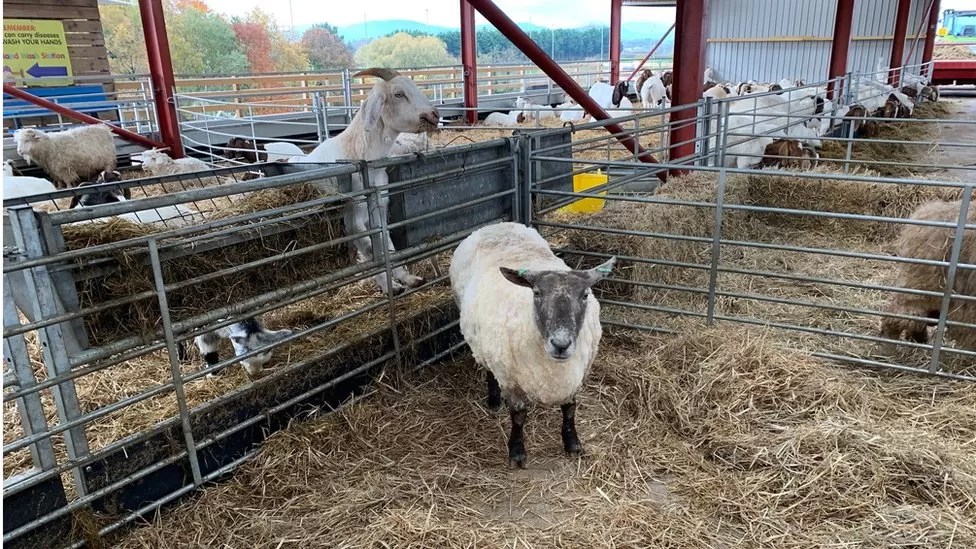
Fiona was called the loneliest sheep, but having been rescued from another winter alone at the bottom of a cliff, she can now look forward to having friends.

You may have seen this story, but I couldn’t resist sharing it anyway. A sheep in Scotland had gotten herself into such an inaccessible spot that the Scottish equivalent of the ASPCA had given up the idea of rescuing her before winter. She was going to spend winter alone. Again. Then local sheep shearers decided that it just wouldn’t do.

Fiona needed first to lose 10% of her weight and become a bit easier to carry. Fortunately, shearers can make that happen.

Giancarlo Rinaldi reported at the BBC, “The sheep described as the loneliest in Britain is said to be settling in well to her new home. The ewe, now named Fiona, was rescued on Saturday after being stranded for more than two years at the foot of cliffs in the Scottish Highlands. …

“She arrived at Dalscone Farm ‘under cover of darkness’ on Sunday and is said to be in good condition.

“The sheep’s plight hit the headlines last month after a kayaker photographed her still trapped at the foot of a steep cliff at the Cromarty Firth, two years after a previous sighting. She was dubbed ‘Britain’s loneliest sheep’ and an online petition to rescue her attracted thousands of signatures.

“Plans to move her to the farm park in southern Scotland provoked a ‘peaceful, non-violent demonstration’ at the site amid concerns she would become a ‘spectacle.’

“Farmer Ben Best of Dalscone Farm said it had been a ‘stressful’ couple of days to get the sheep to Dumfries. [But] ‘she has settled in absolutely brilliantly. She has been eating, drinking. We couldn’t be happier with how she has settled in. …

” ‘Everything is transparent what we do – we are known worldwide for our animal care,’ he said. The farm section of the visitor attraction is currently closed to the public but it posts regular live updates on its Facebook page.

“Saturday’s rescue operation was led by professional shearer Cammy Wilson. He told BBC Radio’s Good Morning Scotland program, ‘I have never worked with a sheep as calm as she is. She has essentially had unlimited grass to eat for two years and she is what we would describe as fat in the sheep world.’ …

“Fiona weighed in at [200 lbs] without her wool, and the wool itself weighed [20 lbs].

“Mr Wilson said the wool was quite poor quality, but it was hoped it could eventually be made into something and used in a raffle for charity.

“He also explained the cinematic inspiration behind the sheep’s name. ‘I came up with the name Fiona because, several years ago now, the world was taken by storm by a sheep called Shrek in New Zealand who had been living alone in a cave,’ Mr Wilson said. ‘I thought Shrek is the male version of this situation so it has to be Fiona. It is also a good Scottish name.’ …

“He said they had waited until the ‘coast was clear’ to take the sheep to the farm park on Sunday night where he was confident she would be well looked after.

“Mr Wilson added: ‘She will live out the rest of her life down there at Dalscone, probably being better looked after than I will be.’ “

Yesterday, I heard rescue leader Cammy Wilson tell Marco Werman at PRI’s The World about being very nervous shearing Fiona at the bottom of the cliff because he knew that people around the world would end up seeing his skill on Facebook.

More at the BBC, here. And you can listen to the Wilson interview at PRI’s The World, here. Wilson’s delight is infectious.

Read Full Post »

Photo: Melanie Stetson Freeman/Christian Science Monitor.
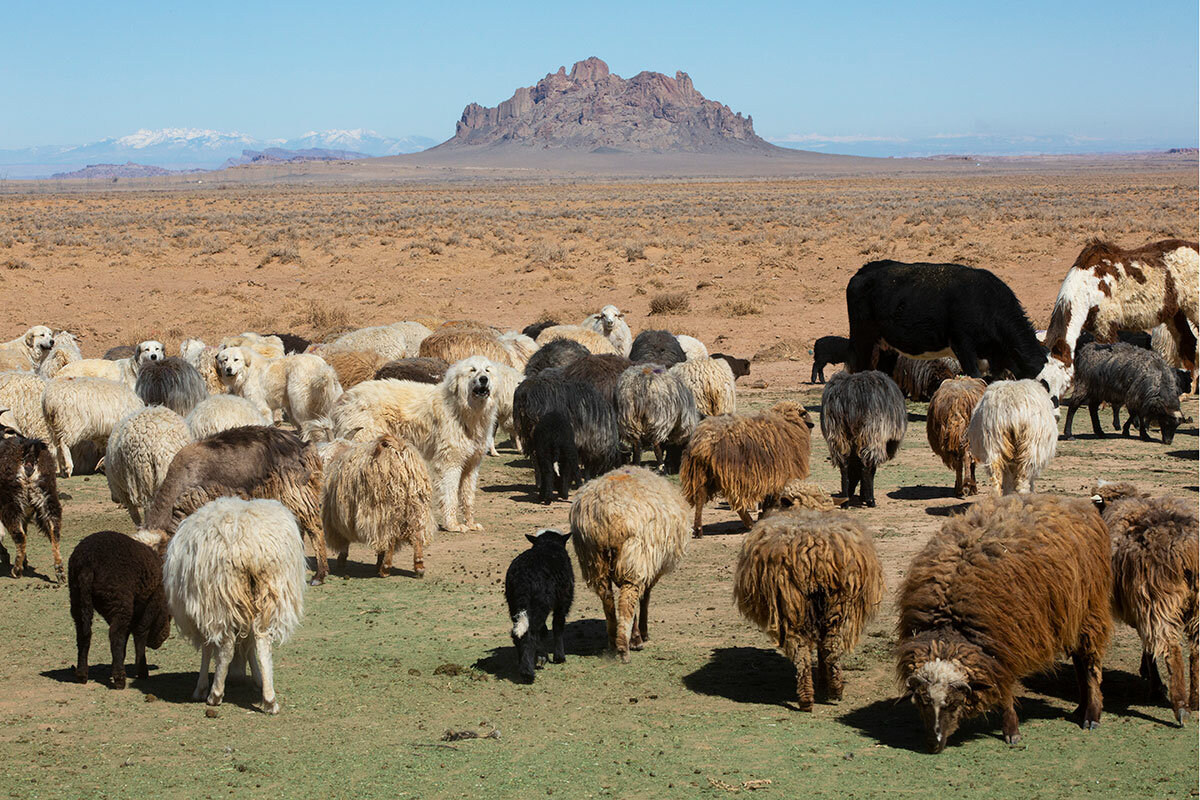
“Great Pyrenees dogs watch over Navajo-Churro sheep … outside Toadlena, New Mexico. … The sheep flourish in the harsh environment,” according to the Monitor.

I like that the Christian Science Monitor has so many stories about the Navajo Nation and other indigenous peoples. Although I’m not a Christian Scientist, I’ve always been impressed by the objective reporting at the Monitor and its steady coverage of underreported topics.

Reporter Henry Gass wrote recently from New Mexico about the resurgence of sheep farming on Navajo land.

“Irene Bennalley steps out into the fierce afternoon sunlight wearing jeans and a maroon sweater, her long gray hair knotted in a braid. Brandishing a long white stick as her crook, she picks her way across her parched desert farm toward the sheep pen. Answering their bleats with firm instructions in Navajo, she shepherds them out onto the dry, dusty range.

“She doesn’t know exactly how many Navajo-Churro sheep she has, but she ballparks it at around 100 head.

It’s bad luck to keep exact counts of your livestock, her father taught her. Don’t boast about your animals, he would say, or they’ll start dropping.

“Out here, ranchers like Ms. Bennalley can’t afford to lose animals. The winters are cold and hard, and the summers are hot and relentless. Water is scarce and feed is expensive. It’s the main reason she has come to love the breed, known colloquially as churros, that she’d grown up only hearing about in stories.

“The Navajo, who refer to themselves as Diné, have long been a pastoral society. Sheep are prominent in their creation myths, and after Spanish colonists first brought the churro sheep to the Southwest, the hardy, adaptable breed became, over centuries, the heart of a self-sufficient economy and vibrant Diné culture.

“But the days of sheep camps and flocks roaming the arid plains and valleys here are long gone. On two separate occasions the churro came close to full extermination. From over 1 million head at one time, by 1977 there were fewer than 500 left in the world.

“Efforts have been gaining momentum in recent years to rebuild the breed and return flocks to the Navajo Nation. Decades of painstaking, sometimes dangerous, work by a handful of committed ranchers and animal scientists have helped restore the population to over 8,000. 

“Now, people on the Navajo Nation are working to bring flocks back to the reservation, to try and fill the economic and cultural void left by their near extinction. 

“ ‘We’re back in a place of reevaluating how we live,’ says Alta Piechowski, whose family has been involved in restoring the Navajo-Churro for decades.

“ ‘When you’re walking the land [with the sheep], there’s a different kind of healing,’ she adds. ‘It heals your heart, and when it heals your heart you’re going to want other people’s hearts to be healed too.’ …

“An ‘unimproved’ breed – meaning one that hasn’t been selectively bred for market – churros are long and lean. … They are resistant to most diseases, and have adapted over the centuries to thrive in the dry, low-forage climate of the Southwest.

“For the Navajo people, the churro were something of a panacea. They provided a healthy and sustainable source of food and income; their many-colored fleece are ideal for weaving iconic Navajo blankets. And culturally, sheep have always been prominent in Navajo spiritual traditions. One of the six sacred mountains that bound the Navajo Nation, Dibé Nitsaa, translates to Big Sheep Mountain.

“But for the best part of a century, Navajo-Churro have been hard to find on the reservation. 

“The official term used by the U.S. government in the 1930s was ‘livestock reduction.’ The Midwest was in the grips of the Dust Bowl, and the Bureau of Indian Affairs, led by commissioner John Collier, concluded that too many livestock were causing land to erode and deteriorate.

“The policy resulted in the slaughter of hundreds of thousands of churros, often on the reservation, and sometimes on the properties of their owners. And it came after the Navajo people had spent over 70 years steadily rebuilding their churro herds. …

“Nearly a century since the stock reduction, the collective memory is still raw. Ms. Bennalley speaks mournfully of what she calls ‘the John Collier days.’ For a long time no one spoke of it at all.

” ‘Some people never really got out of losing their sheep that way,’ says Ms. Bennalley. ‘My family, my dad, nobody really talked about it, because it wasn’t something to be proud of.’ …

“ ‘That connection to the sheep is the connection to the land, which is the connection to the culture, which is the connection to the spirituality of the Diné people,’ says Dr. Piechowski, a career psychologist for reservation schools.

“ ‘If you exterminate the sheep, you’re pretty much eliminating [those] connections,’ she adds. …

“The churro never disappeared from the reservation, but the few that remained stayed hidden in some of the reservation’s most remote corners – so remote that the man who first led efforts to bring the churro from the brink of extinction almost died trying.”

Read more about that at the Monitor, here. Lovely photos. No firewall.

Read Full Post »

Photo: Matthew Perlman
“Pamplona has the running of the bulls; the Upper West Side has the running of the goats,” says New York’s West Side Rag.

I’m in need of a silly story today. The kind of silly that just makes a person feel better about things. This story concerns a nature-friendly initiative to get the grass cut in Riverside Park while entertaining the locals.

The West Side Rag reports, “Twenty-four goats from the Hudson Valley were released into the not-so-wild [recently] and ran from their truck onto a weed-choked hill in Riverside Park that will be their home for the summer.

“There were more than 1,000 people there to greet them.

“It was like the Fresh Air Fund in reverse (maybe the dirty air fund?). The goats immediately started snacking on weeds. …

“Mildred Alpern sent photos and the following account: ‘Cheering and clapping crowds and luminaries were on hand to [welcome] the 24 goats into Riverside Park at Riverside Drive and 120th Street this morning. Riverside Park Conservancy employees guided the goats as they strutted and galloped along the path to the grassy and hilly enclave where they will reside until the end of August. Beribboned and numbered, the goats behaved like New Yorkers – confident, casual, and cool.’ ” More here.

The Riverside Park goats even eat the poison ivy. I wouldn’t mind having friends who do that! You can search this blog on “goats” to find other examples of four-footed weed control. I also posted here about the Basilica of St. Patrick on New York’s Prince Street, which used sheep as lawn mowers last year. If you know of similar examples, do share the details.

Hat tip: Gloria K.

Read Full Post »

pme2mifpg4ytlkw7syceccmwga

Photo: Visit Faroe Islands
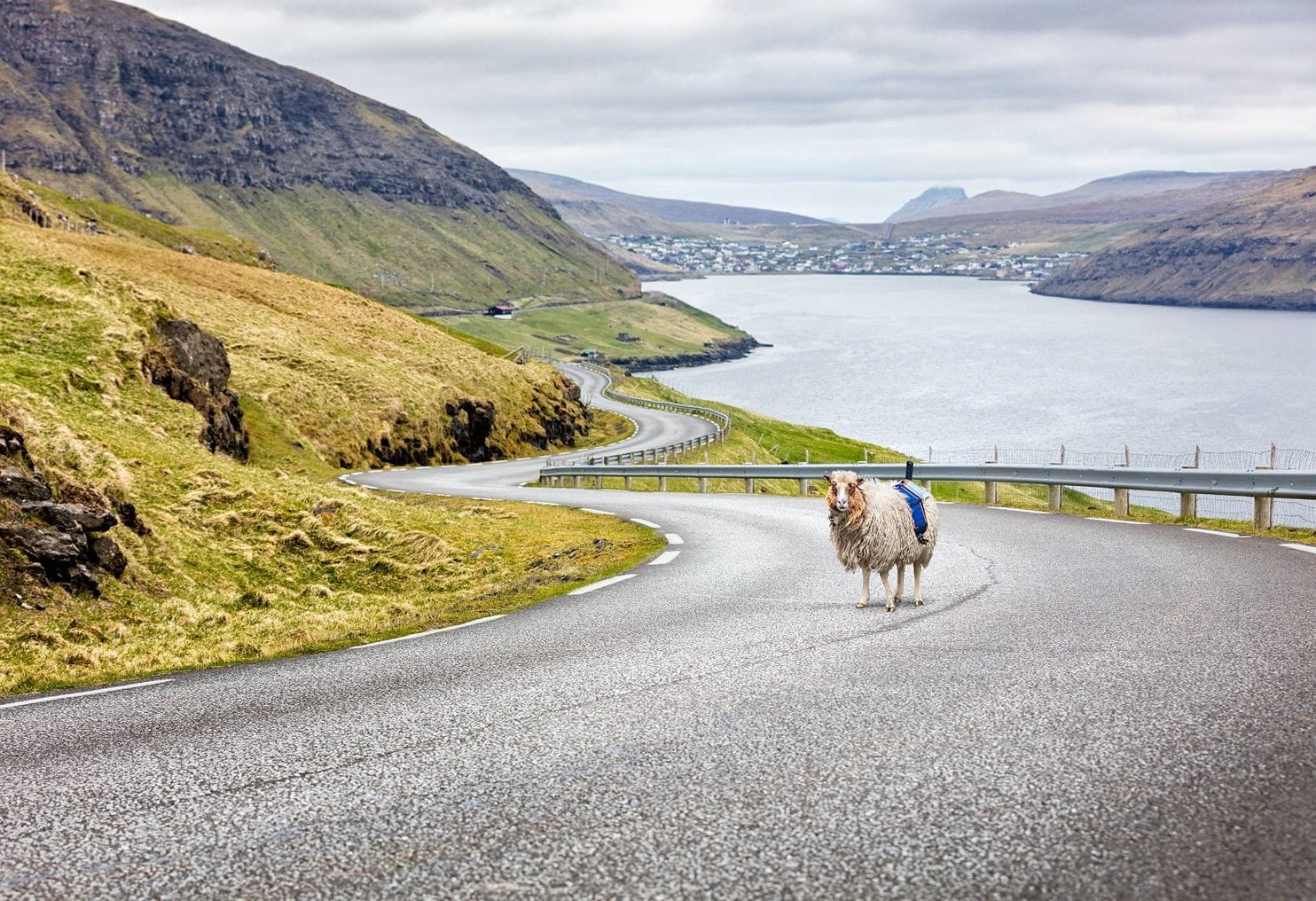
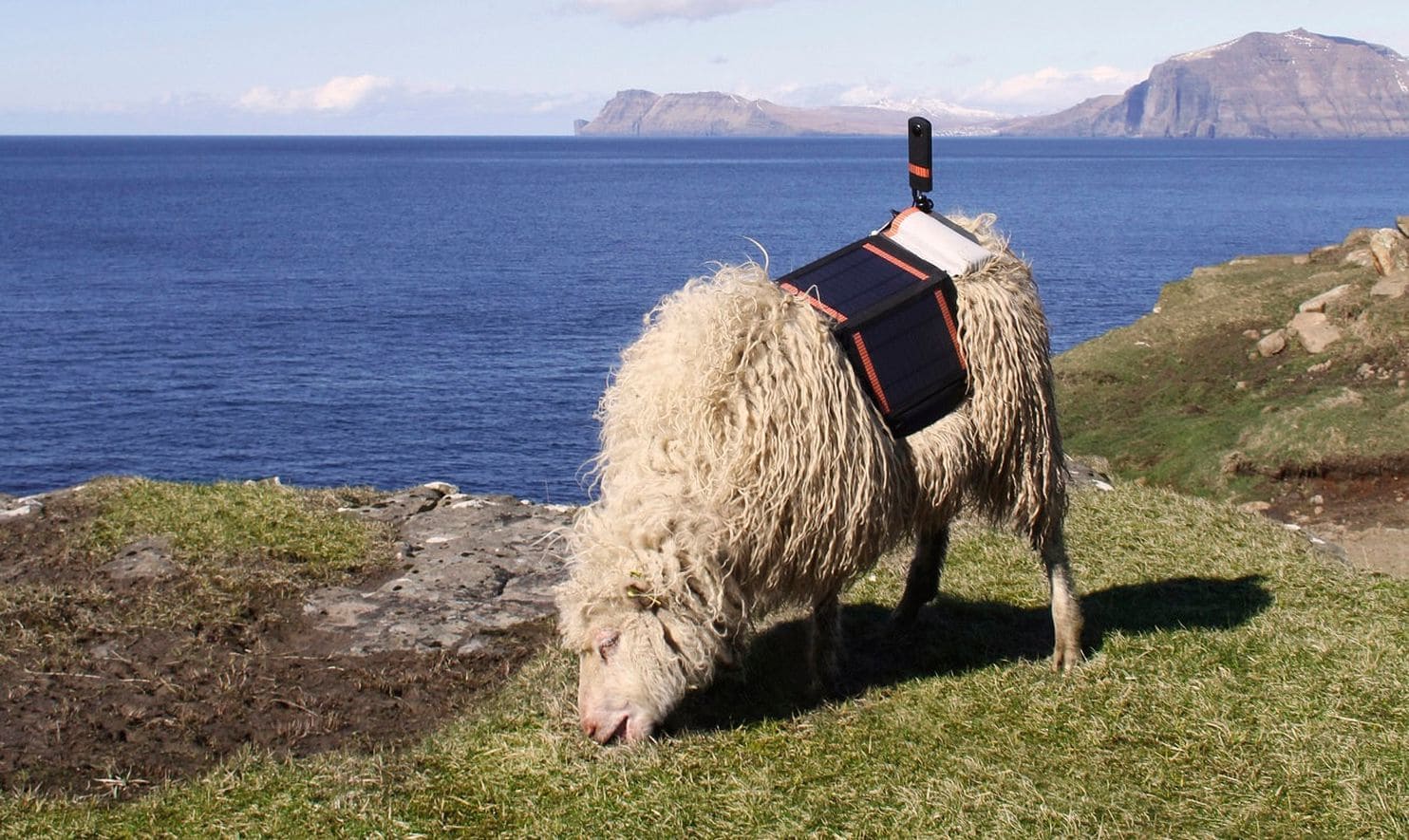
Faroese sheep were strapped with cameras in a bid to get the attention of Google Street View. It worked.

If you were a promising but unknown vacation spot with incredibly picturesque sheep wandering through stunning landscapes, what would you do to attract tourists?

Enlist the sheep, of course.

Karin Brulliard writes at the Washington Post, “The Faroe Islands, a remote archipelago that juts out of the cold seas between Norway and Iceland, doesn’t even appear on some world maps. But as of last [November], the verdant slopes, rocky hiking trails and few roads of the 18 islands are on Google Street View — and a team of camera-toting sheep helped get them there.

“When the islands’ tourism board decided last year that it wanted to get the company’s attention, it knew it would need an unusual pitch. It also knew that its rugged terrain would not be easily traversed by those Google cars that ply city streets worldwide, snapping photos. So it strapped solar-powered, 360-degree cameras onto the backs of a few shaggy Faroese sheep and began uploading the resulting, and very breathtaking, images to Street View itself. …

“Sheep are a big deal in the Faroe Islands, an autonomous nation within the Kingdom of Denmark whose name translates to ‘islands of the sheep.’ The islands’ distinct breed is believed to have been imported by Norse settlers in the 9th century, and today about 80,000 sheep live there, far outnumbering the 50,000 people. …

“Locals and visitors were encouraged to share photos of the Faroe Islands on social media with the hashtags #WeWantGoogleStreetView and #VisitFaroeIslands.

“It didn’t take long for the media-friendly story to make its way to Google, which pronounced it ‘shear brilliance.’ Last summer, the company visited the islands and loaned out one of its eyeball-like Street View Trekkers, as well as some 360-degree cameras for human use. In a blog post, the former tourism board employee who spearheaded the campaign, Durita Dahl Andreassen, explained that those would be handed out to locals and tourists alike and that they would be attached to ‘sheep, bikes, backpacks, ships and even a wheelbarrow.’ …

“The tourism board has moved on to a new, sheep-free effort to get Google Translate to include Faroese, which descends from old Norse.”

More here.

Photo: Visit Faroe Islands
Faroe Islands sheep attracted Google Street View — and tourists.

agdyumy44iyappojembzvk4h6u

Read Full Post »

Photo: Sustainergy
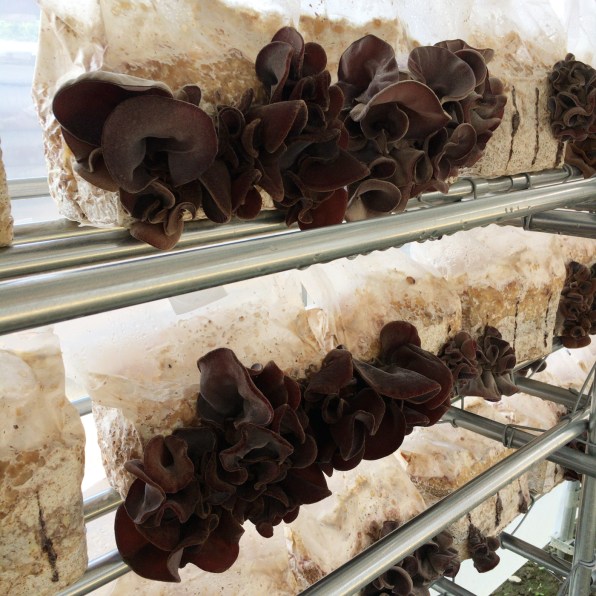
Solar arrays can reduce a farm’s carbon footprint while allowing room for crops and livestock. In Japan, Sustainergy has designed “solar farms at large scale so that farmers could obtain additional stable income.” Above, cloud ear mushrooms.

When a company solves two important problems with one project, I probably shouldn’t call it killing two birds with one stone. Send me a better metaphor, please.

Adele Peters writes at Fast Company about the dual benefits of a Japanese project that provides not only solar power but also a cozy place to grow mushrooms.

“Small farms in Japan are struggling to survive. Rural populations are shrinking, and the average farmer is 67 years old. But two new farms will test a different business model to try to reinvigorate the sector: solar panels with mushrooms growing underneath them.

“The farms, at two locations in northeastern Japan, will produce a combined 4,000 kilowatts of solar power that will be sold to a local utility, while the mushroom farms will yield an annual 40 tons of cloud-ear mushrooms, a crop that is typically imported from China.

“ ‘The environment needs to be dark and humid for mushrooms to spawn,’ says Minami Kikuchi, who leads the ‘solar sharing’ project that combines agriculture and solar power at Sustainergy, a renewable energy startup. ‘We simply created the suitable environment for them by making use of vacant space under the solar panels.’ ”

As Kikuchi explained to Fast Company in an email, ” ‘We designed the project of combination with solar farms at large scale so that farmers could obtain additional stable income. Of course, this renewable energy technology is contributing to the sustainable development of Japan too.’

“Today, an estimated 10% of Japanese farmland is not in use, despite the fact that the majority of food is imported. Government tariffs have discouraged companies from converting farmland to solar power generation, but a partial change in regulations in 2013 meant that solar power was more viable – provided that it was constructed in combination with agriculture. …

“Sustainergy believes that similar farms could potentially grow other crops that need little light, such as potatoes. In the U.S., researchers at the University of Massachusetts are exploring the possibility of growing a much wider range of crops; a farm in South Deerfield has spent the last two years growing plants like kale, broccoli, and Swiss chard under rows of nine-foot-high solar panels. …

“Farmers also have another option: Grazing sheep or cattle on grass grown under solar panels. Sheep can take the place of lawnmowers, and as the grass sucks up carbon dioxide from the atmosphere, the farm can have a negative carbon footprint.”

More at Fast Company, here.

Read Full Post »

Photo: Ferg Horn via Associated Press
Two rabbits sat on the back of sheep to avoid rising flood waters on a farm near Dunedin, New Zealand, in July.

As we have all seen recently, a silver lining to hurricane devastation is that people who otherwise would never meet reach out instinctively to help each other in the rising waters.

Here is a story of animals helping other animals, albeit unwittingly. It took place in New Zealand, before either Hurricane Harvey or Irma.

As Nick Perry reported at the Boston Globe, “Three wild rabbits managed to escape rising floodwaters in New Zealand by clambering aboard sheep and surfing to safety on their backs.

“Ferg Horne, 64, says he’s been farming since he left school at age 15 and has never seen anything quite like it.

“He was trudging through pelting rain to rescue a neighbor’s 40 sheep from the floodwaters [at] their South Island farm near Dunedin when he spotted some dark shapes from a distance.

“He was puzzled because he knew his neighbor, who was away in Russia attending a nephew’s wedding, didn’t have any black-faced sheep. As he got closer, he thought it might be debris from the storm, which had drenched the area and forced Horne to evacuate his home.

“Then he saw the bedraggled rabbits hitching a ride — two on one sheep and a third on another sheep.

‘‘ ‘I couldn’t believe it for a start,’ he said.

“Nobody else would believe him either without proof, he thought, so he got out his phone to take a photo, an image he figured his grandchildren would enjoy. In fact, he inadvertently shot a short video. …

“Horne herded the sheep to a patch of dry ground on the farm about 50 meters (164 feet) away. The sheep didn’t like it.

‘‘ ‘As they jumped through the water, the rabbits had a jolly good try at staying on,’’ Horne said.

“He said the rabbits appeared to cling onto the wool with their paws. As they approached the higher ground, the rabbits fell off but managed to climb a hedge to safety.”

More.

Read Full Post »

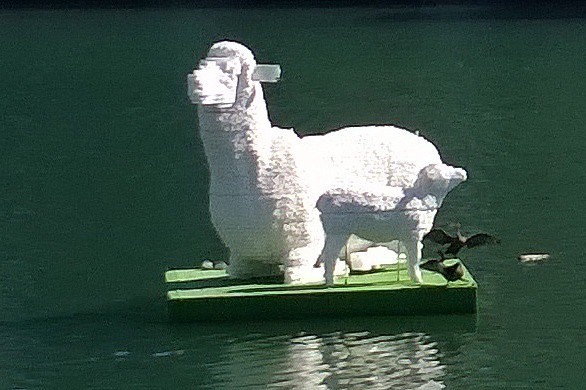
Today I sat on a shady bench next to Fort Point Channel and ate my Vietnamese noodles from the food truck. In front of me, floating on a green platform visited by cormorants, were two sheep — a big one and a small one. As the breeze and the tide nudged the platform, it turned slowly, showing the sculptures with different shadings and from different angles.

Steve Annear at the Boston Globe says, “The installation, called ‘Who Wears Wool,’ was created by artist Hilary Zelson, and pays homage to the Fort Point area’s former wool trade. … Earlier this year, FPAC [Fort Point Arts Community] put out a request for proposals seeking an artist who could weave together a prominent display connecting the neighborhood’s arts community with residents and visitors.  …

“For the project, Zelson said she layered EPS foam — or expanded polystyrene — to create the bodies of the sheep. The layers are held together with a spray adhesive, and the sheep are bolted to the dock with an armature of steel rods. Once built, the sheep were covered in packing peanuts to create the look of wool, before the entire thing was covered with a white acrylic latex coating …

“Zelson started working on the project in August. The first six weeks alone were dedicated to planning, she said.

“ ‘Once I was able to get the foam to my studio, I was working seven days a week,’ she said. ‘It was probably a 300-hour project.’ … The project — from the 3D renderings to the welding to the stacking of foam — was documented on Zelson’s Instagram account”

More here.

What I see in my photo are a ewe and a lamb — and cormorants.
100715-sheep-sculpture-ft-pt-channe;l

Read Full Post »

In case you missed it, the NY Times had a great story on the discovery of ancient fragments of the Quran (or Koran) in Birmingham, England, of all places, where they had been long overlooked.

Dan Bilefsky writes, “The ancient manuscript, written on sheep or goat skin, sat for nearly a century at a university library, with scholars unaware of its significance.

“That is, until Alba Fedeli, a researcher at the University of Birmingham studying for her doctorate, became captivated by its calligraphy and noticed that two of its pages appeared misbound alongside pages of a similar Quranic manuscript from a later date.

“The scripts did not match. Prodded by her observations, the university sent the pages out for radiocarbon testing.

“[In July], researchers at the University of Birmingham revealed the startling finding that the fragments appeared to be part of what could be the world’s oldest copy of the Quran, and researchers say it may have been transcribed by a contemporary of the Prophet Muhammad.

” ‘We were bowled over, startled indeed,’ said David Thomas, a professor of Christianity and Islam at the University of Birmingham, after he and other researchers learned recently of the manuscript’s provenance.”

The manuscript fragments are estimated to be at least 1,370 years old.

Lots more here.

Video: BBC, by way of Youtube

Read Full Post »

There are a few websites that are always reliable for blog topics: Brain Pickings, Studio 360, Only a Game, On the Media, Eco RI News, Arts Journal, and until recently, AndrewSullivan.com (Andrew retired).

Another website I like a lot is the one for the radio show Living on Earth. Here Living on Earth‘s Steve Curwood touches base with writer Mark Seth Lender to learn about lambs that teach themselves to climb  (kind of like the kids in the wild playgrounds we’ve noted).

“Rocky Mountain bighorn sheep are born with all the climbing gear they need: feet evolved to grab and hold on near-vertical rock, and an uncanny sense of balance. Writer Mark Seth Lender came across a herd of the sheep near Alberta’s Jasper National Park late last summer and discovered that for the lambs, having the equipment is not enough. They still have to learn how to use it.”

Lender explains, “They are working it out. The lambs, by themselves. Where the mountain tapers smooth and hard off the ridgeline. The rest of the herd, already picking their way among the crags and cracks is heading down. But the lambs upon this unfamiliar terrain, hold back. The ewe by her stance and where she looks has led them here. To the edge. But will not show them how. Down they will learn on their own.

“She stands aside, and waits. …

“They are not full of play. They stand on the high point and look, long, toward the river and the sweet grass far …  far … below. They look. And look: To left to right slowly turning their heads. They plan: each move, each angle polished into an extended curve. A calculus: For every way point, every stopping place, the risk of a dead end. …

“Sometimes the only down is up: they scramble against the vertical, grappling with their cloven feet, the ledge where the gamble led too narrow for a bird. Sometimes, what looks easy is impossible: the gradual slope, which ends in a sheer and impassible cliff. Sometimes the granite cleaved along the head grain is the only path and the only safety a headlong run, the living rock inclined too steep for caution.

“The hooves of rocky mountain bighorn sheep are broad as a puck, gray as the living rock (as if the color gives them grip). They hold, like India rubber pads, where purchase seems untenable, a magician’s trick, inertia where there should be none. Up where the trees are far and few and the dead wood outnumbers the living.” More here.

Photo: Mark Seth Lender
The ewe leads them to the edge, but will not show them how to climb down.

Read Full Post »

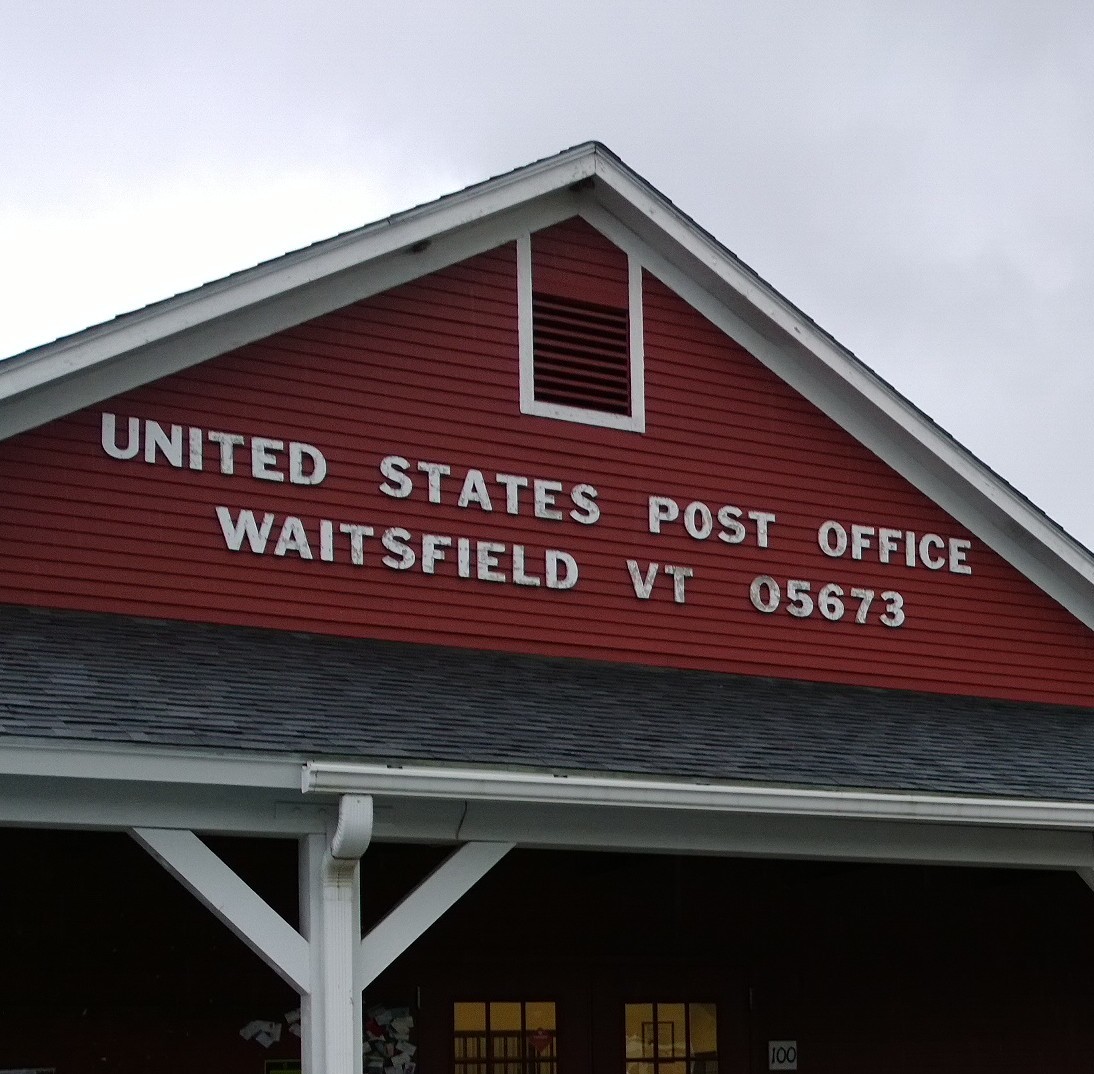
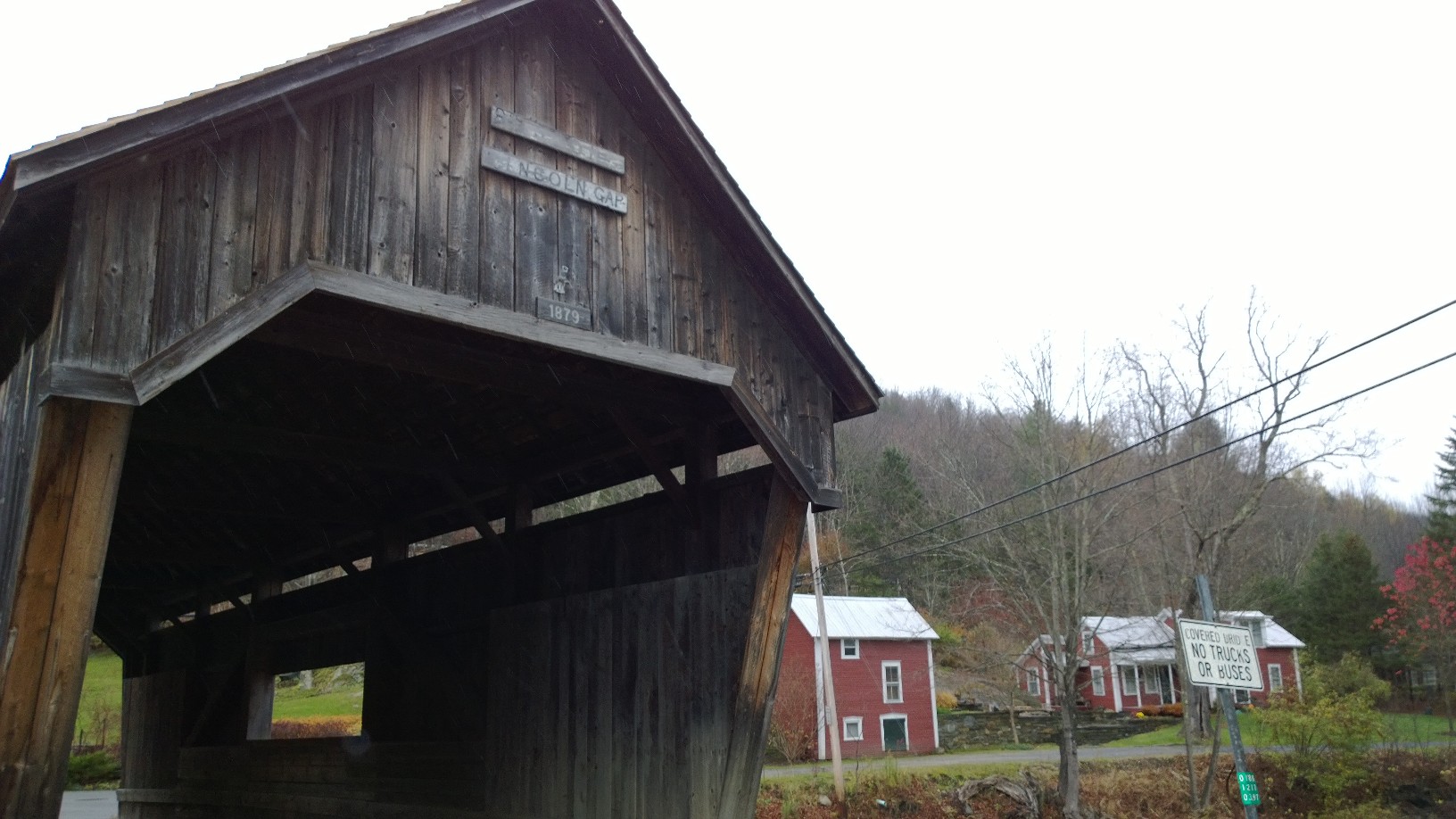
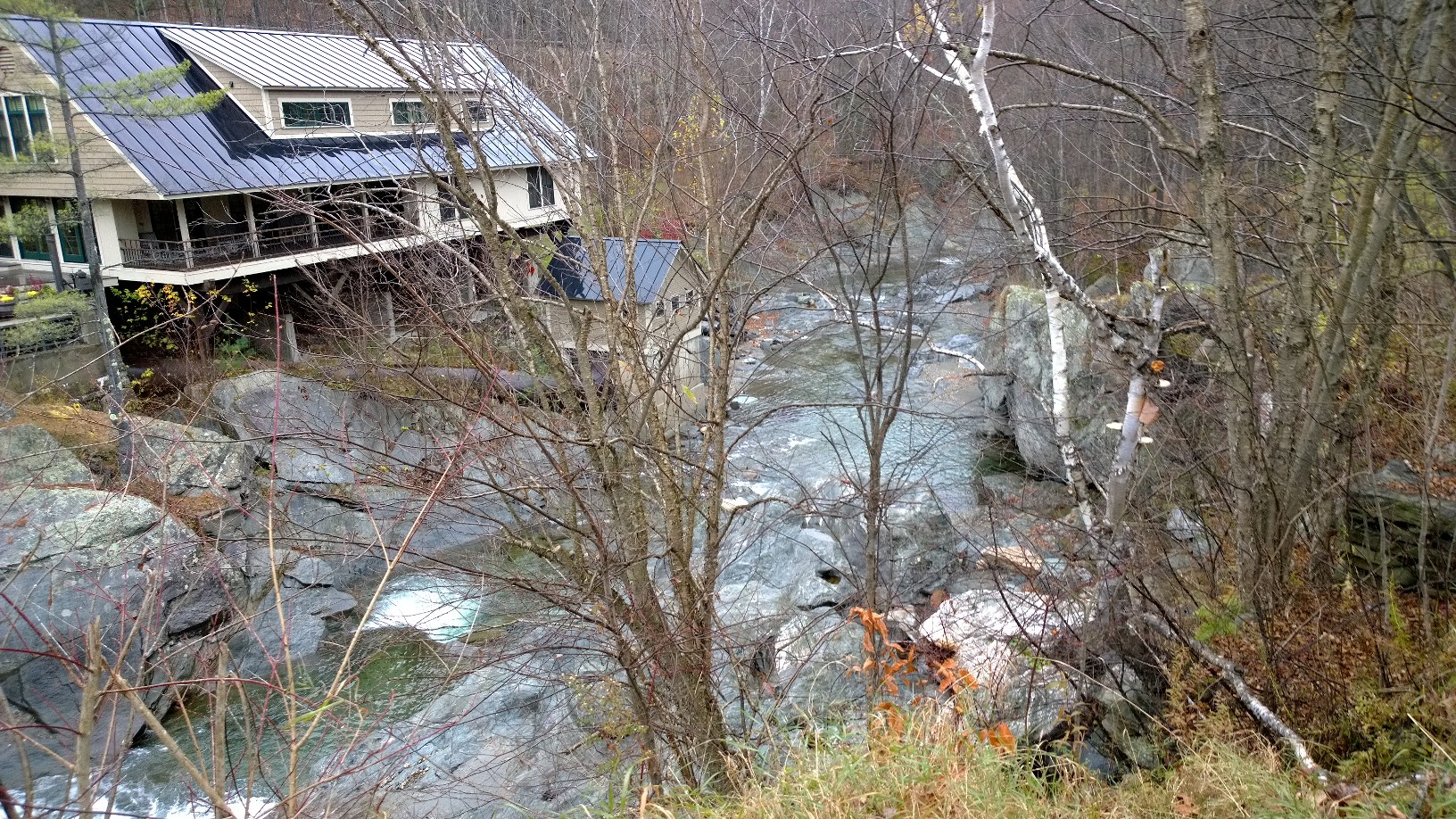
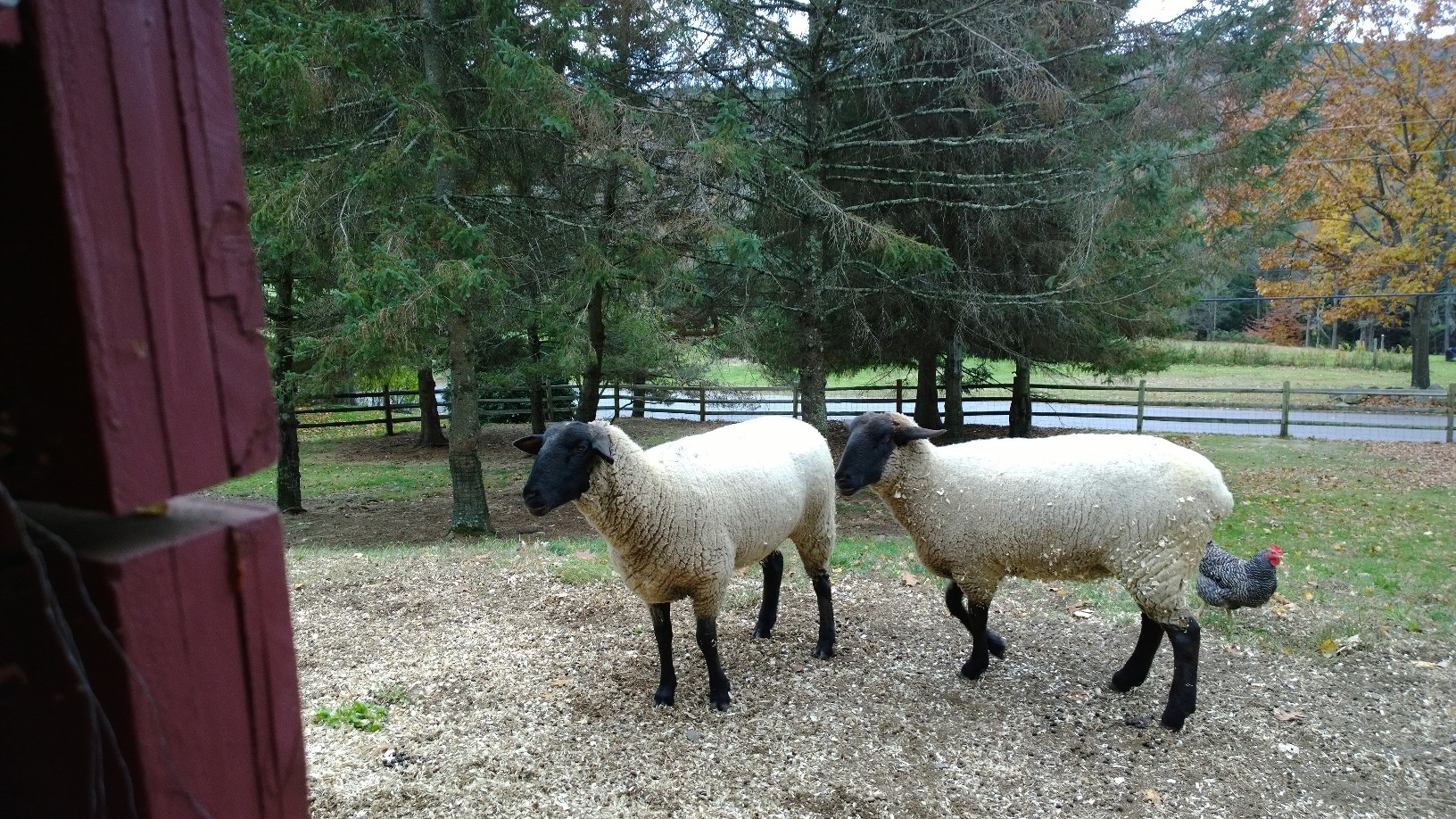
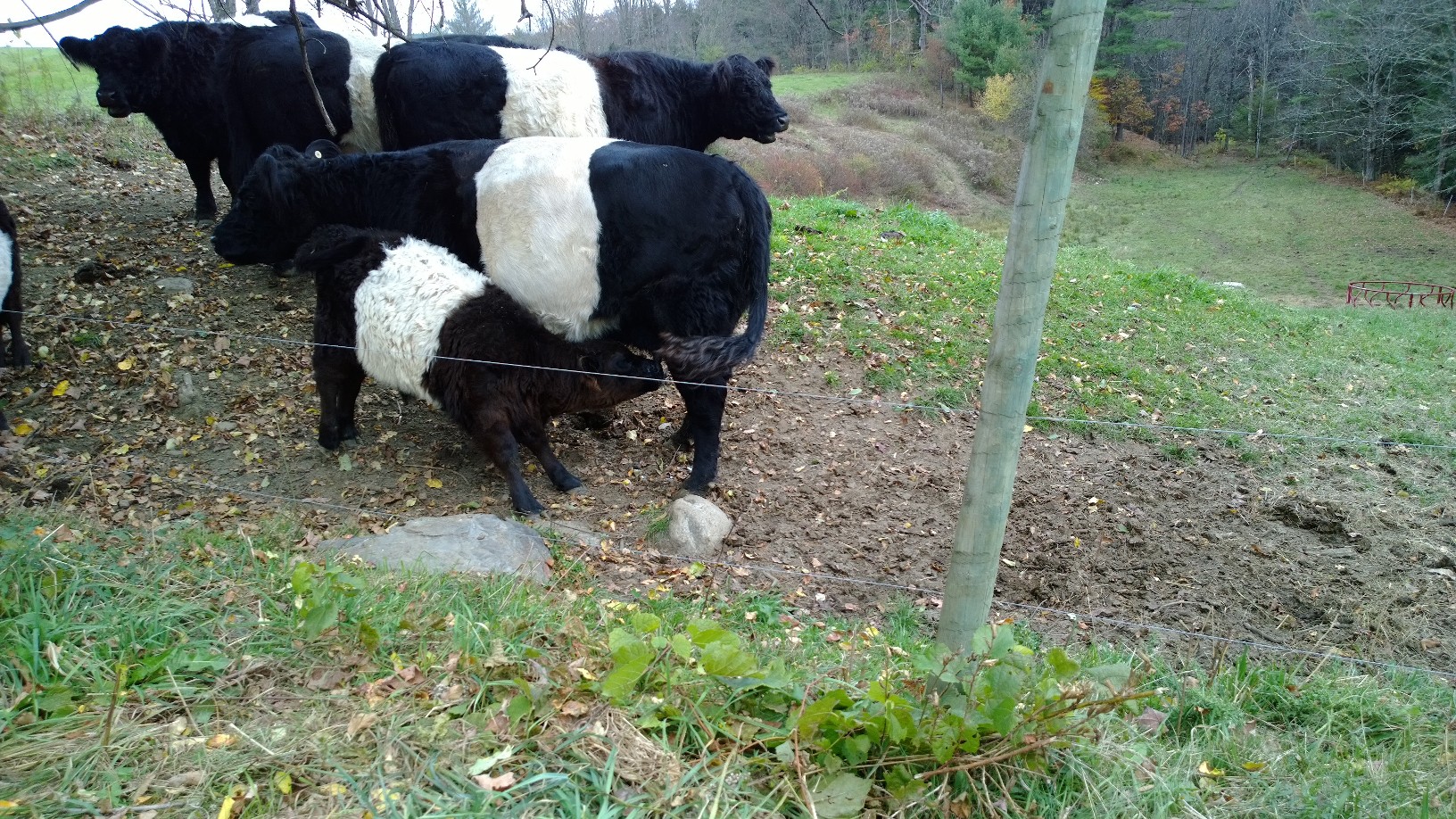
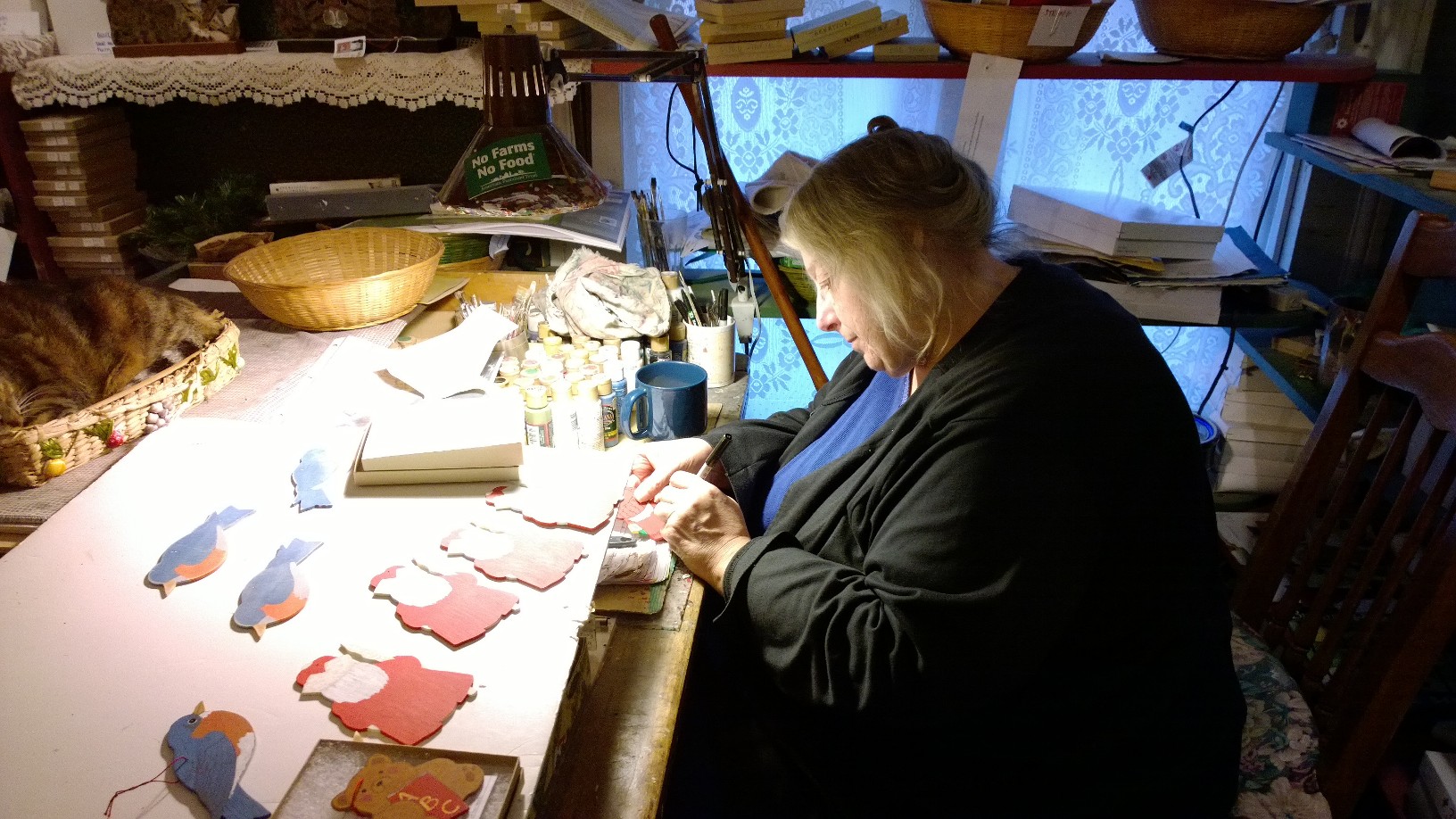
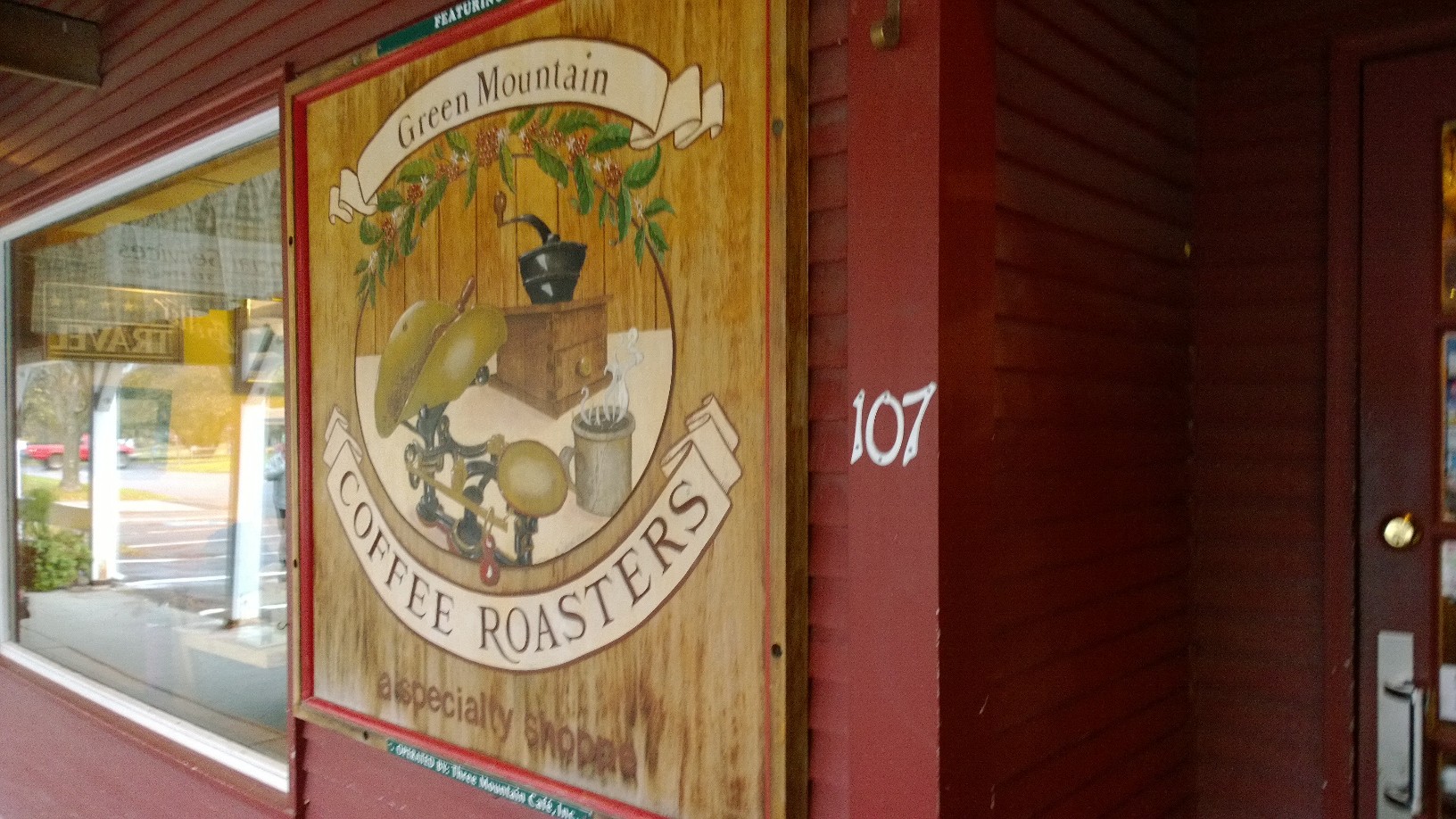
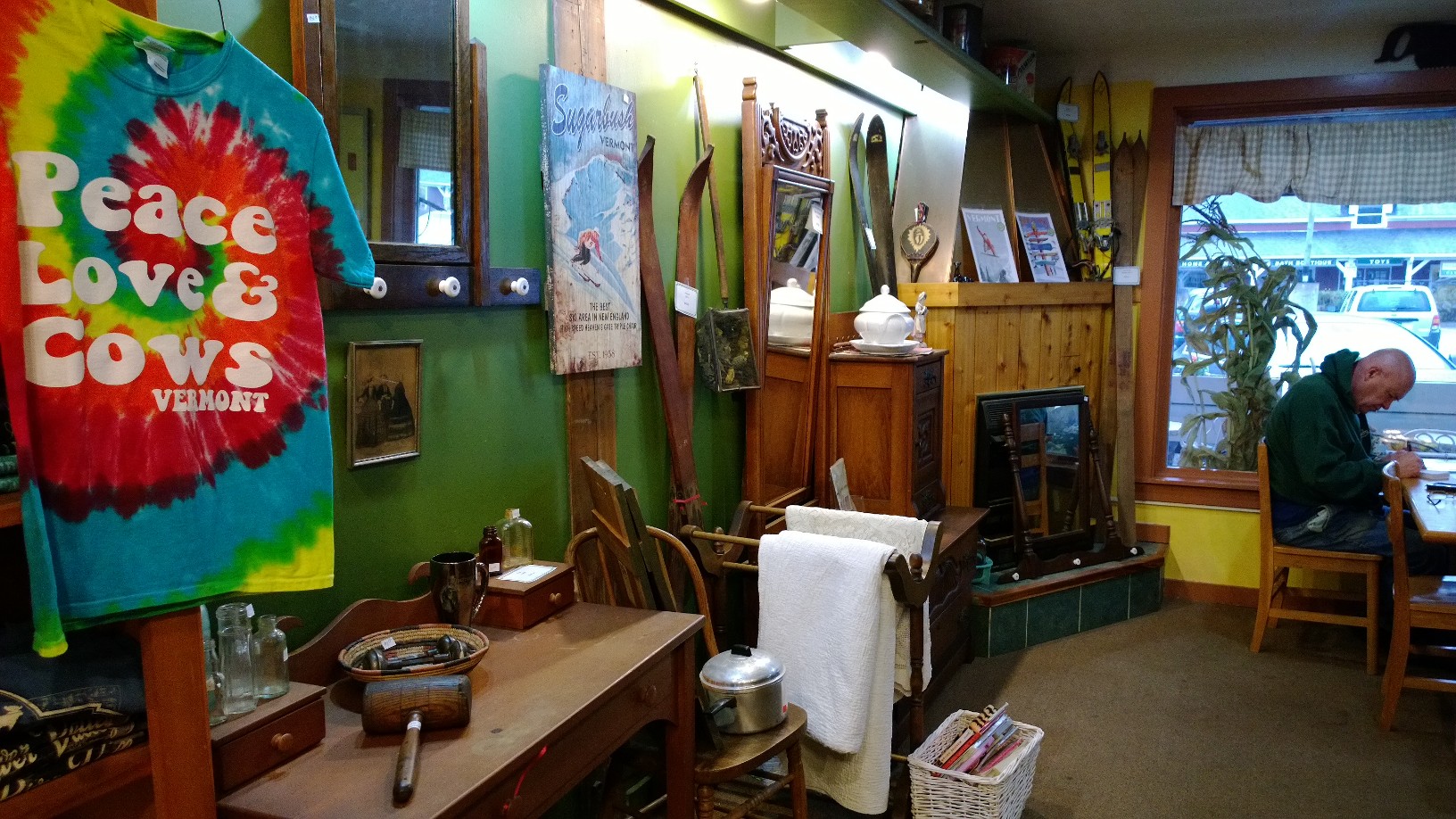
Two incredibly photogenic states.

We got a special kick out of the sheep and chickens of my husband’s cousin, a dentist. He and his wife really know how to get the most out of the rural life.

waitsfield-vt-Post-office

covered-bridge

vermont-river

nh-sheep

calf-nursing

artisan-and-ornaments

green-mt-coffee-roasters

peace-love-cows

waitsfield-coffee-shop

Read Full Post »

Here is an annual spectacle I’d love to see.

“Shepherds led a flock of 2,000 sheep through the streets of Spain’s capital and largest city on Sunday, in defense of ancient grazing, droving and migration rights that have been increasingly threatened by urban sprawl and modern agricultural practices.

“Those urban settings were once open fields and woodlands, crisscrossed by droving routes. Since at least the year 1273, the country’s shepherds have had the legal right to use about 78,000 miles of droving routes around the country to move livestock seasonally between summer pastures in the cool highlands and more protected lowland grazing areas in the winter.

“Every year, a handful of shepherds defend that right in Spain’s capital city.”

I guess it’s use it or lose it. Plus it’s good to make people think about where their food and wool come from, and whether things have changed for the better.

More from the Associated Press.

Photo: Andres Kudacki/Associated Press
Shepherds led a flock of 2,000 sheep through some of Madrid’s most sophisticated settings on Sunday.

Read Full Post »

Older Posts »