Feeds:
Posts
Comments

Posts Tagged ‘street art’

Street art is not just for stationary walls any more. According to Kate Essig at WNYC radio, some pretty amazing specimens are now on the move.

“Art in Spain got a sweet new set of wheels thanks to the Truck Art Project,” she writes. “In this collaboration between a transport company and the local art community,  street art takes the form of stunning mobile murals on  — you guessed it —  trucks.

“The project works with popular urban artists like Javier Arce, Suso33, and Marina Vargas to take their works off the wall and put them in motion. …

“The goal of the project is to make contemporary artwork accessible to all, even if it’s just a surprise sighting at a stoplight — so those in Spain who aren’t frequent gallery go-ers can still glimpse this art on the go.” An inspiring array of truck-art photos can be seen here.

And be sure to check out the project website, which reads in part, “Truck Art Project is an original art patronage project launched by the entrepreneur and collector Jaime Colsa, and curated by Fer Francés in contemporary art and Óscar Sanz in urban art. …

“The trucks working with the project will be the gigantic backdrops for the artworks. The initiative thereby becomes a living display of the most current tendencies in the country’s painting, drawing, and urban art (although the ambitious program intends to be even more multidisciplinary, involving other art forms such as photography, music, or cinema), away from the confines of a museum and aimed at non-traditional spectators and contexts that don’t usually lend themselves to contemporary art.”

Read Full Post »

Providence has to be the New England capital of playful graffiti. After PVD Fest a week ago, I caught three new bits of cheerful vandalism around town — new to me anyway.

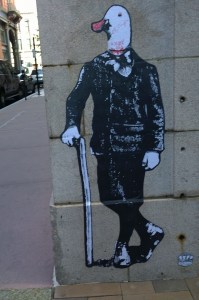
Pasted on a wall near my office was a duck in a suit, which a younger friend informs me should be understood as “ducktales” because the suit has tails.

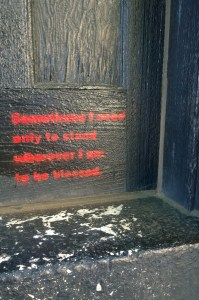
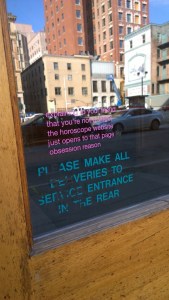
I especially love graffiti sayings, like the one about being blessed where you stand and the one about explaining to a friend that you are not a Virgo.

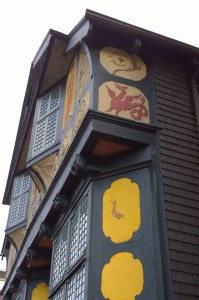
Artistic adventurism is not new for Providence. Take a look at the exotic Fleur-de-lis Studio, for example, on Angell Street.

In other Rhode Island photos, we have the playhouse that Farmor gave her Providence grandchildren. Erik put it together, with help from Suzanne and the kids. The 18-month-old now thinks she’s in charge of screwdrivers.

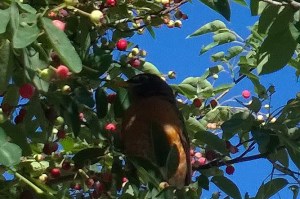
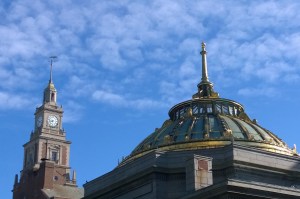
The picture of berries has a robin eating them. You may have to take my word on that. And if you walk around looking up all the time, you’re sure to see interesting tops of buildings.

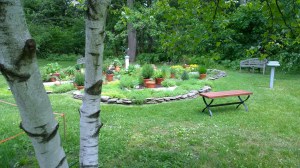
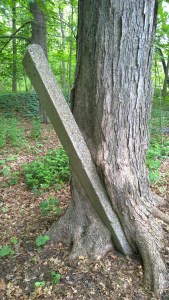
I’m winding up this photographic array in Massachusetts, with the herb garden behind the church, the sexton’s bonsai trees, and another tree that reminds me of a line from a hymn: “roots, hold me close.”

060616-ducktales-Provience

060716-a-blessing-where-I-stand.


060716-I-am-not-vrigo

060616-fleur-de-lys-studio.


060816-adorable-playhouse

060816-robin-and-berries


060816-enjoy-Prov-by-looking-up.

060916-Doug-Baker-bonsai


060916-1st-Parish-herb-garden

060916-roots-hold-me-close

Read Full Post »

Graffiti is not what it used to be. At the Studio 360 radio show, Jack D’Isidoro recently reported on an American city that wanted to be a tourist destination for murals on every wall.

“For decades, street art was bemoaned as a symptom of urban decay and detritus — a sign that system had lost control. …

“Times have changed, however; mainstream culture now recognizes that street art can be iconic, sensational, and good for business.

“But what if it was created with the intention of being a public good, as a tool that could revitalize and beautify a neighborhood? Richmond, the capital of Virginia, decided to find out.

“Now in its fourth year, the Richmond Mural Project brings internationally renowned mural artists to install pieces (with the building owners’ permission) throughout the city. The mission: create the highest concentration of murals in the world, turning Richmond into a global destination for street art lovers.

” ‘I thought, “I can make a change in Richmond,” ‘recalls Shane Pomajambo, a Washington, D.C., art gallery owner and organizer of the project. Initially, he had met with the mayor and city council members with the intention of creating an arts district within the city, but it quickly expanded into a wider effort …

“With a total of 84 murals since the project’s inception, it’s inspired local artists as well, who have added to the impressive displays across Richmond’s brick walls.”

More at Studio 360, where you can also see more Richmond murals.

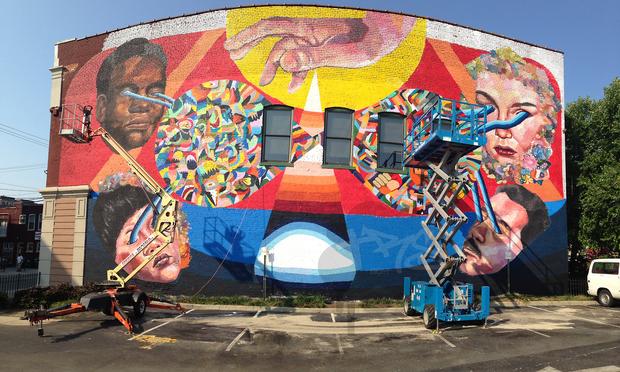
Photo: Richmond Mural Project
A mural by the artist Ever in the city of Richmond, Virginia

Read Full Post »

Once again, the Christian Science Monitor comes up with a story about a person creating positive change in the world.

Jessica Mendoza writes, “Behind a low, unobtrusive brick building [in Boston’s inner city] is a lush, green forest. Brown and silver-gray trees cover the building’s wall, their leafy canopies blocking the sky. Sun-dappled stones sit on tangles of grass. A boy perches on the largest rock, gazing at a distant meadow.

“On the wall’s lower left corner, the word ‘Love’ appears in bright green; opposite is the word in Spanish, ‘Amor,’ in vibrant red.

“The forest is a mural, and even in the dead of winter the 18-by-85-foot painting gives a sense of beauty, warmth, and life – qualities that artist Alex Cook tries to convey in all his work.

“ ‘Art was always a deeply spiritual thing, the most real thing in my life,’ Mr. Cook says. ‘You want to share that kind of feeling.’ …

“An artist for most of his life, Cook has painted on walls all over the United States and has even packed his brushes to travel to and paint in Kenya, Nigeria, and most recently Panajachel, Guatemala. …

“The project began in the fall of 2013 when Cook was performing in New Orleans. There he met Amy Hoyle, then a principal at a local elementary school. Ms. Hoyle was looking for new ways to engage her students and invited Cook to paint a mural on campus, based on the motto of Woodland West Elementary School: ‘Stay curious.’

“Cook delivered, painting two huge faces side by side in a strange, beautiful picture that prompted more questions than answers.

“But he did more than that. Touched by the students, many of whom were poor and had difficult home lives, Cook decided to paint something that would remind them every day of how special they were. The result was a hallway filled with a palette of colors and messages telling all who passed by that they were beautiful, needed, important, and loved. “It’s like walking through a warm hug,” Hoyle says.

Read how Cook made his projects increasingly collaborative, inspiring people from all walks of life (here).

Photo: Ann Hermes
Alex Cook stands in front of one of his large murals, an 18-by-85-foot depiction of a forest in Boston.

Read Full Post »

The snowstorms were great for pictures, but spring seems to bring photo ops everywhere you turn.

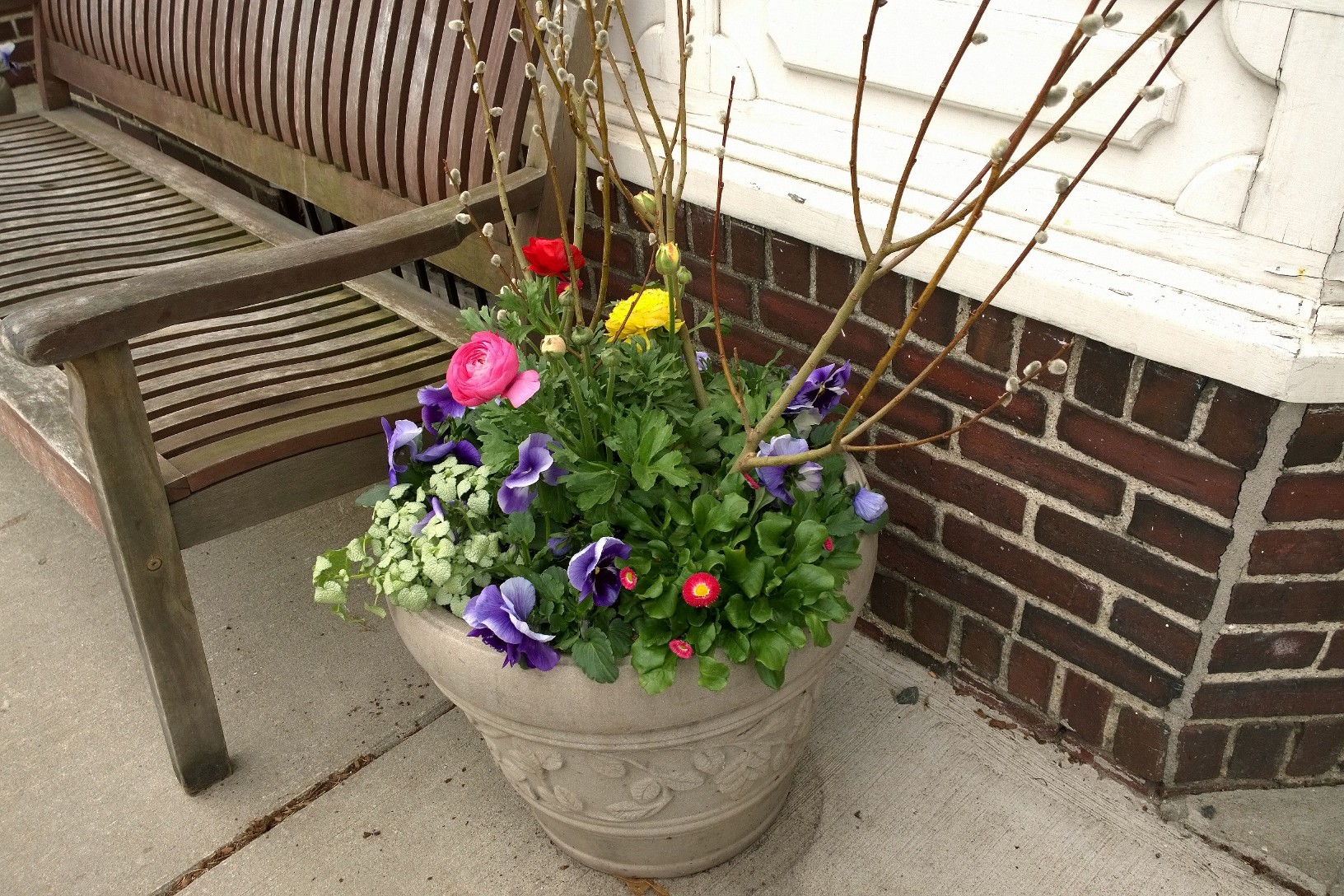
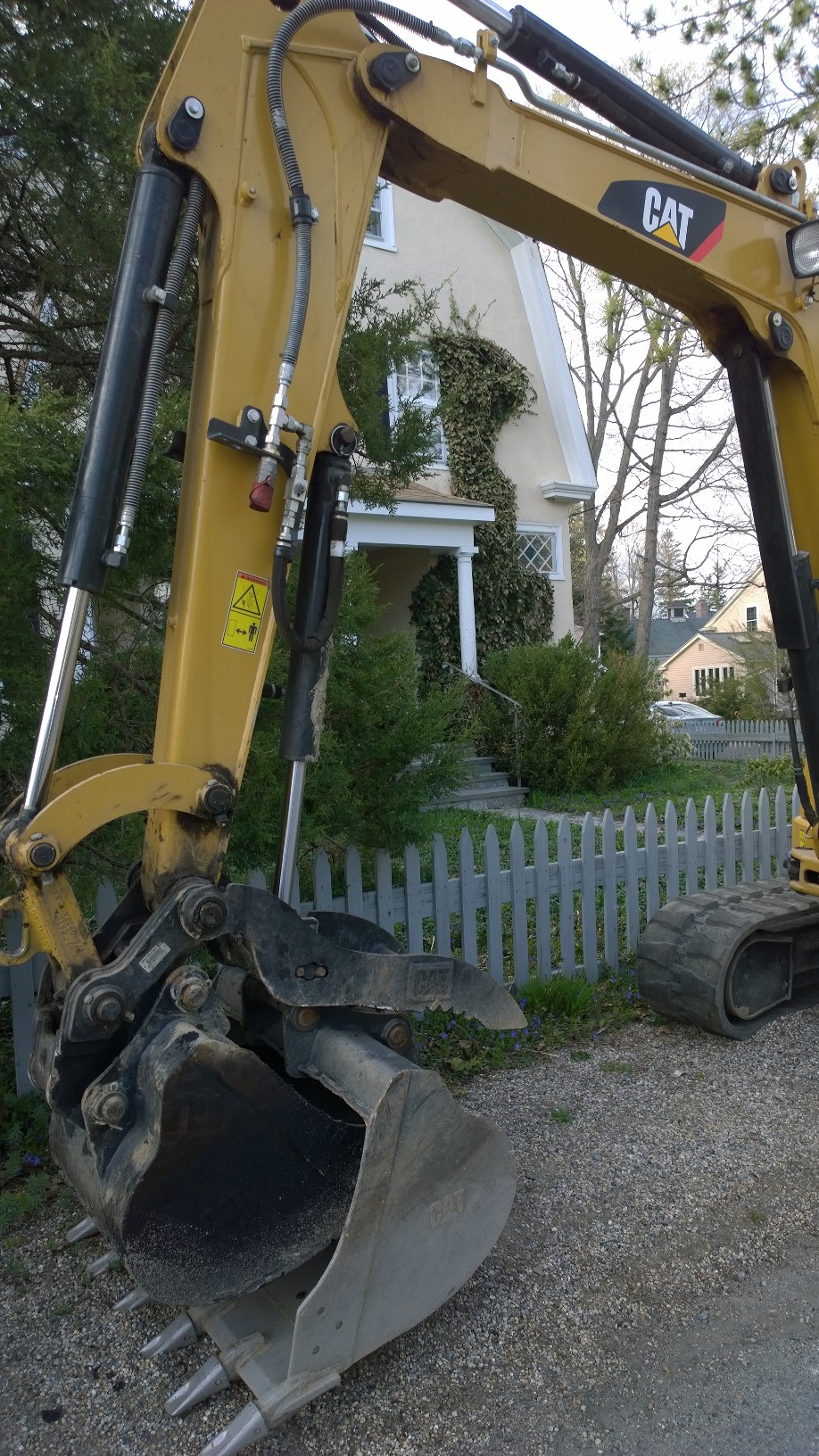
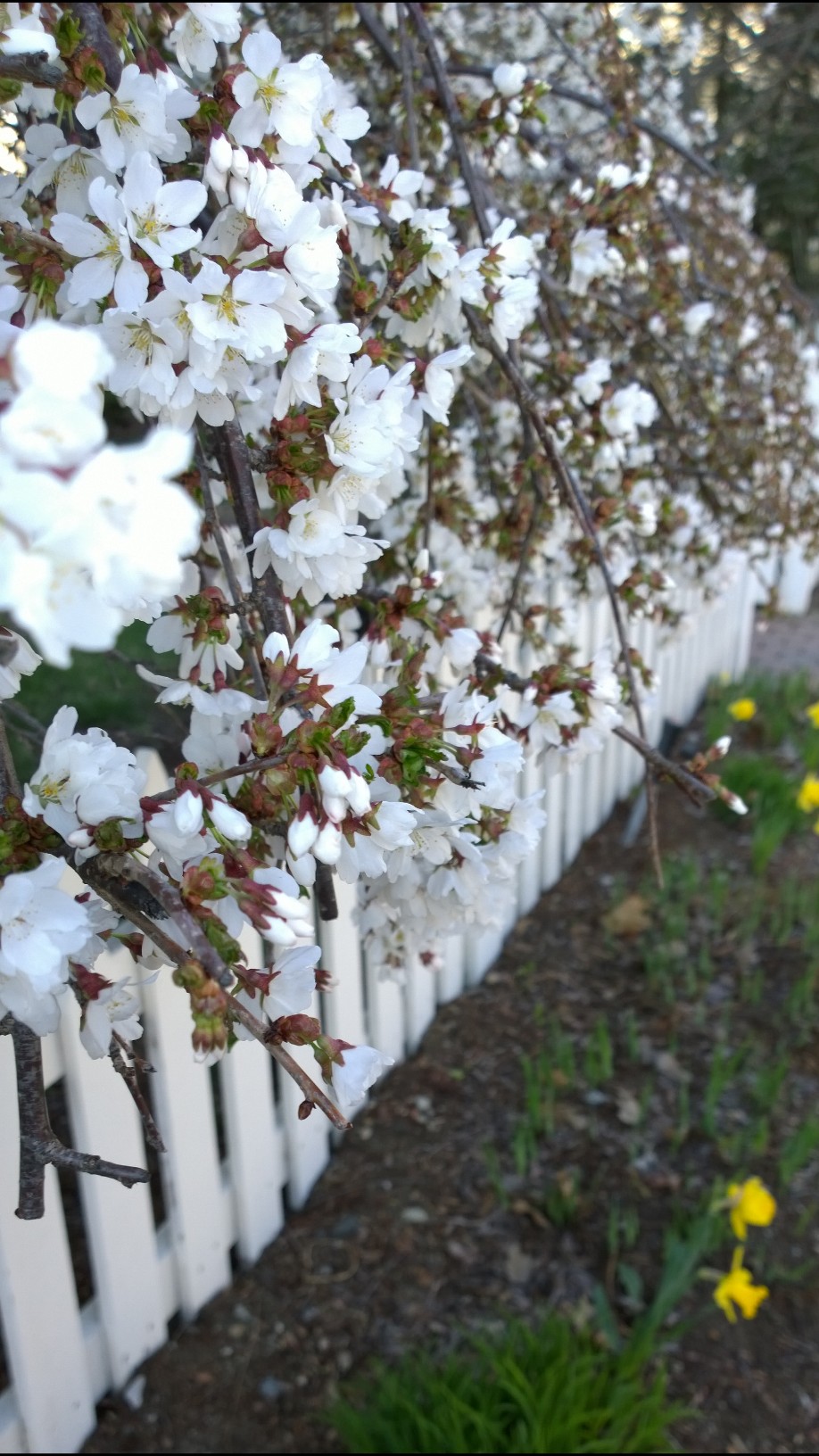
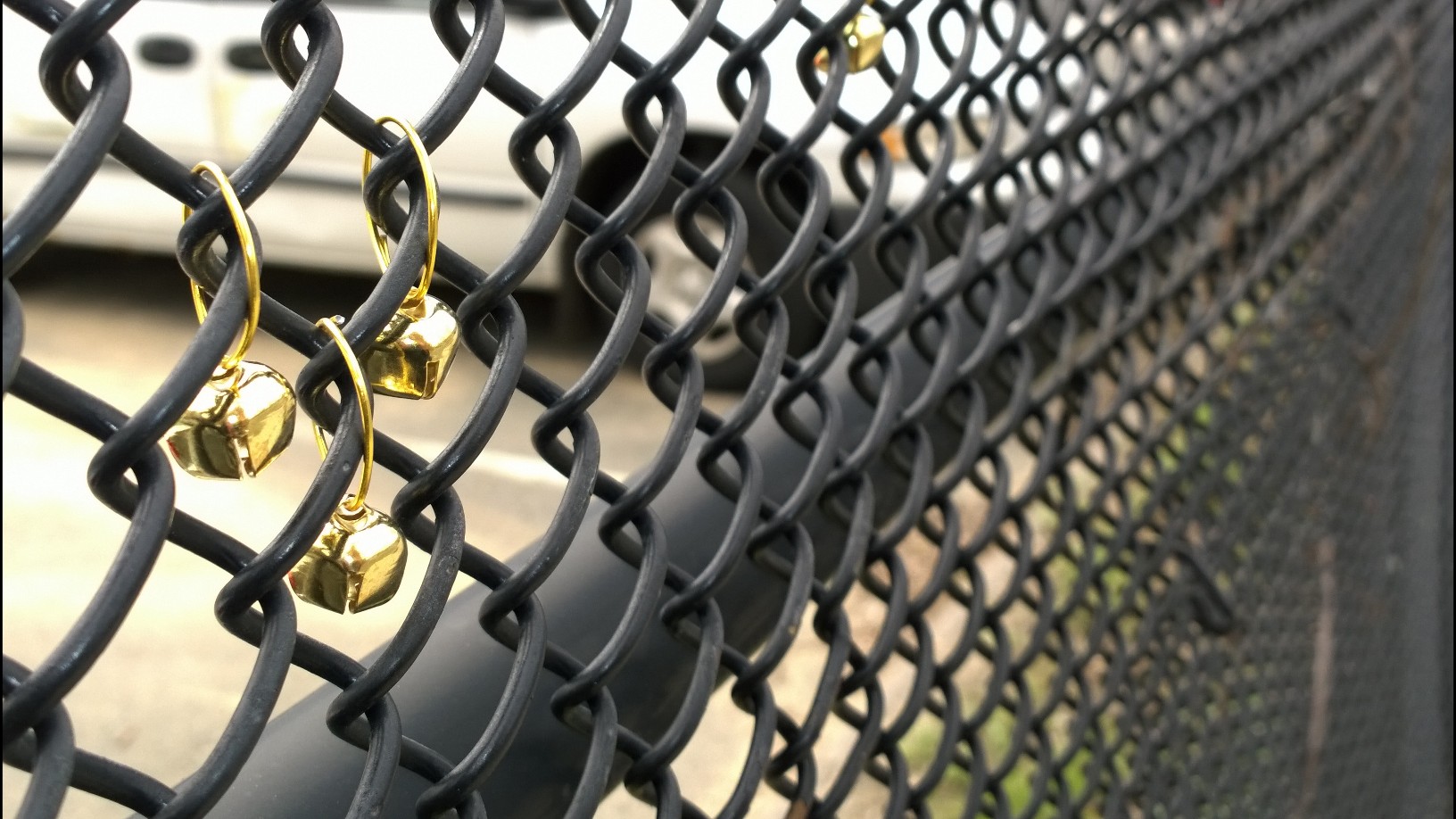
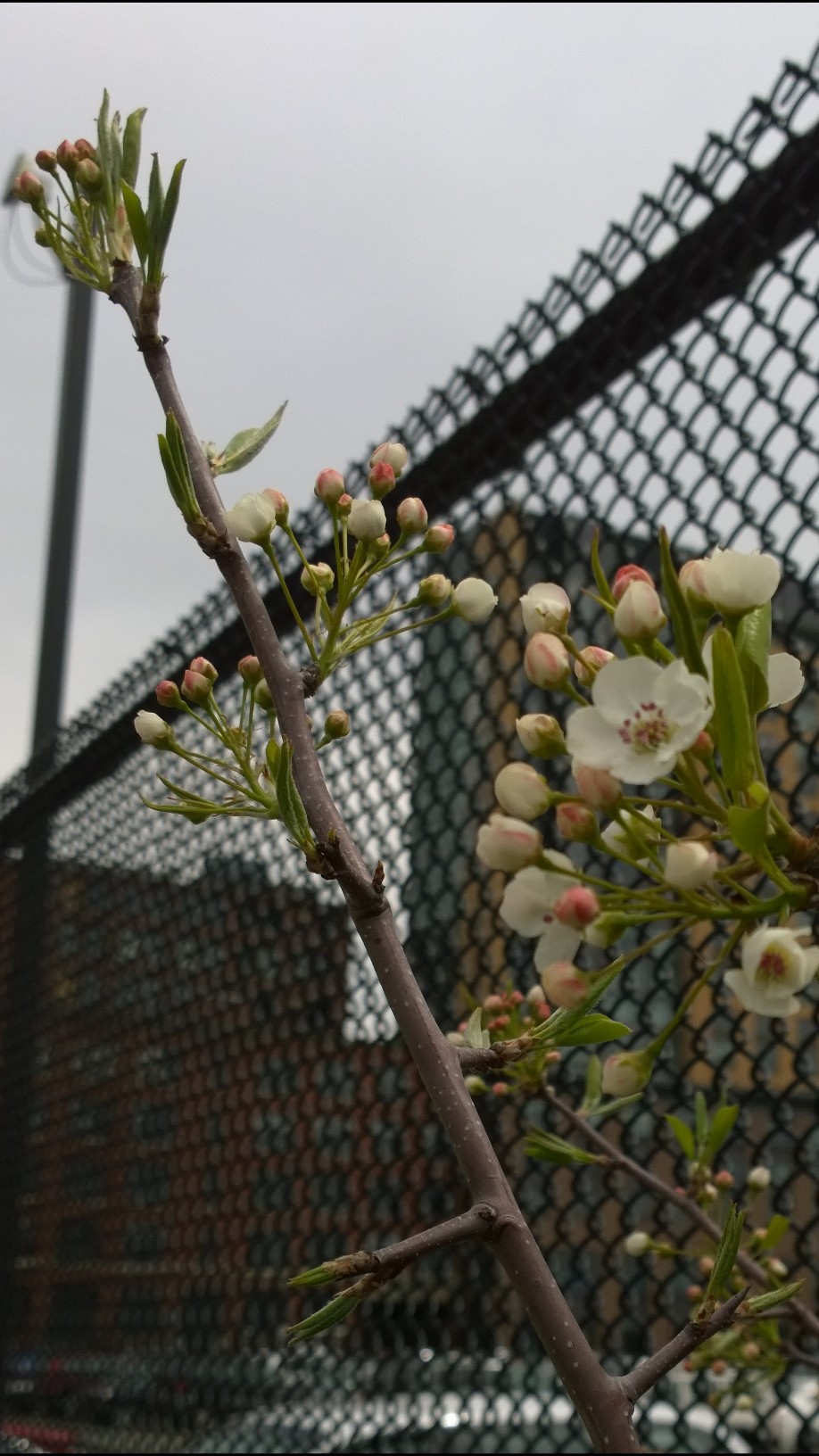
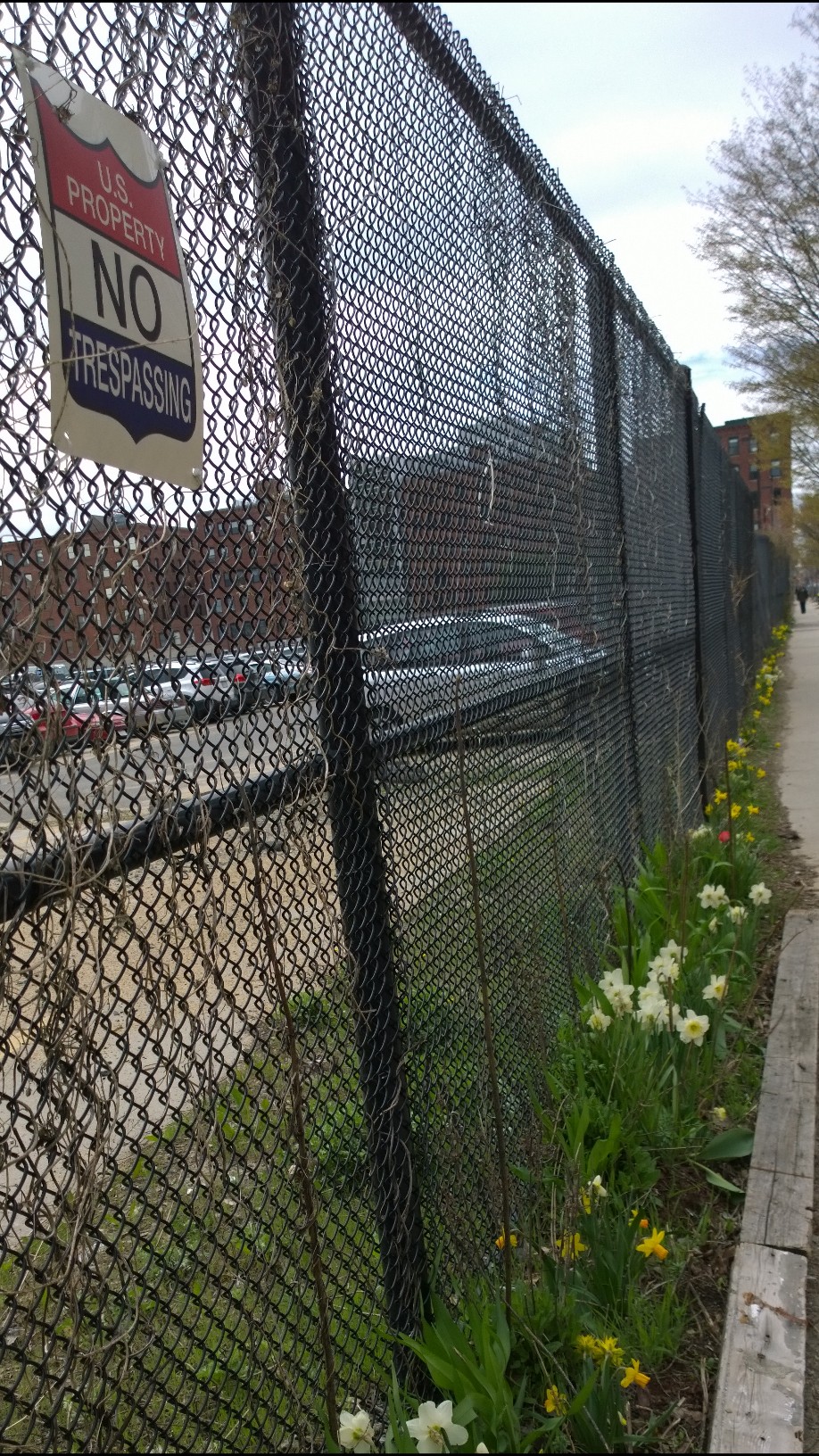
Here you have a flower pot outside Sally Ann Bake Shop, my neighbor’s weeping cherry, an excavator at my house, a utilitarian fence that is always being decorated by Fort Point artists (this time with bells) or by nature (a flowering tree) or the government (“No Trespassing”).

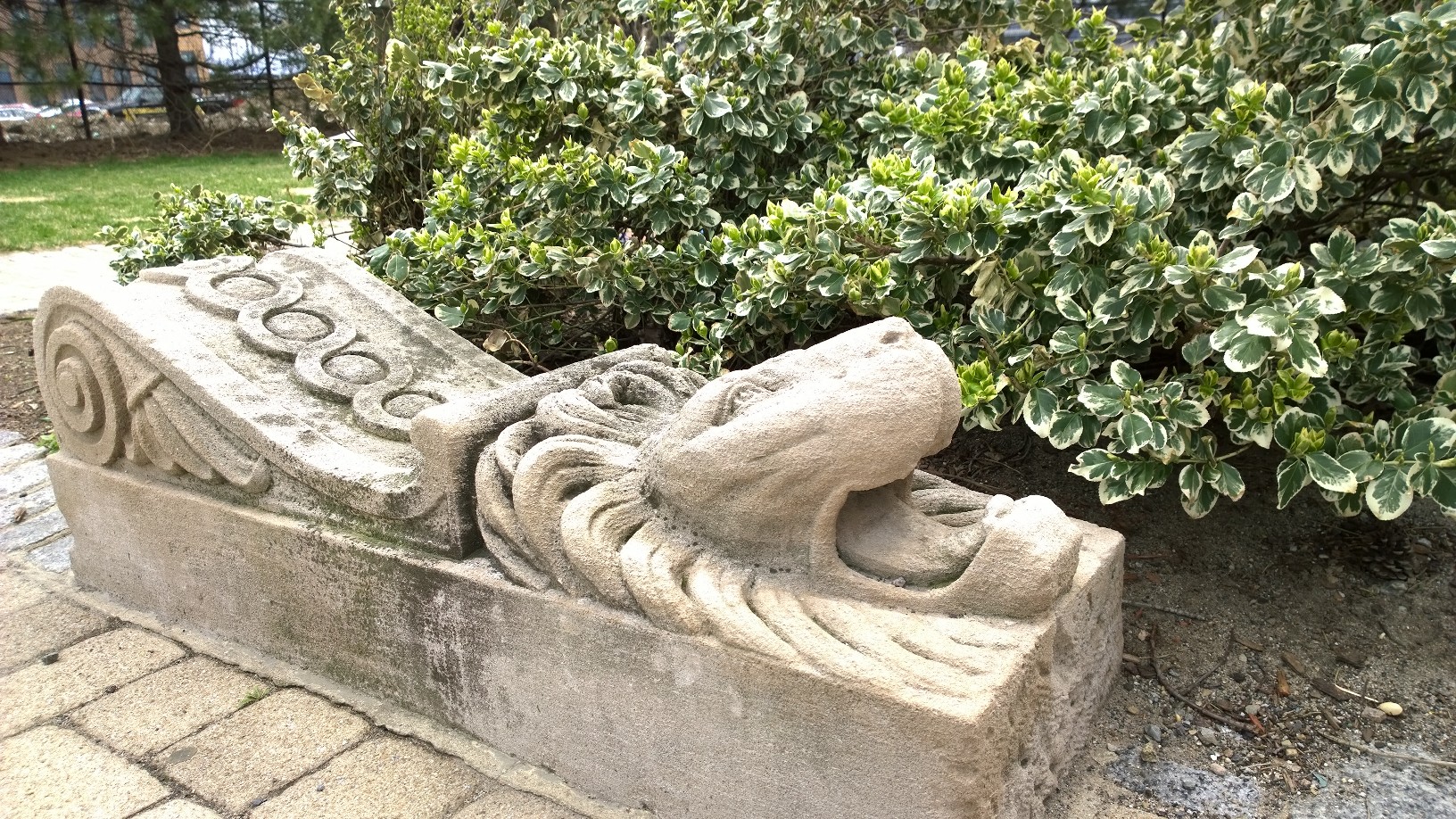
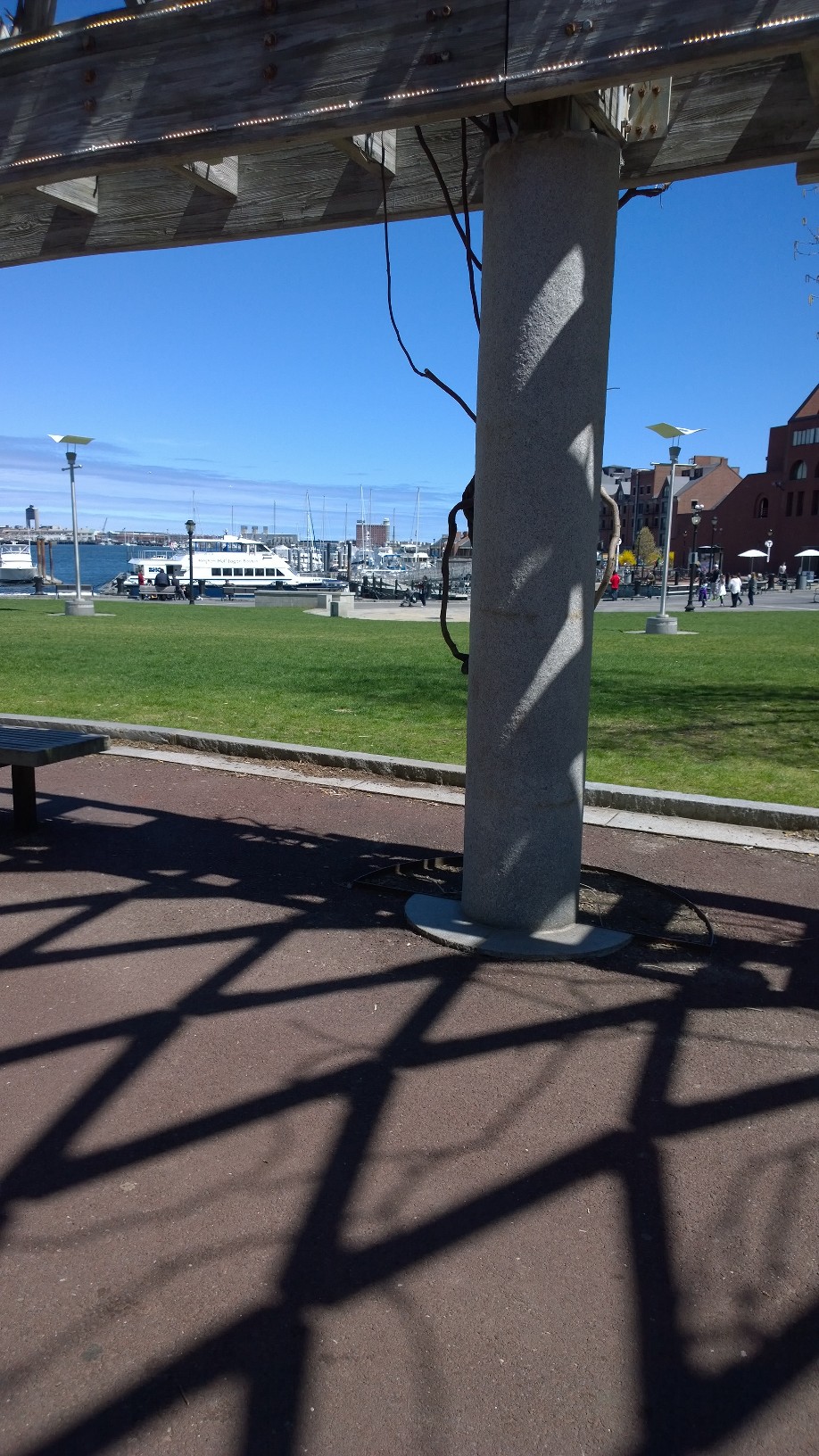
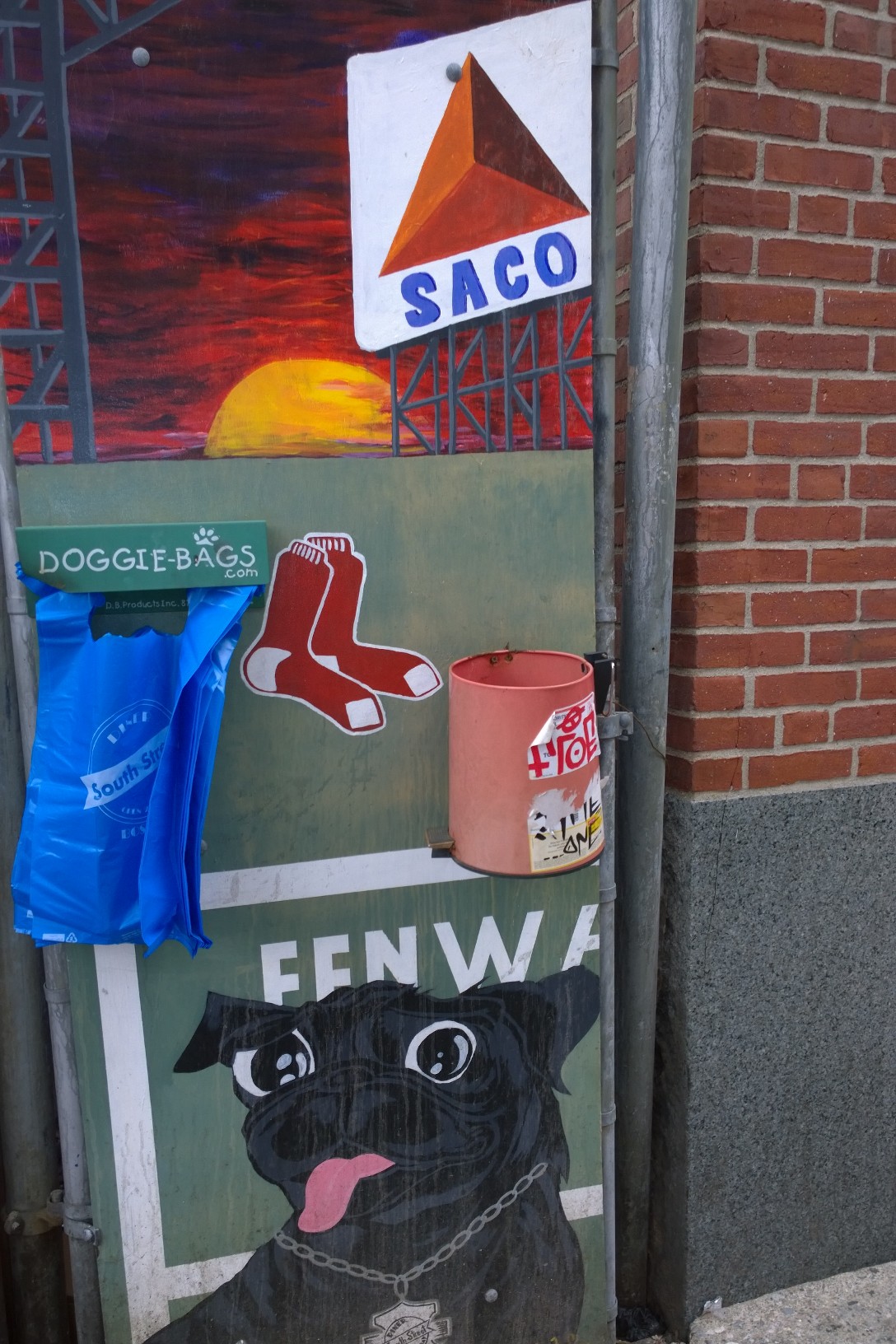
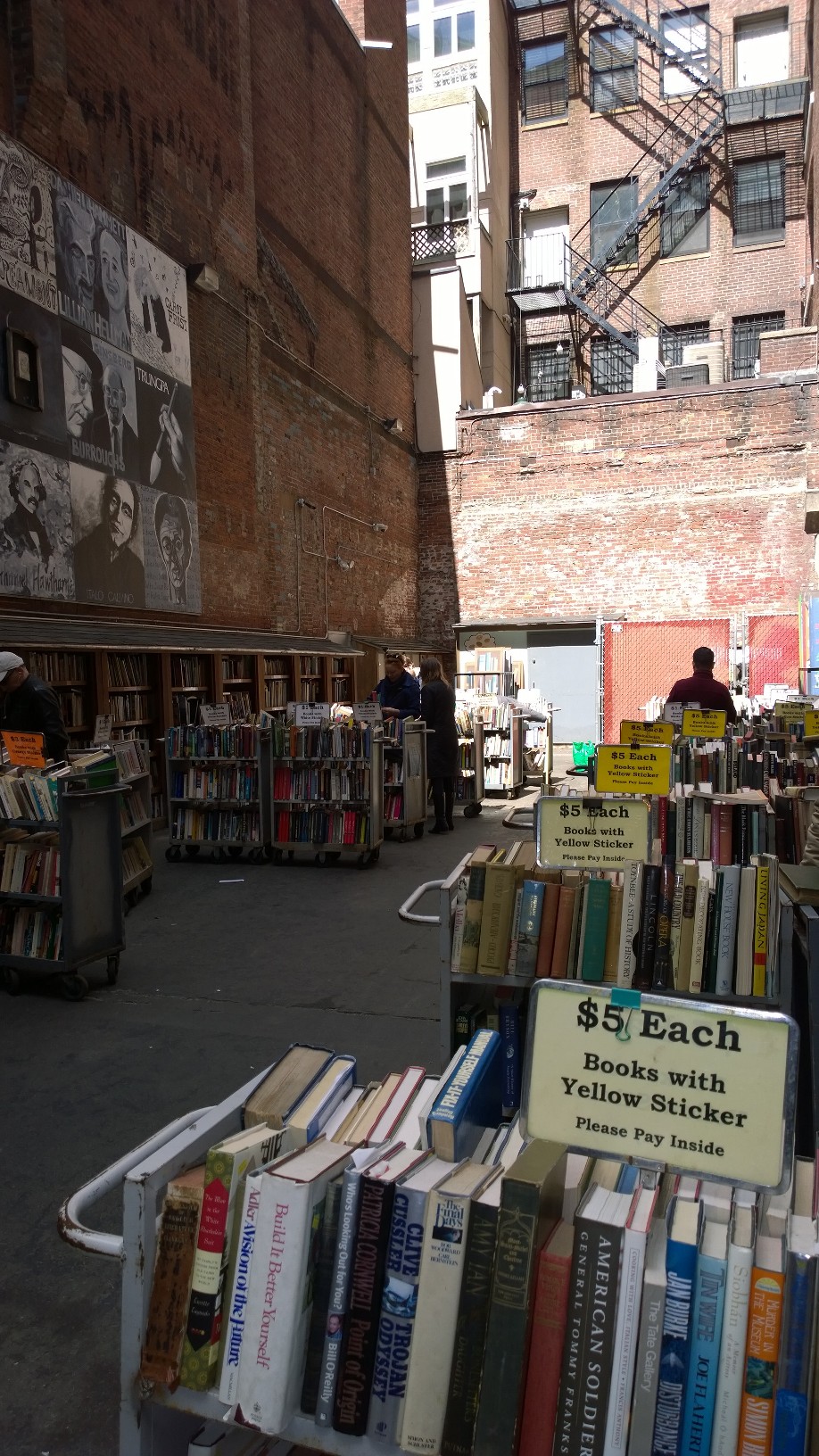
The lion lives in tiny Wormwood Park. The street art riffing off Boston’s famed Citgo sign is on South Street. The harbor arbor is putting out shoots. At the Brattle Book Shop on West Street, books have come out again in the warmer weather.

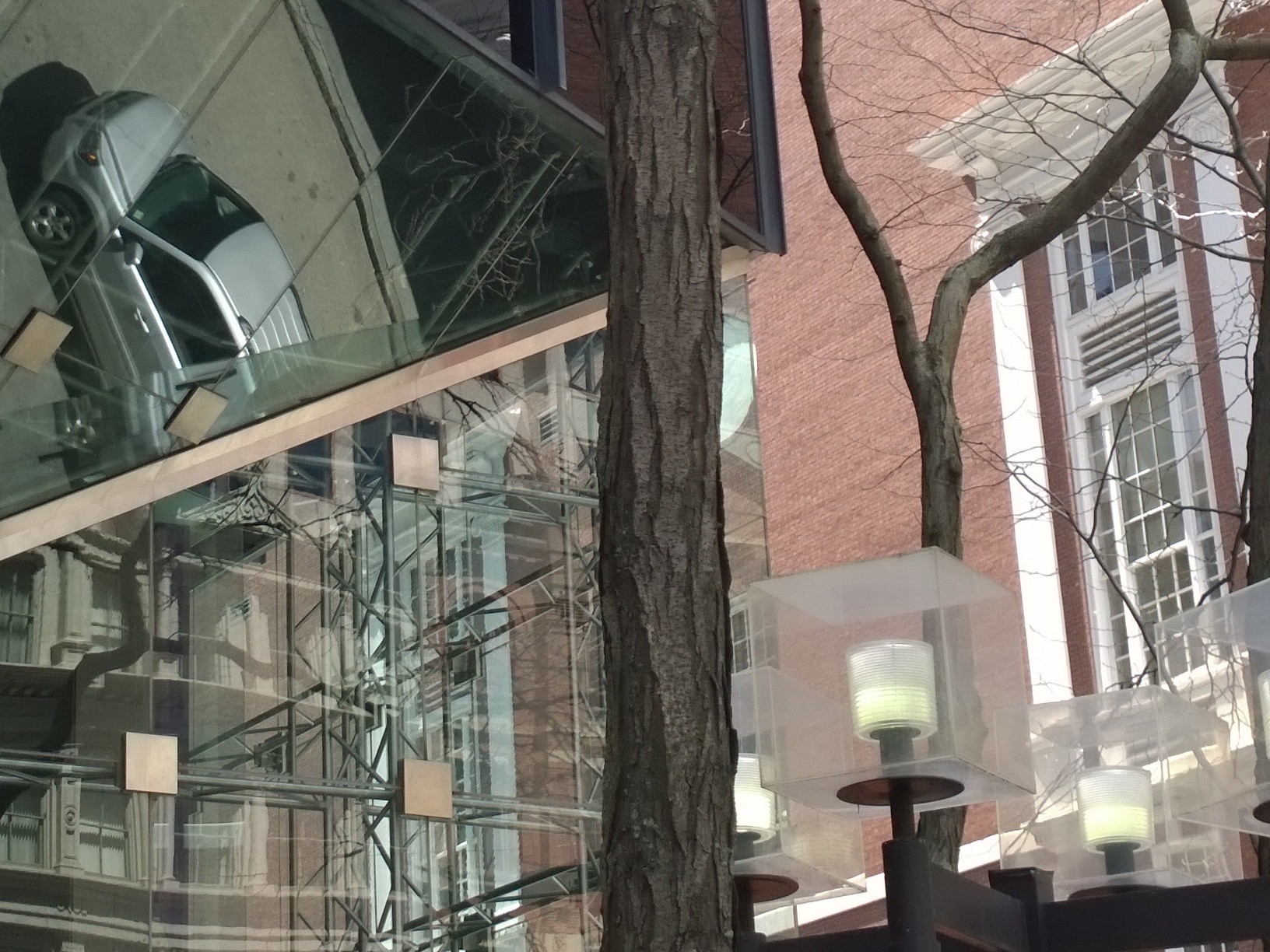
Finally, please note the upside down car reflected at the Downtown Crossing CVS.

outside-the-bakery

Mike-Mulligan-shovel


weeping-cherry

with-bells-on


spring-busting-out

trespassers-will


a-lion-at-wormwood

4-30-15-harbor-arbor


on-South-St

brattle-books


upside-down-car

Read Full Post »

As we have noted in other posts on the subject, one of the most ephemeral forms of art is street art. Many street artists like it that way, but others hate to see the work disappear.

Deborah Vankin and Saba Hamedy write at the Los Angeles Times that Google has decided to do something about that.

“A new worldwide database of public art aims to preserve — if only in digital form — street art, a medium that is often political, sometimes renegade and, perhaps most important, frequently fleeting. These are artworks that may get tagged by graffiti or fall into decay because of weather exposure. The accessible, populist nature of the medium — buildings and sidewalks as canvases — also is what makes them vulnerable. …

” ‘You never know when a mural will be scrubbed out or painted over,’ said Lucy Schwartz, program manager for the Google Cultural Institute, the umbrella organization that this week launched an expanded version of its searchable database of photos simply called Street Art. ‘Our goal is to offer a permanent home for these works so users today and tomorrow can enjoy them and learn about them.’ …

“The project launched in June 2014 with 5,000 images and 31 partnering organizations internationally. [In March] Google added 55 partners who have helped to document more than 5,000 more pieces of public art, all viewable at streetart.withgoogle.com/en/. The collection includes Australia, Sweden, Colombia, South Africa —34 countries in all. It also includes mobile apps and listening tours, as well as a map on which visitors can click to browse local art. …

“Google has said the street art in its online project cannot be downloaded, and the company credits all featured artists. Images in Street Art also include the title of the mural and the date it was created.” More here.

As you might imagine, some of the artists working in this form were highly skeptical of Google’s outreach to them. The sort of Buddhist acceptance of the transitory nature of all things certainly seems incompatible with a Google database. But for many artists, digital preservation is welcome.

Photo: Noel Celis / AFP/Getty Images
A mural by an unidentified artist in Manila. Jan. 26, 2015.

Read Full Post »

Time for a new post on street art. Have you been following the Banksy-in-New-York saga? He was living in the city for a while last year, creating a new piece of street art every day. People ran around to find it, some New Yorkers even trying to charge admission. An HBO movie was made about it.

Banksy is always interesting, but today I want to tell you what street artist Stik has been up to.

The Londonist website says, “Street artist Stik has just finished creating the tallest piece of street art in the world — a 38.2 metre high mural on a condemned council tower block in Acton [a district in the west of London].

” ‘Big Mother’ depicts a mother and child looking forlornly from their council block at the luxury apartment complexes being built around them. The mural is visible from not only the Piccadilly Line, but also on some London flight paths.

“Stik, who was once homeless, said: ‘Affordable housing in Britain is under threat; this piece is to remind the world that all people need homes.’ ”

And I guess in this season a homeless mother and child is especially resonant.

Thank you to @ecpulford for retweeting the story from Bernadetta Keefe (@nxtstop1).

Stik’s website is here. His minimalist, wistful beings remind me a bit of Finnish artist Tove Jansson’s children’s books about the Moomin family.

First picture below, cover of paperback Finn Family Moomintroll

Second picture: Joyce/Division
The 38.2 metre mural has been painted on a tower block which is due for demolition in 2016. Image © Stik

Read Full Post »

I’m always interested in new stories about street art and street artists. This one from the NY Times tells how street artist Swoon (otherwise known as Caledonia Curry) has been picked up by art museums.

Melena Ryzik writes, “With a glowing paper cutout pinned over her heart, the artist known as Swoon led a procession through the Brooklyn Museum early one summer night to her installation ‘Submerged Motherlands,’ a site-specific jumble that includes two cantilevered rafts, seemingly cobbled out of junk; a tree, of fabric and wire, that reaches to the rotunda; and nooks of stenciled portraits.

“A sellout crowd was there for a film premiere and multimedia concert, documenting and inspired by Swoon’s travel on the rafts. As the audience sat spellbound, Swoon, her red curls bobbing, flitted around, snapping photos, taking it all in.

“ ‘There’s that feeling that you get when you see something that you don’t understand the origin of: wonderment,’ she said. ‘It brings about a kind of innocence, and I love that. I love to witness it. I love to be a part of making those moments happen.’

“Since she began illegally pasting images around the city 15 years ago, Swoon has inspired a lot of wonderment. Born Caledonia Curry, she started her career as a street artist, but quickly leapfrogged to the attention of gallerists and museum curators, which let her expand to installation and performance art, often with an activist, progressive bent. Her intricate paper-cut portraits and cityscapes, often affixed to walls in hardscrabble places, are meant to disintegrate in place, a refrain to the life around them. Meanwhile, her socially minded work has focused on building cultural hubs for far-flung artistically welcoming communities. …

“ ‘When you look at the work of a lot of her peers, hers stands apart,’ said Sarah Suzuki, an associate curator at the Museum of Modern Art, which bought several Swoon pieces for its permanent collection in 2005. …

“In New Orleans, Swoon helped create a shantytown where each house is a musical instrument. In Braddock, Pa., a dwindling postindustrial landscape, she worked on an arts center in an abandoned church.”

The rest of the NY Times story is here. And you can read more about Caledonia Curry at her website and at wikipedia.

Read Full Post »

Around the country, art is playing a role in improving the livability of cities and towns.

Peter Brewitt writes at Orion magazine, “Over the past decade, communities across the nation have taken to beautifying their roads and intersections with hand-painted murals, slowing drivers as they go. Murals like these come at minimal cost — just buy some street-grade paint, get whatever permits your city requires, and figure out how to reroute traffic for a few hours. As people motor through the neighborhood, murals catch the eye, situate the mind, and lighten the right foot.

“Many of these creations did not begin as traffic-control devices — the goal was often to engage the neighborhood with itself, to display its spirits and hopes for the future, and to embrace the spaces that bind people together. But art touches drivers as well as neighbors …

Paint the Pavement [PtP], a street-art program in Saint Paul, Minnesota … offers support and advice, but the groups of friends and neighbors creating the art are self-organized and volunteer-run.”

Learn more about enlivening your neighborhood with pavement painting, here. Hat tip to Mary Ann on Facebook.

It’s an interesting art form. More lasting than children’s sidewalk chalks — which doesn’t mean that chalk is passé. In my work neighborhood, grownups have been taking up sidewalk chalk art, and I can attest that people smile when they see it.

Video: Vimeo and Orion magazine

Read Full Post »

Kai the World Traveler and Titan of Industry knows the kind of story that catches my eye. He sent me this one from the New York Times about a street artist who spoofs Banksy, Tom Hanks, and a lot else.

John Leland writes, “This is a story about art in the age of social media

“In April 2011, a law school dropout in Bushwick, Brooklyn, newly arrived from the Midwest, had an idea that he thought might make a splash. He admired the street artist Banksy; he grew up on the movies of Tom Hanks. Why not mash up the two?

“Using simple computer software, he downloaded a Banksy painting of a rat holding a paint roller, then added an image of Mr. Hanks’s face. The whole thing took 10 or 15 minutes to create. He printed a cutout and pasted it on a wall at Mulberry and Kenmare Streets in Little Italy, signing it Hanksy.

“He photographed the wall for his Instagram and Twitter accounts, and emailed it to the Wooster Collective, a popular street art website. Then he went to sleep.

“ ‘And then it just went viral,’ Hanksy said the other day

“RJ Rushmore, who runs the street art blog Vandalog, said he was among many who initially dismissed Hanksy as an opportunist. ‘I thought it was not art, not brilliant, just taking the stupidest ideas and presenting them in ways that were very friendly for Tumblr and Instagram,’ Mr. Rushmore said. ‘It’s not art in the sense of a graffiti writer who spent 15 years developing his style.’

“Mr. Rushmore has since warmed to Hanksy, for comic relief in a scene that sometimes gets too serious. ‘He makes the best cat videos,’ he said. ‘That’s still something to be applauded.’

“Ellen Lupton, senior curator of contemporary design at the Smithsonian’s Cooper-Hewitt, National Design Museum, said more was at stake in Hanksy’s visual gags.

“ ‘It’s more than a pun,’ she said. ‘Banksy’s work is hypermasculine and serious about its underground, tough, outlaw image. And Tom Hanks is just not that guy. So the humor is putting that identity on this hyper-butch material. It’s the revenge of the nerd.’ ” More.

Photo: Nicole Bengiveno/The New York Times
Street artist Hanksy merged Banksy’s famous rat with Tom Hanks.

Read Full Post »

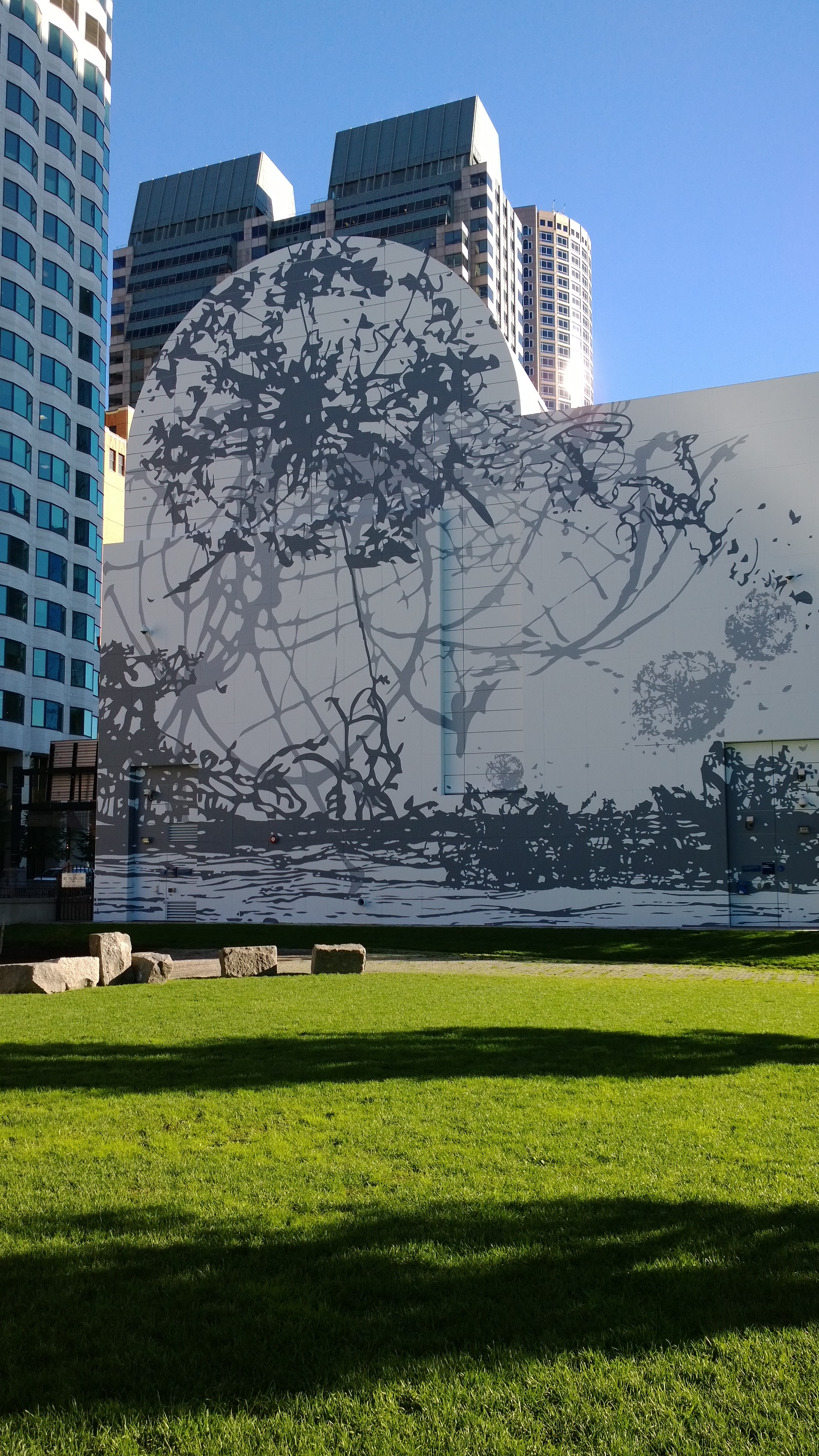
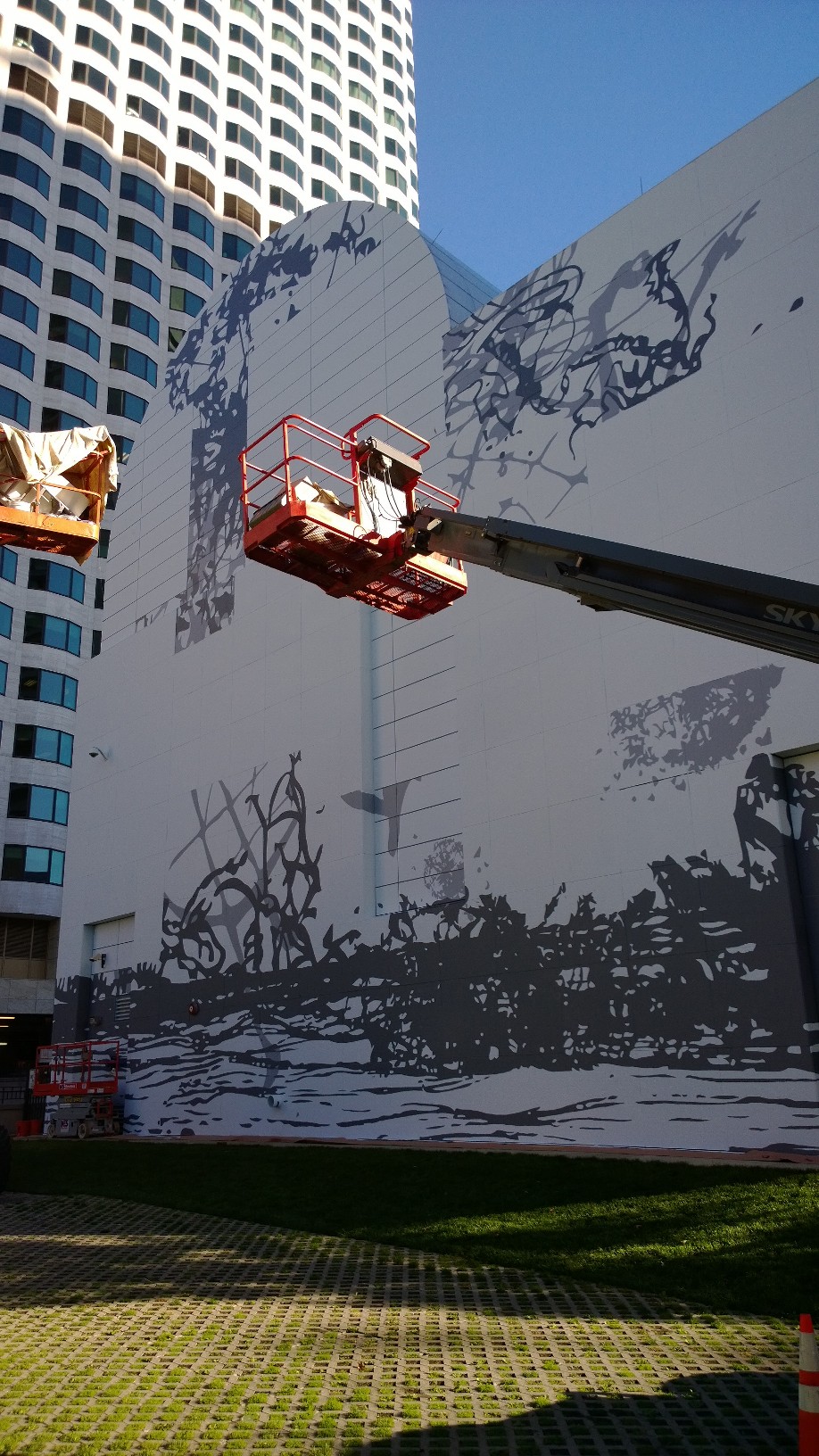
Remember the new Dewey Square mural I blogged about recently, here?

The Boston Globe has a brief update for you, but their picture is blocked by a cherry picker. As soon as the Greenway moved the heavy equipment, I shot my own picture.

Be watching for more on Dewey Square. I have blogged about the two months that Occupy Boston camped there. I have blogged about the Greenway’s teaching garden alongside the Big Dig exit and about the farmers market that sets up Tuesdays and Thursdays. Soon I will show pictures of the pianos that arrived today — with people playing them, I hope.

Dewey-Square-mural-Sept-2013

Read Full Post »

Candy creates interactive street art. Her “Before I Die” wall garnered a lot of attention — and contributors. Folks wanted more.

So she decided to create a website explaining in detail how others could replicate the wall.

Here she tells how it all started: “It’s easy to get caught up in the day-to-day and forget what really matters to you. After I lost someone I loved very much, I thought about death a lot. This helped clarify my life, the people I want to be with, and the things I want to do, but I struggled to maintain perspective. I wondered if other people felt the same way. So with help from old and new friends, I painted the side of an abandoned house in my neighborhood in New Orleans with chalkboard paint and stenciled it with a grid of the sentence “Before I die I want to _______.” Anyone walking by could pick up a piece of chalk, reflect on their lives, and share their personal aspirations in public space.

“It was an experiment and I didn’t know what to expect. By the next day, the wall was bursting with handwritten responses and it kept growing: Before I die I want to… sing for millions, hold her one more time, eat a salad with an alien, see my daughter graduate, abandon all insecurities, plant a tree, straddle the International Date Line, be completely myself…  People’s responses made me laugh out loud and they made me tear up. They consoled me during my toughest times. I understood my neighbors in new and enlightening ways.”

Candy’s how-to page reads, in part, “Once you’ve created a wall, you can share your wall here by creating a mini-site! A mini-site is a page where you can post photos and responses and document the story of your wall. It’s super easy to use, absolutely free, and no technical skills are required. Visit the Budapest mini-site to see an example.”

Everything you need if you’re going to create a “Before I Die” wall is here.

Photo: Before I Die

Read Full Post »

You may recall a past post about the Greenway mural by Os Gemeos, Brazilian twins who had a show at the Institute of Contemporary Art and painted street art around Boston when they were here. I posted pictures of their work-in-progress for the Greenway, here.

Geoff Hargadon photographed the finished work for the Boston Globe, below.

That giant mural is gone now, and Matthew Ritchie is working on the next one. I took a picture of it today and plan to take more for the blog as Ritchie wraps up.

Geoff Edgers at the Globe gives some background on this new piece. “The Institute of Contemporary Art has commissioned British-born Matthew Ritchie, known for using scientific principles to inspire his work, to take over the enormous outdoor canvas.

“Ritchie’s 5,000-square-foot seascape will be installed the week of Sept. 16 and remain up for as long as 18 months.

“The collaboration … is part of a residency for Ritchie that will include a multimedia performance with members of the rock bands The Breeders and The National, concerts at the museum and elsewhere, and a video project to be produced with the ICA’s teen program. But the biggest splash for the public will come on the exterior of the Big Dig ventilation building in Dewey Square.”

Read more at the Globe, here, and at the Greenway site, here.

Photo: Suzanne’s Mom

Matthew-Ritchie-Greenway-art

Read Full Post »

Oh, boy, what a cool site! Modern Hieroglyphics started following me after my last Banksy post, so I clicked and took a look at his site. It’s all about street art. I especially loved this post on “reverse graffiti.”

Says Modern Hieroglyphics, “Paul Curtis (Moose) uses a powerwasher to remove dirt and grime off of walls, resulting in the creation of stunning images and patterns. The new art form is known as ‘reverse graffiti’ or ‘clean tagging,’ and is growing in popularity all over the world. This is the story of Moose. …

” ‘I became an artist by accident really, I was promoting music that my label was releasing by using reverse graffiti. I created it for that purpose, then I would do large pieces for fun or like a strange hobby, then people started to ask me to work for them… and the Internet happened and I became notorious. …

” ‘I discovered reverse graffiti one day when I was a teenager working as a dishwasher in a restaurant. I aimlessly wandered out of the kitchen one day to just be in the restaurant section. I’d cleaned everything I could in the kitchen, and felt like I owned the place. So when I saw a small mark on the wall, I reached for the my cloth and wiped it off, only to find that in the process of wiping the mark off the wall, I made a much bigger mark by cleaning the original mark with the cloth.

” ‘In those days people smoked freely in establishments and the wall was brown with nicotine. I had always thought that the wall was painted that color, and now this almost-white cleaning stripe was shining out of the wall like I had a tin of white spray paint and started to write. It was quite a shock for me, and I spent a long time trying to rectify what looked like damage but was only cleaning.

” ‘Years later, while gazing out of the window on a bus, I saw that in the road tunnels in Leeds, these clean marks appeared everywhere, drunks sliding home along the tiled walls left long streaks that looked like chrome in the car lights. Later on, I finally did something with that observation.’ ”

More samples of Moose’s art are at Modern Hieroglyphics.

Art by Paul Curtis (Moose), creator of reverse graffiti

Read Full Post »

I have blogged about the elusive street artist Banksy a number of times —  for example, here. There is always some curious new story about him, or about this or that artist who may or may not have been him. He’s like Macavity, T.S. Eliot’s mystery cat, who’s “called the hidden paw.”

Now, according to the Huffington Post and the Independent in England, he has done a kindness for someone living in an oil tank that got too famous after Banksy painted it.

“In 2011, while in Los Angeles promoting his documentary ‘Exit Through the Gift Shop,’ the shadowy British street artist Banksy tagged a vaguely elephantine water tank near the Pacific Coast Highway with the sentence ‘This Looks a Bit Like an Elephant.’ Unbeknown to him, the abandoned tank had been serving as a makeshift home for Tachowa Covington. …

” ‘I looked out of the hatch, and there were two guys there,’ he told the Independent. ‘ ” They were writing on his home.

“Less than two weeks later, after buying the tank directly from the city of Los Angeles, the owners of the design firm Mint Currency had it removed by crane and trucked away, leaving Covington just 16 hours to gather his possessions and vacate his home of seven years. That’s when Banksy stepped in to help the man he’d inadvertently left homeless, giving him enough money to find an apartment and pay his bills for a full year.

” ‘He helped me so fast, I didn’t have to spend a single day more on the streets. It was like a miracle,’ Covington said. ‘There ain’t no better man than Banksy … He was an angel to me. He helped me more than anybody helped me in my life.’ ”

Read more.

Photo from Capturing Banksy

ARTINFO

GET UPDATES FROM ARTINFO

Banksy Gave a Man Whose Home He Tagged Enough Money To Live for a Year

Posted: 08/06/2013 1:00 pm


Banksy
292
40
8
99

In 2011, while in Los Angeles promoting his documentary “Exit Through the Gift Shop,” the shadowy British street artist Banksy tagged a vaguely elephantine water tank near the Pacific Coast Highway with the sentence “This Looks a Bit Like an Elephant.” Unbeknown to him, the abandoned tank had been serving as a makeshift home for Tachowa Covington, and the attention brought by the famous artist’s stencil forced him to abandon his home of seven years.

Read Full Post »

« Newer Posts - Older Posts »