Feeds:
Posts
Comments

Posts Tagged ‘volunteer’

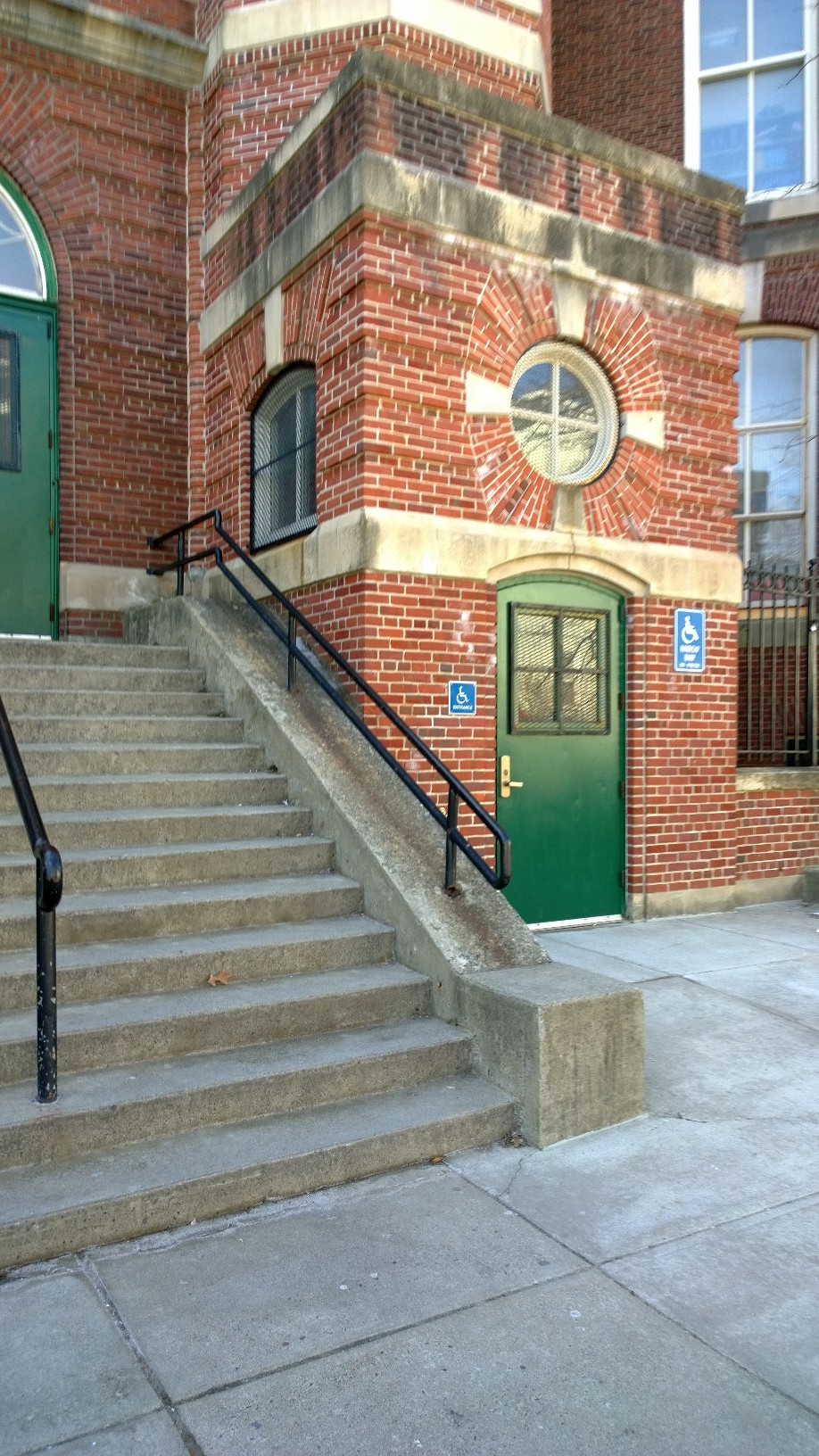
Holmes-School-Dorchester-MaA new employee goes to the Oliver Wendell Holmes School in Dorchester with the team I’m on. He can’t get over how great it is to work for an organization that gives you time to do this. We go out once a month from January to June, and other teams go once a month so that we cover every week.

I started eight years ago with the team that read picture books to a room of first graders. Then I read for a few years with fifth or fourth graders who received chapter books from the librarian. These were students whose teachers thought they would appreciate the extra reading. We all read aloud, with the adult volunteers only taking a turn if the story seemed to lag.

Holmes is a minority-majority urban school with many dedicated teachers who are tolerant of the extra work it takes to herd volunteers. (We also have volunteers who work on math.)

This year, the team I’m on includes the woman who started the whole relationship with Holmes 20 years ago and is now retired. We are assigned to read copies of printed passages and help the children answer multiple-choice questions from tests they have had in the past.

Given the current nationwide emphasis on testing and these third graders’ tendency to keep guessing wildly, I consider it my role to focus on the thought process and deemphasize getting the right answer. I ask, Why do you think that’s the answer? How did you get there?

The administrators often tell us that we make a difference. We’re probably just a drop in the bucket. But, you know, One and One and 50 Make a Million.

More employers should make it so easy to improve the world in which they operate. Other employees probably spend the hour and a half it takes to go out, tutor, and get back once a month in less valuable ways.

Read Full Post »

According to Doug Donovan at The Chronicle of Philanthropy, here. the number of volunteers in the United States is at its highest level since 2005.

“More than one-quarter of Americans did volunteer work in 2011, providing 7.9 billion hours of service worth $171 billion. …

“The 1.5 million additional volunteers boosted the national rate to 26.8 percent of the population, a half percentage point higher than 2010. But the dollar value dipped by $2 billion, as the average number of hours Americans volunteered in a year dropped to 32.7 from 33.9, the Corporation for National and Community Service reported.

“Robert Grimm, director of the Center for Philanthropy and Nonprofit Leadership at the University of Maryland, said the increase was mainly the result of the growth in the American population, not a response to the economy or other factors.”

Well, that’s too bad. People who don’t squeeze some sort of volunteer work into their lives are missing out. If you find an opportunity that works for you, it can be very satisfying.

Where I work, people have been volunteering for years at an inner city school, and the experience just gets better and better. Not only do we feel like we are really helping the kids improve their skills, but we enjoy building friendships with others in our organization as we ride the van to our destination.

I don’t want to make my volunteering to sound like a bigger deal than it is. Each person gives only about an hour and a half a month, overlapping with lunchtime. My point is that even a little bit can make a difference for someone, especially when combined with the efforts of others. One and one and 50 make a million.

Photograph: Mike Brown/The Commercial Appeal/AP
Three volunteers share a laugh while they serve home-cooked meal to residents of Memphis Towers, an independent living community for the elderly and disabled in Memphis, Tenn, Dec. 10, 2012.


Read Full Post »

We blogged a while back about tutoring students via distance learning. Kyle Spencer at the NY Times wrote about it here:

“Newly designed software for the tutoring of beginning readers has bridged the gap, allowing volunteers to meet students online from a distance. P.S. 55 is testing the program with students in its four first-grade classes.”

Now it turns out that remote tutoring is not the only kind of remote volunteering possible. In this article by Casey Armstrong at Shareable, we learn more about why “volunteers don’t have to be in the room anymore to physically volunteer.”

“As far as fun volunteering opportunities go, playing with kittens at an animal shelter is probably unequaled. It’s no wonder that the option to do this over the internet is a popular one. The Oregon Humane Society gives volunteers the chance to control robotic arms wielding toys for bored cats waiting to be adopted. This opportunity is not only good for the cats and volunteers, but it’s a great way to encourage donations and adoptions.

“And, if you look beyond the surface, this is more than just a stunt. It proves a concept: Volunteering can be done from anywhere by anyone if you accommodate it with the right technology. … Check out Reach-In.com if you’re interested in setting up your own robot volunteer opportunity.”

Photograph: Librado Romero/The New York Times
Edward Muñoz, a first grader at P.S. 55 in the Bronx, works out tricky words with Jenny Chan, his tutor in Midtown Manhattan.

Read Full Post »

I liked a Nov. 19 editorial in the NY Times: “Day Laborers, Helping Hands.” It shows that attitudes about immigration can be affected by circumstances.

“About 50 or so people gathered outside a storm-ruined taco restaurant on Saturday morning in Coney Island, on a backstreet behind the Boardwalk near the Wonder Wheel. They were day laborers, Hispanic men and women who have been spending weekends as a volunteer brigade, helping other people chip away at the mountains of debris and accepting nothing in return except work gloves, face masks and safety information cards from the Occupational Safety and Health Administration. They came from all over the region, including a day labor hiring center in Bensonhurst, Brooklyn, that Hurricane Sandy had washed away.

“It’s not unusual to find day laborers looking for work after a disaster. What was striking was the warmth and gratitude they found. They even had an official welcome, from the local state assemblyman, Alec Brook-Krasny, and two City Council members — Domenic Recchia Jr. of Coney Island and Vincent Gentile of Bensonhurst.

“They thanked everyone for coming and pledged to get the Bensonhurst work center open again. A man from the laborers’ union gave a safety lecture. …  ‘We are all New Yorkers,’ said Mr. Recchia, who had brought a box of masks. An observer used to the anti-Latino screeds of politicians on Long Island, a few miles east, marveled at the sense of community — the feeling that after a disaster, immigration status didn’t matter, only a willingness to help.”

Although I took this photo in downtown Boston, the union mural seemed fitting, suggesting the importance of keeping fairness in mind after the crisis has passed.

Read Full Post »

In a Sun Sentinel article called “Battling back: US veterans help each other,” Diane C. Lade writes about the most logical people to help “veterans who have ended up on the wrong side of the law.

“Some former soldiers appearing in the new veterans’ court in Broward County, Fla, aren’t just getting fines, probation, or counseling. They’re getting mentors.

“Veterans Helping Veterans — modeled after a successful program in Palm Beach County, Fla. — pairs seasoned former military service men and women with veterans, of all ages and from all wars, who have ended up on the wrong side of the law.

“Though created in 2010 through Broward’s Retired and Senior Volunteer Program, known as RSVP, the program didn’t start thriving until being connected to the county’s Veterans’ Treatment Court, which opened in May.

“Now, it’s receiving three to four court referrals weekly (although any veteran can apply for assistance) and has 18 mentors, who under RSVP guidelines must be age 55 or older.  …

“The veterans’ court is designed to channel people who suffer from behavior, mental health, or substance abuse issues connected to their service into counseling or treatment programs.” Read more.

Photograph: Shannon Stapleton/Reuters/File
US Army Private First Class Peter Gong, a Vietnam War veteran and member of the National Guard, stands in front of a US flag during an American Legion event in Hempstead, N.Y.

Read Full Post »

Do you have techie talents? Consider joining the folks volunteering their technology skills for unusual causes.

“At Random Hacks of Kindness events,” writes Cody Switzer for The Chronicle of Philanthropy, “technology experts volunteer to solve problems facing nonprofits and other organizations interested in doing good.

“Programmers in San Francisco and Berlin got together recently to attempt to build a system that would allow immigrants to tell their families they’ve arrived safely at their destination without anyone else finding out.

“In Nairobi, a similar group worked on a system to report election results in real time, including incidents of election violence and accusations of voter fraud.

“In Toronto, others worked on a system that could allow Nepali women to send ultrasound pictures via mobile devices.

“All of them were volunteers, willing to lend their technological expertise to nonprofits and causes.

“These projects and others were part of the Random Hacks of Kindness weekend, a twice-yearly, 36-hour work session for designers, programmers, and technology experts to solve problems facing nonprofits and other organizations interested in doing good. The most recent events, held [in June 2012] in 25 cities worldwide, drew 900 participants, according to organizer SecondMuse, a consulting firm that works with companies and individuals on better ways to collaborate.”

The Christian Science Monitor reprinted the story. Check it out.

Photograph: Lucy Nicholson/Reuters/File
Employees at Google, Microsoft, Yahoo, and other technology companies volunteer for Random Hacks of Kindness.

Read Full Post »

The Christian Science Monitor has a regular feature on people doing good works.

Here Jennifer C. Kerr writes that some baby boomers are solving the problems facing their communities by becoming volunteers. But, she says, more are needed.

“Local charities and nonprofits are looking for a few good baby boomers – well, lots of them, actually – to roll up their sleeves to help local schools, soup kitchens, and others in need.

“Boomers are attractive volunteers, and it’s not just the sheer strength of their numbers – 77 million. They are living longer. They are more educated than previous generations. And, especially appealing: They bring well-honed skills and years of real-world work and life experience.

” ‘This generation, this cohort of Americans, is the healthiest, best-educated generation of Americans across this traditional age of retirement,’ says Dr. Erwin Tan, who heads the Senior Corps program at the Corporation for National and Community Service (CNCS), a federal agency in Washington. ‘The question for us is how can we as a country not afford to mobilize this huge source of human capital to meet the vital needs of our communities.’ ” Lots more to read.

Photographer: Erik

Read Full Post »

I blogged before about the idea that one and one and 50 make a million, the idea that little actions by many people can make big change.

It speaks to me. So I loved this food-for-the-hungry story in yesterday’s Boston Globe. Volunteers at Community Cooks in Somerville, Massachusetts, provide part of a meal for a charity once a month. It’s relatively small commitment that adds up. Vicki I founded it 20 years ago.

She tells the Globe‘s Jane Dornbusch: “My friend heard the Somerville Homeless Coalition wanted some food support. … It was an era when many young professionals who were interested in helping the community were moving to Somerville, so we were able to recruit very easily.”

Derek Neilson makes potato salad for Community Cooks.

Derek Neilson makes potato salad for Community Cooks. Photograph: Barry Chin, Globe staff

Dornbusch adds, “Community Cooks is just that: a community of cooks that prepares food for the community. Each volunteer is assigned to a team that provides a meal once a month to a partner organization; these organizations include homeless shelters, women’s and family shelters, youth development programs, providers of support for the developmentally disabled, and more.

“The team leader hands out dish assignments — main course, salad, side, dessert — and each volunteer purchases the necessary ingredients and prepares a homemade recipe to feed about 15. Then the volunteer drops it at a central location. Each team serves a particular organization, so volunteers develop a sense of community and partnership with one group. It’s not an overwhelming commitment.” But together the cooks make a big difference  Read more.

Read Full Post »

People where I work have been volunteering in an inner-city school for years. It started with reading picture books to first graders and expanded to second grade reading, fourth grade math, and fifth grade “Book Club,” the one I do. I once taught fifth grade, and I would still read the books written for that age even if I weren’t volunteering in the school.

This past week, the NY Times had an interesting article on using technology to enable tutors to work with elementary school kids remotely.

“Edward’s tutor was not in the classroom. His school, a 20-minute walk from the nearest subway stop in a crime-plagued neighborhood, has long had trouble finding tutors willing to visit. ‘It is hard to get anyone to volunteer,’ said the school’s principal, Luis Torres, who sometimes cancels fire drills because of the gunfire he hears outside.

“Now, newly designed software for the tutoring of beginning readers has bridged the gap, allowing volunteers to meet students online from a distance. P.S. 55 is testing the program with students in its four first-grade classes.

“Edward’s tutor, Jenny Chan, was an hour away in Midtown, on a bustling trading floor at JPMorgan Chase, where she provides technology support. She was talking to Edward by phone and seeing the story he was reading with screen-sharing software on her desktop computer.

“JPMorgan Chase is sponsoring the remote tutoring program and encouraging its employees to get involved from their desks during the school day.” Read more.

There’s nothing like face-to-face contact, but if people can’t take work time for the commute, perhaps more people will tutor.

Photo: Librado Romero, NY Times

Read Full Post »

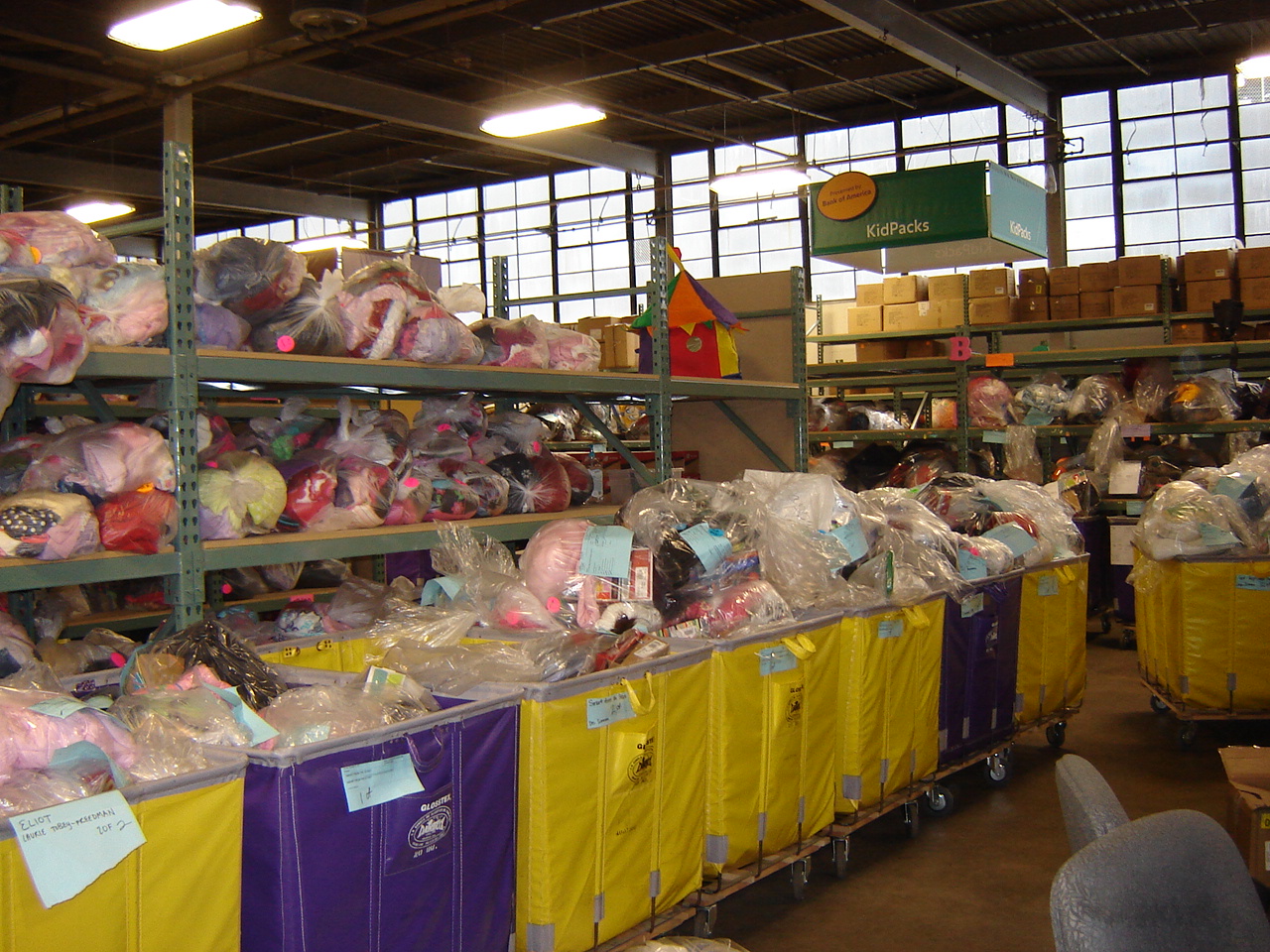
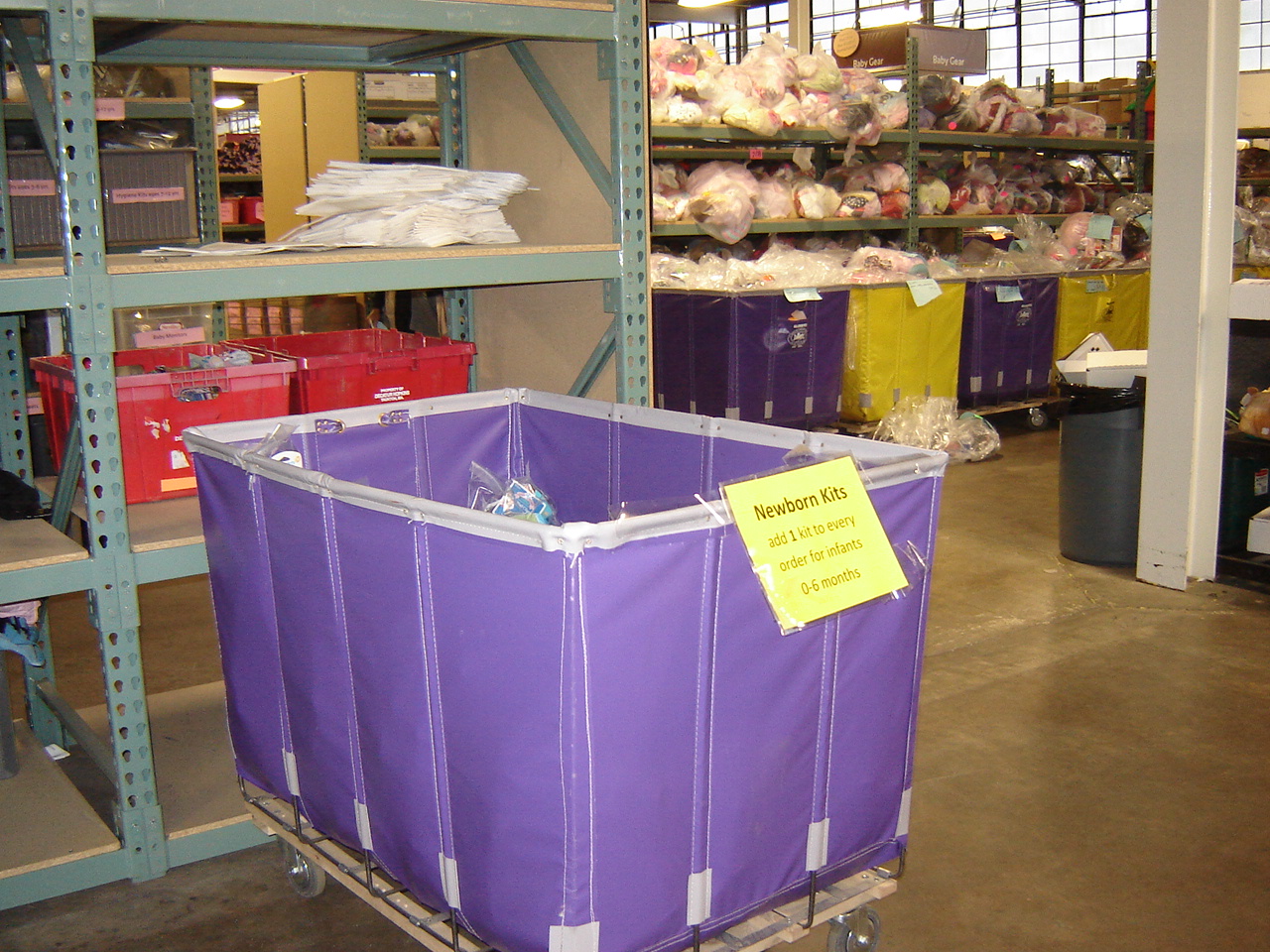
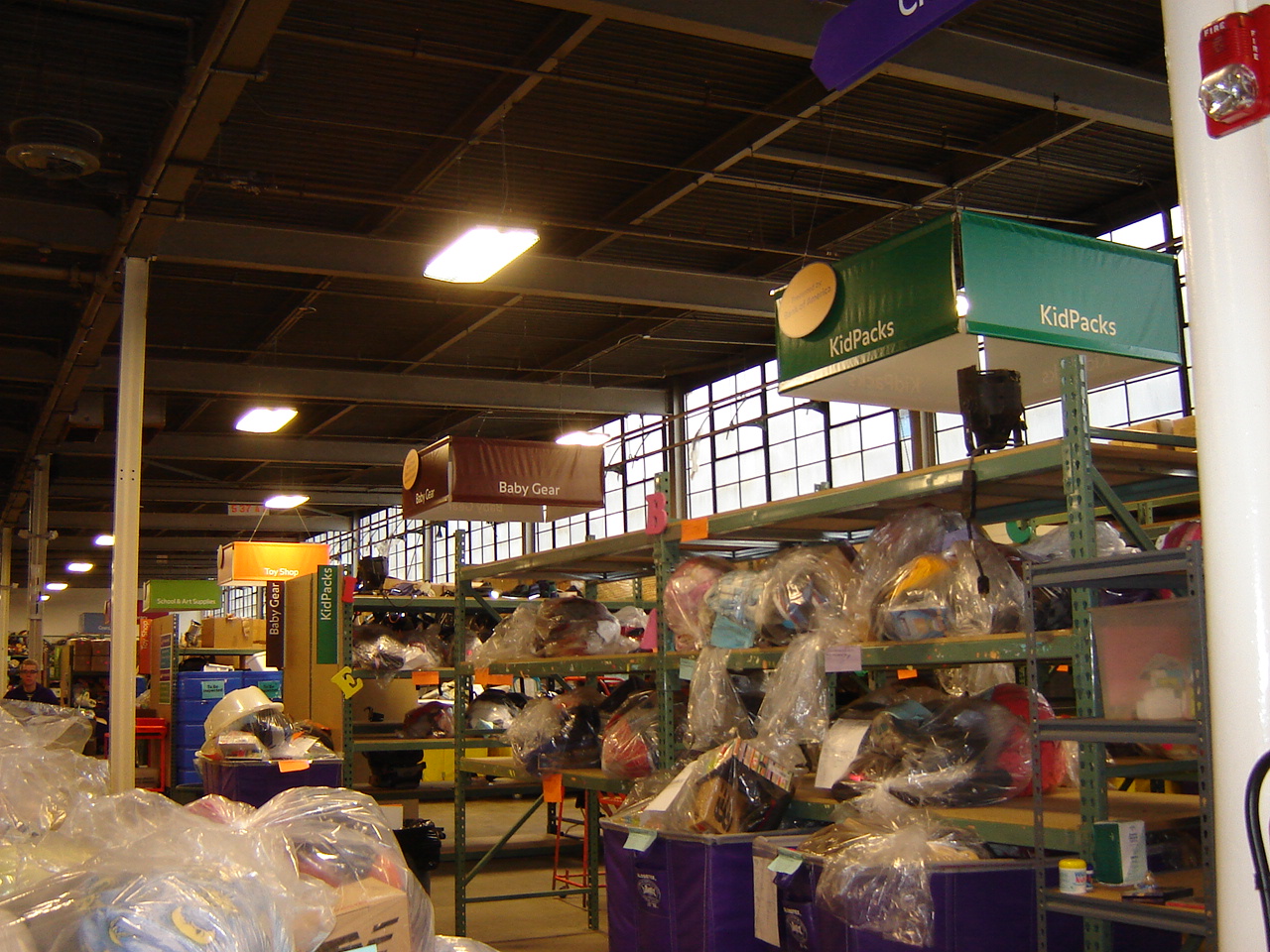
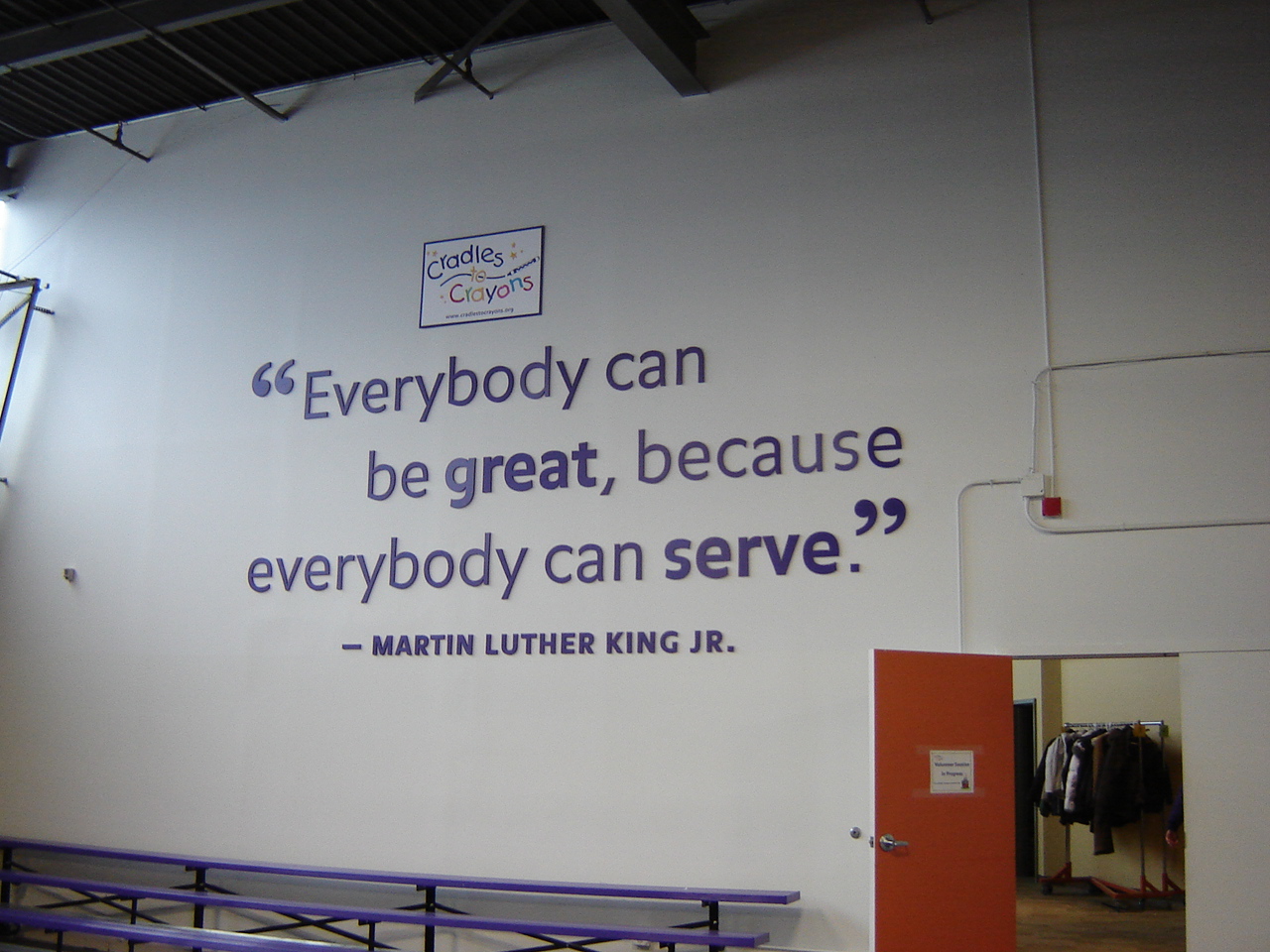
Today at work we had a holiday team-building outing to the nonprofit Cradles to Crayons. A lot of organizations bring employees to the group’s Giving Factory for their community service projects. Our team volunteered at the same time as Blue Cross Blue Shield and Bank of America.

First we watched a video about the history of the organization, which takes donations of clothes and equipment for children, sorts them, and fills orders for individual children at the request of social service agencies. The donations come from ordinary people and from partner corporations.

A group of us sorted donated coats. I was with the group that “shopped” among the warehouse shelves for bundles of sorted and age-labeled items, looking for the needs listed on individual order sheets. For example, we might have a sheet for a boy, age 4, that said “clothing pack, book bundle, craft packet, boots size 6, coat size 6.” It was very well organized. If we found that Cradles to Crayons was  out of something, the staff would fill the order anyway and invite the requesting agency to reapply for missing items. They like to provide whatever they can as fast as they can.

Cradles to Crayons says, “Our vision is that one day every child will have the essentials they need to feel safe, warm, ready to learn and valued. Through the Giving Factory, we provide those essentials, as donated clothes, shoes, books and school supplies to homeless and low-income children. We also offer meaningful volunteer opportunities to hundreds of corporations and thousands of individuals and families each year.”


Read Full Post »

In a Yes! magazine op-ed, reprinted in the Christian Science Monitor, Marc Freedman of Civic Ventures writes about his favorite topic: the potential of older Americans to contribute beyond retirement.

“With big thinking,” he writes, “there is a chance to tap the talents and experience of the ‘baby boom’ generation to solve longstanding social problems, from health care to homelessness, education to the environment. There is a chance to turn an older population into a new workforce for social change.

“Some people, like Gary Maxworthy, are leading the way … [Around age 60] he thought a lot about his old Peace Corps dream and the prospect of returning to it. In the end, he chose a more manageable domestic option, VISTA, part of the AmeriCorps national service program. VISTA placed Maxworthy at the San Francisco Food Bank, where he discovered that—like food banks throughout the state of California—it was primarily giving out canned and processed food. It was all they could reliably deliver without food spoiling.

“Maxworthy knew that California farmers were discarding tons of blemished but wholesome fruits and vegetables that were not up to supermarket standards. He launched Farm to Family, a program that in 2010 distributed more than 100 million pounds of fresh food to needy families in California.” Read more.

For those who are interested in “encore careers,” check out Encore.org, by Civic Ventures, “a nonprofit think tank on boomers, work and social purpose.”


Read Full Post »

I believe that people must take responsibility for their actions, that crimes should have punishments, and that every effort should be made to protect society from danger. But I don’t think society is protected if the place of punishment makes a person who committed a crime more angry and hostile than when she did it.

That’s why I like to post about the many kinds of volunteers who work with inmates to turn their hearts to better purposes. It may not always work, but it seems worth trying.

A while back, I blogged about one friend who works with ex-offenders through an organization called OWLL (On With Living and Learning: Jobs Skills for the 21st Century).

Now another friend has written about being accepted into a volunteer program at a low-level women’s prison near her home. The way this friend writes about her orientation, I can see the whole thing.

“I had a letter telling me not to bring a cell phone, smoking paraphernalia, medications, or sharp objects, and not to wear tight clothing, open-toed shoes, dangly earrings, or anything green or orange. … About half the volunteers were people of color and half were white. About a quarter spoke to one another in Spanish. More than half were middle-aged or older. One woman was in a wheelchair. So, it was a pretty diverse group. … There was lots of impressive high-tech security. There are lots of things we’re not allowed to do, like buy things for the inmates, or bring them messages. Or–and the volunteer handbook says this explicitly–help them escape or cover up an escape attempt.” (!)

Are touchy-feely prison programs all too naïve? Well, a highly skeptical prison warden at a Florida prison where there is a dance program admits that he came to see the benefit of women inmates having more-positive ways of expressing themselves:


Read Full Post »

« Newer Posts