Feeds:
Posts
Comments

Posts Tagged ‘waste’

Photo: Durrie Bouscaren/The World.
Inspired by Istanbul’s “deadstock” shops, OhSevenDays uses small batches of fabric to create womenswear. Designer Megan Mummery is pictured above inside OhSevenDays in Turkey.

According to public radio show The World, the textile industry generates an estimated 92 million tons of waste every year — equivalent to a garbage truck full of clothing every second. But today’s article suggests a way to give textiles a second life. 

The whole time I read this, I was picturing Cinderella’s little friends among the birds and mice turning the ugly sisters’ cast-off fabrics and ribbons into a gown for the ball. You remember the Disney Cinderella? I’m talking about the pretty gown the sisters destroyed, causing the Fairy Godmother to step in.

Durrie Bouscaren reports at The World, “In the backstreets of Istanbul’s garment districts, there are stores selling bolts and bolts of leftover fabric. …

“These 100-meter rolls of fabric, known as ‘deadstock,’ are the discards of Turkey’s largest clothing manufacturers. And to a growing cohort of designers, they hold the key to reducing waste in the fashion industry.  

“ ‘There are big manufacturers in Turkey that do production runs of 30,000 to 50,000 unit pieces. So, the precision in that production is something else,’ said Australian Canadian designer Megan Mummery.

“At that scale, fabric rolls with small tears, stains or other imperfections are immediately removed from the machines. And if a brand miscalculates and orders too many rolls of a specific fabric, it will end up with a surplus.

“In most cases, deadstock fabric rolls are incinerated or dropped off at a landfill. …

“ ‘It’s minuscule for them — one roll is 100 meters,’ Mummery told The World. ‘But for us, it’s gold.’

“Inspired by Istanbul’s deadstock shops, which she explored after moving to the city with her husband in 2015, Mummery began using smaller batches of fabric to create womenswear designs. She named her brand OhSevenDays — a reference to her earliest collections of only seven pieces at a time, and a play on the Turkish word ‘seven,’ for ‘one who loves.’  

“ ‘It was really slow at the beginning,’ Mummery said. … ‘And I remember, an influencer once wore a top and posted it, and we got like 20 orders in a day, and it was the most exciting thing ever!’ 

“Today, Mummery’s designs are a tasteful blend of classic neutrals and airy patterns. Signature bralette tops are paired with matching high-waisted skirts and summery cotton shorts, perfectly at home in the historic Istanbul apartments and garden balconies often featured in her photo shoots. A line of maternity clothes offers options for both the office and casual wear. 

“As with many small-scale sustainable brands, OhSevenDays’ price point is higher than that of major retailers. A popular blue patchwork Darcy dress is priced at $240, and a dark denim jumpsuit sells for $150. A breathable, white cotton maternity blouse is $124. …

“Turkey is among the world’s largest exporters of clothing, and a significant amount of deadstock fabric is available in the country, according to [Sibel Ege, an Istanbul-based fashion industry expert who runs a textile consultancy called REN Sourcing]. But few brands are incorporating it into their practices, and even fewer customers are aware of what it is. 

“ ‘After COVID, the customers became more aware of the importance of (sustainability), and started to pressure the brands,’ Ege said. ‘But if the customer doesn’t know what it means, it doesn’t make a value at the sales.’ 

“Mummery and her team work together out of a shared studio that is no larger than 700 square feet. A line of dresses hangs above the machines, while tailors measure, steam and cut fabric — making the pieces from start to finish.  That makes the work harder, but more interesting, said tailor Türker Pehlivan. 

” ‘It’s challenging,’ Pehlivan said. ‘But in the end, something beautiful comes out — and we’re happy because we made something beautiful.’

“[Mummery] has found ways to use the small size of OhSevenDays to her advantage.  Custom sizing can be done according to a shopper’s measurements at no extra charge, if fabric is available — the website notes. …

“Deadstock-sourced pieces are also popular among clothing subscription services, where subscribers receive a selection of clothes every month that can be kept or returned. This reduces the risk of disappointing customers if a popular item runs out quickly. …

“ ‘We say, you know, there might be a little color discrepancy between the products — and most of the boutiques love that actually,’ Mummery said. ‘Because when there’s a dress on the railing and two slightly different colors, they have a story to tell, even in the store.’ “

More at The World, here.

Read Full Post »

Photo: Tracy Nguyen for NPR.
In general, Hollywood cares little for the “circular economy,” but this helicopter at Beachwood Services, originally used in 
Black Hawk Down, has been repurposed in Terminator 4Suicide Squad and The A Team, among other movies and TV shows.

As I was working on a post in which actor Benedict Cumberbatch bemoaned the wastefulness of Hollywood, I ran across a contrary example. Apparently, some folks in that world care about the environment or maybe just see a buck to be made by repurposing sets.

A big part of Hollywood’s problem relates to being in a hurry and taking the easy way out.

First Cumberbatch at the Guardian.

Catherine Shoard writes, “Benedict Cumberbatch has called the Hollywood film industry ‘grossly wasteful,’ taking particular issue with its squandering of resources in the aid of set building, lighting – and bulking up physiques for blockbusters.

“ ‘It’s horrific eating beyond your appetite,’ Cumberbatch told Ruth Rogers on her food-focused podcast, Ruthie’s Table 4, adding that when he was shooting Marvel’s Doctor Strange, he would eat five meals a day. In addition, he would snack on boiled eggs, almonds and cheese, in order to try to ingest enough protein to transform his body.

“ ‘Going back to responsibility and resourcefulness and sustainability, it’s just like, “What am I doing? I could feed a family with the amount I’m eating,” ‘ Cumberbatch said.

“ ‘It’s a grossly wasteful industry,’ he continued. ‘Think about set builds that aren’t recycled, think about transport, think about food, think about housing, but also light and energy. The amount of wattage you need to create daylight and consistent light in a studio environment. It’s a lot of energy.’ “

So there’s that.

On the other hand, according to National Public Radio, “Beachwood Services, owned by Sony Pictures Entertainment, rents out sets and props for reuse that were originally built for its own productions.”

That spark of hope was reported by Chloe Veltman.

“For decades,” she says, “it was standard practice in Hollywood for art departments to build sets for movies and TV shows from scratch, and then break them down at the end of production and haul the pieces off to the landfill.

” ‘The dumpsters just line up at the end of the show,’ said veteran Hollywood art director Karen Steward of many productions she worked on, from the 1988 high school comedy Johnny Be Good, to the 2013 political action thriller Olympus Has Fallen. ‘And there’s no talking about it, because it’s time to get off the soundstage.’

“Steward is part of a group of like-minded Art Directors Guild members who have been pushing for more sustainable practices for years, along with other allies. At first, she said, it was hard at first to get much traction. ‘We’re all about not wasting time, and hurry up, and get it done, and time is money.’

“But Steward said things are becoming easier, as the industry is gradually coming to grips with its impact on human caused climate change. …

” ‘To find a true circular solution, a true zero waste idea, is what we’re working toward,’ she said.

“According to Earth Angel, an agency that helps productions in the U.S. and around the globe reduce their carbon footprints, the average TV show or movie in 2022 created about 240 tons of waste, with an estimated half of that amount coming from the disposal of props and sets.

” ‘There are definitely more innovative, efficient ways of working,’ said Earth Angel founder and CEO Emellie O’Brien. ‘

‘We often just don’t give people the space and the breathing room to uncover those solutions.’

“One such solution is to reuse old sets rather than always building new ones. Beachwood Services, owned by Sony Pictures Entertainment, rents out sets and props for reuse that were originally built for its own productions. Located in Santa Clarita, north of Los Angeles, its warehouses are packed with scenic gems. …

“Art directors sometimes resist the idea of reusing old sets, because they want to realize their own creative vision. But Sondra Garcia, Beachwood’s director of scenic operations, said the service allows them to alter what they rent to suit their needs.

” We tell people, “You’re going to put your own spin on it. You’re going to paint it. You’re going to reconfigure it. And then it is your design,” ‘ said Garcia. ‘The most important thing to remember is to recycle stuff because it’s less wasteful, and producers like it because it saves money.’

“And when those sets get too old to rent out to big-budget productions, they often wind up at places like EcoSet. Productions pay for the Los Angeles-based company to haul away their unwanted sets, props and construction materials. Instead of going to landfills, those treasures are then donated to whoever wants them. …

“But these solutions to Hollywood’s chronic waste problem only go so far.

“Ecoset’s owners don’t know what happens to all of the free stuff the business gives out — whether it’s recycled again or thrown away. Also, many warehouses around the region that used to keep old sets and props in circulation have downsized — Sony’s Beachwood Services formerly had five warehouses and now there are two — or have shuttered in the past couple of years, owing to rising real estate costs. …

” ‘I don’t think anyone in our industry would shy away from really hard challenges or else we wouldn’t be in our industry,’ said Everything Everywhere All at Once producer and sustainability champion Jonathan Wang. ‘But I do think it’s tricky.’

“Wang said despite people’s best intentions, a lot of materials still get thrown out in the rush to meet hectic production deadlines — including on his own sets.

” ‘I think it’s important to just acknowledge that we’re all figuring it out,’ Wang said. ‘We’re trying to do it better.’ “

More at NPR, here, and at the Guardian, here. No firewalls, but both those outlets need our support.

Read Full Post »

1280

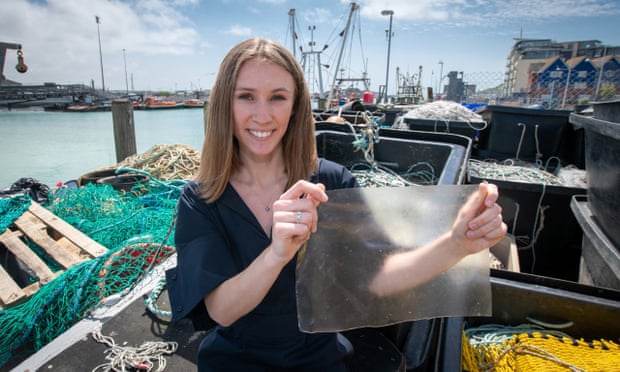
Photo: Dyson
Lucy Hughes, 23, a recent graduate in product design from the University of Sussex, is a James Dyson award winner for her biodegradable plastic made of fish scales.

Today’s story is a good example of how inventions can flow from recognition of a problem. For example, most of us now recognize that plastics are a problem. A recent design graduate took things a step further and did something about it.

Rebecca Smithers writes at the Guardian, “A bio-plastic made of organic fish waste that would otherwise end up in landfill, with the potential to replace plastic in everyday packaging, has landed its UK graduate designer a James Dyson award.

“Lucy Hughes, 23, a recent graduate in product design from the University of Sussex, sought to tackle the dual problems of environmentally harmful single-use plastics and inefficient waste streams by harnessing fish offcuts to create an eco-friendly plastic alternative.

“Her solution, a biodegradable and compostable material called MarinaTex, can break down in a soil environment in four to six weeks and be disposed of through home food waste collections.

“Hughes, from Twickenham, in south-west London, used red algae to bind proteins extracted from fish skins and scales, creating strong overlapping bonds in a translucent and flexible sheet material. Although it looks and feels like plastic, initial testing suggests it is stronger, safer and much more sustainable than its oil-based counterpart. …

“An estimated 492,020 tonnes of fish waste are produced by the fish processing industry every year in the UK and it is considered a huge and inefficient waste stream with low commercial value. …

“Through research carried out on the Sussex coast, Hughes found fish skins and scales were the most promising sources for the plastic alternative, due to their flexibility and strength-enabling proteins. A single Atlantic cod could generate the organic waste needed for 1,400 bags of MarinaTex, she found. …

“Hughes said, ‘It makes no sense to me that we’re using plastic, an incredibly durable material, for products that have a life cycle of less than a day. …

‘As creators, we should not limit ourselves to designing to just form and function, but rather form, function and footprint.’ …

“The award operates in 27 countries, and is open to university students and recent graduates studying product design, industrial design and engineering. It recognises and rewards imaginative design solutions to global problems.

“This year’s runners-up are an AI-enabled wearable device to help monitor asthmatic symptoms and predict triggers, designed by Anna Bernbaum, of the Dyson School of Engineering, in London, and solar panels which can be draped over backpacks or tents, invented by Bradley Brister, of Brunel University London.”

More here.

Read Full Post »

Photo: Sophia Evans for the Observer
The Maidment family in England are focused on making their daily lives as free of plastic as possible and spreading the word at Plastic-Free Hackney.

It seems like only yesterday that a guy in the 1967 movie The Graduate told Dustin Hoffman’s character that his future lay in plastics.

McGuire: There’s a great future in plastics. Think about it. Will you think about it?

Ah, yes. Plastics had a future, all right. In the blink of an eye, they have become a nightmare for the planet, refusing to disintegrate in landfills, clogging oceans, cluttering city streets.

There are many things made of plastic that we may always need. I’m thinking of certain medical uses. But what about all the things we use that really don’t need to be made of plastic. Can we make a dent in those? Here’s a family in England that’s trying.

Nosheen Iqbal reports at the Guardian, “Bettina Maidment … is the founder of Plastic Free Hackney, a campaign to rid the east London borough of single-use plastic and has been serious about committing her family to plastic-free, zero-waste living for two years now. First to go was milk cartons. ‘That was an easy switch, we got a milkman.’

“Then came bamboo toothbrushes, swapping out supermarket shopping for the local greengrocer, and making deodorant, cleanser, moisturiser and handsoap at home. She opens her fridge to reveal shelves of glass jars and reusable containers; her larder is stocked with lentils, pasta, porridge and the like, bought in bulk and stored in glass or canvas bags. …

“She is not alone. As public anger grows over the environmental impact of single-use plastic, trying to live plastic-free and more sustainably has become a mainstream concept.

“ ‘There was a huge uptick in the conversation after Blue Planet about how to reduce plastic use and it remains, by quite a margin, the single biggest topic area people call us for,’ says Julian Kirby, lead campaigner on plastics at Friends of the Earth. ‘In my experience, the amount of public concern for this environmental issue is unprecedented,’ he says. ‘It’s been phenomenal.’ …

“ ‘My interest was piqued online and I saw how other people were doing it and slowly started reducing my waste.’ She opened an Instagram account [@plasticfreehackney] to document the process of going plastic-free. …

“For Kiran Harrison, 43, who works as a massage therapist and storyteller in Worthing, West Sussex.the impetus to go plastic-free came around the time her son, now nine months, was born. She visited her local cloth nappy [diaper] library, where parents can loan reusable nappies, and gradually began swapping out the plastics in her home. …

“Support from a fast-growing zero-waste community in Sussex has also helped; a plastic-free, zero-waste food store has recently arrived in Worthing.

“ ‘Some people are cynical about how you can sustain a lifestyle like this,’ she admits, ‘or cynical about making a small contribution when big companies produce so much waste, but I’m not down with the “what’s the point of doing anything, we’re all doomed” brigade – it’s far too apathetic for my liking.’

Harrison’s top tip is to ‘do things gradually so they become a habit. Trying to do everything at once is overwhelming.’

“Friends of the Earth, which established a UK network in 1970, launched its #plasticfreefriday campaign [last] February. … According to a UN report published in June, the proportion of plastic waste that has never been recycled stands at 90.5% – a figure so alarming that it was declared the winning international statistic of 2018 by the Royal Statistical Society.

“Waleed Akhtar, an actor from London, … uses beeswax wraps rather than clingfilm for his sandwiches and carries a reusable water bottle, bamboo cutlery, Tupperware and a reusable bag everywhere he goes. … ‘I used to drink bottled water every day, but I did a play called Fracked!, and a monologue in it about the impact of water bottles on the environment kicked it all off for me.’ …

“THE STEPS YOU CAN TAKE …
“Use a reusable water bottle …
“Carry a reusable cup …
“Switch to solid soaps …
“Say no to disposable cutlery …
“Brush with bamboo.”

Some of these are super easy to do — like handing back plastic forks and spoons the takeout restaurant puts in your bag. More at the Guardian, here.

For past posts on this challenge, search SuzannesMomsBlog on the word plastic. A sample of articles: a bike path made of recycled plastic in the Netherlands, a plastic-eating microbe, a trash wheel that rounds up plastic on waterways.

This beeswax cling wrap is washable and reusable but quite expensive. I’ll let you know what I think after I’ve tried it.

Read Full Post »

Photo: Boston Area Gleaners

In September, I posted pictures at a community garden where a sign said not to pick anything that wasn’t yours. I expressed the hope that when the gardeners were completely finished with their harvest, gleaners for food pantries would be allowed in. I don’t know if they were, but I did learn that my church contacted Boston Area Gleaners to help collect fresh surplus produce at local farms.

Kathy Shiels Tully provides background on Boston Area Gleaners at the Christian Science Monitor.

“As a volunteer for the past four years with Boston Area Gleaners (BAG), which collects excess fresh produce at local farms for those in need, I’ve watched the nonprofit grow into something of a gleaning giant. …

“[Laurie ‘Duck’] Caldwell, the executive director of BAG, is pretty much responsible for the group’s, shall we say, mushrooming growth. Though she deflects any praise, her story shows how one person can have a powerful effect on an organization. Caldwell, in fact, was BAG’s first paid employee.

“She believes deeply in BAG’s mission of ‘rescuing’ surplus produce (as the group puts it). Last year, BAG helped deliver 1.45 million four-ounce servings to those who might not otherwise enjoy the benefits of fresh fruits and vegetables. …

“I learn that she is a carpenter with more than 20 years of experience. Her entry into nonprofits came while living in Vermont, through a program she helped pioneer at Vermont Works for Women. There, she taught incarcerated women skilled trades like carpentry and plumbing, and they built a modular home that was then sold as affordable housing. The pilot program gained national attention.”

Having lost her job after the 2008 financial crisis, “she searched for volunteering opportunities to buoy her spirits while job hunting and discovered BAG. …

“Gleaning gave Caldwell an emotional boost and challenged her to develop new skills. She and [founder Oakes] Plimpton became the organization’s first ‘gleaning coordinators’ – arranging farm visits, picking pantries to deliver to, and rounding up volunteers. …

“On Jan. 2, 2010, with salary money secured, that she signed on as BAG’s first employee.

“Caldwell dug into her new work immediately. She made the gleaning process easier for the farmers, proactively calling them instead of waiting for the farmers to speak up. She grew the solid list of 30 volunteers by recruiting like-minded people at farm, alternative energy, and ecology events. And, knowing she couldn’t do it alone, she almost doubled the size of the board of directors. …

“Strawberries, zucchini, corn, beans, carrots, tomatoes, kale, radishes, turnips, beets, squash, apples – everything but bananas fills empty, cardboard banana boxes, which are driven into Boston to a distribution partner such as the Greater Boston Food Bank or Food for Free in Cambridge, Mass.

“ ‘BAG is the Cadillac of food distribution to food pantries,’ says farmer Carl Hills. … Last year, he let BAG glean more than 71,000 pounds of produce on the 200-acre family farm. The crops gleaned are high-quality, the kind sought out by top chefs at high-end restaurants. ..

“Sasha Purpura, executive director of Food for Free … says, [it’s] “beautiful food” – something that for many people is out of reach.”

Read more and learn how to take action at the Christian Science Monitor, here.

Read Full Post »

One of the things I like about twitter is being exposed to stories I probably wouldn’t read about in the New York Times. This one is from a UK website called Foodism and highlights an effort to build businesses from food leftovers that might otherwise be wasted.

“It’s 4pm at Borough Market and the gaggle of children are elated, having spent the day growing, buying and selling market produce. Now trading time is over, and it’s time for their little stall to close, there’s only one question left.

” ‘What will you do with your leftover produce?’ asks development manager David Matchett, who runs the market’s Young Marketeers project for local schools. ‘We can make it into leftovers for tomorrow,’ pipes up one kid. ‘Or we can give it to people!’ ‘We give our food to my old auntie,’ shouts another.

” ‘I’ve been running this project five years,’ Matchett tells [Foodism reporter Clare Finney], ‘and not once in that time has a child ever suggested throwing the food away.’ ”

Other uses are found, Finney writes, giving a new heat source at home as an example.

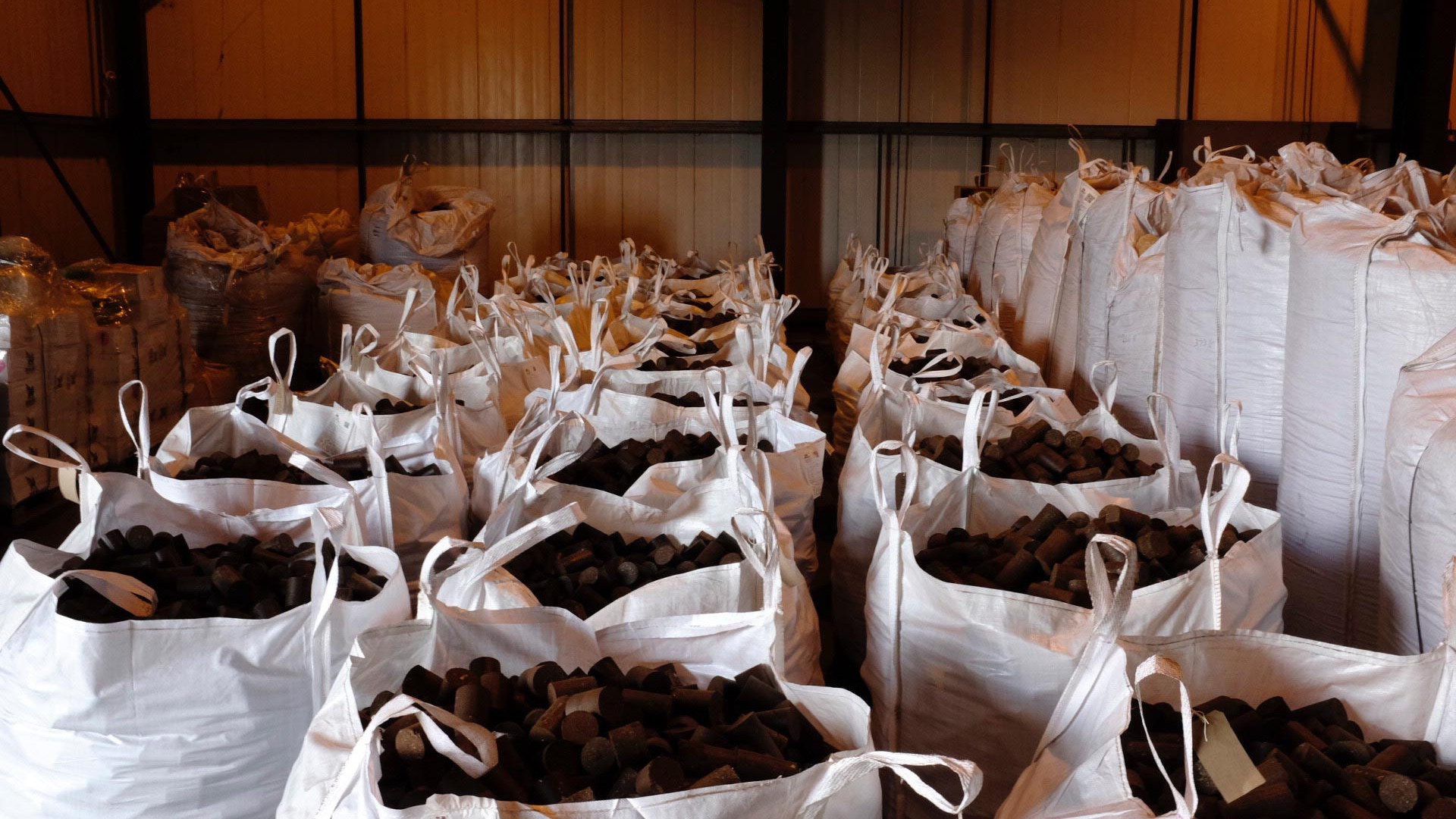
“The heat source is used coffee grounds, recycled by the innovative clean technology company Bio-bean into pellets for biomass boilers, biodiesel and briquettes for wood burners. …

“With its sharp branding, smart technology and simple but potentially revolutionary innovation, Bio-bean is irresistibly representative of the new generation of companies applying principles of modern business, as well as slick design, to an issue that can often appear stale and tasteless: wasted food. …

” ‘These are viable businesses,’ Kate Howell, director of development and communications at Borough Market, says of Bio-bean, and of those other companies turning food waste or surplus into consumables. Indeed, many of the biggest names in the world today actually started here with the market, which has provided a seedbed for sustainable businesses like Rubies in the Rubble, which makes a range of chutneys and sauces from supermarket rejects, Chegworth Valley of apple juice fame, and the street food stall selling meat from previously unwanted billy kids, Gourmet Goat.’ …

“A few months ago, [the grocery chain] Sainsbury’s launched a trial of banana breads made from bananas too bruised to sell in store, to enormous accolades. ‘Originally we estimated they would sell 1,000 loaves,’ says Paul Crew, director of sustainability at Sainsbury’s, with palpable excitement. ‘Customer feedback has been overwhelmingly positive and we’ve already sold 3,000, saving just as many bananas.’ ”

Hey, that’s what we all do with bruised bananas! Now you and I can claim to be trendy as well as thrifty.

Read the Foodism article here.

Photo: Foodism
Bio-bean turns used coffee grounds into pellets for biomass boilers, biodiesel and briquettes for wood burners.

Read Full Post »

A “funky, eco-friendly” shop in Providence, Small Point Café, serves wooden cutlery that can be recycled. The only problem is that if you do takeout and want to use the recycling bin at work, wood is not accepted.

Here’s an idea that could solve the problem of takeout-cutlery waste once and for all: utensils you can eat.

Brittany Levine Beckman writes at Mashable, “Tired of seeing mountains of plastic cutlery polluting India’s landfills, Narayana Peesapaty had an idea: What if you could eat your disposable spoon rather than toss it?

“Peesapaty, a researcher and agriculture consultant from Hyderabad, India, developed an edible spoon made of millet, rice and wheat flours, in 2010. Now, after selling 1.5 million spoons for his company Bakeys, he wants to reach even more eaters. Peesapaty knows that means he has to cut the cost of his products to compete with cheaper plastic counterparts. …

“Bakeys plans to use its successful Kickstarter campaign to improve production and expand the product line. Its ‘edible lunch spoon,’ which can last 20 minutes in hot liquid, comes in a variety of flavors: sugar, ginger-cinnamon, ginger-garlic, cumin, celery, black pepper, mint-ginger and carrot-beetroot. The spoons have a shelf life of two to three years.

” ‘You can eat it up. If you don’t want to eat it, you can throw it. It decomposes within four to five days,’ Peesapaty said in a promotional video that has been shared millions of times since posting on March 16. …

” ‘Plastic is very cheap, true. But I can make it as cheap,’ Peesapaty remarks confidently. ‘I can with volumes, and once I get the volumes, I [can go to] the farmers directly and start procuring raw material directly from the farmers, in which case my spoons will be as cheap as the plastic spoons.’ ”

More. Learn how to get a supply of your own.

Photo: Mashable
Edible cutlery is already reducing plastic waste and benefiting the environment.

Read Full Post »

You may recall a post I wrote about the Daily Table, which takes produce that would’ve been wasted and uses it to provide good meals at low cost.

Jennifer Medina writes at the NY Times that Imperfect Produce, a San Francisco Bay Area start-up, has also “been selling what it calls ‘cosmetically challenged’ fruit and vegetables. …

“Imperfect Produce delivers boxes of ugly fruit and vegetables to people’s doorsteps in the Bay Area. A large box of mixed produce — 17 to 20 pounds of fruits and vegetables, with five to eight types of items, depending on what is in season — costs $18, for example; a small box of fruit (10 to 15 pounds) costs $12 a week. [Chief supply officer Ron] Clark primarily relies on buying produce directly from California farmers …

“Ben Simon, the chief executive, and Ben Chesler, the chief operating officer, began their work on food waste as college students, when they saw trays of food from the campus cafeterias thrown out each night. Mr. Chesler and Mr. Simon created Food Recovery Network, which now has more than 100 colleges donating uneaten food to soup kitchens. …

“The pair met Mr. Clark, who had spent more than a decade working to bring produce that would have otherwise gone to waste to food banks across California. Using his relationship with suppliers, the three have created a business that has attracted attention from many of the tech luminaries in the region, including the design firm Ideo, which receives its own drop-off each week.” More here.

Photo: Jim Wilson/The New York Times  
Imperfect Produce, a San Francisco Bay Area start-up, specializes in produce that is misshapen or cosmetically deficient but otherwise perfectly edible. 

Read Full Post »

It was KerryCan who told me about a Canadian who supports himself on things other people throw out.

As he explains at his blog Things I Find in the Garbage, “I’m a professional scavenger and entrepreneur making a living selling curbside garbage. This blog details my finds and sales. It also acts as an archive for things beautiful and historic that would otherwise have been destroyed.” Each week he tells us how much he made on selling the castoffs.

Today he has a long post that includes: “My favourite find since last post came totally by accident. I was out walking to a friend’s house in the Mile End on Saturday and came across this stuff on Clark. It had been raining heavily. This trunk caught my eye immediately. It was beautiful and I wanted it bad – I just had to make sure there weren’t any bugs involved in its tossing.

“Fortunately, while I doing an inspection a pizza delivery guy came and rang the bell of the house. After the transaction was completed I asked the person who lived there if they were throwing out the trunk, and if it was good to take. He told me he was moving and he didn’t have any use for it, which is what I expected given the “for sale” sign in front of his house and the delivered pizza (classic moving food!). I called my friend and she helped me get it home.

“It’s a really great piece. It was made from cedar by the Honderich Furniture Company of Milverton Ontario, likely in the 30s or 40s. It has the usual trunk space but also a shelf at the bottom. There’s a few small cosmetic issues but overall it’s in amazing condition. If I were to sell it I imagine I could get at least 200, maybe even 300 dollars for it, but since it’s so useful for storage I’m going to keep it myself.” More here.

It’s a lot of work to sell things that aren’t wanted anymore. Last summer, I sold a Singer sewing machine from the 1950s on eBay, and I can’t imagine doing that for everything that I no longer use. Too time consuming. My cousin Margot sells on eBay so often she doesn’t seem to mind it. She even sells things for friends. The Canadian “garbage picker” appears to have a variety of sales outlets, including his blog.

Read Full Post »

A couple years ago I asked someone who organizes gleaners in Vermont to write an article for the place that I work. Gleaning was new to me then, but now I read about it often.

The idea is that volunteers are invited into farms after a harvest to pick the perfectly good remnants that would otherwise be plowed under. The excess produce is then handed over to food banks at peak of freshness.

Kathy Shiels Tully wrote for the Globe today about one gleaning effort.

“Founded in 2004 by Arlington resident Oakes Plimpton, Boston Area Gleaners organizes volunteers, sometimes on only one to two days’ notice.

“Timeliness is important, said Emma Keough, market and food access manager at Brookwood Community Farm.

“ ‘It’s really critical people show up … We’re growing really intensively, so there’s only a small window to pick excess crops in order to give us time to turn over the land and plant a new crop.’ …

“Todd Kaplan of Somerville signed on four years ago after hearing about Boston Area Gleaners ‘through the grapevine.’

“Averaging a dozen gleaning sessions a year, Kaplan, a legal aid attorney at Greater Boston Legal Services, has gleaned mostly on farms west of Boston — Dick’s Market Garden in Lunenburg, where he’s picked kale, tomatoes, and green peppers; Kimball Fruit Farm in Pepperell, which has offered the group first pick of apples; and the Food Project Farm in Lincoln.

“The gleaning nonprofit ‘moves an inordinate amount of food that would otherwise go to waste into the hands of people who really need it,’ Kaplan said.

“Lynn Langton, a North Andover resident, says her immediate reaction to learning about gleaning in a newspaper article three years ago was ‘I want to do that!’ … It’s such a high-quality, fresh product. It’s unbelievable.’ ”

More here.

Photo: John Blanding/Globe Staff
The Boston Area Gleaners program organizes volunteers. to pick excess crops from farms and donate them to food banks for distribution. Matt Crawford is the group’s coordinator.

Read Full Post »

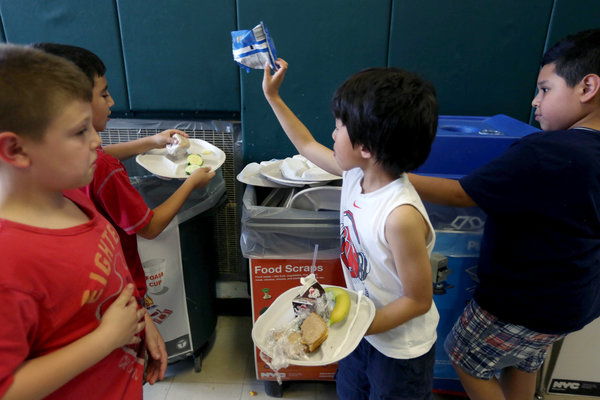
Discouraging as it is to read that many children won’t eat the healthful food schools are now providing, I take heart that at least they are learning to compost.

Al Baker writes at the NY Times, “The sad voyage of fruits and vegetables from lunch lady to landfill has frustrated parents, nutritionists and environmentalists for decades. Children are still as picky and wasteful as ever, but at least there is now a happier ending — that banana-filled bin is a composting container, part of a growing effort to shrink the mountains of perfectly good food being hauled away to trash heaps every year.

“New York City’s school composting program, kicked off just two years ago by parents on the Upper West Side, is now in 230 school buildings in Manhattan, Brooklyn and Staten Island, and is expected to more than double in size and reach all five boroughs in the fall, with an ultimate goal of encompassing all 1,300-plus school buildings. …

“The hope is that by building up composting in school, the city will help the environment, instill a sense of conservation in schoolchildren and, critically, save some money. The city paid $93 per ton in 2013 to dump in landfills, up from $68 in 2004. Composting saves the city $10 to $50 per ton, because the cost is offset by the sale of the end product, according to the Sanitation Department.” More here.

I tend to think kids will eventually eat something nourishing if that’s what’s available and they’re hungry. All I know is my kids eat everything now that they are grown-ups. (Still laughing that John came home from college and said, “How come you never told me I like mushrooms?”)

Photo: Hiroko Masuike/The New York Times

Read Full Post »

Here’s an interesting thought for harvest time.

In the NY Times, T. Lynne Pixley writes about Kelly Callahan and other Atlanta residents who forage for food among the many neglected, foreclosed properties in their neighborhoods.

Walking her dog in her neighborhood, Callahan saw “plenty of empty, bank-owned properties for sale.”

She also noticed that the “forlorn yards were peppered with overgrown gardens and big fruit trees, all bulging with the kind of bounty that comes from the high heat and afternoon thunderstorms that have defined Atlanta’s summer. So she began picking. First, there was a load of figs, which she intends to make into jam for a cafe that feeds homeless people. Then, for herself, she got five pounds of tomatoes, two kinds of squash and — the real prize — a Sugar Baby watermelon.” Others have joined in. Read more here.

I was interested to learn about “foraging” in Atlanta because I had recently read about a related activity in Vermont, called “gleaning.” Gleaning is a bit more out in the open. Farmers who are finished harvesting their crops give permission to gleaners, usually volunteers, to pick over what’s left and take it to families in need and to food pantries. One group engaged in this effort is the Addison County Gleaning Program. Read about it here.

It turns out that there is a lot of food that would otherwise go to waste. So it seems good that the food benefits someone.

Read Full Post »