Feeds:
Posts
Comments

Archive for July, 2014

Sweden has taken in a lot of refugees from troubled countries, but like the U.S., it sometimes struggles to find the best approach for absorbing the influx.

At the NY Times, Suzanne Daley writes about one Swede who may have found an important way to speed integration, a way that enriches the experience of Swedes and newcomers alike.

“Last year, when Ebba Akerman, 31, was teaching Swedish to immigrants in the suburbs of this city, she ran into one of her students on the train and asked him whether he enjoyed living in her country.

“She found the answer deeply disturbing. The man shrugged, saying his life here was not much different from the one he had left behind in Afghanistan. It became clear to her that most of her students, living in neighborhoods packed with immigrants, had virtually no contact with native Swedes.

“In the months that followed, Ms. Akerman decided to try to change that, calling herself the minister of dinners in charge of the Department of Invitations and using Facebook and Instagram to try to bring individual Swedes and immigrants together for a meal, something like a dating service.

“ ‘We let people into our country, but not into our society,’ Ms. Akerman said on a recent Friday night. … ‘I finally decided that I had to do something. I could be the connector.’ …

“On a recent evening, Ms. Akerman was feeding about a dozen people, including a middle-aged couple from Bangladesh who had brought a chicken dish, a recent arrival from Cameroon with her two children, a Swedish marketing expert, the mother of one of Ms. Akerman’s friends and a young Swedish doctor in training, all of whom had been early participants in her project. All told stories of good times and miscues.

“The marketing expert, Henrik Evrell, said he had served spaghetti Bolognese, the most Swedish dish he knew, to his guest from Ivory Coast. At first they had trouble communicating because his guest’s Swedish was so poor. But soon they discovered that they both spoke French and loved the same Ivory Coast musicians. After eating, they spent the rest of the evening in front of a computer, taking turns pulling up music on Spotify that each thought the other would like.” More here.

Photo: Casper Hedberg for The New York Times
Ebba Akerman set a table on her backyard for a meal that brought Swedes and immigrants together. 

Read Full Post »

Who can resist a playful idea, especially one that comes from civil engineers, a cohort perhaps given too little credit for creativity.

Corey Kilgannon writes in the NY Times, that a beloved pastime among civil engineers is racing concrete canoes.

“It might sound like an idea that would go over like the proverbial lead balloon, but in September, a group of engineering students at City College of New York began meeting and devising a way to build a concrete canoe.

“ ‘When I heard that, my response was like: “What? A boat made of concrete?” ‘ said Dr. Friso Postma, an expert paddler from Brooklyn, who had not heard of such a thing until he was asked to coach the team this spring, once the canoe was finished.

“Team members reassured him that while they were building the canoe over the winter, in a workshop at City College, they had made certain that the vessel would float. After all, they told Mr. Postma, the primary rule in concrete canoe competitions — yes, there are such events — is paddling a boat that does not sink.

“They also told him that concrete canoeing has a rich tradition among civil engineers, and at City College, whose teams go back to at least the 1970s.

“ ‘It’s a huge thing within the civil engineering program,’ said Juan-Carlos Quintana, 29, a team member. ‘We take it very seriously.’ ”

More here.

Photo: Kirsten Luce for the New York Times
Esther Dornhelm, left, and Fidan Mamedova practice at Paerdegat Basin in Brooklyn for this weekend’s national concrete canoe championships.

Read Full Post »

In case you missed it, there’s a new movie about using elderly people’s favorite music to call them back from dementia or Alzheimer’s.

The website for Alive Inside: A Story of Music and Memory says the movie is an “exploration of music’s capacity to reawaken our souls and uncover the deepest parts of our humanity. Filmmaker Michael Rossato-Bennett chronicles the astonishing experiences of individuals around the country who have been revitalized through the simple experience of listening to music.”

The documentary follows “social worker Dan Cohen, founder of the nonprofit organization Music & Memory, as he fights against a broken healthcare system to demonstrate music’s ability to combat memory loss and restore a deep sense of self to those suffering from it. Rossato-Bennett visits family members who have witnessed the miraculous effects of personalized music on their loved ones, and offers illuminating interviews with experts including renowned neurologist and best-selling author Oliver Sacks (Musicophilia: Tales of Music and the Brain) and musician Bobby McFerrin (‘Don’t Worry, Be Happy’).”

At the Washington Post, Michael Sullivan writes, “The benefits of music to enliven and awaken the senses are not limited to those with dementia. ‘Alive Inside’ also focuses on a woman who suffers from schizophrenia and bipolar disorder, and on a man with multiple sclerosis. The scenes in which they and others are shown listening to music that has personal meaning are absolutely joyous, but they also might move you to tears.

“As the movie makes clear, none of these conditions are reversible. Music isn’t a cure for anything. But it does seem to be a key to unlocking long-closed doors and establishing connections with people who have become, through age or infirmity, imprisoned inside themselves.” More.

Hmmm. It seems that in addition to making wills, we should all be writing lists of the music that we have enjoyed in our lives so that people know what to play. Should I go with “Swan Lake” and “The New World Symphony” or “For the Beauty of the Earth” and “Mary’s Boychild”? Or how about the Platters and Elvis and Nina Simone and Edif Piaf or musicals like Nine and Chess. Anything in a minor key.

I haven’t even scratched the surface.

Read Full Post »

discussing-finances

I’m not much of a world traveler although I always enjoy new places once I get there. I feel sufficiently challenged, though, just trying to see what is in front of me and delving into meanings.

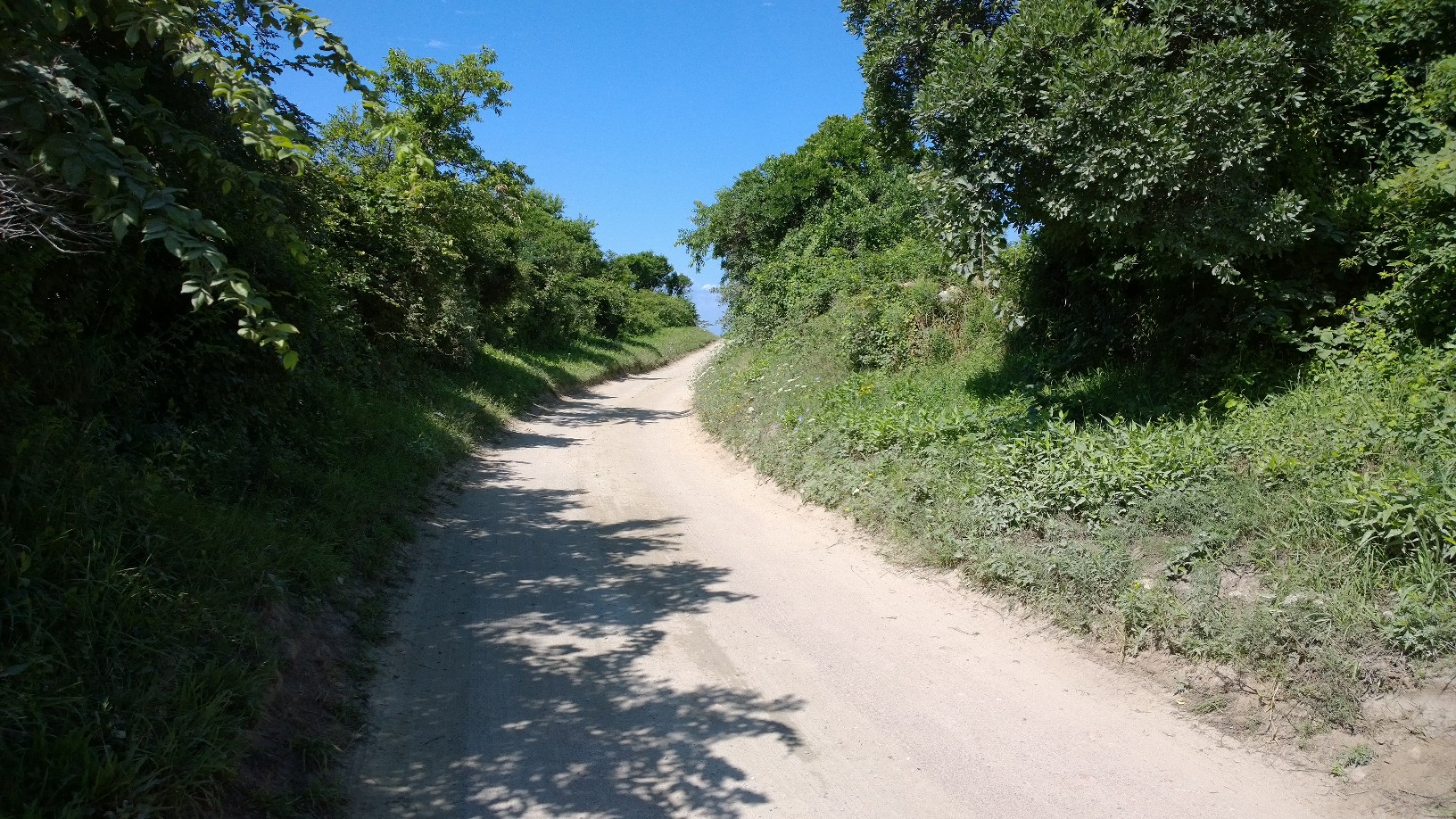
I overheard two men who were walking in a shade-dappled lane this morning. They were discussing “operations” and the “lowest cost per month” and were consulting a smartphone. I’m not sure they saw much in front of them.

Not to be superior, I miss things, too. How many times have I come up out of the Porter Square subway station to cross the street and not noticed the bollards with the mysterious carvings? I’ve pasted three samples below.

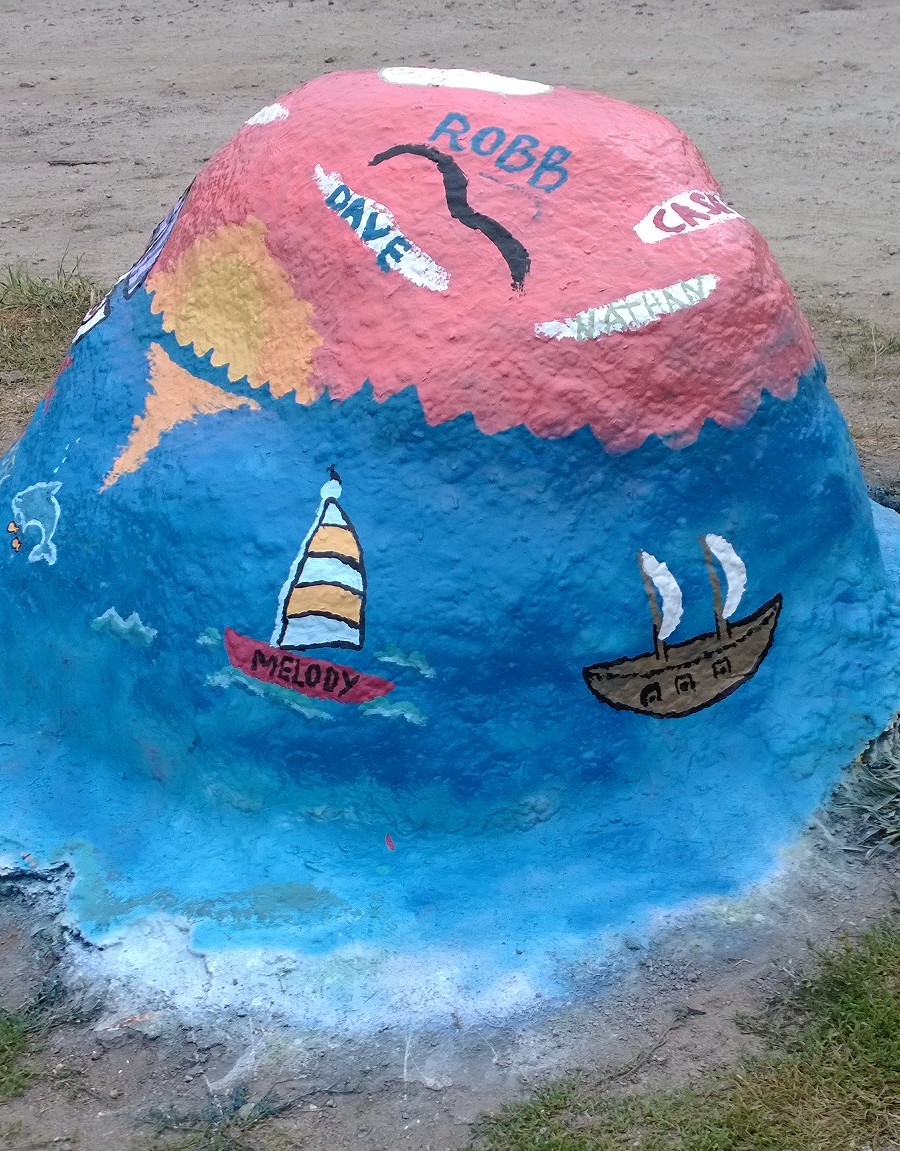
A few more photos. Two sides of an especially nice paint job on the Painted Rock. A whole family brought their beach chairs and drinks to watch the artists among them paint the sunset, boats, and sea creatures and then photograph the art before someone painted over it with new messages. Which happened in a couple hours and involved much less style. But that’s OK — the rock is the billboard of pure democracy.

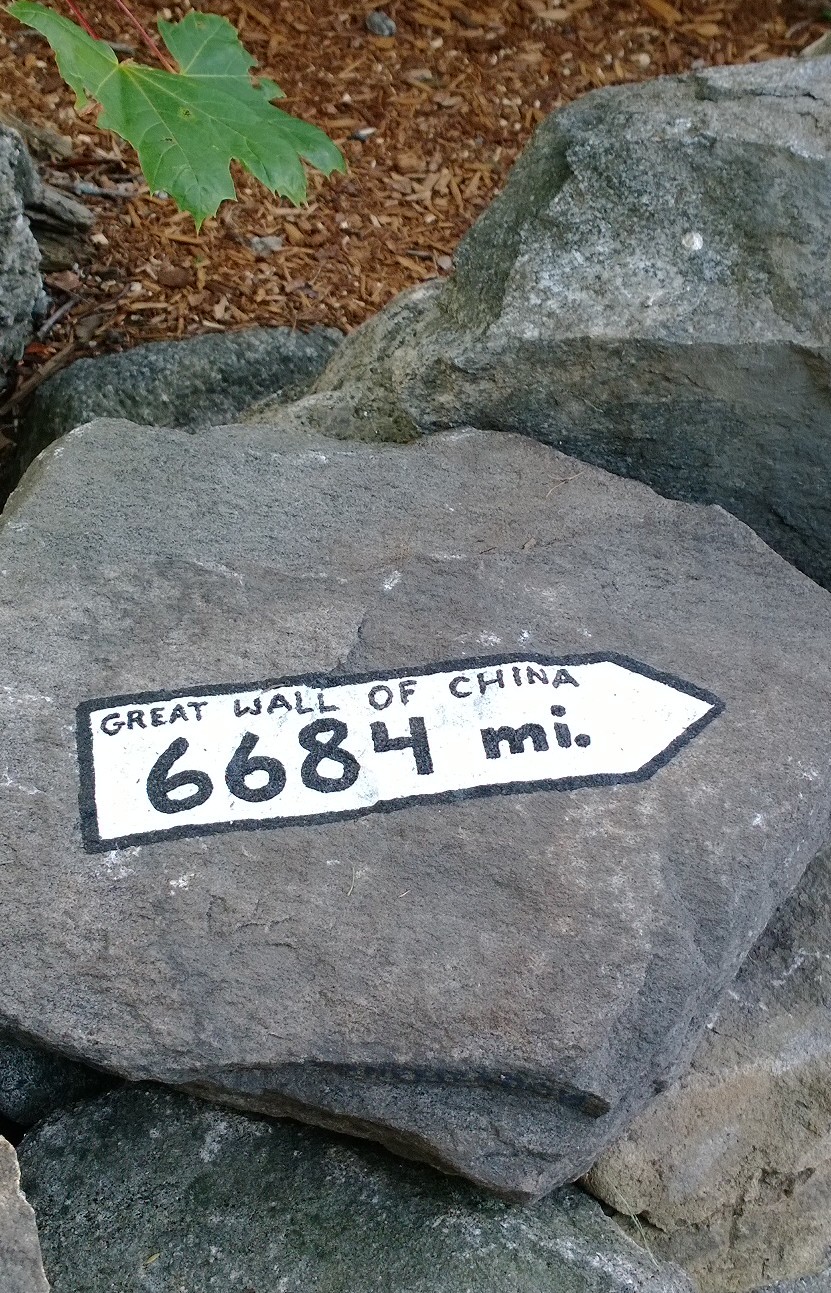
On another rock, one I had never noticed until early Saturday, please note directions to China.

Circling back to the “lowest cost” guys, when I got to the bend in the lane, they were gone. I was walking so much slower than they were.

mysterious-carving-3

mysterious-carving-2


mysterious-carving-1

direction-to-china


rock-with-octopus

rock-with-sunset


RI-summer-lane

Read Full Post »

My WordPress stats indicated that someone from the Åland Islands clicked on this blog today, and I said to myself, “Where are the Åland Islands?”

Naturally, Wikipedia had an answer. They are between Sweden and Finland.

They are “an autonomous, demilitarised, monolingually Swedish-speaking region of Finland that consists of an archipelago lying at the entrance to the Gulf of Bothnia in the Baltic Sea. …

“Åland comprises Fasta Åland (“Main Island”, on which 90% of the population resides) and a further 6,500 skerries and islands to its east. Fasta Åland is separated from the coast of Sweden by 38 kilometres (24 mi) of open water to the west. In the east, the Åland archipelago is contiguous with the Finnish Archipelago Sea. Åland’s only land border is located on the uninhabited skerry of Märket, which it shares with Sweden.

“Åland’s autonomous status means that those provincial powers normally exercised by representatives of the central Finnish government are largely exercised by its own government.” More here.

What brought a reader from that part of the world to Suzanne’s Mom’s Blog? Was it the same person who (according to WordPress stats) searched on the word “lusthus”? A reasonable guess. Here are my pictures of Margareta and Jimmy’s lusthus, or gazebo, when Suzanne and Erik were visiting in Sweden.

I wonder if the reader from the Åland Islands is there on vacation right now or lives there all year ’round. And if you live there all year ’round, what kind of job can you have there?

Map from Wikipedia

Read Full Post »

In a recent NY Times article, art critic Holland Cotter expressed skepticism that a show of new artists lumped together as “Arab” could work. (Some artists declined to participate for the same  reason.)  The artists in the New Museum exhibit are from “Egypt, Iraq, Jordan, Kuwait, Lebanon, Morocco, Saudi Arabia, Syria, Tunisia and the United Arab Emirates, not to mention Europe and the United States.”

But in the end, he was thrilled with the opportunity to see the new works.

“It’s a big show, intricately pieced together on all five floors of the museum, and starts on the street-level facade with a large-scale photograph of an ultra-plush Abu Dhabi hotel. The image was installed by the cosmopolitan collective called GCC, made up of eight artists scattered from Dubai to London and New York who make it their business to focus on the preposterous wealth concentrated in a few hands in a few oil-rich countries on the Persian Gulf.”

Cotter goes on to describe many of the pieces in detail, here, and concludes with some advice for visitors.

“To appreciate this show fully, a little homework can’t hurt. But really all you need to do is be willing to linger, read labels and let not-knowing be a form of bliss. In return, you’ll get wonderful artists, deep ideas, fabulous stories and the chance, still too seldom offered by our museums, to be a global citizen. Don’t pass it up.”

The show will be up until September 28.

Photo: Ruth Fremson/The New York Times

“Here and Elsewhere” show at the New Museum

Read Full Post »

Years ago, when I was expecting, I learned the baby would be a girl. My husband and I went right out and bought a beautiful dollhouse built by a teenage boy we read about in the local paper.

Recently, Nancy Shohet West wrote in the Boston Globe about a new dollhouse show. My husband said, “If you go, see if you can find someone who can repair dollhouses.” (Suzanne’s needs a face lift.)

But we didn’t read the article carefully. The show featured art works from artists contemplating the resonance of “dollhouse.”

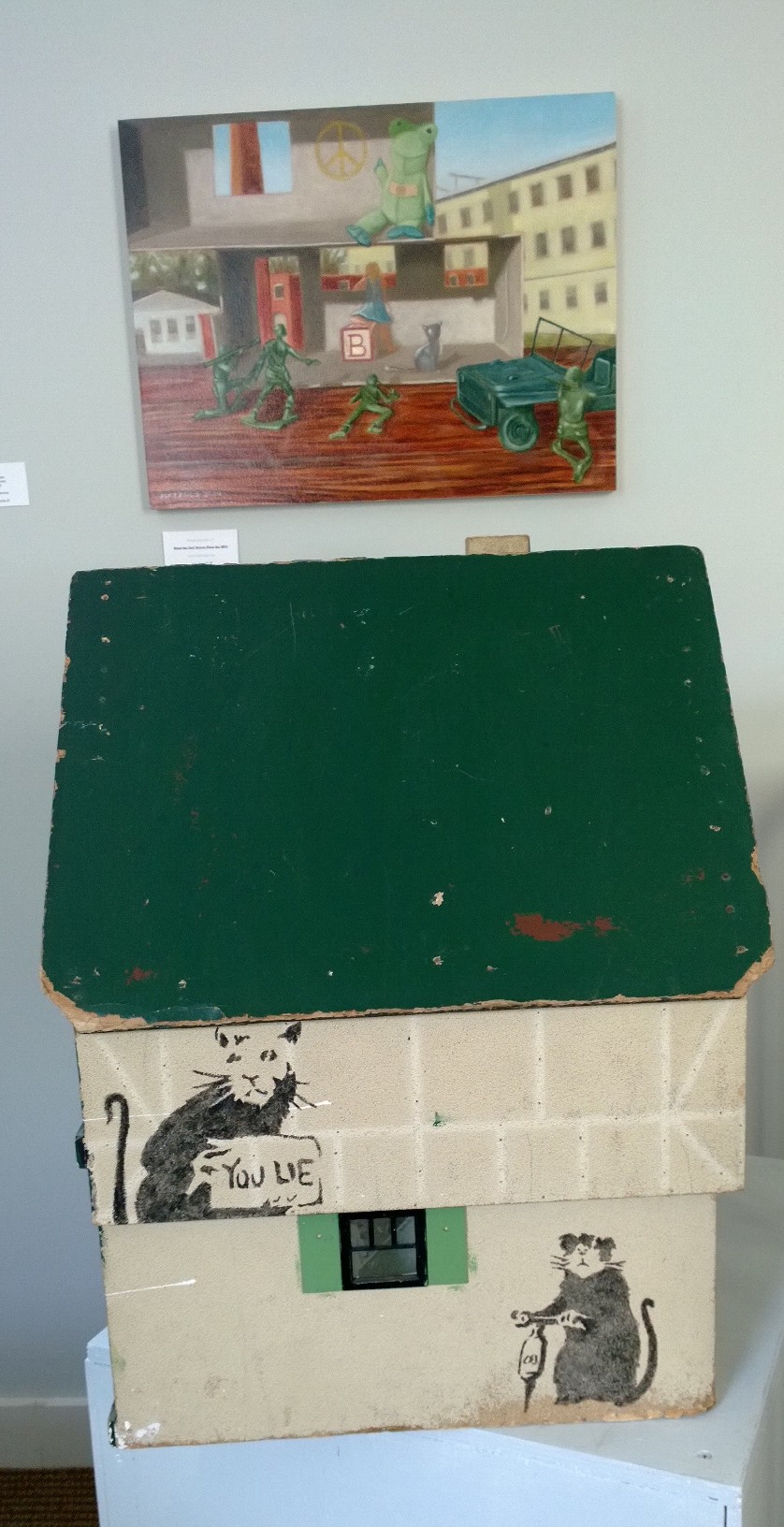
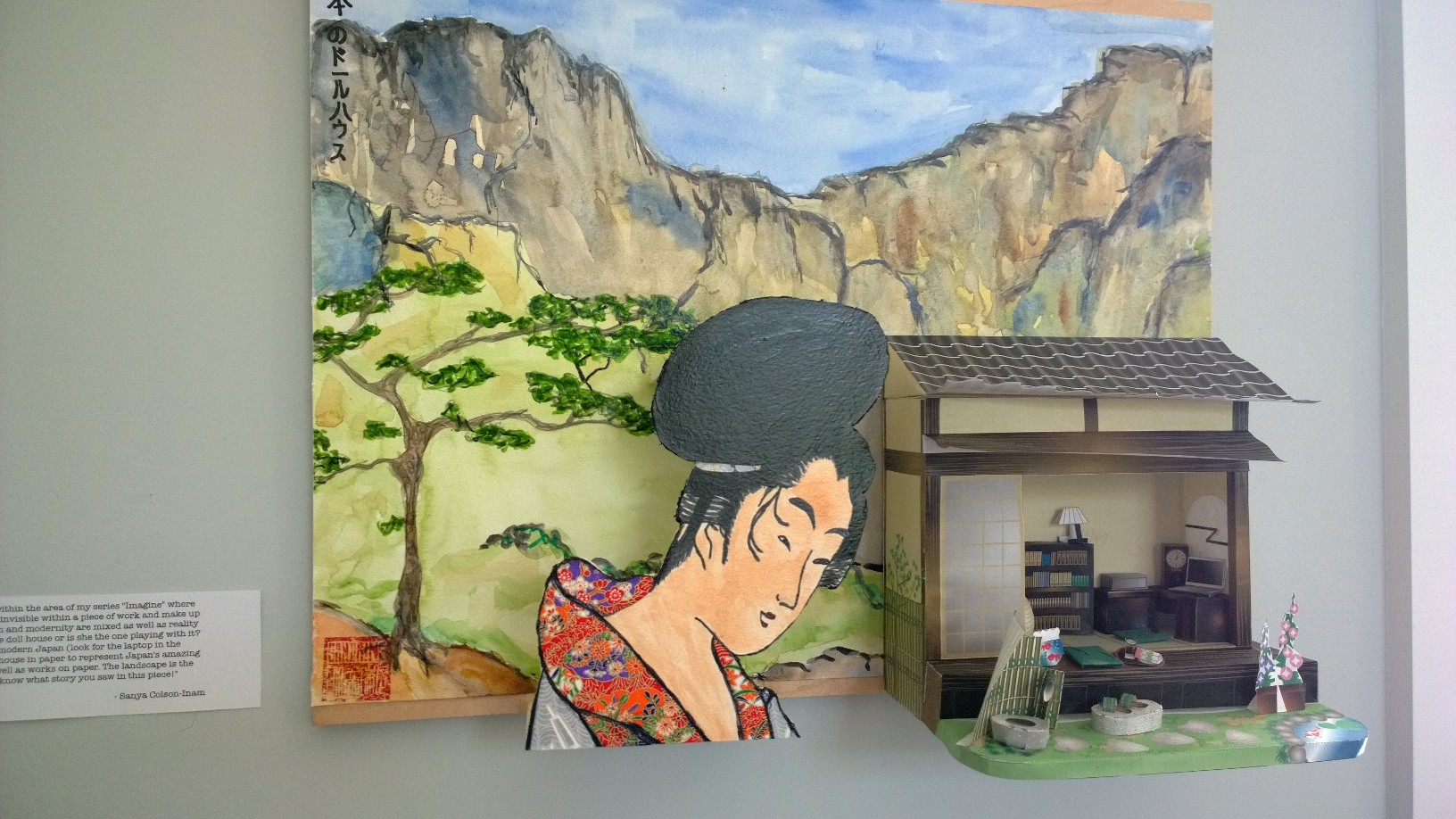
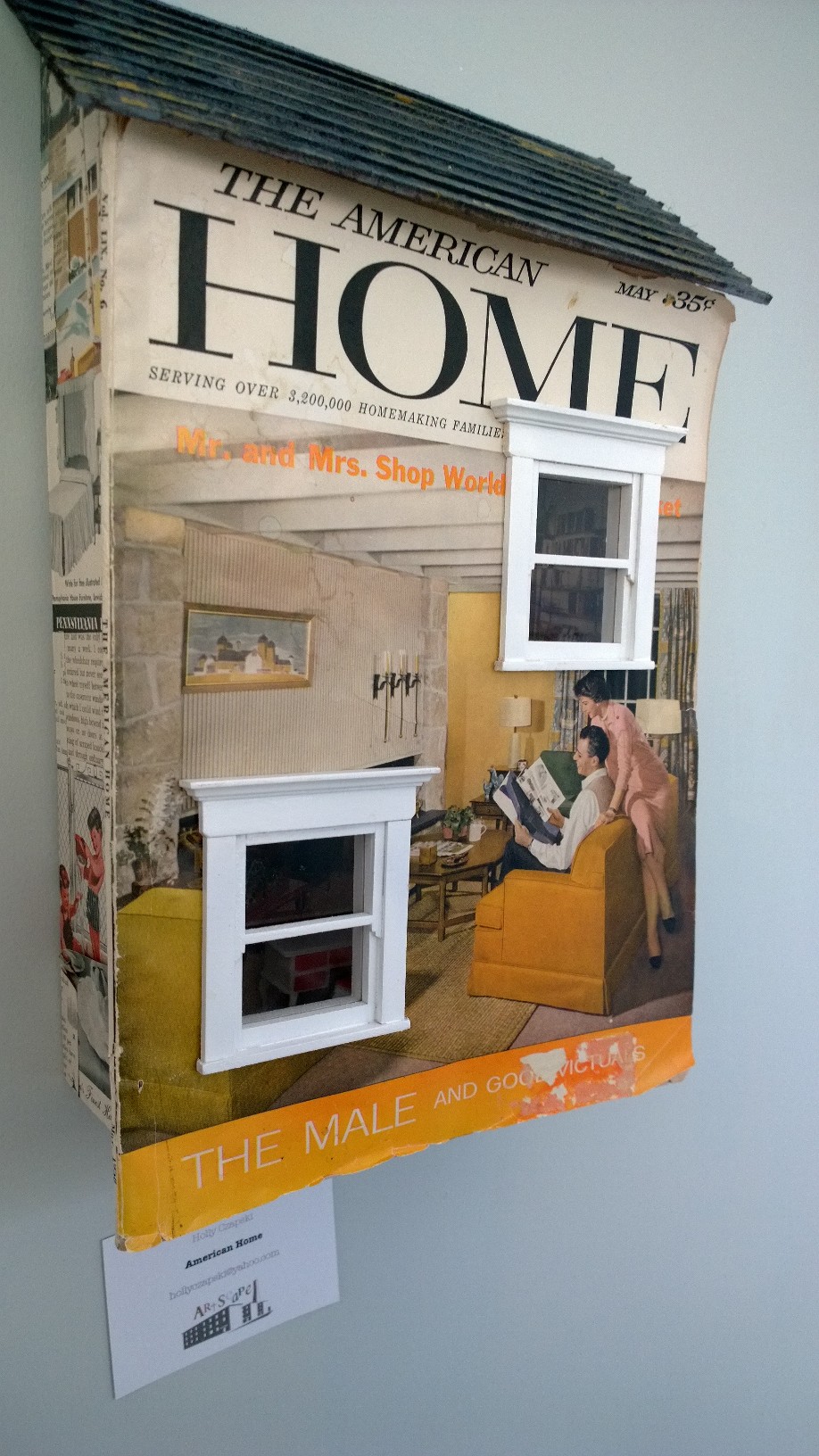
Note the foreclosed house with a Banksy on an exterior wall (above it, the only entry by a male artist, with tiny soldiers), the Japanese-inspired house, and the 1950s domestic fantasy house, below. It was a fine show, but I didn’t find anyone to repair Suzanne’s dollhouse.

The exhibit was in a renovated warehouse where artists have studios and where there also is shared space for entrepreneurs. The business space is called the Wheelhouse, and it features a common area for eating and relaxing, small offices with names on glass doors, small conference rooms — and lots of art.

I was surprised. The last time my husband and I were in that building we were taking a stretch class with a classmate of Suzanne’s, and the Bradford Mill was so rickety one expected the staircase to collapse at any moment. Times change.

The dollhouse show is up until August 28. Read more about it here.

dollhouse-with-a-Banksy


Japanese-dollhouse


1950s-domestic-fantasy

Read Full Post »

I have blogged before about the Little Free Library movement (for example, here), and I have sometimes wondered if everyone uses the libraries as intended, taking a book and returning it or contributing another.

Today John sent this link from BookRiot.com. A woman who sponsors a Little Free Library, Swapna Krishna, is stamping all her books with a message that folks should play by the rules.

She writes, “One thing I started doing a month ago (and I’m very glad of now) is that I ordered a custom stamp for my library and started stamping the books I put out. It doesn’t require that the person return the book (and honestly, I don’t care whether they do or not), but it does tell a used bookstore or library that they really shouldn’t be buying that book or accepting it for donation. And I hope that if something like this happens, they’ll make their way back to me eventually.

“I purchased the stamp off Etsy from TailorMadeStamps. They were easy to work with and did a pretty awesome job in not much time!” The stamp is below, with her address blotted out for the Internet.

I love the idea of TailorMadeStamps and can think of a number of stamp messages that might come in handy. How about this variation on an old friend’s rejection to rejection slips: “Thank you for your recent scam letter about reducing my debts. I’m obliged to inform you that it does not meet my needs at the current time. However, I have forwarded it the attorney general, who may have a use for it.”

On second thought, that might be a little too long for a stamp — and expensive. How about “Just returning your unsolicited credit card account offer in this unstamped envelope”?

Read Full Post »

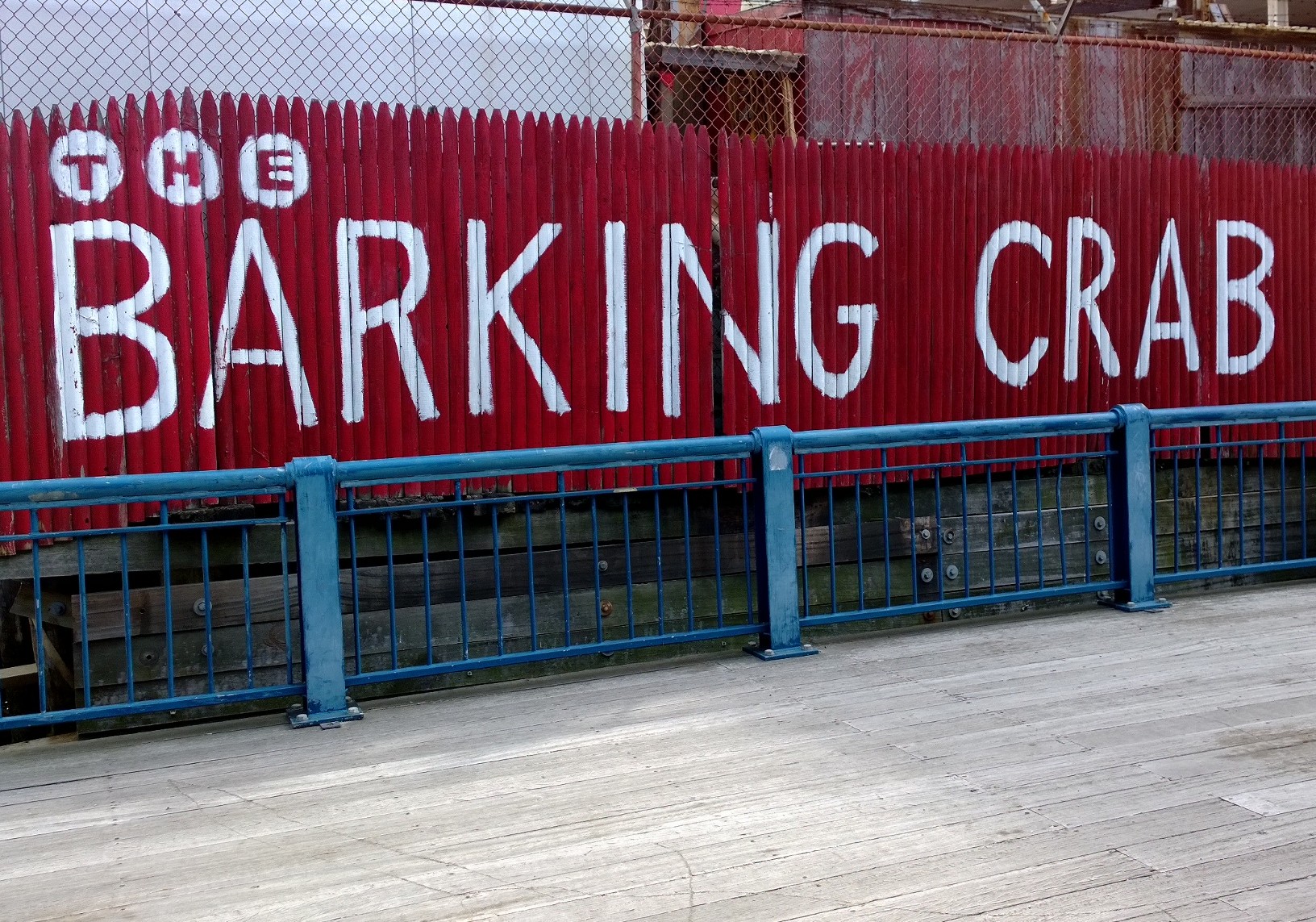
The Barking Crab is watching one of many new Seaport buildings go up on its doorstep but wants you to know it is still around and serving seafood.

I was going to use the Barking Crab’s new fence to write a philosophical post with a title like “Nothing is Constant but Change.” Unfortunately, after a couple months, I still couldn’t think of anything philosophical to say and gave up. So here are some more random shots from my peregrinations.

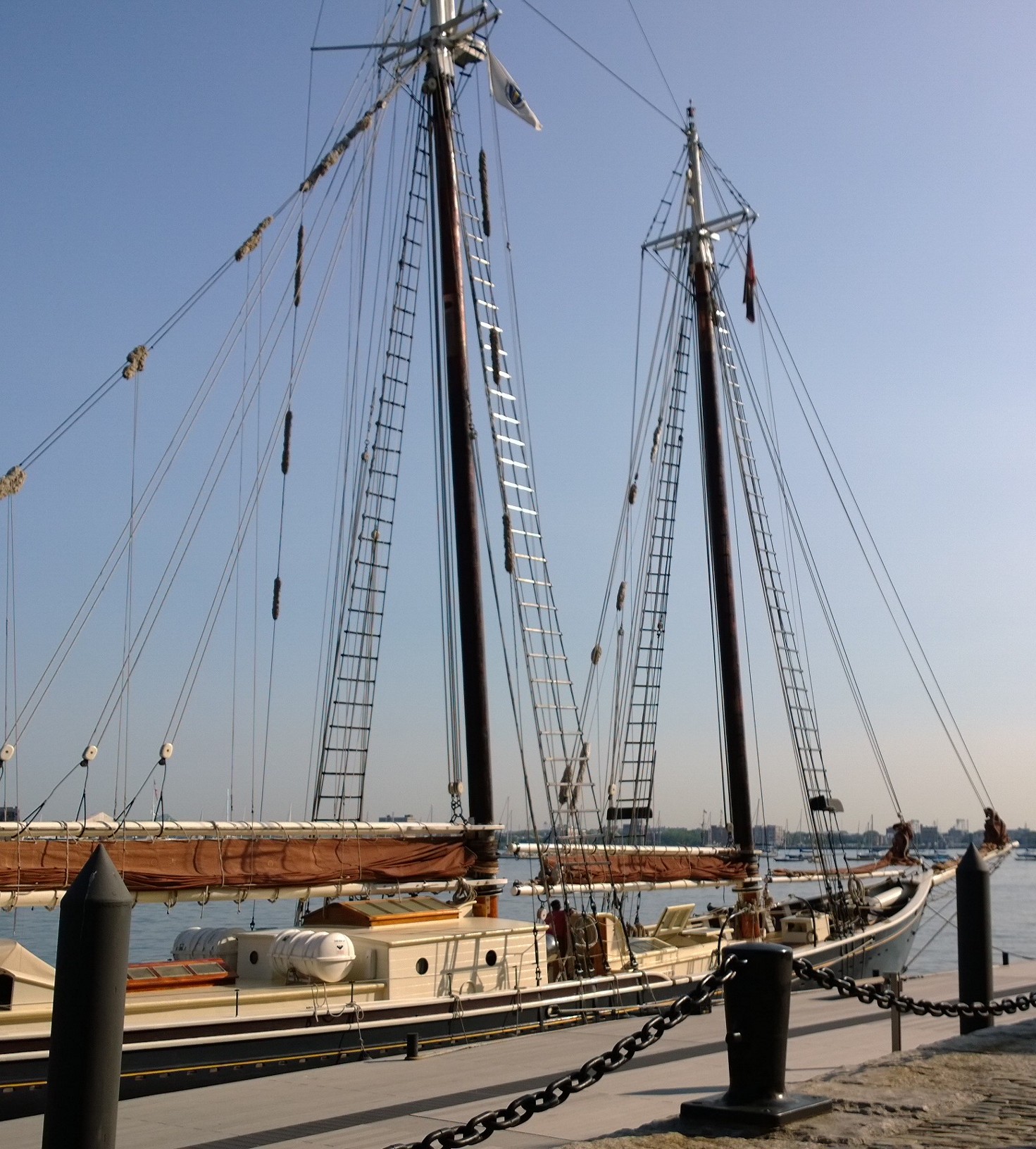
A couple hundred yards from the Barking Crab, a teaching sailboat is once again docked for the summer. In Dewey Square, the Greenway demonstration garden is growing, and the coffee guy is making espresso for customers. One day this week, I saw him teaching a group of schoolchildren about how it all works.

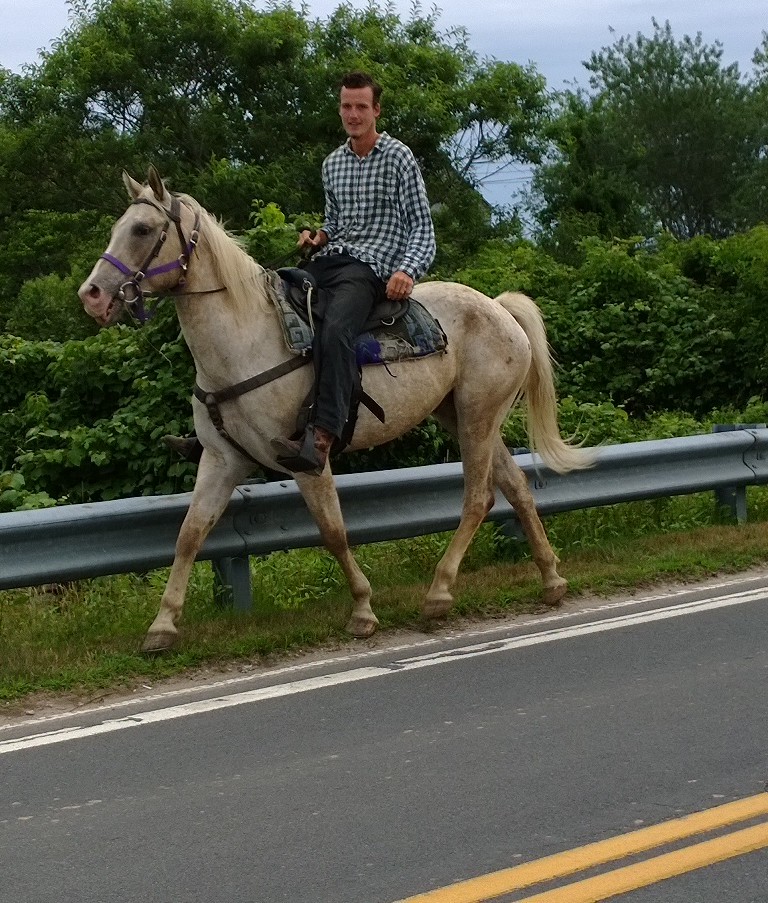
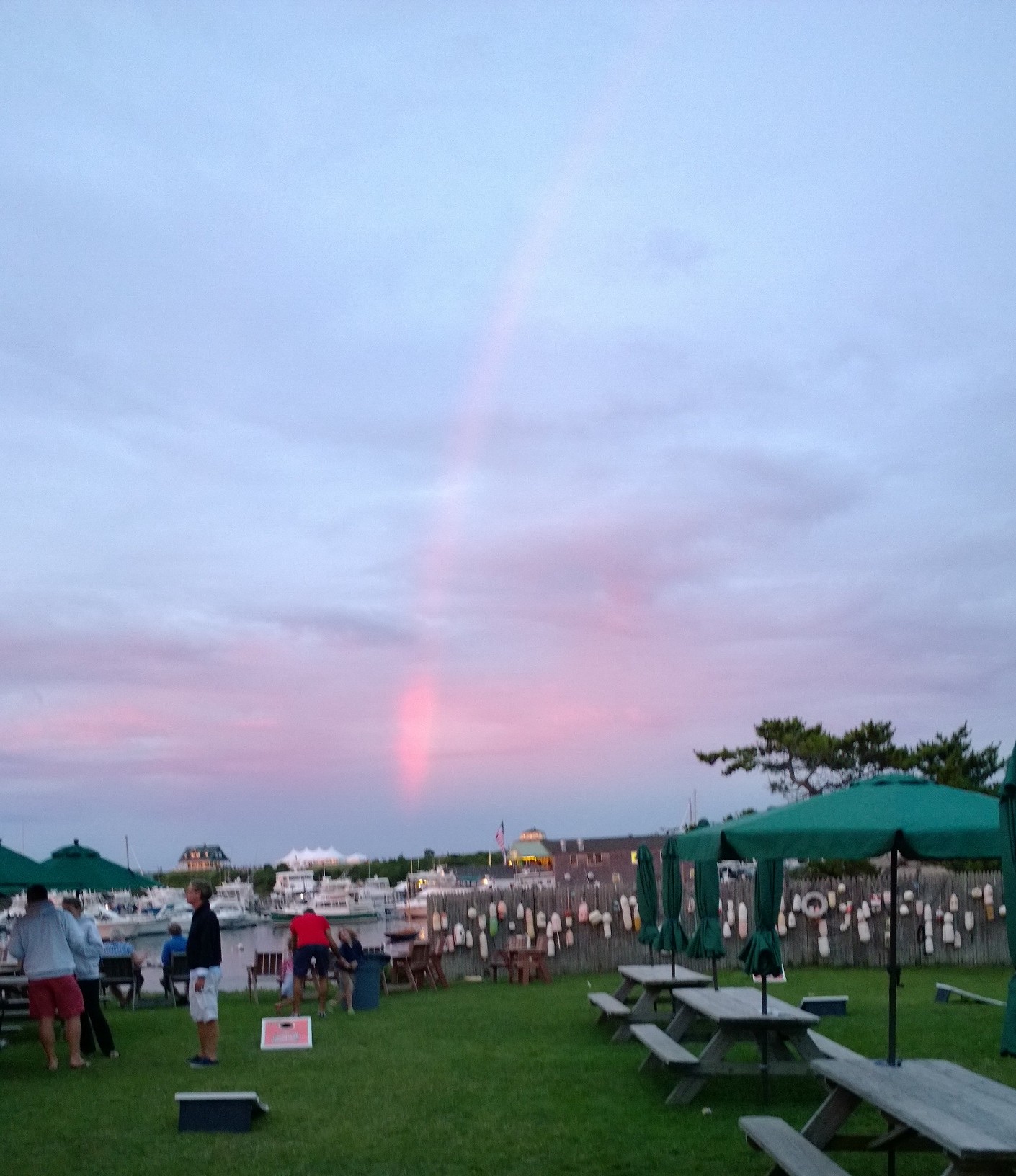
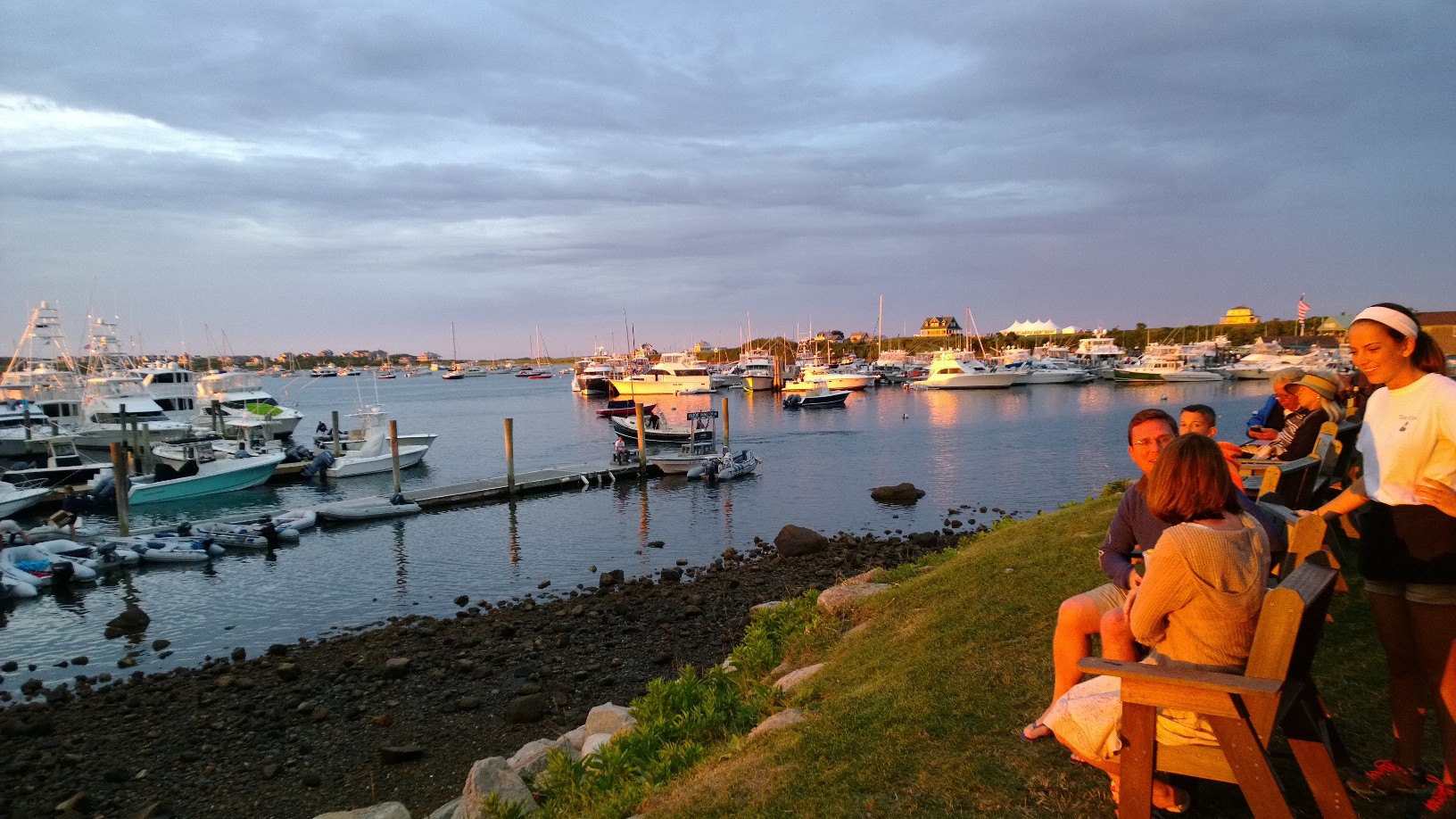
Meanwhile in Rhode Island, a rider was exercising a horse in the early morning, and at night, a rainbow appeared and a lovely sunset.

barking-crab-boston

teaching-ship-Boston-harbor


greenway-garden-july

dewey-square-espresso-cart


horse-on-Lakeside

harbor-rainbow


sunset-bronzes-boats


sunset-3


Read Full Post »

Claire swims in Walden Pond before work. I take a lazy walk. Other people run or go to the gym. But in Brooklyn, you have the option of a dance party at a club.

Stacey Anderson has the story at the NY Times: “It was a typically raucous scene in Williamsburg, Brooklyn … . However, not all was familiar at this rave called Daybreaker, held at the club Verboten. For a start, the 400 young participants wore athletic clothing and pressed office wear rather than skimpy dresses and droll T-shirts. Some were bright-eyed, but just as many yawned and clutched cups of coffee. …

“The Daybreaker dance party, which runs from 7 to 9 a.m. three times a month, is one of two new early electronic diversions finding audiences in Brooklyn and Manhattan. Branded as both a morning workout option and a wholesome inversion of dance culture, the events are novel beyond their sunrise start times: They are alcohol-free, with coffee and fruit-infused water distributed at the bar instead of the customary club libations. The event, which had its debut in December and moves from place to place, darkens its spaces to mimic the typical rave experience, quite convincingly.

“ ‘It’s like a casino in here; there’s no idea of time,’ said Malcolm Ring, 24, a financial analyst. He woke at 5:30 a.m. to attend this Daybreaker party, his first. ‘I would normally go for a run right now, but this is more enjoyable.’ ”

More here.

Photo: Willie Davis for The New York Times
The rap artist Salomon Faye at a Daybreaker party at Verboten, a club in Williamsburg, Brooklyn. 

Read Full Post »

When John was in fifth grade, the parent-teacher association held a “cakewalk” as a fundraiser. It was kind of like Musical Chairs except players didn’t sit down. People would get eliminated in each session, and the last one standing would win one of the cakes. At the time, the idea was new to me.

Now, as I’ve been looking into James Hackett’s Days Gone By again, I am realizing the cakewalk was based on a much older custom.

Writes James, “The cake dance, to which references were made frequently in the 18th and 19th century, was not a particular dance but rather a baire or session of dancing of which a cake was offered to the couple who proved themselves the best dancers. These events were usually sponsored by the local alehouse or tavern, and such gatherings were associated with hurling and other athletic contests. …

“The cake to be danced for is provided at the expense of the publican, or alehouse keeper, is placed on a board, which in turn is put on top of a pike that stands ten feet high, and from it hangs a garland of meadow flowers and also some apples fastened with pegs on the outside of the garland. … Those who are able to dance the longest around the cake are declared winners.”

Photo found here.
If you know where to find a photo of an actual Irish cake dance, let me know. In the meantime, here is an Irish piper accompanying a couple dancers.

Read Full Post »

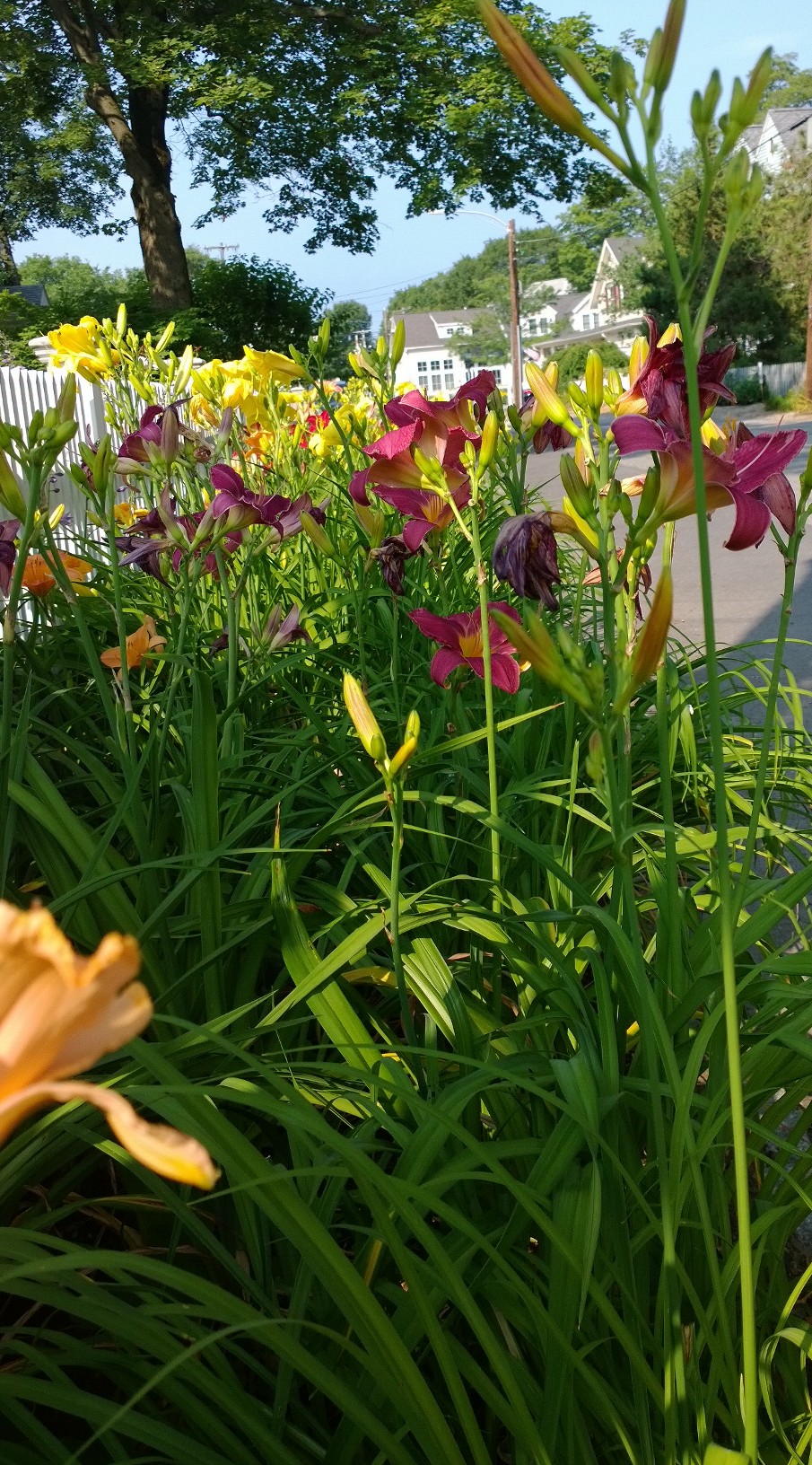
I’ve got a few more photos to share: my neighbor’s lilies and new pink growth on a Japanese maple, for starters.

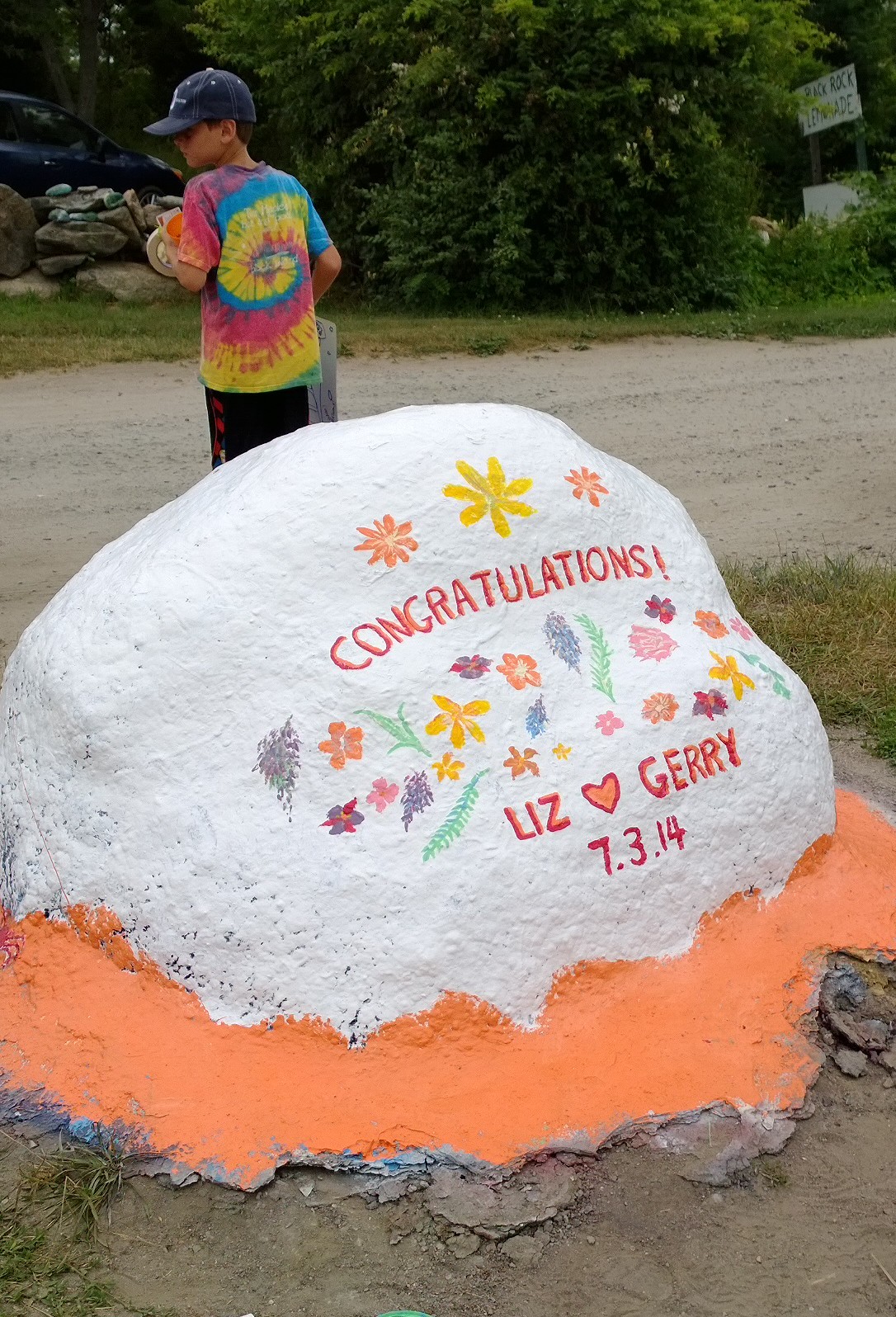
I also snapped a wedding notice on the painted rock, the unofficial island billboard, before it got painted over with new messages. A bride and groom actually hired a woman to do the painting, which is a new one on me. The painted rock notices are generally more spontaneous.

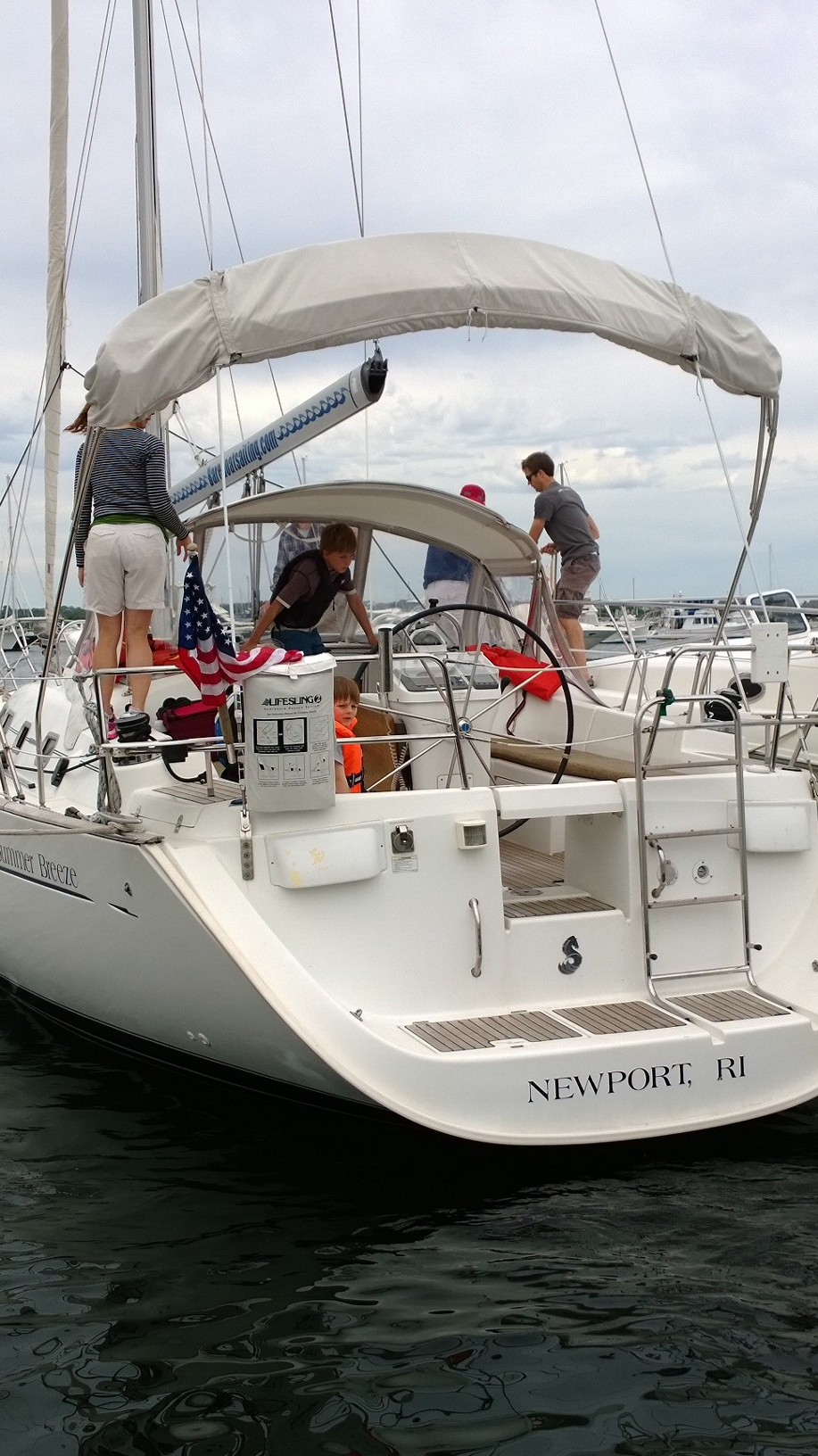
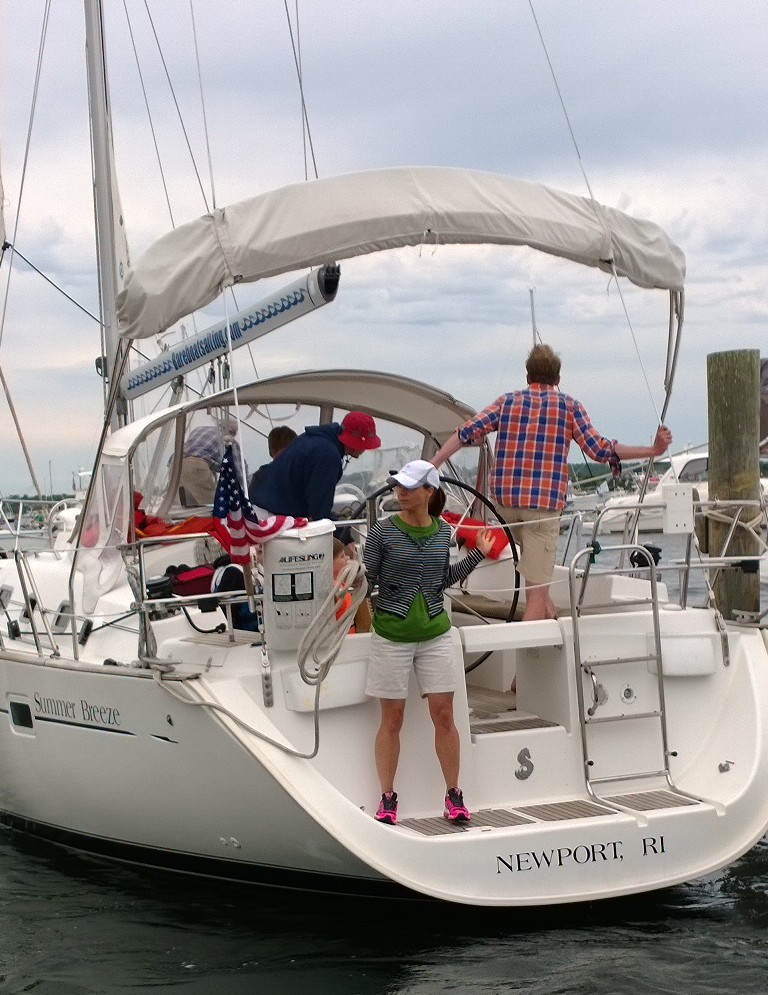
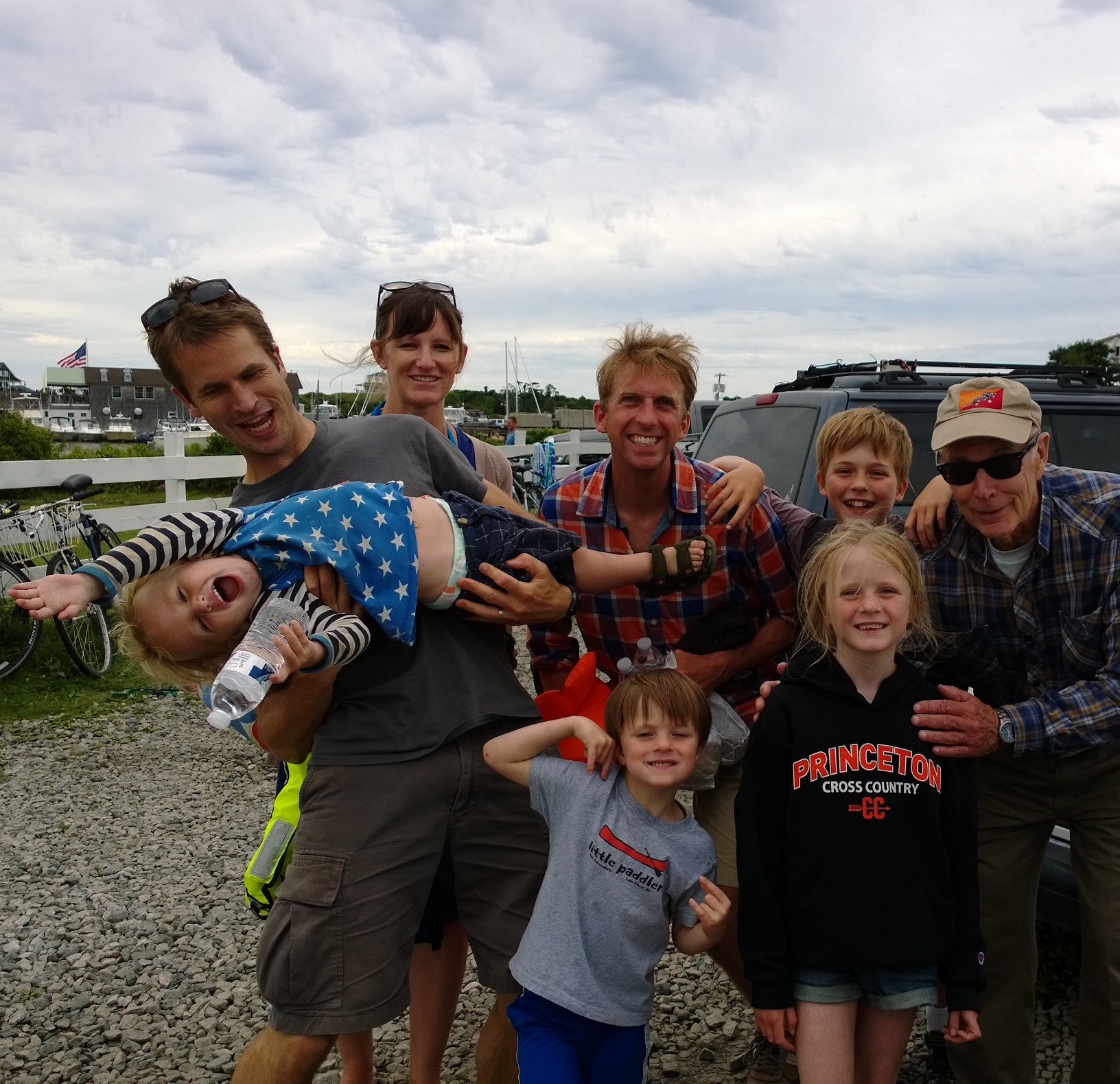
I’ve included three family photos. Erik’s sister’s family rented the sailboat for a couple weeks of catching up with friends in the U.S., and John and my husband joined them for the initial leg of their trip. If they all look a little slaphappy here, maybe it’s because they made it from Newport to the island in an unfamiliar boat without incident.

new-growth-is-pink

my-neighbor-has-lilies


painted-rock-070314

extended-family-rents-a-boat


Maria-poised-to-throw-rope

a-goofy-sailing-crew

Read Full Post »

I’ve put off writing about sprites because I’m not sure I can explain what they are  — powerful upward lightning flashes that send electricity around the earth and were originally going to be photographed by an astronaut on the ill-fated Columbia.

A team of scientists and a few daredevil pilots flew repeatedly into storms to prove the visions were real. The television show Nova covered the quest.

“NARRATOR: On a stormy night, in Denver, a team of scientists takes to the air to investigate a mystery.

“RONALD WILLIAMS (United States Air Force): I reported it, and nobody believed me.

“NARRATOR: They’re trying to catch a burst of energy so fleeting and hard to see that scientists call it by the ethereal name of ‘sprite.’

“EARLE WILLIAMS (Massachusetts Institute of Technology): The bolts that cause sprites are superbolts, the kind of lightning that’ll blow your T.V. sky high. …

“KERRI CAHOY (Massachusetts Institute of Technology): You can see airglow that’s more diffuse and just in layers than the curtain-like aurora.

“NARRATOR: NOVA takes to the air, on a quest to record these elusive events.

“GEOFF MCHARG (United States Air Force Academy): Sprite!

“NARRATOR: And the effort also continues above, from the vantage point of space, where the work had it’s beginning during the ill-fated Columbia mission, with Israeli astronaut Ilon Ramon.

“YOAV YAIR (The Open University of Israel): I asked him, ‘Please bring me one sprite image.’ He said, ‘Don’t worry, I’ll get you a couple.’

“NARRATOR: Ramon’s colleagues now continue where he left off.

“SATOSHI FURUKAWA (Japanese Astronaut): We must take over their work. I thought that was the survivors’ duty.

“NARRATOR: Their dramatic discoveries are revealing that we live on an electrified planet, surrounded by a global circuit that rings the earth. And like a planetary heartbeat, we can now detect it.”

More here.

 Image: Nova

Read Full Post »

My husband’s latest alumni bulletin had a lot of great articles. One was about a new effort to save endangered languages, starting with Zapotec, an indigenous Mexican language.

If you go to this website and click the buttons, you can see and hear the effort that has gone into recording the ways that Zapotec words are pronounced. It’s the “Tlacolula Valley Zapotec online talking dictionary.”

The initiative has received support from the National Geographic and the Living Tongues Institute for Endangered Languages.

Photo: AxisOfLogic.com

Read Full Post »

One of the biggest challenges for biking in cities is the intersection.

Liz Stinson writes at Wired, “Biking through a city can feel like navigating a video game staked upon your life. You’re avoiding pedestrians and potholes all the while making sure cars don’t run into you. …

“Even protected bike lanes have an Achilles heel: the intersection. Most protected bike lanes — lanes that have a physical barrier between bicyclists and drivers — end just before the intersection, leaving bicyclists and pedestrians vulnerable to turning vehicles.

“Nick Falbo, an urban planner and designer from Portland (one of the most bike friendly cities in the nation), is proposing a new protected intersection design that would make intersections safer and less stressful than they are today. Falbo’s design is taken from the Dutch way of doing things. … Falbo’s adapted design has four main components.”

They are the corner refuge island, the forward stop bar, the setback crossing, and bicycle-friendly signal phasing. Read what they are here.

“ ‘This design requires you to have a much tighter corner radius,’ says Falbo. ‘These large truck operators, they are professional drivers they can actually make tighter turns than these standards normally say they would. The real answer is that I think you’re going to have to be a little stricter on your trucks in any number of ways.’

“It’s a battle, but Falbo thinks implementing these bike lanes are totally possible, pointing out that protected bike lanes are just now gaining support across the country. …

“‘We’re trying to attract more riders,’ he says. ‘Some of these conventional facilities, they work and they’re safe, but they’re stressful and that level of stress and lack of comfort is what will keep the average American from feeling like they can ride.’ ”

Image: Nick Falbo
Nick Falbo designed a type of bike lane that addresses dangerous intersections.

Read Full Post »

Older Posts »