I can hardly keep up with all the delightful-sounding children’s books that Maria Popova describes at Brain Pickings, but my local bookstore is benefiting in any case — not to mention, my grandchildren.
Here is one book that sounds worth checking into.
“In Tell Me What to Dream About,” writes Popova, third-generation artist Giselle Potter — who has previously illustrated such treasures as Gertrude Stein’s posthumous alphabet book and Toni Morrison’s darkly philosophical allegory for freedom — offers a whimsical take on lucid dreaming, that irresistible longing to choose our own nocturnal adventures.
“Potter tells the story of two sisters who, at bedtime, offer each other ideas for possible things to be dreamt that night — a tree-house town, a world where everything is furry, a fluffy world where clouds are worn as sweaters and eaten as treats, teeny-tiny animals feasting on teeny-tiny waffles. What emerges is a colorful celebration of children’s minds.” More here.
When I was a child, the oldest of a few others, I told stories after lights out, mostly about Sammy Seal, who snuck out through a hole at the bottom of the aquarium at night, had adventures, and got back before the authorities noticed his absence. Wish I could remember an adventure.
I’m thinking, What would I like to dream about tonight? I would like a dream in which all the people I know who are going through bad things just now were healed. And then I would wake up and it would be so.
Here’s a green-transportation update from the radio show Living on Earth.
“ELF stands for Electric, Light and Fun, And this particular Elf is an invention that launched with a Kickstarter in 2013. As Living on Earth’s Helen Palmer reported, it’s a human- and solar-powered, covered tricycle that aims to create a commuting revolution, and might just help combat climate change. Now two years on from the Elf’s Kickstarter campaign, its designer and developer, Rob Cotter, tells Living on Earth’s Helen Palmer how successful the invention has proved. …
“COTTER: Many years ago I was working for Porsche and BMW more on the race-car side of things — and I was living in Southern Calif. — and they were building the Gossamer Condor and Gossamer Albatross — the pedal-powered aircraft — not too far from me, so I kind of linked up with those folks. … I became vice president of land for human-powered vehicles, I built a 62 mph tricycle about 30 years ago — and once I realized you could go highway speeds at one horsepower — I realized how inefficient everything is that we do. …
“PALMER: [Elf] uses no gas at all: just human-power, sun-power and a battery pack with a 30-mile range. It’s not built for highways though — only for local roads, and bike trails, as federal regs say a bicycle can’t go faster than 20 miles an hour. Cotter says if enough people who drive about 30 miles a day climbed out of their cars and into an Elf, the effect on greenhouse gas emissions could be startling. …
“COTTER: Each one of these on the road takes about 28 tons of CO2 out of the atmosphere per year — so 100 of these on the road are equivalent to a 4-megawatt wind turbine at about 20% of cost. … The base price is $4,000 [and] we have over 400 orders or reservations currently, just from our website.
“PALMER: And that was before the Kickstarter campaign got underway — they reached their $100,000 funding goal in 12 days, and 40 people have actually paid for the vehicles. …
“COTTER: We actually worked with an organization in San Jose that trains homeless people to become bicycle mechanics, so we went there as kind of a test pilot to see who could build this and how, and in a week’s time we taught them how actually to build ELFs, and maintain them, and service them …
“COTTER: People are using them all winter long in places like Canada. They’re pulling trailers, 500, 600-pound trailers around with snow-blowing equipment and yard equipment on there. They turn them into food trucks. There’s a gentleman in Pasadena that has a gelato freezer on the back … One gentleman rode from Ontario, Canada, to Key West, Florida, on his Elf all on secondary roads and bike paths. But the thing that amazes me most I think is people with disabilities that are using the Elf to increase their mobility. So, this one woman, she broke both her legs in 20 places and doctors said she would never walk again without assistance. And she purchased an Elf, she lowers herself in it, and takes off on electric power, and when she can she goes ahead and just rotates the pedals. And six months later, she’s riding 22 miles a day and able to walk without a cane.”
Where I work, they try to treat employees a couple times a year to little parties. It doesn’t hurt. If you’re having a down day, you can always find something to like about the higher powers making the effort. The first photo shows a few employees at the Cape Cod-themed event on the garden floor of our building. On offer were music, mini golf, lobster sliders, watermelon-blueberry smoothies, and other summertime edibles.
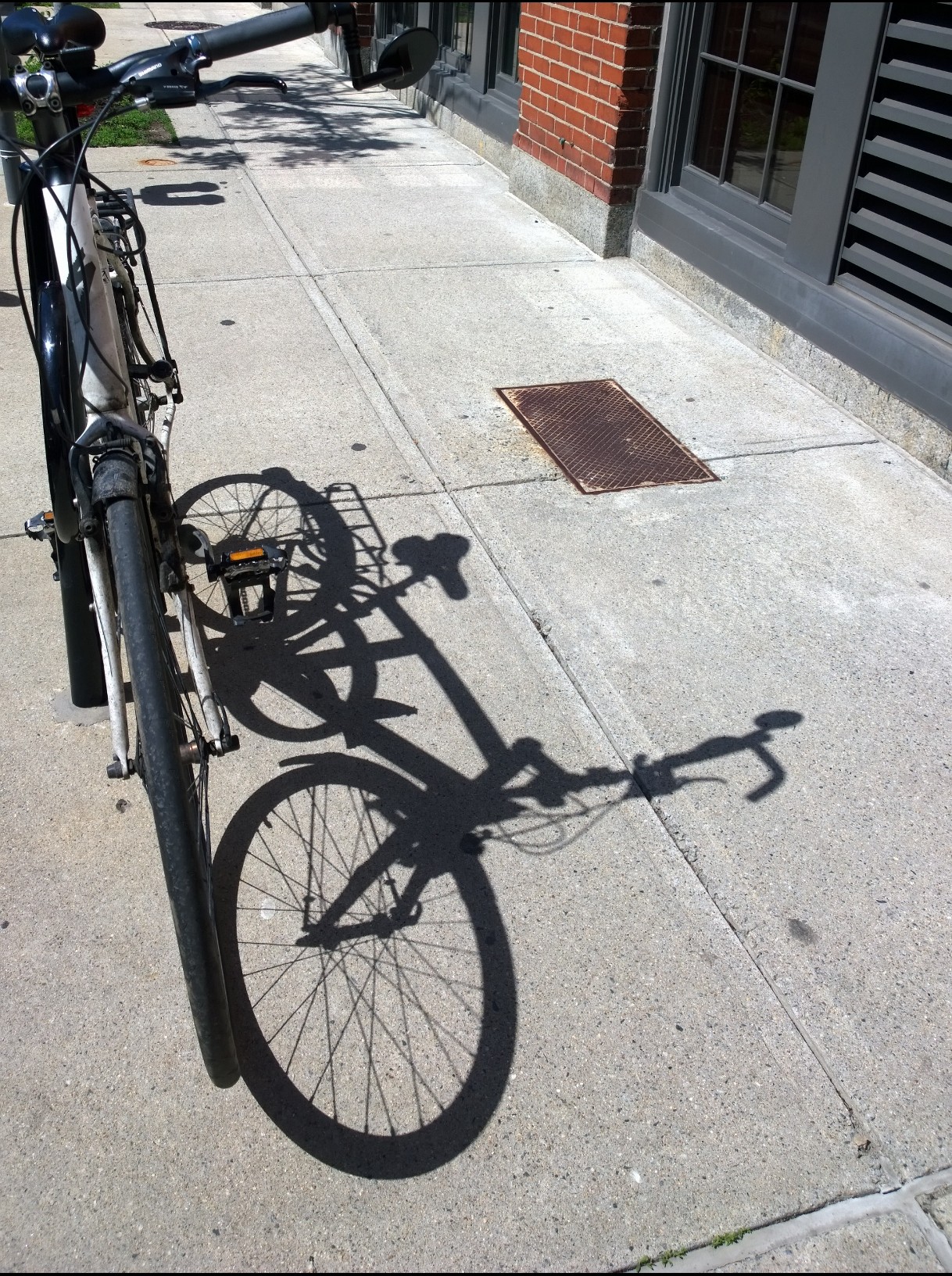
I am also posting a real beach I visited last weekend, with lovely rosa rugosa all around the path. My other shots show the shadow of a bike on a sunny day in Fort Point, landscaping at a home on Beacon St., and an exotic flower in front of Barefoot Books, which does a nice job with plantings.
Asakiyume came for a visit, by the way, and we had lunch and a lovely chat. I will wait to get her permission to post a picture I took of her. But I can activate your visual imagination by telling you that the photo is from a walk in the woods, where Asakiyume spotted an elastic band between two trees and immediately realized someone must be trying to teach themselves tightrope walking. I would never have figured that out. The photo shows her testing her skill. Such a lovely metaphor for the multiple balancing acts we had just been discussing. Turns out it’s hard.
I probably wouldn’t have known that Frederick Douglass spent time in Ireland if I hadn’t read the Colum McCann novelTransAtlantic. McCann likes to take historical events of different time periods and imagine the parts we can’t really know. In TransAtlantic, he wove together a historic 1919 flight from Canada to Ireland, the Douglass lecture tour of Ireland and his horrified witness to the famine there, a servant girl’s emigration to the United States and her role in the Civil War, and the rather thrilling negotiations to bring resolution to the Troubles between Protestants in Northern Ireland and Catholics.
According to an initiative called the Douglass/O’Connell Project, “Douglass was greeted in Dublin, Belfast, and Cork by enthusiastic crowds and formed many friendships on his trip, most significantly with Daniel O’Connell, a figure still revered in Ireland today for his role in Catholic emancipation and his fierce opposition to slavery. O’Connell and Douglass shared the stage just once, in September 1845 at a rally in Dublin, but retained a mutual respect and affection until O’Connell’s death less than two years later — and Douglass acknowledged O’Connell’s influence on his philosophy and worldview for the rest of his life.
“The Frederick Douglass/Daniel O’Connell Project is a living legacy to the leadership of these two men and the causes they championed by strengthening the bonds of friendship between Ireland and the United States, encouraging greater understanding between the diasporas of Africa and Ireland in America, and fighting injustice and human rights abuses throughout the world.”
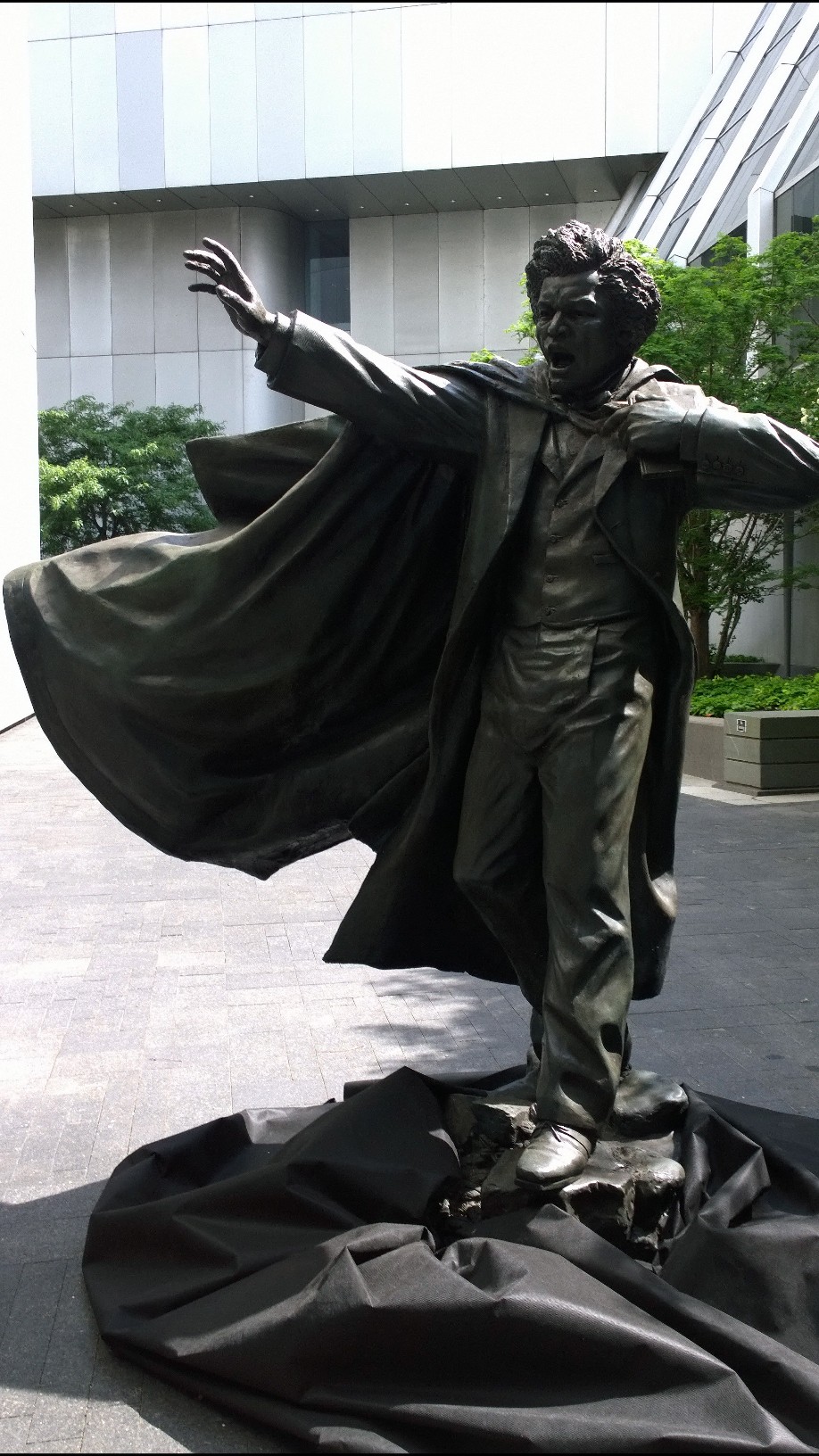
Which brings me to how I happened to be able to take a photo of the Irish statue of Douglass today. The Center for Race Amity in Boston is partnering with the Douglass/O’Connell Project on a celebration this weekend, before the statue goes on tour. Isn’t it magnificent? Andrew Edwards is the sculptor.
There will be a preview of the public television film Douglass and O’Connell Saturday at the Museum of African American History at 7 pm, followed by a lecture by Don Mullen, the author of Bloody Sunday. On Sunday there will be festivities in the Greenway from 1 pm to 5 pm.
In a recent post, we described homes being made out of shipping containers. But an architect friend cautioned that it’s not easy to get all the permits for something like that, asking, “How many how many people do you know who would welcome a container home in their neighborhood?”
Well, here’s a story about shipping containers recycled for something that might be more manageable.
Yvonne Abraham writes at the Boston Globe, “On a blah gravel lot in East Boston sits an especially cool example of the human ability to invent and adapt. Spend enough time here, and even the most dedicated pessimist might feel hopeful about the future.
“It’s not much to look at from the outside: four recycled freight containers, painted a friendly shade of green, sharing a patch of land with some trucks at the base of Eagle Hill.
“But inside those containers, it’s spectacular. Disco-lit by thin ribbons of red and blue LED lights, all manner of leafy greens grow in long PVC planters that hang from the ceiling in tight rows. The hydroponic plants are watered and fed by an ingenious, and remarkably efficient, irrigation system. Lush and bursting with flavor, they’re neatly harvested in seconds and then it’s on to restaurants all over the city.
“These containers — which make up an operation owners Connie and Shawn Cooney have named Corner Stalk — hold the equivalent of a four-acre farm. The Marblehead couple came to farming just a couple of years ago. Connie, 63, taught in public schools for 35 years, and Shawn, 61, was a tech entrepreneur. …
“They both wanted to try something new, and they believed in what the guys who make the containers — Boston-based Freight Farms — are doing: creating computer-controlled environments that can grow produce year round, anywhere where there’s electricity and a water supply.” Read how the business grew — and where it’s headed — at the Boston Globe.
A young man I know on the train was interviewed on a National Public Radio program about his unusual brain and what scientists are learning from it.
Jonathan was born without a cerebellum. His father, Richard, who also used to take the train, told me how he worked with Jonathan from his earliest days to prove the doctors wrong about what he would be able to do in life.
Jon Hamilton writes at NPR, “Since his birth 33 years ago, Jonathan Keleher has been living without a cerebellum, a structure that usually contains about half the brain’s neurons. This exceedingly rare condition has left Jonathan with a distinctive way of speaking and a walk that is slightly awkward. He also lacks the balance to ride a bicycle.
“But all that hasn’t kept him from living on his own, holding down an office job [at the Institute for Community Inclusion] and charming pretty much every person he meets. …
“Jonathan is also making an important contribution to neuroscience. By allowing scientists to study him and his brain, he is helping to change some long-held misconceptions about what the cerebellum does. And that, in turn, could help the hundreds of thousands of people whose cerebellums have been damaged by a stroke, infection or disease.
“For decades, the cerebellum has been the ‘Rodney Dangerfield of the brain,’ says Dr. Jeremy Schmahmann, a professor of neurology at Harvard and Massachusetts General Hospital. It gets no respect because most scientists only know about its role in balance and fine motor control. …
“Research on Jonathan and people like him supports the idea that the cerebellum really has just one job: It takes clumsy actions or functions and makes them more refined. ‘It doesn’t make things. It makes things better,’ Schmahmann says.
“That’s pretty straightforward when it comes to movement. The brain’s motor cortex tells your legs to start walking. The cerebellum keeps your stride smooth and steady and balanced.
” ‘What we now understand is what that cerebellum is doing to movement, it’s also doing to intellect and personality and emotional processing,’ Schmahmann says.
“Unless you don’t have a cerebellum. Then, Schmahmann says, a person’s thinking and emotions can become as clumsy as their movements. …
“His sister, Sarah Napoline, [says] her brother is a great listener, but isn’t introspective. …
“Jonathan also needed to be taught a lot of things that people with a cerebellum learn automatically, Sarah says: how to speak clearly, how to behave in social situations and how to show emotion.
“Yet Jonathan is now able to do all of those things. He’s done it by training other areas of his brain to do the jobs usually done by the cerebellum, Schmahmann says.
“It’s taken decades, Richard says. He adds that it couldn’t have happened at all if his son were less resilient and determined.”
I have to say, I found this new research fascinating as I had been experiencing something similar to the contrast sensitivity described. And I was delighted to see you could train your eyes to counteract the perceptions that can cause a stumble.
Jan Hoffman writes at the NY Times, “As adults age, vision deteriorates. One common type of decline is in contrast sensitivity, the ability to distinguish gradations of light to dark, making it possible to discern where one object ends and another begins.
“When an older adult descends a flight of stairs, for example, she may not tell the edge of one step from the next, so she stumbles. At night, an older driver may squint to see the edge of white road stripes on blacktop. Caught in the glare of headlights, he swerves.
“But new research suggests that contrast sensitivity can be improved with brain-training exercises. In a study published [in March] in Psychological Science, researchers at the University of California, Riverside, and Brown University showed that after just five sessions of behavioral exercises, the vision of 16 people in their 60s and 70s significantly improved.”
Read more at the NY Times, here, or go straight to “Improving Vision Among Older Adults: Behavioral Training to Improve Sight,” here. Authors Denton J. DeLoss and George J. Andersen are from the University of California, and Takeo Watanabe is at Brown.
Photo: The Library of Congress Gustave Whitehead and his daughter beside the contraption he called Plane No. 22.
Connecticut wants you to know that it is First in Flight. Not Ohio, not North Carolina. And not because of the Wright brothers. Nope, the state contends, Gustav Whitehead was first — on Aug. 14, 1901.
As Kristin Hussey writes in the NY Times, Connecticut legislators argue about many things, but there is one topic on which everyone is in agreement — where the first airplane was flown.
“In 2013,” writes Hussey, “a well-regarded aviation publication surprised historians by declaring that Mr. Whitehead, a Bridgeport resident, had flown two years before Orville and Wilbur Wright skimmed the dunes of Kill Devil Hills in North Carolina in 1903.
“ ‘Justice Delayed Is Justice Denied,’ read the headline in the publication, IHS Jane’s All the World’s Aircraft. ‘Whitehead has been shabbily treated by history,’ it said.
“Mr. Whitehead, a German immigrant, flew his own aircraft above Bridgeport and nearby Fairfield on Aug. 14, 1901, climbing 50 feet into the air and traveling more than a mile, according to the article, which was written by Paul Jackson, the editor of Jane’s. …
“Within months, Gov. Dannel P. Malloy, a Democrat, had signed a measure changing the honorees of a state holiday called Powered Flight Day from the Wright brothers to Mr. Whitehead. Last spring, lawmakers passed a resolution that formally recognized Connecticut as first in flight.”
Needless to say, fans of the Wright brothers are not taking this lying down. Read about the controversy here.
Photo: Christopher Capozziello for The New York Times Andy Kosch, a high school teacher from Connecticut, led a group that built a replica of Mr. Whitehead’s plane and flew it successfully.
At Moth Radio Hour, people who can tell stories well are recorded telling theirs before an audience, without notes or prompts. I was driving home one day when I heard a story by Jensi Sartin, who showed fishermen in Bali how to save their livelihoods by “banking” some fish.
A bit of background on Sartin comes from the Aspen Ideas blog: “Jensi Sartin is the director of the Reef Check Foundation Indonesia in Bali, where he devises community-based strategies to protect the coral reefs in Indonesia. [In] his story ‘The Fish Bank,’ [he talks] about how he tried to bring the fish back to Bali.
‘This is not just about 75 percent of the world’s coral reef going extinct, it’s not just about the fish that will just disappear. This is about people, because there are lots of people that depend on this coral reef. There are a lot of people that depend on the fish and this healthy coral to feed their family.’
“Sartin says that his experience growing up in the rainforests of Borneo – where deforestation was already under way – prepared him for his professional career as an advocate for the world’s oceans. ‘All of these things are connected,’says Sartin. … ‘Protected areas are not about managing resources, they are about managing people.’
“Sartin says community-based conservation forms a crucial part of sustainable development, especially in regions of the world that are environmentally stressed.” Here is the Aspen link.
If you missed my review of the climate-change movie Revolution, which shows how coral reefs are sending us a warning, check it out here.
A charming feature on the radio show Studio 360 this spring was about a young beat boxer who turns birdcalls into music. (Wikipedia says beatboxing is “is a form of vocal percussion primarily involving the art of producing drum beats, rhythm, and musical sounds using one’s mouth, lips, tongue, and voice.”)
According to Studio 360, “Ben Mirin is a Boston area birdwatcher turned New York City beat boxer who decided to combine his two passions. ‘As a mimic, I was able to imitate certain bird calls,’ Mirin explains, ‘the American Bittern, the Common Eider.’ Mirin mines birdcalls and layers them with his own beats to construct compositions that fall somewhere between a musical mashup and an ornithologist’s field recordings.
“When he performed at the American Beatbox Festival last year, Mirin improvised a set where he combined spoken word, beatboxing, and bird calls to take the audience on a forest bird tour. ‘It was totally off the cuff,’ Mirin remembers, ‘and people went nuts.’
“Mirin has traveled the world as a field ornithologist. Combining beatboxing and birdcalls isn’t just about new music: ‘My craft is about using beatbox to build a bridge to the natural world.” ”
Listen to the music Mirin makes using real birdcalls, here.
Photo: Nick Mirin Ben Mirin photographing birds in New Zealand’s Fiordland
One of my grandchildren attends a small preschool with a teacher who has a big focus on how people treat each other, not just the usual numbers and letters and stories. She writes quite individualistic reports each week to the families. Here is how one such report began. I have changed the names.
“Paula’s first day of school!! I’m so happy Renzo and Paula shared a special day together for her first experience at the school. Renzo was very nurturing with her, always offering help when she needed it, and teaching her how the day goes. We began our day together by coloring with crayons and painting with watercolors … we painted flowers and leaves. Paula colored with purple, she said, ‘purple,’ very quietly. Renzo whispered to me, very excitedly, ‘She’s sayin’ purple!’ Then while using markers, Paula was having trouble opening her marker, Renzo noticed and opened it for her, Renzo said, ‘That was fun. I can help you!!’ Paula smiled big.
“Then Renzo wanted to introduce Paula to our ‘water break’ routine … someone says, ‘water break,’ then everyone stops what they’re doing and sips water together and sighs a refreshing relief and continues making whatever we were making before. So, Renzo yells, ‘water break!!’ He scoops up his water and drinks, I drink too, trying to explain to Paula what’s going on, inviting her to join in. Renzo then notices, ‘She didn’t take a water break.’ I explained to Renzo that she probably needed to see a ‘water break’ before giving it a try. Later in the day, Renzo announced another water break … this time, Paula reached for her water and we all took a big sip and sighed together. Renzo was absolutely delighted. I’m very proud of Renzo for taking it upon himself to teach this little tradition to Paula, making sure she’s included. I’m very proud of Paula for observing the little ritual and understanding it so quickly, then giving it a try!”
For more on the school, e-mail me at suzannesmom@lunaandstella.com.
One of the many attractions of Fort Point in Boston is the ever changing array of public art. Here you see a brand new piece on Fort Point Channel: John Hanson’s “Outside the Box,” a Plexiglas sculpture with solar LED lighting.
If you were to walk to the left along the channel toward Gillette, you would see water gushing out of the building into the channel and seaweed on the rocks, a reminder of how close South Boston is to the ocean and the elements. When there is a storm at high tide, the channel can overflow the walkway.
The truck in the parking lot on the other side of the walkway speaks for itself, but who can resist naming some of its contents? “This truck may contain zombies, Navy Seals, teleporters, time machines, waffle cannons, kissing booths, holograms, Himalayas …”
Would I be far off if I said I bet the truck has something to do with the nearby headquarters of the fun-loving Life is good company?
Where was mime-matics when I was a child convinced I was bad at math? Pretty sure I would have changed my mind after a few laughs at this comedy show.
Robert Strauss describes it for the New York Times.
“Without saying a word, a man walks on stage carrying a case full of small plungers. Each time he reaches in the case to take some plungers out, he tries to array them in order on a table in front of him, but he always has one left over. Five, seven, 13: No matter what number, there is still that one left alone, and the man gets visibly, but silently, more exasperated at each turn.
“The man is a mime named Tim Chartier, whose day job is associate professor in the department of mathematics and computer science at Davidson College in North Carolina. The plunger skit and many others that he and his wife, Tanya, have developed are part of their Mime-matics business. Having learned from the master of the craft, Marcel Marceau, they use their skills in mime to teach mathematics in a decidedly unconventional way. …
“At Davidson, he teaches a course called Finite Math, which often fills the math/science requirement for history and English majors.
“ ‘It is probably the last time these students will ever take a math course, so I see myself as the last chance they have to have a good experience with math,’ he said. ‘On the first day, I tell them that many of them will one day sit at a table where their kid will ask whether he or she should like math and science. I tell them I want them to get one story to tell that kid that will be positive in the next 16 weeks. It is an important moment in that class. They start looking for a good experience.’
“The Chartiers, who themselves have two children, 8 and 12, said they wanted their approach to Mime-matics to deliver the same positive experience. Even when they perform at colleges, the audiences are filled with children and their parents.
“ ‘Kids start laughing at the sketches and that frees up their parents, who might have long been afraid of math. The kids break the ice,’ said Ms. Chartier, who added that she particularly wants to fight the perception that math is for boys and writing is for girls, and hopes that Mime-matics entices girls to become more attracted to math.” More here.
Photo: Andy McMillan for The New York Times
Tim Chartier practicing a skit. He and his wife perform at colleges, math conferences, festivals and schools across the country.
Julie Turkewitz writes at the NY Times about a mountain library planned by two not-exactly-wealthy book lovers with big ideas.
“The project is striking in its ambition: a sprawling research institution situated on a ranch at 10,000 feet above sea level, outfitted with 32,000 volumes, many of them about the Rocky Mountain region, plus artists’ studios, dormitories and a dining hall — a place for academics, birders, hikers and others to study and savor the West.
“It is the sort of endeavor undertaken by a deep-pocketed politician or chief executive, perhaps a Bloomberg or a Buffett. But the project, called the Rocky Mountain Land Library, has instead two booksellers as its founders.
“For more than 20 years, Jeff Lee, 60, and Ann Martin, 53, have worked at a Denver bookshop, the Tattered Cover, squirreling away their paychecks in the pursuit of a single dream: a rural, live-in library where visitors will be able to connect with two increasingly endangered elements — the printed word and untamed nature. …
“They have poured an estimated $250,000 into their collection of 32,000 books, centering the collection on Western land, history, industry, writers and peoples. There are tales by Norman Maclean; wildlife sketches by William D. Berry; and books on beekeeping, dragonflies, cowboys and the Navajo. …
“Mr. Lee and Ms. Martin have a grant from the South Park National Heritage Area and this summer will finally begin renovations, repairing two leaky roofs. Construction will be limited, however, as they have gathered less than $120,000 in outside funds. An estimated $5 million is needed to build out their dream.” More here.
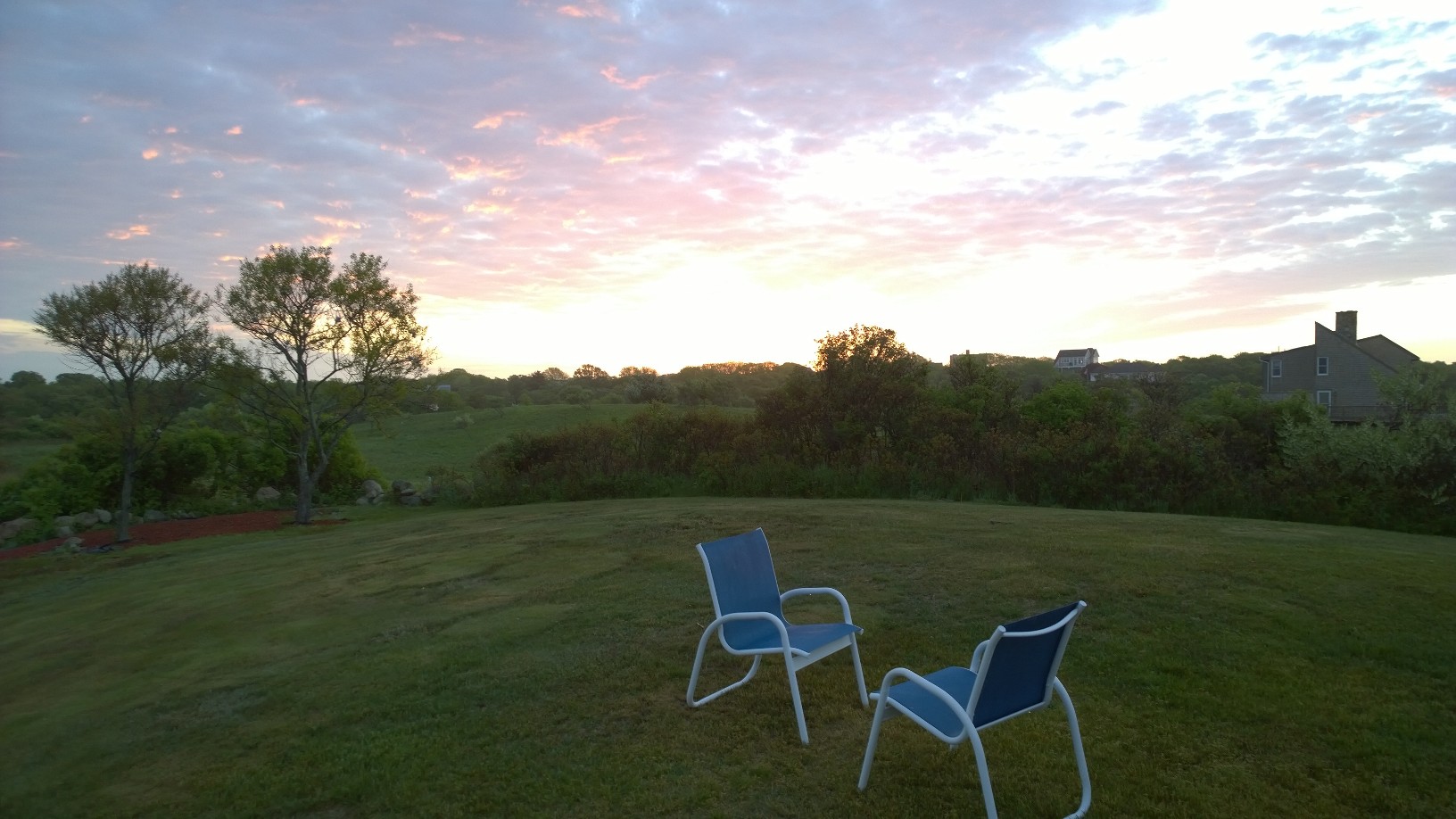
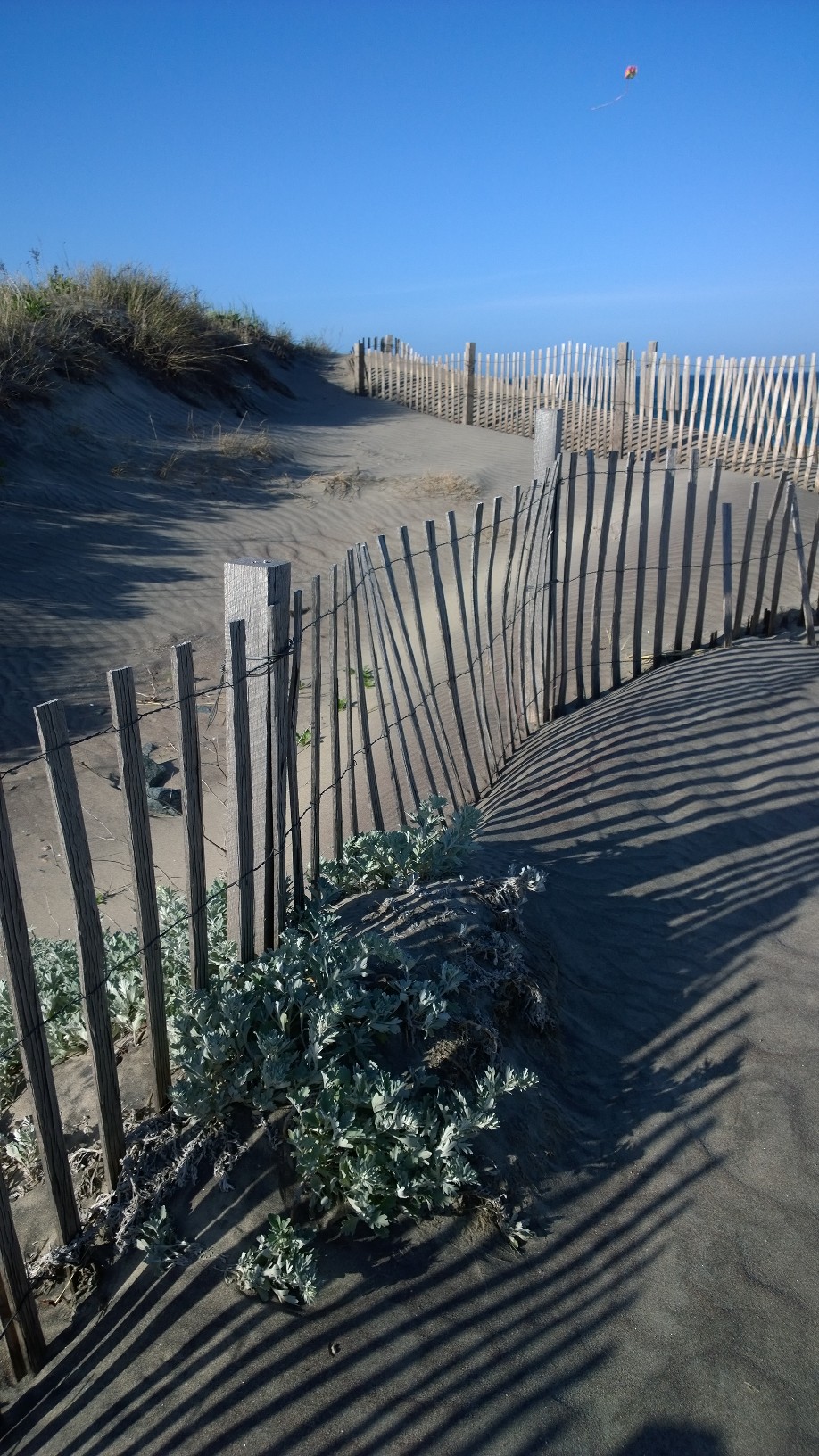
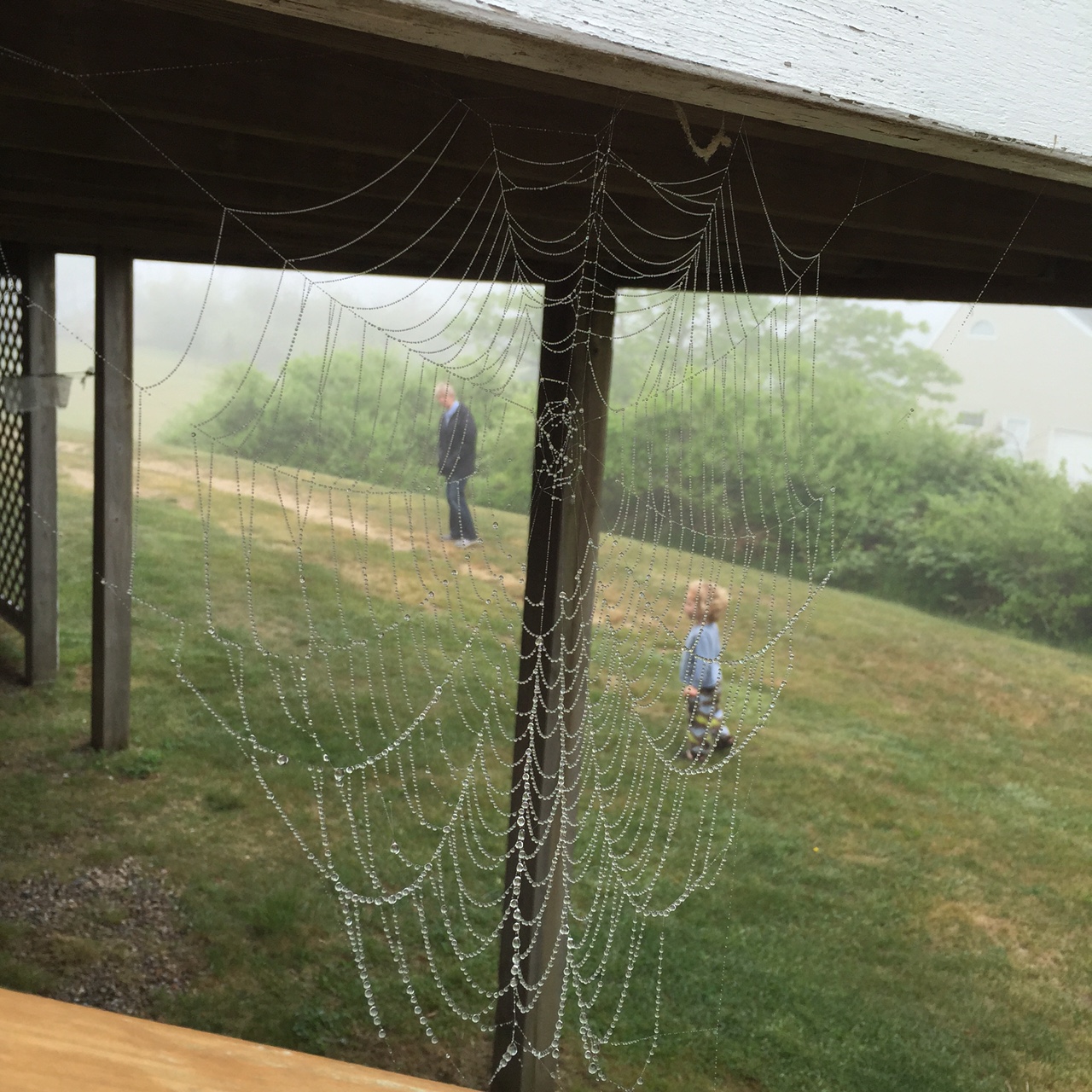
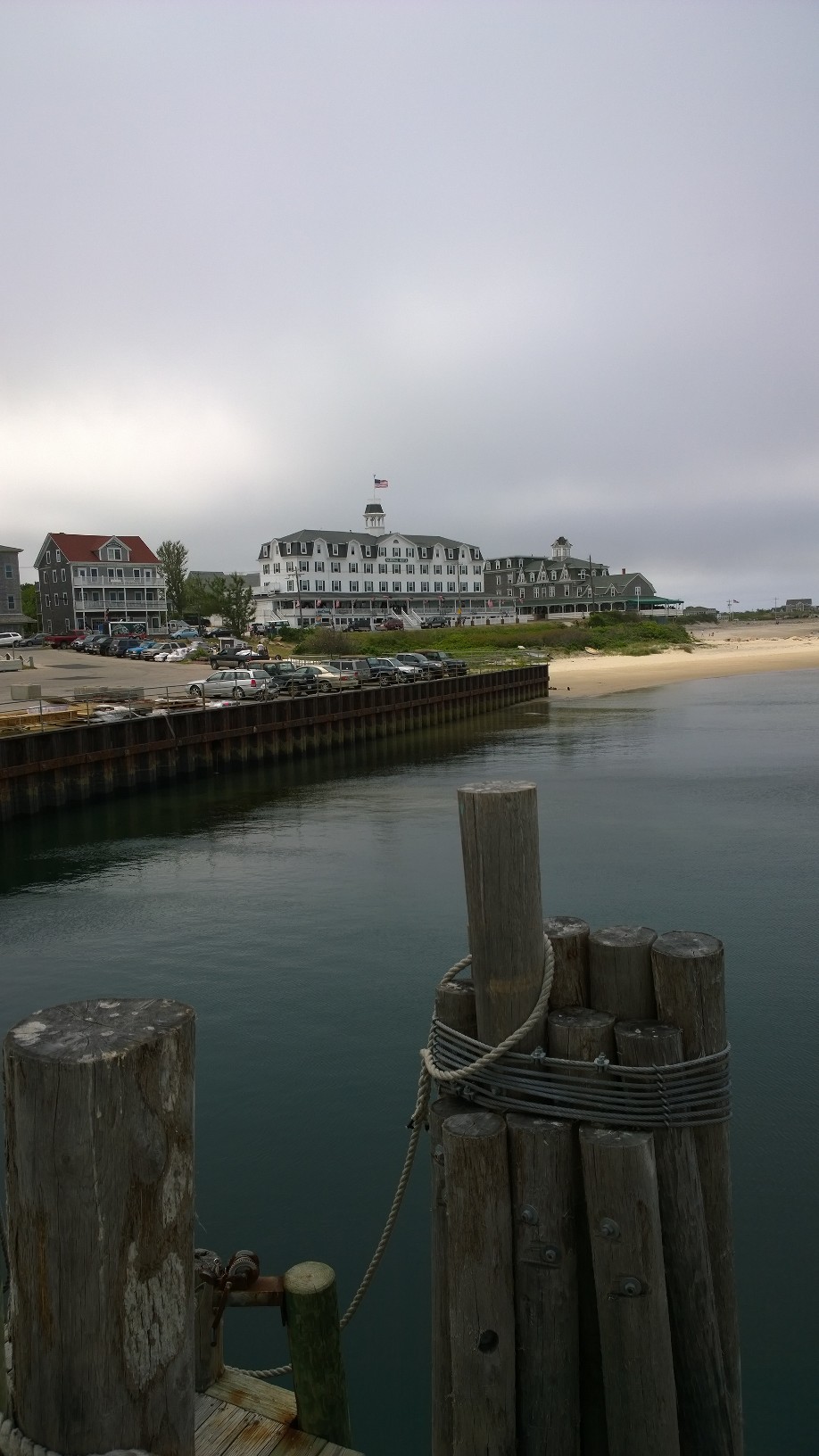
On this cold and rainy day, I am remembering how Saturday in Rhode Island felt like summer. Here are a few pics: dawn, a flowering shrub, white iris, a beach fence, a cobwebby view of my younger grandson and me, the harbor, the boat’s wake in the sunset. (Erik gets credit for the jeweled-cobweb shot.)























 Suzanne's Mom's Blog