Feeds:
Posts
Comments

Archive for the ‘Uncategorized’ Category

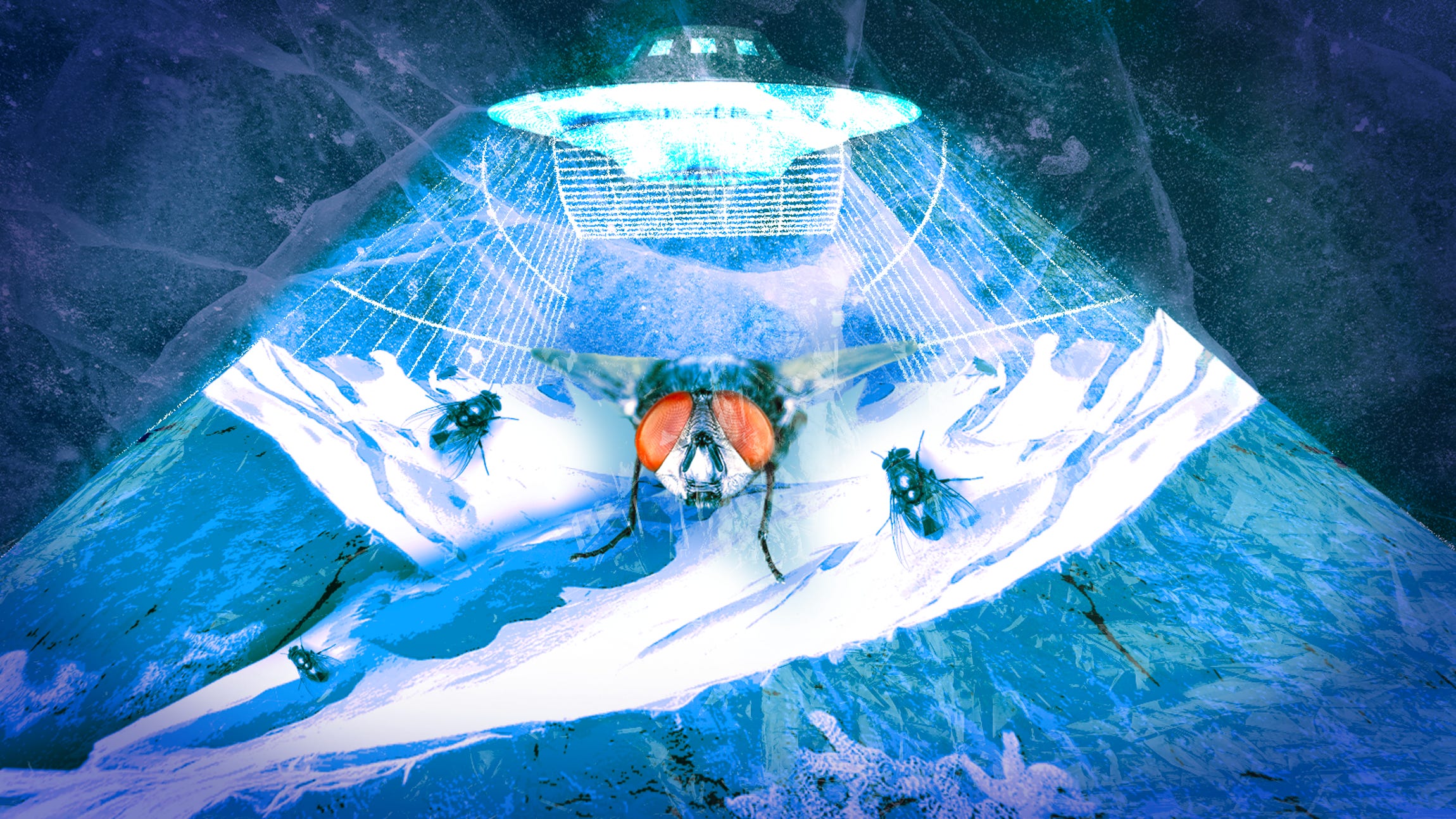
Photo: Naomi Antonino/CNET.
“As the world warms, non-native species threaten Earth’s last great wilderness,” says Jackson Ryan.

In the interest of identifying a problem in order to do something about it, today I share bad news about Antarctica: the invasion of alien species.

Jackson Ryan reports at CNET Science, “At the bottom of the stairwell leading to deck five, an alien lies upturned on green nonslip flooring. If you get close enough, you can see one of its six legs twitching and one of its translucent wings crushed to pieces. Unlike the throng of Antarctic expeditioners aboard the RSV Nuyina, Australia’s newest icebreaking ship, it hasn’t cleared customs. 

“Days after the Nuyina departed its harbor in Hobart, Tasmania, the alien buzzed its way across the Derwent River, slipped through an open door and zipped into the bowels of the ship until this restless, twitching death. 

“Scientists call the creature Musca domestica. You likely know it as the housefly.

“Even if it hadn’t been felled by an errant hand or boot, it likely wouldn’t have survived the journey to Antarctica. At temperatures below 14 degrees Fahrenheit, flies move lackadaisically and seem to barely get airborne. I know this because I’ve been watching them as part of the crew onboard the Nuyina as it crosses the Southern Ocean. Surviving flies buzz at the ship’s windows, trying to escape the upper decks. 

“If their prison break were to succeed, they’d find themselves facing seemingly endless waters, with nowhere to go. The Southern Ocean provides a formidable barrier to entering Antarctica, a great wall of water and powerful currents that has separated the continent from the rest of the world for about 30 million years. Couple that with freezing temperatures, and the Antarctic provides little hope for a wayward housefly trapped on a ship.

“But Antarctica’s temperature is changing, and dramatically. In March, a French-Italian base in East Antarctica recorded temperatures 70 degrees higher than average for that time of year. That may just be an unprecedented anomaly, but it’s expected the continent’s average temperatures could rise a few degrees by 2050. In particular regions, like the western peninsula, the continent is warming at a rate 10 times faster than the rest of the world. In February 2020, the temperature at Argentina’s Esperanza Base research station reached 18.3 degrees Fahrenheit – an all-time high – providing the kind of conditions a wayward housefly might survive in. 

“Historically, it’s been difficult for lost flies to reach the most southern landmass on Earth. As Antarctic explorers aimed to discover and map the continent in the 1800s, humans began providing fleeting opportunities for alien trespass. A handful of nations with a permanent presence across the continent annually resupply research stations that provide permanent outposts for studying the ice and the Antarctic ecosystem. …

” ‘Back-of-the-napkin math, less than a million people in the entire history of human existence have visited Antarctica,’ says Dana Bergstrom, an ecologist at the Australian Antarctic Division. 

“But that too is changing. Before the pandemic slowed cruises to a halt, Antarctic tourism was on the rise. In the 2019-20 season, almost 75,000 people visited the continent, according to IAATO, the chief tourist body in the Antarctic. That’s a 35% increase over the previous season.

“Wherever humans go, so too our pests. Signatories to the Antarctic Treaty and the Madrid Protocol, which include protections for the Antarctic environment, must endeavor to limit their effects on the pristine wilderness, and tourist bodies like IAATO and national Antarctic programs go to great lengths to prevent biological invasions. …

“If an alien were to slip in, it could be disastrous for the delicate Antarctic ecosystems hidden from the world for millennia.

” ‘It’s a super special place to understand how the planet works,’ says Bergstrom. ‘And so it’s really worthwhile putting all our efforts to try to keep nature operating without interfering.’

“On the eastern edge of Antarctica … [a] base, called Davis, is Australia’s southernmost presence on the continent.  In 2014, its hydroponics facility was the site of an infamous alien invasion.

“In May of that year, expeditioners entered the facility, composed of two gray shipping containers, to pick fresh greens for the chef’s evening meal. … During the vegetable collection, they inspected the facility’s water and noticed a black mat had developed over the surface. ‘When they looked closer, they realized it wasn’t a mat,’ says Andy Sharman, environmental manager at the Australian Antarctic Division, ‘it was thousands of tiny invertebrates.’

“Davis had been invaded by The Thing, a thousand times over. An alien species of arthropod known as Xenylla had snuck into the facility and began multiplying in the warm, wet conditions. The flealike critters, known as collembolans, hadn’t been seen in this region of the Antarctic before but had become established in warmer areas. A crack team of scientists deduced that should they get out, they might threaten the local ecosystem.

Almost immediately, the station went into eradication mode. ‘We had a biohazard response like you might get with a virus or disease,’ notes Sharman.

“The effort was blazingly fast. The response team sprayed alcohol throughout the facility, then bagged and burned everything, including recently harvested vegetables that had already made it to the Davis kitchen. The building was subjected to rigorous freeze-thaw cycling; the heat would trick any leftover eggs into hatching and then the temperatures would drop to minus 11 degrees Celsius, killing the hatchlings. 

“The response team also took extreme social distancing measures. ‘We actually lifted the whole building out and parked it on the sea ice and left it there,’ says Sharman. A few months after the discovery and various eradication measures, the containers were shipped back to Australia.

“An investigation into the source of the incursion eventually discovered that the aliens likely got in through plant feed. Subsequent monitoring hasn’t found the collembolan in the area since, but other stations have experienced invasions, too, and protecting the continent from such risks is a constant battle. 

“Exterminating The Things at Davis is one of the Australian Antarctic Division’s success stories, but the threat of incursion is constant. Invertebrates are the most widely dispersed non-native species and are known to hide in shoes and bags, while plant seeds can become stuck in Velcro and marine creatures can lurk in ballast tanks on vessels.” 

The long, interesting CNET article is, here. No firewall.

Read Full Post »

Image: Cineteca di Bologna as part of Progetto Chaplin.  

We had one of the first televisions because my father was writing a story for Fortune on Dumont. It was a little black & white screen in a huge wooden box.

There really wasn’t much on in the beginning. We watched endless silent movies like Charlie Chaplin, and some with sound like The Tons of Fun, featuring big, heavyset guys, or Laurel & Hardy. The Lone Ranger was considered a huge advancement and even in black & white Disney was pure magic. Artist AndreÌ Dugo came over to watch what we were watching because he was writing Tom’s Magic TV.

But that was later.

Today I am remembering those hours of watching silent movies because the radio show the World tells me that silent movies are still being shown.

Theo Merz writes at the World, “On a recent Saturday evening, an audience ranging from teenagers to the retired, gathered at the film institute in Brussels, Belgium, to watch Isn’t Life Wonderful, a 1924 movie by the American director D.W. Griffith.

“It’s one of Griffith’s lesser-known works telling the story of a couple of Polish refugees who fall in love despite the hardships they face in Germany following World War I.

“ ‘We have an amazing collection of silent films in the Cinematek,’ said Christophe Piette, who chooses which films to screen. …

“The Cinematek — the only remaining cinema in the world with a regular schedule of silent films (along with live piano accompaniment) — is thriving.

“ ‘It is a museum, like, you could say; Paris has the Louvre Museum.’ …

“Piette said that around 80% of silent movies have been lost forever — at the time they were being made, the industry just wasn’t very interested in preserving its output. But Piette’s predecessors tasked themselves with collecting every single silent film that remained. Now, the cinematheque has about 10,000 such movies.

“ ‘[The Cinematek] really wanted to share it with the audience and with younger people who are used to younger films — to recent films — and to show them where cinema was coming from. It is our mission.’ …

“The silent film program has been going since the 1980s, and Piette said it’s as popular as ever. But he complained about a lack of funding from the Belgian government, especially given the program’s unique status and the broad audience it attracts.

“Lucas Vienne is 17 years old. He comes to the Cinematek most days and was in the audience for Isn’t Life Wonderful.

“ ‘I started to come here to see very popular movies, the Shining and stuff like that,’ he said. ‘But then, I started to check out films I’d never heard of.’

“Now, Vienne said that he doesn’t see much difference between silent films and more recent movies — for him, it’s all cinema. ‘I’m also interested in the history of cinema — so, coming back to silent film, it’s interesting to see how film evolved.’

“For the price of a ticket, audiences not only get to see a movie  — they also get a live concert.

“Hughes Marachel is one of a roster of pianists who accompany every single film. He’s 59 and has been working at the Cinematek part-time for more than three decades.

“Marachel is a professional performer and composer. But when he’s playing there, his main aim is to blend into the background.

“ ‘You are not to be the star,’ he said. ‘The star is the movie. The best compliment you can make to a silent movie pianist is: “Wow, I forgot you were there.” ‘

“Often, pianists are seeing the film for the first time, and everything they play is entirely improvised. ‘You just let the picture on the screen, the movie, impress you, and the impression comes in your body and in your fingers. And you play.’

‘Marachel said that interest in the screenings dipped when film on demand became widely available at home. Now, the movies are picking up again as audiences seek out something different. …

“ ‘For young people, it’s very interesting.’

“Many of the films he accompanies are a hundred years old — if not more. But the Cinematek hopes it’ll still be attracting an audience a hundred years into the future.

More at the World, here.

I looked for a bit more on Hughes Maréchal.

The website Screen Composers says, “Hughes Marachel composed more than 80 film original soundtracks, with inspiration reflecting his interest and passion for a large spectrum of music. His long experience as a silent movie pianist allows him to quickly adapt to and grasp a film’s rhythm and emotional intensity.

“He can also rely on his extended experience with multiple instruments and time as a studio musician.

“With a vivid interest in acoustic music, he enjoys the hypnotic power of atmospheric music, the lyricism and poetry that music can convey. Since the beginning of his career, Hughes has always viewed the job as a dialogue between the musician and the director (as well as the movie editor and sound engineer and designer) working together to serve the film. Music only has meaning if it brings an additional dimension to the visual one.”

Read Full Post »

Photo: Dan Plaster/CBC News/Creative City Centre.
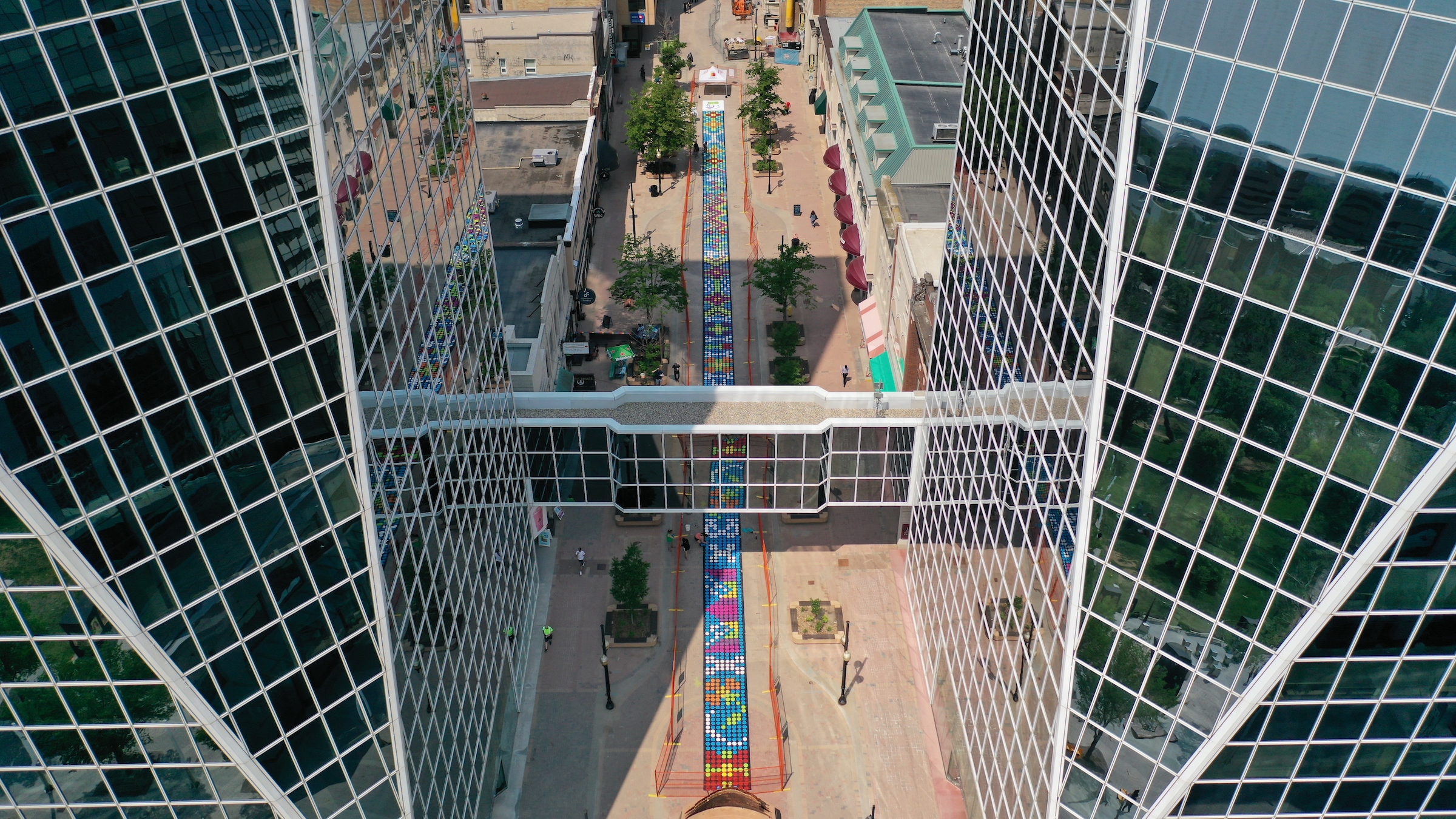
An aerial view of “The Path to Reconciliation” (2023) in downtown Regina, Saskatchewan.

There’s a new effort in Canada to make the art of indigenous people more visible to all. At Hyperallergic, Rhea Nayyar reports on one public project, “The Path to Reconciliation,” a pavement mural painted in the style of traditional beadwork.

“Hundreds gathered in downtown Regina, the capital city of the Canadian province of Saskatchewan,” writes Fayyar, “for the unveiling of a new public artwork on National Indigenous Peoples’ Day last Wednesday, June 21. Cree-Métis artist Geanna Dunbar and Inuvialuit-Gwich’in artist Brandy Jones designed ‘The Path to Reconciliation’ (2023), a 300-foot-long and eight-foot-wide footpath mural on pavement rendered in the style of traditional First Nations beadwork. The piece featured over 2,600 painted circular ‘beads,’ also referencing the significance of the circle as a broader Indigenous symbol rooted in healing, community gatherings, and mutual support without hierarchies.

“The mural occupies a stretch of a downtown pedestrian-only city block at the F.W. Hills Mall on Scarth Street. Dunbar and Jones incorporated motifs such as flowers for their ubiquitous representation in every culture; bison bones to honor how First Nations peoples use every part of an animal for sustenance and survival and in acknowledgment of their near extinction due to colonial overhunting; and the colors of the aurora borealis that represent late ancestors looking down and offering guidance to those still on Earth. The path begins in front of late artist Joe Fafard’s buffalo sculpture, ‘oskana ka-asasteki’ (1998), and is marked by a painting of a white buffalo, which signifies the sacred loop of life for several Indigenous cultures. …

“ ‘Reconciliation begins with starting these conversations and improving education around these subjects,’ Jones said, reflecting on her community work on top of this project. ‘There’s so much interest in wanting to learn more and help out.’ …

“Dunbar and Jones sought guidance and knowledge from Muscowpetung First Nation Elder and residential school survivor Brenda Dubois as well as Indigenous cultural art advisor Audrey Dreaver for this endeavor.

“ ‘Dubois told us a very powerful story about how river water and ocean water pass through obstacles to meet each other, and that really resonated with us so we made blue background beads to represent the journey of water along the path,’ Dunbar noted. Jones mentioned that Dubois had a grounding presence that helped the artists tone down their perfectionistic tendencies for this project and that Dreaver was a great resource for historical knowledge about the ubiquity of beadwork as a post-colonial impact on First Nations cultures across North America.

“The artists joined forces on this project through the Creative City Centre (CCC), an artist-run community space in Regina that provides employment opportunities and professional development assistance to independent creative workers, and the Regina Downtown Business Improvement District.

“ ‘It was interesting to see a bunch of people coming together from different places, financial classes, cities, and so on really endure the harsh weather of an extreme heat wave for this,’ Dunbar said of the public turnout. ‘We were all uncomfortable, and that also represents the path of reconciliation — to feel what it’s like to be uncomfortable in situations and work together as a team.’ She stated that reconciliation for non-Indigenous people to foster and maintain respectful relationships with First Nations people means knowing where your money is going, and ‘putting in the work and creating jobs.’

“ ‘You can wear an orange shirt for Every Child Matters Day (September 30), or you can come out on Indigenous Peoples’ Day (June 21), but where did you get your orange shirt?’ Dunbar asked. ‘Did you buy your shirt at Walmart, or did you purchase it from an Indigenous artist?’ “

We do not seem to have enough colors for all the serious issues dyed T-shirts represent nowadays. Today I am learning about orange for indigenous children, but I know orange is also used in MS ribbons and, separately, for ending gun violence.

More at Hyperallergic, here. Nice pictures. Subscriptions welcome.

Read Full Post »

Photo: Plantible Foods.
Duckweed to feed the world.

I admit I have not yet found a plant-based hamburger or vegan chicken that I really like, but since inventors keep working on better-tasting meat substitutes, I have hope. Today’s story is about a company investing in new protein sources — for example, duckweed.

Michael J. Coren is Climate Advice Columnist at the Washington Post.

He writes, “I came to this aquatic farm an hour outside of San Diego because I wanted to see what could be the future of humanity’s protein supply. At the moment, it looks more like a meth lab out of the drama Breaking Bad, jokes Tony Martens Fekini, the chief executive of Plantible Foods.

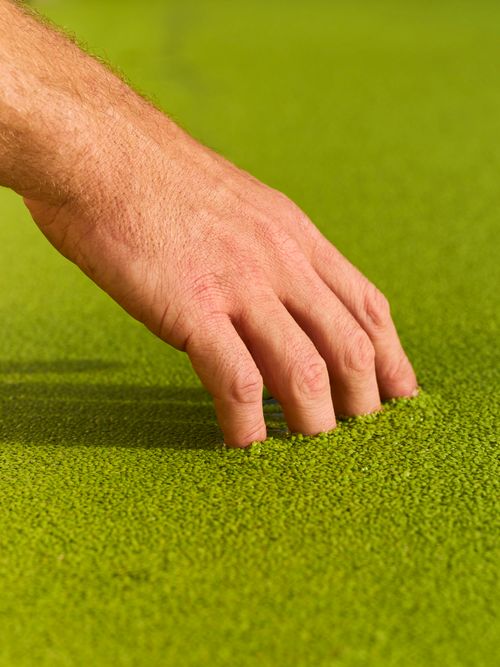
“Decrepit recreational vehicles squat on the property. In one corner, people tend to vials, grow lights and centrifuges in a trailer lab. More than a dozen big ponds filled with duckweed, a tiny green plant, bask in the Southern California sunshine.

“But the only thing cooking here is protein.

“Within each tiny floating aquatic plant is a molecule colloquially called rubisco. Without it, most life on Earth would cease to exist.

“Plants use rubisco protein — technically known as Ribulose-1,5-bisphosphate carboxylase/oxygenase — as the catalyst for photosynthesis, combining CO2 from the air with the building blocks for sugars and carbohydrates composing the base of our food chain.

“Rubisco is arguably the most abundant protein on the planet. Every green leaf has it. But this tireless molecule is locked inside plants’ cells, spoiling almost as soon as it comes into contact with the outside world. At the moment, eating salads is the only way to consume much of it.

“But Plantible’s farm may change that. If it succeeds, duckweed may become humanity’s first new major crop in more than a century. …

“Rubisco doesn’t just provide the protein we crave. It’s one of the world’s most versatile proteins, shape-shifting into forms resembling egg whites, meat, milk, gluten or even steak — all extracted from leaves. …

“The world grows more than enough food to feed everyone on Earth. Much of it goes to livestock. About half of the corn and soybeans grown in the United States are fed to cows, pigs and chickens to support meat-rich diets.

“This is not changing anytime soon. Even as protein alternatives proliferate, global meat consumption reached a record high in 2021, roughly doubling since 1990. The typical American consumed about 260 pounds of meat and 670 pounds of dairy last year, according to government statistics.

“Advising people to eat less of it isn’t likely to do much. In country after country, as incomes rise, meat consumption follows virtually in lockstep.

“That comes at a steep cost to ecosystems and the climate. Meat, at least how most of it is raised today, is the driver behind 57 percent of all food production emissions. …

“The challenge, then, is not to persuade people to eat more vegetables. It’s how to make plant proteins taste better than their animal counterparts.

“For a moment, it seemed like ‘alternative meat’ might succeed. Highfliers like Impossible Foods and Beyond Meat, after seeing sales soar in 2020, have faltered. Retail sales of alt-meat dropped more than 10 percent in 2022 amid health questions and high prices. Plant-based milk, while stealing market share from traditional dairy, still accounts for just 9 percent of the volume sold in the United States. …

“Plant proteins aren’t a perfect substitute. They can impart grainy textures, ‘vegetal’ off-flavors or fall short of the savory appeal of eggs, dairy and meat.

“So food producers are searching for the holy grail of plant proteins, one that combines the best of plant and animal proteins: affordable, abundant and easy to grow, with the physical properties that make a hamburger or milkshake so alluring. Rubisco might just be it. …

“Rubisco’s composition is a nearly ‘ideal’ protein for humans, according to the U.N. Food and Agriculture Organization, boasting an amino acids profile rivaling egg whites or casein in milk. Unlike the most common plant protein in soy, wheat and peas, it offers a non-allergenic, easily digestible and complete set of all nine essential amino acids our body can’t produce on its own.

“In contrast to alt-meats, rubisco is a versatile shape-shifter on the human palate. … As a binder in plant-based meats, it retains the delicious bite of a juicy burger. In a fluffy omelet or whipped meringue, it replicates the function of eggs. …

“The problem, however, has been getting it out of the leaf. As soon as a leaf is cut, its compounds bind to rubisco, rendering it unusable as a food ingredient. At the industrial scale, harvesting rubisco has proved to be a formidable challenge.

“ ‘You just have to process the plant material reasonably quickly so you don’t end up with a brown sludge,’ says [Grant Pearce, a protein chemistry researcher at the University of Canterbury in New Zealand]. Sugar beet leaves, cauliflower, kale, broccoli stems, radishes and even invasive plant species have all been harvested as protein sources. None proved economical. And some are skeptical it will ever be. …

“Duckweed, or lemna, doesn’t get much respect in most of the world. While eaten in parts of Southeast Asia, the pond vegetation is regarded as a nuisance elsewhere. That reputation belies the plant’s remarkable biology.

“The family’s 35 or so species thrive on nearly every continent, surviving at near-freezing temperatures in water conditions lethal to many others. As the world’s smallest known flowering plant, it consists of a single floating leaf, an oval not much larger than the tip of a pen. Its delicate roots dangle millimeters below the surface. In ideal conditions, it grows at a ferocious rate, doubling in mass every two or three days.

More at the Post, here.

Read Full Post »

Photo: Nidhi Suresh/DW.
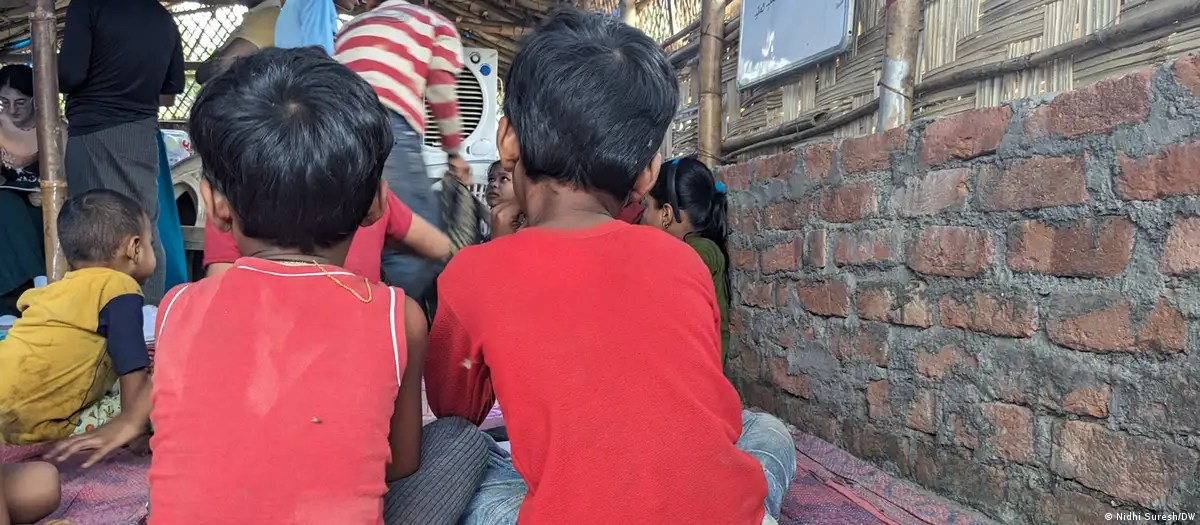
In May, a small classroom made of woven bamboo walls and a cardboard roof was set up in a refugee camp where around 30 children between the ages of 5 and 15 could be taught how to read and write the Rohingya language.

Did you ever feel a need to invent a written form of a language? The Karen language of Burma had no written system until the 1830s, and Somali got Latin characters in 1973. Meanwhile, the Rohingya are barely getting started.

Nidhi Suresh writes for DW, “Ayesha Siddique, an 11-year-old Rohingya girl, rushed into her classroom. She picked up a broom, swept the floor and laid out a plastic mat in front of the small white board.   

“Siddique’s family fled Myanmar soon after she was born to escape the widespread discrimination and persecution of the Rohingya, a Muslim minority group in the Southeast Asian nation. They spent a few years in Bangladesh‘s Cox’s Bazar refugee camp before moving to India in 2019.

“The young girl currently lives in a refugee camp in Faridabad, on the outskirts of the Indian capital, Delhi.

” ‘My grandparents often describe Burma as a beautiful land with mountains,’ Siddique said, referring to the country now known as Myanmar. ‘They told me about the trees behind our house, too. One day, I want to write a song about this in my own language.’

“For the past month, Maulvi Mohammad Ismail, himself a Rohingya asylum seeker, began teaching children like Siddique how to read and write in their mother tongue.

“In 2013, Ismail’s family also fled to Bangladesh’s Cox’s Bazar, which is currently home to at least 1 million Rohingya Muslims from Myanmar. After five years, he and his family made their way to India.

“They settled in the Faridabad camp, along with 50 other Rohingya families. The camp is located inside a garbage dump and most of the men work as ragpickers.

“The people in the camp speak to each other in Rohingya. They’re also fluent in Bengali and Hindi. However, most of them do not know how to read or write the script known as the Hanifi Rohingya. …

Rohingya living in Saudi Arabia and Bangladesh started a WhatsApp group called the Rohingya Zubaan Online Academy. 

“Ismail joined the group, downloaded the script, and spent a month learning the alphabet. Last month, he set up a small classroom made of woven bamboo walls and a cardboard roof where he started teaching around 30 children between the ages of five and 15 how to read and write the language. …

“Sabber Kyaw Min, founder and director of the Rohingya Human Rights Initiative in India, explained why it was so important that children learn the language.

” ‘We as a community do not have much documentation. Our children must learn to write our language and then our stories, which will become our history. … Through these stories we can hopefully demand justice some day.’

“The Rohingya language remained an oral tradition until the 1980s when Mohammad Hanif, an Islamic scholar, developed a script based on Arabic letters and a set of decimal numbers. [However,] due to a military crackdown, violence and an internet shutdown, most of the population could not access it.

” ‘What happens in any genocide is the systematic erasure of a cultural identity which had to be preserved,’ said Shehzar Doja, founder and editor of the Luxembourg Review. … The erasure of Rohingya culture began in 1964, when Myanmar’s then military dictator, Aye Ne Win, excluded the Rohingya language from Burmese Broadcasting Service.

“In 1982, the military government enacted the Citizenship Law, which excluded the Rohingya people from the list of recognized ethnic groups in the country. …

“In 2017, Myanmar unleashed a violent military crackdown in what many describe as a genocide against the Rohingya Muslims in the country. This led to a mass exodus, with more than a million Rohingya fleeing to Bangladesh and other countries.

“Mayyu Ali, currently residing in Canada, is a Rohingya poet and author of Exodus: Between Genocide and Me. Ali himself learned the language in 2013 while working at a research center in Myanmar which had access to the internet. …

“Ali was among the thousands of Rohingyas who fled to Bangladesh. While living in Cox’s Bazar, he began the ‘Art Garden Rohingya,’ a website which now brings together hundreds of Rohingya writers, poets and artists.

“The platform, launched in 2019, also documents and preserves ancient Rohingya folktales, proverbs and riddles. They’re published in Rohingya, Burmese and English.

“Ali also explained that another factor contributing to the slow erasure of the language is that after fleeing, most of the Rohingya focus on quick assimilation into their host countries. …

“Reefa Akhtar, 10, and Abdul Shukur, 12, are two children studying Rohingya language in Ismail’s class. When asked if they ever want to go home, both siblings immediately said, ‘yes.’

“However, Akhtar was quick to add, ‘but I also don’t want to go back to a place which makes my father sad even if he thinks about it for a minute.’ “

More at DW, here. No firewall.
Read Full Post »

Photo: Mie Hoejris Dahl.
An indigenous leader and indigenous
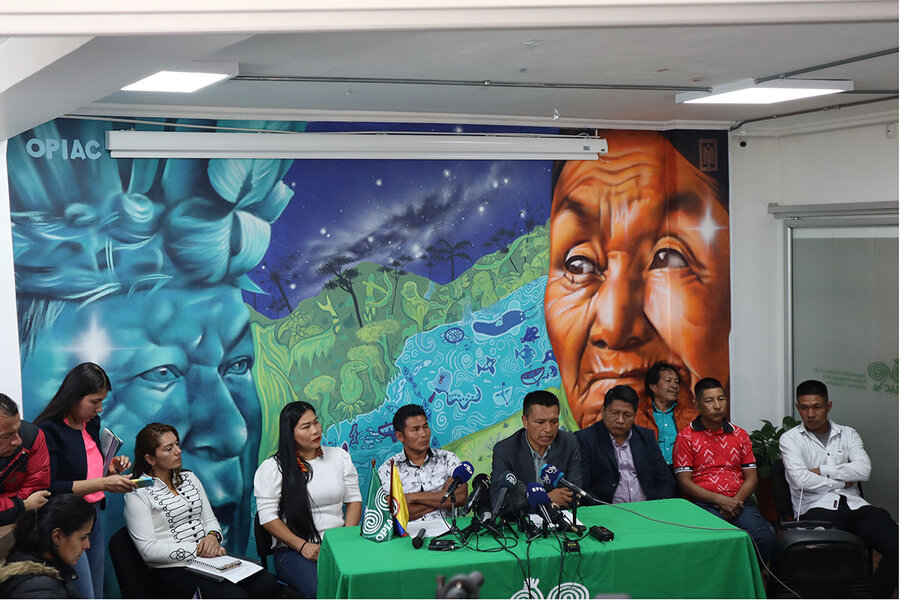
guards and family members of four lost children meet at the office of the National Organization of Indigenous People of the Colombian Amazon, in Bogotá, Colombia, June 15, 2023.

You may have heard about the kids who were in a plane crash in the jungle and survived largely because of their indigenous skills. Today I share a story about how an unusual collaboration among searchers led to their being found.

Mie Hoejris Dahl reports at the Christian Science Monitor, “Few things have united the Colombian population like the recent successful rescue of four young Indigenous children following a deadly plane crash – and their ability to survive alone in the jungle for 40 days.

“The story of Lesly Jacobombaire Mucutuy, Soleiny Jacobombaire Mucutuy, Tien Ranoque Mucutuy, and Cristin Ranoque Mucutuy, who ranged in age from 11 months to 13 years at the time of the crash, grabbed hearts and headlines [recently] for their incredible resilience. The plane wreck killed all three adults on board, but against great odds, the children survived alone in the jungle by tapping into ancestral education about the animals, edible plants, and survival tactics in the wild jungle.

“Their survival is an inspiration, but the saga also put a spotlight on challenges faced by Colombia’s Indigenous populations, who fight to preserve their culture amid historical marginalization. …

“A promising thread has emerged in the days since the children’s discovery, which is the unparalleled, collaborative search efforts by the Colombian military and Indigenous guards that led to their rescue in the first place.

“It has many here looking to what the future of respect and partnership might look like between the government and Indigenous communities.

“ ‘This was a lesson … to look for commonalities’ between the government and Indigenous groups, says Rufina Román, a leader in the National Organization of Indigenous People of the Colombian Amazon, a nongovernmental organization. ‘We are going to need to rely on joint action for many other issues … like climate change’ and environmental protection. …

“On May 15, two weeks after an engine failure caused a flight carrying three adults and the four children to crash in the dense Amazon jungle, rescuers found the front part of the plane stuck between trees in the southern Colombian state of Caquetá. The pilot, an Indigenous leader, and the children’s mother were found dead.

“Although the search team saw signs of life – a baby bottle, half-eaten fruit, and dirty diapers – the children were nowhere to be found.

“The Colombian government deployed search-and-rescue planes and helicopters, as well as land and river teams to the crash site. They scoured for the kids in an area of about 1,650 miles and used sound systems to play a recording of the children’s grandmother speaking in their native language, Huitoto, telling them that people were looking for them and that they should stay in one place.

“The children kept moving, some close to them speculate out of fear of who exactly was looking for them. Armed dissident guerrilla groups are a threat for many Indigenous communities in the jungle.

“But even so, the search was challenging from the start.

“ ‘It’s a very remote zone that requires special capacity,’ says Pedro Sánchez, the general who led the government search operation. Some 16 hours of rain a day, humidity, dense vegetation, and dangerous animals make the terrain hard to penetrate even for the country’s best-trained soldiers. It’s hopeless trying to see anything from the air due to tree coverage, and it’s hard from the ground, too. …

“Eventually, General Sánchez authorized Indigenous volunteers from across the country to participate in the operation: a decision that almost certainly saved the children’s lives.

“ ‘Without them, we still wouldn’t have found the kids,’ he says of the approximately 80 Indigenous volunteers.

“Working with the guard helped multiply eyes and ears on the ground, but also contributed important, deep-seated knowledge about the jungle. Spiritual knowledge, too, General Sánchez says.

“He describes the collaboration as ‘very fluid,’ which stands in contrast to the historical mistrust between Indigenous people and the government’s armed forces. Indigenous communities are often stigmatized as uneducated, violent, and out of touch with modern society. And the absence of the state in many of these remote communities, lack of public services like roads and running water or electricity, and few security measures in a region overrun by armed groups mean that many mistrust and feel abandoned by the state. …

“There’s hope that the unprecedented collaboration that took place between the armed forces and the Indigenous guard in Operation Hope, as the rescue mission was dubbed, can blaze a new path for relations between the government and Indigenous groups here.

“When the soldiers and Indigenous guards were deep in the jungle, on several occasions their technology, like GPS satellites and compasses, stopped working. ‘What do you say?’ General Sánchez asked the Indigenous guards.

“That simple question was ‘something spectacular,’ says Janer Quina, regional coordinator of the Indigenous guard in Cauca … who participated in the search. It contrasts with his experience with non-Indigenous Colombians in the past. Historical knowledge around nature, for example, is often met with skepticism from outsiders, he says. …

“In the long, emotional search, the soldiers and Indigenous guards shared food, personal questions, and survival techniques. Indigenous guards shared ancestral knowledge, like medicinal plants, while soldiers taught them to use their high-tech equipment. … What was perhaps even more surprising was the kids’ ability to survive in such precarious conditions.

“ ‘We taught them how to survive in the Amazon jungle,’ says Eliecer Muñoz, one of the Indigenous rescuers, of the education that children in many remote Indigenous communities are brought up with about plants, animals, and how to construct a shelter. …

“Thus, ‘Lesly [the 13-year-old] knew what to do,’ says Ms. Román, including which plants or insects were edible and how to care for a baby without any of the tools many Westerners rely on, like formula or a crib.’ “

More at the Monitor, here. No firewall.
Read Full Post »

Photo: Jef-Infojef/Wikimedia.
Stéphane Breitwieser stole art between 1995 and 2001. Here he is in the “salon du livre de Colmar,” Haut-Rhin, France.

Today’s true story interests me partly as fan of mysteries, partly as a mom. Did the art thief’s mother kid herself about what her son was up to? How clear-eyed are mothers in general when it comes to a child’s malfeasance?

The New York Times reviews Michael Finkel’s book about “the most successful and prolific art thief who has ever lived.”

Alex Marzano-Lesnevich writes, “At first, Stéphane Breitwieser, the subject of Michael Finkel’s The Art Thief, appears to be having an enviable amount of fun. Twenty-five years old and living with his girlfriend, Anne-Catherine Kleinklaus, in a small set of upstairs rooms in his mother’s home in a ‘hardscrabble’ manufacturing suburb in eastern France, Breitwieser is unburdened by such quotidian concerns as a job, making rent or planning for the future.

“He fancies himself a purer sort of soul, so devoted to beauty he must, in Finkel’s words, ‘gorge on it.’ Over the course of a dizzying 200 pages that are also an effective advertisement for Swiss Army knives (Breitwieser’s only tool), he removes artwork after artwork from museums — a.k.a. ‘prisons for art.’ … He piled all $2 billion worth of artifacts he amassed over eight years into that same attic in his mother Mireille Stengel’s ‘nondescript’ stucco house.

“Finkel includes satisfying evidence of this astounding loot in a color insert that shows a crammed jumble of ‘ethereal’ ivory carvings, shining silver goblets, unctuous oil paintings and more.

All this Breitwieser secreted away in the couple’s lair not to be fenced for money, but for the pair alone to enjoy waking up to in the morning:

“Like George Petel’s 1627 sculpture ‘Adam and Eve’ on the bedside table, next to a 19th-century blown-glass vase and a blue and gold tobacco box ‘commissioned by Napoleon himself.’

“Finkel’s account, based largely on interviews with Breitwieser, is of a romantic hero who disdains practical details as much as security ones, and who is ‘crushed’ when Stengel deigns to buy Ikea furniture. ‘I am like the opposite of everyone,’ he declares … ‘born in the wrong century.’ That Finkel aligns the reader’s sympathies with the point of view of the criminal makes for a heady rush of freudenfreude.

“The romanticized portrait of a complicated male subject is a formula Finkel has found success with before: His best-selling previous book, The Stranger in the Woods, about the Maine hermit Christopher Thomas Knight, was similarly expanded from an article in GQ. Yet despite this book’s slim size, Finkel’s efforts to fill its pages eventually strain, padding them with generic musings on why people make art and head-scratching lines like, ‘Yellow is the hue least harmonious to a banana.’ …

“By the end, we’re left with signs that what we’ve been offered is only a rough sketch, not the more complicated truth. Finkel portrays Breitwieser as a pure aesthete motivated solely by aesthetic passion, but later he’s also arrested for simple shoplifting. [And] in a shocking turn the author brushes past, Kleinklaus says under oath that Breitwieser hit her after learning she’d hid an abortion. ‘He scared me,’ she tells a courtroom; to a detective, she says, ‘I was just an object to him.’

“Finally, did Stengel really never suspect what her son was up to in her home? Was her frenzied ‘attic purge’ — during which she hurled silver pieces into a canal and burned paintings in a forest — really the ‘ultimate expression of maternal love’ Breitwieser interprets it to be? (She herself tells the police, ‘I wanted to hurt my son, to punish him.’) It is by far the most shocking act in the book, but — as with the characters of Stengel and Kleinklaus — Finkel leaves it frustratingly opaque.” More at the Times, here.

To skip the firewall, see what Wikipedia has to say about the art thief, here. You may also enjoy The Art Forger, a novel about the Isabella Stewart Gardner Museum that was fun. I wrote about it here.

Read Full Post »

Map: Surveyed by Charles Blaskowitz and published by William Faden, 1777.
When the future composer Occramer Marycoo was brought to America as a slave, he landed in Newport, Rhode Island. Today his achievements are getting belated attention.

It isn’t rewriting history to discuss slavery in America or the life of slaves. It’s resurrecting history. As one website admonishes, “To build a more just and equitable future, we must face our history in all its complexity.”

Today’s article, from Early Music America, is about an 18th century African who suffered the horror of slavery and is now being honored as the first published Black composer in America.

Sophie Genevieve Lowe writes, “In January 2023, Sotheby’s held an auction for a Chippendale chest of drawers, estimated to sell for almost $800,000. Part of its unusually high value derived from the original owner, which Sotheby’s advertised as the ‘Important Lieutenant Colonel Caleb Gardner’ — a hero of the American Revolution and friend to George Washington. Sotheby’s omits that Gardner helped enslave some 3,912 human beings, one of whom was Occramer Marycoo, perhaps the first Black African to have music published in America and the first Black musician to be recognized by the white American community as a professional musician.

“Occramer Marycoo’s story commences and concludes in Africa. … Based on the spelling of his name, it is likely that Marycoo was from an Akan language people group from the Gold Coast of Africa, specifically Ghana.

“Marycoo was forcibly transported to the American colonies, possibly on the 1764 voyage of the ship ‘The Elizabeth,’ owned by sea captain Caleb Gardner.  Records from the Transatlantic Slave Database show that the ship left Cape Coast, a prison fort in Ghana, with 120 captives on board. Only 89 survived the crossing.

“Although the majority of enslaved people who were brought to Newport, Rhode Island, were eventually shipped to the Caribbean, Gardner kept Marycoo as his own property, renaming him Newport Gardner. He is thought to have been around 14 years old when brought to America and, throughout his life, he would go by both names. …

“It was not long after arriving in Newport that Marycoo displayed his brilliant intellect. He quickly became fluent in English and French and learned the fundamentals of music. He was said to be composing within four years of his arrival in America. There are several theories as to who taught Marycoo, the most prominent being American composer Andrew Law (1749–1821). Law wrote much about music education. …

“There are numerous references to compositions by Marycoo, but his only known surviving work is the crux of Marycoo’s historical place as the first published musical work by a Black person in the nascent United States. Musicologist Eileen Southern, in her 1997 book The Music of Black Americans: A History, theorized that ‘Crooked Shanks,‘ from a collection called A Number of Original Airs, Duetto’s, and Trio’s [sic], published in 1803, was by Marycoo. The piece is credited to a composer with only the last name given, Gardner.

“However, new research seems to indicate that the music had been composed prior to the 1803 publication date. ‘Crooked Shanks’ was also previously published in London under the title ‘The Sea Side‘ by the publisher Bride in Twenty Four Country Dances for the Year 1768, and in the 1770s, as the ‘The Bill of Rights’ by the publisher Thompson.

John Fitzhugh Millar identified both these melodies in his book Country Dances of Colonial America. He also believes that Marycoo wrote this melody and goes as far to hypothesize that Marycoo also listed the dance instructions that accompany the melody. Marycoo’s status as a slave would have certainly been a deterrent to properly credit him at the time — if he indeed wrote the piece. …

“We can gather clues to some of Marycoo’s musical influences. As a composer and teacher, Law dedicated himself to forging an American musical style based on European traditions. That element is found in Marycoo’s short but delightful ‘Crooked Shanks.’ Although more scholarship may uncover earlier published compositions by Marycoo, as of now ‘Crooked Shanks’ stands as the first attributed published piece of music by a Black composer in the European style in the United States.

“Many sources point to Law as the most likely teacher to Marycoo. The problem is that the first known time that Law went to Rhode Island was in 1783, when Marycoo was already in his late thirties. By then, Marycoo had already composed his first known work, an anthem based on text from the biblical Book of Jeremiah, on or before 1764.

“An earlier teacher could have been the composer Josiah Flagg (1737-1794). Flagg was also a publisher and, in collaboration with Paul Revere, published a collection of psalm tunes in 1764, the same year as Marycoo’s anthem. Marycoo’s anthem was used in worship until at least 1940 at the Union Congregational Church in Newport, though it now appears lost. In all likelihood, Marycoo probably had a variety of musical teachers in America.

“As Marycoo approached his own musical identity, he would no doubt have been influenced by African musical traditions. West Africa had a rich history of musical instruments, for example the lute had been in West Africa since the 14th century. There is also the possibility he was a part of the jilikea or ‘singing men.’ These men were from an aristocratic family who were used by royalty to recall history, perhaps similar to the troubadours of Europe.”

How difficult it is to puzzle out these lost histories! I have to admire the people who are committed to doing it.

More at Early Music America, here. No firewall.
Read Full Post »

Photo: Riley Robinson/CSM Staff.
“Day-to-day work building trust in the community set the stage for defusing the culture wars confronting Middletown Ohio’s public schools,” says the Christian Science Monitor.

This is a story about a town that had just enough builders of goodwill to get the majority to focus on the things most people valued, agreeing to disagree about everything else constructively.

Courtney E. Martin reports at the Christian Science Monitor, “The police officer gives Marlon Styles’ driver’s side window two reassuring pats once he’s safely inside. Mr. Styles rubs his freshly buzzed head, takes a deep breath, and then fishes his keys out of his suit pants pocket and drives away from the school board meeting. It’s the latest he’s ever left – nearly 1 a.m. – and this time, unlike all the rest, he is not wondering how to get more community members involved. He is wondering how to grapple with a potentially toxic animus in his fairly harmonious town. The culture wars have just come home, and Mr. Styles, the first Black superintendent of Middletown, Ohio, has to figure out what to do. …

“In America, [many] school board meetings are broken. In cities and towns across the country, the public comment period has morphed into yelling, and sometimes even physical violence, over national hot-button topics like critical race theory (CRT), mask mandates, and basic recognition for transgender students. …

“Some public servants are preparing for more conflict by wearing state-of-the-art bulletproof vests to meetings. But there are others, like Mr. Styles, who seek out the protection of the oldest technology there is: trusted relationships. …

“Marlon Styles was chosen as superintendent of Middletown City Schools in 2017 by a school board that felt its district needed an infusion of innovative thinking. Only 15% of Middletown residents have a college degree. The current public school system serves about 6,100 students, slightly more than half of whom are white; nearly 19% are Black, and roughly 16% are Latino. Almost all of them qualify for the free and reduced lunch program. [Public] schools wind up needing to address a host of basic needs, plus plenty of untreated trauma, on a daily basis, without enough resources or recognition. …

“School board president Chris Urso explains: ‘We knew we needed a change. Trust had really fallen. We wanted a leader who was credible, creative, caring, charismatic, and had content knowledge. All the C words! And Marlon was the whole package.’

“Mr. Styles was born and raised in Cincinnati. … His older sister was the first in the family to go to college, something Marlon aspired to but it wasn’t a given. ‘I was never the smartest kid in class,’ he readily admits. 

“He had a lot of energy, though, which he channeled into sports – basketball, football, and his favorite: baseball. Saturdays were spent at his maternal grandmother’s house; while eating Grandma Watson’s homemade vanilla ice cream at her kitchen table, he studied the art of relationships. Grandma Watson had a way of showing up for people, he says. If a family at the church lost their jobs or got a harrowing diagnosis, she would put out a quiet call and gather what they needed.

She wasn’t the type to give advice or offer life lessons. ‘Her body at work spoke about the heart she had,’ Mr. Styles remembers.     

“When it came time to go to college, Mr. Styles did get in, but he spent two years in remedial classes at Eastern Kentucky University before graduating from Thomas More University. He figured if he taught, then he could coach, so he enrolled in a teacher prep program. 

“He fell in love with the buzz of a classroom. Just like Grandma Watson, he liked sussing out what students needed and making it happen for them, motivating them, building them up. Eventually he earned a master’s degree and became a school principal. But Mr. Styles was rarely behind a desk. …

“His first mission as superintendent of Middletown City Schools was to ‘electrify the culture.’ The city of about 50,000 people has a reputation regionally for economic struggle and heroin addiction – once named one of ‘America’s fastest-dying towns’ by Forbes. …

“As he looked out on his nearly 400 employees during his first convocation, an idea popped into his head. ‘Pull out your cellphones,’ he commanded. ‘No really, pull them out! Now take a few selfies with your favorite co-workers smiling and having fun, and post them online with #MiddieRising.’ 

“The crowd erupted in giddy laughter and threw their arms around one another. Before long, the campaign #MiddieRising became a rallying cry for the whole city. …

“Mr. Styles also formed a committee of community members who volunteered to meet quarterly to hear briefings on Middletown schools. … Mr. Styles thought of them as his ‘positive gossipers.’ He explains, ‘Every time they left a meeting I would say, “Now go out and tell five people in your network something the district is doing to serve our kids.” ‘ …

“The pandemic was a strain on every community, of course, but Middletown City Schools, with Superintendent Styles’ indefatigable optimism and novel strategies for stoking morale, seemed to be mostly sticking together. Until Aug. 23, 2021.”

At the Monitor, here, read how the culture wars broke out in that meeting — first, over the issue of masking, then over everything else. Then read about all the people who came together to help the town find its balance again.

There were dark passages to traverse, particularly for the superintendent. You can’t tell people what to think, and some look at normal history lessons and believe it’s something called Critical Race Theory, actually taught only in colleges. “This woke CRT ideology is not education. It’s indoctrination,” shouted one person.

The Monitor “article was reported with support from University of California, Berkeley Greater Good Science Center for its initiative on intellectual humility.”

Read Full Post »

Photo: Melanie Stetson Freeman/CMS Staff.
Andy Saks of Southborough, Massachusetts, says he is concerned about the constant presence of technology and its effect on children’s minds. His daughter Cara got an iPhone only after negotiating limits on social media use with her parents.

Our oldest grandson turned 13 this year and was able to get a phone, the first of our grandchildren to do so. He was already using an iPod for many of the same purposes and took a lot of nice pictures with it, so he wasn’t a neophyte. But as American children seem to get phones at younger and younger ages, his parents decided to go slowly.

Other parents are exercising caution, too, as Sophie Hills reports at the Christian Science Monitor.

She writes, “When Tanvi Chawla got a phone in fifth grade, she wanted access to ‘everything’ – all social media. But her parents said no until she was 13. Now in 10th grade at an all-girls school in Pasadena, California, Tanvi’s views on social media have almost entirely reversed.

“In early 2020, when Tanvi – along with the rest of the world – found herself stuck at home, social media became her ‘entire life,’ she says. ‘I didn’t post much but it was a means of communication with my friends.’ …

“But after a few months of life online, Tanvi deleted Instagram in the beginning of eighth grade. She hasn’t replaced it with any other social media. ‘I just saw how harmful it was to my mental health and I think it was negatively impacting my peers, too,’ she says. ‘So I made that decision for myself to stop using it.’ …

“Many students enter high school with their phones seemingly glued to the palms of their hands. And rates of anxiety and depression, particularly among girls, have skyrocketed since 2010.

“ ‘[Technology] is just so present that it’s impossible to completely disconnect and function for many people,’  says Liz Kolb, a clinical professor of education technologies and teacher education at the University of Michigan. …

“As a teacher, Ms. Kolb understands the inclination to go straight to cellphone bans. But whether a school bans phones or not, it’s worth taking the time to teach students good habits, she says. …

“In May, the U.S. surgeon general issued a public warning about the risks posed by social media to youth mental health. … A new poll found that most Americans, regardless of age, would like to return to a time when society was unplugged. The desire was highest among Americans ages 35-54 (77%), but 63% of 18- to 34-year-olds said they’d prefer to live in a simpler era, too.

In Ireland, parents and schools in the town of Greystones implemented a townwide voluntary cellphone ban for children.

“Rachel Harper, principal of St. Patrick’s primary school in Greystones, has noticed increasing anxiety among her 8-, 9-, and 10-year-old students. Parents report the same, adding that it’s hard to get their kids to sleep at night. Students are concerned about their bodies and self-image in a way Ms. Harper hasn’t noticed in that age group before. …

“Both parents and teachers are concerned for students’ online safety. ‘They’re just not emotionally ready to maneuver everything on a smart device,’ she explains.

“So she reached out to the principals of the other seven schools in Greystones. Together with parents, they started a community-led initiative to shelter children by agreeing that, across the town, students wouldn’t have phones until after primary school.

“The collective effort makes all the difference, says Ms. Harper. ‘From a kid’s point of view, there’s that sense of fairness, that it’s not just them’ without a phone.

The voluntary ban has attracted positive attention from all around the world, says Ms. Harper. She’s heard from many educators saying they’ve wished to implement a similar approach in their schools, though they didn’t think it was possible. …

“The Buxton School, a private day and boarding school in northwestern Massachusetts, last year banned cellphones entirely during the semester. Buxton offered students an alternative: the Light Phone, which texts, calls, and offers basic functions like a calculator, but has no capacity for email or accessing the internet.

“After one full school year, the experiment appears ‘largely successful,’ says assistant head of school John Kalapos, who also teaches English and wood shop. … Students do say they want to be on their phones less, he says, though not all of them love Buxton’s no-smartphone policy. …

“When students’ whole lives suddenly shifted online in 2020, Mr. Kalapos became much more aware of cyberbullying. It tends to be based on exclusion, which is challenging for teachers to mediate when it takes place in the form of ‘likes’ – or the lack thereof – online.

“It’s countercultural to not have a smartphone, says Joe Hollier, co-founder of Light. And while something like the Light Phone is a useful product, actually cutting back on technology exposure ‘takes user will.’

“Fear of missing out is what prevents most people – himself included – from moving away from smartphones, says Mr. Kalapos of the Buxton school. But once you do it, ‘you realize it’s not as valuable as you think.’ ”

In the anecdote from Ireland, kids were glad that it wasn’t just their school setting limits. All the schools in town did it. The importance of fairness made me think. Real fairness would involve parents agreeing to phone restrictions, too — maybe certain times of day when no one in the family uses their phone. What about that?

More at the Monitor, here. No firewall. Subscriptions encouraged.
Read Full Post »

Photo: Suzanne and John’s Mom.

Here it is August already and I haven’t even gotten to July photos. Some days it was just too hot to do anything, but as one internet Cassandra has predicted, 2023 will be remembered as cooler than any year to come. Oy.

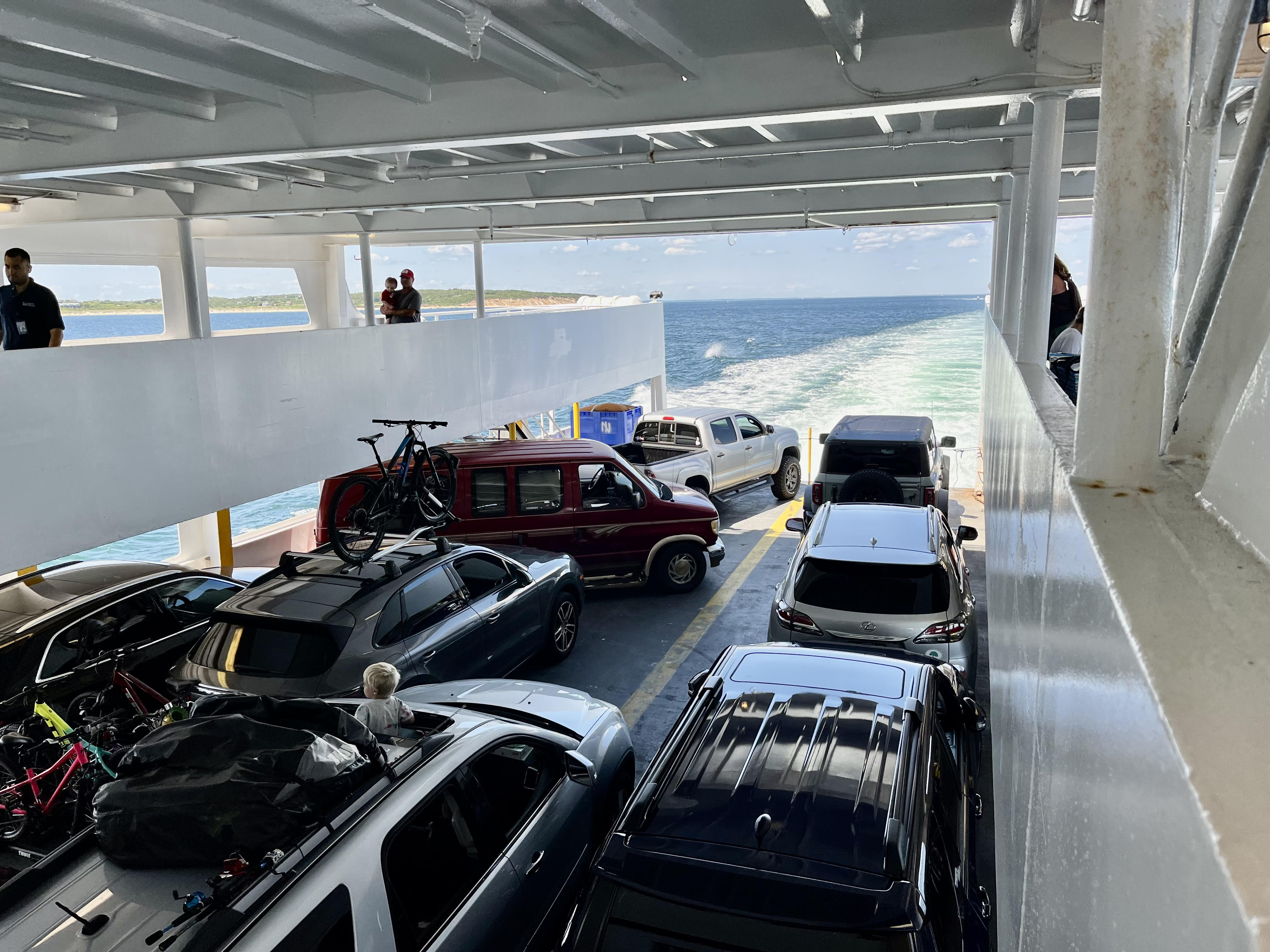
In the first photo, a little boy pops up from the family car like a turtle to observe the wake of the boat. Next we have Creeping bellflower, sometimes called “Evil Twin” because it is not a true bellflower.

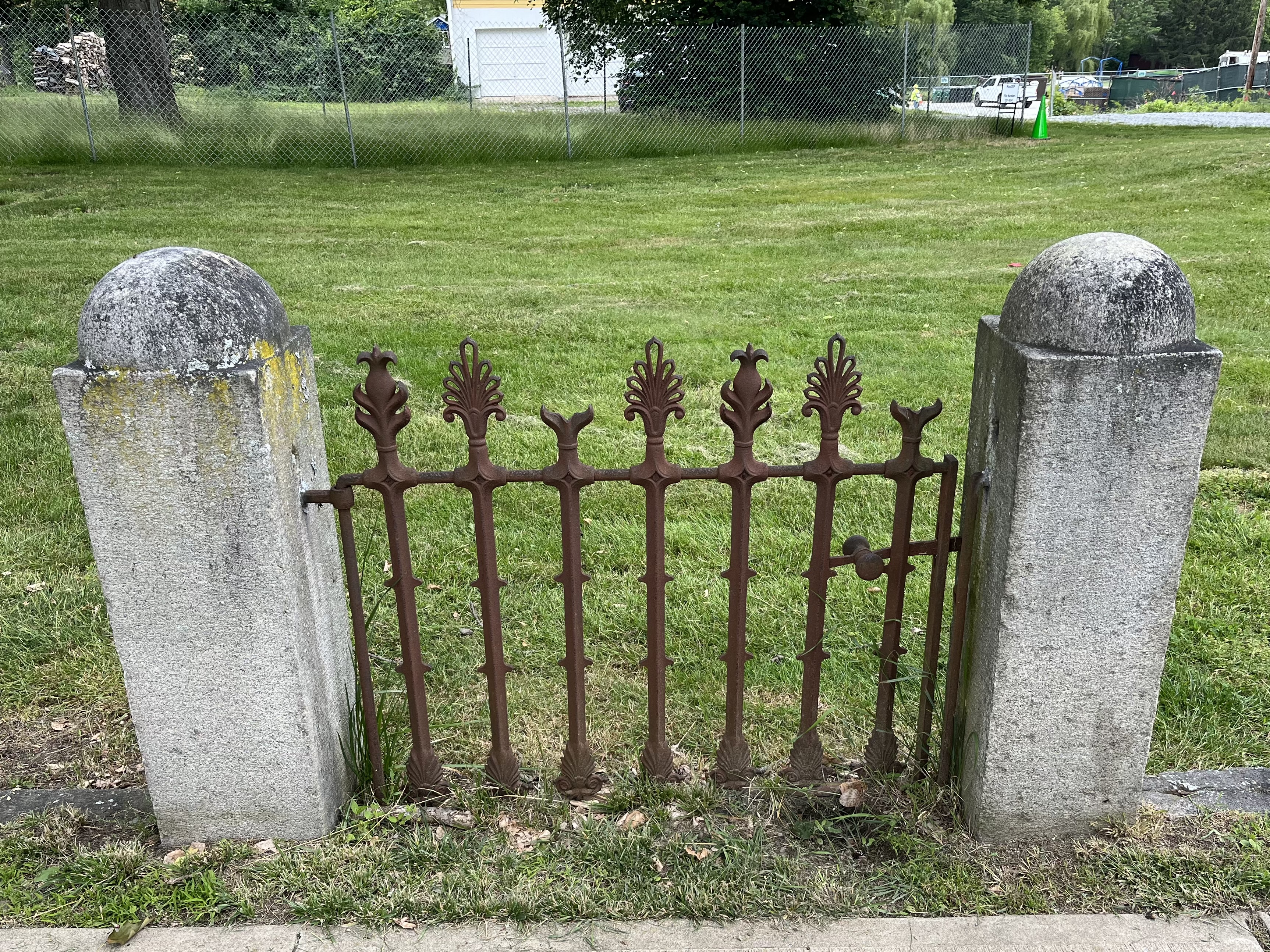
I’m amused by fancy gates that keep nothing in or out.

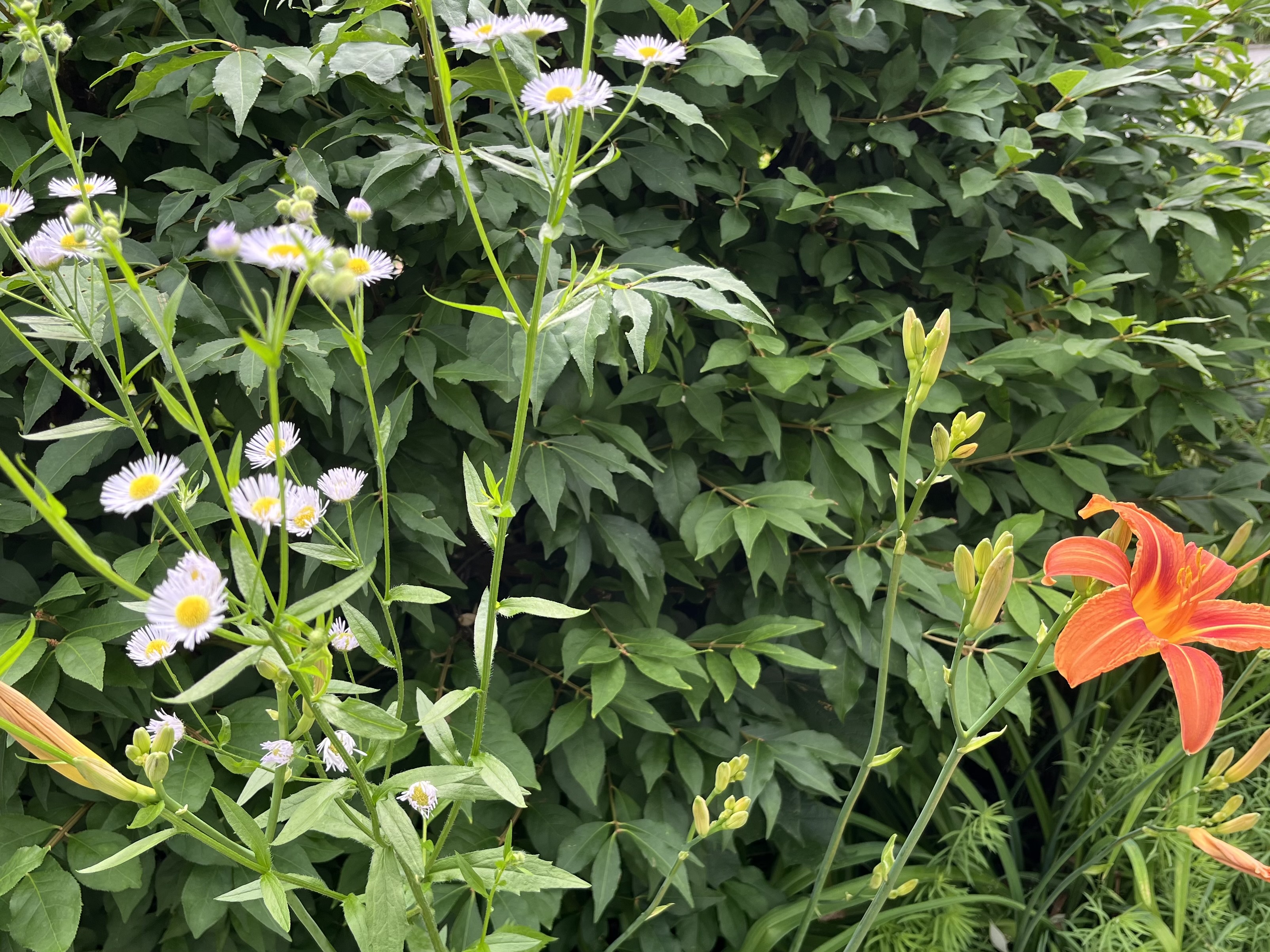
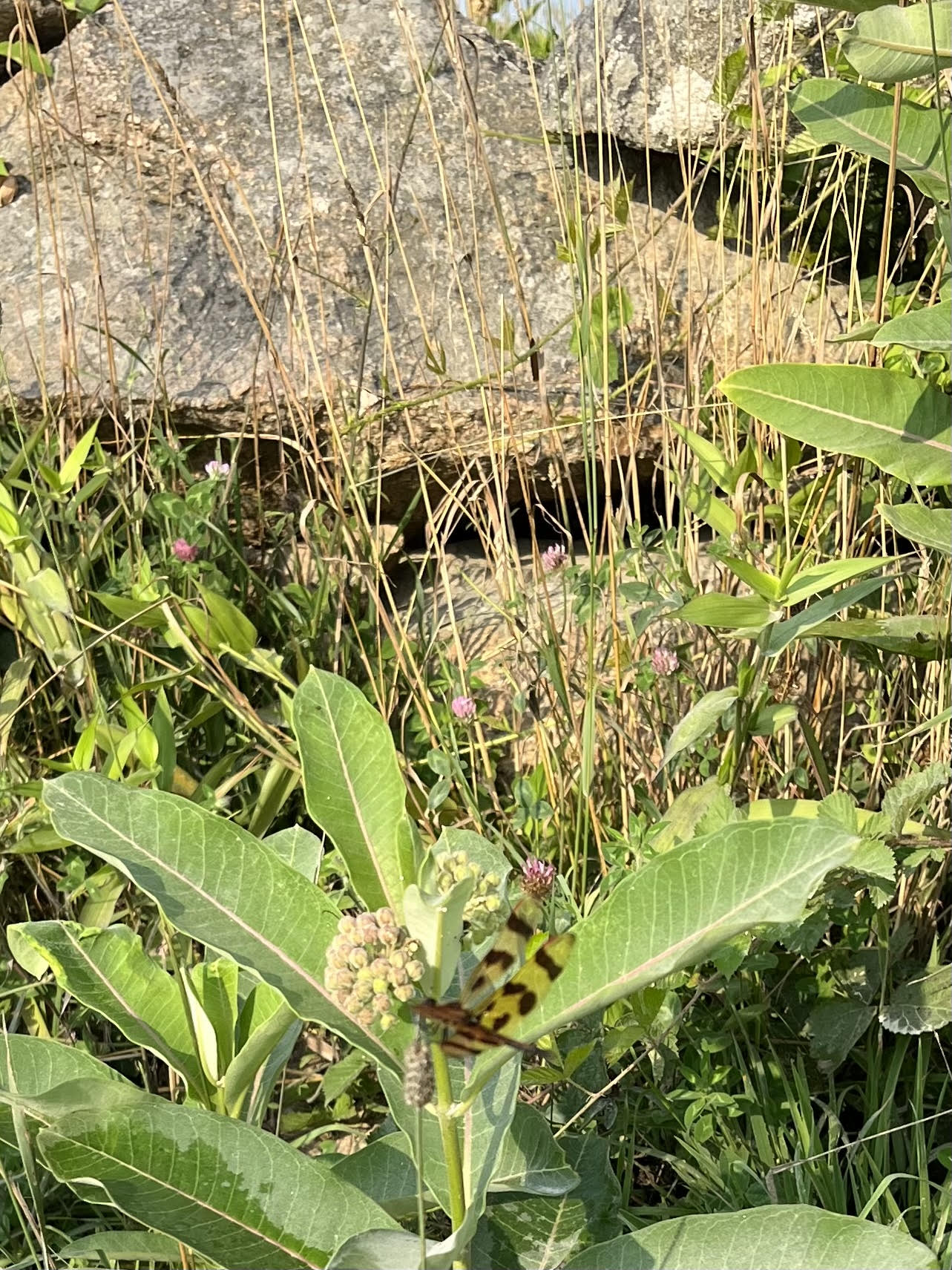
In the yard beside the orange daylily is Daisy fleabane, or so my app tells me. In the next photo, note the dragonfly trying hard not to be seen.

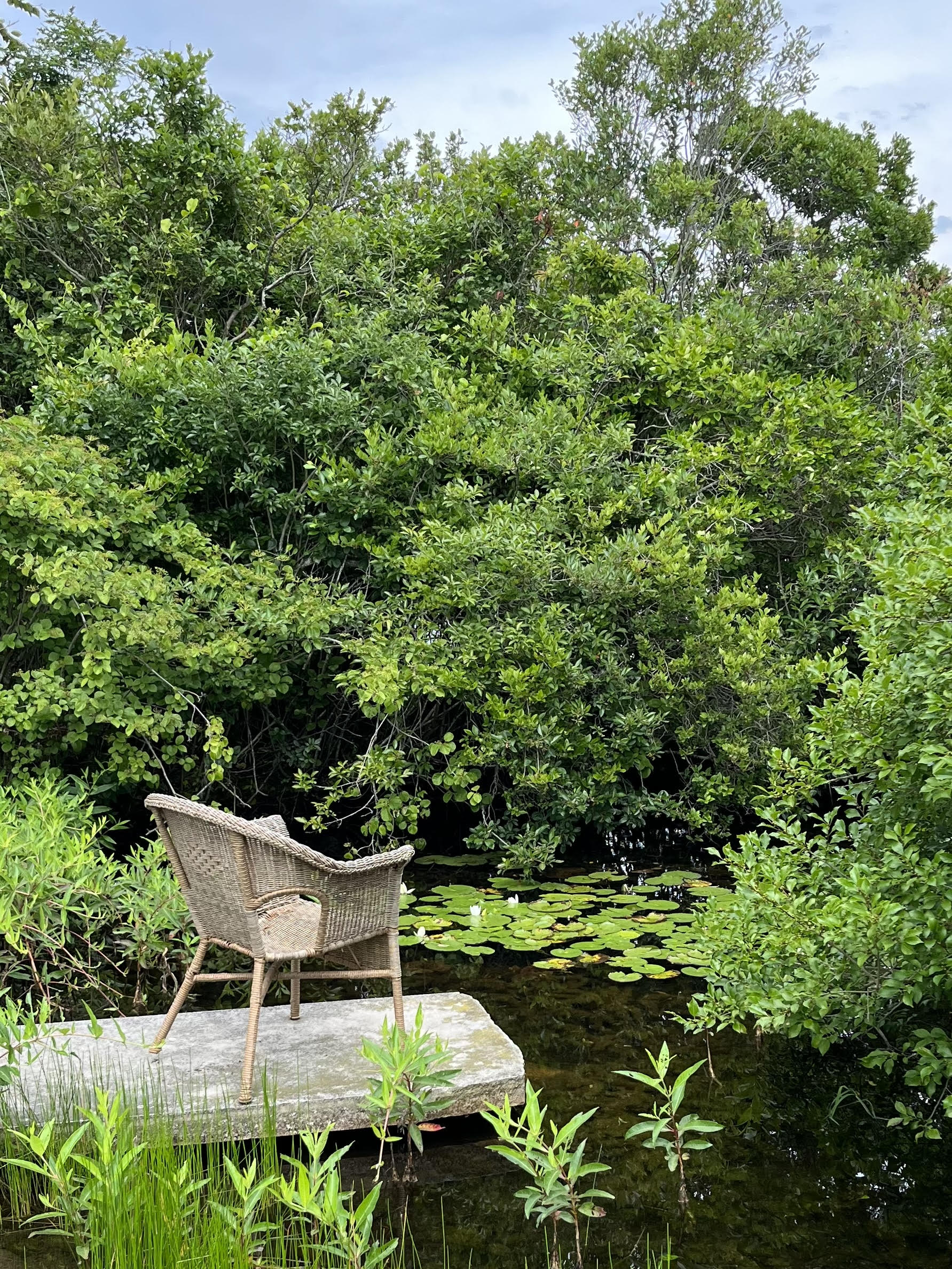
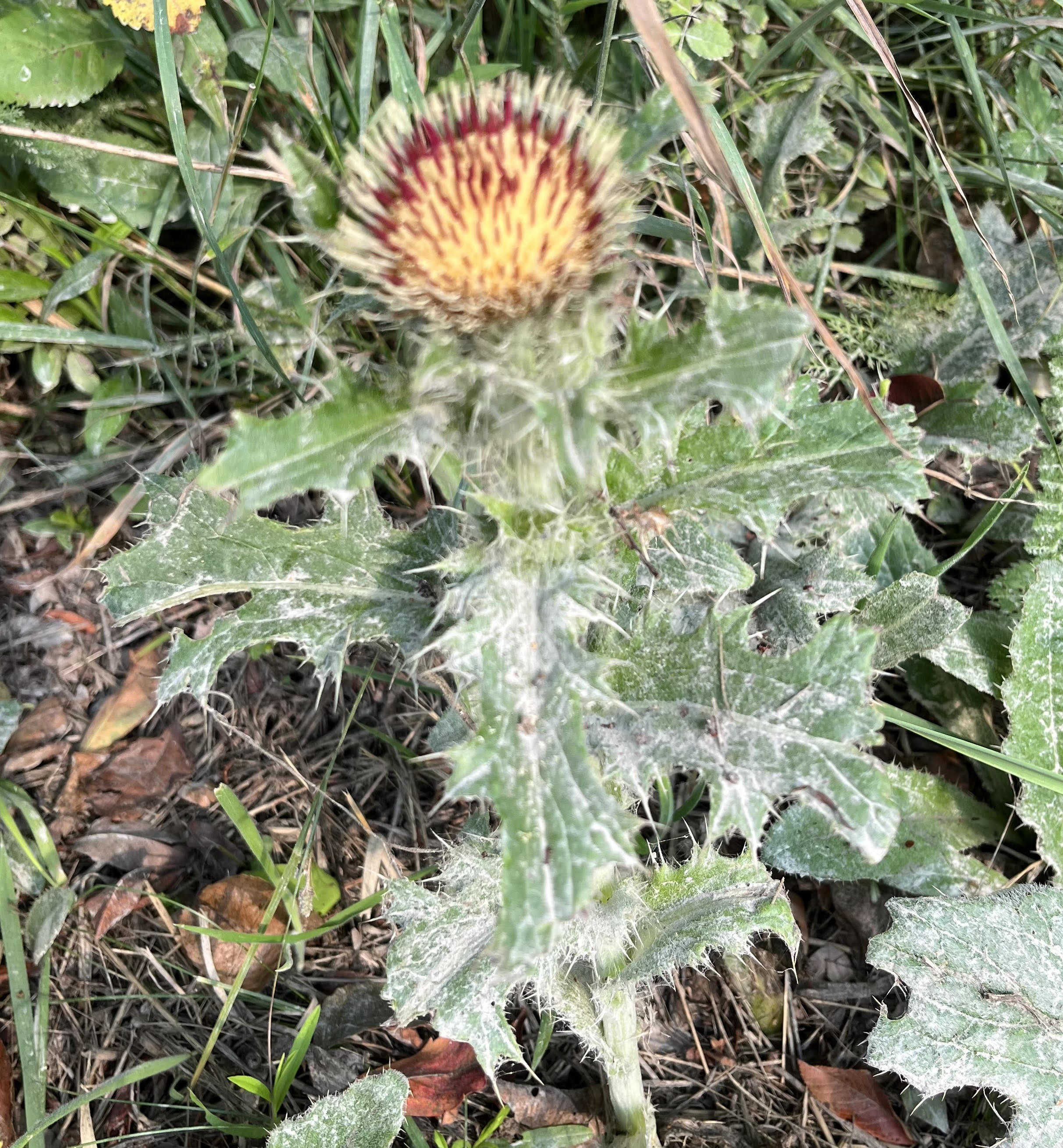
A comfortable chair sits by the summer-blooming water lilies. A mean-looking bull thistle aims to scare off all comers.

Now take a good look at the foreground of the lotus. This is what is revealed when the flower part dies: its inner self. I like to say that the inner self of a lotus is a shower head.

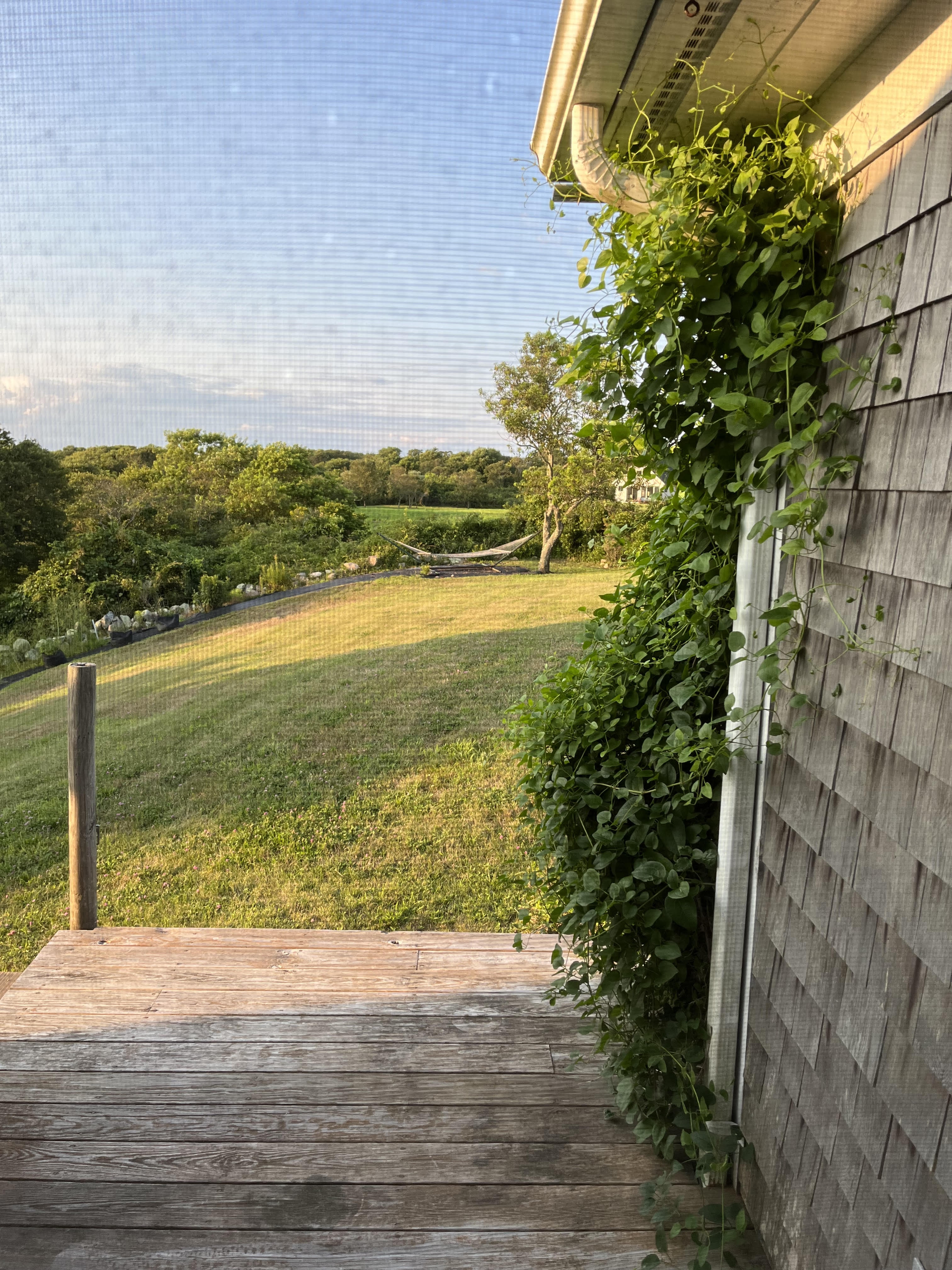
The next scene is dusk in a New Shoreham yard. Soon the deer will pop up from the other side of the stone wall and go looking for free snacks.

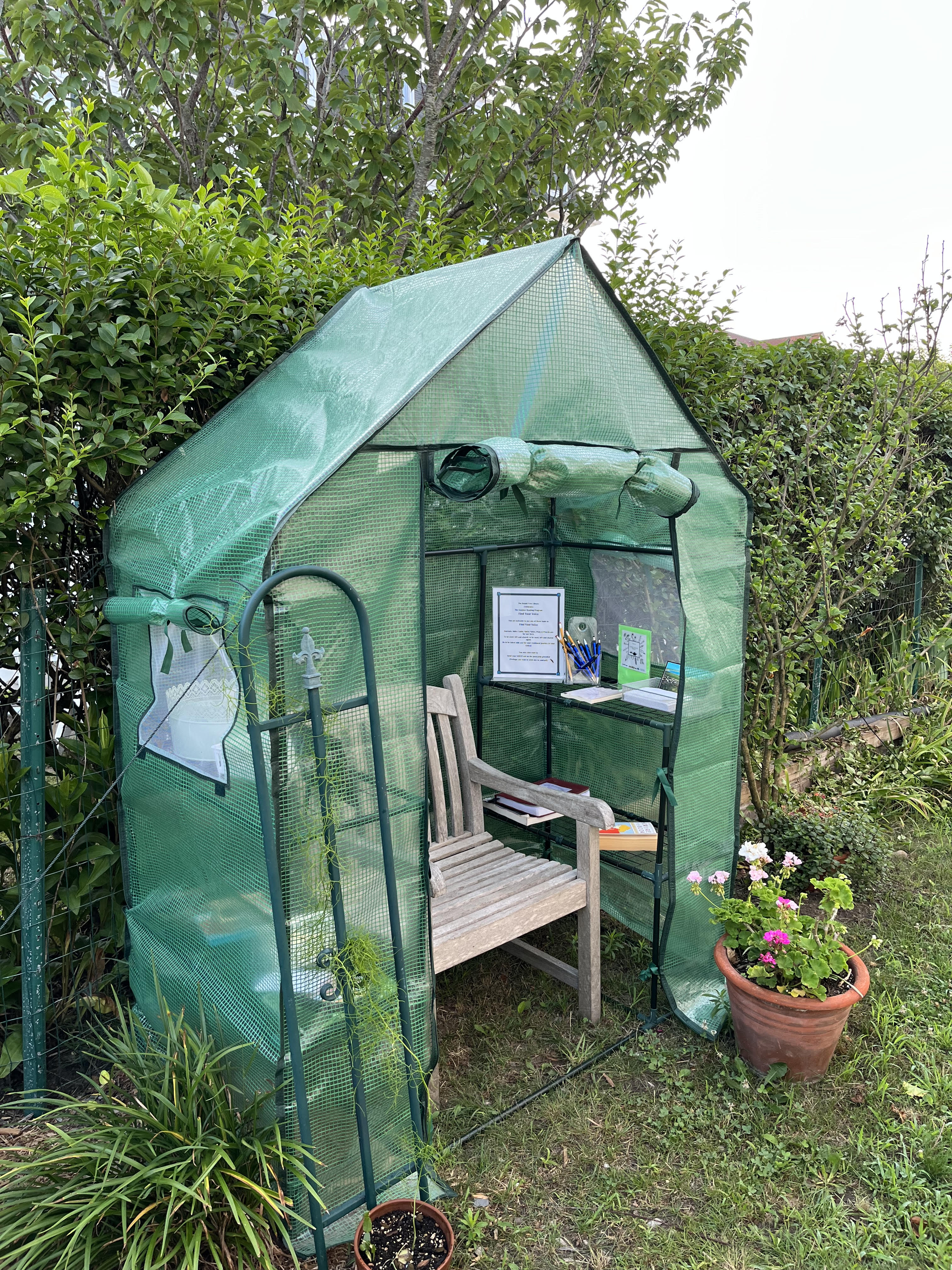
At the island library, where my younger grandson challenged all comers to a game of chess before he went to the nationals in Michigan, you can admire the little tent the librarians set out for quiet pondering and note-taking about books — or anything.

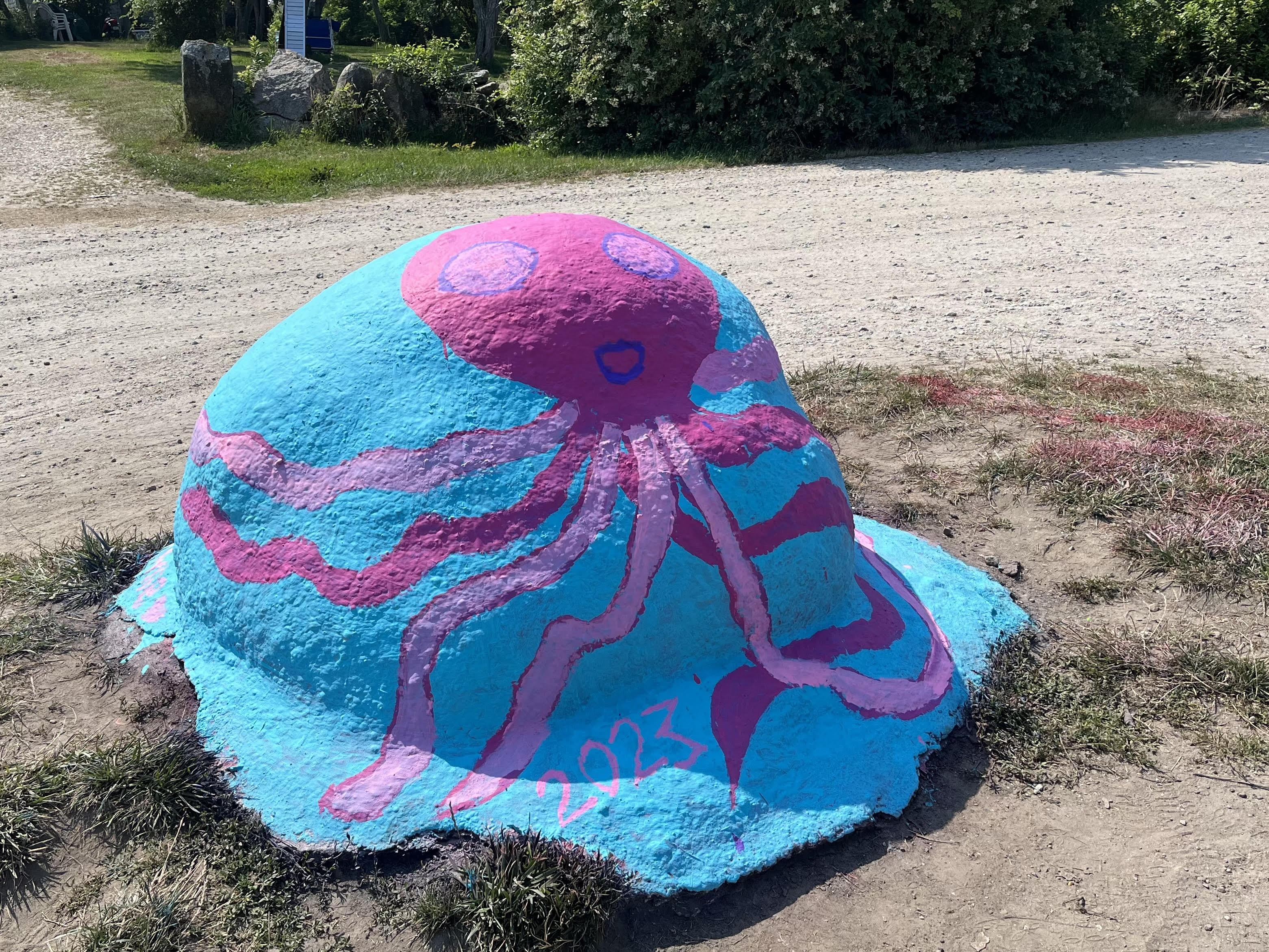
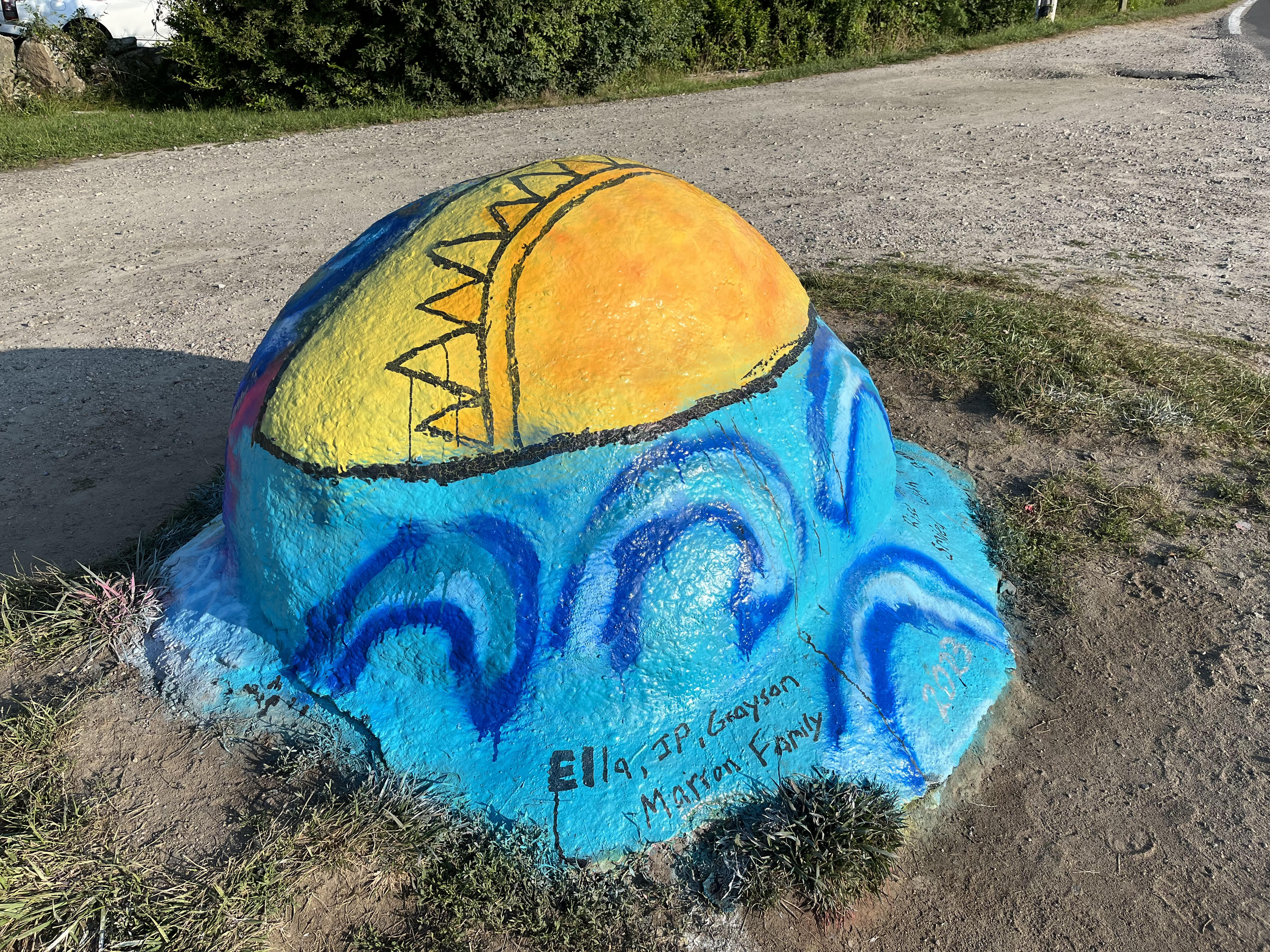
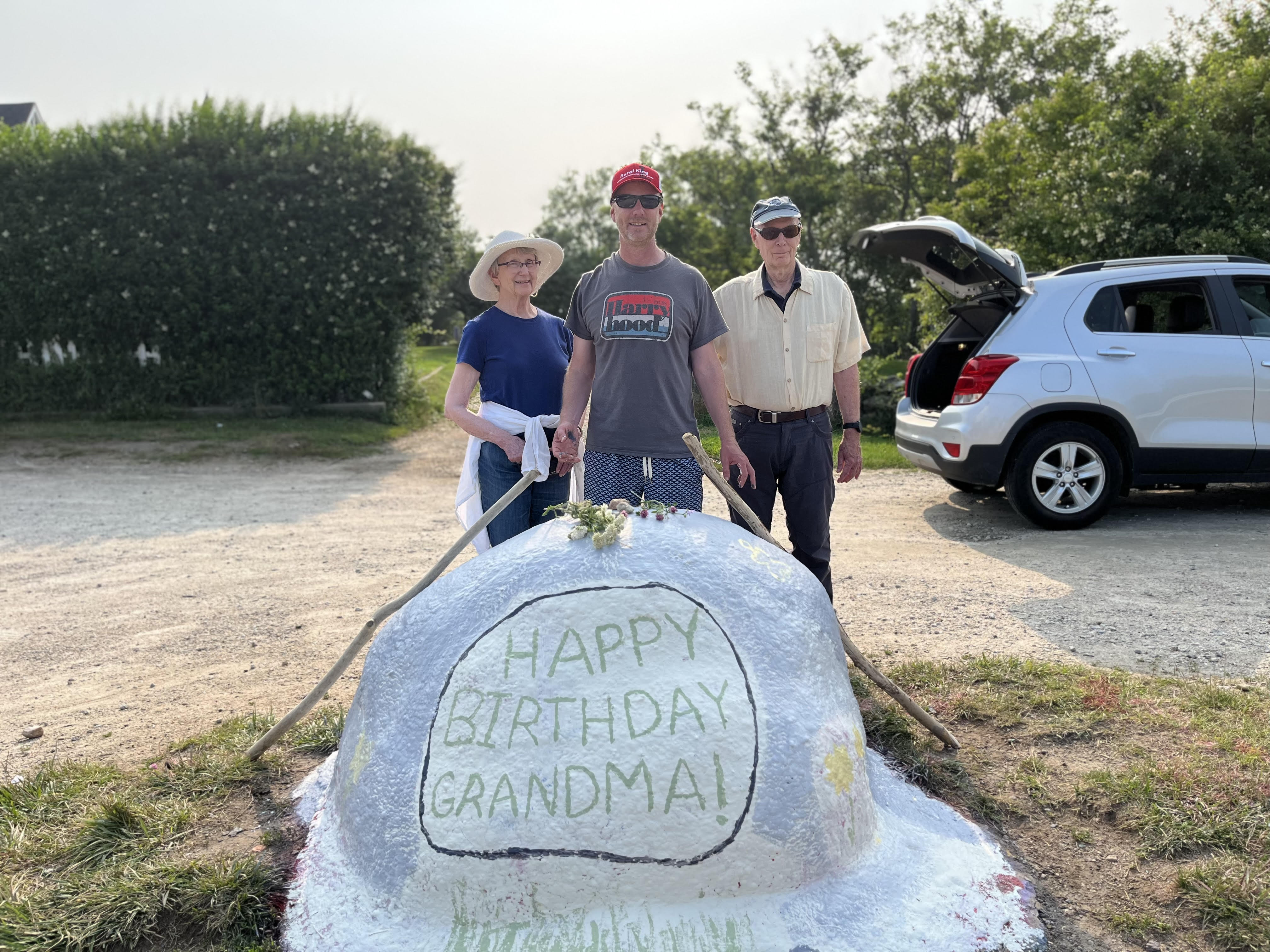
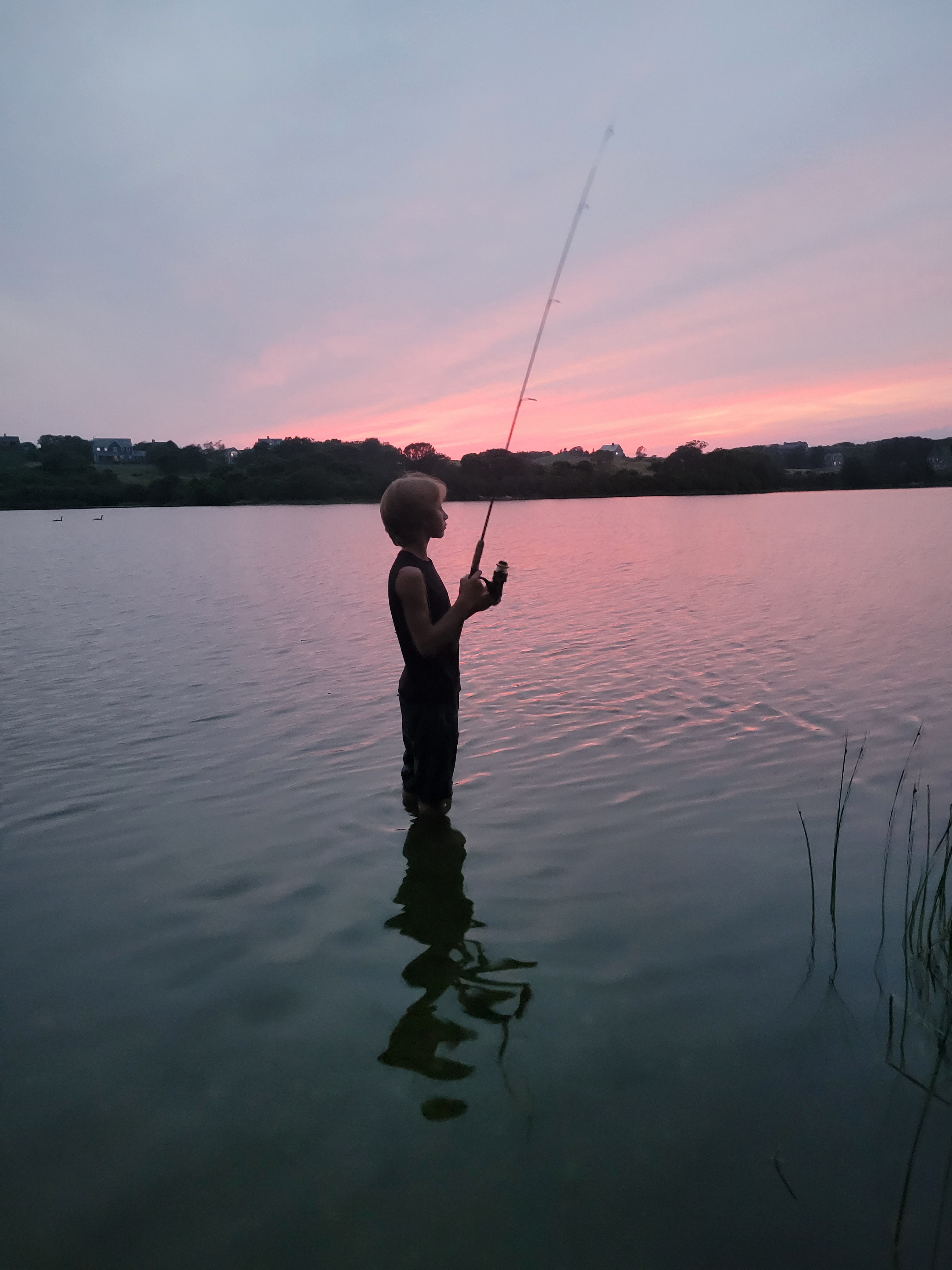
Moving right along, we can check on a few of the summer’s better painted rocks — a surprised-looking octopus, a celebration of sun and sea, and one of my birthday. Pretty much the whole family worked on that last one. My oldest granddaughter did the careful lettering. She also was the photographer for the picture below of her brother fishing at sunset.

Read Full Post »

Photo: Wikipedia.

There are so many things on this beautiful planet that we’ve never given much thought — things that turn out to be important for our future. Insects, for example, fungi, seagrass.

Allyson Chiu , with Michaella Sallu contributing from Sierra Leone, has written about seagrass research for the Washington Post.

“From the deck of a small blue-and-white boat, Bashiru Bangura leaned forward and peered into the ocean, his gaze trained on a large dark patch just beneath the jade-green waves.

“ ‘It’s here! It’s here! It’s here!’ crowed a local fisherman, who led Bangura to this spot roughly 60 miles off the coast of Freetown. ‘It looks black!’

“Bangura, who works for Sierra Leone’s Environment Protection Agency, tempered his excitement. After two unsuccessful attempts to find seagrass in this group of islands, he questioned whether the shadowy blotches were meadows of the critical underwater greenery he and other researchers have spent the past several years trying to locate along the coast of West Africa.

“It was only once he was standing in the waist-high water, marveling at the tuft of scraggly hair-like strands he’d uprooted to collect as a sample, that he allowed himself to smile.

“The wet, reedy plants Bangura held in his hands were unmistakably seagrass, and the green blades stretched past the plastic 12-inch ruler he’d been using to measure specimens. His grin grew even wider.

“The dense grass swaying in the current appeared to be healthy, and the water teemed with schools of small, silvery fish, making it the best site researchers have documented in these islands since the existence of seagrass was first confirmed in Sierra Leone in 2019. …

“Seagrasses — which range from stubby sprout-like vegetation to elongated plants with flat, ribbon-like leaves — are one of the world’s most productive underwater ecosystems. The meadows are vital habitats for a variety of aquatic wildlife.

Sometimes described as ‘the lungs of the sea,’ the grasses produce large amounts of oxygen essential for fish in shallow coastal waters.

“But, long overlooked, these critical ecosystems are vanishing. In fact, researchers don’t know exactly how many exist or have been lost. One recent study estimated that since 1880, about 19 percent of the world’s surveyed seagrass meadows have disappeared — an area larger than Rhode Island — partly as a result of development and fishing.

“ ‘When you lose foundation species like seagrasses … then you lose fisheries really quickly,’ said Jessie Jarvis, a marine ecologist who, until recently, headed the World Seagrass Association. …

“But locating grasses in the world’s vast oceans is a formidable task. While some researchers are using drones and satellite imaging, in countries such as Sierra Leone, where resources are scarce, the search is painstaking and tedious.

“Without these efforts, though, seagrasses would probably be disappearing even faster.

“ ‘What we don’t know, we can’t protect,’ said Marco Vinaccia, a climate change expert with GRID-Arendal, an environmental nonprofit that helped put together West Africa’s first seagrass atlas. …

“Similar to terrestrial plants, seagrasses have roots, leaves, flowers and seeds. Seagrasses have been discovered in the waters off more than 150 countries on six continents. The meadows are estimated to cover more than 300,000 square kilometers, an area the size of Germany. Along with mangroves, kelp forests and coral reefs, these grasses play a vital role in maintaining healthy oceans, Jarvis said. But unlike those other ecosystems, she notes, the meadows can exist in a wider range of ocean environments and tend to be more resilient than most species of seaweed.

“Critters, such as sea horses, crabs and shrimp, along with juvenile fish — some of which are critical species for fishing — often lurk within the thick meadows, seeking refuge beneath the underwater canopy. Other creatures, including sponges, clams and sea anemones, can be found nestled between the blades of grass or in the murky sediment at the base of the plants. And much as mosses coat trees, many species of algae grow directly on the leaves.

“Seagrass beds can in turn attract larger animals, including turtles and manatees, that stop by to munch on the leaves and stems. …

“From the leaves down to the roots, these unassuming plants work as ‘ecosystem engineers.’ Through photosynthesis, they help fill the surrounding water with oxygen. The leaves also absorb nutrients, including those in runoff from land, while their roots stabilize sediment, which helps to reduce erosion and protect coastlines during storms.

“Seagrasses also have the potential to play a significant role in combating climate change. Just as trees pull carbon from the air, seagrasses do the same underwater. Then, as the carbon-filled parts of the plants die, they can wind up buried in the sediment on the seafloor. Over time, this can help create sizable carbon deposits that could remain for millennia.

“But the grasses aren’t showy like coral reefs or immediately recognizable like mangroves, and they’ve become one of the least protected coastal ecosystems.”

Read more about what is being done here, at the Post.

Read Full Post »

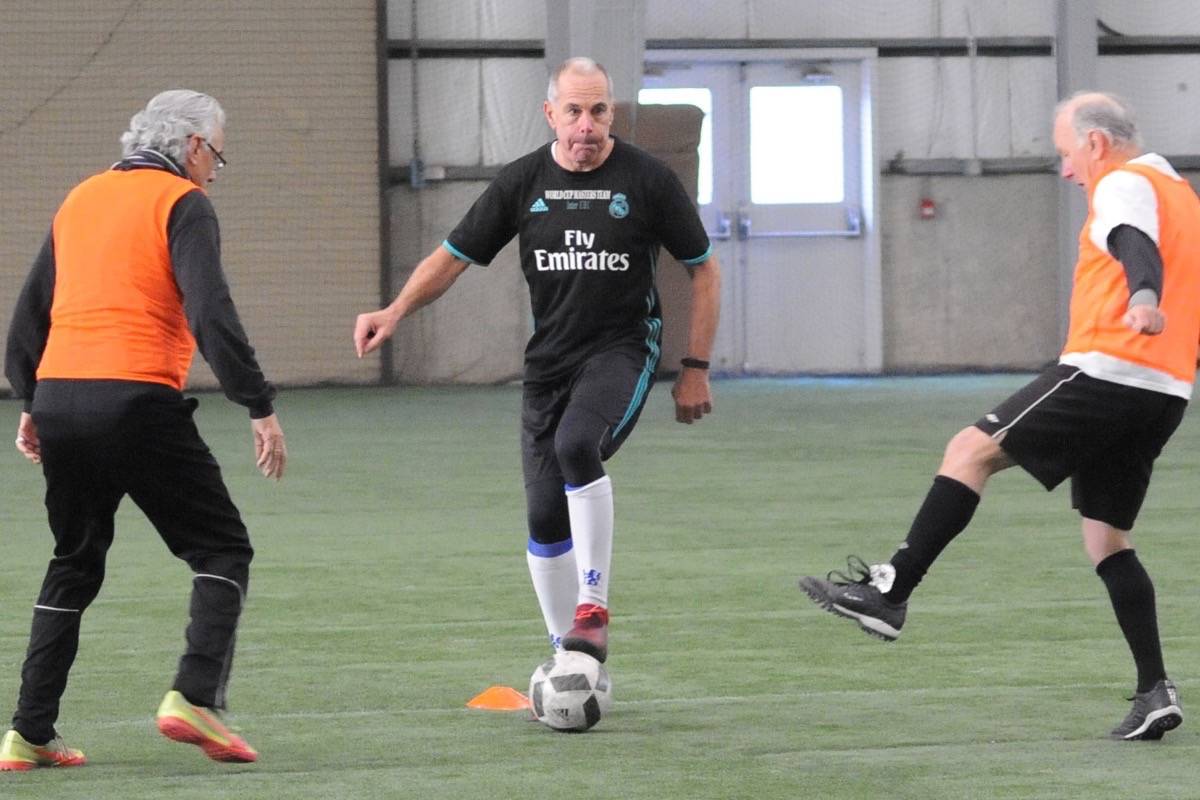
Photo: Michael Briones via Vancouver Island Free Daily.
Vancouver Island Walking Soccer Alternate’s Rob Jonas (left) and Bob Unwin try to stop Harry Hubbal of UBC Masters.

The second time my neighbor Ralph broke his leg playing pick-up soccer with other old folks, he decided maybe it was time to give it up. But he loved playing the game. Giving it up was going to be hard.

Wait! There’s hope for people like Ralph! Meeri Kim describes the interesting alternative at the Washington Post.

“Aside from his wife, soccer is the love of Gary Clark’s life. He started playing at age 7 and kept it up for more than four decades, even representing his home country Canada at the international level.

“His involvement in the sport, though, was cut short at age 48, following a knee replacement surgery. When Clark asked about getting back on the field, his doctor told him to go ahead — but only if he wanted another knee replaced.

“He dipped his toe in the water by joining a pickup game and tore the cartilage in his other knee.

“ ‘There was a sense of loss at not being able to go out and partake in my passion,’ said Clark, now 68, of Coquitlam, B.C. ‘And I knew that if I tried, I would injure myself again.’ …

“The game requires rapid accelerations, decelerations, turns and stops, which take a toll on players’ knees and ankles. A standard soccer pitch, at 115 yards long and 74 yards wide, is larger than an American football field. Players cover, on average, nearly seven miles, in a single match.

“So when a variant of the sport with no running allowed emerged in 2011, some laughed it off as a joke. Walking soccer, however, has become a global phenomenon.

“In 2011, Chesterfield FC Community Trust launched its walking football program in Derbyshire, England, as part of an initiative for older adults.

“Players can’t run or jog, with or without the ball, and one foot must be in contact with the ground at all times. Other rules also differ from regular soccer, to prioritize players’ health and safety. For example, tackling is only allowed with no contact; all free kicks are indirect; and the ball must never go over head height.

“Walking soccer is played on a smaller field (55 to 65 yards long, and 35 to 45 yards wide) and with six people on each team instead of 11.

“There are about 600 walking football clubs in England alone, for men and women.

“The country is also home to the international governing body for walking football, the Federation of International Walking Football Associations (FIWFA), which includes member organizations from countries such as Italy, Nigeria, Australia, South Korea and India. And the inaugural World Nations Cup — the equivalent of the World Cup for walking soccer — will take place in August in the United Kingdom.

Clubs have cropped up in Seattle, Chicago, Southern California, Vancouver and a few other cities and regions in the United States and Canada. …

“ ‘I have lost weight playing, so I think that’s a good sign,’ said Clark, who has played with the Tri-City Walking Soccer Club for about a year. He logs up to 13,000 to 18,000 steps in a single game, but notes that most players average around 3,500 to 7,000 steps.

“George Gorecki, 62, started Walking Soccer Chicago in early 2019, after hearing about the sport from a U.K.-based friend. The Chicago resident used to play competitive amateur soccer with a club before arthritis in his left knee and right hip slowed him down. Many older members of Walking Soccer Chicago found themselves in the same boat — unable to play because of medical conditions. …

“ ‘The guys really took to it because they were able to reconnect with their teammates, both on the field and in a social setting after the game,’ Gorecki said. …

“Most studies on walking soccer have small sample sizes, but a 2020 review of research on the sport determined that it may have health benefits and help build social connections. A 2015 study found that 12 weeks of walking soccer, in the form of a two-hour training session per week, significantly reduced body mass and percentage body fat in 10 older men. Participants, with an average age of 66, had various comorbidities, including hypertension, knee osteoarthritis and Type 2 diabetes.

“The researchers concluded that walking football is safe and effective as a public health intervention — for not only healthy individuals but also those with various exercise-limiting medical conditions.

“Other research has focused on the mental and social aspects of the sport. In a 2022 study, seven men with mental health conditions such as depression or anxiety underwent a walking football intervention. It involved up to an hour playing a game, followed by an opportunity to meet and socialize. The men reported several positive effects on their well-being. They enjoyed socializing, developed new friendships and felt a renewed sense of purpose.” More at the Post, here.

I don’t know why I am chuckling my way through this story. I do think it’s a great idea for soccer lovers — maybe even less dangerous than pickleball.

Read Full Post »

Photo: Dave Farrance at Wikimedia Commons.
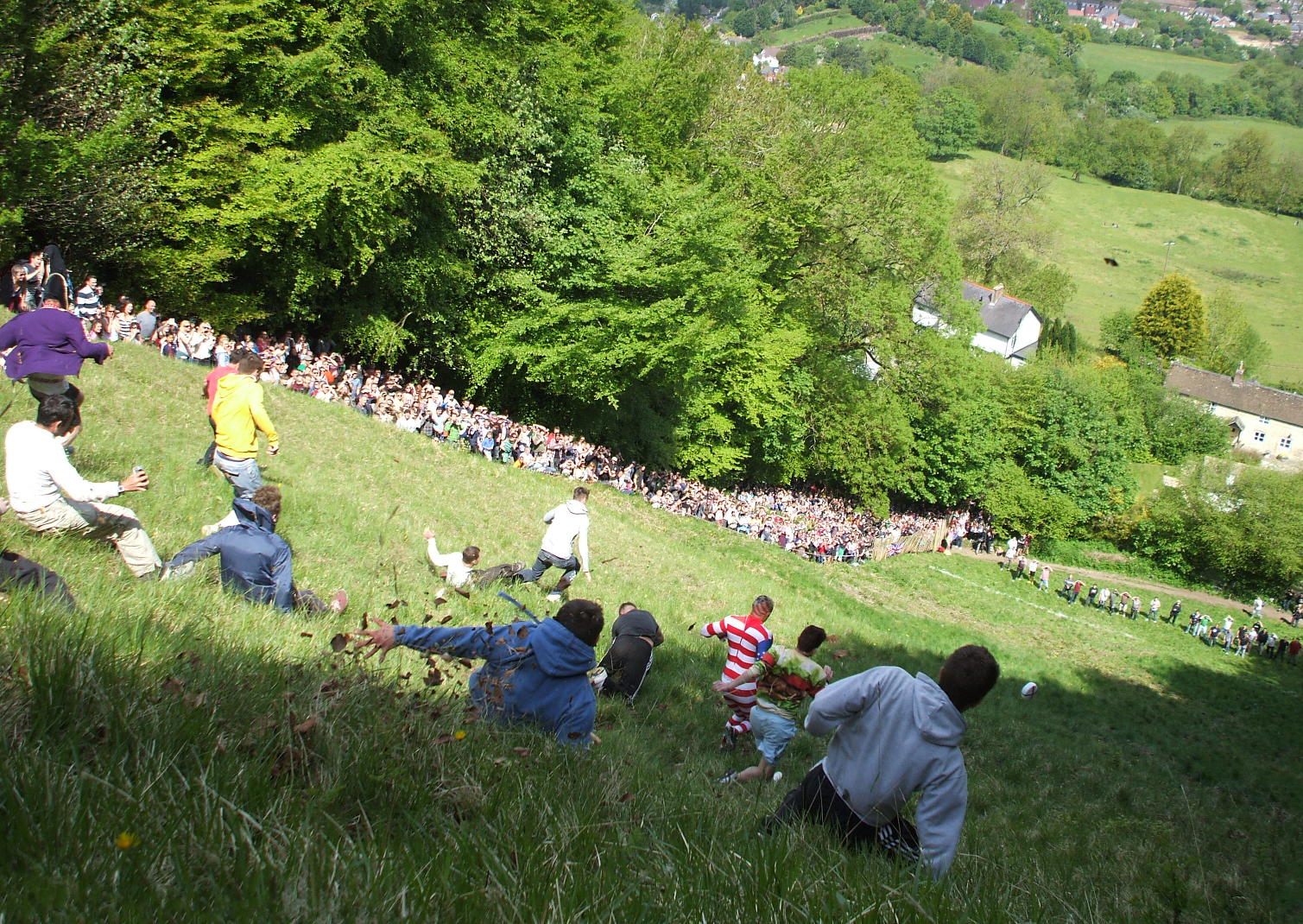
An annual cheese-rolling competition is held on Cooper’s Hill near Gloucester in England.

Do any longtime readers of the New Yorker magazine remember the bottom-of-column blurbs called “There’ll Always Be an England?” Although that faith is questioned in some quarters nowadays, a recent article suggests to me that English quirkiness is still going strong.

Jennifer Hassan reports at the Washington Post, “For hundreds of years, people have gathered in Gloucestershire, England, to fling themselves down a notoriously steep hill — in pursuit of a hefty chunk of golden-yellow cheese.

“The annual cheese roll, a race dating back centuries, often results in broken bones and concussions as participants tumble, run and bounce down the 180-meter (590-foot) hillside to become the first to cross the finish line.

“This year was no exception: Delaney Irving was crowned the winner of the women’s cheese-rolling race Monday — but the 19-year-old Canadian apparently did not actually realize she had won the competition until she regained consciousness in a medical tent shortly after.

“ ‘How are you? You took a hell of a tumble,’ one British interviewer asked Irving, shortly after she regained consciousness after bumping her head. Irving replied: ‘Did I?’ …

“The teenager was one of hundreds of racers who chased a cheese — a seven-pound full-fat hard cheese named ‘Double Gloucester. ‘ … The cheese can reach up to 70 to 80 mph as it topples down the hill, according to Gloucestershire outlets. Rugby players wait at the bottom of the hill to catch people as they crash across the finish line.

“Footage recorded of Irving shows her emerging triumphant — with her lump of precious cheese. …

“The tradition, according to a website for the modern-day cheese-roll organizers, is believed to be one of the oldest customs to have survived in Britain. A site for the town says the first written evidence of it is found in a message to the town crier in 1826. It brings spectators from around the world who gather to watch in awe and horror as individuals tumble down the hill.

“A 2020 Netflix documentary — on ‘unique, quirky and bizarre’ competitions people may not know about — dubbed the cheese roll as the ‘world’s most dangerous footrace.’ …

“The rules of the race are simple. Admission is free of charge. Participants must gather at the top of the hill before the race starts. The first person to cross the line wins, and gets to keep the cheese.

But the contest, often labeled an ‘extreme sport’ is not for the fainthearted. Injuries from past races include bruised kidneys, severe concussion, broken bones, sprained ankles and dislocated joints. …

“Irving was not the only overseas visitor to take part in the event. An American man dressed as George Washington attended the contest Monday alongside his friend who also dressed as the first president, local media reported. The pair’s day took a dramatic turn when one of the George Washingtons broke their foot amid the downhill race.

“Aside from the risks to people, People for the Ethical Treatment of Animals (PETA) also expressed concern about the risks to animals. Ahead of the race, they urged organizers of the event to … to ‘switch to a vegan cheese,’ a move they said would be ‘better for cows and the planet,’ while making the race itself ‘more inclusive.’ “

More at the Post, here.

Although it’s not nearly as cool, there’s a parade for a giant cheese in Massachusetts every year. Read about that here.

Read Full Post »

Photo: Brooklyn Public Library.
Teens in towns where some books are banned were given access to a card from the Brooklyn Public Library, just like one the New Yorker above enjoys.

It’s hard to imagine, but this is where we are. We don’t ban websites that tell you how to make a lethal weapon, but there are apparently ideas in books young people shouldn’t think about.

In one small step for humankind, the Brooklyn Public Library decided not to be passive about the situation.

I’m sorry to be late with this story, but I only just learned about the initiative and believe you might be interested. On April 13 last year, the library posted the following release on its website.

“Brooklyn Public Library (BPL) is launching a new campaign today, titled Books Unbanned, to help teens combat the negative impact of increased censorship and book bans in libraries across the country. For a limited time, young adults ages 13 to 21 nationwide, will be able to apply for a free eCard from BPL, unlocking access to the library’s extensive collection of eBooks.

“ ‘Access to information is the great promise upon which public libraries were founded,’ said Linda E. Johnson, President and CEO, Brooklyn Public Library. ‘We cannot sit idly by while books rejected by a few are removed from the library shelves for all.’ …

“The card will be good for one year and is designed to complement access to resources for teens in their local communities. The Brooklyn Public Library eCard provides access to 350,00 eBooks; 200,000 audiobooks and over 100 databases. Teens will also be connected to their peers in Brooklyn, including members of BPL’s Intellectual Freedom Teen Council, to help one another with information and resources to fight censorship. …

“To apply for the card, teens can send a note to BooksUnbanned@bklynlibrary.org, or via the Library’s s teen-run Instagram account, @bklynfuture. The $50 fee normally associated with out-of-state cards will be waived. Teens are encouraged to share videos, essays, and stories on the importance of intellectual freedom and the impact that book challenges and bans have had on their lives. 

“The Library will also make a selection of frequently challenged books available with no holds or wait times for all BPL cardholders, available through the library’s online catalog or Libby app. The titles include: The Black Flamingo by Dean Atta, Tomboy by Liz Prince, The Bluest Eye by Toni Morrison, The 1619 Project by Nikole Hannah-Jones, Juliet Takes a Breath by Gabby Rivera, On Earth We’re Briefly Gorgeous by Ocean Vuong, and Lawn Boy by Jonathan Evison.

“While challenges to books and ideas are nothing new, the initiative was conceived in response to an increasingly coordinated and effective effort to remove books tackling a wide range of topics from library shelves. The American Library Association’s Office of Intellectual Freedom counted more than 700 complaints last year, the most since it began keeping records more than 20 years ago.  

“In Texas, Matt Krause, chairman of the Texas House of Representatives General Investigating Committee, has called for public school libraries to ‘account’ for 850 sexually explicit or racially preferential books. The list includes a wide range of titles from National Book Award winner How to be an Antiracist by Ibram Kendi to John Irving’s bestselling Cider House Rules. Books which feature LBGQT characters; advice for dealing with bullies; and tips for teens on relationships are all included on the list, along with titles on historical events including the rise of the KKK, the Indian Removal Act and the election of Harvey Milk. …

“Locally, the New York State Education Department (NYSED) removed a tweet by the New York State Librarian after she recommended the book Gender Queer: A Memoir. NYSED said it was not aware of the graphic contents in the book. …

“Said Nick Higgins, Chief Librarian, ‘Limiting access or providing one-sided information is a threat to democracy itself.’ ”

The only one of the books mentioned that I have read is The Bluest Eye, by Toni Morrison, a Nobel winner. There is no doubt it is heavy-duty stuff, but that doesn’t mean people should be bliocked from reading it. The ideas are serious, and, I think, important, and even if they weren’t, I don’t see that any group of people should make decisions about what to read for any other group.

More at the Brooklyn Public Library, here.

Read Full Post »

« Newer Posts - Older Posts »