Feeds:
Posts
Comments

900
Photo: Zlatko Bala/Department of Archaeology/University of Zadar
Dogs’ sensitive noses are being used for an expanding array of searches. In the photo above, a dog provides assistance on an archaeological dig.

I keep hearing about new ways that the sensitive noses of dogs are being used to help humans. We know they can help people with disabilities and sniff out contraband drugs in airports. I’ve also heard they can detect certain diseases in people before doctors can. And in this story, they are used by archaeologists to find ancient tombs.

Joshua Rapp Learn writes at the Guardian, “The scent-tracking abilities of trained dogs have helped archaeologists discover iron age tombs in Croatia dating back nearly three thousand years. …

“Experts have said that using dogs could be a good way to identify archaeological sites, as it is less destructive than many traditional methods.

“ ‘Dogs’ noses obviously don’t make mistakes,’ said Vedrana Glavaš, an associate professor of archaeology at the University of Zadar in Croatia and the lead author of the study, which was published in the Journal of Archaeological Method and Theory.

“Glavaš had already found a few tombs in a necropolis near the prehistoric hilltop fort of Drvišica, which dates back to the eight century BC. Hoping to find more, she contacted Andrea Pintar, a trainer who works with dogs used for sniffing out graves in criminal investigations. …

“Glavaš first sent the dogs to graves they had dug up the previous year but which were not apparent, without telling the trainers the location.

“ ‘We always use at least two dogs to confirm the position,’ Glavaš said, adding that the second trainer and dog were not told where the first dog and trainer had indicated a grave.

“The canines discovered all three graves, even though the human remains, associated artefacts and surrounding soil had been removed. The area had also been exposed to wind, sun and rain since the excavation.

Glavaš said the porous rock around the excavated soil had probably absorbed enough of the aroma of decomposition that the dogs could still detect it.

“Glavaš then let the dogs loose in an area they suspected more remains could be found, and excavated six new tombs – five of which are described in the recent paper. The dogs were extremely accurate in every case.

“The tombs consist of small stone burial chests in the middle of walled stone circles, each about five metres in diameter. Each chest contained small bones such as the fingers and feet of several individuals – perhaps several generations from the same family – along with buckles and other artefacts.

“Glavaš said the people in the site were probably fairly poor due to the harsh, windy climate of the area and the difficulty of growing crops. …

“Angela Perri, a postdoctoral archaeology researcher at Durham University who was not involved in the study, said using dogs to sniff out burials [can] be used in situations where ground-penetrating radar or other techniques may not work. …

“Perri, who studies the ancient history of how humans first began to domesticate and use dogs, said the technique was just the latest in humans’ long history of using dogs as biotechnology. ‘We’re still finding new ways of having dogs help us,’ she said.”

More at the Guardian, here.
ic8k9-by_400x400

Movement Voter Project believes that no one knows your community like you do and no one knows the voters in swing states like the organizations deeply connected to communities there.

I’m really loving a concept introduced to me by Lisa McE. Instead of being a carpetbagger and ringing doorbells for your candidate in swing states other than your state, instead of (or in addition to) investing your money in a campaign and maybe having nothing to show for it in the end, why not invest in groups on the ground that work with communities on a variety of needs (while registering their participants to vote) and that keep working with those communities long after all the doorbells have been rung and all the out-of-staters have gone home?

Although Movement Voter Project is focused on progressive issues, getting people registered to vote benefits democracy as a whole. No one is telling new voters how to vote after all.

Here’s how Movement Voter Project explains its work: “Movement Voter Project (MVP) works to strengthen progressive power at all levels of government by helping donors – big and small – support the best and most promising LOCAL community-based organizations in key states with a focus on youth and communities of color …

“There are thousands of grassroots organizations and networks working towards building a true democracy – and to move the U.S. forward on issues of economic fairness, racial justice, immigrants rights, women’s rights, LGBT rights, access to healthcare, and environmental sustainability. But not nearly enough direct funding or individual donations go to these groups. In the meantime, over a billion dollars is spent each election cycle on TV ads and consultants. … Our job is to:

“EMPOWER donors – from grassroots donors to major donors to foundations – to embrace the impacts of their resources beyond elections. …

“MOVE resources to directly impacted communities.

We recommend both 501(c)(3) non-partisan groups and explicitly progressive [groups] that work in communities representing the true diversity of the American people. …

“There are four main concepts that MVP uses as a lens in our work: targeting overlays … where we can impact several key races with the same money (ie. investments in groups working in a swing US House district in Florida will also impact turnout for the Senate AND the Governor AND redistricting AND structural reforms on the ballot AND lay a foundation for 2020 – whereas investing in a House race in California is unlikely to impact any other nationally significant races); places that are especially underinvested in where money makes a more impactful difference; catalytic opportunities; … ecosystem portfolios … [where] moving multiple parallel investments into a community allows an entire ecosystem to thrive and to build mutual trust.

“We talent scout and vet groups in each state where an extra $10 or $100,000 will make the greatest difference for moving progressive change [now] and long-term. We recommend [groups] that are year-round … collaborative … locally-driven. … AND we recommend 501(c)3 non-partisan groups that organize communities of color.” More at Movement Voter Project, here.

I like the long-term, dig-deep aspect of this sort of activism, but if you think that the Movement Voter Project does not reflect your particular concerns, you might prefer a general voter organization that Suzanne told me about called Vote.org.

Citizens of every stripe agree that it benefits America when we all vote.


noah-3_custom-0b3f0f51611f437f5fe1b3a7ea8aad599f50b0c3-s600-c85

Photo: Noah Nasiali-Kadima
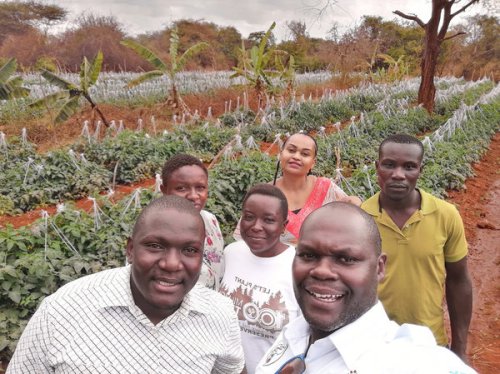
Noah Nasiali-Kadima, foreground, takes a selfie with members of the Africa Farmers Group during a tour of a member’s farm in Machakos County, Kenya. 

I was reading in the Boston Globe yesterday about a guy who, after surviving a life-threatening brain aneurysm that his doctor misdiagnosed, launched a new career as an activist for aneurysm patients. You have to hand it to such people.

In another example, see what Diane Cole of National Public Radio (NPR) learned when she interviewed an African farmer who turned a major cabbage liability into something much bigger than cabbages.

“Making lemonade out of life’s lemons is one thing. But what could Kenyan IT consultant-turned-farmer Noah Nasiali-Kadima do with the 75,000 fresh cabbages he had been stuck with?

“That was the dilemma he faced in 2016, when the buyer with whom he had a contract simply walked out on him, refusing to pay and leaving him with six acres of ripe cabbages that had cost most of his savings to produce.

“He was uncertain how to proceed, to whom he could turn for help or whether to give up altogether. So he came up with a different idea: That year, he started a Facebook group so that he and other farmers — including new ones like himself, and experienced farm veterans — could discuss and come up with solutions to problems just like this.

“The Africa Farmers Group now has 138,000 online members in Kenya and throughout Africa. He has also organized in-person educational seminars in countries across the continent including South Africa, Nigeria, Somalia and Zambia. The goal is to help farmers learn the skills they need to succeed, by providing forums in which they can share their own stories of success and failure, and offer their peers empathy, encouragement and practical tips. In recognition of his work, in September 2018, Facebook awarded him $1 million as part of its Facebook Community Leadership Program. …

“We spoke to him as he was preparing to participate as a speaker at the Food Tank New York City Summit, a two-day conference sponsored by the sustainable agriculture advocacy group Food Tank. … This conversation has been edited for clarity and length.

“First of all, whatever happened to those 75,000 cabbages?
“I sold some, and some went bad on the farm. I gave some away to schools.

“Drought has left almost 3 million people there facing acute food insecurity. How can local farmers be a part of the solution?
“We have a lot of food shortages and food waste. There is a disconnect between the farmers producing the food and then getting it to market and to the people. No one is consulting the farmers themselves about, ‘How much can you produce, what do you need to help you to produce more?’ …

“You started out in technology in 2001, in programming and network management. How did agriculture come into the picture?
“I started out just to make some extra money since the tech space had become saturated. My father is a sugar farmer, and my father-in-law is a tomato farmer. One day in 2007, I was with my wife and my father-in-law and I said to him, ‘I want to be a farmer.’ He looked at me, like, ‘Are you really serious?’ And I said yes. He gave me and my wife a small piece of land, one-quarter of an acre, near his own farm, which is about an hour away from Nairobi. …

“At first this was a side career, a way to make an extra coin. … We started with green bell peppers, switched to tomatoes and watermelons and other crops, one of them cabbages.

“Then you faced the cabbage fiasco in 2016. Was that a turning point for you?
“I thought, this shouldn’t happen to any farmer. How come I can’t sell this produce? I did not know how to market or pitch what I had, or explain the particular quality or type of cabbage I had. …

“I saw how farmers were suffering. We have very many NGOs and very many tech solutions being funded but none that involve the farmers. I also wanted to make a difference, to see if I can start a group with farmers around me where we can talk about problems, who is buying what, what they are doing that is working and what is not. And I just opened a group on Facebook.

“The target was to sign up 3,000 farmers in three months. By the end of those three months, we had 16,000 farmers from across Africa. Some said, ‘Please post in English because I cannot speak Swahili!’

“It was a venue where farmers could talk to each other. I set up weekly online conversations with expert farmers from different regions who have worked with different kinds of soil and crops. Farmers listen to other farmers, so people could ask, ‘What were the challenges, how can we learn from you?’

“Now we have 138,000 members and growing. We also have more than 100,000 offline members in areas where internet connectivity is a challenge. Our motto is sharing is caring.

I have seen farmers who had given up. Then they hear from other farmers who have been through similar experiences. They see what they can do different.

“They learn they can contact this agronomist for more information about this problem, or try a different crop at this time of year, or maybe a particular variety that will do better in a particular climate, or maybe the soil is not right. These are success stories. They learn how to keep going or start again.”

Read more on how the initiative has grown and flourished, here.

Walking on Murals

new_york_city___artist_and_photo_credit___molly_dilworth___pg_41

Photo: Molly Dilworth
“Molly Dilworth’s rippling mural helped reimagine Times Square as a car-free place,” says
Curbed. The work was part of an initiative by Bloomberg Philanthropies.

As much as I want to tell folks about anyone’s good works, I’m afraid that the wealthy presidential candidate whose name is on the initiative I’m covering today is getting too much free publicity.

I’m annoyed. I’m sure we all clicked “like” when the former mayor did something positive about, say, gun violence. But as a result, his campaign videos are showing up on Facebook saying they were “liked” by us, which is not the case. So you are just going to have to fill in the blank when I refer to [B] Philanthropies today.

Alissa Walker writes at Curbed, “Over the last decade, U.S. cities have carved out dozens of public plazas from existing streets using little more than paint. A new grant program and guide announced today by [B] Philanthropies will fund the creation of 10 street murals in 10 U.S. cities, as well as track the safety, economic, and civic impact of these projects.

“The Asphalt Art Initiative … will award 10 small or mid-sized cities with grants of up to $25,000 to create colorful murals on streets, intersections, and crosswalks, or vertical surfaces of transportation infrastructure like utility boxes, traffic barriers, and highway underpasses. Cities that apply must have populations ranging from 30,000 to 500,000 and must implement the project by the end of 2020.

“ ‘It’s not just about art — it’s about creating safe spaces for people for pennies on the dollar,’ says Janette Sadik-Khan. …

“As former transportation commissioner for New York City, Sadik-Khan championed the conversion of Times Square into a network of car-free pedestrian plazas. But the project, which included several asphalt murals, also ended up achieving other goals, she says, like ensuring nearby residents lived within a 10-minute walk of a public space, and helping pedestrian injuries in the area plummet by 30 percent.

“ ‘We’re not looking for just pretty pictures, we’re looking for projects that encourage safety benefits and community engagement,’ Sadik-Khan tells Curbed, noting that the selected cities will be gathering data to track the overall impact of their projects. …

“In addition to the grants, [B] Philanthropies, in collaboration with Street Plans Collaborative and public art consultant Renee Piechocki, has created a free publication that provides a how-to guide and dozens of case studies for city leaders wanting to implement these types of projects on their own.

“While the street plazas are intended to be temporary or ‘tactical’ — how long they last depends on the paint material used and how often it’s reapplied — the projects often end up leading to permanent, systemic changes, says Tony Garcia, principal at Street Plans Collaborative. …

“But even with paint that’s meant to fade away, the impact is lasting. Garcia points to a project in Asheville, North Carolina, which saw retail sales increased by 25 to 30 percent and a 20 to 30 percent drop in vehicular speeds along the corridor. …

“Asphalt art like plazas and crosswalks can help residents realize they don’t have to accept their transportation system’s status quo, says [Kate D. Levin, cultural assets management principal at (B) Associates], who notes that the current design of U.S. streets lends a sense of permanence to cities that isn’t particularly aspirational.

“ ‘People lose a sense that they have a choice. That can lead people to accept a public realm that doesn’t optimize what they want or need,’ she says. ‘These projects are helpful in reminding people to not to take their environment for granted.’ ”

More at Curbed, here. Hat tip: ArtsJournal.com.

Photo: Justin Mitchell via Street Plans
Coxe Avenue in Asheville, North Carolina, was transformed when Street Plans Collaborative used art to help create a safer, more profitable street.

45333824_10218821591639153_3578706341759287296_o

Women in Hollywood

janes_closeup

Art: Bradshaw Crandell
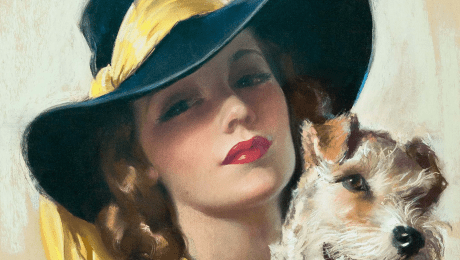
Jane Hall, a screenwriter at Hollywood’s most glamorous studio, would be lost to us but for her daughter’s painstakingly researched biography. Here she is on the cover of the October 1939 edition of
Cosmopolitan magazine.

I’ve been thinking about the unacknowledged accomplishments of women.

Having just finished a great biography on Frances Perkins, a trailblazer in FDR’s administration, I find myself not at all surprised that she is almost unknown today. Perkins is just one more example of accomplished women throughout history who have failed to get their just due. It’s complicated.

Being dismissed by men is not the only reason, Dear. Sometimes you were dismissed by women, too. Sometimes you didn’t sign your poem or your art and so became known as “Anonymous.” Sometimes, like Perkins, you were determined to do the most possible good for the most people in need by the most effective means.

Thinking about this led me to a New Yorker article on women in the early days of Hollywood.

Margaret Talbot writes, “One of the stranger things about the history of moviemaking is that women have been there all along, periodically exercising real power behind the camera, yet their names and contributions keep disappearing, as though security had been called, again and again, to escort them from the set.

“In the early years of the twentieth century, women worked in virtually every aspect of silent-film-making, as directors, writers, producers, editors, and even camera operators. The industry — new, ad hoc, making up its own rules as it went along — had not yet locked in a strict division of labor by gender. Women came to Los Angeles from all over the country, impelled not so much by dreams of stardom as by the prospect of interesting work in a freewheeling enterprise that valued them. …

“Some scholars estimate that half of all film scenarios in the silent era were written by women, and contemporaries made the case, sometimes with old stereotypes, sometimes with fresh and canny arguments, that women were especially suited to motion-picture storytelling.

“In a 1925 essay, a screenwriter named Marion Fairfax argued that since women predominated in movie audiences — one reason that domestic melodramas, adventure serials featuring acts of female derring-do, and sexy sheikh movies all did well — female screenwriters enjoyed an advantage over their male counterparts. They were more imaginatively attuned to the vagaries of romantic and family life, yet they could write for and about men, too.

“After all, men ‘habitually confide in women when in need either of encouragement or comfort,’ Fairfax wrote. ‘For countless ages woman’s very existence — certainly her safety and comfort — hinged upon her ability to please or influence men. Naturally, she has almost unconsciously made an intensive study of them.’

“Alice Blaché, the French-born director behind some six hundred short films, including ‘The Cabbage Fairy’ (1896), one of the first movies to tell a fictional story, … wrote in 1914, ‘There is nothing connected with the staging of a motion picture that a woman cannot do as easily as a man, and there is no reason why she cannot completely master every technicality of the art.’

In a way, the early women filmmakers became victims of the economic success that they had done so much to create.

“As the film industry became an increasingly modern, capitalist enterprise, consolidated around a small number of leading studios, each with specialized departments, it grew harder for women, especially newcomers, to slip into nascent cinematic ventures, find something that needed doing, and do it.

“ ‘By the 1930s,’  Antonia Lant, who has co-edited a book of women’s writing in early cinema, observes, ‘we find a powerful case of forgetting, forgetting that so many women had even held the posts of director and producer.’ …

“Trying to figure out who actually worked on films is not as easy as you might think. Credits were assigned haphazardly in the early days of filmmaking. …

“In the tendentious but mostly persuasive book ‘Nobody’s Girl Friday: The Women Who Ran Hollywood’ (Oxford), J. E. Smyth … tots up an impressive array of women film editors, costume designers, talent agents, screenwriters, producers, Hollywood union heads, and behind-the-scenes machers. … It’s little wonder that studios of the era catered to female audiences, with scripts built around the commanding presence of such actresses as Bette Davis and Joan Crawford, and with stories thought to reflect women’s prevailing concerns.

“Smyth quotes Davis, who pulled enough weight in Hollywood to have been dubbed the Fourth Warner: ‘Women owned Hollywood for twenty years,’ she said in a 1977 interview, so ‘we must not be bitter.’…

“Smyth burrows enthusiastically into humble sources that, she suggests, other scholars have looked down on: studio phone directories, in-house newsletters. Researchers on similar quests have come upon evidence in still more unlikely forms and places. Reels of film forgotten or lost sometimes turn up randomly — interred in an archive in New Zealand, or sealed into a swimming pool in a remote town in the Yukon.” The search goes on.

It’s a long article. Read it here. And while we’re on the subject, be sure to read Robin Cutler‘s wonderful book, Such Mad Fun, about her mother’s role as a writer in Hollywood.


berkeley_symphony_header3

Photo: Dr. David S. Weiland
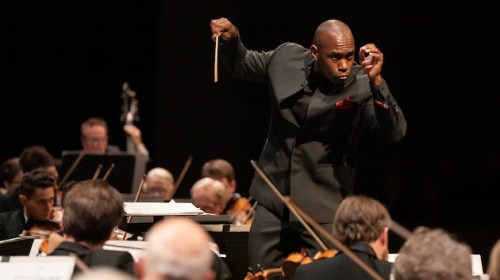
Conductor Joseph Young with the Berkeley Symphony. Young credits Marin Alsop of the Baltimore Symphony Orchestra with expertly mentoring his career.

Never underestimate the good you can do by being someone’s mentor. In this story, a woman conductor was the rock a young African American musician leaned on. Today he mentors others.

Lisa Houston writes at San Francisco Classical Voice, “Conducting is not a low-stress career. When the Berkeley Symphony called on Joseph Young to step in, the conductor had just two days to get up to speed on Leonard Bernstein’s second symphony, aptly named The Age of Anxiety, as well as the ominous majesty of the four orchestral interludes from Britten’s Peter Grimes. By all accounts he rose to the task admirably.

” ‘I didn’t sleep,’ Young says. ‘I even had a concert with the San Francisco Symphony that weekend as well. It was a great weekend of music making and I enjoyed every second of it, but I didn’t sleep until I got back to Baltimore.’

“In the wake of this triumph, Young was offered the music directorship for a three-year post. …

“The son of a Navy man, Young’s family moved around a fair amount in his childhood before settling in Goose Creek, South Carolina, best known for its naval base, and an area where Young’s mother’s family resided.

” ‘We heard music mostly in church,’ he says. ‘My mom comes from an extended family so I grew up going to the same high school she went to, the same church she grew up in, so we have a very tight-knit big family.’ …

“Young has known he wanted to conduct since he first heard an orchestra at the age of 16. ‘Sixteen was the first time I actually saw an orchestra, but it was also the first time I got to stand in front of an orchestra. It wasn’t any piece in particular, it was just the sound in front of me. I was a very introverted teenager and the idea of emoting what you wanted musically without saying a word was … I want to say cathartic. I was finding a way toward finding my voice.’

“An important mentor for Young has been Marin Alsop. …

‘I went up to her and said “I really want to go to grad school for conducting” and she said “why don’t you come study with me.” That moment changed my life.

” ‘Before that I had no examples. I had no mentor. All I knew was that I wanted to conduct orchestras. In that moment I had all of that. Someone from whom I learned there is a transcendental power in what we do in music, which I began to appreciate. Someone who showed me, by example, to be a leader not only of an orchestra, but of a community, as when I was with her in Baltimore. Someone trusting my own talent, my own musicality, giving to me, and showing me that this is a process, and it takes time. As a young conductor I was very eager to go, go, go! and she was there along the whole journey.

“ ‘I’m teaching with her now at Peabody [Conservatory in Baltimore], where we’re both teaching conducting. It’s kind of a strange to teach alongside someone who taught you, and at the school you went to! But seeing the students go through the same journey musically makes me realize how much more I appreciate being in that room with her throughout my early career.’ …

Asking Young about the upcoming repertoire for Berkeley is like asking a grandparent to describe in detail how cute their grandchildren are. He is effusive, delighted, and quite simply in love. …

“ ‘I wanted this season to be about focusing on the community, showcasing the community, investigating the community, not only Berkeley, but the Bay area.’ …

“For the first of four symphonic concerts, which took place Oct. 24, Young wanted to feature a friend of the orchestra, so Conrad Tao returned to play Ravel’s Piano Concerto in G Major. The program also featured a work of Olly Wilson.

“ ‘There’s a group of African-American composers that I have always wanted to conduct, and one of them happened to be from Berkeley. … I knew I wanted to feature an African-American composer somewhere in my season and I thought this was a great tribute not only to him, but to Berkeley, and also a way to strengthen the relationship between the Berkeley Symphony and UC Berkeley.’ …

“The season’s second symphonic concert on Feb. 6 is titled ‘You Have a Voice,’ and will feature the San Francisco Girls Chorus in a work by Mary Kouyoumdjian called Become Who I Am.

“ ‘Her piece talks about gender inequality, girls with confidence issues, and we have these young girls singing the parts, so I think it’s going to be a very empowering kind of message.’ ”

More here.

103019-healthful-foods

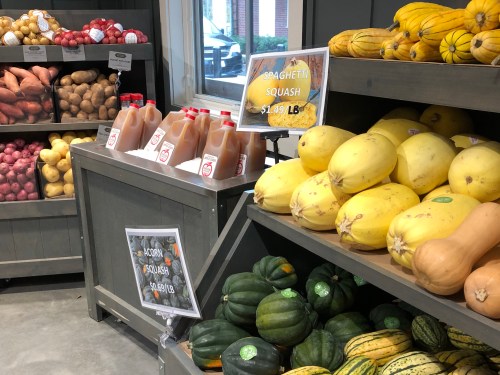
Fresh produce in a market that is one of many in an affluent town. Many urban areas in America do not have easy access to such nutritious food.

In many parts of this great land of ours, people go hungry or subsist on junk food because that’s what’s available. I’ve written about food deserts before, and I continue to be interested in how activists and small businesses are addressing the problem.

Brittany Hutson reports at WEDT and National Public Radio (NPR), “On a cold, sunny day in early February, Raphael Wright and his business partner, Sonya Greene, check out a vacant building in Detroit’s Linwood neighborhood. Inside, wood panels are on the floor, and drywall is being placed over exposed brick. The only clue to the building’s past is a sign out front, with the words ‘Liquor, Beepers, and Check Cashing.’

“Located on the west side of Detroit, the Linwood neighborhood remains underdeveloped, with few retail businesses, countless empty lots and many vacant buildings. But Wright and Greene see potential here. It’s why they’ve chosen this neighborhood to open a bodega that sells healthy food. Like other neglected neighborhoods in urban areas, fresh fruits and vegetables aren’t a basic necessity here — they’re a luxury.

“Wright says it’s been that way since he was a kid.

” ‘I was raised in the ’90s, and I always say that we were junk food babies,’ he explains. … ‘Liquor stores, gas stations, and many times fast food restaurants were pretty much our go-to places to eat. … I’m a victim of food insecurity. … I was diagnosed with diabetes at 19, so before I was old enough to have a drink, I was diabetic.’

20190301_120903_rotated_custom-4084ece99773e7951a5621ef21e25cf293963742-s300-c85

Photo: Brittany Hutson/WDET
Sonya Greene and Raphael Wright are the folks behind a bodega offering fresh produce, prepared foods and staple items in an underdeveloped Detroit neighborhood.

“Wright wants the bodega, tentatively named the Glendale Mini Mart, to be a pilot for a full-range grocery store he hopes to open in the future. The bodega will offer fresh produce, prepared foods and staple items. He says he hopes it will be part of a larger mixed-use development that will include a barber shop, a beauty salon and housing. …

“Wright and Greene are not the first to recognize the importance of Detroit’s African American residents having access to fresh, reasonably priced food. That awareness began more than 50 years ago, following the rebellion that rocked the city. …

“The riots were the culmination of high levels of frustration, resentment and anger among African Americans due to unemployment, poverty, racial segregation, police brutality and lack of economic and education opportunities. However, there was something else not often discussed — food.

“According to Alex Hill, adjunct professor at Wayne State University in Detroit, there was a ‘fairly expansive hunger issue in the community’ around that time. Hill’s research on the ’67 Rebellion looks at food, power and race. In many ways, it’s the continuation of work that began when the non-profit group Focus: HOPE began studying conditions in Detroit’s black neighborhoods in the ’60s as a response to the riots.

“Focus: HOPE educated the clergy and the white Christian community on racism, poverty and other forms of injustice. In 1968, the organization released a Consumer Survey on Food and Drugs. …

“To get answers, nearly 400 suburban white women and inner-city black women were trained as undercover shoppers and sent to 300 grocery stores in the Detroit metro area. The main findings were that poor inner-city Detroiters were paying up to 20% more for lower-quality groceries. The survey also found that the quality of service, store condition, produce and meats in the city’s chain and independent stores were not of average quality compared to upper-income and suburban stores. …

” ‘In thinking about those disparities and access, those are still very much real. They may look different, but I’d say they’re very much the same from 1967.’ He says … Detroiters travel outside of the city on weekends to larger chain grocers to stock up and use their local grocer for smaller needs, such as eggs or milk, during the week. …

“Wright says the bodega is also about representation.

” ‘We’ve seen our grocery stores not be representative of our communities,’ he says. ‘So putting faces in the community that looked like us, that are from our neighborhoods and understand what we’re going through, it makes the education part easier.’ ”

More at NPR, here.

103019-veggies

p1022720-720x540-1

Photo:
In a Brazilian favela, Rocywood actors pose with their screenwriter and their director.

The headlines from the slums of Brazil are hardly ever good. Between the gang violence and the police violence, there is frequent loss of life among innocent bystanders. So anytime I see something upbeat about these places — say, colorfully painted houses or musical instruments created from dump discards — I want to share the news.

This story is about the joy of making movies, even when the movies are about the harshness of life. It’s about the feeling of rising above it all.

Mariana Simões writes at Hyperallergic, ” Stacks of houses that showcase raw, exposed brick frame the rooftop view where I meet screenwriter Fabiana Escobar, or Bibi Danger, as she is known in Rio de Janeiro’s Rocinha, the largest favela in Brazil.

“With around 70,000 inhabitants, Rocinha is a vibrant community made up of low-income improvised homes built atop rolling hills that tower over Rio de Janeiro like a city within a city. Rocinha is also where, since 2015, Escobar and four other filmmakers have championed a budding film scene they call ‘Rocywood,’ combining Rocinha with Hollywood. Their Rocywood production company has one award-winning short under its belt and another short and two features in the making.

The films portray local realities, from the joys of growing up in a tight-knit neighborhood to the difficulties residents face living among drug traffickers and gun violence.

“ ‘When I was a kid, I stayed home to watch the Oscars on TV and I would marvel at every little detail. Hollywood creates that kind of magic that envelops us, even though it’s something that is so distant from our reality,’ Escobar says. …  ‘I grew up with that magic, but the industry doesn’t embrace Rocinha. We have to create our own magic. We are going to make it happen for ourselves.’

“The 38-year-old screenwriter used to own a salon and clothing store, but now rents out her shop while she dedicates her life to making Hollywood magic. But most of the people involved can’t afford to make movies full-time.

“ ‘The actors, the producers, the whole team has a second job. I am a manager at a clothing store, and I make films up here on the hill on the side,’ says Sergio Dias, Rocywood’s 31-year-old director. Dias was born and raised in Rocinha where he is known by his stage name, Sergio Mib. His one-bedroom apartment functions as a dressing room and houses Rocywood’s equipment and props, including three toy assault rifles that look impressively real.

“Rocywood’s productions cost $50 dollars (USD) on average. The filmmakers often take the budget out of their own pockets to cover transportation fees and snacks. With no dedicated financing, everyone in the community pitches in to make the films come to life, from lending filming equipment to styling hair and makeup for free at the local salon. Dias explains that Rocywood makes a conscious effort to include only people from favelas in its productions. The films, made for locals by locals, are screened on the streets of Rocinha using a projector and an improvised tarp as a screen, but are also available on YouTube for a worldwide audience to see. …

“I went in search of Rocinha’s low-budget Hollywood scene after meeting American filmmaker Alan Hofmanis by chance at a traditional Rio de Janeiro fast-food style chicken restaurant in the bustling tourist neighborhood of Copacabana. I struck up a conversation with him about his dessert and ended up learning about Wakaliwood, Uganda’s version of Hollywood, named after Wakaliga, the slum in Uganda’s capital of Kampala where the films are made.

“Eight years ago, after Hofmanis saw a trailer for a feature by Ugandan director Isaac Nabwana that mixed mafia gangs, kung fu, and gun fighting, he hopped on a plane to meet Nabwana. In 2013, Hofmanis sold everything he owned in New York and moved to Wakaliga, where he has been making movies with Nabwana ever since. Nabwana founded Uganda’s first action-film company, has produced about 45 films, and just had his feature Crazy World premiere at this year’s Toronto International Film Festival (TIFF).

“Fascinated by Nabwana and his ability to make kitschy action films with budgets around 65 dollars that still draw in millions of online viewers, Hofmanis searched the world for others like him. He found people in Ghana, India, Afghanistan, Peru, and even Siberia who are also making low-budget, Hollywood-inspired productions. He came to Brazil in the hopes of discovering the same scene in Rio de Janeiro. …

“The American filmmaker believes low-budget, Hollywood-inspired films are a growing phenomenon. … ‘They are taking something that is outside their reality and spinning it and making it their own,’ he says. ‘So maybe this [new movement] can be called the Micro Wave because it’s a New Wave movement, but it’s based on these micro-economies.’ …

“Escobar summarizes, ‘I decided our next feature will be a horror film to break free from that stigma that because I live in a favela, I can only make films about drug trafficking and violence. If we want to write about drug trafficking it will be a great film, but we can rock other narratives, too, and we want to break that barrier.’ ”

More at Hyperallergic, here.

youtube_plantingtree

Photo: Night Media
A collaboration to plant 20 million trees started when YouTuber Mr. Beast (Jimmy Donaldson) hit 20 million subscribers.

Last year, when an ancient tree in our yard was pronounced too badly diseased to save, I felt terrible about cutting it down. After all, Planet Earth needs all the trees it can get. So I searched the web to find a good place to offset the loss. I wanted to find a highly rated nonprofit that was planting trees. I ultimately donated to the Arbor Day Foundation.

The radio show Living on Earth recently featured a story on an Arbor Day initiative that got its start on YouTube.

“YouTuber Destin Sandlin, who runs the science-based channel ‘Smarter Every Day,’ spoke with Living on Earth host Jenni Doering. …

“JENNI DOERING: On October 25, in what’s being called the largest YouTube collaboration of all time, hundreds of YouTubers from around the world came together and used their combined influence to send a message on the environment. … These YouTubers have a combined subscriber count of more than a billion people. One of the most popular YouTubers and an organizer of the event is Mr. Beast, who posted a video of himself and a team of volunteers planting trees. …

“Another YouTuber, Destin Sandlin, helped recruit fellow YouTube creators. … He joins me from Huntsville, Alabama. Destin, welcome to Living on Earth.

“DESTIN SANDLIN: Thank you so much for having me.

“DOERING: All right, so first, tell me about this collaboration — what kinds of videos are being featured?

“SANDLIN: [There are] a ton of different creators from all over the internet coming together; … people that have beauty channels, vlogging channels, we have science creators, education-type creators, people that do challenges. All these creators are coming from different places all over YouTube and the rest of the internet to work together on this one thing: We want to make an impact for good. We’re calling it Team Trees. And we’re going to support the Arbor Day Foundation and try to donate $20 million. And the Arbor Day Foundation has agreed that for every $1 that is donated to them, they will plant one tree, which is so cool.

“DOERING: How did this big, huge collaboration among different influencers and creators actually get started?

“SANDLIN: That was from the internet itself. When [Mr. Beast] passed 20 million subscribers. … Everybody on Twitter and Reddit were telling him to plant 20 million trees. And he’s like, ‘How the heck am I going to do that? That’s that’s a huge task’ But he decided to basically reach out and get help.

And so there was this little Twitter storm that happened one particular day, and everybody jumped in on it. They’re like, ‘Oh my gosh, we could actually do this.’

“So there was this video that was created behind the scenes. It was a secret video that was invite only. You can make a video unlisted on YouTube. And this was pushed out to a bunch of different creators, and it included a lot of really big creators in it all the way up to PewDiePie, right?

“PEWDIEPIE: Of course, Mr. Beast, I am by your side. I will plant at least a couple of trees. …

“SANDLIN: Once you watch [the secret video], you’re like, ‘Holy cow. This is bigger than any one YouTube channel. This is bigger than any one genre even.’ … The viewers have the power to actually do things themselves. You know, a lot of times we think about these issues, and we’re like, ‘Oh, that’s another person’s problem.’ It’s not. It’s all of our problems. So if we can come together and literally do something, it’s an empowering message, right?

“DOERING: And you’re not competing with each other.

“SANDLIN: No, not at all, like, to succeed is for everyone to succeed, right? Because it’s the Earth, right? Like if we’re all helping the Earth, that’s like all being on the same bus and rooting for the bus driver to do well. We want the Earth to succeed. And so you know, there’s a lot of policies that, you know, we see a lot of campaigns. But what we want to do is physically and tangibly do a real thing that helps the environment. And that is putting trees in the ground. …

“DOERING: I understand that some creators have even made songs just for this occasion. Let’s listen to a clip.

“GABRIEL BROWN [singing]: ‘Is there anything better than the tree? If you ask me it ain’t that hard to see. How about 20 million, 20 million trees. Making 20 trillion little baby leaves. And I can’t help but choke up thinking about all the birds and bees.’

“SANDLIN: What we just heard is from a guy named Gabriel Brown. He’s a creator that was in the Navy. He’s a veteran. But now he makes music videos. He does all kinds of stuff on YouTube. And he decided to make a song for this movement. … Let me tell you a story. I got a tree in my Happy Meal back when I was six years old, and we planted it at my granny’s house.

“DOERING: Wait, in your Happy Meal?

“SANDLIN: Yeah, there was there was the Arbor Day that they gave away pine trees down in the south in your Happy Meal. And I went and planted my tree beside my two cousins. They had trees as well. And we still go by that house today. And we look at this tree and it’s huge. And knowing that I had a part in planting it so long ago is amazing. So I really think that planting trees is awesome, as long as you know exactly what you’re doing, make sure you you make a decision, an informed decision on what to do and how to do it and just put a tree in the ground.”

More here.

still15_wide-2fba47733060b3e54c428cdbf3de87a8331aaae1-s700-c85

Photo: Blue Lake Rancheria
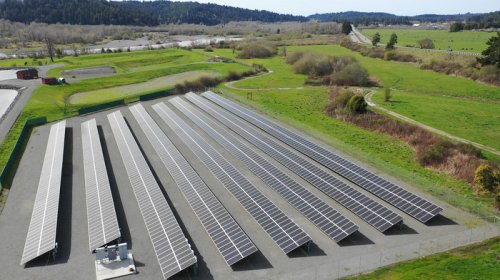
The Blue Lake Rancheria microgrid powers a number of buildings on the reservation and helped provide energy when California’s Pacific Gas and Electric shut off power during wildfires.

In the following story, disempowered people lacking reliable services not only took action to help themselves but were generous to more-privileged neighbors who suddenly learned what it’s like not to have services.

This is a story about two kinds of power.

Erik Neumann reports at National Public Radio (NPR), “California’s largest electric utility took the unprecedented step of shutting off power to millions of customers beginning last October. The decision was meant to prevent power equipment from sparking catastrophic wildfires.

“Now a renewable energy microgrid on a tiny California Native American reservation is proving to be one solution to this ongoing problem. The Blue Lake Rancheria is located just north of Eureka, Calif. On the 100-acre campus, just behind the casino and hotel, Jana Ganion opens a chain-link fence. …

“Inside, in an area half the size of a football field, are more than 1,500 solar panels, slanted toward the noonday sun. Ganion is the sustainability director with the Blue Lake Rancheria, which includes about 50 members.

[Ganion] helped build this solar microgrid as part of the tribe’s goal to develop climate-resilient infrastructure and to be ready for earthquakes and tsunamis. But then beginning in October, it became useful in a whole new way. …

“As one of the only gas stations in the county with power, the reservation provided diesel to United Indian Health Services to refrigerate their medications and to the Mad River Fish Hatchery to keep their fish alive. The local newspaper used a hotel conference room to put out the next day’s paper. Area residents stopped by to charge their cell phones.

“Ganion estimates that on that day more than 10,000 nearby residents came to the reservation for gas and supplies.

“County officials had been warned about the utility shutoffs, but they didn’t know they were happening until that day, says Ryan Derby, emergency services manager for Humboldt County, where Blue Lake Rancheria is located.

” ‘Our entire planning model for the last 18 months got thrown out the window,’ Derby says. … ‘Humboldt County prides itself on being resilient,’ Derby says, ‘But I think in light of these public safety power shutoffs we realized how dependent we really are on electricity.’

“The county focused on residents who relied on medical devices like respirators or oxygen tanks. At the Blue Lake Rancheria, Anita Huff was directing emergency services for people with critical medical needs.

” ‘We had eight people here who could not have lived without electricity,’ Huff says. ‘So, we saved eight lives.’ …

” ‘Microgrids are very complex. In some ways they’re kind of like snowflakes where no two of them are the same because it depends on where you are on the grid and what your facility is,’ says Dave Carter, the managing research engineer at the Schatz Energy Research Center and the lead technical engineer on the [Blue Lake] project.

“Microgrids keep the electricity flowing to customers even after disconnecting from the overall power grid. During an outage, the Blue Lake microgrid goes into ‘island mode’ and a large Tesla battery system stores extra power and balances the energy supply and demand.

“By comparison, Carter says, conventional solar arrays have to automatically shut down during outages for safety so they don’t electrocute powerline maintenance workers or people who could come in contact with a downed line.

“Microgrids do come at a price. The Blue Lake installation cost $6.3 million. Five million dollars came from a California Energy Commission grant, and the tribe helped raise the rest. …

“Carter’s lab at the Schatz Energy Research Center is looking for ways to lower the cost of microgrids. In spite of the upfront price, he says, communities should consider what it’s worth to stay in control during a natural disaster. …

“Jana Ganion, with the Blue Lake Rancheria, says with future electricity shutoffs, rural communities, and Native American reservations in particular, need to be especially resilient.

” ‘Many, many tribal nations are located at the end of the line in terms of the electricity grid,’ Ganion says. ‘They may have no power. They may have poor quality power. Microgrids are just a way to do an end-run around all of that.’ ”

More at NPR, here.

gambia-nurse-pain-10_custom-3d2b99335c97e843f60a5ac013127f1a04155e51-s700-c85

Photo: Samantha Reinders for NPR
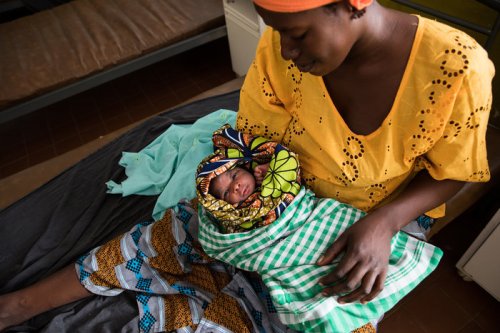
Midwives at the Brufut Minor Health Center in Gambia don’t administer pain medication during childbirth because, in their view, most of the time it’s “not needed.” A recent NPR feature shows that the scarcity of opioid pain medication in Africa is not such a bad thing.

Here in the land of plenty, we have an opioid crisis that started when patients got hooked on legitimately prescribed medications. But in Gambia, where “luxuries” like opioids are scarce, doing without seems to lead to better outcomes.

Jason Beaubien at National Public Radio (NPR) interviews a Gambian nurse determined to care for patients without leaning on pain medications like opioids.

“Growing up in the Gambia in West Africa, Nabia Drammeh always knew she wanted to be a nurse. ‘My auntie was a nurse,’ she says. ‘I used to go to the clinic and see the way she works. I told her, “I really want to be a nurse in the future!” So I’ve loved this job since when I was a child.’ …

“She now works at the Brufut health clinic just outside the Gambian capital of Banjul. It’s a modest government clinic housed in a cluster of single-story cement buildings.

” ‘The cases we see here are mostly malaria cases, pneumonia cases, ear problems,’ she says. Drammeh and her colleagues at the clinic also treat a lot of urinary tract infections. They stitch up cuts from minor car crashes. They deal with sick kids and fractures from farming accidents. One constant among most of the cases, Drammeh says, is pain.

” ‘Eighty to 90 percent of patients that come here already have pain’ she says. Patients arrive with back pain, muscle pain, stomach pain. … ‘Most of the cases that come here are in pain either physically or psychologically,’ she says.

“So you might think that Drammeh would want to dole out powerful opioid-based medications that have been shown to provide incredible reductions in pain. But she doesn’t. And it’s not just because she doesn’t have any opioids.

‘When taking care of the pain you don’t only deal with drugs,’ Drammeh says with a hint of indignation. ‘Drugs are last when it comes to nursing.’

“The Gambia is one of the poorest countries in the world. Even doctors at the main teaching hospital in Banjul, the capital, don’t have regular access to opioids or other powerful pain meds. …

“But Drammeh says this lack of painkillers is not a problem. Her goal as a nurse isn’t to exterminate that pain. The pain is a clue to help her find the real underlying problem. Instead of drugs Drammeh uses her ‘nursing skills’ to address a patient’s pain.

” ‘First of all we have to receive the patient well,’ she says. ‘Show the person that he or she is welcome [at the clinic].’

“And then she lets them know that a solution to their pain exists. A burning urinary tract infection — there’s medicine for that. A pounding headache? could be a sign of malaria and a dose of malaria pills will do the trick. …

“Just convincing a patient that their particular health problem can be treated will cause their pain to go down, she says. But first, Drammeh insists, you have to connect with the patient and win their trust.

” ‘Tell the patient that this thing is normal, that we have many patients that come here with that problem or even more serious cases than that problem,’ she says. ‘But they were treated and they’ve gone home.’

“What she doesn’t do is rush to quell the patient’s pain with drugs. …

“[Midwife Rohey Jallow also] sees her role as comforting the patient, letting the woman know that pain is normal in childbirth and that she will get through it. …

“Drammeh explains how a woman had come in earlier in the day complaining of lower back pain. The patient seemed uncomfortable to be talking in the open courtyard. …

” ‘So I told her, if you want I can take you privately so I can know what the problem really is.’ They slipped off to an empty part of the ward. It turns out the woman with back pain also had hemorrhoids and had been constipated for weeks. Drammeh told the woman that she must deal with the constipation immediately. She advised her to add more fruit to her diet and gave her laxatives and some hemorrhoid cream.

” ‘I made her understand that these are the medicines that can take care of you.’ …

” ‘That is the best way of managing pain.’ ”

More at NPR, here.

5565

Photo: Universal History Archive/UIG via Getty Images
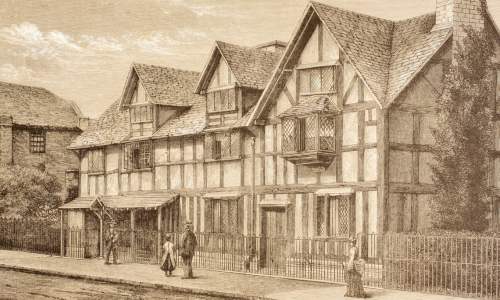
Shakespeare’s birthplace in Stratford-Upon-Avon, England, from 1890. A new book describes one man’s hunt for Shakespeare’s library.

There are people I’m sure you know who get a bee in their bonnet about some topic, often to the point of wearing out their friends and relatives with a barrage of random facts. But although their enthusiasm can be wearing, there’s no doubt that their research provides benefits to many of us, whether their obsession is about an ancestor of ours or someone we all claim as our own, like Shakespeare.

This report is for Laurie, who is likely to appreciate the enthusiam of Shakespeare hound Stuart Kells.

Alison Flood writes at the Guardian, “In an autumn in which scholars have unearthed Milton’s copy of Shakespeare in Philadelphia and parchment fragments from the 13th-century epic Le Roman de la Rose in Worcester [UK], Stuart Kells, author of the forthcoming Shakespeare’s Library, would like to be clear: he has not uncovered the Bard’s book collection, despite what the title might suggest.

“ ‘But I have confirmed its existence, clarified its scale and scope, and documented what happened to it,’ says the author, who has spent 20 years on the trail of Shakespeare’s personal library, and lays out his search in his new book. ‘It would be a very different book if I had gone out and discovered his library. No one has done that. It isn’t in one spot.’ …

“Kells is by no means the first person to have embark on a quest to find Shakespeare’s library during the last 400 years. As he writes, “for every species of book person, the idea of Shakespeare’s library – his personal collection of manuscripts, books, letters and other papers – is enticing, totemic, a subject of wonder.’ …

“Those not sold on his death, or destroyed or lost, ‘are sitting quietly, in cabinets and on shelves, in public and private collections around the world,’ he speculates. …

“ ‘There are things out there still being found and that’s part of the fun. … People are still finding chests of early letters, and there are volumes of multiple plays all bound together.

‘Play scripts were thought of as low literature for some time – they were slightly disreputable and weren’t taken seriously.’ …

“One of his tantalising findings is the potential former owner of a theologicial work by Agostino Tornielli. The book was published in Milan in 1610 and shipped to England, where it was bound in brown calfskin in 1615, the year before Shakespeare’s death. The cover panels on the book include an image of Pyramus and Thisbe, and the edges of the text block are decorated with elaborate patterning.

“The owner of the four bindings is not known, but there are a few hints.. … Writes Kells. ‘In tiny letters, the cover image is signed “I. S.” No one knows whether the initials are those of the block-maker, the bookbinder, the bookseller, the book’s owner, a patron or a dedicatee.’ … But the initials match those of Iohannes Shakespeare, William’s father, who dealt in leather hides – ‘no doubt some of them for bookbinding,’ Kells writes.

“Kells believes that one of the reasons for the disappearance of Shakespeare’s library is that the playwright was not an ‘avid inscriber of books,’ or much of a letter writer. ‘Practically minded and commercial, he does not seem to have been driven by abstract ideas of fame and posterity,’ Kells writes. …

“ ‘I’m quietly confident things are going to turn up,’ he says. “We now see the quarto editions as some of the greatest literary treasures in the world but, up until the 19th century, they were thought of in a different way. They are slight documents, little pamphlets, so it’s very probable they’re out there. We now have clearer eyes to search for these things and different ways of analysing them and dating things. We’re in a golden era of discovery right now.’ ”

More at the Guardian, here. I must say, it takes imagination to interpret the initials of Shakespeare’s father on a piece of leather this way, but it is surely imagination that will find and assemble the lost library.
cbvcc2xvxyi6te4xe3dlbwvsqi

Photo: Julia Cumes for the Boston Globe
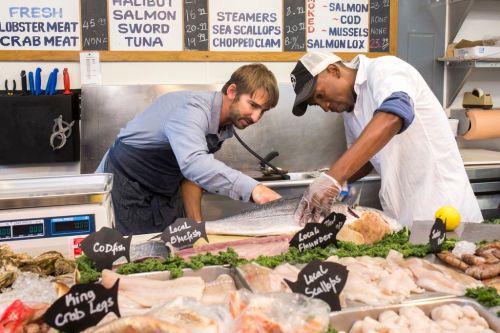
Mac Hay (left) and Robert Campbell at Mac’s Seafood Market in Wellfleet, Mass. Fish markets are the final link in a blockchain initiative to inform consumers about the food they buy.

Last summer I met a woman running a thriving experimental community garden on an old tennis court in the New York City projects. She told me that she got into growing produce because she found herself overthinking every decision in the grocery store: was that lettuce really organic; were the lettuce pickers paid a living wage; how much fossil fuel was burned transporting the produce to New York?

She may be an extreme example, but I’m hearing that many consumers want to know more about the origins of what they’re eating. They are much less passive about food.

Hiawatha Bray reported at the Boston Globe in October, “A Massachusetts fishing company will soon be able to show diners at a restaurant chain in California exactly where and when the seafood on their plates was harvested, in some cases even showing video of scallops being hauled out of the sea.

“ ‘They can watch it as we catch it,’ said Dan Eilertsen, owner of Nordic Inc., which operates six scallop boats based in New Bedford. ‘The whole story about the product you’re eating will be right in front of you.’

“Nordic Inc. and its distributor, Raw Seafoods Inc. of Fall River, are deploying Food Trust, a system from IBM Corp. that captures detailed information about food production from harvest to table. Now the companies are about to share this information with the consumers who feast on their products — and scallops are just the start.

Food Trust essentially creates a digital tag for each step of the food production process, the data forming a complete biography of every bite we eat, down to each ingredient in a package of processed food. …

It’s already started at French grocery chain Carrefour, which operates stores throughout Europe, China, Africa, and South America. Carrefour customers can use a phone app to find detailed information about two dozen items, including chicken, eggs, oranges, pork, and cheese; Carrefour plans to add about 100 more items by the end of 2019.

“In the United States, early Food Trust adopters are mostly using it internally, to track inventory and monitor freshness. Giant US grocery chains such as Walmart, Kroger, and Albertsons have signed on, as have a number of food suppliers such as Swiss-based Nestle, pork producer Smithfield Foods, and distributor Golden State Foods.

“An IBM spokesperson said that Nordic and Raw Seafoods will be among the first US users of Food Trust to deliver food data to consumers. The experiment begins in November, at TAPS Fish House & Brewery, a four-restaurant chain based in Brea, Calif. A special barcode will appear on the menu next to the restaurant’s scallop dishes. Tom Hope, TAPS director of food and beverage, said customers who scan the code with a smartphone will see the day and date of the scallop harvest. …

“It’s all made possible by blockchain, the technology that underlies digital currencies such as Bitcoin. A blockchain is an immense string of data, each digital tag along the food chain, as it were, adding to the string. The information is stored in an encrypted database that is dispersed across hundreds or thousands of computers. A blockchain can be easily updated with new data, and because it’s encrypted and widely distributed, it’s virtually tamperproof.

“Fishing on the open sea is hard, dangerous work, with little time to punch data into computers. Food Trust makes it easy. The name of the person on watch — the captain or the mate — is punched in once, at the start of each shift. After that, the fishermen just start bagging and tagging.

“Every time a bag hits the scales, a computer records the date and time of the catch, the boat’s latitude and longitude, and of course the weight — generally around 50 pounds each bag. There’s no need for a worker to enter data by hand; it’s all collected automatically from the boat’s GPS system, which acts as clock and calendar as well as a navigator. All this information is uploaded to the blockchain via satellite radio. A fisherman slaps a label onto each bag, with a barcode that links it to the recorded data.”

For a lot more detail, please read the Globe article, here. And start asking questions where you buy food.

10000

Photo: Christie’s
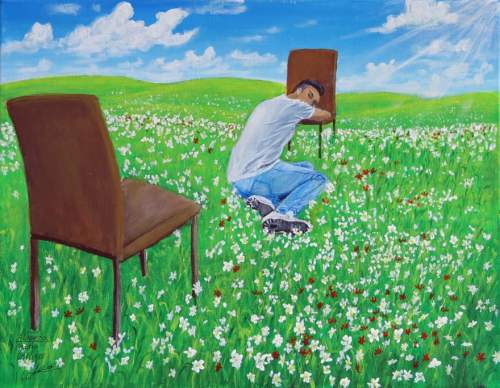
Alireza Hosseini, a refugee from Afghanistan, says of his 2019 painting “Embrace God”: “I was a man who did not know a god. I went to a sage and he told me to imagine two chairs: one for me, the other for God.” (Story at the
Guardian,)

It can be discouraging being a refugee if your new countrymen see you more as a concept than an individual. That is why a program in France, though struggling itself, has been determined to do something that opens minds.

PBS NewsHour‘s “Arts Canvas” recently posted a report by Jeffrey Brown on letting refugees tell their stories through their art.

“JEFFREY BROWN: Portraits of migration, the troubles faced along the way, the trauma of making a new home.

“ABDUL SABOOR: I’m from Afghanistan, but, sometimes, I say from nowhere.

“BROWN: Photographer Abdul Saboor experienced it himself. In Afghanistan, he says, he worked in transportation for the U.S. Army, but fled when the Taliban began threatening him and his family. During a harrowing two-year journey, part of it spent in an abandoned train station in Serbia, he began taking pictures with a donated camera.

“SABOOR: When I show to the people, I say, that’s not normal, how we lived there.

“BROWN: His photographs became a bridge to overcome language and other barriers and raise awareness about the plight of refugees, which he continues to do in Paris. … Saboor is one of some 200 refugee artists from more than 40 countries now getting support from the Agency of Artists in Exile.

“On our visit to its makeshift building off the Seine River, an Ethiopian man belted out a traditional song with accompaniment from this phone. Across the hall, a Yemeni woman used her vast trail of official asylum-seeking papers, accumulated over two years of navigating France’s legal process, to create an art installation. … And a Kurdish actor who fled Turkey practiced a monologue about his first days in Paris. …

“Judith Depaule is director of the studio, which opened in 2017 with funding from the French Ministry of Culture.

“JUDITH DEPAULE: In the beginning, you are, like, in the state of shock. … because nobody wants you there. It’s difficult. You have to do a lot of papers. … It’s like a panic. …

“BROWN: President Emmanuel Macron has sought to criminalize illegal border crossings, while tightening restrictions on asylum, even as far-right parties in the country call for more.

“But France also has a long tradition of being a sanctuary for artists, including Pablo Picasso and James Baldwin. The idea here was to give artists a place to connect with one another, to work on and exhibit their crafts, and to help with all the practical challenges of living as a refugee.

“ARAM TASTEKIN (through translator): First of all, they helped us find a place to live. Secondly, they helped us get a work visa, find a lawyer. Some people needed psychologists, things like that.

“BROWN: Kurdish actor and drama teacher Aram Tastekin fled Turkey in late 2017. So, why did you leave Turkey?

“TASTEKIN (through translator): Because it’s complicated living there. I’m a conscientious objector. I am anti-military. I’m an artist who tries to make art and theater in the Kurdish language, to protect the Kurdish language. But when we make Kurdish art or theater, they always say it is terrorist propaganda. And that really hurts. How can a language be terrorist propaganda?

“BROWN: In 2018, graffiti artist and painter Ahlam Jarban fled her native Yemen amid its years-long civil war. She says she faced added persecution for her family’s Somali and Ethiopian roots and for her wanting to be an artist as a woman. She left everyone and everything behind, and says she still doesn’t know if it was the right decision.

“AHLAM JARBAN: Because, all of us, we are we are without our families. So we feel lonely. We feel — there is a lot of problem. But when we are together, when we speak, when we share this story, it makes us a little less stressed, make us little — keep fighting. So it is good to have this place. …

“BROWN: To further make its case and showcase its artists, the agency recently presented its third annual month-long festival titled Visions of Exile. …

“JARBAN: When they see our artwork, they don’t see it as a refugee. This see it as artist, and artist make this thing. We do all this journey to be something. We have hope, and we are human before we come.” More here.

16overlooked-reiniger3-jumbo

Photo: SZ Photo/Bridgeman Images
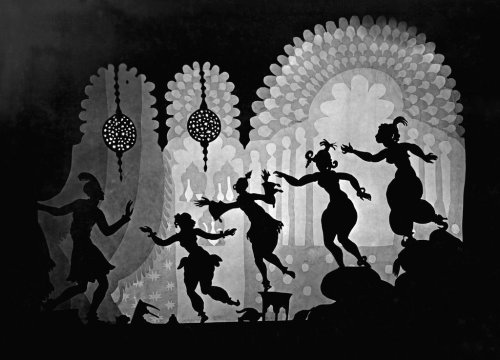
A scene from the animated film “The Adventures of Prince Achmed,” by the late Lotte Reiniger. Before there was such a thing as Disney Studios, she was using intricate hand-cut silhouettes to make movies.

Society has become so accustomed to Disney and Pixar types of animations that it has lost sight of predecessors in the field.

In a step toward restitution, Devi Lockwood wrote for the New York Times series Overlooked (“obituaries about remarkable people whose deaths, beginning in 1851, went unreported in the Times“) about an early animation artist we all should know.

“A decade before Walt Disney Productions came into existence, making its name synonymous with animated films, there was another pioneer of the art form — Lotte Reiniger.

“Reiniger’s filmmaking career spanned 60 years, during which she created more than 70 silhouette animation films. … She’s perhaps best known for her 1926 silent film ‘The Adventures of Prince Achmed,’ a fantastical adaptation of ‘The Arabian Nights’ that was among the first full-length animated features ever made.

“Charlotte Reiniger was born on June 2, 1899, in the Charlottenburg district of Berlin to Karl and Eleanor (Raquette) Reiniger. She studied at the Charlottenburger Waldschule, where she learned about scherenschnitte, the art of cutting shapes and designs in paper with scissors. The art form originated in China and later became popular in Germany. …

” ‘I began to use my silhouettes for my playacting, constructing a little shadow theater in which to stage Shakespeare,’ she wrote in 1936 in Sight and Sound magazine.

“At first she wanted to be an actress, but that ambition changed when, as a teenager, she encountered the film director and actor Paul Wegener after a lecture he had delivered in Berlin on the possibilities of animation in cinema. Fascinated by his films, like ‘The Student of Prague’ (1913) and ‘The Golem’ (1915), she persuaded her parents to enroll her in a theater group at the Max Reinhardt School of Acting, where Wegener taught.

“For fun she cut silhouettes of the actors in the group. Wegener was impressed [and] enlisted her to help with his 1918 film, ‘The Pied Piper of Hamelin.’ …

“Her work with Wegener led to her admission to the Institute of Cultural Research in Berlin, where she met the art historian Carl Koch. He would become her husband and a collaborator on her films. …

“Reiniger’s editing was meticulous. Starting with more than 250,000 frames [for ‘Prince Achmed’], she and her crew used just over 100,000 in the film, which ran for an hour and 21 minutes, each second requiring 24 frames. It took three years to complete, and premiered in the Volksbühne, or People’s Theater, in Berlin, when Reiniger was 27. …

“Reiniger designed a complex process to make her films. She cut each limb of each figure out of black cardboard and thin lead, then joined them together with wire hinges. For research, she spent hours at the Zoo Berlin, watching how the animals moved. …

“When Hitler was in power, Reiniger and her husband left Germany for France, Italy and England, where they collaborated with other puppeteers, funders and artists before returning to Berlin in 1944 to look after Reiniger’s mother. In 1948 they moved to London, where they joined a nearby artists’ colony. Reiniger then directed a series of short children’s films for the BBC.

“Her husband died in 1963, and she stopped making films. But in 1972 she was recognized with the Golden Reel Award at the Berlin Film Festival for her contributions to German cinema. Two years later, the Goethe Institute sponsored her on a lecture tour of Canada and the United States.

“ ‘A Reiniger revival swept North America,’ the Canadian newspaper the Globe and Mail wrote.

“The tour inspired her to make a few final short films, including ‘The Rose and the Ring’ (1979), a 24-minute adaptation of the 1854 satirical work of fiction by William Makepeace Thackeray, and ‘Düsselchen and the Four Seasons,’ a two-minute film completed in 1980. She died on June 19, 1981, in Dettenhausen, Germany. She was 82.

“[The] Times film critic A.O. Scott recalled her in a 2018 article about the unsung women who had advanced the art of filmmaking. Praising Reiniger’s ‘blend of whimsy and spookiness,’ Mr. Scott wrote that her ‘dreamy images that seem to tap right into the collective unconscious suggest both an antidote to Disney and a precursor to Tim Burton.’ ”

More at the New York Times, here.

You might also be interested in the Armenian shadow puppets I wrote about in 2018, here.

Lotte Renniger’s film about Jack and the Beanstalk.