Feeds:
Posts
Comments

tmg-article_tall

Photo: YouTube/Field of Vision
Karollyne, who works at the dog-rescue nonprofit founded by Glenn Greenwald and David Miranda in Brazil, is shown with one of the homeless dogs she cares for in an abandoned building.

Nothing humanizes homeless people more for us than seeing them interact with a pet. The panhandler who used to set up a blanket with his dog near Providence’s Kennedy Plaza always seemed cheerful whether he got money or not, and many passersby stopped to pat the dog and exchange a few friendly words. I haven’t seem him lately and can’t help wondering if his dog helped him to get it together and move off the street.

Consider a couple articles I’ve been reading on homelessness and the power of a pet. In the first article, reporter Candace Pires gathered the stories of four homeless people for the Guardian.

Heather, 22, told Pires, “Before we found Poppy, I didn’t feel like I had anything to wake up for. I was going through a rough time in my life and didn’t care about myself. I’d been homeless since my parents told me to leave our family house in June 2016 and was so miserable in my situation. Everywhere I go people shun me and tell me to leave.

“Then, last March, I was walking around downtown Seattle with my boyfriend when we saw a group of guys with two dogs. They were yelling at one of them and she was shivering and obviously scared. I went into a store and when I came out my boyfriend had the dog. I was confused. He said to me: ‘I made a life choice without you; we’re keeping the dog.’ He’d paid the guys $5 for her. …

“We moved from sleeping in a doorway to a tent. I stopped stealing food from stores when we were desperate; I didn’t want to go to jail for something dumb and risk losing her. I’ve applied for food stamps and now have a case manager helping me get on a housing list and get Poppy registered as a service animal so that we’re protected from being split up. …

“She wakes up so excited every morning and gets so happy about the littlest thing, like rolling around in the grass or even just the weather being nice. Seeing her like that reminds me to stay happy for simple things too. In my mind she’s a little angel that saved me as much as I saved her.”

Pires wrote up three more stories by homeless pet owners in America here.

Meanwhile, the journalist Glenn Greenwald has written at the Dodo about the dog-rescue nonprofit he and David Miranda founded in Brazil, where homeless people who love dogs are hired as caregivers.

“In the last two years,” Greenwald reported, “our work with animals has taken on a new focus: working with homeless people who live on the streets with their pets. At first glance, this situation can seem grim and depressing: Many assume that animals who live on the street with homeless companions are mistreated or deprived.

“But, far more often, the truth is the opposite: The bond that forms between homeless people and their homeless pets is often [more] strong, deep and more profound than many can imagine. The mutual need, and resulting intense devotion, that homeless people and their animals develop for one another is inspiring and can be unlike what one might find in any other context.

Leslie Irvine, a sociology professor at the University of Colorado, has devoted much of her academic career to studying this unique relationship, and even named her book on the topic, ‘My Dog Always Eats First.’ ”

Greenwald wrote more here.

Did you ever see a person you thought you couldn’t relate to until you saw the person’s relationship with a pet? I’d love to hear stories.

636631935695391365-janel-meindersee-photo-social-candy-2

Photo: Social Candy
Milwaukee Ballet dancer and teacher, Janel Meindersee, tries out a wheelchair herself as she teaches her students. Parents watch with pride.

Heartbreaking as it is to see anyone make fun of a person with a disability, which does happen in these harsh times, it’s important to remember the advice that the mother of Mister Rogers gave him long ago: “Look for the helpers. There are always helpers.”

In Milwaukee, some unusual helpers are found in a dance company.

Amy Schwabe writes at Milwaukee’s Journal Sentinel, “Nine-year-old Namine Eiche may be in a wheelchair, but that doesn’t stop her from being a ballet dancer. That’s thanks to Tour de Force, a partnership between Milwaukee Ballet and Children’s Hospital of Wisconsin that’s been providing ballet classes to children with disabilities since 2014.

“Just last year, the opportunity was opened up to children in wheelchairs through the ‘Glissade’ class, very appropriately named since ‘glissade’ is the French word for ‘glide.’

“Janel Meindersee, a Milwaukee Ballet dancer who teaches Glissade, explained how the children are able to dance.

” ‘We teach a lot of the same things as a normal ballet class — how to spot your head when you move, the quality of arm movements, how to count music and how to stay in line when dancing together,’ Meindersee said. …

“Meindersee said that seeing kids in wheelchairs in other Tour de Force classes was the impetus for Glissade.

” ‘There was a girl in a wheelchair coming to one of our other Tour de Force classes,’ Meindersee said. ‘She was able to get out of her wheelchair sometimes, but she was most comfortable in her chair. We thought there had to be other kids who can’t even get out of their chairs at all. …

“After having taught two sessions of Glissade, Meindersee is ‘blown away’ by the skill, talent and strength of her students — especially when she gets in a wheelchair herself to try out the dance moves. She laughs with her students, pointing out that she’s not as skilled in wheelchair maneuvers as her students are.”

More at the Journal Sentinel, here. Just imagine the joy and self-confidence of these young dancers take home with them after a class. Perhaps some will join one of the professional wheelchair ballets someday. Or start their own company.

janae

Photo: Poetry Out Loud
Janae Claxton of South Carolina is the 2018 Poetry Out Loud National Champion. A new survey suggests interest in poetry is growing in the United States.

I’ve been thinking about poetry lately. The team of family and friends keeping my sister company before her surgery was made up of people who enjoy poetry — reading, listening, memorizing, or reciting poetry. My sister herself knows a lot of poems by heart, and we all had fun quoting what we knew and looking up favorites on the web. Some of the poems were so moving, we had to stop and recover ourselves.

Poetry is the right thing in difficult times. And it seems my sister’s hospital team is not alone in feeling a need for it. A new survey shows that poetry reading is up nationwide.

Sunil Iyengar, National Endowment for the Arts director of research and analysis, writes at the NEA Art Works Blog, “Poetry reading in the United States has increased since five years previously. Nearly 12 percent (11.7 percent) of adults read poetry in the last year, according to new data from the National Endowment for the Arts’ 2017 Survey of Public Participation in the Arts (SPPA). That’s 28 million adults. As a share of the total U.S. adult population, this poetry readership is the highest on record over a 15-year period of conducting the SPPA, a research partnership with the U.S. Census Bureau. …

“Growth in poetry reading is seen across most demographic sub-groups (e.g., gender, age, race/ethnicity, and education level), but here are highlights:

• Young adults have increased their lead, among all age groups, as poetry readers. Among 18-24-year-olds, the poetry-reading rate more than doubled, to 17.5 percent in 2017, up from 8.2 percent in 2012. Among all age groups, 25-34-year-olds had the next highest rate of poetry-reading: 12.3 percent, up from 6.7 percent in 2012.

• Women also showed notable gains (14.5 percent in 2017, up from 8.0 percent in 2012). As in prior years, women accounted for more than 60 percent of all poetry-readers. Men’s poetry-reading rate grew from 5.2 percent in 2012 to 8.7 percent in 2017.

• Among racial/ethnic subgroups, African Americans (15.3 percent in 2017 up from 6.9 percent in 2012), Asian Americans (12.6 percent, up from 4.8 percent), and other non-white, non-Hispanic groups (13.5 percent, up from 4.7 percent) now read poetry at the highest rates. Furthermore, poetry-reading increased among Hispanics (9.7 percent, up from 4.9 percent) and non-Hispanic whites (11.4 percent, up from 7.2 percent).

• Adults with only some college education showed sharp increases in their poetry-reading rates.  Of those who attended but did not graduate from college, 13.0 percent read poetry in 2017, up from 6.6 percent in 2012. College graduates (15.2 percent, up from 8.7 percent) and adults with graduate or professional degrees (19.7 percent, up from 12.5 percent) also saw sizeable increases.

• Urban and rural residents read poetry at a comparable rate (11.8 percent of urban/metro and 11.2 percent of rural/non-metro residents). …

“More than 300,000 students from more than 2,300 high schools around the country participate in [the Poetry Out Loud] recitation competition. Last April, champions from 53 states and territories competed in the National Finals here in D.C. This year’s winner was high school senior Janae Claxton from the First Baptist School of Charleston, South Carolina. …

“Each year, the NEA Big Read supports community reading programs in approximately 75 communities nationwide, and includes poetry books such as [Muscogee (Creek) member] Joy Harjo’s How We Became Human and Adrian Matejka’s The Big Smoke in the available titles.”

Iyengar speculates that use of social media to promote poetry may explain part of the expanded interest. As for me, I think the obliqueness and beauty of good poetry help people to get their heads around big, impossible things.

More.

orchestra-main

Photo: Ge Wang
The Stanford Laptop Orchestra rehearsing for its tenth anniversary concert last month.

Not sure I would enjoy the sound of an all-electronic orchestra even though I did think MIT professor Tod Machover’s partly electronic opera Resurrection was lovely. What I do like about the Stanford Laptop Orchestra is the idea that the most important requirement for taking the course is curiosity. I’m all for curiosity.

Arielle Pardes Gear writes at Wired magazine, “Ten days before the big concert, the members of the Stanford Laptop Orchestra are performing technology triage. Rehearsal has only just started, but already, things seemed to be falling apart. First there was trouble with the network that connects the laptops to one another. Then one of the laptops crashed. …

“The orchestra members have gathered at Stanford’s Center for Computer Research in Music and Acoustics to rehearse a new kind of musical composition. Together, sitting on meditation pillows in front of MacBooks, they create songs that stretch the definition of music. The orchestra plays laptops like accordions, turns video games into musical scores, and harnesses face-tracking software to turn webcams into instruments. …

“Fixing a broken network isn’t as simple as a replacing a snapped string on a violin. But in a laptop orchestra, the potential for disaster is part of the delight. Since it was founded in 2008, the SLOrk has been making music that surprises audiences while it subverts the concept of orchestral performance. The compositions, part-machine and part-human, don’t always go according to plan. Technical difficulties are all but guaranteed.  …

” ‘Nothing’s better at being a cello than a cello,’ says [Ge Wang, the SLOrk’s founder and director]. ‘So we’re not trying to make a cello. We’re trying to make something you don’t have a name for yet.’ …

“[The Stanford Laptop Orchestra is] a for-credit course at Stanford — Music 128, cross-listed in the computer science department as CS 170 — but getting in isn’t easy. The group of 15 students includes those with computer science credentials, and those with more traditional music backgrounds, but neither is enough to become a great laptop orchestra player. The most important thing is curiosity. ‘We’re unified by this interest to make music together with computers,’ says Wang, ‘and to figure out what that means.’ ”

More here.


new20reef201

Photo: Valeria Pizarro
The Varadero reef has survived in Colombia’s Cartagena Bay despite toxicity from heavy shipping. The corals grow twice as fast as similar corals elsewhere, but their skeletons are less dense, which may have something to do with their success.

The news about coral reefs has not been good for a long time. Rising temperatures and too much carbon dioxide have been killing off these delicate creatures worldwide, with dire consequences for the marine life that depends on their intricate communities.

But what is going on in Cartagena Bay? Elizabeth Svoboda has a fascinating story at the Christian Science Monitor.

“For the coastal communities that have harvested its bounty for centuries, and for the scientists who officially discovered it five years ago, there is no reef like Varadero. Locals call it ‘the improbable reef,’ and for good reason: It has persevered in the midst of intensive coastal development, streams of toxic runoff from the nearby Canal del Dique (Dike Canal), and waters so warm they’d turn many reefs into lifeless skeletons.

“Scientists like Lizcano-Sandoval and Pennsylvania State University’s Mónica Medina are working to uncover the secrets of Varadero’s striking resilience – secrets they can use to help other threatened reefs around the world.

“But just as Varadero begins to yield its tantalizing scientific bounty, it’s looking as if the reef may be damaged or even destroyed. A group of government officials, port authorities, and businesspeople is planning to dredge a channel so Cartagena’s harbor can accommodate more container ships – a move they say will boost the nation’s economy. However, the researchers who study Varadero, along with local environmental activists, are hoping to stall the dredging project so the reef’s storied legacy can continue – and perhaps contribute to the rescue of other endangered underwater Edens. …

” ‘Corals in Varadero have a very distinct growth pattern,’ says biologist Roberto Iglesias-Prieto, Dr. Medina’s colleague at Pennsylvania State University. Specifically, the corals grow about twice as fast as similar corals elsewhere, but their skeletons are less dense; it’s possible that these traits give them an advantage over their slower-growing coral counterparts.

“Medina thinks certain elements in runoff from the Canal del Dique may be benefiting the corals in surprising ways. ‘Part of the day, [the corals] get these nutrient-rich waters where they’re eating and photosynthesizing,’ Medina says. She notes that fairly recent changes in coral growth coincide with a period when more sediment was being dumped into the bay. …

“Varadero’s corals might also benefit from their location right at the mouth of Cartagena Bay. “They have constant communication with the sea,” [Dr. Valeria Pizarro, who discovered the reef,] says. The fresh inflow of ocean water might lessen the impact of toxic mercury, cadmium, and copper that runs off into the bay from nearby industrial facilities.

“Medina and her colleagues are trying to figure out if other aspects of the reef’s biology contribute to its success – aspects that could ultimately be replicated in reefs elsewhere. … Samples of microbes from Varadero’s corals – the onboard collection of bacteria, viruses, and algae that perform critical metabolic tasks – have revealed that they are totally distinct from those found on other reefs, Medina says. Her lab is conducting a detailed analysis to find out whether the microbes might be performing important functions, such as fighting disease, that help the corals to survive even in less-than-ideal conditions.
“In the future, if conservationists can transport Varadero’s hardy corals to other endangered reefs around the world, or even seed threatened reefs with whatever microbial cocktail helps Varadero’s corals thrive, those reefs might have a better chance of surviving despite ocean warming and pollution. Many of the world’s reefs now hang in a liminal zone between death and survival. By putting Varadero corals’ survival tactics to work on other threatened reefs, scientists like Medina, Lizcano-Sandoval, and Pizarro hope to tilt those reefs a little bit closer to the side of life.”

More at the Christian Science Monitor, here.

0605_grossman01-1000x871

Photo: Jerry Olson for Here & Now
With dogged determination and the help of a world-renowned medical staff, Dr. Daniel Grossman has returned to work as an emergency room physician at Mayo Clinic in Rochester, Minn.

The other day, my sister and I were chatting with her brain surgeon about a pediatric brain surgeon we knew who once lived in her surgeon’s town. His name was Fred Epstein, and he was not only a celebrated surgeon but a fine human being. I have a friend who still says she would “take a bullet for Fred.” A biking accident at an unmarked construction site injured Fred’s own brain so severely he could no longer practice. And yet, as he gradually recovered much of his mental capacity, he was sought out regularly by former colleagues to consult on difficult tasks.

I am thinking of Fred, now deceased, as I read about an emergency room doctor who has returned to work after a paralyzing bike accident.

Jeremy Hobson and Chris Bentley report at WBUR radio, “Monday mornings are one of the busiest times of the week in the emergency room at the Mayo Clinic in Rochester, Minnesota. On one Monday in May, a middle-aged man tells Dr. Daniel Grossman he’s been feeling weak and having heart palpitations. …

“Both the patient and the doctor are in wheelchairs — the patient because he’s visiting the emergency room, and the doctor because of a spinal cord injury. Grossman, 37, lost the use of his legs less than a year ago, and he’s already back at work. …

“Grossman says [of the accident]. ‘I had a weird feeling around my stomach, like a numbness in my mid-abdomen, and I knew that I couldn’t feel my legs. So you had this feeling of being disconnected from the world and from your body. And everybody around me was freaking out.’ …

“Today, Grossman lives on his own. He’s more comfortable in his wheelchair, though he still worries about falling out of it. …

” ‘The only answer to overcoming the fear and the skill is to keep doing things until you’re comfortable doing them,’ he says. …

“Grossman acknowledges he’s needed to pay close attention to his mental health since the accident. But he says early on during his recovery, he faced a choice.

” ‘Option A is, “You are paralyzed, what are you going to do about it?” Option B is, “You are paralyzed. Let’s sit and wallow in self-pity.” I decided for option A, and honestly I think most people do decide for option A,’ Grossman says. ‘But option B seems really easy. That self-pity component seems pretty reasonable.’ ”

More at WBUR, here.

William H. Johnson: <i>Swing Low, Sweet Chariot</i>, 28 5/8 x 26 1/2 inches, circa 1944

Art: William H. Johnson
This beautiful interpretation of the traditional spiritual “Swing Low, Sweet Chariot” was created by “outsider” artist William Johnson around 1944. Owned by the Smithsonian American Art Museum in Washington, D.C., it is traveling with an exhibition to Atlanta and Los Angeles.

Do you know the traditional African American spiritual “Swing Low, Sweet Chariot”? I love the simple and inspiring visualization of it that artist William H. Johnson painted in 1944 or thereabout. I love the humble dresses and the darling shoes and socks of the angels coming in a chariot to carry him to heaven. I love how the first angel has her hand raised in welcome and how you can see the Jordan River in the background.

I looked over Jordan, and what did I see?
(Coming for to carry me home)
A band of angels coming after me
(Coming for to carry me home)

This painting is provided as an example of “outsider art” in the New York Review of Books.

Sanford Schwartz writes, “In recent decades, a tale unfolding within the larger story of contemporary art has been our gradually learning more about, and our trying to place, outsider artists.

“Problems begin at once, with the label. It is a description that many remain ambivalent about, and often believe should be put in quotation marks, to indicate its tentativeness. The situation somewhat echoes the moment, beginning in the 1920s and 1930s, when folk art was first being taken out of attics and looked at anew, and commentators were not sure whether that term — or the labels ‘self-taught,’ ‘naive,’ or ‘primitive,’ among others — was the appropriate one or would merely suffice.

“ ‘Self-taught,’ though imprecise in its way — it has been said, for example, that most of the significant painters of the nineteenth century were essentially self-trained — has remained interchangeable with ‘folk art’ for many commentators. It is sometimes used interchangeably with ‘outsider,’ too. It strikes far less the note of a judgment from above.

“Yet ‘outsider’ catches better the quality often evident in the work of such creators of being a surprising, or possibly strange, one-of-a-kind accomplishment. Put roughly, an outsider artist is a figure who makes a body of work while operating in relative isolation, unaware of, or indifferent to, developments in the work of professional artists — though this isn’t always the case and it doesn’t mean that such a person is unaware of being an artist. Nor should it suggest that an outsider artist is a sporadic creator. Many are mightily prolific.

“An outsider artist might be someone who resolutely, and perhaps eccentrically, wants to live and work only on her or his terms. An outsider artist might be someone who has been institutionalized, or who suffers some physical impairment, which keeps the person at a remove from others. …

“Simply to give a sense of the range of such figures I would mention Bill Traylor, who was born a slave and was discovered in 1939 working out of a booth on a street in Montgomery, Alabama. His gift was for finding the most precise and elegant way to place his silhouette-flat human and animal figures on otherwise empty pages. Twisting, running, growling, and gesticulating, his characters, although not part of some larger atmosphere, seem nevertheless to conjure a vast rural universe.

“The Czech Miroslav Tichý, on the other hand, who made some of his cameras out of wood, tape, and cardboard, gave photography, in shots made mostly in the 1960s and 1970s of the women of his town — going swimming, waiting for a bus, walking away — a new dimension. He showed how offhand and blurry a photograph can be and still be evocative.”

Lots more here. The exhibition “Outliers and American Vanguard Art” can be seen at the High Museum of Art in Atlanta, Georgia, until September 30, after which it will visit the Los Angeles County Museum of Art from November 18, 2018 to March 18, 2019. If you see it, could you let me know?

01boycott-superjumbo-v2

Photo: Drew Nash/Times News
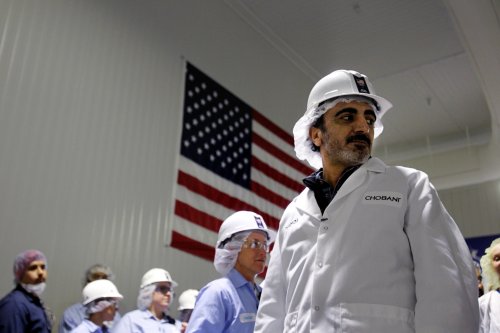
Hamdi Ulukaya believes deeply in helping refugees, employing hundreds at his flourishing yogurt company, Chobani. He may be motivated by ethical and business reasons, but as new research shows, employing migrants is also great for the economy of the receiving country.

Now that I’m back at my volunteer gig (helping ESL teachers work with refugees and other immigrants), you can expect more on the topic of migration. Honestly, it’s hard for me to understand antipathy to migrants. On an individual basis, sure, you meet some who, like other humans, may be self-centered or grumpy, but most are incredibly grateful for any help and just a delight to be around.

As many people already know, companies often find that hiring immigrants is good business. Now there is research suggesting it can also improve productivity in the receiving nation.

Dany Bahar and Hillel Rapoport write at the London School of Economics blog, “Similarly to trade and investment, migration is also linked to productivity: as people move across locations, they typically bring along new skills and knowledge to their country of destination. In similar ways, countries of origin can also benefit from the skills and knowledge that their emigrants gain while abroad. If this process of knowledge diffusion through migration is significant, we should be able to see it in important economic outcomes, such as productivity.

“This was the main goal of our recent paper. In our research, we explored a novel aspect of how migrants can induce productivity, investigating whether and how they can contribute to the export diversification of countries by fuelling the emergence of new export sectors. …

“In particular, we found that a 10 per cent increase in the immigrant stock from countries that export a certain good can explain a 2 per cent improvement in the probability of the receiving country exporting this same good to the rest of the world, competitively and from scratch. Our results, therefore, imply that the inflow of immigrants coming from countries with a comparative advantage in a given product can lead to a strong increase in the likelihood that the receiving country will start to export that same product competitively in the following ten years. …

“Migration may be, perhaps, the most effective driver of knowledge diffusion across nations. This is due to the ability of migrants to bring along ‘tacit knowledge’: a type of knowledge that requires direct human interaction to be transferred appropriately, and hence cannot be embedded in goods or written down on a website or a piece of paper,” as other researchers have shown.

You can read more at the London School of Economics, here.

071018-large-mouth-bass

John took the photo of my eldest grandson and the fish as well as the picture of my eldest granddaughter investigating the seaweed. The large-mouthed bass popped right out on the first cast early one morning, but the lucky fish got thrown back. My husband and I were also lucky, having that family visiting us last week and Suzanne’s family the week before. Suzanne’s children, like their cousins, were absolute fish in the ocean, but are pictured on land, climbing a tree.

The painting on the rock was not created for me, but I had to take a picture anyway.

Now look carefully at the photo of the fence and some weeds. What do you see far away?

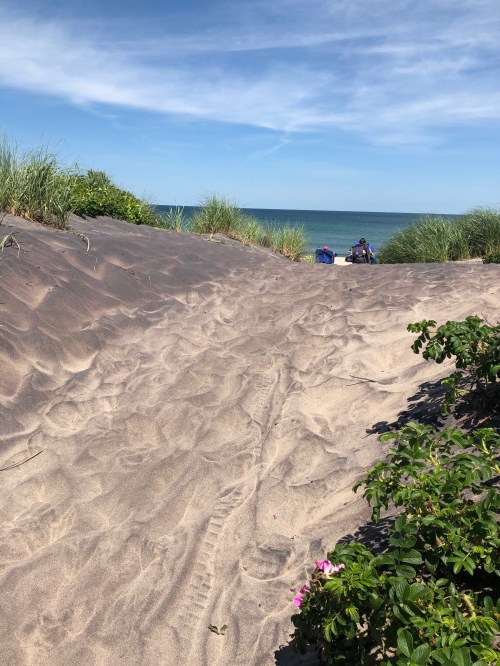
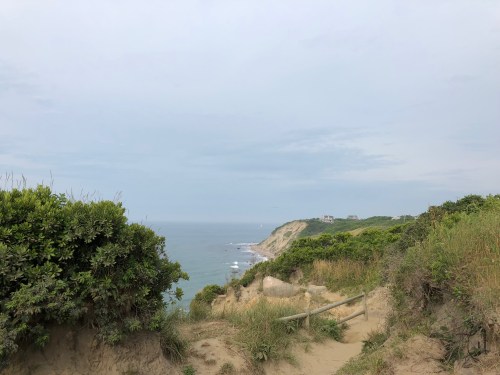
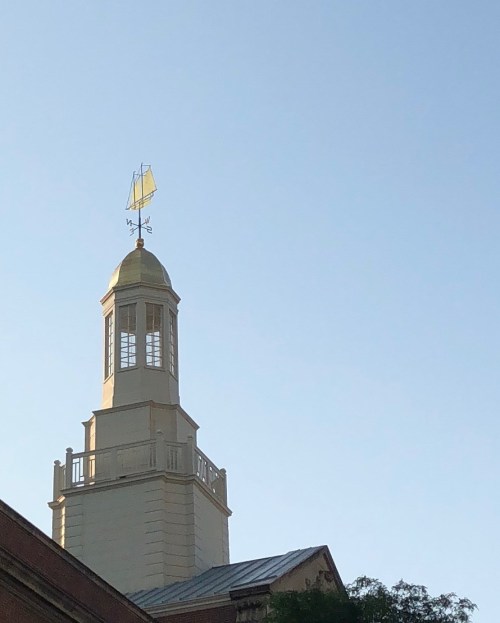
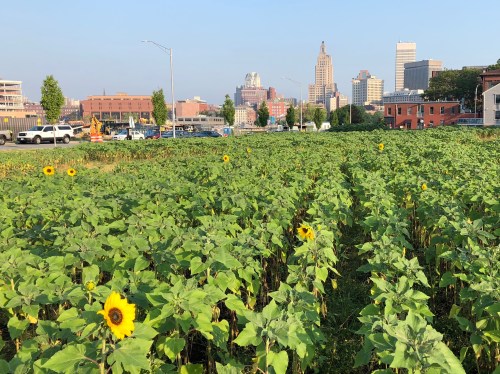
The boats are docked in an active Rhode Island fishing port, Point Judith. The nautical weathervane is in Providence, as is the field of sunflowers planted to rehabilitate soil that was ruined when Interstate 195 ran above it. See my post from 2016, here. Where the highway used to be, a research center and a pedestrian bridge to span the river are coming along well and are likely to be finished in 2019.

071118-seaweed

070818-tree-climbing-Rhode-Island

070918-sand-dunes-ocean

071018-painted-rock-for-a-grandma

071518-windmills-look-carefully

071518-bluffs-overcast-day

071518-water-lilies

071518-Pt-Judith-RI-fleet

071618-cupola-with-sailing-ship

071618-sunflowers-improve-bad-soil


3-D Printed Houses

http3a2f2fcdn-cnn-com2fcnnnext2fdam2fassets2f180606130200-02-3d-printed-houses-netherlands

Photo: Houben/Van Mierlo architecten
New homes in the Netherlands are being created with a 3-D printer. 

Now for something completely different: how those creative Dutch are using 3-D printers to create homes.

Gianluca Mezzofiore reports at CNN, “Living in a community of 3D-printed homes will soon be reality in the Dutch city of Eindhoven.

“In what is considered a world first, a single-floor, three-room house made of 3D-printed concrete will be ready for occupation in 2019. More than 20 people have already registered their interest in the house since Dutch construction company Van Wijnen announced the project. …

” ‘We need a technical revolution in the constructing area to respond to the shortage of skilled bricklayers in the Netherlands and all over the world,’ Rudy van Gurp, a manager at Van Wijnen, told CNN. ‘3D printing makes things quicker, better, cheaper and more sustainable by using less material. It also fosters creativity and freedom in the design.’

“Working along with the Eindhoven University of Technology, the construction firm is printing a special type of concrete for the house’s exterior and inner walls by adding layer upon layer.

In laying concrete only where it is needed, the amount of cement being used is significantly lower, which helps cut down on costs and environmentally destructive carbon-dioxide emissions. Van Gurp estimates that 3D-printed walls of the new houses will be 5 centimeters thick, while normally they would be about 10 to 15 centimeters. …

“At the moment, research costs and regulation restraints outweigh the benefits of 3D houses, but we may see mass production of these in the next few years, van Gurp said.”

For more pictures and details, go to CNN, here.

Photo: Houben/Van Mierlo architecten
A 3-D printer lays down layer upon layer of concrete for a new home.

http3a2f2fcdn-cnn-com2fcnnnext2fdam2fassets2f180606130600-03-3d-printed-houses-netherlands


netter20symposium2020172028c2920thomas20jefferson20university20photo20services2028129

Photo: Thomas Jefferson University Photo Services
Medical professionals develop their empathetic side at a 2017 Netter Symposium in Philadelphia.

I’m back to writing the usual posts that link to interesting articles. This one is especially appropriate, given my recent experience as a hospital visitor. The article is about techniques for “teaching” empathy to medical people, but I have to say I think every worker in that hospital was born empathetic. From the security personnel and cleaners to the brain surgeon and night nurses, it was amazing to experience how kind everyone was, and I wonder if it’s just the culture of that hospital.

Be that as it may, there are initiatives everywhere to help medical professionals develop their empathy “gene.” An article at a “platform for theatremakers” called HowlRound is about using drama for that purpose.

“As theatre folk know well, sometimes the most meaningful creations are borne out of the fruit of circumstance. To wit, the Lantern Theater Company in Center City, Philadelphia, happens to be located around the corner from the Sidney Kimmel Medical College (SKMC) of Thomas Jefferson University. In 2012, Charles McMahon, artistic director of the Lantern, and Dr. Salvatore Mangione, pulmonologist and director of physical diagnosis and history of medicine at SKMC, started discussing a way to make the most of that physical proximity — and potentially change the course of modern medicine while they were at it.

“Together, along with artistic colleagues Craig Getting and Kittson O’Neill, they developed a curriculum for what became the Empathy Project. [Mangione] and the team believed that ‘in addition to preventing burnout, and giving [students] more comfort with empathy and ambiguity, it might give them a different brain and help them become a better physician.’ …

“Part of the program focuses on playwriting. This section asks students to not only learn the technical tools of dramatic storytelling, but also to make a personal investment in the work they are creating. It helps break students out of their comfort zones by encouraging them to write about a truth that goes unsaid in their community. …

“Many of the project’s exercises have roots in Meisner work, including improv technique to facilitate open listening and taking stock of one’s ‘baseline self.’ This combination of listening and self-awareness supplies the building blocks of empathy, asking students to consider themselves and each other with perhaps more generosity and less competitiveness. …

“Plays written by students for the Empathy Project have dealt with wide-ranging topics such as immigrant experience, class issues, what it feels like to be a Muslim in America, the recent death of a parent, ethics of patient privacy, and doctors confronting cadavers. O’Neill avows she has learned more about the Muslim American experience in her class at Jefferson than she has anywhere else in her life.

“Getting believes some of the most fundamental questions playwrights ask during their writing process can easily be applied to doctors working with patients. These include: What are the given circumstances of this person? Who is supporting them or not supporting them? How do you get your audience to feel the emotions you want them to feel? How do you structure the telling of information that is at the right pace and is clear? As a result, students taking part in the Empathy Project reported seeing their patients in the hospital the way a playwright would see them.”

More here.

Heading Home

Heading home today. Will go back after my sister gets her treatment plan.

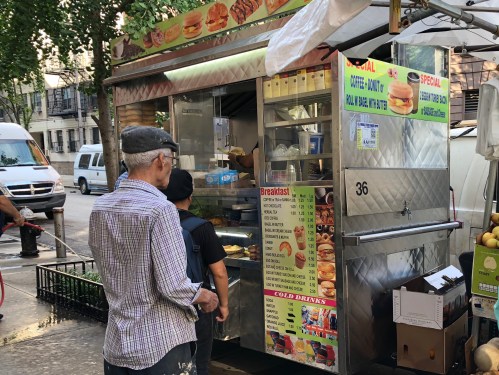
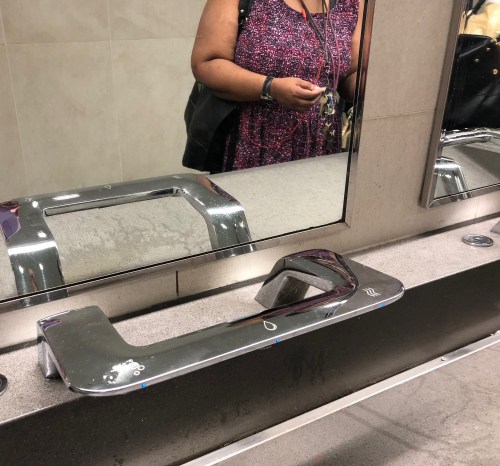
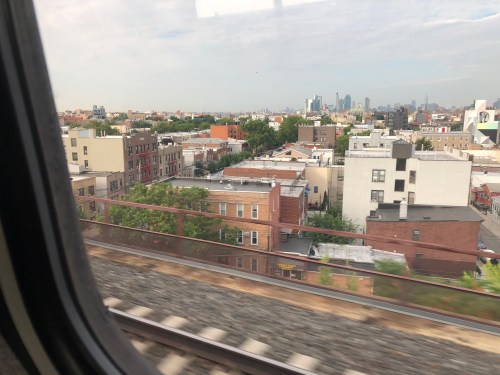
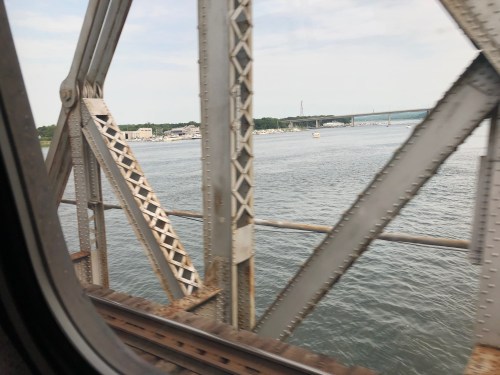
Here you see me leaving the varied wonders of New York behind and traveling by train and boat. The only picture that needs explanation, I think, is the Penn Station sink fixture, the like of which I had never seen. The left end of the metal bar dispenses soap, the middle provides water, and the right end is a blow drier!

071318-dinosaurs-at-Riverside-Park

071318-fruit-stand-2

071318-fruit-stand-1

071318-street-breakfast

071418-Amtrak-3-in-1-sink

071418-speeding-along-by-train

071418-bridge-ner-Old-Saybrook

071418-Boat-in-New-London

071218-fancy-NYC-bike

Thank you for all the lovely things you have written. My sister has a long road ahead, but she is a strong person and is facing it well. Ms. Mighty Mouse.

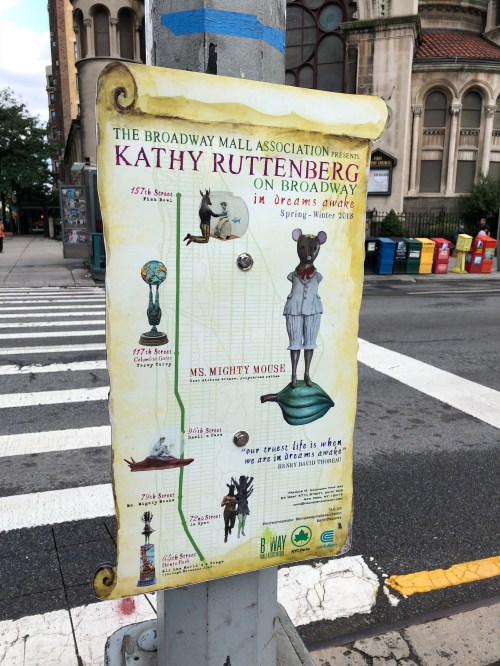
I actually saw a Ms. Mighty Mouse sculpture on my walk and took a picture. Unlike her, my sister has both her arms and all her faculties.

I liked the Alice Walker poetry mural I saw, too, and will repeat the poem here as my sister loves poetry. In fact, the day before her surgery, the four of us who were gathered in her room had the best time quoting poetry at each other. It was a lot of fun.

The Nature of This Flower Is to Bloom

Rebellious. Living.
Against the Elemental Crush.
A Song of Color
Blooming
For Deserving Eyes.
Blooming Gloriously
For its Self.

071218-Alice-Walker-1

071218-Alice-Walker-2

071218-Ms-Mighty-Mouse-text

071218-Ms-Mighty-Mouse

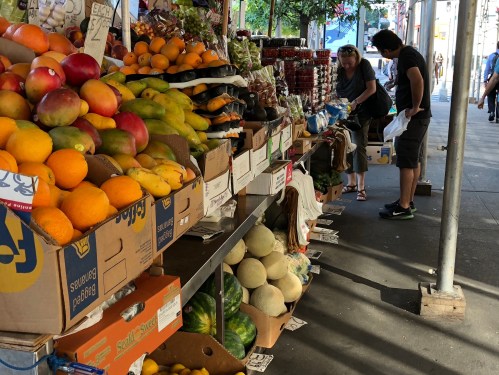
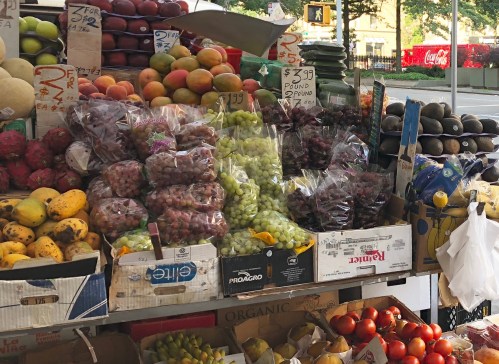
The first stage of waiting is over. Some bad things avoided, others not so good. While waiting for my sister to be out of surgery, I walked  around New York City, sometimes with her husband and close friend. I took these pictures.

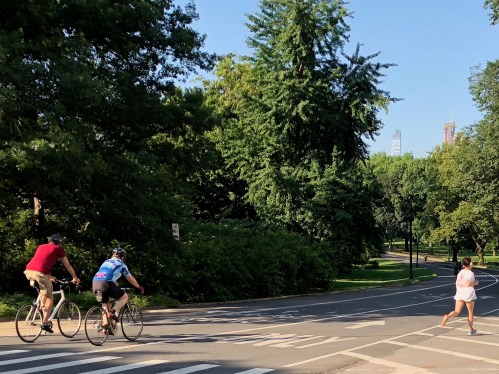
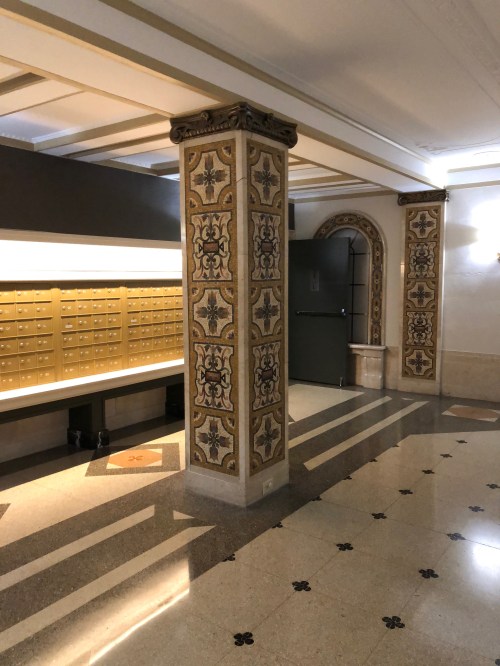
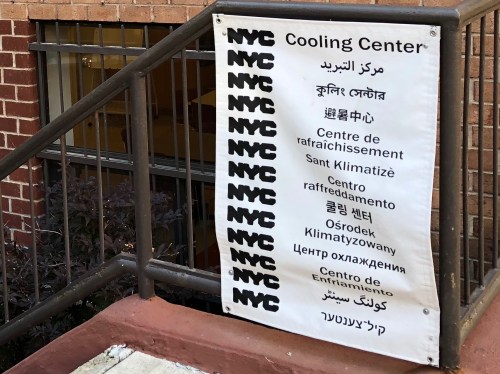
I’m not going to add a lot of description, but I wanted you to know that the amazingly beautiful garden, managed by volunteers, is in Riverside Park, that there is lots of biking in Central Park in the morning, that the city has “cooling centers” for seniors on hot days, and that the place I’m staying has a lobby like the Alhambra.

071118-Riverside-Garden-3

071118-Riverside-Garden-2

071118-Riverside-Garden-1

071118-Rockland-County-type-rock

071118-Senior-Cooling-Center

071118-Central-Park

071118-brownstone

071118-lobby-in-NYC

071118-welcome-refugees

Today is July 11th. A week ago, my sister was feeling fine. Today she is having brain surgery. I arrived in New York yesterday to be with her and her husband.

It may be that I don’t post for a while. I’m feeling a little discombobulated. But I do like posting, so you could at least get pictures of New York City over the next couple days.

My sister is a lot younger than me. This feels all wrong. But life is strange that way.

If you are into sending people healing thoughts, please think of us at 2 p.m.

042218-pansies-in-wall