May 31, 2016 by suzannesmom

I call this one Downward Facing Dogwood. Taken from above, it shows our dogwood’s drooping magnificence. Next is a view from almost the same angle but including the neighbors’ flowering trees, too. On the back steps is an arrangement of lilacs, dogwood and a ubiquitous yellow flower whose name I don’t know.
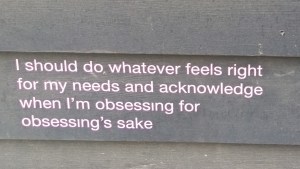
Three pictures taken in Providence feature a decorated utility box near the Rhode Island School of Design, the dragon that hovers over the Children’s Museum, and a cryptic statement in small print on the side of a Benefit Street house. My question: Is this the homeowner’s voice or vandalism?




Posted in Uncategorized | Tagged benefit street, children's museum, dogwood, flowering trees, lilacs, massachusetts, photo, photograph, picture, postaday, providence, utility box | 2 Comments »
May 30, 2016 by suzannesmom

Photo: Thomson Reuters Foundation
Schoolgirls make their way to their school on an early morning in New Delhi.
Not long ago I read a story about boys in India who volunteer to help girls pursue education.
The article by Astrid Zweynert and Ros Russell begins, “Boys campaigning for girls’ education is not common in most parts of the world, but in India’s Rajasthan state, they are at the heart of a drive to get more girls into schools.
“Educate Girls trains young people to go into villages to find girls who are not in the classroom in a country where more than 3 million girls are out of school.
“Some 60 percent of Educate Girls’ 4,500 volunteers are boys, founder and executive director Safeena Husain told the Thomson Reuters Foundation.
” ‘Having these boys as champions for the girls is absolutely at the core of what we’re trying to achieve,’ Husain said in an interview as she was awarded the $1.25 million Skoll Award for Social Entrepreneurship, the largest prize of its kind. …
“In Rajasthan, 40 percent of girls leave school before reaching fifth grade, often because their parents do not see education as necessary for their daughter because she is going to get married or stay at home to do housework, Husain said. …
“Educate Girls’ approach to is to define hotspots where many girls are out of school, often in remote rural or tribal areas, and then deploy its volunteers to bring them back into the classroom, said Husain.”
There’s plenty of research showing that when girls are educated, the standard of living in a country goes up. Educated girls “are less likely to get married at an early age or to die in childbirth, they are likely to have healthier children and more likely to find work and earn more money.”
More at the Christian Science Monitor, here.
Posted in Uncategorized | Tagged Astrid Zweynert, boys, classroom, educate girls, education, girls, india, learning, postaday, Rajasthan, Ros Russell, Safeena Husain, school, Skoll Award for Social Entrepreneurship | 3 Comments »
May 29, 2016 by suzannesmom
Are you familiar with the “Lens” blog at the NY Times? It focuses on “photography, video and visual journalism.” Here David Gonzalez writes about the photos of Putu Sayoga.
[Hat tip: Asakiyume on twitter.]
“If you live in a far-off place, a library may be something you’d only read about in books. That is, if you had books to begin with.
“That became the mission of Ridwan Sururi, an Indonesian man with a plan — and a horse. Several days a week, he loads books onto makeshift shelves he drapes over his steed, taking them to eager schoolchildren in the remote village of Serang, in central Java. ..
“Mr. Sayoga, a co-founder of the collective Arka Project, had seen something about the equine library on a friend’s Facebook page. It reminded him of his own childhood, where his school had only out-of-date books. Intrigued, he reached out to Mr. Sururi, who offered to put Mr. Sayoga up in his home while he spent time photographing Mr. Sururi on his rounds. …
“Mr. Sururi made a living caring for horses, as well as giving scenic tours on horseback. One of his clients, Nirwan Arsuka, came up with the book idea as a way of doing something to benefit the community, specifically a mobile library. He gave Mr. Sururi 138 books for starters. Most were in Indonesian, and the books included a lot with drawings.
“Children at the schools he visits can borrow the books for three days, and demand has been so great that he now has thousands of books.” More here. Check out the slide show.
Photo: Putu Sayoga
Posted in Uncategorized | Tagged Arka Project, asakiyume, children, david gonzalez, education, horse, horseback, indonesia, java, learning, lens, library, Nirwan Arsuka, photo, photography, postaday, Putu Sayoga, reading, remote, Ridwan Sururi, schoolchildren, serang, visual | 2 Comments »
May 28, 2016 by suzannesmom
One place that refugees are making a life for themselves is in Kansas City, Kansas, where some are bridging their current and former lives through farming.
Oluwakemi Aladesuyi reports at National Public Radio, “In the midst of boxy yellow and brown public housing, beyond the highway and past empty grain elevators, sits Juniper Farm. It’s spread over nine acres on the Kansas side of Kansas City.
“As their children play on the grassy knoll behind us, four women sit at a plastic picnic table speaking in Karen, a language spoken in parts of Myanmar [Burma].
“They’re students at a program called New Roots for Refugees. The program aims to teach the basics and business of farming [in America] to refugees over the course of four years. At the end, many of the graduates are ready to start farms of their own.
“It’s a joint effort between Catholic Charities and Cultivate Kansas City, a nonprofit that encourages locally grown food and urban agriculture. …
“Many of the men and women at New Roots come from Myanmar or Bhutan. Some were farmers in their homelands. But farming on the outskirts of Kansas City is different: the land, the crops and even the weather. …
“Many who’ve come here are happy to have escaped violence. But adapting to life in a new country, with a different language and customs, is still difficult. Many refugees struggle economically. …
“August Gaw [is] 25 years old and often translates for her mother, Beh paw Gaw, who graduated from New Roots a few years ago. …
“August used to come here to help her mother. But now Beh paw has her own 3-acre farm which she runs with her sister. Last year the operation made more than $10,000. The potential to make money is important; many refugee families live below the poverty level.” More here.
Read the story if you have time. One striking aspect: farm manager and adviser Sam Davis, an African American, experienced real intolerance when moving to Kansas from Arkansas, but to one of the Karen women, who had seen extreme isolation of different ethnic groups in Myanmar, America seems prejudice-free.
You might also be interested in this article on Karen people who were relocated to Waterbury, Connecticut. Written by John Giammatteo, it appeared in Communities & Banking magazine in 2012.
Photo: Oluwakemi Aladesuyi/NPR
Beh paw Gaw is a New Roots graduate and a Karen refugee from Myanmar. Now she has her own three acre farm which she runs with her sister.

Posted in Uncategorized | Tagged beh paw gaw, boston fed, burma, catholic charities, communities & banking, Cultivate Kansas City, farm, farming, immigrant, John Giammatteo, juniper farm, kansas city, karen people, myanmar, New Roots for Refugees, Oluwakemi Aladesuyi, postaday, refugees, sam davis | 2 Comments »
May 27, 2016 by suzannesmom
Pigeon performance art in New York is ruffling a few feathers, and no wonder. The pigeons failed to sign performance agreements.
Andy Newman reports at the New York Times, “No one asked 2,000 pigeons if they wanted to have lights strapped to their legs in the name of art. Nor did anyone ask the birds how they felt about being shooed from their homes at dusk and sent flying up to illuminate the Brooklyn sky.
“But whether Duke Riley’s avian-powered performance piece ‘Fly by Night‘ constitutes pigeon abuse is a more complicated question.
“More than 5,000 people have signed a change.org petition calling for the show, which opened May 7 at the Brooklyn Navy Yard, to be closed. …
“Their charges: that the birds are terrified by the flapping plastic flag Mr. Riley waves to keep them flying; that it is unnatural to make pigeons fly at night, when they normally rest; and that between their poor night vision and the distractions of the moving lights, they could become disoriented and crash into the East River. …
“Before ‘Fly by Night’ opened, [however], the nonprofit arts group that organized it, Creative Time, asked the director of the Wild Bird Fund, Rita McMahon, to inspect. The fund, based on the Upper West Side, treats more than 2,000 sick and injured pigeons a year.
“ ‘Mixing art and animals is a very risky business,’ said Ms. McMahon, who is a state-licensed wildlife rehabilitator, ‘but I was very impressed.’ The pigeons were healthy and well fed, their temporary homes beautiful and clean.
“ ‘I didn’t see any traumatized pigeons,’ she added. ‘You see them mating, courting, everything, all over the boat. I think that’s a pretty good sign.’
“ ‘Fly by Night’ runs on Fridays, Saturdays and Sundays until June 12, and the protesters say they will be out every night for the rest of the run.”
More here.
Photo: Byron Smith for The New York Times
Duke Riley’s “Fly by Night” performance piece features more than 2,000 trained pigeons with LEDs attached to their legs. 
Posted in Uncategorized | Tagged andy newman, art, brooklyn navy yard, Byron Smith, creative time, duke riley, fly by night, led, lights, performance art, pigeons, postaday, rita mcmahon, trained pigeons, wild bird fund, wildlife rehabilitator | 4 Comments »
May 26, 2016 by suzannesmom
It seemed clear from the start that the refugee job-training company Providence Granola Project was onto something.
Now I’m realizing that related concepts can spring up independently in other places. Maybe there should be a trade group.
Check out this story about a food-delivery business in New York that hires refugees.
Autumn Spanne writes at the Guardian, “When Manal Kahi arrived in New York from Lebanon two years ago, to pursue a master’s degree in public administration, she longed for authentic hummus, but couldn’t find a restaurant or supermarket that came close to her expectations. So she started making her own, based on a recipe from her Syrian grandmother.
“The recipe was a hit with her friends, and it occurred to Kahi that there might be a successful business in it. The idea also dovetailed with her growing concern about the Syrian refugee crisis. …
“She decided to start a social enterprise designed to help refugees from all over the world get established in their new country and provide New Yorkers a positive entry point for interacting with the city’s refugee community. Kahi’s efforts put the spotlight on the role business has to play in the refugee crisis, and whether there’s a need for new approaches to help recently arriving refugees integrate and become self-sustaining. …
“The result went far beyond hummus. [In January], Kahi and her brother launched Eat Offbeat, a for-profit meal delivery startup that employs recently resettled refugees from around the world as chefs who prepare traditional dishes from their countries of origin. …
“Al Janabi, who uses only her last name out of concern for the safety of family still in Iraq, was one of Eat Offbeat’s first hires. … For months, she was afraid to go anywhere alone. Her first solo trip on the subway was to the Eat Offbeat kitchen in Brooklyn. …
“ ‘I want people in the US to know that refugees have few opportunities here, but we bring our skills with us,’ she said. ‘We come in difficult circumstances.’ …
“Al Janabi and two other refugees from Nepal and Eritrea … learned basic food preparation and hygiene techniques – skills that they can use to get other jobs, or perhaps eventually open their own business, said Kahi.
“ ‘Ultimately we want to change the narrative around refugees, for New Yorkers and the rest of world to see that refugees don’t have to be a burden, they have economic value.’ ” More here.
Photo: Eva Cruz/Eat Offbeat
Potato kibbeh is one of the dishes on the Eat Offbeat menu. 
Posted in Uncategorized | Tagged Al Janabi, asylum, Autumn Spanne, business, eat offbeat, eva cruz, food, lebanon, Manal Kahi, new york, postaday, refugee | Leave a Comment »
May 25, 2016 by suzannesmom
What? Another story on naps?
This time, no less a personage than Arianna Huffington of the Huffington Post is weighing in on the importance of catching 40 winks if you need them. She has written a book called The Sleep Revolution, in which she predicts that most offices will have nap rooms in the not-too-distant future.
“Huffington’s mission: to eliminate the stigma long associated with sleeping at work. … In the HuffPost newsroom, ‘having a nap in the middle of the afternoon is actually a performance-enhancing tool,’ she said. …
“Experts like Sara Mednick, a researcher at the University of California, recommend a short nap in the middle of the day because you won’t feel groggy when waking up.
“Other companies like Google, Zappos and Ben & Jerry’s are getting on board with the napping trend. All now have built nap rooms in their offices. …
“Sleep is ‘the gateway through which a life of well-being must travel,’ Huffington recently wrote. It allows people to be more productive, lead healthier lives and connect more deeply to themselves, she added.
“Huffington will soon embark on a college tour, where she plans to visit 50 schools with leading sleep experts.” More here.
Hmmm. Time for a nap.
Photo: cdnimg
Posted in Uncategorized | Tagged alert, Arianna Huffington, nap, office, performance enhancing, postaday, Sara Mednick, sleep, sleep revolution, University of California | 2 Comments »
May 24, 2016 by suzannesmom
Readers know I’m a fan of the Providence Granola Project, a social enterprise that, by training refugees to make a product, acclimates them to US employment norms and aids their transition to self-sufficiency.
Recently, the organization produced an annual report that explained how it developed a different sort of model for small business, a model they hope others will use or adapt.
Founder Keith Cooper says, “The Providence Granola Project started as an experiment to explore what might help refugees enter the job market. Building a small business seemed like a logical place to start. But what a revelation it has been to discover how nearly every aspect of a small business—from capital to product—can serve a higher purpose.”
The organization’s Big Idea tweaks all the traditional elements of a business.
New hires: workers who are the least prepared, workers the training could really help.
Customers: frequently people who not only like granola but share the mission.
Investors: people whose desired return on investment is the ability to benefit immigrants on their path to becoming contributing members of their new nation.
Work: “repurposed as hands-on education. Making granola is transformed into an experiential classroom.”
Products: delicious foods that are simultaneously tools for raising awareness.
Check out the remarkable variety of granola flavors, granola bars and snacking nuts at the website. You can also sign up for a Granola of the Month package here if you’re up for giving this worthy cause a bit more predictability about resources.
Infographic: Providence Granola Project

Posted in Uncategorized | Tagged encore jobs, granola, Granola of the Month, granola project, immigrant, keith cooper, providence, refugee, skills, training, unemployment | 2 Comments »
May 23, 2016 by suzannesmom
Dan Holin, who used to run a Concord-Lowell volunteer partnership called the Jericho Road Project, is now director of special projects at UTEC in Lowell. (UTEC doesn’t use the longer title its youth founders originally came up with, but since people ask, it was United Teen Equality Center.)
UTEC describes itself as a nonprofit that “helps young people from Lowell and Lawrence, Mass., trade violence and poverty for social and economic success. It works to remove barriers that confront them when they want to turn their lives around and offers young people paid work experience through its social enterprises: mattress recycling, food services and woodworking.”
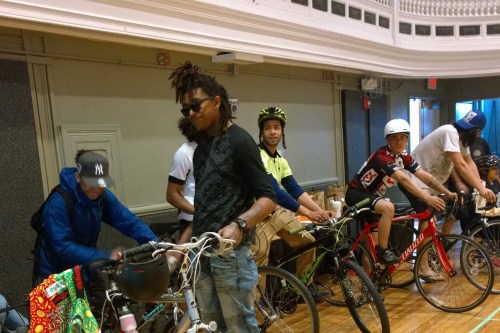
On May 15, Acton’s Pedal Power joined members of the Concord-based Monsters in the Basement bicycling club to share their bike-repair expertise with young people who wanted to acquire bikes and learn to maintain them. Holin, a serious biker himself, organized the event to give UTEC young people two things that he said they normally lack: transportation and fun.
At the event, one of them, Sav, recounted his story of change. “Before UTEC I never talked to anyone,” he said. “I was a problem child on the streets. I was hanging around with gangs, selling drugs. I don’t do that now. Seven months ago, I moved from a place with nothing positive. Atlantic City. I let my family know I’m ready to live life. It was hard for me to get into something good: I’ve got a lot of tattoos and a record. But I’m in the culinary program here. It’s a family. They make you feel like you are somebody that has a chance. They give me love like a family. They changed my life for the better. There are so many new things to do here. Yesterday I went kayaking.”
More here.
Sav, in sunglasses, got a good bike at UTEC’s bike event in Lowell on May 15. The bike will provide transportation to his job at UTEC. It will also provide some much needed fun.
Posted in Uncategorized | Tagged bicycle, bikes, cycling, dan holin, food services, incarceration, jericho road project, lowell, mattress recycling, monsters, postaday, poverty, social enterprise, success, transportation, trouble, utec, violence, woodworking, youth | 4 Comments »
May 22, 2016 by suzannesmom
It’s amazing what mysterious creatures scientists find in the fossil records of life on our planet. Jonathan Webb describes one such creature at the BBC.
“A 430 million-year-old sea creature apparently dragged its offspring around on strings like kites — a baffling habit not seen anywhere else in the animal kingdom.
“Scientists who discovered the fossil have dubbed it the ‘kite runner.’ Ten capsules tethered to its back appear to contain juvenile progeny, all at different stages of development.
“Reported in the journal PNAS, the many-legged, eyeless, 1 centimeter [fossil] was dug up from a site in Herefordshire before being taken to Oxford and computerised. This process involved grinding away the specimen, slice by slice, and photographing each of those sections to assemble a 3D reconstruction. …
” ‘You take its anatomy, code it into a data set and then run probabilistic methods on it, which will tell you how likely it is that something evolved in a particular way,’ [David Legg, a palaeontologist from the Oxford University Museum of Natural History,] explained. …
” ‘Nothing is known today that attaches the young by threads to its upper surface,’ said co-author Derek Briggs, from Yale University. …
“It was the variety of shapes seen among the 10 tethered babies that Dr Legg found most convincing. ‘We see them develop and begin to resemble the adult form more and more, as they get bigger,’ he said. ‘I’m definitely convinced that that’s what they were.’ ”
More at the BBC, here.
Photo: D Briggs/D Siveter/ Sutton/D Legg
This tiny, eyeless fossil creature, unrelated to any living species, carried babies in capsules tethered to its back.
Posted in Uncategorized | Tagged Derek Briggs, fossil, herefordshire, jonathan webb, Oxford University Museum of Natural History, palaeontologist, pnas, postaday, Proceedings of the National Academy of Sciences, science, Yale University | 2 Comments »
May 21, 2016 by suzannesmom
Some initiatives that are costly up front have benefits that far outweigh those costs but don’t show up for years. Even then, people may disagree about what caused the outcomes.
One such initiative sends nurses to new mothers who are young, poor and often friendless to help ensure that their babies get a leg up in life.
At the Washington Post, Topher Spiro and Lanhee J. Chen have a report.
“A high school senior learns that she’s pregnant — and she’s terrified. But a registered nurse comes to visit her in her home for about an hour each week during pregnancy, and every other week after birth, until the baby turns 2. The nurse advises her what to eat and not to smoke; looks around the house to advise her of any safety concerns; encourages her to read and talk to her baby; and counsels her on nutrition for herself and her baby.
“This kind of support, with trained nurses coaching low-income, first-time mothers, is among the most effective interventions ever studied. Researchers have accumulated decades of evidence from randomized controlled trials — the gold standard in social science research — following participants for up to 15 years. They have consistently found that nurse coaches reduce pregnancy complications, pre-term births, infant deaths, child abuse and injury, violent crimes and substance abuse. What’s more, nurse coaches improve language development, and over the long term, cognitive and educational outcomes.
“Nurse coaching is a vital tool that addresses both the liberal concern about income inequality and the conservative concern about inequality of opportunity. …
“Still, nurse coaching reaches only 2 to 3 percent of eligible families. Which raises the question: if it’s so successful — and people on both sides of the aisle support it — why can’t it be scaled to reach every eligible family?”
There are two stumbling blocks according to the reporters: First, funding must be cobbled together from numerous unpredictable sources; second, the costs are up front, whereas the benefits to government and society appear over time.
“If nurse coaching were fully scaled to reach every eligible family, the costs to state and federal governments would outweigh the savings for the first five years. But then the savings would start to outweigh the costs. Over 10 years, the net savings would be $2.4 billion for state governments and $816 million for the federal government.”
So the question becomes: do we have the patience? More here.
A similar initiative that Suzanne started supporting when she lived in San Francisco focuses on homeless mothers. Read about the great results of the Homeless Prenatal Program here.
Photo: iStock
When nurses coach low-income moms, their babies benefit.
Posted in Uncategorized | Tagged babies, baby, benefit, coaching, cost, home visits, Lanhee J. Chen, low income, nurse, pay it forward, poor, postaday, poverty, savings, Topher Spiro | Leave a Comment »
May 20, 2016 by suzannesmom
In India, a civic-minded restaurant put a working fridge out front so patrons could join the eatery in offering leftovers to the hungry instead of throwing good food away.
Elyse Wanshel writes at the Huffington Post, “Pappadavada, a popular restaurant in Kochi, is urging customers and the community to put their leftover food in a refrigerator located outside of the eatery for the hungry to take. …
“The fridge is open 24-hours a day, seven days a week and stays unlocked. … Pauline told the Huffington Post that despite a huge response from the community and ample donations, the fridge needs to be restocked regularly. Pauline herself adds around 75 to 80 portions of food from Pappadavada a day in the fridge. …
“The idea to put a fridge on the street came to Pauline late one night when she saw a lady searching in a trashcan for food. As she watched the woman, she had a terrible thought:
“ ‘That the woman had been sleeping and was woken up by her hunger, so she had to go in search of food instead of sleeping.’
“She was especially saddened because that particular night, her restaurant had made a ton of food that they could’ve easily given the woman, instead of her searching for it.
“The experience made her feel like she contributed to waste, and avoiding waste is what Pauline is focused on.
“ ‘Money is yours but resources belong to society,” she told HuffPost. “That’s the message I want to send out. If you’re wasting your money, it’s your money, but you’re wasting the society’s resources. Don’t waste the resource, don’t waste the food.’ ”
More here.
Photo: Thesny Alikhan
Minu Pauline, right, the restaurateur behind the free food fridge, with a supporter, actor/director Thesny Alikhan

Posted in Uncategorized | Tagged Elyse Wanshel, food, free, fridge, hungry, india, kochi, leftovers, Minu Pauline, Pappadavada, postaday, refrigerator, restaurant, Thesny Alikhan | 2 Comments »
May 19, 2016 by suzannesmom

Sometimes when I’m trying to cross a city street in traffic that’s coming from all directions, I think about how people who don’t visit cities much — Inuit people, say, or rural tribesmen in Africa — would cope. Probably about as well as I would cope dealing with the habits of lions or polar bears. We all develop the survival skills we need most.
Birds do, too. According to Scientific American, urban birds develop skills that let them outwit their country cousins on certain tests.
Christopher Intagliata reports,”While visiting Barbados, McGill University neurobiologist Jean-Nicolas Audet noticed that local bullfinches were accomplished thieves.
” ‘They were always trying to steal our food. And we can see those birds entering in supermarkets, trying to steal food there.’
“And that gave him an idea. ‘Since this bird species is able to solve amazing problems in cities, and they’re also present in rural areas, we were wondering’ are the rural birds also good problem-solvers, and they just don’t take advantage of their abilities? …
“So Audet and his McGill colleagues captured Barbados bullfinches, both in the island’s towns and out in the countryside. They then administered the bird equivalent of personality and IQ tests: assessing traits like boldness and fear, or timing how quickly the finches could open a puzzle box full of seeds.
“And it turns out the city birds really could solve puzzles faster. They were bolder, too, except when it came to dealing with new objects—perhaps assuming, unlike their more naive country cousins, that new things can either mean reward … or danger.
“The study is in the journal Behavioral Ecology [Jean-Nicolas Audet et al, The town bird and the country bird].”
More here.
Posted in Uncategorized | Tagged Barbados, Behavioral Ecology, birds, bullfinches, Christopher Intagliata, city, country, Jean-Nicolas Audet, McGill University, neurobiologist, postaday, rural, scientific american, survival, urban | Leave a Comment »
May 18, 2016 by suzannesmom
So, what do we have here? Mysterious pillars supporting a gazebo roof on Canal St., Providence. Toadstools. Tulips. Branch over the Concord River. Boots for sale. Two Seekonk River scenes, one with swans. Nautical rope design on railing along Woonasquatucket River in downtown Providence. Fairy Garden. Shadows on an appleknocker that my mother’s company used to make.










Posted in Uncategorized | Tagged appleknocker, art, canal street, concord river, fairy garden, photo, photograph, picture, postaday, providence, rope, seekonk, swan, toadstool, tulip, Woonasquatucket River | 2 Comments »
May 17, 2016 by suzannesmom

Photo: Mary MacDonald/Providence Business News
A rehabilitation project recently turned the old Mechanical Fabric Company mill in Providence’s West End into a live-work space for culinary entrepreneurs.
Providence can be a good place for starting a food business, partly because
Johnson & Wales turns out so many good cooks, partly because the cost of a restaurant liquor license is much less than in many other cities.
And in recent years, the arrival of food incubators like Hope & Main in nearby Warren have provided a way for food entrepreneurs to get up and running without going deep into debt.
Recently, Providence Journal reporter John Hill wrote about a new food incubator, combined with living space, going into the old Mechanical Fabric Co. mill in Providence’s West End.
“In its 125 years,” writes Hill, “the old brick factory at 55 Cromwell St. has made bicycle tires, electronic components and jewelry. Now it’s getting ready to make dinner.
“The interior of the 1891 building, once filled by the clatter and thrum of steam-powered, belt-driven machines, is being gutted and rebuilt as the new home of two commercial kitchens, restaurant space and 40 efficiency apartments for young food-industry entrepreneurs.
“Federico Manaigo, whose Cromwell Ventures LLC owns the building, said the conversion is aimed at capitalizing on Providence’s reputation as a restaurant mecca. When finished, he said, the factory will be home to recent college graduates considering the restaurant business, either as chefs or owners. …
“Manaigo wants to see if he can duplicate the success of Hot Bread Kitchen, an incubator program in East Harlem in New York City. That program, without apartments, rents space to people with small ethnic food businesses who want to grow into full-fledged commercial operations. It also provides training programs and rents space to start-ups that grow from those efforts.
“The idea is to give promising food-business grads a way to stay in Providence, he said, where they can hone their skills and, when they’re ready to open a restaurant, bakery or catering company, do it in Rhode Island and hire Rhode Islanders. …
“Manaigo said he wants to see if the project can tap into sources of culinary inspiration beyond the colleges. The East Harlem incubator found success by recruiting immigrants, especially women, from the neighborhood, persuading them to share their recipes from home and start small bakeries selling their food. The West End has Middle Eastern, Asian and Central and South American restaurants in its storefronts, a sign of a diverse ethnic population Manaigo said he hopes the kitchen can work with.”
Mayor Jorge Elorza has said he likes that the project offers “a way for the city to use the colleges in the area as sources of potential new business owners and play off the restaurant business in a way that could make it even bigger in the future.
” ‘The whole food scene is a strategic strength for the city,’ he said. ‘This fits squarely within that.’ ” More here.
Posted in Uncategorized | Tagged apartment, cromwell st, Cromwell Ventures LLC, cuisine, culinary, east harlem, entrepreneur, Federico Manaigo, food business, food incubator, hope & main, Hot Bread Kitchen, immigrant, john hill, live-work, Mary MacDonald, postaday, providence, rehabilitation, renovate, restaurant | 2 Comments »
« Newer Posts - Older Posts »


