December 2, 2014 by suzannesmom
Looking for an indoor sport this winter? Have you considered belt-sander racing? Bill Littlefield has been covering the unusual sport at WBUR’s Only a Game since 2002, and as Karen Given reported recently, the sport could probably use some new blood — er, participants.
She begins by revisiting the 2002 broadcast.
” ‘Two by two, they come screaming down the 85-foot-long, waist-high wooden track, trailing rooster tails of sawdust and long, yellow extension cords that power them to the finish line.’
“That is how reporter Sean Cole began his treatise on the New England Belt Sander Racing Association,” continues Givens, “which first aired on Only A Game on April 13, 2002. But here’s the bit everyone remembers:
“NEBSRA co-founder Dave Kenyon: ‘It’s a real family event. It’s a family event with beer.’ …
“There is still beer, so there is still belt sander racing. Or is there? I went to Jamaica Plain in Boston to investigate. …
” ‘You are at the 2014 Fall Nationals Belt Sander Drag Race and Costume Ball,’ Glen Gurner tells me.
“Gurner is a woodworker and former champion of this sport. But for some reason he’s really enthusiastic about the idea that this might be the last time NEBSRA, an organization he helped found, holds a belt sander race. …
” ‘It takes a village.”
“ ‘And the village is tired?’ I ask.
“ ‘Yeah, the village is getting old.’ …
“For about 10 minutes, Kenyon fusses over the position of the crowd and a 60-pound, lithium-ion-powered sander outfitted with a motorcycle engine. It has a theoretical maximum speed of 85 miles per hour, and its name is Bruce….
“I stay long enough to watch Bruce surge to life and almost immediately slam into the spring-loaded preventer at the end of the track. It’s spectacular, but no one dies. So the crowd goes back to reminiscing about old times.
“There are other belt sander races around the country. Some even have corporate sponsors and professional crews. But NEBSRA likes to believe theirs is the first — and the best. Kenyon is proud of how far this event has come in the past quarter-century.
“ ‘It’s so much more now. It’s homecoming. This is real homecoming. People have come up to me and said, “Thank you, thank you for doing this.” That’s nice,’ Kenyon said. … ‘There’s not enough rituals in our life anymore — not enough tradition. This is what passes for tradition.’ ”
Tradition! I can almost hear Tevye singing, “Tradition!”
Photo: Jessica Coughlin/Only A Game
Two competitors get ready to race at the 2014 Fall Nationals Belt Sander Race and Costume Ball. 
Posted in Uncategorized | Tagged belt sander racing, bill littlefield, dave kenyon, glen gurner, jamaica plain, karen given, nebsra, only a game, postaday, sean cole, wbur | Leave a Comment »
December 1, 2014 by suzannesmom
National Public Radio recently featured a story on the discovery of the skeleton of Richard III, the English king that Shakespeare fans love to hate. What does the unearthing of the king’s 15th century remains have to tell the 21st century?
The woman who found him, Philippa Langley, is decribed by NPR as “an amateur historian with a passion for Richard III. And one day, a good decade ago, her research took her into Leicester, and she had a kind of bizarre experience in a car park in Leicester, where she suddenly thought, for no particular reason at all, that she was standing on Richard’s grave. And at that moment, she just said to herself, ‘I just want to excavate Richard.'”
It was as if Richard III was sending a message.
“It happened in stages. The remarkable thing was that they actually found it on the first day of the dig. They were just preparing the ground and [archaeologist Jo Appleby] found a small bit of leg, a leg bone. So she carries on digging, and gradually she uncovers this complete curved spine, and it connects up with the neck, and she sits back and she looks at it, and she says to herself, ‘This is Richard III.’
“The statistical likelihood of them hitting the skeleton is zero — there were so many coincidences and chances that made this happen. …
“The radiocarbon dating showed the man had died at the right time to be somebody who had died at the Battle of Bosworth. The anatomy of the man matched very precisely the phyiscal descriptions we have of Richard. For example, he’s described quite clearly as being quite a frail man, and that is exactly how the skeleton is.”
Richard’s defenders have always said that Shakespeare may have written an amazing play, but he gave Richard a bad rap. Since I have a tendency to believe the truth of fiction more than the facts of history, I better stay out of the argument and let you read the rest of the story for yourself. More here.
Art: Richard III (Reuters)
Posted in Uncategorized | Tagged archaeologist, excavate, grave, Jo Appleby, leicester, phiippa langley, postaday, richard the third, shakespeare | Leave a Comment »
November 30, 2014 by suzannesmom
Maria Popova, at Brain Pickings, spends a lot of time in the library. Although she blogs about all manner of interesting things, I have especially liked her reports on children’s picture books, including the breathtaking array of illustrated Alice in Wonderland editions out there.
A recent post highlighted a fancifully illustrated biography of the late Chilean poet Pablo Neruda.
Popova opines, “Nobel laureate Pablo Neruda was not only one of the greatest poets in human history, but also a man of extraordinary insight into the human spirit — take, for instance, his remarkable reflection on what a childhood encounter taught him about why we make art, quite possibly the most beautiful metaphor for the creative impulse ever committed to paper.
“As a lover both of Neruda’s enduring genius and of intelligent children’s books, … I was instantly smitten with Pablo Neruda: Poet of the People (public library |IndieBound) by Monica Brown, with absolutely stunning illustrations and hand-lettering by artist Julie Paschkis.
“The story begins with the poet’s birth in Chile in 1904 with the given name of Ricardo Eliecer Neftalí Reyes Basoalto — to evade his father’s disapproval of his poetry, he came up with the pen name ‘Pablo Neruda’ at the age of sixteen when he first began publishing his work — and traces his evolution as a writer, his political awakening as an activist, his deep love of people and language and the luminosity of life.
“Embedded in the story is a sweet reminder of what books do for the soul and a heartening assurance that creative genius isn’t the product of conforming to common standards of excellence but of finding one’s element.”
More here.
Art: Julie Paschkis 
Posted in Uncategorized | Tagged books, children's book, Chile, indie bound, Julie Paschkis, maria popova, Monica Brown, pablo neruda, postaday, public library | Leave a Comment »
November 29, 2014 by suzannesmom
Have you started getting (or sending) seasonal greeting cards? I have received and answered two already: one from a cousin who wants to be sure folks have her new address, another from a friend in England who has to get a lot done before spending Christmas with her daughter in Hong Kong.
It’s the season of relationships.*
The Christmas cards I love best are photographic or newsy or beautiful or offbeat. Here’s something that would be offbeat. Imagine getting a holiday version of the leather postcards I read about a while back!
“Leather postcards were first made in 1903. They were a novelty that appealed to tourists. When stitched together, they could be used as a pillow cover or wall hanging. The holes along the edge could also be used to attach fringe. The cards were made of deer hide and the pictures burned in. The U.S. post office banned leather postcards in 1907 because they jammed postage-canceling machines. Leather cards continued to be made as souvenirs until about 1910. Value of the cards today depends on their condition and design. Common postcards, including those with comical pictures, have sold at auction for less than $1 per card. Those with pictures of important people, like the U.S. president, sell for more. One very special leather card cut into the shape of Theodore Roosevelt sold for $325.” More at Kovels, here. Still more here, at Andrew Sullivan’s eclectic blog.
* Because I have some new followers, I will point out here that Suzanne’s Mom’s Blog is for my daughter’s company, a contemporary birthstone-jewelry business that is about relationships all year long, Luna & Stella. There are some lovely stars and angels there, in case you were wondering.
Photo: Chris Bodenner
Leather postcards from the Albany Rare Book Fair

Posted in Uncategorized | Tagged Albany Rare Book Fair, antique, birthstone jewelry, Chris Bodenner, contemporary, kovels, leather postcards, Luna & Stella, postaday, relationships | Leave a Comment »
November 28, 2014 by suzannesmom
I’m trying to think of a good collective noun for a bunch of photos. Do you like “a phalanx of photos”? How about “a frittata of photos”?
In any case, I’m going to dump some more photographs on you, but now that Bob no longer works in my office, I’ll never know if any of them are good.
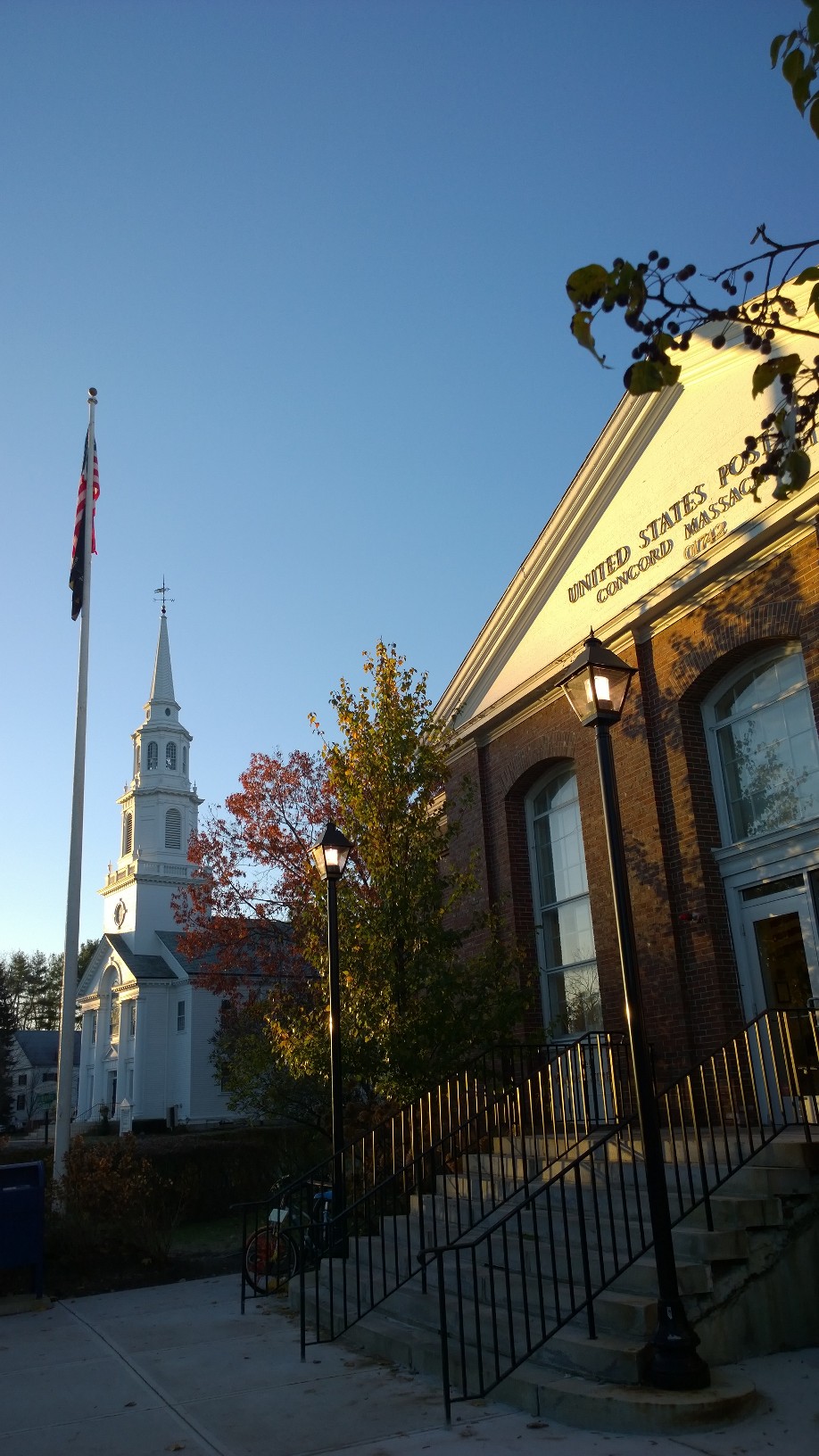
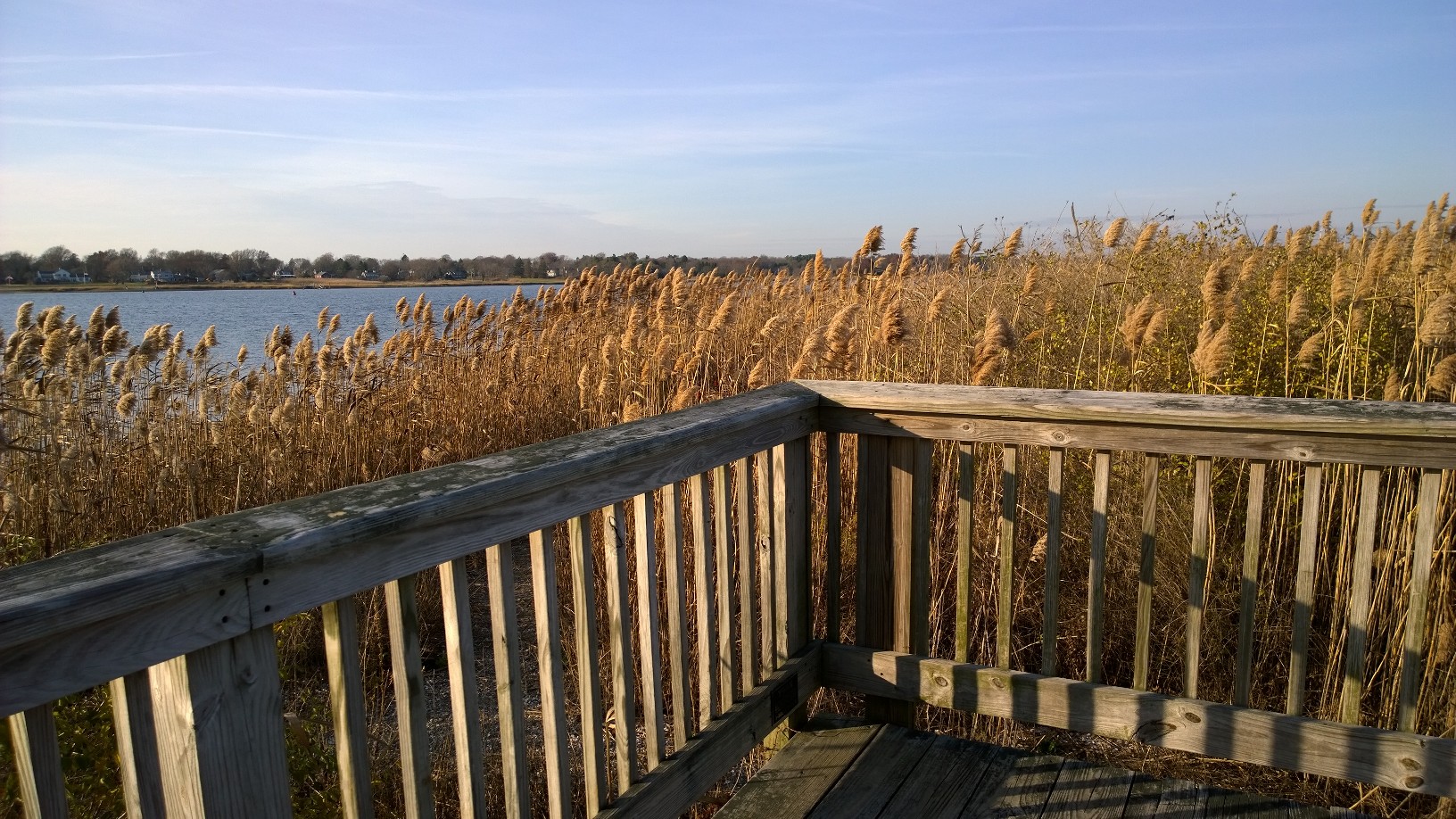
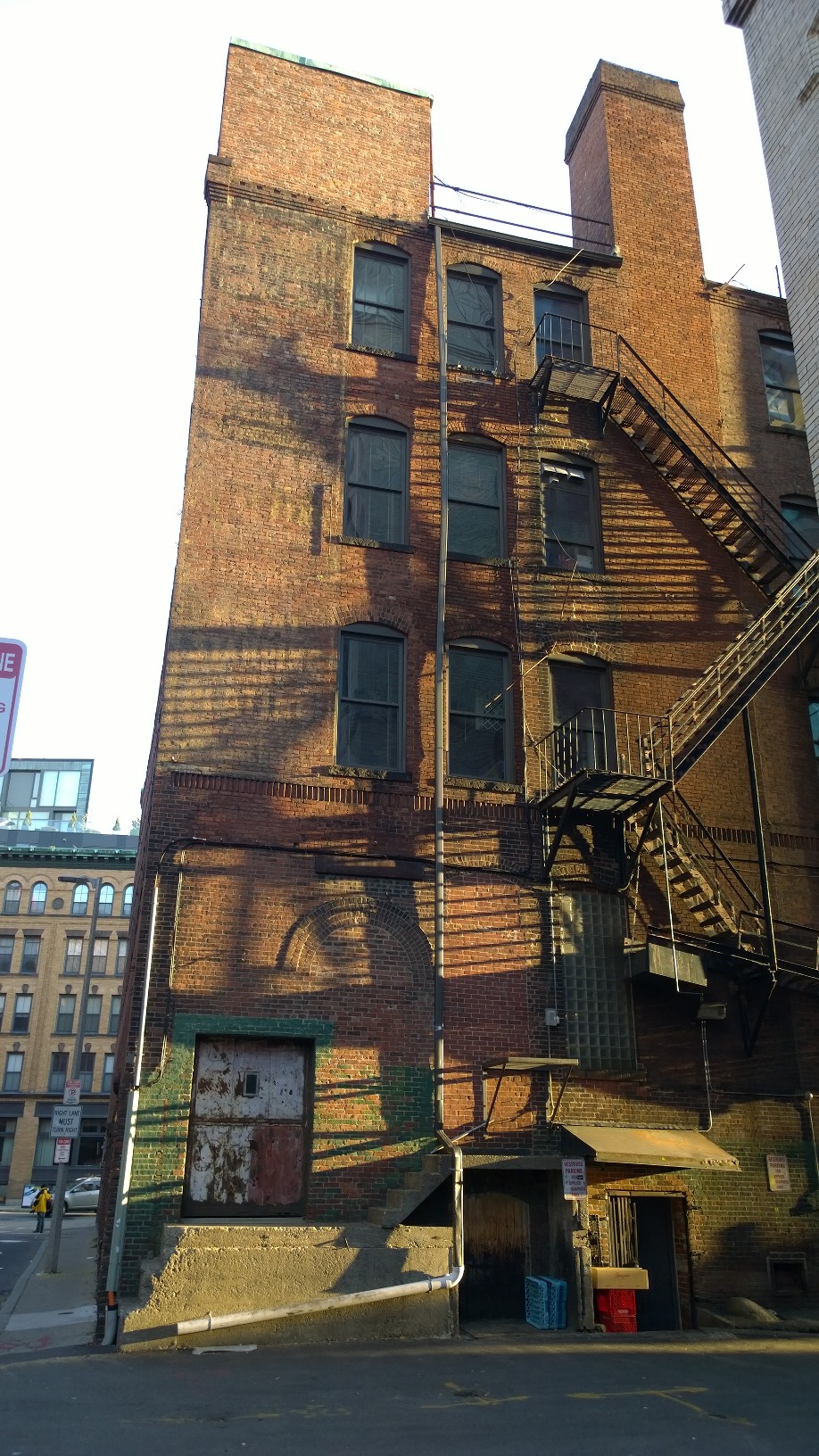
Going back to Halloween, there was an artsy ghost in Wormwood Park (Fort Point), and a witch street sign that Erik photographed in Providence. I also have a picture of the moon before dawn and one of the early-morning sun on Trinity Congregational Church in Concord. Next is a wintry Audubon boardwalk in Bristol, Rhode Island. There’s a fall-themed window box, a cemetery with holly in the foreground, flowers in the Rose F. Kennedy Greenway, and fire-escape shadows in Fort Point, Boston.






Posted in Uncategorized | Tagged concord, fort point, photo, photograph, postaday, Rose F. Kennedy Greenway, shadows, wormwood park | 5 Comments »
November 27, 2014 by suzannesmom

We decided on a restaurant for Thanksgiving this year, which was a daring thing to do with a two-year-old. He spent a good bit of time under the table. We read Mo Willems books about Gerald the elephant and his friend Piggie a few times. The waiter said he was reminded of himself at age two. He was a bundle of energy, he said, and that is how he has the energy to wait tables and bar-tend at two restaurants.
Erik expressed the spirit of American independence by having steak for his first year as a citizen. The rest of us had the turkey feast that Mill’s Tavern provided.


Posted in Uncategorized | Tagged gerald, mills tavern, mo willems, piggie, postaday, providence, thanksgiving, Turkey, two-year-old | 2 Comments »
November 26, 2014 by suzannesmom
With increasing numbers of Americans experiencing food insecurity, it seems like an appropriate time of year to be grateful that at least there are many goodhearted people managing food banks and community meals and doing what they can.
If you know of anyone in New England who could use the help just now, or if you want to volunteer or donate, this partial list may be a good starting place.
Rhode Island
http://www.rifoodbank.org
“The Rhode Island Community Food Bank works to end hunger in our state by providing food to people in need. We envision a day when all Rhode Islanders have access to nutritious food and a healthy lifestyle.
Massachusetts
East
http://Gbfb.org
“The Greater Boston Food Bank’s mission is to End Hunger Here. Our objective is to distribute enough food to provide at least one meal a day to those in need.”
West
https://www.foodbankwma.org/
“We are fortunate to live in such a special part of the country, allowing for the growth and harvest of a multitude of fresh fruits and vegetables. As this harvest season comes to an end, we have received more than 266,800 pounds of fresh produce — including potatoes, lettuce, carrots, apples and squash — donated by local farms this year.”
Vermont
http://www.vtfoodbank.org/FindFoodShelf.aspx
“If you are looking for a place to have a Thanksgiving meal or to volunteer to help cook, serve or clean-up, download our list of Thanksgiving meals.”
New Hampshire
http://www.nhfoodbank.org/
“Need Food? We Can Help. If you are in need of assistance, use our search to locate the nearest food pantry or soup kitchen to you. Search by your town or county, or view all of our partner agencies.”
Maine
http://www.foodpantries.org/st/maine
“There are several food pantries and food banks in the Maine. With help from users like you we have compiled a list of some. If you know of a listing that is not included here please submit new food pantries to our database.”
Connecticut
http://www.ctfoodbank.org/
“The mission of Connecticut Food Bank is to provide nutritious food to people in need. We distribute food and other resources to nearly 700 local emergency food assistance programs in six of Connecticut’s eight counties: Fairfield, Litchfield, Middlesex, New Haven, New London and Windham.”

Posted in Uncategorized | Tagged access, connecticut, families, food bank, food insecurity, hunger, low-income, maine, massachusetts, new england, new hampshire, pantry, poor, postaday, poverty, rhode island, Vermont, volunteer | Leave a Comment »
November 25, 2014 by suzannesmom
You never know what will turn up at Studio 360, a radio show on the arts. A feature on November 21 explained how one of the legendary jazz greats toilet-trained his cat.
“The jazz musician Charles Mingus was a celebrated band leader and one of the most important composers of his generation. But at the same time he was recording The Greatest Jazz Concert Ever with Dizzy Gillespie and Charlie Parker, he was working on another masterpiece of sorts. He figured out how to get his cat, Nightlife, to poop in a toilet — and he decided he’d share his method with the world.
“The Charles Mingus CAT-alog for Toilet Training Your Cat was a step-by-step guide available for purchase by mail. It’s full of charming advice and meticulous pedagogical detail:
“Here’s an excerpt from Step 1:
Once your cat is trained to use a cardboard box, start moving the box around the room, towards the bathroom. If the box is in a corner, move it a few feet from the corner, but not very noticeably. If you move it too far, he may go to the bathroom in the original corner. Do it gradually. You’ve got to get him thinking. Then he will gradually follow the box as you move it to the bathroom. (Important: if you already have it there, move it out of the bathroom, around, and then back. He has to learn to follow it. If it is too close to the toilet, to begin with, he will not follow it up onto the toilet seat when you move it there.) A cat will look for his box. …
“Reporter Jody Avirgan put the method to the test on four-month-old kitten Dizzy. His owners, Kevin and Nicole, even played Mingus throughout the process.”
More at Studio 360, here, including a recording of the show.
Photo: Jody Avirgan
Dizzy the cat is interviewed for Studio 360.
Posted in Uncategorized | Tagged arts, charles mingus, charlie mingus, Charlie Parker, Dizzy Gillespie, jazz, Jody Avirgan, music, nightlife, postaday, studio 360, toilet, training a cat | Leave a Comment »
November 24, 2014 by suzannesmom
What a good idea for economic development in Rhode Island! Rhode Island is where Johnson & Wales has been building a strong gastronomic culture for decades. And the school is not alone. You have your oysters and your Point Judith fishing industry, of course — and I’m leaving out nearly everyone.
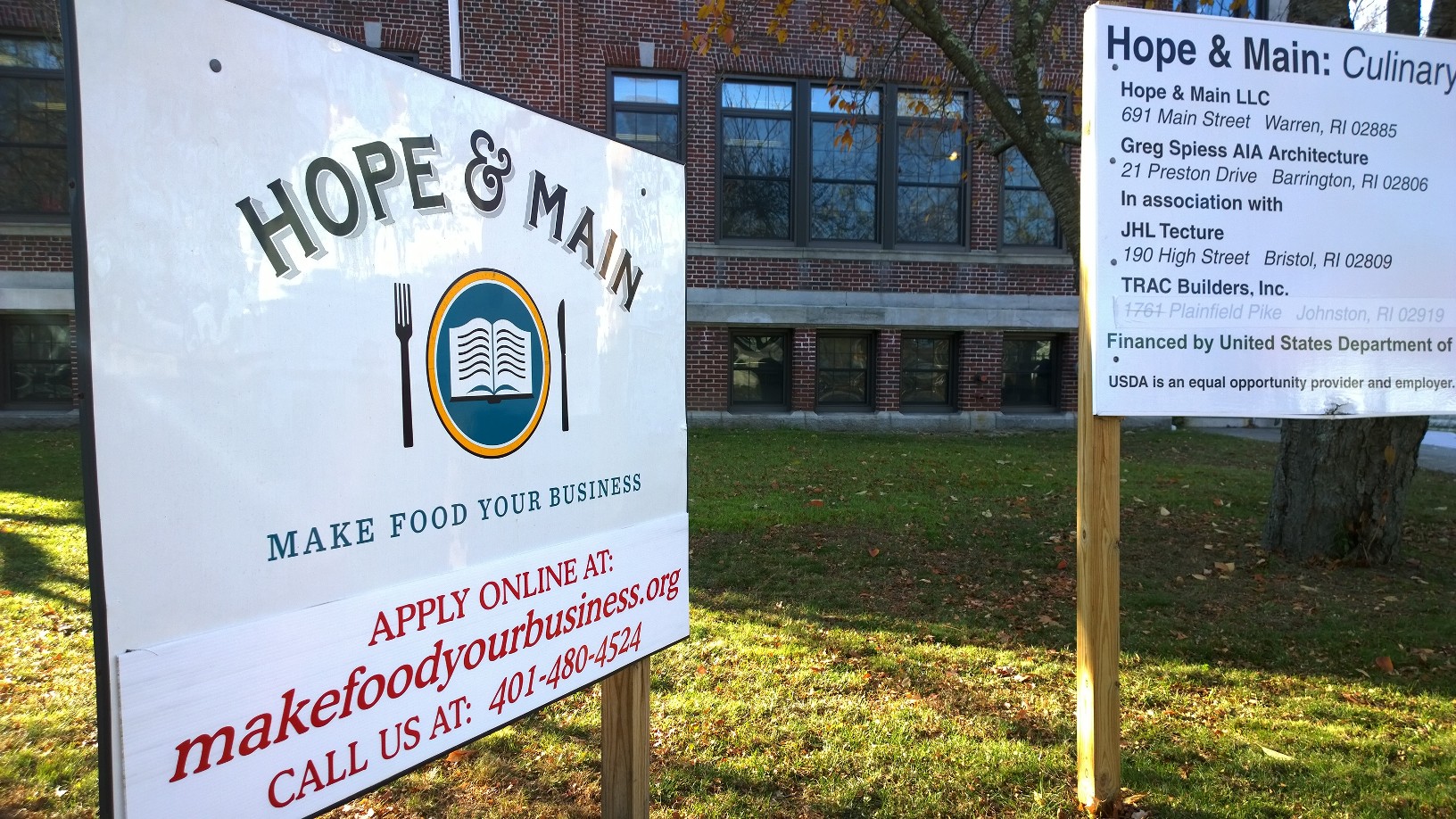
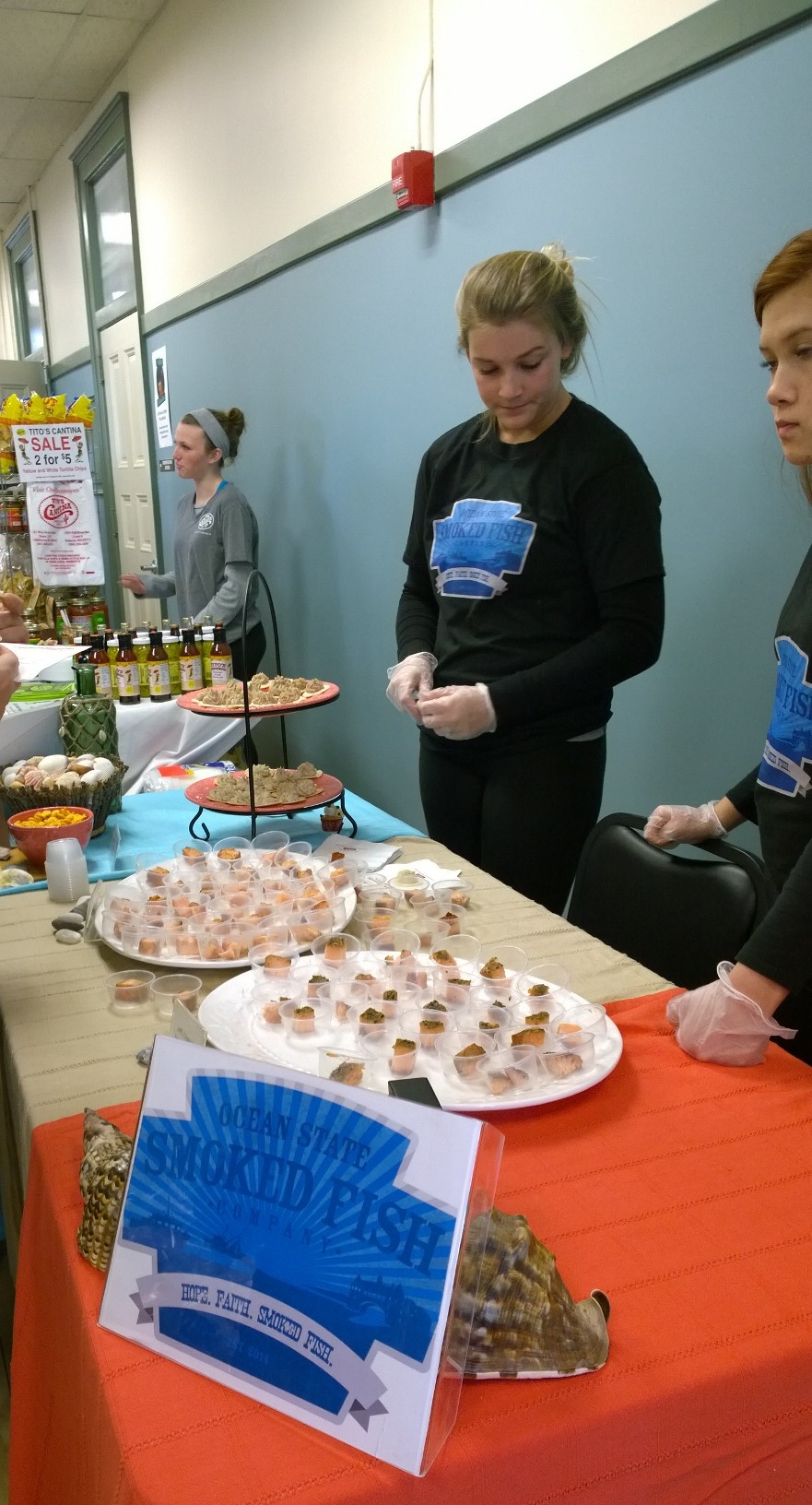
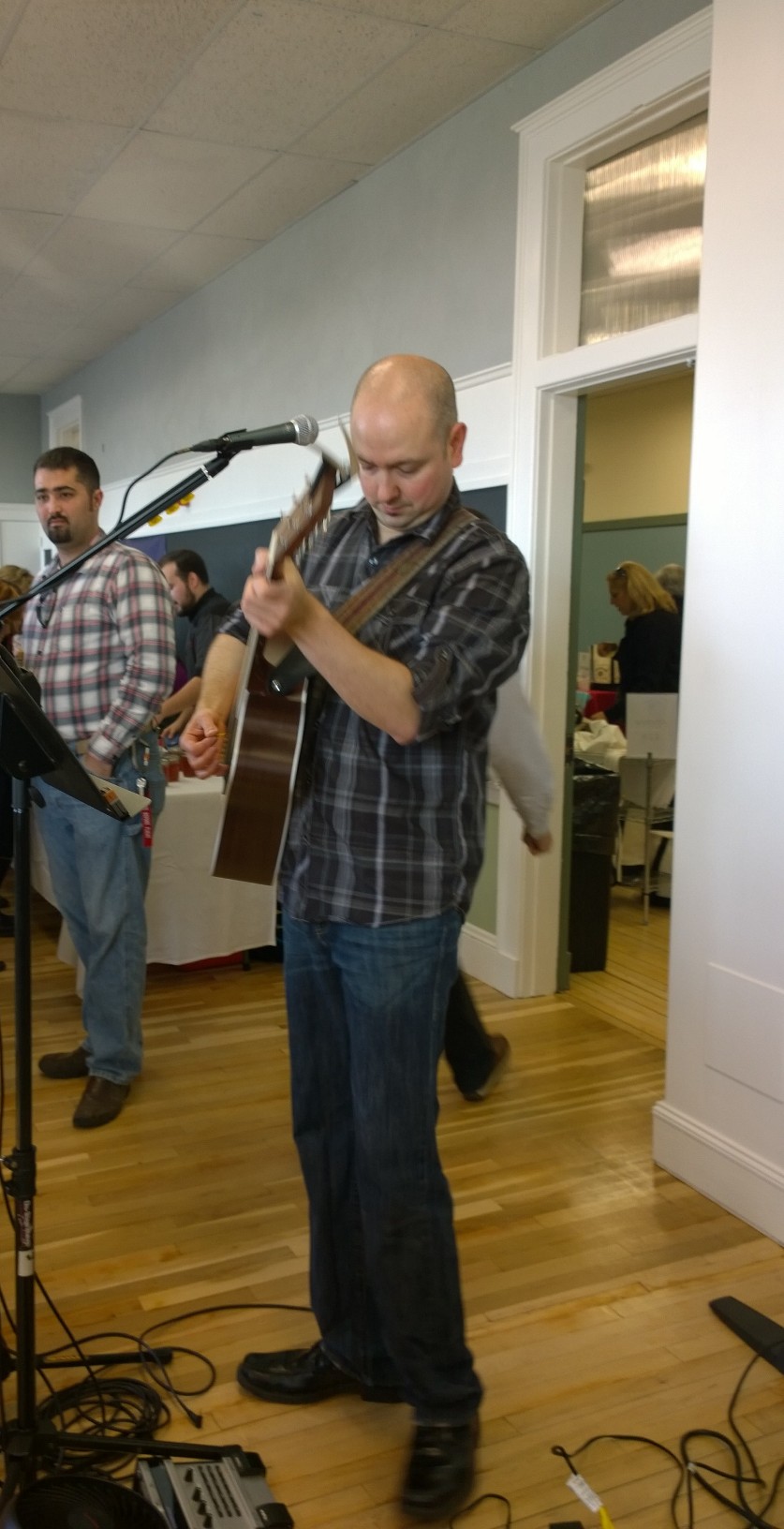
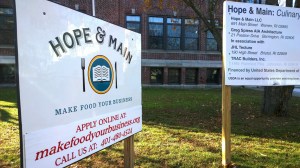
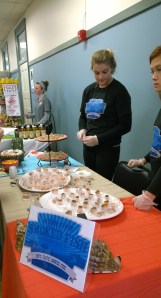
Yesterday, my husband and I checked out the state’s first food-business incubator, Hope & Main, at a festive event in the nonprofit’s new, permanent location. The story was posted in October on their website.
“Hope & Main today celebrated the opening of its 17,500-square-foot culinary business incubator facility in Warren, Rhode Island. U.S. Senators Jack Reed and Sheldon Whitehouse spoke at the ribbon-cutting ceremony, as well as other honored guests including USDA Director of Community Programs Daniel R. Beaudette, Warren Town Council President Christopher W. Stanley, and Founder and President of Hope & Main, Lisa J. Raiola, MPH.
“ ‘Hope & Main is about helping food entrepreneurs get started in a licensed kitchen. … It’s also a place where people can congregate and collaborate, take a class or develop and test new recipes. I am proud to be part of this effort to support start-up food entrepreneurs and help them launch their own food businesses,’ said Senator Reed. ‘This is a great example of what’s possible when federal, state, and local officials collaborate with the private sector to support innovation. …’
“Housed in the historic Main Street School building, located at 691 Main Street in Warren, the renovation project transformed the 100-year-old structure into a state-of-the-art workspace for the region’s food entrepreneurs. [The] building’s highlights include three code-compliant, shared-use commercial kitchens, including a gluten-free kitchen and artisanal bakery, over 6,000-square-feet of production space, cold and dry storage, and a range of commercial equipment to support small-scale operations for baking, food processing and catering. Designed to facilitate collaboration and community involvement in the local food economy, the rehab also features a demonstration kitchen, co-working and meeting spaces, and a 2,000-square-foot community event space. A weekly market will be located on the grounds to give Hope & Main member companies and other local producers direct access to local consumers. …
“The Hope & Main project is funded in large part by a $2.9 million U.S. Department of Agriculture (USDA) Rural Development Community Facilities Loan.” More at MakeFoodYourBusiness.org, here.
My husband and I left with several business cards and goodies, including a a tomato jam with a great slogan: “To boldly go where no tomato has gone before.” I had a big smile on my face.


Posted in Uncategorized | Tagged culinary, development, economic, fishing, food, food incubator, hope & main, jack reed, johnson & wales, make food your business, oysters, Point Judith, postaday, rhode island, sheldon whitehouse, U.S. Department of Agriculture (USDA) Rural Development Community Facilities Loan, usda, walrus and carpenter, warren | Leave a Comment »
November 23, 2014 by suzannesmom
Suzanne’s Mom’s Blog has featured a number of stories about both homelessness and tiny houses, so I was intrigued when a high school friend linked to this story on Facebook. It’s about helping homeless people build their own tiny houses.
Jen Hayden wrote at Daily Kos, “Out of the Occupy Madison protests a cool idea was hatched: Building 98-square-foot homes for those without. The homes have a bed, kitchen, bathroom, storage and propane heat. Future residents take part in building the homes. [According to WMTV,]
The homes cost just $3,000 to construct, most of it funded by community donations. A revolving crew of volunteers provided the labor, including Betty Ybarra. Previously homeless, she now resides in the home she helped construct. “It’s exciting. I’ve never even owned my own house,” Ybarra told WMTV
“After getting shuffled around the city while they figured out the best place to build the village, they finally settled on a location and it officially opened this week. [Reports Jennifer Kliese at WKOW,]
‘Rather than taking people from the streets and putting them in a building, we thought we could work together to create our own structures,’ says Luca Clemente, with Occupy. ‘We don’t give houses to homeless people, we enable people to build their own houses to create their own futures.’When complete, there will be nine homes in the village made from reclaimed and recycled materials. Organizers hope to add a garden, tree orchard and chickens.”
More here.

Posted in Uncategorized | Tagged daily kos, homeless, jen hayden, jennifer kliese, madison., postaday, Suzanne's Mom's Blog, tiny house, wisconsin | 2 Comments »
November 22, 2014 by suzannesmom
Time for a new post on street art. Have you been following the Banksy-in-New-York saga? He was living in the city for a while last year, creating a new piece of street art every day. People ran around to find it, some New Yorkers even trying to charge admission. An HBO movie was made about it.
Banksy is always interesting, but today I want to tell you what street artist Stik has been up to.
The Londonist website says, “Street artist Stik has just finished creating the tallest piece of street art in the world — a 38.2 metre high mural on a condemned council tower block in Acton [a district in the west of London].
” ‘Big Mother’ depicts a mother and child looking forlornly from their council block at the luxury apartment complexes being built around them. The mural is visible from not only the Piccadilly Line, but also on some London flight paths.
“Stik, who was once homeless, said: ‘Affordable housing in Britain is under threat; this piece is to remind the world that all people need homes.’ ”
And I guess in this season a homeless mother and child is especially resonant.
Thank you to @ecpulford for retweeting the story from Bernadetta Keefe (@nxtstop1).
Stik’s website is here. His minimalist, wistful beings remind me a bit of Finnish artist Tove Jansson’s children’s books about the Moomin family.
First picture below, cover of paperback Finn Family Moomintroll

Second picture: Joyce/Division
The 38.2 metre mural has been painted on a tower block which is due for demolition in 2016. Image © Stik 
Posted in Uncategorized | Tagged @ecpulford, @nxtstop1, acton, affordable housing, art, banksy, Bernadetta Keefe, Big Mother, britain, homeless, london, Londonist, moomin, piccadilly, postaday, stik, street art, tallest, tove jansson | Leave a Comment »
November 21, 2014 by suzannesmom
On days when you are thinking a lot about a faraway relative in need of heavy doses of good vibes, it may make sense to do some baking.
Fortunately, I worked at home today, so I was able to spend the time between 5 and 6:15 baking rather than running for trains. The no-peel apple crisp recipe I attempted was one that Lisa posted recently on Facebook. Although it didn’t specify an oven temperature or size of pan, I guessed 350 degrees and 9 x 13, and it came out great. The ingredients include dried apricots, an orange, and walnuts. Oh, boy. Here’s the link.
More constructively, many of us sent loving messages both for the relative and her son in San Francisco, and posted and contributed to a GoFundMe site. I especially liked Suzanne’s recommendation of a visit to Glide Memorial, a comforting San Francisco church she learned about when a former colleague suffered something dark. (I have mentioned the church a few times on the blog.)
What else can you do but let people know you are thinking of them a lot? In spite of everything, I think my relative will be deeply thankful at Thanksgiving for two Good Samaritans who chose not to pass by.
Photo: http://food52.com/blog/11755-no-peel-apple-crisp

Posted in Uncategorized | Tagged apple crisp, baking, cooking, food, glide memorial, gofundme, good samaritan, postaday, recipe | 2 Comments »
November 20, 2014 by suzannesmom
Back in June, Jane Devlin tweeted a link to a story on a curious “urban algae canopy” designed for EXPO 2015 in Milan.
Ross Brooks wrote at Inhabitat, “The Urban Algae Canopy by ecoLogic Studio is a piece of bio-digital architecture that combines micro-algal cultures and real time digital cultivation protocols. To be displayed at Expo Milano 2015, the structure is able to control the flow of energy, water and carbon dioxide based on weather patterns, visitors’ movements, and other environmental variables. It’s the first of its kind in the world, and … will be able to produce the oxygen equivalent of four hectares of woodland, along with nearly 330 pounds of biomass per day.” More at Inhabitat.
DOMUSweb adds that Claudia Pasquero and Marco Poletto of ecoLogicStudio “proposed a new vision of future bio-digital architecture powered by microalgae organisms as part of the Future Food District project, curated by Carlo Ratti Associati at the central crossroads of the EXPO site. …
“The flows of energy, water and CO2 are … regulated to respond and adjust to weather patterns and visitors’ movements. As the sun shines more intensively, algae would photosynthesise and grow, thus reducing the transparency of the canopy and increasing its shading potential.” More from DOMUS.
Photo: ecoLogicStudio
Urban Algae Canopy
Posted in Uncategorized | Tagged air quality, algae, architecture, bio-digital, biomass, canopy, Carlo Ratti Associati, Claudia Pasquero, eco, ecologic studio, expo2015, green building, inhabitat, Marco Poletto, milano, oxygen, oxygenate, photosynthesis, postaday, ross brooks, sustainable, woodland | Leave a Comment »
November 19, 2014 by suzannesmom
Erik, this one’s for you. I saw a book on 100-year-olds in your kitchen, and I know you and your company aim to enable us all to be centenarians.
Sally Williams writes in the Guardian, “Three score and 10 may be the span of a man, but no one has broken the news to David Bailey who, at 76, still behaves like someone turning one score and eight.
“Last month he walked into a studio in London (not his: too many stairs) to photograph some of Britain’s oldest people. The youngest was just 100; the oldest 107. Dressed in a baggy polo shirt and a pair of old combat trousers, small but physically imposing, Bailey flirted, flattered, insulted his subjects in order to get the picture he wanted.
“ ‘We’ve been married for 62 years,’ Shirley Arkush told Bailey of her husband David, one of the centenarians waiting to be photographed. ‘Same as me,’ he replied, ‘but not to the same wife.’ And he gave a combative, high-pitched laugh. (Bailey’s marriage to his first wife, Rosemary Bramble, lasted three years, and his second, to Catherine Deneuve, two; he was married to Marie Helvin for 10 years, before marrying Catherine Dyer in 1986.) …
“He worked at an incredible pace – nine portraits in four hours, and on subjects with a collective age of 917 years. ‘I’ve always wanted to photograph old people,’ he said at one point, after pinning one centenarian in forensic close-up (he had requested no makeup, only ‘a tidy-up’ for the women).
“Not everyone was happy. Joe Britton, 103, Chelsea Pensioner and horseracing enthusiast, said he knew Bailey and had been looking forward to seeing him again. But, ‘That’s not David Bailey,’ he said with disappointment after the shoot – his David Bailey is the horse trainer.” More pictures, more story here.
Photograph: David Bailey/Guardian
Violet Butler: ‘I’m no paragon. I used to smoke and drink, but not to excess.’ 
Posted in Uncategorized | Tagged 100 years old, aging, centenarian, david bailey, elderly, guardian, Joe Britton, london, photo, photograph, postaday, Sally Williams, senior, Shirley Arkush, violet butler | 2 Comments »
November 18, 2014 by suzannesmom
Did I ever mention that John Cleese (“Monty Python,” “Fawlty Towers”) was the speaker at Suzanne’s college graduation? A very good choice if you like a bit of laughter with your deep thoughts.
Now an old video of the early Cleese has been unearthed.
The BBC has the story: “Two episodes of 1960s TV comedy ‘At Last The 1948 Show,’ which starred pre-Monty Python John Cleese and Graham Chapman, have been found after almost 50 years. The ITV programme, which was first screened in 1967, also featured Tim Brooke-Taylor, Marty Feldman and Aimi Macdonald. …
” ‘It represents a key moment in the history of British television comedy featuring the combined talents of some of its greatest exponents,’ BFI television consultant Dick Fiddy said. …
“The two episodes were found when Mr Fiddy was invited to explore the collection of Sir David Frost, who died last August, and who was executive producer on the show.
“They were contained on two reels of 16mm film and had been filmed directly from a television screen. …
“Cleese will present the two episodes, on loan from the Frost family, as part of ‘Missing Believed Wiped’ – the BFI’s annual celebration of recovered TV programmes — on 7 December in London.” More here.
Recently rediscovered in the effects of the late David Frost, a comedy featuring a young John Cleese. 
Posted in Uncategorized | Tagged Aimi Macdonald, comedian, comedy, david frost, fiddy, Graham Chapman, John Cleese, Marty Feldman, Missing Believed Wiped, monty python, postaday, Tim Brooke-Taylor | 2 Comments »
« Newer Posts - Older Posts »