Here’s a story about how a city counterintuitively addressed its graffiti problem by offering a place to do graffiti.
Jeremy Fox writes at the Boston Globe that the graffiti mural began as a response to the growing problem of offensive messages sprayed on a wall facing the train track. That wall, he reports, “has become a local institution with a national and even international following.
“In the process, this wall at the Clemenzi Industrial Park has also become one of just a few spaces in the region where graffiti is officially sanctioned, which may help protect nearby walls from unwanted images and messages.”
(Don’t you love words like “sanctioned,” which means one thing and also its opposite?)
“John Clemenzi, who manages the property that his family has owned for four decades, said that when he began allowing artists to paint on the building’s rear wall, Beverly was in the midst of ‘a horrible graffiti problem.’ But in recent years, he said, ‘I rarely if at all see any graffiti elsewhere in the city.’ …
“The change began about a dozen years ago, when two Montserrat College of Art students approached Clemenzi with a proposal to decorate the wall, which faces the tracks for the Newburyport/Rockport commuter rail line. …
“He agreed to let the young artists decorate a small section, 40 feet of what he estimates is a total length of about 800 feet.
“He set three ground rules: Clean up after yourselves, no offensive messages, and don’t paint on the building’s brick faces. The students agreed to follow those rules and to help police the area, and over time, the sanctioned graffiti grew to cover the wall.” Read the rest of the story here.
Photo: John Blanding/Globe Staff
Artists worked at the Clemenzi Industrial Park in Beverly. Since people began spraypainting the wall a decade ago, the drawing of graffiti has fallen elsewhere in the city.
Melissa Dahl writes in NY Magazine‘s Science of Us section that thinking of happy images can put a spring in your step and that in turn can make you feel better.
Dahl references new research on the topic. “Walk like a happy person and you’ll actually feel happier, says a study published online in the Journal of Behavior Therapy and Experimental Psychiatry.
“In the study, people walked on a treadmill for 15 minutes. Around them were cameras with sensors that picked up their movements, and in front of them was a screen displaying a gauge that moved to the left if they walked like they were depressed, and to the right if they walked like they were happy. … But, because researchers are sneaky, the people in the study didn’t know what the gauge was measuring. They were simply told to try to get the needle to move to the left, or to the right.
“Before the treadmill task, they were shown a list of words, some positive (pretty) and some negative (afraid, anxious). After they hopped off the treadmill, they were asked to write down as many of those words as they could remember. The people who’d been prompted to walk like a depressed person ended up recalling more negative words and (slightly) fewer positive words than the people who’d merrily bounced along on their treadmills. This, the authors conclude, means that the people who’d walked as if they were sad did, in fact, end up feeling sadder.” Read more here.
Skeptical as I am about psychological studies that base their insights on showing people a list of words, I think it’s definitely worth a try to walk like you’re happy.
I once read in a mystery that is very hard for a suspect to disguise his walk. One perp put a pebble in his shoe to throw off the detective.
And one year I watched how young women walked and tried to imitate the bounce, but it was way too much work. Might as well try to change your handwriting. Or your unique way of washing dishes.
A 70-year-old California homesteader’s shack near Joshua Tree national park is now a light installation, Lucid Stead.
When architect Michael Graham Richard talked to artist Phillip K. Smith about the work, Smith explained, “Lucid Stead is about tapping into the quiet and the pace of change of the desert. When you slow down and align yourself with the desert, the project begins to unfold before you. It reveals that it is about light and shadow, reflected light, projected light, and change.”
To Richard, the disappearing act that Lucid Stead achieves with reflections is a revelation. “Sometimes the best way to be part of the landscape is to blend into it,” he says. “Animals have been using camouflage for millions of years for survival, but there can also be aesthetic reasons to want to disappear, at least a little.”
In Smith’s creation, he continues, “the desert itself is used as a material,” as is reflected light. Check out a slide show here , at Treehugger.com, which highlights the artist’s use of solar power. Be sure to note how amazing the “shack” looks at night (slides 7-9).
Photo: Steven King, Phillip K Smith, III/royale projects contemporary art
In the last year or so, the Boston Globe has been featuring occasional reviews of restaurants in other countries. Knowing I have a few readers in Sweden, I thought I would mention this week’s review, about a restaurant in Stockholm. (If you go, let me know how you like it.)
Luke Pyenson writes, “Occasionally you see a plate of food so beautiful, it’s almost difficult to take the first bite. Imagine 20 such plates on the same table. This is what you’re up against at Rosendals Tradgard, an expansive and unique bakery-cafe-and-garden here. As you approach it, the aromas hit you, then once inside, on an impossibly long table, you see morning buns, pastries, savories, sandwiches, cakes, tarts, and everything in between. As gorgeous as this veritable smorgasbord is, the sheer attractiveness of it all — like Scandinavia itself — is a bit intimidating.
“Located on Djurgarden, one of the 14 islands that make up Sweden’s pristine and enchanting capital city, Rosendals Tradgard is a place with history. First sold to soon-to-be crowned King Karl XIV Johan in 1817, the land around the restaurant was developed by the Swedish Horticultural Society for gardening and horticultural education in the early 1860s. Today, the vast complex comprises sprawling gardens (including a rose garden and apple orchard) where fruits and vegetables are cultivated, plus a cafe, bakery, plant shop, and food shop located in greenhouses. In keeping with the spirit of the Swedish Horticultural Society, there are courses, lectures, and a variety of other cultural activities around biodynamic gardening.” Click for more about the food.
And if you are in the Greater Boston area and hungry for Swedish Cardamom Rolls (kardemummabullar), check out the 43rd annual Scandinavian Fair tomorrow, Saturday, at the Concord-Carlisle Regional High School, 500 Walden St., Concord, MA, 10 a.m. to 3 p.m.
Or you could try a recipe from Epicurious, here. It’s a bit of work. Suzanne once made the rolls for Erik, but not since having a two-year-old who likes to take charge in the kitchen.
Photo: Luke Pyenson for the Boston Globe
A plate of fresh-baked kardemummabullar at Rosendals Tradgard in Stockholm.
On the homebound train tonight, Meg an I were discussing a conductor’s stentorian way of announcing the stops. It always gives me a big smile, and I look around to see if anyone else is reacting, but — well, you know commuters.
Meg said the guy reminded her of the conductor in an old TV show for kids called Shining Time Station. He was played by the comedian George Carlin. Do you know the show? Meg’s kids are younger than Suzanne and John. I think our family missed it completely.
The conductor on our commuter train is younger than Carlin looks here. And he sounds like he’s auditioning for a major-market radio show back when you needed a “big voice” to get an on-air job. I always wonder if he is kidding around when he orates like that or serious. It probably helps to lift the tedium of going back and forth, back and forth all day long on the Fitchburg line.
Read about Shining Time Station on wikipedia, here. You can search on YouTube for episodes.
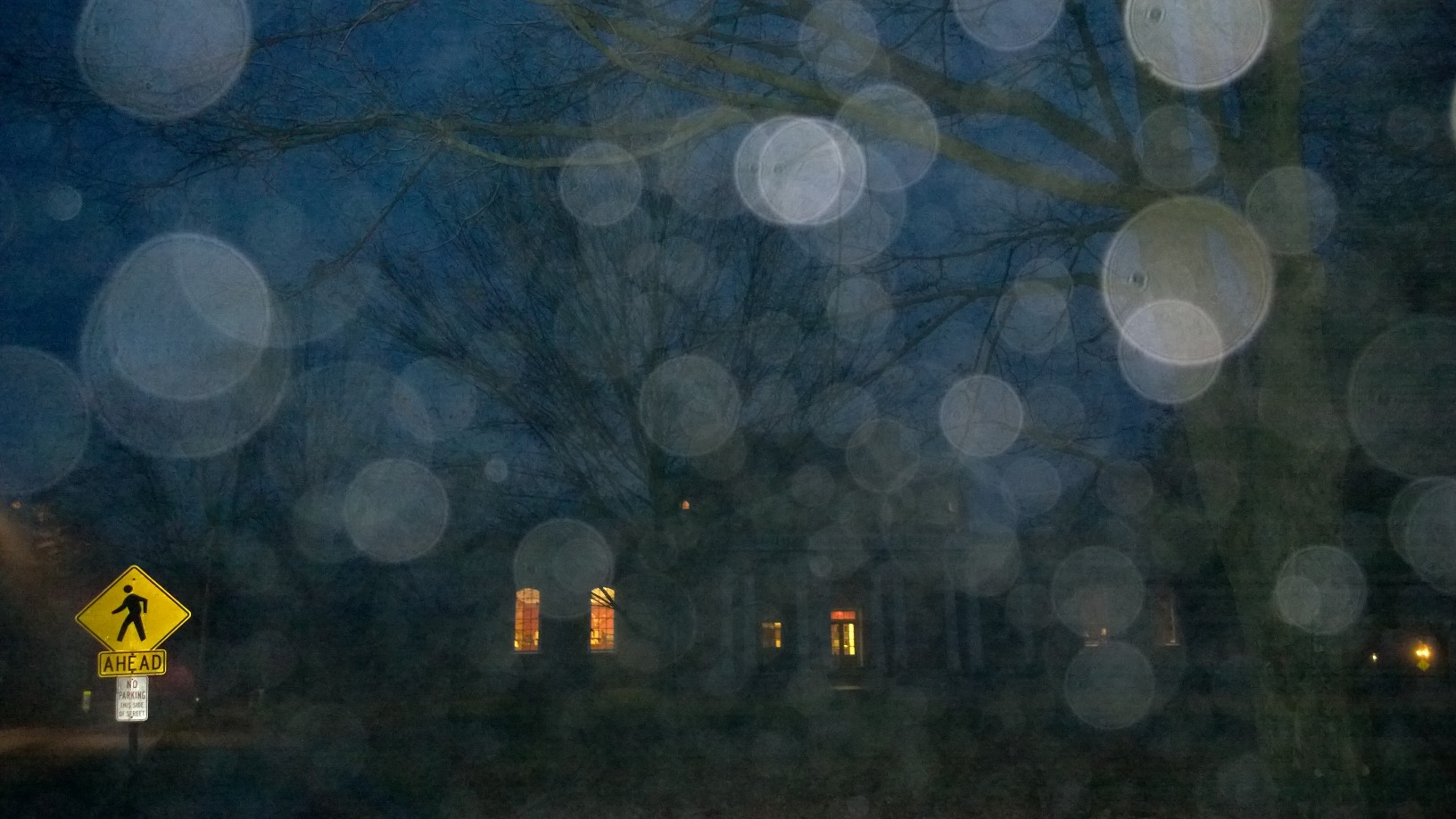
The photo of the library windows, above, was taken this morning. I was beyond thrilled to see the bubbles. It turns out that’s what happens when a flash meets a mist.
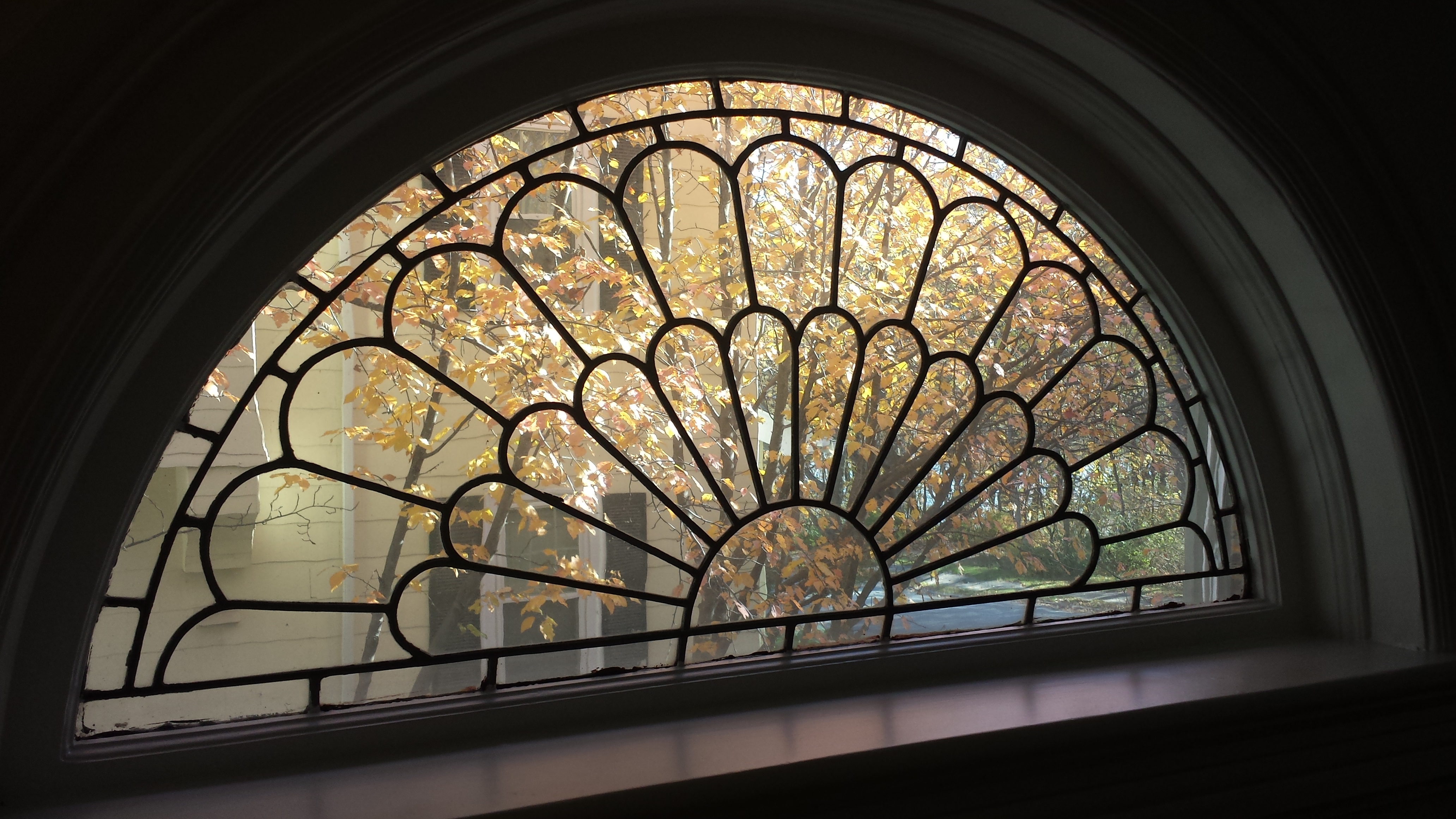
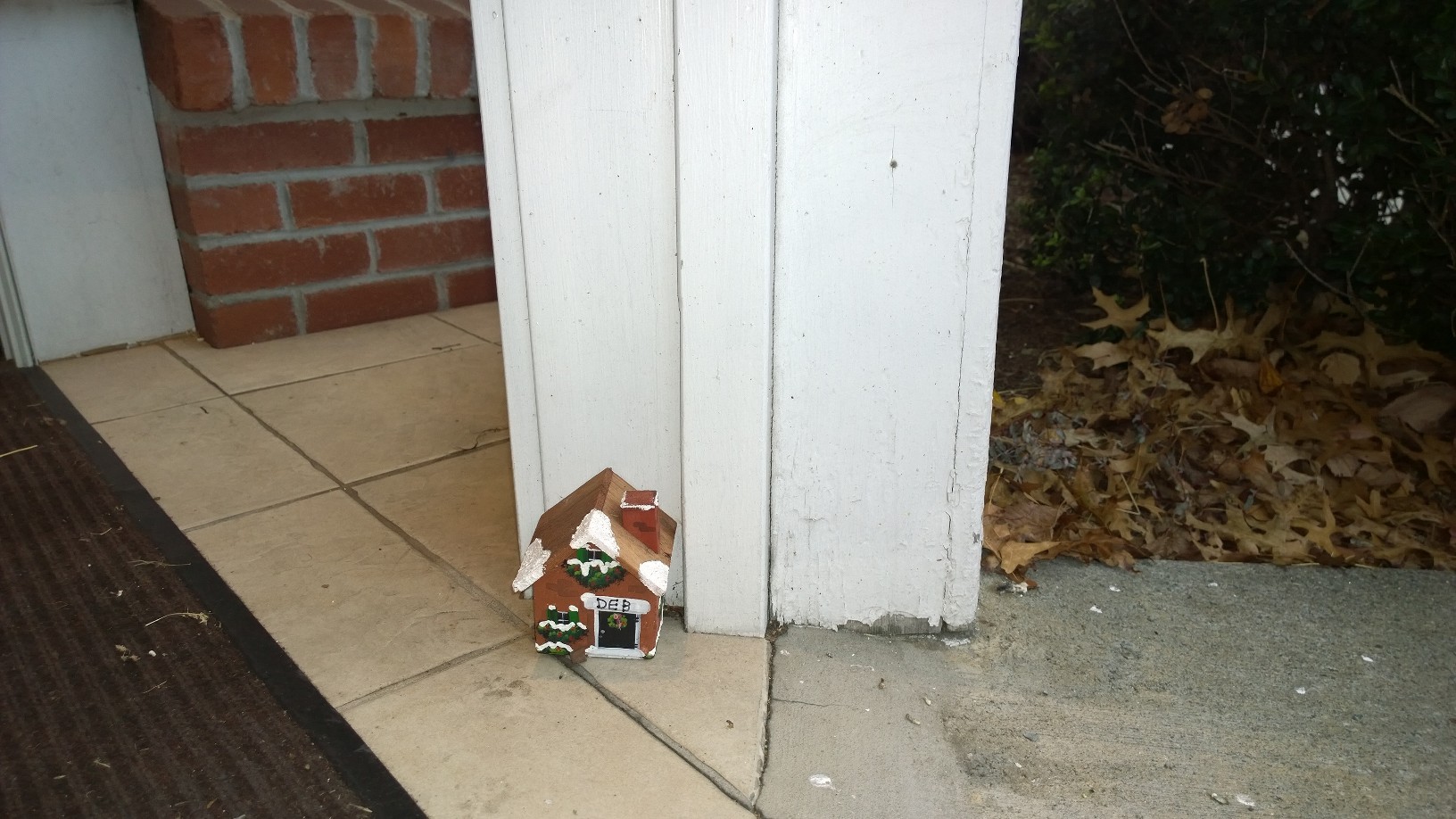
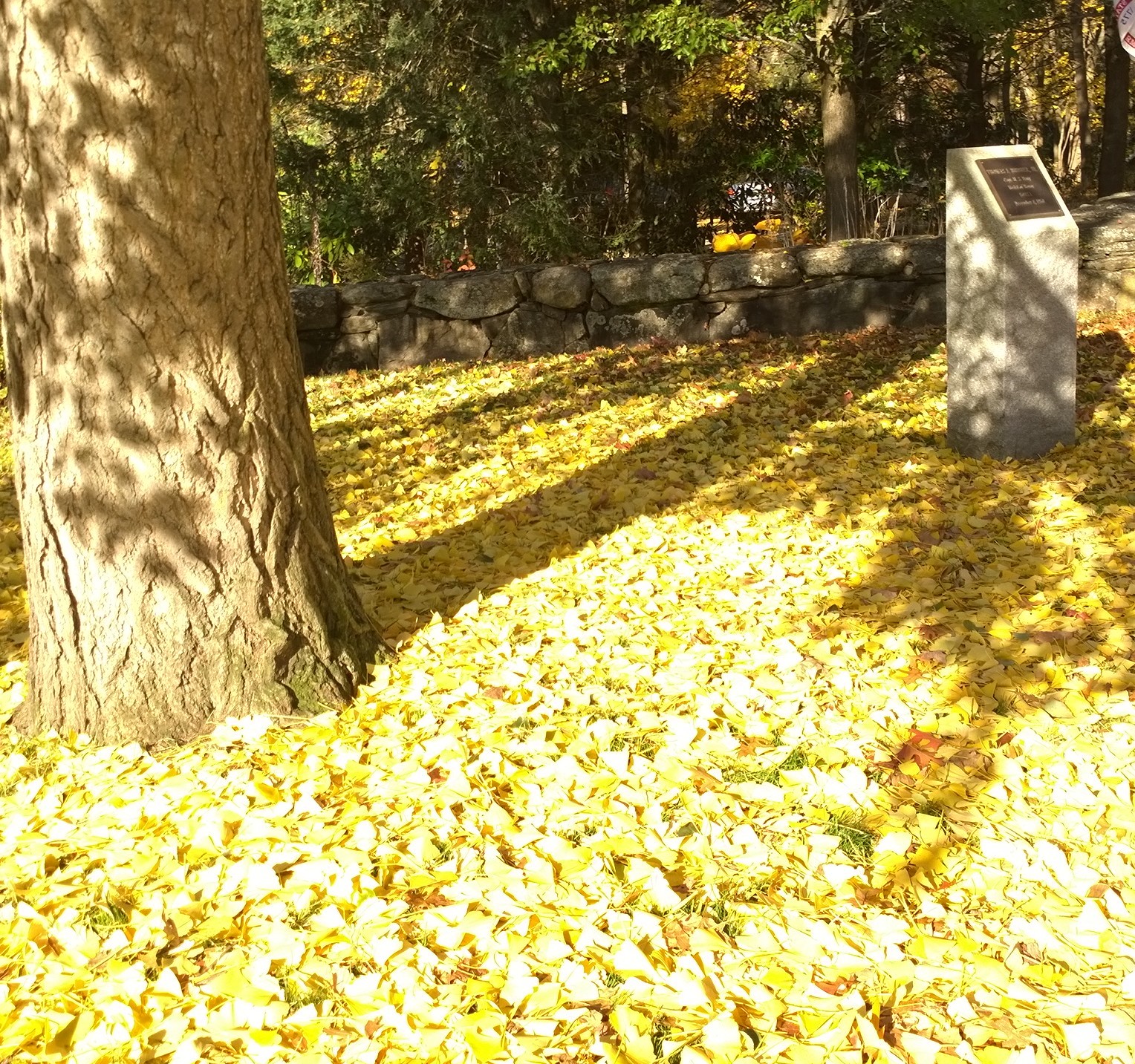
Suzanne took the lovely picture of leaves through a fan-shaped window in Rhode Island. The tiny house photo is from the entryway to a real estate office. The golden carpet is of ginkgo leaves. I took the shot of bittersweet growing on a Liberty Street fence Veterans Day near where the first shots were fired in 1775. The sculpture in front of the Umbrella Center for the Arts is by Nancy Arkuss. It’s called “Sid.” (Suzanne went through school with the artist’s son.)
A few years ago Amy Wyeth wrote an article about Massachusetts veterans services for a magazine I edit. As I was thinking about what I could post here for Veterans Day, I remembered how much I appreciated learning from Amy about an organization for homeless veterans in Leeds, Massachusetts. It has since expanded to other locations.
The emphatic gentleman in the video below (“The Mission Continues”) really moved me. I got the points he made about not telling grownups what to do — instead being there to support them, one by one, in what they need. He advocates decriminalizing substance abuse so that veterans who need treatment can get it.
He notes that all the Solider On staff work directly with the veterans. Even if their job doesn’t entail social services, they all need to understand what the veterans are going through. At the end of the video, he says that the 90 percent of us who didn’t offer to give our lives for our country owe it to the 10 percent who did that, after their service, they can have a place to live and adequate support for what they want to do with the rest of their lives.
Soldier On now serves Mississippi, New York, Western Massachusetts, Pennsylvania, and New Jersey. And it offers a separate program for women veterans, run by women veterans.
I saw an article in the paper today about 3-D machines making protein snacks for soldiers. The results looked like not very appealing beef jerky.
Other 3-D food creations in the works run the gamut from unappealing to gorgeous.
Jane Dornbusch wrote in a September Globe article,“The most popular application in 3-D food printing seems to be in the decidedly low-tech area of cake decoration.
“Well, not just cake decoration, but sugary creations of all kinds. The Sugar Lab is the confectionary arm of 3-D printing pioneer 3D Systems, and it expects to have the ChefJet, a 3-D food printer, available commercially later this year.”
3-D printing, says ChefJet co-inventor Liz von Hasseln, “is additive manufacturing. Instead of carving away at something, with 3-D printing you build something up layer by layer. That’s the hallmark. You build it exactly as it exists in a file.” More here.
As lovely as the sugar sculptures in the Globe story appear, the beef jerky, veggie burgers, and chicken nuggets are kind of scary. But let’s put it in context: could they be any more strange than certain staples of your childhood? 3-D burgers are probably no worse than, say, canned fruit cocktail. Here is poet Amy Gerstier on that old-time delicacy:
what was fruit cocktail’s secret
meaning? It glistened as though varnished.
Faint of taste and watery, it contained anemic
grapes, wrinkled and pale. Also deflated
maraschino cherries. Fan-shaped pineapple
chunks, and squares of bleached peach
and pear completed the scene. Fruit cocktail’s
colorlessness, its lack of connection to anything
living, (like tree, seed or leaf) seemed
cautionary, sad.
Photo: 3-D Systems
3-D printed sugar design by The Sugar Lab.
“At Huston-Tillotson University in Austin, Texas, an environmental science professor teaches sustainability by example, transforming an empty dumpster into a tiny apartment where he’s lived for a year. Professor Jeff Wilson tells [LOE] host Steve Curwood about life in his micro home and his long-term goals for Project Dumpster.
CURWOOD: “Dr. Jeff Wilson, aka Professor Dumpster, is teaching sustainability by downsizing his living quarters to the dimensions of a dumpster – a clean dumpster, mind you. Jeff Wilson joins me now from his steel abode on the campus of Huston-Tillotson University in Austin, Texas, where he’s Dean of the University College and teaches environmental science. Welcome to Living on Earth, Jeff, or, do you prefer, ‘Professor Dumpster?’
WILSON: “I’ll take Professor Dumpster and you’re at my disposal.
CURWOOD: [LAUGHS] “Right now you’re in your dumpster. What kind of headroom do you have?
WILSON: “Well, it’s a standard 10 cubic yard dumpster, which means it’s six foot by six foot at the base. And this one’s actually quite tall; it’s about seven feet…. I’ve got a wooden false floor, so the actual height of standing room is about 6’2” right now. I’ve got a window unit air conditioner. I have a few tapestries hanging on the wall. I have a twin bed and then a very small bookshelf on the corner with various things like an Oscar the Grouch mug …
“The main point of this entire experiment is to test if one can have a pretty good life on a whole lot less. … A lot of people asked why we used a dumpster instead of a tiny house or instead of even a container, and the reason we did that were some of the awareness and educational aspects of this project around addressing waste. And dumpsters, you know, are these magical boxes that we put our waste into and come back a few days later … and everything’s disappeared. So we want to highlight some of those subjects as well. …
“One of the things we’re interested in is the increased interactions with the community and the environment when you’re in a smaller home like this, sort of what that might do for one’s sort of quality-of-life and sense of experience and just the overall magic that is brought into the everyday. If you want to call it dumpster magic.”
Find the rest of the interview transcript, plus the audio version and pictures, here.
Photo: Jeff Wilson
Egress from the the professor’s dumpster home can be challenging.
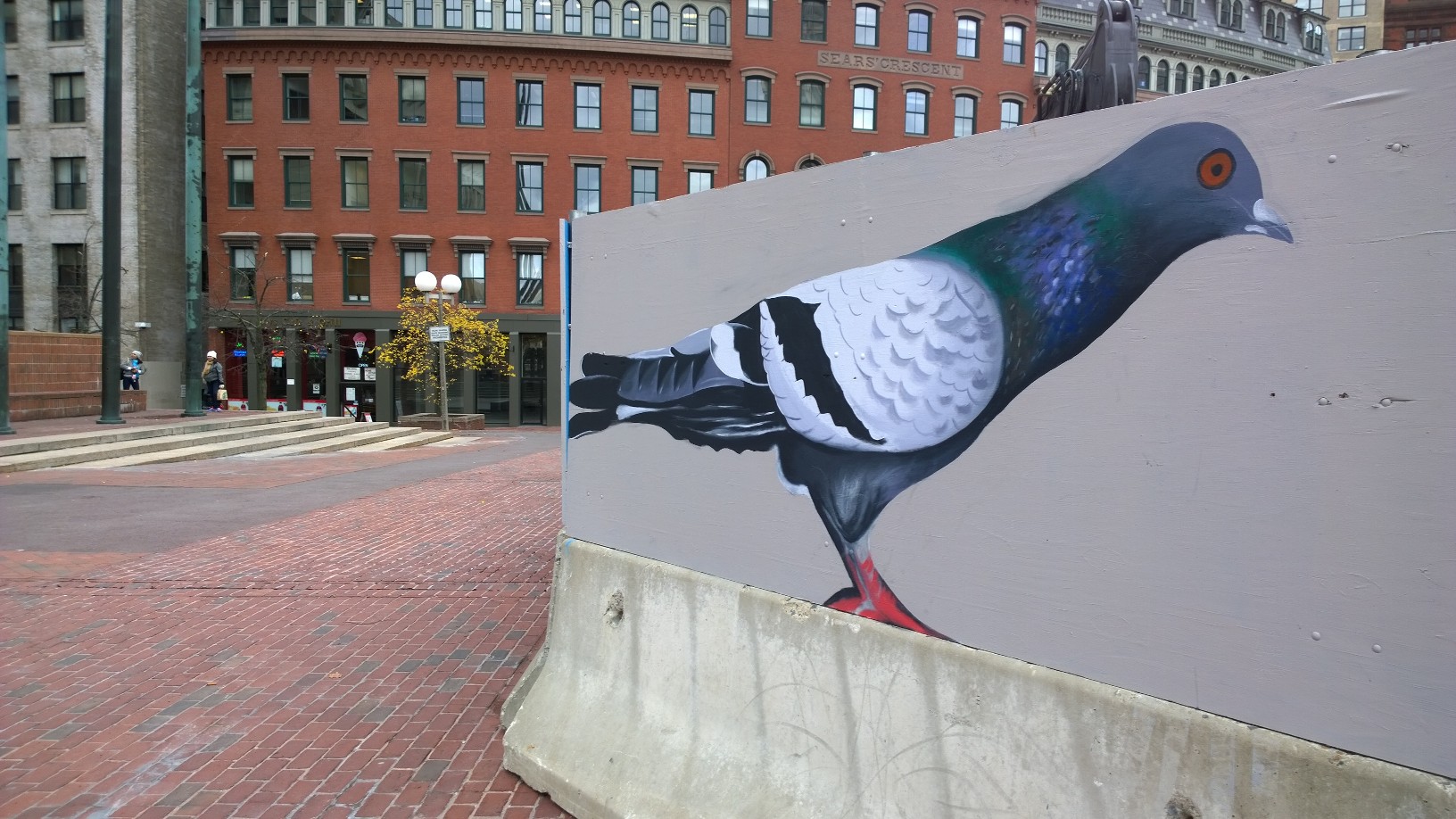
One day we took the train to New York City, and in spite of the fact that Suzanne never saw pigeons where we lived, she took one look at the city’s official bird and started singing, “Stop the pigeon!”
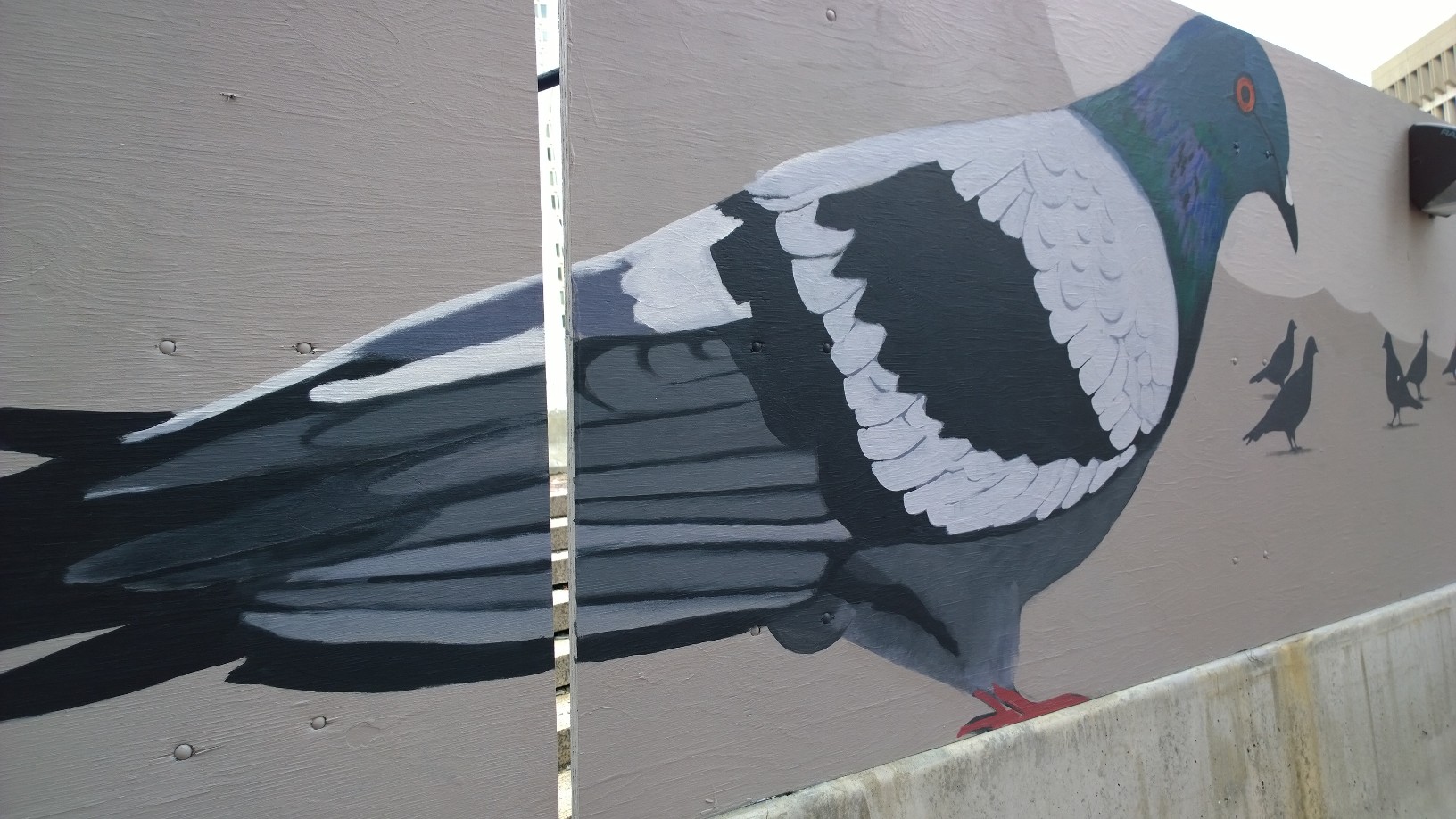
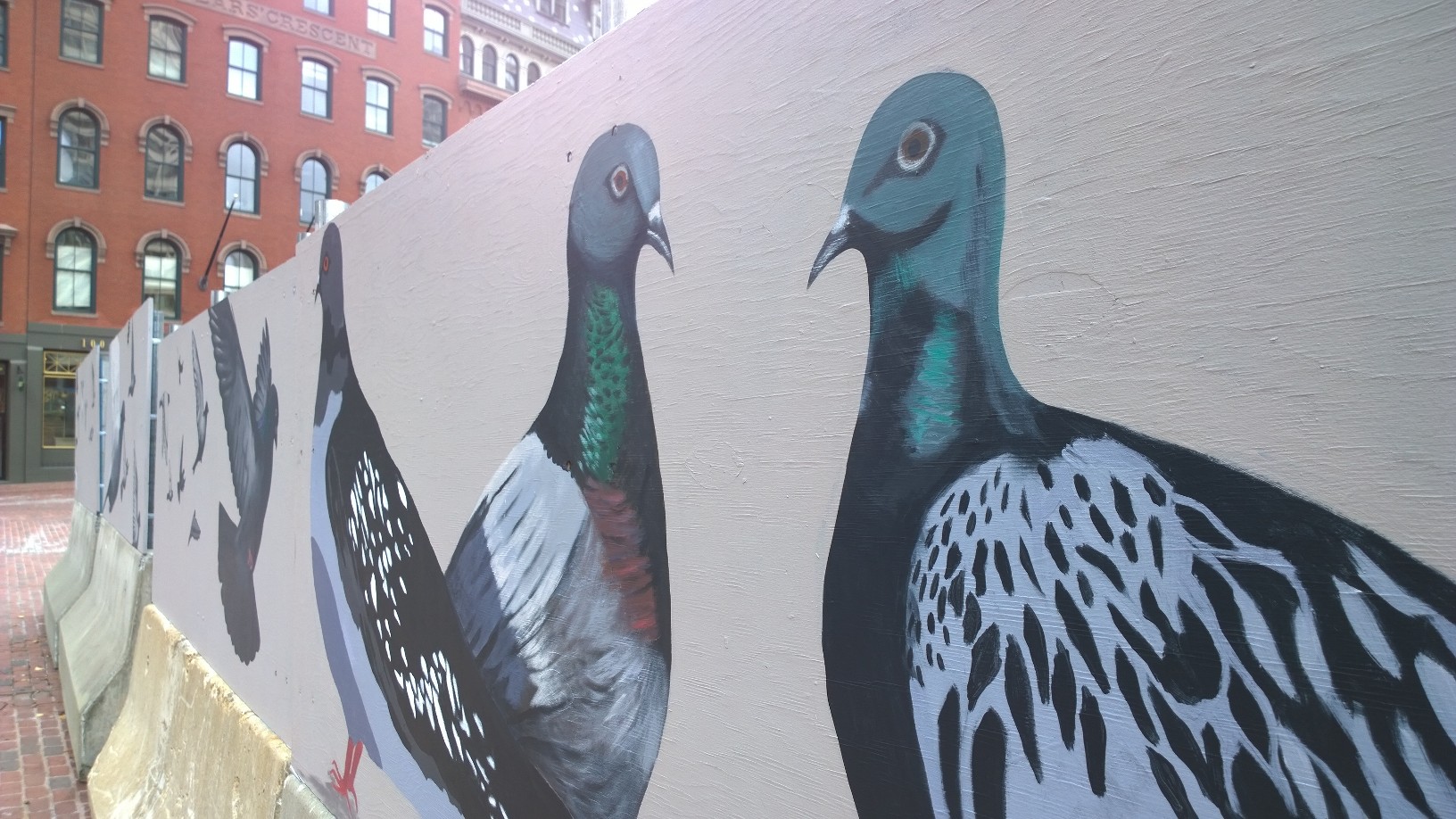
So unlike many people, I have some good feelings associated with pigeons, and I am getting a big kick from the pigeons I photographed near city hall yesterday.
Someone with a sense of humor has decorated the barrier around the construction site for the new Government Center T stop with pigeon portraiture.
Photo: PA/Owen Humphries Murmuration of starlings over Gretna, Scotland
Starlings swarm in flash mobs over Scotland every November and February, and they don’t even need social media to remind them it’s time.
According to an article at the BBC, “Tens of thousands of the birds are regularly seen around this time of year near the Dumfries and Galloway town. It is one of the most famous locations for the natural spectacle, the reason for which is not definitively known.
“A survey of the birds across the UK is currently under way with members of the public urged to record sightings. The poll, conducted by the University of Gloucestershire and the Society of Biology, is the first of its kind and has already received more than 600 reports from Cornwall to John O’Groats.
“Dr Anne Goodenough, reader in applied ecology at Gloucestershire University, said: ‘One of the theories behind the murmurations is that it means they are safer from predators such as hawks and falcons.
” ‘Another theory could be they are signalling a large roost and it could be a way of attracting other birds to that area to build up a big flock as it would be warmer. It’s much warmer to roost as a big group rather than a smaller one and the murmurations can be as big as 100,000 birds.’ ”
More here. Don’t miss the other amazing photos at the BBC site.
An organization that I follow on twitter called SmallerCitiesUnite! (@smallercitiesu) tweeted today about a design for an educational marine center in Malmö, Sweden. It caught my eye because I like marine centers and because two novels I read recently took place in Malmö: Murder at the Savoy, by Maj Sjöwall and Per Wahlöö, and Karl Ove Knausgaard’s Book 2, based on his life. (And of course, we have a Swedish connection in the family.)
Dezeen magazine reports, “Danish studio NORD Architects has released designs for a new Marine Educational Centre in Malmö, Sweden, comprising a 700-square-metre visitor centre with a large overhanging roof structure that covers an external aquatic learning environment. …
“The education centre will be set in 3,000 square metres of landscaping, including small ponds and planting that are intended to mimic an assortment of marine ecologies and create ‘an engaging learning landscape’ that allows visitors to have a hands-on experience of nature.
” ‘In the learning landscape, users will find floating laboratories on small removable pontoons, teaching signs on the seabed and underwater sea binoculars to name a few,’ said the studio.” More at Dezeen magazine, here.
In the last couple years, my husband and I have seen so many fiction movies about chefs that now Netflix recommends any film related to food.
Not all films about chefs are equally good, though. High in our pantheon are Babette’s Feast, Today’s Special, and The Lunchbox. I’ll refrain from mentioning a couple recent ones that had too many Hollywood memes.
An article in the NY Times this week tells a real-life chef story that seems to imitate fiction. Jeff Gordinier interviews a pastry chef from the Bronx who has just landed a job at a restaurant in Copenhagen that some folks call the “best in the world.” The reporter, hoping to discover the source of chef Malcolm Livingston’s talent, travels with him to meet a great aunt.
“The person who had the answer, it turned out, was Aunt Alice. Aunt Alice is Alice Pulley, an 83-year-old deacon at Friendly Baptist Church and the sister of Mr. Livingston’s paternal grandmother. …
“Mr. Livingston nodded toward the kitchen as memories of poundcake and pecan pie poured forth. ‘This whole counter — she would have a little cake display,’ he said. When he was 5 or 6, he and his playground comrades became passionate advocates for Ms. Pulley’s baking. …
“Her signature dish, and the one that would wind up being pivotal in Mr. Livingston’s life, was a banana pudding filled with alternating layers of sliced bananas and Nilla wafers. She made the custard itself with eggs and milk, instead of relying on a powder from the supermarket, and she achieved the texture she wanted by way of flour, instead of cornstarch.
“ ‘I’m telling you, that banana pudding, really, it’s life-changing,’ Mr. Livingston said.” More here.
Photo: Katie Orlinsky for The New York Times Malcolm Livingston II, recently hired to work in “the world’s best restaurant,” with his Aunt Alice Pulley, an inspiration.
Sometimes I get leads from twitter. Liz Devlin @FLUXBoston earned a hat tip for this one.
Andrea Magrath writes at MailOnline about Monsanto, a “medieval Portugal village build in and around gigantic 200-tonne [ton] boulders. …
“Living beneath a roof that weighs more than the average cruise ship may make some people a little nervous. But it is commonplace for the villagers of Monsanto in Portugal, who adapted their homes around the environment, filled with gigantic granite boulders.
“In the mountaintop village, homes are sandwiched between, under and even in the 200-tonne rocks. The enormous boulders have been utilised as walls, floors, and most astoundingly, as roofs for houses that date back to the 16th century. …
“Located in the municipality of Idanha-a-Nova, in eastern Portugal near the Spanish border, Monsanto sits at 2,486 feet above sea level and has spectacular views. Donkey is the preferred form of transport for Monsanto’s 800 residents, who have managed to maintain the village’s medieval character.”
For some great pictures of life amid boulders, click here. One photo really looks like a hobbit home.
Photo: Xalima Muriel/Media Drum World
Monsanto, Portugal, villagers have formed their homes around the existing boulders, rather than attempt to move them.
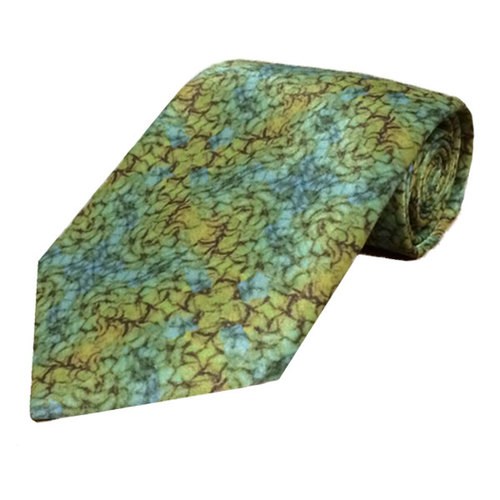
If you are a scientist who wears ties, or if you know one, consider designing your own at Vermont-based Cerebella. Past design ideas have resulted in frog-skin, moon-jellyfish, pollen-tetrad, and obelia (a tiny marine animal) neckties.
At Cerebella’s blog, Lucy Partman wrote on October 13 about how she ended up Chief Curator for the company.
“I grew up in New York City … going to museums— and I mean a lot of museums —especially the Met. … My parents … are designers and own a clothing store in Manhattan so dinner table discussions often involved fabric prints, shirt designs, sizes, quantities, and window displays …
“At LaGuardia High School of Music & Art and Performing Arts … I went from biology to painting, from art history to calculus.
“At Yale, I tried to continue this interdisciplinary education. I majored in both history of art and biology and constantly sought to intertwine these interests, passions. For example, I worked with conservators — who work in a hybrid art studio and science lab — at the Yale Center for British Art to conserve paintings …
“I founded an organization at the Slifka Center called Slifka Arts to provide students the opportunity to curate and exhibit student art. … Shortly after the opening of an exhibit I curated at the Slifka Center called Only in a Woman: Microscopic Images by Harvey Kliman, MD, PhD — which will soon be exhibited at Brown Medical School — Ariele [Faber, Cerebella founder,] contacted me regarding the exhibit and Cerebella. Our conversation has continued ever since.” More here.
Photo: Cerebella
Frog-skin Necktie. Each Cerebella textile pattern is designed by finding inspiration under the microscope.