Feeds:
Posts
Comments

Photo: John and Suzanne’s Mom.
The PictureThis app calls this Beauty Bush. If you want to use the app, note that they try to hide the spot where you click “cancel” to get the free part.

Today’s article, by Michael J. Coren at the Washington Post, will be useful for anyone who walks outside and wonders what kind of flower or tree that is, what bird has that unusual song. It’s a post about apps. I myself use these freebies: Merlin for bird identification and PictureThis for plants (thanking Claudia for that tip).

From Coren: “First I see the wall barley, like tiny fields of wheat on the side of the road. Then a profusion of musk stork’s-bill overflowing with purple flowers. That’s just the crack in the sidewalk. By the time I reach my office, I’ve identified dozens of species, most unknown to me a few hours earlier.

“I’m not a master naturalist, but I have one in my pocket. Thanks to artificial intelligence trained on millions of observations, anyone with a smartphone can snap a picture or record a sound to identify tens of thousands of species. …

“It’s the kind of thing I would normally miss while walking or pedaling to work. Birdsong might be gorgeous but I’d barely hear it. I’d note ‘pine tree’ as a catchall for conifers.

“That has changed. I’m now on a first-name basis with most of my wild neighbors. It has reconnected me to a natural world I love. ….

“For 2.5 million years, humans spent a huge share, if not virtually all, of their time outdoors. Today, many adults are spending more hours on screens than outside.

“Nature is even disappearing from our books, songs and culture, say researchers who looked at nature-related words in popular works during the mid-20th century. Our mental and physical health has declined alongside our estrangement from the outdoors. …

“This new generation of naturalist apps is the Rosetta Stone to the natural world. Reestablishing relationships with your outdoor neighbors might not only transform your commute, it might change your life. There are more than a dozen apps promising to help you identify the natural world, many of them paid. Don’t bother.

Four apps, designed and managed by scientists with world-class data, meet all your ID needs free of charge. And every observation will advance our scientific understanding of the natural world.

“The easiest to use is Seek. The app, an offshoot of iNaturalist, a joint initiative of the California Academy of Sciences and the National Geographic Society, lets you shoot live video. It automatically grabs frames and analyzes them. The augmented reality experience is like downloading a foreign language into your brain. The app identifies the taxonomy of plants and animals instantly as you shoot. If it can’t figure out the species, it will give you its best guess.

“In less than an hour, I had racked up dozens of plants and insects near my house from Bombus vosnesenskii, a native yellow-faced bumblebee, to the purple-flowered bush lupine it was buzzing around. The only drawback? The app doesn’t include deeper context about the species it identifies.

“For that, there’s iNaturalist and Pl@ntNet. Both offer sophisticated, if slightly less user-friendly, apps that upload and analyze photographs of flora. In seconds, they typically return a ranked list of potential candidates with rich descriptions of each. The identification of the most common species is a slam dunk. For rarer ones, it’s easy to compare your observation against those of others in the database.

“The apps’ real superpower is the community around them: Millions of citizen scientists who can vet and confirm your observations. It’s particularly satisfying to watch your skills — and ranking — rise in the apps as you get to know your neighborhood. When you’re ready to up your game, download these apps.

“Finally, there’s Merlin Bird ID, a project of the Cornell Lab of Ornithology. Merlin feels like magic. The app uses a phone’s sensitive microphone to identify bird vocalizations in the sonic landscape around you, painting a visual representation or sonogram analogous to a musical score. …

“Merlin has permanently changed how I hear the world. I can now tune in to birdsong operas that had never entered my consciousness. Within a day, I was able to recognize distinct calls without consulting the app. …

“But the apps are more than tools to get acquainted with nature. They’re pushing AI identification — and conservation — forward. Recognizing natural inhabitants, and our relationship to them, helps us rediscover what remains and protect it.

“ ‘We’re just at the beginning of actual real scientific progress,’ says [Grant Van Horn, a machine learning researcher at the Cornell Lab, who helped build Merlin’s sound ID feature]. ‘And none of this stuff happens without a passionate group of people that helps you curate, train and evaluate the data.’ …

“The first big breakthrough came around 2018 from Snapshot Serengeti, a research project using digital camera traps to photograph thousands of migrating African animals. Organizing this enormous collection featuring a variety of animals, from wildebeests to giraffes, proved overwhelming for the small team of scientists.

“So researchers enlisted thousands of online volunteers to sort and label more than 3 million images. That allowed Jeff Clune, then a computer scientist at the University of Wyoming, and his collaborators to unleash algorithms on what was at the time the world’s largest collection of labeled wildlife images. The new algorithms could identify animals in 99 percent of images with the same accuracy as human volunteers, around 97 percent. …

“Citizen science-powered algorithms are now going beyond individual organisms. They’re mapping their relationships to an entire ecosystem, from the flower a butterfly pollinates to the leaf where the insect lays its eggs.

“ ‘My goal is to turn ecosystems into fire hoses of data,’ says Clune. ‘In the same way a video game company knows everything that happens inside their system, we should know that for the Amazon rainforest. Imagine what that would mean for science.’ …

“Ultimately, the apps’ greatest breakthrough may not be technological at all. It may be raising our awareness. We are nearly blind to entire categories of living creatures. In her book Braiding Sweetgrass, Robin Wall Kimmerer described it as ‘being lost in a foreign city where you can’t read the street signs,’ a form of species loneliness. While these plants and animals are our neighbors, we scarcely acknowledge their existence, let alone their right to exist. …

“This could reverse one of the great losses of the past century: our severed connection to the unique, wild character of where we live.”

More at the Post, here.

And speaking of technology that gets you closer to nature, check this live camera in the early morning East Coast time to watch an osprey feed its baby. Catch it soon, before the baby fledges.
http://198.7.226.69:8023/#view

Photo: Amaal Said/JGPACA [June Givanni Pan African Cinema Archive].
From a Mogadishu film week
poster to VHS videos of pioneering art movies, June Givanni has collected a range of Black film artifacts and is now ready to share.

Sometimes people whose childhood struggles involve race-based discrimination grow up to embrace and trumpet the beauty of their heritage. I enjoy stories like that.

At the Guardian, Leila Latif interviews one such person, the founder of June Givanni Pan African Cinema Archive.

Discussing her recent exhibition, “PerAnkh: The June Givanni Pan African Cinema Archive,” Givanni played down the show’s title. Says Latif, “The Black British film curator, activist and archivist who created it is hesitant about positioning herself front and center.

“ ‘I don’t want it to sound like it’s all me, me, me,’ she worries. ‘My name is part of it because I worked as a curator for many years and collected work throughout the non-digital era, which developed into this archive.’

“Though she wants the films, documents, artworks and objects she has preserved to be the focus of people’s attention – from an installation of the earliest audiovisual works by the Black Audio Film Collective to new works by the Chimurenga collective from South Africa – Givanni is more than worthy of the spotlight. When she received the British independent film awards’ grand jury prize in 2021, the organizers said that she had ‘made an extraordinary, selfless and lifelong contribution to documenting a pivotal period of film history.’

Born in British Guiana 72 years ago, Givanni moved to the UK aged seven and was immediately underestimated.

“ ‘They put me with the five-year-olds because I was Black and I’d come from the Caribbean,’ she remembers. ‘My mum went to the school twice before they moved me up to my age range.’

“As an adult, Givanni collaborated with some of the most significant figures and institutions in pan-African cinema and across ‘different territories, different continents.’ She kept adding elements to her collection, she says, ‘because I needed to use them for subsequent programs and as part of building a body of knowledge and a whole series of resources that can be shared with others.’

“Lack of preservation has meant many of pan-African cinema’s masterworks have disappeared. In America alone, it is estimated more than 80% of Black films from the silent era are lost, and technological advances endanger film further. While physical film has a potential shelf life of hundreds of years, digital preservation requires constant migration to keep up with changing technology. …

“Givanni has faced changes in technology, politics and culture since she began in the early 80s. The first film festival she worked on was called Third Eye, inspired by the Latin American Third Cinema movement which set out to challenge Europe and North America’s dominance in film. For Givanni, the festival provided ‘an area to develop our own ideas about representation and taking charge. Pan-African cinema has always been a cinema of resistance. I can’t tell you how inspiring it was that there were all these people out there doing things that really chimed with what I thought should be happening.’ …

“She programmed festivals on five continents; worked for Greater London Council’s ethnic minorities unit and the Independent Television Commission; ran the BFI’s African Caribbean film unit and co-edited Black Film Bulletin, which relaunched in 2021 as a quarterly collaboration with Sight and Sound magazine, and has celebrated the under-sung work of film-makers. …

“The spirit of pan-Africanism was a guiding light, connecting all cultures that originated on the continent without treating them as a monolith. Givanni explains, ‘When I say pan-African, it’s not just the African continent; it’s the entire diaspora. All those significant histories are interconnected and cinema is very much part of that.’

“Choosing how to represent that history at Raven Row, with selections from an archive that now surpasses 10,000 items, was a gargantuan task. But Givanni immediately knew she wanted to include ‘a poster of the Mogadishu film week, given to me at my first attendance at the Fespaco film festival in 1985 by a Somali film-maker. Now people mention Somalia and they don’t picture these vibrant and strategic cultural events taking place there. …

“ ‘At the Havana film festival I bought a collection of silkscreen posters that will be exhibited. Lots of art can be seen digitally, but to see a silkscreen poster, the texture and the color of it – there’s an experience of culture and artifacts that goes beyond digital representation.’

“Beyond allowing the public to admire key objects from Givanni’s collection, the exhibition is structured around a program of films from the likes of Sarah Maldoror and Ousmane Sembène (the mother and father of African cinema). There is also an archive studio and reading room in the spirit of the exhibition’s title, PerAnkh – an Egyptian term for ‘a place of learning and memory.’ “

More at the Guardian, here. No firewall.

Photo: Conférence PPL 2022.
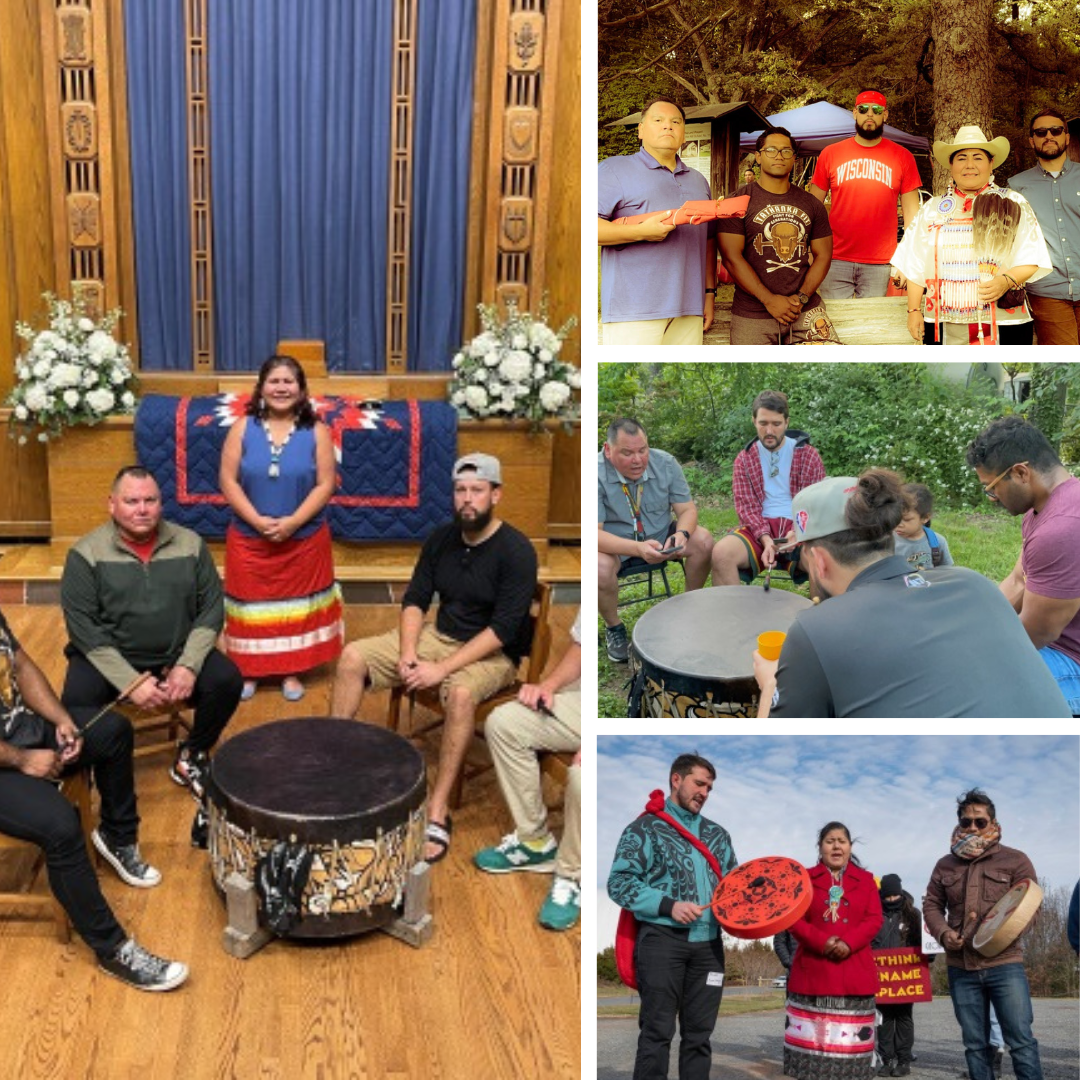
Brian Maracle shares his technique for teaching the Mohawk language at Canadian conferences such as Multidisciplinary Approaches in Language Policy and Planning (LPP or in French, PPL).

I love learning about other languages and sometimes pick up tidbits through my volunteering with ESL teachers. But languages in danger of dying out are especially interesting to me. If they die out, we lose too much about the ways others see the world.

Today’s story is about a technique for teaching a particular endangered language.

Ian Austen wrote at the New York Times from Ontario, Canada, “When Brian Maracle returned in his mid-40s to the Mohawk community near Toronto that he had left when he was just 5, he didn’t have a job and knew almost no one there.

“But perhaps the biggest challenge facing him was that he neither spoke nor understood much Kanyen’keha, the Mohawk language. More than a century of attempts by Canada’s government to stamp out Indigenous cultures had left Mr. Maracle and many other Indigenous people without their languages.

“Now, 30 years later, Mr. Maracle has become a champion of Mohawk, and is helping revive it and other Indigenous languages, both in Canada and elsewhere, through his transformation of teaching methods.

“ ‘I never studied linguistics, don’t have any teacher training, my parents weren’t speakers,’ he said in his office at an adult language school he founded about two decades ago in his community, the Six Nations of the Grand River territory, southwest of Toronto. Yet, linguistics academic conferences now feature him as a speaker. …

“From the 19th century into the 1990s, thousands of Indigenous students were taken from their homes, sometimes by force, and placed into Canada’s residential schools system. There, they were forbidden from speaking their languages and from practicing their traditions in what a national commission later characterized as ‘cultural genocide.’

“The system failed to entirely eradicate Indigenous languages, but its effect was nevertheless devastating for the 60 Indigenous languages found in Canada.

“Today restoring Indigenous languages has been a component of Canada’s push for reconciliation with its Indigenous people. … Four years ago, the government passed the Indigenous Languages Act, which formally recognizes the importance of these languages and requires the allocation of money — more than 700 million Canadian dollars to date — for teaching them.

“But none of that was around when Mr. Maracle arrived at Six Nations, and the program that was available, he found, was ill-suited for adult students.

“ ‘Indigenous languages are extremely different from English,’ said Ivona Kucerova, the director of the Center for Advanced Research in Experimental and Applied Linguistics at McMaster University in Hamilton, Ontario. ‘But typically what you see is that the local Indigenous language teaching methodologies are designed to teach Western languages.’

“Mr. Maracle said the problem with his first, unsuccessful lesson was that the instructors, generally Mohawk elders without training as language teachers, were tossing out ‘whole words.’

“ ‘They just expected by dropping a word on you and saying it louder that you’d somehow figure it out,’ Mr. Maracle said. ‘They didn’t understand how the language really is structured.’ …

“Mr. Maracle found the answer about 25 years ago in the office of David Kanatawakhon-Maracle, no direct relation, a lecturer at the Western University in London, Ontario.

“ ‘There were little bits of paper all over this big table,’ Mr. Maracle recalled. The lecturer told Mr. Maracle words he had been longing to hear: ‘He said: “I think I’ve got a new way of teaching the language.” ‘

“There were about 60 slips of paper on his office table, and they ‘were the Rosetta Stone of all the things that you need to be a competent beginning speaker,’ Mr. Maracle said.

“Kanyen’keha is a polysynthetic language, where a single word can function as an entire sentence. Those words are made up of morphemes, small elements that change their meaning depending on how they are combined. …

“Understanding that these elements were the key to unlocking the language was the breakthrough Mr. Maracle needed to attain fluency. But other students at the school he helped start in 1999 were still struggling. It became apparent that someone needed to build a curriculum and teaching program around the morphemes, including a color-coded system for grouping them, which Mr. Maracle did through trial and error.

“One essential discovery was figuring out that learning Kanyen’keha requires ‘looking at the world with Mohawk language eyes,’ he said. In comparison with other languages, Kanyen’keha relies heavily on verbs.

Objects are generally described by what they do. The word for ‘computer,’ for example, roughly translates as ‘it brings things up.’

“ ‘We don’t teach you how to say “pencil,” “chair,” ”shoe” for six months,’ Mr. Maracle said. ‘Because the language is a verb-based language, the names of things are less grammatically important.’

“Prof. Kucerova, the director of the linguistics center in Hamilton, regards Mr. Maracle as a linguist despite his lack of formal training. She said tests showed that his students emerged with a university-level fluidity in two years.

“ ‘I have never seen anyone else bring adult learners to that level of language, to be able to speak at this level after two years,’ she said, adding that Mohawk ranks with Arabic in terms of difficulty for English-speaking students. ‘That’s really astonishing.’

“ ‘I became literally mesmerized by the extent of his work,’ Prof. Kucerova said. ‘He’s figured out this improbable, but linguistically extremely smart, method of delivering this radically different language to adults.’ ”

More at the Times, here.

Photo: WCIA [Welsh Centre for International Affairs].
Annie Hughes-Griffiths holds the women’s peace appeal outside the White House in 1924 after a meeting with President Coolidge, with (from left) Gladys Thomas, Mary Ellis and Elined Prys. 

There are so many great initiatives by women that take years to get broad recognition because, at the time, they weren’t highly valued. That’s why I love sharing them now.

Steven Morris covered today’s example for the Guardian.

“There were tears of joy, speeches of hope and sighs of relief that all had gone smoothly after an extraordinary century-old document – reputedly seven miles long – completed its transatlantic trip back to Wales.

“The peace petition, signed by almost three-quarters of all Welsh women in the 1920s but forgotten until the last few years, arrived at the National Library of Wales [in April] after being gifted to the country by the National Museum of American History in Washington.

“Over the coming weeks and months, the reams of sheets will be taken carefully out of the hefty oak chest where they are stored, then digitized at the library in Aberystwyth, before a crowd-sourcing exercise takes place to transcribe all 390,296 signatures and addresses.

Prof Mererid Hopwood, the chair of the Peace Petition Partnership, said she was so excited she could hardly breathe and, though it was an overcast day in Wales, quoted the Welsh phrase mae’r haul yn gwenu – the sun smiles.

” ‘Actually, I think the sun’s practically chuckling with joy in Aberystwyth today. We are so very delighted,’ she said.

“In 1923, galvanized by the horrors of the first world war, a group of Welsh women decided to organize a campaign for world peace.

“During a Welsh League of Nations Union (WLNU) conference at Aberystwyth University, they agreed that the best way would be to appeal to the women of the US to work with them for a world without war. Two paid officers and 400 local organizers set about collecting names from every community in Wales.

“In 1924 the Welsh delegation, led by Annie Hughes-Griffiths, the chair of the WLNU, crossed the Atlantic with the petition and worked with American women such as the women’s rights campaigner Carrie Chapman Catt to disseminate their message.

“They received an enthusiastic welcome and travelled through the US addressing audiences. The US press claimed that if the signature sheets were laid end to end they would go on for 7 miles.

“However, over the years the petition was forgotten, until a mysterious plaque mentioning it was uncovered at the time of the centenary of the first world war in Cardiff’s Temple of Peace.

“ ‘It was a lost story, a hidden story,’ said Hopwood, a poet and the chair of Welsh and Celtic studies at Aberystwyth University. She said the idea of returning the petition to Wales was both to remind people of its amazing story and to inspire people today to campaign for peace.

“Hopwood pointed out that Wales has a history of its citizens working for peace, including … the women who marched from Wales to Greenham Common in Berkshire in 1981 to protest against nuclear weapons. …

“The Welsh deputy minister for arts and sport, Dawn Bowden, said it was an inspiring document: ‘I hope that the return of the petition to Wales will inspire and motivate a new generation of advocates for peace.’

“Dafydd Tudur, the head of digital services at the National Library of Wales, called it an ‘historic’ day.

“He said he hoped a pilot of the crowd-sourcing exercise would take place in the autumn, before fully beginning next year. An exhibition will be organized to present the chest and petition at three locations – Aberystwyth, St Fagans in south Wales, and Wrexham in the north.

“Tudur studied modern Welsh history but had not heard of the petition until the plaque was found. ‘It was forgotten. People are amazed when they hear about it,’ he said.” More at the Guardian, here. No firewall.

For more on the peace agenda, click here on an article co-authored by my friend Ann Tickner. The article examines “feminism in international relations from the emergence of women’s peace pragmatism during WW I to the development of the United Nations (UN) Women, Peace, and Security (WPS) agenda a century later. … We show how the principles articulated by women peace activists at the 1915 Hague Conference represent distinct contributions to the discipline.”

Photo: Getty Images.
Record Store Day celebrates independent music stores in the UK, says the BBC, “with many labels and artists releasing limited vinyl editions specifically on the day.”

Some of us still listen to our vinyl records. And others are starting to. In fact, vinyl records have become so popular in England that there is now an official Record Store Day to celebrate the bricks-and-mortar places you can buy them.

Gareth George reports at the BBC, “More young music fans are snapping up the latest releases on vinyl, triggering a boom in LP sales. In 2022, vinyl outsold CDs for the first time in 35 years. Ahead of Record Store Day in the UK, the BBC asked young record store regulars why ‘old school’ beats downloads. …

“Will, 16, is a GCSE [General Certificate Secondary Education] student and guitarist who hopes to study music full-time at the Colchester Institute. He believes buying vinyl is a better way of supporting artists than streaming or downloading music and reveals he has inherited his own collection of records from parents and grandparents. …

” ‘You can inherit not only the music, but also the memories, and tell the story though vinyl.’

“Will is running a second-hand vinyl stall with Sam, 18, from Chelmsford, a guitarist and singer who plays in a band called Alison. Sam says record fairs are essential because new vinyl LPs can be expensive for budding collectors.

” ‘It’s hard to become a vinyl collector now when you go to your local record shop and see that it’s 40 quid a record,’ he says. ‘That’s why these record fairs are important. Stuff’s just cheaper.’

“The pair work at Intense Records in Chelmsford, one of the hundreds of independent music shops across the UK taking part in Record Store Day on 22 April. The annual event, which was established in 2007, has become one of the biggest in the music calendar, with independent record shops often achieving their highest sales of the year. …

” ‘We’ve definitely seen a new generation of younger music fans embracing vinyl,’ says Record Store Day UK co-ordinator Megan Page. ‘For superstar artists like Taylor Swift and The 1975, vinyl has become a really important part of their marketing campaign. …

“Jon Smith, manager of Intense Records, says DJs will be playing to the crowds of collectors expected to go along. He said many customers hope to grab a bargain or snap up a limited release on the day. …

“Nineteen-year-old Kasabian fan, Geordie Breeze, is ‘crate-digging’ in Norwich – a vinyl hunter term for flicking through the rows and racks of records in music shops. The environmental science student at Lancaster University says he already has ‘a few hundred’ vinyl LPs. ‘I think the sound quality’s better, and I like a physical record to hold,’ he says.

“According to figures from the British Phonographic Industry, vinyl records outsold CDs in 2022 for the first time in 35 years. The revenue generated from vinyl was [about] £119.5m [$128 million] more than CDs. …

“Musician Imogen Bradley, 23, looks out for ‘old school hip-hop’ on vinyl. She is a fan of British rapper MF Doom and American hip-hop collective Wu-Tang Clan. ‘I just prefer having a physical copy,’ she says.”

What was before vinyl? My grandfather left behind a wind-up Victrola with a horn that would be valuable today. But my brother and I at a young age thought it was hilarious to smash the records. Golly, but kids are weird!

More at the BBC, here. No firewall.

Photo: Suzanne and John’s Mom.

Photo: IPP [India Pride Project].
S Vijay Kumar, above, “travels through India, documenting artifacts and investigating the trail of missing objects online,” says the BBC.

For how many millenia have travelers thought it was perfectly fine to pick up local art objects and take them home, perhaps eventually donating them to museums? Today the looted countries are saying, “Wait a minute–that’s mine.”

Charukesi Ramadurai writes at BBC “Culture” that volunteers in India have started doing something about these thefts.

The story starts with recent speculation concerning the coronation of King Charles III, when many eyes in India were turned toward the Queen Consort and the “the contentious Koh-i-Noor diamond.” Would she wear it? She did not.

“While the palace has not made any official statement about the reason,” Ramadurai reports, “there were worries about it causing diplomatic issues with India, if it had been used, given the country’s claims to be its rightful owner. …

“The Koh-i-Noor, first found in written records in 1628, has long been the subject of acrimony between India and its former colonizer, with a persistent demand by the Indian government and its citizens for its return. As this piece in India’s Mint newspaper explains bluntly, ‘The main controversy around the diamond is that the British give an impression to its younger generation that the Koh-i-Noor was a gift from India and make no official mention of the violent history behind acquiring it.’

“The renewed uproar about the Koh-i-Noor has also led to intensifying questioning of all the other resources – not just the sparkly stones –  taken away from the Global South by western powers over centuries of trading and ruling. ‘Wear the diamond, give back the rest,’ suggests this op-ed piece in The Indian Express.

“Among the ‘rest’ are priceless cultural artifacts – and this is what the India Pride Project concerns itself with. This citizen movement for the restitution of stolen and smuggled antiques (particularly statues) from public museums and private collectors across the world was started in 2013 by shipping executive S Vijay Kumar and public policy expert Anuraag Saxena from Singapore. …

“These sleuths, with the help of a small, anonymous global team of volunteers from various fields – who communicate mostly online – have brought back to India several millions worth of antiquities from countries like Australia, Singapore, Germany, UK and the US.

“Most recently, they made the news when their efforts aided the investigation that prompted the National Gallery of Australia to return antiques worth $2.2 million – stolen by art smuggler Subash Kapoor – to the Indian government. Their targets include both artifacts taken forcibly out of India during the British colonial era, and those more recently stolen and smuggled from temples and public collections.

“Kumar, who is now based in Chennai in south India, and Saxena, who remains in Singapore, talk with ease about field trips to document missing idols and sting operations with auction houses. … This is not to suggest they are some kind of gung-ho art vigilante group, given the amount of plodding through paperwork and complex negotiation work they do. Their work involves advocacy, activism and coordinating between governments and law enforcement agencies such as Customs, Europol and Homeland Security within India and outside. Kumar says, ‘In the past when they reached out to India, nobody replied, so now we are doing that job.’

India Pride project is more of a network than an organization – we have no money, no employees and no authority,’ admits Saxena candidly, even a tad proudly.

“Art expert and former Egyptologist at the British Museum, Lewis McNaught, who now runs Returning Heritage, an online resource about cultural restitution, thinks the IPP model of citizen activism is intriguing. ‘They go out and actively source information using a social network of supporters. And only when they are able to confirm that the object has been stolen, do they approach the government, which in turn applies pressure on the museum or other governments where the object is being held.’

“There has been an established pattern of theft and trafficking of valuable art and artifacts from poorer countries in Asia and Africa to richer nations in the West – either directly by colonizing forces or in more recent times, through a sophisticated network of smugglers.

“In his book The Anarchy: The East India Company, Corporate Violence, and the Pillage of an Empire (and in various other places), writer and historian William Dalrymple has called out the looting of thousands of priceless objects from India to Britain by the employees of the trading East India Company. …

“Long after the colonizers have retired, there still remains a flourishing multi-billion-dollar black market in stolen antiquities. Serendipitous discovery is rare, such as this story from the 2018 Met Gala when Kim Kardashian took a photo in her sparkling gold gown twinning with a resplendent golden mummy. The photo drew attention to, well, the mummy, which was then detected to have been smuggled out of Egypt unnoticed in the chaos of the 2011 Arab Spring, making its way into New York’s august Metropolitan Museum of Art. The ensuing media outcry forced the Met – which had paid $4 million for fake documents – to return said mummy to Egypt.

“And before anyone feels too sorry for this museum’s loss, it is important to know that despite the 1970 Unesco Convention aimed at ending the illicit trade of antiquities, museums including big ones like the Met and The British Museum (the largest receiver of stolen goods, some say) have continued to buy from art thieves such as the now-convicted Subhash Kapoor. Kumar, who has written about his long pursuit of Kapoor in his book The Idol Thief, says this is simply because of the standard market economics of supply and demand. In a 2020 piece for the New Indian Express entitled: ‘When the buying by museums stops, the looting stops,’ Kumar called out museums for turning a blind eye to the origins of coveted antiquities.”

More at the BBC, here. No firewall.

Photo: Charukesi Ramadurai.
Tigers at Kanha National Park in central India.

With its huge population, extremes of wealth and poverty, and religious suppression, India has more than its share of challenges. But one thing it seems to be getting right is its approach to protecting the national animal, the tiger.

Charukesi Ramadurai reports for the Christian Science Monitor, “On a misty winter morning in a central Indian forest, a soft caw-caw punctuates the silence. Dozens of grazing deer perk up their ears, then join in the staccato warning screeches of the langur monkeys and birds high up in the trees. As the chorus of animal alarms reach a crescendo, a frisson of excitement runs through the humans seated on the safari jeeps, bulky cameras and pricey binoculars at the ready. The urgency of these calls can only mean that a predator has been spotted. 

“The tourists let out a collective gasp when the tiger finally emerges from the thickets, the orange and black fur gleaming in the muted morning sunlight. …

“All eyes are on the king of Indian jungles as the country marks the 50th anniversary of Project Tiger, a program founded in April 1973 to save the species from extinction. Five decades later, India houses the world’s only stable and growing tiger population … with numbers expected to pass 3,000. India also now boasts 53 tiger reserves across 18 states, encompassing about 2.4% of the country’s total land. It’s a success story marked by unwavering hope. 

“ ‘Back when it started, nobody could have imagined that we would have more than 50 protected tiger reserves in this country,’ says conservationist and wildlife tourism expert Amit Sankhala, who is also the grandson of Kailash Sankhala, the first director of Project Tiger. ‘These habitats exist just for the tiger to exist.’ …

“India’s tiger population dwindled from over 40,000 in the 1930s to a mere 1,827 by the end of the 1960s, due to organized hunting and habitat destruction. Spurred on by the World Wildlife Fund (WWF), the Indian government announced the landmark Wildlife Protection Act in 1972, paving the way for Prime Minister Indira Gandhi to launch Project Tiger the following year. Authorities established nine tiger reserves and implemented a blanket ban on hunting, and the tiger was declared India’s national animal.

“Despite the program’s early success, progress has been inconsistent. In fact, tiger numbers dipped to an all-time low of 1,411 in 2008 because of continued habitat loss outside protected areas, as well as unchecked poaching, which wiped out tiger populations in major reserves such as Panna in the central state of Madhya Pradesh and Sariska in the west Indian state of Rajasthan.

“That sparked an urgent push to increase public awareness through celebrity campaigns, and the conservation reins were handed over to a special task force known as the National Tiger Conservation Authority. With stricter wildlife policies and improved monitoring, numbers have been rising slowly but steadily since then. Every consecutive four-year census has shown an increase of a few hundred tigers; according to the 2018 census, India has a tiger count of 2,967, a figure which accounts for nearly 75% of all tigers in the wild.

“Reputed naturalist and wildlife guru Hashim Tyabji calls India’s success in preventing tigers’ extinction ‘a miracle in conservation.’ The project, he says, is a testament to India’s expertise in capturing and relocating tigers from their home areas to forests where numbers are lower and more space is available for these solitary, territorial animals to roam freely. … ‘We have modern tools like camera traps to track tigers. And not to forget, there are many many people who are hugely committed to conservation, and practice responsible tourism.’ …

“The uptick in tiger populations is especially impressive considering India’s rapid rate of development, says Aly Rashid, director at Jehan Numa Wilderness, which operates sustainable wildlife lodges in Madhya Pradesh. 

“ ‘We have 1.4 billion people living here, and the [human] population has doubled since 1973. Given all this pressure on land and resources, I would say this is a huge achievement,’ he explains.

“Although the WWF reports that wild tiger populations are growing globally, the solitary predator isn’t out of the woods yet. It’s still classified as endangered, and in India, degradation of critical tiger corridors and human-tiger conflict pose serious challenges. But Mr. Rashid is hopeful that with community buy-in, India can overcome these challenges. …

“That hope extends beyond tigers, which Mr. Sankhala, the conservationist, calls ‘poster boys for wildlife.’ The apex predator has also helped draw attention to India’s other endangered species, he says, including red pandas and Asiatic lions. Recent amendments in the original 1972 wildlife act have made it possible to protect and nurture various animals, from the barasingha (swamp deer) and gaur (Indian bison) in the heart of the country, to the one-horned rhinoceros in the eastern reaches. …

“ ‘Once you save the tiger, you save everything around it,’ Mr. Sankhala says.”

More at the Monitor, here. No firewall.

Photo: Whitney Eulich.
Angel del Rosario Hau Paat, who raps as ADR Maya, is seen here with his mother in Tulum, Mexico. He grew up resistant to speaking Maya but now embraces it.

When a new generation decides that the old folks’ way of speaking could actually be cool and even powerful, a language that is in danger of dying out may get an extension.

Whitney Eulich writes at the Christian Science Monitor, “Angel del Rosario Hau Paat leans over the rainbow-colored hammock where his grandmother lies and speaks directly into her ear: ‘What do you think of my singing?’ he shouts in Maya, the Indigenous language of Mexico’s Yucatan.

“Hard of hearing, she strokes his face as she responds. ‘She’s happy,’ he translates, with a bashful laugh. ‘She says my Maya is good.’

“Growing up in the southern Mexican state of Quintana Roo, Mr. del Rosario says he wasn’t interested in learning Maya, the only language his grandmother speaks and which his mother grew up speaking. Spanish is what was useful for him at school and among friends.

“But today he is part of a growing trend among young people – here and across the Americas, from Canada to Chile – who are rapping in Indigenous languages. It’s strengthened his connection to the language his mother raised him speaking (and to which he grew up responding in Spanish) and to his family’s traditions.

“ ‘I never imagined myself using Maya so much. I’m making more connections with my culture and with people from other countries also rapping in Indigenous languages,’ says Mr. del Rosario, a pool technician in the resort town of Tulum who records music under the name ADR Maya in his free time. ‘It feels really good.’ 

“Mexico is home to more than 60 officially recognized Indigenous languages. Many of them, and their associated cultures, are at risk – despite a 2002 law protecting the right to use one’s Indigenous language and education reforms in recent years that require some languages be taught in public schools.

“At least 40% of the world’s Indigenous languages are also in danger of disappearing, according to the United Nations. But, for young artists like Mr. del Rosario, the discovery of rap in Maya is serving as a motivation to double down on learning more. …

“Says José Antonio Flores Farfán, a professor of linguistics and anthropology at the Center for Research and Higher Studies in Social Anthropology in Mexico City, ‘Treasures that human beings have accumulated for centuries are encrypted in language. … It’s these kids, these rappers, these artists who give me hope. … They are talented, doing something about it from the bottom up, and they’re inspiring younger kids and new generations to see value in the language in the process.’

“In the Yucatec-Maya-speaking region of southern Mexico, Jesús Cristobal Pat Chablé, more popularly known as ‘Pat Boy,’ could be considered the Johnny Appleseed of Indigenous rap. The artist, in his early 30s, started playing music when he was 5 years old and experimented with different genres, from rancheras (Mexican ballads) to rock to reggae, launching his solo rap career in 2009. 

“Today, he travels internationally, rapping in Maya; collaborates with artists who speak other Indigenous languages; and encourages young Maya speakers to write and record their own music, some of which ends up on albums he produces through his label ADN Maya. He’s currently building a recording studio in the town of Felipe Carrillo Puerto, about 140 miles south of Cancun. 

“Themes of daily life in Maya communities – customs, education, love, and traditions – populate his lyrics. His efforts have won him international recognition, including the 2022 Linguapax Award.

Last year, a song Pat Boy collaborated in writing and singing was featured on the ‘Wakanda Forever’ soundtrack.

“[It brought] the Maya language to theaters around the world with lyrics like: ‘They say we disappeared from this earth, what do you think? / It isn’t true … years passed, we became stronger. / Today I treasure the Mayan culture.’

“It’s a far cry from how he started.

“ ‘It was tough. I’d try to get a spot in a public festival and people would say, “But what do your songs say?” ‘ he recalls of his early years performing in Quintana Roo. ‘I was in my right to speak and sing in my maternal language, but there was this fear [among organizers] that I was motivating people to do things against the government, to rise up, because it was written in Maya and they didn’t understand the words,’ he says.      

“ ‘People in the city say, “You can’t achieve things if you’re Maya, you come from the countryside. You can’t be an artist or a painter or a writer,” ‘ he says. ‘When I started there wasn’t a lot of interest in what I was doing. Now, everywhere I go I meet young people dreaming of singing in Maya.’ ”

More at the Monitor, here. No firewall.

Photo: Melanie Stetson Freeman/CSM.
LaShawnda Phillips flourished thanks to the Ebony Horsewomen opportunity. She is now a barn manager for the program and is graduating from the University of Connecticut in animal science.

In Hartford, Connecticut, a remarkable woman called Patricia Kelly founded Ebony Horsewomen Inc. and soon expanded it to reach local children who never had exposure to the joy of horses. Sara Lang reports about her program at the Christian Science Monitor.

“A sleek chestnut stallion circles the edge of the indoor riding ring heading for a jump. The horse isn’t running quite fast enough and stumbles. 

“ ‘That’s right, keep going. You got it,’ urges Patricia Kelly from just inside the door, encouraging both horse and trainer with hands on her hips, boots firmly planted. 

“After some urging from the trainer in the center of the ring, the horse picks up the pace and clears the next jump effortlessly. Ms. Kelly, who runs this riding stable in Hartford, Connecticut, smiles and cheers. She’s been encouraging both horses and riders for decades. 

“Ms. Kelly established Ebony Horsewomen Inc. in 1984 as a way to introduce the joys of horseback riding to women in the Hartford area. In the three decades since, EHI has grown to include 16 horses, 25 miles of well-maintained trails, stables, riding rings, public lessons, and advanced jumping and dressage team training. It has also drawn accolades for its leadership in equine therapy training – using horses to help riders heal from trauma.

“Through this work, Ms. Kelly is raising awareness around Black equestrians. People of color make up just 10% of the U.S. Equestrian Foundation, which oversees equine competition of all levels across the country. 

“One challenge for underrepresented communities is access to stables and riding centers. EHI, situated within Hartford’s 693-acre Keney Park and accessible by public transportation, draws nearly 400 young people to its programs. And that’s not all. In January, EHI awarded its first annual Black Boots Award to recognize ‘the work, presence, and accolades of Black equestrians in the horse industry.’ 

“ ‘African Americans have been unsung individuals in the equestrian field,’ says Jeffrey Fletcher, president of the Ruby & Calvin Fletcher African American History Museum in Stratford, Connecticut, who co-sponsored the Black Boots Award. ‘She broke the glass ceiling.’ …

“Ms. Kelly and the work of EHI have been noticed across the country. In Connecticut, she was inducted into the Women’s Hall of Fame and earned the state’s African American Affairs woman of the year. She earned a community service award from the National Black Caucus of Local Elected Officials. And in Texas, she’s been inducted into halls of fame for both the National Cowboys of Color Museum and National Cowgirl Museum. …

“ ‘There is not the stuff out there on women of color,’ says Diane Vela, associate executive director of the National Cowgirl Museum. ‘It takes a champion like Patricia Kelly out there talking about it.’ …

“In March, EHI [opened] the Mary Fields Museum and Training Space, honoring the first African American woman to serve as a horseback-riding mail carrier for the U.S. Postal Service at the turn of the 20th century. ‘There’s someone everyone should know about,’ says Ms. Vela. ‘This incredible woman who protected these stagecoaches.’ …

“Ms. Kelly never set out to open an equestrian center, let alone one specially designed to help children and veterans recover from unseen wounds. After serving as a message decoder in the Marines during the Vietnam War, then practicing law and raising a family in Hartford, Ms. Kelly created Ebony Horsewomen to lead rides for Black women as a way to unwind and connect.

One day the riders encountered a group of children playing in a park. ‘Is that a real horse?’ one child asked.

“And in that moment, Ms. Kelly knew that her group would take on a bigger purpose. ‘It became quite apparent that what the kids needed was greater than what we needed,’ she says.

“At first, Ms. Kelly took horses and riding lessons out to children in different neighborhoods. Eventually, EHI purchased its first building in the park and gradually expanded its offerings. 

“ ‘This is something that they might never have had the opportunity to experience,’ she says, ‘because, one, the equestrian sport is very, very expensive, and, two, it is never located in their community, and, three, they’re not operated by people of their culture. Until we came along.’ …

“Soon EHI went beyond horses to include a summer garden where students can learn to grow and cook with fresh produce, spend time reading, and undertake science experiments.

“One of those students was Fred Wright, who is now in charge of Keney Park’s equestrian rangers – and recipient of the 2023 Black Boots Award in the Equine Tradesmen category. He started in the program when he was 7 years old, with riding lessons, mentorship, reading classes, science classes, and horsemanship.

“Mr. Wright went on to attend Cornell University and its farrier program, where he learned how to trim a horse’s hoofs and nail on shoes. He now travels around the country as a farrier, in addition to looking after the EHI horses. …

“ ‘I always had the choice to go back home to … the gangs and the drugs and all that other stuff,’ he says. ‘As long as I’m here, I’m safe.’ …

“Students from every Hartford-area school have come through [EHI]. And thanks to her continually expanding efforts, Ms. Kelly has made EHI – and Hartford – a leader in access and opportunities for future equestrians from all backgrounds. 

“ ‘It’s life altering,’ she says. ‘It changes your direction to something you didn’t even know existed.’ ”

More at the Monitor, here. No firewall.

Photo: Whitney Eulich.
Omar de Jesús Vazquez Sánchez shows his Sargablock solution to the smelly seaweed invasion across the Caribbean shore of Mexico. He makes construction blocks out of it.

Today’s story is an example of someone with too many “lemons” who finds a way to make “lemonade.” It all started with smelly seaweed.

Christian Science Monitor writer Whitney Eulich reports from Puerto Morelos, Mexico, “Sargassum, the invasive, sewage-scented seaweed piling up on beaches across the Caribbean, isn’t something most people look upon kindly.

“But for Omar de Jesús Vazquez Sánchez, his first encounter was ‘love at first sight.’

” ‘Everyone said, “It smells horrible!” and I remember thinking, “There’s something more here,” ‘ says Mr. Vazquez, the founder of Sargablock, a small company in Mexico’s Yucatán Peninsula that transforms the algae into construction blocks.

“A record amount of sargassum is turning crystal blue Caribbean coast waters brown and smelling of rotten eggs as it decomposes in tourist spots from Mexico to Caribbean islands and now along the beaches of Florida’s east coast.

“Researchers blame pollution, overdevelopment, and global warming for the seemingly never-ending seaweed invasion that’s also present in the Atlantic.

“In 2015, as part of his gardening business, Mr. Vazquez launched a beach cleanup service to remove the leafy seaweed. But, as its arrival intensified, he started considering how to turn it into something useful, and in 2018 conceived a way to use sargassum in building blocks. Today he not only sells those blocks to construction projects, but also builds affordable housing in his community.

“ ‘When I look at Sargablock, it’s like looking in a mirror,’ he says, comparing his company to conquering his personal struggles, including addiction, and briefly, homelessness.

‘When you have problems with drugs or alcohol, you’re viewed as a problem for society. No one wants anything to do with you. They look away.’

“ ‘When sargassum started arriving, it created a similar reaction. Everyone was complaining,’ he says. … ‘I wanted to mold something good out of something everyone saw as bad.’ …

“The state government of Quintana Roo collected 19,000 tons of sargassum from beaches in 2020; 44,000 tons in 2021; and 54,000 tons last year. Researchers say the amount could nearly double this year, and it arrived months ahead of what is typically the start of sargassum ‘season’ in May. …

“Mr. Vazquez mixes 40% sargassum with other organic materials, like clay, that he then puts it into a cement-block-forming machine. The blocks bake in the sun for several days before they’re ready to use. He says he used 3,000 tons of sargassum in  2021, 2,000 tons last year. By early April 2023, he’d already used 700 tons.

“The UNDP [United Nations Development Program] selected Mr. Vazquez’s work transforming sargassum for their Accelerator Lab, which identifies and broadcasts creative solutions to environmental and sustainability challenges globally. The idea is that some of the most timely and creative responses come from locals living the repercussions of environmental dilemmas firsthand. …

“A joint study by universities in England and Ghana found that blocks made with organic material like sargassum can last for 120 years. The ecology and environment offices of Quintana Roo concluded the blocks are safe for use in construction. 

“Mr. Vazquez grew up surrounded by nature – and the hardships of poverty. It shaped him into someone who takes action, he says. He remembers singing for spare change on the street as a child, before his single mother moved the family to the U.S. as unauthorized immigrants. They picked grapes in California, and Mr. Vazquez dropped out of high school to double down on what he considers his profession: gardening.

“ ‘There’s this idea of the American dream. But, for me, personally,’ he says, ‘I was always asking God to let me come back to Mexico.’

“It took almost 30 years to do so. ‘Coming back, it took a lot of time to adapt – the salaries are different. Sometimes people are skeptical’ of Mexicans returning from the U.S. he says. He worked odd jobs, like selling timeshares to tourists passing through the Cancún airport. Eventually he invested his savings – $55 at the time – in a nursery.

“As his nursery grew, he was making a name for himself creating a small but promising solution to the sargassum challenge. He gained attention through appearances on Shark Tank Mexico and a locally organized Ted Talk. Although he was living the ‘Mexican dream,’ something was missing. He reflected on when he was happiest in his life and it came down to two things: Memories of spending time in his grandparent’s simple adobe-block home in Jalisco, and being with his mother, who had sacrificed so much for him before passing away in 2004.

“ ‘We never had a house of our own, we didn’t have much food or clothes. I didn’t have a father,’ he says. When he built what he expected to be his nursery’s new office with Sargablock, he designed it as a replica of his grandparents’ home and named it after his mother, Angelita.

“ ‘The first thing that came to my mind and heart was to donate houses to women like my mother, who are doing everything in their power to make it work,’ he says.

“Enter Casas Angelitas. Using Sargablock, Mr. Vazquez has built and donated 14 homes to families in need, many single moms, but also elderly couples and parents supporting kids with disabilities.”

More at the Monitor, here. No firewall. Subscriptions for the online publication are reasonably priced.

Photo: The documentary Fat Kathy.
In Warsaw, clams are used to test for toxicity in the water supply.

I have blogged before about the role of oysters and oyster shells in cleaning up polluted water (for example, here and here), but today’s story suggests other mollusks are equally hard at work.

Judita K writes at Bored Panda, “Some manmade things are better left to nature. [That’s why parts of] the world have decided to trust clams and mussels to monitor the cleanness of their water. Despite most of us being used to seeing clams on a fancy dinner plate, some of them get a more important mission — monitoring the purity of drinking water. …

“The water quality in Warsaw, the capital city of Poland, is monitored by … well, yes, clams. A Polish Tumblr user who goes by nickname Ftgurdy explained that the city of Warsaw gets its water from a river and ‘the main water pump has 8 clams that have triggers attached to their shells. If the water gets too toxic, they close, and the triggers shut off the city’s water supply automatically.’

“There’s a whole documentary on that, called Fat Kathy, and you can check out its trailer here. It follows how the main scientist-malacologist watches over the system’s operation. …

“Municipal Water and Sewage Enterprise in the Capital City of Warsaw confirms the use of fish and mussels for biomonitoring. They explain that they use biomonitoring at Warsaw Waterworks to increase the safety of the water treatment process. …

“The mollusks first undergo an acclimatization process after being caught and brought to the laboratory. It takes about two weeks. During that time, scientists also determine the natural opening of their shell — clams leave a slight opening and feed by filtrating water. Within one hour, one clam can filter and thus analyze the quality of 1.5 liters of water.

They live only in completely clean waters and shut their shells immediately if they sense any impurity.

“After completing their acclimatization process, clams are placed in a specially designed flow tank. They are connected to the system controller that sends data to a computer which records the degree that the clams’ shells are open all the time. If the water quality deteriorates, the clams close their shells to isolate themselves from the contaminated environment. That automatically triggers an alarm and shuts down water supply while scientists perform laboratory tests.

“In order for the clams not to get used to the water that’s being tested, they only serve for three months. After their service is done, they are transported back to the same water they were taken from and are marked by the scientists so they don’t pick up the same clams again.

“This Polish Waterworks company claims that this biomonitoring method is one of the most effective proven technologies for water quality testing. According to them, mussels monitor water quality for over 8 million people in Poland. Turns out, Minneapolis is using this method as well. Minneapolis Water Treatment and Distribution Services credit 12 mussels for keeping the water clean and safe.

“ ‘They are filter feeders, so they are feeding off of the water that’s in there, pulling the nutrients down,’ said George Kraynick of Minneapolis Water Works. ‘They live for up to 50 years, they are there 24/7 and they are happy in the tank, just feeding. [After they’ve served their time] most likely, we will just set them free in the river. … Minneapolis is currently the only city in the US that uses clams for biomonitoring.”

The writer also includes great comments on this technology from Twitter and elsewhere on the internet.

More at Bored Panda, here. No firewall. If you prefer your sources to be less like Tumblr and more like the Economist, click here.

Hat tip: John.

PS. You might also like to read how Dr. Thabile Ndlovu in Eswatini (formerly Swaziland) is building a national bank of water data to ensure the water is safe to drink: here. She and her team are particularly focused on the danger of heavy metals.

Photo: Dua Anjum.
“Poet Hiram Sims,” the Christian Science Monitor reports,” has given poetry a permanent home in his South Los Angeles neighborhood.

This is another story about how the Covid pandemic gave some people a moment of “not much going on” to pursue a dream.

Dua Anjum writes at the Christian Science Monitor, “From Hiram Sims’ earliest memory, poetry defined his inner world – songs of praise at his church choir; the rap lyrics of The Notorious B.I.G., Puff Daddy, and Mase’s ‘Mo Money Mo Problems’; Edgar Allan Poe’s ‘The Raven’ in seventh grade.

“ ‘Poetry’s like a frequency that I can hear above all other frequencies,’ he says. … ‘When I hear that sound, I pay attention.’

“That sound became his favorite form of expression. As a kid, he wrote about candy, his thoughts about God, and a lot of verses for girls at school. In college, while he progressed to mature writing around the Black experience in America and the struggles of being young and broke, witty comic poems remained key to his repertoire. He chuckles recalling a poem comparing Ugg boots to rhinoceros feet. Now, he has published three collections of poetry and frequently writes love poems for his wife.

“While it was clear early that his calling was poetry, Mr. Sims remembers having an anchorless feeling: Poetry sections of libraries were rare, and the poetry scene was a series of countless borrowed spaces in restaurants, cafes, and bars. It felt like ‘poetry is homeless because it’s constantly couch surfing,’ says Mr. Sims, who became a creative writing and composition professor at colleges in the area, including his alma mater, the University of Southern California.

“In 2020, he gave poetry a permanent home in his South Los Angeles neighborhood, founding the Sims Library of Poetry, for reading, writing, studying, and performing poetry. 

“The space has evolved into an indispensable gathering place for anyone looking for inspiration, say poets who live nearby. It whimsically invites the public in: ‘Poetry Lives Here’ is painted on a low concrete boundary. A mural pays homage to the dragon fire that poets spit in words. A ‘Poet Parking Only’ sign peeks from a patch of grass. 

“The spiritual foundation for this landmark came from what Mr. Sims considers a personal triumph: the Community Literature Initiative (CLI), through which he helps poets produce manuscripts ready for publication and connect to presses.  

“ ‘I was at an open mic and I heard all of these amazing poets. After the show, I said, “I’d like to buy a copy of your book,” and none of them had books,’ says Mr. Sims, who has coached poets in publishing now for 10 years in space provided by USC. … Sims Library origin story goes back to a $29.99 suitcase.

After assigning his CLI students to read one book of poetry a week, he realized: They couldn’t afford them, and libraries had slim poetry offerings. 

“So, he fit 80 books from his collection into the purple-brown suitcase, carted it around in his car, unzipped it, and let students borrow poetry collections by living authors, especially local LA poets.

“ ‘One of my students said, “This is the little Sims library of poetry right here.” And I was like, “Wow.” … After that, I put all my energy into building that microcosm of the library that I had in my head.’

“The idea came to life in his garage at a birthday party-turned-library-launch. … Several poets read their own verse. And people brought boxes full of books: The party started with 300 and ended with 2,000. 

“Mr. Sims’ mother, Gwendolyn, who remembers her young son loved to read greeting card stanzas at the Rite Aid, was one of the first to donate money. The library continued to thrive with family, community, and foundation contributions of books, cash, and grants. And CLI class tuition also helped. 

“It was peak pandemic, and the preschool run by his wife, Charisse, closed. The family decided to take over the building as the next iteration of the library. Mr. Sims’ father, Edward, who is a contractor, and his brother Job helped with shelves. Word of another donation drive reached further and book donations came from across the country. …

“The nonprofit offers more than 9,000 volumes of poetry, says Mr. Sims. ‘So many of these books are people that live in LA, you know, people in this community.’ 

“Open until 8 on Saturday nights, the thrum of activity – from book launches, workshops, and open mics – spills into the neighborhood with singing voices, fingers snapping, and the rhythm of rhyme. …

“Mr. Sims says, ‘I think the library represents value for a part of people they don’t often share. So people often bring poems from their shoeboxes and folders. It’s so personal with people.’ …

“ ‘When the first volunteers came in, they expected to come to a library, but then realized, we have to build one,’ says Karo Ska, library manager and a CLI writer. For them, the best part is that the library has books that can’t be found elsewhere – pre-1950s special collections, self-published collections, periodicals, local literary journals, and handmade chapbooks.

“ ‘The idea of giving back to the community is a phrase that a lot of people use but isn’t always manifested,’  says Lynne Thompson, 2021 Los Angeles poet laureate. ‘[Hiram] is as interested in the work of others and facilitating not only the writing of it but the publishing of it as he is in his own work.’ …

“Poet bridgette bianca, who grew up in the neighborhood without a public library nearby, says: ‘We are in an area that’s very much Black, very much brown, very much working class. And that somebody built a library here is just fantastic.’ 

“Now, as a community college professor, she uses the library as a resource, encouraging students to explore the poetry collection and attend events for extra credit.”

More at the Monitor, here. No firewall, but subscriptions are encouraged.

Photo: AkunaHikes.
“I learned that I was capable of living, I was capable of leading,” said the 41-year-old Army veteran who had struggled with post-traumatic stress disorder after Iraq.

I know that the Sound of Music is a little corny, but there is wisdom in the line “I go to the hills when my heart is lonely,” which Maria (soon to be Maria von Trapp) sings. Nature can be healing.

Andrea Sachs writes at the Washington Post about an Iraq war veteran and how the mountains healed him.

“Will Robinson was about 100 miles into his hike on the Pacific Crest Trail when the dark clouds started to lift. Not the ones high in the California sky, but the ones clustered in his head.

“ ‘I learned that I was capable of living, I was capable of leading. I was capable of inspiring and motivating people. That was something I had completely lost for a decade-plus,’ said the 41-year-old Army veteran who struggled with depression, anxiety and post-traumatic stress disorder after his medical discharge in 2003. …

“Since that first long-distance hike in 2016, his mileage has multiplied to more than 11,000 miles and counting. In 2019, he became the first Black American man to earn the Triple Crown of thru-hiking by completing the trifecta of legacy trails: the 2,650-mile PCT from California to Washington state, the 2,194-mile Appalachian Trail from Georgia to Maine and the 3,100-mile Continental Divide Trail from New Mexico to Montana. Two years later, ESPN declared Robinson ‘the trailblazing superstar of thru-hiking.’ He also received the 2022 George Mallory Award, which honors exceptional outdoor explorers. …

“Before the PCT, Robinson had never seriously hiked, though the military had prepared him for similarly tough challenges. ‘The closest thing I did to hiking was drill marching,’ said Robinson, who grew up on bases with his Army father. ‘It’s a lot different with a 100-pound pack and an M16, but it gave me a basis for hiking.’ In the armed forces, he powered through his pain, a practice he had to unlearn as a trekker. …

“After six months in Iraq and a stop in Germany for medical treatment, he returned to Louisiana, where he often felt too broken to leave the house, much less pursue outdoor activities. He underwent multiple surgeries and tried various therapy treatments and medications, to no avail. ‘After Iraq, I was disabled at 23,’ he said. A chance ‘encounter’ with celebrity long-haul hiker and Wild author Cheryl Strayed provided the jolt he needed to recharge his life.

“On that fateful day in March 2016, Robinson was in his room, ‘like always,’ when he glanced at the TV and saw Wild on the small screen. In the film version of Strayed’s best-selling memoir, he watched Reese Witherspoon lug her pack by a PCT trail marker, a scene that stirred up a memory from Iraq. During his downtime, Robinson would often pore over a PCT guidebook that someone had sent to the soldiers in a care package. ‘One day I’d love to do this,’ he said, reminiscing about that period in his life when he envisioned a future filled with adventure.

Without waiting for the closing credits, he jumped onto his computer and acquired a free long-distance permit, one of 5,657 issued that year.

“On April 2, he arrived in Southern California and embarked on a journey of personal discovery and recovery that resembled Strayed’s transformative quest two decades earlier. …

“In addition to the physical benefits of hiking in nature, medical experts extol its psychological virtuesStanford University-led research from 2015 determined that walking at least 90 minutes in a non-urbanized setting can help alleviate depression, lower stress and anxiety, and reduce rumination, the infinite loop of negative thoughts. A 2019 study called ‘Nature and mental health: An ecosystem service perspective’ also explored the wide-ranging rewards, such as a happier state of mind, more positive social interactions, a clearer sense of purpose and a sturdier grip on life’s demands. …

“Robinson did not initially set out to complete the entire PCT, which runs from the Mexican border to the Canadian border. His primary goal, he said, ‘was to try to see if I could find me again, regardless of how many miles it would take.’ With only a few weeks to prepare, he trained around Slidell, about 30 miles northeast of New Orleans. …

“Early in the hike, he found his trail family and earned his trail name, ‘Akuna,’ a riff on a Swahili phrase (and The Lion King refrain) that translates to ‘no worries.’ The nicknames are bestowed by other long-distance hikers or are given to oneself. They are often fanciful, silly or philosophical.

“About five miles in, he was resting on a rock, feeling sluggish, when a woman named ‘Cookie’ appeared at his side. She determined that he needed food and proceeded to stuff her namesake snack into his mouth. The pair forged a bond, along with ‘2Pie,’ a teacher from Ohio, and ‘Nothing Yet,’ a veteran who had tackled the AT [Arizona Trail] the previous year to quell his PTSD. The group hiked together for long stretches, a major breakthrough for Robinson, who for years had avoided social situations because of his fraught mental state.

“ ‘Being around people triggered panic and anxiety attacks, and I didn’t want any part of it. I just shut down,’ he said. ‘But on the trail, I ran into so many great individuals who were there for me. All they wanted was to be part of my adventure and help me accomplish my goal.’ …

“He said, ‘For me, every hike is like a therapy session in progress. I’m going through things in my head, working out problems. When I find a solution, I can zone out and be in peace.’ “

More at the Post, here, and at AkunaHikes, here.

Photo: Francisco Kjolseth/Salt Lake Tribune.
Dropping lake levels on the Great Salt Lake, along the north side of Antelope Island, continue to expose more reef-like structures called microbialites on Wednesday, Jan. 4, but the lake benefited from an epic snowfall this past winter.

Good news/bad news on climate change today. Utah’s Great Salt Lake, in danger of disappearing entirely, got recharged after heavy snow in the mountains this past winter. So what does its future look like now?

As Dan Stillman reported at the Washington Post in April, “Just three months ago, scientists issued a report with a dire warning: Utah’s Great Salt Lake, after decades of drying that had only accelerated in recent years, was on track to disappear in five years. Now a record snowpack, fueled by more than 800 inches of snow during the season in some locations, offers a glimmer of hope for the Western Hemisphere’s largest saltwater lake and an important economic driver for the state.

“The Great Salt Lake reached its record low in November when it dipped to 4,188.6 feet above sea level, having lost more than 70 percent of its water since 1850, according to the report published in January by researchers at Brigham Young University. [However] the lake had risen three feet in a little more than five months, primarily because of snow and rain dumped directly into the lake by a season-long series of water-loaded storms. …

“ ‘While we celebrate our progress, we must continue to prioritize water conservation efforts and make sustainable water management decisions for the future of this vital ecosystem and for water users throughout the basin,’ said Candice Hasenyager, director of the Utah Division of Water Resources, in an email.

“This season’s record snowpack promises to push water levels even higher in the coming weeks as warmer temperatures melt the snow and runoff enters the lake. The statewide average snowpack, which is measured by calculating the amount of water contained in the snow, reached 30 inches on Thursday, beating the previous record of 28.8 inches in 1952.

“ ‘This year’s snowpack is nothing short of miraculous. After so many years of drought, this definitely feels like an answer to prayers,’ Brigham Young University ecologist Ben Abbott said in an email. Abbott was the lead author for the January report, which warned of ‘widespread air and water pollution, numerous Endangered Species Act listings, and declines in agriculture, industry, and overall quality of life’ if the lake were to vanish.

“Despite its recent rise, the lake is still six feet below what is considered ‘the minimum acceptable elevation for the lake’s ecological and economic health,’ according to Abbott. … Even if the water level recovers to an ‘acceptable’ level, the longer-term sustainability of the lake will depend on water management decisions and conservation efforts. …

“Historically, management of the Great Salt Lake watershed has prioritized human water usage over the health of the lake, with most of the river and stream water flowing toward the lake diverted for home, business and agricultural use. A February assessment by a team of Utah researchers and state officials found that 67 to 73 percent of the decline in water levels is due to natural and human water use.

“Water levels have been further diminished in recent years by an intense drought, made more likely by climate change, which has only finally started to ease with this winter’s record snowfall. In March 2021, the federal drought monitor showed most of the state in extreme or exceptional drought, the two driest out of five drought categories. In the latest report, [extreme] and exceptional drought have disappeared, with most of the state classified under the two least severe drought categories.

“Reduced inflow of fresh water into the lake results in high salinity levels that have far-reaching consequences including the release of toxic dust, poor air quality, the collapse of food webs and loss of brine shrimp that feed fish and shrimp sold worldwide. …

“More controlled water releases, such as the one coordinated by city and county officials in early March, could not only reduce flood risks this spring but also help restore the lake closer to a healthy water level. Yet regardless of how much improvement comes from spring runoff, Abbott stands by the cuts in water consumption he and his co-authors recommended in their report earlier this year.

“ ‘We’ve got to keep our eye on the conservation ball,’ Abbott said. ‘To replenish Great Salt Lake, we need to reduce our consumptive water use by 30 to 50 percent.’ “

More at the Post, here.

Photo: Suzanne and John’s Mom.
The flag as seen through a window and a mirror.

I may feel ambivalent about the goodness of my country at times, and especially about its wars. But I never feel ambivalent about the people who have died and need to be remembered.

Monday is Memorial Day here, and I thought it would be a good idea to learn more about exactly what we’re memorializing. I know Veterans Day in November specifically honors the sacrifices of veterans, but is Memorial Day different?

Turns out, the details depend on who you talk to. Different groups come at it from different angles. For many years, as I learned from Wikipedia, the commemorations of lives lost during the Civil War were split into those honoring the Confederate soldiers and those honoring the Union dead.

Here are other things I discovered from the entry.

“Memorial Day (originally known as Decoration Day) is a federal holiday in the United States. … It is observed on the last Monday of May. From 1868 to 1970, it was observed on May 30. … Many people visit cemeteries and memorials on Memorial Day to honor and mourn those who died while serving in the U.S. military. Many volunteers place American flags on the graves of military personnel in national cemeteries. …

“The first national observance of Memorial Day occurred on May 30, 1868. Then known as Decoration Day, the holiday was proclaimed by Commander in Chief John A. Logan of the Grand Army of the Republic to honor the Union soldiers who had died in the Civil War. This national observance was preceded by many local ones. …

“Many cities and people have claimed to be the first to observe it. However, in 2022, the National Cemetery Administration, a division of the Department of Veterans Affairs, credited [Southerner] Mary Ann Williams with originating the idea. … The world wars turned it into a day of remembrance for all members of the U.S. military who fought and died in service.  …

“Of documented commemorations occurring after the end of the Civil War and with the same purpose as Logan’s proclamation, the earliest occurred in Charleston, South Carolina.

On May 1, 1865, formerly enslaved Black adults and children held a parade of 10,000 people to honor 257 dead Union soldiers.

“Those soldiers had been buried in a mass grave at the Washington Race Course, having died at the Confederate prison camp located there. After the city fell, recently freed persons unearthed and properly buried the soldiers, placing flowers at their graves. The estimate of 10,000 people comes from contemporaneous reporting,”

Other documented claims of being first, Wikipedia says, come from Virginia, both Jackson and Columbus in Mississippi, and Gettysburg and Boalsburg in Pennsylvania.

Have you ever seen veterans or veterans’ families handing out red paper lapel poppies around this time of year? Here’s the backstory, also from Wikipedia: “In 1915, following the Second Battle of Ypres [in World War I], Lieutenant Colonel John McCrae, a physician with the Canadian Expeditionary Force, wrote the poem, ‘In Flanders Fields.’ Its opening lines refer to the fields of poppies that grew among the soldiers’ graves in Flanders.

“In 1918, inspired by the poem, YWCA worker Moina Michael attended a YWCA Overseas War Secretaries’ conference wearing a silk poppy pinned to her coat and distributed over two dozen more to others present. In 1920, the National American Legion adopted it as its official symbol of remembrance.”

As my neighbors headed off to the annual commemoration at the local Veterans of Foreign Wars, and I just went for my daily walk, I thought about one line from the Wikipedia entry that particularly struck me as a person guilty of neglecting the “memorial” part of Memorial Day: “In 1913, one Indiana veteran complained that younger people born since the war had a ‘tendency … to forget the purpose of Memorial Day and make it a day for games, races, and revelry, instead of a day of memory and tears.’ “

“In Flanders Fields, the poppies blow
“Between the crosses, row on row. …

“We are the dead. Short days ago
“We lived, felt dawn, saw sunset glow,
“Loved and were loved, and now we lie,
 “In Flanders fields.”