Feeds:
Posts
Comments

Here’s a wonderful book I want to reread, partly because of the invasion of Ukraine, where citizens of occupied towns are expected to rejoice that they have been “liberated” by the Russians, and partly because some US towns are starting to ban books, just like the old Soviet Union did. Plus, I remember the book as fun to read.

Emily Zarevich writes at JSTOR Daily about the evergreen relevance of Mikhail Bulgakov’s The Master and Margarita.

” ‘Manuscripts don’t burn.’

“This iconic line made Mikhail Bulgakov’s The Master and Margarita a staple of the Russian literary canon. It’s quoted constantly, in its original language and in all its translations. Uninitiated readers may be surprised to find out that these words are spoken by the Devil, who in the novel resurrects and returns the main character’s abandoned writing project after an attempt to destroy it in a fire. It’s an allegorical exchange between our world and the next, demonstrating that even supernatural entities don’t possess the [ability] to extinguish the power of human creativity.

“As Bulgakov’s Devil — disguised as a foreign professor and operating under the name of Woland — insists through his simple words, true masterpieces will endure and rise from attempted extinction like the mythical phoenix, as proven by The Master and Margarita itself, which emerged intact from the calamitous flame of Soviet censorship.

“The initial journey of The Master and Margarita to publication is somewhat cryptic. Following a morbid and natural cycle of life, its birth began on a deathbed. Bulgakov’s third wife, Elena, who was his inspiration for the avenging character of Margarita, swore at the suffering Bulgakov’s bedside — he passed away on March 10, 1940, at the age of 48 — that she would make his magnum opus her life’s mission; she would prevail against suppression. But unfortunately, unlike the fictitious Margarita, Elena didn’t have access to a sympathetic circle of demons who could offer her the power to reawaken her lover’s lost dream. She was a human woman, and she was given very human, cautionary advice by Bulgakov’s close friend Pavel Popov, as recorded in J. A. Curtis’s reader’s companion to the novel:

‘The less people know about the novel the better,’ wrote Popov to Elena, ‘The masterfulness of a genius will always remain masterfulness, but at the moment the novel would be unacceptable. 50–100 years will have to pass.’

“As Curtis points out, Popov’s prediction was around thirty years off the mark. It would take twenty years for the book to be published. …

“What made the novel so unacceptable to Soviet censors was not only its depiction of unregulated female power and sexuality, but its portrayal of a USSR that existed parallel to the celestial realms of the afterlife. One of the Soviet Union’s main principles was staunch secularity; citizens were expected to be loyal to their communist superpower country first and their faith second, if they believed in the institution of religion at all.

“What The Master and Margarita dares to present is a 1930s Moscow subjected to both paranormal mischief and an overarching Christian-biblical presence, helpless to stop or ignore either. The state is never at any point in the book positioned as the higher power — a major threat to the supremacist government agenda — and so Elena found herself unable to fulfill her vow to publish the book in a timely manner. …

“During the years between its completion and its publication, the existence of The Master and Margarita became something of an open secret among Russian literary circles. The journal Moskva made the daring decision to finally publish The Master and Margarita in 1966, but this version was censored to the point of butchery, and many of Bulgakov’s canny messages vanished in the process. Gone was Margarita’s sexual liberty, for instance, and Bulgakov’s mockery of the USSR’s corruption and incompetence as a communist nation.

“For the book to be published in its full, unabbreviated glory, it had to be smuggled abroad. The publisher Eesti Raamat in Estonia can take credit for bringing out the first unedited rendition in 1967, but it should be noted that this was only a translation. Published in Estonian, not Russian, it, unfortunately, couldn’t be interpreted as Bulgakov’s own voice. The Italian publisher Einaudi brought it out in Russian later that same year, but in the Soviet Union, it wouldn’t be published properly until 1973, three years after Elena’s death, though she would have enjoyed the satisfaction of knowing that rebellious Russian readers were enjoying copies of the book being secretly passed around under the government’s radar.

“Naturally, the novel caused controversy and mass bewilderment when Bulgakov’s fellow citizens were able to get their hands on publicly available copies that hadn’t been filtered by the censors or lost in translation. Admittedly, it is a strange book, and as Stephan Lovell explains, ‘Readers accustomed to a diet of Soviet classics were ill-equipped to interpret the novel’s complex network of symbols and plot levels, its unusual treatment of time, its use of irony and the fantastic, and its references to Christianity and myth.’ …

“Today, it’s accepted as one of the finest novels to come out of the political disquietude of the twentieth century, with a modern readership better prepared to recognize its merits.”

More on this classic skewering of authoritarianism at JSTOR, here.
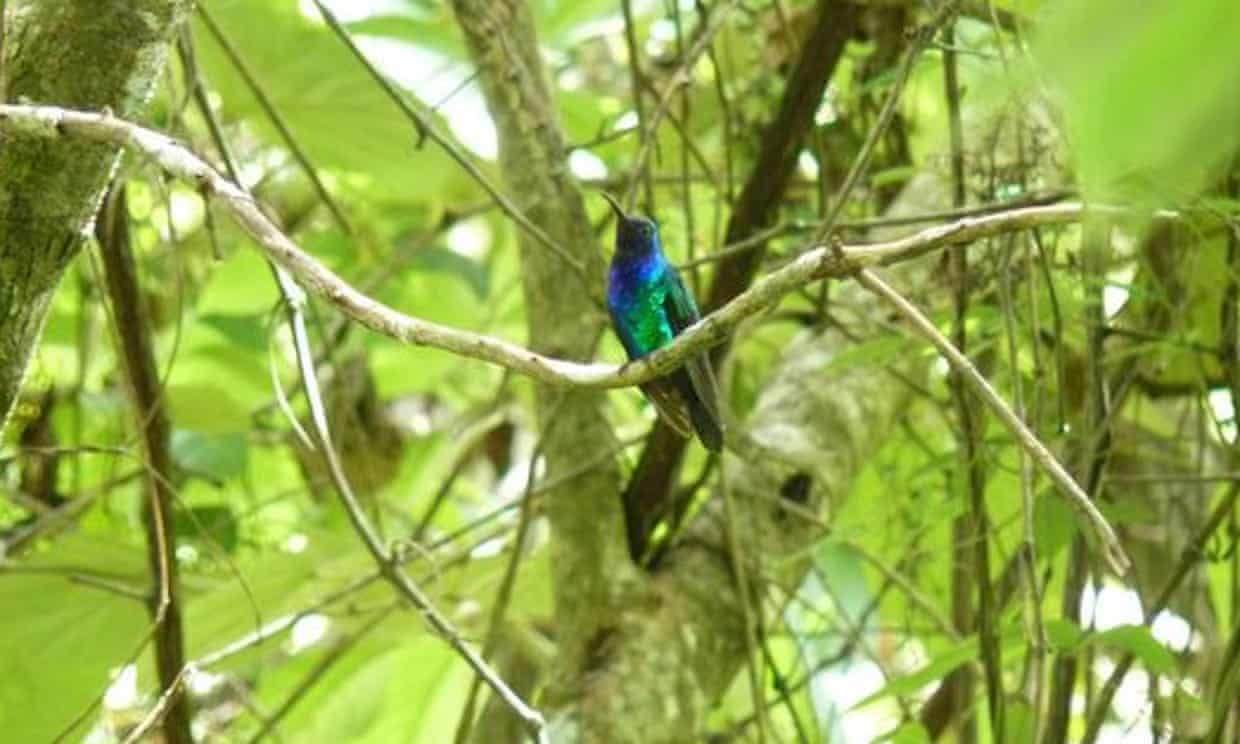
Photo: Yurgen Vega/Selva/ProCAT.
The rediscovered Santa Marta sabrewing. It is only the third time the species has been documented: the first was in 1946 and the second in 2010. 

As exciting as space exploration is, there are also exciting discoveries being made on Planet Earth — from ancient civilizations revealed by drought to rare birds showing up after many years.

Graeme Green writes at the Guardian, “A rare hummingbird has been rediscovered by a birdwatcher in Colombia after going missing for more than a decade.

“The Santa Marta sabrewing, a large hummingbird only found in Colombia’s Sierra Nevada de Santa Marta mountains, was last seen in 2010 and scientists feared the species might be extinct as the tropical forests it inhabited have largely been cleared for agriculture.

“But ornithologists are celebrating the rediscovery of Campylopterus phainopeplus after an experienced local birdwatcher captured one on camera. It is only the third time the species has been documented: the first was in 1946 and the second in 2010, when researchers captured the first photos of the species in the wild.

“Yurgen Vega, who spotted the hummingbird while working with the conservation organizations SelvaProCAT Colombia and World Parrot Trust to survey endemic birds in Sierra Nevada de Santa Marta, said he felt ‘overcome with emotion’ when he saw the bird.

“ ‘The sighting was a complete surprise,’ he said. ‘When I first saw the hummingbird I immediately thought of the Santa Marta sabrewing. I couldn’t believe it was waiting there for me to take out my camera and start shooting. I was almost convinced it was the species, but because I felt so overcome by emotion, I preferred to be cautious; it could’ve been the Lazuline sabrewing, which is often confused with Santa Marta sabrewing. But once we saw the pictures, we knew it was true.’

“The Santa Marta sabrewing is listed as critically endangered on the IUCN red list of threatened species and features in the Top 10 ‘most wanted’ list in the conservation organization Re:wild’s Search for Lost Birds, a worldwide effort to find species that have not been seen for more than 10 years. The bird is so rare and elusive that John C Mittermeier, the director of threatened species outreach at American Bird Conservancy, likened the sighting to ‘seeing a phantom.’

“The hummingbird Vega saw was a male, identified by its emerald green feathers, bright blue throat and curved black bill. It was perched on a branch, vocalising and singing, behaviour scientists think is associated with courtship and defending territory.

“The Sierra Nevada de Santa Marta in northern Colombia is home to a wealth of wildlife, including 24 bird species not found anywhere else. But scientists estimate that only 15% of the mountains’ forest is intact. It is hoped the surprise sighting of the Santa Marta sabrewing will help to protect their remaining habitat, benefiting many different species found there.

“ ‘This finding confirms that we still know very little about many of the most vulnerable and rare species out there, and it is imperative to invest more in understanding them better,’ said Esteban Botero-Delgadillo, the director of conservation science with Selva: Research for Conservation in the Neotropics. ‘It is knowledge that drives action and change – it is not possible to conserve what we do not understand.

“ ‘The next step is [to] involve people from local communities and local and regional environmental authorities, so we can begin a research and conservation program together that can have real impact.’ ” More at the Guardian, here.

By the way, the Guardian routinely covers encouraging environmental stories, including a recent one on the strengthening numbers of protected hen harriers in England. Nadeem Badshah reported here that, according to England’s conservation agency Natural England, “nearly 120 rare hen harrier chicks have fledged in England this year, the highest number for more than a century. … But conservation experts have warned that work needs to continue to tackle the illegal persecution of England’s most threatened bird of prey, which hunt red grouse chicks to feed their young, bringing them into conflict with commercial shooting estates.”

Now, there’s a riddle for you!

An App to End Food Waste

Photo: Amr Nabil/AP.
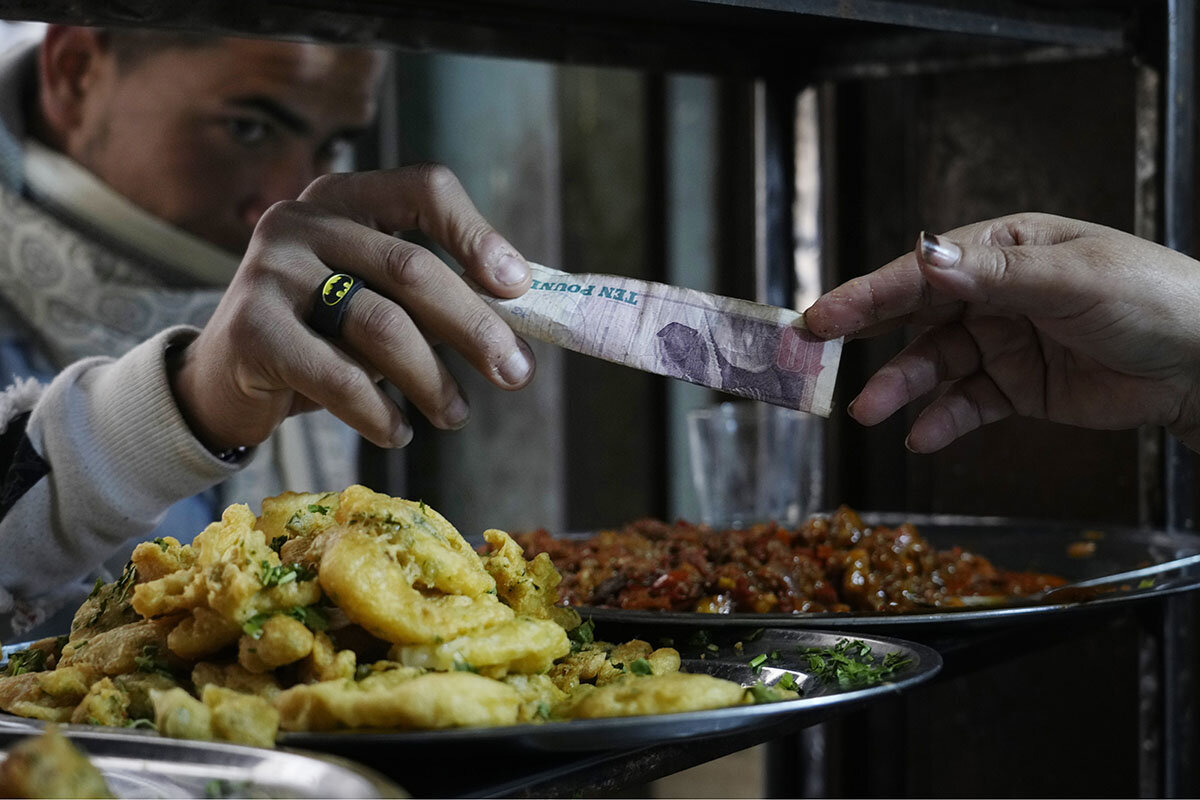
A man buys food at a popular restaurant in Cairo, March 22, 2022. The app Tekeya is working to counter food waste.

In restaurants around the world, especially in the fanciest ones, a lot of perfectly good food goes to waste because of some perceived defect. Can we find a better solution than throwing it out?

Eman Mounir reports at the Christian Science Monitor about a new app in Egypt to deal with food waste.

“Early one morning, servers at the Al-Aseel Al-Dimishqi restaurant began their usual preparations for the day. They laid out rows of baklava, kunafa, and other syrup-drenched, nut-stuffed delectables. But the offerings weren’t for customers who flock to the upscale New Cairo suburb. 

“Instead, within an hour, staff from an organization called Tekeya had arrived to whisk away 135 portions of perfectly edible dishes.

“The reason? The desserts – made a day earlier – weren’t considered fresh enough to dish up. 

“Throughout Egypt, which boasts a rich culinary history, such views aren’t uncommon. … Now, though, amid a global reckoning over the food chain and its role in the climate crisis, attitudes in Egypt are slowly changing. 

“The Al-Aseel restaurant is one of around a dozen across the Egyptian capital that Tekeya staff visits each day in a quest to stop fit-for-consumption food from being dumped. Restaurants pay a small annual fee that allows them to alert Tekeya whenever they have unsold food. Personal users of the app can then buy that food at half-price, or either the restaurant or the user can request Tekeya  deliver the food to a food bank or charity of their choosing. In total, up to 40 plates are saved from going to the trash each day. …

“Tekeya, which was inspired in part by the rituals around Ramadan, is the first such app in Egypt, where poor nutrition and undernourishment account for up to 55% of annual child deaths.  

“ ‘I’ve seen several platforms helping fight food waste across Europe. It’s uplifting to find one that does the same here in Egypt,’ says Al-Aseel’s manager, Ramez Abo Abed, who has been using the app for three years.

“In 2019, Menna Shahin had an idea particularly inspired by Ramadan, the Muslim holiday when the devout give to poor people and fast throughout the day. That prompts both celebration and waste. Since fasts are eventually broken with lavish meals at dusk, demand for food commodities soars by up to a third, and waste, in turn, also multiplies. 

“ ‘I would put so much thought into how to dispose of [food] responsibly without harming the environment, and how to minimize my excess usage,’ Ms. Shahin says. ‘I thought to myself, why not assist everyone to dispose of their excess food wisely?’

“Ms. Shahin ended up co-founding Tekeya along with her husband, Max Hartzen. By Tekeya’s second Ramadan, some 10,000 discounted meals were ordered during the holy month, with users choosing to donate roughly a quarter of those to charities.

“Now a 15-member team, Tekeya continues to face the stigma associated with ‘leftover food,’ says Aya Magdy, the startup’s account manager. ‘People presume that it’s food that has gone bad, making it difficult to convince them to buy or donate it.’

“Traditional Egyptian fare includes delicately spiced falafel served piping hot, while koshary, a staple street food, provides a hearty kick through mixing rice and pasta with fresh onions, tomatoes, garlic, chili, lentils, chickpeas, and a dazzling array of spices – these and other classic dishes almost all require freshly chopped ingredients. 

“But there’s a growing awareness of the impact of food waste on the environment. When food is thrown out, it rots and creates methane, a greenhouse gas that is almost 30 times as potent as carbon dioxide. To date, Tekeya counts at least 45,000 meals it has saved from ending up in landfills – preventing the equivalent of 133,000 kilograms (about 293,000 pounds) of carbon dioxide from being released into the environment, Ms. Shahin says.

“The team also works hard to guarantee the quality of the food it passes on, carrying out regular checkups amid stringent requirements. And because trust is such a big factor, if clients complain that the food from a restaurant is too stale or otherwise unsatisfactory, collaboration is immediately terminated.   

“The number of users has climbed steadily. The app now has more than 50,000 subscribers and 120 food suppliers in Cairo. And users tend to be conscientious themselves. Sara Harfoush, a teaching assistant in Cairo University’s Faculty of Economics and Political Science, was initially skeptical, so she conducted her own trials to gauge quality. After ordering off the app several times – and finding it satisfactory each time – she began buying food cheaply to donate to those in need. …

“The idea is catching on with well-known brands. Alban Khalifa, a dairy shop with multiple branches across Cairo, has been reducing food waste and financial losses through Tekeya for nearly two years. Regulars know they can snap up half-price puddings through the app at the close of day.

“That food would otherwise join the tens of thousands of tons of ingredients overflowing from trash cans on many streets of Cairo. In rural areas, heaps of discarded vegetables and harvests rot in the sun, attracting stray animals.

“There are other draws beyond environmental and sanitation concerns. Soaring inflation and another round of currency devaluation in March have further squeezed citizens in a country where a third of the population is classified as low-income earners. 

“Mohamed Refaat, a pharmacist in Cairo, says he quickly became a regular user after learning about Tekeya. The combination of contributing to saving the environment and getting good food at a discount is, he says, ‘very attractive to any user given the soaring prices and rising inflation rates.’ ”

More at the Monitor, here.

For Love of a Theme Park

Photo: Vitor Fontes/Unsplash.
Abandoned amusement park in Berlin, Germany.

In June, I read an amusing mystery in which an abandoned theme park on an island off the Delaware coast played a major role. The silent structures made a nice, creepy setting for a complicated story. Abandoned parks are inherently mysterious.

Brigit Benestante at National Public Radio recently shared some thoughts on theme parks of yesteryear.

“There’s something romantic, a bit sad, and strangely enthralling about the failure of a theme park,” she says. “Growing up in Houston, the memory of the AstroWorld amusement park loomed like a ghost. The park officially shut its doors a day before my 10th birthday in 2005, and it was soon demolished to make way for a parking lot.

“Something about the sight of abandoned and dilapidated theme parks was fascinating — and apparently I wasn’t alone.

“As it turns out, there’s an entire community of people captivated with defunct, abandoned or retired theme parks and attractions around the world. This community is inextricably linked with the broader abandoned community — enthusiasts of deserted structures of all kinds, including closed malls, shuttered Blockbusters, and crumbling Gilded Age theaters.

“My first encounter with this community was in 2014 when I discovered the YouTube channel Bright Sun Films, run by Ontario documentarian Jake Williams. Williams’ content largely centers around abandoned or canceled businesses, concepts and, yes, theme parks. It was here that I first watched a video about Disney’s infamous abandoned water park, River Country.

“River Country opened at Disney World in the 1970s as the world’s first fully themed water park. After closing in 2001, the park sat abandoned for years.

Dried-up pools, slides to nowhere and themed attractions overtaken by the elements allured urban explorers.

“Although Disney tried its best to keep people out, explorers and photographers found creative ways to break in, sharing photos that looked post-apocalyptic. I was hooked.

“I started watching other YouTube channels dedicated to amusement park failures, most notably, Defunctland. Defunctland, created and hosted by Kevin Perjurer, has videos covering all aspects of defunct amusement: former rides, hotels, parks, concepts and ticketing systems.

“One of Perjurer’s most recent videos, Disney’s FastPass: A Complicated History, is more than 90 minutes long and is truthfully one of the most well-rounded and comprehensive investigations I’ve ever seen. …

“So what makes this content about abandoned structures so fascinating to so many people?

” ‘For some, it can represent the conclusion of their childhood, but for me, I think it’s the unprecedented and truly surreal sight of seeing something that had been enjoyed by so many people just decay away,’ said Williams of Bright Sun Films. ‘People will always have fond memories of these places, and the idea that in some tangible way they still exist — well, that’s a really powerful and poignant concept I love exploring.’ …

“The pedestrian bridge I remember crossing each time I visited AstroWorld is one of the few original structures that remains. I have vivid memories of crossing over the bridge that connected AstroWorld’s parking lot, situated on one side of Houston’s South Loop freeway, to the main attractions on the other side. I remember seeing the roller coasters and flags in the distance as my heart raced with anticipation.

“There’s something so fascinating about exploring the life and demise of theme parks — the familiar taste of nostalgia, the fact that everything has an end, the unforgiving churn of capitalism and the loss of beloved structures.

“I can’t say what draws me to these videos and discussions. I suspect that it’s a way to properly say goodbye to something that so many people once loved, as Williams said; a way to honor the things that once brought crowds joy in the form of delighted screams and deep-fried treats.”

More at NPR, here. Please share any special memories you have of theme parks, defunct or ongoing. I have always been afraid of the rides so my visits to such parks is more along the line of the Minnesota Renaissance Festival, where I once bought a whisk broom I still use.

That Bridge Language

Photo: Henri Caudevelle (1861–1936)
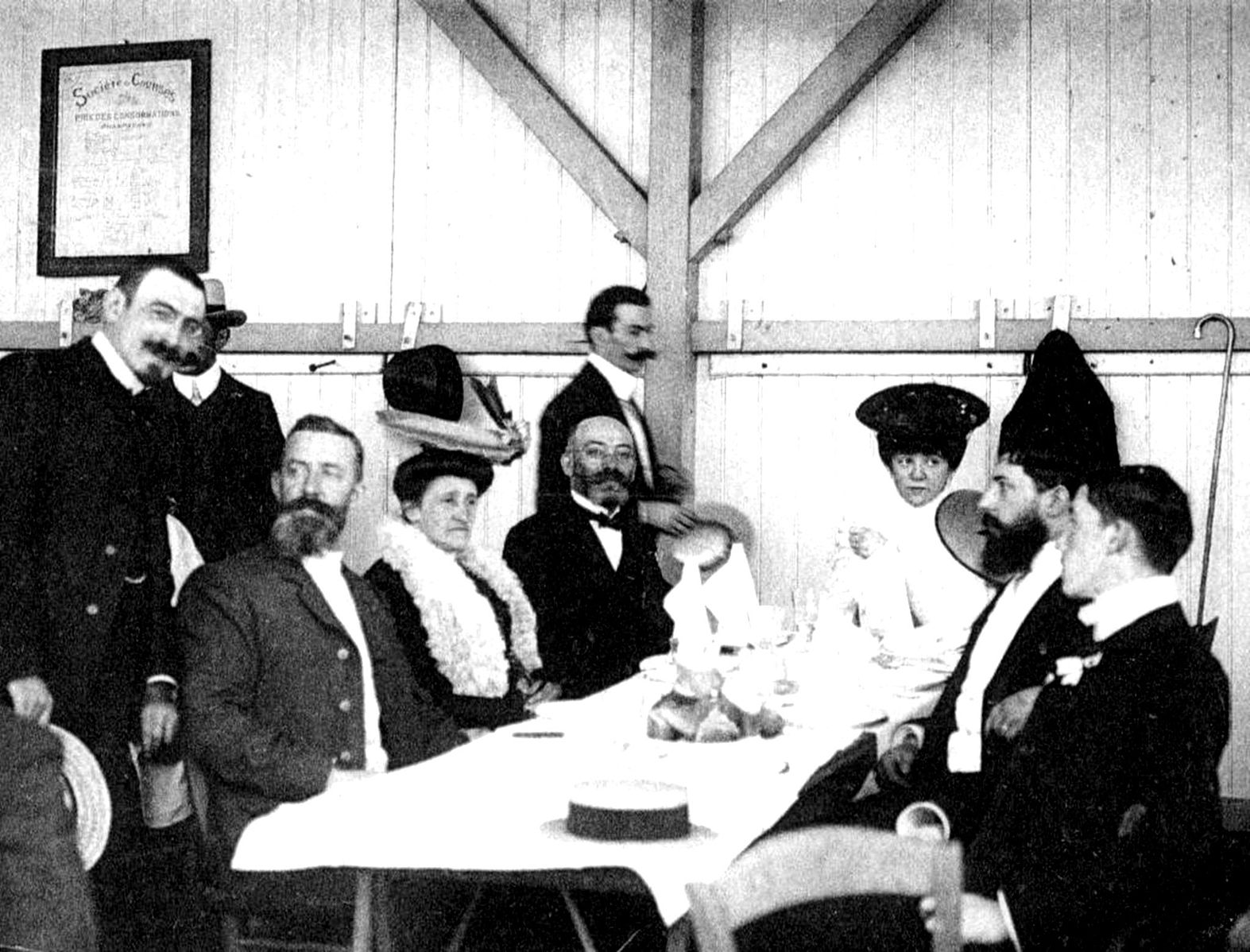
Zamenhof and Michaux families at the first Esperanto Congress, Boulogne 1905 (Familioj Zamenhof kaj Michaux ĉe la 1-a Universala Kongreso de Esperanto en Bulonjo-ĉe-maro en Aŭgusto 1905).

As some readers know, I used to be quite involved in spreading the word about the “bridge” language called Esperanto. So although I don’t use it these days, I am always interested in stories about it that pop up on the internet. Joshua Holzer, assistant professor of political science at Westminster College in Fulton, Missouri, wrote about Esperanto for the Conversation recently.

“In the late 1800s, the city of Białystok – which was once Polish, then Prussian, then Russian, and is today again part of Poland – was a hub of diversity, with large numbers of Poles, Germans, Russians and Yiddish-speaking Ashkanazi Jews. Each group spoke a different language and viewed members of the other communities with suspicion.

“For years, L.L. Zamenhof – a Jewish man from Białystok who had trained as a doctor in Moscow – had dreamed of a way for diverse groups of people to communicate easily and peacefully.

“On July 26, 1887, he published what is now referred to as Unua Libro, or First Book, which introduced and described Esperanto, a language he had spent years designing in hopes of promoting peace among the people of the world.

“Esperanto’s vocabulary is mostly drawn from English, French, German, Greek, Italian, Latin, Polish, Russian and Yiddish, as these were the languages that Zamenhof was most familiar with. Grammatically, Esperanto was primarily influenced by European languages, but interestingly, some of Esperanto’s innovations bear a striking resemblance to features found in some Asian languages, such as Chinese. …

“The promise of peace through a shared language has not yet caught on widely, but there are perhaps as many as 2 million Esperanto speakers worldwide. And it’s still spreading, if slowly.

“Having grown up in the multicultural but distrusting environment of Białystok, Zamenhof dedicated his life to constructing a language that he hoped could help foster harmony between groups.

The goal wasn’t to replace anyone’s first language. Rather, Esperanto would serve as a universal second language that would help promote international understanding – and hopefully peace.

“Esperanto is easy to learn. Nouns do not have grammatical gender, so you never have to wonder whether a table is masculine or feminine. There are no irregular verbs, so you don’t have to memorize complex conjugation tables. Also, the spelling is entirely phonetic, so you’ll never be confused by silent letters or letters that make different sounds in different contexts.

“In Unua Libro, Zamenhof outlined Esperanto’s 16 basic rules and provided a dictionary. This book was translated into more than a dozen languages, and at the beginning of each edition, Zamenhof permanently renounced all personal rights to his creation and declared Esperanto to be ‘the property of society.’ …

“Between 1907 and his death in 1917, Zamenhof received 14 nominations for the Nobel Peace Prize, though he never won the award. …

“After World War I, the League of Nations – the predecessor to the United Nations – was founded in hopes of preventing future conflict. Shortly thereafter, the Iranian delegate to the League of Nations proposed that Esperanto be adopted as the language of international relations.

“However, this proposal was vetoed by the French delegate, who feared that the French language would lose its position of prestige in diplomacy. In 1922, the French government went a step further and banned the teaching of Esperanto at all French universities for supposedly being a tool to spread communistic propaganda.

“Ironically, life behind the Iron Curtain wasn’t much easier for Esperanto speakers. In the Soviet Union, Esperantists were alleged to be part of an ‘international espionage organization.’ Many were persecuted and later perished during Stalin’s Great Purge. … During the Third Reich, the Gestapo received specific orders to search for the descendants of Zamenhof. All three of his children died in the Holocaust – as did many Esperanto speakers.

Despite such events, in 1954 the United Nations Educational, Scientific and Cultural Organization, better known as UNESCO, passed a resolution recognizing – and entering into a relationship with – the Universal Esperanto Association, which opened the door for the Esperanto movement to be represented at UNESCO events pertaining to language.

“In 1985, UNESCO passed a resolution encouraging countries to add Esperanto to their school curricula. For yearsChina has offered Esperanto as a foreign language option at several of its universities, one of which houses an Esperanto museum. There is now a program in interlinguistics offered at Adam Mickiewicz University in Poland that’s taught in Esperanto.”

More at the Conversation, here. No firewall.

Just for fun, listen to a guy sing the Dolly Parton song “Jolene” in Esperanto.

Accidental Paleontologists

Photo: Tadek Kurpaski.
A sauropod at the Carnegie Museum in Pittsburgh, Pennsylvania.

Who doesn’t love a dinosaur — at least, now that dinosaurs are extinct? Wouldn’t it be fun to discover evidence of one like the people in today’s story? At the Washington Post, Dave Kindy reports that In recent years, a number of major dinosaur finds have occurred by happenstance.

“A diner sitting in the outdoor courtyard of a small restaurant in China’s Sichuan province happened to look down at the ground and spot something unusual. It appeared to be a dinosaur footprint.

“[In July], Chinese paleontologists confirmed that the diner was right. The depressions had in fact been left by two dinosaurs. …

“Using a 3D scanner, scientists determined that the tracks were made by sauropods — large herbivorous dinosaurs with long necks and four legs. According to Lida Xing, a paleontologist at China University of Geosciences who led the team investigating the site, these footprints were probably made by the species Titanosauriformes. The footprints are about 22 inches long on average, and the dinosaurs probably measured about 26 feet long and weighed more than 2,000 pounds, Xing told the Washington Post.

“While not an everyday occurrence, the discovery of dinosaur footprints happens on occasion in China — just not in urban environments.

“ ‘Sauropod tracks are not rare in Sichuan Basin … but they are very [rarely] found in restaurants in downtown,’ Xing said in an email. …

“But this wasn’t the first accidental discovery of dinosaur remnants in recent years. Take, for example, the case of Mark McMenamin, who was walking across the campus of the University of Massachusetts at Amherst last year. He and his wife collected stones at a construction site, then later noticed one of them appeared to be a fossil. It was, in fact, the elbow bone of a 30-foot-long predatory dinosaur known as a neotheropod. …

“Then there was the discovery of a well-preserved dinosaur ‘corpse,’ unearthed by miners in Canada. While excavating at the Suncor Millennium Mine in Alberta in 2011, they stumbled upon the fossilized remains of a Nodosaurus, a heavily armored creature. … Displayed for the first time in 2017, it is considered one of the best-preserved dinosaur fossils ever found.

So complete are the remains that scientists at the Royal Tyrrell Museum in Alberta were able to examine the contents of its stomach, including twigs, leaves, mosses, pollen and spores.

“Last year, archaeologist Marie Woods was looking for clams on the beach in Yorkshire, England, when she spotted something unusual: the [footprint] of a species of theropod. A dinosaur similar to a Tyrannosaurus rex, this ancient reptile also stood on two legs and was carnivorous. It was the largest footprint of its kind ever found in that part of England, reported the Good News Network. …

“In 2011, paleontologists in China encountered a big rock with a fish fossil on the surface. They hauled it back to the lab, where it sat for about a year, according to New Scientist. Then the researchers decided to crack it open.

“To their amazement, they discovered inside the remains of a mother ichthyosaur [giving] birth to three babies. One was already out of the womb, another was halfway out, and the third was waiting for its chance.

“This fossil find altered the view of when dinosaurs began having live births. … Ichthyosaurs, which evolved from land-based creatures, proved that dinosaurs had moved on from egg-laying much earlier than previously believed.

“ ‘This land-style of giving birth is only possible if they inherited it from their land ancestors,’ one of the researchers told Live Science. ‘They wouldn’t do it if live birth evolved in water.’

“Back at the restaurant in Sichuan province, [the] owner was anxious that news of the primordial find would impact her business serving homestyle meals based on local cuisine. However, she has since embraced the media hype.

“ ‘She was initially concerned that she would attract a lot of curious people and affect the restaurant’s traditional customers,’ Xing wrote. ‘But now she understands the change and is ready to roll out some dinosaur track-themed treats.’ ”

I love the names of dinosaurs and how children can recite many of them at a very young age — their first introduction to ancient Greek. When John was five, he would chant dinosaur names to baby Suzanne to make her laugh. She thought they sounded funny.

More at the Post, here.

Photo: Honolulu Civil Beat.
The inside of the Hale Lanipolua Assessment Center, which is run by Hale Kipa and serves as an alternative to the Hawaii Youth Correctional Facility. 

Hawaii has a different approach to helping kids who get in trouble. There’s an understanding that girls in particular often get started in crime after serious childhood abuse — and that locking them up doesn’t solve anything. (See my 2012 post about a Boston theatrical production by former inmates that spelled out just how females can get trapped in an endless cycle of crime and punishment.)

Claire Healy writes at the Washington Post, “When Mark Patterson took over as administrator of the Hawaii Youth Correctional Facility in 2014, he inherited 500 acres of farm ranch — and the care of 26 boys and seven girls between 13 and 19 years old.

“By 2016, his facility, in Kailua, Oahu, was only holding between five and six girls at a time. And in June, the last girl left the facility. For the first time, there are no girls incarcerated in the state of Hawaii.

“Patterson said this moment is ’20 years in the making,’ and the result of a systemwide effort to divert girls from the judicial system and into trauma-based care programs. The number of incarcerated boys has also lowered significantly in the past decade, he added.

“Patterson said HYCF is a last resort — the kids there ‘have run away from programs 10 to 11 times’ and are the most vulnerable of the high-risk youth. But various state officials have agreed that ‘we no longer want to keep sending our kids to prison,’ Patterson said.

‘What I’m trying to do is end the punitive model that we have so long used for our kids, and we replace it with a therapeutic model.’

“He added, ‘Do we really have to put a child in prison because she ran away? What kind of other environment is more conducive for her to heal and be successful in the community?’

“Hawaii isn’t the only state to reach zero girls in long-term placement facilities. According to Lindsay Rosenthal, director of the Vera Institute’s Initiative to End Girls’ Incarceration, Vermont has zero long-term placement facilities for girls, and for nine months in 2020, Maine had zero incarcerated girls statewide. Since February 2021, New York City hasn’t had more than two girls in the state’s juvenile placement facility at any given time.

“This is part of a larger trend in juvenile justice reform: Since 2000, more than 1,000 juvenile facilities have closed, including two-thirds of the largest facilities. And between 2000 and 2018, youth incarceration rates dropped by more than half, according to the Square One Project, a justice reform initiative.

“But just as women are the fastest-growing prison population, the proportion of girls in juvenile detention has increased even as overall numbers have gone down. … As advocates point out, the majority of incarcerated girls are in prison for low-level offenses, often influenced by a history of abuse — as noted in various research — or systemic challenges, such as poverty.

“Rosenthal [emphasized] that a state reaching zero doesn’t necessarily reflect progress — Vermont has sent some girls to facilities in New Hampshire, and placed at least one girl into an adult prison, for example — without the presence of community-based alternative programming. HYCF is an example of a facility that has seen such an investment pay off, she said.

“Gender-focused programming is essential, Rosethal added, because of ‘the criminalization of sexual abuse.’ This legacy, she said, reaches back to colonization and slavery in the United States and has resulted in the disproportionately high incarceration rates of Black and Indigenous women and girls. …

“Patterson said the movement to replace punitive systems with trauma-informed care in Hawaii’s juvenile justice system reaches back to 2004, when Judge Karen Radius, a now-retired First Circuit Family Court judge, founded Girls Court. One of the first in the nation, the program aimed to address the specific crimes and trauma history of girls. …

“Many influential programs in the state followed the formation of Girls Court. In 2009, Project Kealahou launched as a six-year, federally funded program aimed at improving services for Hawaii’s at-risk female youth. And in 2013, Hawaii created the Juvenile Justice Reform Task Force to analyze the juvenile justice system in Hawaii and provide policy recommendations aimed at reducing the HYCF population.

“Then, in 2018, Patterson partnered with the Initiative to End Girls’ Incarceration and drafted a ’10-year strategy to get to zero.’ The overarching goal was to focus on the underlying trauma the youth were suffering from, instead of the crimes they were charged with, Patterson said.

“Before working with youths, Patterson was the warden of Hawaii’s only women’s prison, the Women’s Community Correctional Center (WCCC), across the street. He said his time there showed him how many of the women there could trace their trauma back to their home life as a child.

“That same year, he set out transitioning HYCF into the Kawailoa Youth and Family Wellness Center, remodeling the program around trauma-informed care — a framework for care providers to understand and consider the impact an individual’s trauma history has on their life and health. Today’s campus has a homeless shelter, an assessment center, a vocational program serving youths ages 15 to 24, a farm managed by a nonprofit and a high school for high-risk youths.

“Guiding this transformation was Patterson’s goal of creating a pu’uhonua — a place created within a traditional Hawaiian village for conflict resolution and forgiveness — for Hawaii’s most vulnerable youths.

“As Patterson described it, a pu’uhonua acknowledges and identifies a wrong that has been committed in the village. But unlike a punitive system, ‘we’re going to teach you how to live with the village and manage the wrong,’ he said. ‘So that you’re no longer an outcast, but you’re still welcome back.’ ”

More at the Post, here.

Theatrics

Photo: Barry Weatherall/Unsplash.
That moment before the show starts.

When I was 10, I was the understudy for Alice in Alice in Wonderland, a big deal in my life. Television director Binny Rabinowitz adapted the book and directed the show for the Antrim Players.

I never miss a chance to tell people that future star of stage, screen, and television René Auberjonois was the Gryphon. The girl who played Alice grew up to be an architect. She actually follows this blog.

Years later, John was also in a production of Alice, not to mention a variety of cool shows after that. He’s still a natural.

Theater stayed a big part of my life after that first Antrim Players show and included a few years with the Teenage Play in Ocean Beach, Fire Island, creating with other theater-loving kids, some of whom went on to fame and fortune (e.g., Tony Roberts, Michael Pressman, Lynn Lavner).

So of course I got a kick out of last night’s living-room production orchestrated by my youngest grandchild, a 7-1/2-year old writer/director. Having commandeered her older brother plus Suzanne, Erik, and me, she rehearsed each of us individually.

I was the Announcer and received a script featuring red marker and curious spellings. I was instructed to pause after each line introducing a performer and to press a button for that person’s specially composed and recorded song.

The show was called The Fantastic Tribes. It went without a hitch until the last minute, when we would have taken our bows together (in the hand-holding, swing-your-arms-up prescribed style) if I could have figured out how to continue recording while also getting myself in the frame. The dismayed director at first wanted a retake, but her brother convinced her that the look on her face when she realized the show was over was actually a perfect ending.

The iPad video evidence has been preserved for posterity and is sure to get someone in big trouble if they ever run for public office.

Everyday Cree Language

Photo: Regional Municipality of Wood Buffalo.
Stop signs in Cree and Dénesųłiné installed in Fort Chipewyan, Alberta, Canada.

Language and culture are important in so many ways, including helping individuals define for themselves and others exactly who they are. I am reminded of the made-up languages my friends and I used in childhood, especially Goose Latin. We were the only ones who understood it, and we liked being special that way.

In Canada, where residential schools once tried to strip indigenous children from their own special language, an effort is being made to give it back.

Chico Harlan and Amanda Coletta wrote about restitution of the Cree language at the Washington Post in July. I got the story via MSN.

“Lucy Johnson never spoke the Cree language when she was growing up. Her father wouldn’t allow it. He called it ‘jungle talk.’ He didn’t elaborate much until he was weeks away from dying of alcoholism. Then he told his children that he associated the language with his experience at Ermineskin residential school. …

“ ‘The more he spoke, the more punishment he received,’ Johnson said.

“It’s a legacy of Ermineskin that Johnson, now 55 and a paralegal, can’t speak the language of her people. Nor can her six siblings. Across Canada, the often brutal residential school system, designed to assimilate Indigenous people into White, European culture, succeeded in breaking the tradition of passing on languages from generation to generation — and put the survival of some in jeopardy.

“But now, 25 years after the last residential school was shuttered, some Indigenous communities [are] reviving and relearning their native languages. It’s a movement fueled by a desire to recover what has been lost, and by a sense that progress is possible. The youngest Cree didn’t attend residential schools. Unlike their parents or grandparents, they didn’t internalize the idea that speaking their language might be wrong.

“Isaiah Swampy Omeasoo, 20, studied and made himself fluent in Cree. His wife is expecting a child in February, he said, and he’ll speak to his son or daughter in the language. …

“In Maskwacîs — an area with four First Nations reserves on the Alberta prairie between Edmonton and Calgary — Cree, the most widely spoken Indigenous language in Canada, can be found written on stop signs, municipal buildings and emergency vehicles. A local radio station has Cree-speaking DJs. The school district says its mission is about ’embedding’ Cree culture and language into education — a direct response to the damage wrought by residential schools.

“But restoring a language isn’t easy. Steve Wood, the vice principal at the high school, said only six of 54 staff members can speak Cree fluently. Many in the community aren’t conversational. Robert Ward Jr., the radio station manager, says he sometimes runs into ideas on air that he can’t express because he lacks the vocabulary. He’ll admit as much on live radio, he says, with the hope that an elder will call in and help him.

“ ‘This is a language that’s been taken from us,’ he said. …

“The United States also ran what were called Indian boarding schools through much of the 19th and 20th centuries. The Interior Department is now investigating abuses in that system. …

“In 2018, the four First Nations in Maskwacîs signed an agreement with the federal government that gave them far greater control over education, allowing them to offer and design a curriculum infused with the Cree language, culture and traditions.

“Brian Wildcat, the superintendent of the Maskwacîs Education Schools Commission, said educators are planning to pilot a new curriculum in the fall with a heavy focus on the Cree language, identity and way of life. He hopes it eventually will replace the district’s current curriculum, which was written by the province. …

“Wood, the vice principal, called restoring the language a ‘monumental effort’ — and one that requires immersion. So he tries to use Cree as much as he can: when ordering a sandwich at the local Subway or filling his car up at the gas station. ‘The language has to be heard for people to pick it up,’ he said.

“It’s with the young people, he said, where he sees progress.

“ ‘We have kids that come home from our kindergarten schools who know more Cree than their parents,’ Wood said. ‘It’s a product of what transpired.’ ”

More at MSN, here.

Birds of a New Island

Photo: Chris Linder.
“Though most of [volcanic Surtsey] island is barren,” writes Hugh Powell at Living Bird, “a heart-shaped patch of green in the southwest corner supports lush growth and hundreds of bird nests.”

Anyone who has tried to combat weeds by putting black plastic under paving stones knows how futile that is. The life force has a mind of its own. Weed seeds will blow onto the plastic and colonize it within weeks.

Similarly, a brand-new island of volcanic rock that formed in the North Atlantic is in the process of creating a complex world of its own.

Hugh Powell reports at Living Bird. “Now just shy of 60 years old, the new island of Surtsey, off Iceland, holds clues to a fundamental mystery: What did the Earth look like when it was just born? How does life colonize bare rock?

“In 1963, a volcano erupted underneath the cold waters of the North Atlantic, 10 miles off Iceland’s southwest coast. The eruption lasted for four years. Eventually, the lava and ash cooled into a black-and-tan island named Surtsey, and the first fragile seeds of life started to wash ashore.

“Every year since the island came into being, scientists have visited Surtsey to track its ecological development. Visits to Surtsey require a permit — casual sightseeing stops are strictly prohibited — in order to preserve the island’s ecological integrity. Even today, a researchers’ red-roofed hut and an abandoned lighthouse foundation are the only buildings on Surtsey. …

“The scientists’ annual visits have generated a fascinating timeline of the pace of colonization by plant, bird, and even insect species.

“The first plant to arrive, a sea rocket (Cakile maritima), washed ashore in 1965, while the island was still erupting. By 1970, Black Guillemots had begun to nest, using the black volcanic cliffs as a foothold while getting their food from the sea.

“Over the next two decades, about 20 other plant species arrived, some by wind and some on the feet or in the stomachs of seabirds. A few additional birds set up nests as well, including Northern Fulmars and Black-legged Kittiwakes. But it wasn’t until 1985 that both plant and animal diversity started to shift into a higher gear, thanks to the arrival of an unexpected hero: the humble seagull. …

“Plant diversity had plateaued by the 1970s with fewer than 20 species established, and it didn’t take off again until a gull colony developed in 1986. The gulls — mostly Lesser Black-backed along with Great Black-backed, Herring, and Glaucous — carried with them not just new kinds of seeds, but also fertilizer in the form of nitrogen-rich guano.

“At first the gulls nested on bare black rock, but soon a lush green meadow encircled the colony, fed by gull droppings. By 2013 the meadow spread across 12 hectares (about 30 acres), supporting twice as much plant diversity and five times more biomass than the rest of the island. The number of plant species soared to 64 by 2007. …

“A more complex food web started to develop. Graylag Geese first arrived in 2001 and fed on the thick grasses. As insects like springtails, moths, and beetles began to thrive among the plant growth, insect-eating birds began to appear as well, such as Snow Buntings, White Wagtails, and Meadow Pipits. In 2008 the first ravens arrived, feeding in part on stolen seabird eggs.

“At almost 60 years old, Surtsey is still a geologic infant — its sister islands in Iceland’s Westman archipelago are about 40,000 years old. Researchers think much of the island will erode away. …

“The hard crater walls will become steep-sided seacliffs where murres and Razorbills will nest alongside the fulmars and kittiwakes already present. Atop the island, a thick turf will develop, dominated by just a few grass species. In perhaps a century or two, Atlantic Puffins will nest in the deep soil that develops.

“For now, researchers describe Surtsey as living in something of a golden age. Plant diversity has peaked at 64 species, but it’s beginning to decline as ecological competition starts to squeeze out some of the initial colonists. As the plant community develops, birds continue to find footholds. Some 17 species have nested here so far, with nearly 100 species recorded overall — including tired or off-course migrants for which jagged Surtsey is a welcome piece of terra firma in the North Atlantic.”

More at Living Bird, here. No firewall.

Global Rewilding

Photo: Philip Brown/Unsplash.
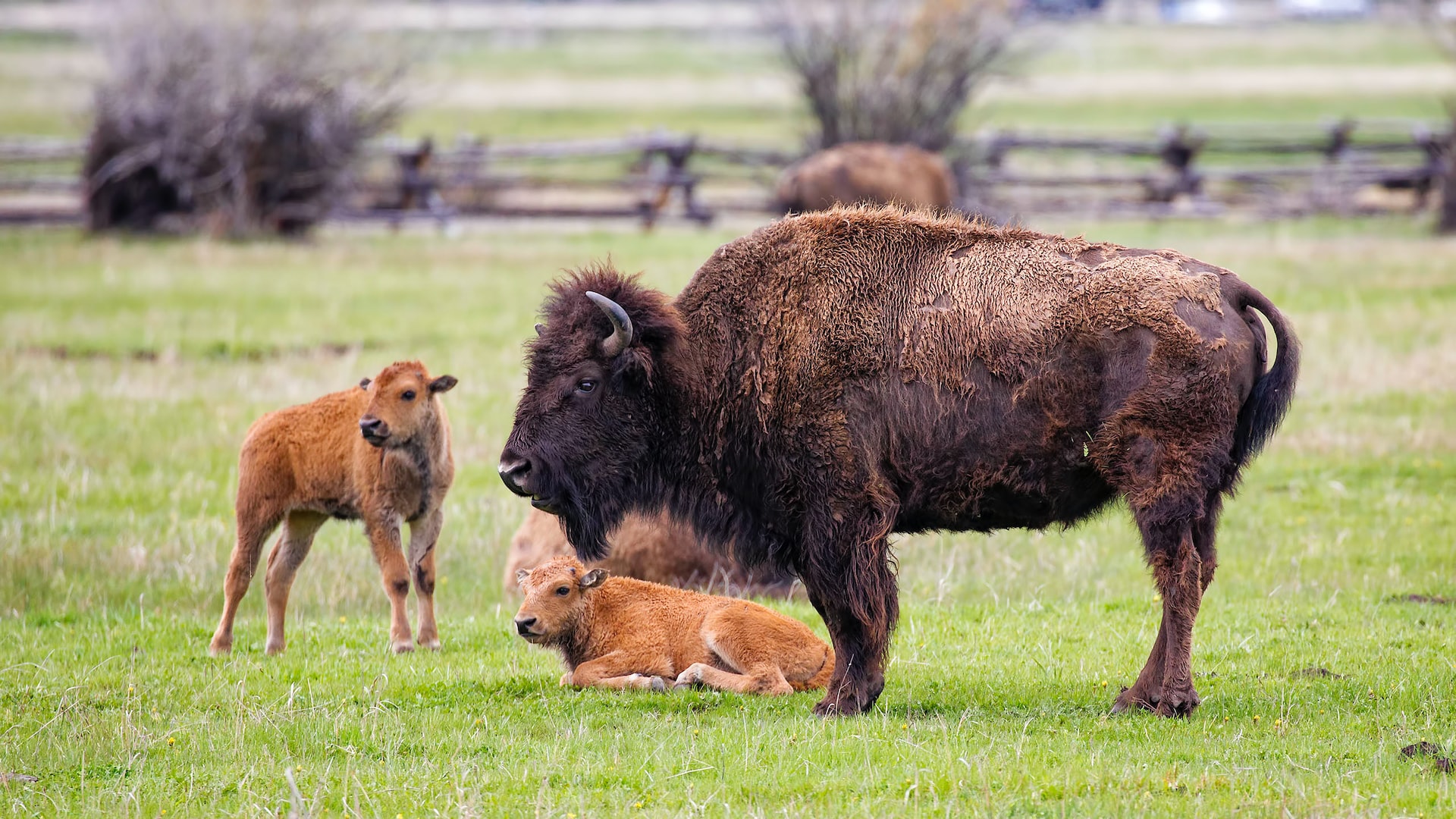
Bison are being brought back in the US West.

Recently on Twitter, @LakotaMan1 shared a photo of a rare white buffalo, sacred to some indigenous tribes. Its location was being kept secret from the modern version of those hunters who nearly wiped out bison in the West. I was excited to see Lakota Man’s picture as I remember the white buffalo in the old television show Rin Tin Tin — and even the words to the song about it.

Janet Marinelli writes at YaleEnvironment360 that large mammals like the bison are being deliberately brought back around the world to create healthier ecosystems.

“For thousands of years, bison herds thundered freely throughout the Chihuahuan Desert on both sides of what is now the U.S.-Mexico border. In November 2009, after three frantic months of chasing down the required permits, Rurik List and Nélida Barajas watched as 23 bison from Wind Cave National Park in South Dakota arrived by tractor-trailer at the Santa Teresa international cattle crossing in southeastern New Mexico.

“The animals, 20 females and three males, galloped through the dusty stockyards, across the border, and into the state of Chihuahua. A permanent herd of wild bison had been missing from Mexico for more than 150 years. ‘It’s hard to describe the feeling,’ says Barajas. ‘We were bringing the bison back home.’

“Two weeks later, 140 miles southwest of the border crossing, the bison were released from a quarantine corral at El Uno ranch, a 46,000-acre oasis of recovering grasslands in a Chihuahuan Desert landscape severely degraded by the overgrazing of domestic livestock.

“List, a conservation biologist at Mexico’s National University who had drafted the bison restoration plan for northern Mexico, and Barajas, a Nature Conservancy scientist and the ranch manager at the time, were joined by 700 government officials and local ranchers and farmers and their families to witness the event. When the gates opened, a bull led the herd into an iconic Western tableau of big sky and luminous sweeps of golden desert grasses backed by the rugged peaks of the Sierra Madre Occidental.

“Bison, which can reach six and a half feet at the shoulder and weigh as much as 2,000 pounds, are critical to the continued recovery of the desert grasslands. Unlike cattle, which graze grasses to the root, bison roam while they graze, leaving enough of each plant to enable it to continue to grow. They also wallow, sculpting depressions in the ground where water can accumulate and sustain healthy stands of grass.

In the past two or three decades, research has underscored the importance of large mammals like bison as ecosystem engineers, shaping and maintaining natural processes and sequestering large amounts of carbon.

“But the world’s large herbivores and predators continue to suffer alarming losses. Researchers estimate that almost two-thirds of the world’s large carnivores are threatened with extinction. Fewer than 6 percent of 730 ecoregions worldwide studied by scientists still have the extensive, intact large-mammal communities that were dominant 500 years ago.

“After several decades of research refining the understanding of the importance of large mammals to healthy ecosystems, scientists are now proposing a concrete plan about which herbivores and predators to reintroduce and where, and how this might best be done, given the challenges.

“In a paper published earlier this year, a global team of researchers led by the U.N. Environment Programme World Conservation Monitoring Centre and the U.S. nonprofit organization RESOLVE proposed a detailed strategy to reverse the global decline of large mammals and the ecoregions they once inhabited. …

“According to the study, published in the journal Ecography, reintroducing just 20 large mammals — 13 herbivore and seven predator species — can help biodiversity bounce back around the world and tackle climate change in the process. Among these candidates for rewilding are brown bears, bison, wild horses, jaguars, reindeer, Eurasian beavers, elk, moose, wolverines, tigers, and hippopotamuses.

“The researchers also identify 30 priority ecoregions on five continents that meet key criteria: They lack no more than one to three of the large herbivores and predators historically present, provide extensive habitat, and can feasibly be restored in the coming decade. These areas range from the flooded grasslands of South Sudan and the dry puna of the Central Andes to the xeric grasslands and shrublands of the Chihuahuan Desert, where intact communities of large mammals could be restored in the next five to 10 years, the scientists say. …

“Restoring intact communities of large mammals such as these won’t be easy. Throughout history people have feared large animals, particularly predators, justifying politically expedient measures to minimize their numbers — or even eliminate them altogether. Oregon State University researchers Christopher Wolf and William J. Ripple calculate that 64 percent of the world’s remaining large carnivores are at risk of extinction and 80 percent are declining. According to Jens-Christian Svenning, a professor of ecology at Denmark’s Aarhus University and co-author of the Ecography paper, the state of the world’s large herbivore species is almost as dire, with 59 percent of the 74 species of large herbivore species weighing 220 pounds or more threatened with extinction.

“The body of scientific literature documenting the importance of top predators and herbivores has revealed how their loss destabilizes and even unravels ecosystems. In the absence of predators, for example, populations of herbivores often explode. In the eastern U.S., deer were once kept in check by wolves and mountain lions. Today, booming deer populations are preventing keystone species such as oaks from reproducing and have literally devoured the understory habitat of hooded warblers and other birds.

“Research has also demonstrated that healthy animal populations play an important role in sequestering carbon. Yale School of the Environment ecologist Oswald J. Schmitz notes that even if we could completely stop all our emissions, switch to renewables, and stop deforestation, it wouldn’t keep global temperature rise under the tipping point of 1.5 degrees Celsius.

” ‘We have to draw out a significant amount of CO2 and store it on the planet to stabilize the temperature,’ he says. ‘Animals can help us get to this goal a lot faster.’ Schmitz and colleagues in the Global Rewilding Alliance calculate that rewilding, restoring, and conserving endangered and threatened animals could increase carbon uptake by 1.5 to 3 times or more around the world.”

More at E360, here.

Unions Resurgent

Photo: CNN.
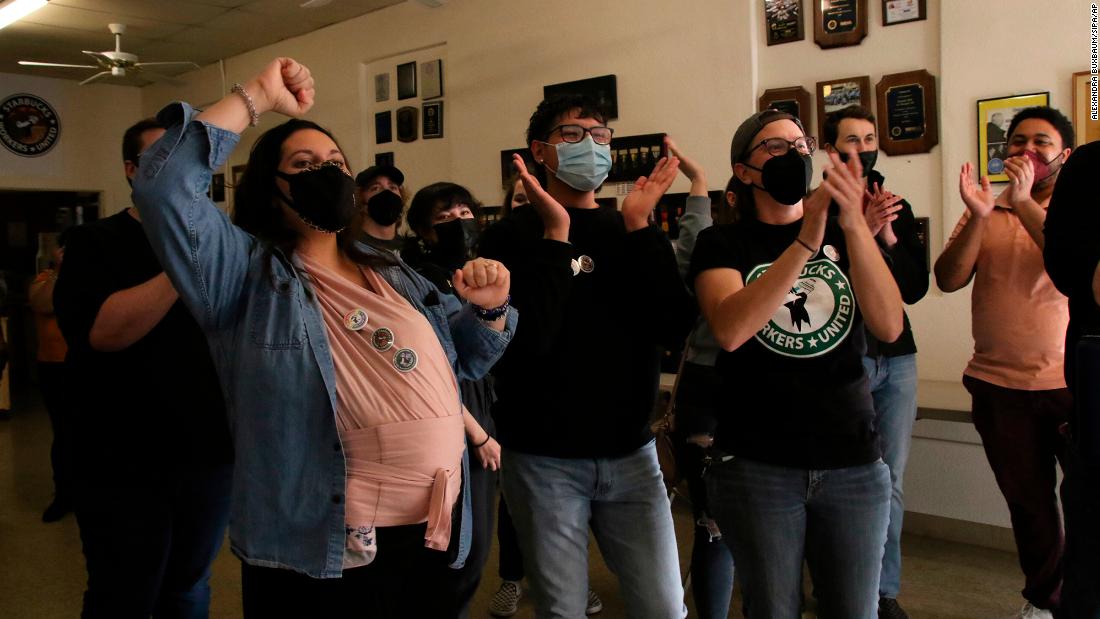
Starbucks Workers United partners celebrate a victory after watching the union vote count in Mesa, Arizona.

On Labor Day weekend, I’m thinking about traditional labor unions and how they benefited not only members but nonunion workers, too. I know there were abuses once the leaders got too powerful, but power has swung back too much in favor of corporations, I think.

So today I’m taking a look at recent actions on the fringes of the movement and pondering what it might mean for the future.

In April, Chris Isidore and Sara O’Brien of CNN reported on the relatively small but meaningful wins at Starbucks and Amazon.

“Labor unions haven’t had this much success in decades. After years of failed organizing efforts and a long, steady decline in the number of private sector workers represented by unions, two grassroots upstart groups have scored recent victories at two of the nation’s largest employers: Amazon and Starbucks. …

” ‘I think it’s very significant, even though it’s a small percentage of the workforces so far,’ said Alexander Colvin, dean of Cornell University’s Industrial and Labor Relations School. …

“The National Labor Relations Board reports that from October 2021 through last [March], 1,174 petitions were filed at the agency seeking union representation. That’s up 57% from the same period a year earlier — and the highest level of union organizing in 10 years.

“The Amazon and Starbucks victories are important to union organizing efforts, Colvin said.

“That sentiment is echoed by Chris Smalls, who went from fired Amazon employee to the the leader of the Amazon Labor Union, which recently became the first union to win a representation vote at one of Amazon’s facilities. …

” ‘I think what we did … is a catalyst for a revolution with Amazon workers, just like the Starbucks unionizing effort,’ he said on an interview on CNN+. …

“Over at Starbucks, since December workers at 17 stores from Boston to its hometown of Seattle have voted to be represented by Starbucks Workers United — a separate grassroots union effort that has filed to hold votes at more than 100 additional stores.

“Starbucks has about 235,000 workers spread across 9,000 company-operated US stores. Fewer than 1,000 workers at the 17 stores have voted for the union. It’s similar at Amazon, where some 8,300 hourly workers were eligible to vote at the Staten Island facility. That’s not even 1% of the company’s US workforce of 1.1 million employees, including both warehouse and office workers. …

“Still, the efforts seem to be having an effect. Starbucks recently announced it suspended repurchases of its stock, a move that would benefit primarily its shareholders, in order to invest more in its employees. The company also instituted two wage increases in the last 18 months, and in October said it would raise wages. …

“Many of the unions’ demands stem from the difficulties of working during the pandemic during the last two years, said John Logan, professor of labor and employment studies at San Francisco State University.

” ‘Part of what’s changed is we’re just in a different moment, [with] frontline workers feeling they were not rewarded or treated with respect during the pandemic,’ said Logan. …

“It’s an uphill battle for unions to win new members, but that doesn’t mean they can’t succeed, said Erik Loomis, a labor historian and associate professor at the University of Rhode Island.

” ‘Amazon is the GM or the US Steel of our time — and it took decades to organize those places,’ he said last month, before the vote results at Amazon were known. ‘It took many different forms of campaigns led by different ideologies, different modes of organizing … before these kind of companies were finally successfully organized.’ “

Lauren Kaori Gurley at the Washington Post had more to add in August: “Workers have voted to unionize for the first time in recent weeks at Trader Joe’s and Chipotle. Unions have also made significant inroads at AmazonStarbucksApple and REI, employers that have long resisted unionization.

“Behind these small, but notable, victories is renewed popular support among Americans for the labor movement: Seventy-one percent of Americans approve of unions, matching a 53-year high, according to a Gallup poll released Tuesday. …

“According to a monthly report released Tuesday by the Bureau of Labor Statistics, the number of people who quit their jobs remained elevated although below its peak, at 2.7 percent, as record numbers of Americans continue to reconsider their employment options. The report offered signs that workers will remain emboldened to engage in workplace activism. …

“The July jobs report shocked many economists: Employers added 528,000 jobs, shattering expectations. … Economists say tight labor markets tend to give workers more leverage to form unions and to demand higher wages and better working conditions, while downturns leave workers less willing to make collective demands of their employers.

“ ‘Unless the labor market cools off a lot, there’s going to continue to be a lot of workers demanding collective bargaining power,’ [Guy Berger, principal economist at LinkedIn] said.

“Still, even a cooling-off economy would not necessarily undo cultural shifts that have resulted in the rising popularity of unions, particularly among young, college-educated workers. …

“Despite a 56 percent uptick in filings for union elections nationwide in the first three quarters of the 2022 fiscal year, labor experts say that many of these victories at major employers such as Amazon and Starbucks are mostly symbolic, covering a mere sliver of these companies’ enormous workforces. Meanwhile, although support for unions has been steadily increasing since the pandemic, union membership in the United States declined last year; only 1 in 10 workers are union members. …

“ ‘There’s still a huge disconnect between this recent organizing wave and long-term national membership trends,’ said [Logan]. ‘The real significance of these campaigns is not in the number of new members, which is pretty meaningless, but the excitement, optimism and inspiration they generate in some sections of the labor force — especially among young, politicized, educated workers in the low-wage service sector.’ ” More at CNN, here, and the Post, here.

Underground Mosques

Photo: Tunisia Guru.
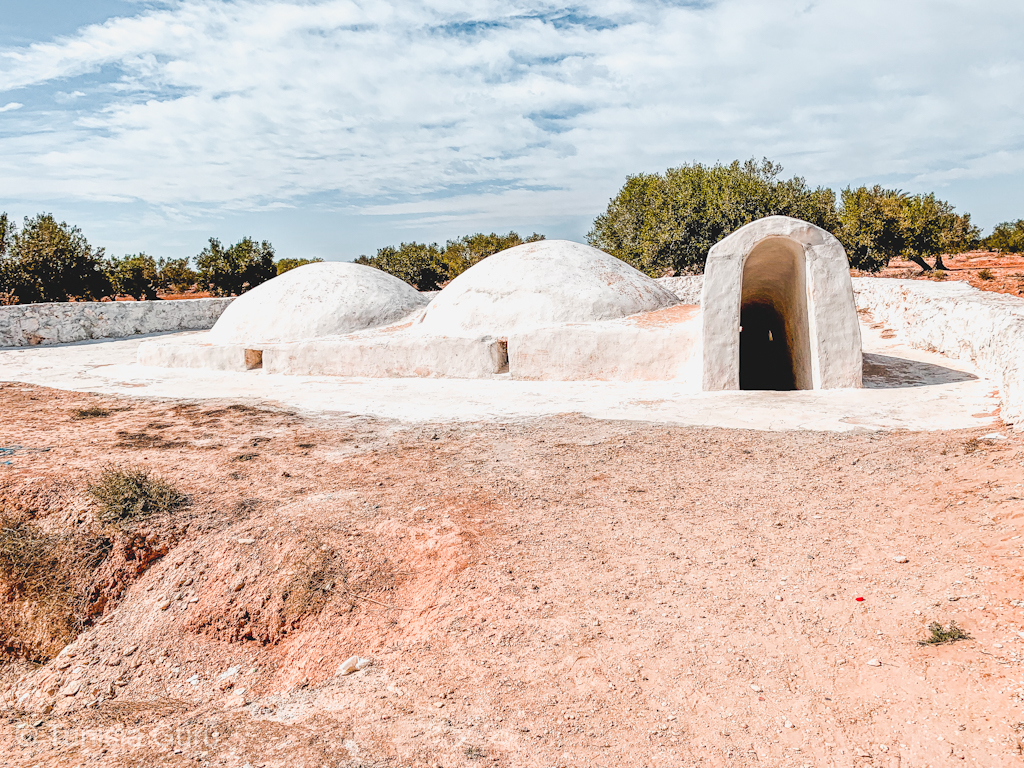
An underground mosque on the island of Djerba in Tunisia.

I got interested in finding out more about underground mosques after seeing a photo of one on the island of Djerba in Tunisia — an island thought to be the same that Homer had in mind when writing about the Lotus Eaters in the Odyssey.

An entry at Wikipedia says that underground mosques are “either erected beneath other buildings or lay freely in the ground with an inconspicuous appearance. The prayer rooms in underground mosques are usually very small, and they also have no minarets. Underground mosques are very rare. [The Djerba mosque] served as a hidden place of prayer for the Ibadis.”

From a different Wikipedia page, we learn that the mosque is near Sedouikech, Tunisia, and dates from the 12th or 13th century. “Surrounded by an olive grove, it opens to the outside by a very steep staircase that leads to the main room; next to it is a large underground tank fed by a well. Another of these underground mosques is located on the Ajim road. Not being used for worship, these mosques can be freely visited.”

An underground mosque in Turkey was built only recently, not because worshippers needed to hide like the Ibadis but because underground worship can feel peaceful.

Menekse Tokyay writes at Alarabiya, “The uniqueness of the Sancaklar mosque is that it departs from standard mosque design in a bid to break architectural taboos and encourage worshippers to focus on the essence of the religious space and on the Islamic faith. …

“Strolling around the mosque’s outdoor area, you will notice a long canopy running along one side where two olive trees and one linden tree are located. From this point, you have to descend natural stone stairs to reach the building.

“The cavernous prayer hall of the mosque is large enough to host more than 650 worshippers, while it aims to isolate believers from the outside world and invite them to delve deeper into their inner world.

“What strikes one about the Sancaklar mosque is that its design is humble and simple, perhaps to deepen worshippers’ relationship with their faith, and with this underground concept, visitors can leave behind all the challenges of the outside world. …

“Sancaklar mosque stands in Istanbul’s suburban Buyukcekmece district and is spread over an area of 1,200 square meters. The architecture combines Islamic and Ottoman designs with a modern touch, seemingly free from mainstream architectural typology.

“In 2013, out of 704 projects from 50 countries, the building won first prize in the World Architecture Festival competition for religious places. In 2015, the project was selected for the Design of the Year award, organized by the London Design Museum and it was also shortlisted among the 40 nominees for the Mies Van der Rohe Award.

“The mosque was designed by Turkish architect Emre Arolat for the Sancaklar Foundation. …

“The only decoration on the walls is the Arabic letter ‘waw’ and verse 41 of Surat al-Ahzab, a chapter in the Quran: ‘O you who have believed, remember Allah with much remembrance.’

“The main space is free of any decorative ornaments unlike many modern mosques built recently in Turkey. Daylight penetrates the prayer hall along the Qibla, or Mecca-facing, wall. …

“ Every time I come here for worship I feel an enormous [sense of] inner peace. It is also a place of meditation for me when praying under daylight infiltrating into the hall,’ Asli Karacan, a youngster living nearby, told Alarabiya.”

More at Wikipedia, here and here — also at Alarabiya, here.

Photo: Musicians In Exile.
The Glasgow Barons.

When musicians bring their music to a new country, they influence and enrich the local music scene while healing themselves from the trauma of uprooted lives. Consider Musicians in Exile, a refugee orchestra in Scotland. Malcolm Jack wrote about it for Time Out.

“When Angaddeep Singh Vig arrived in Glasgow from India as an 18-year-old asylum seeker in January 2020, without any of his beloved musical instruments, he remembers feeling like ‘a guy without a soul.’ …

” ‘Music is part and parcel of my life,’ he says, and it has been ever since his father bought him a set of tabla hand drums aged just four. By his mid-teens Singh Vig had mastered not only that instrument but also the harmonium and flute, as well as singing. He had even begun teaching music. But when he and his parents were forced to flee India due to violent persecution by criminal gangs, they left with next to nothing, arriving in a strange and faraway land unable to work, study or begin rebuilding their lives.

“More than two years later, Singh Vig lives with his mother and father in temporary accommodation in Govan, as they continue their long and agonizing wait for leave to remain in the UK. But thanks to Musicians In Exile – Glasgow’s asylum seeker and refugee orchestra – he has got his soul back, and then some.

“Started in 2019, the project is the brainchild of Paul MacAlindin, a freelance conductor who has worked with orchestras and ensembles all over the world, from the New Zealand Symphony Orchestra to the Armenian Philharmonic and the Düsseldorf Symphoniker. From 2009 to 2014, MacAlindin was music director of the National Youth Orchestra of Iraq – a maverick mission to help young musicians in the country pull themselves out of the horrors of war. ‘And it worked,’ he says, ‘until the invasion of Islamic State.’

“The orchestra collapsed, and so did MacAlindin, ‘mentally and physically,’ he says, ‘because after investing all the energy of keeping that thing alive and then having it stopped in such a dramatic fashion, I was just left completely floored.’ He moved back to his native Scotland to heal, choosing Govan purely as a cheap place to put a roof over his head. There, quite by luck, he suddenly found himself among the diverse and in many cases displaced communities of the former shipbuilding district on the south bank of the River Clyde – which is also the location of a branch of the Home Office, and thus is home to a lot of asylum seekers and refugees.

“MacAlindin founded The Glasgow Barons – an award-winning ‘regeneration orchestra’ set up to help revitalize Govan through performances in local venues by musicians of all backgrounds. Musicians in Exile grew out of that, as a way of helping to give musician asylum seekers and refugees in the area a chance to gather every Tuesday evening to sing, play and share their talents, experiences, stories and songs. …

“If members don’t have instruments, then MacAlindin – who receives funding from the People’s Postcode Trust, the Robertson Trust, and Creative Scotland Lottery – sources and buys them one, however rare it may be (he’s currently in the market for an Albanian two-string plucked instrument called a çifteli).

During lockdowns, when sessions had to be moved online, he also helped his members to buy digital devices and access to the internet so they could keep communicating and playing together.

“Through Musicians in Exile, as well as the generosity of others in his local community, Singh Vig now not only has a tabla again, but also a harmonium, a violin, a mandolin and an electric guitar (which he quickly learned to play, despite never having touched one before). ‘Now I’ve got many souls,’ he laughs. His father and mother, who are also musicians, come along to sessions too – Singh Vig credits it with helping to pull them both out of a deep malaise and, in his father’s case, even clinical depression.

“Singh Vig and Musicians In Exile have played several high-profile concerts. They included … a pre-recorded video performance for the opening of the new parliamentary session in October 2021. It was broadcast in the chamber to an audience of dignitaries including, among others, The Queen. Singh Vig was impossible to miss, sat at the centre of the ensemble in a bright red turban and denim jacket. ‘The Queen is watching me,’ he remembers thinking. ‘I cannae believe it.’ “

More at Time Out, here.

Photo: El País.
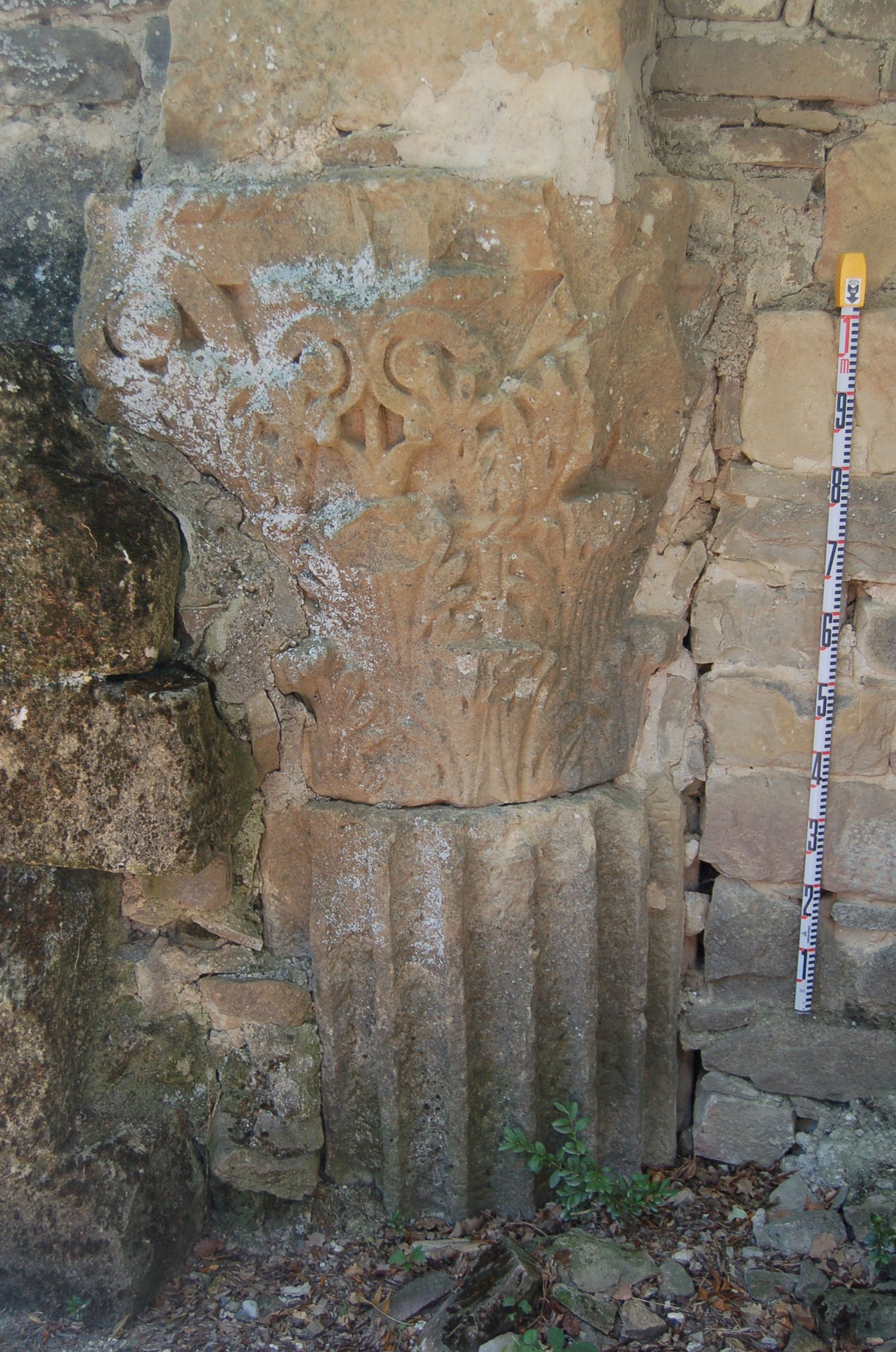
A Corinthian capital and fluted drum with a shaft located in a city discovered at the foot of the Pyrenees in 2018.

Do you ever wonder what sort of report archaeologists of a future civilization would write about your town? What if they had only the location and a few crumbled buildings to go on, no contemporary testimony? That was the plight of a group of archaeologists in Spain who investigated a “new” ancient city.

Vicente G. Olaya says at El País that archaeologists were surprised that they didn’t know the name of a recently unearthed city, but there were simply no historical documents mentioning it.

“In 2018,” he says, “the City Council of Artieda — located in northeastern Spain in the province of Zaragoza, and part of the country’s Aragon region — asked the University of Zaragoza’s Archaeology Department for help in studying some ruins located around the San Pedro hermitage, known variously as El Forau de la Tuta, Campo de la Virgen, or Campo del Royo.

“Three years later, the experts have confirmed that these sites formed a large single archaeological complex, and they detected two phases of occupation on the surface of the site: one during the imperial Roman period (the 1st to 5th centuries) and another during the early-medieval Christian era (the 9th to 13th centuries). Now, the research team has published the results in a reportEl Forau de la Tuta: A Hitherto Unknown Roman Imperial City on the Southern Slopes of the Pyrenees. …

“The report notes that based on important evidence from the ruins preserved in the hermitage, as well as artifacts held in various public and private collections and the findings at the site, the settlement was ‘of urban character — the city’s name is currently unknown — and it developed during the [Roman] imperial period. Later, the same site took on another iteration as a rural habitat during the Visigoth and early Andalusian periods.’

“The specialists have also found that, between the 9th and 13th centuries, another peasant habitat-type town or village was superimposed on top of the Roman settlement. They have identified the village as Artede, Arteda, Artieda or Arteda Ciuitate. The medieval enclave’s ruins include the apse area of the church, which was part of the San Pedro hermitage; numerous silos with circular openings, which were excavated from the subsoil and only perceptible by geo-radar; and an extensive cemetery consistent with Christian burial rites. …

“The El Forau de la Tuta site is located 1.5 kilometers from Artieda’s city center, on the fertile plain of the Aragón River. … It is possible that the site’s dimensions are even larger and that it extends to other — still unexplored — agricultural lands.

“The Roman settlement stood next to the road connecting three northern cities. … Currently known as Camino Real de Ruesta a Mianos (the High Road from Ruesta to Mianos), the road lasted through the Middle Ages as a stretch of the French Route, the Arles Way or the Via Tolosana (Tolouse Route), as part of the Way of St. James (Camino de Santiago). …

“Inside the hermitage, the study’s authors have identified two Corinthian capitals, three Italic Attic bases, a classical Attic base, several flat-edged fluted shaft drums, and a fragment of cornice. The huge dimensions and typology of the artifacts indicate that they came from several early [Roman Empire] public buildings. … 

“The study confirms that these pieces come from at least two different monuments. Their typologies indicate that they were sculpted more than half a century apart, ‘which demonstrates a prolonged period in the process of monumentalizing the city.’

“To the west of El Forau de la Tuta, next to the San Pedro ravine, ‘an impressive set of public works made of opus caementicium (the Romans’ early version of concrete) including at least four sewer outlets, a powerful massive abutment, a foundation, and a series of quadrangular structures,’ possibly supply cisterns, is also preserved. … The presence of these works is typical of urban settlements, where water drainage was a problem that had to be addressed, especially in relation to buildings, such as bath houses, that produced a large amount of water waste. …

“Archaeologists are also currently studying a sculptural fragment that is preserved in an Artieda private collection. The artifact — which was collected near the hermitage — is an incomplete, nearly life-sized left hand that holds a patera umbilicata [an offering bowl], which would have been part of a statue representing an offering figure. …

“In the first round of excavations in 2021, the archaeologists confirmed the existence of an intersection of two roads. ‘On one of the roads, possibly one of the settlement’s main streets, we documented the ruins of a sidewalk and a surface channel for draining water, which pedestrians could circumvent by means of three steppingstones.’ …

“In one of the excavations they performed, the archaeologists found ample remains of black and white mosaics made with tesserae (small cubes of stone or glass) and fragments of rudus (a layer of material placed under the tesserae). …

“Inside this structure, under a large number of slabs that fell in the building’s collapse, archaeologists found a practically complete black-and-white tessellated pavement (with some isolated red and yellow tesserae); it was extraordinarily preserved. Decorated with iconographic motifs in white on a black background, it has shells or scallops in the four corners, while the central emblem features seahorses, ridden by little Cupids, facing each other next to three representations of marine animals, a fish in the upper part and possibly two dolphins in the lower part.

“Thus, the archaeologists are certain that everything they’ve found so far ‘corresponds to a single urban complex from between the first and second centuries, and that the city had infrastructure and public monuments, including baths, a water supply system, regular urban planning, sewers, and possibly a temple.’ ” 

I can’t help thinking about the way early archaeologists (Schliemann, say, at Troy) barged in and dug at random, destroying historical records. Imagine how carefully and boringly the archaeologists in today’s story had to sift every little thing to discover the town built on top of the Roman city — and date both!

More at El País, here.