Feeds:
Posts
Comments

Posts Tagged ‘art’

fort-point-john-hanson-art

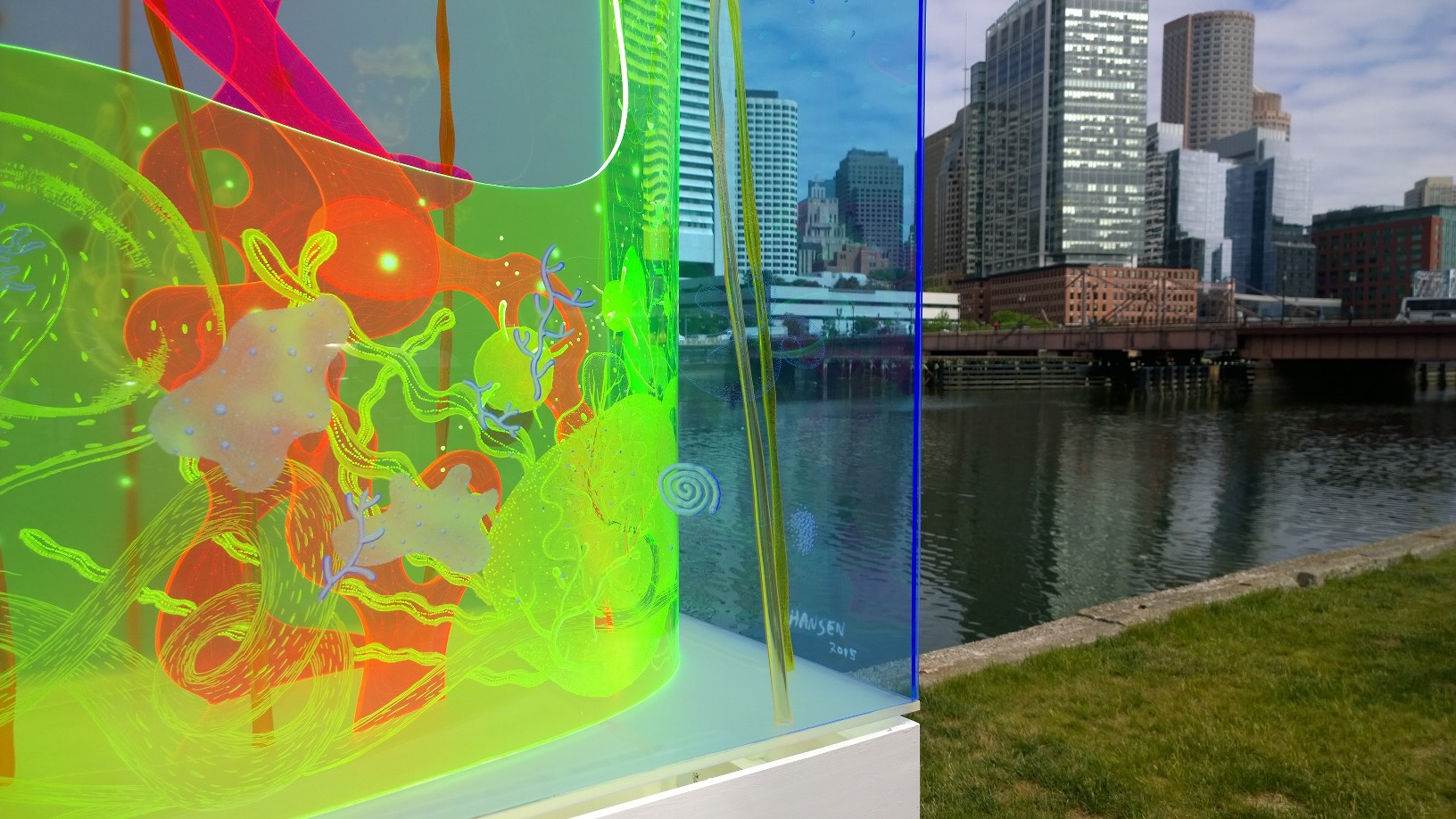
One of the many attractions of Fort Point in Boston is the ever changing array of public art. Here you see a brand new piece on Fort Point Channel: John Hanson’s “Outside the Box,” a Plexiglas sculpture with solar LED lighting.

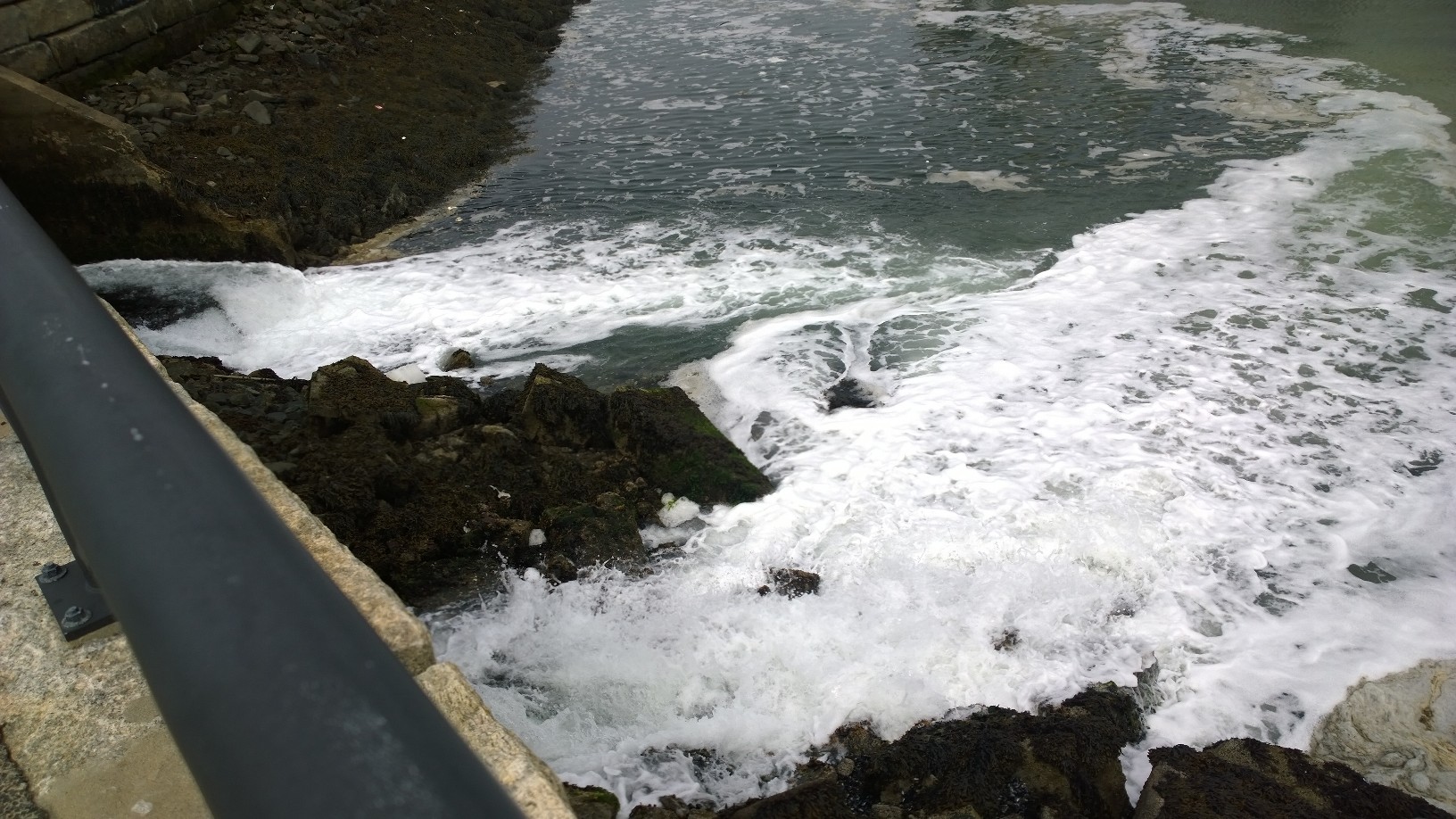
If you were to walk to the left along the channel toward Gillette, you would see water gushing out of the building into the channel and seaweed on the rocks, a reminder of how close South Boston is to the ocean and the elements. When there is a storm at high tide, the channel can overflow the walkway.

The truck in the parking lot on the other side of the walkway speaks for itself, but who can resist naming some of its contents? “This truck may contain zombies, Navy Seals, teleporters, time machines, waffle cannons, kissing booths, holograms, Himalayas …”

Would I be far off if I said I bet the truck has something to do with the nearby headquarters of the fun-loving Life is good company?

south-boston-seaweed

this-truck-may-contain

Read Full Post »

Once again, the Christian Science Monitor comes up with a story about a person creating positive change in the world.

Jessica Mendoza writes, “Behind a low, unobtrusive brick building [in Boston’s inner city] is a lush, green forest. Brown and silver-gray trees cover the building’s wall, their leafy canopies blocking the sky. Sun-dappled stones sit on tangles of grass. A boy perches on the largest rock, gazing at a distant meadow.

“On the wall’s lower left corner, the word ‘Love’ appears in bright green; opposite is the word in Spanish, ‘Amor,’ in vibrant red.

“The forest is a mural, and even in the dead of winter the 18-by-85-foot painting gives a sense of beauty, warmth, and life – qualities that artist Alex Cook tries to convey in all his work.

“ ‘Art was always a deeply spiritual thing, the most real thing in my life,’ Mr. Cook says. ‘You want to share that kind of feeling.’ …

“An artist for most of his life, Cook has painted on walls all over the United States and has even packed his brushes to travel to and paint in Kenya, Nigeria, and most recently Panajachel, Guatemala. …

“The project began in the fall of 2013 when Cook was performing in New Orleans. There he met Amy Hoyle, then a principal at a local elementary school. Ms. Hoyle was looking for new ways to engage her students and invited Cook to paint a mural on campus, based on the motto of Woodland West Elementary School: ‘Stay curious.’

“Cook delivered, painting two huge faces side by side in a strange, beautiful picture that prompted more questions than answers.

“But he did more than that. Touched by the students, many of whom were poor and had difficult home lives, Cook decided to paint something that would remind them every day of how special they were. The result was a hallway filled with a palette of colors and messages telling all who passed by that they were beautiful, needed, important, and loved. “It’s like walking through a warm hug,” Hoyle says.

Read how Cook made his projects increasingly collaborative, inspiring people from all walks of life (here).

Photo: Ann Hermes
Alex Cook stands in front of one of his large murals, an 18-by-85-foot depiction of a forest in Boston.

Read Full Post »

Here is an artist who addresses the sense of smell — and not only with lily-of-the-valley fragrance or the sea or brewing coffee.

Douglas Quenqua writes in the Science section of the NY Times that Belgian artist Peter De Cupere uses pretty much everything that has an odor.

“Peter De Cupere’s ‘Tree Virus’ sculpture wasn’t much to look at: a dead, black tree rooted in a craggy white ball suspended over a dirt pit, all of it covered by a plastic igloo. Built on a college campus in the Netherlands in 2008, the whole thing might have been leftover scenery from a Tim Burton film if it weren’t for the outrageous smell.

‘Inside the igloo, a heady mix of peppermint and black pepper saturated the air. It flooded the nose and stung the eyes. Most visitors cried; many ran away. Others seemed to enjoy it, laughing through the tears. Such is the strange power of olfactory art.

“ ‘When you walk into an installation with scent, you cannot hide. Your body starts to react,’ said Mr. De Cupere. … He is just one of several contemporary artists using odor to create art that delivers an intensely personal, emotional and sometimes physical experience. …

“Smell has an unfair advantage over the other senses when it comes to eliciting a response, researchers say. ‘There is a unique and directly intimate connection between where smell is processed in the brain and where memory is stored,” said Rachel Herz, a psychologist at Brown University and the author of The Scent of Desire: Discovering Our Enigmatic Sense of Smell. …

“Just as Proust’s madeleines opened a floodgate to childhood memories, scents can recall different feelings depending on how a person first encountered them.”

More here.

Photo: Peter De Cupere
Peter De Cupere’s “Tree Virus” sculpture, which causes many visitors to cry.

Read Full Post »

My husband is into all things Iceland and Frozen North, which led to his mentioning the other day that an island much farther north than Iceland was “where the seed bank is.”

“What seed bank?” said I, running to Wikipedia.

Wikipedia answered, “The Svalbard Global Seed Vault … is a secure seed bank on the Norwegian island of Spitsbergen … 810 mi from the North Pole. Conservationist Cary Fowler, in association with the Consultative Group on International Agricultural Research (CGIAR), started the vault to preserve a wide variety of plant seeds that are duplicate samples, or ‘spare’ copies, of seeds held in gene banks worldwide. The seed vault is an attempt to insure against the loss of seeds in other gene banks during large-scale regional or global crises. …

“The Norwegian government entirely funded the vault’s approximately … $9 million construction. Storing seeds in the vault is free to end users, with Norway and the Global Crop Diversity Trust paying for operational costs. …

“Running the length of the facility’s roof and down the front face to the entryway is an illuminated work of art that marks the location of the vault from a distance. In Norway, government-funded construction projects exceeding a certain cost must include artwork. KORO, the Norwegian State agency overseeing art in public spaces, engaged the artist Dyveke Sanne to install lighting that highlights the importance and qualities of Arctic light. The roof and vault entrance are filled with highly reflective stainless steel, mirrors, and prisms. The installation reflects polar light in the summer months, while in the winter, a network of 200 fibre-optic cables gives the piece a muted greenish-turquoise and white light.”

(You’ll forgive me for taking out all the hyperlinks for terms like “Norwegian,” “global crises,” “fibre-optic cables,” and “North Pole.” Wikipedia gets carries away with hyperlinks, but you can read the whole thing here.)

May 19, 2017 update: Uh-oh. The permafrost is melting and the safe house for seeds is starting to flood: https://www.theguardian.com/environment/2017/may/19/arctic-stronghold-of-worlds-seeds-flooded-after-permafrost-melts.

Photo: NordGen/Dag Terje Filip Endresen
Entrance to Svalbard Global Seed Vault in 2008

Read Full Post »

The Providence-based Capital Good Fund, which helps low-income folks get on their feet financially, has been testing an interesting fund-raising idea. Participating artists donate to the Capital Good Fund half the proceeds of a work that they sell through the fund’s platform. The art offerings change every few weeks. I include one example below, and there are more at https://squareup.com/market/cgfund. The selections feature a range of styles. Some works are representational, others impressionistic or abstract.

The organization’s website explains its mission: “Capital Good Fund is a nonprofit, certified Community Development Financial Institution that takes a holistic approach to fighting poverty. We offer small loans and one-on-one Financial & Health Coaching to hard-working families in America. Our mission is to provide equitable financial services that create pathways out of poverty.” More here and here.

The Rhode Island Foundation posts at its own blog about its latest partnership with the Capital Good Fund, an initiative designed to overcome the incentives that drive people to costly payday lenders. Read about that here.

Art: Carol C. Young
Barn on Robin Hill, 11″ x 11″ Giclée, limited edition signed print

Read Full Post »

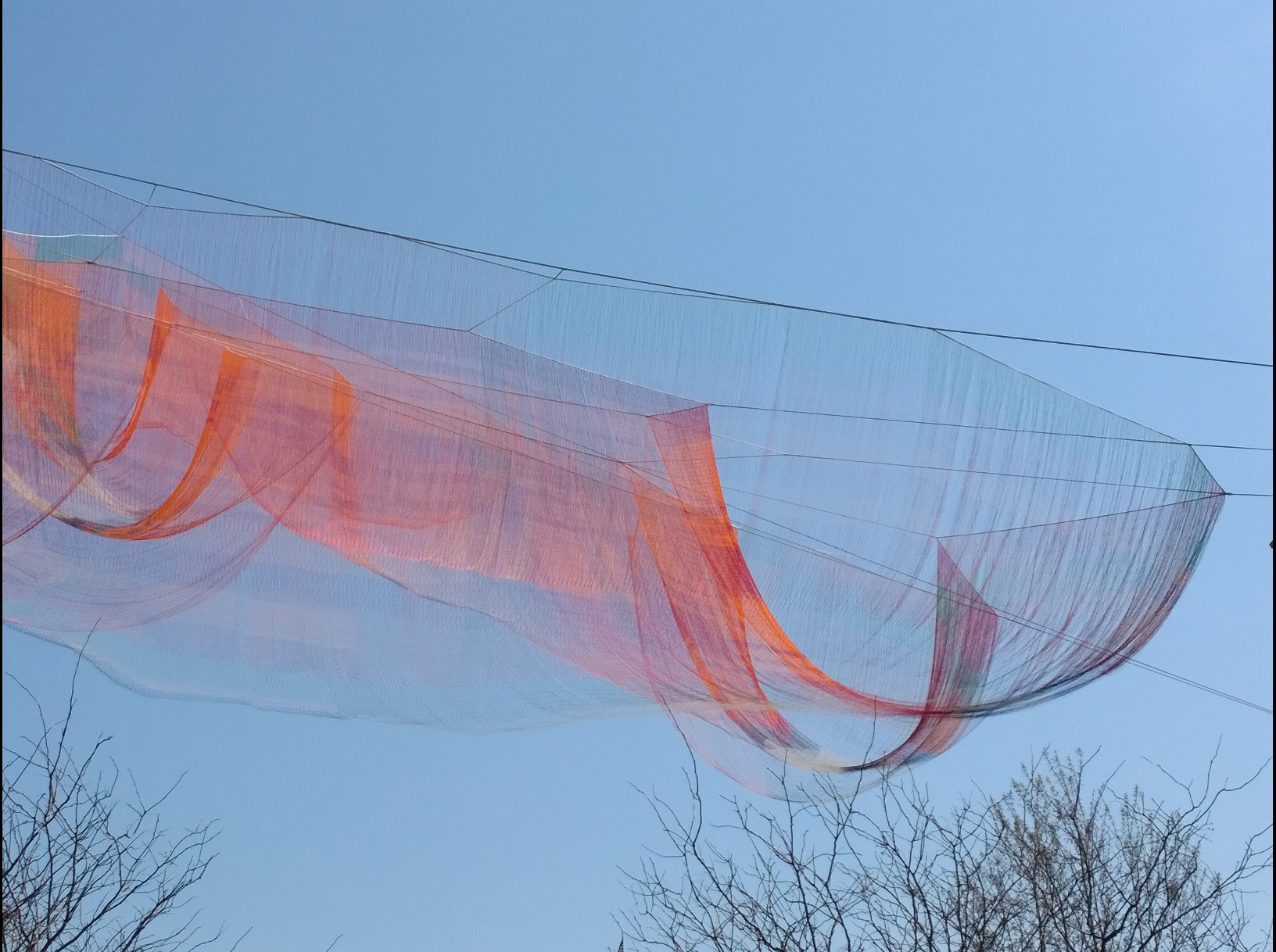
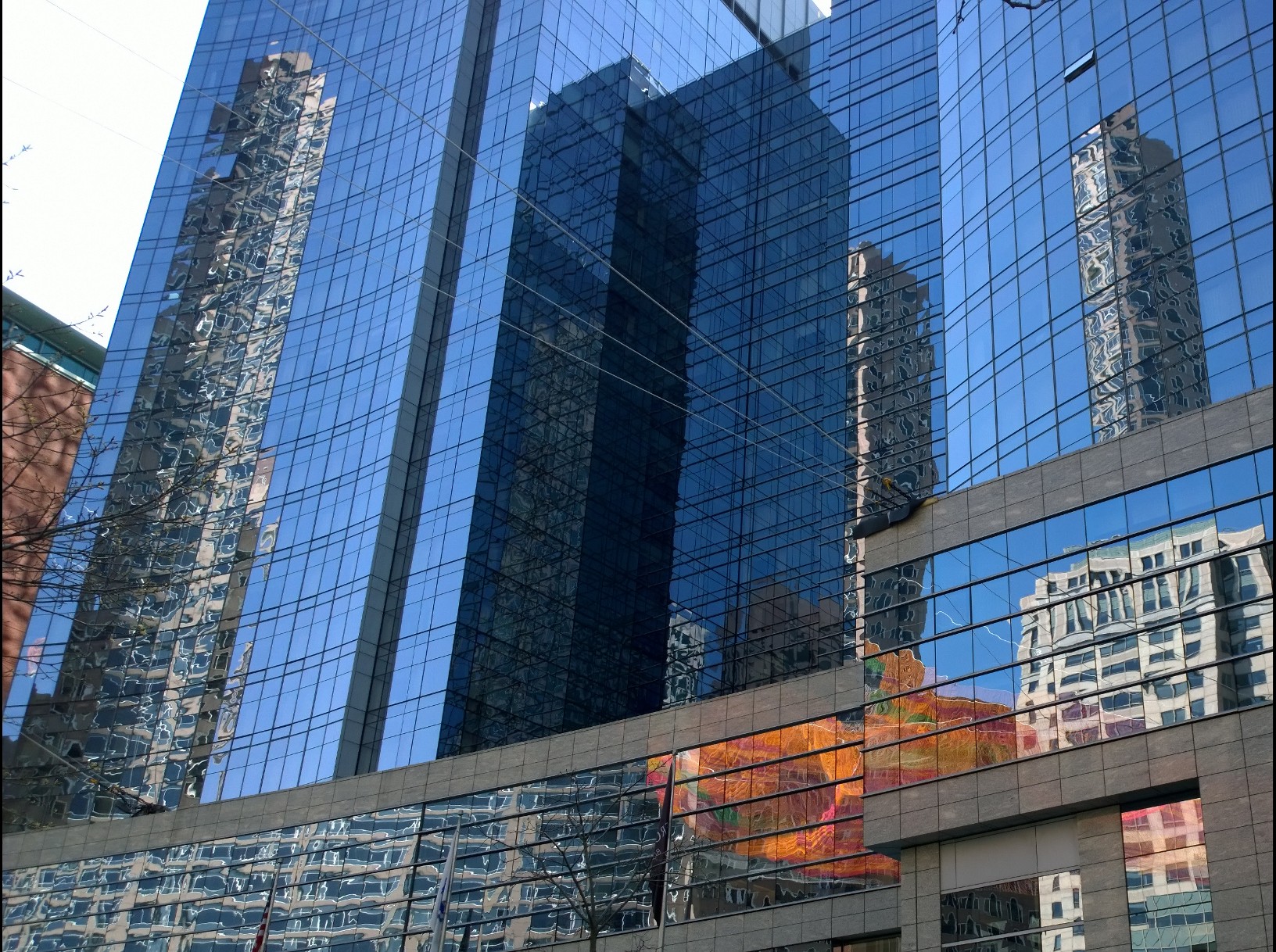
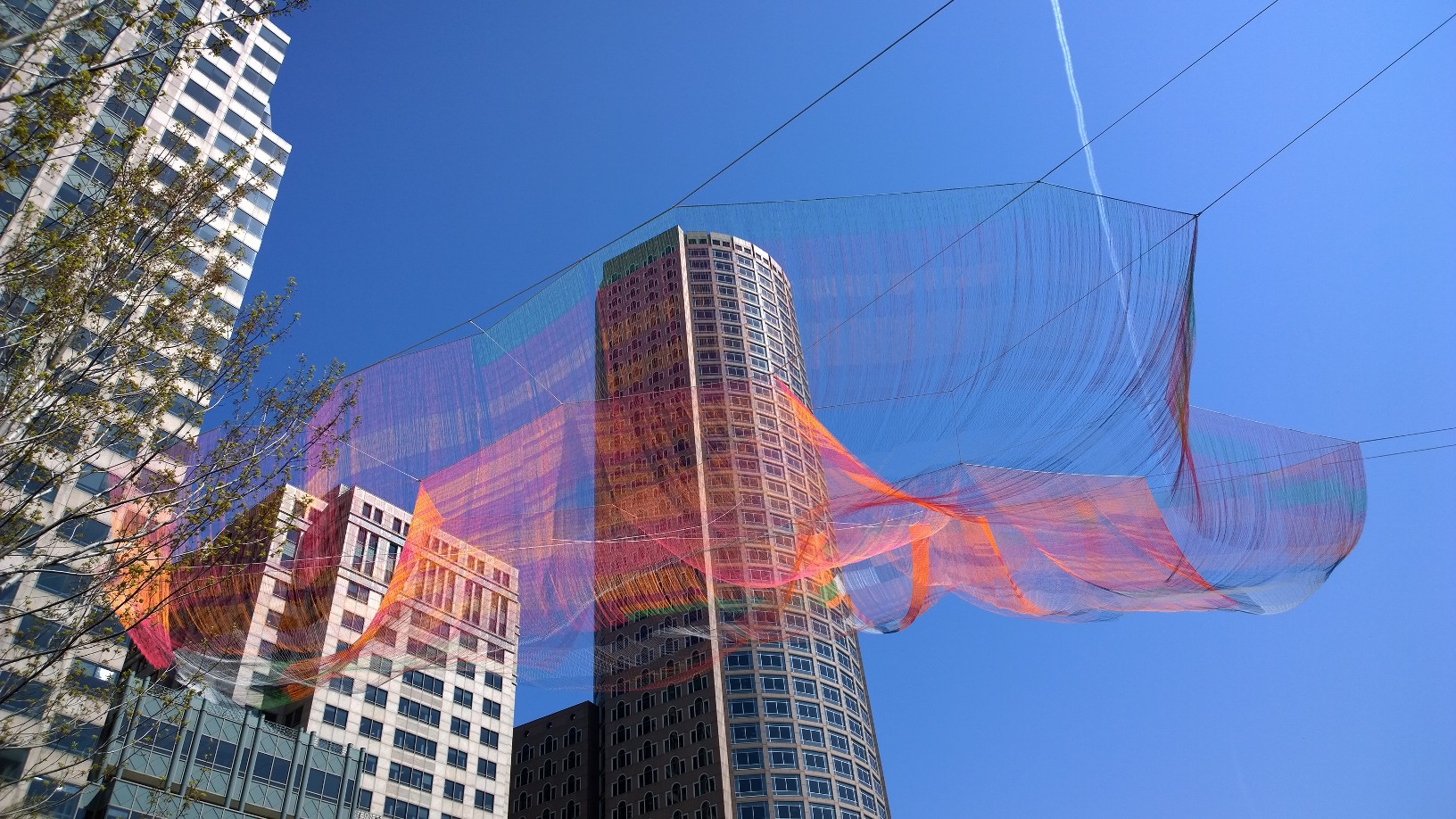
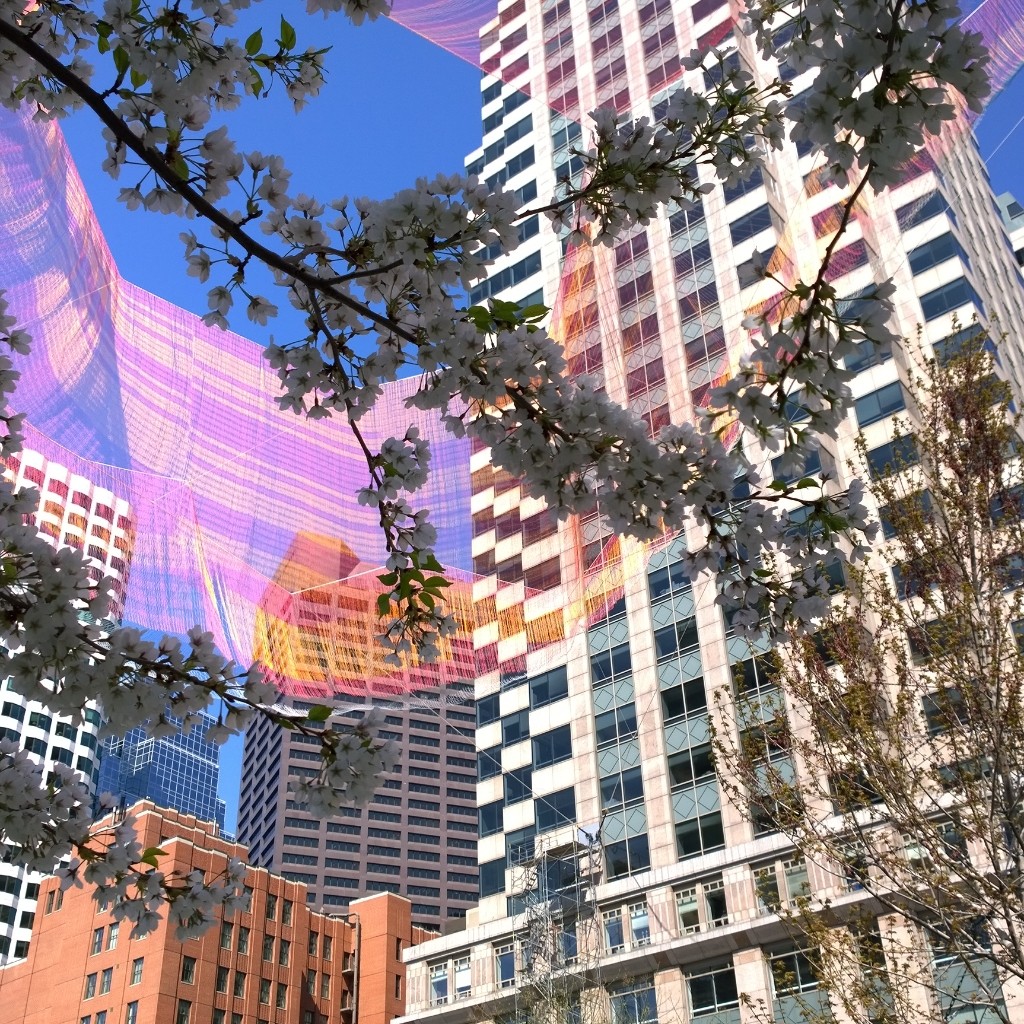
From every angle, the luminous art floating over the Rose Kennedy Greenway suggests a unique story. Fire in the sky, fishing nets for spirits, a voice saying, “look up,” magic, the Aurora Borealis. I don’t think words capture it.

Karissa Rosenfield at Architecture Daily writes, “Janet Echelman‘s latest aerial sculpture has been suspended 365 feet above Boston’s Rose Kennedy Greenway. On view through October 2015, the monumental spans 600 feet, occupying a void where an elevated highway once divided the city’s downtown from its waterfront. …

“The fluid structure is made by hand-splicing rope and knotting twine into an interconnected mesh of more than a half-million nodes. Though the rope structure is incredibly strong, it appears to be as delicate as lace, floating above the Greenway’s traffic and pedestrian park.” More at ArchDaily.com.

The locals talk a lot about making Boston “a world-class city.” The most likely route for that could be through art that embraces everyone. Walking under this sculpture and seeing people’s faces light up makes you realize that public art really is for everyone. Whether you work in one of the office buildings nearby or sleep on a park bench at night.

There’s more on Janet Echelman at her website.  Tonight they will be lighting up the sculpture.

i-will-make-you-fishers-of-men

beauty-ennobling-commerce

fire-rising-over-Boston

Magic-in-the-air

Read Full Post »

As we have noted in other posts on the subject, one of the most ephemeral forms of art is street art. Many street artists like it that way, but others hate to see the work disappear.

Deborah Vankin and Saba Hamedy write at the Los Angeles Times that Google has decided to do something about that.

“A new worldwide database of public art aims to preserve — if only in digital form — street art, a medium that is often political, sometimes renegade and, perhaps most important, frequently fleeting. These are artworks that may get tagged by graffiti or fall into decay because of weather exposure. The accessible, populist nature of the medium — buildings and sidewalks as canvases — also is what makes them vulnerable. …

” ‘You never know when a mural will be scrubbed out or painted over,’ said Lucy Schwartz, program manager for the Google Cultural Institute, the umbrella organization that this week launched an expanded version of its searchable database of photos simply called Street Art. ‘Our goal is to offer a permanent home for these works so users today and tomorrow can enjoy them and learn about them.’ …

“The project launched in June 2014 with 5,000 images and 31 partnering organizations internationally. [In March] Google added 55 partners who have helped to document more than 5,000 more pieces of public art, all viewable at streetart.withgoogle.com/en/. The collection includes Australia, Sweden, Colombia, South Africa —34 countries in all. It also includes mobile apps and listening tours, as well as a map on which visitors can click to browse local art. …

“Google has said the street art in its online project cannot be downloaded, and the company credits all featured artists. Images in Street Art also include the title of the mural and the date it was created.” More here.

As you might imagine, some of the artists working in this form were highly skeptical of Google’s outreach to them. The sort of Buddhist acceptance of the transitory nature of all things certainly seems incompatible with a Google database. But for many artists, digital preservation is welcome.

Photo: Noel Celis / AFP/Getty Images
A mural by an unidentified artist in Manila. Jan. 26, 2015.

Read Full Post »

I went to the Museum of Fine Arts to see an exhibition on 100 years of American ceramics. It was a lovely show, but I would have liked to see an example of the late Anne Kraus’s mysterious tea cups there. If Warren McKenzie could give her a whole show at the Northern Clay Center when I was living in Minneapolis, I know it’s not just the gal on the street who thinks Kraus is major.

The MFA ceramics show was a very small show, tucked away in a corner. It hardly seemed enough to justify the admission fee and parking.

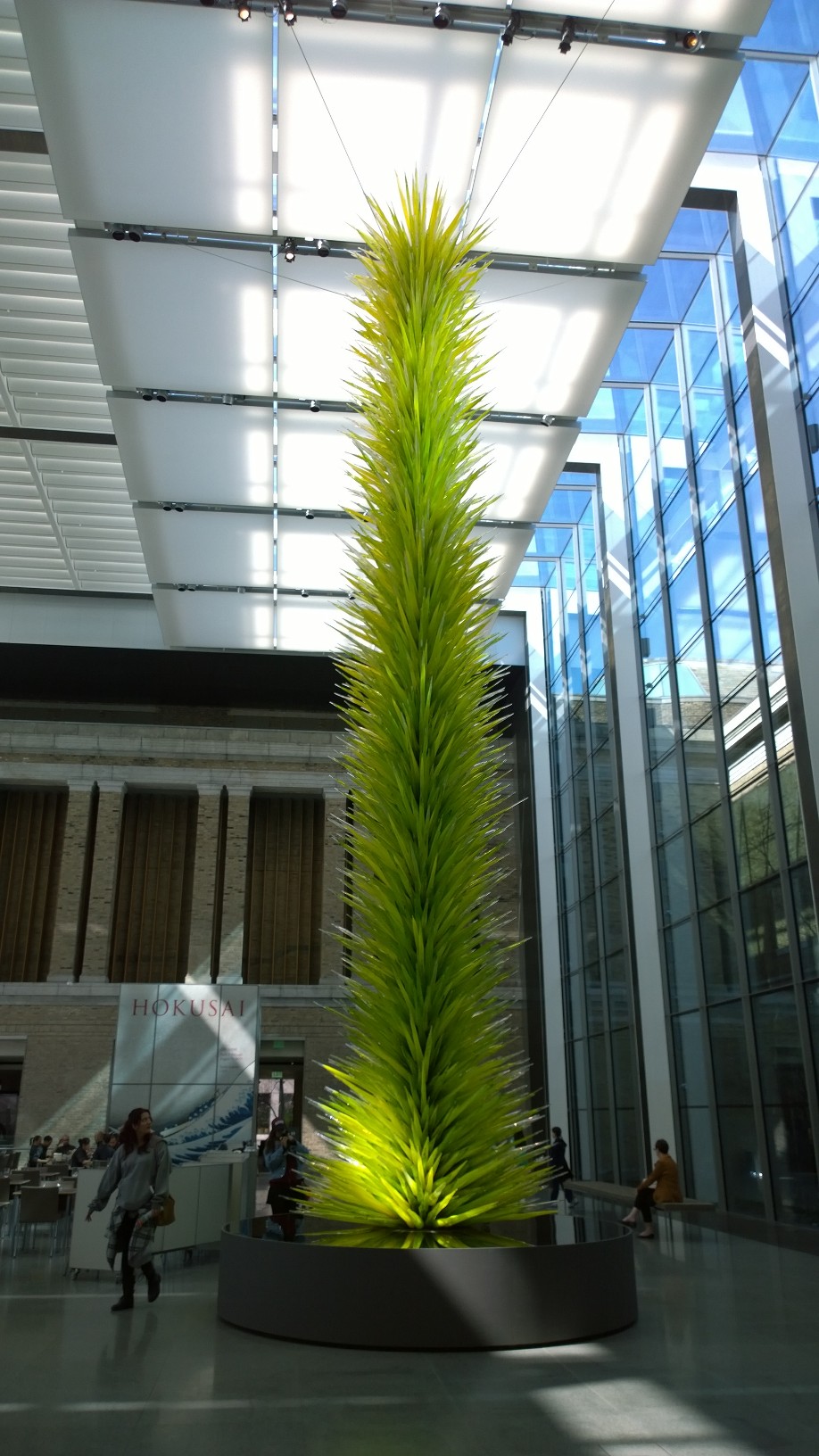
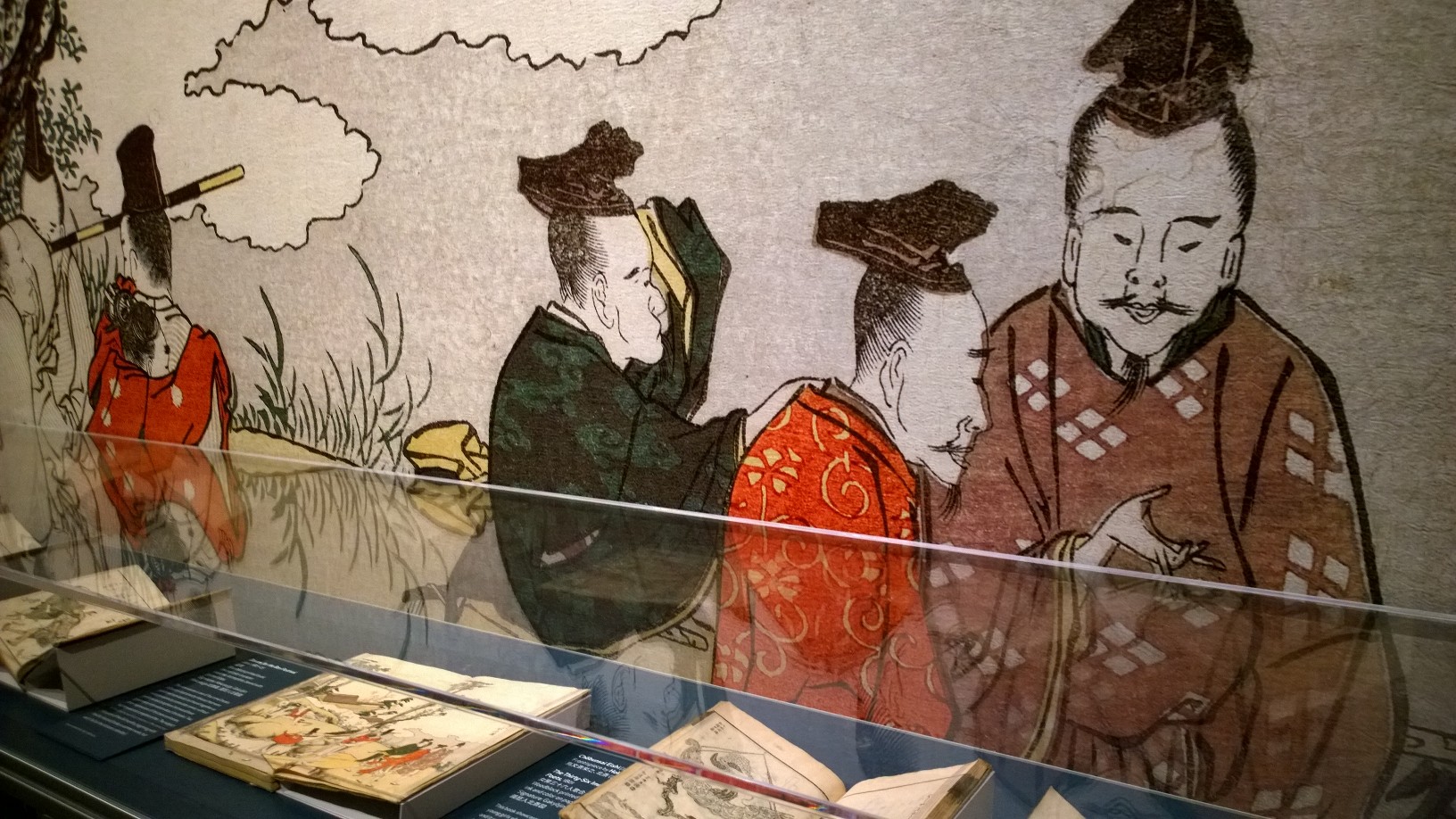
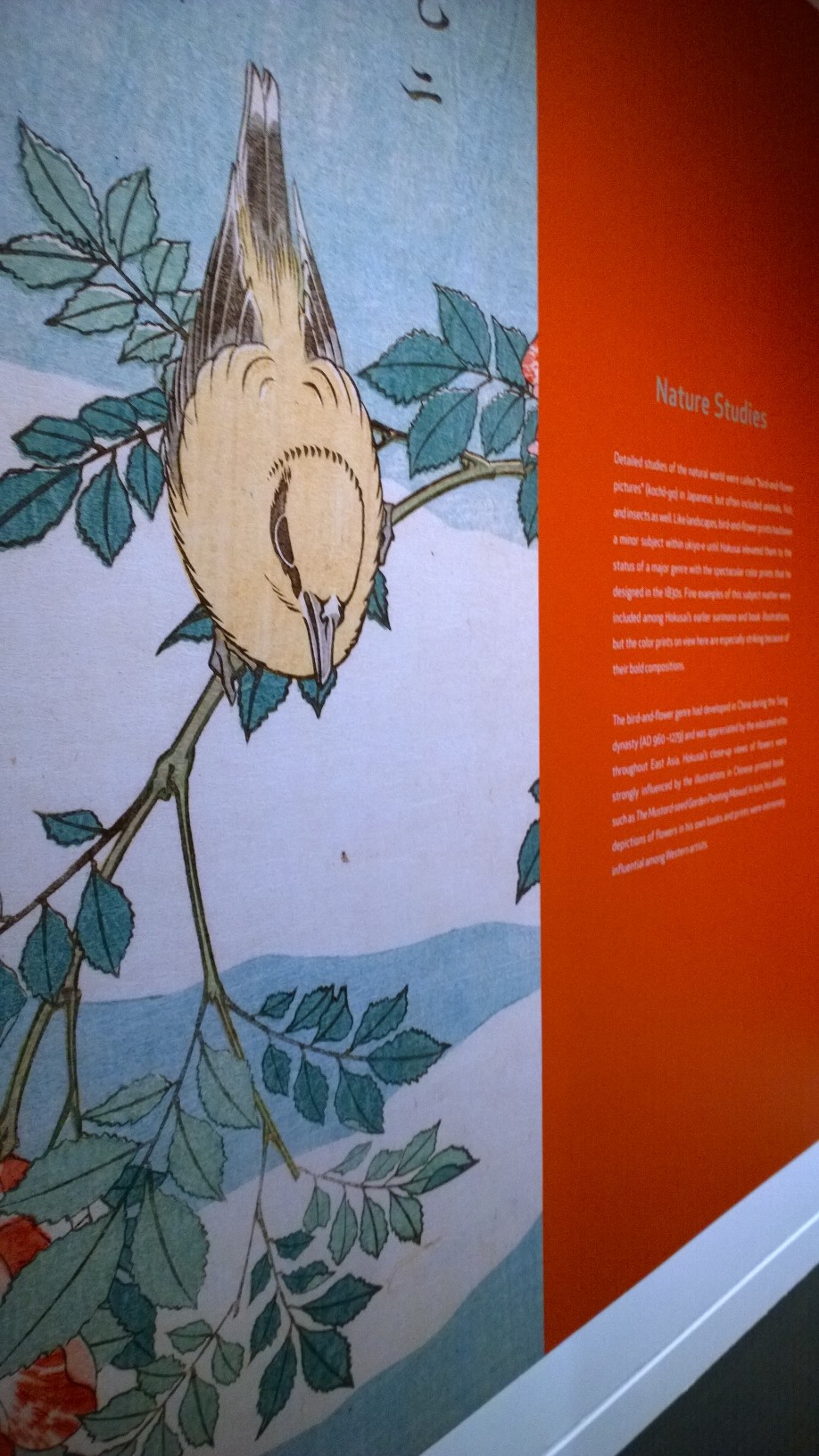
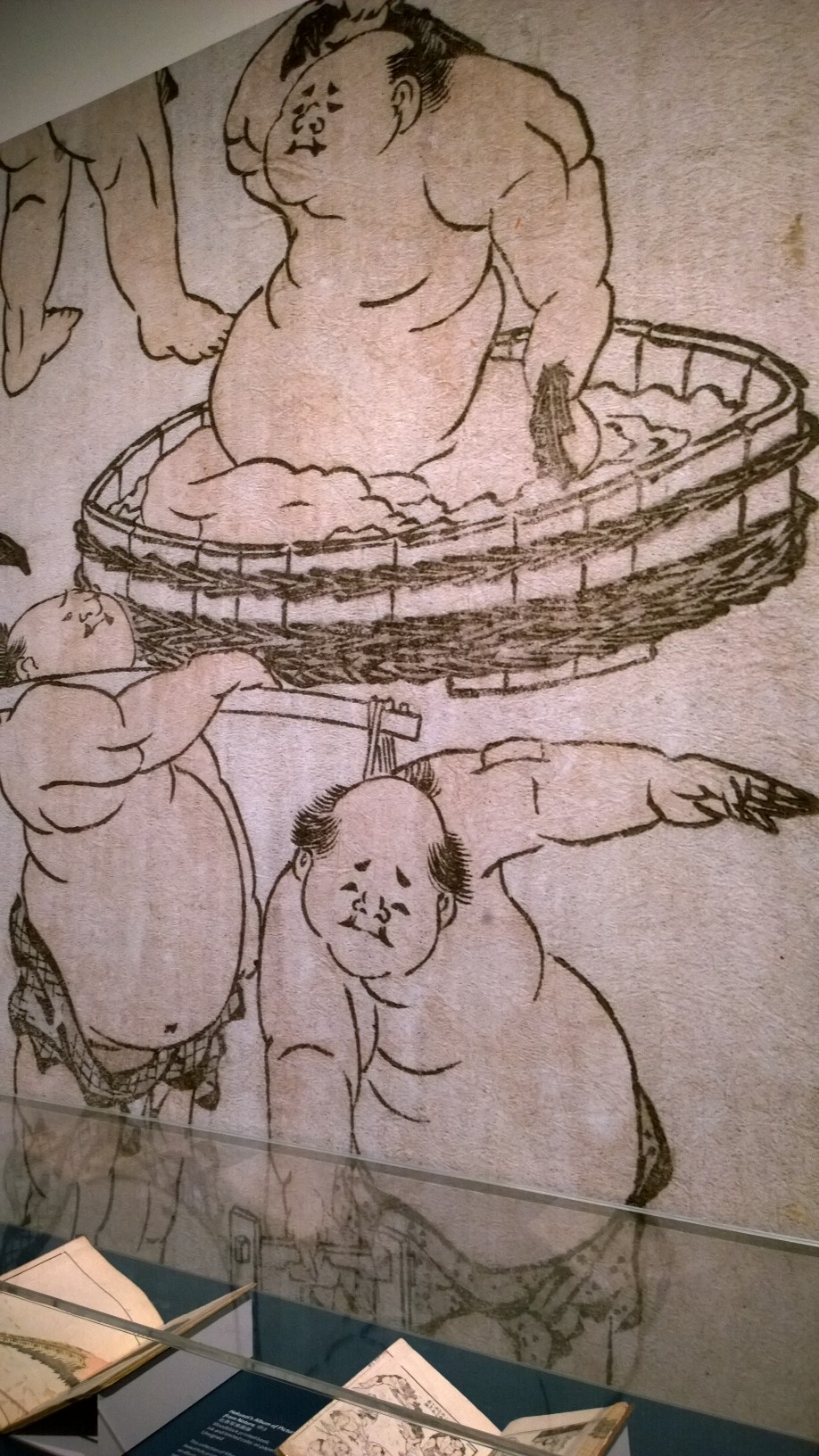
So I took a walk through a really big show there, one on the Japanese artist Hokusai (you know: “The Wave”). Unlike the ceramics show, this one was crowded and almost too extensive to take in, but I enjoyed what I saw — especially some colorful wall hangings.

I took photos both outside the museum and inside (a sign said it was OK — just not to use a flash). My Hokusai photos are mostly of large-scale reproductions. The originals were small and harder to shoot through glass.

The show is running until August 9, and if you go, I recommend that you pause for the wall of slides at the entrance, which is delightful and gives one a sensation of watching the art coming into being, like a waterfall swishing down a landscape.

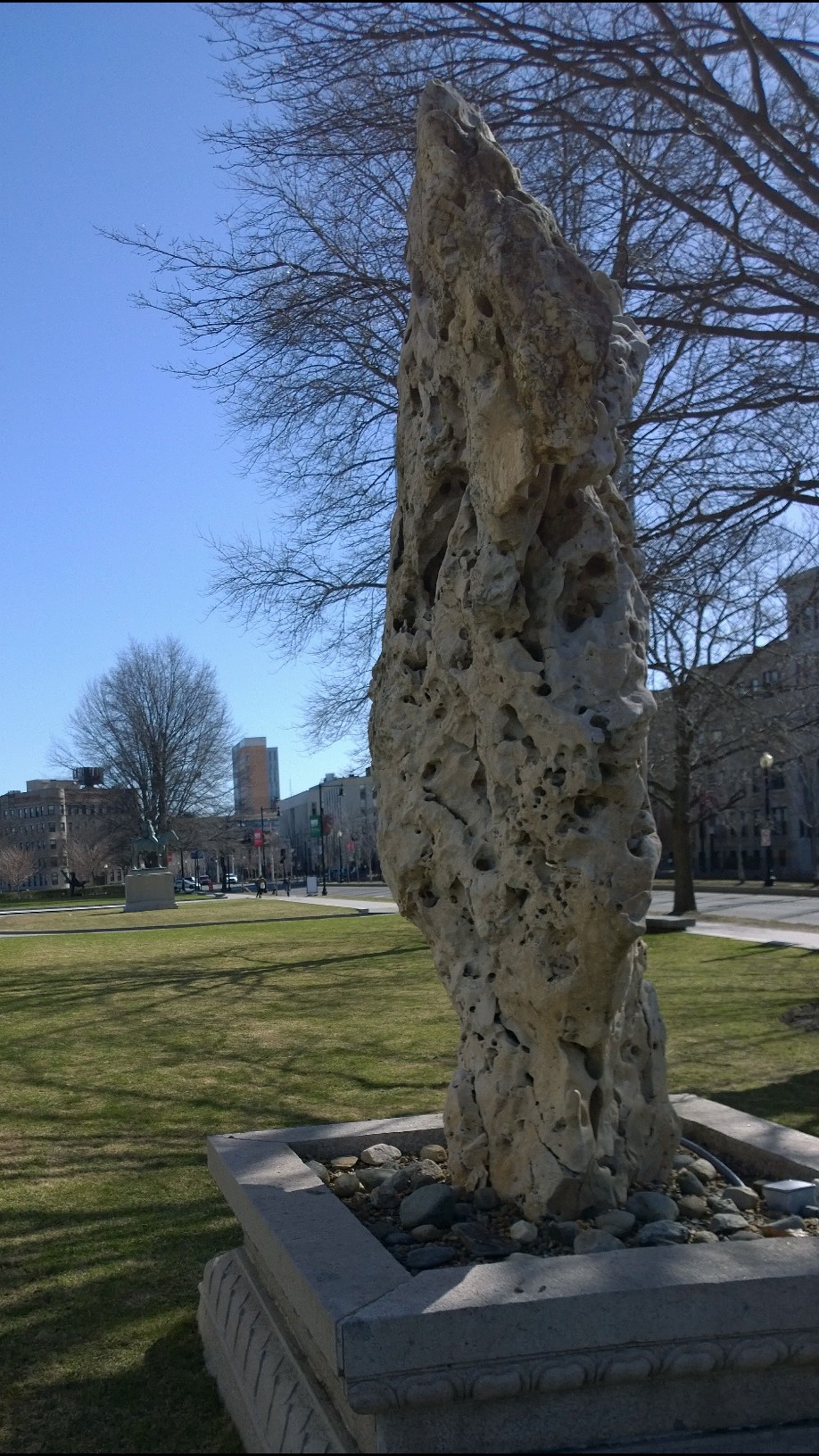
natural-water-pitted-stone

Indian-outside-the-MFA-by-Dallin

MFA-dining-room-glass sculpture

Hokusai-at-MFA-Boston

Hokusai-bird

tubby-time-Hokusai-style

Read Full Post »

I saw another recommendation at Brain Pickings for an intriguing-sounding book and bought it to have around for my grandchildren. It doesn’t have words, and when I tried to talk through the pictures to my second grandson, he said, “Read it.” He could tell I wasn’t using the read-a-story-book-voice.

But it’s a thoroughly charming book, and I’m sure he’ll catch on.

Maria Popova writes, “Half a century after Ruth Krauss wrote, and Maurice Sendak illustrated, one of the loveliest lines in the history of children’s books — “Everybody should be quiet near a little stream and listen.” — poet JonArno Lawson and illustrator Sydney Smith team up on a magnificent modern manifesto for the everyday art of noticing in a culture that rips the soul asunder with the dual demands of distraction and efficiency.

“Sidewalk Flowers (public library) tells the wordless story of a little girl on her way home with her device-distracted father, a contemporary Little Red Riding Hood walking through the urban forest. Along the way, she collects wildflowers and leaves them as silent gifts for her fellow participants in this pulsating mystery we call life — the homeless man sleeping on a park bench, the sparrow having completed its earthly hours, the neighbor’s dog and, finally, her mother’s and brothers’ hair. …

Sidewalk Flowers, which is immeasurably wonderful in its analog totality, comes from Canadian independent children’s-book publisher Groundwood Books.” More thoughtful description and more of the pictures may be found here.

I think Popova’s Brain Pickings blog is amazing, even if her prose is sometimes a little purple. I myself wouldn’t say that the demands of our always-on-the-job culture “rips the soul asunder.” Those demands are mostly pointless and should be ignored.

Art: Sydney Smith

Read Full Post »

Art: Van Gogh
Moulin d’Alphonse, painted in Arles in southern France.

Once again, a master’s work has been rediscovered. This time the master is Van Gogh, and the work’s identification is all thanks to a sister-in-law who knew a great artist when she saw one.

Dalya Alberge at the Guardian has the story. “A landscape by Vincent van Gogh is to be exhibited for the first time in more than 100 years following the discovery of crucial evidence that firmly traces back its history directly to the artist.

“The significance of two handwritten numbers scribbled almost imperceptibly on the back had been overlooked until now. They have been found to correspond precisely with those on two separate lists of Van Gogh’s works drawn up by Johanna, wife of the artist’s brother, Theo.

“Johanna, who was widowed in 1891 – months after Vincent’s death – singlehandedly generated interest in his art. She brought it to the attention of critics and dealers, organising exhibitions, although she obviously could never have envisaged the millions that his works would fetch today.

“Le Moulin d’Alphonse Daudet à Fontvieille, which depicts vivid green grapevines leading up to a windmill with broken wings in the distance, is a work on paper that he created with graphite, reed pen and ink and watercolour shortly after he reached Arles, in the south of France. It dates from 1888, two years before his untimely death.” More here.

When I was sixteen, I passed through Arles on a kind of tour. I am sorry to say the only thing I remember clearly is that the teacher said you had to translate “to Arles” as “en Arles” instead of “à Arles,” as you would say for other cities. Only guess what! A quick Google search informs me “en Arles” is only for people stuck in the 19th century.

On me pose très souvent la question de savoir si je me suis trompé en disant à Arles (vs. en Arles). Et bien non, à part si vous êtes resté au IXème siècle …

David Larlet is the source, and I have no idea if he is an expert. I assure you I wasn’t 16 in the 19th century, but my teacher was rather old fashioned.

Read Full Post »

The Barnes Collection is a quirky museum that is now located in Philadelphia. The eccentric art collector required all his art to be displayed a particular way. Which is perhaps why two Cézannes hidden behind other works weren’t uncovered before now.

Writes Randy Kennedy in the NY Times, “In 1921, the wily art collector Albert C. Barnes wrote to Paris to his friend and fellow collector Leo Stein, who was in dire need of money and had deputized Barnes to sell some of his holdings in the United States. They included five watercolor landscapes by Paul Cézanne, but Barnes reported that he had failed to find ‘anybody who seems to think they are sufficiently important to want to own them.’

“It was pure mercantile flimflam. Barnes turned around and bought the watercolors for himself, at $100 each, installing them permanently in his personal museum near [Philadelphia]. Now it turns out that Barnes got a better deal than even he had thought: A conservation treatment of the watercolors has revealed two previously unknown Cézanne works — a graphite drawing and a watercolor with graphite — on the verso (the reverse side) of two of the watercolors.

“Hidden beneath brown paper backing, the newly discovered pieces are unfinished, but they have sent tremors through the world of Cézanne scholarship, where additions to his body of work are exceedingly rare and where even the resurfacing of long-unseen pieces can be huge news. …

” ‘These are a perfect example of how much we still don’t know about this collection,’ said Martha Lucy, a consulting curator at the Barnes and an expert on its Renoir and Cézanne holdings. ‘To add new work to Cézanne’s oeuvre is incredible.’ “

More here.

Art: “New” Cézanne at the Barnes Collection in Philadelphia

Read Full Post »

What would it be like to live in an earth dome? The California Institute of Earth Art and Architecture (Cal-Earth) can help you check out the concept for a day or a weekend or the 12-15 weeks it will take to teach you to build a dome home. Maybe you’d rather settle for building just a “rocket stove mass heater.” Cal-Earth can teach you to do that, too. Hesperia, California, is the place. (Although Cal-Earth’s mailing address is Claremont, near Suzanne’s alma mater.)

From the website: “Superadobe technology was designed and developed by architect Nader Khalili and Cal-Earth Institute, and engineered by P.J. Vittore. Superadobe is a patented system (U.S. patent #5,934,027) freely put at the service of humanity and the environment.”

The television station KCET has more. Reporter Kim Stringfellow says, “As a humanitarian, architect and teacher, Khalili developed the Superadobe building technique incorporating a tubular sandbagging system filled with locally sourced earth that are reinforced with a barbed wire technology and stabilized lime, cement, or asphalt that is locally produced. Dwellings can be used temporarily or may be stabilized, waterproofed, and finished with plaster to create a permanent building. Originally from Iran, Khalili’s structures and building techniques are inspired and informed by centuries of earth building found throughout the Middle East and North Africa. He also is known for his Geltaftan Earth-and-Fire construction system which as also known as Ceramic Houses. ”

Tell me this is not a hobbit house.

Photo: Geoff Lawton 

Read Full Post »

Teny Gross tweeted this nice story from the Brown University alumni magazine.

Courtney Coelho wrote, “On a snowy December evening, lights were visible through the second-floor windows of List Art Center as the visual arts department’s Critique Intensive held its last session. Mixed with the students in the large studio space were four working artists—Elise Ansel ’84, Chitra Ganesh ’96, Keith Mayerson ’88, and Rob Reynolds ’90—who’d spent sixteen weeks with the class, teaching, critiquing, and discussing art.

“The class was the brainchild of Chair of Visual Art Wendy Edwards, who hopes it will serve as a model for future classes. ‘Alumni bring a generosity to their approach to the Brown students,’ Edwards said. ‘They love coming back here, they love giving, and they’re very professional and committed to helping our students.’ ” More here.

Speaking of art education in Providence, RISD just got a new president, an artisan herself. Meredith Goldstein at the Boston Globe writes, “The Rhode Island School of Design has chosen its 17th president. Rosanne Somerson takes the title effective immediately, the Board of Trustees announced [in February]. Somerson, a RISD grad and furniture designer, has been serving as the school’s interim president since January 2014. The board says it chose to keep Somerson in the job after a nine-month international search.”

The Globe article is here. Disegno magazine has an interview with Somerson, here.

Photo: Mike Cohea
Rose Congdon ’15, left, and her classmates critique work created for the visual art department’s Critique Intensive, a class taught by four alumni artists last semester. 

Read Full Post »

I wrote about New American Public Art back when I first posted a photo of the group’s giant geometric snowballs in Dewey Square.

I looked them up. Their tumblr blog says, “We are a collaborative of artists, engineers, programmers and designers with the mission of developing beautiful, interactive public art. Our method of development is always contextual. The existing physical and social aspects of a space are integral to the installation. The art form we create is more than the physicality of the work, it is the social curiosity and interaction of the audience with the piece.”

Alas, curious snowplows interacted with the interactive snow sculptures, and the snowballs are no more. But the artists seem to be fine with their work being ephemeral. Their approach supports the notion that it is good to notice things that can’t be captured permanently. It’s good just to enjoy. And interact.

I say that, but I’ve been regretting for two weeks that I couldn’t bring myself to capture in a photo several strangers facing me on the subway since one woman was looking my way. It would’ve been a great shot. In the midst of a sea of black-coated commuters, there were three astonishing reds: a woman with a bright red shawl, another with a red-red coat, and a young man with brilliant new red boots.

I’ve been looking for reds ever since and pondering how to take a photo without being noticed.

Check out American Public Art installations here.

NewAmPublicArt-giant-snow-balls-art


Read Full Post »

Mary Ann is a creative person and a great source of blog ideas. She also remembers topics I’ve enjoyed in the past. For example, the stealth book artist in Scotland. She sent me word of the artist’s new accessibility.

The BBC reports, “An anonymous artist has been leaving delicate paper sculptures made from old books at locations in Edinburgh and around Scotland for more than three years.  The identity of the woman has remained secret despite the international attention that the book sculptures have received.

“BBC Scotland’s arts correspondent Pauline McLean conducted an interview with her — via email to maintain her anonymity.

“Question: Why did you start making the sculptures?

“Answer: The first book sculpture, a little tree for The Scottish Poetry Library, was made primarily as a response to library closures and cutbacks. But it was also as a bit of fun for the library staff who, throughout Scotland, the UK and much further afield, provide a service in straitened times — above and beyond. It was a poor attempt to illustrate the notion that a book is more than just a book — and a library is a special kind of building.

“It’s no secret that I would like everyone to have access to books, art, artifacts and the buildings that house them. Not just those with the money for a ticket. I think it’s true that the immediate way we can and do now access information has altered things. But it remains important to have expert help, to see things for real, to have buildings set aside that inspire and make expectations of us and that anyone can enter. …

“I like to think the sculptures have served their purpose in some small way, but I do worry that they overly draw attention to themselves as objects. My intention was never that they be viewed as artworks or even that they would last. They are, after all, made from clapped-out old books. The end for me though was in leaving them. Once a gift is given it is in the hands of another.” More here.

There are several good pictures of book sculptures at the BBC site. Suzanne’s Mom couldn’t resist the one below. It makes me nostalgic for the inspired ceramic tea cups of Anne Kraus.

Photo: Anonymous book sculptor
“Nothing beats a nice cup of tea (or coffee) and a really good book.”

Read Full Post »

« Newer Posts - Older Posts »