Feeds:
Posts
Comments

Posts Tagged ‘boston’

Photo: Boston Globe.
A headline in the Boston Globe from 1924.

I didn’t get to post this story about a charitable Gothenburg-born Boston immigrant last year, but I think you’ll agree that it’s a bit of Christmas history that will always be fresh.

Jenny Ashcroft wrote about it at Fishwrap, the official blog of Newspapers.com.

“On Christmas Day in 1921, a Swedish immigrant quietly wheeled his hot dog stand to a street corner in Boston’s North End and distributed 500 free hot dogs to hungry children. Axel Bjorklund was no stranger to poverty. He barely made ends meet himself, but he wanted to give back. His cart was soon swamped with hundreds of shivering children wearing tattered clothing that did little to stave off the cold. Their hungry faces beamed when Axel handed them a steaming hot dog. Eventually, the food was gone, but Axel’s determination to repeat the event wasn’t. The Hot Dog Santa tradition was born. Over the next eight years, Axel gave away some 10,000 hot dogs before he died in 1930.

“Born in Gothenburg, Sweden, on August 6, 1869, Axel Bjorklund emigrated to America in 1889, eventually settling in Boston’s North End neighborhood. The area had become a melting pot of immigrants, most of whom were impoverished as they struggled to establish lives in a new country. The Spanish Flu Pandemic hit the North End particularly hard, leaving families even more destitute and many children orphaned.

“The first Christmas hot dog giveaway in 1921 was so successful that Axel decided to expand in 1922 and doubled the number of hot dogs to 1,000. His hot dog giveaway grew with each year until he distributed 3,000 annually. The children loved Axel and nicknamed him ‘Hot Dog Santa.’ …

“Axel’s annual Christmas Day hot dog giveaway eventually moved to New Year’s Day, but it was an event the children anticipated all year. As Axel’s generosity expanded, so did his health challenges. He was plagued with rheumatism, which led to frequent hospitalizations. His finances struggled, too, and he could no longer pay his rent. Not wanting to end the hot dog giveaway, he appealed to the public to help him continue the tradition.

“In December 1928, just before the annual hot dog giveaway, Axel’s landlady kicked him out because he hadn’t paid rent. The Salvation Army stepped in to help, but Axel was broke. The next two years saw Axel skipping between the poor house, the Cambridge Home for the Aged, or obtaining temporary lodging from generous benefactors. Despite his circumstances, in 1929, he participated in his final hot dog giveaway.

“On November 10, 1930, Axel Bjorklund passed away, penniless and alone at a Massachusetts hospital. He had no relatives and was set to be buried in a potter’s field when newspapers published word of his death. Citizens stepped forward, offering to contribute to a fund to give Axel a proper burial. The Swedish Charitable Society coordinated, and Axel was laid to rest in the Cambridge Cemetery.

“If you would like to learn more about the Hot Dog Santa or discover other heartwarming Christmas stories, search Newspapers.com.”

It hurts to think that today there are still plenty of shivering, hungry American children who could use this 1920s Good King Wenceslas.

Read Full Post »

Photo: Melanie Stetson Freeman/CSM.
More Than Words bookshop in Massachusetts uses 100% of its proceeds for training and educating young people ages 16 to 24 in professional skills and goal setting.

My husband and I first encountered the bookshop More Than Words on a movie night. We had been to dinner at one of the many cool restaurants in Waltham, Massachusetts, and were just walking around looking in shop windows until it was time for the movie.

Jacob Posner has written about it at the Christian Science Monitor.

“Jarris Charley says he didn’t believe in jobs when he was growing up on the line between Boston’s Roxbury and Dorchester neighborhoods. The people he knew who had legitimate jobs, including his mom, didn’t find much success. Everyone in his community lived check-to-check and paid rent. The drug dealers were the ones with money.

“ ‘So I was invested in the streets: drugs, guns, robberies. That’s just what I was caught up into at a young age,’ he says. He ended up in juvenile detention at age 15, and in prison for robbery at 23.

“Near the end of a five-year prison term, a second chance arrived. An old manager from a job-training program called More Than Words visited, and asked him, ‘Jarris, why don’t you just come back?’

“More Than Words is a bookstore, but one that does much more than sell bestsellers. The program serves young people ages 16 to 24 who face the highest barriers to building stable lives. Participants face homelessness, are in the foster care system, are out of school, or are involved in the legal system. It gives them job skills, but graduates like Mr. Charley say that the sense of belonging and acceptance – that they matter – is the most valuable thing they take from the program.

“ ‘I like to say we’re in the mattering business,’ says founder Jodi Rosenbaum.

“More Than Words’ support goes beyond job training. There’s a paid ‘on-ramp’ of six to 12 weeks in which the program helps with everything from housing and food costs to making sure participants have suitable work attire. Youth development managers offer support in a range of areas, including future employment, housing, transportation, financial planning, and navigating the legal system. After graduation, young people can access career services and bridge funding for tuition, rent, and child care so they can further their education and training.

“ ‘None of this works if that all doesn’t hang together, right? Like a job training program means nothing if you don’t know where you’re sleeping at night or if you have court the next day, and you don’t have people helping you plan and figure that out,’ says Ms. Rosenbaum.

“More Than Words has grown significantly in its two decades of existence. It started with a 150-square-foot office space where young people sold donated books online. Today, it operates three storefronts in the Boston area. It served around 318 young people last year, who sorted about 4.5 million donated books and earned over $3.8 million in net revenue. Almost all More Than Words graduates go on to earn a high school diploma or equivalent degree, according to the organization’s data. …

“ ‘A lot of people feel that they don’t have a lot going for them or they don’t have a lot of potential,’ says Mr. Charley. ‘We speak life into them.’ That was the case for him.

“For the past three years, he’s been mentoring young people at More Than Words. He works in career services, helping young people in the area that tripped him up the most: getting that first good job after graduating from the program.

“Ms. Rosenbaum founded More Than Words in 2004. She had worked as a public school teacher and for the child welfare system, and became disenchanted with government systems. … Ms. Rosenbaum found that the process of selling a book online had therapeutic value. It has clear steps leading toward a positive outcome: Pick up the book from where it was donated, find out how much it’s worth, package the book, ship it, and then watch money come in. …

“More Than Words Boston, where Mr. Charley works, is located on a street just off Interstate 93 in a postindustrial part of South Boston. … Inside, it’s tidy and spacious. In the front, wooden tables carry rattan cross-body bags and socks with giraffes and penguins. All the merchandise is made by businesses that address social issues as part of their mission. …

“[Mr. Charley] had attended Lexington Minuteman High School. He says there were limited spots at the vocational high school for people from his part of the city. Mr. Charley says he’s grateful for the experience, but felt like he was only appreciated for his athletic prowess. …

“ ‘You don’t think a Black person sees that?’ he adds.

“He left school near the end of his sophomore year after an event involving his cousin, he says. Arrest and juvenile detention followed. Then he found his way to More Than Words.

“ ‘He was the first white man I trusted,’ says Mr. Charley about one of his managers. He always asked when he didn’t understand part of Mr. Charley’s experience – instead of just spouting advice. …

“One of Mr. Charley’s goals is to help his mentees understand their behavior and, ultimately, figure out how to stop doing things that get them into trouble.

“Back when Chris Anderson joined More Than Words, around 2005, he worked directly with Ms. Rosenbaum. He was at a group home in Watertown when he first encountered her.

“ ‘Jodi just kind of walked in one time and we’re all sitting in the living room and she kind of just stood up and said, “Does anybody want a job?” ‘ he says.

“He found ‘a sense of belonging’ while helping Ms. Rosenbaum start her business. Participants were stubborn, got in trouble at school, and didn’t do what they were supposed to do. ‘No matter what, she just kept trying to realign you to get onto that path,’ he says. …

“Today, Mr. Anderson, now in his 30s, is a chief operations officer for a technology company, a father, and sits on the board of More Than Words. And he’s still close with Ms. Rosenbaum.”

More at the Monitor, here.

Read Full Post »

Photo: Museum of Fine Arts, Boston.
Descendants of potter David Drake, seen at the Museum of Fine Arts with one of the artist’s works

If we are in a hurry for the many evils we see to be defeated, we’re likely be disappointed. But in time, even a foundering ship can right itself. The growth of initiatives to return artifacts stolen in the past is an example.

Jori Finkel writes at CNN that in a “likely precedent-setting agreement, the Museum of Fine Arts (MFA) Boston has agreed to return two works from 1857 by the Black potter David Drake, who made his ambitious jars while enslaved, to his present-day descendants.

“By the terms of the contract, one of those vessels will remain on loan to the museum for at least two years, according to the lawyer George Fatheree, who is representing Drake’s descendants. The other vessel — a masterpiece known as the ‘Poem Jar’ — has been purchased back by the museum from the heirs for an undisclosed sum. Now the work comes with ‘a certificate of ethical ownership.’

“ ‘In achieving this resolution, the MFA recognizes that Drake was deprived of his creations involuntarily and without compensation,’ a museum spokesperson said in a statement. ‘This marks the first time that the museum has resolved an ownership claim for works of art that were wrongfully taken under the conditions of slavery in the 19th-century US.’ …

‘Ethan Lasser, chair of the art of Americas at the MFA, said the museum has learned from its work restituting Nazi-looted art. ‘We’ve become very expert in Holocaust restitution. We’re dealing with (repatriation) issues in our African collections and Native American collections,’ he said over the phone. …

“He considers Drake’s work an example of ‘stolen property,’ too, ‘since the artist is always the first owner of his work and he never got to make the call about where it went or what he was paid for it.’

“Born enslaved around 1800 in Edgefield, South Carolina, a region known for its rich clay, Drake (who was also known as Dave the Potter) was one of relatively few African American potters to sign his work. He also dared — despite punitive anti-literacy laws for enslaved people in the state — to etch short sayings or poems on the jars, making them powerful acts of resistance. Some inscriptions boast of the jar’s intended contents or enormous capacity; others remark more poignantly on his own life or working conditions.

“The ‘Poem Jar,’ which the MFA originally bought in 1997 from a dealer in South Carolina, features a couplet that hints at Drake’s financial exploitation. The inscription reads: ‘I made this Jar = for cash/Though its called Lucre trash.’ Currently in a gallery for self-taught and outsider art at the museum, it will assume a more prominent spot at the entrance of the Art of Americas wing once renovated in June 2026. …

“Another jar made the same year, 1857, has a particularly wrenching inscription in light of Drake’s forced separation from a woman believed to be his wife and her two sons. That vessel, at the Greenville County Museum of Art in South Carolina, reads: ‘I wonder where is all my relation.’

“One of Drake’s great-great-great-great grandsons, the children’s book author and producer Yaba Baker, said he feels the restitution process offers one answer to that question. ‘It’s been exciting, overwhelming and feels full circle,’ he said in a video call. He praised the MFA for ‘showing integrity and leadership’ in ‘allowing us to connect to Dave’s legacy,’ noting that ‘to go from being slaves to having a family of engineers and doctors and people in executive positions is a testament to Dave’s legacy in a different way.’

‘These descendants began talking about getting involved in Drake’s legacy in 2022, upon the opening of ‘Hear Me Now: The Black Potters of Old Edgefield, South Carolina,’ an exhibition jointly organized by the MFA and the Metropolitan Museum of Art in New York. The family soon hired Fatheree, fresh from his win in the Bruce’s Beach land reparation case. Earlier this year they established the David Drake Legacy Trust, governed by five of the oldest heirs.

“So far there are about 15 family members involved, according to Fatheree, but they have created a website so that other descendants of Drake can be identified and join the efforts — what Fatheree calls ‘a big tent approach.’ …

“There are thought to be around 250 pots by Drake still in existence, and over the past five years the market for his work has exploded, driven mainly by American museums competing for pieces in the hopes of telling a more complex story about the history of slavery in the US. Several have paid six figures for his work, and in 2021 the Crystal Bridges Museum of American Art in Arkansas paid a record-setting $1.56 million for a 25-gallon stoneware jar at auction.

“Other museums that own Drake’s work include the Met, the Philadelphia Art Museum, the De Young Museum in San Francisco, the Art Institute of Chicago, Harvard Art Museums, the St Louis Art Museum and the Smithsonian American Art Museum in Washington, DC, as well as smaller venues in the American South.

“Fatheree confirmed he has begun to reach out to some of these other art institutions on behalf of the family. ‘Our approach has been one of collaboration and invitation. I am not a litigator; we did not go to the museum and file a lawsuit (or) threaten to sue them. But our hope and frankly our expectation is that other institutions’ — and private collectors of Drake’s work, he added — ‘will follow the Boston museum’s lead here.’ ”

More at CNN, here.

Read Full Post »

Photo: Artists for Humanity.
At Artists for Humanity, teenagers are able to express their artistic creativity and talents while also earning money, bridging passion and profit.

Today’s story is about a wonderful nonprofit I visited several times in the years I was working at the Boston Fed. Its mission to involve urban kids in making art — and earning some money from it — is still sending joy into the world.

Kana Ruhalter and Arun Rath have an update at GBH radio.

Artists for Humanity (AFH), they report, has been giving “talented teens — most of whom are people of color from low-income communities — the opportunity to earn and create. 

“Through murals, sculptures and more, Artists for Humanity … brings joy, beauty and a sense of belonging to their community. And, by paying its artists, they’re addressing economic inequities as well.

“Anna Yu, the executive director, and Jason Talbot, co-founder and managing director of program, joined GBH’s All Things Considered host Arun Rath to discuss the decades-long history of the nonprofit. …

Jason Talbot: Back in 1991, they had just defunded art in schools. I was a Boston Public School student at the Martin Luther King Jr. Middle School, and [AFH’s] former executive director, Susan Rodgerson, came to the King School to reintroduce art. … I found her willingness to hear out my ideas and implement them in projects was super refreshing. We continued to work together with the other fellow co-founder, Rob Gibbs, in a studio over in SoWa [South of Washington Street].

“There were just us six boys in that studio, and we painted and we created a gallery exhibition. It just showed us the capabilities of art, it helped us understand this artist community and we just loved doing work there.

“Our organization has evolved over the years. We’ve built in this entrepreneurial aspect where we’re producing and selling art to clients. It’s just been an extremely enriching experience. …

Arun Rath: Anna, tell us about that enrichment. How has the organization evolved since that? …

Anna Yu: While the core of the model is essentially the same — meaning this radical idea of paying teens to create client project work that is of the quality of a professional — that piece is always running through our work. But today, we are the largest employer of youth in the city of Boston, which is over 400 teens that we employ.

“[Today] we not only provide after-school employment, we also partner with schools during the school day in a program we call Co-Lab. …

Rath: What are some of the success stories? …

Talbot: Teenagers — one thing that’s pretty universal is they really are looking for adult experiences, you know? So to be in the workplace, to be respected, to be able to attend meetings, to be able to propose ideas, it really gets our young people super excited about having a career and really re-invested in their education.

“And teens are graduating at a higher rate; AFH graduates 100% of our high school students, and we’re able to offer secondary education to 100% of our teen artists. …

Rath: Tell us about the business side of this. How do you get these young artists paid? …

Yu: Something that is so radical about the organization — it’s hard to believe that Artists for Humanity has been doing this for 33 years — is that clients actually hire us to create work for them. So it’s often beautifying office spaces, it’s creating a unique or custom piece of art for them, it can even be branding and promotional materials. It could be a website.

“The beautiful thing is they are paying teens to do this work, and they are valuing their voices, their creativity. And they’re getting a very unique product at the end of the day. …

Rath: Talk about the collaborative process between these young artists and the professionals.

Talbot: Well, AFH is a tremendously collaborative organization. … Our clients really get visionary work. Our teens are up on the latest trends. They’re digital natives — they know what’s going on — and they’re really able to help our clients have some really great new innovative ideas. …

“Rath: You’ve seen so many go on to become adults and blossom in amazing ways. Are there any moments of joy you’d like to share? …

Yu: The beautiful thing about Artists for Humanity is that a lot of our alumni are actually not just artists. Many of them do become artists. Many of them actually pursue a career in STEM, or some of them go on to become lawyers. We have [one] who’s actually on our board of advisors right now, and she’s a lawyer at the Fed. … We have someone who is an alumni from AFH and is at Harvard Medical School. So it’s really this idea that by opening up these pathways, by inspiring them to think creatively, by building that confidence, they can really achieve anything.”

More at GBH, here.

Read Full Post »

Photo: Melanie Stetson Freeman/CSM.
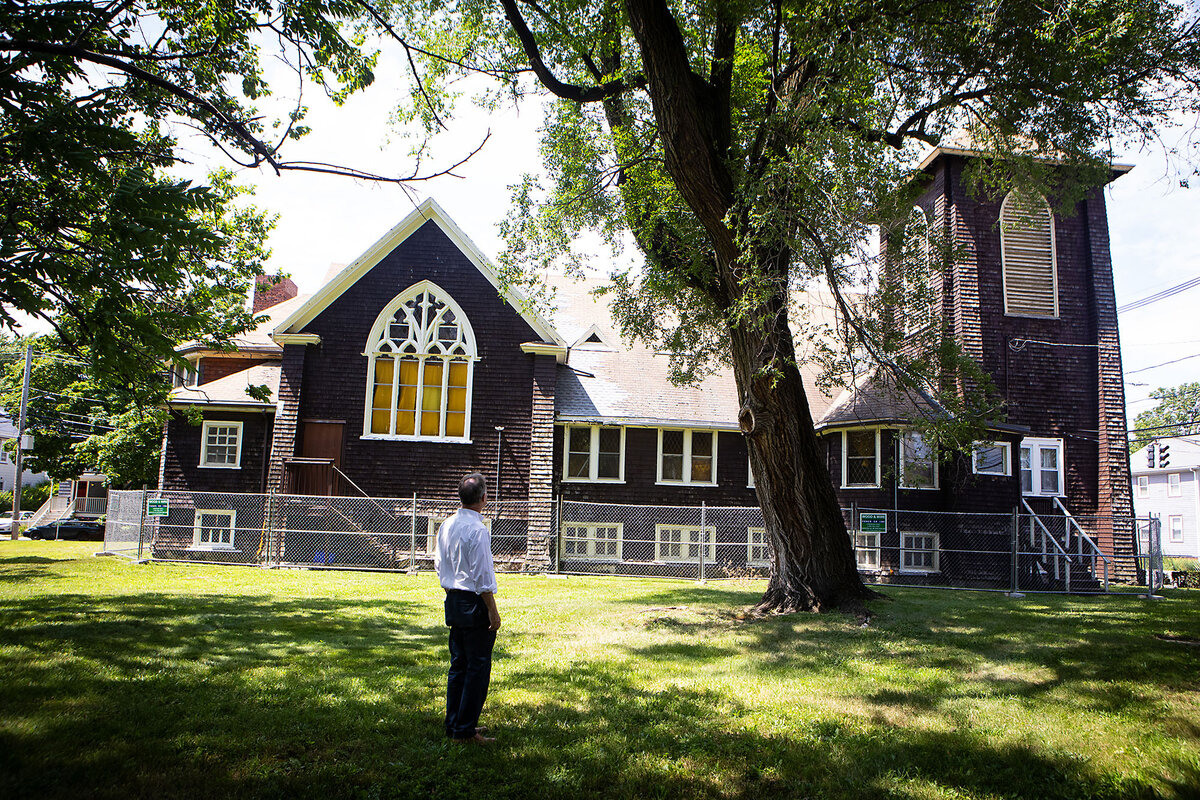
John Woods, director of Allston Brighton Community Development Corp. in Massachusetts, stands in front of Hill Memorial Baptist Church in July. The church and grounds are being turned into a housing complex for older adults.

My 9-year-old granddaughter assures me that the best place to stay overnight in Nova Scotia is a converted church. The light from the stained glass was beautiful, she says, and so was the rest of the building.

Her family’s rental was privately owned, but in today’s story we learn about a Boston-area initiative to turn other unused churches into subsidized housing. And Boston is not alone.

Troy Aidan Sambajon reports for the Monitor, “With its 58-foot bell tower standing sentinel, Hill Memorial Baptist Church has witnessed Allston-Brighton’s dramatic transformation. Upscale apartments and condos now stand on the site of once-bustling stockyards. Gourmet food shops have replaced affordable grocery stores. Now, the 120-year-old church is set for its own transformation. … The church is finding a new role in the community: much-needed affordable housing for older people.

“Churches and faith communities across the United States are increasingly closing their doors. Five years ago, The American Baptist Churches of Massachusetts, noting a dwindling congregation in Allston-Brighton, considered downsizing or repurposing the land. The choice was ultimately left to Hill Memorial’s congregation.

“In a final act of generosity, members chose to sell the land to fulfill the church’s ‘mission of giving back to the Allston community in the form of senior housing,’ says the Rev. Catherine Miller, former pastor, over email. With the blessing of its former congregation, the site will become 50 apartments for older adults on a fixed income. Today, the average price to rent a one-bedroom apartment in Allston is $2,786 per month, according to Apartments.com. The average wait time for senior housing in Boston currently stretches more than five years.

“ ‘Something good needed to happen here,’ says John Woods, executive director of Allston Brighton Community Development Corp., a housing developer. …

“Across the country, more faith communities are opening their doors to creative affordable housing solutions: Some are building homes on underutilized land or converting unused residences.

“In California, the grassroots ‘Yes in God’s Backyard’ movement led to the Affordable Housing on Faith Lands Act. This makes it legal for faith-based institutions to build affordable, multifamily homes on lands they own by streamlining the permitting process and overriding local zoning restrictions.

A federal version, the Yes in God’s Backyard Act, was introduced this spring by Ohio Sen. Sherrod Brown. …

” ‘It’s sad when a church closes,’ says Donna Brown, executive director of the South Boston Neighborhood Development Corp., which is leading the conversion of a former convent. ‘When they sit empty, it leaves a real void in the neighborhood. But when a building can be converted to housing so that people can stay in that community – it can be a wonderful thing to knit a community back together.’

“The U.S. is not building housing fast enough to support America’s aging population, according to Housing America’s Older Adults 2023 report, recently released by Harvard University’s Joint Center for Housing Studies. … By 2030, Americans age 65 and older will make up more than 20% of the population, according to Census Bureau projections. The need for affordable housing for this demographic will only grow. Meanwhile, homelessness is rising among older adults. …

“Sometimes, those being priced out of a neighborhood have lived there for decades. Moving means leaving not only friends but also support structures. Take Allston-Brighton, which was once a very affordable neighborhood, says Karen Smith, president of Brighton Allston Elderly Homes Inc. With rising rent costs and the cost of care, it’s tough for older adults on a fixed income to stretch their budgets thousands of dollars more a year. …

“In densely populated cities, the space to build affordable housing is often far from where it is needed most, says the Rev. Patrick Reidy, associate professor of law at the University of Notre Dame. However, faith communities and former churches are typically located in high-density areas that are accessible to the most people.

“ ‘These kinds of adaptive reuse projects for affordable housing are a win-win-win,’ says Professor Reidy. ‘The local governments that are desperately in need of land for affordable housing are given access by faith communities seeking to live out their religious mission, and those who need affordable housing don’t always have to uproot their lives from their neighborhood.’

“Boston is a prime example of this trend. The transformation of former churches … illustrates how adaptive reuse can unite communities in finding solutions to the housing crisis. The locations of older church properties in New England are unique for other reasons. Many are quite literally older than zoning laws, which were first passed around the 1920s.

“Blessed Sacrament Church sits at the heart of the historic Latin Quarter. It is set to become a sanctuary of affordable living, with 55 income-restricted units, along with a performance and community space.

“The building sat empty for years. High restoration costs prompted its owners to contemplate selling it to developers on the open market to become high-end apartments. Former parishioners and residents opposed the sale and advocated for community input. In the end, after meetings attended by hundreds in the area, the selected proposal from developer Pennrose aimed to preserve the historic exterior of the church while renovating the interior to create affordable housing.”

More at the Monitor, here. No firewall. Subscriptions are reasonable. For more on repurposing old church buildings, see the other part of the Monitor series, here.

Read Full Post »

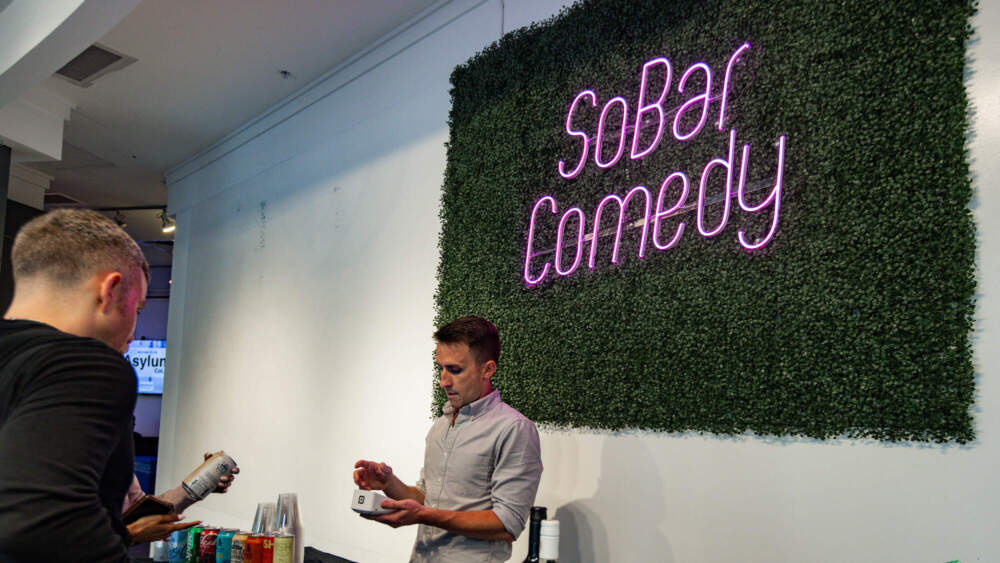
Photo: SoBar Comedy.
SoBar Comedy worked in collaboration with Dray Drinks, Boston’s first non-alcoholic bottle shop to assemble its lineup of non-alcoholic beers, wines and mocktails.

We’ve featured articles about watering holes that ban cellphones (here, for instance) so people can socialize without distractions. Turns out, there are also people who hate all the alcohol that flows at comedy clubs, people who would really like to enjoy the comedy. Enter, Boston’s SoBar.

WBUR Radio’s Elijah Nicholson-Messmer reports, “When John Tobin started working as a door person at a local comedy club in the early ‘90s, his boss asked him how he liked the work.

“ ‘I love being in the comedy business,’ Tobin said.

“But his boss Dick Doherty, a legend in the city’s comedy scene who drank and drugged his way through the ‘60s, ‘70s, and early ‘80s, was quick to correct him.

” ‘You’re not in the comedy business,’ Tobin recalled Doherty saying. ‘You’re in the alcohol business.’

“Over three decades later, that business has started to change. Younger adults are drinking less than they did 10 or 20 years ago and show producers like Tobin and his business partner Norm Laviolette are taking notice.

[In June] they launched SoBar Comedy, the country’s first sober-curious comedy club [to host] bi-weekly improv and stand-up shows, located in Faneuil Hall.

“Tobin and Laviolette own and operate some of the biggest comedy clubs across New England, including Laugh Boston and Improv Asylum. Laviolette said they started noticing the trend at their other comedy clubs, where food and beverage sales form a cornerstone of the business model. The pattern soon became clear — younger audience members were increasingly forgoing beers and cocktails when going out.

“ ‘As we started to watch we’re like, “Well, geez, maybe there’s an opportunity . . . to do something that speaks directly to that mindful drinking, sober-curious [mindset],” ‘ Laviolette said. …

“On opening night at SoBar, some folks were excited to sample the non-alcoholic beers and mocktails on offer, crafted in collaboration with Dray Drinks, Boston’s first non-alcoholic bottle shop. …

“Performing comedy for an all-sober audience is a daunting task for some comedians, but for Corey Manning, who headlined and hosted SoBar’s inaugural show, having an alcohol-free night of comedy comes with plenty of upside.

“ ‘One of the things that’s different about a sober show than the regular comedy show is that I didn’t have to deal with a drunk audience member, which is always a good thing not to have to do,’ Manning said.

“This December, Manning will celebrate 30 years of sobriety from drugs and alcohol. Now, he helps others as a substance misuse counselor. But in the early years of his sobriety, performing in comedy clubs across the country made that journey challenging. …

“Crowds and performers expect alcohol at comedy clubs like they expect popcorn at a movie theater, Manning said. But for audiences and comedians who want a fun night out without the drinking, that relationship can be far from ideal. Over the years, Manning’s sobriety has helped other comedians as well.

“ ‘Because I have been consistently the person that didn’t drink at comedy shows, it actually has inspired other comedians who are having difficulties with drinking and stuff like that to not drink,’ Manning said. ‘And one of the things that I also started trying to do is work that material into my set, because sometimes I hit home with someone in the audience.’

“Other comedians like Mary Spadaro, who performed at SoBar’s opening night, make an asset of their sobriety, flipping what could easily be a heavy subject into fresh comedy material.

“Decades after Tobin got his start as a comedy club door person, his old boss’s words still ring true for much of the industry today. Many comedy clubs across the country are still very much in the alcohol business. But for Tobin and Laviolette, it’s all about putting the comedy first.”

Uh-oh. I found that the club is on hold until “early 2025.” I hope it succeeds long term. With two successful clubs under their belts, I think the owners know what they’re doing. Maybe summer was just not the best time to launch in Boston. Do you think a sober comedy club could thrive where you live?

More at WBUR, here.

Read Full Post »

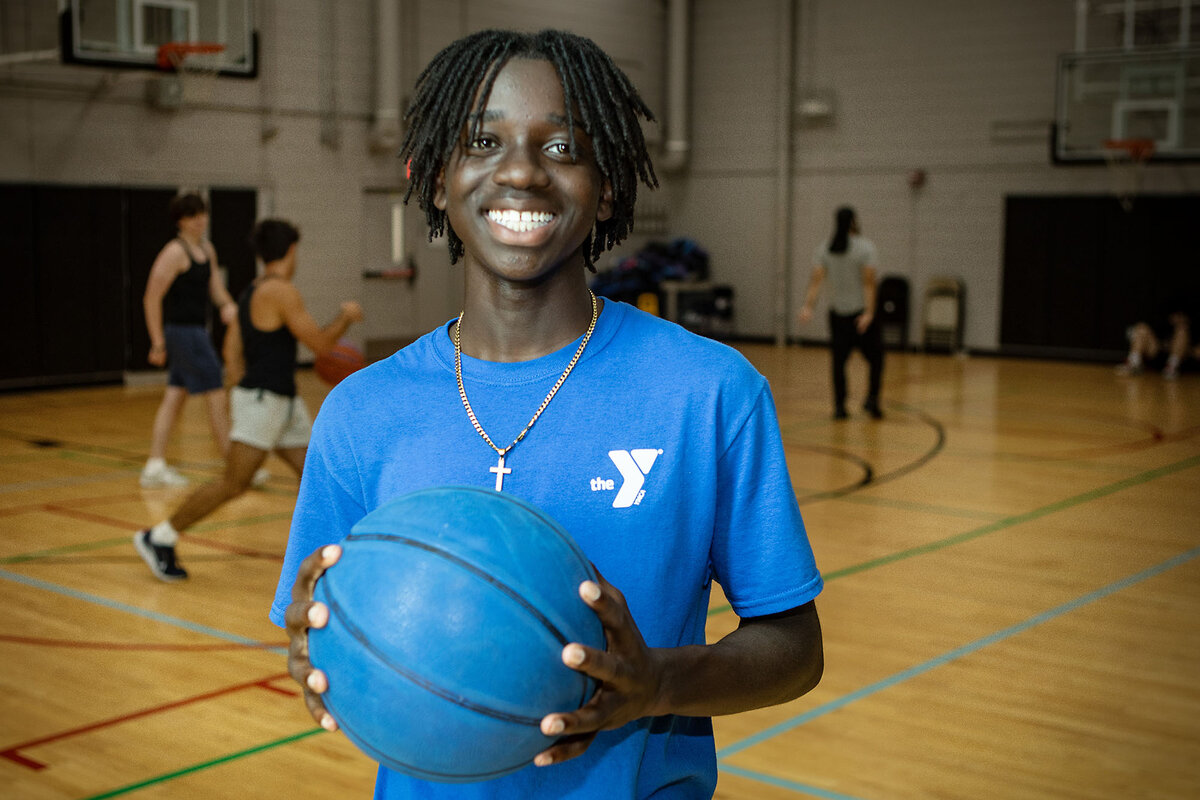
Photo: Melanie Stetson Freeman/CSM Staff.
Jason Tackie’s summer job is at Parkway Community YMCA in Boston.

I was a day-camp counselor, my husband scooped ice cream back in the day and delivered newspapers, my sister checked out grocery-store items. Those were a few of the typical summer jobs people had.

Then came the years when it seemed like no one was taking those jobs anymore unless they were on a work-first-and-tour-America program from Eastern European or Turkish universities. US young people were taking internships at hedge funds and that sort of thing.

Now the Christian Science Monitor says summer jobs are back, at least according to a Northeastern University study of the Boston area.

Reporters Troy Aidan Sambajon and Oli Turner write, “Getting a summer job used to mean scooping ice cream at the mall or working the drive-thru at Burger King. Then came the Great Recession, followed by a rush for teens to spend their summers padding their college résumés with coding and language camps.

“That changed again when the world closed for COVID-19, and then reopened. Not all adults returned to their jobs. The virtual ones came and went. Enter the teenage worker. …

“The year before the pandemic, teens accounted for just over 2% of new hires, according to Gusto, a human resources and payroll company. In 2023, teens accounted for 20% of new hires. This summer, the share of teens working or looking for work hit a 14-year high – 38%, reversing a decades-long decline, according to the Bureau of Labor Statistics

“ ‘Employers suddenly rediscovered teenagers as an important source of labor in the post-COVID economy, when adults realized they didn’t want to come back,’ says Alicia Sasser Modestino, associate professor at Northeastern University, who has been surveying Boston’s summer employment program for nearly a decade.

“The return of teens to lifeguard stations, grocery checkout lines, and summer camps has benefits beyond the paycheck, according to experts and the teens themselves. In addition to learning CPR or how to run a social media campaign, teens interviewed talk about learning financial literacy, planning for their future, and feeling part of a community. 

“Consider Jayden Orr, 16, who just started in July at ABCD SummerWorks in Boston. …

“ ‘The main thing that’s on my mind lately is my family,’ says Jayden, ‘because I got to help my family out. That’s how the family’s gonna eat.’

“Zariyah Witherspoon, 17, also helps out her family, giving her mother $100 from her paychecks, the bulk of which she’s saving for college. …

“Zariyah talks about growing up at the South Street Youth Center and finding her passion in the center’s boiler-room-turned-recording studio. As a 10-year-old, she helped replace the youth center’s floors and paint the walls a cheerful blue. She says the program and the mentorship she has received from her manager have helped her focus on her future. …

” ‘Nearly 70% of the young people in the summer jobs program are using some of their earnings to pay some kind of household bill. They’re helping pay rent, groceries, or utilities,’ [Modestino] says. ‘They’re paying for their own cellphone or their own clothes now.’ 

“Allison Vernerey has been handling hundreds of applications a day. As executive director of the city’s Office of Youth Employment and Opportunity, she has also been meeting with families to place their youths in the right job.

“The pandemic was especially tough for teens, says Ms. Vernerey. ‘I speak to a lot of the parents. … There’s really this eagerness to in some way catch up and make sure that the youth are set up for success in the future.’ …

“The benefits of a summer job can shape teens’ academic and social success in both the short and long term, according to a 10-year study conducted by Northeastern University on Boston’s teen summer employment programs. 

” ‘In the short term, young people increase their aspirations to go to college, have higher GPAs, and less absenteeism in school,’ says Dr. Modestino. …

“In the long term, the social-emotional skills developed on the job also reduce anxiety and conflict by training youths to deal with stressful situations. ‘We found that those soft skills – like managing emotions, resolving conflicts with a peer, and asking adults for help – those things are highly correlated with a reduction in criminal justice involvement. Young people in the program are 35% less likely to be involved in a violent crime and 29% less likely to be involved in a property crime,’ says Dr. Modestino. …

“ ‘What I see is that more kids are getting jobs because parents aren’t always going to be able to buy the stuff they want, so teens want to be more independent,’ says Jason Tackie. …

“Jason started working after his first year of high school to buy new shoes and basketball equipment. He didn’t expect to be learning new skills, gaining new mentors, or frankly, learning to have fun while working.  He says having a job has improved his time management in school, too. Jason wants to study nursing at a four-year college, something he said he has only realized recently. …

“ ‘There’s a lot of stuff that I learned on the job that I didn’t know that I was going to learn,’ he adds. ‘I feel like it motivates me every day to come here and make sure everyone’s having a good time. It’s helped me grow up a lot.’ ”

More at the Monitor, here. No paywall.

Read Full Post »

Photo: Melanie Stetson Freeman/CMS Staff.
The Christian Science Monitor reports that the upscale Boston Back Bay neighborhood “worked with nonprofits to create affordable housing and apartments for formerly unhoused people, at 140 Clarendon.”

My friend Lillian and her siblings are among the few Black families that own their building in Boston’s upscale Back Bay. That’s because Lillian’s mother had the foresight to buy it in installments many years ago. Nowadays the area is prohibitive for most families, whatever their race. And as we know, affordable housing is usually fought tooth and nail in such communities. But …

Troy Aidan Sambajon writes at the Christian Science Monitor, “Garry Monteiro pauses and looks down, twiddling his thumbs. He contemplates the biggest change to his life last year. There’s a glint in his eye that wasn’t there before.

“ ‘To be honest with you, the refrigerator was a big deal,’ Mr. Monteiro chuckles, speaking in a community room at the 140 Clarendon building in Boston’s upscale Back Bay neighborhood. … But, he adds, the biggest change is having somewhere to call his own. Before moving into his apartment, the former mail courier spent nearly every night for two years on an assigned bunk at a men’s shelter.

“His routine was dictated by the shelter’s hours. He had to be out by 5:30 a.m. and back before 8 p.m. He spent his days looking for jobs or with his siblings. Every day, he worried about making it back by curfew. If he didn’t, he’d have to sleep outside. …

“The 140 Clarendon building is the rare story of a wealthy community finding solutions to homelessness. When private hotel plans stalled at the address in 2020, the neighborhood took charge. Community associations and developers backed a permanent supportive housing community – complete with on-site social services – in the heart of one of Boston’s most expensive neighborhoods.

“ ‘With homelessness numbers rising everywhere and the lack of affordable housing overwhelming, this project in the Back Bay is a welcome development,’ says Howard Koh, faculty chair of the Initiative on Health and Homelessness at Harvard University. Dr. Koh and his team say that 140 Clarendon is ‘highly unusual,’ because instead of worrying about property values, residents in a high-end neighborhood rolled out the welcome mat. …

“ ‘The collaboration of all the partners, public and private, to make such progress is a great example of how people can … rise to the challenge,’ Dr. Koh says of 140 Clarendon.

“The 111 studio apartments that now house Mr. Monteiro and his new neighbors also come with support services and case managers. The idea isn’t new, experts on ‘housing-first’ solutions say. Studies have shown the most cost-effective way to combat homelessness is to prioritize putting people in homes before securing other services. … What’s remarkable about 140 Clarendon is that Back Bay’s neighborhood and business associations signed letters of support, inviting the project onto their streets….

“ ‘It is one of those all-too-rare occasions when the public sector, the private sector, and nonprofits were able to come together and provide at least some relief,’ says Martyn Roetter, chair of the Neighborhood Association of the Back Bay, who signed one of the letters. …

“For nearly 100 years, 140 Clarendon has anchored the neighborhood’s educational and cultural character. The building was owned by the YWCA and, at various points, has housed the Lyric Stage Company of Boston, the Snowden International School, and a 210-unit boutique hotel.

“In 2019, the YWCA decided to sell the property. The first buyer planned to evict all tenants and face-lift the exterior to make way for a ritzy private hotel. When the pandemic sank the hotel market, a new developer – Beacon Communities – stepped in, while Pine Street Inn agreed to provide on-site services to formerly houseless tenants. ‘It checked all our boxes, and the location couldn’t be better,’ says Jan Griffin, vice president of Pine Street Inn. The 13-story brick-faced building has elevators and is easily accessible to public transit, grocery stores, the Boston Public Library, and churches. …

“The Back Bay neighborhood associations – which wanted to preserve the historic brownstone and its commercial tenants – had caught wind of the development plans. In two public letters of support, the associations advocated for affordable housing to be expedited in the neighborhood. …

“In addition to 111 apartments for people experiencing homelessness, 99 other units were made into affordable housing. All the commercial tenants supported the plan, which allowed them to remain in the building. ‘The fact that the local businesses and the neighbors wanted it is a really nice testament to how that neighborhood is leaning in to trying to end homelessness on their streets with housing rather than criminalizing people for existing in their neighborhood,’ says Ann Oliva, CEO of the National Alliance To End Homelessness.

“When Mr. Monteiro arrived at Pine Street’s shelters in 2021, his only possessions were the clothes on his back and a canvas messenger bag from his past life as a courier. … After 20 years of working, Mr. Monteiro left it all behind to take care of his parents. ‘I knew basically that once they passed away, I would have to start over,’ he says. ‘And I’d still do it again.’ “

More at the Monitor, here. No paywall. Subscriptions encouraged — and very reasonable.

Read Full Post »

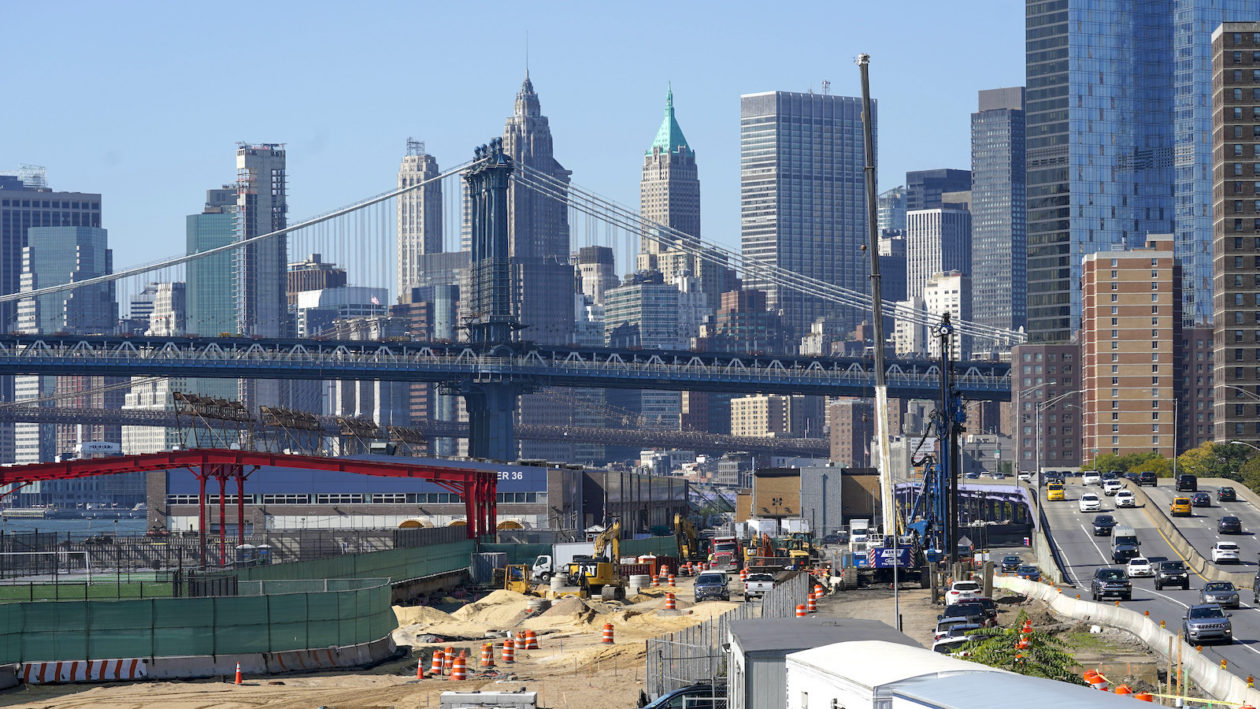
Photo: Mary Altaffer/AP.
Construction underway on a flood resiliency project in East River Park in Manhattan in October 2022. Hello, Boston! See this?

For years there have been voices crying in the wilderness about the danger Boston faces from flooding. A city originally lifted from the sea like the Netherlands, Boston has powerful “progress” fanatics that have allowed the Seaport area to be overbuilt in the last 20 years. The Boston Globe’s David Abel even made a movie about it, calling the city’s touted Innovation District the Inundation District.

Meanwhile, in New York City, politicians have heeded a painful lesson from Hurricane Sandy.

Andrew S. Lewis writes at Yale Environment360, “On a recent morning in Asser Levy Playground, on Manhattan’s East Side, a group of retirees traded serves on a handball court adjacent to a recently completed 10-foot-high floodwall. Had a sudden storm caused the East River to start overtopping this barrier, a 79-foot-long floodgate would have begun gliding along a track, closing off the playground and keeping the handball players dry. In its small way, this 2.4-acre waterfront park is a major proof of concept for a city at the forefront of flood resilience planning — a city working toward living with, and not against, water.

“The Asser Levy renovation, completed in 2022, is part of East Side Coastal Resiliency (ESCR), the largest urban resiliency project currently underway in the United States. Over the next three years, at a total cost of $1.8 billion, ESCR will reshape two-and-a-half miles of Lower Manhattan’s shoreline. But ESCR is just one link in a much larger, $2.7 billion initiative called the BIG U — a series of contiguous flood resilience projects that runs from Asser Levy, near 25th Street, around the southern tip of Manhattan, and up to Battery Park City, along the Hudson River. When finished, the BIG U will amount to 5.5 miles of new park space specifically designed to protect over 60,000 residents and billions of dollars in real estate against sea level rise and storm surges.

“The BIG U was conceived in the aftermath of 2012’s Superstorm Sandy, which flooded 17 percent of New York City and caused $19 billion in damage. Like Hurricane Katrina in 2005, Sandy helped push New York … toward embracing the Dutch concept of ‘living with water,’ which emphasizes building infrastructure that can both repel and absorb water while also providing recreational and open space.

“In New York, ESCR, like any large infrastructure project slated for a densely populated place, has moved in fits and starts. Still, New York is making significant progress. ‘Anything that’s on the scale of Manhattan is always going to be so much bigger and more complicated,’ says Amy Chester, director of Rebuild by Design, the post-Sandy design competition from which ESCR was born. ‘And yet a lot has been done.’

“The ESCR project area encompasses a flood-prone wedge of Manhattan’s natural topography — a ‘pinch point’ between two higher stretches of shoreline. Some 400 years ago, when the island was inhabited by the Lenni-Lenape, this shoreline was woods and marsh that never rose more than a few feet above sea level. Tidal creeks drained from uplands dense with American chestnut, aster, and goldenrod, winding through spartina meadows to the river. Today, that landscape is lost beneath four separate public housing complexes, whose roughly 10,000 residents count on East River Park to buffer their homes from a waterway that has risen 8 inches since the mid-20th century.

“Because ESCR is the first segment of the BIG U to get underway, its path has been rocky, from debates about its final design, to budget cuts, to new concerns about the evolving risks of climate change, including the extreme rain events that New York experienced this year. …

“In 2018, the administration of Mayor Bill de Blasio quietly revamped the design: it would be faster and cheaper, the mayor’s team said, to wipe the park clean, elevate the landscape with more than a million tons of fill, then build anew on top.

“Unlike the kind of permeable buffers championed by the Dutch, the raised park would function more like a hard barrier. … Opposition to the redesign remains, but many residents of the public housing complexes, which are at high risk of flooding, support it. In the fall of 2021, demolition crews got to work. …

“The park will be landscaped with pathways and vegetation beds that snake around and through sports fields, an amphitheater, and playgrounds to form a terraced topography that will function as a berm to keep water from city streets. More floodwalls and retractable gates will run the park’s length and extend into surrounding streets, where archaic infrastructure will be overhauled so stormwater is less likely to mix with wastewater during flooding. …

“Other segments of the BIG U are also underway. In the Battery, at the city’s southern tip, the waterfront is being elevated with fill. Next, floodwalls, higher-capacity drainage, and new park space will be installed. Similar projects to protect the historic South Street Seaport area and the Financial District remain in the planning and design phase. …

” ‘Building a level of resilience capacity across society is critically important,’ says Henk Ovink, the former Netherlands Special Envoy for International Water Affairs and one of the creators of Rebuild by Design. ‘If you don’t invest in the most vulnerable links, the chain breaks.’ ”

Read more at Yale e360, here. No firewall. Donations solicited.

Read Full Post »

Photo: Sophie Hills/The Christian Science Monitor.
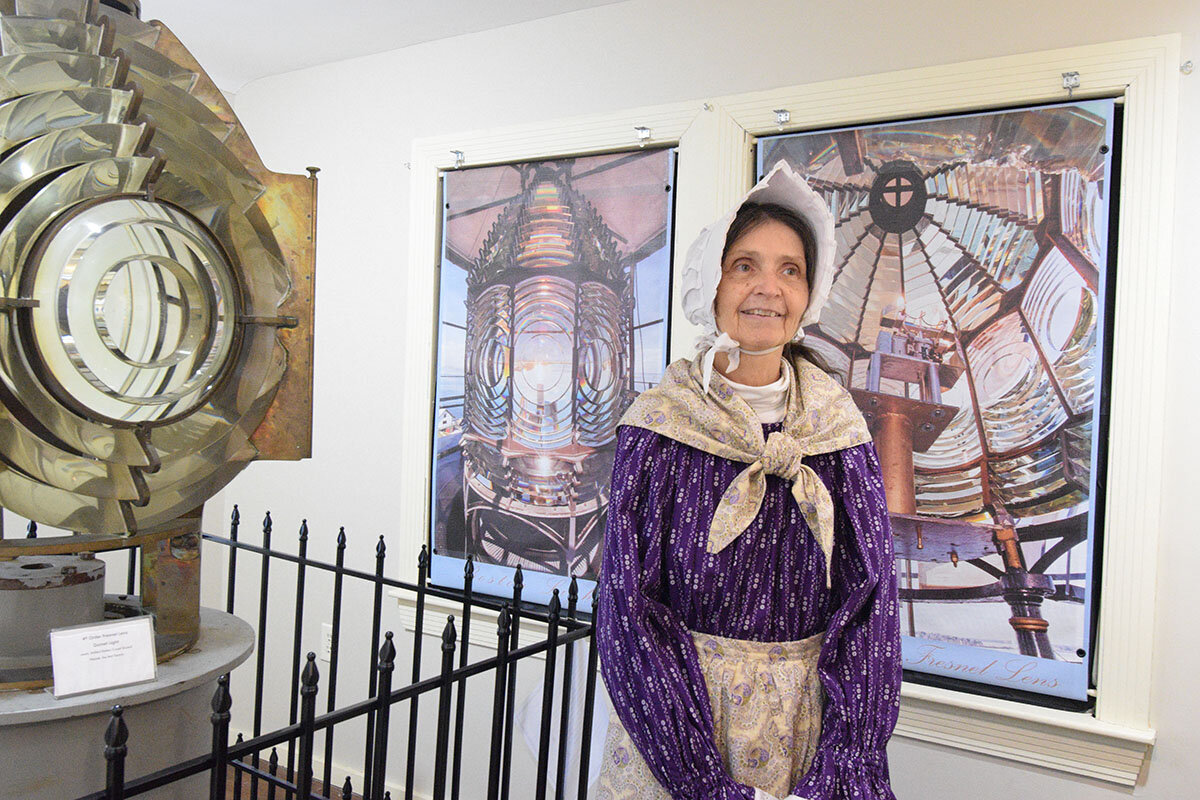
Sally Snowman stands next to a Fresnel lens in the Hull Lifesaving Museum in Hull, Massachusetts, Nov. 9, 2023. She retired at the end of the year after two decades as the keeper of nearby Boston Light.

Lighthouses are to the US what castles are to Europe, and there are many enthusiasts working to ensure that lighthouses don’t crumble but have an economically sustainable future for generations to come.

Sophie Hills reports at the Christian Science Monitor, “When Sally Snowman became the keeper of Boston Light in 2003, she expected the role to last only two years. … Ms. Snowman is the last of the lighthouse keepers in the United States. Her retirement marks the end of 307 years of keepers of Boston Light, originally established in 1716.

“When Ms. Snowman first set foot on Little Brewster Island at age 10, it was love at first sight. ‘I want to work as a keeper and get married here,’ she recalls saying. She did both. Now, after 20 years as keeper and even longer as a volunteer, she’s ready to retire. …

“For centuries lighthouses played the crucial role of guiding sailors safely through hazardous waters. Today, some are still active aids to navigation. They also hold a mystical, sentimental power to many, mariners or not, who balked at the news of the last lighthouse keeper retiring. The keeper herself has little patience for a nostalgia that would hamper the future of the icon she has tended for two decades. Ms. Snowman believes the transition will help lighthouses keep shining in the 21st century, rather than fade away. 

“The appeal of lighthouses reaches far and wide, says Jeremy D’Entremont, who has a weekly podcast, ‘Light Hearted,’ and is the historian for the United States Lighthouse Society. Just recently, his co-host was an 11-year-old girl from Kentucky. 

“While big ships today have ample navigational technology, their captains ‘feel welcomed’ by lights at harbor mouths, says local Dave Waller, who co-owns nearby Graves Light Station in Boston Harbor. And the need is still practical for smaller crafts. …

“The U.S. Coast Guard’s mandate isn’t to restore or preserve historical structures like lighthouses. The military branch will continue to operate the aids to navigation – like the light and foghorn – but the actual upkeep of the physical structures and tours of the island are better suited to a different entity. …

“Over her 46 years as a Coast Guard auxiliary volunteer and keeper, Ms. Snowman has become intricately acquainted with the history of the lighthouse and local nautical history. … A spiritual person, she’s touched by all the light has seen and withstood. And even those things it has not been able to withstand, such as when it was demolished by the British as they made their last escape from the harbor during the Revolutionary War. …

“Ms. Snowman is quietly firm that the transfer of the lighthouse is what’s best. ‘It’s important to ensure that our national icons are properly cared for,’ she says.

“Under a process laid out by the National Historic Lighthouse Preservation Act of 2000, there’s a mechanism for ownership of the historic sites to be transferred. Federally owned lighthouses are offered first to other federal agencies, then state and local governments, followed by nonprofits, and eventually private individuals.

“Graves Light Station was bought at auction a decade ago after sitting neglected. When Mr. Waller stepped out onto the top deck and saw the panoramic view of Boston and the ocean, he ‘fell in love.’ … The lifesaving role of lighthouses ‘is not ancient history,’ says Mr. Waller. Just recently, two men had a boating accident and made it to the rocks at the base of Graves Light before they were rescued.” 

More at the Monitor, here. No paywall. Subscriptions solicited.

Photo: Suzanne and John’s Mom.
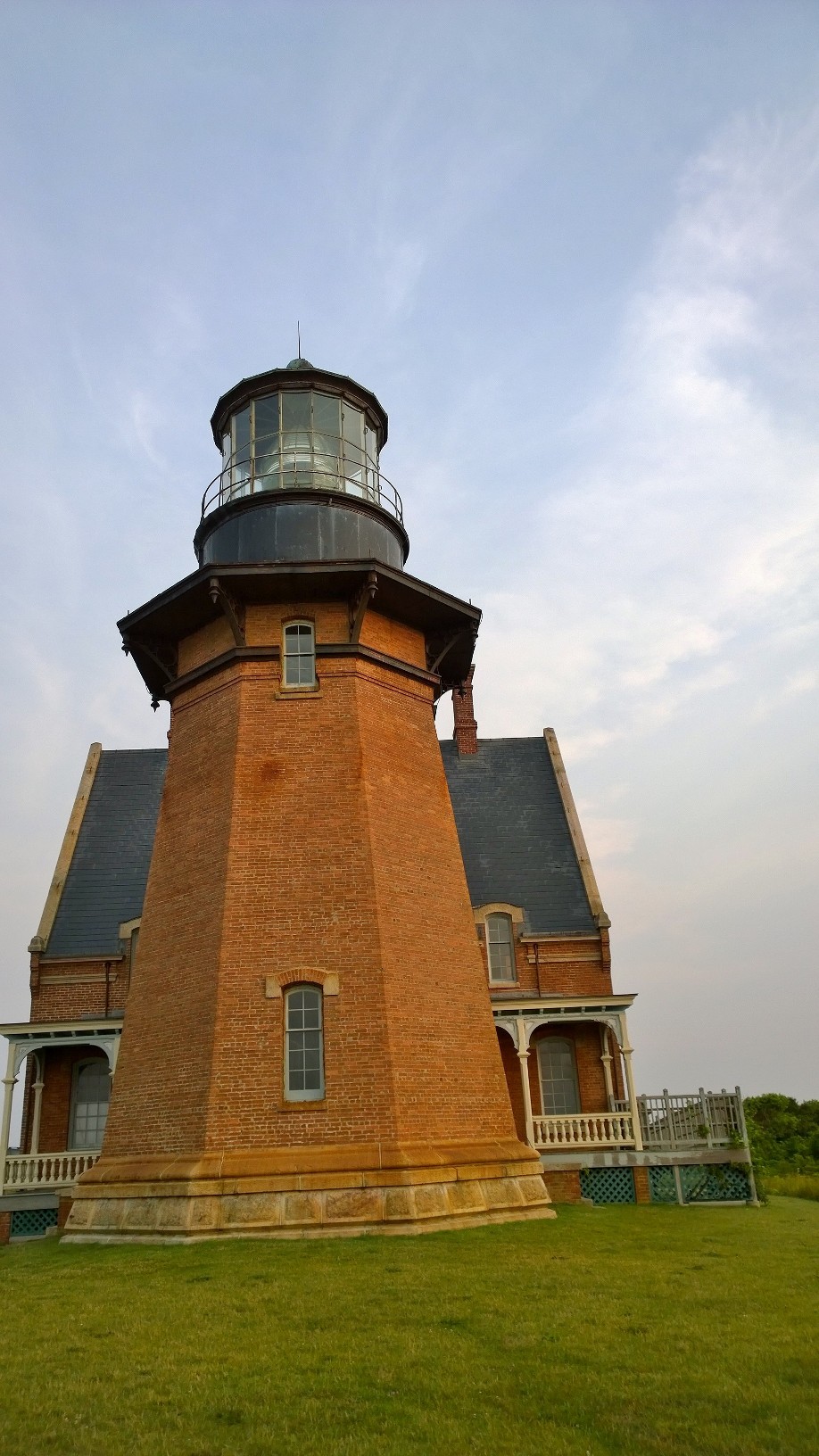
The Southeast Light, New Shoreham, RI, is still important in navigation but is not manned.

Read Full Post »

Photo: Anna Olivella/The Jar via the Boston Globe.
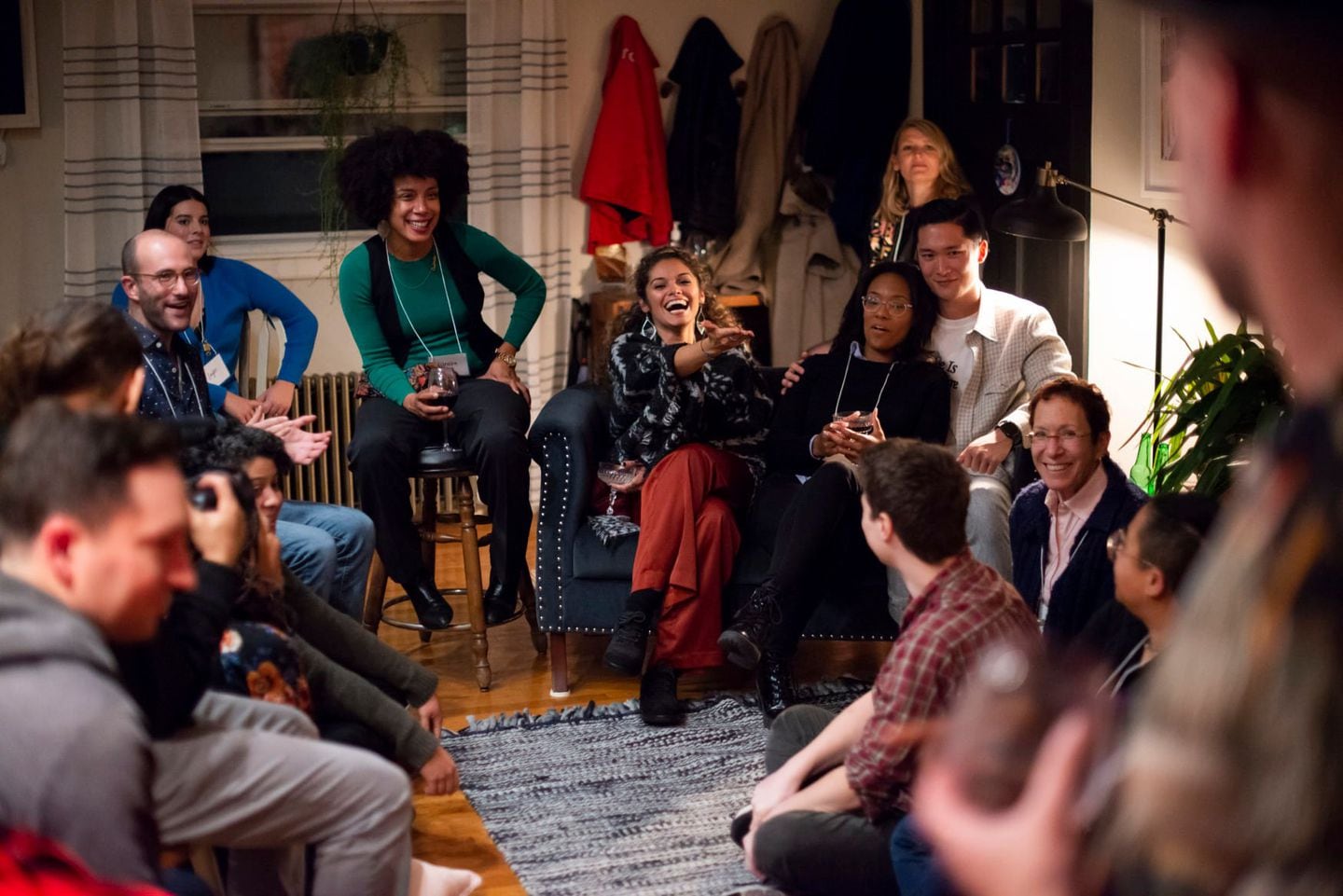
A dinner party “salon” hosted by The Jar, a Boston-based organization that uses works of art to create shared cultural experiences.

Many people who would like to reach across to people who are different from them just don’t know how to get started. It’s a challenge. Today’s story is about a group of artists who decided to tackle the challenge. And to have some fun along the way.

Peter Marks writes at the Washington Post, “On a chilly night in the Roxbury neighborhood, dozens of people — White, Black, Asian American, straight, gay, nonbinary, you name it — gathered for an invitation-only event that was equal parts about making art and making friends. Seated on the stage were Yo-Yo Ma, the celebrated cellist, and Liza Donnelly, the New Yorker cartoonist, who had been paired for the evening by the moderator, Guy Ben-Aharon, to explore how their creative lives might converge.

“As Ma played and Donnelly sketched him on a tablet projected onto a large screen, the audience was treated to a rare intersection — and another installment of The Jar, a pioneering nonprofit that aspires to knit a disparate citizenry together. Founded four years ago by Ben-Aharon, a 33-year-old stage director who previously ran his own Boston-based theater company, Israeli Stage, The Jar has developed a gentler model of social engineering. Its goal is forging comradeship via conversations about artistic experiences among groups that otherwise find few opportunities to commingle.

“ ‘There’s something so invigorating about making friends as an adult,’ said Rokeya Chowdhury, a Boston restaurateur and Jar proponent. …

“Bolstered by a $750,000, three-year grant from the Andrew W. Mellon Foundation, The Jar is in the vanguard of a movement seeking to capitalize on the communal powers of the visual and performing arts. … In a society that feels ever more tribal — even in cities that may have progressive cultures but checkered racial histories — inviting someone demographically unlike you to share a drink and an opinion is sometimes akin to a radical act.

“ ‘If you want to see a diverse and vibrant cultural community come to fruition, you have to build it,’ Ben-Aharon said over breakfast. ‘With The Jar, you’re actively invited to build the world you want to live in.’

“Invitation is the password unlocking the group’s mission. Here’s how The Jar works: Several people of divergent backgrounds agree to be ‘conveners’ for a Jar program or ‘happening,’ centered on a preselected reading, poem, playlet, painting or other work. Each convener agrees to bring five others to the event, at $10 a head, with the goal of an audience capped at 96. 

“One invitee in each ‘jar’ of six people is an intimate of the convener; two are ‘usuals’ — friends or colleagues. But two others must be ‘unusuals,’ people the convener barely or only incidentally knows. Or as Ben-Aharon put it, ‘people who you wouldn’t normally experience culture with.’ …

“ ‘The profoundness of it is that it invites people to do it themselves,’ he added about the process. … ‘They don’t really know what effect it will have on them,’ Ben-Aharon said. ‘Let’s say you go to church, and you’re a White gay man, and you go to this church with your husband, and your normal circle is White gay men. …

“ ‘But suddenly you’re invited to The Jar and you have to think of who are the two “unusuals,” and you invite a Black lesbian couple from that church. And suddenly you create a friendship with them. Suddenly you create a bond — and this actually happened, by the way.’ …

“Unlike, say, a religious community, where faith provides the link, Ben-Aharon and The Jar count on the creative soul as its spiritual source. …

“Ben-Aharon and his handful of staffers have had no trouble finding like-minded Bostonians; the catch is that the gatherings are small by design, and cracking the next challenge — how to grow the project, expand it perhaps to other cities — remains elusive. So does attracting additional capital.

“ ‘What we’re trying to do is scale intimacy,’ said Jeff Kubiatowicz, The Jar’s chief of staff. ‘On one hand, we need to use technology in order to make that happen. On the other hand, we have to keep it really, really personal. And we’re trying to balance those two things as we grow it.’

“The Jar’s participants seem to share a passionate belief in the outstretched hand. ‘The Jar’s model is very radical, very subversive,’ said Samantha Tan, an executive leadership consultant who chairs the board. ‘First of all is joy, right? Come here and enjoy yourself — enjoy meeting people who are not like you.’ …

“A few months ago in Roxbury, long a Black neighborhood that has, like so many enclaves in gentrifying cities, undergone changes in its class and ethnic makeup [a] renovated brick-walled space was donated for the happening by Chowdhury. …

“You could sense the audience’s pleasure, not only in meeting these artists up close, but also in having been asked, individually, to be there. ‘I like the people that I meet; it’s good to have places like this,’ said Cornell Coley, who came to the happening from Mattapan, another Boston neighborhood. ‘They created something that brings you out.’

“For artists, too, the invitation to be part of The Jar can elicit joy. Donnelly, who draws for the New Yorker and has also worked for CBS and had cartoons in publications such as Vanity Fair, said in an interview that she hadn’t been sure what to expect. What struck her was that she was able to make a connection herself. ‘Cartooning is communication, dialogue with other people. … I felt the warmth.’ ”

More at the Post, here. See also an earlier article in the Boston Globe, here.

Read Full Post »

A Photo Roundup

Photos: Suzanne and John’s Mom.
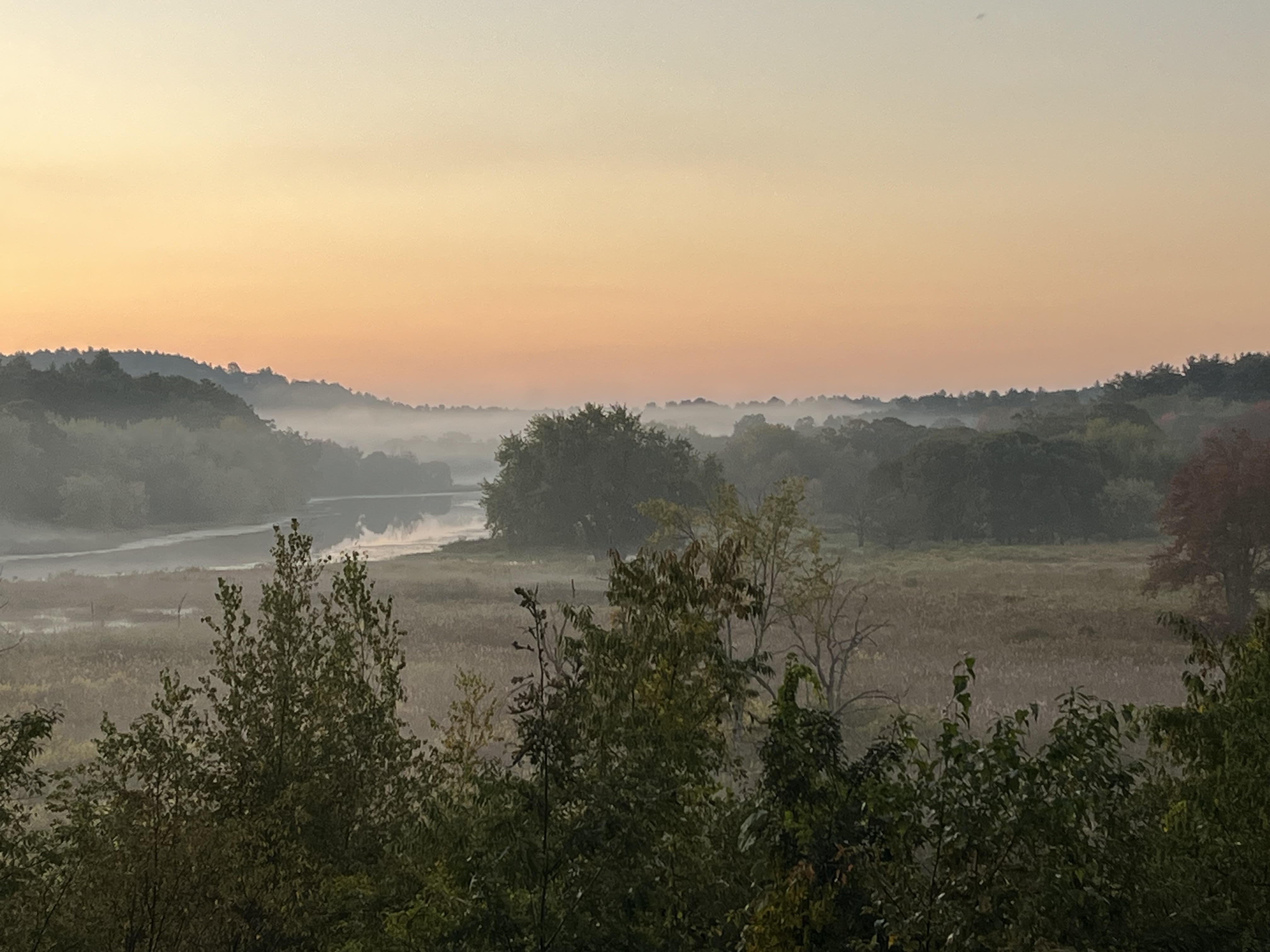
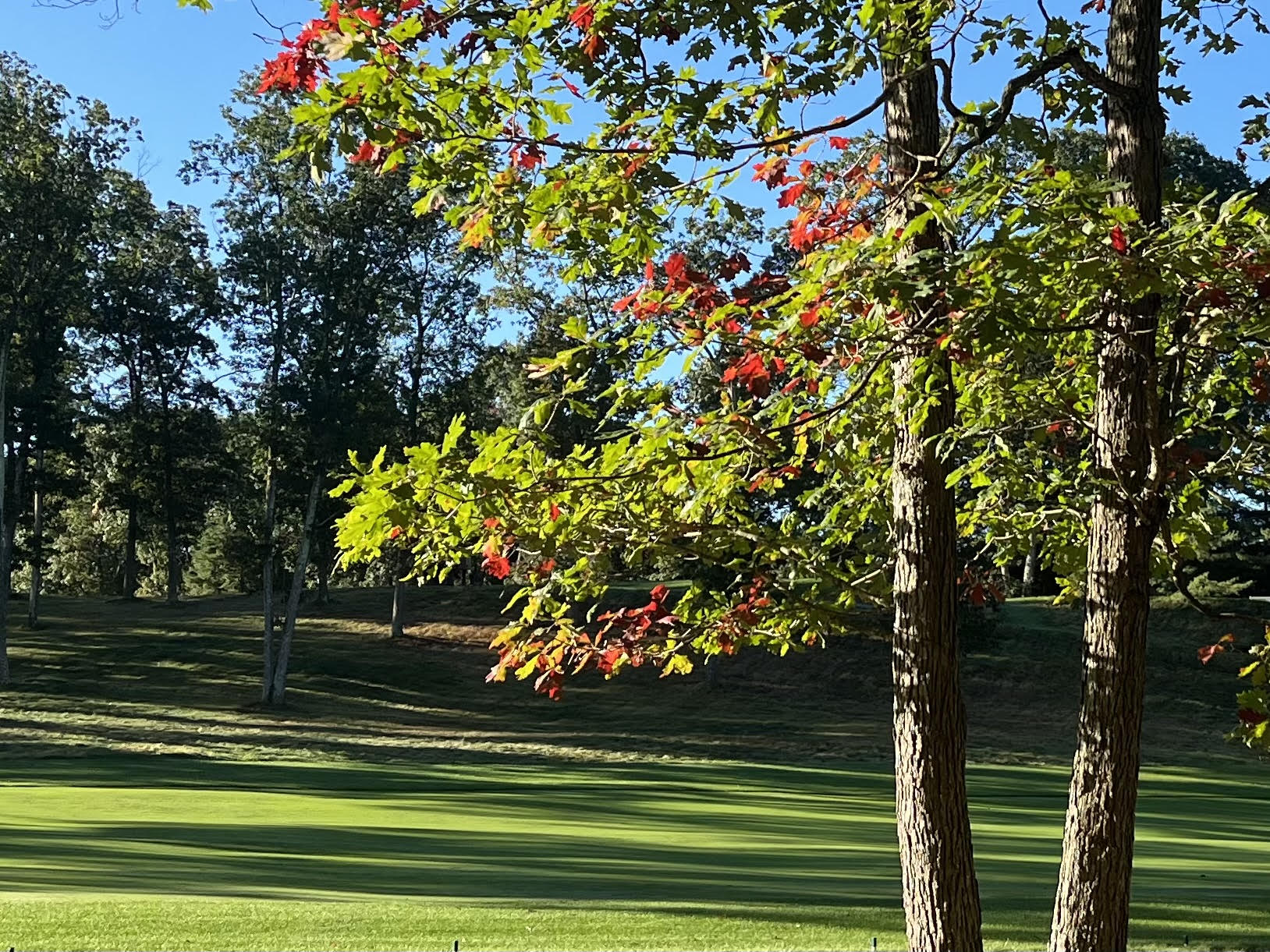
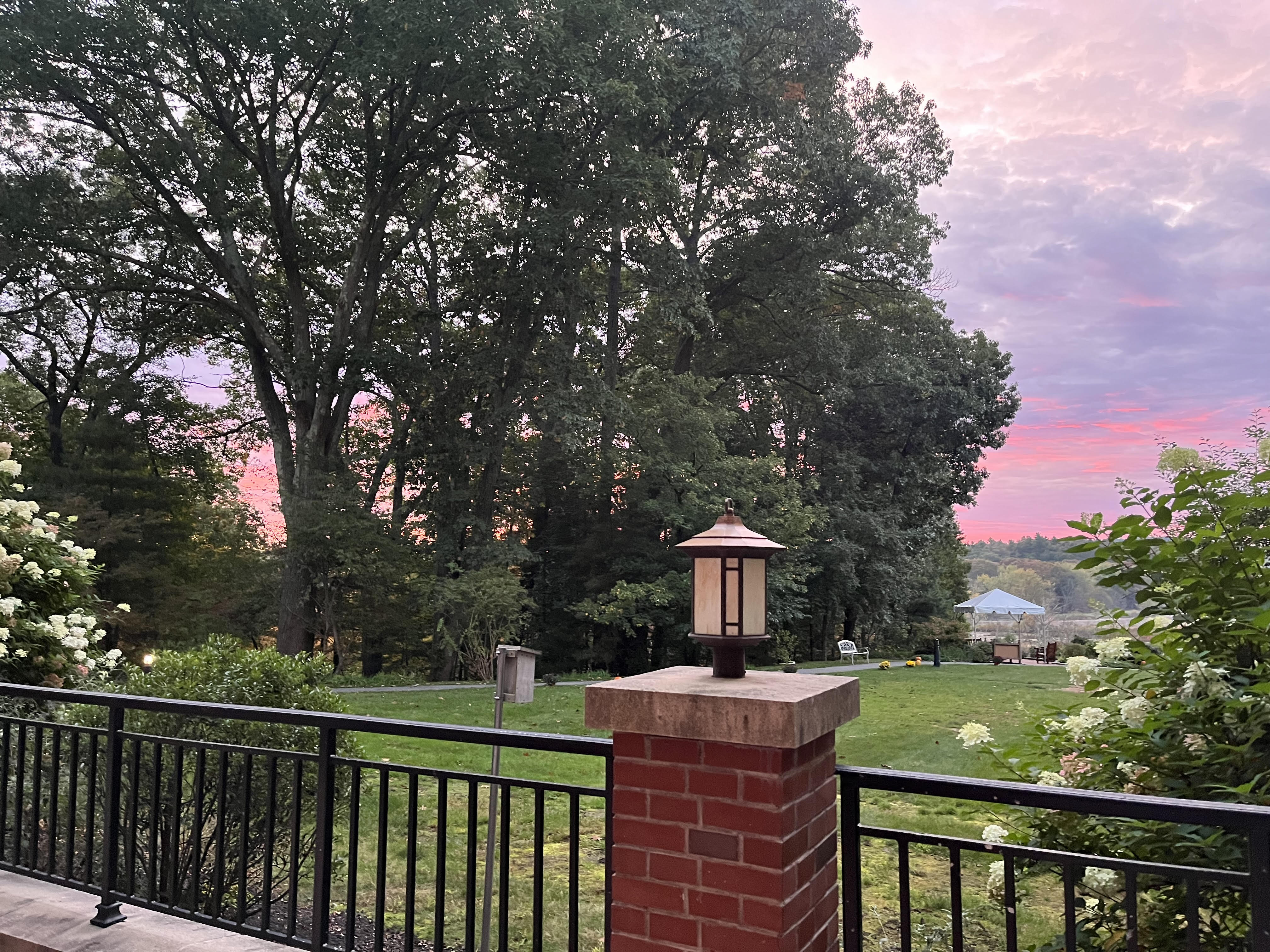
Above, early fall morning on the Sudbury River.

Leaves are falling like gold coins in New England and it’s getting cool enough for a wool scarf on early morning walks. When I wrap mine tightly around my neck, I think of my friend Pam, who died in April after a bad fall. So many things remind me of her, but the scarf reminds me how she said that if her neck is warm on cold days, she’s OK. I’m the same.

Where I live now, I have a nice view of the Sudbury River from the fitness center treadmill. The photo above cuts out the buildings that I normally see in the view. Isn’t it beautiful?

I take my usual walk past the local golf course, seen in the next picture. Golf makes me think of another friend, one who golfs almost every day in Florida. I sent her a picture, too.

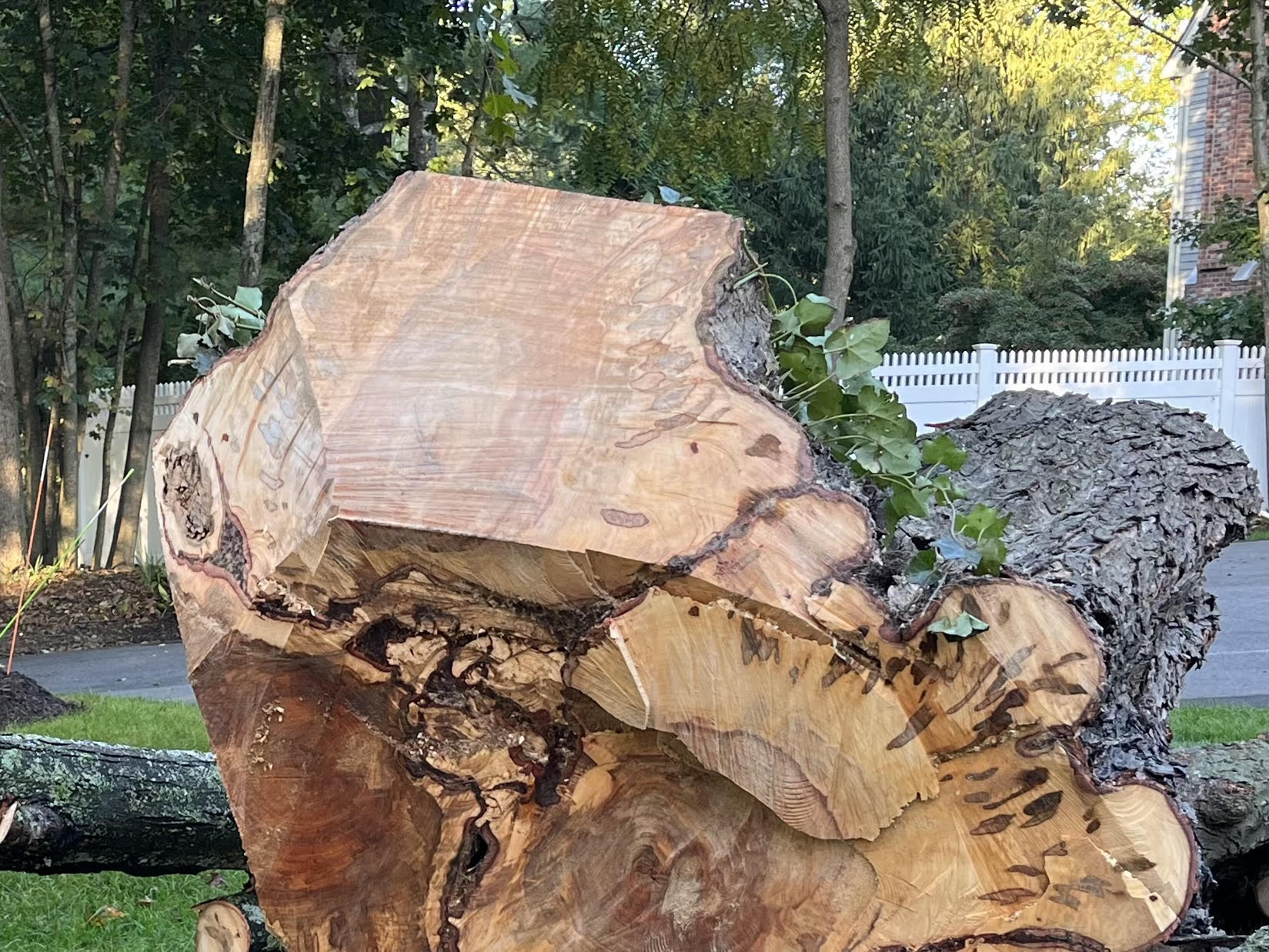
I’m seeing lots of pretty fungi and mushrooms and expect that before long there will be new and interesting ones emerging from the stump left behind by the monster tree below. I can’t help wondering why such a nice, big tree was cut down. I’m sure it didn’t want to be.

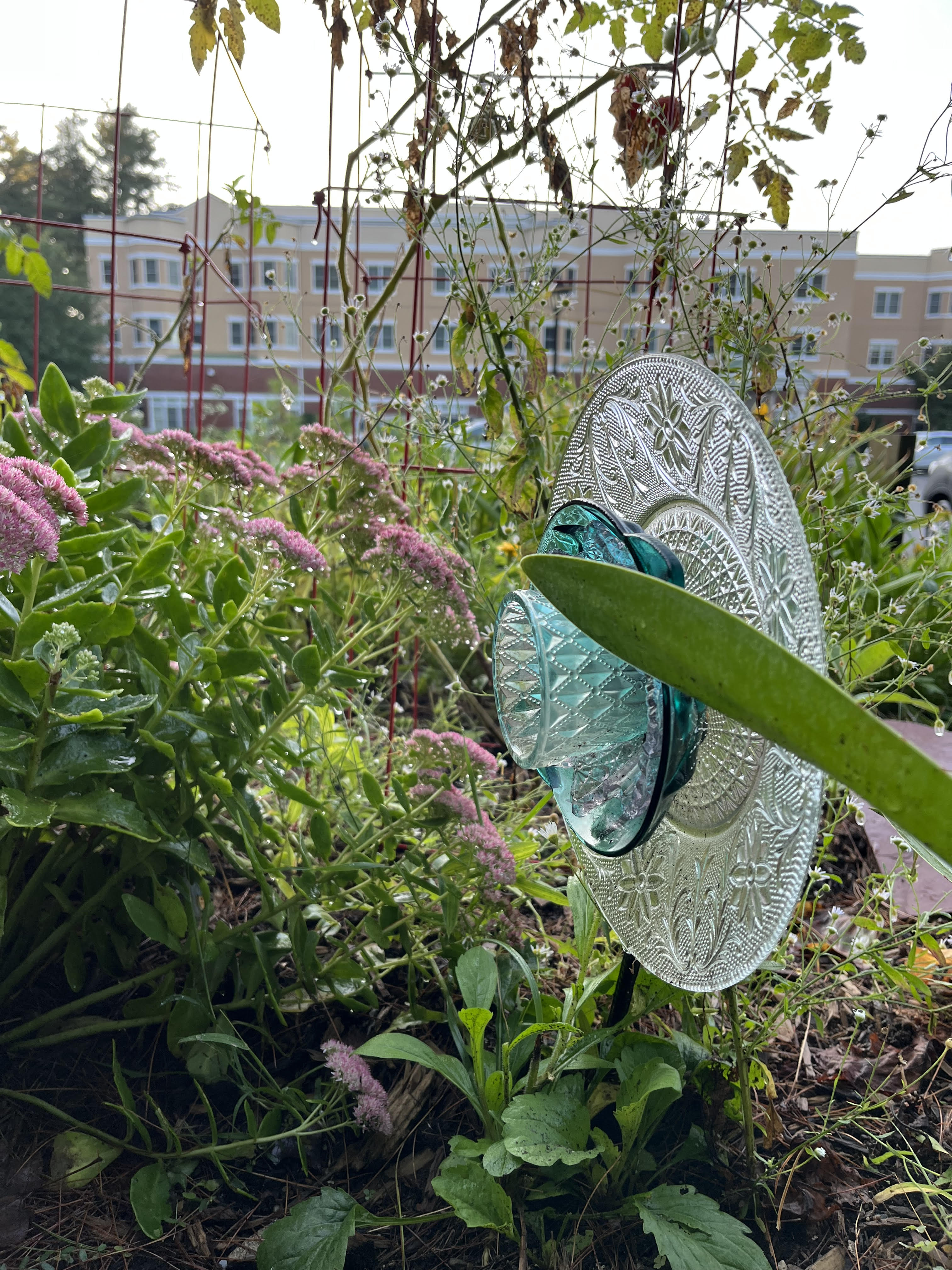
I don’t see fungi in the little garden plots where I take my compost offerings every few days. Just rich soil, flowers, tomatoes, and curious artifacts like the decorative tea cup in the photo.

The big echinacea at the house we are selling took me completely by surprise. I don’t remember when I planted it, and I know it never bloomed before. It strikes me as something dropped in from outer space. And as my kids know, that is likely to remind me of the 1978 version of The Invasion of the Body Snatchers.

Because so many things do remind me of that movie.

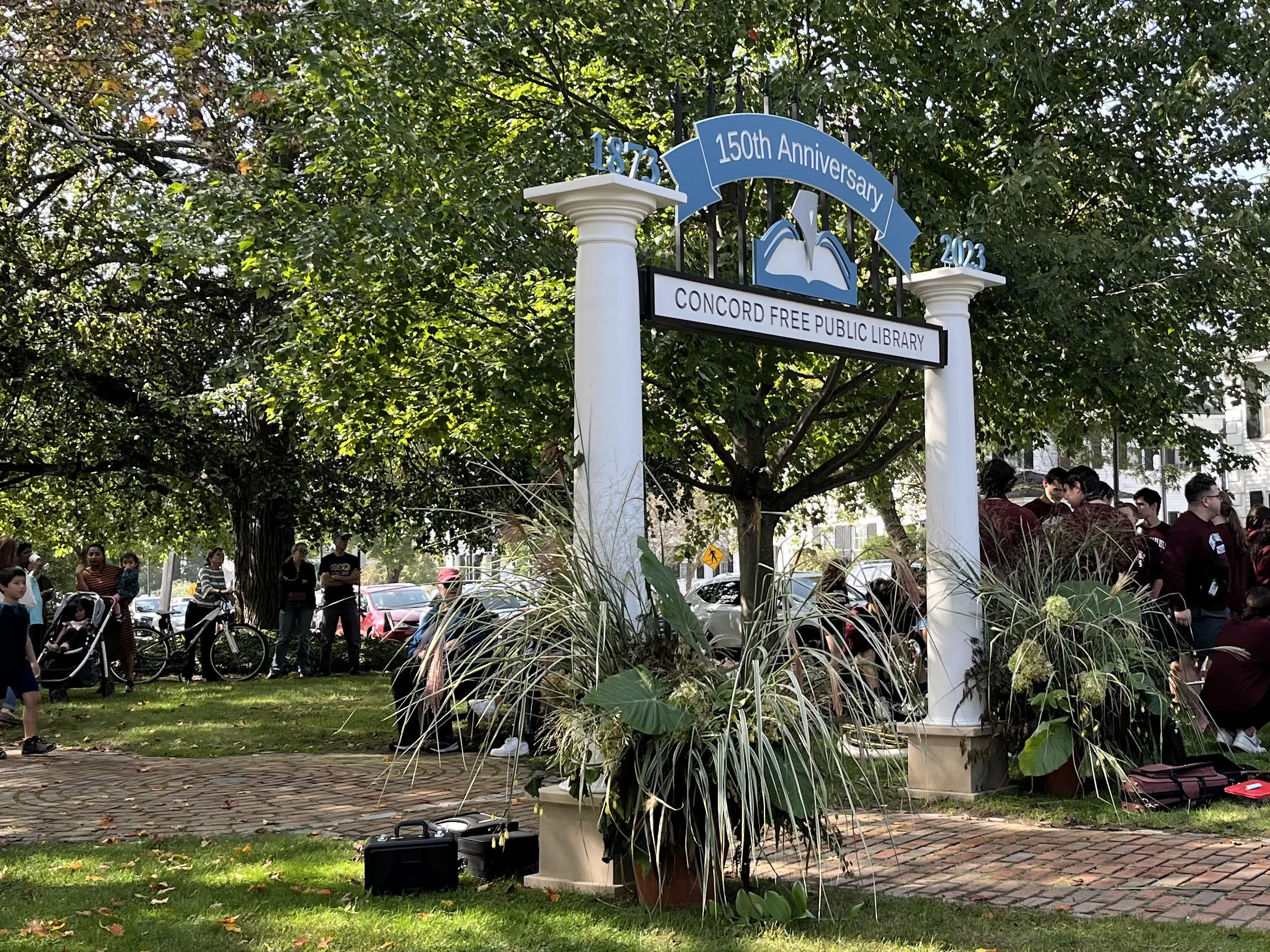
My next shot notes the 150th celebration of the local library, for which a beautiful day came through, as ordered. (Costume parade, Anyone? Speeches by Ralph Waldo Emerson?)

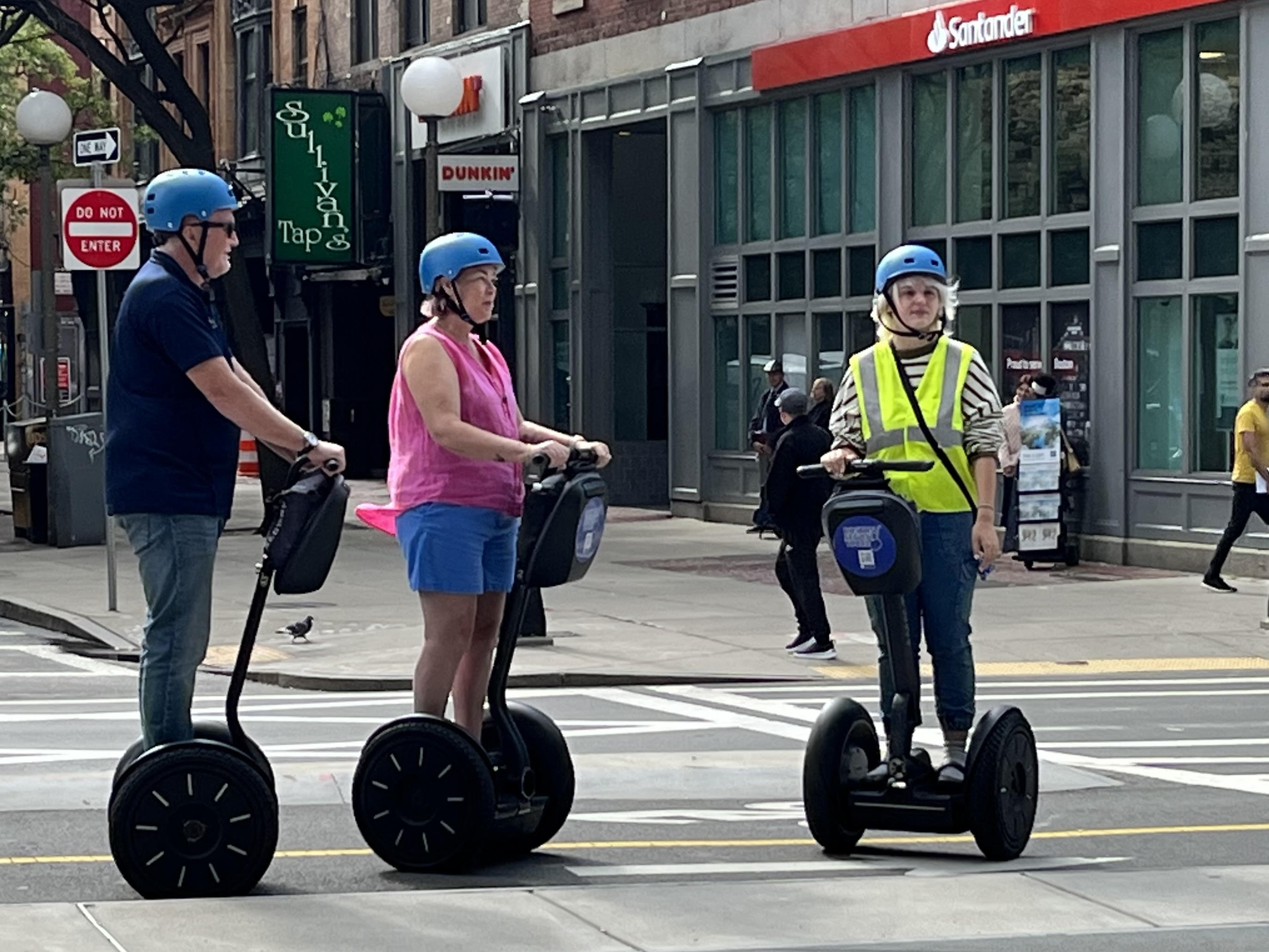
Next, there’s a photo of a typical sight near Boston’s North Station, where I went to have coffee with my friend Lillian one day. A number of tour businesses use Segways to get people from one historic site to another. Remember when Dean Kamen’s invention was going to revolutionize transportation? So far, it seems to have revolutionized only tourism.

Read Full Post »

Happy Cobblers

Photo: Marcie Parker for the Boston Globe.
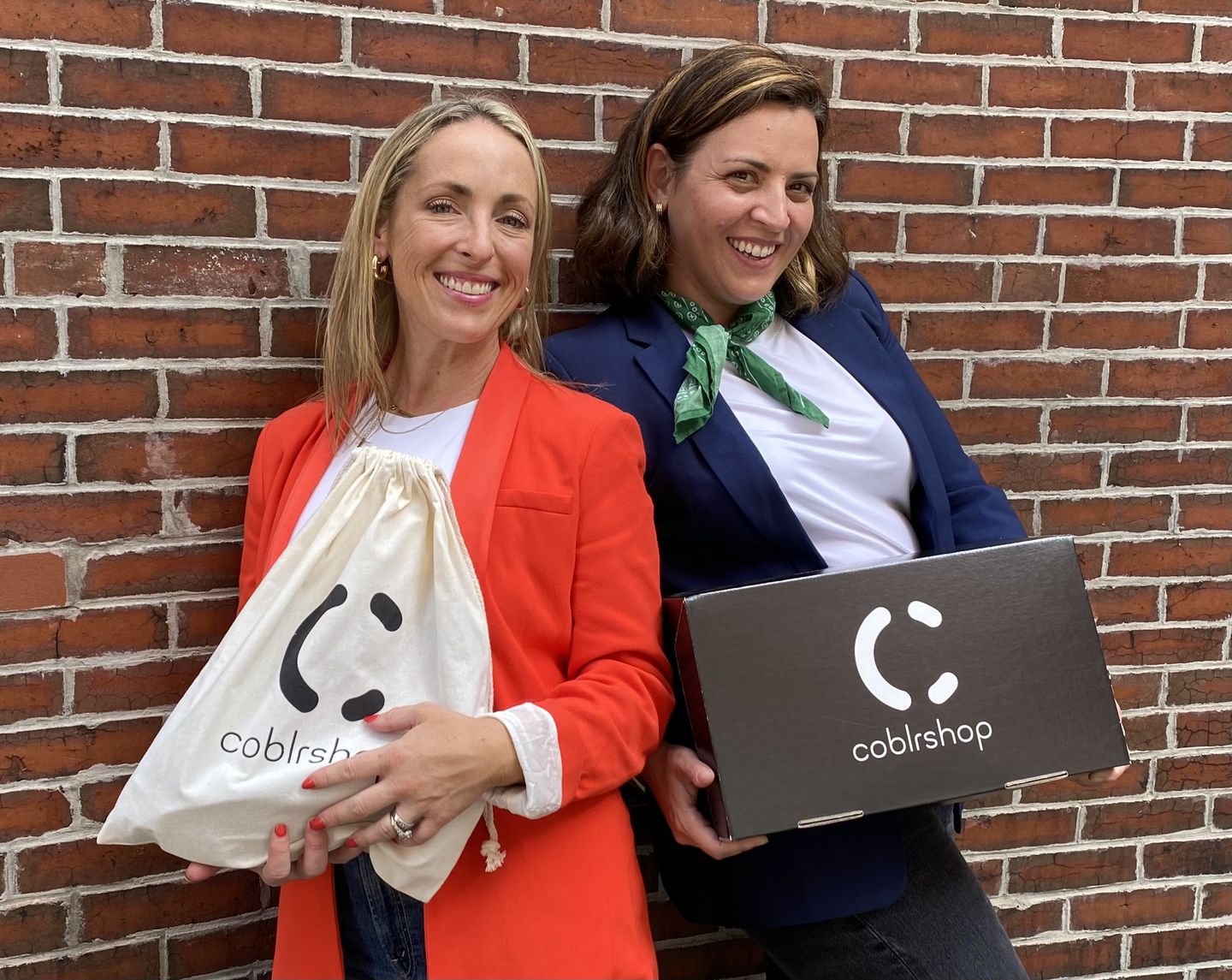
Leslie Bateman and Emily Watts are the founders of Coblrshop, a modern shoe repair company in Boston.

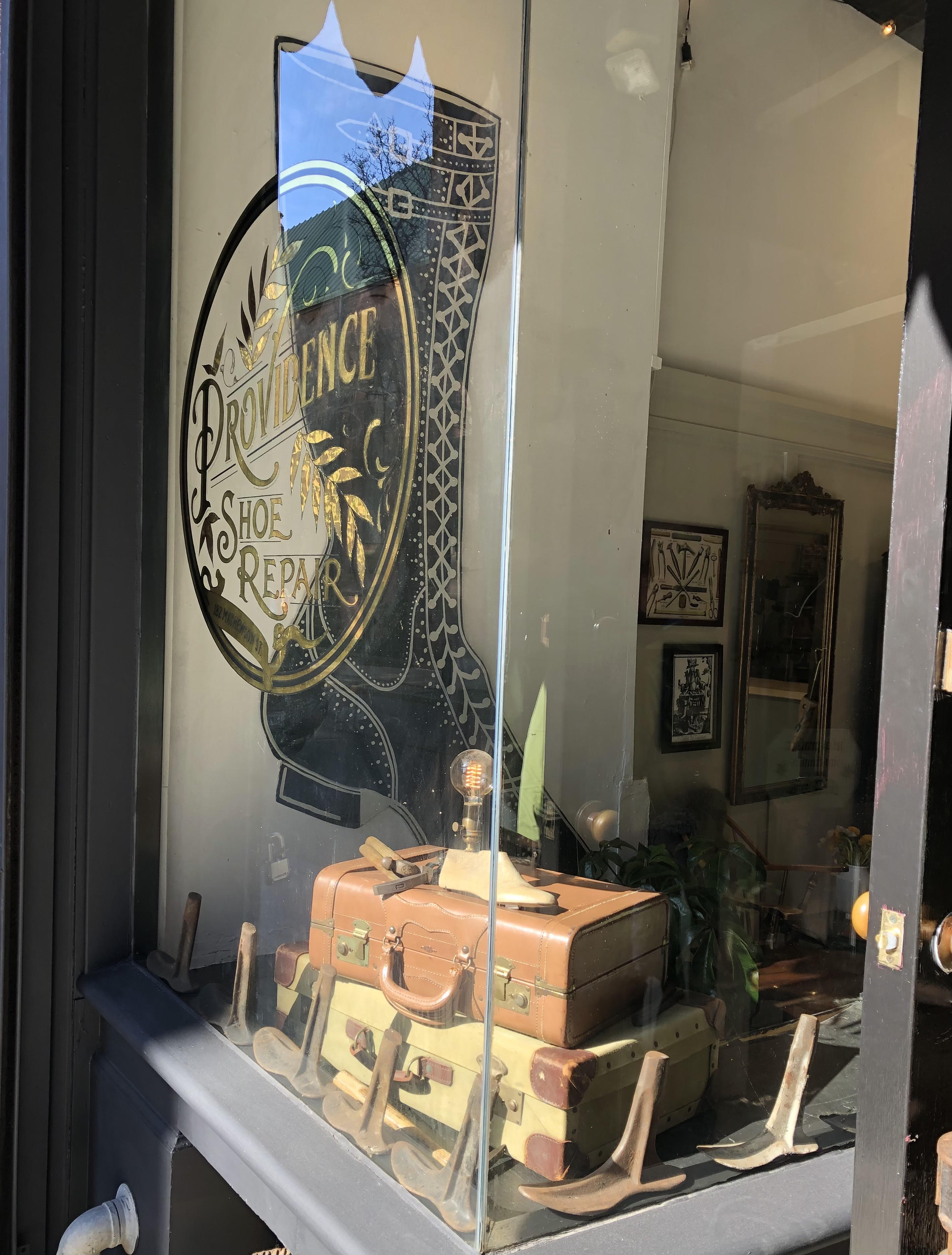
I don’t know if you would recall a photo blog post of mine that included a picture of a new-ish cobbler shop in Providence. I was surprised at the time to see that anyone new was eager to get into the shoe-repair business. Wasn’t it supposed to be a dying art?

It turns out that there are enough customers who want to keep their favorite shoes intact that cobbling services are actually increasing.

Marcie Parker reports at the Boston Globe, “Leslie Bateman always loved shoes. Since she was a little girl, she has walked with her eyes cast downward, checking out shoes as their owners stepped along sidewalks. She scoured shoe stores, department stores, and vintage clothes shops for the perfect shoes for school, work, exercise, formal occasions, and casual gatherings.

“And once she found the right shoes, she never wanted to toss them out. Thus began Bateman’s relationship with cobblers, the craftspeople who repair, customize, and sometimes make shoes. Whenever she moved to a new city — Montreal, New York, and now Boston — she searched for cobblers to keep her shoes in good condition, a task that became harder as the number of people practicing the trade dwindled.

“Now Bateman and her partner, Emily Watts, are launching a new service to make it easier for shoe lovers to get their shoes fixed. Their Boston-based startup, called Coblrshop, combines the latest in digital technology with a centuries-old craft, using its website and a mobile app coming next year to diagnose repairs for luxury shoes and handbags, estimate costs, and connect to cobblers.

“ ‘You bring technology in and it adds so much efficiency,’ Watts said. ‘[We’re] using technology to really improve a well-established and long-lasting industry.’

“Coblrshop is among the latest companies to use technology to connect customers with services, joining a host of websites and mobile apps that provide one-stop shopping for auto repair, dry cleaning, home maintenance, and food delivery.

“Bateman and Watts are betting if they make shoe repairs fast, convenient, and competitively priced, more people will fix rather than toss out worn shoes, not only helping to revive the art of shoe repair but also reducing the environmental impact of the footwear industry. …

“Coblrshop contracts with a downtown Boston shoe repair shop, David’s Instant Shoe Repair on Franklin Street, to make repairs. Ultimately, the company plans to find a larger, central location to host several cobblers and train new ones.

“Here’s how the service works: Customers go to the company’s website, where they can choose the type of shoe or handbag that needs repair. From there, they select from a drop down menu the condition of the shoes and the services needed.

“Customers can choose from broad repair categories, such as a clean and shine, wear and scuffing services, or a complete repair. They also have the option to add protective soles to reduce future wear and tear. … After ordering repairs and paying online, customers receive within three to five days a biodegradable and recyclable mailer bag to send their shoes to the company’s cobbler. The process, from estimate to delivery of just-like-new shoes, takes about two weeks.

“Eduard Harutyunyan, who works at David’s Instant Shoe Repair, is Coblrshop’s cobbler. After immigrating to Massachusetts from Armenia in 1997, he learned the craft from a cousin who owned a shoe repair shop in Natick.

“Bateman and Watts said they searched extensively to find a cobbler who they believed would do the highest quality work and be open to modernizing shoe repair. They chose Harutyunyan after speaking to more than 60 cobblers.

“Harutyunyan, 46, said … ‘The issue with the cobblers in general — they don’t get much respect,’ said Harutyunyan. ‘What I like is to be able to change that.’ …

“Few appreciate that as much as Bateman. She recalled becoming particularly attached to a pair of gold Chanel flats that her husband found at a vintage store in Manhattan in 2010 and gave to her for her birthday. She wore the flats every day for years, getting them resoled four times. …

“ ‘You’re not buying something and sending us something new or something via resale,’ Bateman said. ‘You are sending something in that has a story, and we need to take care of that and give you back that magical experience.’ ”

More at the Globe, here.

Photo: John and Suzanne’s Mom.
Providence cobbler shop.

Read Full Post »

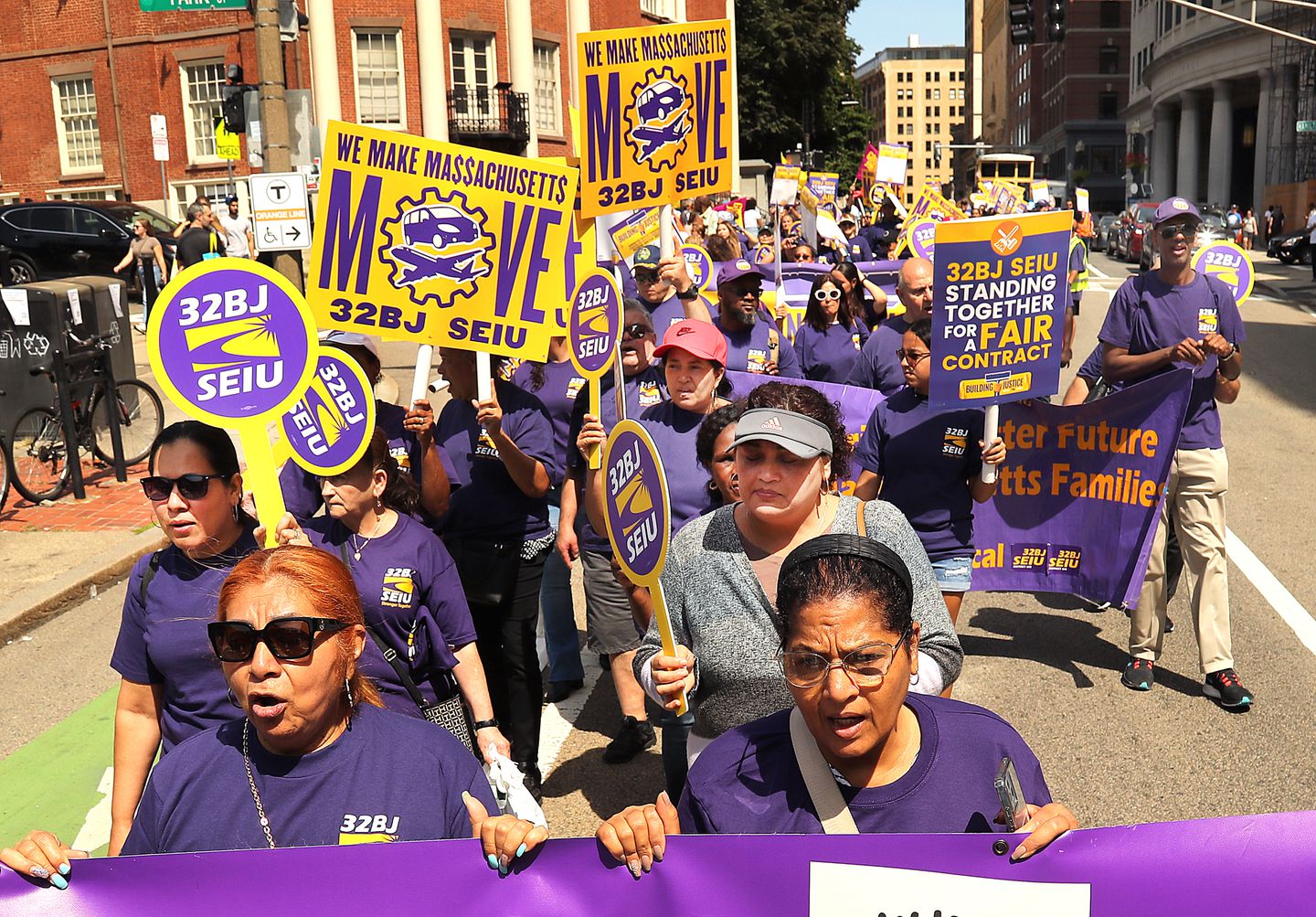
Photo: John Tlumacki/Globe Staff.
The Boston Globe reported recently on service workers marching “down Tremont Street to Boston Common, where they held a labor rally for new contracts and freedom to unionize.

As a member of the general public, I don’t like being inconvenienced by a labor strike any more than the next person. But I know my history. I know what life was like when workers couldn’t strike and how some gave their lives to change the status quo. So I think of that on Labor Day.

At the Boston Globe, John Hilliard wrote recently about service workers, who are among the last to band together for better working conditions. We need to stay as grateful to them as we were during the pandemic.

“Hundreds of essential workers — including janitors, airport staff, and ride-hailing drivers — marched through Boston’s streets Saturday demanding better post-pandemic workplace conditions after laboring to keep the economy afloat during the health crisis.

“The Labor Day weekend demonstration, organized by Local 32BJ of the Service Employees International Union, drew together service workers from across Greater Boston who are members, as well as some who are organizing to join the union, according to Roxana Rivera, a labor organizer and assistant to 32BJ president Manny Pastreich.

“ ‘This is a moment for workers, because they put so much of themselves out there during the pandemic. They didn’t have a choice to work remotely. Service workers risked their own personal health, and those of their families,’ Rivera said. ‘The fact that they still struggle to make ends meet is unacceptable.’ …

“Luis Medina, of Malden, who works full time as a janitor, said he joined the demonstration because he is fighting to secure full-time hours for colleagues struggling to make ends meet with part-time employment. …

“Saturday’s demonstration came amid a dramatic resurgence in labor organizing and activity across the country — from Starbucks workers seeking to unionize to Hollywood writers and actors now on strike — demanding better pay, benefits, and working conditions from employers.

“Among the successes are Teamsters and UPS workers who have secured new contracts through union efforts.

Support for labor unions in the US has soared, with roughly two-thirds of Americans now saying they approve of them, according to a Gallup poll released Wednesday.

“And demonstrators in Boston Saturday, like Marty, a 43-year-old from Plymouth who works as an Uber driver and gave only his first name, drew a direct line between union successes nationwide and efforts to support workers locally.

“ ‘We are really important, because we are the people who move the economy,’ said Marty, who wore a Screen Actors Guild shirt to support striking actors. ‘If no one is making any money, no one’s spending anything, [and] that’s when the economy starts to suffer.’

“Rivera said that even though many people now can work from home, commercial buildings must still be cleaned and maintained, while airport employees and ride-hailing drivers remain vital to keeping the economy going. ‘We need to make sure that we are not leaving these workers behind,’ Rivera said. …

“Waitstaff and food service workers at restaurants along the route gathered at doors to watch the protesters. One worker left her restaurant, asked a union representative for a flyer being handed out and took it back inside.

“The city was packed with people enjoying a beautiful end-of-summer Saturday, and throngs watched from sidewalks, many taking photos with their phones. Several raised their arms in support, and one man on a scooter beeped his horn as he rode along Tremont Street.

“Elizabeth Hill-Karbowski, who was visiting Boston with family from Wisconsin, watched as demonstrators marched along Tremont Street and read from a flyer.

“ ‘It’s a timely type of demonstration for the Labor Day weekend, very peaceful, well organized and [it is] people just wanting to have their voices heard,’ Hill-Karbowski said. …

“State Senator Lydia Edwards, whose district includes East Boston, Revere, and Winthrop, spoke to workers in Spanish then English. …

“ ‘We celebrate all the victories that we have had, but also we need to remember the lives that we’ve lost in the fight for justice, and the lives that you have saved as workers’ during the pandemic, Edwards said.

“Ed Flynn, Boston City Council president, told the crowd: ‘When workers aren’t receiving a decent wage here in the most liberal, progressive city in the country, there’s something wrong with that.’ ”

More at the Globe, here.

Read Full Post »

Photo: Story Hinckley/The Christian Science Monitor.
Chicago’s Classical Revival office building at 208 S. LaSalle St. is being converted to residences with 280 planned apartments in the heart of the city’s financial district.

The other day, I was listening to Boston’s Mayor Michelle Wu on Boston Public Radio talking about our region’s severe housing crisis and how she’s working to convert empty office buildings to housing. She aims to make the change incrementally — even a few apartments in each building would make a huge difference.

Boston is not the only city considering this approach.

Laurent Belsie and Story Hinkley report at the Christian Science Monitor, “At the corner of LaSalle and Adams streets in downtown Chicago, the City National Bank and Trust Co. building rises like an elegant monument to the past. Its Doric columns, carved rosettes, and lion’s heads evoke the Classical Revival style popular a century ago. But it’s a deceptive facade.

“The bank, whose name still adorns the front, disappeared in a merger 60 years ago. The building now houses two hotels, offices for professionals and a host of nonprofits, and a British men’s clothing store. And after a city competition to reimagine its financial district, the building will soon change again. The offices will give way to 280 residences: studios, one- and two-bedroom apartments, and amenities like a fitness center and even a private dog run. …

“With fewer workers going to the office, office vacancy rates stand at a 30-year high. Lease revenue is falling, especially in older buildings, and owners are seeing the value of their properties plunge. …

“Developers could upgrade their buildings or convert them to other uses, but in many cases the costs are prohibitive. And a slowing economy, rising interest rates, and tighter lending standards make those conversions even harder. Hanging over them is a cloud of uncertainty: Is the work-from-home movement a permanent change, or just a temporary post-pandemic phenomenon?

“Despite this murky outlook, some cities are charging forward with conversion plans and subsidies. With fewer workers to keep their central business districts vibrant, these cities are hoping to replace them with apartment-dwellers and kick-start a transformation of their downtowns.

“By helping developers convert offices to living units, the mayor of Washington, D.C., hopes to add 15,000 people to the 25,000 or so residents already living downtown. Pittsburgh has cobbled together some $6 million in state and federal funds for its downtown conversion program. Seattle last month put out a ‘call for ideas,’ inviting building owners and architects to come up with new solutions for struggling office buildings.

“Chicago is one of the leaders of the adaptive reuse movement. In March, the city selected the City National Bank building and two other nearby buildings for its LaSalle Street Reimagined project, which aims to revitalize the financial district. Last week, the city chose two more buildings for conversions, which will receive city help and subsidies. In all, the projects will mean more than 1,600 new downtown living apartments in what the city calls one of the largest office-to-residential conversions in the nation.

“ ‘It’s important for the resiliency of downtown,’ says Cindy Chan Roubik, deputy commissioner of the city’s planning and development department. ‘It’s important to have people at different hours of the day and with different uses. You’ll have more people here on the weekends, after work hours, and that provides a vitality.’

“The logic for such conversions makes sense – to a point. … Since the end of 2019, apartment rents have soared around the country while office leasing revenue has slumped by nearly a fifth after adjusting for inflation, according to researchers at New York and Columbia universities

“Also, these averages mask considerable variation. Top-rated office space is holding its own, perhaps because companies want the best amenities to lure their workers back to the office. Less desirable and older office space is seeing much higher vacancy rates.

“And it is precisely these older, smaller office towers that make the best candidates for conversion to apartments. They’re typically easier to reconfigure to meet city codes, such as rules requiring every apartment to have windows. Then there’s the history and architecture, a big draw for some city-dwellers.

“The problems are scale and cost. Even with their recent uptick, the rate of conversions is far too low to solve cities’ office vacancy problem, CBRE says. And the economics are problematic. In a report last month, Moody’s Analytics found that only 35 of the nearly 1,100 office buildings it tracks in the New York City metro area were suitable for conversion. The rest of the buildings are too expensive to make conversions viable, which means either government subsidies or a big drop in office values and rents would be needed.

“Such a drop is precisely what has happened, according to the New York and Columbia researchers. In their analysis of the New York office market, they calculated that the actual value of the city’s office buildings had already fallen by 46% since the pandemic and would edge down to more than 50% by 2029 if the work-from-home trend persists. Those averages include top-rated office space; without that space in the calculation, the declines would be even worse. …

” ‘The unit costs are so high [if you do a conversion, however],’ says Dennis McClendon, a Chicago historian and geographer. For ‘half the cost, you could adapt and build the unit in a walk-up building in an outlying neighborhood.’

“On the brighter side of the ledger, America’s cities have shown remarkable resilience and creativity in keeping up with the times.” 

More at the Monitor, here. No firewall.

Read Full Post »

Older Posts »