Feeds:
Posts
Comments

Posts Tagged ‘boston’

Brian sent me information about Higher Ground Farm, which is putting down roots on the roof of the Design Center in South Boston.

“A roof farm is a type of green roof. A green roof is a system of layers that is laid over an existing roof. A green roof is beneficial to a building owner and the community because it protects the existing roof, doubling to tripling its life, thereby saving money and keeping materials out of the landfill.

“Green roofs also reduce a building’s energy costs by insulating in the winter and cooling the rooftop in the summer. Finally, green roofs temper the effects of two common urban environmental problems – combined sewer overflow and the urban heat island effect.

“A series of roof farms throughout the city will capitalize on the environmental benefits of green roofs while also increasing access to fresh, healthy food. Higher Ground Farm will operate several roof farms throughout the greater Boston area, utilizing previously unused space while providing additional rental revenue to a building owner.

“Roof agriculture has the potential to be a job-producing boost to the economy, and a completely environmentally sustainable business sector that can set Boston apart from other cities. Higher Ground Farm will utilize the resources of our top-notch universities to study roof agriculture, which will position Boston as a leader in the field. Finally, Higher Ground Farm will be a space where our community can reconnect to productive green space and learn about sustainable city planning.” More.

I also found a video interview about it that you will like, here.

Read Full Post »

snow meter height

I don’t know how to use our television, and the radio has only three channels, so I ended up streaming WPRI out of Providence.

I follow WPRI’s Ted Nesi on twitter, and he kept tweeting useful storm tidbits, so I thought I’d try his tv station. Things were a little chaotic there, which felt real. At one point Ted had his mike on accidentally, and I could hear, “I got stuff! Take me, please!”

Overall, Saturday was a quiet day at the Woebegone Chalet. I caught up on old newspapers (new ones had not been delivered for two days). I made guacamole. Put in a laundry. Did some exercises.

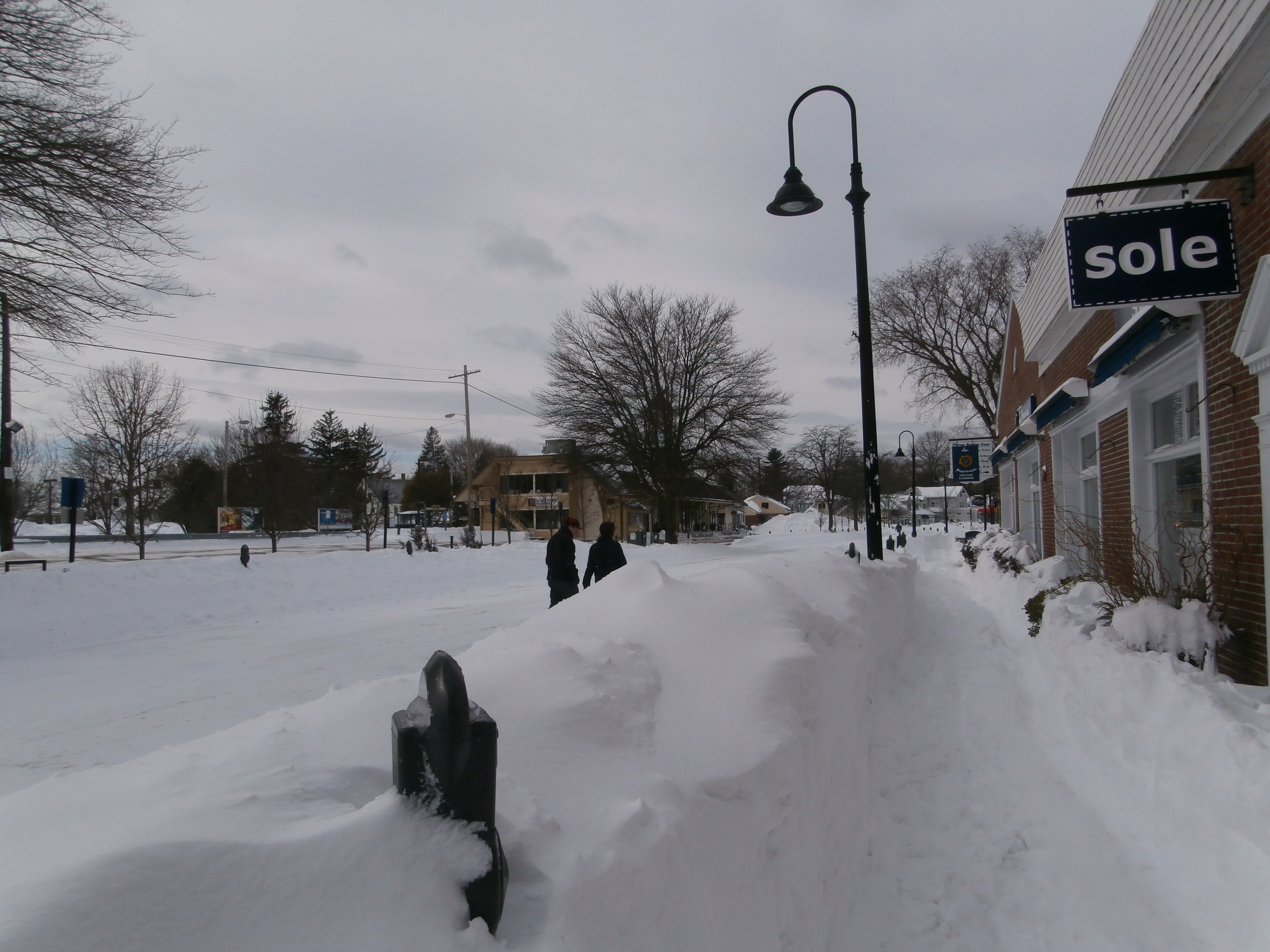
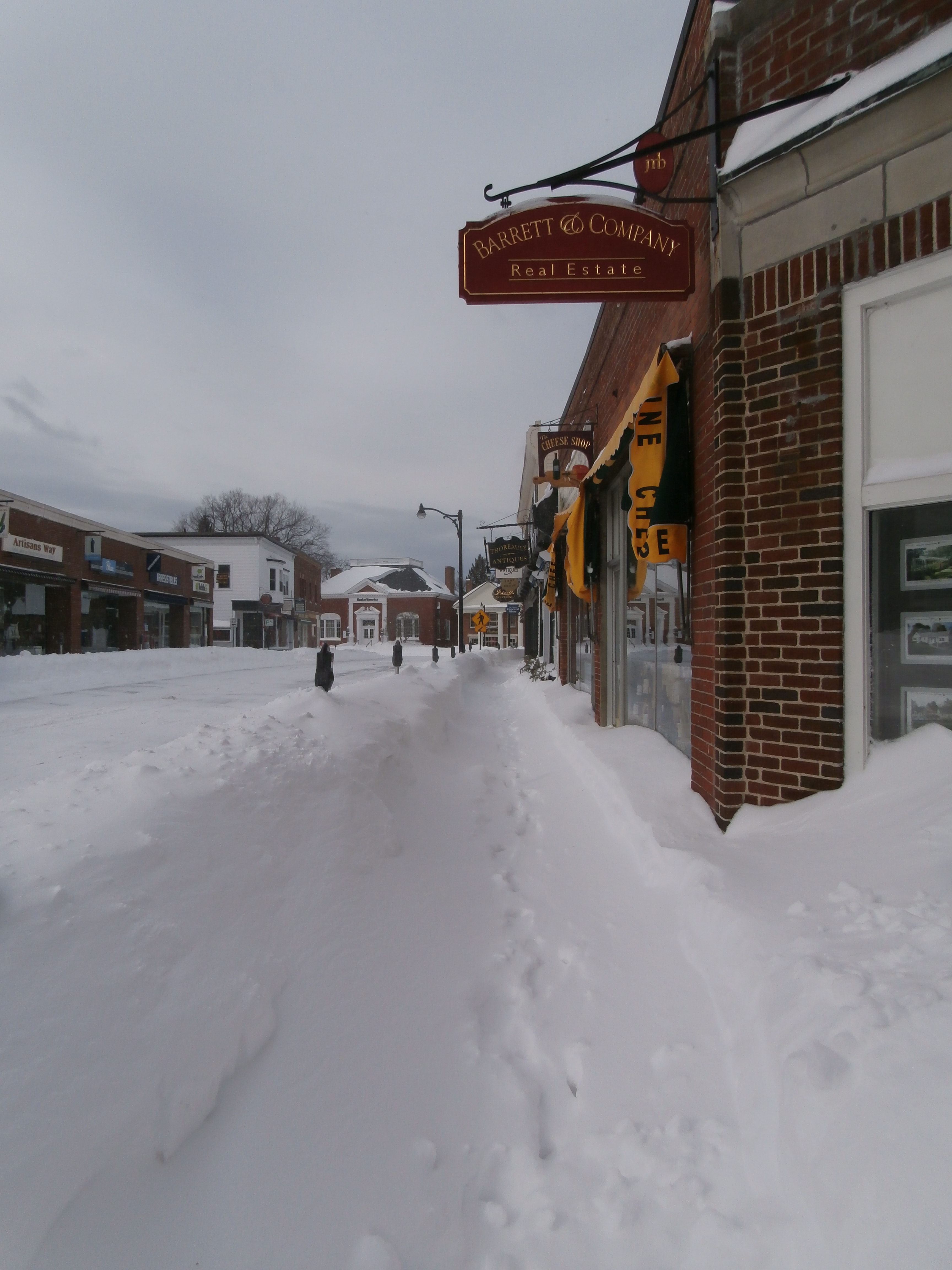
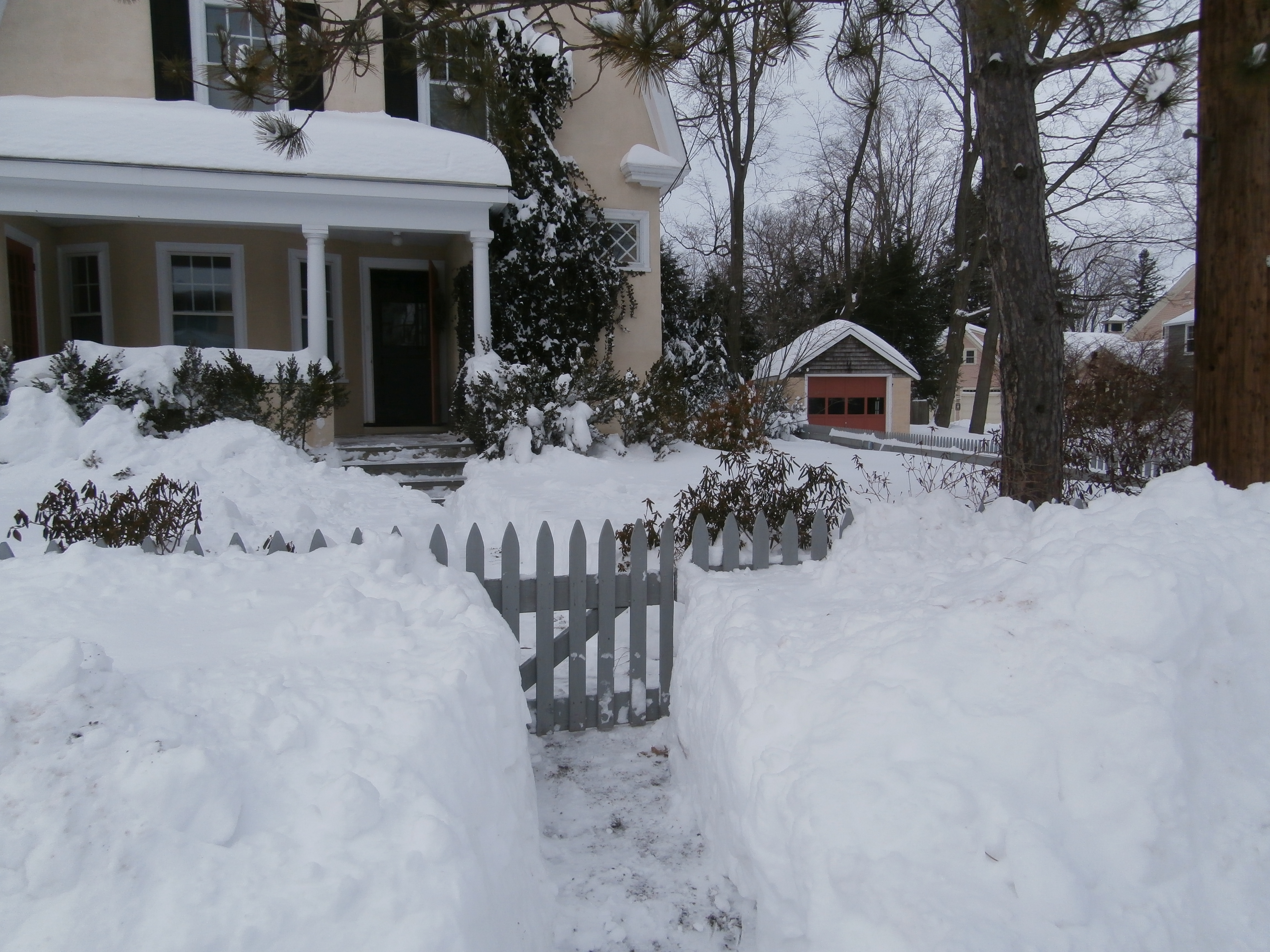
After a while I bundled up and climbed over the front fence, getting my boot stuck and full of snow. I hailed a couple young men from the Academy who were digging out a neighbor’s car. They agreed to shovel my front walk for the price I usually pay for both walks. It was well worth it. I returned from a hike around town (everything closed but Dunkin’ Donuts) to a cleared walk.

long view

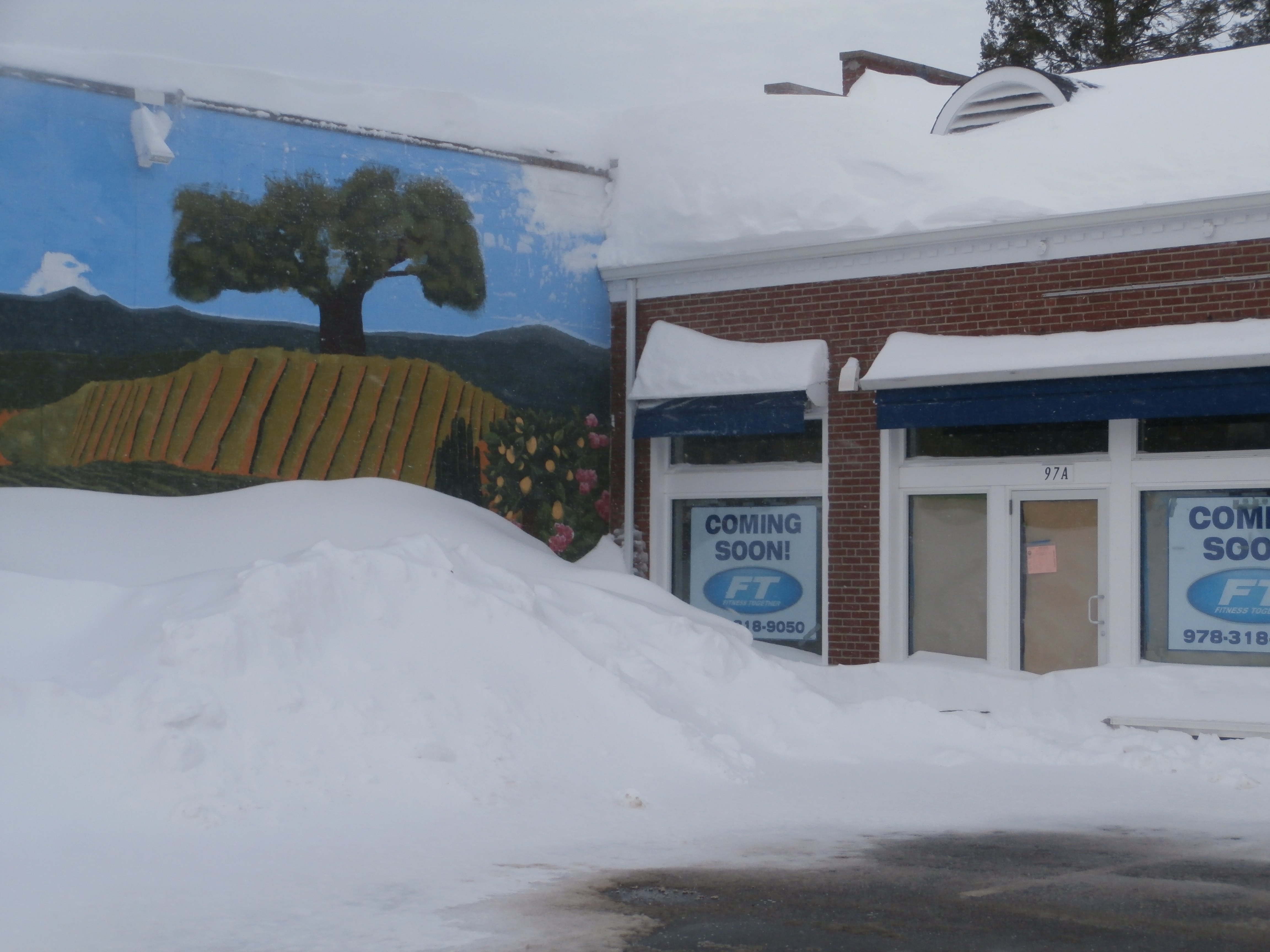
coming soon

after

Read Full Post »

I learned something new about gratitude today.

It seems that years ago the people of Boston sent emergency aid to Nova Scotia, and now every November, Nova Scotia sends Boston a Christmas tree.

Geoffrey Agombar writes in Canada’s Annapolis County Spectator, “All Nova Scotians are familiar with the legend of Boston’s speedy and heroic support when just week’s before Christmas 1917 two ships collided in Halifax Harbour leaving 2000 dead, thousands injured, and flattening surrounding buildings. Every year since 1971, Nova Scotia has sent a big thank you card to the city in the form of a 12-16 metre tall Christmas Tree.” More.

Canada Online has a story by Susan Munroe: “For more than 40 years it’s been a Christmas tradition for the province of Nova Scotia to ship one of its biggest and best Christmas trees to Boston to thank the people of Boston for the emergency assistance they provided after the Halifax Explosion in 1917. Relief from Boston was the first to arrive the day after the horrendous explosion which killed 1,900 people and wounded another 9,000. The New Englanders were also the last to leave.

“The 2012 Christmas tree is a 70-year-old, 15-metre (50-foot) white spruce donated by Paul and Jan Hicks from Jordan Bay, Shelburne County, Nova Scotia. On November 13, hundreds of children from local elementary schools attended the Christmas tree cutting ceremony, where Nova Scotia storyteller Bruce Nunn read from his book Buddy the Bluenose Reindeer and the Boston Christmas Tree Adventure.

“The tree was loaded onto a flatbed truck and made its way to Boston. It arrived on November 16, and was escorted by the Boston Police Department to the Boston Common where it is being installed. The Christmas tree will be the focal point of the annual Boston Common Tree Lighting Event on November 29. The ceremony will be televised and is expected to draw a live crowd of about 30,000. The ceremony will feature two performances from the Nova Scotian percussion ensemble Squid, and remarks from [a representative of the ailing] Boston Mayor Thomas Menino and the Deputy Premier of Nova Scotia, Frank Corbett. The RCMP and Santa Claus will be on hand, and there will be fireworks too.”

Update 4/20/13 — After the Boston Marathon tragedy, Nova Scotia is making a $50,000 donation to Massachusetts General Hospital. Read.

Photograph: The Spectator

Read Full Post »

I keep a folder of things I want to check out in walking distance of the office. Today I pulled out a Boston Globe article from 2-1/2 years ago, “Depression-era mural gets a second chance to shine,” and set out.

A Stephen Etnier mural of Boston Harbor that had been rolled up and stored away in 1981 was back on display.

Etnier, as Brian Ballou wrote in the Globe, was “one of hundreds of artists across the country picked by the federal government in the late 1930s to early ’40s to depict characteristic scenes of their region in post offices. …

“In early 2005, postal employee Brian Houlihan came across the painting and alerted Dallan Wordekemper, the federal preservation officer for the United States Postal Service. The mural was sent to Parma Conservation in Chicago, which began to restore the artwork in late 2008.”

The restored painting, “Mail for New England,” was unveiled in April 2010, but it took me until today to get to the post office branch at Stuart and Clarendon.

I got an extra bonus, too, because on the way I saw a completely unexpected bit of street art by the famed Gemeos twins, whose work at the ICA and Dewey Square was described in an earlier post.

Read Full Post »

Boston Photos

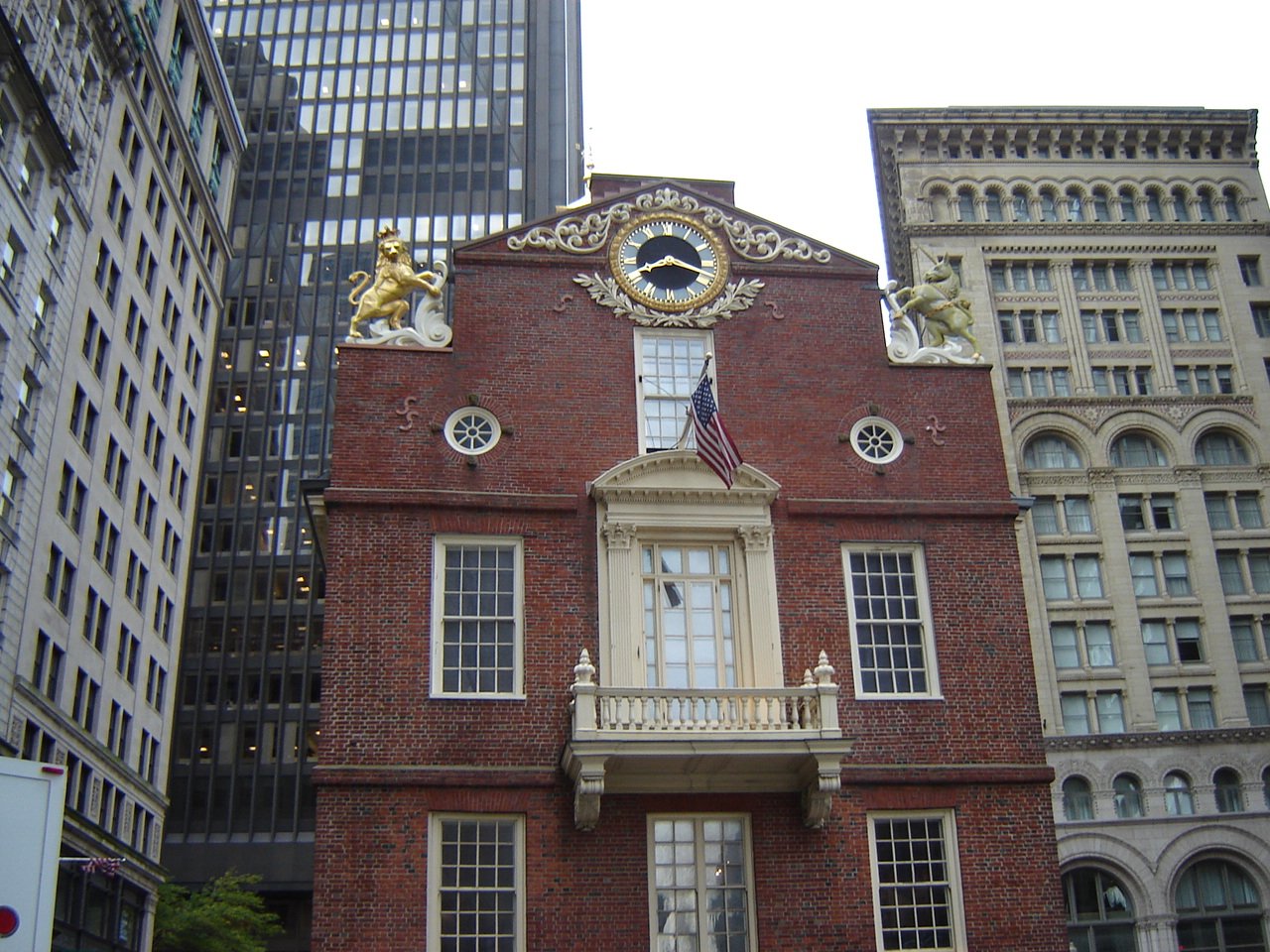
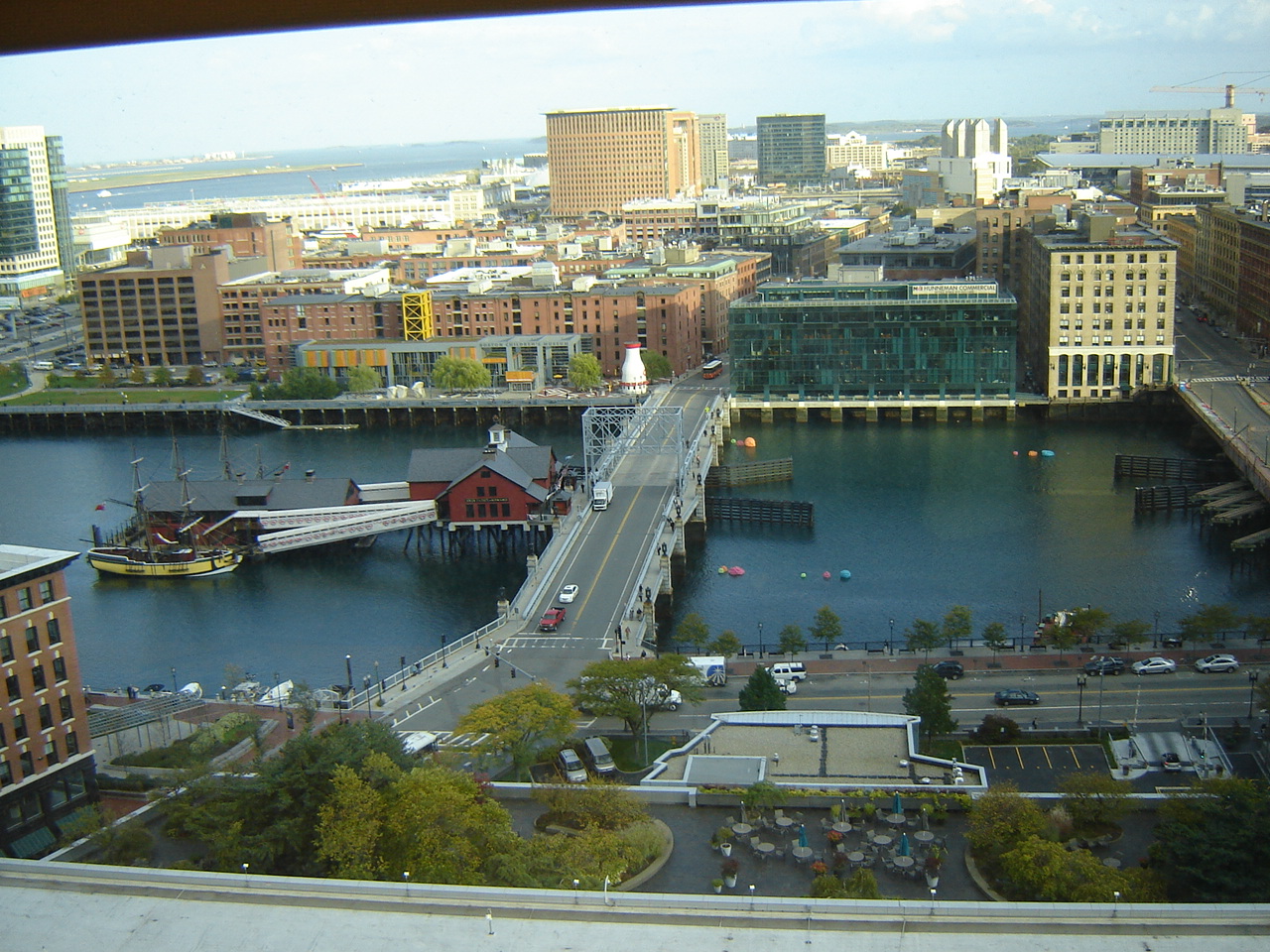
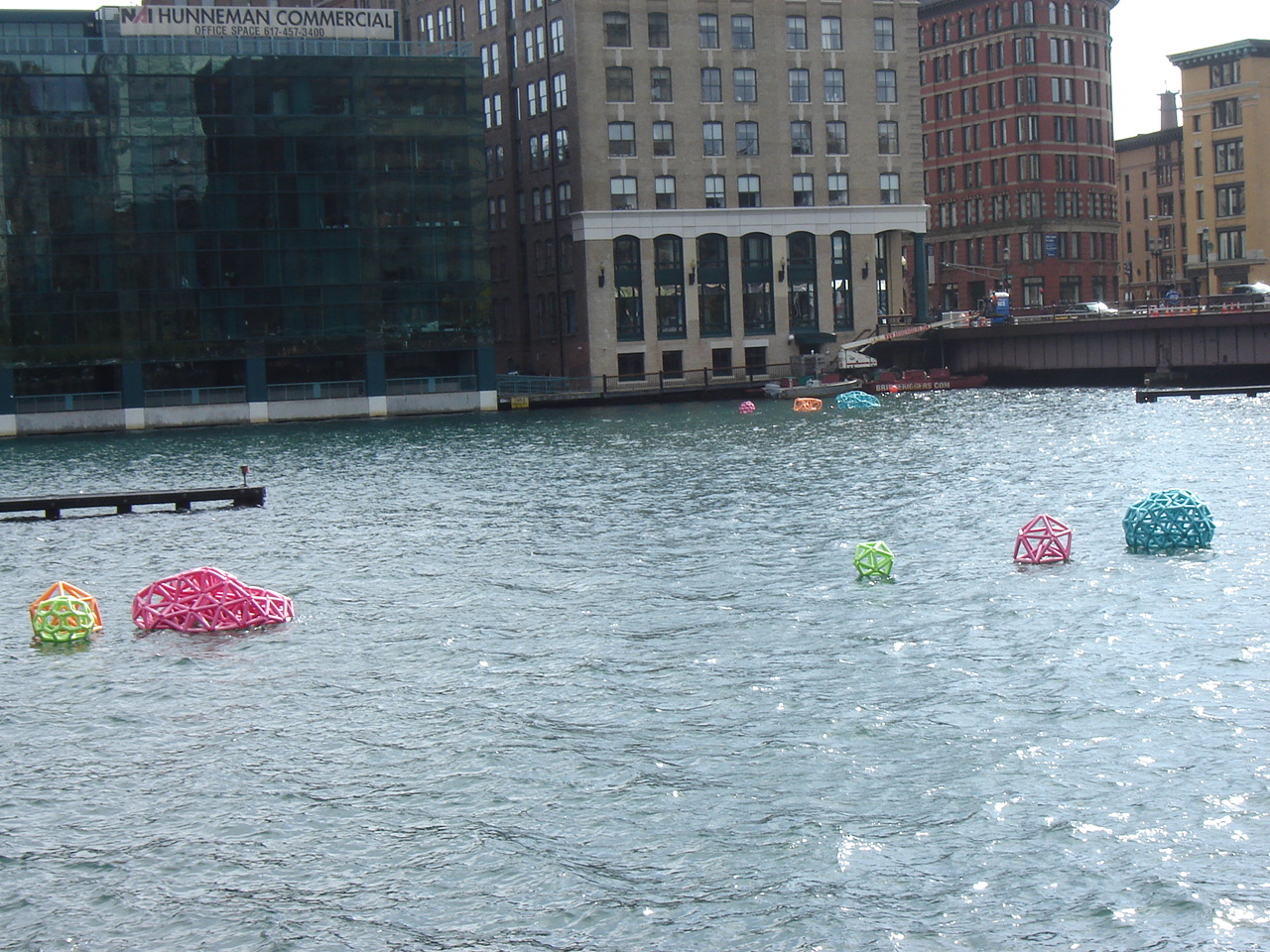
Here are a few recent photos of Boston, including a sun-dial sculpture dedicated to healers through the ages at Massachusetts General Hospital, the original State House, and Fort Point Channel from my office building. Can you see the brightly colored, twisty toys in the channel? Art objects appear in the water every once in a while and remain for a couple months before they vanish.

Read Full Post »

Photos from my wanderings in Boston and Cambridge are piling up.

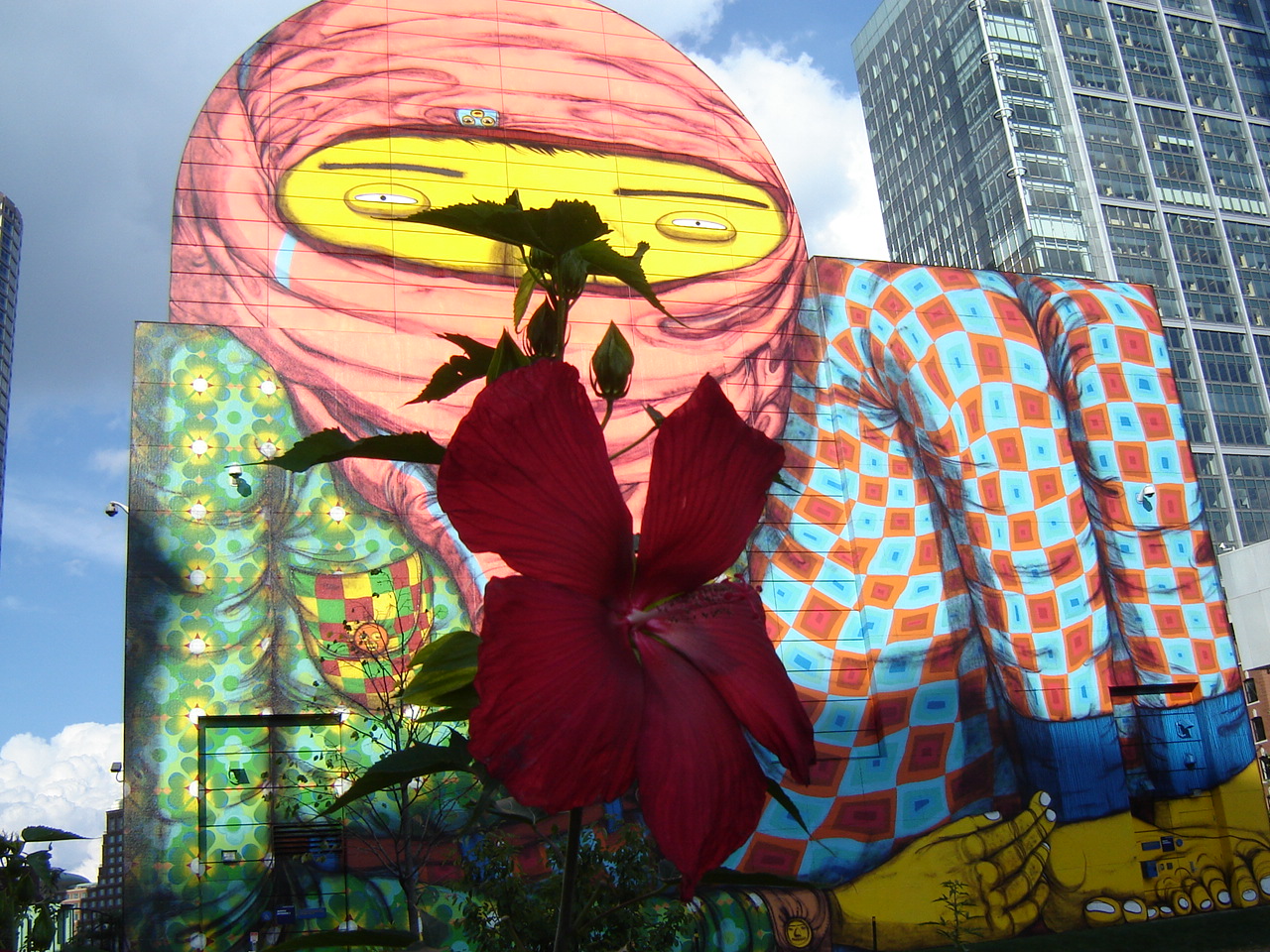
Can you identify the flower from the Greenway’s demonstration garden? It seems to be blotting out the mural in Dewey Square.

How about the approach to the Longfellow Bridge on the Kendall Square side of the Charles? Early in the morning, it looks like an ancient tomb.

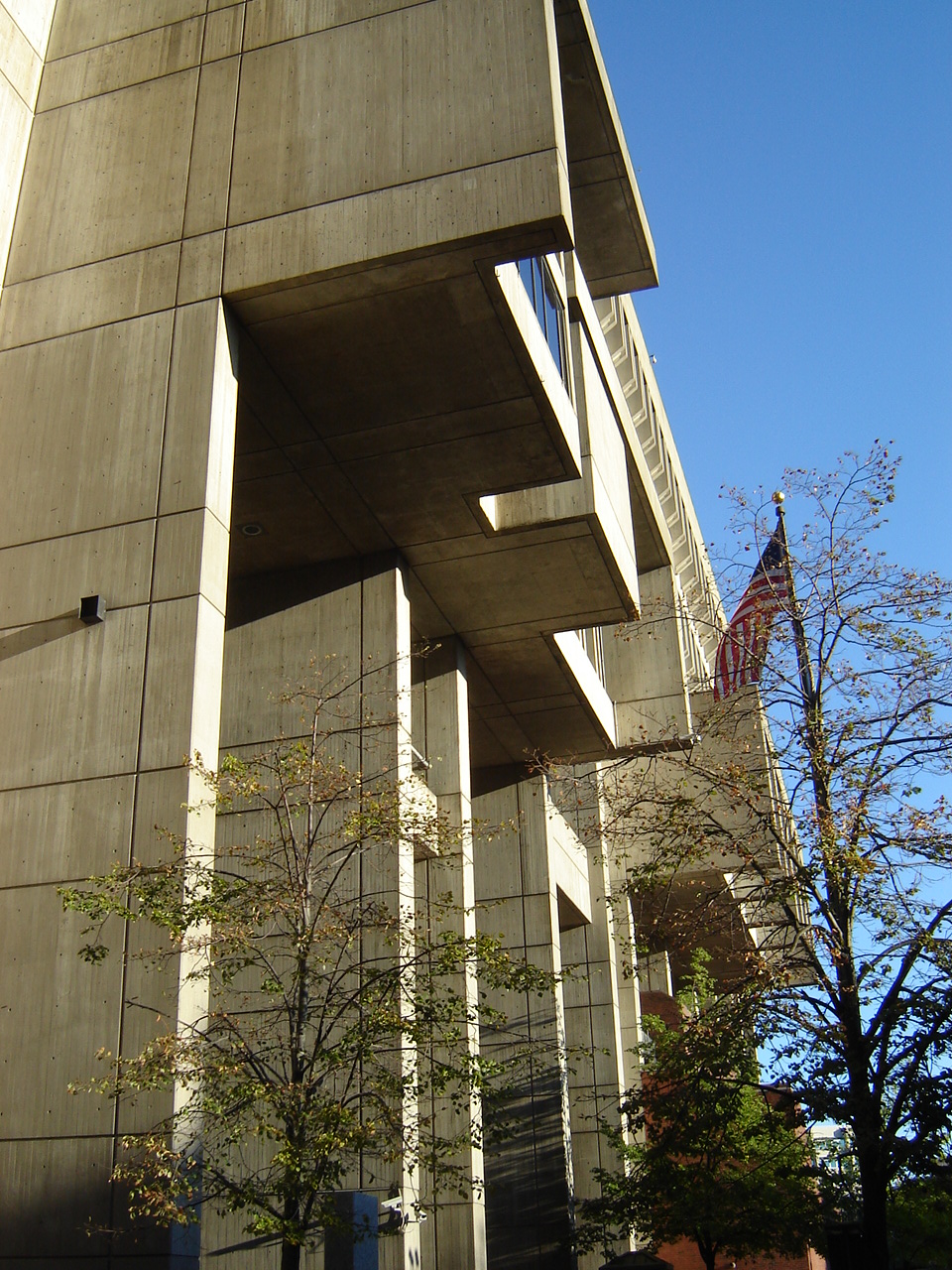
I took the photo of City Hall for my only friend who thinks modernism is beautiful.

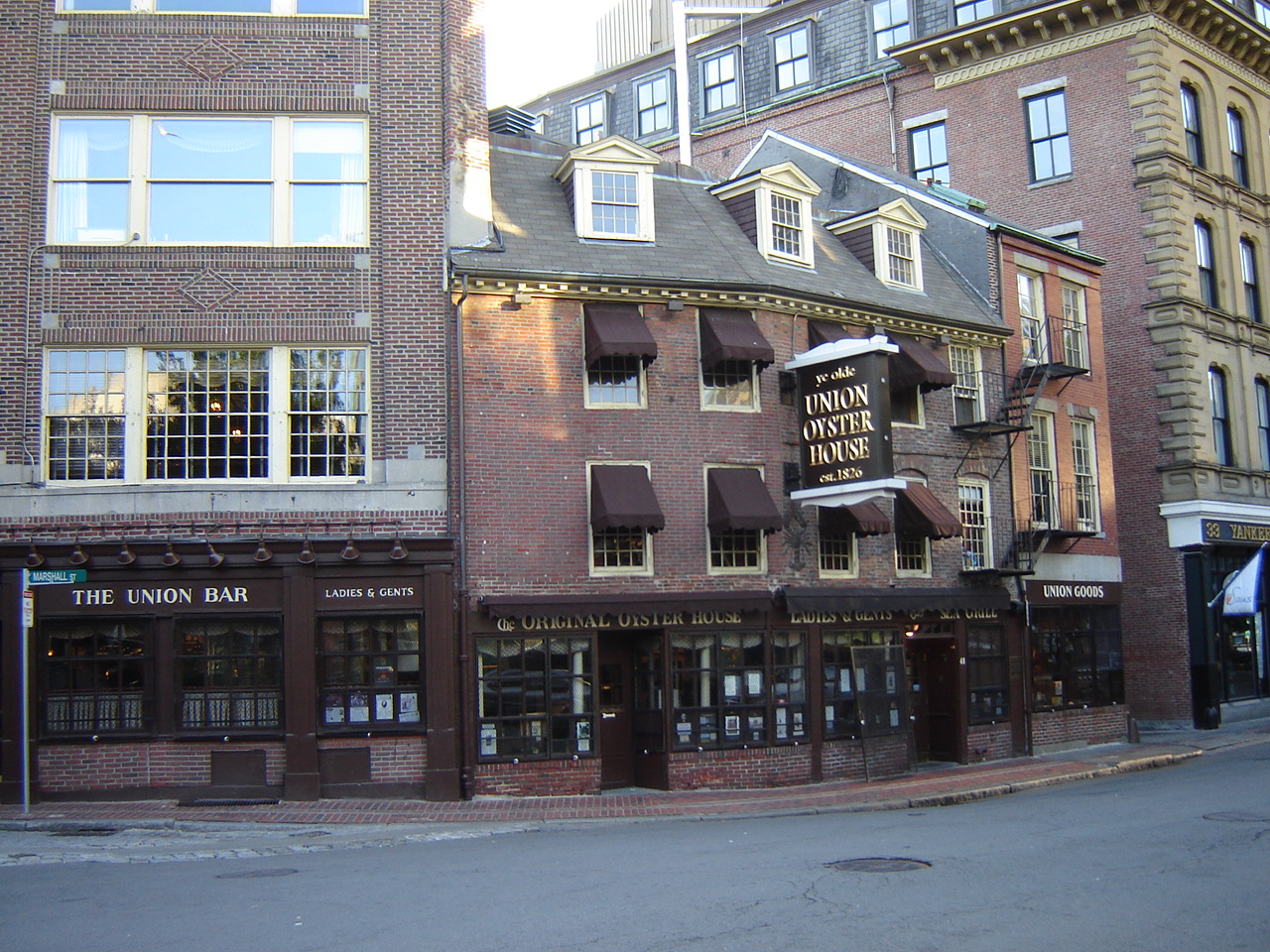
The Oyster House is a landmark.

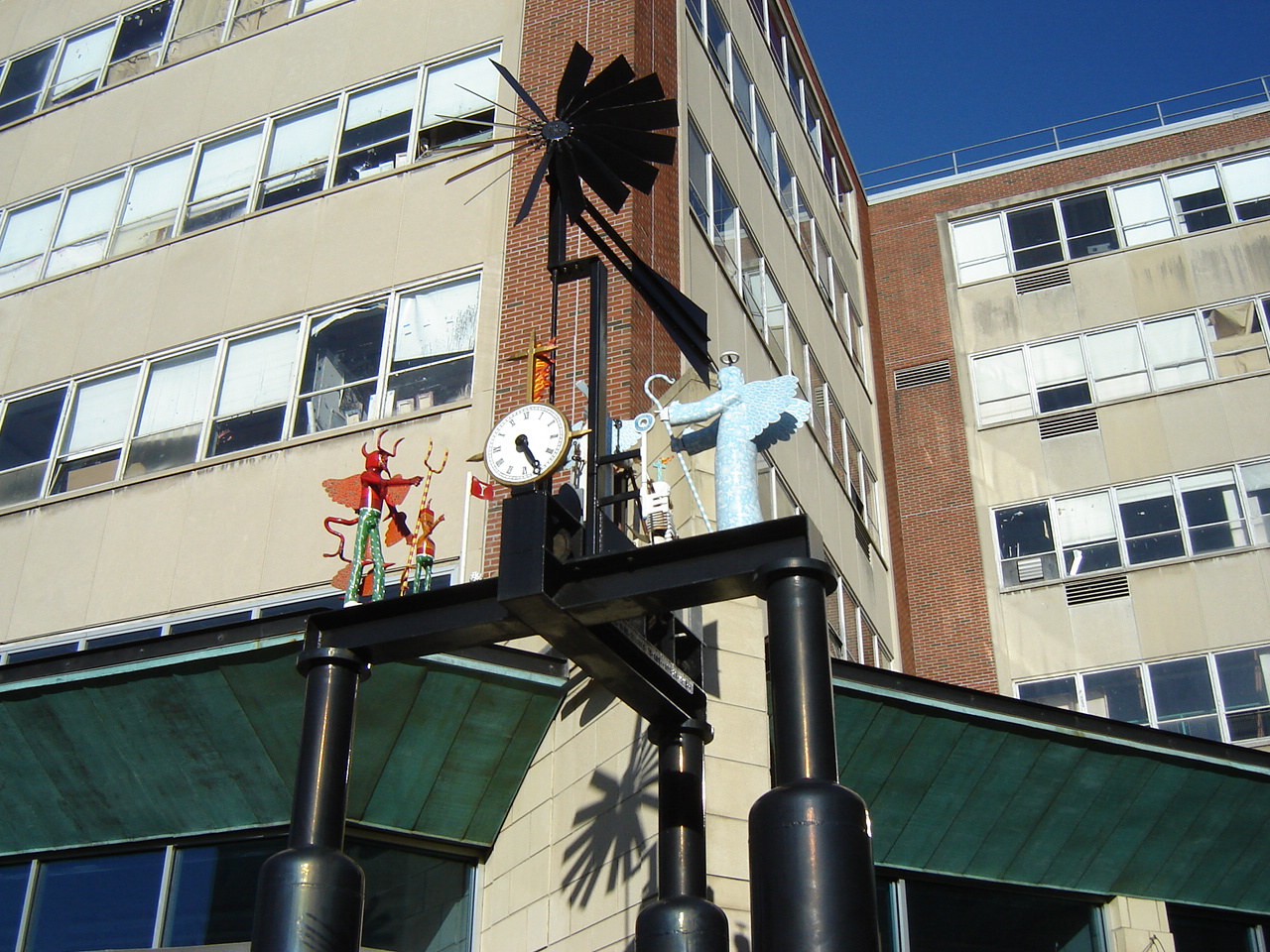
And the Manichean clock is at Northeastern University. (You do, of course, remember the Manichean Heresy, which posited good and evil as equal forces?) Comments welcome.

Read Full Post »

On mornings when I don’t walk in my neighborhood or in the Greenway near work, I’m more likely to walk around the emerging waterfront district than the Public Garden, the approach to which involves too much waiting at street lights.

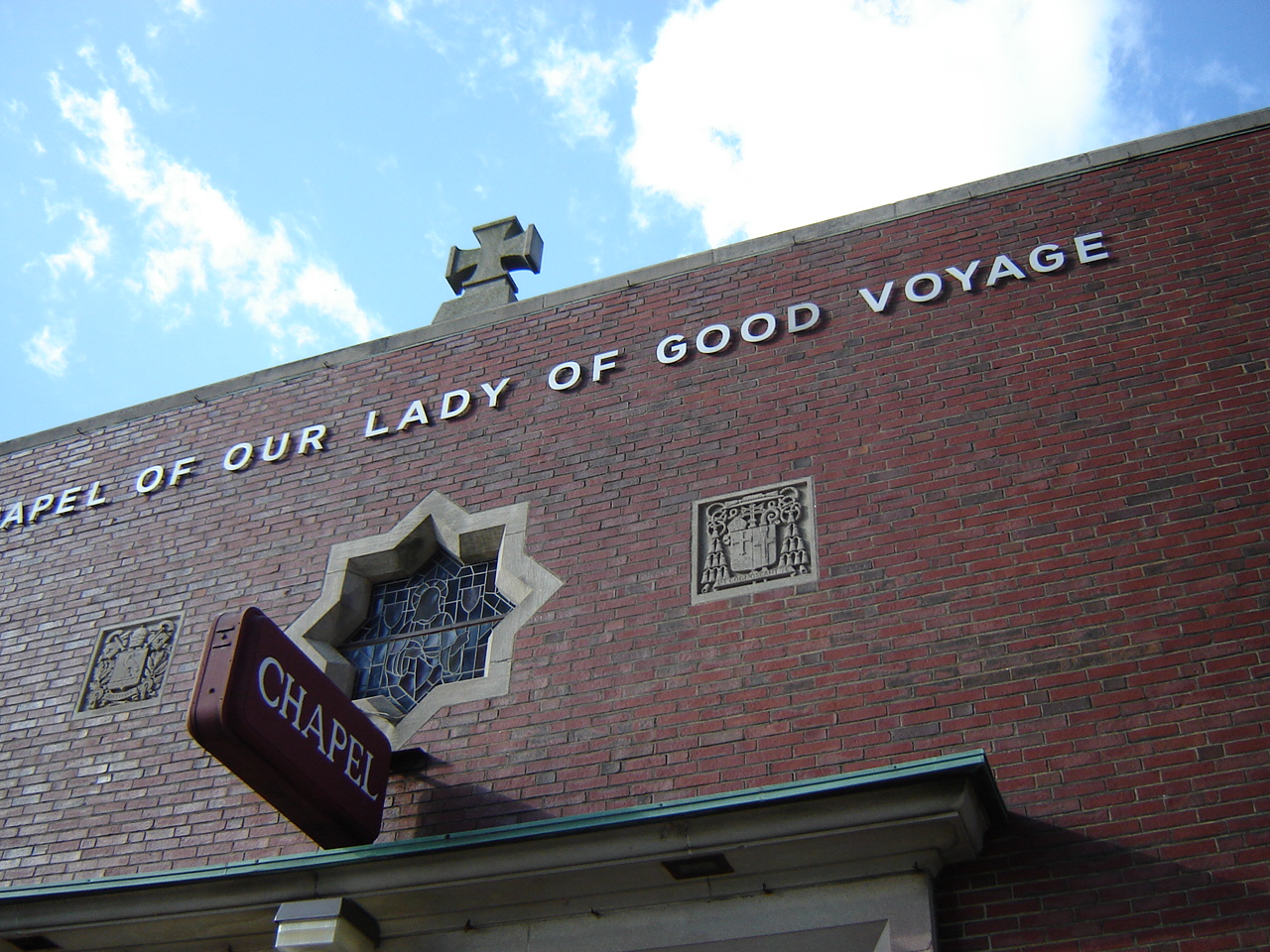
The area near Seaport Boulevard and the harbor, though booming with construction today, still wears the remnants of its formerly neglected status: vistas of pitted parking lots, streets that end ­­­­­­in chain-link fences, highway underpasses filled with brown grass and fast-food wrappers. Then there is the Chapel of Our Lady of Good Voyage.

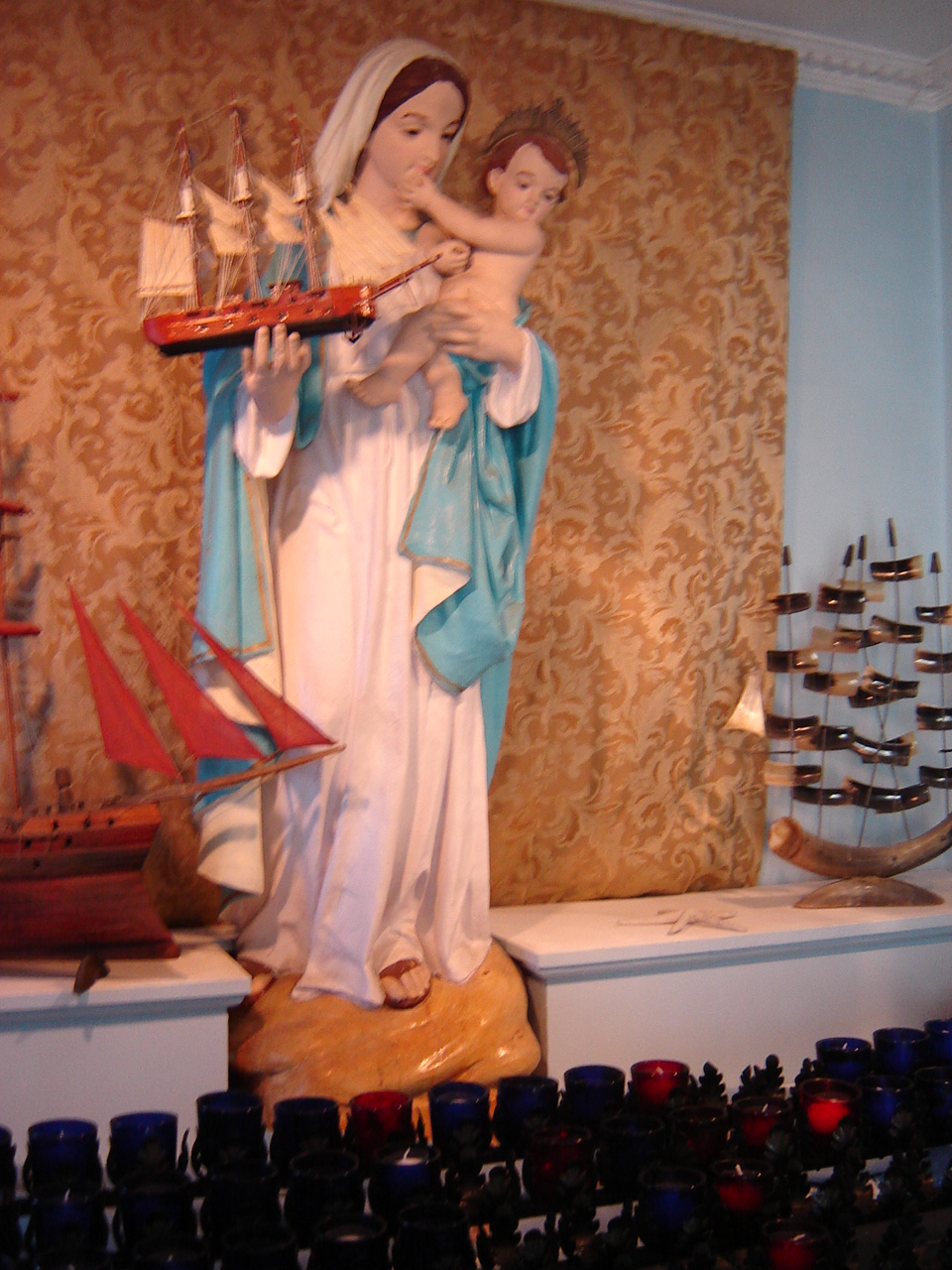
Unlocked, empty, and trusting, the tiny chapel has a basket for donations to the food pantry. Under a statue of Mary holding her infant in one hand and a ship in the other are votary candles. Someone in charge must think – or know – that no traveler seeking blessings will steal alms for the poor in front of Mary unless desperate. In which case, perhaps he will be welcome to it.

I picture Ishmael coming to a place like this (different denomination and in New Bedford) to hear the sermon on Jonah and the Whale before his ill-fated voyage with the obsessed Captain Ahab.

I wonder if sailors really go to the chapel nowadays and what will happen to it as the area develops at its rapid pace. Along the water, the mayor’s prized Innovation District is gathering steam. In the other direction, the Fort Point Channel area is bursting with restaurants, arts, and artists.

Less than 20 years ago, I visited one artist, the son of friends, who was squatting with other artists in the abandoned Fort Point warehouses where doors had no locks, broken boards and pipes littered the floors, and loose wires hung from the ceilings.
The chapel is part of that earlier world, when lighting a votary candle might have seemed like one’s best chance for making it until tomorrow.

Read Full Post »

I believe these marshmallows are used as  prizes in the giants’ midnight games of dodge ball. Please correct me if I’m wrong.

Other photographs of summer are less cryptic.

Read Full Post »

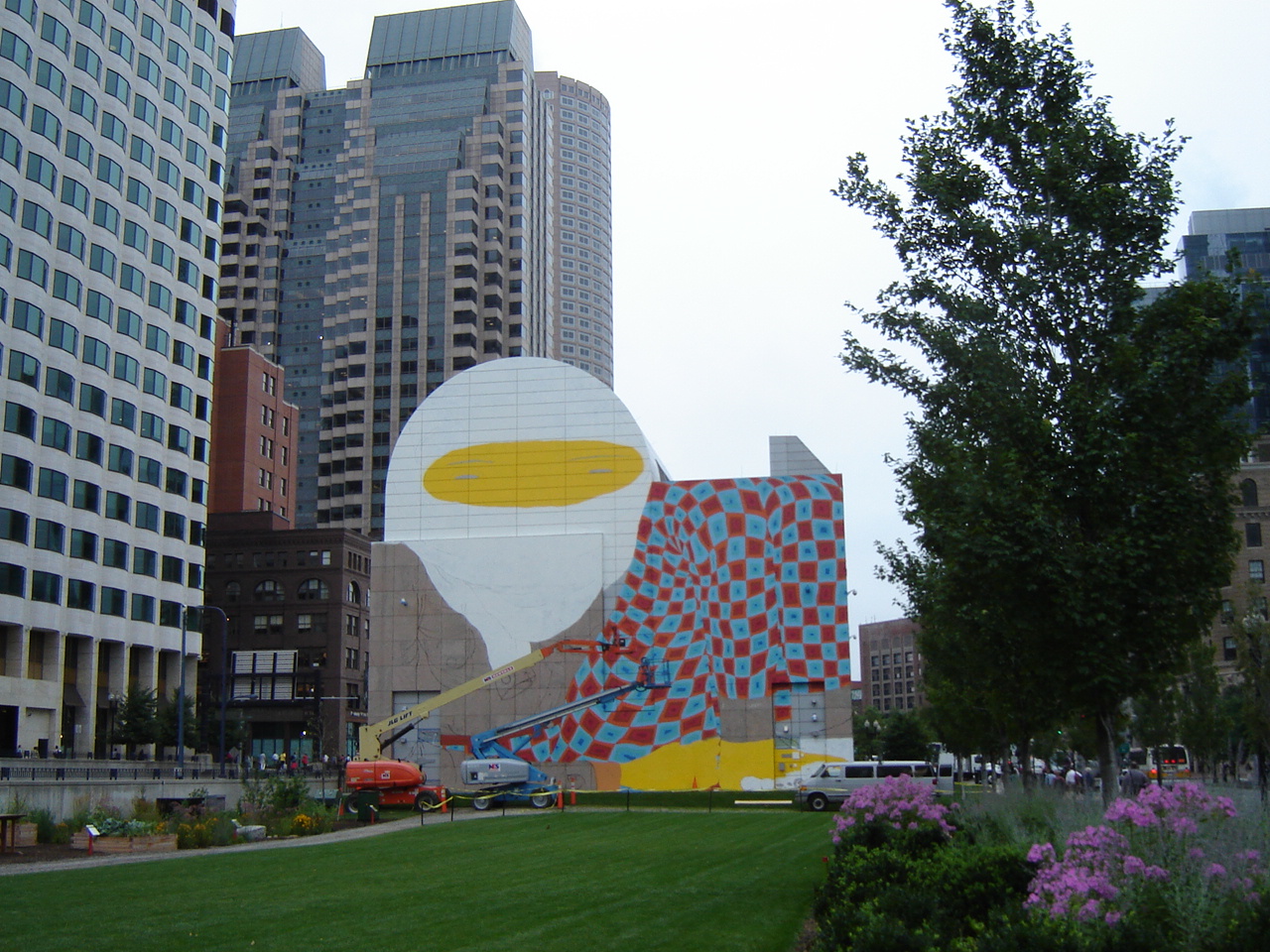
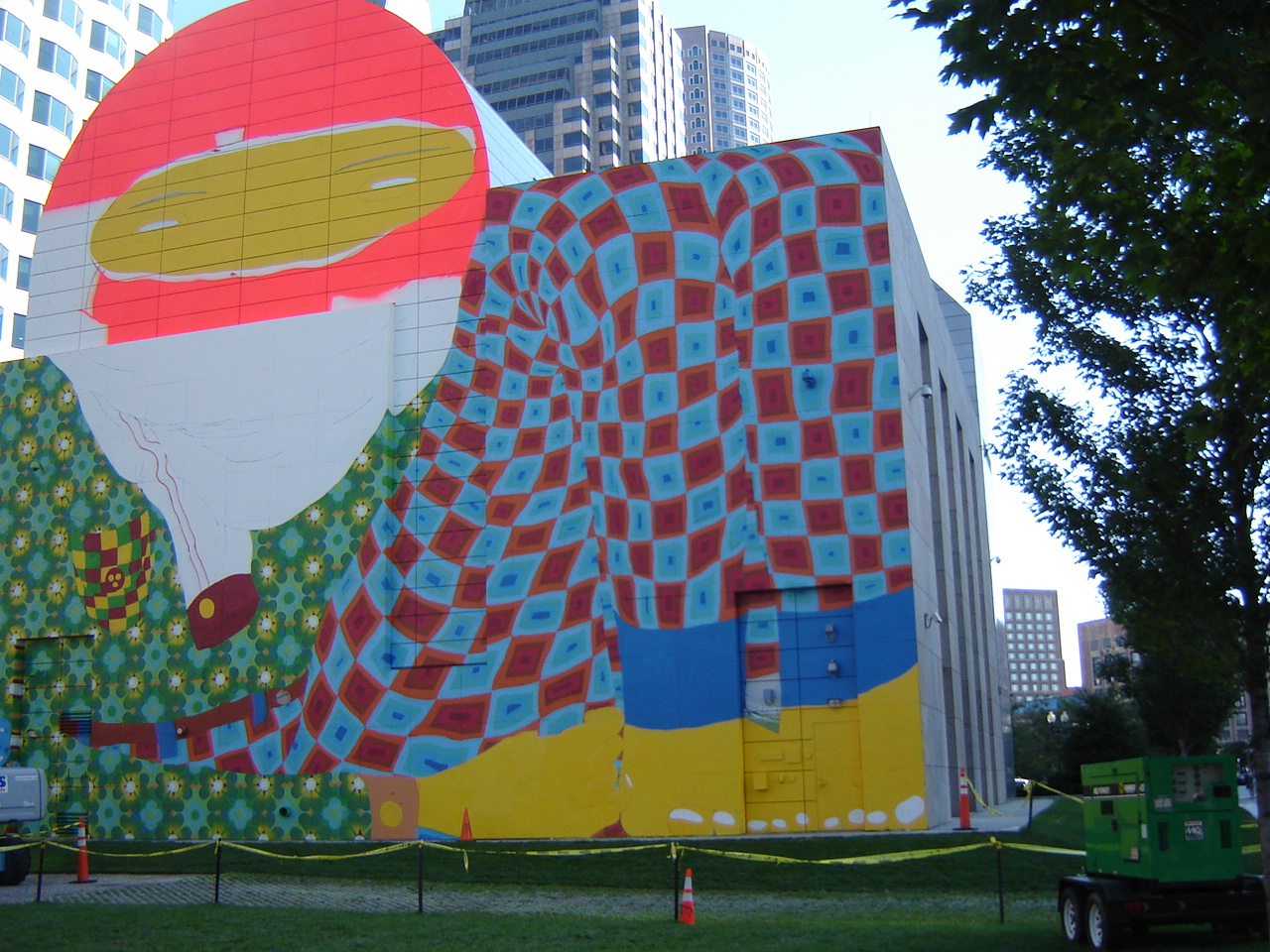
There is a huge structure in the middle of the Greenway that the inventive Sam and Leslie of Uni Project fame once envisioned as a projection screen for summer film festivals. It houses the Big Dig’s ventilation system.
About a week ago I was walking past and noticed what looked like window washers cleaning it. I thought, “Now, why would anyone want to wash that thing?”

A couple days later I saw why. Prepping the canvas.

This is in Dewey Square, where less than one year ago Occupy Boston pitched camp.

Now, writes Geoff Edgers in the Boston Globe, “That’s where Os Gemeos (‘the twins’), famous in the street art world for creating towering cartoonish figures with bright colors and grimacing expressions, began work on their first Boston piece. Depending on weather, they’ll need a little over a week to craft the mural on a wall of a Big Dig ventilation building and a second, smaller piece on the Revere Hotel near Boston Common.

“The pieces are part of the first solo museum exhibition in the United States for Os Gemeos. The Institute of Contemporary Art show, featuring paintings, mixed media works, and installations, opens Aug. 1.”

Read more and check out other art by these guys at the Globe.

You might also like to read the museum’s description of the brothers’ upcoming the exhibition:

“This August the ICA will present the first solo exhibition in the United States of works by the Brazilian brothers Otavio and Gustavo Pandolfo. Best known as Os Gêmeos, the twins are a major force in graffiti and urban art. The twins have a deep bond; they are tireless collaborators and say that they often experience the same dreams. In an effort to share their dreams with the world, they depict their visions in surreal paintings, sculpture, and installations: human figures with removable faces, exploding bursts of color, and room-size heads installed with shanty interiors.”

More from the ICA here.

Read Full Post »

Photograph: South End Knitters

Today I am thinking about the South End Knitters, the stealth street artists who wrap their knitting around parking meters and fire hydrants and telephone poles.

Writes Linda Matchan in the Boston Globe, “The South End Knitters’ weekly meetings at a Washington Street café seem innocuous, but don’t be fooled. Over knitting needles and yarn at the long table they’ve commandeered, they are contemplating something far more mischievous than a sweater. They’re graffiti knitters, and they’re plotting their next target. …

“As with graffiti, no two tags in the yarn-bomber subculture are alike. They range from sleeves on parking meters to tubes on tree limbs to sweaters on statues: A recent high-profile example is the neon pink sweater that the New York street knitter Olek crocheted in December for the 16-foot ‘Charging Bull’ statue on Wall Street.”

What put me in mind of the South End Knitters was an extraordinary post at the WordPress blog Pickled Hedgehog Dilemma, which describes a crochet effort that is drawing a lot of attention to the plight of vanishing corals.

Concerned about the effect of global warming on reefs, Margaret Wertheim and her twin sister got an idea that involved “crocheting corals. They used a crocheting technique invented by mathematicians in 1997 to model hyperbolic shapes called hyperbolic crocheting. … This ended up being a perfect technique for producing coral reproductions. …

“They crocheted a lot of corals,” continues Pickled Hedgehog, ” then they did something to change the world. They shared their corals with art museums. They got a community in Chicago to crochet with them. Then the crafting became a movement and groups all over the world started to crochet corals.”

Read Pickled Hedgehog Dilemma’s illustrated summary here. And if you have the time, this TED talk is super.

Pickled Hedgehog Dilemma

Read Full Post »

On Tuesday, a group from work set out at lunchtime for lobster rolls (and shrimp rolls and crab rolls) at James Hook & Co., whose golden lobster weathervane appeared in one of my previous posts.

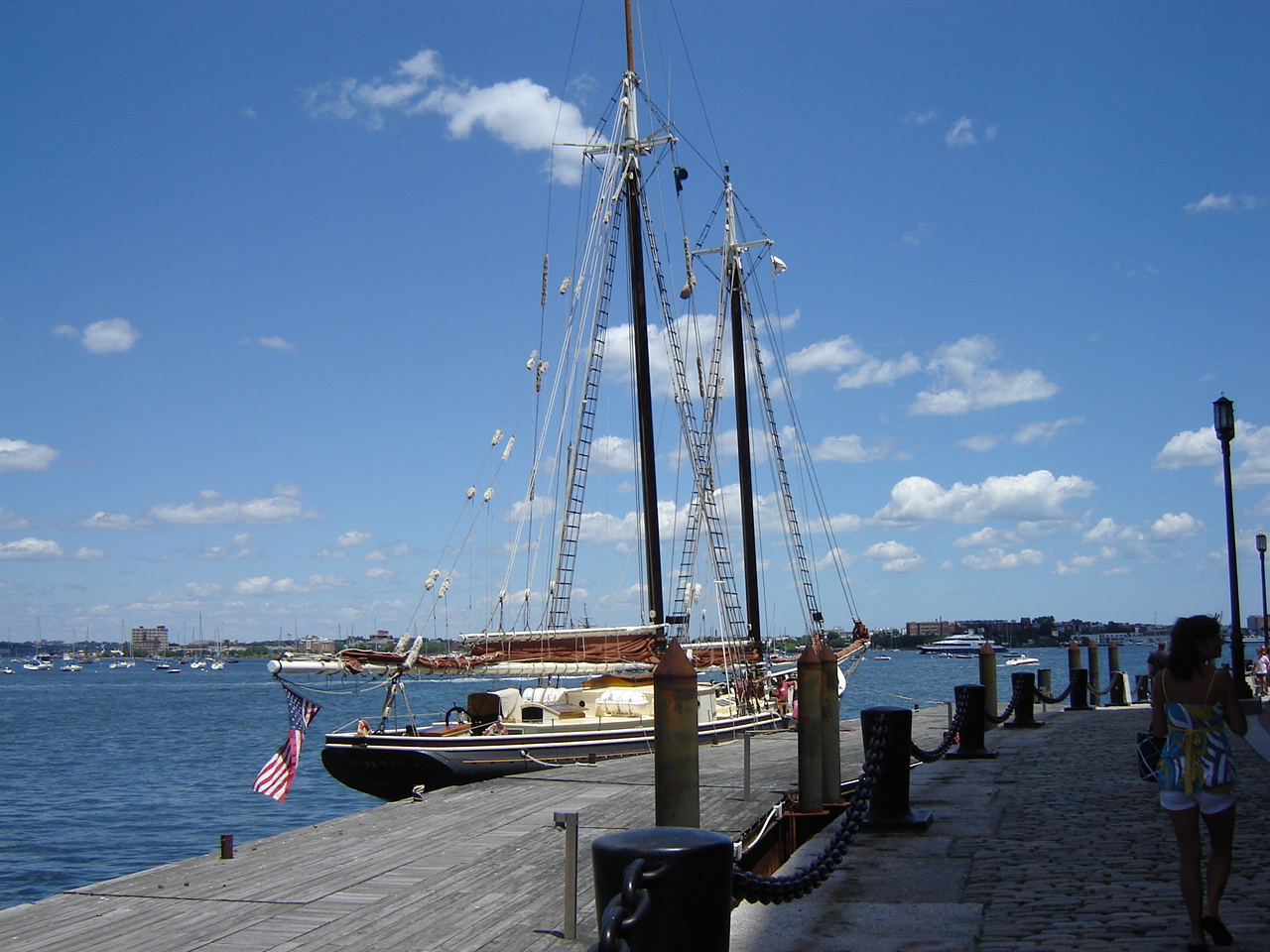
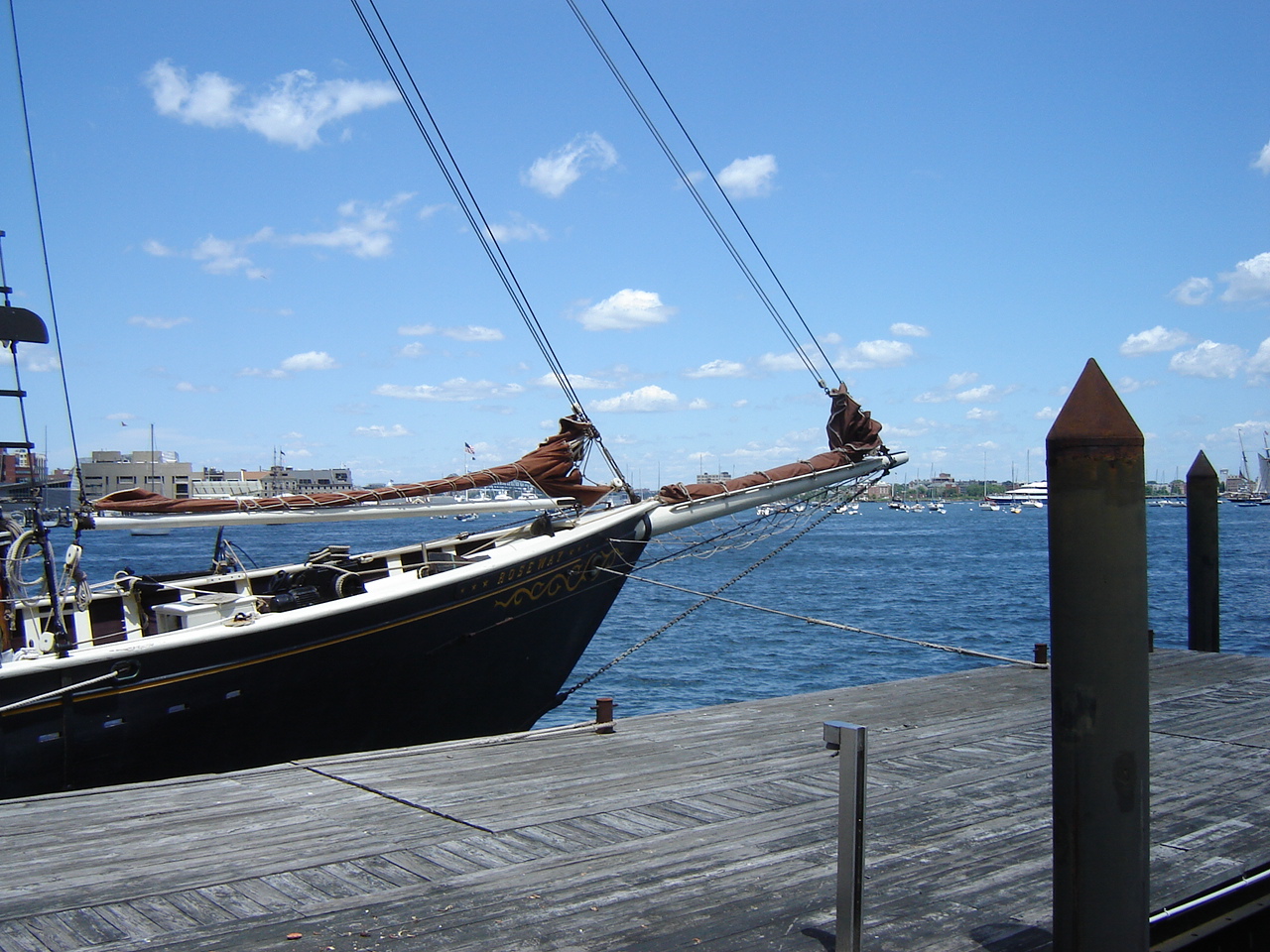
Then we joined the crowds on the Harbor Walk to luxuriate in tall ships and a gorgeous sky.

A vessel flying the Jolly Roger was dwarfed by the triumphs of modern capitalism. (I won’t say “piracy” because I have no idea what goes on in those buildings.)


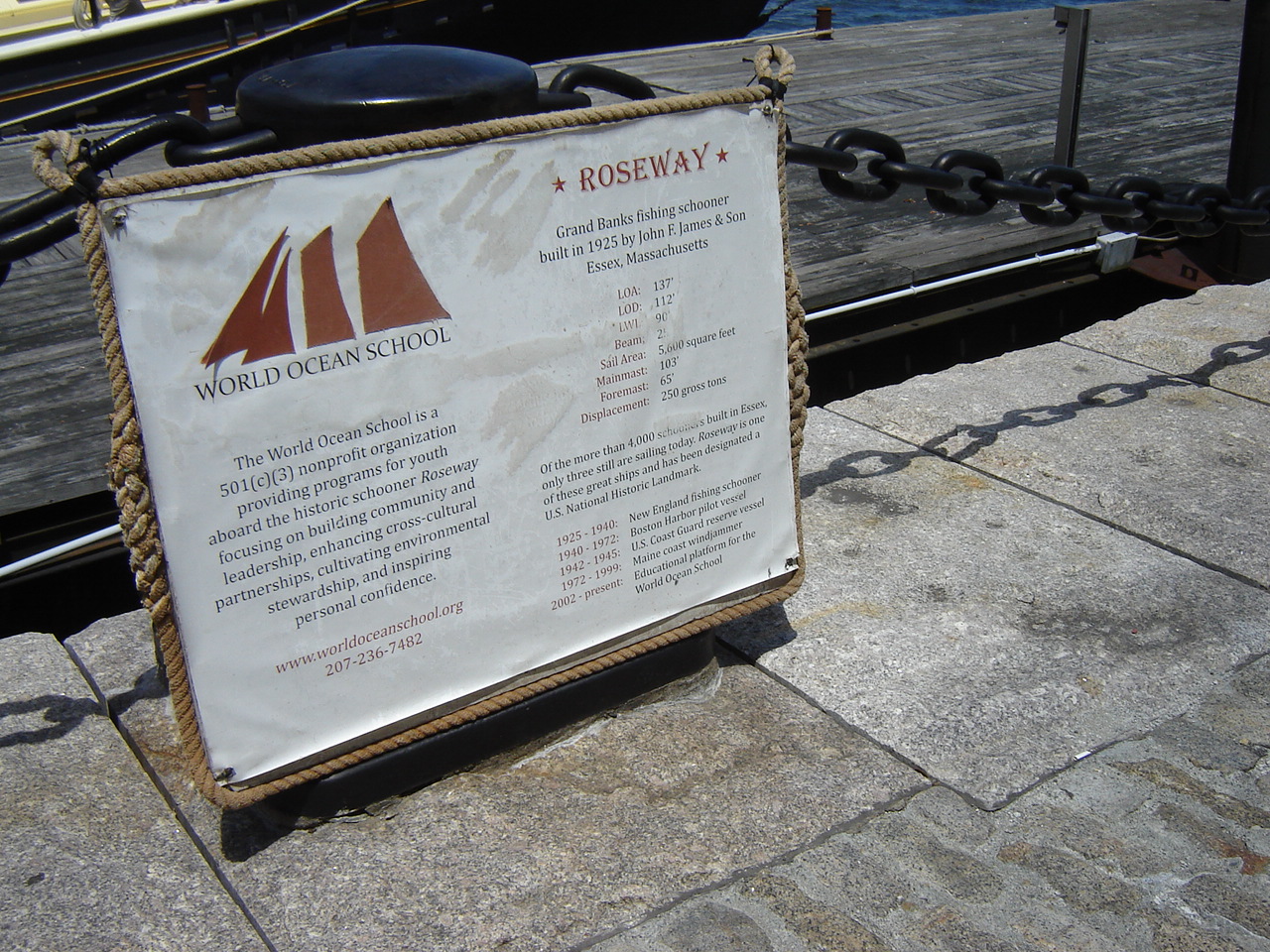
A teaching schooner called the “Roseway,” from the World Ocean School, was taking tourists out.

Read Full Post »

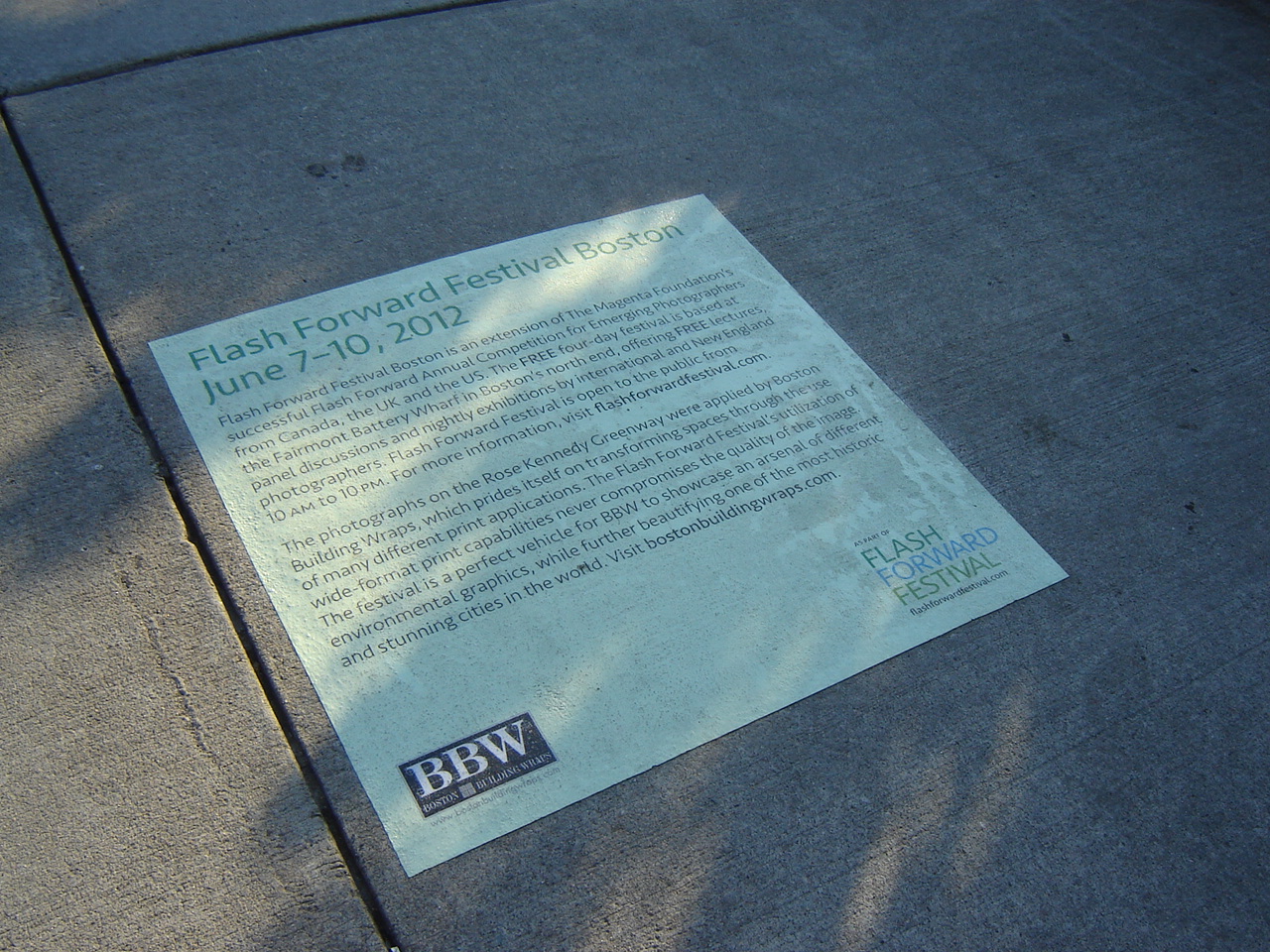
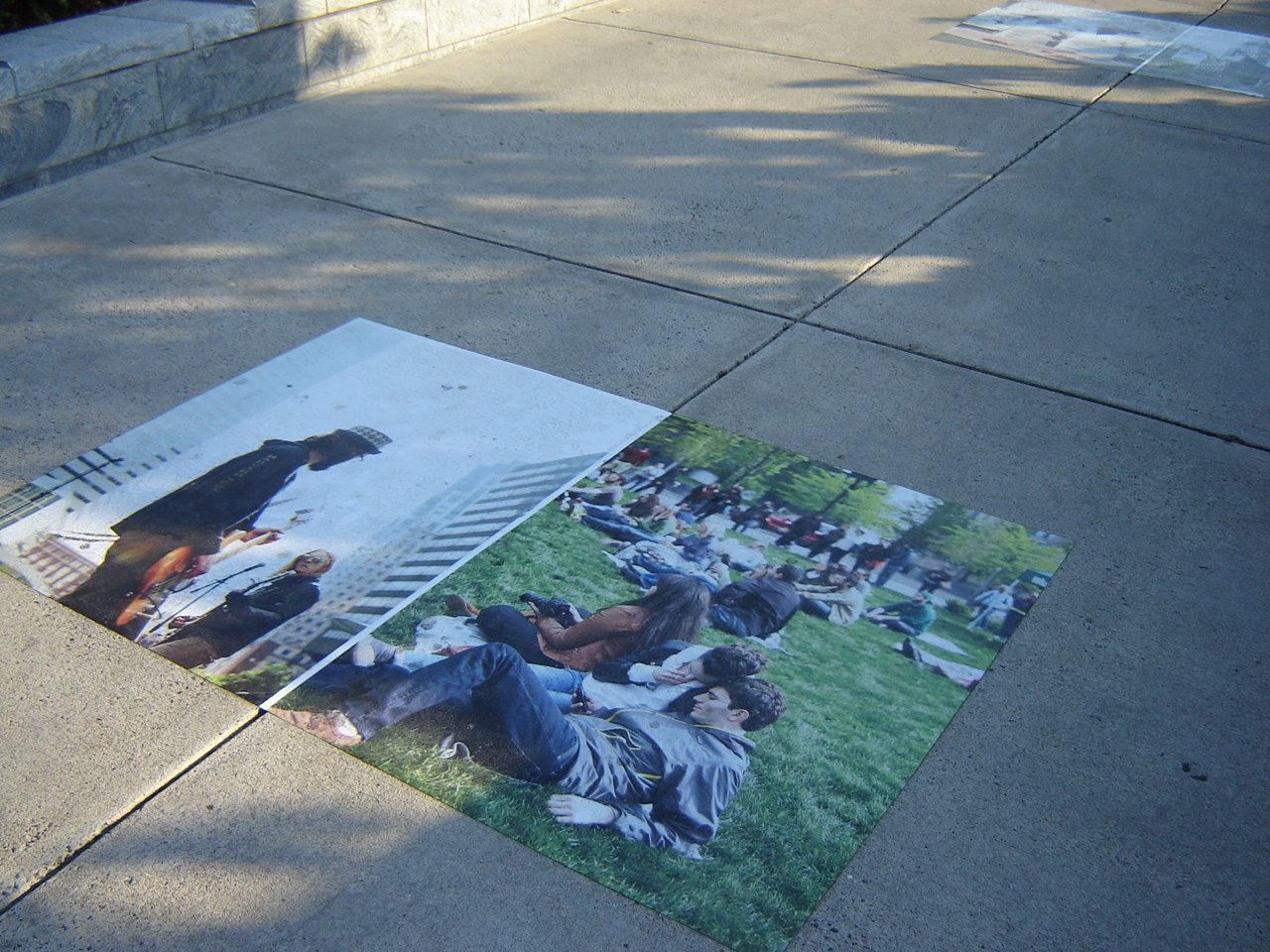
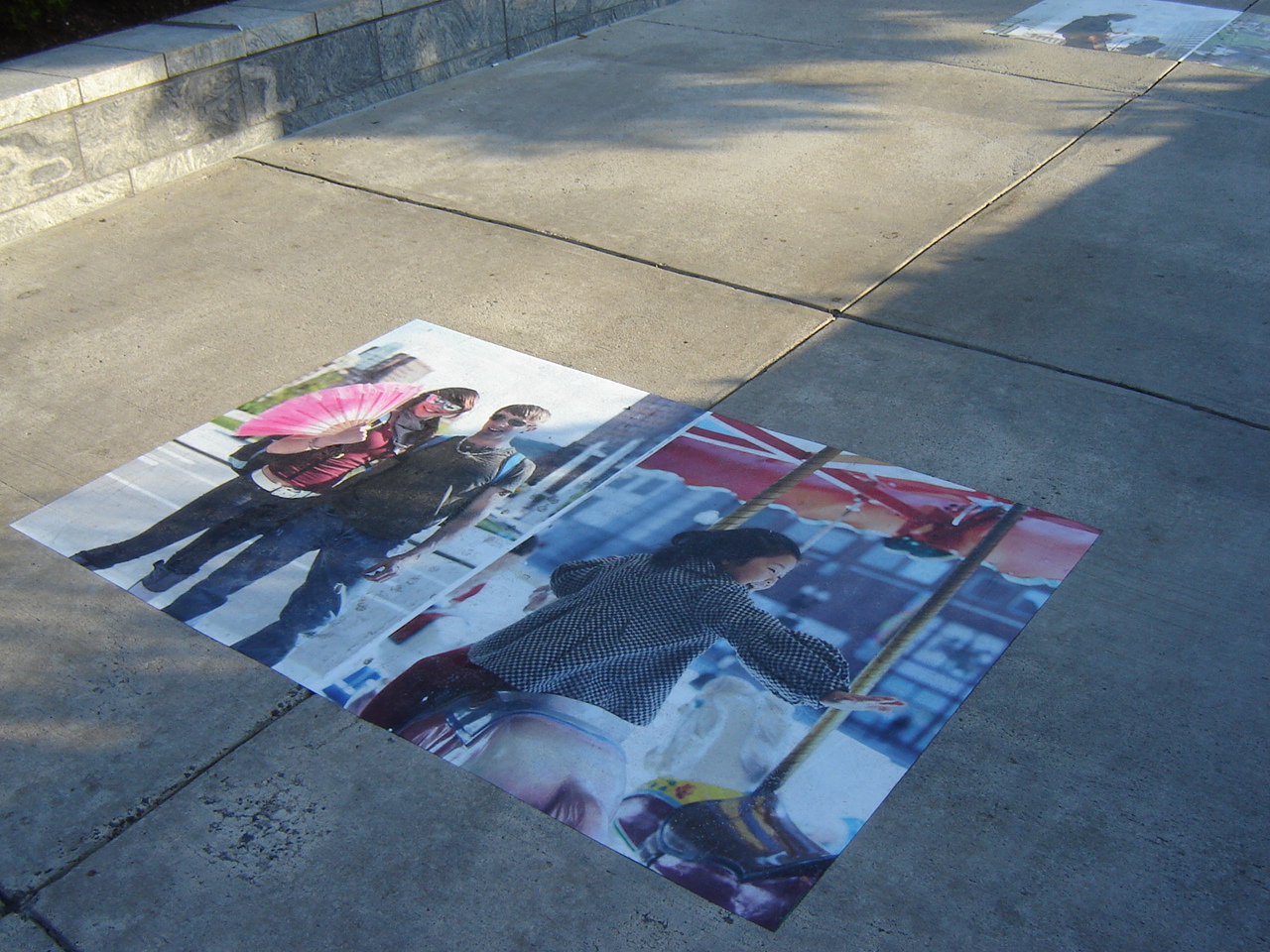
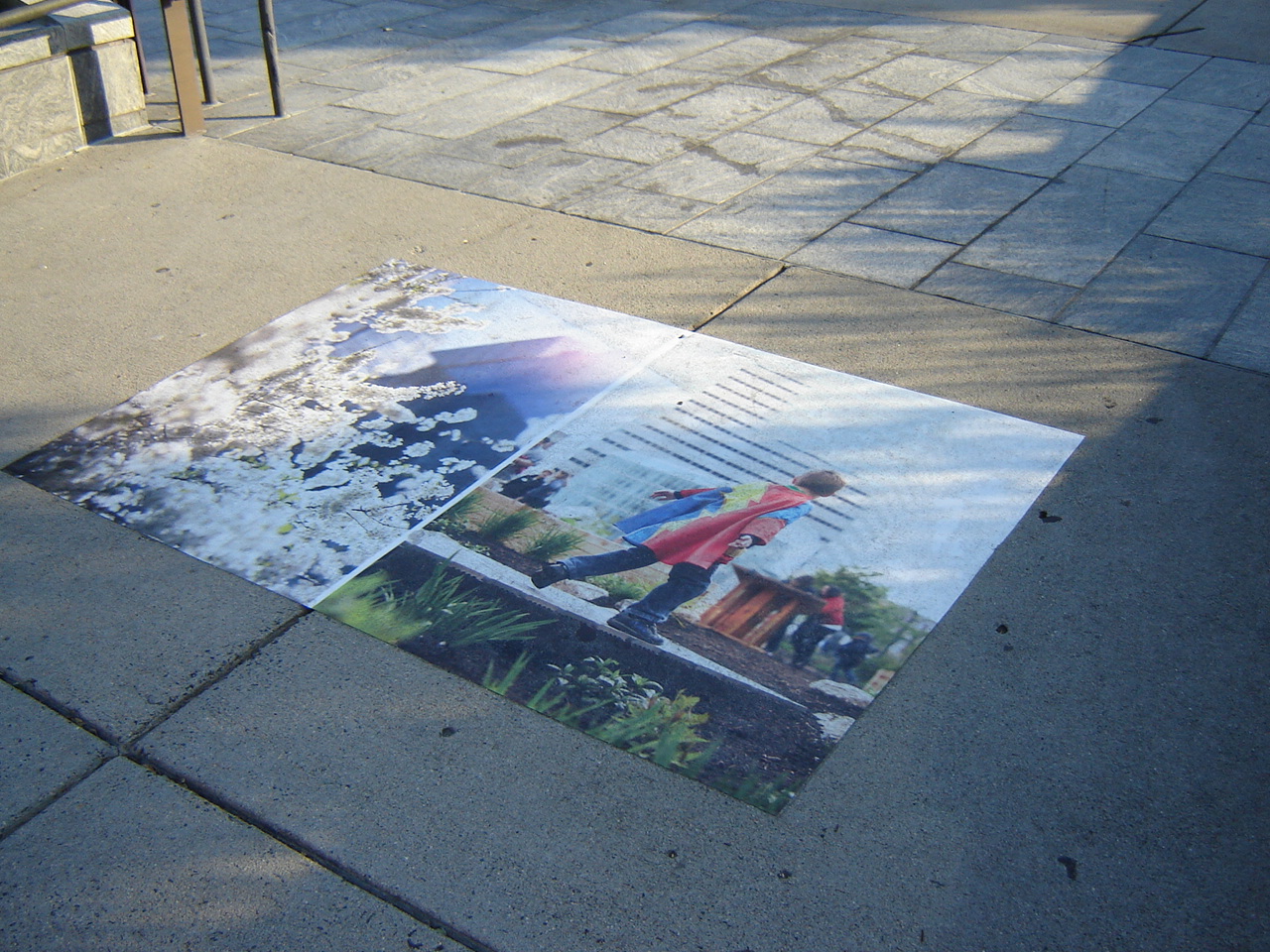
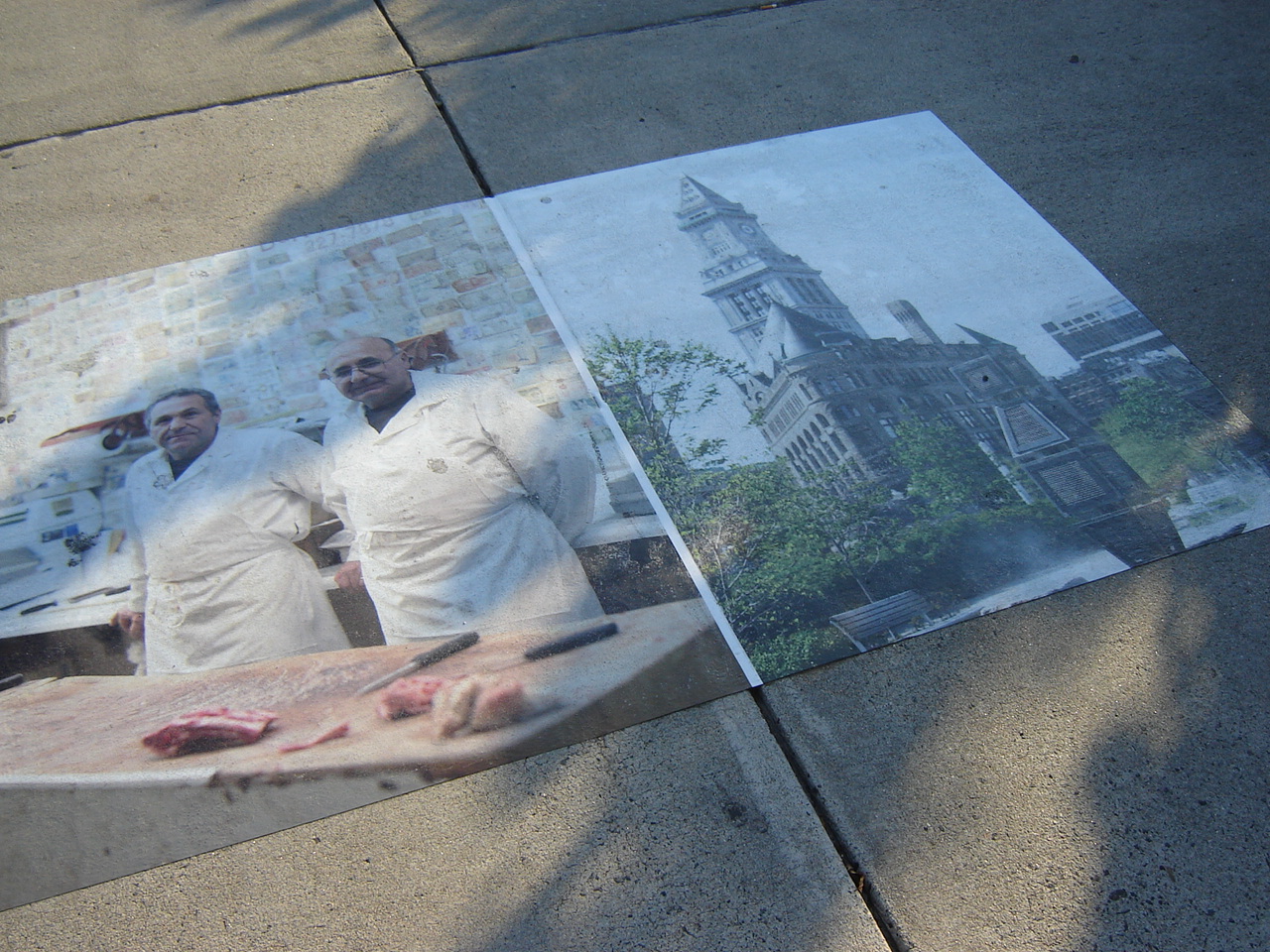
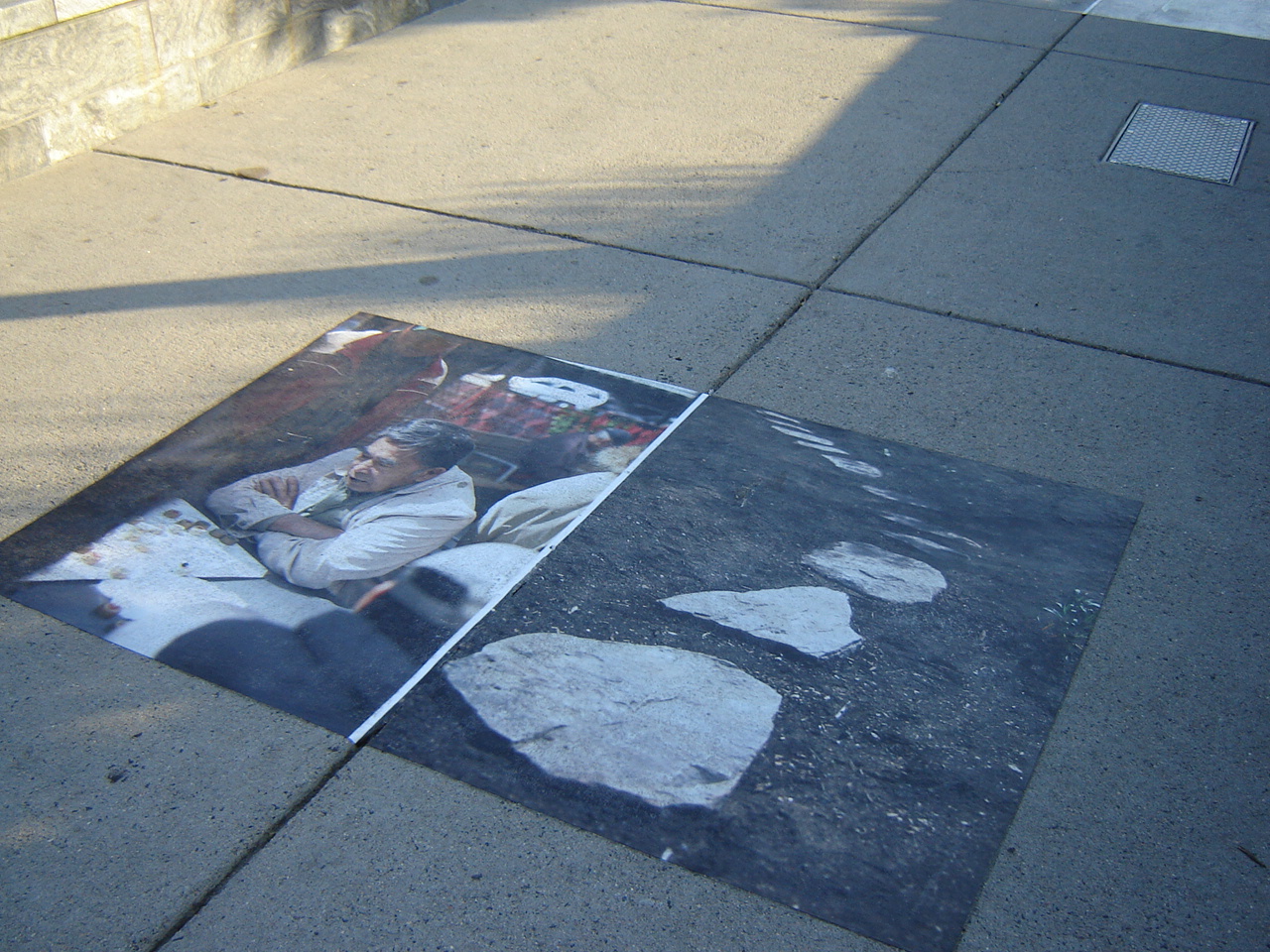
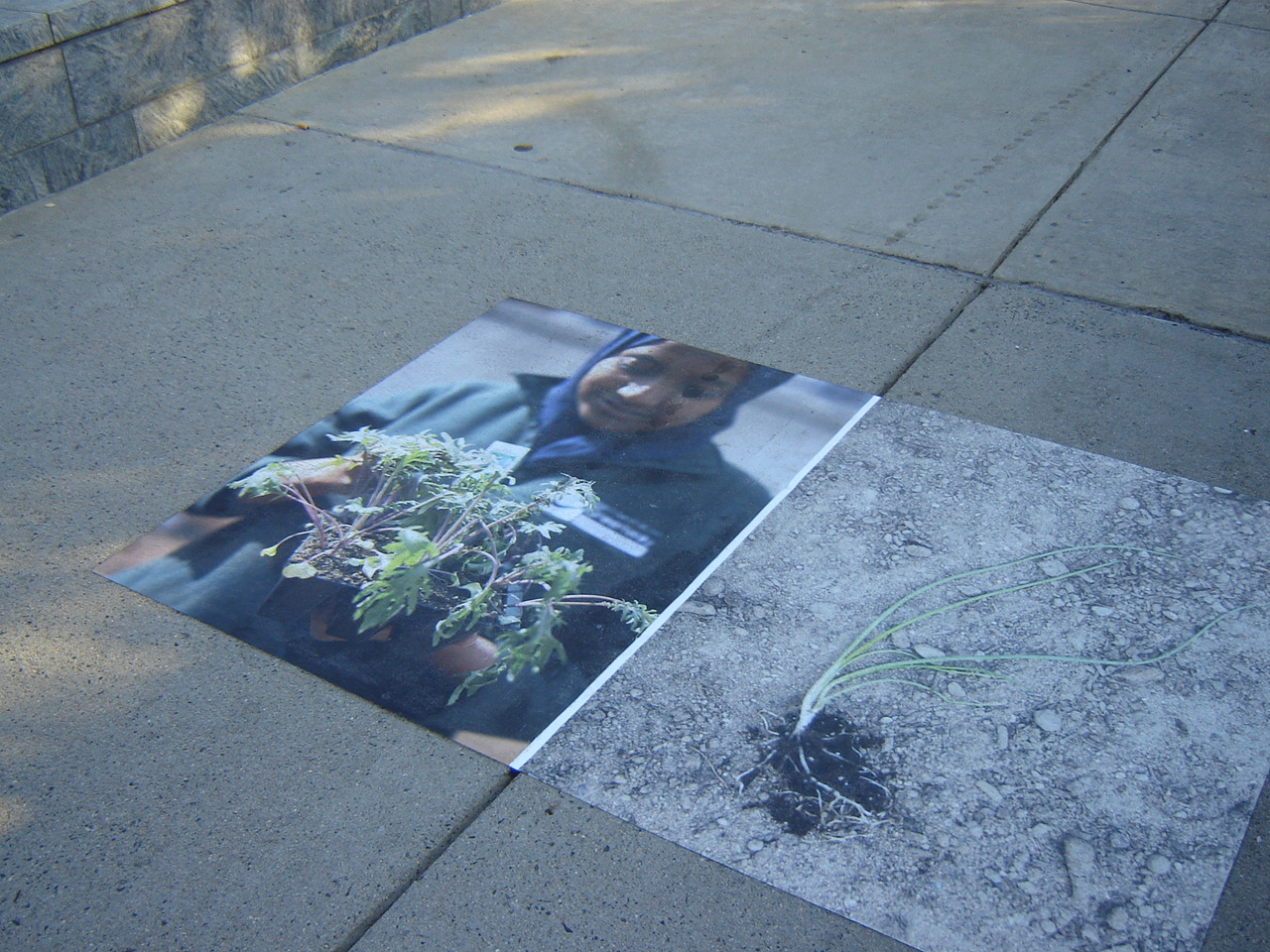
These photos were placed on the Greenway sidewalk near Boston’s North End. They are the result of the Flash Forward Festival for emerging photographers, which took place earlier this month. The event is sponsored by the Magenta Foundation of Magenta magazine (“publishing for the arts”).

“Set within the Boston cityscape, the five-day festival is based out of the Fairmont Battery Wharf, offering an in-depth experience through organized networking events and educational programming that brings internationally respected industry professionals together to share their knowledge with the next generation of photographers. Programming includes curated indoor and outdoor exhibitions, a Harborwalk exhibition series featuring work from local galleries, along with lectures, panel discussions, and nightly events.” Read more about it here.

Read Full Post »

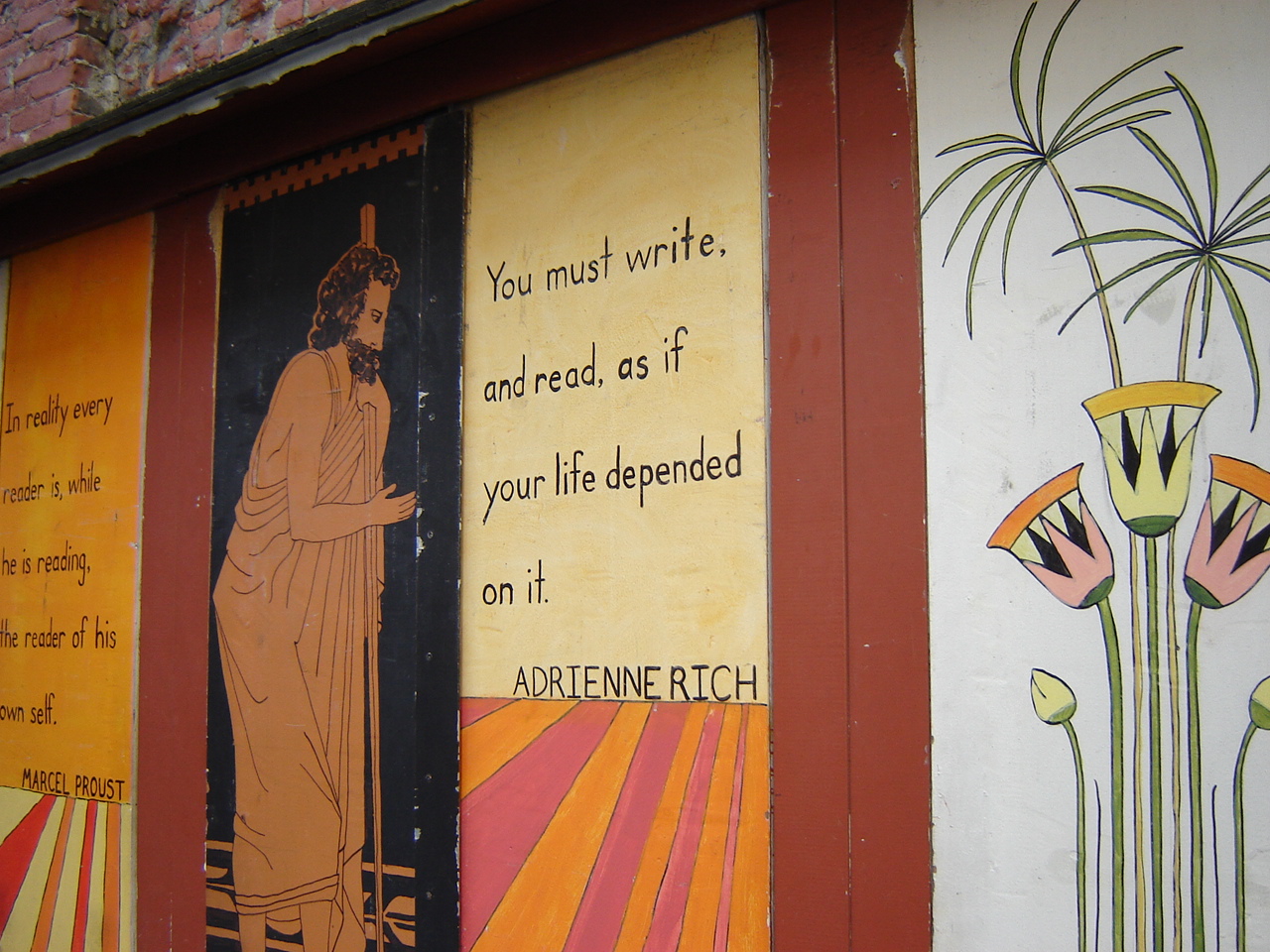
Some days I walk in Boston and snap the sights down side streets. The first photo was taken near the harbor. The others were taken near Downtown Crossing.

I like the Adrienne Rich line painted on a bookstore wall: “You must write, and read, as if your life depended on it.”

Read Full Post »

Feel like dancing? I’d love to see this sort of thing in every town in America. How nice it would be to walk a few blocks on a summer evening, and there it would be!

“It’s Monday night in Boston. Under the locust trees of the Blackstone Community Center surrounded by basketball games, tight parking spaces, and children playing, the dance floor heats up in the park as the night air cools off and the stars come out.

“Many salseros in Boston claim [Salsa in the Park] as their favorite event of the city, not only for the appeal of dancing outside ‘al aire libre’, but as a way to give back to the community. Dancers volunteer all summer, donating their time to teach dance lessons to adults and children, set up dance floors, assist with event staffing, maintain a recycling program, and clean up from the festivities until late into the evening.

“This event is staffed in collaboration with the Mayor’s Program of Cambridge, and the Blackstone Community Center Youth Summer Programs. We emphasize healthy lifestyle choices for the individual and the community, through dancing, healthy food options, and greening our event as much as possible with educational materials and interactive information.”

Read Full Post »

Cities that want to encourage foot traffic, public transit, and getting around on bicycles are starting to remove parking spaces in favor of mini parks big enough for a couple planters and benches where passersby might read, chat, or eat a sandwich.

Eric Moskowitz writes in the Boston Globe: “The program, boston.PARKLETS, follows the lead of San Francisco, which boasts 30 parklets, and New York, which unveiled the first of what it calls ‘curbside seating platforms’ in 2010.

“They are part of the growing movement to reclaim urban space for pedestrians and bicyclists and promote public transit. Mayor Thomas M. Menino has proclaimed ‘the car is no longer king,’ citing the environmental, aesthetic, and health benefits.

“It remains to be seen how willingly Bostonians, known for fiercely coveting and protecting their parking spots, receive the parklets.

“Vineet Gupta, planning director for the Boston Transportation Department, said the city will work with merchants and neighbors to find appropriate spots, with the first parklets probably appearing next spring. They would scarcely put a dent in the city’s 8,000 metered spaces and untold thousands of unmetered and resident-permit spots, but they would enliven areas with heavy foot traffic otherwise lacking in public amenities, he said.” Read more.

If you have actually seen where this has been done, do send a photo.

These two parking spaces in Boston could become a parklet — a tiny patio with benches and planters. (Essdras M Suarez/ Globe Staff)

Read Full Post »

« Newer Posts - Older Posts »