Feeds:
Posts
Comments

Posts Tagged ‘ice’

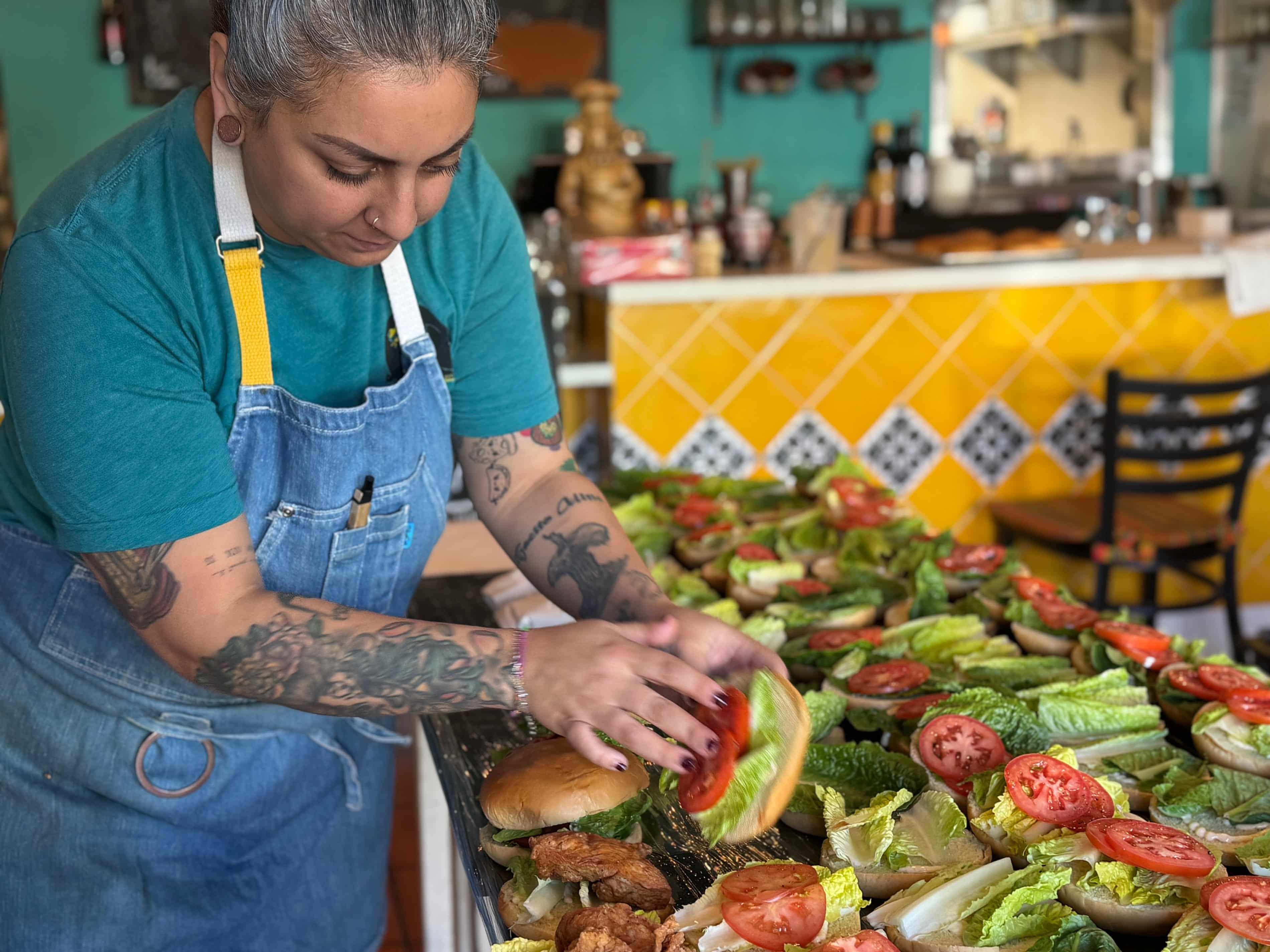
Photo: Danielle Duran Zecca/Amiga Amore.
Danielle Duran Zecca, co-owner of Amiga Amore in Highland Park, Los Angeles. 

Well, in one way, this is a time of great opportunity. There are endless opportunities in the US to meet the growing needs. Endless opportunities to practice charity in daily life.

A chef in Los Angeles knew opportunity as soon as she saw it. The revealing moment took the form of government officers in masks snatching people off the streets.

Victoria Namkung reports the story at the Guardian.

“When Danielle Duran Zecca saw military-style immigration raids and people being snatched off the streets and put into unmarked vehicles in her native Los Angeles earlier this summer, she was in disbelief. …

“Duran Zecca, a James Beard Award nominated chef and co-owner of Amiga Amore in Highland Park, a historically Latino neighborhood in north-east LA [said] ‘I didn’t know what to do, but I knew how to feed people and love on people because that is exactly how I was brought up in my family.’

“When several of Duran Zecca’s workers expressed fear about coming into the restaurant, the chef had a realization.

“ ‘If they didn’t want to leave their homes, how many others were like this and how many weren’t eating,’ she said. Earlier in the year, Amiga Amore received donations that allowed the Mexican-Italian restaurant to give meals away to those affected by the LA wildfires, but this time she would need a different approach, one that made people feel safe.

“Duran Zecca began personally delivering free meals to 25 to 30 people every other Sunday in nearby Boyle Heights. …

“Since ICE began to infiltrate LA in June, once-bustling neighborhoods have become quiet. Vendors locked up stalls in the flower district. Popular taco stands and fruit carts are closed and some restaurants sit empty. Although it is unknown exactly how many people are staying home due to Ice’s aggressive arrests, immigration sweeps at restaurants, farms, Home Depots and even car washes have created a chilling effect on businesses that rely on immigrant labor.

Restaurants such as Amiga Amore and other groups from the food and hospitality industry are stepping in to help people in their community who have nowhere to turn – even while their own businesses are suffering economically. …

” ‘Latinos are not only the backbone to our industry, they are the industry,’ said Duran Zecca. ‘Behind every chef are Latino line cooks ready to make magic happen. All they want to do is work, make a living and feed their families.’

“To make her deliveries twice every month, Duran Zecca receives logistical support from her good friend Damián Diaz, the co-founder of No Us Without You, an LA-based non-profit that provides food security for undocumented people, including back of the house staff from bars and restaurants.

“ ‘The administration has been doubling down on making it much more difficult for the families in the community and also small grassroots organizations like us to really be impactful,’ said Diaz. In the past, No Us Without You had drive-through lines for food distribution, but stepped-up enforcement made that impossible, so they pivoted to working with a coalition of restaurants to serve up to 40 families every fortnight so they can shelter at home.

“ ‘This environment of fear in light of increased enforcement, and really excessive enforcement, is causing folks to miss out on some very key necessities such as doctor’s appointments and going to the grocery store,’ said Rita Fernández director of immigration policy project at UnidosUS, a Latino non-profit advocacy organization. …

“This summer, Congress allocated $170.7bn in additional funding for immigration and border enforcement … creating what some critics call a ‘deportation-industrial complex.’ …

“That’s why many others in the restaurant and non-profit industry have also been mobilizing to bring groceries to immigrants who are in hiding. The Oaxacan-Mediterranean restaurant X’tiosu in Boyle Heights, one of the US’s most heavily Latino-populated neighborhoods, packed 150 bags of fresh produce, dried pasta and other goods that were delivered to people in need by local Oaxacan youth in June and they have continued to support undocumented families. The student-led group, Raíces Con Voz, coordinated food and care package deliveries to more than 200 families, and Aquí Para La Comunidad, which operates throughout southern California, has a growing waitlist.

“Vanny Arias decided to host an impromptu food drive in front of the Offbeat Bar in Highland Park, where she’s a bartender, after realizing people staying home were likely in need of groceries. … Arias organized with other community activists and volunteers to start dispensing basics.

“Once she launched an Instagram account, she started hearing directly from desperate families. ‘People said: “My husband got arrested” or “We’re afraid to leave the house and my kids haven’t eaten in days,” ‘ said Arias. ‘When you’re on the ground you see the hurt and pain in their eyes and hear it in their voices.’

“Since July, Arias’s Nela Food Distribution has grown to deliver free groceries to 150 people in and around Highland Park with the help of community donations, two local food warehouses, a bakery and a team of volunteers. ‘We’re a bunch of people who love their community,’ said Arias. ‘I don’t care what color you are, we’re freaking humans and I’m here for you. You’re not alone.’ ”

More at the Guardian, here. The Guardian is free, but please consider donating to them.

Read Full Post »

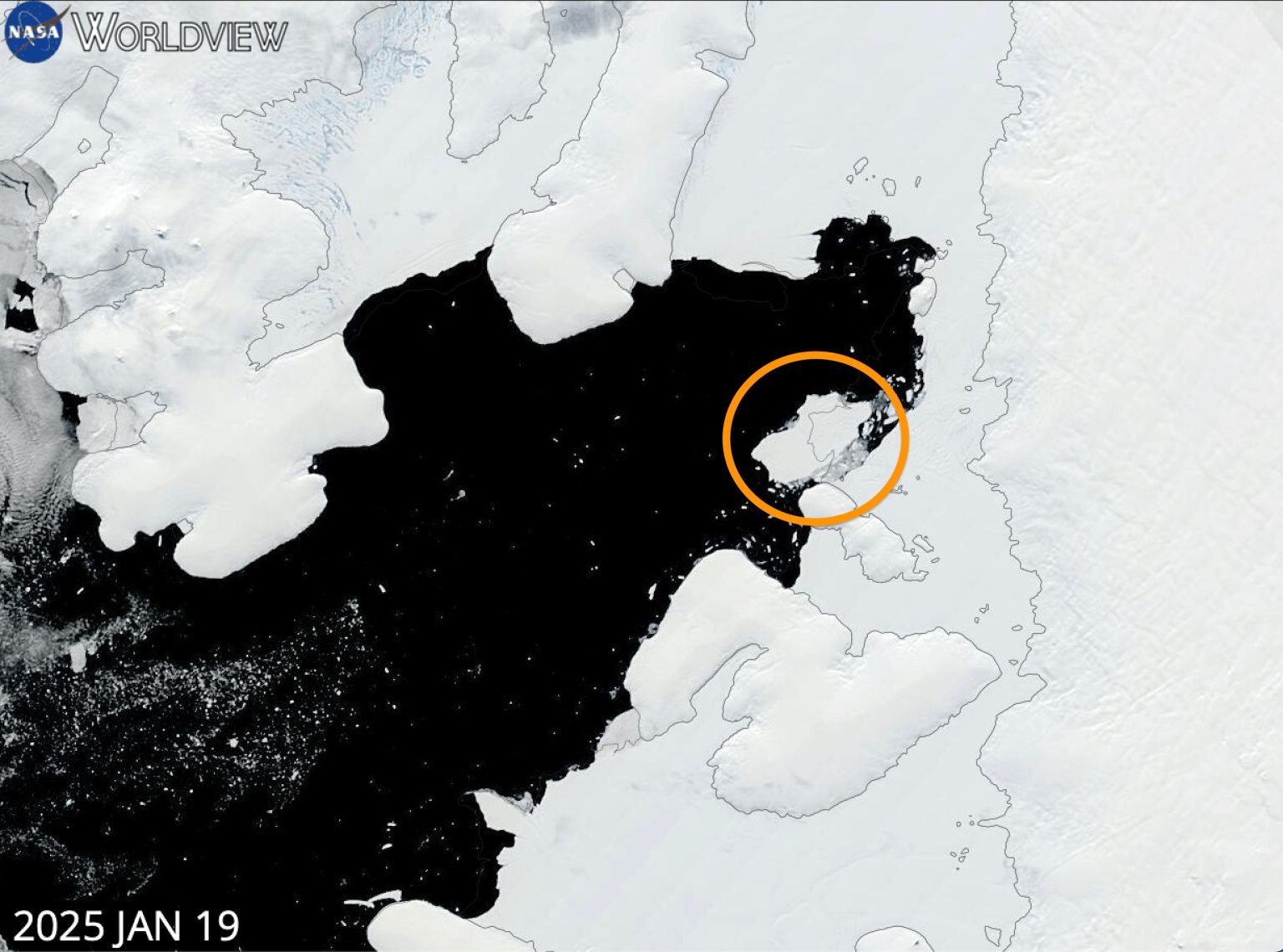
Photo: NASA Worldview, NASA Earth Science Data and Information System.
Satellite imagery showing the iceberg calved from George VI Ice Shelf in the Bellingshausen Sea, Antarctica, on 19 January 2025.

Not much of a recompense for ruining our planet, but it’s true that global warming is giving scientists a chance to study previously unknown places.

At Schmidt Ocean Institute, we learn about some unexpectedly vibrant communities of ancient corals and sponges in Antarctica.

“An international team on board Schmidt Ocean Institute’s R/V Falkor (too) working in the Bellingshausen Sea rapidly pivoted their research plans to study an area that was, until last month, covered by ice. On January 13, 2025, an iceberg the size of Chicago, named A-84, broke away from the George VI Ice Shelf, one of the massive floating glaciers attached to the Antarctic Peninsula ice sheet.  The team reached the newly exposed seafloor on January 25 and became the first to investigate an area that had never before been accessible to humans.

“The expedition was the first detailed, comprehensive, and interdisciplinary study of the geology, physical oceanography, and biology beneath such a large area once covered by a floating ice shelf. The ice that calved was approximately 510 square kilometers (209 square miles), revealing an equivalent area of seafloor.

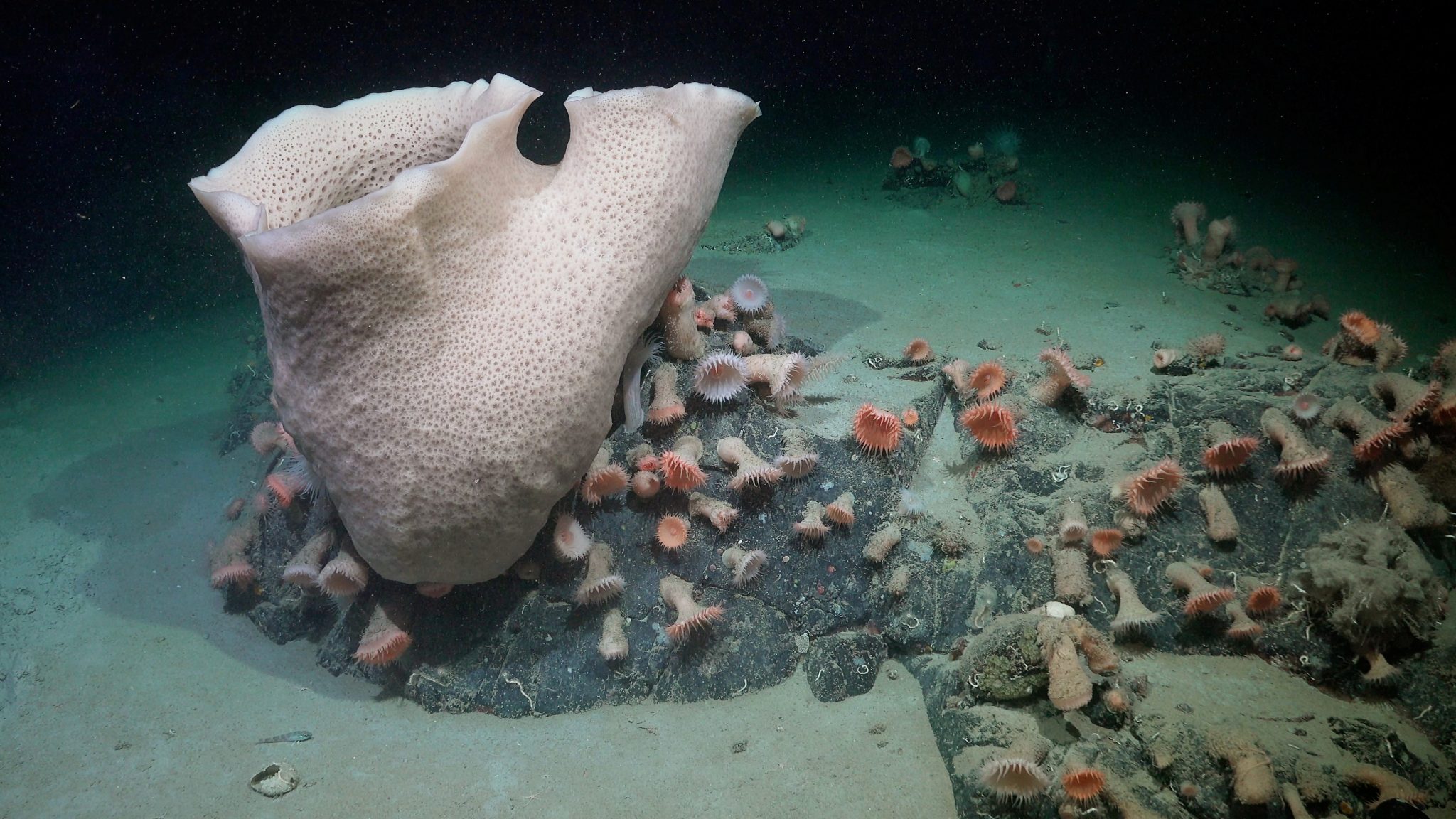
“ ‘We seized upon the moment, changed our expedition plan, and went for it so we could look at what was happening in the depths below,’ said expedition co-chief scientist Dr. Patricia Esquete of the Centre for Environmental and Marine Studies (CESAM) and the Department of Biology (DBio) at the University of Aveiro, Portugal. ‘We didn’t expect to find such a beautiful, thriving ecosystem. Based on the size of the animals, the communities we observed have been there for decades, maybe even hundreds of years.’

“Using Schmidt Ocean Institute’s remotely operated vehicle, ROV SuBastian, the team observed the deep seafloor for eight days and found flourishing ecosystems at depths as great as 1300 meters. Their observations include large corals and sponges supporting an array of animal life, including icefish, giant sea spiders, and octopus. The discovery offers new insights into how ecosystems function beneath floating sections of the Antarctic ice sheet. …

“The team was surprised by the significant biomass and biodiversity of the ecosystems and suspect they have discovered several new species.

“Deep-sea ecosystems typically rely on nutrients from the surface slowly raining down to the seafloor. However, these Antarctic ecosystems have been covered by 150-meter-thick (almost 500 feet) ice for centuries, completely cut off from surface nutrients. Ocean currents also move nutrients, and the team hypothesizes that currents are a possible mechanism for sustaining life beneath the ice sheet. The precise mechanism fueling these ecosystems is not yet understood.

“The newly exposed Antarctic seafloor also allowed the international team, with scientists from Portugal, the United Kingdom, Chile, Germany, Norway, New Zealand, and the United States, to gather critical data on the past behavior of the larger Antarctic ice sheet. The ice sheet has been shrinking and losing mass over the last few decades due to climate change.

“ ‘The ice loss from the Antarctic Ice Sheet is a major contributor to sea level rise worldwide,’ said expedition co-chief scientist Sasha Montelli of University College London (UCL), United Kingdom, also a 2019 Schmidt Science Fellow. ‘Our work is critical for providing longer-term context of these recent changes, improving our ability to make projections of future change — projections that can inform actionable policies. We will undoubtedly make new discoveries as we continue to analyze this vital data.’

“In addition to collecting biological and geological samples, the science team deployed autonomous underwater vehicles called gliders to study the impacts of glacial meltwater on the physical and chemical properties of the region. Preliminary data suggest high biological productivity and a strong meltwater flow from the George IV ice shelf. …

“ ‘The science team was originally in this remote region to study the seafloor and ecosystem at the interface between ice and sea,’ said Schmidt Ocean Institute Executive Director, Dr. Jyotika Virmani. ‘Being right there when this iceberg calved from the ice shelf presented a rare scientific opportunity. Serendipitous moments are part of the excitement of research at sea – they offer the chance to be the first to witness the untouched beauty of our world.’ ”

More at Schmidt Ocean Institute, here, and at radio show The World, here. No firewalls.

Photo :A large sponge, a cluster of anemones, and other life is seen nearly 230 meters deep at an area of the seabed. Sponges can grow very slowly, and the size of this specimen suggests this community has been active for decades, perhaps even hundreds of years.

Read Full Post »

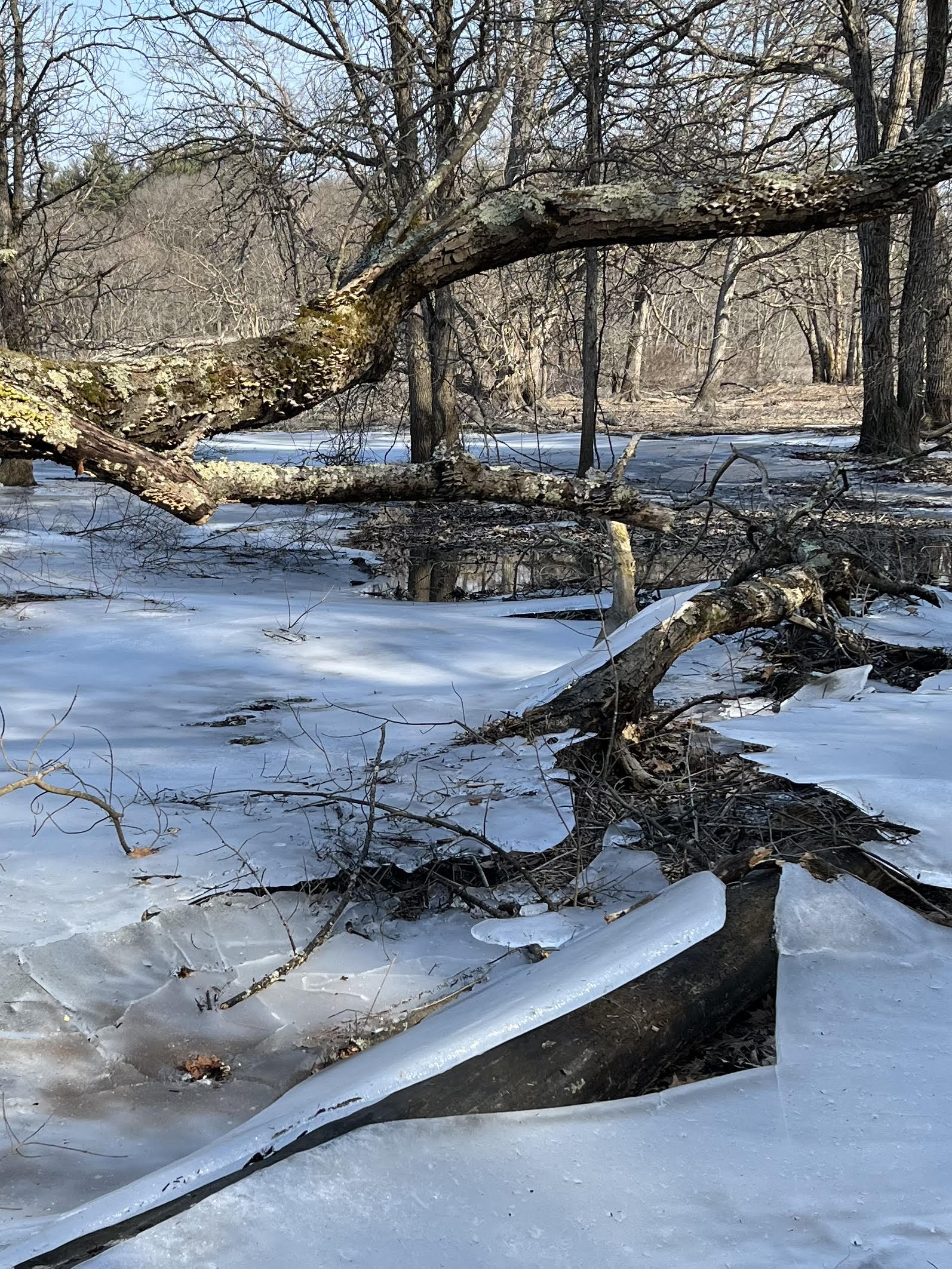
Photo: John and Suzanne’s Mom.
The ice breaks up.

When I was paying for my groceries on Tuesday, the teenage bagger commented on what a beautiful day it was, and I said, “Yes, I can’t wait to get home and take my walk.” He replied, “Where do you walk?”

At the moment of telling him my usual route, I knew I couldn’t possibly follow routine on that unusually warm, sunny, and springlike day in February.

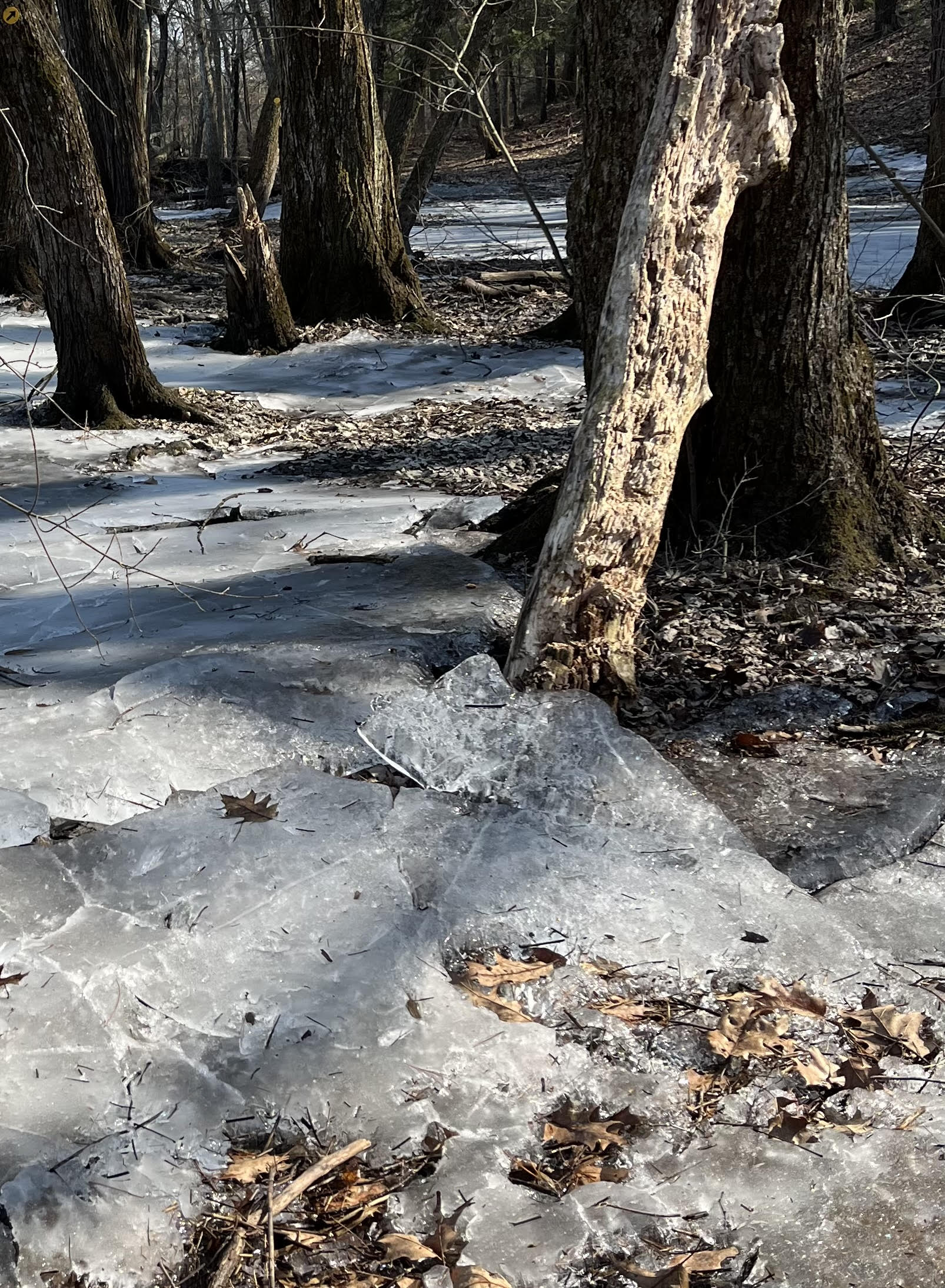
So after I got all the perishables into my fridge, I walked in the opposite direction from the routine and ended up on a conservation trail in the woods.

There was something about this that was a throwback to childhood, when I walked with a friend in the woods or with my cousin Patsy or, most often, alone. I used to feel spring coming. The woods held magic. There was a stream with a brownish rock in the middle that I liked to inaugurate in spring by stepping on it, but sometimes I would slip into the icy water and walk home wearing mittens on my feet.

It used to feel great to have an adventure alone, maybe a little bit risky. Like the time I wandered from the woods to look for the place where one could sometimes see a horse behind a stockade fence. On the way there, I would go through a marsh, stepping slowly from wobbly tuft to wobbly tuft. Until one day, I saw an unknown man standing not far off and I hightailed it out of there.

Exploring on Tuesday also felt a bit risky, even with a smart phone. How many bars do I need if I fall and want to summon help? What about the icy, sloshy places? I’m a bit old for walking home with mittens on my feet and drenched shoes hung over my shoulder, the laces tied together.

I also needed to pay attention to where I was in relation to the road. I was kind of lost, although the trail markers were reassuring.

Eventually, I came out onto a big field where a woman was walking her dog, and I had a pretty good idea where the road lay in relation to that field.

I went home and took a nap.

Read Full Post »

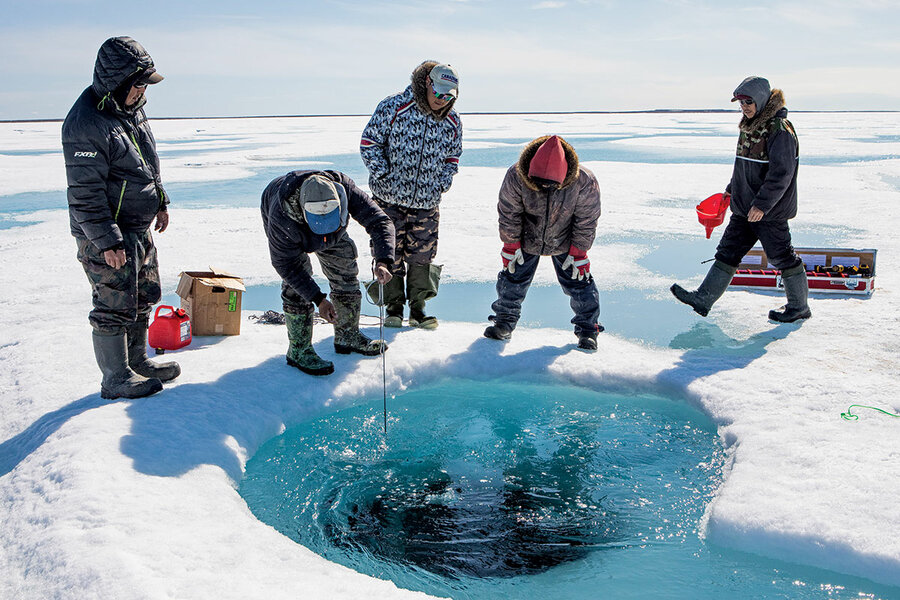
Photo: Melanie Stetson Freeman
The
Christian Science Monitor highlights indigenous “Guardians” who made a “hole in Arctic Ocean ice – a window on climate-related changes – where they monitor water quality and measure ice thickness.

Cold parts of the world are threatened. The cold-loving people who live there are deeply concerned and are monitoring the losses for climate scientists.

Sara Miller Llana writes for the Christian Science Monitor, “Masked against the Arctic glare in orange-tinted sunglasses, Tad Tulurialik is a modern conservation ‘Guardian’ of his fast-melting homeland.

“At the start of an early summer workday that never sees the sun set, he kicks his all-terrain vehicle into gear. Safe in his ancestors’ knowledge of sea currents and ice fissures, he navigates a course right off the edge of the Canadian shore onto the aqua iridescence of the frozen Arctic Ocean. He’s following older Guardians to a manmade hole in the ice shelf, a window toward understanding climate-related changes in the sea.

“Even out on the ocean surface, his rifle is always swung over his shoulder. Wherever he sees a caribou or musk ox, it’s an existential given that he’ll take it. Food security isn’t found in a grocery aisle in this northernmost Canadian mainland settlement, tellingly named with the Inuktitut word for a caribou hunting blind.

“In some ways, as a government-paid conservation Guardian in training, the 24-year-old Mr. Tulurialik is doing what he’s done his whole life. Like most Inuit boys, he was ‘on the land’ as soon as he could walk. His childhood was spent on tundra and on sea and lake ice to hunt and fish with his grandparents, who raised him. His life was marked not by school grades but by first fox trapped, first polar bear shot. These were such priorities that he dropped out of high school.

“That could have made him part of Canada’s persistent social inequality – Indigenous youth in some of the remotest parts of the country, undereducated, underqualified, and often losing touch with rich traditions and fleeing homelands for economic opportunity. Except today, he’s part of a solution, as a member of Canada’s Indigenous Guardians, a conservation corps working in 170 far-flung Indigenous communities.

“Guided and taught by elders, he and other young Inuit born since 1989, when warming of the Arctic turned precipitous, are part of an effort to safeguard their homelands and their cultural ‘right to be cold.’ They’re also helping Canada achieve international conservation commitments made last year, when it led a global pledge at the United Nations Biodiversity Conference in Montreal to protect 30% of its land and oceans by 2030.

“For Mr. Tulurialik, who worked in construction and sewer maintenance after leaving school, a paid job as a conservationist is a dream: ‘I never thought I would work and get paid for what I grew up doing.’ 

“Together, he and his Guardian colleagues are tasked with creating a sustainable future, transforming Western-style conservation work into something that more closely resembles a traditional Indigenous environmental ethos. Guardians blend science with Indigenous knowledge in a budding conservation economy dependent on the transfer of knowledge from elders to youth. 

“The ultimate aim of the Guardians’ work in Taloyoak is to use their sustainable Inuit practices – learned orally over millennia – to support the creation and maintenance of an Indigenous Protected and Conserved Area. The size of Maine, it is one of more than 90 in development across Indigenous Canada. Here in northern Nunavut territory, the IPCA conservation plan is led by the local hunter and trapper association.

It’s nurturing an economy of land-based jobs and markets as an alternative to a future in extractive industries in a territory long eyed by mining and oil interests.

“The land will be protected from development, conserving both biodiversity and a way of life based on sustainable hunting and fishing – while sequestering huge amounts of carbon, the culprit in global warming.

“ ‘This is a win-win situation’ … says Paul Okalik, the first premier of Nunavut who now works with Canada’s World Wildlife Fund (WWF), which is supporting Taloyoak’s efforts. …

“Indigenous lands, from the Brazilian Amazon to Hawaii coastlines to Canada’s high-latitude forests, represent 20% of the globe but hold 80% of the world’s biodiversity. Inhabitants have stewarded the land for centuries. Yet in a warming climate, their homelands are in some of the most at-risk environments. 

“The Arctic is this nation’s – and arguably the world’s – crisis point. Here, warming is happening at up to four times the rate of the rest of the world, leading to melting permafrost, retreating glaciers, and receding sea ice. This has broad implications for the global ecosystem. Arctic ice melt slows ocean currents and makes the oceans more acidic – changes that have global implications for both climate patterns and sea habitats. Increased melting also creates what scientists call a ‘positive feedback loop’: As dark water replaces white snow on ice, the surfaces of the ocean and Earth absorb more sunlight rather than reflecting it. This causes even more warming. …

“Taloyoak locals have already worried about warming changing their ways. Last summer was the Northern Hemisphere’s hottest on record. The year prior, Taloyoak recorded its all-time hottest temperature of 78.8 F. Locals stayed home rather than go outside in, for them, the unbearable temperature.”

Imagine the high 70s being unbearable! The rest of North America will be learning about “unbearable” soon — if it hasn’t already.

The Monitor‘s long and intriguing feature on the work in the far north is here. No firewall.

Read Full Post »

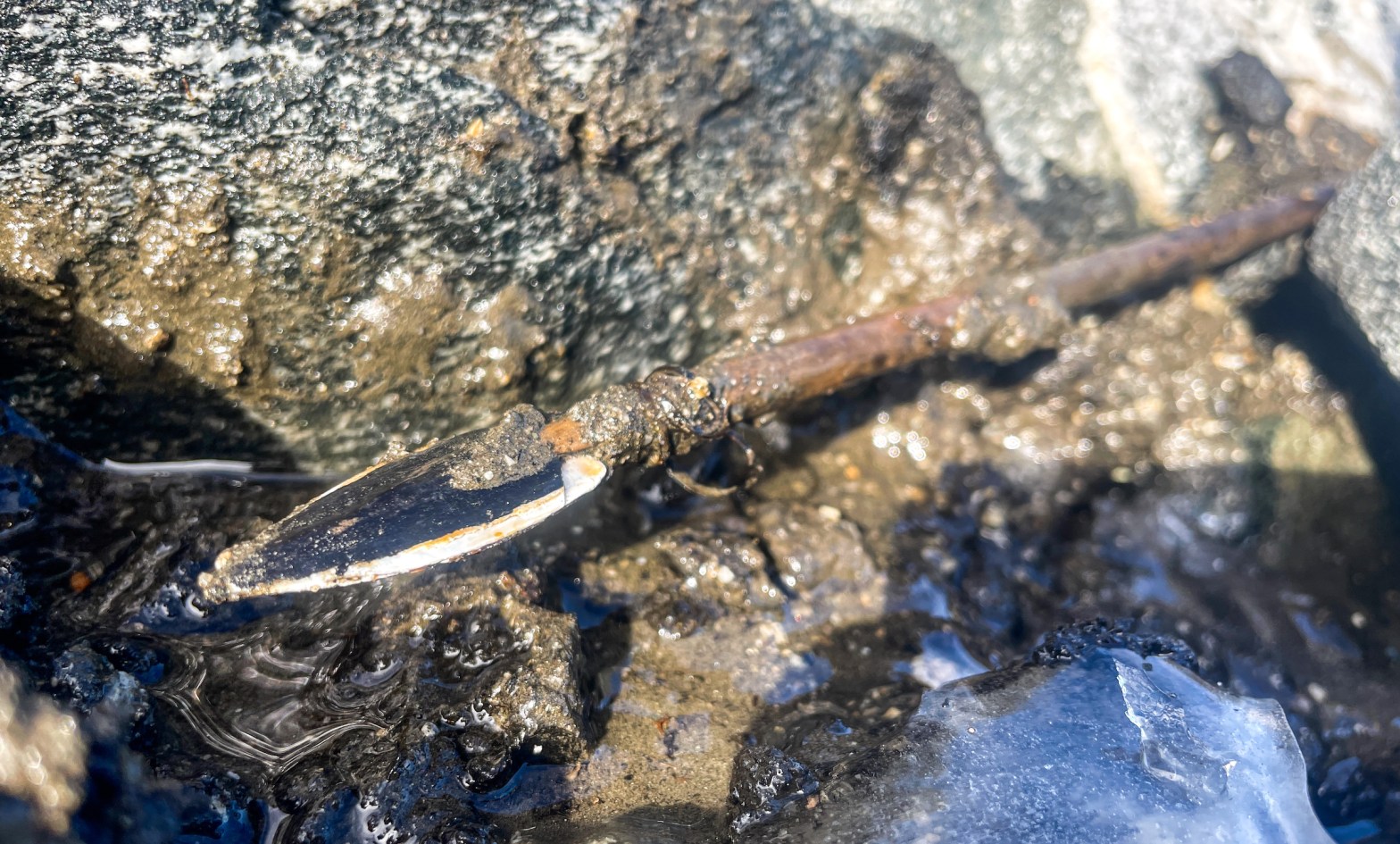
Photo: Espen Finstad/Secrets of the Ice.
Melting glaciers are revealing older and older artifacts. Archaeologists discovered the arrow above in Norway’s Jotunheimen Mountains. Made out of freshwater pearl mussel, it’s one of the best preserved findings so far.

I hesitate to say that anything about climate change has an upside, but we might as well enjoy the things that keep being revealed — at least until we reach the more important goal of controlling global warming.

At Hyperallergic, Maya Pontone reports on melting glaciers in Norway and the latest Bronze Age discoveries.

“Archaeologists trekking through the Jotunheimen Mountains in Norway’s Innlandet County,” Pontone writes, “came across a remarkable find — an intact shell arrow dating back to the Early Bronze Age. Fastened with an arrowhead made of freshwater pearl mussel, the well-preserved hunting tool dates back 3,600 years and is one of eight shell arrows that have emerged from melting ice in Norway in recent years.

“On September 13, archaeologist Espen Finstad and his research team came across the artifact while checking a site as part of a routine monitoring job they typically run at the end of the field season. While the discovery of the ancient weapon was an unprecedented surprise that day, it is just one of hundreds that the Secrets of the Ice glacial archaeology team has uncovered over the past decade due to climate change.

“ ‘The glaciers and ice patches are retreating and releasing artifacts that have been frozen in time by the ice,’ Lars Holger Pilø, co-director of the archaeology program, told Hyperallergic. …

“The archaeologists have been continuously rescuing artifacts from Innlandet’s glaciers and ice patches since the fall of 2006, when the first ‘big melt‘ hit the Jotunheimen Mountains, located northwest of Oslo. [It’s the] home of the mythological jötnar, the rock and frost giants in Norse folklore. …

“ ‘Now the artifacts are exposed and deteriorating fast, so we are in a race against time to find and rescue the artifacts,’ Pilø said.

“So far, the Secrets of the Ice research team has mapped 66 ice sites and recovered approximately 4,000 finds including hunting gear and tools, textile remnants, transportation equipment, and clothing materials. The team has also found biological specimens such as antlers, bones, and dung.

“ ‘Arrows with shell arrowheads only became known in Europe when they started melting out of the ice in Norway,’ Pilø explained about the recent discovery. …

“As global warming transforms Norway’s mountainous landscape, Finstad, Pilø and their fellow glacier archaeologists are rushing to collect the exposed artifacts, which continue to get older as the ice continues to melt.

‘Most of the ice here in Norway will be gone in this century,’ Pilø said. ‘You can say that we are melting back in time.’

“Just last week, the team recovered another arrow, this one with an intact quartzite arrowhead, that is ‘probably 3000 to 3500 years old,’ according to Pilø. The team also found an iron horse bit with remnants of a leather bridle, a Medieval horseshoe, a Viking age knife, and an arrowhead for a crossbow bolt this month.

“ ‘The finds are incredible, but the reason they are melting out is sad,’ Pilø said, explaining how the ice melt will lead to drastic changes in Norway’s landscape, local wildlife, agriculture, tourism, and hydro-electrical power plants dependent on glacial water.

“ ‘It will be a very different world,’ he lamented.”

Feel free to revisit my February post about amateur archaeologists in Norway — the three buddies who under cover of darkness have found hundreds of previously unknown rock-carving sites. Click here.

More from Hyperallergic, here.

Read Full Post »

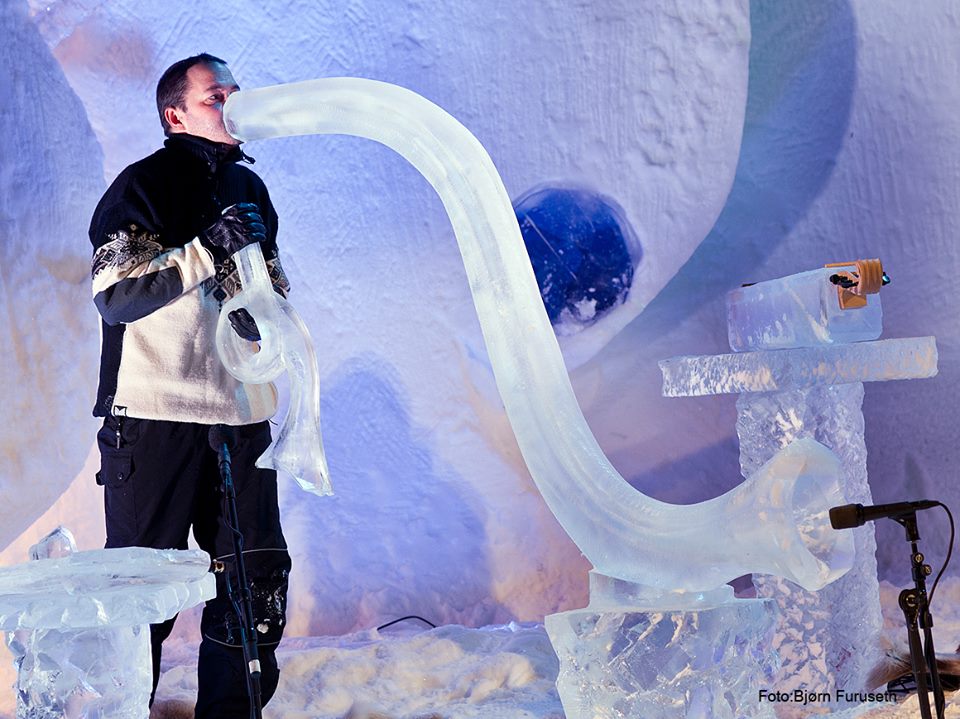
Photo: Business Trip Friend, 2017.
An Ice Music Festival is held in Norway most every year, although it was cancelled for 2021 because of Covid. In 2020, it was held in the village of Finse, near the Hardangerjøkulen glacier.

Finally, the ice is melting where I live. I can’t help but think “good riddance” after an outdoor birthday party Sunday that saw us slipping and sliding with the grandchildren through the woods. But I have to remind myself that they actually love the ice (two kids are hockey players), and in fact, there are a variety of reasons to love ice.

Consider Lola Akinmade Åkerström’s report at National Geographic.

“Brittle bursts that mimic cymbals. Deep hollowed notes reminiscent of metal drums. These are some of the surprising sounds that Siberian percussion group Ethnobeat created from Russia’s frozen Lake Baikal in a 2012 viral video that introduced millions around the globe to ice music.

“But similarly haunting melodies had been filling dark Arctic nights across Norway and Sweden for several years. In 2000 Norwegian composer and percussionist Terje Isungset performed the world’s first ice music concert inside a frozen waterfall in Lillehammer.

“Six years later Isungset founded the annual Ice Music Festival Norway, drawing curious adventurers willing to brave subzero temperatures in order to experience this unique way of bonding with nature through music. (This winter’s festival was canceled due to the pandemic, but he’s planning to livestream a concert on March 14.)

“For Isungset, who was already experimenting with natural elements such as stone and wood when composing music, his foray into ice was an organic next step.

‘When I first started playing on clear ice, I found its pure sound surprisingly warm and gentle compared to the sound of crushed ice beneath your feet.’ …

“So what exactly is ice music? Musicians tap beats out of naturally occurring ice or play instruments crafted from ice. Many of the instruments may seem familiar, but with ice music, nature takes center stage—and brings more than a few notes of unpredictability. Both the making and playing of the instruments are processes that can’t be fully controlled, which only adds to the art’s appeal.

“Carved instruments can be either completely made of ice, such as horns and percussion, or hybrids, like harps, in which the main body is ice with metal strings attached. Isungset collaborates with award-winning ice sculptor Bill Covitz, who is based in the United States but travels to concert destinations around the world to make instruments on location.

“Another American artist, Tim Linhart focused on snow and ice sculptures in the U.S. before moving to Europe and building a reputation for crafting ice instruments. Thirty-six years later he has created hundreds of them. …

“By studying and intricately blending materials — such as homemade clear ice and carbonated water, plus crushed mountain snow — Linhart can make instruments like violins and tune them as close to perfect as nature allows. …

” ‘When you approach that breaking point between the tension of the string and the thickness of the material, right there is where music truly happens,’ says Linhart, who honed his craft through trial, error, and a few exploding instruments. …

“When the show starts, other complications arise. “’Ice is always in motion; expanding, contracting and sublimating away into the atmosphere,’ says Linhart. ‘Warm bodies melt instruments. Audiences increase temperatures because they are breathing. Instruments need to be re-tuned differently. Some drop several notes, others rise.’ To mitigate this, he designs domed concert venues that ventilate heat away from the instruments.

“Another hazard? Horn players’ lips can stick to the mouthpieces of their instruments. And most of the time, the performers can’t practice on their delicate tools, so they often compose music live and improvise in front of the audience. …

“Other instruments such as the ‘iceofon’ — a cross between a xylophone and a marimba that pairs nicely with the harp — need to be tuned differently to avoid playing entire concerts in one tone.”

Lots more about musicians up for a challenge at National Geographic, here.

Read Full Post »

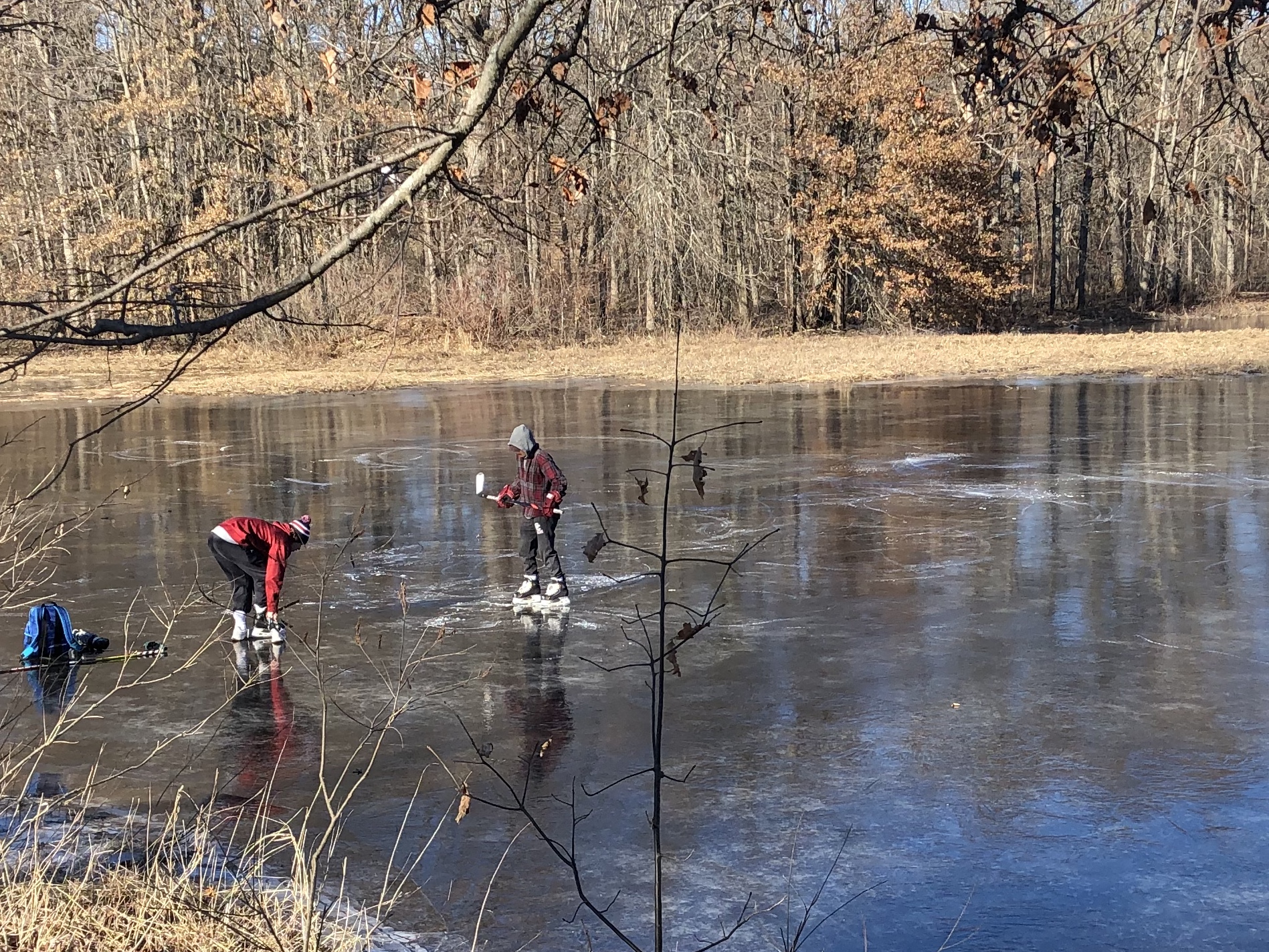
Today I have a few Massachusetts photos that I took myself and a few that other people took. Most need no explanation, but please let me know if you have comments.

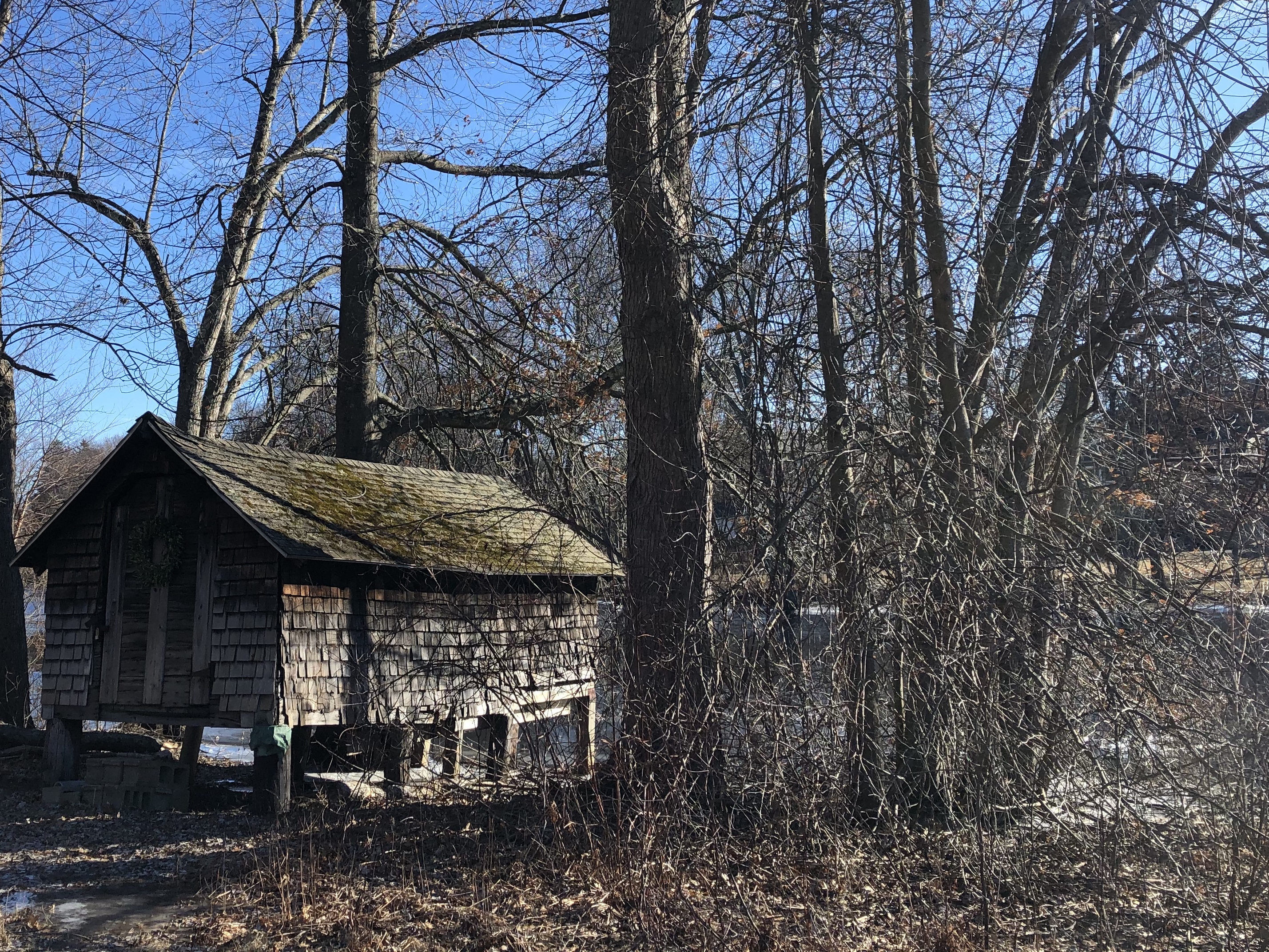
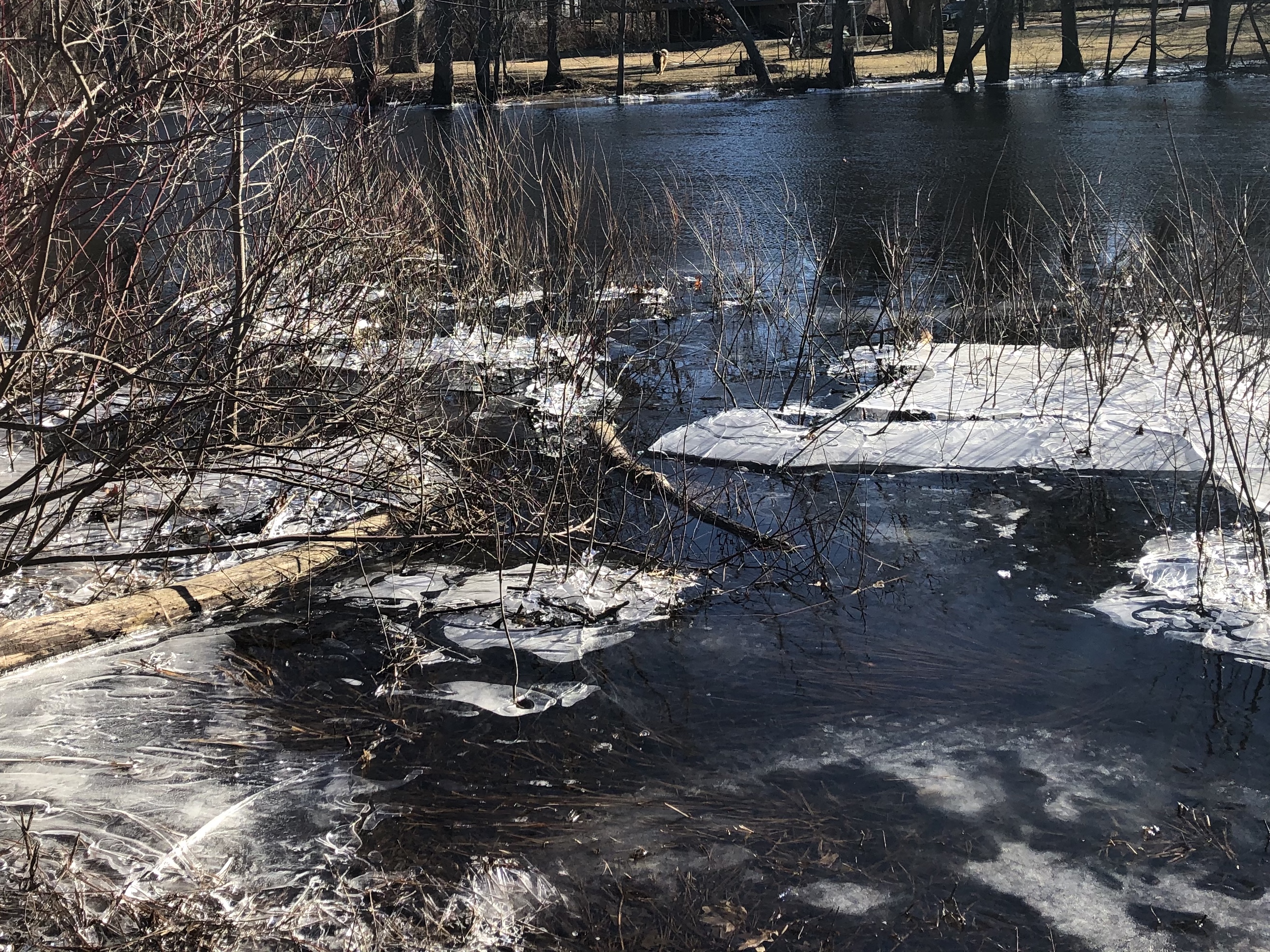
The abandoned boathouse is next to the Sudbury River, which you can see through the trees if you look closely. A shot taken nearby shows more of the river, including the farther shore and the ice forming along the edges.

About the traffic signs: Are drivers supposed to be hopeful about the availability of tickets?

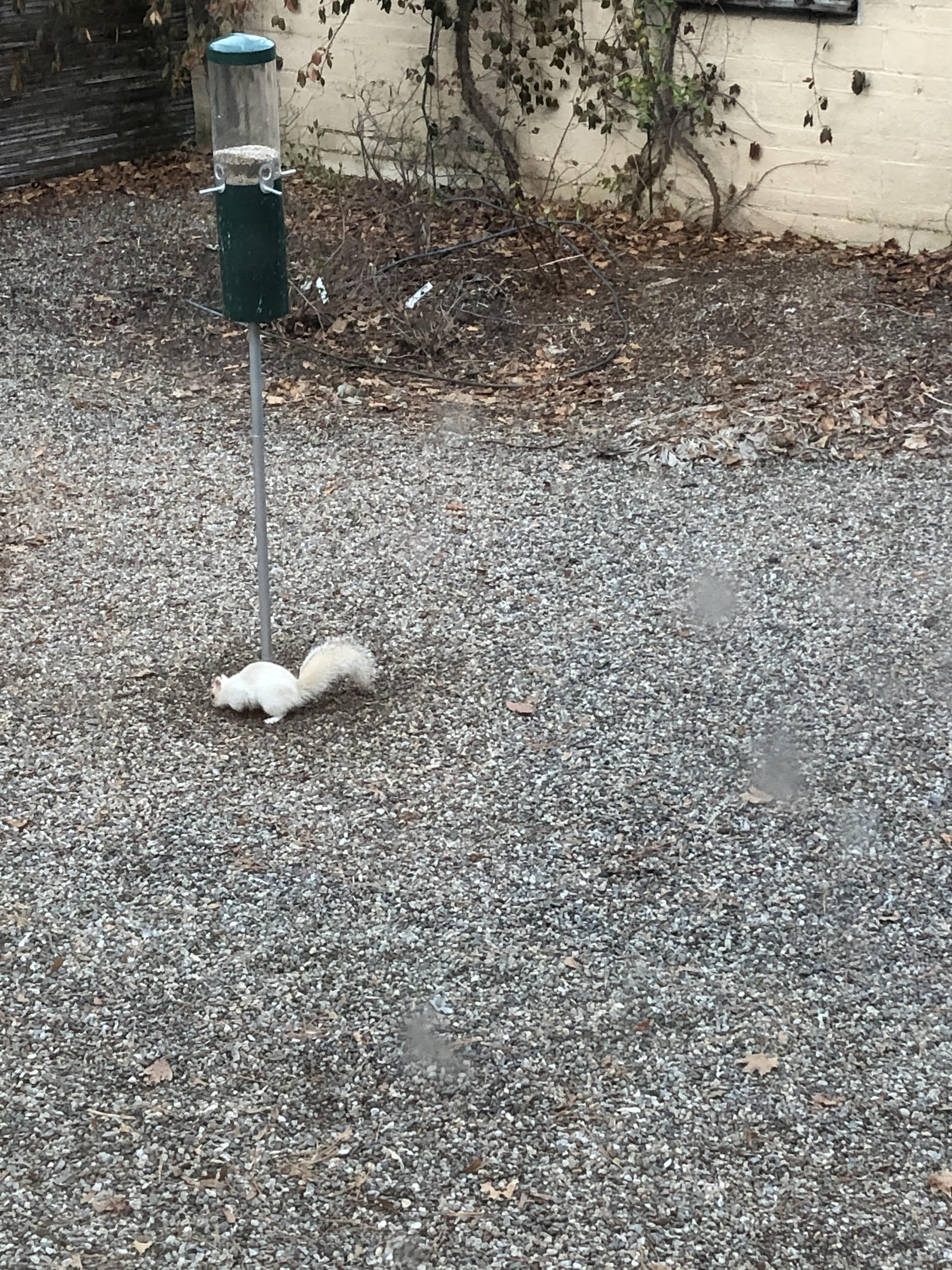
My husband researched white squirrels after I pointed out our visitor. This squirrel could be either an albino gray squirrel or a mutation. I think I have the mutation. Very aggressive, by the way.

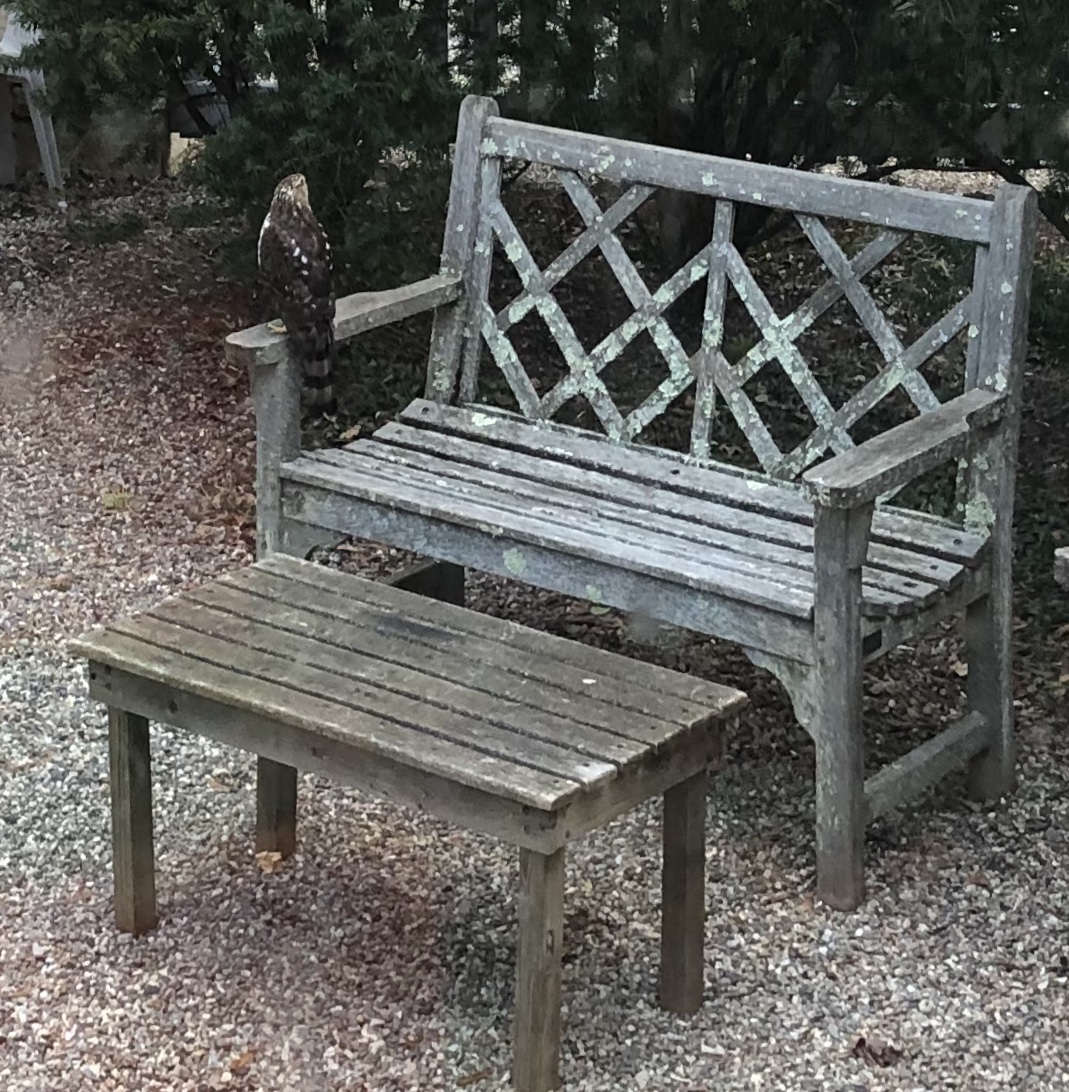
The new bird feeder has provided terrific entertainment ever since it went up December 16. The sharp-shinned hawk seen on the backyard bench agreed that the feeder was entertaining, although his enthusiasm was not as innocent as mine.

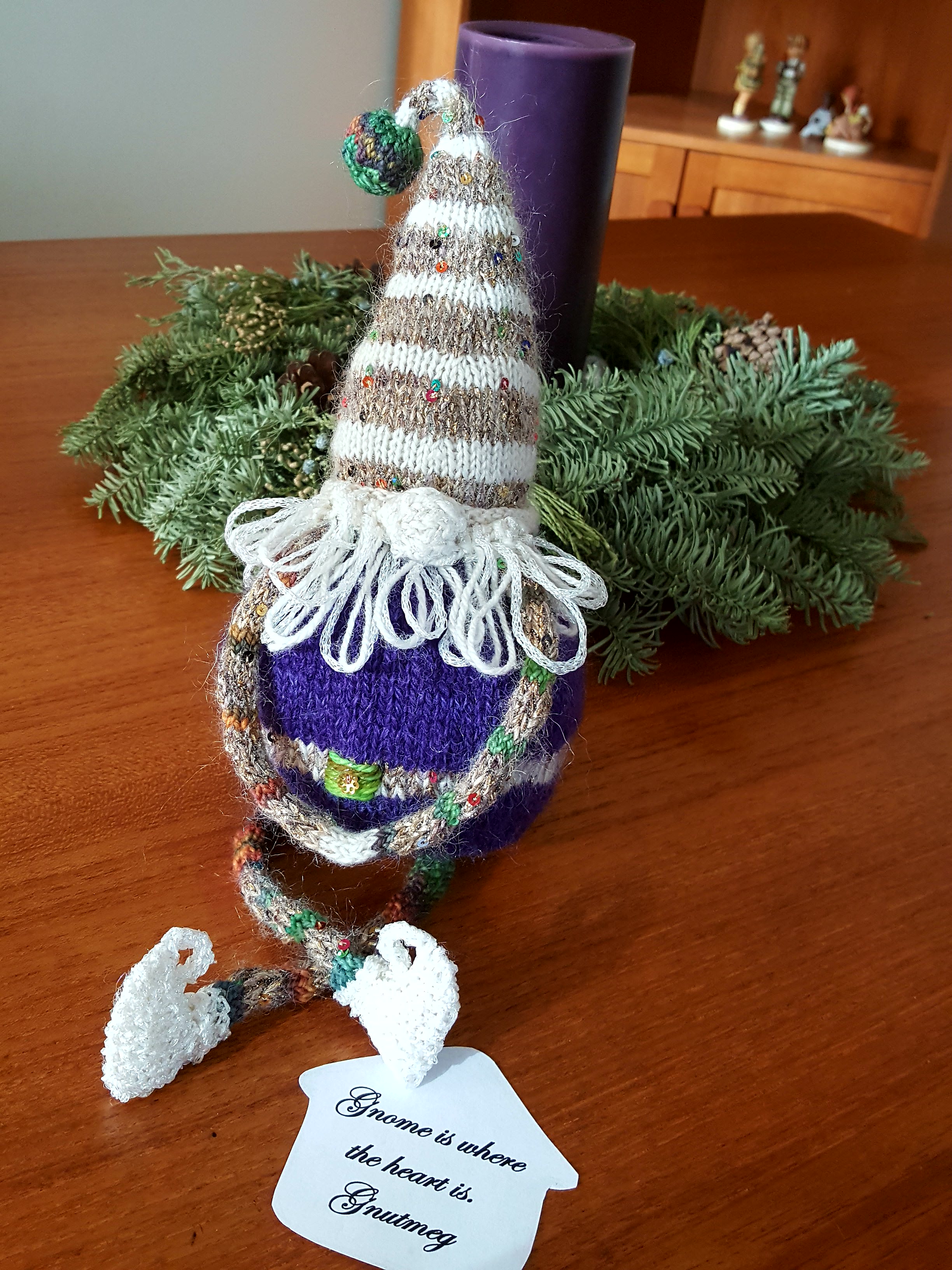
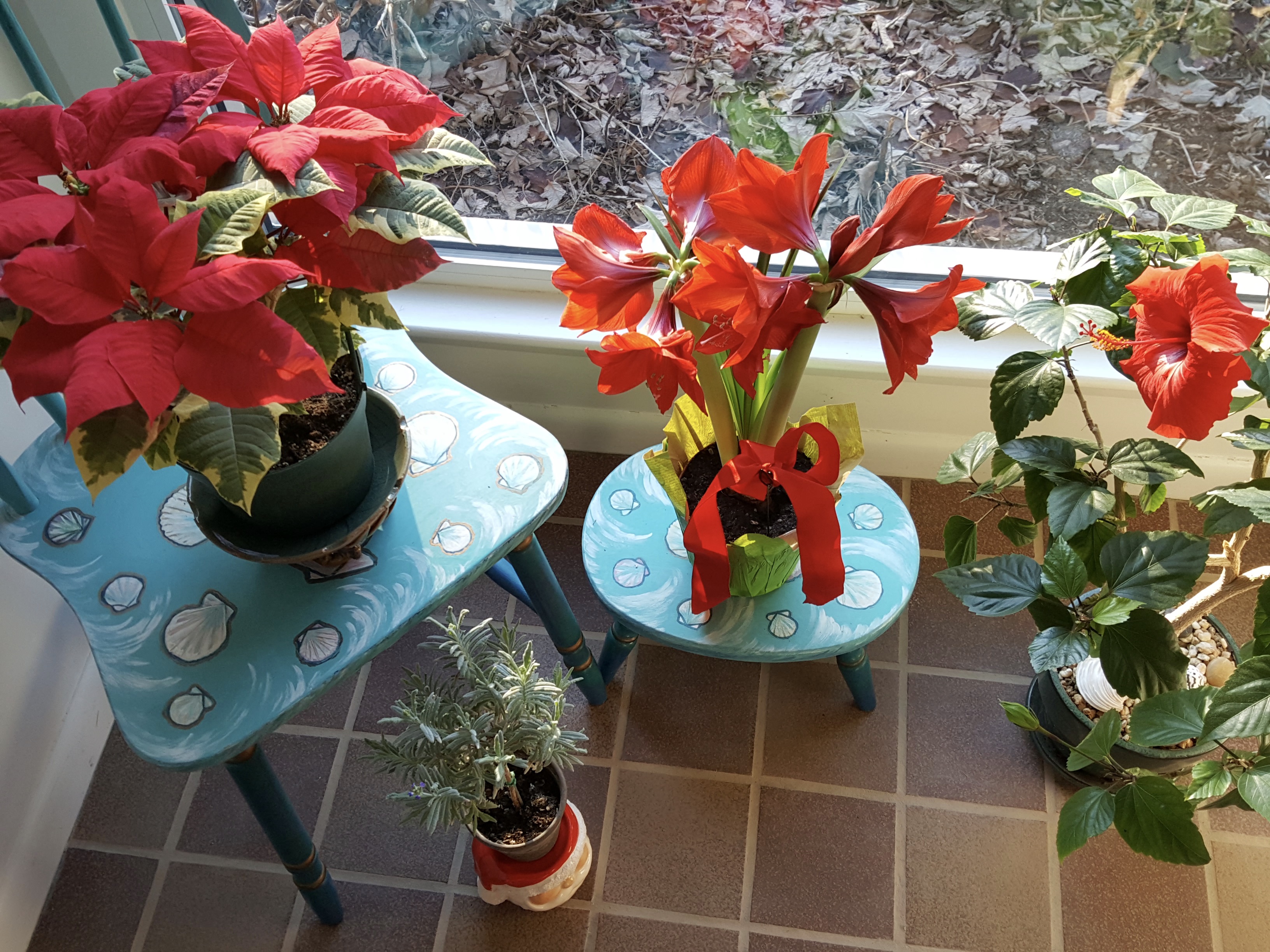
Kristina took the next two pictures: one of the gnome she made over Christmas, and the other of her bright and cheery plants.

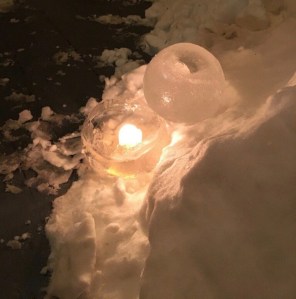
My oldest grandson took the picture of his sister next to a big New Year’s ice sculpture in his town.

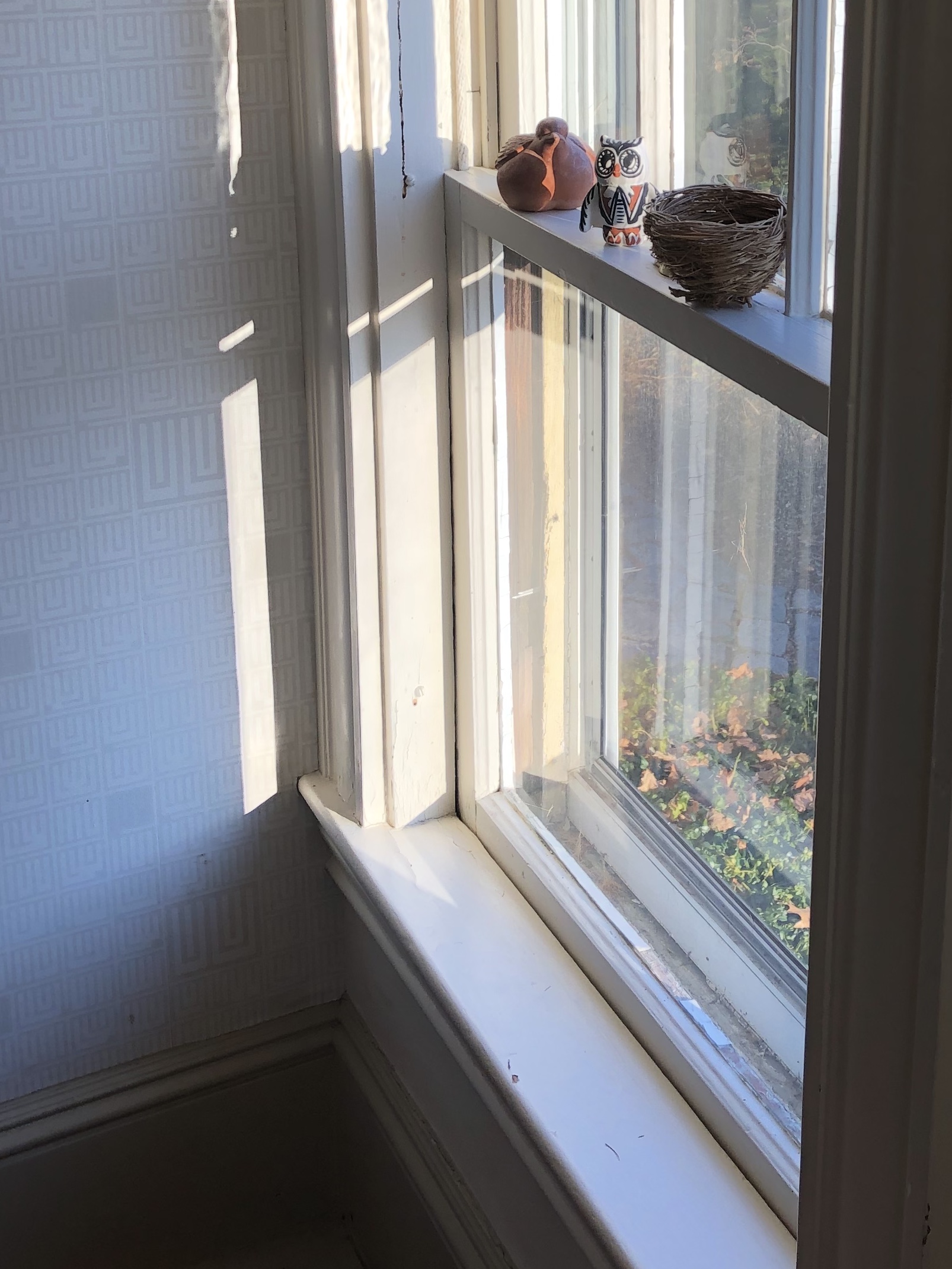
Finally, I hardly ever miss a chance to shoot a photo of nice shadows.

Read Full Post »

Photo: CNN
A winter storm coated buildings along the shores of Lake Erie with ice as thick as three feet back in February. Something to ponder if you’re in the middle of a heat wave now.

Blogger Deb at A Bear’s Thimble once suggested saving a winter photo for blogging on a hot day in summer, which was exactly what I did that year. So now, during our current heat wave, I’m pulling up an extreme cold-weather story saved from early March. Enjoy. Keep cool.

Alicia Lee and Hollie Silverman wrote at CNN about homes along Lake Erie that were “covered in ice following two days of gale-force winds. …

“Instead of a winter wonderland, residents living along the shore of Lake Erie in New York woke up this weekend to a winter nightmare when they found their homes completely encased in thick ice.

“Ed Mis has lived in his home in Hamburg, New York, for the past eight years, and while the neighborhood has seen ice coatings before, he said this is the first time it’s been this bad.

‘It looks fake, it looks unreal,’ [the homeowner] told CNN. ‘It’s dark on the inside of my house. It can be a little eerie, a little frightening.’

“His home on South Shore Drive in the Hoover Beach neighborhood of Hamburg, about 9 miles south of Buffalo, is covered in several feet of ice and his backyard has about 12 feet of ice, Mis told CNN by phone. …

“The ice makes the houses appear as if they’re ice sculptures or something out of the movie Frozen. …

“To blame? No, not Elsa, but 48 straight hours of gale force winds. The winds created huge waves, driving lake water up on the shore, according to the Weather Channel.

” ‘When you are down in the low to mid-20s, all of that spray that comes up and hits the buildings is going to freeze and make it a giant icicle,’ winter weather expert Tom Niziol told the Weather Channel.

“The ice has started to melt a bit since Friday, Mis said, but he hopes the governor will approve an emergency declaration to help the neighborhood recover.

‘It’s a beautiful sight, but I don’t want to live through it again,’ Mis said.

More.
It sounds like one of those “what-am-I-seeing?” phenomena. Do you know of others? Have you ever been to a place where it took your eyes a while to understand what you were looking at?

Photo: CC/Wikimedia Commons
Town of Hamburg in Erie County, New York. (If you went to public school for 7th grade in New York State, I bet you can draw that New York map with your eyes closed.)

Read Full Post »

010618-ice-lanterns-Arlington 2


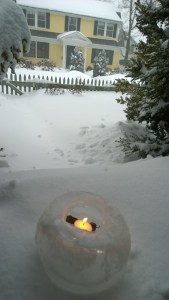
When you don’t have to travel, ice and snow are not the burden they are to a driver. You can wander a little outside your home and take pictures, bake banana bread, put out carrots for the bunny that appears at dawn, feed the birds, make ice lanterns.

The ice lanterns above were made by John’s children, and the photo was taken by my daughter-in-law. I love the smoky, swirly, mysterious aura that she captured.

My own 2018 ice lantern is below. My husband was critical to the enterprise. If you want to make an ice lantern yourself, check out an earlier post, here. You need a really cold day.

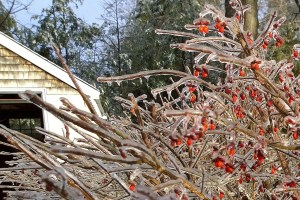
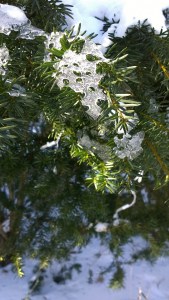
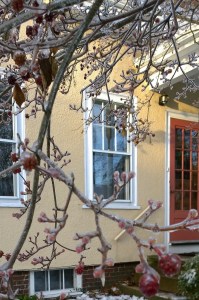
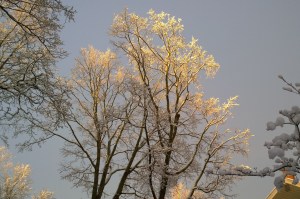
Right before Christmas, I took several photos of ice on trees and bushes because it looked so pretty. I know it’s not good for plants, though.

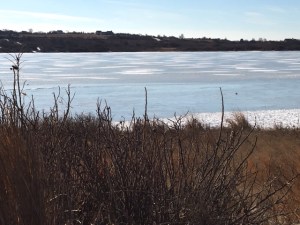
Sandra M. Kelly is the photographer behind the two photos of frozen bodies of water in New Shoreham — water that hardly ever freezes. It didn’t stay frozen long enough for her to get shots of ice boat racing, however. New England is swinging too quickly from deep freeze to balmy.

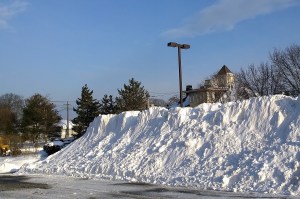
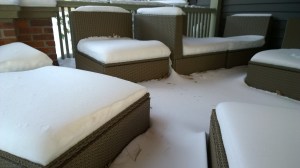
The big snow January 4th produced the mountain I noticed in a parking lot and the deceptive cushions on Suzanne’s porch furniture.
010418-newest-ice-lantern

122417-nice-ice-not-great-for-bush


010318-lacy-ice

122417-when-ice-in-the-dooryard-bloomed


010318-Sandra-Kelly-Block-islandJPG

010318-Sandra-Kelly-New-Shoreham-frozen-pond


0518-snow-pile-in-parking-lot

010818-snow-pillows-Providence


Read Full Post »

Photo: Graeme Richardson / Ice Music

And speaking of ice hotels, you might want to try an ice concert one of these days. That is, if you get yourself as far north as Swedish Lapland (also known as “the world’s best place for experiencing the Northern Lights“).
Tod Perry writes at Good that ice instruments have an ephemeral quality that is reminiscent of Buddhist mandelas.

“Tibetan Buddhists have a tradition of making elaborate artwork out of colored sand and, upon its completion, blowing it all into a river. The ritual is to show their belief in the transitory nature of life.

“On the other side of the world, a man [from Colorado who is working] in Sweden has created another form of temporary art by making music out of ice. Twenty years ago, Tim Linhart made his first ‘ICEstrument’ on a snowy mountaintop and his obsession led him to create an entire frozen orchestra and chamber hall.

“In Lulea, Sweden, [the ice sculptor] has made his own igloo concert hall where musicians perform with string and percussion instruments made of ice.

“One of the major problems with conducting an ice orchestra is that the instruments eventually fall out of tune due to body heat from the performers and audience. This has led Linhart to create a unique venting system in his ice theater that filters the body heat out of the igloo.

“Linhart’s ice instruments have a beautiful sound that play on our deep connection to water.

” ‘The ice instrument is made of frozen water, we’re made of melted water. And that physical connection opens the door for a spiritual connection,’ he says.”

Read more at Good, here.

Read Full Post »

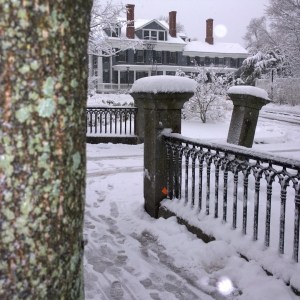
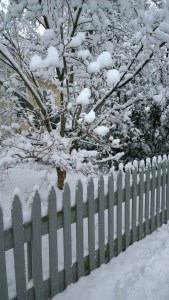
Time for a photo round-up. Winter in New England: warm days, cold days, snow, ice, complicated shadows, empty facades, food and drink.

If you get any time to be alone and quiet — maybe just nursing a head cold — use it well. Everyone needs time to think.

020516-6tag-lichen-and-snow

020516-dogwood-and-fence-in-snow


020516-sun-on-snow

021316-garage


021316-ice-and-shadows

021316-ivy-shadows


020316-facade-providence

020216-food-and-drink-mural


Read Full Post »

Boston Globe arts correspondent Cate McQuaid tweeted a link to this Seattle Times article a while back. I thought you would like it.

Reporter Sandi Doughton writes about the ice cap at Mount Rainier’s summit and how it provided a lab of otherworldly grottoes for scientists last summer. The adventure described is both harrowing and thrilling. Here are some teasers.

“The caves form as heat rises from the volcano’s depths and melts the base of the ice cap that fills Rainier’s twin craters. …

“With little shelter on the exposed ridge, the group [of explorers] bolted for the lowest ground in sight. They huddled in a small saddle, cringing as lightning flashed through the clouds. Thunder echoed from all directions and the wind blasted them with snow.

“It was an hour before the lightning abated enough for the team members to take refuge in their tents. The storm raged all night. …

“[Zoe] Harrold, a University of Washington graduate now at Montana State, sees the caves as a natural laboratory to study microbes that flourish where most life withers.

“The combination of volcanic heat and gas, frigid water and icy soil is similar to conditions on Earth when the first living things appeared. It’s also what scientists expect on Mars and Jupiter’s moon Europa — two other places in the solar system that might harbor life.”

Read the story here, and be amazed by the photos. The story reminds me so much of the spooky Danish mystery Smilla’s Sense of Snow.

Photos: François-Xavier de Ruydts/Special to the Seattle Times
Microbiologist Zoe Harrold, a University of Washington graduate, says the Mount Rainier caves can be a natural laboratory for study of microbes that can flourish in conditions hostile to most life.


Read Full Post »

Photo: Julie Van Stappen, National Park Service
Apostle Islands sea caves

Winter seems to be hanging on, so it’s not too late to blog about the Apostle Islands and the sea caves in winter.

My husband and I visited the Apostle Islands 16 years ago, almost to the day. We stayed in a pleasant B&B that had a waitress who, my husband recalls, acted like one’s sojourn there “was the experience you had been waiting for your whole life.” We drove around and tried to keep warm. I’m looking at a pottery pitcher with an apple on it that we bought in a little shop.

At the New Yorker, Siobhan Bohnacker introduces a slide show on the sea caves, calling them “Cathedrals of Ice.”

“This past February, thanks to an unusually cold winter, the sea caves along the Apostle Islands National Lakeshore, in northern Wisconsin, were accessible by foot for the first time in five years. Visitors were able to walk two miles over the thick ice of Lake Superior to see the ice formations that run up the coastline. Erin Brethauer, a photographer living in North Carolina, visited …

“Describing the trek to the caves, Brethauer told me, ‘A steady stream of people cut a colorful line on the horizon. More than a hundred and thirty-eight thousand people visited the ice caves this winter, up from twelve thousand seven hundred in 2009.’ …

“The shorelines along the Apostle Islands have been slowly shaped by the movement of the water of Lake Superior, and by its annual freezing and thawing. Sea caves, which resemble honeycombs, are sculpted in the course of centuries by waves breaking onto cliffs. This impact creates what are called reëntrants, or angular cavities that tunnel into cliffs. When reëntrants join behind the cliff face, sea caves result. When water is trapped in the caves and cavities, and freezes, dramatic ice formations occur.

“Brethauer said, ‘We were struck by the size and coloring of the ice along the coastline. Some ice was a pale blue, while other formations were yellow or reddish, depending on the sediment the water collected when it was freezing. … I loved watching how people interacted with the caves and ice, climbing or taking pictures. They provided such scale and added to your feeling of wonder. And then, stepping inside one of the caves, looking up, and listening to the silence or the ricochet of sound, it felt like being in a cathedral.’ ”

Check out the slide show at the New Yorker, here.

Read Full Post »

Ice Lanterns on front stoop


My scientist brother makes ice lanterns, a useful skill for lighting friends to your door in a cold Wisconsin winter.

Here’s how. “Large 9” water balloons are frozen out on my deck, then emptied of liquid water, candled, & lit.

“The only tricky part is knowing when they are ‘done.’ Ice should be not too thin, and not too thick. Also, you need to blow air into the balloon after you fill it with H2O, so there will be a nice flat surface on top. That’s where you punch a hole in the ice to empty the liquid H2O & place the candle.”

You gotta grab all the gusto and try to enjoy the cold weather we have been having. I remember that when we lived in Minneapolis, it was a hoot to pour water off the balcony and watch it freeze in flight.

You might also want to check out how Asakiyume makes her frozen soap bubbles, here.

Closeup Ice Lanterns

Read Full Post »

In the current heat wave, I want to blog about something cool. I thought about using today’s Globe story on the Boston bar that will be made entirely of ice, but I am not into bars and the entry fee is $19.

So here is one about a tiny kingdom in the Himalayas that is cut off from the world until the river freezes. The only problem is — the river isn’t freezing as much as it used to.

“About 1,000 years ago, the Buddhists there broke away from the Tibetan Empire [and founded a kingdom] in the very north of India, in the state of Jammu and Kashmir.

“The Kingdom is isolated other than two months a year when the river freezes over and people can cross over to India.” It’s called Zanskar.

Hear more at the Public Radio International show “The World,” where guest Daniel Grushkin describes a lucky escape he had near Zanskar when a piece of ice he was stepping on broke off.

And be sure to check out the adventurer’s other excursions at his blog “Roads and Kingdoms, here.


Photo: Sumit Dayal
Trekking over the frozen Zanskar River.

Read Full Post »