Feeds:
Posts
Comments

Posts Tagged ‘new york’

Photo: Carter Burden Gallery
The Carter Burden Gallery in Chelsea shows works by artists who are at least 60 years old.

I’m always happy to see that older people are still appreciated in some quarters — in this case, at a New York gallery that features only artists over 60. Susan Stamberg has the story at National Public Radio (NPR).

“Some artists in New York may be wishing to get older faster. A gallery there caters to artists age 60 and older. No kids allowed.

“Some 200 artists have exhibited at the Carter Burden Gallery since it opened nine years ago in Chelsea. Business is good, and works sell from $200 to $9,000. It’s a lot like hundreds of other galleries in New York — except for one important thing: The Carter Burden has an age limit. Why?

” ‘Older adults do not stop being who they are because they hit a particular age,’ said gallery director Marlena Vaccaro. ‘Professional artists never stop doing what we do, and in many cases we get better at it as we go along.’

“What does change is the art market. With rare exceptions, artists who were hot when they started out found that galleries, and certainly museums, cooled to them as years passed. They kept making art, but weren’t being shown or bought. Carter Burden’s mission is to give them a wall, ‘because walls are the thing we need,’ Vaccaro said.

“According to Vaccaro, very few galleries represent older professional artists, unless they’re really famous. ‘And I get that,’ she said. “Galleries are a business. They need to show artists that are going to bring in big bucks.’

“Carter Burden is different. It’s a nonprofit, supported by a board, a corporate sponsor and philanthropists. …

“Artist Nieves Saah, 67, originally from Bilbao, Spain, has painted all her life. ‘My first show was in SoHo in ’85,’ she said. ‘And I had like 28 paintings there. I sold a few, and then from that I got many shows. I think that year I was in like 15 shows.’

“Then things slowed down. There wasn’t much interest for 10 years. Saah kept on painting her figures and fantasies in vividly colored, cheerful oils. One day she heard about Carter Burden and decided to apply online. ‘I was in a show one month after I sent the application,’ she recalled. …

“Werner Bargsten, a newbie, had his first show this past October. It consisted of stunning, powerful sculptured wall hangings made with clay and copper tubing, and formed into what look like wrapped packages. …

“At 69, Bargsten is glad to be part of the Carter Burden over-60 crowd. ‘I mean, look, it’s always harder to get out of bed the older you get, but most of the artists that I’ve met here seemed like they missed that memo that they were getting old. Most of them have the brains of a 20-year-old or a 30-year-old or something. So they haven’t really aged in terms of their spirit.’ ”

More at NPR, here.

Photo: Carter Burden Gallery
“Under the Stars,” by Nieves Saah, an 0ver-60 artist who shows her work at the Carter Burden Gallery in New York.

Read Full Post »

Photos: Rachel Watson
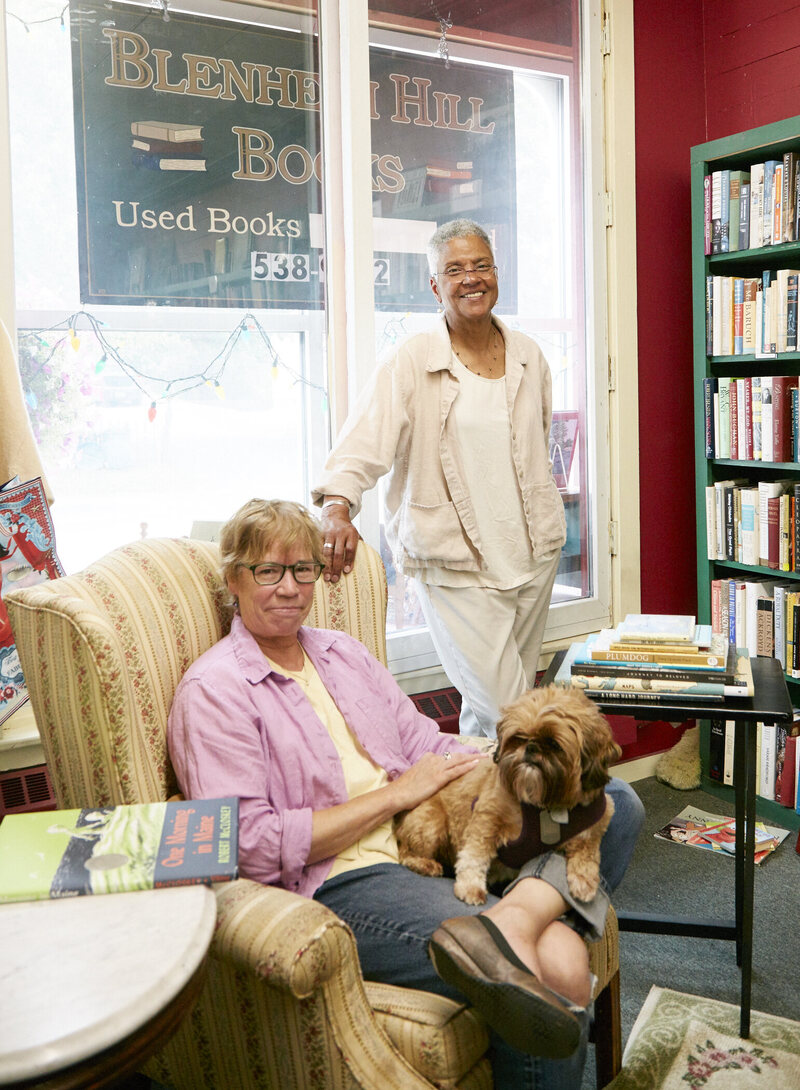
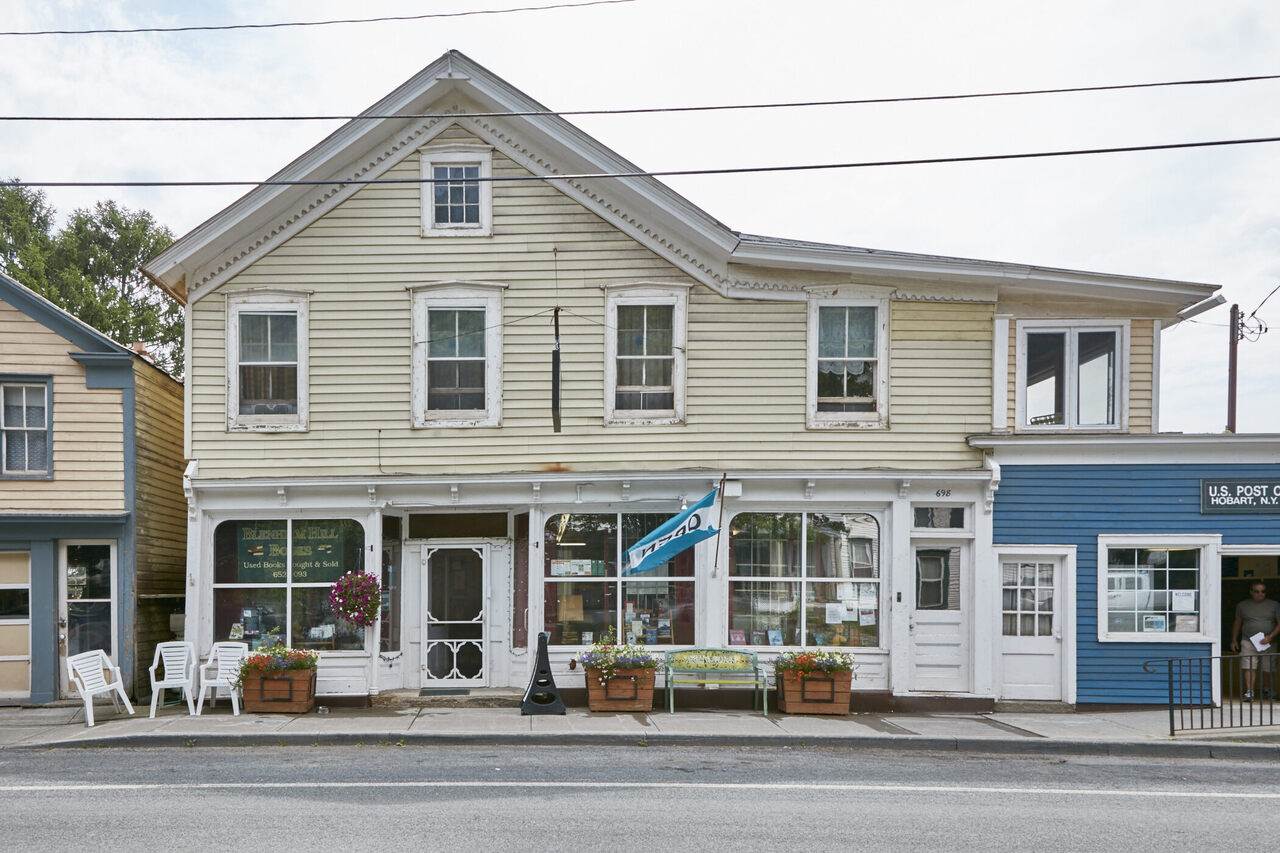
Barbara Balliet and Cheryl Clarke, owners of Blenheim Hill Books, one of five bookstores in an upstate New York village of 500 souls.

This village sounds like heaven to a book lover. I think the people who live there must be very happy. I’m pretty sure they are well-read.

Daniel A. Gross writes at Atlas Obscura, “The village of Hobart, New York, is home to two restaurants, one coffee shop, zero liquor stores, and, strangely enough, five independent bookstores. … Fewer than 500 people live in Hobart. Yet from Main Street, in the center of town, you’re closer to a copy of the Odyssey in classical Greek, or a vintage collection of Jell-O recipes, than a gas station.

“This literature-laden state of affairs emerged just after the turn of the millennium, when two residents of Manhattan, Diana and Bill Adams, stopped in Hobart during a trip through the Catskills. ‘We were both intrigued,’ says Bill, who worked as a physician for 40 years. … He and his wife, Diana, a former lawyer, were looking for retirement activities that they could pursue into their old age.

“During that first trip, in 2001, the couple spotted a corner store for rent at the end of Main Street. After speaking with the owner, they decided to rent it on the spot, and soon they were lugging their hefty personal book collection to Hobart, one rental car-load at a time. They didn’t expect to establish a book village in the process. ‘There was no plan,’ Bill says. They weren’t even sure whether their bookstore would survive in the foothills of the Catskills, three miles from the main highway.

“But they did own a lot of books. … That was how it became possible to buy a leather-bound collection of classical verse, or a set of classic political essays, in a tiny village more than two hours from New York City. Wm. H. Adams Antiquarian Books had a relatively quiet first year. But then Don Dales, a local entrepreneur and piano teacher, decided that one good bookstore deserves another, and opened his own shop. …

“Readers, like shoppers at the mall, often wandered back and forth between the shops. As more bookstores came to town, one of Hobart’s original booksellers (no one can quite remember who) began to describe the town as ‘the only book village east of the Mississippi.’ (Other American book towns include Stillwater, Minnesota, and Archer City, Texas.) …

“Barbara Balliet and Cheryl Clarke, a couple who spent their careers at Rutgers University, moved to Hobart at around that time. Clarke was surprised to find such a tiny community, far from cities or colleges, so overrun with books. …

” ‘She says, “You find all kinds of people who like books, and they’re not just college-educated.’ When the two women arrived, they met a bookseller who was ready to sell her stock, so Balliet bought it and they hopped into business themselves.

“Both women saw right away that, compared to other Catskills towns that have lost jobs and emptied out, Hobart seemed to be coming back to life. … The bookstores were a part of that. …

“Balliet says that, although she can’t make a living off the store, she can make a tidy profit — enough to grow a garden, travel, and buy more books. …

“According to the International Organisation of Book Towns, [the first] was Hay-on-Wye, Wales, founded in 1961 by Richard Booth. … Others include Wigtown, Scotland; Featherston, New Zealand; Kampung Buku, Malaysia; and Paju Book City, South Korea.

“As Hobart evolved, individual book shops have found their own specialty, like siblings who each choose their own path. ‘We try to complement each other,’ Balliet says. ‘Each one maintained its own identity and individuality,’ adds Bill Adams. Creative Corner Books, a cozy one-room shop that specializes in craft, cooking, and DIY books, is Hobart’s only shop with a knitting corner.”

More here.

Hat tip: @michikokakutani on twitter

Photo: Blenheim Hill Books in Hobart.
Read Full Post »

Photo: Rafael Herrin-Ferri/Architectural League of New York
“Eclectic Row, Briarwood, NY” (2017), from the exhibit
All the Queens Houses.

How much do you know about Queens, New York, a Big Apple borough located on Long Island? I think you’ll like this. A photographer, intrigued by the fiercely independent architectural self-expression of the borough’s denizens, recently showcased some of the quirkiest styles at the Architectural League of New York.

As Allison Meier reports at Hyperallergic, “In 2012, Rafael Herrin-Ferri began systematically photographing the houses of Queens, the New York City borough he calls home. The Spanish-born artist and architect lives in Sunnyside, one of the many neighborhoods which make up one of the world’s most ethnically diverse urban areas. Herrin-Ferri noticed that the architecture of Queens reflected this diversity. ,,,

“Over 270 of Herrin-Ferri’s photographs of 34 neighborhoods [were recently] installed at the Architectural League of New York in All the Queens Houses. … The ongoing photographic survey can be explored on his project website, also called All the Queens Houses. There viewers can explore by neighborhood, typologies (like detached houses and apartment buildings), and architectural details (including stoops and gardens). There’s a map of where he’s surveyed houses, with about a third of the borough covered in 5,000 photographs.

“ ‘I have always been interested in houses and was impressed by how idiosyncratic — and unorthodox — the low-rise housing stock is,’ Herrin-Ferri said. ‘They express the personal preferences and cultural backgrounds of their owners without much regard for what is “correct,” marketable, or fashionable. … I started this series of house portraits with the idea that it would reveal something about the urban vernacular in the “world’s borough.” ‘ …

“He believes that the community demographics inspire an ‘urbanism of tolerance’ for more extreme experiments in architecture. …

“ ‘[Most] residents of Queens … accept multiculturalism and embrace a laissez-faire attitude about building,’ Herrin-Ferri said. ‘Homeowners that I have talked to understand that people from different cultures have different ideas about what their houses should look like, and there is mutual respect.’ ”

See more photos at Hyperallergic, here.

Photo: Rafael Herrin-Ferri/Architectural League of New York
“Splayed Brick-and-Stone Rusticated Entry Porch, Maspeth, NY” (2015), from All the Queens Houses.

Read Full Post »

Photo: Rashaun Mitchell + Silas Riener
Rashaun Mitchell + Silas Riener created new choreography in June at New York City’s Madison Park, where passersby could watch the process.

I have heard of modern dance performed outdoors, but this is the first time I heard of creating the choreography in public. That would be like putting some kind brain-wave detector on my head so people could read what I’m thinking as I write a post.

Brian Seibert at the New York Times wrote about the choreography project.The choreographers Rashaun Mitchell and Silas Riener, with dancers of their choosing, are creating something out in the open.

“They’re participating in a collaborative public art project, ‘Prismatic Park,’ sponsored by the Madison Square Park Conservancy. The sculptor Josiah McElheny has created a red pavilion for poets, a blue wall to back musicians and a green circular floor for dancers.

“Artists from those disciplines are in the park for a rotation of residencies through Oct. 8, and will be tasked with making works inspired by the space and unplanned interactions with the public. …

“Seibert: How did you approach the project?

“Riener: We were both excited by it and interested in subverting it. So, of course, the first thing we did was ignore the circle and use the full area.

“Mitchell: I tell the dancers, ‘You’re going to be confronted by people, a squirrel is going to run by, you’re going to stop to say hello to your boyfriend — all of that is what we’re doing.’ … We’ve done a lot of work outside, but this felt more vulnerable, because we weren’t coming in with something set. The first day, my nerves were wild.

“Riener: This part of every process is typically private, and I wasn’t prepared for how uncomfortable I would feel. The constant feeling of being on display, even in your rest moments. You can sort of hide behind a tree.” …

“Mitchell: One time, an older man started gesturing for me to come over and I started mirroring the gesture. And he got a kick out of it and started moving his whole body and we were in this dance together. … I’ve dropped into what it is, and feel more aligned with myself and connected to other people. … It’s a hard time in the world right now, and in a weird way, this is therapeutic.”

More at the New York Times, here.

Read Full Post »

Photo: Brian Hatton
Amir Brann, social work director of Public School 446 in New York, leads second-graders in an art exercise that helps build collaborative skills.

How many decades have we been saying that schools are asked to do too much? We bemoan the fact that teachers must often act as substitute parents, police officers, advisers on social services, and more — an endless list.

Today some schools have stopped saying that it’s not fair and have decided instead to tackle the hard reality.

Meredith Kolodner writes at the Hechinger Report (a nonprofit, independent news organization focused on inequality and innovation in education), “Three years ago, when Public School 446 opened in a building where two others had failed, it inherited many of the youngest students. Among them was a second-grader who was supposed to be in fourth grade and was reading at a kindergarten level.

“The boy was one of a handful of students who had regular violent outbursts — he threw chairs and hit other kids.

“ ‘He was coming to school with a lot of stress, and he wasn’t being successful academically, so he was acting out,’ said Meghan Dunn, the principal of P.S. 446 in Brownsville. ‘Kids would rather be known as the bad kid than the dumb kid.’

“Dunn was well aware of the building’s troubled history when she agreed to open the new school in 2012, after two previous elementary schools in eight years were closed for poor performance. Dunn knew she’d be working in a community that desperately needs stability: Brownsville has the second-highest rate of student homelessness in Brooklyn and the highest elementary school student absenteeism in the city — 40 percent of its children miss 20 or more days of school per year.

“The neighborhood is the poorest in Brooklyn and also has one of the highest rates of psychiatric hospitalizations and incarcerated residents in the city. …

“So Dunn decided to try something different when she opened the school three years ago. She assumed many students would arrive with lots of physical and emotional needs, and structured the school to handle their issues in ways that regular public schools can’t. It took extra money from [Partnership With Children] and a small army of social workers, and the results are promising. The percentage of students reading at grade level climbed to 41 percent last spring, up from 32 percent the previous year, according to a widely used literacy benchmark. The number of disciplinary incidents during the same time period dropped by more than a third. …

“The struggling second-grader was immediately matched with a social worker who began seeing him individually and also met with his parents to help connect them to an outside evaluation of the boy’s possible learning issues. (Problems like ADHD and dyslexia must be diagnosed by a doctor.) To help shift his behavior, the social worker told him to write down every time he walked away from a conflict. After he avoided a fight five times, he got 15 extra minutes of basketball.

“Dunn also assigned him 30 minutes a day of one-on-one literacy help, which allowed him to improve his reading. …

“ ‘We work a lot with kids to be able to ask for what they need,’ said Dunn. ‘So kids know if you need anything, you just have to ask for an adult … if you don’t have a winter coat, we’ll find you one. When kids are acting out, a lot of time it’s because they don’t know how to communicate what they need.’ ”

More here.

Read Full Post »

2017-Nancy-Whelan-cat-sculpture-Catskill-NY

Sculpture: Nancy Whelan
Cat sculpture “Henry VIII — Six Wives, Nine Lives,” Catskill, New York.  See and hear the artist’s description, here.

Sandy and Pat attended a family wedding at Lettterbox Farm in upstate New York recently and took a little time to check out the local sights. They loved the cat sculptures in the town of Catskill and the owl sculptures in Coxsackie, whose name is thought to come from an Indian word for “owl.”

Ariél Zangla wrote at the Daily Freeman, ” ‘Cat’n Around Catskill’ is celebrating its 10th anniversary. …

“Visitors come from local communities, but also from out of state. [Catskill Association President Tina Annese] said she knows of at least one family that has visited the cats each year as part of their summer vacation. She said people come to see the cats, get their pictures taken with them, and then visit area businesses.

“ ‘It brings tourism into the area, without a doubt,’ Annese said. She added that with neighboring communities doing their own art displays, visitors can stop in multiple areas. Annese said she loves that — and the more public art displays, the merrier.

“Locally, Saugerties once again has its decorated horse statues on display, while Greenville will have its ducks for the second year.”

More about the cats at the Daily Freeman, here. And if you are on Facebook, you will want to check the Cat’n Around Catskill page, here.

As for owls, it was last September that Coxsackie decided to get into the act.

Melanie Lekocevic of Columbia-Greene Media wrote about the effort at the Daily Mail: “Catskill has its cats, Cairo has bears, and Ravena had trains. Now, it’s Coxsackie’s turn.

“A volunteer committee has been working for several months to get a new project off the ground – ‘Hoot of the Owl,’ a public art exhibit that will bring sculptures of creatively decorated owls to the community.

“Owls have long been the symbol of Coxsackie; indeed, some translations of the name ‘Coxsackie’ – said to be of Native American extraction – are thought to reference owls, according to an article by Coxsackie Town Historian Michael Rausch on the town website. …

“Like the Catskill cats, once completed each owl will be posted at locations around the village for several months, and later auctioned off at an extravagant gala.

“Visitors to [the early September] Coxsackie Farmers Market got a taste of what is possible in creating an owl when local artist Ellen DeLucia put on display an owl she created just to get the creative juices flowing around town.

“ ‘When we started, we decided to buy one owl prototype and have Ellen DeLucia paint it to give people an idea of what it would look like,’ said Committee Chair Joseph Ellis, also a village trustee.” More at the Daily Mail, here.

Horses, ducks, owls, bears, cats. Dragons, Anyone? I’d definitely go out of my way to see dragons.

Photo: Melanie Lekocevic/Columbia-Greene Media
Artist Ellen DeLucia created the owl “Freedom” to give artists an idea of what a finished owl can look like.

57e6ccd1dfdb3-image


Read Full Post »

Photo: Ted Roeder

I wonder if poetry is going to see an upsurge in our time. Better than any other form of communication, poetry can get to the heart of the matter, expressing important truths and feelings obliquely.

Recently I read about poets who gather annually on New Year’s Day in New York City to share their unique statements. The event is part of what is known as “The Poetry Project.”

“There are three things to consider when the New Year’s Day Poetry Marathon sweeps you into its gracefully uncouth embrace,” says the website, “what it is, what it was, and who you will be when it’s over. An untamed gathering of the heart’s secret, wild nobility — over 140 poets together revealing not just that a better life could exist, but that it already does, sexy and wise, rancorous and sweet, big hearted and mad as hell. …

“Since Anne Waldman gathered 31 poets at the very first marathon on January 2, 1974, countless forward-facing luminaries have thrown their voices into the cauldron — among them Eric Bogosian, William S. Burroughs, Spalding Gray, Jackson Mac Low, Ed Sanders, Pedro Pietri, Helen Adam, John Cage, Joe Ceravolo, John Giorno, Ted Berrigan, Yoko Ono, Amiri Baraka, Gordon Matta Clark, Jim Carroll, Bernadette Mayer, Alice Notley, Steve Cannon, Hannah Weiner, Kathy Acker, Arthur Russell, Gerard Malanga, Suzanne Vega, Allen Ginsberg, Patti Smith, and Philip Glass. The list grows every year …

“Whether you stay for a little while or for the long haul, whether you’re part of the standing room only experience at sunset or with the handful of diehards as the final poet reads her last word in the predawn sanctuary, you will be transformed for the year to come. Your presence helps launch a great flare into the otherwise impenetrable darkness of the 21st century night. …

“The Project receives many requests to perform in the Marathon, and we feel fortunate that so many people want to help us meet our fundraising goals. We only have about 150 spots and a seemingly unlimited artistic community to draw from. [Click here for] some basic information about our selection process. …

“Reading is just one way of participating in the event. There are volunteer opportunities (about 100 are needed) to help sell books, food and drink, assist in checking in readers, etc. It’s also an opportunity to meet or catch up with other writers/artists and support the Project’s mission. …

“For photo galleries of past New Year’s Day Marathons, please visit photographer Ted Roeder’s website.”

More about the annual event and how poems get selected, here.

Read Full Post »

I wish Pete Seeger were around for this story. The folksinger spent many years sailing his sloop the “Clearwater” up and down the Hudson River to draw attention to pollution. Today the river is in good enough shape to attract a whale chasing its dinner.

Recently, New York Times reporter Katie Rogers interviewed Dr. Rachel Dubroff, whose apartment overlooks the Hudson. She writes that the first time Dubroff spotted a whale swimming outside her living room window, “she didn’t quite believe the sighting was real,” but news reports in November confirmed that “the Hudson River has a resident humpback.”

Continues Rogers, “The Hudson, as scenic as it is, does not scream ‘whale habitat.’ But experts say cleanup and conservation efforts have led to cleaner waters and an abundance of fish. …

“A whale appearing in the Hudson is very rare, [Paul Sieswerda, the president of Gotham Whale, an organization that tracks marine life around the city] said, which is why he thinks this one is a solo traveler. But the whale still faces significant danger because it is swimming in traffic-laden waters. …

“ ‘When you have whales chasing the bunker [menhaden], and fishermen chasing the stripers that chase the bunker, accidental interactions between whales and vessels can occur,’ Jeff Ray, a deputy special agent with NOAA’s law enforcement division,” added.

I hope everyone using the river will watch out for whales and try to coexist. It would be great if the whale came back after the usual typical retreat to warmer breeding grounds in winter.

More at the New York Times, here.

Art: Amy Hamilton
A humpback whale like the one spotted in New York’s Hudson River in November 2016.

Read Full Post »

It seemed clear from the start that the refugee job-training company Providence Granola Project was onto something.

Now I’m realizing that related concepts can spring up independently in other places. Maybe there should be a trade group.

Check out this story about a food-delivery business in New York that hires refugees.

Autumn Spanne writes at the Guardian, “When Manal Kahi arrived in New York from Lebanon two years ago, to pursue a master’s degree in public administration, she longed for authentic hummus, but couldn’t find a restaurant or supermarket that came close to her expectations. So she started making her own, based on a recipe from her Syrian grandmother.

“The recipe was a hit with her friends, and it occurred to Kahi that there might be a successful business in it. The idea also dovetailed with her growing concern about the Syrian refugee crisis. …

“She decided to start a social enterprise designed to help refugees from all over the world get established in their new country and provide New Yorkers a positive entry point for interacting with the city’s refugee community. Kahi’s efforts put the spotlight on the role business has to play in the refugee crisis, and whether there’s a need for new approaches to help recently arriving refugees integrate and become self-sustaining. …

“The result went far beyond hummus. [In January], Kahi and her brother launched Eat Offbeat, a for-profit meal delivery startup that employs recently resettled refugees from around the world as chefs who prepare traditional dishes from their countries of origin. …

“Al Janabi, who uses only her last name out of concern for the safety of family still in Iraq, was one of Eat Offbeat’s first hires. … For months, she was afraid to go anywhere alone. Her first solo trip on the subway was to the Eat Offbeat kitchen in Brooklyn. …

“ ‘I want people in the US to know that refugees have few opportunities here, but we bring our skills with us,’ she said. ‘We come in difficult circumstances.’ …

“Al Janabi and two other refugees from Nepal and Eritrea … learned basic food preparation and hygiene techniques – skills that they can use to get other jobs, or perhaps eventually open their own business, said Kahi.

“ ‘Ultimately we want to change the narrative around refugees, for New Yorkers and the rest of world to see that refugees don’t have to be a burden, they have economic value.’ ” More here.

Photo: Eva Cruz/Eat Offbeat
Potato kibbeh is one of the dishes on the Eat Offbeat menu.

Read Full Post »

You probably know about Humans of New York and the photographer Brandon Stanton, who gets strangers to tell him how they really feel. I was reminded of his work when I read this NY Times story about an artist and musician who invited strangers to answer offbeat questions about their lives and then used the material to write songs for them.

Reporter Alex Vadukul attended a gallery exhibition of the work in February.

He writes, “The crinkled papers pinned across the small Chinatown gallery’s walls …  contained scrawled drawings and questions: ‘Do you know your limits yet?’ ‘Most recent Google query?’ and ‘Were you ever involved with the occult?’

“They were not pointlessly esoteric. Grey Gersten, an artist and musician, had designed them to gather information he then used to compose songs about strangers; individuals filled them out for him two summers ago during rapid 20-minute song-making appointments for his project, ‘Custom Melodies.’ …

“Mr. Gersten, 32, worked from an impromptu music studio inside the Mmuseumm, a peculiar contemporary museum the size of an elevator shaft in the narrow Cortlandt Alley in TriBeCa, where people handed him the papers through a window opening. The forms, posing questions personal and abstract, helped him explore a concept: Can you bottle a stranger’s essence in a song? The resulting compositions were played publicly at the Chinatown Soup gallery on [Feb. 5, 2016] and varied from ambient and sonic to poppy and feverish.

“People wandered through the space studying the papers on the walls, but a few sought their own original forms. …

“Josh Koenigsberg, 31, who sat for a song appointment, also tracked down his form at the gallery. … He recalled: ‘It was like going to a doctor’s office, except you filled out the last dream you had or the last time you got goose bumps. And he studied your form like he was a doctor.’ (One man at the event described it as a ‘takeout window for music.’)

“Another participant, Philip Weinrobe, 34, found his form hanging beside the gallery’s busy bar. It indicated his earliest memory was ‘sitting in a playground and looking up,’ that his favorite advice is ‘measure twice, cut once,’ and that at the time his last Google search was, ‘Why aren’t my marigolds flowering?’ ”

More here.

Photo: Emon Hassan for The New York Times
At a Chinatown gallery in February, visitors read forms people filled out so Grey Gersten could write customized songs.

Read Full Post »

Imagine how chuffed I was to see this article about Suzanne by Charmaine Gahan!

A close friend since kindergarten, Charmaine has been a huge support to Suzanne and the birthstone-jewelry company that hosts this blog, Luna & Stella.

In a delightful report, Charmaine describes how her whole family joined Suzanne’s family in New York City over school vacation to lend a hand at the Playtime trade show, a big deal for promoting new products to retail shops around the world.

Among the highlights of Suzanne’s growing collections are sweet Mama + Me bracelets, just in time for Mothers Day (May 8), and some stunning vintage lockets.

Notes the website, “All of the lockets in the Luna & Stella Vintage Collection were made in Providence, East Providence or Attleboro between 1880 and 1940.”

Why vintage mixed with contemporary? That’s kind of an interesting story, too, being the result of a hunt for beautiful hinges to use in new lockets. After the long search, Suzanne concluded that they just don’t make smooth and subtle hinges like they used to.

But sometimes an apparent dead end can lead to even better ideas, and Luna & Stella’s cool mixing of old and new seems to be an idea that is catching on.

At the Concord Journal (here), you can read more about the two friends and their families working the trade show in New York during the coldest week of the year.

Photo: Charmaine’s girls join Suzanne to look over the Mama + Me collection from Luna & Stella.

Read Full Post »

021416-luna-and-stella-at-playtimeNYJPG


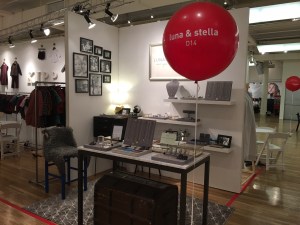
Trade shows have been helpful to Suzanne’s birthstone-jewelry company, Luna & Stella, as it branches out from being strictly online to selling to retail outlets like Talulah Cooper Boutique in Providence.

A couple weeks ago, Suzanne took Luna & Stella to the trade show NewYorkNow (“the market for home, lifestyle + gift”). Today, she is making an impression at PlaytimeNewYork — while making friends with other relationship-oriented businesses, like Little Paisley People.

I love how the founder of Little Paisley People describes the origins of her business: “I spent the most memorable summers of my childhood in Amalsaad, a quaint village, in Gujarat, India. … I grew up watching my mom work with the local artisans to hand-make toys that would support the local community. Those are the toys you also see in the Little Paisley People line. And that’s the logo you see – the passing on of the thread over the generations. …

“We create handcrafted lifestyle products for children, never forgetting that kids need to be kids. The handmade nature of these products evoke an understated elegance but are always playful. Social responsibility, the people who make these products, and how they make them are very important to us.”

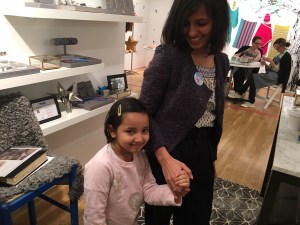
Here, she and her daughter model Luna & Stella’s mother-daughter heart rings. How nice that new businesses are emphasizing the importance of family and friend relationships!

Luna-and-Stella-heart-rings

mother-daughter-of-little-paisley-people


Read Full Post »

The poet Marianne Moore once helped to save a special tree by writing a poem about it, proving that art is more powerful than apathy.

Maria Popova writes at Brain Pickings, “In 1867, Brooklyn’s Prospect Park, once an American Revolution battlefield, opened its gates to a community hungry for a peaceful respite of wilderness amid the urban bustle. So intense was public enthusiasm that local residents began donating a variety of wildlife to fill the 585-acre green expanse, from ducks to deer. But the most unusual and enduring gift turned out to be a tree, donated by a man named A.G. Burgess and planted in 1872.

“This was no ordinary tree. Ulmus glabra ‘Camperdownii,’ better-known as Camperdown Elm, is a species unlike regular trees in that it cannot reproduce from a seed. The rare elm carries its irregularity on the outside — its majestic, knobby branches grow almost parallel to the ground, ‘weeping’ down. To ameliorate its reproductive helplessness, the Camperdown Elm requires outside help — a sort of assisted grafting, be it by accident of nature or intentional human hand. …

“As excitement over the novelty of Prospect Park began dying down, the Camperdown Elm came to suffer years of neglect. …

“But then, in the 1960s, it was saved by a force even more miraculous than that by which its Scottish great-great-grandfather had been born — not by a botanist or a park commissioner or a policymaker, but by a poet fifteen years the tree’s junior.

“The poet was Marianne Moore (November 15, 1887–February 5, 1972), who had been elected president of New York’s Greensward Foundation — an advocacy group for public parks — in 1965. This brilliant and eccentric woman … created a citizen group called Friends of Prospect Park, aimed at protecting the Camperdown Elm and other endangered trees in the park.

“In 1967, eighty at the time and with a Pulitzer Prize under her belt, Moore penned ‘The Camperdown Elm’ — a beautiful ode to this unusual, dignified, yet surprisingly fragile life-form of which humans are the only bastions. …

“Moore’s poem mobilized the Friends of Prospect Park to envelop the Camperdown Elm in attentive and nurturing care, which ultimately saved it.”

Read the poem and the rest of the story here.

Come to think of it, the Camperdown Elm’s reliance on humans to do the right thing make it very little different from the rest of the natural world.

Read Full Post »

I liked a recent story by Steve Annear at the Boston Globe. It was about a student who was planning to run the New York Marathon — while knitting — to raise money for medical research.

“At first,” writes Annear, “the idea of knitting a scarf while running the length of the New York City Marathon was merely a joke shared between Meredith Parmalee and her former employer, We Are Knitters.

“But as the Northeastern University senior continued to ponder the concept, she realized she could use the attention-grabbing feat to bring awareness to, and raise funds for, the Leukemia and Lymphoma Society. …

“ ‘It helps distract me from thinking about running . . . and my legs hurting and my arms hurting. It helps me keep my mind off of it.’

“Parmalee, 22, is being sponsored by We Are Knitters, where she did a co-op job for school, to run with the charity group Team in Training. … As she jaunts through New York Sunday, Parmalee will use a technique called ‘finger knitting,’ rather than two long needles, to weave a long scarf.

“To finger knit, Parmalee starts by making a slipknot around her index finger, and then loops the yarn around each of her three other fingers, skipping the thumb. She then brings the ‘yarn tail’ back around each finger, so there are two loops on each, and slips the second loop off each finger, starting with the index finger.

“She repeats the process, slowly binding the yarn together in tight knots. Making sure she threads the yarn correctly between each appendage requires a certain level of hand-eye coordination, but it also helps Parmalee keep a steady rhythm while she runs. …

“Parmalee said the plan is to have supporters at designated mile markers along the race route so that she can replenish her yarn supply.”

More about Parmalee at the Boston Globe, here. More about about We Are Knitters, here.

Photo: We Are Knitters
Meredith Parmalee plans to use a finger-knitting technique while making a scarf during the New York City Marathon.

Read Full Post »

Sandy sent this March 20 update from the Letterbox Farm Collective in the Hudson Valley. Farmer Nichki is Sandy’s niece.

“We can see the ground! All of a sudden, our fields and beds have emerged.  We’re checking the soil daily to see if it’s thawed enough to get started.  In the meantime, we’re wrapping up a very full winter of projects, events, and olympic-level planning, and taking a deep breath before the neverending days of the growing season begin.  Its time to start seeds, take soil tests, and take stock.

“Six months ago, through lots of work, lots of luck, and the incredible support of our community, our team of farmers and land partners were able to purchase the land underneath our farm.  Farming with land security is entirely different than farming with a one-year lease …

“We’ve long been inspired by the Community Supported Agriculture model and have spent many years planning the CSA of our dreams.  We’re so proud to finally introduce our 2015 Meal Share, a ‘Full-Plate’ CSA designed to bring you a whole, compelling, and meal-based experience of eating from the ground. …

“Pigs. Now that we have land security and access to more outbuildings, we can finally bring on the larger livestock.  …

“While sometimes farming seems like a poor career choice, there are a couple things that make us feel luckier than everybody else.  The USDA Farm Service Agency’s Microloan program is one of them.  FSA Microloans are nifty little loans for up to 50k at generous interest rates, just for farmers to start or expand their operation.  …

“Inspired by the success of our September farm dinner with Momofuku Ko (the pictures are in!), we’ve officially opened up our land for weddings, parties and celebrations. … All proceeds from events go directly toward land renewal and restoration projects (this year’s projects are all about planting trees). …

“Our very own Nichki received a Farmer Grant from Northeast Sustainable Agriculture Research and Education (NESARE) to develop a comprehensive enterprise guide on raising rabbits humanely on pasture.  Watch out for ‘Pastured Rabbit for Profit’ hitting your PDF libraries and farming conferences this fall.”

It’s quite an inspiration to see these young people take on the hard work farming — learning and innovating as they go.

On a related note, New Englanders too far away to take advantage of a CSA in New York may want to check out some local community-supported-agriculture opportunities, here. The list is from EcoRI.

Photo: Letterbox Farm Collective

Read Full Post »

« Newer Posts - Older Posts »