Feeds:
Posts
Comments

Posts Tagged ‘photo’

At first I saw no art. I didn’t enter the woods where the sign was, and I thought, “Maybe I have the wrong time.”

But the Hapgood Wright Town Forest is a work of art in itself, and I was up for a walk. The hilly pine-needle paths, the pond, the sounds of bullfrogs, wind in the trees, unfamiliar bird calls — all lovely. Then bit by bit, I began noticing pieces of art, part of the 2016 Art Ramble, which can be seen in the woods until September 5. How good of artists to do this!

The Umbrella Community Arts Center explains on its website, “This collaborative project with the Concord Department of Natural Resources celebrates all the arts. Sculpture, poetry, dance, and dramatic readings encourage the intersection of art, nature, and community in a historic natural setting.

“The arts offer a doorway for exploring our relationship with nature and place. An exhibit map will guide you through the exhibit at your own pace. And our calendar of special events and activities offers numerous opportunities to engage with the artists and with nature along the trails.

“We invite you to visit often, reflect, and play.  Share your experiences via writing and drawing in the journals provided along the trail.  Or make your own art using natural materials in the forest.”

[Nancy, this sounds like an event you organized last year.]

Curator Ursula Ziegler says, “It’s been a rumble-tumble-fantastic-interesting road, and it has already exposed us to so many interesting-important dialogues, thoughts, and ideas. Beyond the visible part of art works in a public space, there is an equally important but less visible part, which are the conversations, networks, and structures that are created within our local community and beyond.”

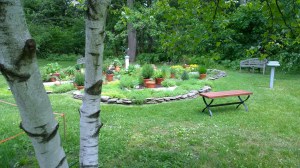
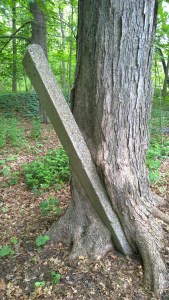
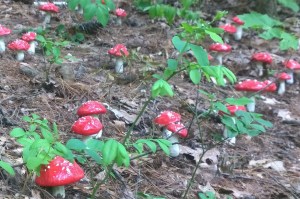
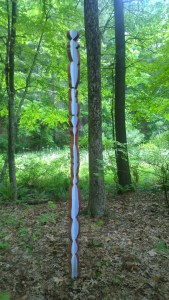
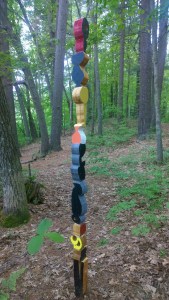
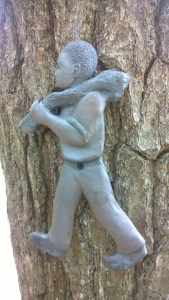
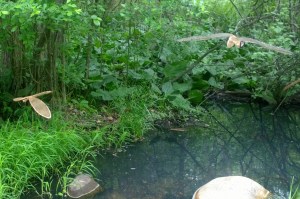
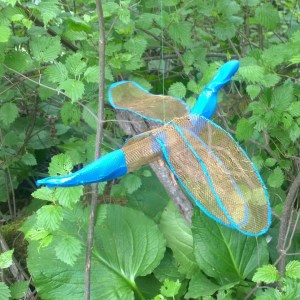
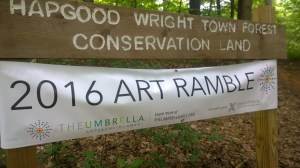
I took some pictures of ceramic toadstools, a QR code I don’t know how to use that would have identified an artist, sapling-like totems (or totem-like saplings), a small sculpture of a boy attached to a tree, fluttery dragonflies and the sign I missed on entering.

060316-toadstools-town-forest-art

060316-QR-code-town-forest-art


060316-art-blends-in-at-town-forest

060316-totem-at-town-forest-art


060316-boy-on-tree-art

060316-dragonflies-town-forest-art


6tag-060316-dragonfly

060316-town-forest-art

Read Full Post »

Here are some recent Rhode Island and Massachusetts photos. (Connecticut is also considered Southern New England, but I haven’t been there in ages.)

I wonder if other people have preferences for seeing certain kinds of photos on certain kinds of social media. For example, unless it’s a picture of one of my grandchildren, I really don’t like seeing people pictures on Instagram, but on Facebook, people pictures are the only kinds of photos I want to see. I’m still figuring out Ello, which is more likely to have art or gifs. I like almost any kind of photo on twitter or on blogs.

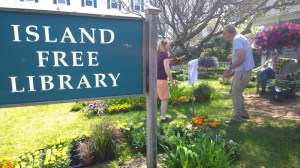
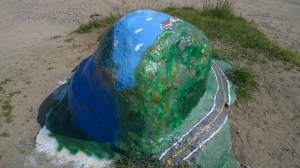
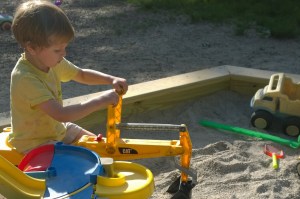
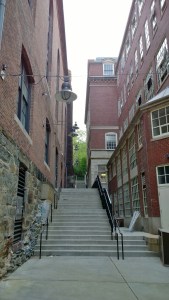
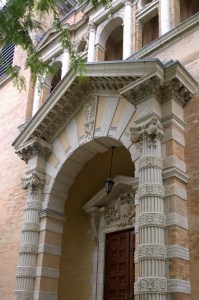
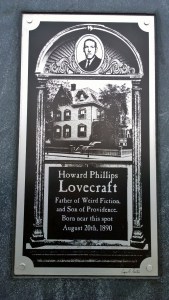
My own pictures are mostly from my walks. I’m starting off here with the plant sale at the New Shoreham library fundraiser and a typically short-lived scene on the island’s famed painted rock. Also in Rhode Island, an intensely serious heavy-equipment operator in a sandbox, the alley beside the Rhode Island School of Design Museum, fancy church architecture, and a plaque commemorating H.P. Lovecraft, a popular Providence-based horror writer with some regrettable character flaws.

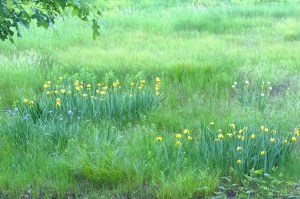
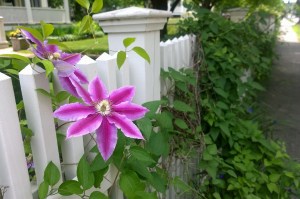
From Massachusetts, yellow iris in a meadow that is more often than not under water — or ice. Also a clematis, a remnant of a once-spectacular garden at a house that got sold. (Too spectacular for the new owners to live up to. Kind of like the garden in Woolf’s To the Lighthouse.)

052816-plant-sale-benefiting-library

052716-painted-rock-BI-scene


060116-operating-the-scooper-at-Humboldt

053116-RISD-art-museum-wall


060216-church-architecture-Providence

060216-Lovecraft-marker-Providence


060416-yellow-iris-in-wetland

060416-clematis-Massachusetts

Read Full Post »

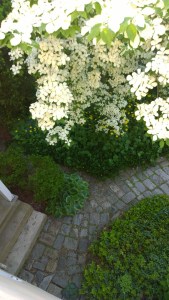
052616-downward-dogwood


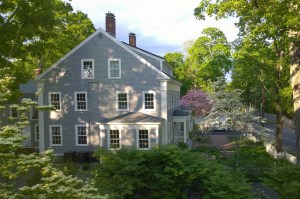
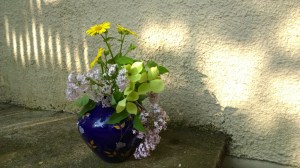
I call this one Downward Facing Dogwood. Taken from above, it shows our dogwood’s drooping magnificence. Next is a view from almost the same angle but including the neighbors’ flowering trees, too. On the back steps is an arrangement of lilacs, dogwood and a ubiquitous yellow flower whose name I don’t know.

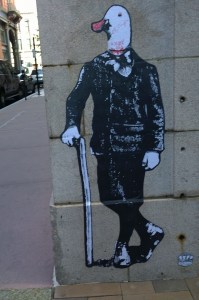
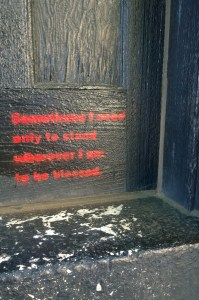
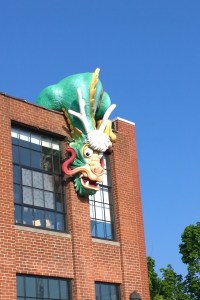
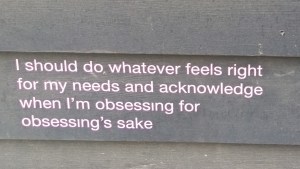
Three pictures taken in Providence feature a decorated utility box near the Rhode Island School of Design, the dragon that hovers over the Children’s Museum, and a cryptic statement in small print on the side of a Benefit Street house. My question: Is this the homeowner’s voice or vandalism?

051916-neighbor-flowering-trees


052016-lilacs-dogwood-shadows

052416-utility-box-near-RISD


052516-dragon-at-childrens-museum

052416-words-on-Benefit-St-house


Read Full Post »

Are you familiar with the “Lens” blog at the NY Times? It focuses on “photography, video and visual journalism.” Here David Gonzalez writes about the photos of Putu Sayoga.

[Hat tip: Asakiyume on twitter.]

“If you live in a far-off place, a library may be something you’d only read about in books. That is, if you had books to begin with.

“That became the mission of Ridwan Sururi, an Indonesian man with a plan — and a horse. Several days a week, he loads books onto makeshift shelves he drapes over his steed, taking them to eager schoolchildren in the remote village of Serang, in central Java. ..

“Mr. Sayoga, a co-founder of the collective Arka Project, had seen something about the equine library on a friend’s Facebook page. It reminded him of his own childhood, where his school had only out-of-date books. Intrigued, he reached out to Mr. Sururi, who offered to put Mr. Sayoga up in his home while he spent time photographing Mr. Sururi on his rounds. …

“Mr. Sururi made a living caring for horses, as well as giving scenic tours on horseback. One of his clients, Nirwan Arsuka, came up with the book idea as a way of doing something to benefit the community, specifically a mobile library. He gave Mr. Sururi 138 books for starters. Most were in Indonesian, and the books included a lot with drawings.

“Children at the schools he visits can borrow the books for three days, and demand has been so great that he now has thousands of books.” More here. Check out the slide show.

Photo: Putu Sayoga

Read Full Post »

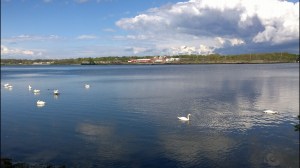
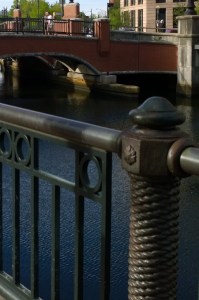
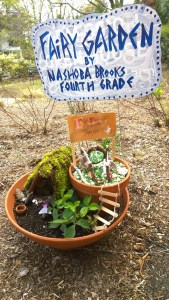
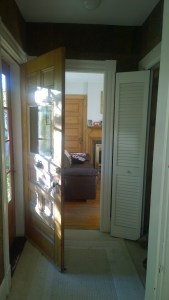
So, what do we have here? Mysterious pillars supporting a gazebo roof on Canal St., Providence. Toadstools. Tulips. Branch over the Concord River. Boots for sale. Two Seekonk River scenes, one with swans. Nautical rope design on railing along Woonasquatucket River in downtown Providence. Fairy Garden. Shadows on an appleknocker that my mother’s company used to make.

051316-someone-has-been-nibbling051716-pillar-Canal-St-Providence


050616-toadstools

051316-catalog-worthy-tulips-Concord-MA


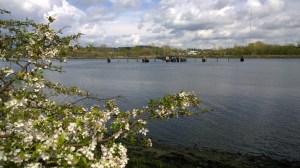
051416-leaves-over-concord-river

051516-boots-for-free050816-Seekonk-River-Providence


050816-swans-in-river


051816-nautical-river-railing

050616-fairy-garden-Nashoba-Brooks


051416-backdoor-and-appleknocker

Read Full Post »

Recently I read that there is a 5,000-year-old tree at a location in the United States that rangers won’t reveal for fear of too many curiosity seekers. Is that even possible to know — 5,000 years?

At National Geographic, Beth Moon has published photographs of other trees that are old, if not quite that old, and they look amazing.

Becky Harlan provides some background.

“Over three trillion trees live on planet Earth, and yet we know so few of their stories. Of course all trees play an important role—purifying the air, hosting the feathered and the furry, teaching kids (and kids at heart) how to climb—but some have spent more time doing these things than others. Quiver trees, for example, can live up to 300 years, oaks can live a thousand years, and bristlecone pines and yews can survive for millennia.

“In 1999, photographer Beth Moon took it upon herself to begin documenting some of these more seasoned trees. Specifically, she sought out aged subjects that were ‘unique in their exceptional size, heredity, or folklore.’ …

” ‘I am always amazed at the way trees have the ability to endure and adapt to severe conditions. Some ancient trees hollow out as they age as a survival technique. The tree will send an aerial root down the center of the trunk, which will continue to grow from the inside out.’

“In her book Ancient Trees: Portraits of Time, she explains that these ancient individuals ‘contain superior genes that have enabled them to survive through the ages, resistant to disease and other uncertainties.’ …

“Many of the real trees represented, however, face hard times ahead. ‘Quiver trees are dying from lack of water in Namibia. Dragon’s blood trees are in decline and on the endangered list, and three species of baobab trees are currently listed as endangered on the IUCN Red List,’ says Moon. …

“She hopes sharing her wonder will begin a conversation about the conservation of these arboreal treasures.”

Click here to read more and see magical photographs of ancient trees in Cambodia, Wales, Yemen, England, Madagascar, Florida, and Namibia.

Photo: Beth Moon
Rilke’s Bayon,
Tetrameles nudiflora, in Ta Prohm, Siem Reap Province, Cambodia

Read Full Post »

Happy Mother’s Day to all mothers! This mother is indulging her interest in photography today (the simple kind: pointing and shooting with a phone). So here are a few recent pictures and explanations for the less obvious.

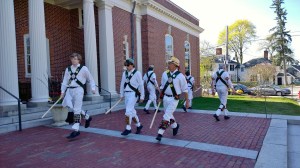
For example: I went out for a walk one evening and was surprised to encounter Morris Dancers on the steps of the library. They seemed to be practicing, not performing. Where would Morris dancers be performing in late April, after Patriots Day? That was a mystery. Another mystery to me was how young men and boys get drawn into performing Morris Dance. I’m sure it’s good exercise, but …

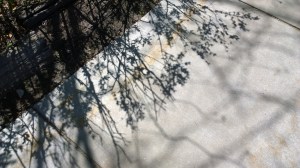
I include shots of a clay bird’s shadow on my wall and hedge shadows on a sidewalk. The fence with the stage coach and other old timey images painted along the railings is in Providence — easy to overlook when walking past.

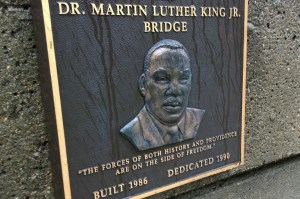
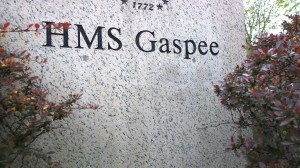
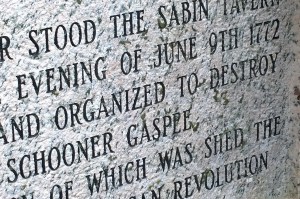
Providence plaques and memorials. The one of Martin Luther King Jr. is on a bridge with a view of Water Place. The monument to an event Rhode Island celebrates as the real first engagement of the American Revolution — the colonists’  clash with Brits on the HMS Gaspee — is partly obscured by bushes.

Little old Rhode Island gets no respect. It was also the first colony to sign on for independence, May 4, 1776. Who knew?

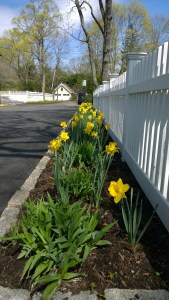
042316-daffodils-and-white-feince

042616-1821-universalist-church-providence


WP_20160505_10_01_32_Pro

042416-branches-shadows


042416-Morris-dancers-stepping-out

043016-bird-in-window


042616-stage-coach-on-fence-providence

043016-pavement-shadows


WP_20160503_07_47_05_Pro

WP_20160504_07_32_57_Pro


WP_20160504_07_33_23_Pro


Read Full Post »

I liked this story from the radio show Studio 360. It explains how recordings of whales making music were used by Judy Collins and others to draw attention to the plight of our biggest mammals.

“If you hear whale songs today, you might be getting a massage or a facial. Some recordings of humpback whales feature slow melodies soothing enough for spa soundtracks. But in the 1970s, whale songs ignited the passions of music listeners and animal activists.

“Biologist Roger Payne still thinks whale songs are the most evocative sound made by any animal. But he may be biased — he discovered them. In 1966, Payne got a recording from a sound designer doing research for the military on undersea dynamite explosions. Caught on the tape were some of the first recordings of sounds made by humpback whales.

“Payne became obsessed with the recording, and made a startling discovery: the sounds were repeating. That means that they weren’t just sounds, they were technically songs — arguably the most complex songs made by any animal. Unlike birds or crickets, the whales’ songs were ten minutes or longer and repeated without a break.

“At the time, whales were being hunted to near-extinction, and Payne saw the discovery of whale songs as a call-to-arms. …

“Over the following years, Payne pressed the recordings on musicians, composers, and singers, including Judy Collins. ‘This tall man walked backstage,’ Collins recalls. ‘And he handed me this little package’ with a tape of the humpbacks. ‘It was very emotional. …

“In 1970, Collins used the recordings on her album “Whales and Nightingales”, which went gold and introduced millions to whale song. … Collins devoted the royalties of those songs to Payne’s conservation work. …  Just as Payne hoped, these strange, evocative sounds inspired the growing Save the Whales movement, and by 1972 the US had banned whaling and whale products.”

More here.

Photo: Phillip Colla, Oceanlight.com
Humpback whale.

Read Full Post »

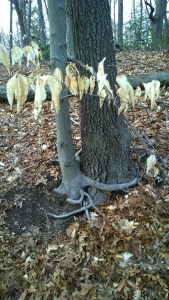
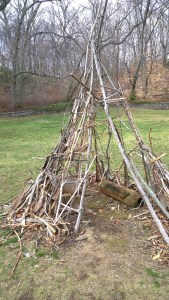
Something reader KerryCan said in a comment one day got me thinking that I’d like to see if I could get a photo of Providence that could make a part of the city pass for rural. At first, I found only bland vacant lots left over from the rerouting of route 195. Then I went to Blackstone Park, where a treehugger tree and an ersatz teepee caught my eye.

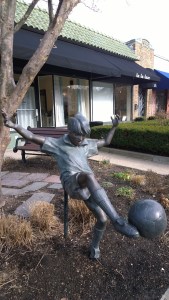
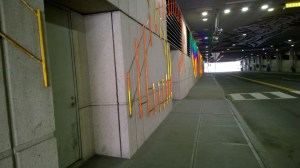
The soccer-playing kid is in a suburban-looking area on the East Side, and the glowing tunnel is right downtown.

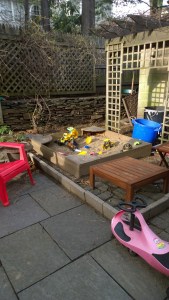
I thought the sandbox looked lonely.

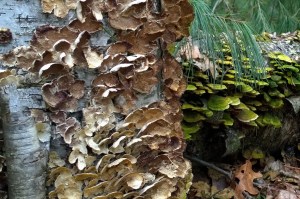
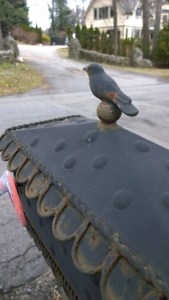
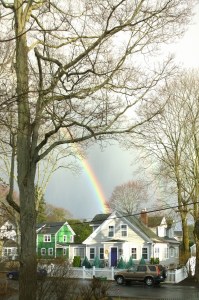
In Massachusetts, I went looking for skunk cabbage and jack-in-the-pulpit plants, but it was too early. Not spring yet. I did hear peepers. And I saw gracefully rotting tree stumps, a bird on a mailbox, and a wonderful rainbow.

031616-treehugger-tree

031616-teepee-Blackstone-Park-RI


031616-soccer-statue

031616-glow-in-the-dark


031616-lonely-sandbox

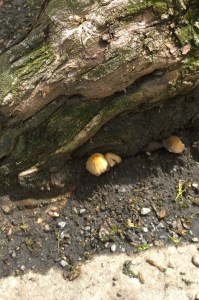
031816-fungus-on-stumps


031816-bord-on-mailbox

031816-rainbow-Concord

Read Full Post »

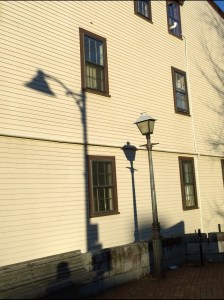
I love thinking about sunlight and shadow. Dickens uses them a lot for Richard and Ada’s story in Bleak House — maybe my favorite book of all time.

“So young, so beautiful, so full of hope and promise, they went on lightly through the sunlight … So they passed away into the shadow, and were gone.”

Many of you know what the decades-long case of Jarndyce vs Jarndyce did to Richard and Ada’s bright hopes. I’ve come to think that it was not so much Richard’s fevered expectations of an inheritance that brought the most sorrow, but his need to fix blame. Blame is corrosive.

When I interviewed a formerly homeless Marine last week and he started telling me about how upset he was that something bad had just happened with his benefits, I was touched by how he kept reminding himself how to cope, saying, “I believe in fixing the problem — not the blame.” Words to live by.

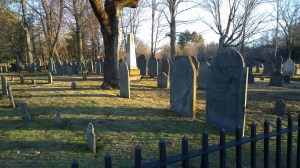
The first three photos were taken early Saturday morning, when the effects of sunlight and shadow were especially breathtaking. (I can never resist that old graveyard. You’ve seen it here in all weathers.)

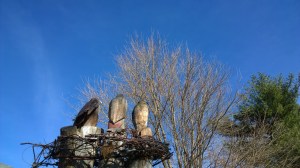
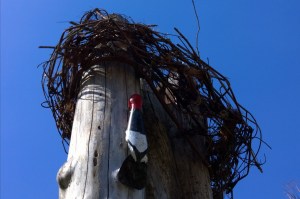
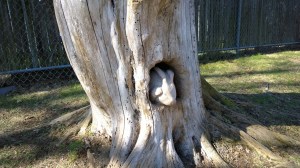
The next three were taken at the playground near John’s house. Every few months, new creatures appear on that tall tree stump. (You’ve seen previous creature photos, too, on this blog.)

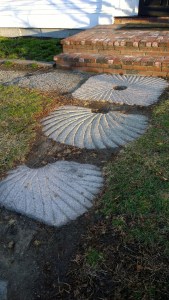
031216-early-footpath-shadows

031216-lamppost-shadows


WP_20160312_06_42_36_Pro

031216-carved-eagles-arlington


031216-carved-woodpecker-arlington

031216-hidden-bunny

Read Full Post »

This batch is all Rhode Island. First I have a couple pictures from the mall. If you don’t call the mall Providence Place, people aren’t sure if you mean the Arcade. I’m having a hard time keeping track of the local names. You have the Rhode Island Convention Center, which is not the same as the Civic Center (is that the Dunkin Donuts Center?), which is totally not the same as the same as P-PAC (Providence Performing Arts Center), which is not the same as the Veterans Memorial Auditorium …

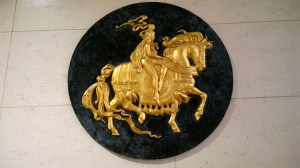
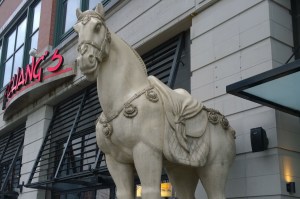
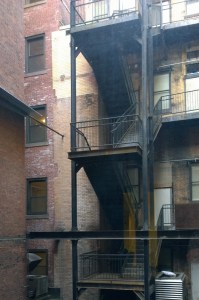
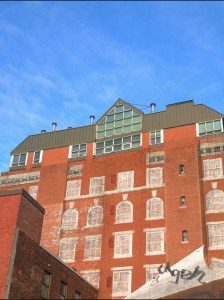
Back to the photos. Lady Godiva hangs out in Providence Place, as does PF Chang restaurant’s fine-looking Tian horse. Next, I’m posting a glimpse of  some old brick buildings that were merged and renovated to house my new workplace. I love the view out this conference room window.

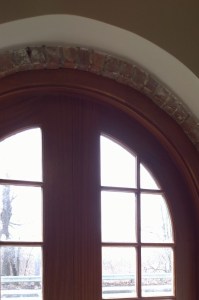
The archway is from a different renovated building, the historic Heating & Cowling Mill, which has beautifully repurposed to house formerly homeless veterans.

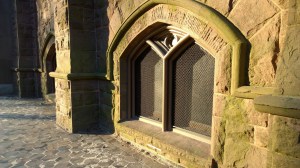
Several homeless people were watching me from the steps of the cathedral early one morning like wary deer. I took an unobtrusive picture around the corner, where the sun was warming a quiet nook.

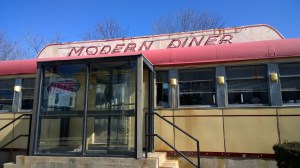
The Modern Diner is in Pawtucket and serves breakfast all day, but not breakfast only. It was recently featured on the Food Network show and made a list of top diners in New England. Check out the Providence Journal report.

030716-Godiva-in-the-mall

30216-Chinese-horse


030816-between-brick-buildings

030716-arch-Vets-for-Tomorrow


030716-vets-for-tomorrow-providence

030816-cathedral


030916-modern-diner-pawtucket

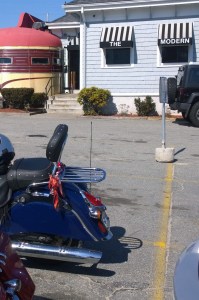
030916-motorcycles-at-the-diner

Read Full Post »

I’m starting off here with four Providence photos: the railing at the Arcade, a message promoting the city as the “creative capital,” trompe l’oeil windows on a brick wall (note the page turning in the lower right corner), and a frieze near the Dean Hotel harking back to a club called Ginger’s.

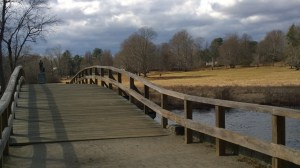
Next we have three views of Minuteman National Park in Concord on a springlike February day. Seated on the river bank close by was a solitary figure sending wistful melodies from his wooden recorder out over the flood. I hesitated to disturb him and didn’t take a picture.

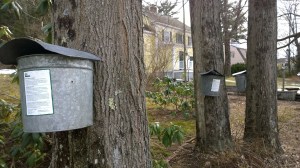
Buckets for maple sugaring are appearing all over town. It isn’t really spring yet, though: the daffodils came from the supermarket.

022316-railing

022216-pvdnooksandcrannies


022216-not-real-windows-Prov

022316-Gingers-in-Providence


022516-Concord-Minuteman

022516-Minuteman-National-Park


022516-North-Bridge

022116-maple-syruping


021416-daffodils


Read Full Post »

The view from my former office included a spectacular sunrise over Boston Harbor, but I also like the more human scale of my current view.

The new office is up two stories. Birds congregate in the tree outside the window. I will be watching as the buds start to open in a few weeks.

I check out the people on the street while I eat my lunch — what they are carrying, what they are doing.

Here is a woman standing in a doorway, having a lengthy conversation on her mobile phone. She has long blond hair and a camel coat. Here is a man clambering from the backseat of a car (an Uber ride?) lugging two grocery bags and several large buckets of what looks like salsa. Here is another man wearing no coat despite the cold weather, remonstrating with someone just ahead of him on the crosswalk.

A woman and man are walking down the side street. They pause. I think they know each other. She seems to be writing something on a piece of paper.  She gives it to him.

She touches his arm in a kind way. They separate. Oh. Maybe it wasn’t a note. Maybe it was money. I’m deciding they didn’t know each other. He is looking in the window at Dunkin Donuts, swinging some keys. Will he go in and buy something with the money? No. He crosses the street in a desultory way, addresses a young woman who rushes by, looking back once. He ambles out of my view, swinging the keys.

A man with a yellow puffy jacket and a black cap is sweeping debris into a dustpan near the Dunkin Donuts. I recently saw someone else dressed like him in the neighborhood. I conclude they are part of a city cleanup crew.

I didn’t get a photo of the Providence police car outside the Dunkin Donuts. Perhaps another day.

021716-from-office-window

Read Full Post »

Time for a photo round-up. Winter in New England: warm days, cold days, snow, ice, complicated shadows, empty facades, food and drink.

If you get any time to be alone and quiet — maybe just nursing a head cold — use it well. Everyone needs time to think.

020516-6tag-lichen-and-snow

020516-dogwood-and-fence-in-snow


020516-sun-on-snow

021316-garage


021316-ice-and-shadows

021316-ivy-shadows


020316-facade-providence

020216-food-and-drink-mural


Read Full Post »

The first pictures feature berries, shadows, rain, and snow. I took them in Massachusetts.

The others are from Providence, which has long exuded an artistic vibe. I liked the sunrise on rooftops in one photo and a beautiful ornate building, sadly neglected. More-contemporary art pops up in unexpected places: the robot-like sculpture at a busy intersection and the robot in the ladies room at Small Point Café.

011716-shadow-berries

011616-raindrops-on-holly


011816-snow-on-hollu

011916-Providence-sculpture


011216-early-sunlight-Providence-_Pro

012016-beautiful-neglected-building


012016-WC-Robot

Read Full Post »

« Newer Posts - Older Posts »