Feeds:
Posts
Comments

Posts Tagged ‘play’

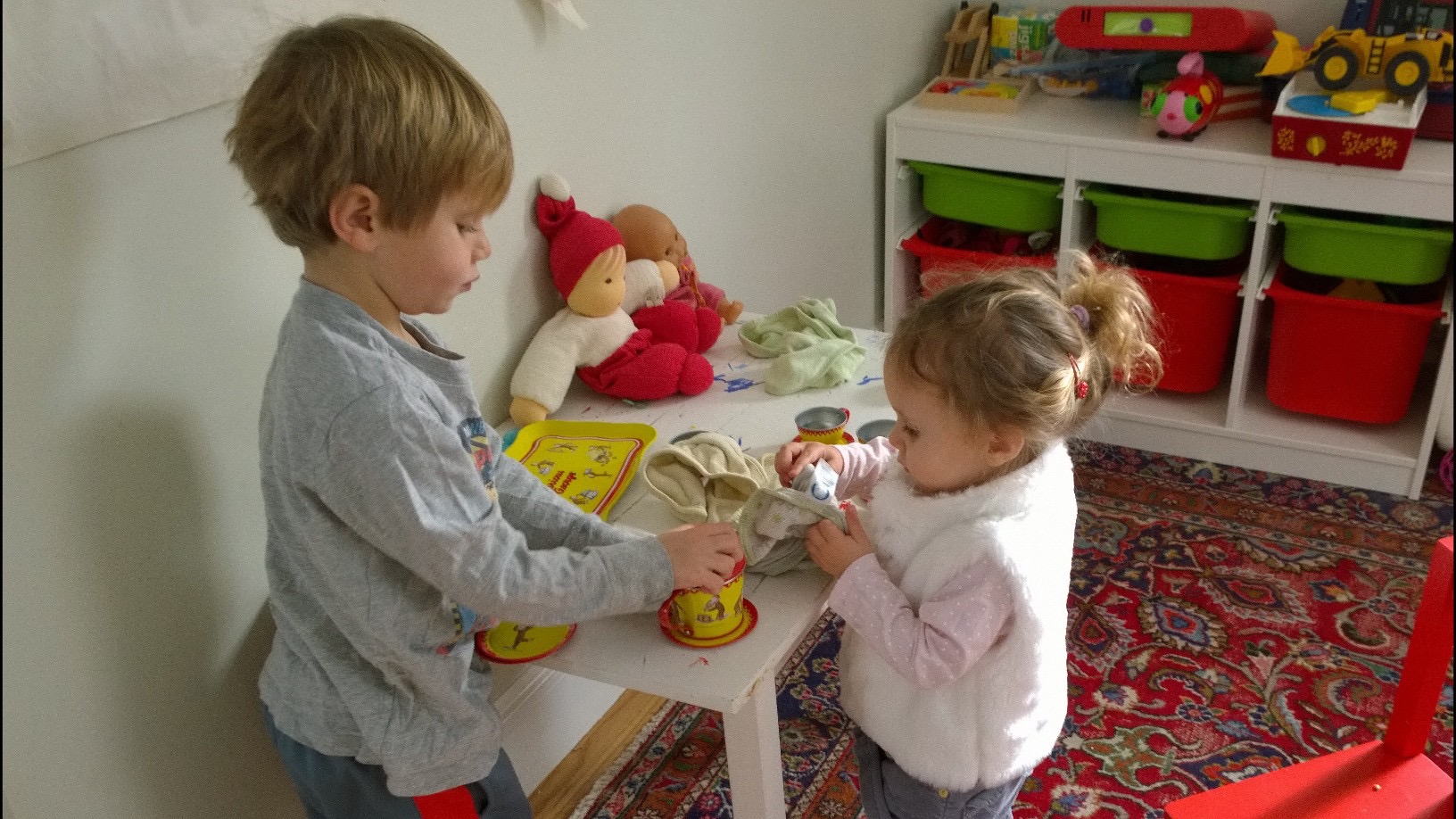
I read this NY Times article with relief. It seems that educators are returning to (or perhaps being heard about) the importance of play in learning.

Reporter Motoko Rich says, “Call it Kindergarten 2.0. Concerned that kindergarten has become overly academic in recent years, this suburban school district south of Baltimore is introducing a new curriculum in the fall for 5-year-olds. Chief among its features is a most old-fashioned concept: play.

“ ‘I feel like we have been driving the car in the wrong direction for a long time,’ said Carolyn Pillow, who has taught kindergarten for 15 years and attended a training session here on the new curriculum last month. ‘We can’t forget about the basics of what these kids need, which is movement and opportunities to play and explore.’

“As American classrooms have focused on raising test scores in math and reading … even the youngest students have been affected, with more formal lessons and less time in sandboxes. But these days, states like Vermont, Minnesota and Washington are again embracing play as a bedrock of kindergarten. …

“Still, teachers like Therese Iwancio, who works at Cecil Elementary School in Baltimore’s Greenmount neighborhood, where the vast majority of children come from low-income families, say their students benefit from explicit academic instruction. She does not have a sand table, play kitchen or easel in the room. …

“Traci Burns, who has taught kindergarten for the last five years at Annapolis Elementary School, said she was looking forward to retrieving previously banished easels.

“ ‘With the Common Core, this has been pushed and pushed and pushed that kids should be reading, sitting and listening,’ she said. ‘Five-year-olds need to play and color. They need to go out and sing songs.’

“At Hilltop Elementary, a racially and economically diverse school in Glen Burnie, Melissa Maenner said she had found that teaching kindergartners too many straightforward academic lessons tended to flop.

“ ‘They are 5,’ Ms. Maenner said. ‘Their attention span is about five minutes.’ ”

Read more here.
013115-spilt-tea (1)


Read Full Post »

As a kid of 10 or so, I played in the woods, frequently all alone. It was magical.

As an adult, I wonder if it’s no longer considered safe. I don’t ever hear of children playing in the woods. That’s why I was interested to read about a growing movement called Forest Schools.

Siobhan Starrs writes for the Associated Press, “In the heart of north London lies the ancient Queens Wood, a green forest hidden away in a metropolis of more than 8 million residents. The sounds of the city seem to fade away as a group of children plays in a mud kitchen, pretending to prepare food and saw wood.

“These aren’t toddlers on a play date — it’s an unusual outdoor nursery school, the first of its kind in London, following a trend in Scandinavia, Germany and Scotland. It allows local children to learn, and let their imagination run free, completely surrounded by nature. …

“Each morning a group of children gather at the Queens Wood camp, which the nursery team prepares each morning before the children arrive. A circle of logs provides a place to gather for snacks, stories and songs. The mud kitchen provides an opportunity to make a proper mess and have a sensory experience, a rope swing provides some excitement and a challenge, and several tents are set up for naps and washing up.

“In a clearing in the woods, a fallen tree trunk can be transformed by imagination into a rocket train, calling at the beach and the moon, with leaves for tickets.

“A 2-year-old, Matilda, finds a stick — but in her mind it’s not a stick. It’s a wand. She says she is a magic fairy who can fly. Then suddenly the stick has become a drum stick, and a gnarled tree stump her drum. She taps away contentedly, the rhythm all her own.” Read more here.
Speaking of fallen tree trunks, I particularly remember a big tree that fell in the forest after a storm and the fun a friend and I had making up stories on it.

Photo: Matt Dunham/AP
Forest schools are increasing in popularity in the United Kingdom.

Read Full Post »

serious-truck-driver


Play is important for all kinds of reasons in childhood, including testing out skills and experiencing the satisfaction of creativity.

John Poole at National Public Radio focused on the socialization aspects of play in a recent report.

He began, “Why do we humans like to play so much? Play sports, play tag, play the stock market, play duck, duck, goose? We love it all. And we’re not the only ones. Dogs, cats, bears, even birds seem to like to play. …

“The scientist who has perhaps done more research on brains at play than any other is a man named Jaak Panksepp. And he has developed a pretty good hypothesis.

“In a nutshell, he, and many others, think play is how we social animals learn the rules of being social.  …

“Play seems so deeply wired by evolution into the brains of highly social animals that it might not be a stretch to say that play is crucial to how we and they learn much of what we know that isn’t instinct. …

“Not surprisingly, Panksepp and others think the lack of play is a serious problem. Especially at younger ages. And particularly in school settings. …

” ‘It’s not just superfluous,’ says Panksepp. ‘It’s a very valuable thing for childhood development. And we as a culture have to learn to use it properly and have to make sure our kids get plenty of it.’ ” More here.

More still from Jon Hamilton, another reporter in the NPR series on play, here.

Photo: David Gilkey/NPR
Deion Jefferson, 10, and Samuel Jefferson, 7, take turns climbing and jumping off a stack of old tires at the Berkeley Adventure Playground in California. The playground is a half-acre park with a junkyard feel where kids are encouraged to “play wild.” 

Read Full Post »

My friend Jean Devine is always up to something interesting. A Brown U grad, with an MBA from Simmons, she used to work in investor relations but in recent years has been testing the waters of social entrepreneurship.

Her latest initiative, with Barbara Passero of Sandpiper Creative, is called meadowscaping and is intriguing on many levels.

With access to a Waltham church lawn for a summer youth program, Jean and Barbara will work with kids to convert the yard into a meadow that uses native species from Garden in the Woods and provides a habitat to the bugs and other small creatures that make a healthy environment.

From the Meadowscaping for Biodiversity website: Meadowscaping “is an outdoor, project-based, environmental education program that provides middle school youth with real-world experiences in STEAM learning (Science, Technology, Engineering, Arts and Math), while inspiring and empowering them to address challenges to the environment and our society.

“Today, few children spend time experiencing Nature and the benefits of outdoor recreation, education, and contemplation. Founder and former Director of the Children and Nature Network (C& NN) Richard Louv coined the phrase nature-deficit disorder to describe the negative effects of reduced outdoor time on children’s development. …

“Children who spend little time outdoors may value nature less than children who spend time outdoors in free play. Similarly, children who feel part of something bigger than themselves may … understand their dependence on a clean environment and know that they are responsible for caring for the Earth as their home.” More here.

The idea behind the meadowscaping summer program is that children, both at a young age and as they become adults, can actually do something about the environment.

Remember our post “The Doctor Is In” about the woman who sets up in a Providence park to listen to your worries about global warming (here)? Stop worrying and do something, say the meadowscape entrepreneurs. Give up lawn chemicals, plant a meadow, provide a home for tiny necessary critters, and work to make change.

white-iris-in-morning

Read Full Post »

I love reading about and sometimes seeing offbeat and experimental theater. You may recall a couple recent posts on Iranian productions, for example — one play performed in a taxi, and another featuring a script the actors aren’t allowed to see until it’s time to go on stage.

So I was intrigued by a story in the Guardian about an experiment with one-on-one productions. Lyn Gardner writes, “Earlier this year I was lucky enough to take part in Whispers, a project created by the Exeter-based Kaleider, that takes the form of a co-operative gifting chain of performance, as a story and a metal tablet pass from person to person who each take responsibility for passing it on.

“At the Brighton fringe something similar is taking place with Host, a project created by the Nightingale Theatre that takes place in one of two bathing huts. Taking the form of a short text written by Tim Crouch … it works like this: You enter the bathing hut and somebody performs the text to you, and then you perform the text – reading from the script – to the next person.

“All participants subsequently get sent a copy of the script via email. This means that they can set off their own chains of reading and receiving, which creates in effect a tree that then has branches going off from it but which are all traceable back to that first performance by Tim Crouch in Brighton. It’s like a baton being passed.” More here.

This week, I’m having dinner with three other women who have at various times been active in the Concord Players. We meet up a couple times a year to indulge in theater talk as most of our other friends are not into that. I’ll be sure to pass along some of these experiments. The Concord Players isn’t a place that indulges in avant garde, but we all like hearing about what’s going on in the wider world.

“Host,” a one-on-one play at the Brighton Fringe Festival in England, is performed in this bathing hut.

Read Full Post »

Wow, what an awesome job the Concord Players did with this goofy musical by the folks who brought you Monty Python!

Spamalot had so many insane costume changes, extravagant production numbers, and giddy jokes that it never allowed you a minute to think how silly it all is.

We laughed a lot. They say laughing is good for your health, and I can see why it is good for mental health at least — when you are really laughing, you can’t think about anything but the thing that is making you laugh. So you’re really “living in the moment,” as the gurus advise.

Tom was one of the trumpet players (not the one who gets shot by the conductor for playing the wrong trumpet themes in the overture), and Claire gave a party after the matinee. Wisely, she decided not to emphasize Spam for the meal (“No one would have come to the party,” she said) and instead presented a delicious spread with a Cinco de Mayo theme.

Several guests cracked out their smart phones to inform us about what Cinco de Mayo celebrates (the 1862 defeat of the French by Mexicans at Pueblo — not sure I feel much wiser, though).

Spamalot is sold out. But it was sold out today, too, and I saw a few empty seats, so take a chance — maybe a ticket holder won’t show up. The woman next to me was offended by some of the naughtiness and irreverence and left at intermission. So you could always come for the second half.

Read Full Post »

A Syrian actor who visited a refugee camp, felt compassion for the children, and returned to help them put on a play decided to start at the top. Only the best playwright would do.

From the Zaatari refugee camp in Jordan, NY Times reporter Ben Hubbard describes the scene: “On a rocky patch of earth in this sprawling city of tents and prefab trailers, the king, dressed in dirty jeans and a homemade cape, raised his wooden scepter and announced his intention to divide his kingdom. His elder daughters, wearing paper crowns and plastic jewelry, showered him with false praise, while the youngest spoke truthfully and lost her inheritance.

“So began a recent adaptation here of King Lear. For the 100 children in the cast, it was their first brush with Shakespeare, although they were already deeply acquainted with tragedy. All were refugees who had fled the civil war in Syria. …

“ ‘The show is to bring back laughter, joy and humanity,’ said its director, Nawar Bulbul, a 40-year-old Syrian actor known at home for his role in ‘Bab al-Hara,’ an enormously popular historical drama that was broadcast throughout the Arab world.

“Last year, he and his French wife moved to Jordan, where friends invited him to help distribute aid in Zaatari. …

“Children he met in the camp made him promise to return, and he did — with a plan to show the world that the least fortunate Syrian refugees could produce the loftiest theater. …

“The mere fact that the play was performed was enough for the few hundred spectators. Families living in nearby tents brought their children, hoisting them on their shoulders so they could see. …

“The crowd burst into applause, and a number of the leading girls broke into tears. Mr. Bulbul said they were overwhelmed because it was the first time anyone had clapped for them.”

More here, at the NY Times, where you can also see a slide show and watch a video about the refugee-camp theater initiative.

Photo: Warrick Page for The New York Times

Read Full Post »

A lovely, warm day for walking, grandkids, and friends.

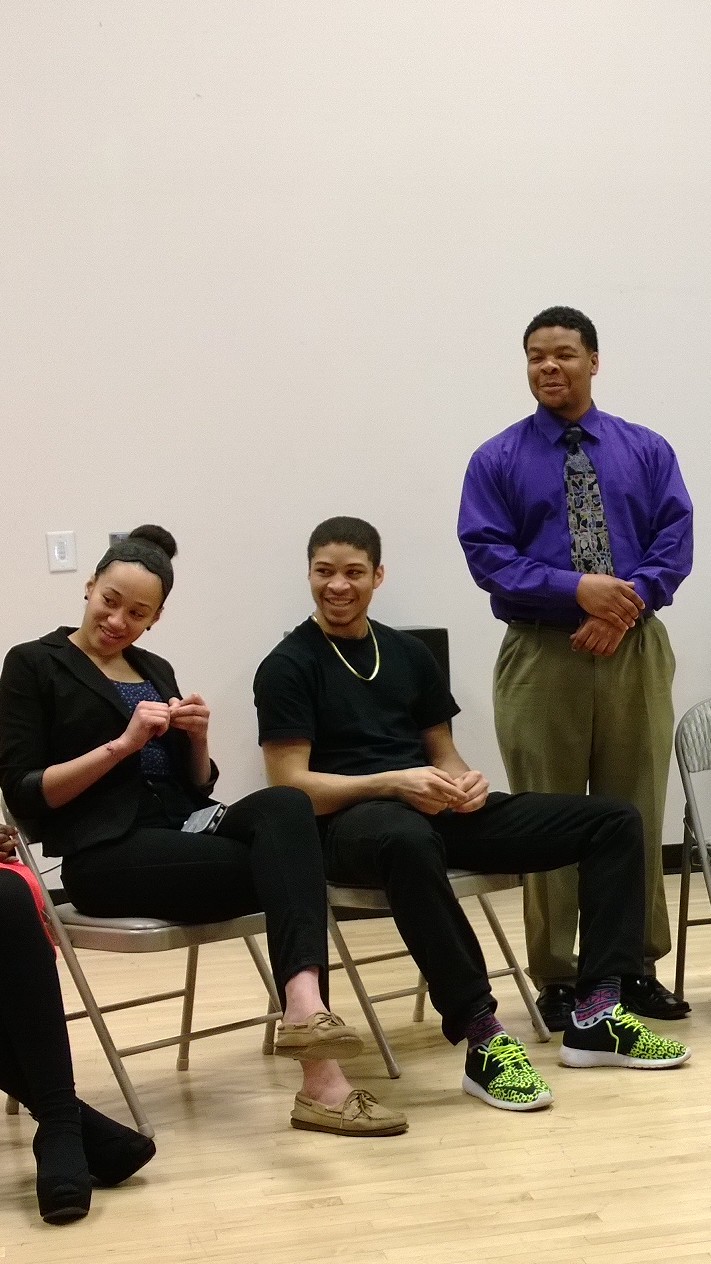
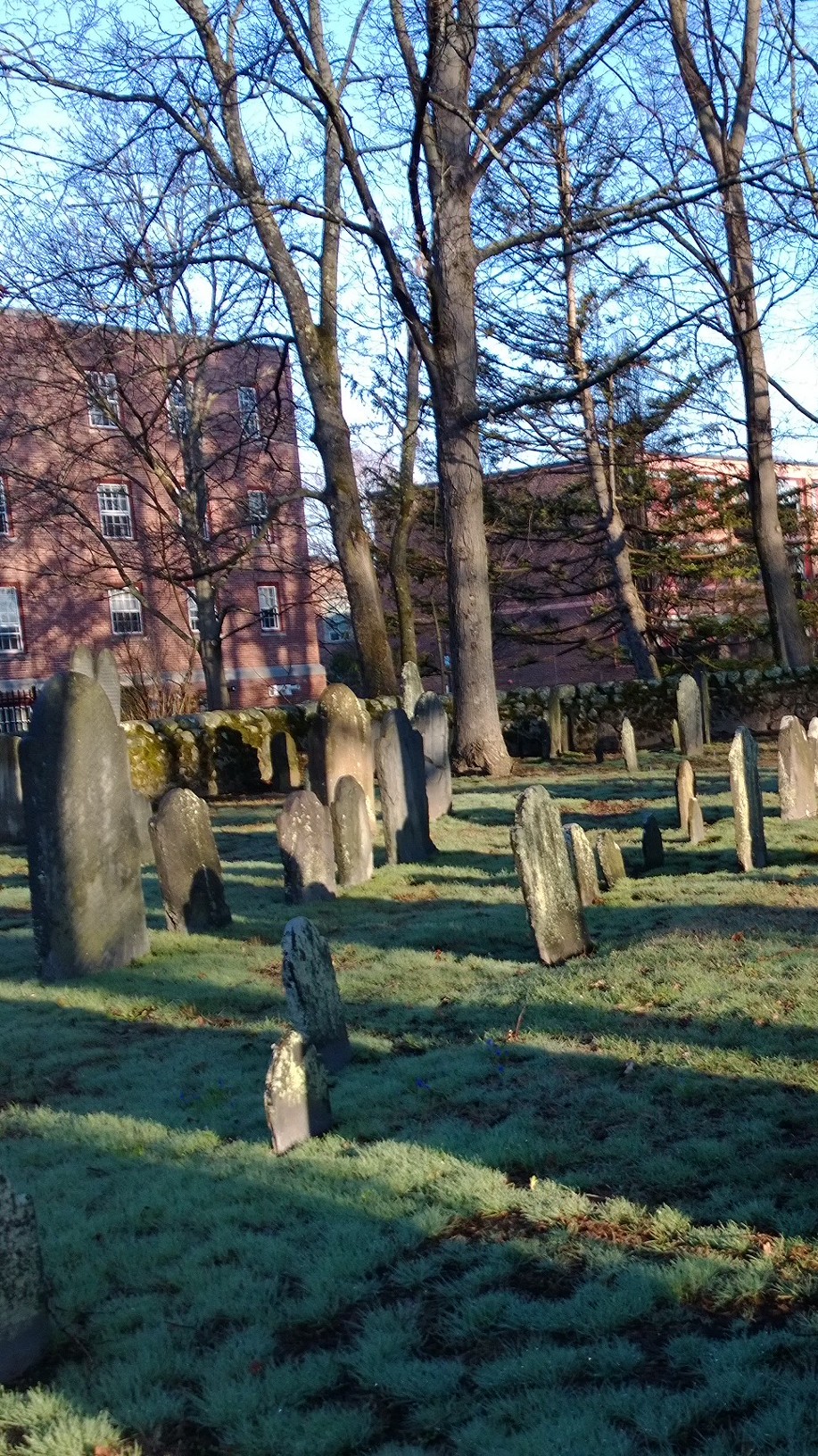
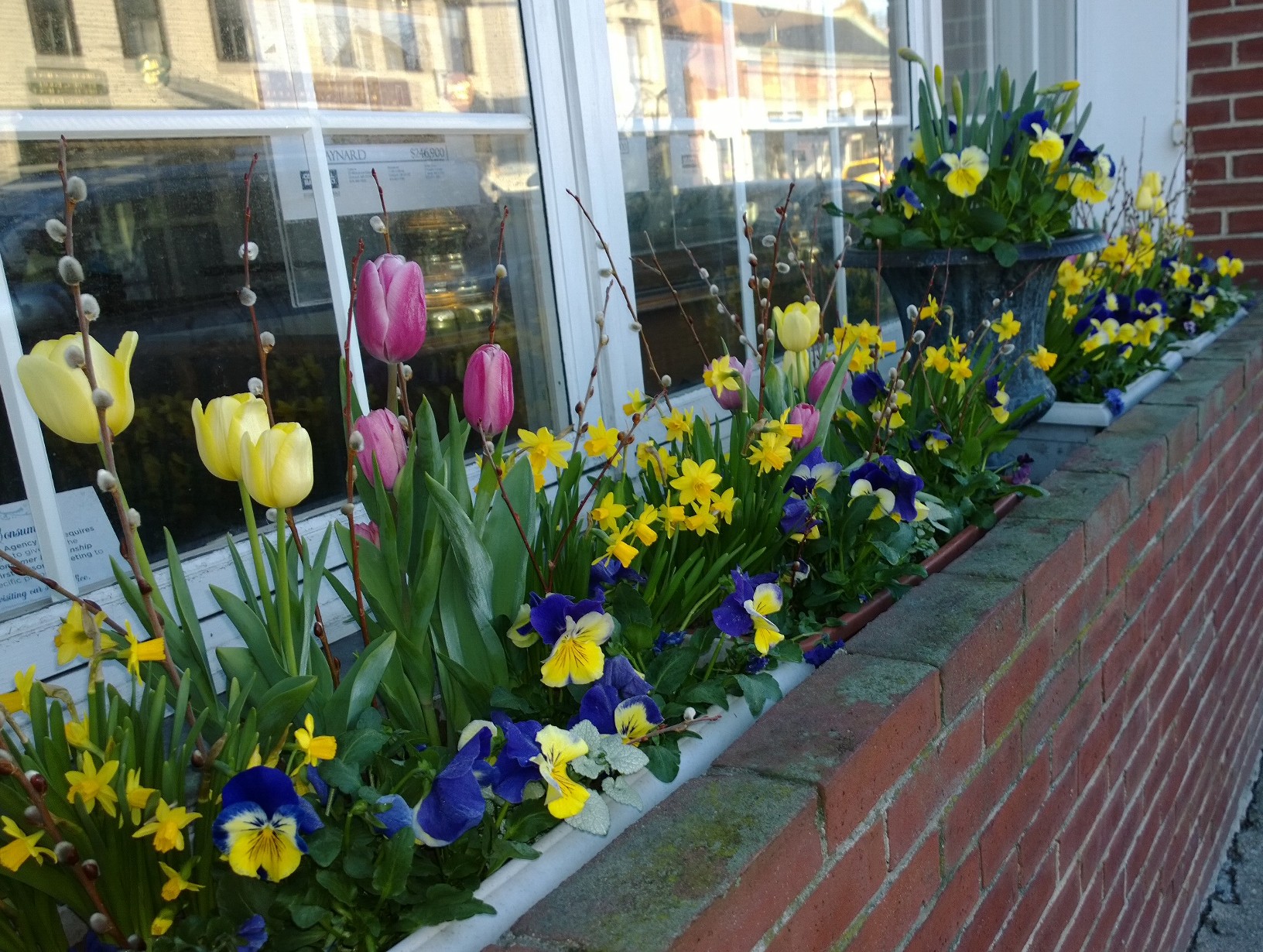
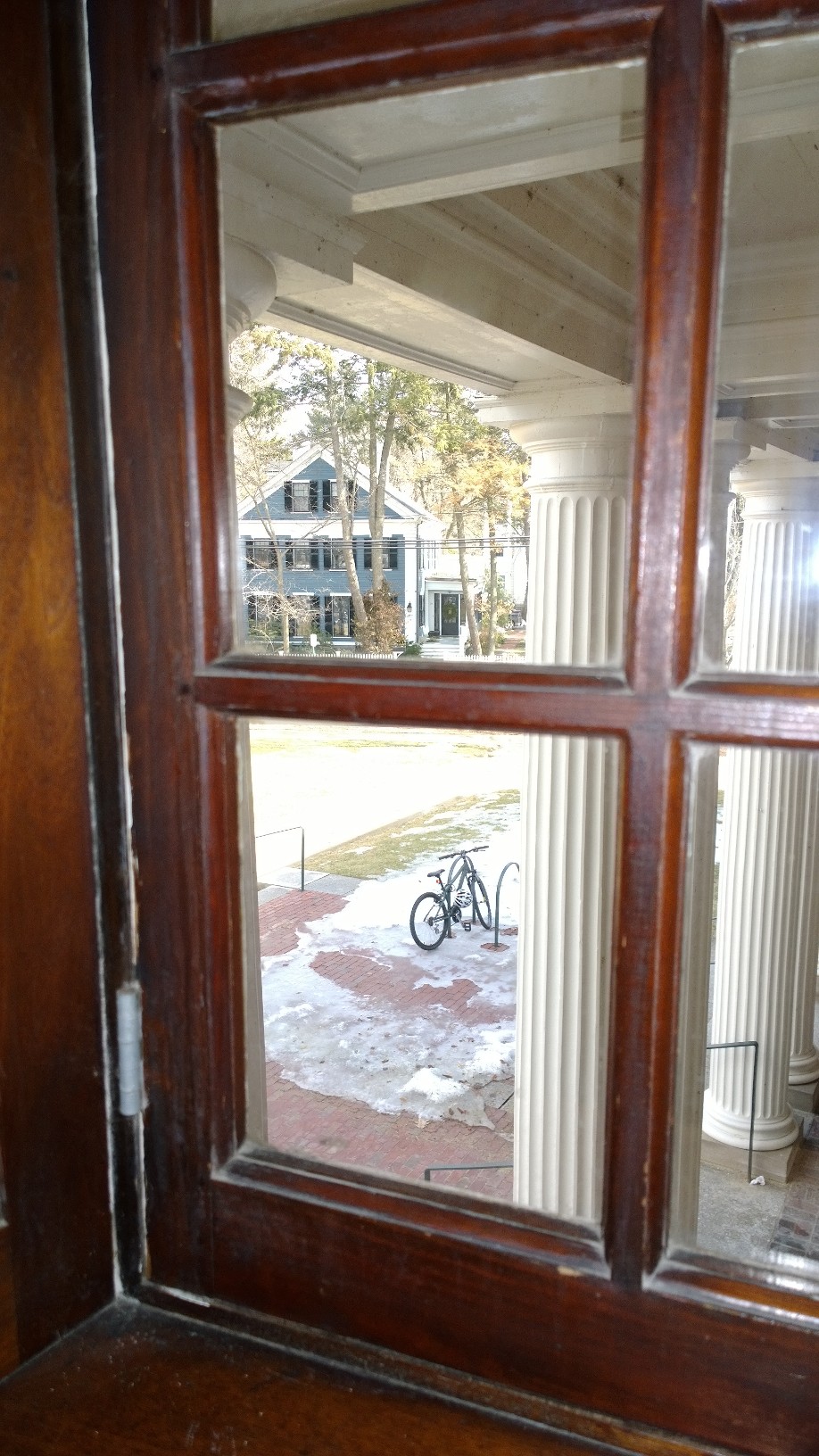
Here are a few photos, including one of director-playwright Jermaine Hamilton with cast members at Brandeis University.

I was so happy I managed to get to Jermaine’s senior-thesis play about inequality of U.S. high schools, Bridging the Gap. What a challenge to make it work for both his social sciences major and his theater minor! A great bunch of natural actors and Jermaine’s lighting and sound collaborators pushed it over the finish line, and judging from the audience comments in the talk-back, the issues that the play presented struck chords.

Jermaine has a teaching job lined up for next year, after graduation. The school is lucky to have him.

Jermaine, standing, joins his cast for a talk-back with the audience. The other pictures are walking-around shots.
Jermaine-Hamilton_with-cast

daffodils


gravestone-shadows

flower-box-april-12-14


032214-library-wndow

tree-face


Read Full Post »

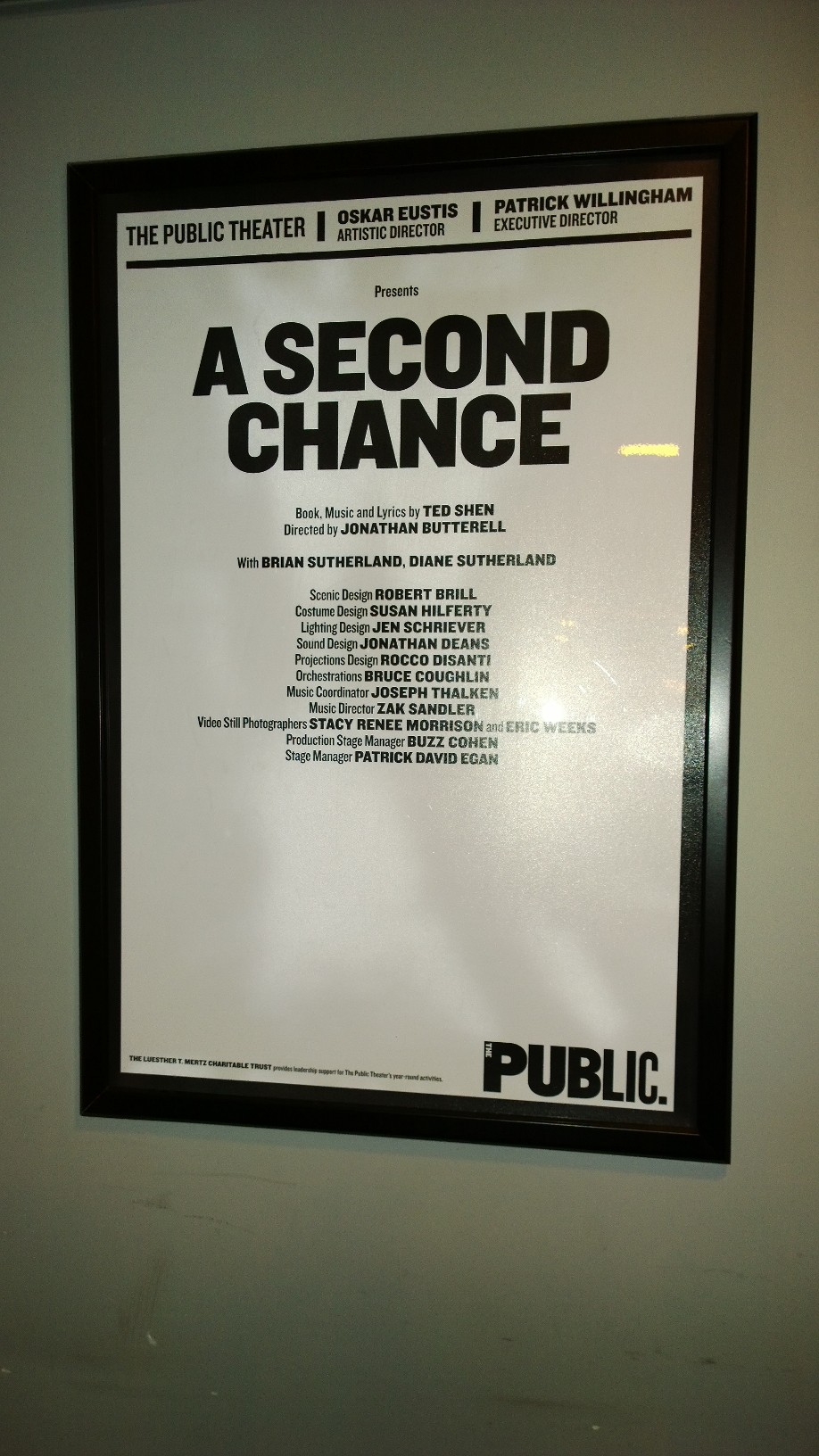
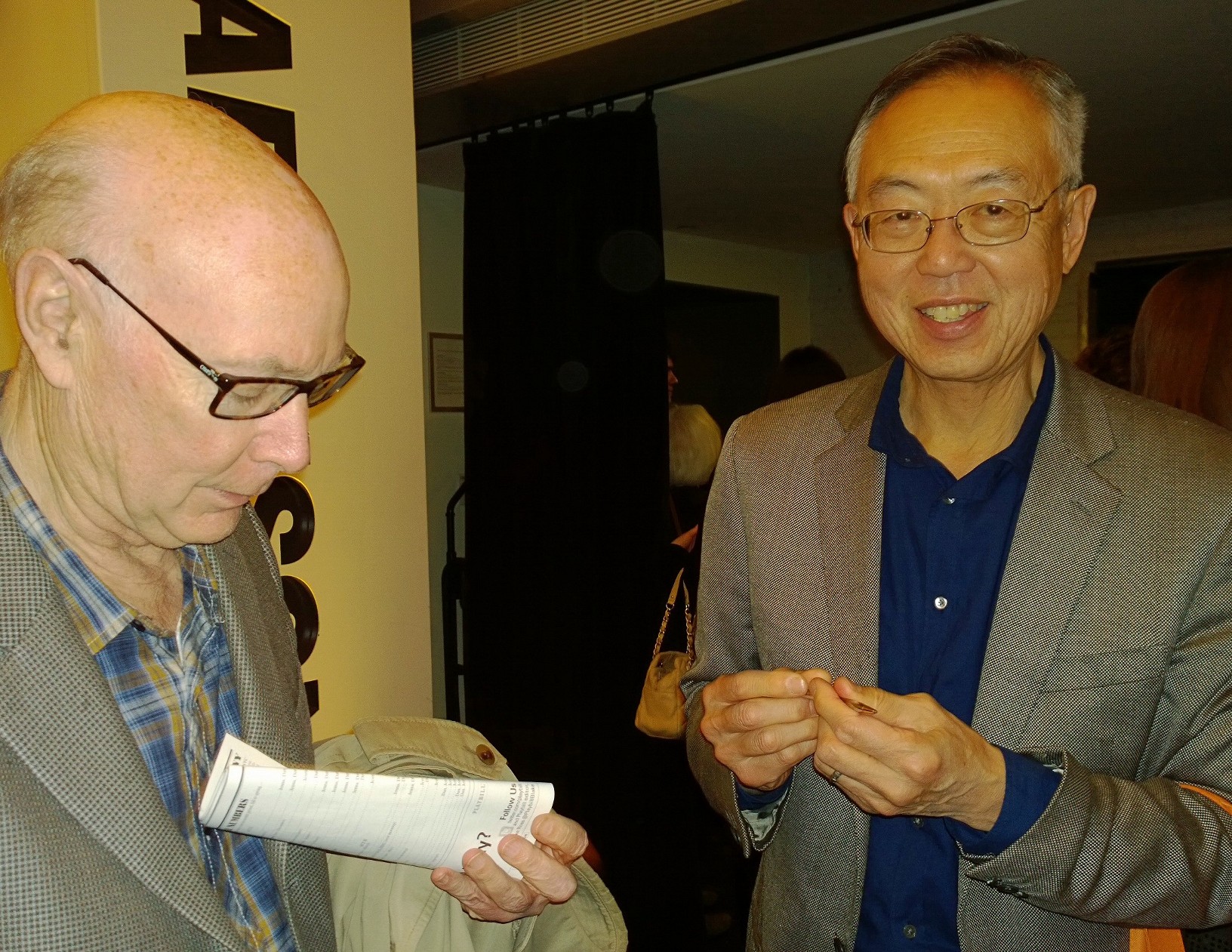
Ted-Shen-Second-Chance-at-PublicWe went down to New York this weekend to see my husband’s classmate’s new musical.

Ted Shen wrote the book, lyrics, and music to A Second Chance, a lovely little cameo about a widower and a divorcee. The title refers to new beginnings for two people, but it’s hard for my husband and me not to think of new careers, too, since Shen was an investment banker for 30 years before turning to music so seriously.

At TheaterMania, where a couple of old reviews I wrote are still archived, Shen describes how he began to develop his musical after Stephen Sondheim gave him encouragement.

And he explains his style. “In my role as composer, my preference has been to emphasize the use of ‘action songs’ that show the characters interacting with each other and conversing primarily through lyrics rather than pure spoken dialog, and to limit the use of ‘introspection songs’ that stop the action to express feelings and inner thoughts. I have attempted to create a contemporary musical ‘language’ that is jazz-inflected rather than written in today’s predominant pop-based genre.’ ” More at TheaterMania.

Oskar Eustis, the artistic director of the Public Theater, where the show is being performed, says that Shen “has written some of the most elegant and sophisticated music I have heard in theater in many a moon.”

While in New York, we also saw the musical A Gentleman’s Guide to Love and Murder (based on the movie Kind Hearts and Coronets). It was pure Broadway fun, and we laughed a lot. But A Second Chance gave us more to talk about after.

Consider checking out the site for the Shen Family Foundation, here, which “concentrates its grant-making in the area of musical theater through its funding support of works of exceptionally gifted and highly original musical theater composers.”

Photo: Suzanne‘s Dad reconnects with his classmate decades after business school and asks him to sign a Playbill.

032914-John-and-Ted-Shen-at-Public-Theater

Read Full Post »

One thinks of Iran as repressive, and having watched the doomed 2009 revolution unfold on twitter, I believe it is. But Iranian theater people seem to be managing to squeeze in some fun.

I blogged before about the Tehran production in a taxi, here. Now Studio 360 has a story on what might be called extreme improvisation. I take that back. There’s a script. But the actor doesn’t get to see it in advance.

“Actors face stage fright all the time,” says Studio 360, a radio show. “But consider this scenario: you show up to perform a one-person show, and you’ve never seen the script. You don’t know what it’s about because you promised not to do any research. It’s your first performance, and the only one you’ll ever have. The theater’s artistic director hands you a fat manila envelope with a script. And go.

“Also, the audience will decide whether you drink a glass of water that appears to have been poisoned.

“This is the premise of White Rabbit, Red Rabbit, by Iranian playwright Nassim Soleimanpour. ‘I did not know what was in front of me inside that envelope,’ says actor Gwydion Suilebhan. ‘What if this script is going to require that I disrobe? Or insult my mother? Or be rude or self-debasing?’ …

“Soleimanpour pulls his strings from afar, because — although the play has been performed in Toronto, Berlin, San Francisco, Brisbane, Edinburgh, London, and now Washington, DC — he really is in a cage. He doesn’t have a passport and can’t leave Iran, so he has never seen his play performed. ‘Nassim has given up the kind of control that is customary for playwrights,’ says Suilebhan, of working with actors and directors to realize the play. ‘At the same time, because he has put all of these restrictions on how it is to be performed, he has seized certain kinds of control that playwrights normally do not have. So he is literally embodying the ideas of control and submission and manipulation that he’s baked into his script.’ ” More.

Photo of Iranian playwright Nassim Soleimanpour found at the HuffingtonPost

Read Full Post »

I started really paying attention to Iran (and to Twitter, tops for breaking news) on June 20, 2009, when the tragic, short-lived Green Revolution erupted, fueling unrealized hopes for a more democratic country.

Then I read Jason Elliot’s Mirrors of the Unseen (and blogged about it here) about his travels in Iran, and especially about the people he met and the architecture he admired. He came up with a theory about the architecture that related to the builders’ Islamic beliefs, a love of nature, and a concept of sacred proportions. (If you should see the Nova special on how Medieval architects used the Bible to decide on ideal Gothic cathedral measurements, you will get the idea.)

Elliot loved the people he met in Iran and bemoans the way the Western media depict them. In full agreement with Elliot is the British translator of ancient Persian poetry, Dick Davis, who was on PBS NewsHour last night.

But though the Iranian people may be like people anywhere, the government is not. Residents are frequently obliged to be cautious. Which is how theatrical productions in the privacy of a taxi have come about.

Haleh Anvari of the Guardian‘s Tehran Bureau has that story.

Unpermitted Whispers is a 35-minute play that takes place in one of Tehran’s ‘Rahi’ taxis, which traverse the city along fixed, often straight-line, routes. Rahis pick up passengers at major intersections and drop them off anywhere along their set route, making for a convenient method of getting around town and one cheaper than the minicabs available in every neighbourhood of the capital.

“In contrast to the minicabs, which provide door-to-door service, the Rahi system affords passengers much more anonymity, allowing for candid and uninhibited conversation. Tehranis frequently share stories that they have overheard in these communal cabs; for many, they serve as an extension of the private sphere in which Iranians feel safe to talk about issues of the day.

Unpermitted Whispers takes advantage of this unlikely superimposition of public and private to tell the story of three passengers, all women, who are picked up by a male driver at different points along his route. …

“The play’s first scene was performed entirely on the telephone, as we eavesdropped on a conversation of a kind with which many Iranian women are familiar: a young bride wants to go to the theatre with her university friends but needs an alibi as her traditional family and jealous husband will not approve.”

More here.

Update 2/5/14: Turns out NY City has a play in a cab. It’s called “Take Me Home” and is reviewed by Neil Genzlinger, here.

Photograph: Hanna Havarinasab
Unpermitted Whispers is a play by Azadeh Ganjeh performed in a taxi.

Read Full Post »

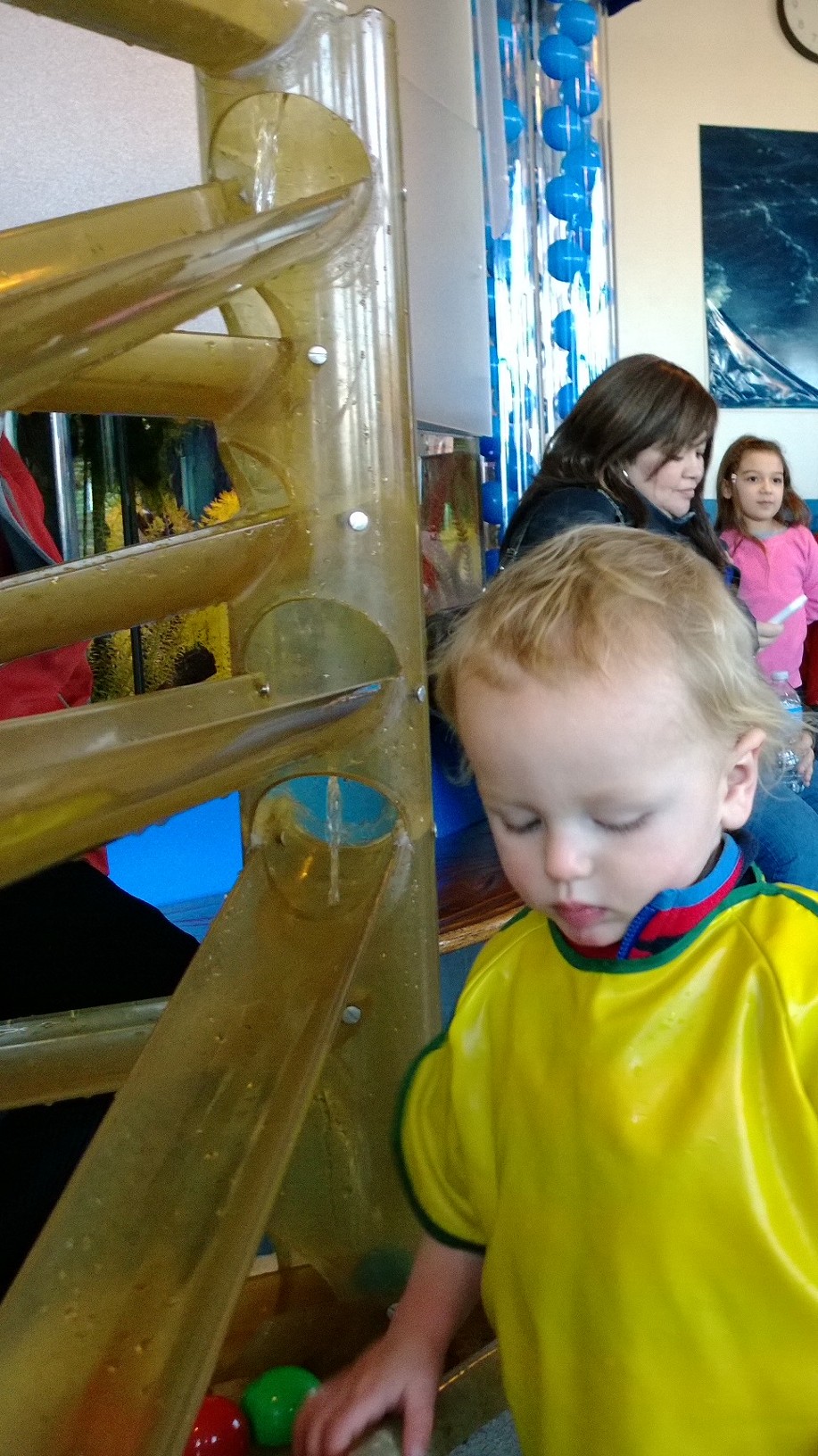
112913-children-museumWhen you take your father’s mother (Farmor) and your mother’s father and mother (Morfar and Mormor) to the Children’s Museum, you start by showing them how the fluffy balls fly through tubes and out the top, and you show them the water room, where you have to wear a smock.

Then you run up and down the ramp to the second floor, up and down, up and down, and up and down some more, laughing and turning your head back to make sure they are all following at a lively pace.

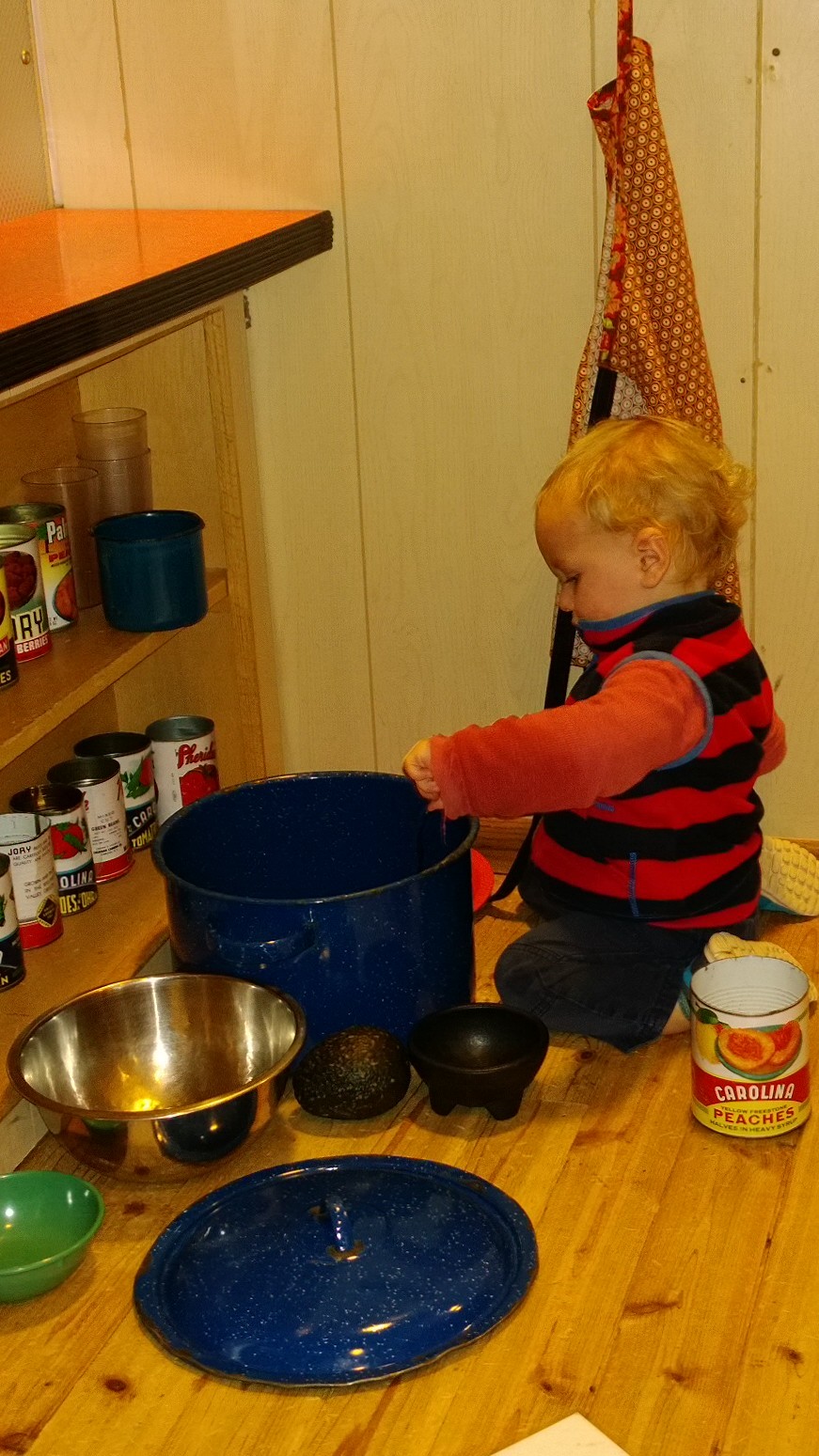
Once you are sure they will behave themselves and not go wandering off when you have work to do, you can settle into the kitchen and concentrate on putting the cheese wedge in the pot and stirring and taking it out and putting it back in and putting the lid on top and taking it out again and putting in a potato and stirring and shaking a can of tomatoes upside down until every last bit is in the pot with the potato and stirring and putting the lid on. Then, you know, you may need to take the stacked dishes and lay them all about on the floor and then restack them and put them neatly on the shelf.

It’s a lot, and you need to be sure the grandparents are sitting still and paying attention so you don’t have to worry about them for a while.

kitchen-things-you-can-touch

Read Full Post »

Hidden Faces of Courage, a “theater piece with music” created by Mary Driscoll in collaboration with formerly incarcerated women, is coming soon. I will write more after I have seen the production in November, but I need to alert you that if you want tickets, you might want to get them now as the performance space is rather small. Go to Fort Point Theatre Channel, here.

I met Mary in the playwriting class that I blogged about a few times. I didn’t continue with theater after the class, but Mary kept working at this play. She has a deep commitment to helping women who have been in prison, having worked with them for years at her nonprofit, OWLL (On With Living and Learning Inc.).

Mary writes: “The voices of previously incarcerated women are notably absent in the artistic world—a world that can engage a broader community in reform and foster greater understanding between the individual and diverse audiences. Sometimes in unexpected ways.”

Read more about her show at Broadway World, Boston, here.

Hidden Faces of Courage is directed by Tasia A. Jones, with music by Allyssa Jones, and runs November 8-10, 15-17,  at The Boiler Room, 50 Melcher Street, Fort Point, Boston.

Read Full Post »

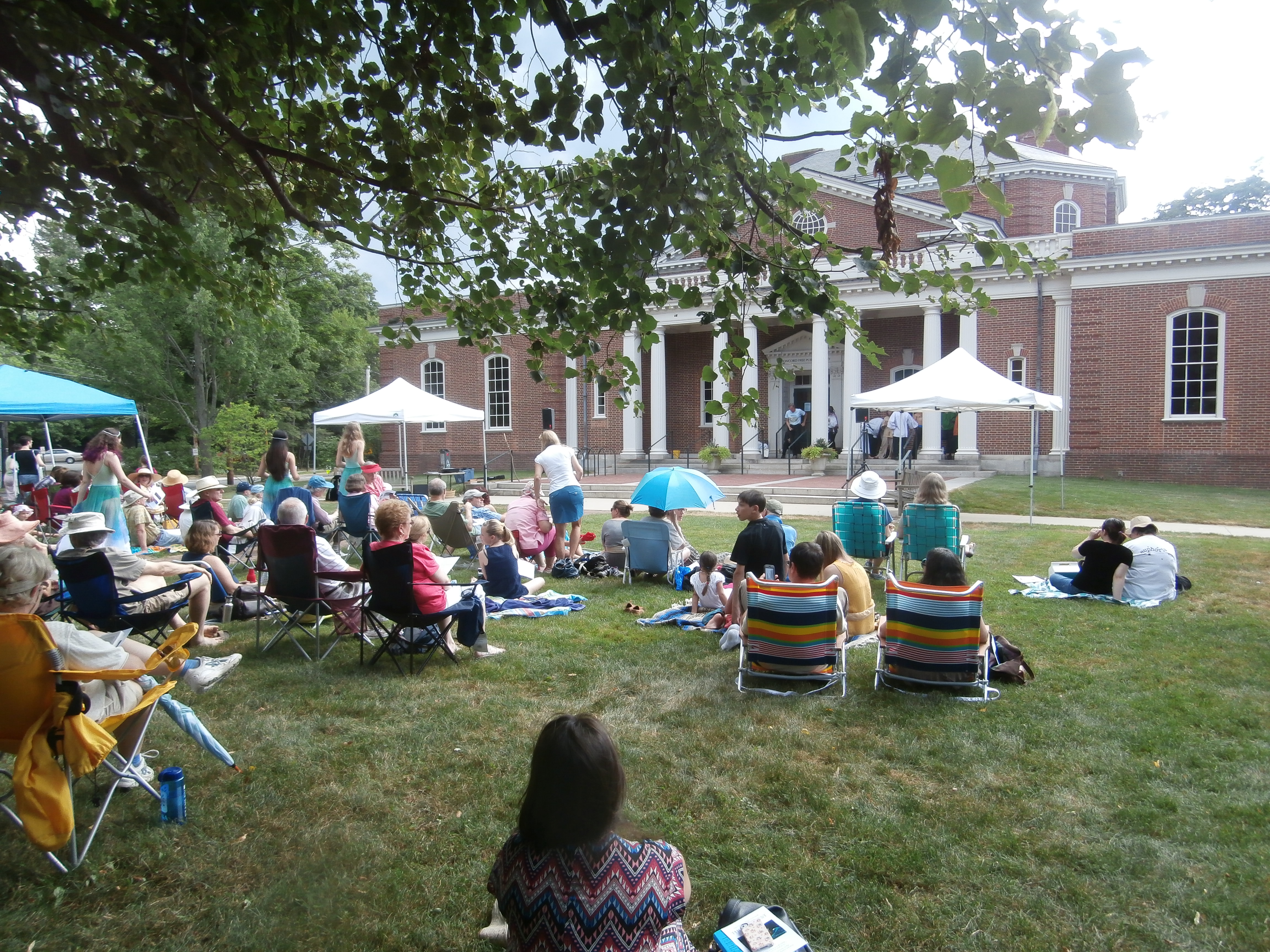
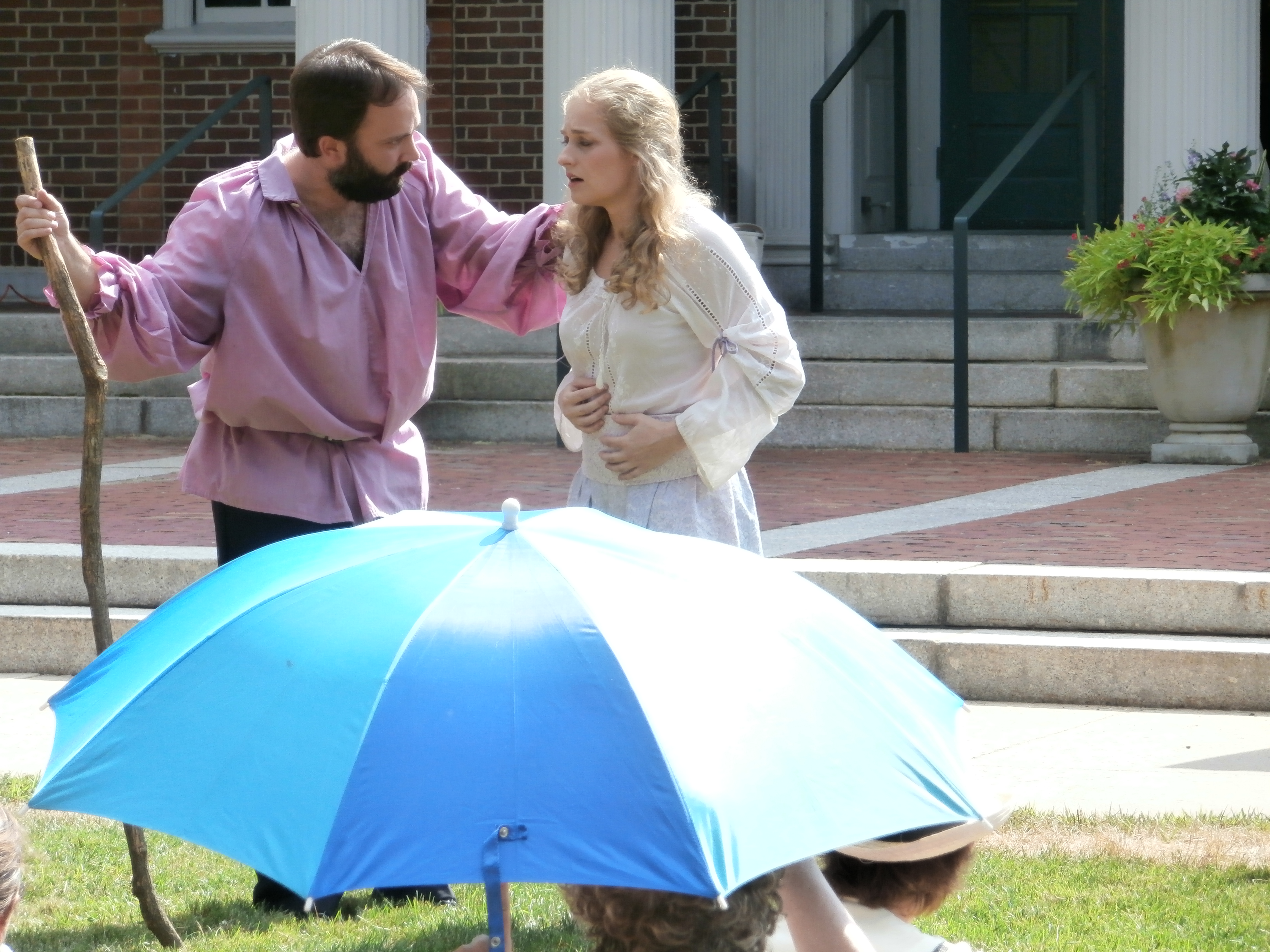
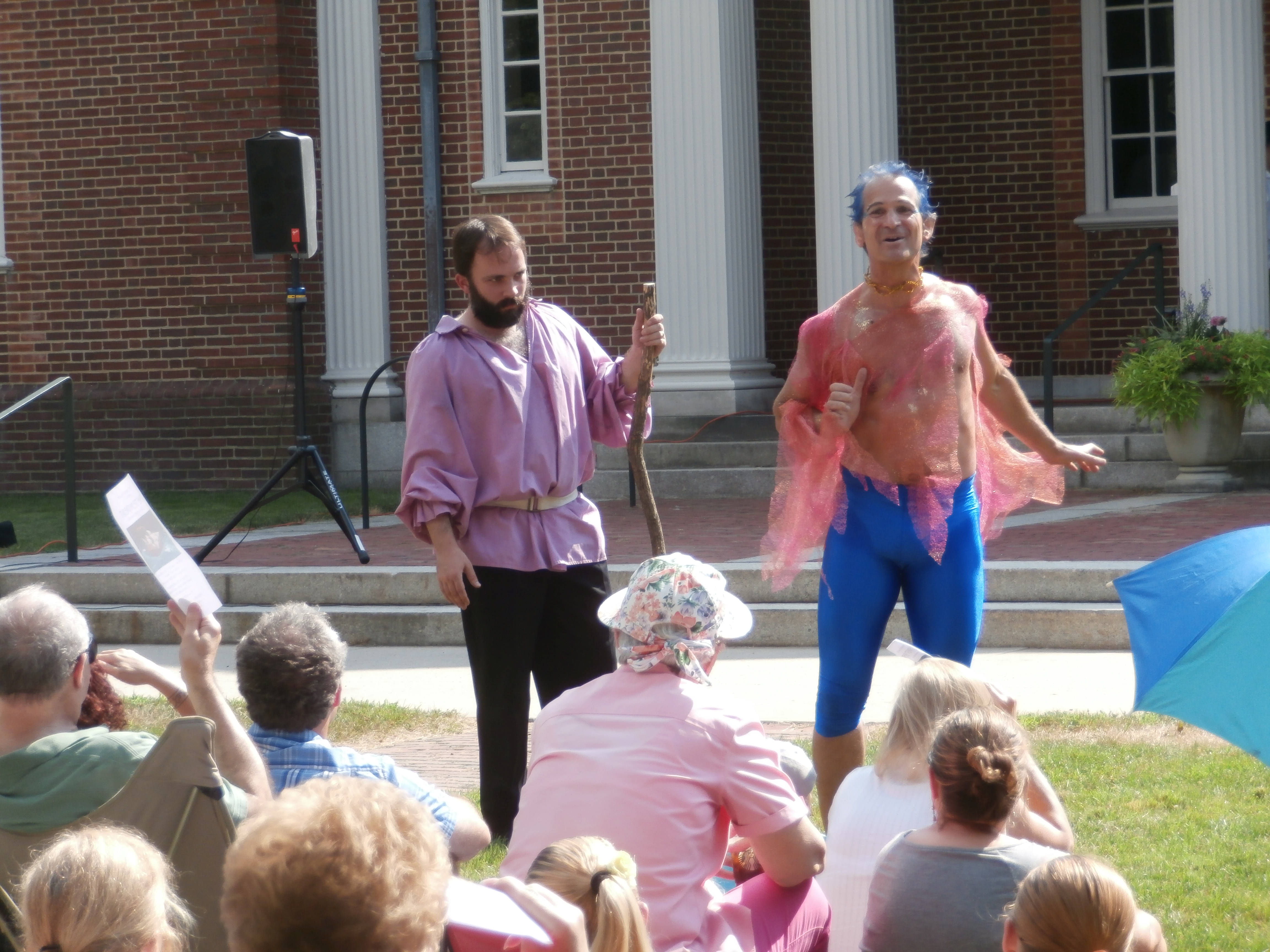
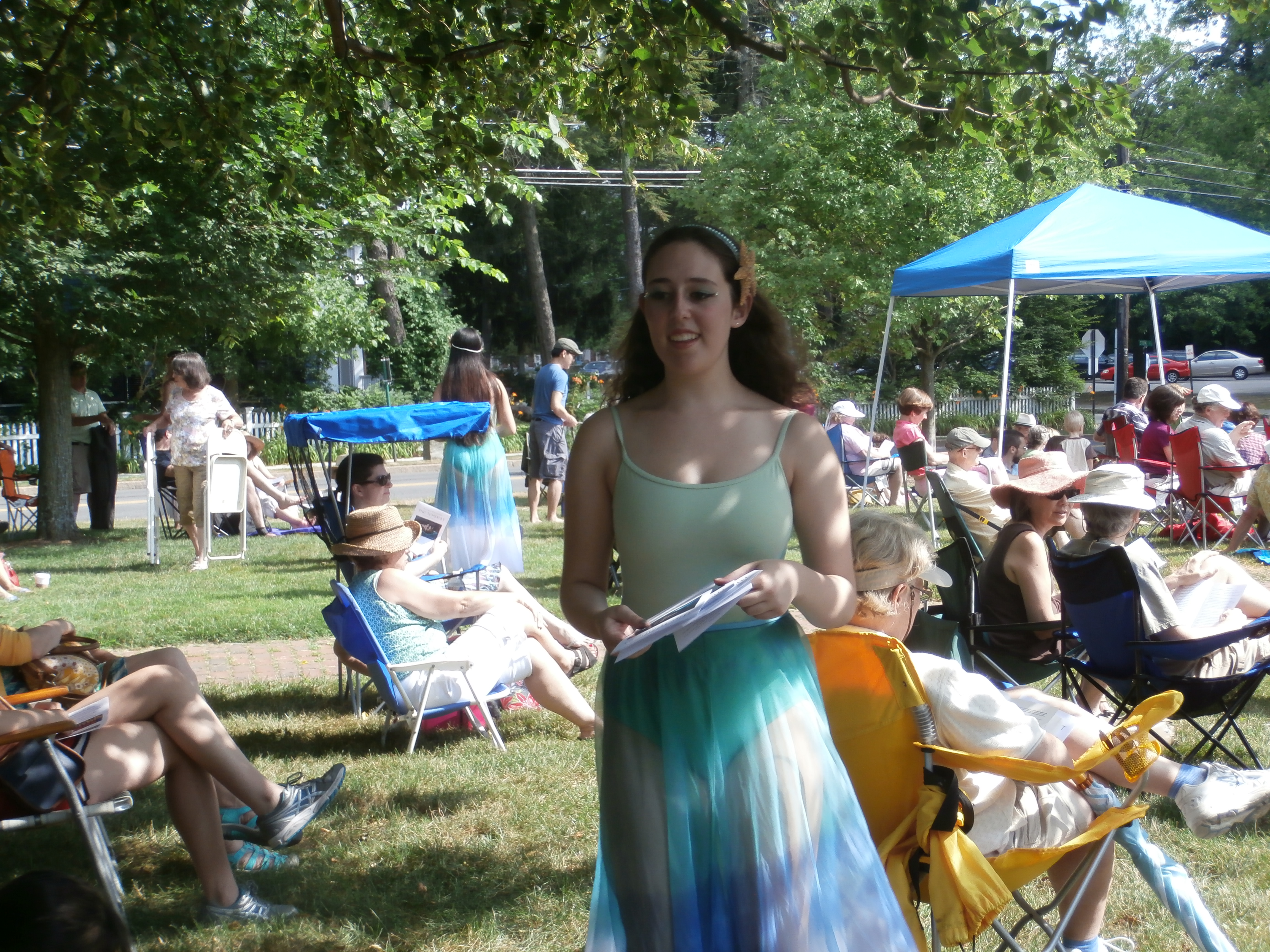
The Concord Players brought a one-hour version of Shakespeare’s “The Tempest” to the lawn of the library yesterday.

The Prospero was perhaps too young, considering that “The Tempest” is an aging Shakespeare’s valedictory, and there was some awkward overacting, but gee whiz, they had to shout to be heard outdoors. So, good for them to work so hard to give the public free theater in summer!

Several sea nymphs doubled as ushers and were lovely to behold.

concord-library-lawn-show

The-Tempest-sea-nymph

prospero-miranda-umbrella

jay-newlon-ariel-tempest

Read Full Post »

I moved from Rochester, New York, more than 30 years ago, so it was only when I went back for a visit that I got to see the storied collections of Margaret Woodbury Strong in a museum built to house them.

When one recovers from the enormity of her obsession, one feels deeply grateful for all the toys and dolls of one’s childhood so beautifully preserved.

The offerings and outreach of the museum have grown like topsy in 30 years. And today another new partnership was announced.

“The great minds of the toy industry will be honored alongside their famous creations when the Toy Industry Hall of Fame combines with the National Toy Hall of Fame under a partnership announced Tuesday.

“The 5,000-square-foot National Toy Hall of Fame gallery at the Strong museum in Rochester will undergo $4 million in renovations, with the goal of opening the combined hall in the fall of 2015.

“The Toy Industry Hall of Fame, whose inductees have included Milton Bradley, Frederick August Otto Schwarz, Walt Disney and George Lucas, has been without a physical presence for about eight years following the closure of the International Toy Center in New York City.

“Leaders of both halls have been talking for some time about combining the two as a way to raise their visibility and exposure and to promote their educational missions. …

” ‘The Strong is an ideal home for this homage to both the toys that have influenced generations of children and the innovative minds that brought them to life,’ Carter Keithley, president of the Toy Industry Association, said at a news conference at the Strong museum, where items like alphabet blocks, roller skates, the Frisbee, Lincoln Logs and the stick occupy places of honor.”

Read more at Yahoo, here. Click “like” if you believe in toys.

Photo: The Strong Museum
“The Strong’s founder, Margaret Woodbury Strong, had a particular interest in dolls and amassed one of the largest collections in the world. The National Museum of Play® at The Strong continues to refine and develop her collection, making it increasingly comprehensive and inclusive. It now includes more than 12,000 dolls and 2,800 paper dolls.”

Read Full Post »

« Newer Posts - Older Posts »