Feeds:
Posts
Comments

Posts Tagged ‘postaday’

Once again, Andrew Sullivan provides me with a thought to chew on. I had heard of building tunnels under highways to let wildlife maintain their historic routes, but  an Orion magazine article on the topic includes an overpass.

Andrew Blechman wrote the article. “When the Montana Department of Transportation approached the Confederated Salish and Kootenai Tribes about widening the portion of U.S. Highway 93 that bisects the Flathead Indian Reservation, the tribes resisted. They first wanted assurances that any highway expansion would address the spirit that defines this region of prime wildlife habitat and natural wonders. The primary goal for the tribes was to mitigate the impact of the road on wildlife.

“While people view highways as a means of getting from one place to another, to wildlife they are just the opposite: a barrier….

“Collaboration between the tribes and highway engineers, with help from Montana State University and Defenders of Wildlife, led to the creation of the most progressive and extensive wildlife-oriented road design program in the country.

“The 56-mile segment of Highway 93 now contains 41 fish and wildlife underpasses and overpasses, as well as other protective measures to avoid fatalities. As creatures become accustomed to the crossings, usage is increasing—at last count, the number was in the tens of thousands. Motion cameras have captured does teaching their young to run back and forth through the crossings, much like human mothers teach their children to safely cross a street.” More at Orion.

See the overpass below.

Read Full Post »

Studio 360 interviewed a blind photographer the other day. He had not always been blind, and blindness has not stopped him from creating high-quality photographs, strange as that may seem. He gets by with a little help from his friends.

But then, which among us doesn’t?

“In 1994, a stroke left the young photographer John Dugdale nearly blind, and over the years since, he has lost the remainder of his vision. But has never stopped taking photographs.

“ ‘I have a few wonderful people in my life that I trust to help me create the pictures that I see in my mind’ Dugdale tells guest host [Studio 360] Alan Cumming. He insists on releasing the shutter on every photo he takes. ‘It’s the most sacred time in my life whenever that shutter opens and closes — and it’s also the only time I’m quiet.’ …

“Dugdale contracted HIV in the mid-1980s. In the early 1990s he became ill with cytomegalovirus retinitis, an eye infection common in HIV patients, and it accelerated quickly. ‘I didn’t tell anyone, because I thought through magical thinking maybe it would go away,’ Dugdale explains. ‘In a matter of weeks I lost one eye.’ A stroke left him paralyzed for a year and left him with about 20% of his vision. … ‘I’m alive because my mother brought me elbow macaroni with Parmesan cheese and beans every single day for a year.’

“When Dugdale was released from the hospital, he almost immediately began working again. He tells Alan that the photographs ‘poured like a libation out of a vase. I barely even felt like I was making them. They just made themselves.’ …

“ ‘Being blind is not what you think,’ Dugdale tells Alan, ‘it’s not all darkness. My optic nerve still works and shoots a beautiful ball of brightly colored orange and purple and violet light and sparkling flashes all the time.” More at Studio 360, here. Check out some of Dugdale’s work, which continues to be in demand by prominent collections.

Photo: John Dugdale
“Untitled, Self-Portrait with Teacups” 1994

Read Full Post »

I’m always interested in new stories about street art and street artists. This one from the NY Times tells how street artist Swoon (otherwise known as Caledonia Curry) has been picked up by art museums.

Melena Ryzik writes, “With a glowing paper cutout pinned over her heart, the artist known as Swoon led a procession through the Brooklyn Museum early one summer night to her installation ‘Submerged Motherlands,’ a site-specific jumble that includes two cantilevered rafts, seemingly cobbled out of junk; a tree, of fabric and wire, that reaches to the rotunda; and nooks of stenciled portraits.

“A sellout crowd was there for a film premiere and multimedia concert, documenting and inspired by Swoon’s travel on the rafts. As the audience sat spellbound, Swoon, her red curls bobbing, flitted around, snapping photos, taking it all in.

“ ‘There’s that feeling that you get when you see something that you don’t understand the origin of: wonderment,’ she said. ‘It brings about a kind of innocence, and I love that. I love to witness it. I love to be a part of making those moments happen.’

“Since she began illegally pasting images around the city 15 years ago, Swoon has inspired a lot of wonderment. Born Caledonia Curry, she started her career as a street artist, but quickly leapfrogged to the attention of gallerists and museum curators, which let her expand to installation and performance art, often with an activist, progressive bent. Her intricate paper-cut portraits and cityscapes, often affixed to walls in hardscrabble places, are meant to disintegrate in place, a refrain to the life around them. Meanwhile, her socially minded work has focused on building cultural hubs for far-flung artistically welcoming communities. …

“ ‘When you look at the work of a lot of her peers, hers stands apart,’ said Sarah Suzuki, an associate curator at the Museum of Modern Art, which bought several Swoon pieces for its permanent collection in 2005. …

“In New Orleans, Swoon helped create a shantytown where each house is a musical instrument. In Braddock, Pa., a dwindling postindustrial landscape, she worked on an arts center in an abandoned church.”

The rest of the NY Times story is here. And you can read more about Caledonia Curry at her website and at wikipedia.

Read Full Post »

Photo: dornob.com
Train car converted to church. Lots more such churches at dornob.

The artist who tweets @FortPointer clued me in to this Boston Magazine today, which asks what should happen to the old Mass Bay subway cars that are being taken out of service.

Steve Annear reports, “The MBTA is gearing up to sign a contract with a Chinese manufacturing company to procure hundreds of Red and Orange Line train cars so they can replace the current fleet of vehicles that have been traveling down the tracks for decades. …

“According to the T, the train cars—they’re replacing 152 Orange Line vehicles and up to 138 Red Line vehicles—will go up for sale, and the highest bidder can do whatever they want with them.

“Like most transit systems, the MBTA typically sells old cars for scrap to the highest bidder. ‘But we also like to preserve a bit of MBTA history by donating a retired car or two to the Sea Shore Trolley Museum in Maine,’ said T spokesman Joe Pesaturo. …

“ ‘Someone buy four of them and open an Orange Line Deli,’ one person suggested on Facebook.

“Another tossed a different idea into the ring: ‘I’d like to put one in my back [yard] for the ultimate ‘man cave.’

“These ideas might sound far-fetched, but stranger things have happened to retired train cars.” Good examples in the photos and also here.

Photo: io9.com
A
 Soo Line caboose, built in 1090, turned into a vacation home in 1976 in Pennsylvania.

Read Full Post »

It was KerryCan who told me about a Canadian who supports himself on things other people throw out.

As he explains at his blog Things I Find in the Garbage, “I’m a professional scavenger and entrepreneur making a living selling curbside garbage. This blog details my finds and sales. It also acts as an archive for things beautiful and historic that would otherwise have been destroyed.” Each week he tells us how much he made on selling the castoffs.

Today he has a long post that includes: “My favourite find since last post came totally by accident. I was out walking to a friend’s house in the Mile End on Saturday and came across this stuff on Clark. It had been raining heavily. This trunk caught my eye immediately. It was beautiful and I wanted it bad – I just had to make sure there weren’t any bugs involved in its tossing.

“Fortunately, while I doing an inspection a pizza delivery guy came and rang the bell of the house. After the transaction was completed I asked the person who lived there if they were throwing out the trunk, and if it was good to take. He told me he was moving and he didn’t have any use for it, which is what I expected given the “for sale” sign in front of his house and the delivered pizza (classic moving food!). I called my friend and she helped me get it home.

“It’s a really great piece. It was made from cedar by the Honderich Furniture Company of Milverton Ontario, likely in the 30s or 40s. It has the usual trunk space but also a shelf at the bottom. There’s a few small cosmetic issues but overall it’s in amazing condition. If I were to sell it I imagine I could get at least 200, maybe even 300 dollars for it, but since it’s so useful for storage I’m going to keep it myself.” More here.

It’s a lot of work to sell things that aren’t wanted anymore. Last summer, I sold a Singer sewing machine from the 1950s on eBay, and I can’t imagine doing that for everything that I no longer use. Too time consuming. My cousin Margot sells on eBay so often she doesn’t seem to mind it. She even sells things for friends. The Canadian “garbage picker” appears to have a variety of sales outlets, including his blog.

Read Full Post »

I saved up this one until it was cool enough outside to talk about heating systems.

Liz Stinson writes at Wired, “Commercial buildings account for 20 percent of the national energy consumption—a big number on its own, but stunning when you consider that often, those buildings are half empty.

“A new project from MIT’s Senseable City Lab is looking to decrease the amount of wasted energy by creating hyper-localized beams of heat. Called Local Warming, the prototype system uses LED bulbs to beam direct rays of infrared light onto people. This is in direct contrast to HVAC systems, which blanket entire spaces with hot or cool air, regardless of how many people are present.

“MIT’s system is rigged to the ceiling, like highly-efficient track lighting. Using a WiFi-enabled tracking system, the lights can sense when a human is present and will beam infrared heat down like a spotlight. ‘It’s almost like having a your personal sun,’ says Carlo Ratti, a professor in the Senseable City Lab.

“The current prototype is on display at the Venice Architecture Biennale until November. It features a large infrared bulb surrounded by rotating mirrors that can direct the light in a focused beam. It’s bulky—hardly the type of thing you’d like in your home—but Ratti envisions future prototypes will use smaller LEDs for a more compact aesthetic.”

Read more at Wired

Read Full Post »

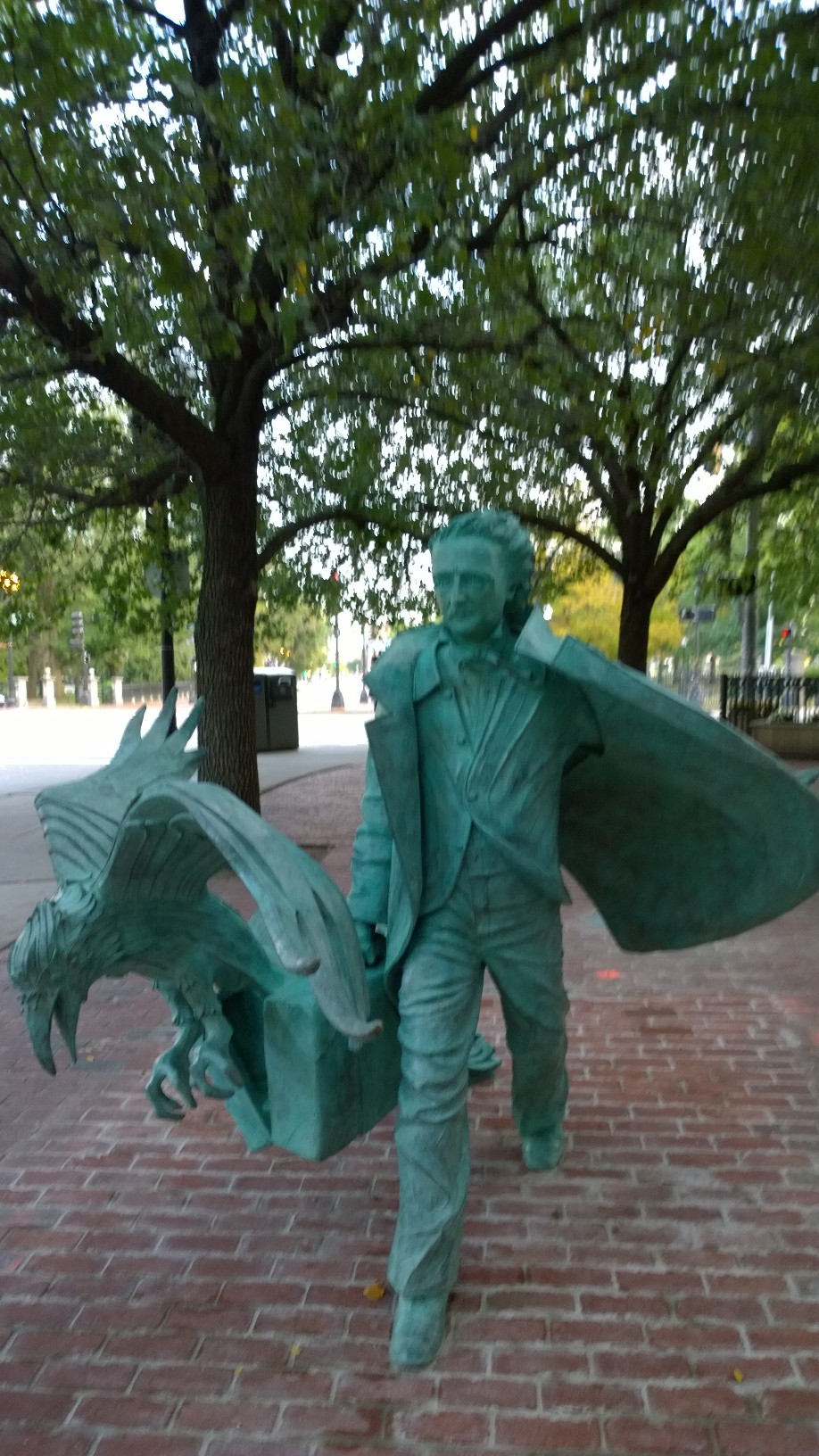
Poe-and-Raven-Boston


You can’t take it with you.

One thing you can’t with you is your reputation, the reputation you want. Other forces take it over.

I’m told that F. Scott Fitzgerald would have hated the posthumous honors showered on him by his native city, St.Paul, Minnesota. And now an irritated Edgar Allan Poe is turning over in his grave with all the attention from Boston and the newly dedicated statue near Boston Common.

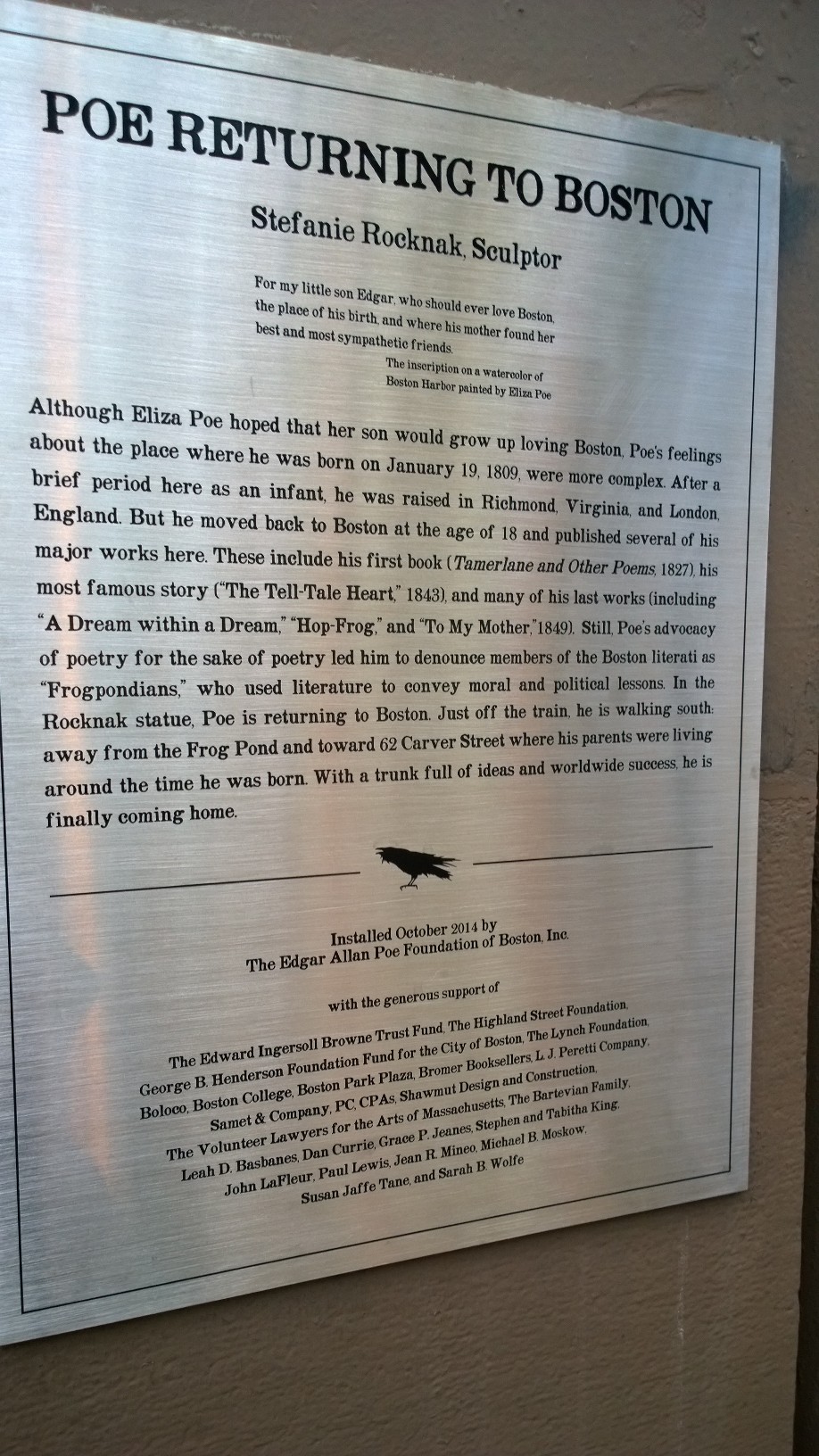
Katharine Seelye in the NY Times reviews the history. She reminds us that Poe was born in Boston “in 1809 and published some of his most famous works here. But he considered Boston writers self-important and preachy, and he said so. And Boston returned the sentiment. Ralph Waldo Emerson dismissed Poe as a “jingle man” for his simplistic style, as if the author of ‘The Raven’ were writing television ads for toothpaste. …

“Other cities have long claimed a piece of the itinerant Poe. Baltimore, Philadelphia, New York and Richmond, Va., all have Poe monuments or museums of one sort or another.

“Boston never bothered. Not without reason. Poe sneered at the city’s luminaries. Riffing off the Frog Pond in the Boston Common, Poe called the local swells Frogpondians,’ their moralistic works sounding like the croaking of so many frogs. As for residents here, they ‘have no soul,’ he said. ‘Bostonians are well bred — as very dull persons very generally are.’

“Now the city is burying the hatchet,” More here.

Poe-plaque-Boston

Read Full Post »

Photo: clickalps.com

Go to Bored Panda to see adorable mouse photographs collected by Skirmantė that could come straight from Beatrix Potter. Two Bad Mice, anyone?

Wikipedia’s entry on the children’s book author and naturalist says, “Born into a wealthy Unitarian family, Potter, along with her younger brother Walter Bertram (1872–1918), grew up with few friends outside her large extended family. Her parents were artistic, interested in nature and enjoyed the countryside. As children, Beatrix and Bertram had numerous small animals as pets which they observed closely and drew endlessly. …

“Beatrix was educated by three able governesses, the last of whom was Annie Moore (née Carter), just three years older than Beatrix … She and Beatrix remained friends throughout their lives and Annie’s eight children were the recipients of many of Potter’s delightful picture letters. It was Annie who later suggested that these letters might make good children’s books.

“In their school room Beatrix and Bertram kept a variety of small pets, mice, rabbits, a hedgehog and some bats, along with collections of butterflies and other insects which they drew and studied. Beatrix was devoted to the care of her small animals, often taking them with her on long holidays.”

I visited her home in the Lake District with my husband, and I read a biography of her. Like many girls of her time and social stature, she was a lonely child. But her creative genius filled her world with fully realized imaginary companions. And she seems to have had a satisfying adulthood preserving land in the Lake District and pursuing her natural history interests.

[Asakiyume: Thanks for putting the lead on Facebook.]

Photo: Miroslav Hlavko

Read Full Post »

Having heard one too many panel discussions and lectures lately about the downsides of the “ageing population,” I was delighted that a few upsides were mentioned at today’s Harvard conference on “Ageing + Place” — a refreshing and intriguing event presenting the latest research and design ideas related to ageing.

Meanwhile, John was on my wavelength again, sending me a link to a story about someone who seems to be ageing remarkably well and making a contribution to society while she’s at it.

Katie Honan of DNAInfo.com writes at BusinessInsider about a 100-year-old woman who is still teaching children in a Brooklyn elementary school.

“Three days a week, Madeline Scotto walks across the street from her home to St. Ephrem’s elementary school, where she was part of the first graduating class.

“She climbs the stairs to her classroom, where she works to prepare students for the math bee. She pores over photocopied worksheets with complicated problems, coaching kids on how to stay calm on stage while multiplying and dividing in their head.

“She’s just like any other teacher at the school — except for one thing: She’s 100 years old.

” ‘I think it just happens, you know. You don’t even realize it,’ said Scotto, who marked her birthday on Thursday.

” ‘Last year I thought, “This can’t be, that I’m going to be 100.” I sat down and did the math actually. I thought, I could not trust my mind. This I had to put paper to pencil — I couldn’t believe it myself. It just kind of happened. I guess I’m very lucky.’ ” More here.

Is there a person of any age who isn’t astonished when they think of how old they are? I think if you are 21 or 40 or 65, you are still going to say to yourself, “How did that happen?”

Photo: DNAInfo
Madeline Scotto is 100-years-old and still teaches students in Dyker Heights.

Read Full Post »

I was so happy to get this hopeful update on Kids4Peace Boston today.

“For a while last summer, as violence escalated in Israel/Palestine, the possibility of Israeli, Palestinian and US youth coming together for a Kids4Peace camp seemed pretty unlikely.

“But despite countless barriers and uncertainties, all 25 young leaders — Muslims, Christians and Jews from Jerusalem, the West Bank, and Boston — did make it to be together on that beautiful mountaintop in New Hampshire. …

“Being in the presence of one another and listening, really listening, to each other’s stories is the crucial first step in the Kids4Peace experience.

” ‘I came to Kids4Peace to try and understand the different viewpoints that each kid has. Some people don’t understand that someone with a different opinion than you can be right without making you wrong.’
~Participant from Boston

“In the midst of violence, in the midst of despair, there are people who turn towards each other rather than away. This summer 25 peace leaders and their families proved that they are the kind of people who choose to turn towards. These young leaders walked away from camp feeling empowered by and connected to others who believe, as they do, that together peace is possible.

” ‘To be a peacemaker is to hold our hands together, and to help each other not killing each other, to treat each other as humans.’ 
~Participant from Jerusalem”

Read Full Post »

Did you enjoy Will’s post on flying, the entry that I just reblogged? You might like to follow him, too.  He often embeds music in his entries.

I think I first became aware of Will’s “musical life on planet earth” when he took the role of the Tortoise in Jeff Flaster’s charming little musical Tortoise, about taking your time to enjoy life. Since then my husband and I have been to many of Will’s cabaret performances in the greater Boston area (often with the inimitable Doug Hammer on the piano).

In fact, you could catch them this coming weekend. He writes, “Doug and I have been happily rehearsing for our upcoming performances on Friday and Saturday, October 17 or 18, at Third Life Studio in Union Square, Somerville — supported in part by a recent grant from the Bob Jolly Charitable Trust.

” ‘Songs About Parents & Children’ will feature two sets of songs — divided by an intermission with lots of refreshments from Trader Joe’s — and will include music by Joni Mitchell, Stephen Sondheim, Rodgers & Hammerstein, Jerry Herman, Jimmy McHugh & Dorothy Fields, Stevie Wonder, Jones & Schmidt, Cole Porter, Maltby & Shire, Weill & Brecht, as well as a couple of originals. …

“There is free parking in a nearby bank’s lot. Third Life Studio is also accessible via the 85, 86, 87, 91 and CT2 bus lines (click here for more details).

“You can click here to buy tickets for Friday, 10/17/14. Or you can click here to buy tickets for Saturday, 10/18/14.”

Read Full Post »

Adele Peters writes at FastCoExist that some schools, “like Ward Elementary in Winston-Salem, North Carolina, are starting to fill classrooms with exercise bikes, so students can work out while they learn.

“The Read and Ride program at Ward began five years ago. One classroom is equipped with enough exercise bikes for a full class of students, and teachers bring students throughout the day to use them. As they ride, they read. The combination burns calories, but it turns out that it also helps students learn better. As the elementary school analyzed testing data at the end of school year, they found that students who had spent the most time in the program achieved an 83% proficiency in reading, while those who spent the least time in the program had failing scores–only 41% proficiency.” More here.

The concept, which I learned about at Andrew Sullivan’s blog, is interesting. I hope most such efforts are in addition to recess, not instead of, but I know from experience that physical motion can helping with learning. And if the kids like it, so much the better.

Photo: Read and Ride

Read Full Post »

I’ve told the story of “Goldilocks and the Three Bears” many times to my oldest grandchild and was delighted that he responded with a wide grin when I later used — in a completely different context — the phrase “It was just ri-ight.” Everybody in the world seems to know those words from the Grimms’ fairy tale.

So when the audience heard the phrase Sunday in a locally flavored skit to benefit the island medical center, the line got a laugh. One of many.

In this case, the familiar plot points (porridge too hot, door not locked, trespassing girl) had been repurposed into the trial of Gold E. Locks, whom the Three Deer accused of bad manners for the usual (entering uninvited, eating the porridge all up, breaking the chair, sleeping in the bed).

Citigroup Chairman Richard Parsons played the judge and Christopher Walken’s wife, Georgianne, was the jury foreman. (“You’re not the foreman!” declared an indignant deer on the jury. “You’re just a Walk-in.”) But many of the biggest laughs were garnered by those who are famous only locally.

The story really had to be about deer because one of the biggest challenges the medical center has today is diagnosing and treating disease borne by deer ticks. (Three deer introduced to the island in the 1950s multiplied into a major problem. Lots of jokes about the people responsible.)

As unpolished as the entertainment was, the packed house was hugely supportive. In fact, the audience joined the fray. When the honorable counsel for the Locks family charged that the deer home with the open door and fragrant porridge was an “attractive nuisance,” a man in the back shouted, “Do you charge by the minute or the hour?” The answer: “I charge the same rate I charge in Manhattan.”

OK. Maybe you had to be there. The main story I took away was how many people wanted to donate to the medical center and how indulgent and open that made them. And yes, I laughed at all the jokes.

More here.

Photo:  John Freidah/The Providence Journal files /

Read Full Post »

101214-autumn-lotus


Here are a few autumn photos from the island. The lotus on the left is indifferent to having looked prettier in the summer. It’s still interesting.

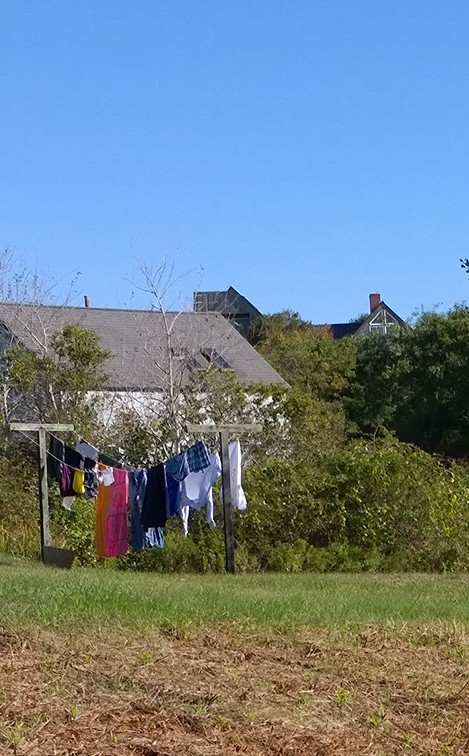
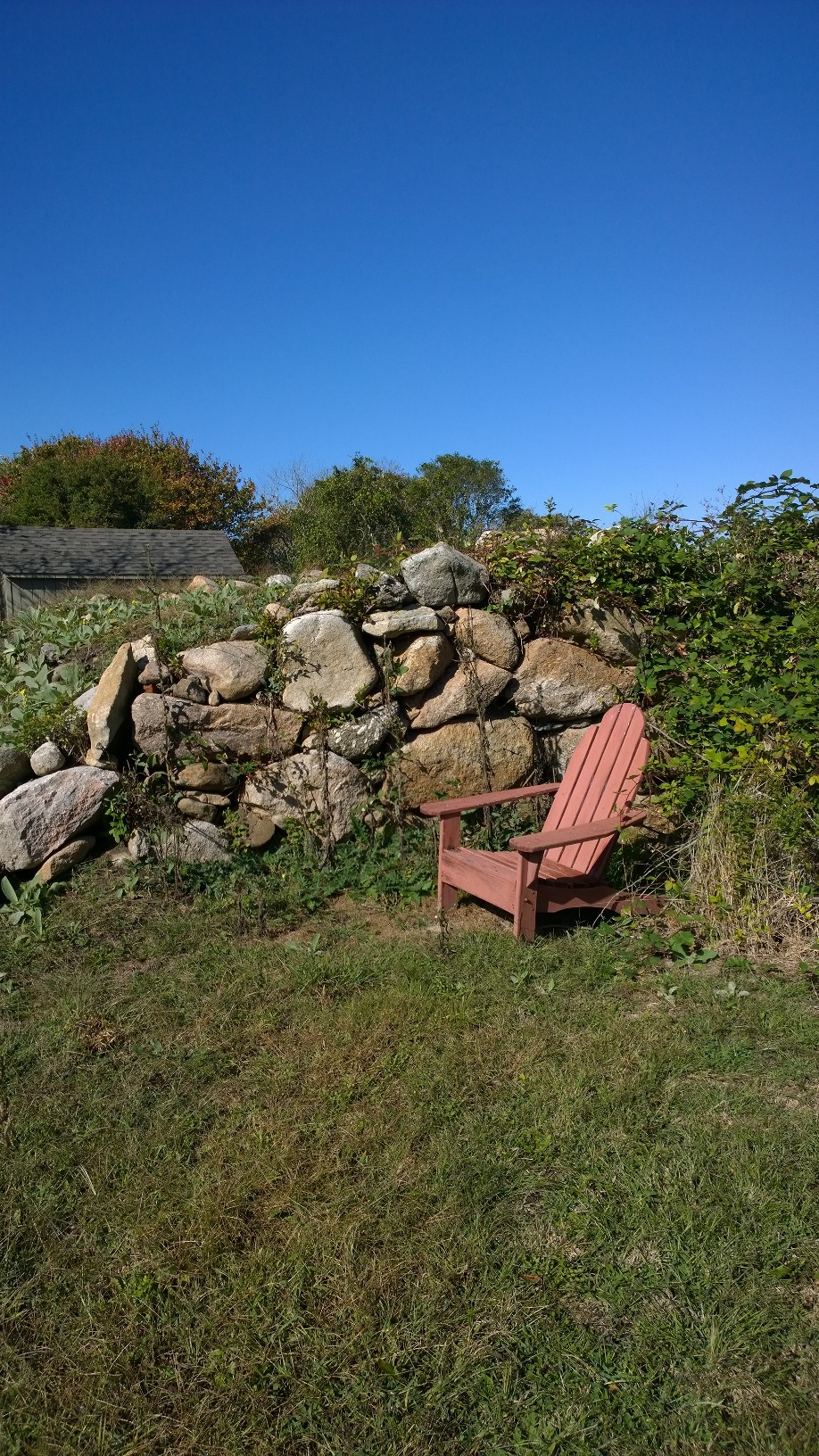
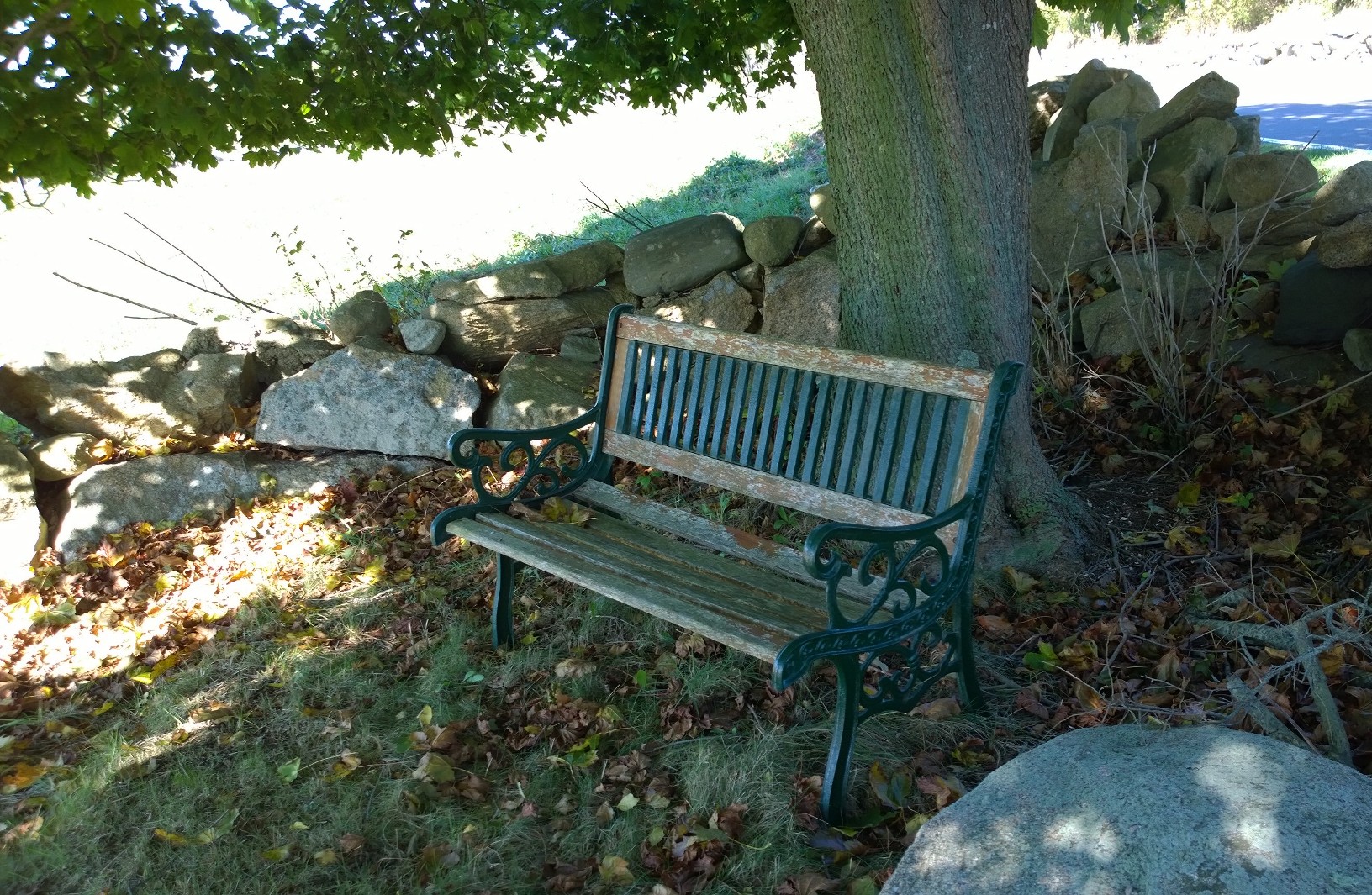
I include milkweed about to sow itself to the four winds, clothes drying on a line, a chair that sat on a houseless property all summer, yellow bittersweet with red winterberry, a neighbor’s shed, and leaves collecting by a bench.

1012214-milkweed

101214-clothesline

101214-outdoor-chair


101214-bittersweet-and-winterberry


101214-shed


101214-bench-and-leaves

Read Full Post »

Here’s an interesting start-up by a couple of entrepreneurs who love to eat. The two women decided to build a business around helping travelers find truly authentic cooking.

According to Aashi Vel and Steph Lawrence’s website, “Traveling Spoon believes in creating meaningful travel. We are passionate about food, and believe that by connecting people with authentic food experiences in people’s homes around the world we can help facilitate meaningful travel experiences for travelers and hosts worldwide.

“To help you experience local cuisine while traveling, Traveling Spoon offers in-home meals with our hosts. In addition, we also offer in-home cooking classes as well as market tours as an extra add-on to many of the meal experiences. All of our hosts have been vetted to ensure a safe and delightful culinary experience.

“Traveling Spoon currently offers home dining experiences in over 35 cities throughout Bangladesh, Cambodia, China, Hong Kong, India, Indonesia, Japan, Singapore, South Korea, Sri Lanka, Taiwan, Thailand, Turkey and Vietnam, and more countries are coming soon!” More here.

I have no doubt that Traveling Spoon is also boosting international understanding. What a good way to use an MBA! Business school is not all about becoming an investment banker, as Suzanne and Erik would tell you.

Photo: Traveling Spoon
Traveling Spoon founders Aashi Vel and Steph Lawrence met at the Haas School of Business.

Read Full Post »

« Newer Posts - Older Posts »