Feeds:
Posts
Comments

Posts Tagged ‘poverty’

We found a letter with a return envelope in a recent issue of our newspaper. The envelope wasn’t for a tip.

The newspaper delivery man was telling us, and his 629 other customers, a bit about himself and his work situation and asking how early we needed our papers.  He said that the delivery service for seven national and local papers was changing. Some some clients had always wanted their paper delivered before 5:30, but he was hoping people would let him know who could wait until 6:15. He told us he makes 7-1/2 cents per household. (I think there’s a song about 7-1/2 cents from the musical Pajama Game.) He referenced the cost of gasoline and car maintenance.

And then he told a story that is very common for generations of immigrants and Puerto Ricans (who are, of course, citizens but come to the mainland to provide a better life for their children).

“I am father to four children who are 11. 10, 6, and 4 … My wife and I decided to move to the Untied States 4 years ago finding a better quality of life for our family. I obtained my degree as a Licensed Electirician in Puerto Rico and my wife was a Nail Technician. When we arrived in the United States, we were faced with the hard reality that neither of our licenses were valid in the US. My wife and I decided to start our studies here, so that we can obtain once again our licenses and pursue a career in our field of study. Currently, in addition to my job as a Newspaper Delivery, I go to school every night — Monday through Thursday — and I have a second job, right after I finish newspaper delivery, as an electrician assistant, while my wife is both taking care of the children, and working as a Housekeeper at St Patrick Parish.

“Together, with hard work and dedication, we are able to cover all the expenses that come our way. We want to ensure that our children will learn by example to work hard to become self-sufficient and independent … . We hope God will provide us with good health and strength to be able to work each day so that our dreams can became a reality.”

Needless to say, I wrote him and said no hurry on the paper. My husband thought the letter really embodied what the season was about.

(I am always grateful for our comments. and if you tweet, consider following us @LunaStellaBlog1 on twitter.)


Read Full Post »

Nicholas Kristof wrote recently about a new ” ‘poverty statement’ from the premier association of pediatricians, based on two decades of scientific research.” It ties early childhood stress to persistent poverty.

In his NY Times column “A Poverty Solution that Starts with a Hug,” Kristof says of stressed children, “Toxic stress might arise from parental abuse of alcohol or drugs. … It might derive from chronic neglect — a child cries without being cuddled. Affection seems to defuse toxic stress — keep those hugs and lullabies coming! — suggesting that the stress emerges when a child senses persistent threats but no protector. … The crucial period seems to be from conception through early childhood. After that, the brain is less pliable and has trouble being remolded.

“ ‘You can modify behavior later, but you can’t rewire disrupted brain circuits,’ notes Jack P. Shonkoff, a Harvard pediatrician who has been a leader in this field. ‘We’re beginning to get a pretty compelling biological model of why kids who have experienced adversity have trouble learning.’ ”

Lest this is striking too dark a note for Suzanne’s Mom’s Blog, I hasten to point out that identifying a problem is the first step to fixing it. As a proponent of both hugs and poverty alleviation, I was really happy to see this addressed! And Kristof’s mention of the stress hormone cortisol jumped out at me because I hadn’t heard about it until I saw the research in yesterday’s post, which suggested that a pleasant phone conversation with Mom can reduce cortisol more effectively than instant messaging with Mom. (Or whoever reduces your stress.)

Read more. And do leave comments.

(I must look up that article from a few years ago about the Indian woman who stood on a street corner in New York and gave free hugs to long lines of people craving hugs.)


Read Full Post »

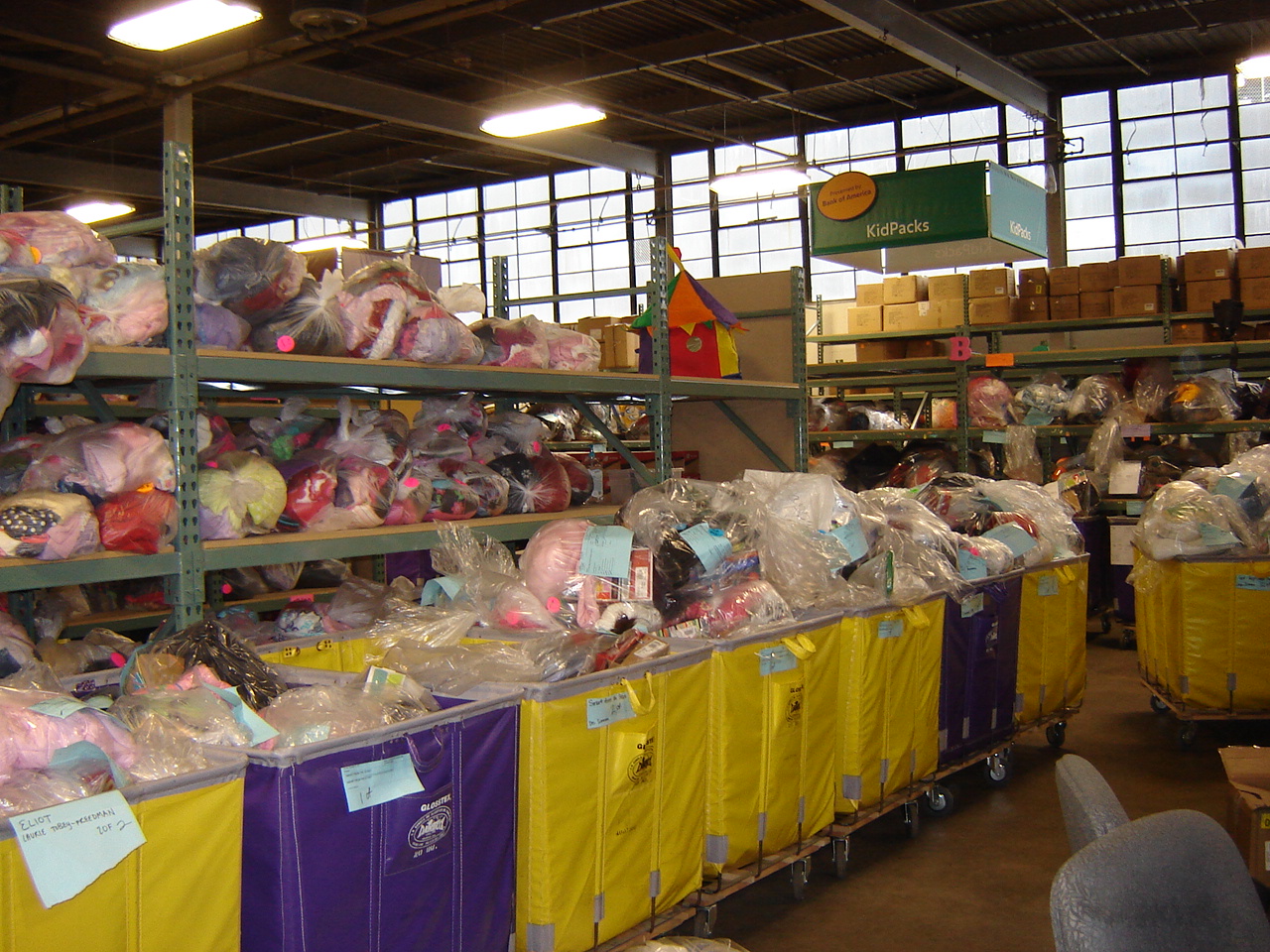
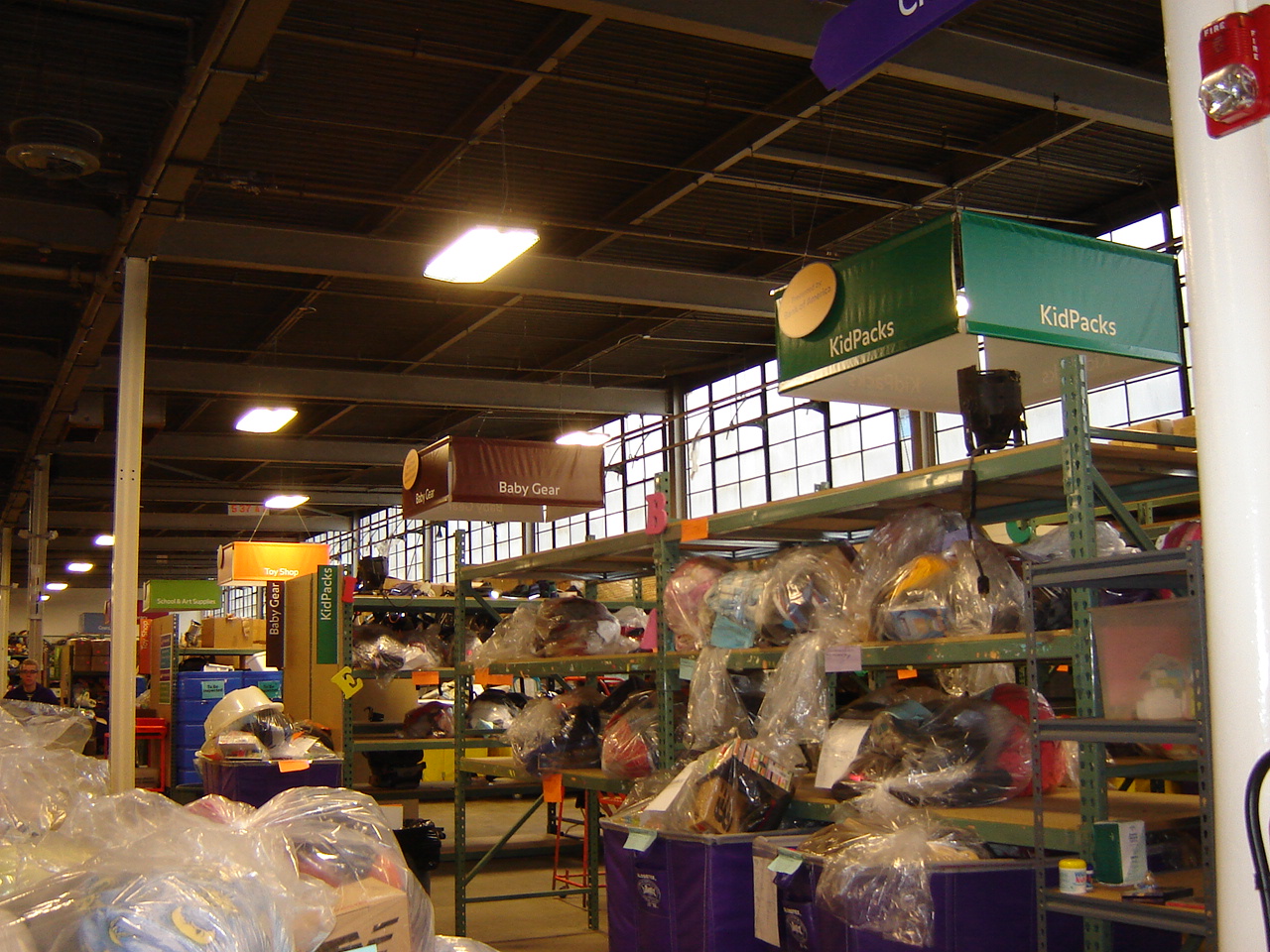
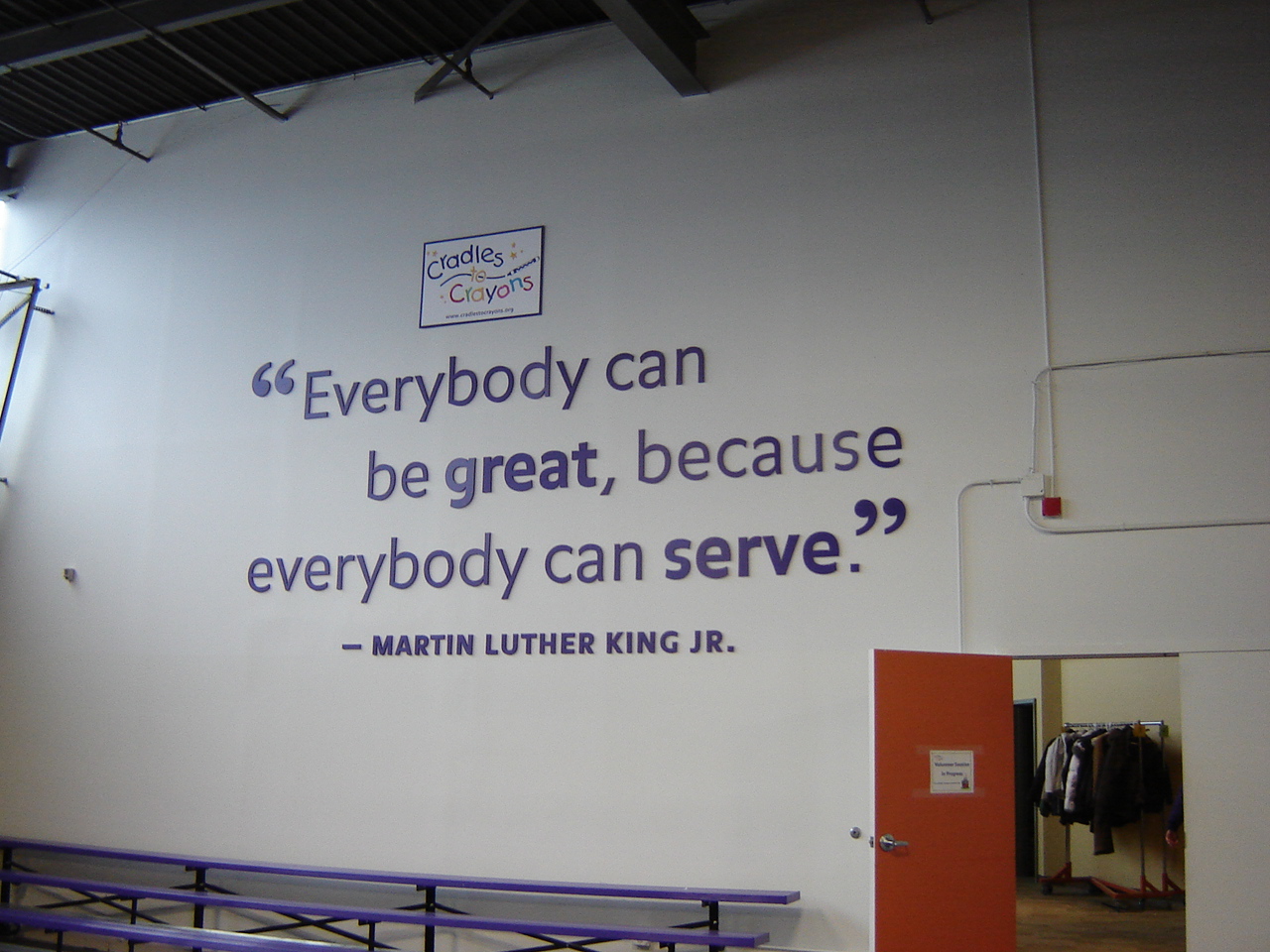
Today at work we had a holiday team-building outing to the nonprofit Cradles to Crayons. A lot of organizations bring employees to the group’s Giving Factory for their community service projects. Our team volunteered at the same time as Blue Cross Blue Shield and Bank of America.

First we watched a video about the history of the organization, which takes donations of clothes and equipment for children, sorts them, and fills orders for individual children at the request of social service agencies. The donations come from ordinary people and from partner corporations.

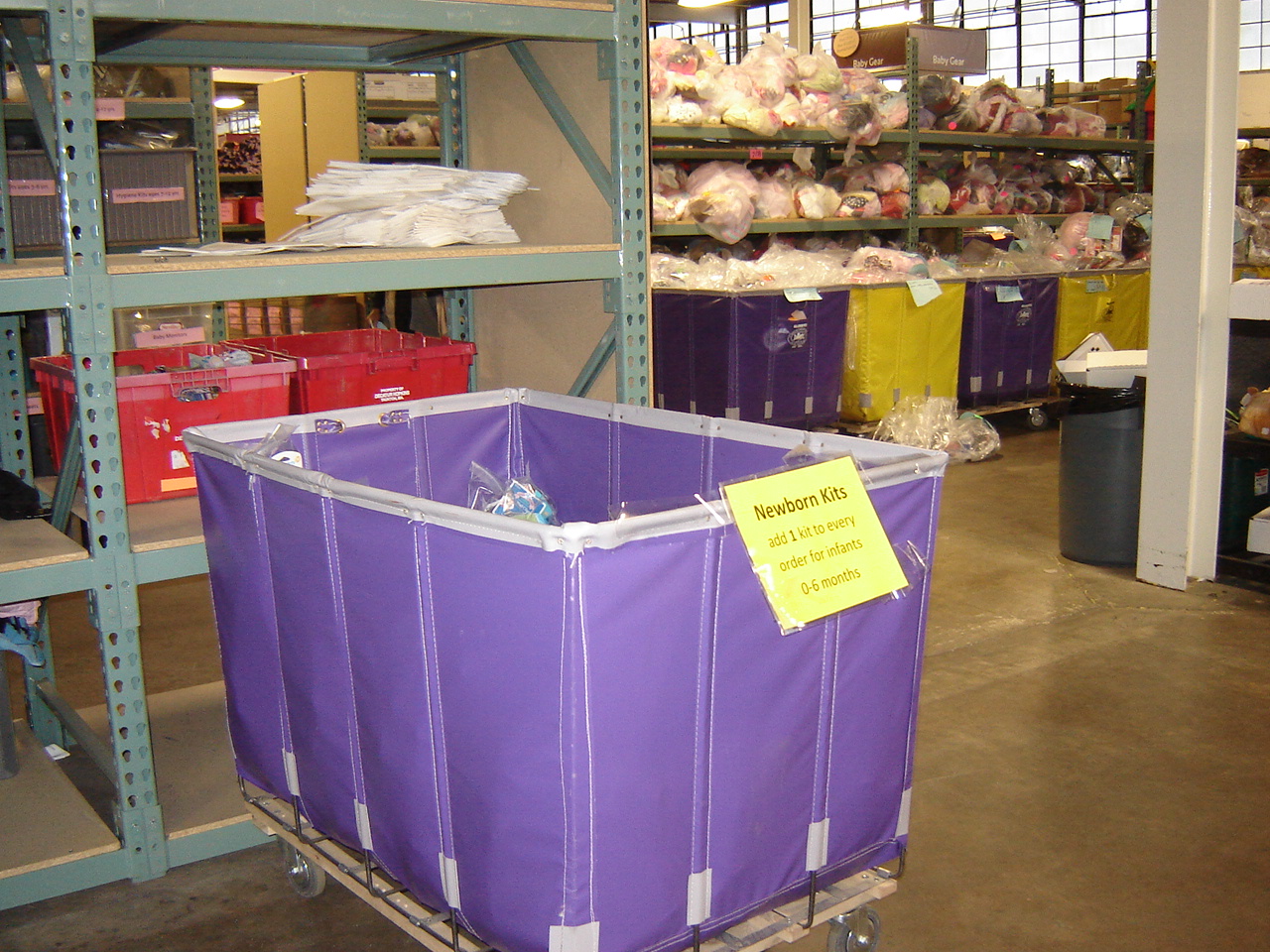
A group of us sorted donated coats. I was with the group that “shopped” among the warehouse shelves for bundles of sorted and age-labeled items, looking for the needs listed on individual order sheets. For example, we might have a sheet for a boy, age 4, that said “clothing pack, book bundle, craft packet, boots size 6, coat size 6.” It was very well organized. If we found that Cradles to Crayons was  out of something, the staff would fill the order anyway and invite the requesting agency to reapply for missing items. They like to provide whatever they can as fast as they can.

Cradles to Crayons says, “Our vision is that one day every child will have the essentials they need to feel safe, warm, ready to learn and valued. Through the Giving Factory, we provide those essentials, as donated clothes, shoes, books and school supplies to homeless and low-income children. We also offer meaningful volunteer opportunities to hundreds of corporations and thousands of individuals and families each year.”


Read Full Post »

The Boston Medical Center, whose patients are mostly poor, has been a pathbreaker in treating the whole person. Its volunteers and staff help patients find services for life issues that may be exacerbating health problems. BMC works with lawyers to get landlords to make building-code-required changes that affect asthma and other conditions.

Now it is doing an experiment with yoga.

On Monday, the Boston Globe wrote, a “yoga class, held in a Boston Medical Center lobby for staff and patients, features postures vetted for people with back pain. It was a prototype for an ongoing study exploring the use of yoga in the city’s poorer neighborhoods.

“A survey of 5,050 people who practice yoga, conducted for Yoga Journal in 2008, found that 44 percent — almost half — reported annual incomes of $75,000 or more, and 24 percent said their income was higher than $100,000. Chronic low-back pain annually affects between 5 and 10 percent of all income levels of the population …

“Because many yoga postures stretch and strengthen the muscles affecting the back, at least 10 published studies have been done on yoga and chronic low-back pain, says [BMC’s Dr. Robert B.] Saper. But though the majority have shown yoga to be promising as a low-cost treatment, all have been done on predominantly white, educated, affluent populations, he says.

“ ‘In our patient population, it’s unusual to have back pain alone as a single problem,’ Saper says, noting that many patients also suffer from hypertension, diabetes, obesity, depression, and anxiety. And while he emphasizes that he doesn’t consider yoga a ‘panacea for everything,’ he says that ‘because of the mind-body component of yoga, we’re aware that [it] may be helpful for a variety of patients with co-morbidities. And that it may help with depression, anxiety, and resilience.’ …

“The yoga group received one 75-minute class each week that included postures, deep breathing, and meditation. They were also given an instructional CD and equipment to practice 30 minutes a day at home. After 12 weeks, the yoga group reported one-third less pain and an 80 percent decrease in pain medications. The control group reported a decrease in pain of 5 percent and no change in medication use.”

Read more here.

Read Full Post »

I went to a conference today on how industry and higher-education entities can collaborate better to prepare students for the jobs that companies want to fill. There was a big crowd, and among the speakers were U.S. Senator Sheldon Whitehouse of Rhode Island and Connecticut Governor Dannel Malloy.

I was especially pleased to hear panel member Gerald Chertavian and catch up with what his nonprofit has accomplished in the past few years.

Starting in college, Chertavian volunteered as a Big Brother, and the experience had a profound effect on him. After he went to Harvard Business School, launched a company, and sold it, he decided to invest in helping motivated youths aged 18-24 who lacked the money, networks, or opportunity to get a good education or decent job.

So he founded Year Up. He built on his list of corporate contacts to make internships a key part of a training program that ended in jobs.

Interested young people had to have a high school diploma or GED and demonstrate through the application process (which involves getting references) that they are serious. They earn a stipend during a year of training in either financial-industry or tech skills. They learn workplace behavior and business communication. At the same time they get college credits at an affiliated school, which most students decide to put toward a degree after their year in the program. Companies have found the Year Up youths invaluable, and some are changing their HR requirements to allow in more people without a bachelor’s already in hand.

At the conference, Chertavian acknowledged that in spite of having helped 5,000 students over a decade through Year Up programs around the country, the organization was not big enough to achieve its ambition of a major impact on the opportunity divide. To scale up, he said, Year Up is partnering first with a college in Baltimore that will use the approach. It hopes to keep expanding the new model after Baltimore.

There are a lot of great You Tube videos that might interest you — some about the Year Up program, some about Chertavian, some about the students. Here is one.

Read Full Post »

A new exhibit organized by the Cooper-Hewitt National Design Museum in New York demonstrates the power of design to make life better for disadvantaged people.

“This is a design show about remaking the world … And that’s thrilling,” writes Michael Kimmelman, “whether it’s happening in Cupertino, Calif., or Uganda, where H.I.V. infects hundreds of people a day, and the latest news cellphone-wise has been the design and distribution of a text-messaging system that spreads health care information.

“In Kibera, an area of Nairobi, Kenya, and one of the densest slums in Africa, the challenge was different. Traditional wood and charcoal fires cause rampant respiratory disease there. Refuse fills the streets. So a Nairobian architect designed a community cooker, fueled by refuse residents collect in return for time using the ovens.

“From cellphones and cookers to cities: in Thailand, a public program called Baan Mankong Community Upgrading has, for the last eight years, been improving conditions in hundreds of that country’s 5,500 slums, bringing residents together with government and nongovernment agencies to design safer, cleaner places to live.”

Read more in the NY Times.

You will also enjoy reading about slum (favela) painting in Brazil and what a new coat of paint can do for building residents’ skills while lifting their spirits.

Read Full Post »

Nicholas Kristof writes in the NY Times about a Kenyan called Jane, who was pushed out when her husband took a second wife and who found herself supporting her children through prostitution. That is, until she joined a remarkable nonprofit and made a better life for herself through sewing. She takes used wedding gowns and bridesmaid gowns and cuts them up to create several smaller dresses that she can sell.

Kristof writes that in 1999, Jane was fortunate to find “an antipoverty organization called Jamii Bora, which means ‘good families’ in Swahili. The group, founded by 50 street beggars with the help of a Swedish woman, Ingrid Munro, who still lives in Nairobi, became Kenya’s largest microfinance organization, with more than 300,000 members. But it also runs entrepreneurship training, a sobriety campaign to reduce alcoholism, and a housing program to help slum-dwellers move to the suburbs.” Jane became an entrepreneur, was able to get her children into good schools, and rejoiced to see them thriving.

But as Kristof explains, the lives of the working poor tend to remain one accident or illness away from upheaval. Jane’s daughter was hurt in a traffic accident and treatment for the injury sucked up all Jane’s savings, affecting her ability to pay for school.

Kristof likes to go beyond traditional reporting in his columns and give readers a way to help, so you might want to check his blog.

More on Jamii Bora:


Read Full Post »

Years ago, when we were living near Rochester, New York, it was pointed out to me that poverty in rural areas was often worse than in cities because people were more isolated and there were fewer services. That winter I contacted an outreach coordinator who had put out a call for warm clothing. I offered to drop off some clothes we no longer needed.

The coordinator, an African American, believed deeply that dropping off clothes was not the same as understanding what the need was. She herself had grown up in a family of migrant farm workers and was acquainted with grief. When she was small, I later learned, her family had even been assigned to a chicken coop for their housing.

The coordinator knew a family who needed my clothes, and she thought I should go with her to make the delivery. Somewhat reluctantly, I agreed.

I will never forget the wary, beaten-down look in the eyes of a young woman living with family members in a tumble-down old house. After handing over the donation, the coordinator and I hung around for a brief, awkward chat. I could see that my contribution could not scratch the surface of the family’s need and was mostly for my conscience (which is not a reason to give up on donations, of course).

The main thing that has changed in the America in 30-plus years is that greater percentages of Americans are poor.

That is why some photojournalists, outraged at the lack of serious coverage in the mainstream media and recognizing that a picture is worth a thousand words, have founded an organization to fight poverty called American Poverty. See their recent photos here.

Perhaps you know the work of Walker Evans and James Agee in the Great Depression. The photographers’ new antipoverty site may, like Walker and Agee’s “Let Us Now Praise Famous Men,” provoke the question, “Is this America?”

Read Full Post »

Check out this story in the Boston Globe. It seems especially timely given the increasing numbers of people growing their own food and the concerns about many others who are struggling.

“Every summer, 40 million backyard farmers produce more food than they can use, while people in their communities go hungry. If only they could link up. Enter Gary Oppenheimer, 59, of West Milford, N.J. He was directing a community garden a couple of years ago when inspiration struck. In May 2009, AmpleHarvest.org hit the Internet, connecting food pantries and gardeners. In just 150 days, Rosie’s Place in Boston became the 1,000th pantry on the site, and the growth has continued. As of Labor Day, 4,188 pantries were listed, in all states. Oppenheimer says the nonprofit organization is actively seeking grant funding to sustain what has sprung up.” Read more here.

If you have extra produce from your garden, you can go to AmpleHarvest to find a food pantry near you.

Photographs: Sandra M. Kelly

Read Full Post »

Dr. Paul Farmer, the subject of a great Tracy Kidder book called Mountains Beyond Mountains, has spent many years delivering medical care — and working to alleviate poverty — in remote areas of Haiti. His nonprofit organization, Partners in Health, takes the word “partners” seriously. The teams do not tell the locals what is good for them but makes a point of learning from them and helping them get what they need.

In recent years, Farmer has been in demand in other countries, too. One focus area has been Rwanda. I liked a recent Boston Globe article on the approach to building a Partners in Health hospital there.

“The designers quickly realized that the challenge was not simply to draw up plans, as they had first thought, but rather to understand the spread of airborne disease and design a building that would combat — and in some cases sidestep — the unhealthy conditions common to so many hospitals.

“Learning from health care workers that hospital hallways were known sites of contagion, poorly ventilated, and clogged with patients and visitors, MASS Design decided that the best solution would be to get rid of the hallways. Taking advantage of Rwanda’s temperate climate, they placed the circulation outdoors, designing open verandas running the lengths of the buildings. …

“When it came to building, MASS Design looked at the Partners in Health model of involving local poor communities in health care, and realized that they could apply the same ideas to the construction process. The hospital was built entirely using local labor, providing food and health care for the workers. Unskilled workers received training that would help them get more work; and skilled laborers, notably the Rwandan masons who built the hospital’s exterior from carefully fitted together local volcanic stone, refined their craft and found themselves in demand all over the country. The construction process also beefed up local infrastructure — new roads and a hydroelectric dam — creating more jobs and literally paving the way for future projects.”

To paraphrase what Farmer often says, the biggest challenge to health is poverty. Read more.

Update on the designers from the June 19, 2012, Boston Globe.

Read Full Post »

We watched a couple unusual documentaries last night and last weekend. Often by the time films are available on Netflix, all I remember about the review is that someone highly recommended them. I know only that we will get a big surprise.

“Marwencol” and “Waste Land” were amazing surprises. They turned out to have something in common, too — the idea that art can lift people from despair, help them see things in a way that opens up their world. What was different between the movies was that for the troubled guy who created art in “Marwencol,” showing his work in a NYC gallery is quite beside the point of his healing process and probably the last thing he needs.

The movie is beautifully executed, but one has the sense that the young filmmakers who think the protagonist will benefit from the big-time art world don’t understand psychology very well.

The protagonist of “Waste Land,” successful Brazilian artist Vik Muniz, although equally idealistic, understands his subjects better, having experienced a life similar to theirs in his impoverished childhood. He decides to combine an art project with helping “garbage pickers” in the world’s biggest landfill, in Rio. Getting to know a few of the workers really well, he develops tremendous admiration for them and their deep dignity. He pays a few to work with him on giant portraits on themselves, portraits that play on the themes of some famous paintings. They use recyclables to complete the images, which are then photographed and shown in galleries and at auction. The proceeds come back to the people and help them both individually and collectively.

But the biggest transformation is not monetary but rather what Vik anticipated based on his own life experience — that by seeing things in a new way, they would get new ideas about themselves and their possibilities.


Read Full Post »

Have you been reading about Elizabeth Warren, the temporary head of the new Consumer Financial Protection Bureau? People say she is too controversial to be approved by the Senate and that maybe her employee, Raj Date, a former banker, would be a good compromise candidate. Maybe so, but I just want to tell you about the extraordinary consumer advocate that I know Elizabeth Warren to be.

As a professor at Harvard Law School and an expert on bankruptcy, she has worked tirelessly to reverse the erosion of the of the middle class and lower-income families that has occurred over the last few decades. The CFPB was really based on her work, and she is the right person for the job. Growing up among a lot of older brothers, she learned to argue for herself and be persuasive. I have sat in meetings and heard her talk about her research and outreach, and my jaw just dropped. She is so passionate, and her arguments are so clear and incisive. She is capable of persuading many others who think they have different positions, because she always can find the common interest. But I think the country needs a consumer advocate who doesn’t back down.

Elizabeth Warren has a powerful effect on people. One day several years ago, I was standing in a grocery checkout line and by chance I overheard the cashier telling a customer that when she was thinking of filing for bankruptcy, she contacted Elizabeth Warren and received energetic help — for free. Later she would e-mail Warren anytime and get a response and advice. Probably Warren can’t answer such e-mails now, but I will check with that cashier next time I see her.

If Elizabeth Warren hired Raj Date, then he is a good guy. But if he is a real consumer advocate, I don’t see that his chances of being approved by the Senate are any greater than hers.

Comments may be sent to suzannesmom@lunaandstella.com. Luna & Stella is apolitical, but Suzanne said I could write about anything that interests me, and that is what I have been doing.

Read Full Post »

Last night we finally watched the DVD of “Waiting for Superman.” We had to wait until we were up for it. We knew it would be good, but painful to watch. It’s a documentary about the broken public education system in this country.

I see now why people come away from this movie saying, “It’s the unions.” But although we clearly need to find a way to dismiss bad teachers and reward good teachers, to just say, “It’s the unions,” seems too simple to me. Even if it is true, when you consider the context of poverty, unemployment, the highest rates of incarceration in the developed world, the War on Drugs, three other wars, confused approaches to immigration, Wall Street greed at the expense of the poor and middle class, antigovernment bias, and many skewed political priorities, to lay the problems of inequality in public education at any one door seems too simplistic.

Still, as the movie makes clear, we need to get rid of bad teachers immediately and make sure children get high-quality teachers before they give up hope. Lotteries to get into better schools are too cruel to too many. Activists can check out this site.

By the way, the film is very well done. We loved the creative graphics making the data real and the clips of Superman movies and past political speeches and TV shows.

Reader Asakiyune writes: “I very much agree with what you said about unions and teaching and the documentary–it bothers me when a problem as complex as that is reduced to one soundbite.”

Read Full Post »

« Newer Posts