Feeds:
Posts
Comments

Posts Tagged ‘youth’

Photo: Melanie Stetson Freeman/CSM.
More Than Words bookshop in Massachusetts uses 100% of its proceeds for training and educating young people ages 16 to 24 in professional skills and goal setting.

My husband and I first encountered the bookshop More Than Words on a movie night. We had been to dinner at one of the many cool restaurants in Waltham, Massachusetts, and were just walking around looking in shop windows until it was time for the movie.

Jacob Posner has written about it at the Christian Science Monitor.

“Jarris Charley says he didn’t believe in jobs when he was growing up on the line between Boston’s Roxbury and Dorchester neighborhoods. The people he knew who had legitimate jobs, including his mom, didn’t find much success. Everyone in his community lived check-to-check and paid rent. The drug dealers were the ones with money.

“ ‘So I was invested in the streets: drugs, guns, robberies. That’s just what I was caught up into at a young age,’ he says. He ended up in juvenile detention at age 15, and in prison for robbery at 23.

“Near the end of a five-year prison term, a second chance arrived. An old manager from a job-training program called More Than Words visited, and asked him, ‘Jarris, why don’t you just come back?’

“More Than Words is a bookstore, but one that does much more than sell bestsellers. The program serves young people ages 16 to 24 who face the highest barriers to building stable lives. Participants face homelessness, are in the foster care system, are out of school, or are involved in the legal system. It gives them job skills, but graduates like Mr. Charley say that the sense of belonging and acceptance – that they matter – is the most valuable thing they take from the program.

“ ‘I like to say we’re in the mattering business,’ says founder Jodi Rosenbaum.

“More Than Words’ support goes beyond job training. There’s a paid ‘on-ramp’ of six to 12 weeks in which the program helps with everything from housing and food costs to making sure participants have suitable work attire. Youth development managers offer support in a range of areas, including future employment, housing, transportation, financial planning, and navigating the legal system. After graduation, young people can access career services and bridge funding for tuition, rent, and child care so they can further their education and training.

“ ‘None of this works if that all doesn’t hang together, right? Like a job training program means nothing if you don’t know where you’re sleeping at night or if you have court the next day, and you don’t have people helping you plan and figure that out,’ says Ms. Rosenbaum.

“More Than Words has grown significantly in its two decades of existence. It started with a 150-square-foot office space where young people sold donated books online. Today, it operates three storefronts in the Boston area. It served around 318 young people last year, who sorted about 4.5 million donated books and earned over $3.8 million in net revenue. Almost all More Than Words graduates go on to earn a high school diploma or equivalent degree, according to the organization’s data. …

“ ‘A lot of people feel that they don’t have a lot going for them or they don’t have a lot of potential,’ says Mr. Charley. ‘We speak life into them.’ That was the case for him.

“For the past three years, he’s been mentoring young people at More Than Words. He works in career services, helping young people in the area that tripped him up the most: getting that first good job after graduating from the program.

“Ms. Rosenbaum founded More Than Words in 2004. She had worked as a public school teacher and for the child welfare system, and became disenchanted with government systems. … Ms. Rosenbaum found that the process of selling a book online had therapeutic value. It has clear steps leading toward a positive outcome: Pick up the book from where it was donated, find out how much it’s worth, package the book, ship it, and then watch money come in. …

“More Than Words Boston, where Mr. Charley works, is located on a street just off Interstate 93 in a postindustrial part of South Boston. … Inside, it’s tidy and spacious. In the front, wooden tables carry rattan cross-body bags and socks with giraffes and penguins. All the merchandise is made by businesses that address social issues as part of their mission. …

“[Mr. Charley] had attended Lexington Minuteman High School. He says there were limited spots at the vocational high school for people from his part of the city. Mr. Charley says he’s grateful for the experience, but felt like he was only appreciated for his athletic prowess. …

“ ‘You don’t think a Black person sees that?’ he adds.

“He left school near the end of his sophomore year after an event involving his cousin, he says. Arrest and juvenile detention followed. Then he found his way to More Than Words.

“ ‘He was the first white man I trusted,’ says Mr. Charley about one of his managers. He always asked when he didn’t understand part of Mr. Charley’s experience – instead of just spouting advice. …

“One of Mr. Charley’s goals is to help his mentees understand their behavior and, ultimately, figure out how to stop doing things that get them into trouble.

“Back when Chris Anderson joined More Than Words, around 2005, he worked directly with Ms. Rosenbaum. He was at a group home in Watertown when he first encountered her.

“ ‘Jodi just kind of walked in one time and we’re all sitting in the living room and she kind of just stood up and said, “Does anybody want a job?” ‘ he says.

“He found ‘a sense of belonging’ while helping Ms. Rosenbaum start her business. Participants were stubborn, got in trouble at school, and didn’t do what they were supposed to do. ‘No matter what, she just kept trying to realign you to get onto that path,’ he says. …

“Today, Mr. Anderson, now in his 30s, is a chief operations officer for a technology company, a father, and sits on the board of More Than Words. And he’s still close with Ms. Rosenbaum.”

More at the Monitor, here.

Read Full Post »

Photo: Haley Friesen.
The Somali Museum Dance Troupe practiced at the Tapestry Folk Dance Center in Minneapolis a few years ago.

It has not been an easy adjustment for Somali refugees who were settled in Minnesota years ago. It’s been especially hard for new generations to find their way. So I’m happy to read about the positive things.

Amina Isir Musa reports at Sahan Journal that “the Somali Museum Dance Troupe’s TikTok presence has helped popularize traditional dances among U.S.-born Somalis.”

She says, “In the basement of the Midtown Global Market in Minneapolis you might find yourself transported to a different land. As you walk toward the Somali Museum of Minnesota, you might hear the joyful sounds of the jaandheer, a traditional dance from the Sanaag region of the Somali peninsula. To many listeners, particularly those from the Northern Somali region, the music says, Welcome home.

“On a recent day, a group of young Somali Minnesotans practiced the dance as their instructor replayed the past 30 seconds of music over and over until they got it right. The instructor, Abdurahman Muhumed, a young man with braided hair, had recently performed with the Somali Museum Dance Troupe  at the ‘Star of Unity’ concert at the Ordway Theatre in St. Paul. As a more experienced dancer, he was training the others as part of the troupe’s leadership training component. 

“A few days later, several members of the 20-member Somali Museum Dance Troupe –- Bashir Ismail, Ayan Furreh, Harun Mohammed and their coach, Mohamoud Osman Mohamed, who is also artistic director of the Somali Museum, talked about their work and their passion for celebrating Somali culture through dance. 

“Mohamoud helped found the Somali Museum Dance Troupe nearly 10 years ago to share his love of that culture and to elevate its artistic expression. His father, Osman Ali, had told him about the importance Somali performing arts held before that country’s long-raging civil war, and the two of them combined efforts to create the Somali Museum Dance Troupe. 

“In its early years, the troupe consisted of young recent immigrants who knew a lot of dances from back home and wanted to share those same dance styles,” and it has since grown to include many enthusiastic young people who have never known Somalia. For more about the dance troupe, click here.

The Sahan Journal has also covered what’s going on with a community leader my husband and I got to know when we lived in Minneapolis, Mohamed Wardere. Having once worked in community outreach for a US Senator, he is now “executive director of Hiddo Soor, a Somali nonprofit that hosts cultural events.” He said that “Somali business owners around the state, who sponsor the festivals, requested events in their towns so that their neighbors could understand their culture. 

“Wardere said when he began hosting cultural festivals, most attendees were members of the Somali community, but in recent years the wider community has participated in the festivities. Last year, about 4,000 people attended the festival in Plymouth, he said. 

“Wardere said he is excited that more people are learning about Somali history and gaining respect for his culture.” Mohamed was always good at sharing understanding of Somali culture.

Read the article by Yvette Higgins on the celebration of Somali independence, its “street festival in Minneapolis, a multiday soccer tournament, a concert at the Ordway, and festivals in Plymouth, Rochester, Owatonna and St. Cloud.” That story is here.

Read Full Post »

Photo: Nathaniel Bivan.
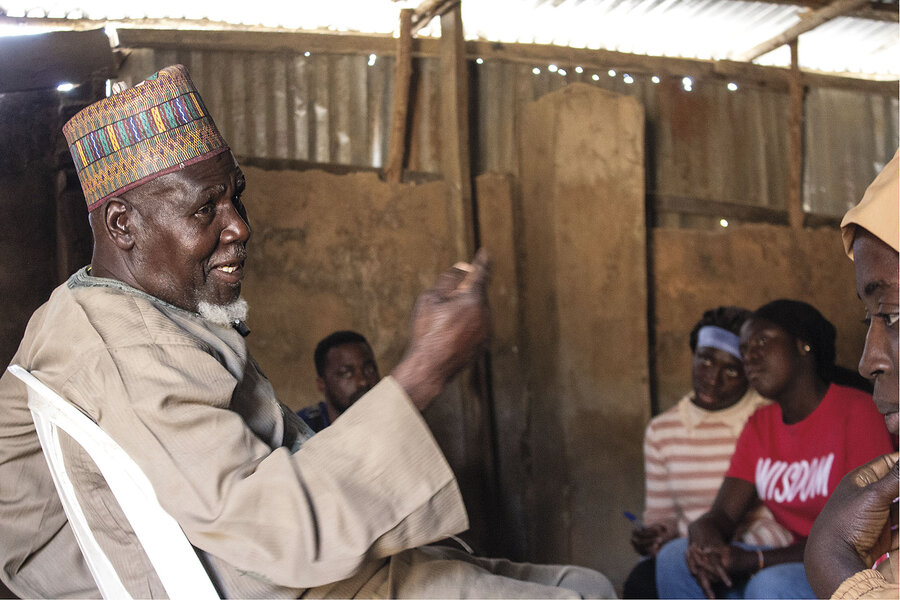
Ahmed Haruna speaks during a storytelling session in Nigeria.

I know I pick sides when I read about wars. It’s pretty clear that Russia invaded an independent neighbor when it launched attacks on Ukraine, for example. I have to remind myself that civilians on all sides suffer. And then for years after — sometimes generations after — bitterness festers. Not a good thing.

So I was interested to read how some Nigerians are working to ease longlasting enmity. Whatever works, I’d say.

Nathaniel Bivan writes at the Christian Science Monitor, “Seven years ago, when Dalyop Timothy Toma was 15, an angry mob came in the night to torch his family’s home in Kyeng village. Everyone but his grandfather fled outside into the bushes to safety. 

“ ‘He couldn’t run because he was disabled,’ recalls Mr. Toma, his face contorting in grief at the memory of his grandfather’s killing. Then he adds matter-of-factly, ‘We were planning revenge.’

“Mr. Toma and his family, who are Christians from the Berom ethnic group, blamed Muslims, mainly from the Fulani group, for the attack. Sectarian tensions run high in Kyeng and other communities in Nigeria’s Plateau state. Disputes often involve politics or land and sometimes erupt into violence.

“But in 2022, a youth leader from Kyeng invited Mr. Toma to do something extraordinary: Recount his painful story aloud to a large room full of people from different ethnic groups that he distrusted. That gathering, organized by a nongovernmental organization called Youth Initiative Against Violence and Human Rights Abuse (Yiavha), changed Mr. Toma’s attitude toward those he thought were his enemies.

‘Telling my story helped me heal gradually,’ says Mr. Toma, explaining that he no longer thirsts for vengeance.

“Yiavha has made him a peace ambassador, tasked with spreading his story of grace and forgiveness at intergenerational storytelling sessions in his community and in others.

“Plateau state, in central Nigeria, is home to some 4 million people. Jacob Choji Pwakim, a longtime peace-building activist in Jos, the state’s capital, founded Yiavha to change the narrative in communities that have been riven by ethno-religious attacks.

“The origins of the violence in Plateau state can be traced to a tumultuous week in Jos in early September 2001. More than 1,000 people were killed and tens of thousands displaced amid a long-running struggle for political and economic power among the area’s different ethnic groups. Disputes also flared between settlers and people indigenous to Jos. 

“Yiavha has held at least 66 storytelling sessions across the state. Elders have given accounts of bygone times when residents from various ethnic groups lived in harmony, even sharing gifts during religious celebrations for Eid and Christmas. Meanwhile, young people have recounted why they destroyed farms or livestock belonging to members of a different faith or tribe.

” ‘This was what inspired me to set up Yiavha in 2014, with the objective of creating a platform where young people across the divide can talk about their experiences without judgment,’ Mr. Pwakim says. 

“So far, Yiavha has worked with up to 3,300 young people, including more than 300 who have been trained as peace ambassadors who might eventually organize storytelling sessions in their communities. Other young people become agents of change after attending the sessions, organizing interfaith meals, youth soccer competitions, and trash cleanups. …

“One sunny afternoon in February, a group of young people is assembled at a soccer viewing center in Kambel, a community in the Anglo-Jos settlement within Jos. Ahmed Haruna is at the front of the room telling stories to the rapt audience, which includes residents of both Kambel and Channel Seven, another community in Anglo-Jos.

“ ‘Growing up, we didn’t even know the difference, who was Muslim or Christian among us,’ Mr. Haruna says. Over the years, residents have lived in segregated areas, with Christians mainly in Kambel and Muslims mainly in Channel Seven. But the storytelling sessions are gradually bringing them together to interact once again. 

“After Mr. Haruna finishes sharing stories about the settlements’ tranquil past, peace ambassador Joshua Tsok opens the floor for questions. …

“Training for peace ambassadors is extensive. In 2023, for example, peace ambassadors gathered in Barkin Ladi, another community in Plateau state known for violent sectarian conflict. A training facilitator, Hussaini Umaru, who is an associate professor in the department of theater and film arts at the University of Jos, says he divided the young people into groups and asked them to narrate and dramatize personal experiences of conflict, and then discuss the episodes. 

“It is not easy for ambassadors to trust their trainers. Umar Farouk Musa, a development consultant who facilitated a training session last August, explains that this is typically the first hurdle. ‘Some thought we were there to introduce an agenda or to spy. But we built their confidence,’ he says. 

“The government’s Plateau Peace Building Agency is a key partner with Yiavha. Kenneth Dakop, a team lead for the agency, says that Yiavha’s initiatives have helped transform young people who previously were drivers of violence in their communities. ‘Most of them are either unemployed or into substance and drug abuse,’ he says. 

“Yiavha’s ambassadors have seen transformations in themselves. ‘I want to become a professional teacher,’ Mr. Toma says. 

“This year, Yiavha paired Mr. Toma with a Fulani boy and assigned each of them to plant a pear tree in the other’s village to signify a commitment to peace.”

More at the Monitor, here.

Read Full Post »

Photo: Devine Native Plantings.
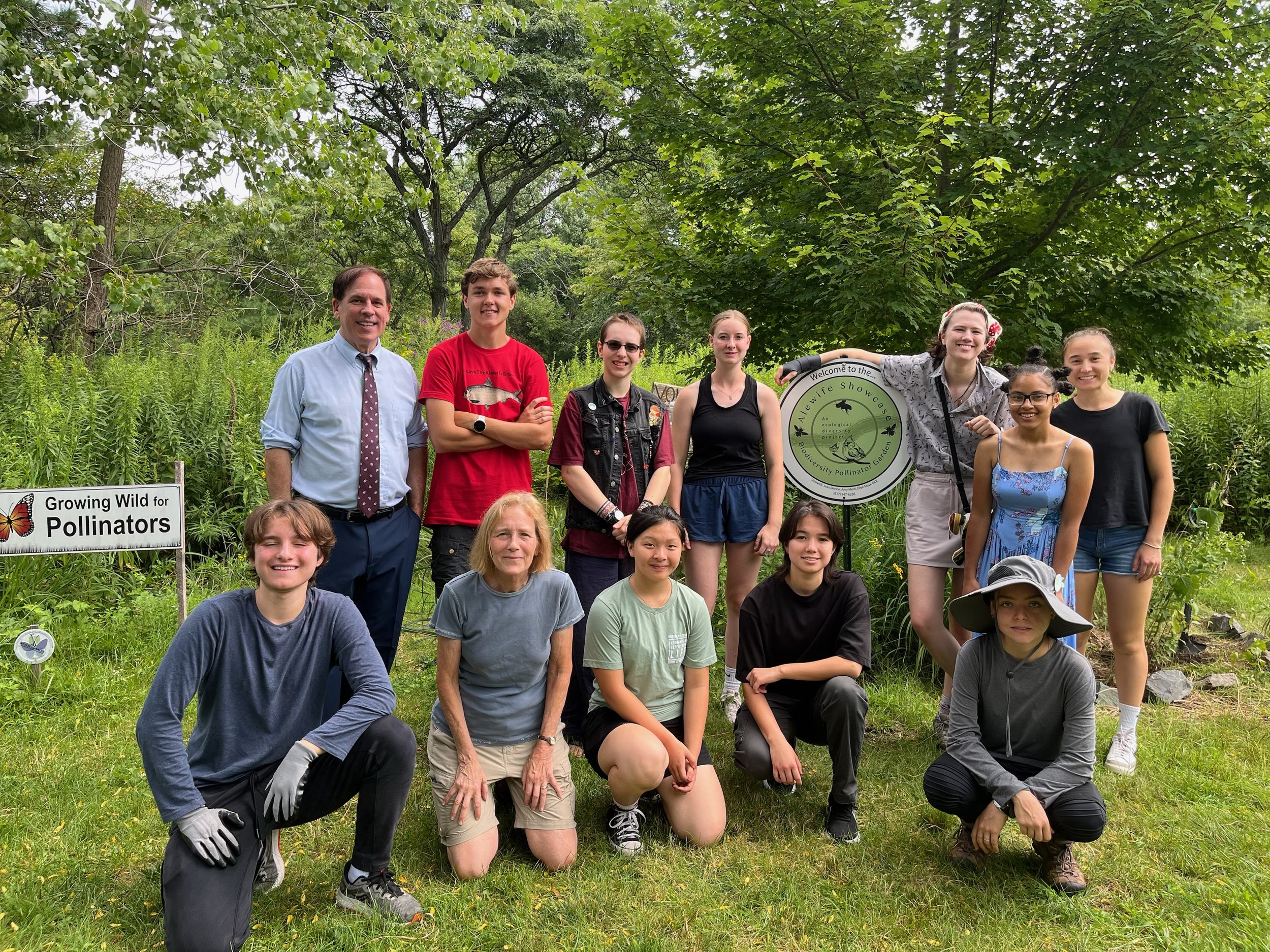
Jean Devine, founder of Biodiversity Builders, is in the front row, second from left. She engages young people in the important work of improving the environment.

Recently, I blogged about my friend Jean Devine, founder of Biodiversity Builders, and described how she took me on a tour of local urban forests. (Click here.)

Now I find that Edible Boston has caught up with her and is highlighting the amazing environmental work Jean’s been doing with young people.

Nicole Estvanik Taylor writes, “Ask the average Gen Z-er to name their favorite native plant and you might expect a blank stare. But for alumni of the Biodiversity Builders program, the hard part is narrowing it down.

“Strawberries come to mind for Jasmine Rancourt, International School of Boston graduating senior — ‘or maybe butterfly weed, because it’s really pretty and vibrant … and it attracts butterflies, obviously.’

“Belmont High School’s Sophia Shaginian chose to plant bleeding heart in front of her house because it’s ‘absolutely gorgeous’ and ‘blooms all summer long.’

“Leia Ahmad-LeBlanc of Arlington Catholic High School gravitates to the striking red pods of wild sumac. ‘You can actually make lemonade out of it, and it’s a good source of food for animals.’

“And UMass Amherst student Kira O’Neill is partial to black birch trees: ‘They have such beautiful yellow leaves in the fall. And if you scratch a twig, it smells like root beer.’ 

“The students got to know these and many other plant species native to Massachusetts through a six-week paid summer internship created and run by Jean Devine, a Belmont-based environmental educator, native plant coach and specialty landscaper.

“Entering its fourth year, Biodiversity Builders has provided 55 high school students from Arlington, Belmont and Cambridge with hands-on experience designing and installing native plant gardens and removing invasive flora. The curriculum also covers entrepreneurial concepts like mission and marketing and culminates in a native plant sale run entirely by the students. …

“It’s only been a decade or so that Devine herself could tell you much about birch trees or bleeding hearts. …

“ ‘I was looking for opportunities to mentor youth and get them outdoors as an antidote to “nature-deficit disorder,” ‘ she says, referencing a term coined by journalist Richard Louv in his book Last Child in the Woods.

“A walk with a scientist opened Devine’s eyes to the ecological value of native plants, including as a source of food and shelter for pollinators and other wildlife, and the threat invasives pose to biodiversity. Teaching kids how to restore this balance struck her as ‘an ideal project with a purpose that helped the world and the youth at the same time.’ …

“After several years running nature programs for school kids in Cambridge and Brookline, she launched her own business, Devine Native Plantings, in 2021. Biodiversity Builders followed a year later, operating as a nonprofit under the fiscal sponsorship of the Vermont-based Tiny Seed Project. It partners with the Cambridge Mayor’s Summer Youth Employment Program to support the participation of students from that city and covers the rest of its budget through grants and crowdfunding. This July, it will recommence with a fresh batch of 14 high school students and a pair of college mentors, plus four young professionals interested in the Biodiversity Builders approach.

“ ‘Jean is so high energy and enthusiastic about the curriculum,’ says O’Neill, who did the program in 2022 and returned last summer as a mentor. ‘She very easily connects with the students … and she knows so many of the people in the area doing similar kinds of work.’

“Among her many affiliations, Devine is a co-founder of the Mystic Charles Pollinator Pathways Group, which maps local gardens that support declining populations of native bees, butterflies and birds. She guided Belmont High School’s Climate Action Club in creating a pollinator garden and is part of an intergenerational committee of Belmont residents organizing to plant a Miyawaki miniforest. As a member of the Native Plant Community Gardeners group in Cambridge, she’ll help install Danehy Park’s first pollinator garden this summer — with upkeep to come from the 2025 Biodiversity Builders crew. …

“For 2024 Biodiversity Builders participant Rancourt, who has artistic leanings, planning gardens that are aesthetically pleasing and ecologically useful was a highlight of the program.

“ ‘It turns out you have many colorful native plants that can be used,’ Rancourt reasons, ‘instead of those other plants that are colorful but look like plastic for pollinators.’ …

“Ahmad-LeBlanc, part of last summer’s cohort, says she applied to Biodiversity Builders after watching her sister go through the experience two years prior.

“ ‘She would always come home covered in dirt, she would have to wear super high socks because there were a lot of ticks, but she had a great time,’ she says. When it was her turn to get dirty, she understood why. ‘I think it was easier for us to process the information because it was all really hands-on … It’s a way that we’re not usually able to learn in school.’

“The Alewife reservation is Biodiversity Builders’ home base, but the students tend plots in other community spaces. … Last summer they removed invasives at Mass Audubon’s Habitat Education Center and Wildlife Sanctuary with the aid of its resident goats; toured Mount Auburn Cemetery with a herpetologist, a horticulturalist and an artist; and took the T to East Boston for birdwatching in Belle Isle Marsh. They also donned gloves and climbed into canoes with the Mystic River Watershed Association to remove thick, spiny mats of invasive water chestnuts from the Arlington Reservoir—filling 270 laundry baskets by day’s end.

“ ‘It was just amazing how we were all collaborating and working all together,’ says Shaginian, who shared a canoe with Devine. ‘I remember how big that pile was. It was huge.’

“Shaginian says pulls like that one, or the sweaty hours spent uprooting black swallow-wort along the edge of the Minuteman Bike Path, impressed upon her both the enormity of the problem and the importance of doing her part. …

“ ‘For me, the idea of getting paid to do gardening, which I did at my house for fun, was novel and exciting,’ says O’Neill, ‘and definitely cemented the idea that I wanted to study something related to working outside when I got to college.’ “

More at Edible Boston, here, and at this blog, here.

Read Full Post »

Photo: Artists for Humanity.
At Artists for Humanity, teenagers are able to express their artistic creativity and talents while also earning money, bridging passion and profit.

Today’s story is about a wonderful nonprofit I visited several times in the years I was working at the Boston Fed. Its mission to involve urban kids in making art — and earning some money from it — is still sending joy into the world.

Kana Ruhalter and Arun Rath have an update at GBH radio.

Artists for Humanity (AFH), they report, has been giving “talented teens — most of whom are people of color from low-income communities — the opportunity to earn and create. 

“Through murals, sculptures and more, Artists for Humanity … brings joy, beauty and a sense of belonging to their community. And, by paying its artists, they’re addressing economic inequities as well.

“Anna Yu, the executive director, and Jason Talbot, co-founder and managing director of program, joined GBH’s All Things Considered host Arun Rath to discuss the decades-long history of the nonprofit. …

Jason Talbot: Back in 1991, they had just defunded art in schools. I was a Boston Public School student at the Martin Luther King Jr. Middle School, and [AFH’s] former executive director, Susan Rodgerson, came to the King School to reintroduce art. … I found her willingness to hear out my ideas and implement them in projects was super refreshing. We continued to work together with the other fellow co-founder, Rob Gibbs, in a studio over in SoWa [South of Washington Street].

“There were just us six boys in that studio, and we painted and we created a gallery exhibition. It just showed us the capabilities of art, it helped us understand this artist community and we just loved doing work there.

“Our organization has evolved over the years. We’ve built in this entrepreneurial aspect where we’re producing and selling art to clients. It’s just been an extremely enriching experience. …

Arun Rath: Anna, tell us about that enrichment. How has the organization evolved since that? …

Anna Yu: While the core of the model is essentially the same — meaning this radical idea of paying teens to create client project work that is of the quality of a professional — that piece is always running through our work. But today, we are the largest employer of youth in the city of Boston, which is over 400 teens that we employ.

“[Today] we not only provide after-school employment, we also partner with schools during the school day in a program we call Co-Lab. …

Rath: What are some of the success stories? …

Talbot: Teenagers — one thing that’s pretty universal is they really are looking for adult experiences, you know? So to be in the workplace, to be respected, to be able to attend meetings, to be able to propose ideas, it really gets our young people super excited about having a career and really re-invested in their education.

“And teens are graduating at a higher rate; AFH graduates 100% of our high school students, and we’re able to offer secondary education to 100% of our teen artists. …

Rath: Tell us about the business side of this. How do you get these young artists paid? …

Yu: Something that is so radical about the organization — it’s hard to believe that Artists for Humanity has been doing this for 33 years — is that clients actually hire us to create work for them. So it’s often beautifying office spaces, it’s creating a unique or custom piece of art for them, it can even be branding and promotional materials. It could be a website.

“The beautiful thing is they are paying teens to do this work, and they are valuing their voices, their creativity. And they’re getting a very unique product at the end of the day. …

Rath: Talk about the collaborative process between these young artists and the professionals.

Talbot: Well, AFH is a tremendously collaborative organization. … Our clients really get visionary work. Our teens are up on the latest trends. They’re digital natives — they know what’s going on — and they’re really able to help our clients have some really great new innovative ideas. …

“Rath: You’ve seen so many go on to become adults and blossom in amazing ways. Are there any moments of joy you’d like to share? …

Yu: The beautiful thing about Artists for Humanity is that a lot of our alumni are actually not just artists. Many of them do become artists. Many of them actually pursue a career in STEM, or some of them go on to become lawyers. We have [one] who’s actually on our board of advisors right now, and she’s a lawyer at the Fed. … We have someone who is an alumni from AFH and is at Harvard Medical School. So it’s really this idea that by opening up these pathways, by inspiring them to think creatively, by building that confidence, they can really achieve anything.”

More at GBH, here.

Read Full Post »

Photo: Lane Turner/Boston Globe.
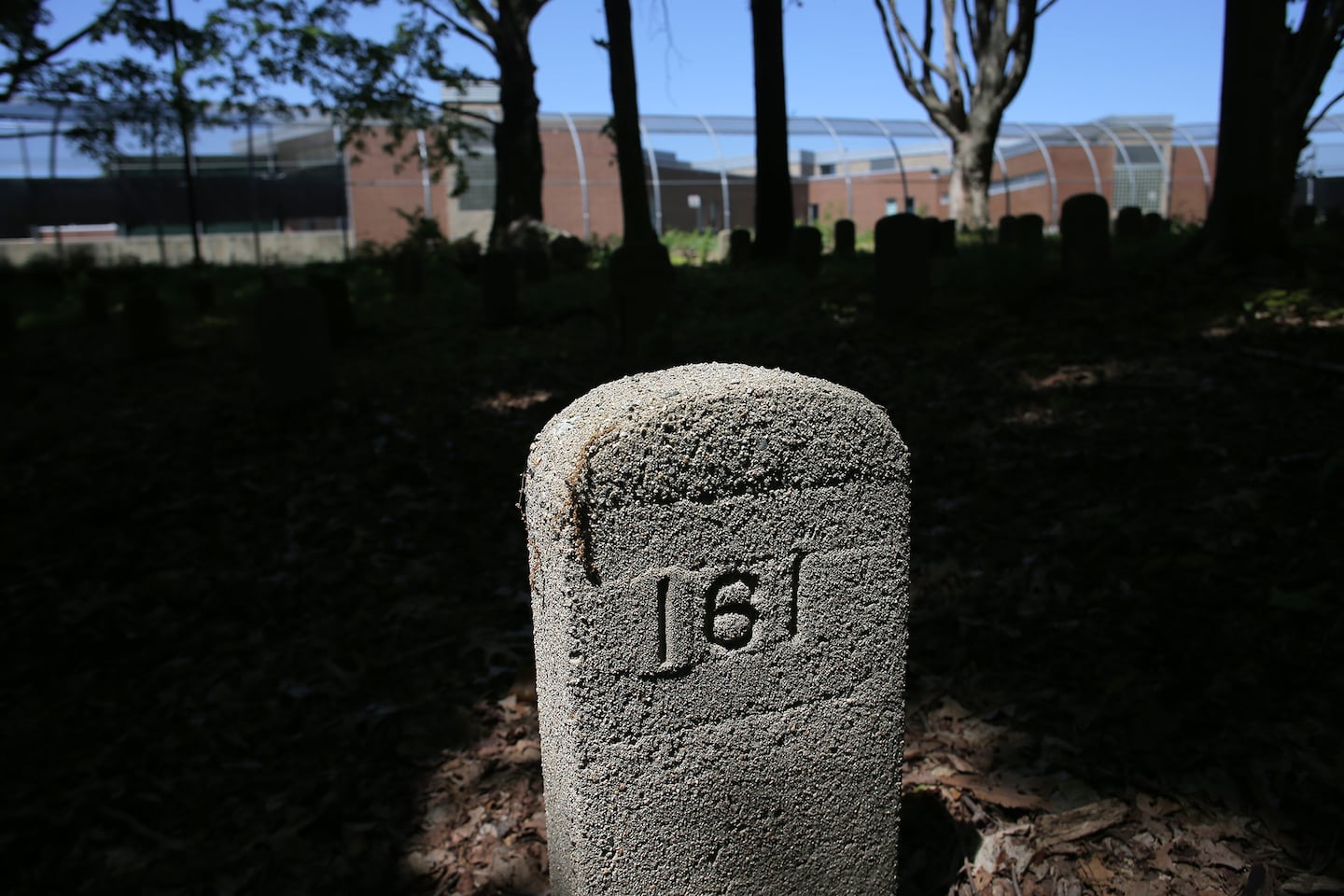
A numbered grave just outside the Rhode Island Training School Thomas C. Slater Youth Development Center in Cranston, Rhode Island. Teens incarcerated at the facility helped bring the paupers’ graveyard to light, writing obituaries for the forgotten.

Recently, I read a Victorian novel (The Three Clerks, Anthony Trollope) in which the notorious Dickens villain Bill Sykes was favorably compared to a villain who was born with every opportunity to live an upright life. Trollope’s point was that for a pauper raised in poverty with no access to education or higher things it might be considered understandable that he went bad and died in ignominy.

I’m thinking about this in connection with today’s story about how paupers’ graves raised the consciousness of some youths in trouble with the law today.

Amanda Milkovits wrote at the Boston Globe, “Sometimes, as they played basketball outside at the Rhode Island Training School, the teens would glance through the security fence to the woods and brush that shrouded rows of small stones.

“ ‘What are they?’ A 16-year-old boy incarcerated at the Training School remembered asking one of the staff members.

“Graves, he was told. The plain, numbered concrete headstones marked the burial sites of 1,049 people who died a century ago.

“Some had been residents of the state asylum. Some were teenagers who lived at the former Sockanosset Boys Training School. Some had spent their last years in the state poorhouse. Some were stillborn infants who were never given names, factory workers who fell on hard times, immigrants who sought a better life, only to die far from home.

“What they all had in common was poverty and no one to claim their bodies. From around 1915 until 1933, the state gave them a simple burial in this place, known as the State Farm Cemetery Annex, or Cranston Historical Cemetery No. 107. Prisoners made the concrete headstones, which were engraved with numbers instead of the names of those buried 6 feet below.

“ ‘I thought it was just a regular grave site, but I’d never seen a grave with a number before,’ another boy told the Globe. … ‘It’s sad. No one should just be a number.’

“For decades, the cemetery has been a lonely, quiet place, cut off from public access because it’s bordered by the state’s maximum security prison, Route 37, and the Training School. …

“John Scott, a senior community development training specialist at the Training School, had been interested in the cemetery since he first caught a glimpse of it in the 1990s. The teens’ curiosity made him wonder whether those on probation or who needed to perform community service could help restore the cemetery, even if only by clearing some of the brush.

“But Theresa Moore, president of T-Time Productions, saw potential for more. Her company designs educational curriculums with the goal of shining light on untold or little-known stories, and was already working with the Training School on its educational programs for incarcerated youths. …

“ ‘I’ve always looked for projects to enhance their lives,’ Moore said, ‘so when John mentioned it, I thought, “Why don’t we make it happen?” ‘

She called the project: ‘They Were More Than A Number.’

“Moore reached out to the leaders of the Rhode Island and Cranston historical cemeteries commissions, who were delighted to share their knowledge — they’d wanted to restore that cemetery for years, but could never get access. She contacted Secretary of State Gregg Amore, who assisted with resources at the state archives, giving the teens access to records from the state infirmary that include doctors’ notes, reports from the state institutions … and burial records. …

“The students started their research. Records and documents from the state archives, the drone footage, and other resources were used to help them put the history into context. Some materials, such as a video of Lorén Spears, executive director of the Tomaquag Museum, explaining the ‘pencil genocide’ of Indigenous people, were scanned into a Google drive for about 50 students and their teachers. …

” ‘At first, I didn’t really care,’ admitted one 16-year-old boy, ‘but I wouldn’t like it if I was just a number.’ …

“A 16-year-old boy said he chose No. 500, and learned it was the grave of a man named John Holland, who died in 1915. When he wrote Holland’s obituary, ‘It made me feel bad that they didn’t have names,’ he said. …

“One day in late May, the teens and the adults involved with the cemetery project met in person along the security fence at the Training School. The view through the fence was clear now. Brush and saplings and debris had been hauled away, and there were two new signs, marking the site as a state and city historical cemetery. The cemetery was serene, shaded by the old silver maples.

“As the teens in their dark blue uniforms listened, accompanied by their teachers, Scott, Moore, and volunteers from the Cranston Historical Cemeteries Commission thanked them for their work and told them it had meaning.

“John Hill, chairman of the Cranston Historical Cemeteries Commission, had read some of the obituaries written by the students.

“ ‘You’re giving them their names back,’ Hill told them. ‘You are making them human beings again.’ …

“Scott knew why the teens incarcerated at the Training School could relate. ‘If anyone can understand what it means to be a number,’ he said, ‘it’s our students.’”

Read this long, beautiful article at the Globe, here.

Read Full Post »

Photo: Library of Congress.
New York Herald press room back in the day. Times change.

To stay relevant, businesses need to keep moving forward. That’s what an Austrian journal with a long history decided recently. It has a few tips for other businesses thinking of modernizing.

Lucinda Jordaan writes at the World Association of News Publishers, “A government-owned national daily founded in 1703 in Vienna, Austria, Wiener Zeitung had faced the possibility of closure for most of this century. In October 2022, the threat was realized when a new law was adopted by the Austrian parliament that effectively cut off the main revenue stream of what was the official government gazette until 2020.

“Government job ads and companies’ annual financial results – required by law to be published in the paper – had largely funded WZ’s [annual] revenue. That would be stripped away by the end of 2022.

“This led to, arguably, the fastest, most radical transformation in newsroom history. ‘It was super quick; we had to do it in no time,’ acknowledges Editor-in-Chief Katharina Schmidt. ‘The law made us a publicly-funded news outlet in May 2022; we started the product development process in December 2022 and, by 1 July 2023, everything had changed.’

Wiener Zeitung is now WZ, an about-face from its roots in print and an aging audience. WZ has  a dedicated website, several newsletters, podcasts, and a growing following on TikTok and Instagram.

“Schmidt, the paper’s first female editor, shared the company’s challenges and learnings with a packed audience at WAN-IFRA’s recent World News Media Congress in Copenhagen. 

“In October 2022, Wiener Zeitung’s newspaper subscription totaled 8,000, within a population of about 9 million. ‘Most of our 8,000 subscribers were over 90 years old,’ [Schmidt says]. …

“Along with revenue loss, the newsroom faced multiple challenges in its reconstruction, as it fought for sustainability. They not only had to reduce staff by 60 percent (from 55 to 20) – and overcome internal resistance to this – but were also restricted by law in the topics they could cover.

“ ‘We really had to focus because, of course, there were so many ideas that we really wanted to put in practice, but we couldn’t. So we just focused on constructive journalism, and our target audience: the 20 to 29-year-olds. …

” ‘And of course, we checked out their needs. We had many focus groups and usability testing so that we could really focus on, on the needs of our audience.’

“The development process was also a reiterative process of testing and developing, then adapting to needs. ‘This is very important in this process; you cannot fixate on some framework,’ explains Schmidt. …

“Within weeks of the launch, they saw positive results: WZ had 750,000 unique monthly users, and Instagram figures increased by a third in the first three weeks. In September, they launched a newsletter dedicated to politics; subscription is at 12,000, with other topic-focused newsletters in planning.

“By November 2023, WZ’s relaunched and refreshed website has had up to 3 million users; their new TikTok channel had 11,500 followers, and Instagram followers went up by 46 percent from July to November 2023.

“Here’s how they did it. “1) Make friends in high places – get the publisher on your side; 2) Form a core group, comprising an interdisciplinary team – but don’t underestimate the number of editors you need; 3) Renew your news product following a development process – learn from other areas to adapt to your need ; 4) Focus your journalism: stay on track, and find your audiences.; 5) Involve the rest of the editorial team in the process. Over-prepare yourself. … Let the motivation of the core group carry your load; 6) Lead by example: say goodbye to hierarchical leadership, and find allies in-house, and externally, within the industry; 7)  Know that change takes time – this relates to new editorial direction, as well as mentally.” More here.

Read Full Post »

Photo: Fabrizio Bensch/Reuters.
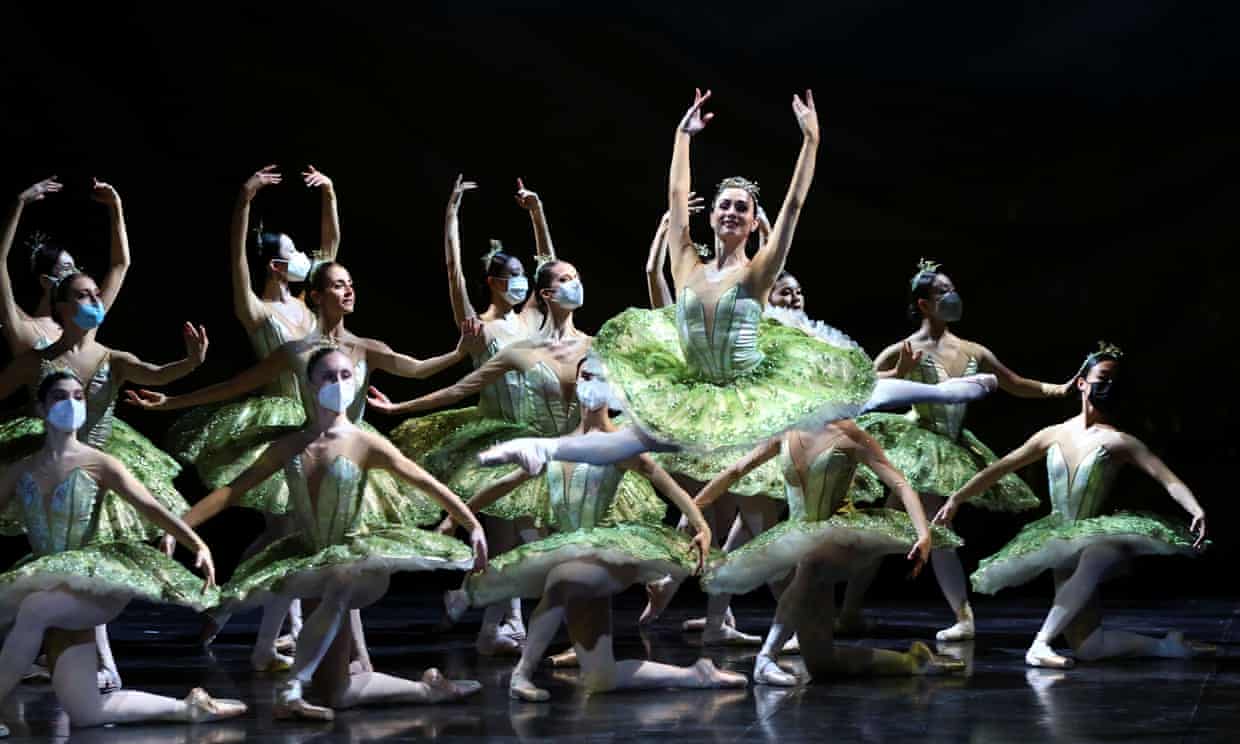
Dancers from the Berlin State Ballet during the dress rehearsal for a production of Don Quixote in Berlin last December. 

I am often surprised to see how much “Old Europe” leads the way into the future. Not only do we count on Europe to curtail the monopolistic excesses of tech companies like Apple and Google, but we look to thought leaders there for ideas on dealing with everything from climate change to improving arts access.

Kate Connolly in Berlin, Sam Jones in Madrid, Jon Henley in Paris and Angela Giuffrida in Rome have a report at the Guardian.

“Young Germans are to join other Europeans in being offered a voucher to spend on their choice of cultural offerings under a scheme launched by the government. The €200 Kulturpass, which will be made available to all 18-year-olds, has twin aims: to encourage young adults to experience live culture and drop stay-at-home pandemic habits; and give a financial boost to the arts scene, which has yet to recover from repeated lockdowns.

“Germany’s culture minister, Claudia Roth, described the cultural passport as the ‘equivalent of a birthday present’ for the 750,000 people who will turn 18 in 2023. It will bring the EU’s most populous country in line with France, Italy and Spain, which have introduced similar schemes.

“The finance minister, Christian Lindner, described the pass as ‘cultural start-up capital’ that its recipients can use within a two-year period for everything from theatre and concert tickets to books or music. It will be managed via an app and a website that provides a direct connection to a virtual marketplace of everything from bookshops to theaters. …

“Online platforms such as Amazon and Spotify have been excluded from the scheme, which places an emphasis on smaller, often local organizations, such as independent cinemas and bookshops.

Individual purchases will be limited in value to prevent someone from using the voucher to buy, for example, a single concert ticket for €200.

“Launching the Kulturpass, Roth and Lindner said that if successful, the scheme would be extended and probably rolled out to a wider age group, possibly from the age of 15 upwards.

“A similar scheme, announced last year by Spain’s Socialist-led coalition government, offers young people a €400 culture voucher when they reach 18. According to the Spanish government, 57.6% of all those who turned 18 in 2022 registered for the voucher scheme in its first year.

“France’s Pass Culture, or youth culture pass, a promise from President Emmanuel Macron’s 2017 election campaign, was trialled across the country the following year and – after a lengthy delay due to the pandemic – officially launched in 2021.

“The app-based pass gives every 18-year-old €300 to spend on cinema, museum, theatre and concert tickets, as well as on books, art materials, arts courses, musical instruments or a subscription to a French digital platform. …

“This year the €200m-a-year scheme was extended to over-15s, in two parts: a collective allowance of (depending on age) €25-30 per pupil per year available to teachers for class visits to exhibitions, films, plays, concerts or workshops, plus from €20-30 that each teenager can spend individually.

“In 2016, Italy introduced a ‘culture bonus’ of €500 for every 18-year-old under prime minister, Matteo Renzi, It has been maintained by the culture ministry despite various changes of government since then and an attempt by populist leaders to scrap it in 2018. …

“Roth said the German pass would open up a range of cultural opportunities for young people comparable with the Interrail Pass, a train ticket that has allowed generations of Europeans the opportunity to travel cheaply around the continent.

“Olaf Zimmermann, the chairman of the German Cultural Council, an umbrella organization representing more than 200 cultural associations, said the voucher was a ‘meaningful way to support both young people and the world of culture which have suffered in particular from the pandemic.’ But he said that establishing what young adults … should cover as many areas as possible, from drawing classes to the purchase of a musical instrument.”

More at the Guardian, here.

Read Full Post »

Photo: Matthew Healey/Boston Globe.
Jeremy Garcia, 22, of Providence takes a break from working on a mural at “The Avenue Concept” in Providence, Rhode Island.

Kids love contributing to community murals. I know because Suzanne and John helped paint one in our town years ago. But that mural — about local history — was bland compared with the passionate work of self-expression and healing by urban youth in Providence.

Alexa Gagosz writes at the Boston Globe, “After setting down her paint brush, Deborah Ndayisaba gazed up at the purple-colored protestors who spread across a section of a new large-scale mural on the exterior of The Avenue Concept’s headquarters.

“A senior at La Salle Academy in Providence, Ndayisaba, 17, said she had her own ‘advocacy awakening’ when the Black Lives Matter movement took off in 2020. She joined the diversity club at school, became involved in PVD World Music, which looks to celebrate and enrich traditional African music and arts, and researched how many of the racial injustices of the Civil Rights era are now still relevant today.

“The protestors, for her, are symbolic. ‘It’s unfair how racial discrimination can touch everything. And activism isn’t just marching on the streets,’ said Ndayisaba, who is applying to colleges to eventually go into the medical field where she hopes to help women of color.

“It’s those kind of personal elements that scatter this newly finished collage mural by local youth who are involved with the Nonviolence InstituteRhode Island Latino ArtsHaus of Codec, and PVD World Music — all Providence-based organizations. The effort was led by The Avenue Concept, a public arts organization, and international community-based public art organization Artolution. …

“The Avenue Concept, which is the state’s leading public art program, was founded in Providence in 2012. Since then, artists from around the world have been commissioned to paint mammoth-sized murals across downtown that are part of the city’s skyline today. …

“A few of the Concept’s most notable works address longstanding community issues, such as ‘Still Here‘ by muralist Gaia, which depicts Lynsea Montanari, a member of the Narragansett tribe and an educator at the Tomaquag Museum, as they hold a picture of Princess Red Wing, a Narragansett elder who founded the museum. In September, Boston-based artists Josie Morway painted a new mural in Warren that addresses sea level rise.

“This new project, which was completed after 10 painting days on Sept. 30, is a pilot for a larger community participation program that was identified in The Avenue Concept’s latest strategic plan. The goal of the program, Thorne explained, was to address representation, neighborhood voice, unique cultural perspectives, and community needs in their upcoming projects.

“ ‘Over the last year, we’ve really tried to listen and better understand the stories that are intersecting in our own neighborhood,’ [Yarrow Thorne, executive director and founder of The Avenue Concept] said. ‘We are looking to do more than just the giant pieces of beautiful art in downtown, but to serve the community that surrounds us.’

“Thorne said the Concept, which is based in the Upper South neighborhood of Providence, selected the four local organizations because of how their work makes an impact across a diverse set of communities. Each organization brought four to five members of their youth communities to learn, connect, co-create themes, and eventually execute the mural with the help of Artolution’s co-founder Dr. Max Frieder.

“Frieder, a Rhode Island School of Design graduate and former classmate of Thorne’s, brings public art projects around the world — including in refugee camps. Frieder said he trains refugee-artists on how they can work with kids who have been through trauma and teach them to express what’s most important to them through art.

“ ‘With this project, we brought four very different community groups together and it has been remarkable to see them come together and reflect on their similarities,’ said Frieder, who has participated in public art installations on all seven continents. …

“Each participant painted a scene in a ‘memory ball,’ which looked like a golden orb with a scene of their choice inside. Some painted themselves playing basketball, another read ‘stop drug abuse,’ and one painted themselves playing a trumpet.

“One memory ball said, ‘You only get one life. It’s your duty to live it as fully as possible.’ It’s a quote inspired by Jojo Moyes, an English journalist and novelist.

“Each participant talked about the issues they and their families face in South Providence today: their communities getting priced out as the cost of living increases. Others have faced racism and homophobia in school. Some say their family’s generational trauma has prevented their own parents from healing.

“For example, Jeremy Garcia, 22, a self-described ‘proud, Black-Latino,’ described the stereotypes of South Providence being considered an ‘urban hood’ where residents are predominantly people of color. Garcia said many of their neighbors have watched cases of police brutality, such as the killing of George Floyd, and are afraid to call the police.

“ ‘These are the people who are supposed to save us and who we should be able to turn to when we are in danger,’ Garcia said. ‘If you can’t turn to the police, where do you turn?’

“Expressing themselves ‘and letting go of their past is the only way we can can heal and move forward,’ said Cedric Huntley, the executive director of the Nonviolence Institute. ‘We need more of this — in Providence and around the world. We all focus so much on the negative, which certainly impacts all of us, but there’s more to it in these young people’s lives.’ ”

More at the Globe, here. Nice photos. For a no-firewall article on the mural “Still Here,” check the Brown University newspaper.
Read Full Post »

gvgge5aoc4i6viugdtzaidlqoy

Photo: Jonathan Wiggs/Globe Staff
Breaktime Café cofounders Tony Shu (left) and Connor Schoen hosting a kickoff launch party in Boston for a nonprofit that helps homeless youth learn job skills.

Not sure why so many recent posts have had a food angle. I’ve certainly been drawn to stories about food. In this article, a couple young guys who volunteered with homeless youth saw a way to help them move beyond homelessness with a bit of skills training and lots of moral support.

Back in December, as Max Jungreis wrote at the Boston Globe, the nonprofit was just getting set up.

Breaktime Cafe doesn’t look like much. It’s 1,500 square feet of typical office space on Portland Street, with gray carpeting, off-white walls, and tables shoved into corners. But by the time the cafe opens in the spring, its founders hope to transform the office into a resource for Boston’s homeless youth.

“The opening will mark a major expansion of a six-month pilot program founded last year by a pair of Harvard University undergraduates. It offered a handful of homeless youth on-the-job training as baristas, with the goal of bringing them into the workforce and out of homelessness. …

“The plan is to employ up to 15 homeless youth at a time. They’ll serve sandwiches, seasonal drinks, and coffee made from ethically sourced beans. That will be triple the number served in the pilot program, and a small but meaningful chunk of the estimated 325 people between the ages of 18 and 24 who were sleeping in Boston’s shelters and streets in January.

“Schoen said Breaktime has raised about $145,000, with much of the money coming from corporate sponsors and charitable trusts, such as Cambridge Trust and the Harnisch Foundation. He said the cafe also has attracted hundreds of individual donations through crowdfunding campaigns. Donated legal advice, accounting, and other services have helped defray costs. …

“Employees will earn $15 to $18 an hour. Aside from learning how to brew coffee, Schoen and Shu want to teach them financial literacy and professional skills, like writing a resume, personal budgeting, and interview techniques. Part of that will come through one-on-one mentorships with professionals from the cafe’s sponsors, many which are financial institutions like BlackRock and Eastern Bank.

“The cafe will occupy ground-floor space at 170 Portland St. Shu and Breaktime cofounder Connor Schoen, 21, are renting it from Community Work Services, the local branch of the national job-training nonprofit Fedcap, at a ‘very competitive rate,’ Schoen said. …

“The project dates to when Schoen and Shu met as volunteers at Y2Y Harvard Square, a homeless youth shelter run by Harvard students. Shu was inspired to volunteer by his mother, who as a young immigrant to Kansas from China often slept in her car.

‘I knew that it was my duty and my opportunity to use the skills and the resources that I have in front of me in order to pay it forward,’ Shu said. …

“[Schoen] learned that up to 40 percent of homeless adults identify as LGBTQ, according to one study.

“ ‘It just immediately became something I was really passionate about, and indignant about,’ Schoen said. ‘The fact that people are being kicked out of their homes for just coming out just doesn’t make any sense to me.’

“The two men realized that for many struggling young people trying to gain a foothold, there is a tricky period between the end of a work-training program and when they land a paying job.

“ ‘[Where] do they go after that to bridge them to the broader work force and sustainable careers?’ Shu said. ‘That’s what Breaktime does.’

“The business partners, who plan to run the cafe full time after graduating, impressed Brittany Butler, who runs the Harvard Kennedy School’s Social Innovation and Change Initiative, a student mentorship program that birthed Breaktime’s pilot. …

“Erica Grube-Grumt, 26, who graduated from the pilot program in March 2019 and now serves in the Navy — as well as on the new cafe’s advisory board — said it helped to build her self-confidence.

“ ‘A lot of people who are homeless, they feel unheard,’ Grube-Grumt said. ‘They feel like they’re in their own little corner on the street just begging for change, or begging for something to change. To finally be able to step on the pedestal and tell people what it’s like firsthand . . . can really make a provocative change.’ ”

More at the Globe, here.
You may also be interested to read about Land of a Thousand Hills in Lynn and Breaking Grounds (“changing lives one cup at a time”) in Peabody, doing similar work with young people and people with disabilities.

Read Full Post »

Homeless Young People

tom-parsons-pVmjvK44Dao-unsplash

Photo: Tom Parsons on Unsplash
Concern for homeless youth continues to grow.

Since I read Sarah Smarsh’s memoir Homeland, I have had to recognize that my difficult childhood was not as difficult as many other people’s. And my difficulties were never exacerbated by the relentless poverty Smarsh’s farming family experienced despite always working hard.

Still, I identified with some aspects of her story, like the wish to run away. In the book, Smarsh would decide to live with a different relative from time to time, which seemed to help her get her head together for a while. I never ran away, but even as an adult, I used to fantasize about ways a child might do that successfully. I finally concluded it’s not possible, despite The Boxcar Children and their apparent self-sufficiency.

It may not be possible to do so successfully, but children and teens do run away. Tristan Hopper and Kaitlin J. Schwan write about youth homelessness in Canada at The Conversation and suggest some ways to help them.

“Despite decades of policy and programming, youth homelessness remains an urgent issue in many communities across Canada. [Twenty] per cent of people experiencing homelessness are youth. Particular groups — Indigenous youth, racialized youth and youth who identify as LGBTQ+ — are at increased risk of homelessness due to intersecting forms of structural and systemic inequity. …

“Given this, there has been an increased focus on homelessness prevention across Canada and globally. … Research shows that meaningful and accessible activities like sports and arts can have significant impacts on youth social connectedness, better developmental outcomes, improved mental health and recovery from trauma. …

“Youth homelessness is a complex social issue affecting people between the ages of 13-24 who are living independent of parents or caregivers and do not have the means to acquire safe and secure housing. …

“A key component of youth homelessness prevention is not only preventing youth from experiencing homelessness in the first place, but also preventing young people from re-entering life on the streets. …

“Social exclusion, loneliness and limited social networks are particularly common issues for those who have recently left homeless status. These experiences powerfully contribute to mental health decline, substance use, feelings of hopelessness and subsequent returns to homelessness.

“Young people exiting homelessness may be housed in locations that are isolated from services, community centres and childcare. This distance can create barriers to accessing meaningful activities and can present challenges to social and political inclusion.

“All young people deserve stable and safe housing, and also the opportunity to be engaged in meaningful activities, [which include] resources that encourage social inclusion … Social inclusion may also mitigate risks of eviction. For example, neighbourhood groups may help navigate conflicts with landlords. This inclusion may help in the development of a new identity as young people re-articulate their sense of selves in a new community.

“Some studies show that youth experiencing homelessness view artistic activity and sports engagement as absolutely critical to their wellbeing, recovery and exits from homelessness. … Recreational sport participation can have several physical, psychosocial, emotional and developmental benefits. … However, for sport programming for homeless youth to be purposeful, the social, political and cultural barriers to participation must be addressed, including time and place of programming, cost of access and cultural acceptance.

“Research has shown that for Indigenous youth, re-connection with cultural practices — including sports — can be a critical component in connectedness and meaning. … We need to [invest] in frontline prevention programming that includes sports and arts activities driven by the needs and interests of the young people they serve.”

More at The Conversation, here. (I believe social scientists like these are doing good work, but their writing is awfully dry. For more-engaging and specific writing on youth in trouble, try UTEC, here.)

Read Full Post »

3641

Photo: Hayley Madden/Spread the Word
Theresa Lola is the new young people’s laureate for London. Her writing has been described as “breathtakingly beautiful.”

Poetry will survive at least one more generation, judging from the numbers of young people who are enjoying it and even buying poetry books.

Sanjana Varghese writes at the Guardian, “Poet Theresa Lola, named the new young people’s laureate for London, says she hopes to use the role to help the capital’s demonised youth to find confidence in their voice.

“The 24-year-old British-Nigerian from Bromley, south London, studied accounting and finance at university before turning to poetry. She is the third young people’s laureate, after Caleb Femi and Momtaza Mehri. The joint winner of the 2018 Brunel international African poetry prize, her debut collection, In Search of Equilibrium, was published in February, and was described as breathtaking by author Bernardine Evaristo. …

“ ‘It’s easy for us to demonise young people and social media,’ [Lola] said. ‘Poetry was instrumental for me, to find my voice and to find my confidence, and hopefully it can do that for other young people too.’

“Sales of poetry books have increased over the last three years, hitting an all-time high of [$15 million in the UK] in 2018. Two-thirds of poetry buyers are now under 34, with teenage girls and young women identified as the biggest consumers last year. …

“ ‘A lot of young people are seeing that yes, [poetry] is reflective of their experiences and upbringing. They’re getting to understand that [it] exists anywhere. I’m hoping to meet so many different young people and help them see the poetry in their lives,’ Lola said.

“ ‘London is so important to me, especially for my craft – it’s such an eclectic city. It inspires me to be a form of myself in every poem.’ …

“The young people’s laureate title was established by writer development agency Spread the Word in 2016. Lola … will work on four residencies around London and a PoetryLab, which aims to nurture talented young poets in the capital.

“Spread the Word director Ruth Harrison said: ‘At a time of political uncertainty, when young people’s lives, concerns and aspirations are often ignored and dismissed, it is vital that their voices are heard by those in power.’ ” More.

My grandchildren are big on finding words that rhyme. Not that a poem has to rhyme, but sometimes that’s where nascent poets get hooked. I have made up some silly poems with the kids while driving home from school, and I expect they’ll always get a kick out of making words go together in surprising ways.


Read Full Post »

Photo: English National Opera
Young people have fun participating in the English National Opera’s Opera Squad.

Anything that engages young people in the arts — and helps them to start on a lifetime devotion — has my vote. As arts organizations struggle to increase their base of enthusiasts and bring in a new demographic, they might look at the idea of “free.”

Mark Brown writes at the Guardian that as of last December the English National Opera will “offer under-18s free Saturday night tickets in what it has called a ‘seismic’ initiative to attract the next generation of fans. …

“Stuart Murphy, the former channel controller of the youth channel BBC Three who joined ENO as CEO in March, said the initiative stemmed from the company’s core values.

“ ‘We were founded on the belief that opera is for everyone,’ he said. ‘Removing cost as a barrier to entry for under-18s is a seismic leap forward for ENO and for opera as a whole. … We want young audiences to feel alternately passionate, excited and transfixed. We can’t wait to welcome them to the London Coliseum.’

“All the free tickets will be for what might be called the cheap seats in the balcony. But ENO contends the balcony ‘is widely regarded as having acoustically the best seats in the house.’ There will also be no peering round columns as, uniquely, all seats at the Coliseum have unrestricted views of the stage.

“Anyone who is under 16 will need to be accompanied by an adult. But any adult who purchases a full-price ticket in the balcony … will be able to take up to four children for free. Teachers bringing a school group can be accompanied by 10 children for free. Young people aged 16-17 can book one ticket each.

“The tickets will be available for all of the 11 Saturday performances in the spring 2019 season, which includes productions of La Bohème, Akhnaten, The Merry Widow, The Magic Flute, and the new opera Jack the Ripper: the Women of Whitechapel. …

“The ENO initiative will be welcomed by those who argue that the best way to get young people hooked is for them to experience the art form itself.

“Graham Vick, the artistic director of Birmingham Opera Company, has described conventional outreach and education work as a ‘barrier’ to reaching new audiences. ‘You do not need to be educated to be touched, to be moved and excited by opera,’ he said. ‘You only need to experience it directly at first hand with nothing getting in the way.’ ”

Not sure I agree with that last comment. I was 14 at my first opera, La Bohème, and it meant nothing to me. At the very least, I think it would help if kids heard the music in the background at home or school for some days before attending a performance. I could be wrong. No doubt they will all get into Jack the Ripper without help!

More at the Guardian, here.

Read Full Post »

Photo: Metro Arts
This
student is engaged in a restorative justice program that uses the arts to reach young offenders. Cecilia Olusola Tribble, Community Arts Coordinator of the Metro Nashville Arts Commission, says, “We have been able to work and watch miracles happen every day.”

My friend Diana was the first to explain to me the concept of restorative justice, and I wrote about it here. The idea is to bring a young perpetrator and his or her victim together, if the victim is willing, to learn about the effects of the crime and make restitution. When the process works, the young person turns aside from wrongdoing and keeps a clean record. Today I have a story about how the arts can be part of a restorative justice outreach to youth who are already incarcerated.

Cecilia Olusola Tribble writes at ArtsBlog, “The purpose of the Restorative Justice + the Arts program is to enable artists and arts organizations to provide dynamic program opportunities for youth and families who have interacted with the criminal justice system. Our aim is to equip teaching artists with the tools they need to bolster their practice in ways that lead youth toward productivity, resiliency, and well-being.

“In 2016, photographer and musician Nduka Onwuzurigbo heard about the transformation happening in the juvenile justice system and wanted to create a project with the youth in the detention center.

“Since her election in 2014, Judge Sheila Calloway has been restructuring the juvenile justice system in Metro Nashville/Davidson County to include resources to divert children and families in trouble, providing them creative paths toward a better, brighter, and more productive future. …

“[She] mobilized her team to make sure the children in the detention center were able to participate in the photography project. As that singular project was seeing success with the youth who were incarcerated and had a positive community response, Metro Arts in Nashville approached the judge about establishing an ongoing partnership. Since then, Metro Arts and the Juvenile Court in collaboration with the Oasis Center have been able to build the Restorative Justice + Arts program.

“It costs roughly $88,000 to incarcerate one youth for a year in Nashville. For the same amount of money, we have been able to pitch, build, and pilot the Restorative Justice + Arts program. …

“To start the program, Metro Arts held focus groups with our artist community, grantees, arts educators, and other stakeholders. … Next, Metro Arts spent time in the various departments in Juvenile Court. The focus in the court is in the process of shifting from solely emphasizing penalty to giving children and parents the tools to restore healthy relationships and communities. Judge Calloway has explained Restorative Justice in the following way:

‘Restorative Justice moves the conversation from “Who did the crime & what do they deserve?” to “Who has been harmed?”, “What are their needs?” [and] “Whose obligation is it to fix their harm?” ‘ …

“In FY 2018, the artists have been able to serve 424 youth who have been incarcerated, had other involvement with the court, or who are deemed at-risk due to poverty, school attendance, neighborhood crime, poor school performance, or living in an area where fresh food is scarce. …

“It is because of the partnership between multiple government agencies, youth-centered organizations, arts organizations, and artists that we have been able to work and watch miracles happen every day. We have witnessed youth leaving the detention center and seeking out their yoga and dance teacher. … We have watched the miracle where former gang members admit to shooting at each other, but theater and painting classes have bonded them together as brothers with arms entangled. Our hearts are full at experiencing young folks arguing with the characters of an August Wilson play to make a better choice. …

“This spark came from one artist who asked the question and made the difference.” One and one and 50 make a million. More here.

Read Full Post »

merlin_141970665_3226dcb4-ae59-4f88-aa9e-53ad5880d80e-jumbo

Photo: Lisa Marie Summer for the New York Times
A German opera company invited current refugees to be part of its production of “Moses,” lending immediacy to the story of exile.

Powerful stories from any century speak to the human condition in any other century. Thus, for example, the story of exile in the opera “Moses” speaks to the sense of dislocation that today’s refugees experience. To drive home that point, an opera company in Germany has invited current refugees to participate in a production.

Joshua Barone reports at the New York Times, ” ‘We tell the story of Moses because it is actually our story,’ one teenager, a refugee from Afghanistan by way of Iran, said in the Hazaragi dialect to the German-speaking audience at the Bavarian State Opera here on a recent Sunday evening.

“Others chimed in: ‘The story of Moses is also my story,’ they said in French, Kurdish, Greek and Arabic.

“They were the cast of ‘Moses,’ a feel-good yet sobering new production by the Bavarian State Opera’s youth program, written for refugees, children of immigrants and born-and-raised Bavarians.

“In the opera, a mixture of new music by Benedikt Brachtel and adapted excerpts from Rossini’s “Mosè in Egitto” [“Moses in Egypt”], the teenagers tell the story of Moses — common ground for followers of the Bible, Torah and Quran — with Brechtian interludes about refugee experiences and current events.

“The director Jessica Glause, who created the libretto based on interviews with refugees in the cast, has concocted a blend of humor, horror and youthful energy that hardly feels like a didactic documentary about Europe’s refugee crisis. Behind the scenes, ‘Moses’ has provided a way to learn German and make friends — in short, to make the process of migration a little less painful. And audiences have responded favorably. …

“Theater about the refugee crisis has proliferated in Germany since migration into the country reached its peak in 2016. But rarely has the hot-button issue — which continues to threaten Chancellor Angela Merkel’s power and fuel the rise of the far-right party Alternative for Germany, or AfD — entered the realm of opera, much less children’s opera. …

“Ms. Glause, who had volunteered on boats in the Mediterranean, also wrote the libretto for ‘Noah,’ after interviewing many of the same young refugees who are in ‘Moses.’ She described the process — hearing stories of loss, danger and fear from teenagers — as acting as both an artist and a counselor.

“Among the people she spoke with were Ali Madad Qorbani, a young man from Afghanistan who fled to Iran, then Europe, after his father had disappeared; and Zahra Akhlaqi, also from Afghanistan, whose mother came to Europe first while she and her sister waited in Iran, where, she said, they were forbidden from going to school but would dress up like students at home and play pretend.

“Now, their lives are slightly more stable, though just as precarious as any refugee’s. …

“There are still monologues of how and why some of the cast members came to Europe, but much of the material is about reconciling their faiths and cultures with those of Germany — including one humorous passage about trying German beer for the first time. But they also describe how they don’t always feel welcome, such as a scene in which the plagues in Moses’s story give way to one person describing signs near Munich that say refugees overrun Germany like locusts. …

“In interviews, [youth program director Ursula Gessat] and Ms. Glause were quick to say that their job is to reflect the world around them, and that it would be irresponsible to ignore the refugee crisis. Indeed, Ms. Glause said that conservative politicians may change their minds if they met the cast of ‘Moses.’

“ ‘I would tell them to come see this show,’ she said. ‘Come hear these stories.’ ”

More at the New York Times, here.


Read Full Post »

Older Posts »