Feeds:
Posts
Comments

Archive for July, 2015

Four years ago, I blogged about some beautiful manhole covers is Japan. Now I learn that Minneapolis also has discovered the artistic possibilities of heavy, round metal that lots of people see as they cross the street.

Eric Grundhauser writes at Slate‘s Atlas Obscura blog, “Minneapolis has made its underfoot sewer covers a point of artistic pride, with designs that celebrate the area’s art, history, and wildlife.

“In the early 1980s, Minneapolis began asking artists to design iconic manhole covers for the city. … From David Atkinson’s whimsical summer grill design to Stuart D. Kippler’s introspective geography marker, each of the covers turned what was once a mundane city feature into a unique piece of art. …

“[Kate] Burke created sculpted images of regional icons like the Minnesota state fish (the walleye), the state fruit (Halverson apple), and the state bird (loon). The detailed pieces of steel each feature tableaux of their subject that make most municipal equipment look lazy by comparison.

“Some of the covers even feature small hidden details such as a worm in the state apple, or a pheasant erupting from the bronzed image of the state grain (wild rice).” More here.

I love that the Minnesotan sense of humor is part of the artistic effort. Reminds me of Massachusetts sculptor Mags Harries, who is still associated with the bronze banana peels, orange skins, and broken crates she embedded among the produce vendors in the Haymarket in 1976.

Photo: J Wynia/Creative Commons
Manhole cover in Minneapolis.

Read Full Post »

One of the websites I check for cool stories is the one for Living on Earth, an excellent environmental news magazine from Public Radio International. In a recent episode, host Steve Curwood interviewed the author of a new book on the rare Asian “unicorn.”

“CURWOOD: Deep in the forests of southeast Asia lives a creature nicknamed the Asian Unicorn, and it’s nearly as rare as the mythical creature, as well. … And it is right at the edge of extinction. Writer William deBuys accompanied conservationists on an expedition to study the saola, and his book The Last Unicorn lays out the story and the challenges of saving a species so rare. …

“DEBUYS: The saola was discovered to Western science only in 1992. Local villagers in the habitat of the saola [such as Laos] have known it was there forever, but this new discovery was made when scientists saw a rack of horns on the wall of a hunter’s shack. And these horns are the most distinctive features of the saola. They’re long, almost straight, and beautifully tapered to a very sharp point, so that when the saola stands profile, the two horns in perspective merge into one, and it appears to have only one horn, it appears to be a unicorn. Perhaps only dozens to a few hundred still exist, and there are none in captivity. …

“CURWOOD: Tell us what it’s like there in the forest. What would you hear in the forest?

“DEBUYS: Oh, the music of the forest was constantly inspiring and entertaining. The birdcalls never ceased. We heard laughing thrushes, and we heard drongos and Indian cuckoos and all kinds of birds with really distinctive calls. There was a kind of chorus behind us all the time.

“But the most marvelous thing occurred at first light, almost every morning. We heard the calls of gibbons. Gibbons are small apes, beautiful, slender animals that swing through the trees, so gracefully, and their calls are ethereal. And they call, male to female and female to male, in mated couples, and you can think of it as almost a kind of love song that you hear echoing through the forest. …

“Our expedition basically had three purposes: one was to look for saola habitat and for saola in that habitat. A second was to evaluate the poaching pressure on the landscape. And a third was to conduct a kind of conservation diplomacy in the villages of the forest. …

“CURWOOD: How many saola did you see?

“DEBUYS: Well, we saw none. No Westerner has yet seen a saola in the wild, and the joke is that saola are so like unicorns, and everybody knows that in the Middle Ages, the only people who had an outside chance of seeing a unicorn had to be absolutely pure of heart. And Robichaud and I joke that if that applies also to saola, then we were disqualified from the get-go.” More here.

Note the thoughtful discussion at Living on Earth about the rights and sensitivities of native peoples where the conservation efforts are focused.

Photo: William Robichaud / Wildlife Conservation Society
The first adult saola to be observed outside of its habitat.

Read Full Post »

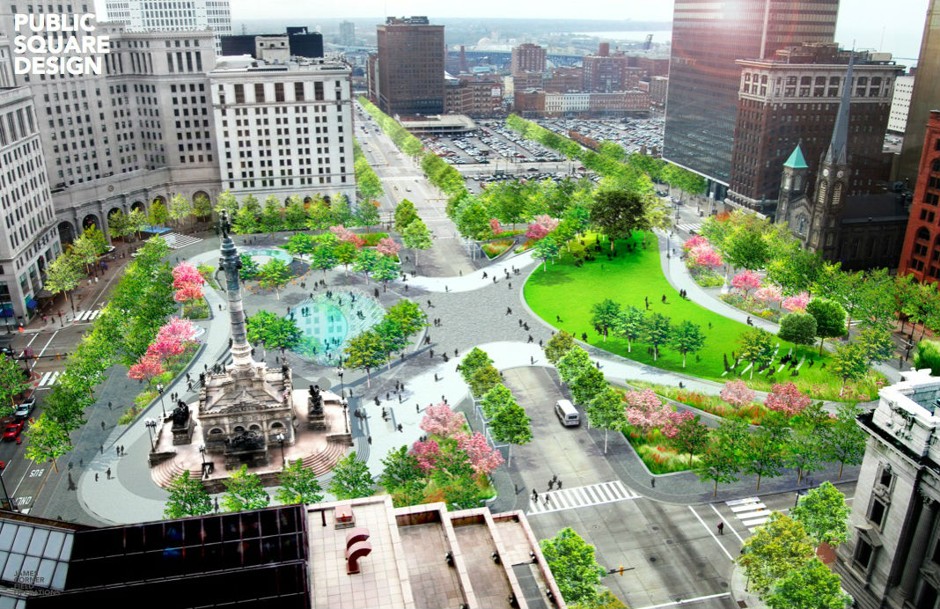
Here’s a good one from The Atlantic’s City Lab on how Cleveland is turning a traffic circle into a park.

Eric Jaffe writes, “To hear Clevelanders talk, Public Square is a place you pass through to reach somewhere else. When Moses Cleaveland laid out the town in 1796, he imagined the open area at its center as a New England-style commons: a gathering space for settlers, a grazing area for livestock. …

” ‘Over the years, it just turned into more like a series of big traffic islands,’ says the landscape architect James Corner. …

“Locals who find themselves in one of the quadrants have a tough time getting to another. If the cars aren’t enough of a hindrance, the lack of things to do or see in the area is: of the square’s 10 acres, more than six are paved over with concrete or asphalt. …

“By the time Cleveland engaged Corner’s help, in 2008, many ideas for how to revamp the square had come and gone.

“They all suffered from the assumption that traffic around the site could not be disturbed. Corner came in with a bold idea: if we can’t remove the streets, let’s build an elevated park above them.

“The hilltop-park concept didn’t pan out, because of the cost and complexity, but [Land Studio executive director Ann Zoller] says it got locals reimagining Public Square as a place prioritizing people over cars. A traffic analysis determined that the city could close one of the streets and narrow the other to a passage for buses, which could be rerouted during major events. Construction started this spring on Corner’s final design, which is estimated to cost $32 million.”

Read more here on how cities are thinking about improved public spaces.

Image: James Corner Field Operations
A rendering of the new design  for Public Square in Cleveland

Read Full Post »

John-E-tughole

An article by Gretchen Reynolds at the New York Times “Well” blog details new research on the stress-reducing effects of walking in nature.

Reynolds writes, “City dwellers [have] a higher risk for anxiety, depression and other mental illnesses than people living outside urban centers …

“Various studies have found that urban dwellers with little access to green spaces have a higher incidence of psychological problems than people living near parks and that city dwellers who visit natural environments have lower levels of stress hormones immediately afterward than people who have not recently been outside.

“But just how a visit to a park or other green space might alter mood has been unclear. Does experiencing nature actually change our brains in some way that affects our emotional health? That possibility intrigued Gregory Bratman, a graduate student at the Emmett Interdisciplinary Program in Environment and Resources at Stanford University.

In his “new study, which was published last week in Proceedings of the National Academy of Sciences, Mr. Bratman and his collaborators decided to closely scrutinize what effect a walk might have on a person’s tendency to brood. … Such rumination [is] strongly associated with increased activity in a portion of the brain known as the subgenual prefrontal cortex.”

The results: “As might have been expected, walking along the highway had not soothed people’s minds. Blood flow to their subgenual prefrontal cortex was still high and their broodiness scores were unchanged. But the volunteers who had strolled along the quiet, tree-lined paths showed slight but meaningful improvements in their mental health, according to their scores on the questionnaire. They were not dwelling on the negative aspects of their lives as much as they had been before the walk.” More here.

As we used to chant to our overexcited dog when we picked her up after a grooming, “I’m calm, you’re calm.”

Try out this Derek Wolcott poem for your walk in the woods. It is read on SoundCloud by my husband’s college classmate, Jon Kabat-Zinn.

Read Full Post »

I was in New Shoreham in the spring, stopping at the bagel place, and Suzanne pointed out that on a patio table there was a little birdhouse where people were encouraged to contribute a poem to a small notebook. I added a haiku and a jingle I wrote decades ago.

Two days later, it hit me. I had participated in Poetry of the Wild, and I had written about it already here.

Rhode Island Monthly had a bit more on the subject.

Poetry Project founder and former RI poet laureate Lisa Starr told reporter Casey Nilsson about the April weekend when Poetry of the Wild was to be launched. “We’re finding ways to expose people to things that they might not be exposed to, to broaden the horizon while working on creative projects.

“One of the English teachers, Nancy Greenaway, started a project, Favorite Poems: Voices from the Village. She finds members of the community who have never come to a Poetry Project — like the guy who runs the deli or the music teacher — and asks them to choose their favorite poem … Nobody knows who they are until the day of the event.”

Starr also describes the new addition to the Poetry Project weekend, Poetry of the Wild: “a public art installation featuring boxes made by members of the community that contain a particular poem. The poems are meant to enhance whatever setting they’re in.

“The tech ed teacher at the Block Island School, Mark Mollicone, and the art teacher, Lisa Robb, [were eager to help.] They worked with the entire seventh and eighth grade class. Each student either made their own box or partnered with somebody. The kindergarten class made their own box and the first graders worked with a local bookshop owner on a box, too.”

The boxes were ultimately placed around the island. And I saw a birdhouse-like box outside the bagel shop.

More here.

Photo: Rhode Island Monthly
Carrying a box for a poem past Harbor Baptist Church, New Shoreham.

Read Full Post »

If I had known how to get to the shuttle at the Wonderland dog track or if the other shuttle had been at Suffolk Downs when I arrived too early, I might have made it all the way to Revere and taken my own photos of the Revere Beach International Sand Sculpting Festival.

I probably should have waited, but oh, my! How sad Suffolk Downs has become since the horse racing ended! Acres of haunted parking lots. No sign of human life. No one to ask about the shuttle.

John and Suzanne and I went to the racetrack on its 40th birthday (1984). I got a visor that said “40 Years on the Right Track.” John tells me he won a few dollars, but I’ve forgotten. Quoth the Raven, Nevermore.

Fortunately, the Boston Globe took pictures on Friday as the competitors got to work at Revere Beach. Monica Disare interviewed contestants from has far away as Russia.

The Globe also offered the following tips from the Travel Channel on making a good sandcastle, here.

* Find good sand
Look for sand that sticks together. ​This makes it fit for building and carving.
* Form a castle foundation
With a shovel, create a sand pile to serve a base. Pat it down ​and ​soak with plenty of water.
* Create towers​
Use​ a plastic bottomless, 5-gallon bucket​ and place it atop base. Fill it halfway with sand and the other half with water. Slowly lift the bucket letting the water drain out.
* Pack and shape rough forms
Fill another 5-gallon bucket (with a bottom) with sand and water. Scoop the sloppy, wet mixture out and pat it down on your tower bases to form steeper towers. Rough form walls or other features around castle.
* Carve and smooth
With plastic shovel or mortar trowel, ​s​lice sand away from ​your rough forms, adding shape details like stairs, windows, doorways,​ and parapets​.​ Add more detail to castle, working from top down. Smooth out details and moisten your castle with water if it begins to dry out.

Photo: Craig F. Walker/Globe Staff
Deborah Barrett-Cutulle, of Saugus, worked on her sculpture on Friday.

Read Full Post »

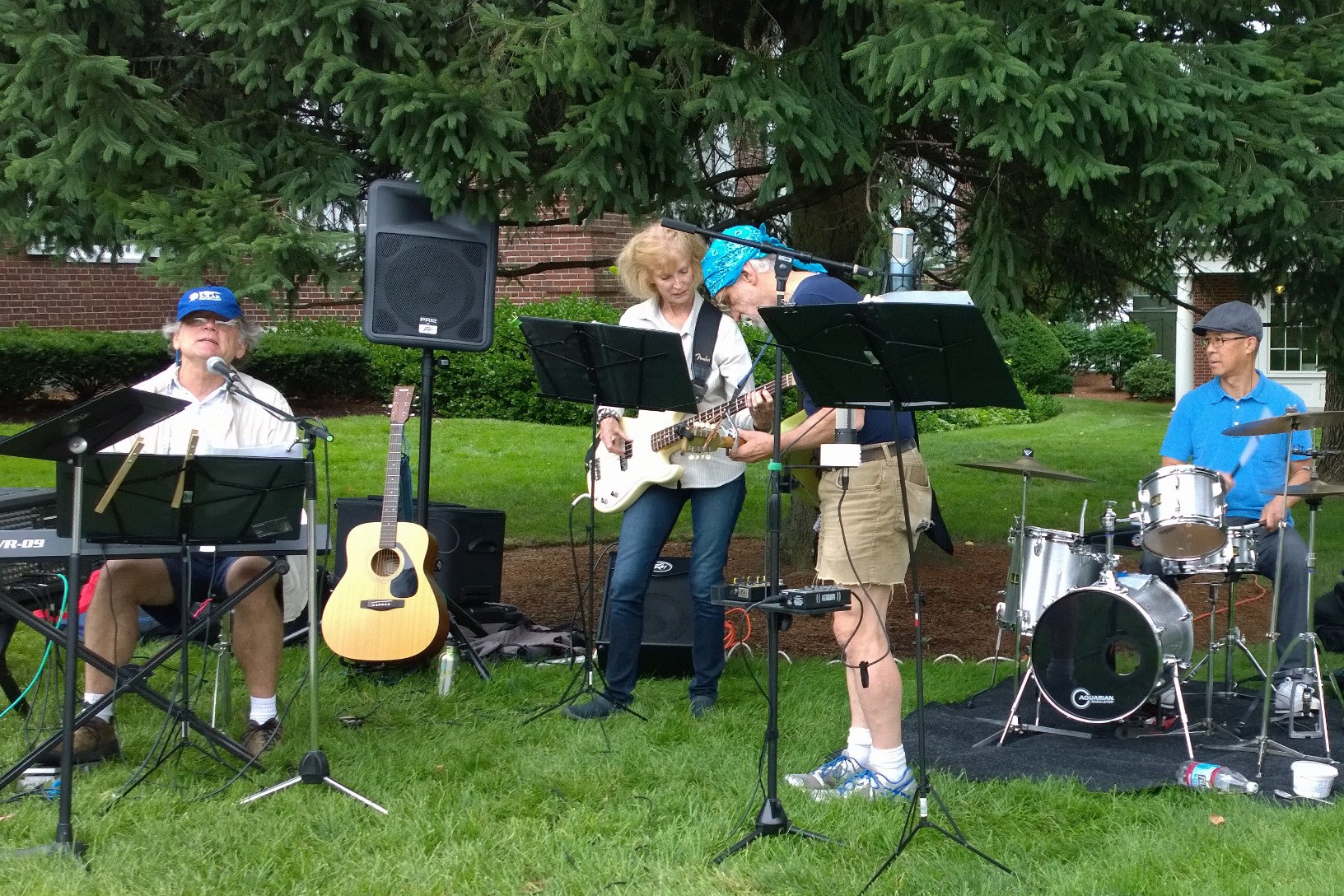
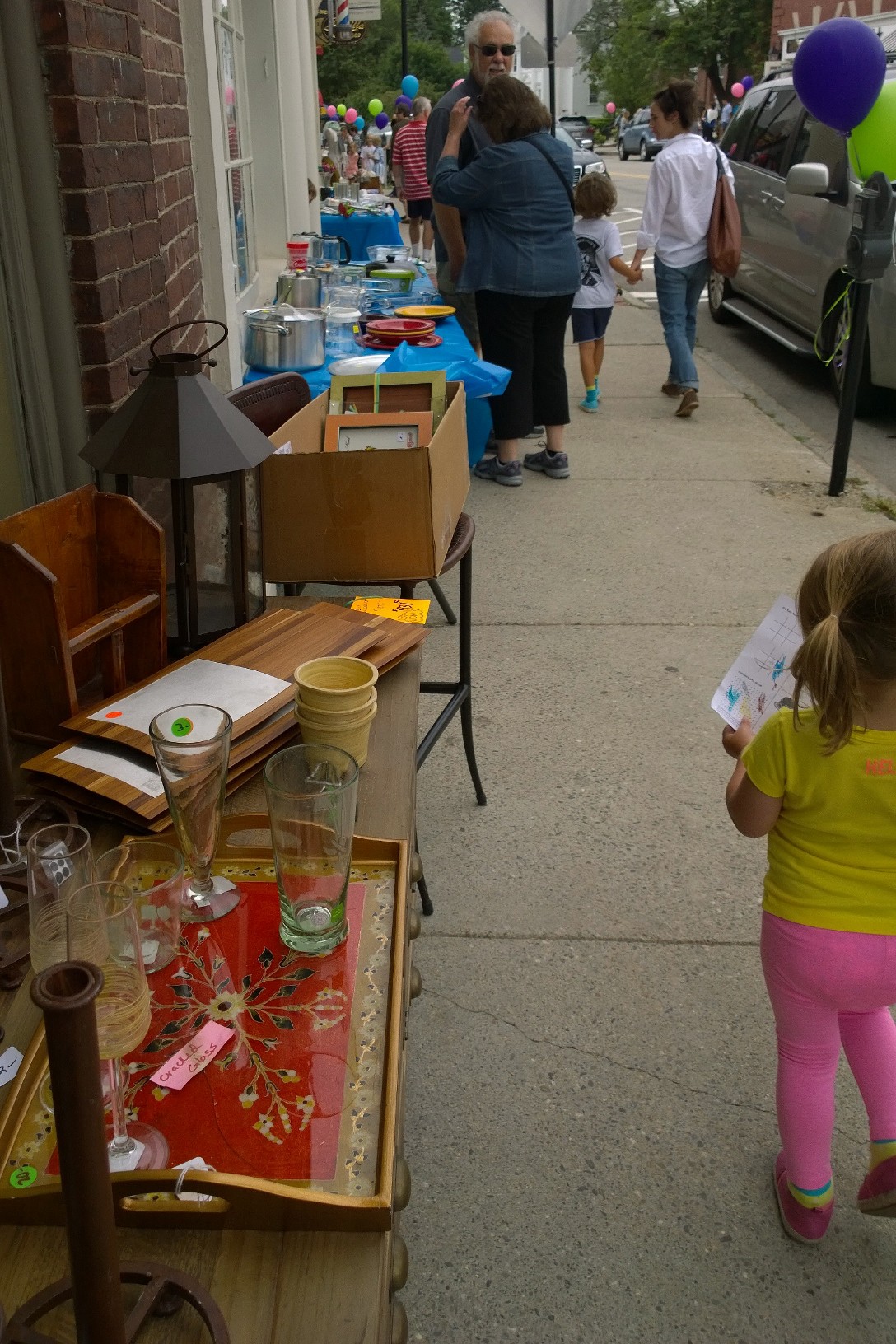
There was a band at the July 25 sidewalk sale, and I tried to capture the exuberance of a young lady who knew exactly what to do. Then I passed by and bought lots of sidewalk sale cut-price goodies.

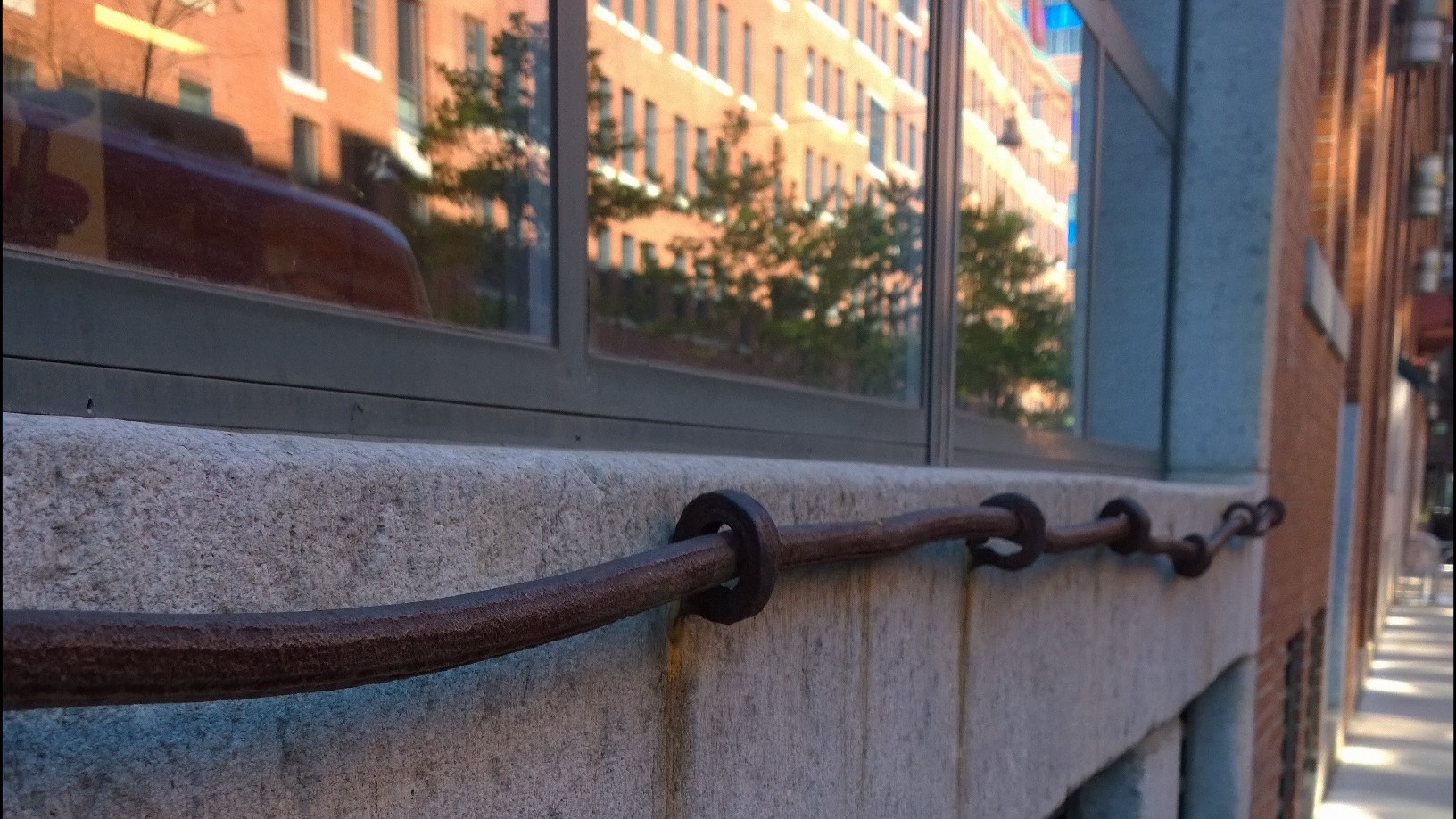
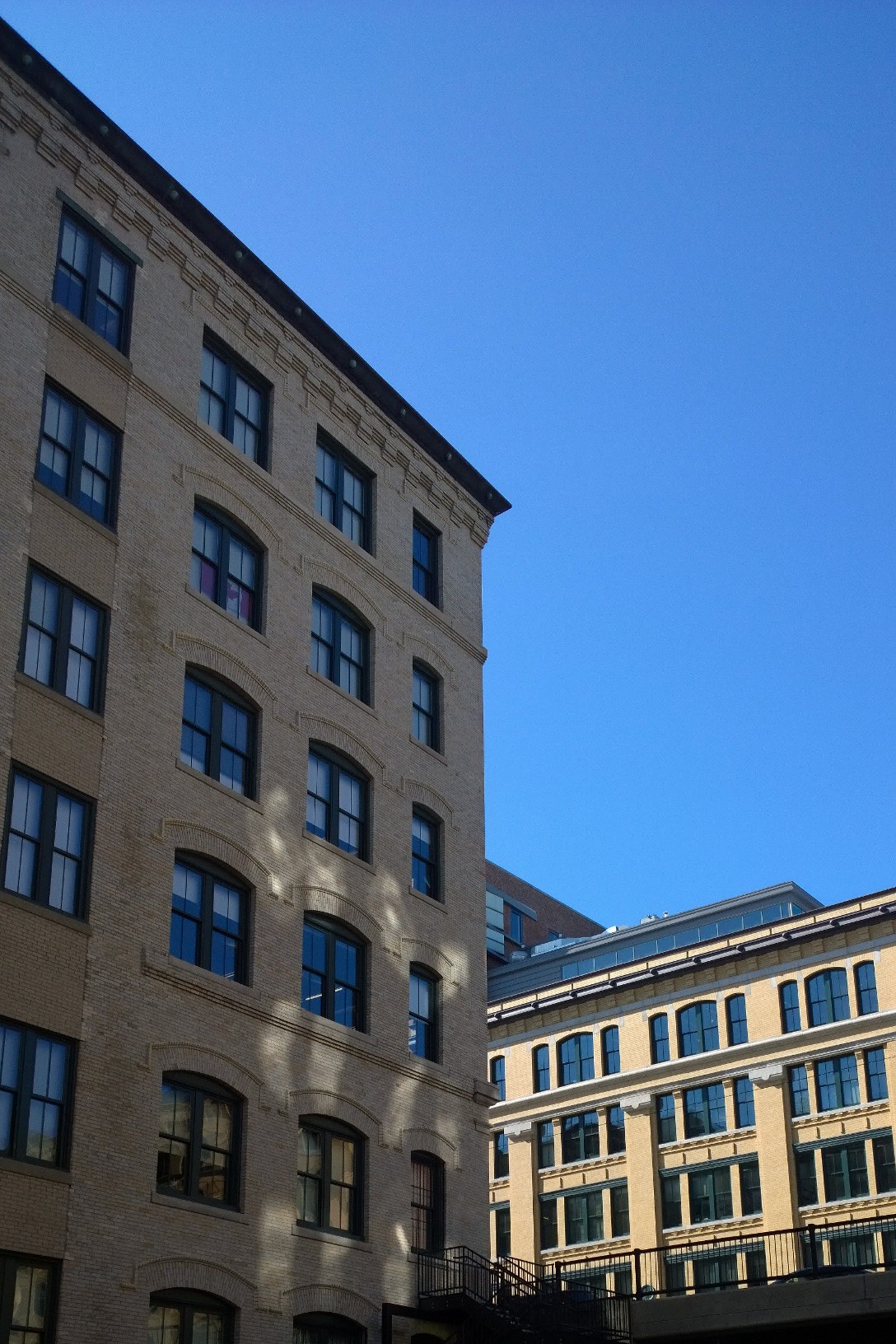
Next I’m posting three photos of the Fort Point section of Boston. I never tire of the old buildings. Do you like the iron railing and the way light is cast on one wall in the way we think of shadows being cast? Another building has a shadow of backwards words from a sign. If you look closely (and can read reverse images), you can almost see the word “industrial.” It’s a ghost. Very appropriate for Fort Point, where industry is now mostly a ghost among glass-box office buildings.

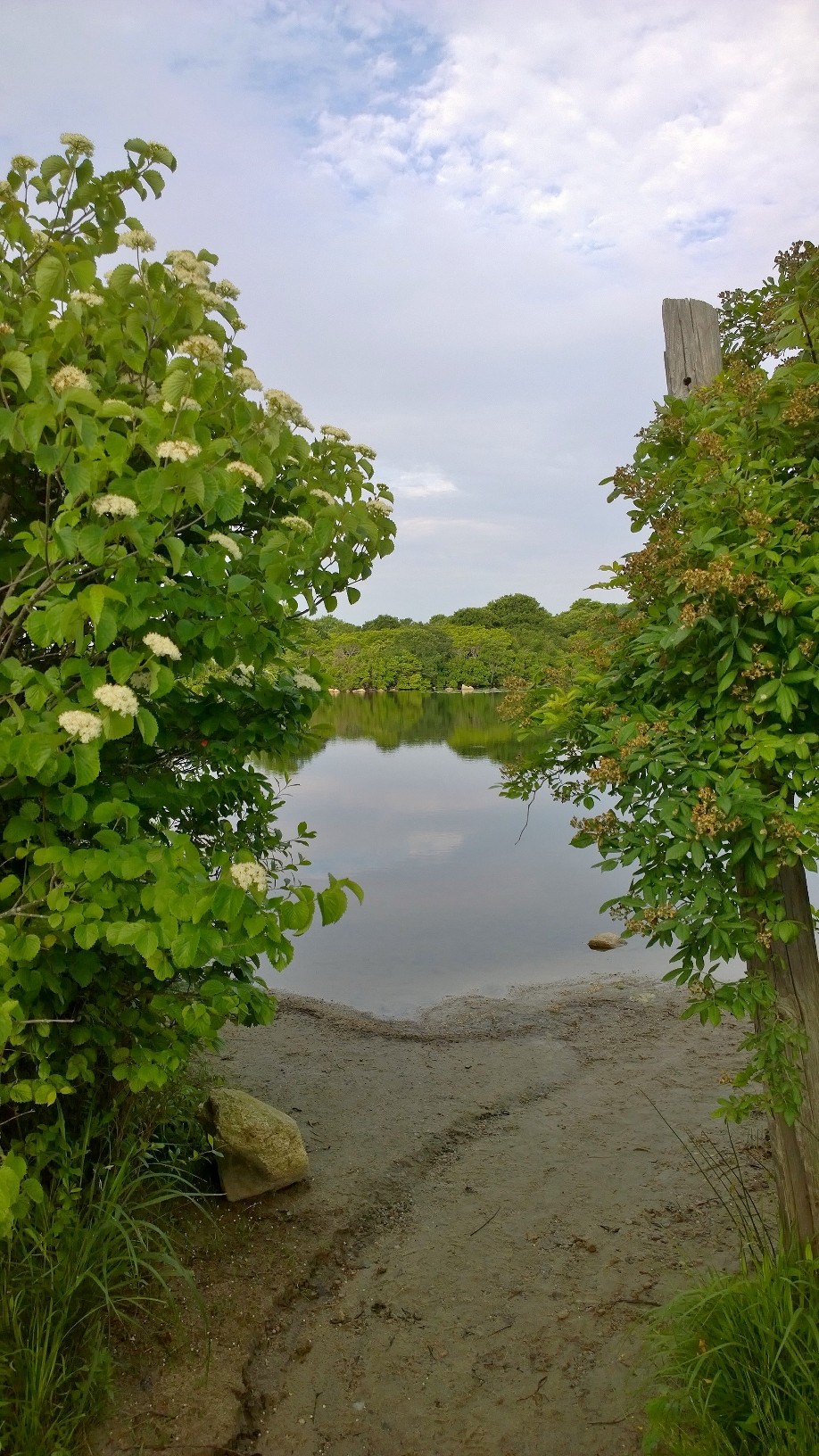
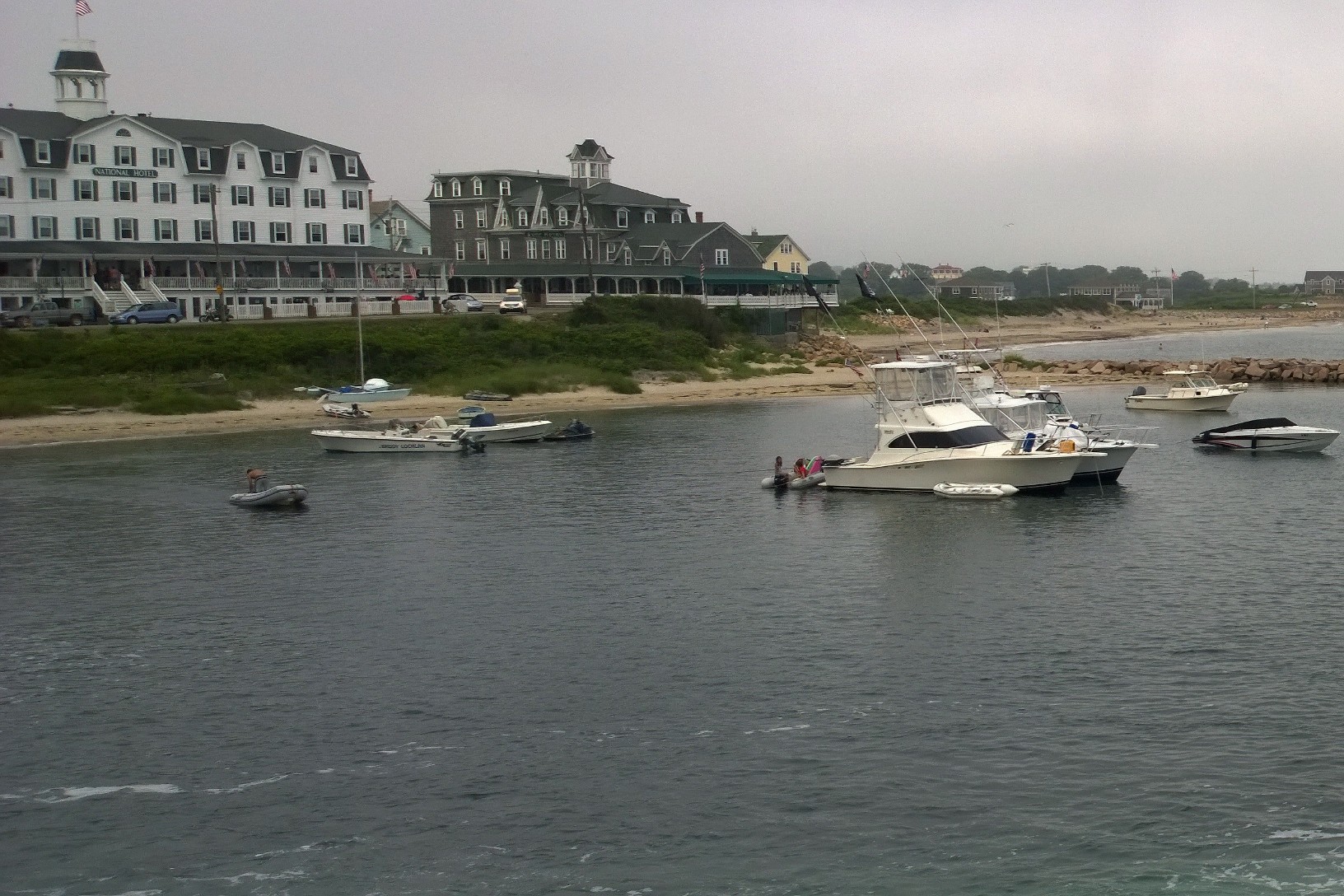
From there, we move on to Rhode Island on a gray day — a stone wall gate and a quiet harbor.

072515-band-at-sidewalk-sale

072515-sidewalk-sale

072315-fort-point-iron-railing

072315-light-cast-on-fort-point-bldg

072315-shadow-says-industrial

071915-gate-on-RI-dirt-road

071915-gray-day-old-harbor

Read Full Post »

Thomas Whaley, a teacher of 7-year-old English-language learners on Long Island came up with a creative way to build confidence while building writing skills. He has students make the case for why they should be president.

Jasmine Garsd reports at National Public Radio, “Whaley does not look like the kind of guy that dabbles in magic markers. Before he was a second-grade teacher, he worked at a public relations company in New York City.

“He says he started thinking about doing something else while riding to and from work on the Long Island Rail Road. ‘I would talk with people on the train at 6 a.m. and 8 p.m. on the way home,’ he recalls. ‘They were people who had a complete disconnect from the young people of the world. They were all so focused on adults and the rat race. And I realized that this was not for me.’

“That was 16 years ago. He has been teaching ever since.

“In addition, Whaley has found time to write a novel called Leaving Montana, and he’s starting to write children’s books. Last year, he won the New York state teacher-of-the-year award.

“This second-grade presidential campaign is an example of why. He tells me he got the idea when he asked the children one day to raise their hands if they thought they could never be a U.S. president.

“The answer broke his heart.

” ‘Almost every single child who is an English-language learner believed that they couldn’t be,’ Whaley recalls. They’d say things like, ‘ “I can’t run for president because my parents are from a different country.” That was a biggie. “Because I’m poor, and you need a lot of money to be the president.” “Because I don’t like to read, or I can’t read.” ‘

“Whaley says the presidential speech project is about more than just learning to read and speak in public. He wants these kids to learn to boast about themselves.

” ‘Bragging about yourself, and your best qualities,’ Whaley says, ‘is very difficult for a child who came into the classroom not feeling any confidence whatsoever to read three or four words.’

“Robert Epstein, the principal at Canaan Elementary, says this is the essence of what makes Whaley such a great teacher.

” ‘There’s a sense of community that’s really unsurpassed,’ and the students will take risks as a result, Epstein says. He adds that Whaley goes above and beyond what is expected of him as a teacher. ‘If one needs sneakers, I’ve seen him go out and buy sneakers. He’s gone to homes. He’s constantly on the phone, constantly emailing parents.’ ”

More at NPR.

Photo: Christopher Gregory for NPR
Thomas Whaley walks his students back to class from the library.

Read Full Post »

You remember that breathtaking moment in the movie The Miracle Worker, when a fiercely determined Annie Sullivan finally gets through to a recalcitrant Helen Keller that her hand signals are words and words have meaning? Well, revelations like Helen’s continue to happen to children, as in the recent viral video of a baby getting a first pair of glasses. The dawning wonder and smiles are so touching.

Today, Maria Popova posted a video at Brain Pickings of a deaf teen in Uganda whose silent world opens in a similar flash, and it is powerful. The TV report that captured that moment is obviously edited, but I find it convincing and moving.

According to the YouTube blurb, Patrick Otema, 15, is profoundly deaf. “In the remote area of Uganda where he lives, there are no schools for deaf children, and he has never had a conversation. Raymond Okkelo, a sign language teacher, hopes to change all this and offer Patrick a way out of the fearful silence he has known his whole life.”

Popova recommends you watch the video, then pair it with Helen Keller’s thoughts on optimism.

Once I knew only darkness and stillness. Now I know hope and joy. Once I fretted and beat myself against the wall that shut me in. Now I rejoice in the consciousness that I can think, act and attain heaven. … Can anyone who escaped such captivity, who has felt the thrill and glory of freedom, be a pessimist?
My early experience was thus a leap from bad to good. If I tried, I could not check the momentum of my first leap out of the dark; to move breast forward as a habit learned suddenly at that first moment of release and rush into the light. With the first word I used intelligently, I learned to live, to think, to hope.

Read Full Post »

Here’s a story about venture capital with a do-good focus.

Sacha Pfeiffer writes at the Boston Globe, “Among entrepreneurs, there’s a dreaded place called the Valley of Death. That’s where startup companies go when they run out of funding before making money on their own, and it’s an especially common fate for clean-energy startups, like manufacturers of solar panels and wind turbines. …

“But what if that early-stage, high-risk financing could instead come from philanthropists, who aren’t driven by profit? Later, traditional investors could step in and supply continued funding.

“That’s the concept behind PRIME Coalition, a year-old Cambridge nonprofit that has pooled $1 million from wealthy donors, including Hollywood actors Will and Jada Pinkett Smith, as seed money for its first investment: an energy storage startup company. …

“PRIME rethinks the traditional definition of charitable work and charitable giving. Its founder, 30-year-old MIT graduate Sarah Kearney, argues that companies whose products or services reduce greenhouse gases are doing a social good, just like soup kitchens and homeless shelters, so they should be able to receive philanthropic funding. In this case, the social benefits include conserving the environment and fighting climate change.

“The group searches for early-stage alternative energy companies … then locates philanthropists or socially minded for-profit investors to fund them. Those could include charitable foundations, investment offices of wealthy families, and donor-advised funds. …

“Peter Rothstein, president of the New England Clean Energy Council, said philanthropic funding ‘can make a significant dent’ in filling the need for early-stage capital for clean-tech companies.” More here.

It is not unheard of for philanthropy to put its investment dollars into companies that provide a social good. Read about the Heron Foundation’s decision to do so some years back in “Expanding Philanthropy’s Reach: Mission-Related Investing,” here.

Photo: Lane Turner/Globe Staff
PRIME Coalition founder Sarah Kearney says that companies whose products or services reduce greenhouse gases are doing a social good and should be able to receive philanthropic funding.

Read Full Post »

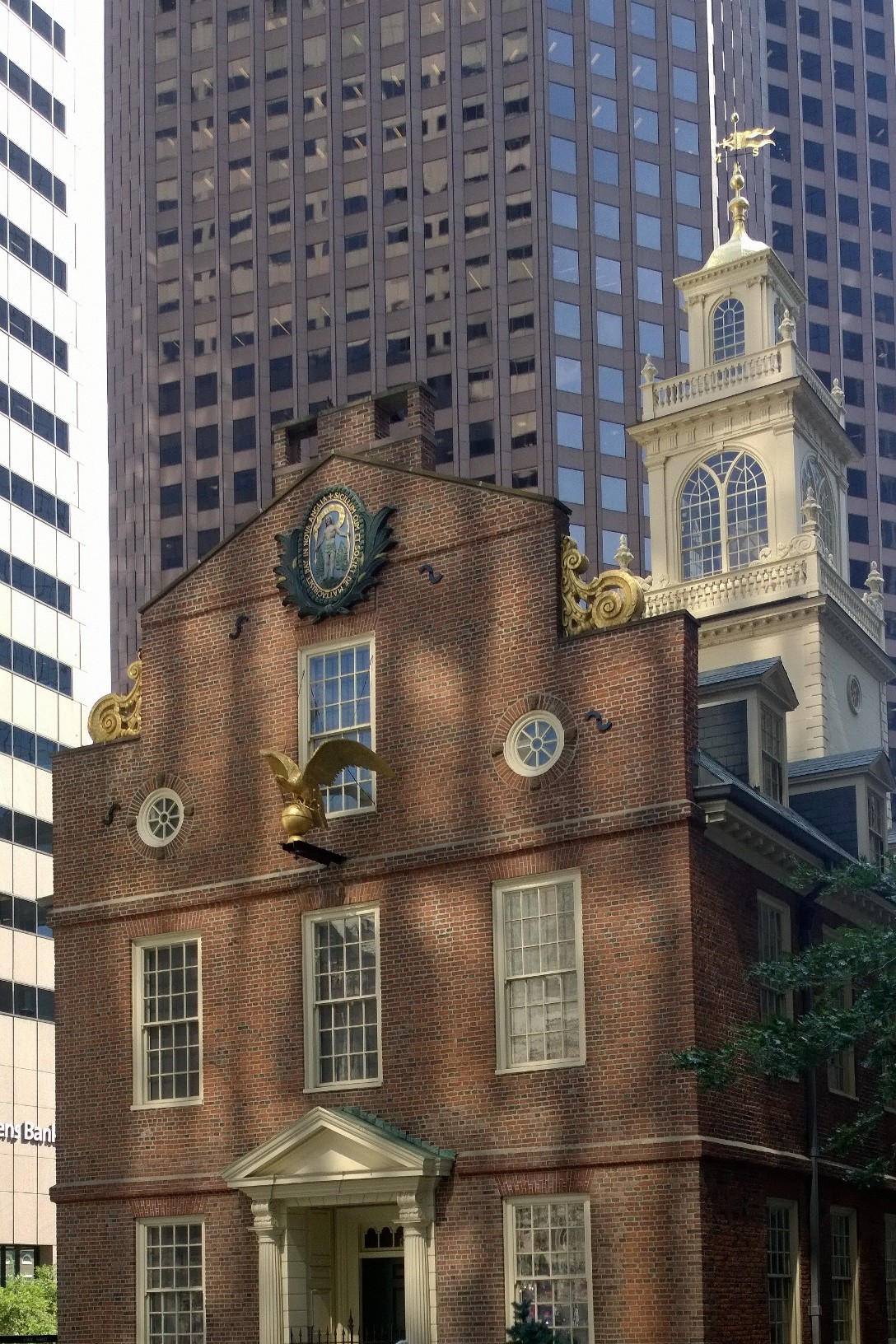
The little Vine video is of the fountain that children love in the Greenway. Nearby is the old State House, looking refined in the shadow of tall, impersonal modernities.

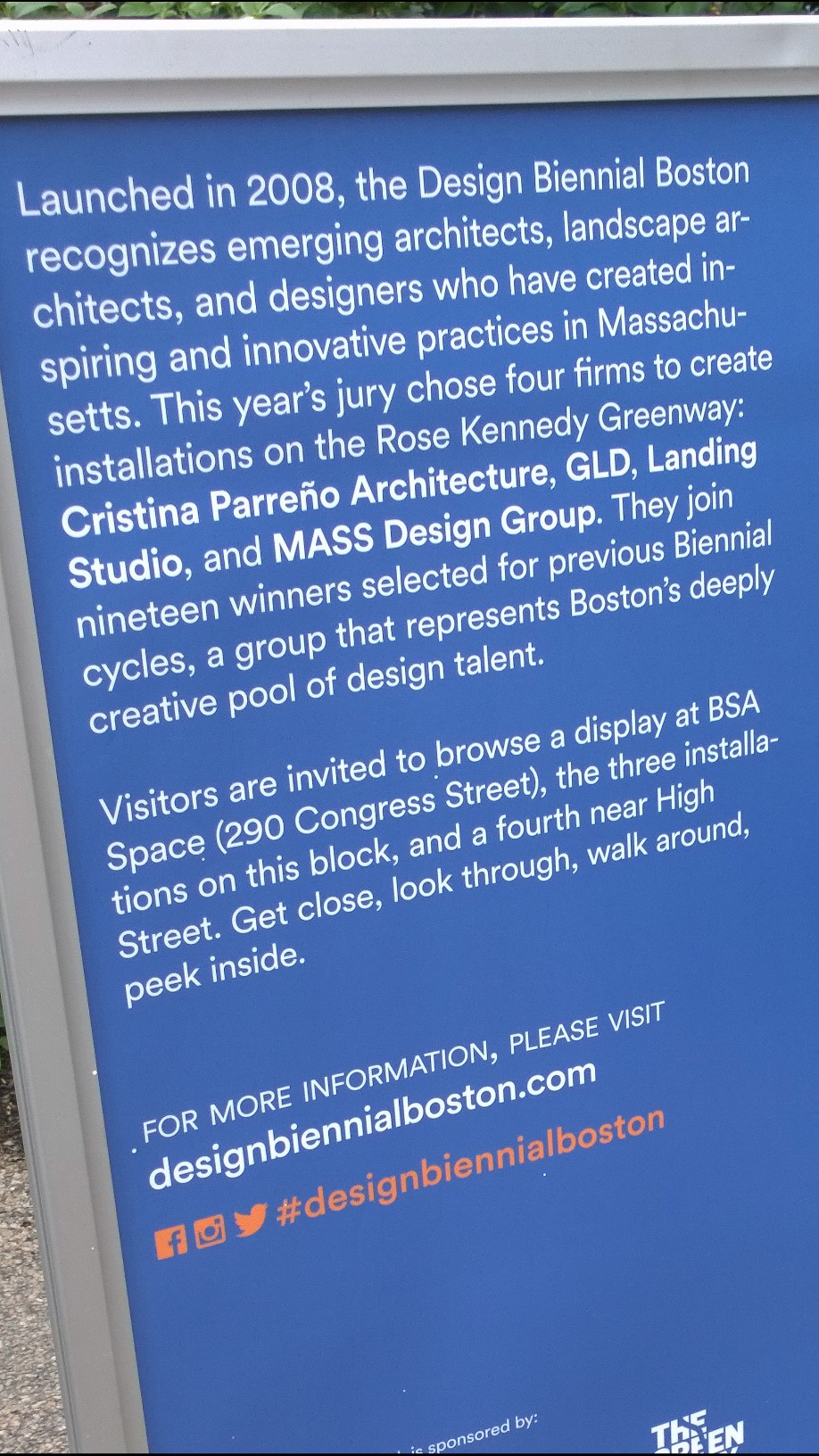
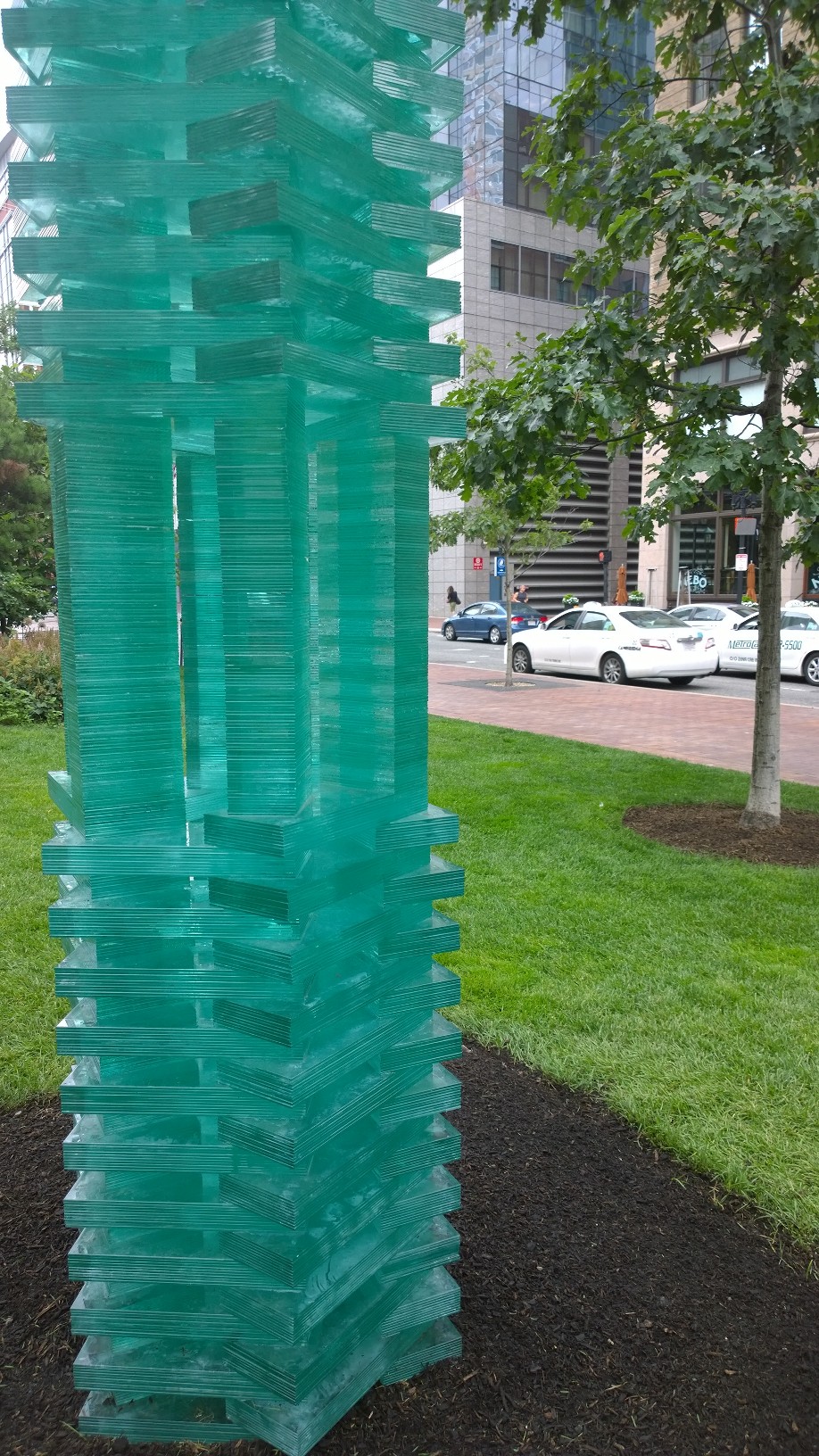
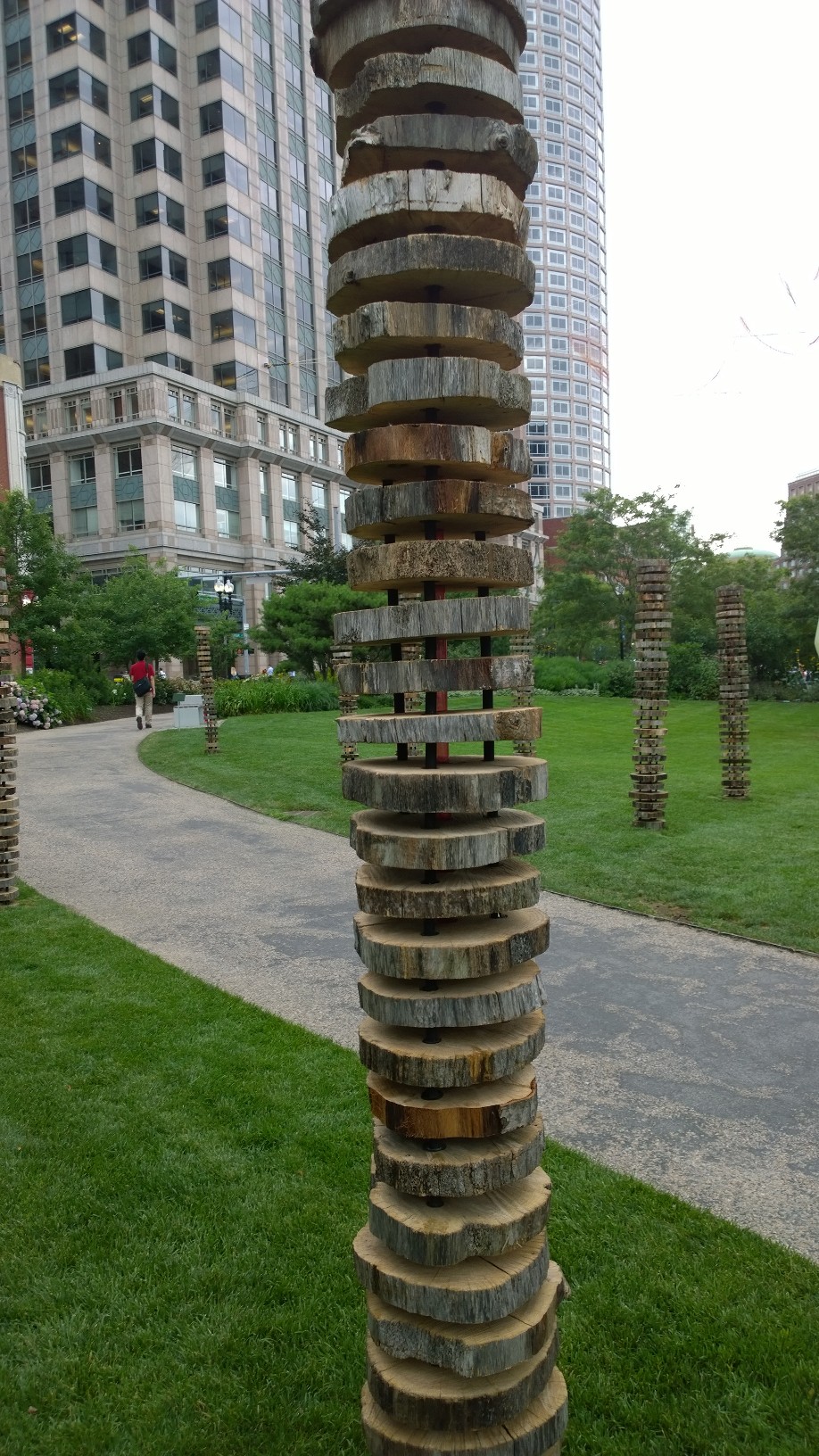
I took a photo of the sign explaining some new sculptures. They turn out to be part of the Design Biennial in Boston.

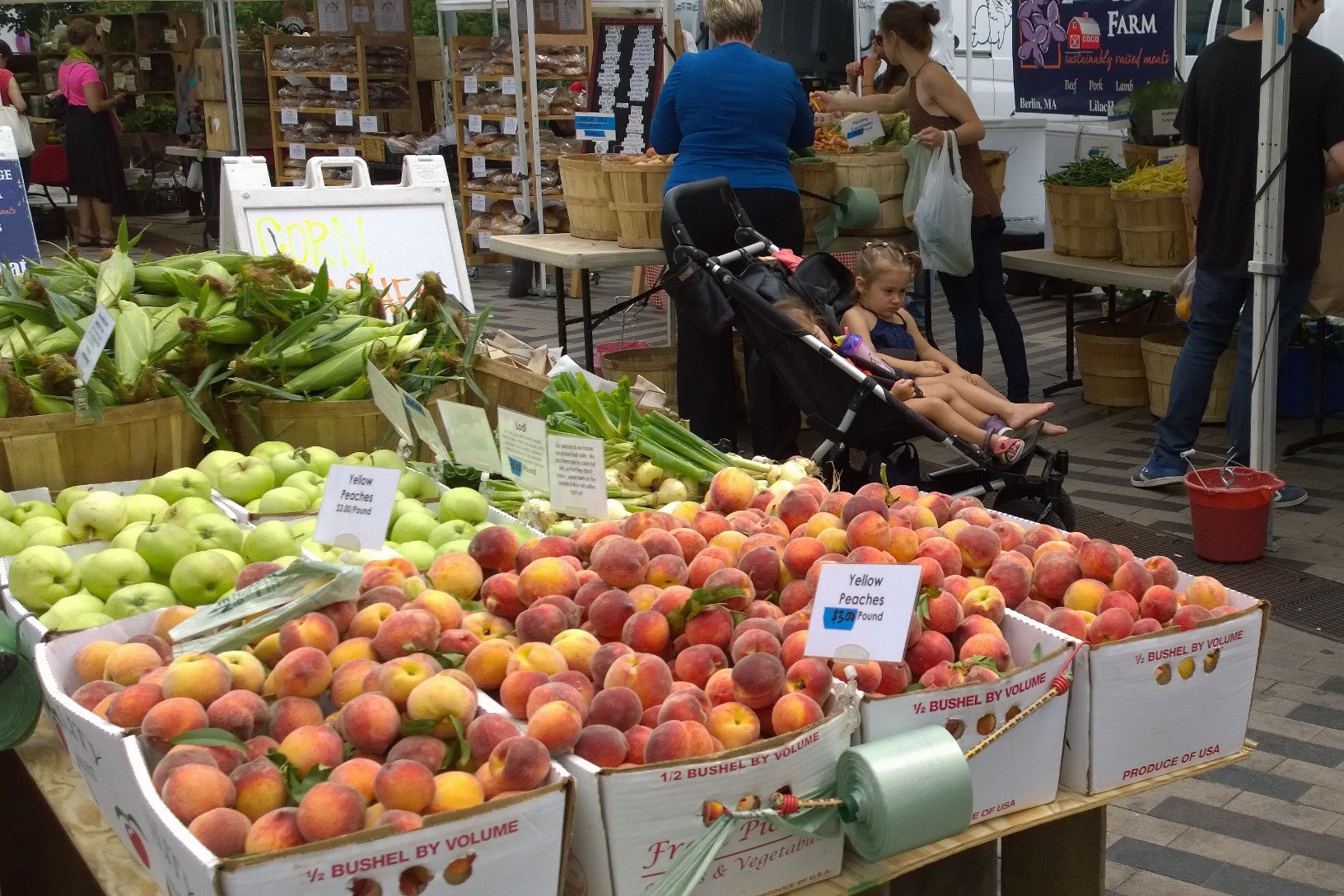
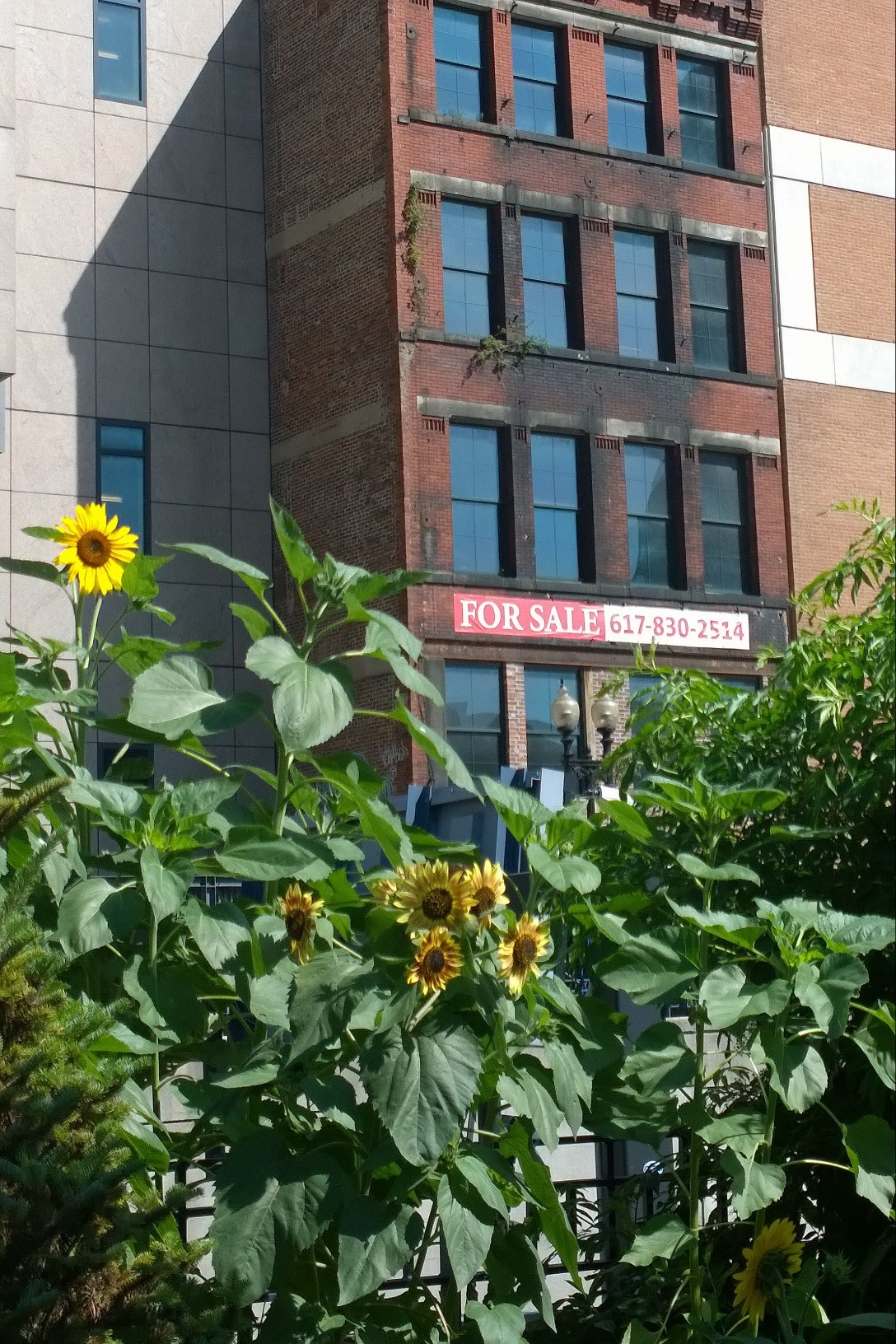
In the Dewey Square section of the Greenway, I also love the farmers market that materializes Tuesdays and Thursdays. Note the sunflowers, flourishing in the Greenway’s demonstration garden. The narrow, decrepit building behind them always intrigues me. What would you do with it if it were yours? It’s a valuable location that no one seems to want. What about a pocket performance space?

071615-old-state-house-boston

072115-design-biennial-boston

072115-Boston-sculpture-near-Congress-St

72115-sculpture-in-Greenway

072115-design-biennial-Greenway

072115-dewey-square-shopping

071615-for-sale-Dewey-Square-2

Read Full Post »

Alice in Wonderland is turning 150, and several media outlets feature articles on its many translations, visual interpretations, and anniversary celebrations.

Jane L. Levere writes at the New York Times, “Stephanie Lovett, president of the Lewis Carroll Society of North America, which is coordinating many of the exhibitions and activities, described the two Alice novels as ‘likely the most frequently quoted works of fiction in the English-speaking world, standing alongside only Shakespeare in frequency of citation.’ They are also among the most widely illustrated and translated pieces of English fiction, she said, published in more than 170 languages in several thousand editions. …

“Interpretations of the stories and anecdotes about their relevance to today’s readers abound. … For Carolyn Vega, curator of the exhibition at the Morgan, the appeal of both ‘Alice’ books is that they are essentially about learning how to ‘navigate the world’ — a challenge that she said remained highly relevant today.

“Derick Dreher, director of the Rosenbach, called ‘Alice’s Adventures in Wonderland’ ‘an adventure story with almost unparalleled innovation.’ … He also emphasized the elements of science and logic that Carroll wove into the book, which tend to intrigue puzzle lovers. And, Mr. Dreher said, it’s about ‘overcoming adversity.’ “

My own take: It’s about the impenetrability of grownups’ rules and how they often fail to apply the rules to their own behavior — and about a practical little girl trying to cope. And a lot besides.

Meanwhile, the Wall Street Journal notes that Alice “is marking its 150th anniversary with new translations. She is Alis (in Yiddish), or Alisi (in Tongan) or Anya (in Russian), and, despite her advanced age, to readers everywhere she remains a curious youngster whose adventures have never gone out of print.

“Two Yale professors are translating ‘Alice’ into Late Egyptian hieroglyphs. A language consultant in California is putting the finishing touches on a Kazakh translation. There is an emoji version. An edition in Scouse, the dialect of Liverpool, is with the publisher; so are ones in Cockney rhyming slang and in two Afghan languages, Dari and Pashto. The Gothic translation came out just last week.”

(Unfortunately, the Wall Street Journals article is behind a firewall.)

Photo: Alice150 (click to see a surprising array of cover illustrations)

Read Full Post »

In India, a man who saw sculptural possibilities in castaways has left behind hundreds of pieces of art in a public rock garden.

Nek Chand, an Indian artist who rose to prominence by quietly building a sprawling kingdom of folk sculptures in northern India that became one of the country’s most popular tourist destinations, died on [June 12] in Chandigarh. He was 90. …

“Mr. Chand’s life’s work, known as the Rock Garden of Chandigarh, covers several acres and is populated by rock sculptures and figures of dancing women and animals, many of them fashioned from found objects like the mudguards of motorcycles and broken bangles.

“It stands in contrast to the striking if neglected government buildings conceived by Le Corbusier, who planned Chandigarh — the capital of the states of Punjab and Haryana — in the 1950s.

“For some, the Rock Garden, which has thousands of visitors a day, is an antidote to what, with its stark Modernist buildings, is seen as something of a bureaucrat’s city. …

“Mr. Chand was born Nek Chand Saini on Dec. 15, 1924, in the village of Barian Kalan, which became part of Pakistan after partition. He was newly arrived in the city of Chandigarh just after India’s independence in 1947. He worked for the government as a road inspector, according to the Department of Chandigarh Tourism website. But, [Rupan Deol Bajaj, a retired government functionary] said, he became fascinated by found objects, including weather-beaten rocks.

“ ‘I started building this garden as a hobby’ in the 1950s, he said in an interview with Agence France-Presse in December. ‘I had many ideas, I was thinking all the time. I saw beauty and art in what people said was junk.’

“By night he slipped onto a patch of land and artfully arranged rocks and construction waste behind a barricade of empty tar drums.”

The garden was a secret for a long time. When the authorities learned about it, a debate on its future ensued. But, says the Times reporter, “a groundswell of support led to its official opening to the public in 1976.” More here.

Photo: Reuters
Nek Chand, at 76, next to one of his sculptures. He died in June at age 90.

Read Full Post »

I think this children’s book, reviewed at Brain Pickings, is one I need to buy.

Maria Popova writes, “This Moose Belongs to Me (public library) — a disarming story about a boy who believes he owns his pet moose Marcel, only to discover that so do other people, who call him by different names, while the moose himself doesn’t quite get the concept of being owned and is thus oblivious to the boy’s list of rules for being a good pet. …

“For the backgrounds of his illustrated vignettes, Jeffers reapporpriates classical landscape paintings by a mid-century Slovakian painter named Alexander Dzigurski, rendering the project a sort of posthumous collaboration and a creative mashup.”

Read the intriguingly philosophical Brain Pickings review here.

And here is a children’s book reviewed by Asakiyume that embraces insights about both the environment and other cultures.

She writes, “Discarded plastic bags are more than just an ugly nuisance in the West African nation of the Gambia. There, plastic shopping bags kill livestock that eat them and provide a breeding ground for malaria-carrying mosquitoes.

“A woman named Isatou Ceesay found an ingenious solution. She learned how to make plarn [yarn made from plastic bags], and, with her friends, started crocheting small change purses from the discarded plastic bags, which she and her friends sold. The trash problem — and attendant health risks — disappeared, and Isatou and her friends had a new source of income. The project was so successful that Isatou started teaching women in other villages, and in 2012 she won the International Alliance for Women’s World of Difference award.

Miranda Paul, a writer who has lived and taught in the Gambia, wrote about Isatou in One Plastic Bag: Isatou Ceesay and the Recycling Women of the Gambia (illustrated by the fabulous Elizabeth Zunon).” Lots of reasons for buying that book here, at Asakiyume’s blog.

Art: Oliver Jeffers

Read Full Post »

I read this NY Times article with relief. It seems that educators are returning to (or perhaps being heard about) the importance of play in learning.

Reporter Motoko Rich says, “Call it Kindergarten 2.0. Concerned that kindergarten has become overly academic in recent years, this suburban school district south of Baltimore is introducing a new curriculum in the fall for 5-year-olds. Chief among its features is a most old-fashioned concept: play.

“ ‘I feel like we have been driving the car in the wrong direction for a long time,’ said Carolyn Pillow, who has taught kindergarten for 15 years and attended a training session here on the new curriculum last month. ‘We can’t forget about the basics of what these kids need, which is movement and opportunities to play and explore.’

“As American classrooms have focused on raising test scores in math and reading … even the youngest students have been affected, with more formal lessons and less time in sandboxes. But these days, states like Vermont, Minnesota and Washington are again embracing play as a bedrock of kindergarten. …

“Still, teachers like Therese Iwancio, who works at Cecil Elementary School in Baltimore’s Greenmount neighborhood, where the vast majority of children come from low-income families, say their students benefit from explicit academic instruction. She does not have a sand table, play kitchen or easel in the room. …

“Traci Burns, who has taught kindergarten for the last five years at Annapolis Elementary School, said she was looking forward to retrieving previously banished easels.

“ ‘With the Common Core, this has been pushed and pushed and pushed that kids should be reading, sitting and listening,’ she said. ‘Five-year-olds need to play and color. They need to go out and sing songs.’

“At Hilltop Elementary, a racially and economically diverse school in Glen Burnie, Melissa Maenner said she had found that teaching kindergartners too many straightforward academic lessons tended to flop.

“ ‘They are 5,’ Ms. Maenner said. ‘Their attention span is about five minutes.’ ”

Read more here.

013115-spilt-tea (1)


Read Full Post »

Older Posts »