Feeds:
Posts
Comments

Archive for April, 2016

Following up on my 2012 post about fairy circles.

Rachel Nuwer writes at the NY Times, “When Stephan Getzin, an ecologist at the Helmholtz Center for Environmental Research in Leipzig, Germany, opened the email, his heart began to flutter. Attached was an aerial image of fairy circles, just as he had seen in countless photos before. But those images were always taken along long strips of arid grassland stretching from southern Angola to northern South Africa. These fairy circles — which looked nearly identical — came from Australia, not Africa. …

“The emailed photo came from Bronwyn Bell, who does environmental restoration work in Perth. She had read about Dr. Getzin’s research in Namibia and made a connection to the odd formations in her home state, Western Australia. …

“Scientists have been interested in fairy circles since the 1970s, but have not been able to agree on what causes the patterns to form. Researchers generally fall into two groups — team termite and team water competition — but there are other hypotheses as well, including one involving noxious gases.

“Dr. Getzin, like others on team water competition, explains the circles through pattern-formation theory, a model for understanding the way nature organizes itself. The theory was first developed not by biologists, but by the mathematician Alan Turing. In the 1990s, ecologists and physicists realized it could be tweaked to explain some vegetation patterns as well. In harsh habitats where plants compete for nutrients and water, the new theory predicts that, as weaker plants die and stronger ones grow larger, vegetation will self-organize into patterns …

“In the case of African fairy circles, the bare patches act as troughs, storing moisture from rare rainfalls for several months, lasting into the dry season. Tall grasses on the edge of the circles tap into the water with their roots and also suck it up with the help of water diffusion through the sandy soil.

“Although similar in appearance, Australian fairy circles turn out to behave differently, Dr. Getzin and his colleagues have found. … Aussie circles feature a very hard surface of dry, nearly impenetrable clay, which can reach up to a scalding 167 degrees during the day. Despite the differences, though, they believe the fairy circles’ function remains the same. When the researchers poured water into the circles in a simple irrigation experiment, it flowed to the edges, reaching the bushy grass …

“The new research ‘moves us closer toward a unifying theory of fairy circle formation,’ said Nichole Barger, an ecosystem ecologist at the University of Colorado, Boulder.

“It could be that more fairy circles are yet to be discovered in arid environments around the world, she said.

“According to Walter Tschinkel, an entomologist at Florida State University, the findings strengthen the claim that the circles are a result of self-organization by plants. He cautioned, though, that to be more certain, scientists would need to control environmental factors — water and termites, for example — to see which produce the predicted outcome.”

More here.

Photo: Norbert Jürgens
Tracks of Oryx antelopes crossing fairy circles in Namibia.

Read Full Post »

A certain community organization that believes in the importance of affordable housing also believes in the importance of community. That is why it fosters numerous community-building initiatives, including the new Sankofa farm and market.

Leigh Vincola at ecoRI reports from Providence.

“If you have traveled around the city’s West End this winter, you may have noticed a number of buildings going up rather quickly. Wondering what they are and who they belong to?

“The answer is Sankofa, a Ghanaian word meaning to go back, get what is yours and make positive progress in the future. The Sankofa Initiative of the West Elmwood Housing Development Corporation (WEHDC) is doing just this.

“The initiative was born in 2011, when the WEHDC completed an extensive survey of West End residents that determined their primary concerns centered around health and food. In a predominately low-income neighborhood — 32.5 percent of households live below the poverty level — the survey determined that for many the West End is a food-insecure neighborhood. There isn’t enough access to fresh food, and particularly food that is culturally relevant to the immigrant populations that make up the community, primarily Central American, West African and Southeast Asian. …

“Sankofa is a response to these needs, and has three main elements: an affordable housing development, a large-scale community garden and a weekly World Market. The $15 million project is funded by Rhode Island Housing and work is underway on all aspects.” Read up on the amazing range of positive efforts here.

According to the market’s Facebook page, things will get going for spring with a “pop-up market May 7th, from 12pm to 4pm at Knight Memorial Library on Elmwood Ave. There will be art, bath and hair products, handmade jewelry, homemade candles, fresh food, FREE seeds, henna, giant bubbles and much more.”

Photo: Sankofa Initiative
The Sankofa World Market is a local farmers market with international flavor.

Read Full Post »

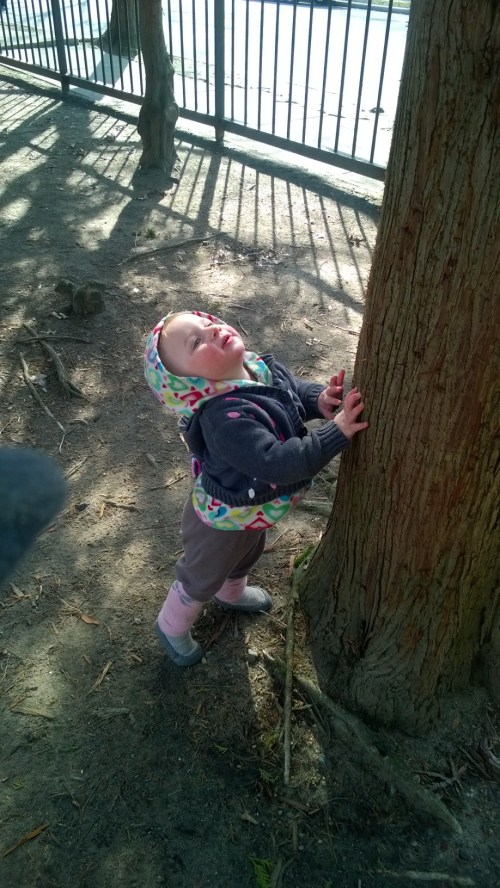
Babies can be exhausting, but they also can be relaxing. It’s relaxing to be with people who see everything as new and amazing. They may babble and bounce with wild excitement and drag you over to show you that your pocketbook is on the stairs. They are amazed!

For babies, many things of concern to grownups are nonexistent. They focus on fundamentals.

They eat when they’re hungry, they drink when they’re dry, and they sleep when they’re tired. They aren’t trying to convince you they’re cool. If you meet their needs on demand, that’s all they ask.

They can switch from wanting desperately to ravage your cellphone to forgetting all about it in an instant. They can surprise you by doing something completely random — like suddenly grabbing your legs and growling.

They don’t care if they impress big shots in mansions, office buildings or the statehouse. They don’t care if the shiny thing on your hand is a 2-carat diamond or a piece of plastic. They don’t care if your sneakers are Pumas or Schlock Box — they just like the colors and the laces. They don’t care if their stomach hangs out or if you can jump higher than they can.

And if a squirrel climbs way up high, they don’t care if they can’t catch it, they go after it anyway.

032716-squirrel-went-up-tree

Read Full Post »

Erik keeps tabs on health-related issues and just got an email that he thought would interest me.

He was right. I was reminded of a visit from a “laugh doctor” back when I was editor of Minnesota Physician. The laugh doctor showed us how we could get ourselves laughing. He talked about the endorphins produced and how good they were for health.

In apparent agreement, a Rhode Island clinic that serves low-income people is putting on a comedy show May 7 and inviting neighbors, patients — anyone who is up for a good laugh and willing to make a donation.

The comedy will be performed by the Providence Improv Guild at the Fête Event Space in Olneyville, RI, May 7th, 5:30 – 8:30 p.m.

Says the Laugh for Health invitation, “Suggested donation for tickets: Giggle $10 – Chuckle $ 25 – Laughing out Loud $100 ($150 per couple). Belly Laugh $1000 and above! …

“Here at Clínica Esperanza/Hope Clinic — we believe in laughter and joy. We celebrate health. We laugh at ourselves. We applaud our patients. We take joy in volunteering. We consider health, not wealth, to be the most valuable asset in our community.

“And since many of our neighbors do not have the resources to receive proper healthcare, or don’t know where to be seen for their health problems and how they’ll manage to pay for it all, we are there for them.

“Clínica Esperanza/Hope Clinic welcomes our neighbors in need with open arms. We celebrate health, and with our patients, laugh out loud as they make the journey from illness to good health. … It’s simple to RSVP – click here.”

To learn more about Hope Clinic, visit http://www.aplacetobehealthy.org.

Photo: Hope Clinic
Members of the Providence Improv Guild will perform at a benefit for Clínica Esperanza/Hope Clinic May 7.

Read Full Post »

John is a great source for articles on cutting-edge technologies. He sent me this one Thursday about using plants to make electricity. The students in Spain who designed the technology are nothing if not ambitious. Their goal is to have the whole world covered in trees making electricity. You can watch their video, below, or bear with me as I channel Google Translate’s English rendition of a Spanish blog post.

, at Blog Think Big, says, “Thanks to Bioo system, created by the students of the Autonomous University of Barcelona and Ramón Llull University with the startup Arkyne Technologies, families could cover their basic electricity needs through 10 × 10 meters of vegetation panels. But how?

“The prototype initially created by the students of the UAB is a plant in a pot that lets you charge a mobile phone. According to the explanation for the 4YFN space last Mobile World Congress in Barcelona, the system ‘generates power 3-40 watts per square meter from some vegetable panels and a biological battery that takes energy waste (matter organic) that plants need not despise.’ [Oops: that has to be Google. Shall we change it to ‘plants don’t need’?]

“Thus, the device is able to steadily produce electricity through a self-supply system. In addition, according to the engineers, the operation does not affect the plants and is economical.

“Students are betting on a ‘smart city’ concept that allows people using Bioo buy or sell electricity. The goal, in addition to developing these systems in homes, [is to extend them to] agriculture or green roofs of public buildings.”

Maybe you better watch the video. But there’s more here, if you read Spanish.

Video: Bioo Lite

Read Full Post »

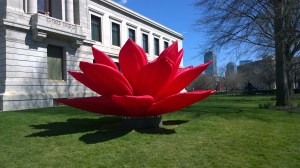
I’m bummed that I couldn’t get my video of the giant red lotus to load. I can provide a still shot, but the flower outside the Museum of Fine Arts in Boston does more than look big — it opens and closes with a goofy clatter. Audrey II from the Broadway show Little Shop of Horrors has nothing on this hilarious monster.

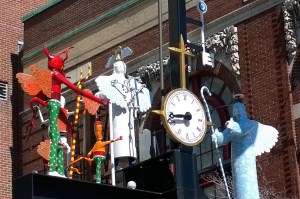
A few blocks away, speaking of clatter, is the mechanical clock that graces Mass College of Art.

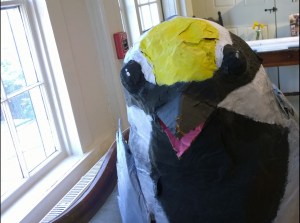
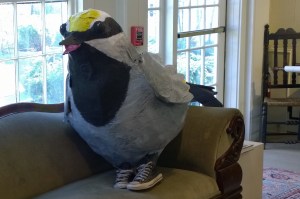
At Concord Art, where Mary Ann’s friend Holly Harrison curated a fascinating show on birds, Rivers and Revolutions students from Concord Carlisle High School had a small exhibit of their own — featuring a giant yellow warbler (in sneakers) and a nest complete with appropriately spotted eggs.

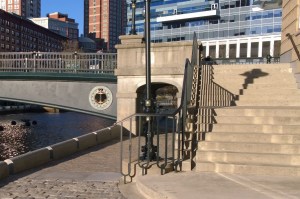
Next is Waterplace Park in Providence, where I was once again tempted by shadows. Note how interesting the streetlamp looks stretched out on the staircase. The state emblem with “hope” and an anchor reminds me to tell you that Suzanne sells an anchor charm at Luna & Stella and donates $5 of the sale of every anchor to the Rhode Island Foundation, now celebrating its 100th year.

My favorite photo here is the little boy on the banks of the Sudbury River, where he has just pulled in a nice bass, his fourth fish of the day. I took a bunch of photos of the boy and his dad, but this was the only one that made clear you are actually looking at a fish.

041416-Museum-Fine-Arts-lotus

041416-Mass-Art-clock


041516-giant-warbler-Concord-Art

041516-warbler-in-sneakers


041516-art-nest-for-warbler

042016-shadows-by-Providence-River


042016-RI-anchor-and-Hope

042116-boy-catches-fish-Sudbury-River

Read Full Post »

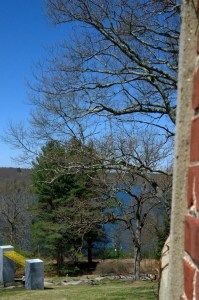
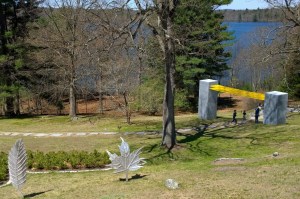
A beautiful day is always a good excuse to walk the grounds of the deCordova Museum in Lincoln, Mass., enjoying the sculptures and lake view.

A little history from the museum website: “DeCordova Sculpture Park and Museum is located on the former estate of Julian de Cordova (1851-1945). The self-educated son of a Jamaican merchant, Julian de Cordova became a successful tea broker, wholesale merchant, investor, and president of the Union Glass Company in Somerville, Massachusetts. Although he married into the locally prominent Dana family of Boston, Julian achieved prosperity without the advantages of inheritance or social position. …

“Inspired by his trips to Spain and his own Spanish heritage, Julian remodeled his summer home in Lincoln, Massachusetts in 1910 to resemble a European castle. …

“For Julian, the visual arts served as a medium for self-improvement and enlightenment. In his later years, he opened the doors of his estate to share the wonders he had collected during seven decades of world travel. Julian envisioned a place where art would continue to educate and excite beyond his lifetime. To meet that end, he gave his property to the town of Lincoln in 1930 with the stipulation that his estate would become a public museum of art following his death.

“Julian’s will established a committee of incorporation, whose duties included formulating the policy, objectives, and supervision of the new museum with the guidance of professionals in the field, such as the Director of the Museum of Fine Arts (MFA) in Boston. Independent appraisers determined that Julian’s collections were not of substantial interest or value, so the collection was sold and the proceeds were used to create a museum of regional contemporary art.”

It’s nice to have an institution that focuses on New England artists, especially one that also offers a beautiful park for families to enjoy.

The yellow cables that seem to vibrate between the concrete blocks are a startling aspect of Stephanie Cardon’s sculpture Beacon. The collection of giant leaves, by Alan Sonfist, is called The Endangered Species of New England. The purple carpet is by Mother Nature and is called Violets.

042416-DeCprdova-lake

042416-DeCordova-giant-leaves


042416-violet-carpet-Lincoln-Mass

Read Full Post »

In Helsinki, Finland, where young people traditionally leave home at 18 but can no longer afford urban rents, Millennials are applying by the hundreds to live with the elderly.

According to Kae Lani Kennedy at Matador Network, “Retirement homes are serving as more than a community for the elderly. These facilities are providing affordable housing for the city’s growing population of homeless millennials.

“ ‘It’s almost like a dorm, but the people aren’t young. They’re old,’ explains Emil Bostrom, a participant in ‘A Home That Fits,’ a new housing project that allows millennials to move into retirement communities. Bostrom is a 24-year-old kindergarten teacher, and though he has a steady income, it is not enough to compete with 90,000 other renters in a city that has roughly 60,000 affordable rental properties. …

“Bostrom, along with many other young adults, can enjoy discounted rent in exchange for socializing with the seniors in their community. …

“By interacting with a younger generation, the elderly involved with ‘A Home That Fits’ have the opportunity to be engaged in an active and diverse community, instead of being left behind in a forgotten generation.” More here.

And check out a post I wrote about the same phenomenon in Cleveland, here. Both initiatives sound like fun to me.

Video: Seeker Stories

Read Full Post »

Interested in doing well by doing good? Consider attending the April 29-April 30 Providence event hosted by the Social Enterprise Greenhouse and the Social Innovation Initiative at Brown University.

According to the nonprofit’s website, the 2016 SEEED (Social Enterprise Ecosystem for Economic Development) Summit “provides a comprehensive support system to inspire, start, grow, and sustain successful social enterprises. …

“This year’s conference theme is Growing Businesses with Impact. We will explore the unique challenges facing a social enterprise at three stages of growth, with half day modules devoted to launching, growing and transforming. 

“Whether you’re a social entrepreneur, student, academic, impact investor, policymaker, or plain ol’ fan of ‘do well, do good’ business, we hope you will join us. This year’s conference will include free coaching, a ‘Buy With Heart’ market, lunchtime roundtable discussions, and a pitch competition. …

“The conference is hosted jointly by Social Enterprise Greenhouse and The Social Innovation Initiative at Brown University, in collaboration with sponsors The City of Providence, The Rhode Island Commerce Corporation and Worldways Social Marketing, as well as knowledge partners Bridgespan and Neighborhood Economics/SOCAP.

“SEEED is the first impact conference in the US to adopt a ‘pay what you can’ ticket model so that the event is accessible to everyone. However, it costs us $200 per participant. Therefore, we ask all attendees to pay what they can to support our mission (the minimum payment to register is $1.00). … For any questions contact info@segreenhouse.org.” Register here.

The keynote speaker is Willy Foote of Root Capital. According to Sacha Pfeiffer in the Boston Globe, “This year, the Cambridge nonprofit Root Capital expects to have surpassed $1 billion in loans made to small businesses in the developing world, a sector neglected by large commercial banks. …

“Because many farmers in sub-Saharan Africa and Latin America don’t have the traditional collateral needed to borrow money, such as property deeds, Root Capital relies on less conventional ways to judge creditworthiness. For example, it accepts future production of harvests — including cocoa, coffee, cotton, fruit, and nuts — as collateral for financing. That approach has been a success; Foote says Root Capital’s repayment rate is about 97 percent. …

“Root Capital doesn’t just loan money; it also offers financial training to rural entrepreneurs, helping them improve their business skills and strengthen their market connections.”

Read more about Foote and Root Capital in the Boston Globe article.

Photo: Heidi Gumula
The Social Enterprise Greenhouse has its headquarters at 10 Davol Square, Providence. 

Read Full Post »

Here’s something fun from the bird kingdom: a mating dance that looks like Michael Jackson’s moonwalk and a researcher who posits an aesthetic sensibility in animals.

WNYC radio in New York has the story.

Richard Prum is an ornithologist at Yale University … Some of Prum’s latest work is on the philosophy of aesthetics. It stems from his earliest research, as a young scientist, studying small South American birds called manakins. Manakins are known for outlandish mating displays. The males perform an elaborate dance, including moves that look a lot like moonwalking.

“To Prum’s eye, the diversity and complexity of these dances could only be explained as an appeal to the birds’ aesthetic preferences — in other words, it’s art. ‘My hypothesis is that ornament in manakins evolves merely because it’s beautiful,’ Prum says.

“This idea clashes with the view of most evolutionary biologists, who see displays like these as signs of evolutionary fitness. They think the male manakin’s dance signals to females that he is healthy and will sire strong offspring. …

“Prum says that Charles Darwin was on his side. ‘That was Darwin’s original idea about mate choice — it’s about the aesthetic faculty’ …

“Doesn’t this idea about animals having aesthetic preferences anthropomorphize them? ‘I think that we don’t anthropomorphize birds enough!’ Prum says. ‘We’re afraid of talking about their subjective experiences, because we can’t measure it. But in fact, what they experience is desire, the subjective experience of beauty, of being attracted to something.’ ” More here.

Video: NatGeoWild

Read Full Post »

In this story from radio show Studio 360, we learn that music is intriguing to animals, at the very least arousing their curiosity and perhaps stimulating and soothing them.

“Laurel Braitman is a historian of science and the author of ‘Animal Madness: How Anxious Dogs, Compulsive Parrots, and Elephants in Recovery Help Us Understand Ourselves.’ She’s particularly interested in the mental health of animals in captivity.

“ ‘If their minds aren’t stimulated, they can end up with all sorts of disturbing behaviors,’ she says. Braitman wondered if music — so often soothing to people, but usually foisted on animals without their permission — could help counter their symptoms of anxiety and depression.

“That led Braitman to arrange a series of concerts for all-animal audiences: gorillas in a Boston zoo and a small herd of bison in Golden Gate Park. Recently, the bluegrass band Black Prairie played for the residents of Wolf Haven wolf sanctuary in Tenino, Washington. …

“Can we say that they liked it?

“Researchers are trying to answer this question in controlled experiments where they observe whether animals move toward or away from speakers, depending on the music.

“Dr. Charles Snowdon of the University of Wisconsin collaborates with a composer, David Teie, who writes music tailored for certain species. They base their compositions on sonic frequencies the animals use in nature. Their music for domestic cats features tempos of purring or suckling kittens; small monkeys called cotton-top tamarins, on the other hand, got music that sounds remarkably like nails on a blackboard. ‘It is pretty godawful if you ask me,’ Snowdon says. ‘But the tamarins dig it.’ ”

More here.

Music for Wolves: Black Prairie from Aubree Bernier-Clarke on Vimeo.

Read Full Post »

I’m hearing more and more these days about “good bacteria,” including in a song by singer-composer Will McMillan on the friendly bacteria we humans carry around.

Now, it seems, bacteria found in soil may help to save amphibians from dangerous fungal epidemics. Public Radio International’s environmental news program, Living on Earth, has the story.

“Around the world, fungal diseases have been killing millions of frogs and bats and snakes. And a newly emerging disease in salamanders in Europe is scaring biologists here, so the US Fish and Wildlife Service has introduced a ban on their import to try to protect amphibians in the US.

“But now scientists see some hope in soil bacteria that get onto the salamanders and frogs and apparently protect them. Doug Woodhams is an assistant professor of biology at UMass Boston, who’s been working with amphibians in Panama – and he explained what his team has found to Living on Earth’s Helen Palmer.

“WOODHAMS: Some of the amphibians have beneficial bacteria that live on their skin and these have antifungal properties.

“PALMER: This is kind of like having good bacteria in your gut, for instance, that stop you from getting sick. … Is there any evidence that  good bacteria actually work against devastating funguses?

“WOODHAMS: Yeah, there’s quite a bit of evidence. Many of the bacteria that we can culture from some amphibian species are able to inhibit the fungus in culture. We also have some population-level data that shows populations that tend to have these antifungal bacteria can persist with Bd in the environment and survive. …

“Bd is the chytrid fungus that’s been spreading around the world and devastating amphibian populations. So salamanders, frogs, toads. Populations that tend to have more of these beneficial bacteria seem to be surviving, and populations that don’t have as many of the individuals that have these bacteria seem to disappear. …

“The next thing we want to try is adding some of these bacteria, not just to petri dishes, but to soil and see if infected amphibians can be cleared of their infection by being housed on soil that’s been inoculated with these bacteria. …

“There are other fungal pathogens, so it could be something that you could apply in a cave that could reduce White-nosed syndrome [in bats]. Also, rattlesnakes have been recently affected by fungal disease during hibernation, so it could be applied into a rattlesnake den.”

More on the science here.

Photo: Matt Becker
The Appalachian Mountains are home to this Cow Knob Salamander, Plethodon punctatus, from George Washington National Forest, Virginia.


Read Full Post »

I think it’s safe to say that most adults would rather take care of themselves than rely on charity, but sometimes it’s hard for people living in extreme poverty to figure out how to cut the cord. Beth Alaimo at the Christian Science Monitor‘s People Making a Difference has a story about some Ugandans who are finding a way.

“Iganga, a town conveniently located along the central highway from Kampala to Nairobi, is much more than a popular truck stop. It’s where Musana, a community organization breaking Uganda’s reliance on foreign aid, has made its home. …

“With 67 percent of the population living in poverty, Uganda is no stranger to dependency. Despite being a popular region for development ventures, organizations often lack an approach that prioritizes what locals want and need while leaving the savior mentality behind.

“Originally a children’s home for 80 orphans, Musana Community Development Organization decided to change its model from a system that perpetuated child-rearing dependency to one that encouraged parents to provide what they could. Today, says co-founder Leah Pauline, ‘we are more than a charity. We’re a sustainable solution for the community.’ …

“Its first and largest project, the nursery and primary boarding school, is the closest to being self-sustainable. Roughly 600 students are attending this upcoming semester, an estimated 500 of whom are paying fees, with the rest receiving scholarships.

“Businesses created and run by locals are also moving the Musana community closer to achieving sustainability. A trendy restaurant (the ‘only place in Iganga you can find a burger’ says Pauline), a dairy farm, and handmade women’s crafts are all businesses funding community outreach.

“A bakery is the newest sustainability project at Musana and has quickly become profitable. Proposed and started by the head of child care, the kids often come in and help bake.” More here.

A famed Wharton School professor from South Africa, Ian C. MacMillan, has been known to complain about the dependency cycle he sees in Africa, and has taken steps on his own to boost independent small businesses there. An article here is partly about that work.

Photo: Musana Community Development Organization
The Musana Community Development Organization runs several enterprises, including a nursery and primary boarding school. A bakery, proposed and started by the head of child care, is the newest project and has quickly become profitable. The children often come in and help bake.

Read Full Post »

What a weekend for entertainment! On one day, we saw the musical The Wild Party (LaChiusa version) at  Moonbox Productions in Boston. (Very good.) On another, we attended a flamenco concert in a church.

The flamenco headliner, guitarist Juanito Pascual, was joined by flamenco percussionist and singer José Moreno and singer and dancer Bárbara Martinez. Such exuberant and mournful fun! It reminded us of fado concerts we’ve attended, although that happy-sad tradition is Portuguese and flamenco is Spanish.

The music included pieces that go back centuries plus Pascual’s own compositions, which are a fascinating blend of old and new. Challenging at times, but pretty intriguing. One was dedicated to the person back home in Minnesota “who persuaded my mother to let me take guitar lessons.”

An article in the Concord Journal notes that Pascual,  who is just beginning a 15-city tour to promote his latest CD, “skillfully weaves such influences as Jimi Hendrix, the Grateful Dead, Bach and many others into his original compositions.” The Journal also quotes Boston Globe critic Steve Morse, who admires how Pascual “combines vivid colors, rich imagination and a yearning, never satisfied mastery of his art.”

Even in pieces without Moreno’s percussion support, Pascual’s virtuoso performance sounded like he was simultaneously playing two guitars and a set of bongos (flamenco involves slapping the wood as well has playing the strings). Very dramatic.

More at the Concord Journal, here. And you can hear samples of the music at all three artists’ websites.

Photo: www.juanitopascual.com

Read Full Post »

As a coffee drinker and a fan of Dean’s Beans (whose mission is “to use high-quality specialty coffee as a vehicle for progressive change throughout the coffeelands of Asia, Africa and the Americas”), I was interested to come upon a Living on Earth radio story about the wider sustainable-coffee movement.

Steve Curwood is host of the Public Radio International show.

“CURWOOD: A cup of joe might help sustain your energy, but it may not be so sustainable for the Earth. Just 12 percent of coffee is sold under the label ‘sustainably grown.’ A new initiative called the Sustainable Coffee Challenge aims to change the way the coffee industry operates to the benefit of the Earth. Peter Seligmann is chairman, CEO, and co-founder of Conservation International. … So tell me about the sustainable coffee challenge that CI has just formed. Why did you zero in on coffee as a target for sustainability?

“SELIGMANN: Well, we started working on coffee about 15 years ago with Starbucks, and after 15 years we’ve been able to announce with Starbucks that 99 percent of all their coffee is certifiably sustainably harvested and produced. Which means that as their company has grown they have not cut a single tree, and hundreds of thousands of hectares of forests have been set aside as Starbucks has expanded its coffee business. That inspired us to think, is it possible to make coffee the first agricultural commodity that is completely and 100 percent sustainably produced. …

“The dark side of coffee growing is that coffee that is not produced under the shade of forest, [is] produced by clear-cutting forests and planting coffee. And when you clear-cut a forest, you destroy the biodiversity, you put emissions — CO2 emissions — in the atmosphere, you lose soil, and you do industrial agriculture, which maximizes pesticides and chemicals and reduces the benefits to society.

“CURWOOD: So, what’s the obstacle to growing coffee sustainably?

“SELIGMANN: It’s convincing the producers that this is in their enlightened self-interest. To go from non-sustainable coffee to sustainable coffee requires an investment of money and it requires time. Most of these growers, farmers actually work in co-ops, and the challenge is getting the co-ops to agree that this is the transition they want to make from non-sustainable to sustainable and what’s going to motivate them is there being a buyer for the coffee they grow. And so it gets back to the consumer, and the consumer says it’s what we want.” Read on.

Photo: Martin Diepeveen, Flickr CC BY-NC-ND 2.0
Coffee beans are the pits inside the fruit or “cherry” of the coffee plant.

Read Full Post »

Older Posts »