Feeds:
Posts
Comments

Archive for the ‘Uncategorized’ Category

Photo: Kaveh Kazemi/Getty Images.
The family of Iran’s former shah collected modern art, including Jackson Pollock’s “Mural On Indian Red Ground.”

A recent BBC story about modern art in Iran (modern like Picasso, Jackson Pollock) took me by surprise. There is so much we don’t know about other countries — especially “enemy” countries.

The art described was collected by the Westernized, pre-Ayatollah Pahlavi family, but what’s interesting to me is the enthusiasm of contemporary Iranians — and the fact they’re allowed to see it.

Armen Nersessian writes, “It has been dubbed one of the world’s rarest treasure troves of art but few people outside its host country know about it. For decades, masterpieces by the likes of Pablo Picasso, Vincent Van Gogh, Andy Warhol and Jackson Pollock have been kept in the basement of a museum in Iran’s capital Tehran, shrouded in mystery. …

“Only a small portion of the work has been exhibited since the 1979 Iranian Revolution but in recent years, the Tehran Museum of Contemporary Art has been showcasing some of its most captivating pieces.

The Eye to Eye exhibition at the Tehran Museum of Contemporary Art, which opened in October 2024, was extended twice due to overwhelming public demand, running until January 2025.

“The display was widely regarded as one of the most significant exhibitions in the history of the museum, and it also became its most visited. …

“Among the artwork is Warhol’s portrait of Farah Pahlavi – Iran’s last queen – a rare piece blending his pop art flair with Iranian cultural history. Elsewhere, Francis Bacon’s work called ‘Two Figures Lying on a Bed with Attendants’ shows figures appearing to spy on two naked men lying on a bed.

“On the opposite wall in the basement of the museum, a portrait of Ayatollah Ruhollah Khomeini, the founder of the Islamic Republic of Iran, is on display in juxtaposition.

“The museum was built in 1977 under the patronage of Pahlavi, the exiled widow of the last Shah of Iran who was overthrown during the revolution. Pahlavi was a passionate art advocate and her cousin, architect Kamran Diba, designed the museum.

“It was established to introduce modern art to Iranians and to bridge Iran closer to the international art scene.

“The museum soon became home to a stunning array of works by luminaries including Picasso, Warhol and Salvador Dali, alongside pieces by leading Iranian modernists, and quickly established itself as a beacon of cultural exchange and artistic ambition.

“But then came the 1979 revolution. Iran became an Islamic republic as the monarchy was overthrown and clerics assumed political control under Ayatollah Khomeini. Many artworks were deemed inappropriate for public display because of nudity, religious sensitivities or political implications.

“Pierre-Auguste Renoir’s ‘Gabrielle with Open Blouse’ was deemed too scandalous. And Warhol’s portrait of the former queen of Iran was too political. In fact, Pahlavi’s portrait was vandalized and torn apart with a knife during the revolutionary turmoil.

“After the revolution, many of the artworks were locked away, collecting dust in a basement that became the stuff of art world legend. It was only in the late 1990s that the museum reclaimed its cultural significance during the reformist presidency of Mohammad Khatami. …

“Some pieces were loaned to major exhibitions in Europe and the United States, briefly reconnecting the collection with the global art world.

“Hamid Keshmirshekan, an art historian based in London, has studied the collection and calls it ‘one of the rarest treasure troves of modern art outside the West.’

“The collection includes Henry’s Moore’s ‘Reclining Figure’ series – an iconic piece by one of Britain’s most celebrated sculptors – and Jackson Pollock’s ‘Mural on Indian Red Ground.’ …

“Picasso’s ‘The Painter and His Model’ – his largest canvas from 1927 – also features, a strong example of his abstract works from the post-cubism period. And there is Van Gogh’s ‘At Eternity’s Gate’ – one of the very rare survivals of his first printmaking campaign during which he produced six lithographs in November 1882. …

“Challenges remain for the museum which operates under a tight budget. Shifting political priorities mean that it often functions more as a cultural hub than a traditional museum. Yet it continues to be a remarkable institution — an unlikely guardian of modern art masterpieces in the heart of Tehran.”

More at the BBC, here.

Read Full Post »

Photo: Katie Orlinsky.
“On Long Island [in New York state] a group of Shinnecock women are nursing a bay back to health and, in the process, reclaiming traditions,” writes the magazine Nature.

A couple nonprofits and a few indigenous women are putting into practice one of my favorite principles: “Two and two and 50 make a million.” They are saving their small piece of the ocean from pollution and helping to bring back a better world.

Claudia Geib writes at Nature, “Danielle Hopson Begun stands waist-deep in the waveless expanse of Long Island’s Shinnecock Bay. She reaches into the water and lifts out a heavy rope, which drips with the amber and butterscotch-colored fronds of a marine plant called sugar kelp. It’s early June, and over the past eight months this kelp, anchored here, has grown from millimeter-long seedlings into foot-long golden ribbons, absorbing nitrogen and carbon from the water in the process.

“Tended by Hopson Begun and four other women from the Shinnecock Indian Nation, these lines are part of the first Indigenous-owned kelp farm on the U.S. East Coast. The kelp is harvested each year and sold locally as a natural fertilizer. But for these women, who have formed a nonprofit organization called Shinnecock Kelp Farmers, it has become something more than a crop: It is one piece of a multifront effort to reassert ancestral ties to the lands and waters their community has stewarded for thousands of years.

“Today, though, Shinnecock Bay is drastically different from the waters their ancestors once harvested wild kelp from. It’s more polluted, and the waters have grown warmer and more acidic. And almost every year since starting the farm in 2020, Hopson Begun and her partners have found their lines coated in an alga that suffocates and kills baby kelp. It significantly reduced part of their harvests — until now.

“To combat the algae, the kelp farmers have turned to cutting-edge science and technological solutions — supported by a grant from The Nature Conservancy and industry expertise from aquaculture nonprofit GreenWave — to supplement their long connection to the bay.

“ ‘There is this traditional knowledge that we have — of how the seaweed grows in the bay, and how to nurture it and prepare it for the work that it has to do,’ says Tela Troge, one of the group’s founders. If the Shinnecock Kelp Farmers can successfully grow kelp in the bay — weaving this ancestral understanding with modern science — the plant stands to help restore an ancient link to a cultural practice, while perhaps helping stem the rising tide of pollution that has invaded these waters since the arrival of colonialism.

“Among the challenges of farming kelp is simply finding the time. The kelp farmers and their friends and families — mothers, lawyers, counselors, activists — live and work in the communities of the greater Long Island and New York City area. Today about half of the nearly 1,600 enrolled members of the Shinnecock Indian Nation live on a 900-acre property on the eastern edge of Shinnecock Bay — a property surrounded by wealthy Hamptons enclaves and just a barrier island away from the Atlantic Ocean.

“Life here has always been intertwined with water. For at least 10,000 years, the ‘People of the Stony Shore’ gathered fish, mussels, scallops and clams, and cultivated oyster gardens along a vast stretch of land and waters on and around what is now called Long Island. Skilled seafarers, they relied on the Shinnecock and Peconic Bays — both local inlets — as well as the open sea. They hunted whales and exchanged white and purple wampumpeag beads they carved from the shells of hard clams, or quahog. These beads, known as wampum, remain an important touchstone for the Shinnecock, who continue to carve them as jewelry and cultural symbols.

“When Europeans arrived in the Northeast in the 1600s, they brought diseases that decimated the Shinnecock and their neighbors, razed forests to sow farms and claimed burial grounds to build towns. Over time the Shinnecock Indian Nation lost access to most of their historic hunting and fishing grounds, retaining a territory of about 1,000 acres, including the 900-acre reservation. With the spread of new people, the waters the Shinnecock relied on changed, too.

“Shinnecock Bay, in particular, suffered. The bay spans 9,000 acres, separated from the Atlantic Ocean to the south by a narrow barrier island. Warm and shallow, with an average depth of only about 6 feet, the bay’s connection to the sea has shifted over the centuries as storms alternately carved and filled in cuts through the island. A powerful 1938 hurricane created Shinnecock Inlet, a permanent opening to the Atlantic. Yet, still largely landlocked, the bay’s waters concentrated high levels of nitrogen, which seeped through the ground from cesspools and septic systems as homes and towns sprung up along its shores.

“By the 1980s, annual nitrogen-fed algal blooms turned the water ‘brown like a cup of coffee,’ says Stony Brook University researcher Ellen Pikitch, one of the co-founders of the university’s Shinnecock Bay Restoration Program. These ‘brown tides’ clouded the water, blocking sunlight from reaching eelgrass, killing fish and destroying shellfish habitat. …

“By the mid-2000s the marine life that the Shinnecock people had once relied on was nearly gone. Oyster reefs vanished. Between the 1970s and 2011, the commercial fishery for quahogs, the clams used for Shinnecock wampum and food, collapsed by more than 99%.

“At the same time, members of the Shinnecock Indian Nation had been fighting to assert their ancestral land and water claims. In 2019, an ocean-farming nonprofit called GreenWave reached out to members of the Nation. Inspired by a PBS documentary about the Shinnecock people’s long battle against Southampton’s development, one of the group’s staffers wanted to know if members of the Nation would consider working with GreenWave on a kelp farm.

“The proposal captured the interest of the future Shinnecock Kelp Farmers for multiple reasons. They knew that, historically, the Shinnecock harvested seaweed for home insulation, food and medicine, and that kelp could absorb nitrogen and carbon into its tissues. When harvested and dried for garden fertilizer and used in place of traditional fertilizers, kelp offered a way to pull excess nutrients from the bay. …

“The Sisters of St. Joseph, a Catholic religious order, joined the collaboration by providing water access from their community center along Shinnecock Bay. In 2020, five Shinnecock women — Danielle Hopson Begun, Donna Collins-Smith, Rebecca Genia, Tela Troge and her mother, Darlene Troge — took up waders and began the work of nursing kelp to life.”

There’s a lot more at Nature, here. No paywall. Great photos.

Read Full Post »

Photo: Southside Community Land Trust.
Southside Community Land Trust high school interns making pizza. SCLT has numerous programs to ensure that locally grown produce gets to community members.  

Today’s story is about regular folks doing good things. It isn’t news. It’s common. As I scroll through all my feeds, I like to remind myself that it’s actually common.

Brooke Warner wrote at the Providence Eye about a neighborhood I know.

“The term ‘produce aggregation’ may not conjure up an image of healthy kids and families and farmers bringing good food to communities facing food insecurity. But Southside Community Land Trust’s Produce Aggregation Program is working to do just that. It’s a way to connect urban farmers to their neighbors with healthy food while at the same time connecting their small farms to new markets.

“It ‘gets fresh local food into the local community,’ said Amelia Lopez, food access associate at Southside Community Land Trust (SCLT), who works on the Produce Aggregation Program.

“Small-scale farmers typically face numerous challenges to access wholesale markets: they lack the capacity to grow large quantities; may not have access to processing facilities; and must manage the complexities of logistics and distribution required to fulfill wholesale orders.

“The Produce Aggregation Program addresses these challenges by acting as a wholesale buyer that combines the harvest of numerous urban farmers to distribute in larger quantities. The program has its own farm-to-market processing center to collect and process crops grown by the farmers and manages the logistics and distribution of the produce, making it possible for small farms to increase the scale of their businesses.

“Twenty-seven farmers regularly sell their produce through the program. Most of the farmers are refugees, immigrants, or part of other marginalized communities. More than half of the farmers who participate have plots at SCLT’s Urban Edge Farm or Good Earth Farm properties, where farmers are able to farm on larger plots of land.

“As their businesses expand and they run out of space, many farm on numerous plots in multiple community gardens and farms. Most of the farmers in the program also sell at farmers markets, but income from farmers markets can be unpredictable and unsteady, Lopez said. The aggregation program gives them another, more reliable, outlet to sell their produce. In addition, there are many years of experience among the farmers, and they are able to share this knowledge with the high school students who take part in the SCLT’s paid internship program. ..

“ ‘Sometimes there are moments when we have an abundance of some products and the program helps us to sell them,’ said Margarita Martinez, translating her husband’s comment from Spanish. Teo Martinez, a farmer from the Dominican Republic, and Margarita are commercial growers based at Urban Edge Farm. …

“Marcel De Los Santos, SCLT’s grants and communications manager, said, ‘The fight against food insecurity faces several significant obstacles that threaten its sustainability. Reducing crucial funding sources, such as the expiration of ARPA [American Rescue Plan Act] funds, has left many food assistance programs needing help to maintain their service levels. Land acquisition for food production and community gardens has become increasingly difficult as urban development drives up property costs and reduces available space.’

“Additionally, rising food and transportation costs and persistent supply chain disruptions strain food banks’ operational capacities. These challenges are compounded by the growing demand for food assistance services, climate change impacts on agricultural production, and the need for consistent volunteer engagement. …

“The [aggregation] program runs two distribution cycles each week during the growing season. SCLT orders different products in various quantities from different participating farmers and notifies them in advance of each cycle what they will be purchasing. Farmers deliver their produce to the food hub, where it is processed and packed into bags with other farmers’ produce. Each bag contains about $20 worth of fresh produce, sourced from different farmers, and is ready to be distributed … through numerous community partners that in turn give it out to their participants at no cost. Distribution partners include organizations such as health clinics, day care programs, and recreation centers. Health clinic partners … give out the produce through the VeggieRx program, where doctors give patients a ‘prescription’ of produce. …

“[As of this writing] the program us funded primarily by the USDA’s Local Food Purchase Assistance Cooperative Agreement program (LFPA), which began during the pandemic to expand access to local, healthy food and increase economic opportunities for underserved farmers. [The] program has a new home in the SCLT’s new Healthy Food Hub. …

“SCLT’s mission is to help local urban farmers by providing land access, agricultural resources, and agriculture and business training. The nonprofit supports the operation of 60 community gardens in Providence, Pawtucket, and Central Falls, including 20 land trust-owned properties.

“The Produce Aggregation Program is one of many that the SCLT runs or partners with to address food insecurity in the Providence area. Farmers markets, gardens, education programs, and internships are among further examples of the SCLT’s mission. All of these activities, like the Produce Aggregation Program, help increase access to fresh, healthy, and culturally relevant food for these urban communities and feed roughly 1,200 families annually.

“Although the growing season typically ends at Thanksgiving, the work of the SCLT continues year-round, along with its partner organizations and local businesses, farmers, volunteers, students, families, and the local community.”

Not being sure that USDA will still fund programs like those, I suspect this could be another worthy cause that will have to rely on private fund raising.

More from the Providence Eye via ecoRI News, here.

Read Full Post »

Photo:  Felix Uribe Jr/Guardian.
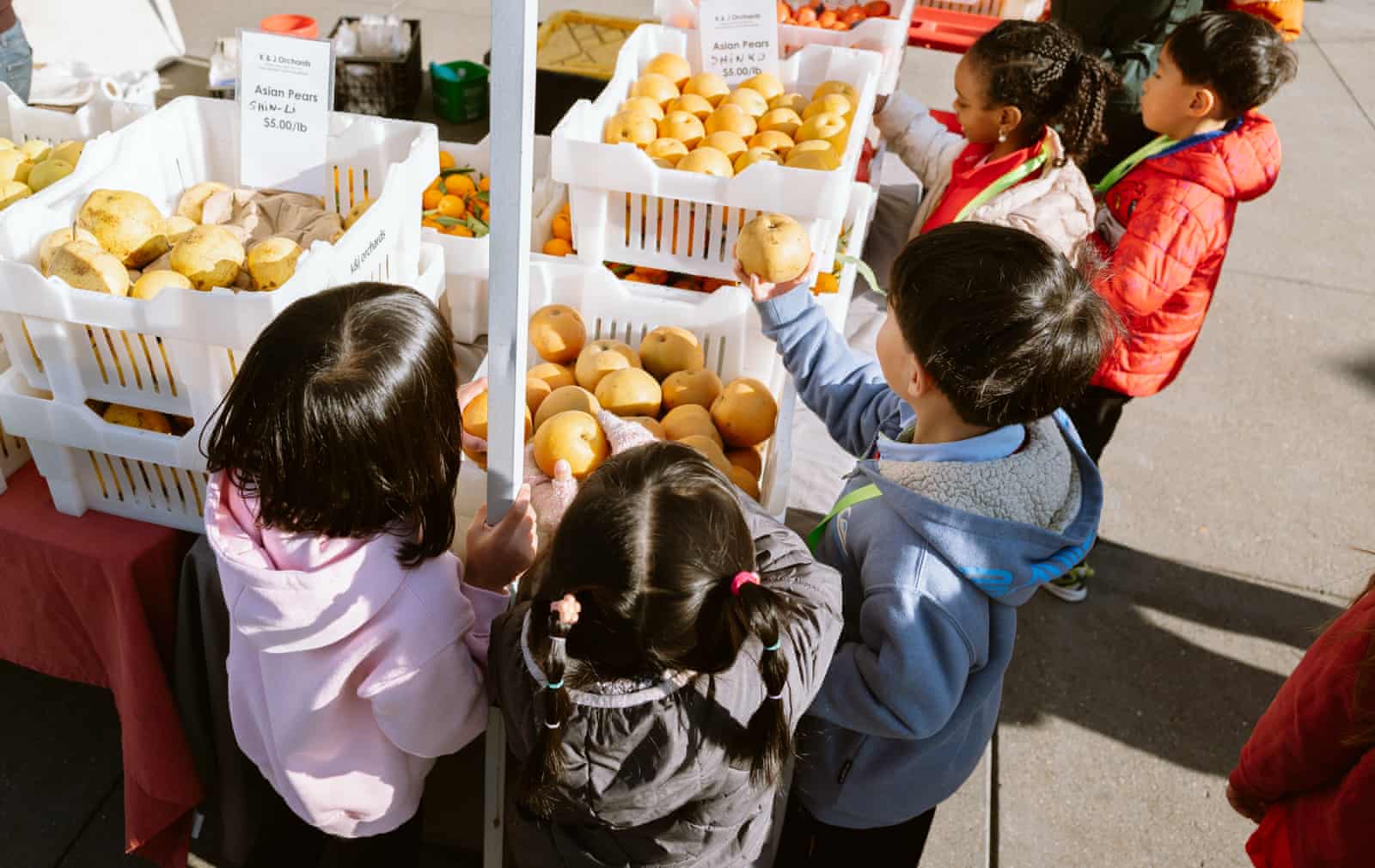
An organization called Foodwise Kids has brought more than 20,000 students to farmers’ markets to learn about the food system and taste new-to-them produce. Sometimes the teacher will challenge the students to join “the One-Bite Club.” 

When John came back from college the first time, one of the things he said, only half joking, was, “Why didn’t you tell me I liked mushrooms?”

He eats everything now, but as a kid, he had limited tastes, and I was no good at insisting he try something.

Today a special program for young children encourages tasting new things as part of a group.

Cecilia Nowell reports at the Guardian, “On a crisp winter morning in San Francisco, a team of six-year-olds declare that their favorite fruits and vegetables are peaches and broccoli – but then again, they have yet to venture out into the farmers’ market where produce they have never tried before awaits them. With handfuls of tokens, they will purchase persimmons, pomegranates, Asian pears, purple potatoes, kale and more from the farmers who grew them – then embark on a tasting journey, featuring new and familiar spices.

“The first-graders are visiting the Ferry Plaza Farmers Market – a Bay Area institution that draws more than 100 farmers to San Francisco’s waterfront three days a week – with 22 of their classmates from Lincoln elementary. That morning, the children had ridden the subway from their school in Oakland’s Chinatown into the city with parent chaperones and their teacher, Kathy Chen.

“Chen [knows] that at this age, her students are prone to becoming picky eaters – but what is cooked at home and what they try at school can change that. The hope is that after this field trip, when the cafeteria serves up an unfamiliar veggie or they’re offered a new fruit, the students might be a little more willing to take a bite.

“The trip is sponsored by Foodwise Kids, a nutrition and wellness program for elementary school students in the San Francisco Bay Area coordinated by the 30-year-old non-profit Foodwise. Since the program’s launch in 2012, it’s brought more than 20,000 local students out to the farmers’ market to learn about the food system. It’s focused primarily on schools with a high percentage of students of color or kids eligible for free or reduced-price school meals, and education director Tiffany Chung says the aim is to get ‘students excited about eating fruits and vegetables’ in the hopes that ‘they’ll incorporate them into their daily life and eventually lead to longer-term healthy eating options.’ …

“At folding tables, they introduce themselves to Foodwise’s staff and volunteers, and name their favorite fruits and vegetables. Chung jumps in for a moment to speak Mandarin with one student who doesn’t feel comfortable speaking English – she notes that many of the program’s volunteers are bilingual, usually in Spanish, to support the city’s diverse youth.

“While the majority of the classmates in her group prefer peaches, Temnit Desta says her favorite fruit is lemons. ‘She likes sour,’ her mom, Tehesh Hadush, explains. Although Temnit was born in California, her family is from Ethiopia and she has grown up eating lots of spicy foods. …

“Just a few years after the Loma Prieta earthquake devastated the highway running along San Francisco’s coast, community groups began discussing ways to connect downtown with the waterfront – and settled on a farmers’ market. Another aim was to educate urban dwellers about California’s farmland and sustainable agriculture while providing access to healthy, fresh produce. To this day, the market prioritizes urban families – not only by accepting Snap, previously known as food stamps, but by matching every dollar spent so families can double their Snap spending up to $15.

“After they’ve filled a basket with produce – so much that the six-year-olds are carrying the basket in teams of two – the small groups take off for a quick tour of the farmers market. When they return, Chung and other volunteers lead the groups in a game guessing which season different crops grow in. As they play, youth education manager Marcelo Clark starts chopping and roasting different trays of the produce – washing raspberries, flavoring cauliflower with jerk spice and roasting potatoes with cumin. He aims to use a mix of spices the children may have already tried at home – and others that might be new to them.

“ ‘A lot of our students are newer to America, and may not speak English,’ says Chung, but at the market ‘they’re able to see produce that is familiar to them. … They’re able to point out: “I know this. This is cilantro. I have this on tacos.” ‘ …

“When the food has been prepared, Clark carries trays of fruit and both raw and roasted veggies out to the class. The students dive into the purple potatoes, carrots, brussels sprouts, kale and cauliflower – but are more hesitant to try hummus and raw broccoli. Although her classmates and their parents exclaim at the fresh persimmon, Temnit is wary of the unfamiliar fruit.

“ ‘Today is all about trying new things and giving things a chance,’ Chung reminds the class, gently encouraging them to try just the smallest bite of everything.

“ ‘When students are unfamiliar with a fruit and vegetable, there is a lot of hesitation. We try to create this safe space where we’re telling them: “It’s OK if you don’t like it. The whole point is just to try it.” ‘ …

“By the end of the class, Temnit will be asking for more persimmon, and one of her classmates will be racing around trying to finish everyone’s leftover pomegranate seeds.”

More at the Guardian, here.

Read Full Post »

Photo: Agustín Marcarian/Reuters.
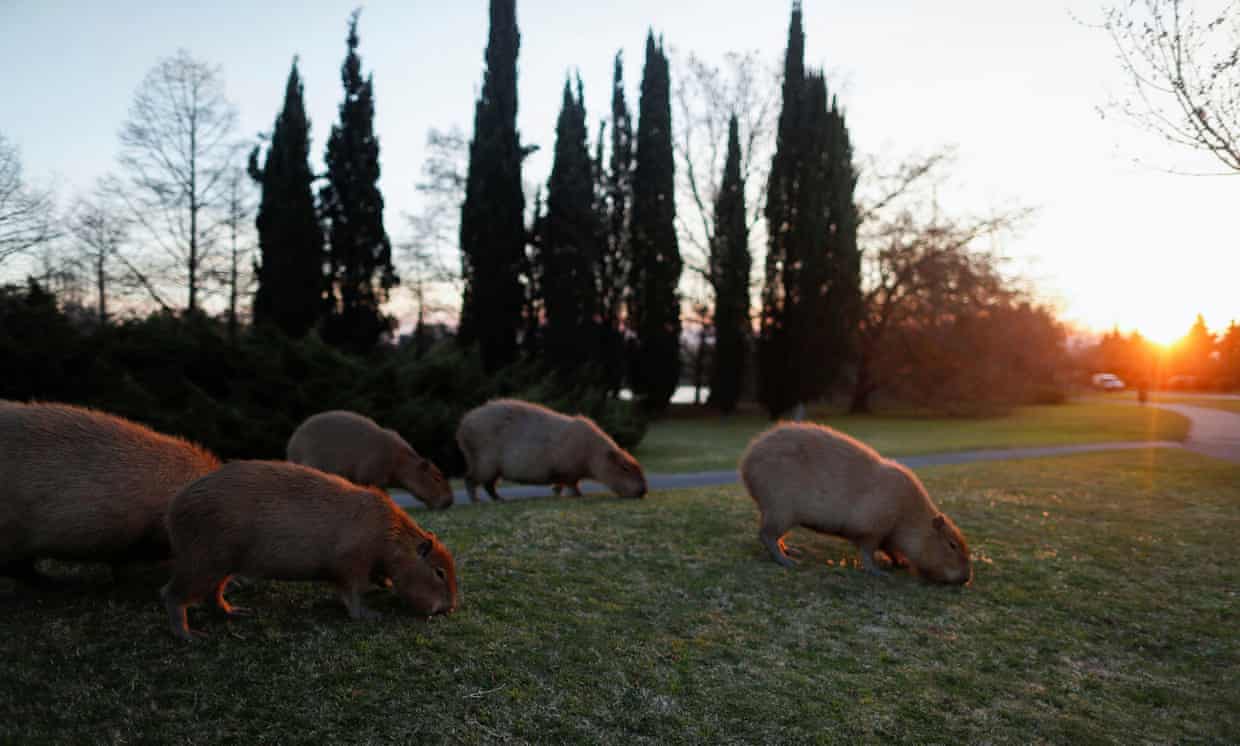
Capybaras eat the grass in the gated community of the Nordelta, north of Buenos Aires.

Can there be such a thing as too many capybaras? Five-year-old Suzanne visiting Disney World back in the day would have said no. Now she’s grown up with children of her own, but she was still pretty excited to see capybaras wandering around Columbia last week. (Columbia seems to be a new destination for school vacations. John’s family went last year and Suzanne’s this year.)

Meanwhile in Argentina, capybaras are considered too much of a good thing, especially in wealthy neighborhoods.

Harriet Barber reports for the Guardian, “A contraception debate is gripping one of Argentina’s most notable luxury neighborhoods – not for its wealthy residents, but for its original occupants, the capybaras.

“In recent years, the lovable rodents have been accused of overrunning the Nordelta, a meticulously landscaped and manicured suburb north of Buenos Aires.

“Now, in a bid to quell reproduction – some accounts suggest the number of capybaras has tripled to more than 1,000 in the past three years – the Buenos Aires government has approved wildlife population control plans, involving selective sterilization and contraceptives.

“Marcelo Cantón, a resident and spokesperson for the Nordelta Neighborhood Association, says that while capybaras themselves are not a problem, the ‘excessive growth’ of their populations is, adding that it is causing the creatures to ‘fight among themselves, fight with dogs in private gardens,’ leading to traffic accidents. …

According to El País, the new plans would see two doses of contraceptives injected into 250 of the rodents … which authorities hope will stem reproduction for up to a year.

“But not all neighbors are in agreement. The Nordelta sits within the Paraná Delta, an environmentally important wetland home to dense flora, an abundance of birds and dozens of species of mammals.

“Silvia Soto and a group of neighbors known as ‘Nordelta Capybaras – We Are Your Voice’ say the plans should be halted, dispute that there is an overpopulation problem and criticize property developers for ignoring proposals to create biological corridors and protected areas.

“ ‘For years, we have been asking for different, linked green areas that function as natural reserves connected by biological corridors, to protect the capybaras and preserve their survival and coexistence in their own natural space,’ Soto said. … Environmentalists are also now weighing in and calling on the government to protect the capybaras, which are the world’s largest rodent.”

More at the Guardian, here.

I don’t know what’s best for Buenos Aires, but I’ve often wondered if there weren’t some way to use contraception for the deer populations that have burgeoned in urban and suburban America, spreading tick diseases. What do you think?

Read Full Post »

Photo: Mason Kumet/The Hechinger Report.
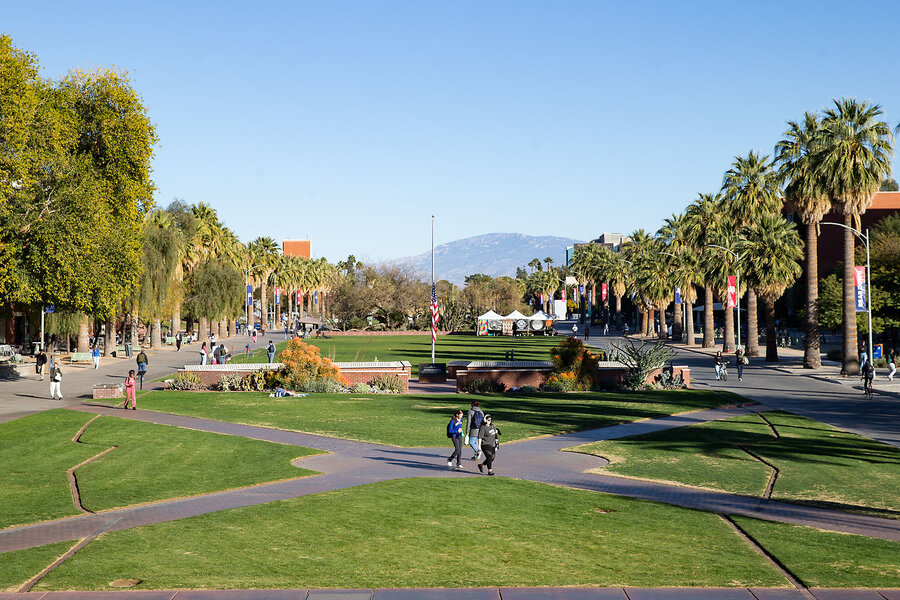
The University of Arizona campus in Tucson, where the number of undergrads majoring in the humanities has in creased by 76% since 2018, when a bachelor’s in humanities was introduced.

For years, the value of a postsecondary education has been measured by how much money someone can make after graduation, with the result that classes in the humanities were devalued.

Now there’s evidence that in addition to the intrinsic value of the humanities, they can make the difference between getting the job and not getting it.

Jon Marcus wrote at the Hechinger Report (a nonprofit news organization focused on inequality and innovation in education) about what’s going on, and the Christian Science Monitor reprinted the story.

“Olivia Howe was hesitant at first to add French to her major in finance at the University of Arizona. She was afraid it wouldn’t be very useful in the labor market.

“Then her language skills helped her land a job at the multinational technology company Siemens, which will be waiting for her when she graduates this spring.

“ ‘The reason I got the job is because of my French. I didn’t see it as a practical choice, but now I do,’ says Ms. Howe, who, to communicate with colleagues and clients, also plans to take up German. …

“The simple message that majoring in the humanities pays off is being pushed aggressively by this university and a handful of others. They hope to reverse decades of plummeting enrollment in subjects that teach skills employers say they need from graduates but aren’t getting.

“The number of undergraduates majoring in the humanities at the University of Arizona has increased 76% since 2018, when it introduced a bachelor’s degree in applied humanities that connects the humanities with programs in business, engineering, medicine, and other fields. It also hired a humanities recruitment director and marketing team and started training faculty members to enlist students in the major with the promise that an education in the humanities leads to jobs.

“That’s an uncharacteristic role for humanities professors, who have tended to resist suggestions that it’s their role to ready students for the workforce. But it has become an existential one.

“Between 2012 and 2022, the number of undergraduate degrees awarded in the humanities – English, history, languages, literature, philosophy, and related subjects – fell 24%, according to the American Academy of Arts and Sciences. It’s now below 200,000 for the first time in more than two decades.

“In response, universities and colleges nationwide have started eliminating humanities departments and laying off humanities faculty as policymakers, parents, and administrators put a premium on highly specialized subjects they believe lead more directly to jobs. …

“ ‘What we are up against is the constant negative storytelling about how the humanities are useless,’ says Alain-Philippe Durand, dean of the University of Arizona’s College of Humanities and a professor of French. …

“ ‘When you tell them we are teaching the life of the mind, they laugh at you,’ Dr. Durand says over lunch at the student center. ‘You have people saying, “Do we really need this?” ‘ he says. …

“Dr. Durand’s department went so far as to put that declaration on a billboard on Interstate 10 in Phoenix, conveniently near the campus of rival Arizona State University. ‘Humanities = Jobs,’ it said, with the college’s web address. Dr. Durand keeps a model of it on a shelf in his office.

“The skills he’s talking about include how to communicate effectively, think critically, work in teams, and be able to figure out a way to solve complex problems outside of a particular area of expertise. Employers say they want all of those, but aren’t getting them from graduates who major in narrower fields.

“Eight out of 10 executives and hiring managers say it’s very or somewhat important that students emerge from college with these kinds of skills, according to a survey by the American Association of Colleges and Universities. …

“What employers want ‘is people who can make sense of the human experience,’ says Rishi Jaitly, who has developed an executive education program at Virginia Polytechnic Institute that uses the humanities to help mid-career managers be better leaders.

“Along with Arizona, Virginia Tech is among a small group of universities taking steps to change the conversation about the humanities. A surprising number are technology-focused. These include the Georgia Institute of Technology, which has also started drawing a connection between the humanities and good jobs at high pay. That has helped boost undergraduate and graduate enrollment in Georgia Tech’s Ivan Allen College of Liberal Arts by 58% since 2019, to 1,884 students in 2023 – the most recent period for which the figure is available.

“Before then, ‘we were doing almost nothing to explain the value of the humanities,’ says Richard Utz, interim dean. That’s important at a technological institute, he says. …

“A medievalist, Dr. Utz uses the example of assigning his students 15th-century Robin Hood ballads. ‘They read something that is entirely alien to them, that is in late medieval English, so they’re completely out of their comfort zone,’ he says. Then they split into groups and consider the material from various perspectives. It makes them the kind of future workers ‘who are versatile enough to look at a situation from different points of view.’ …

“In the first two years of the humanities-focused executive education program at Virginia Tech, the participants have come from Amazon, Microsoft, Boeing, Zillow, and other companies. They study history, philosophy, religion, classics, literature, and the arts. They use these to consider questions about, and qualities of, leadership, and to see how what they learn can be applied to technology trends including data privacy and artificial intelligence. …

“Says Virginia Tech’s Mr. Jaitly, a former technology entrepreneur and founder of a venture capital firm whose own undergraduate degree was in history. ‘The superpowers of the future emanate from the humanities: introspection and imagination, storytelling and story-listening, critical thinking.’ …

“Some humanities faculty [bristle] at the idea that their work is relevant only when combined with more career-oriented disciplines, says Dr. Durand, at the University of Arizona. ‘But you have to be aligned with your students,’ he says. … ‘We can’t do things the way we always have.’ ”

More at the Hechinger Report via the Monitor, here. No firewall.

Read Full Post »

Photo: BLM.
“The US California Condor Recovery Program, initiated in the 1970s, represented an enormous change in the strategy of species conservation,” writes Knowable Magazine.

They are not as appealing as, say, hummingbirds, but the California condors had a lot of environmentalists worried in the 1970s, including a young boy I knew who grew up to be a respected biologist and scientific photographer.

I remember him talking a lot about condors when we were carpooling. And I thought, “Well, condors. An odd obsession for a child.”

Thank goodness people get obsessed about the least beautiful denizens of our planet.

Iván Carrillo tells the condor story at Knowable Magazine via the Tucson Sentinel.

“The spring morning is cool and bright in the Sierra de San Pedro Mártir National Park in Baja California, Mexico, as a bird takes to the skies. Its 9.8-foot wingspan casts a looming silhouette against the sunlight; the sound of its flight is like that of a light aircraft cutting through the wind. In this forest thick with trees up to 600 years old lives the southernmost population of the California condor (Gymnogyps californianus), the only one outside the United States. Dozens of the scavenging birds have been reintroduced here, to live and breed once again in the wild.

“Their return has been captained for more than 20 years by biologist Juan Vargas Velasco and his partner María Catalina Porras Peña, a couple who long ago moved away from the comforts of the city to endure extreme winters living in a tent or small trailer, to manage the lives of the 48 condors known to fly over Mexican territory. Together — she as coordinator of the California Condor Conservation Program, and he as field manager — they are the guardians of a project whose origins go back to condor recovery efforts that began in the 1980s in the United States, when populations were decimated, mainly from eating the meat of animals shot by hunters’ lead bullets.

“In Mexico, the species disappeared even earlier, in the late 1930s. Its historic return — the first captive-bred condors were released into Mexican territory in 2002 — is the result of close binational collaboration among zoos and other institutions in the United States and Mexico.

“Beyond the number on the wing that identifies each individual, Porras Peña knows perfectly the history and behavior of the condors under her care. … She captures her knowledge in an Excel log: a database including information such as origin, ID tag, name, sex, age, date of birth, date of arrival, first release and number in the Studbook (an international registry used to track the ancestry and offspring of each individual of a species through a unique number). Also noted is wildlife status, happily marked for most birds with a single word: ‘Free.’ …

“The California condor, North America’s largest bird, has taken flight again. It’s a feat made possible by well-established collaborations between the US and Mexico, economic investment, the dedication of many people and, above all, the scientific understanding of the species — from the decoding of its genome and knowledge of its diseases and reproductive habits to the use of technologies that can closely follow each individual bird.

“But many challenges remain for the California condor, which 10,000 years ago dominated the skies over the Pacific coast of the Americas, from southern Canada to northern Mexico. Researchers need to assemble wild populations that are capable of breeding without human assistance, and with the confidence that more birds are hatched than die. It is a tough battle against extinction, waged day in and day out by teams in California, Arizona and Utah in the United States, and Mexico City and Baja California in Mexico.

“The US California Condor Recovery Program, initiated in the 1970s, represented an enormous change in the strategy of species conservation. After unsuccessful habitat preservation attempts, and as a last-ditch attempt to try to save the scavenger bird from extinction, the United States Fish and Wildlife Service and the California Fish and Game Commission advocated for a decision as bold as it was controversial: to capture the last condors alive in the wild and commit to breeding them in captivity. …

“On April 19, 1987, the last condor was captured, marking a critical moment for the species: On that day, the California condor became officially extinct in the wild.

“At the same time, a captive breeding program was launched, offering a ray of hope for a species that, beyond its own magnificence, plays an important role in the health of ecosystems — efficiently eliminating the remains of dead animals, thus preventing the proliferation of diseases and environmental pollution.

“This is what is defined as a refaunation project, says Rodolfo Dirzo, a Stanford University biologist. … Refaunation, Dirzo says, involves reintroducing individuals of a species into areas where they once lived but no longer do. He believes that both the term and the practice should be more common. …

“The California Condor Recovery Program produced its first results in a short time. In 1988, just one year after the collection of the last wild condors, researchers at the San Diego Zoo announced the first captive birth of a California condor chick.

“The technique of double or triple clutching followed, to greater success. Condors are monogamous and usually have a single brood every two years, explains Fernando Gual, who until October 2024 was director general of zoos and wildlife conservation in Mexico City. But if for some reason they lose an egg at the beginning of the breeding season — either because it breaks or falls out of the nest, which is usually on a cliff — the pair produces a second egg. If this one is also lost or damaged, they may lay a third. The researchers learned that if they removed the first egg and incubated it under carefully controlled conditions, the condor pair would lay a second egg, which was also removed for care, leaving a third egg for the pair to incubate and rear naturally.

“This innovation was followed by the development of artificial incubation techniques to increase egg survival, as well as puppet rearing, using replicas of adult condors to feed and care for the chicks born in captivity. That way, the birds would not imprint on humans, reducing the difficulties the birds might face when integrating into the wild population.

“Xewe (female) and Chocuyens (male) were the first condors to triumphantly return to the wild. The year was 1992, and the pair returned to freedom accompanied by a pair of Andean condors, natural inhabitants of the Andes Mountains in South America. Andean condors live from Venezuela to Tierra del Fuego and have a wingspan about 12 inches larger than that of California condors. Their mission here was to help to consolidate a social group and aid the birds in adapting to the habitat. The event took place at the Sespe Condor Sanctuary in the Los Padres National Forest in California. In a tiny, tentative way, the California condor had returned.

“By the end of the 1990s, there were other breeding centers, such as the Los Angeles Zoo, the Oregon Zoo, the World Center for Birds of Prey in Boise, Idaho, the San Diego Zoo and the San Diego Zoo Safari Park. Then, in 1999, the first collaboration agreements were established between the United States and Mexico for the reintroduction of the California condor in the Sierra de San Pedro Mártir National Park. The number of existing California condors increased from just over two dozen in 1983 to more than 100 in 1995, some of which had been returned to the wild in the United States. By 2000, there were 172 condors and by 2011, 396.

“By 2023, the global population of California condors reached 561 individuals, 344 of them living in the wild.” Lots more at Knowable Magazine via the Tucson Sentinel, here.

I salute the cleverness and devotion of scientists. May they live long and prosper!

Read Full Post »

Photo: Mike Belleme for the New York Times.
Barbara Kingsolver said she felt indebted to the people who shared their stories when she was doing research for her novel about addiction, and wanted to give back. 

Long before popular author Barbara Kingsolver decided to base a novel on one by Charles Dickens, Mr. Dickens was taking controversial positions on social justice. I think he believed he was not having an influence, but he kept shouting, and over time other voices chimed in and change happened.

There’s a time and place for writers to be impartial, but not in novels. And recently Kingsolver put her money where her mouth is by deciding to take the profits of her novel on the opioid crisis and give it to an addiction center.

Alexandra Alter wrote at the New York Times about Kingsolver’s decision.

“When Barbara Kingsolver was writing Demon Copperhead, a novel that explores the devastating effects of the opioid crisis in southern Appalachia, she was doubtful that people would want to read about such a grim subject.

“To draw readers in, she knew she would have to ground the narrative in real stories and push against stereotypes about the region. So she traveled to Lee County, Va., a corner of Appalachia that’s been battered by drug abuse, and spoke to residents whose lives had been wrecked by opioids.

“ ‘I sat down and spent many hours with people talking about their addiction journey,’ Kingsolver said. …

“The novel was an instant success, in time selling three million copies and winning a Pulitzer Prize for fiction in 2023. But even before the novel came out, Kingsolver felt indebted to the people who shared their stories. …

“Kingsolver decided to use her royalties from Demon Copperhead to fund a recovery program for people battling addiction [and] founded a recovery house for women in Lee County, where the novel is set.

“The center, Higher Ground Women’s Recovery Residence, will house between eight and 12 women recovering from drug addiction, offering them a place to stay, for a small fee, for up to two years, as well as counseling and other forms of support, like free community college classes.

“Kingsolver grew up in rural Kentucky and lives on a farm in Virginia. As someone raised in the region, she said, she felt she couldn’t ignore the opioid epidemic in her fiction. But she struggled for years with how to write about the issue in a way that would make readers pay attention.

“While on a book tour in England, Kingsolver stayed in a bed-and-breakfast where Charles Dickens had worked on his novel David Copperfield, and found inspiration in the story and its resilient young narrator.

“In Demon Copperhead, which is loosely based on Dickens’ novel, Kingsolver tells the story of Damon Fields, a boy who is born to a single teenage mother who struggles with drug addiction. He ends up in foster care and later succumbs to opioid abuse. …

“ ‘I had these royalties that Demon brought me. I took that money and went back to Lee County and said, what can we do with this?’

“The biggest need, she learned, was for support for people in recovery, who often had no housing or job prospects. She and her husband, Steven Hopp, started a nonprofit, Higher Ground, to create a residential home for women, and provided the funds for the nonprofit to purchase the property last summer. …

“Kingsolver said she’s been heartened by support the project has received from local organizations, including church groups that have helped get the living space in shape, a local store that donated furniture and a grant from the Lee County Community Foundation.

“ ‘You might, in earlier times, have expected stigma, for people not to be open to this, but instead it’s been, “Yes in my backyard,” ‘ Kingsolver said.

“ ‘This is the reality of where we live,’ she continued. ‘Everybody knows someone touched by the opioid epidemic.’ ”

Have you read the novel or are you a Kingsolver fan? Say something about this.

More at the Times, here.

Read Full Post »

Photo: Gerry Hadden/The World.
The town of Libros, in northeastern Spain, has a population of 60.

What are you reading?

Sometimes that question is my way of greeting someone: “Hi. What are your reading?”

Books are so important to me, I make the mistake of assuming they’re important to everyone. Right now I’m reading Fresh Water for Flowers, recommended by Suzanne, who liked the French bestseller (translated) about a woman who was a cemetery caretaker.

Books are important to a town in Spain, too. How could they not be, with a name like Libros? And now the town is now planning to rebuild its economy on the back of books.

Gerry Hadden has the story at Public Radio International’s The World.

“On a typical winter’s day in the village of Libros, in northeastern Spain, about the most exciting thing that happens is the hourly ringing of the church bell, which startles flocks of pigeons living in the belfry. …

“Libros has a population of 60. But once upon a time, some 2,500 people lived here. The majority of residents worked on farms, or in the nearby sulphur mines, which closed in the 1950s. But like lots of villages in the Teruel region, most of the older population has died off over the years, while the young emigrated, said Arana, who is an electrician by trade. …

“To attract newcomers, Arana thinks the key to the town’s salvation is in its name: Libros translates to ‘books,’ and he wants to open the town’s first ever library. 

“The library’s location has yet to be determined, but Arana has already started building its collection. A year ago in June, Arana made a plea for book donations on social media with the hashtag, Libros para Libros, or ‘Books for Books,’ which went viral.

“Since then, over 70,000 volumes — including novels, kids’ books, nonfiction and encyclopedias — have poured in from all over the world — from Argentina to Germany. Twelve boxes alone came in from Mexico.

“At one point, Arana said, the postman was coming by so many times a day that they gave him a key to town hall. Books were piled up all over the building, to the point where Arana could barely reach his office. So, late last year, he worked with volunteers to move a bunch of the books to a warehouse. …

“Adrian Soriano, 37, the town’s handyman, pointed to a big, red shipping container on the edge of town. It was filled to the ceiling with books.

“Arana said that he paid $3,000 for the container, money the tiny town can’t spare. And this is where the success and euphoria of the online book drive meets the economic realities of a small village.

“ ‘Now, we just need the library itself,’ Arana said. ‘The regional government likes the idea. But they say it will cost some $4 million to build it. We don’t have the money, but I am sure we’ll find it.’

“Arana said that they’ll apply for funds from the European Union if need be. His idea is to combine the library with a hotel to pay the salary of a librarian.  

“ ‘The library hotel will generate jobs. People need work, which is why they leave to begin with. If we can bring back just seven or eight families, well, they’d count as villagers.’

“Someone, he said, needs to organize the collection. Arana said that he’s confident because there’s proof that literary tourism can work here.

“For example, bestselling Spanish author Maribel Medina talked to Teruel TV about a project she runs called My Town Reads. It stages literary events in tiny villages, including Libros, inviting famous authors to visit, sign books and spend the night.

“Libros has hosted four events with Medina’s help. Arana said that hundreds of people showed up each time.

“ ‘It seems that because of our little literary boom, folks are starting to fix up the houses here,’ he said. ‘On weekends, more people are returning.’ …

“Libros native Santiago Perez, 81, who lives past a bunch of crumbling homes, pointed to a house with scaffolding around it. ‘One of my boys has set out to fix up that one. He’s making a really nice home for himself.’ “

Is this dream unrealistic? Well, that’s another thing about books — they encourage big dreams. And big dreams are a necessary step for big accomplishments.

More at PRI’s The World, here.

Read Full Post »

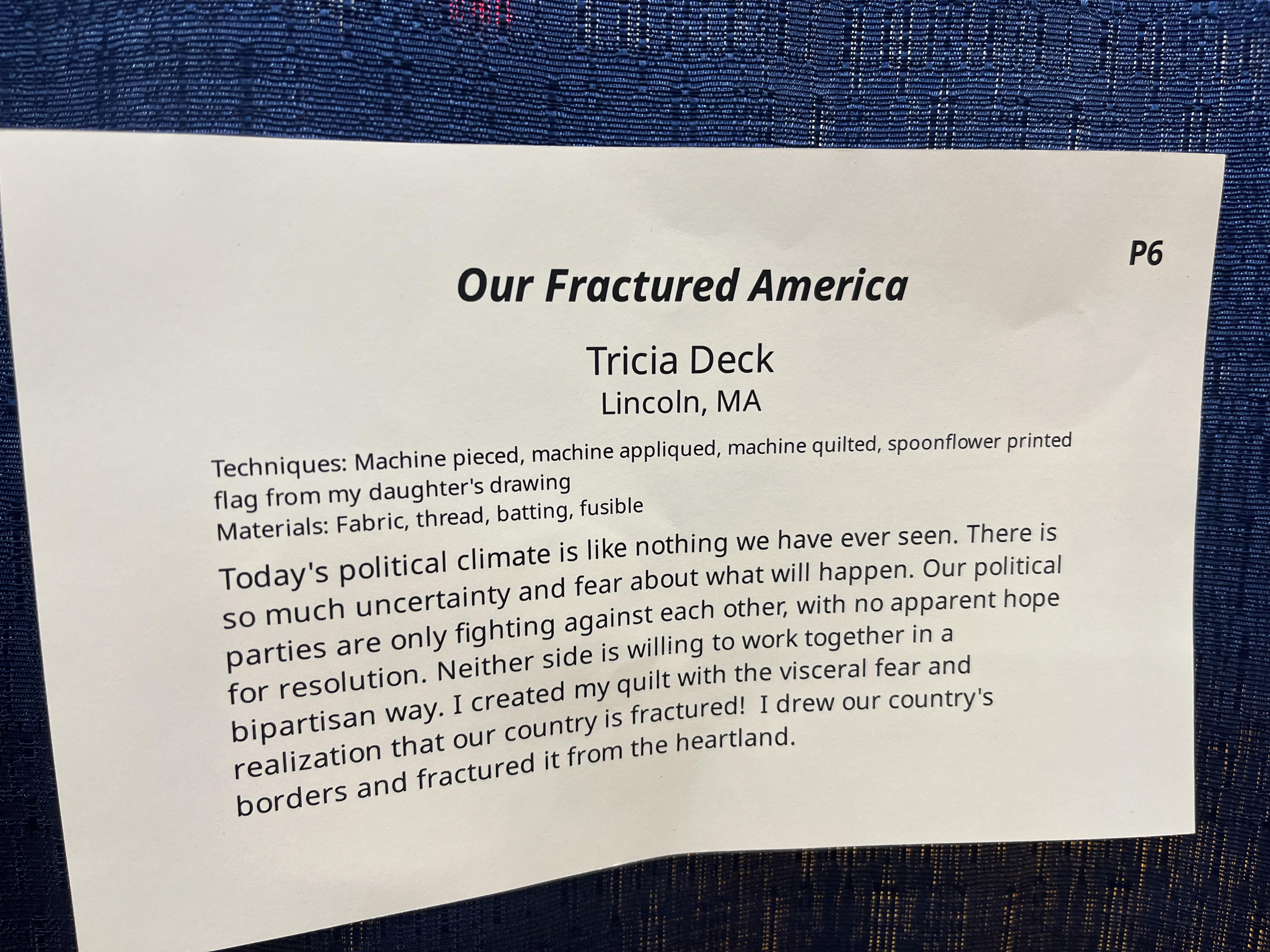
Although most of the country will celebrate the beginning of the American Revolution in 2026, the anniversary of the signing of the Declaration of Independence, in my town the big event is 2025 — 250 years after farmers with muskets confronted British soldiers at the North Bridge.

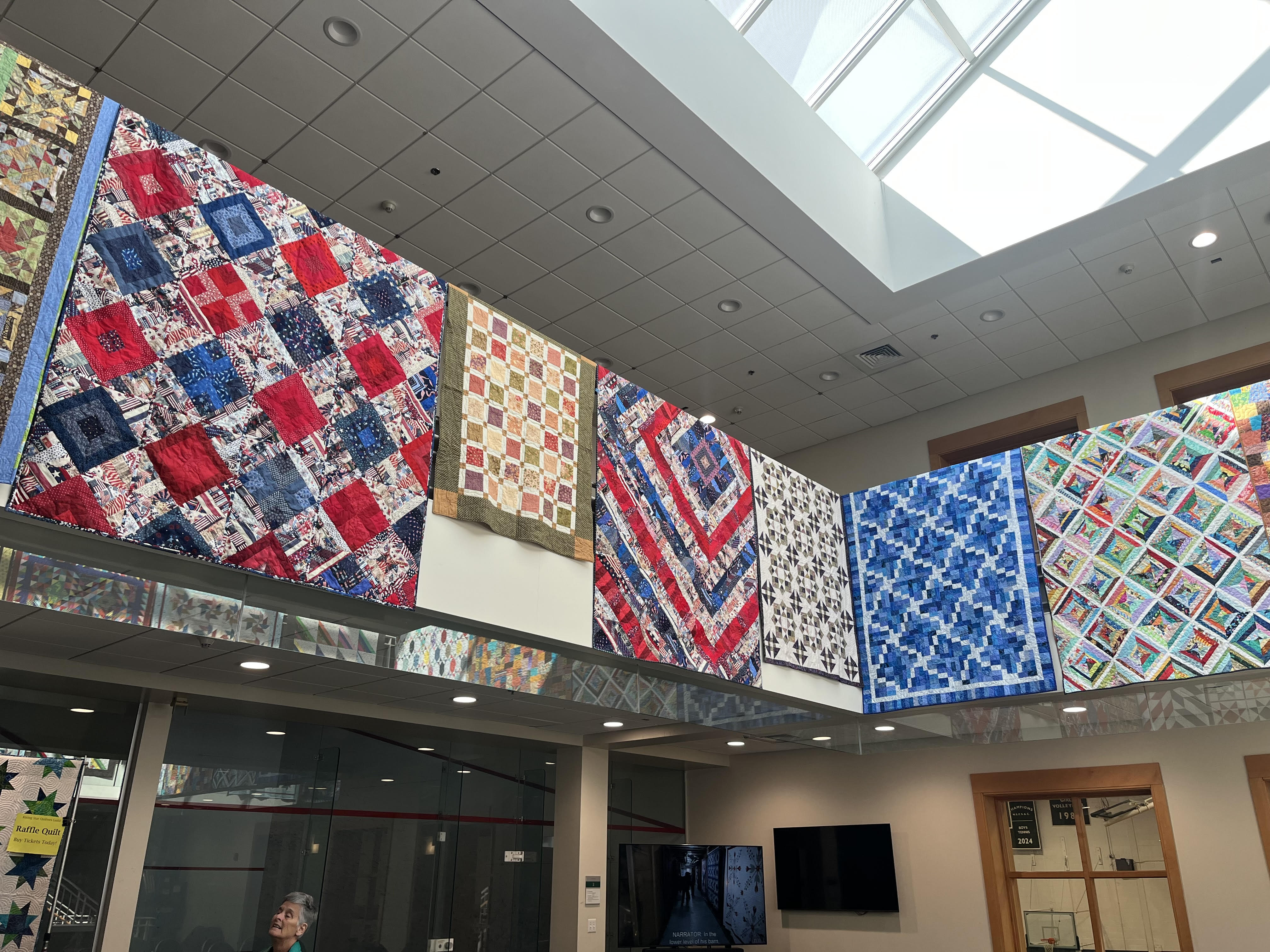
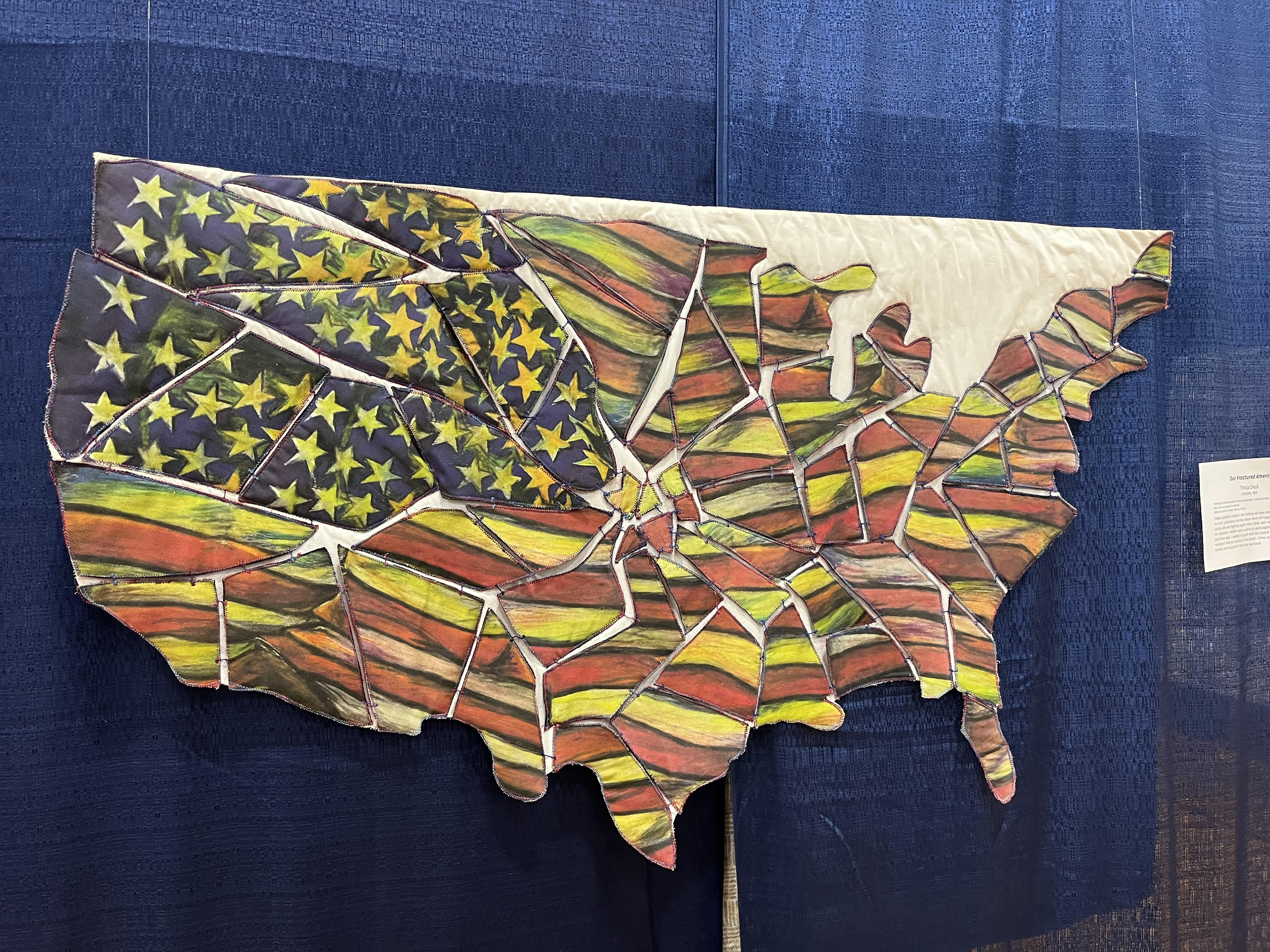
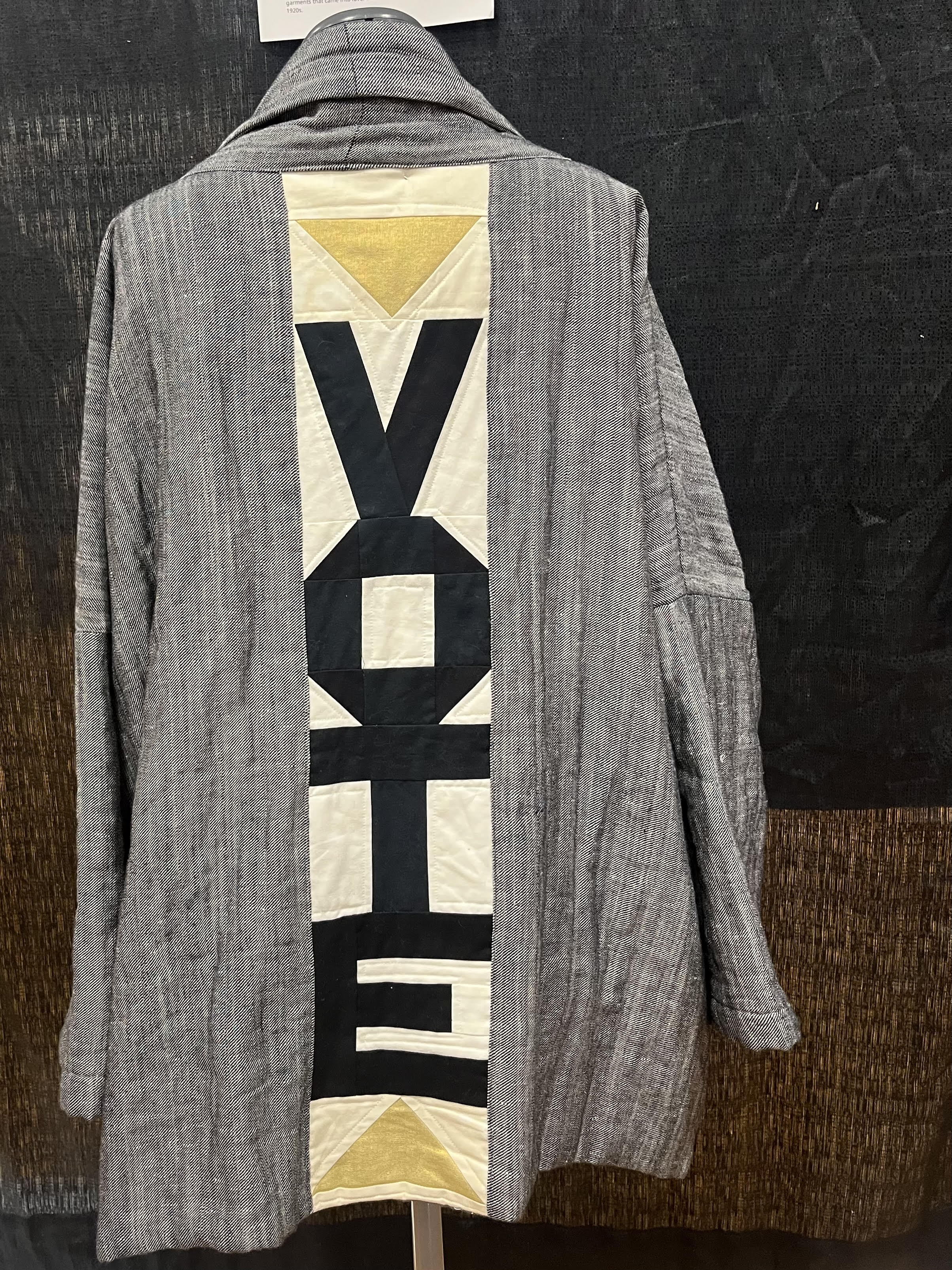
All New England calls it Patriots Day, and this year it will be more like Patriots Month. We started early with activities, and I took some pictures at the quilt show.

I couldn’t study every quilt as there were too many, but I’ll explain why these caught my eye.

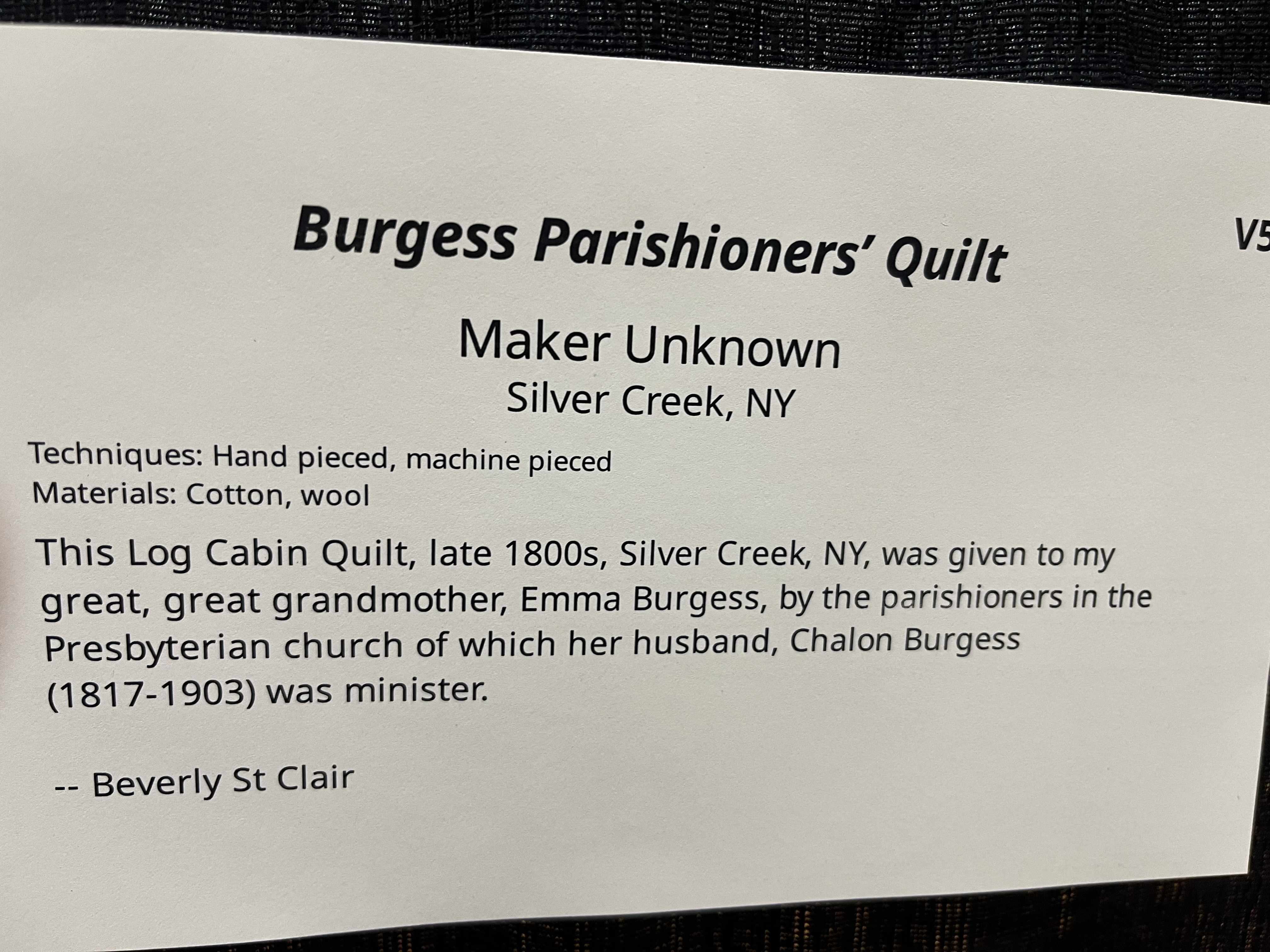
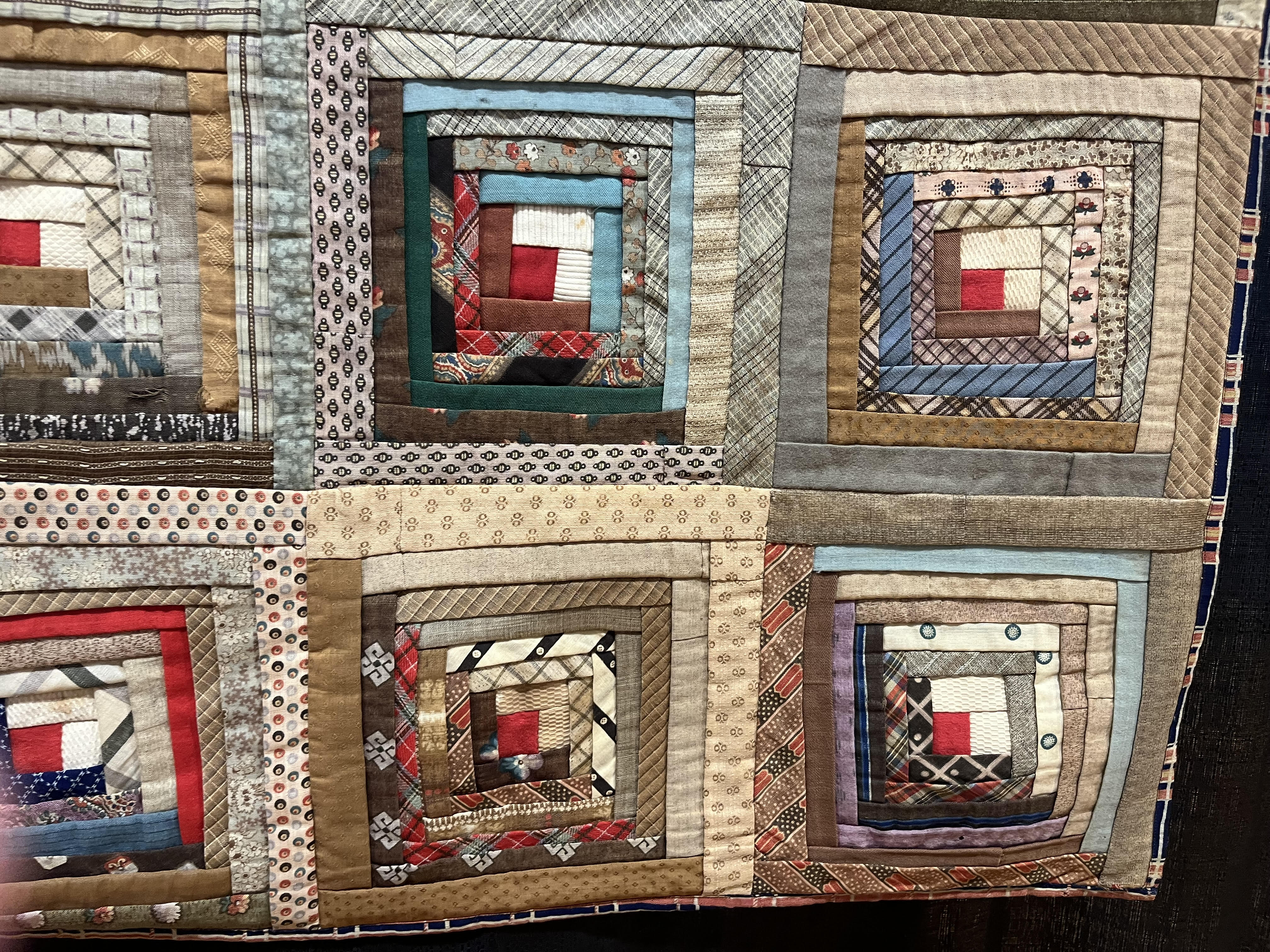
The first, a traditional log cabin style, I thought was in amazing condition to have lasted from the late 1800s.

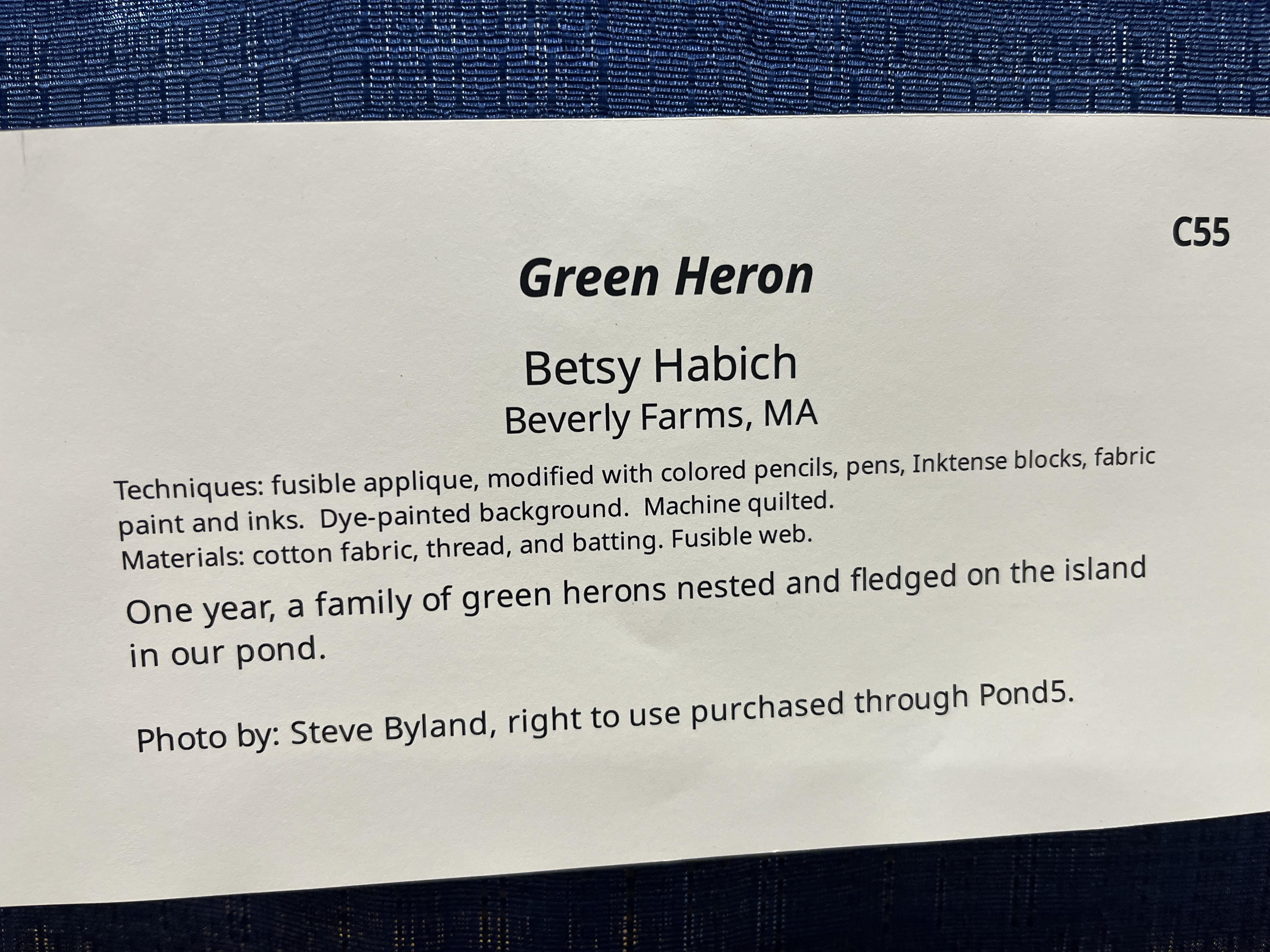
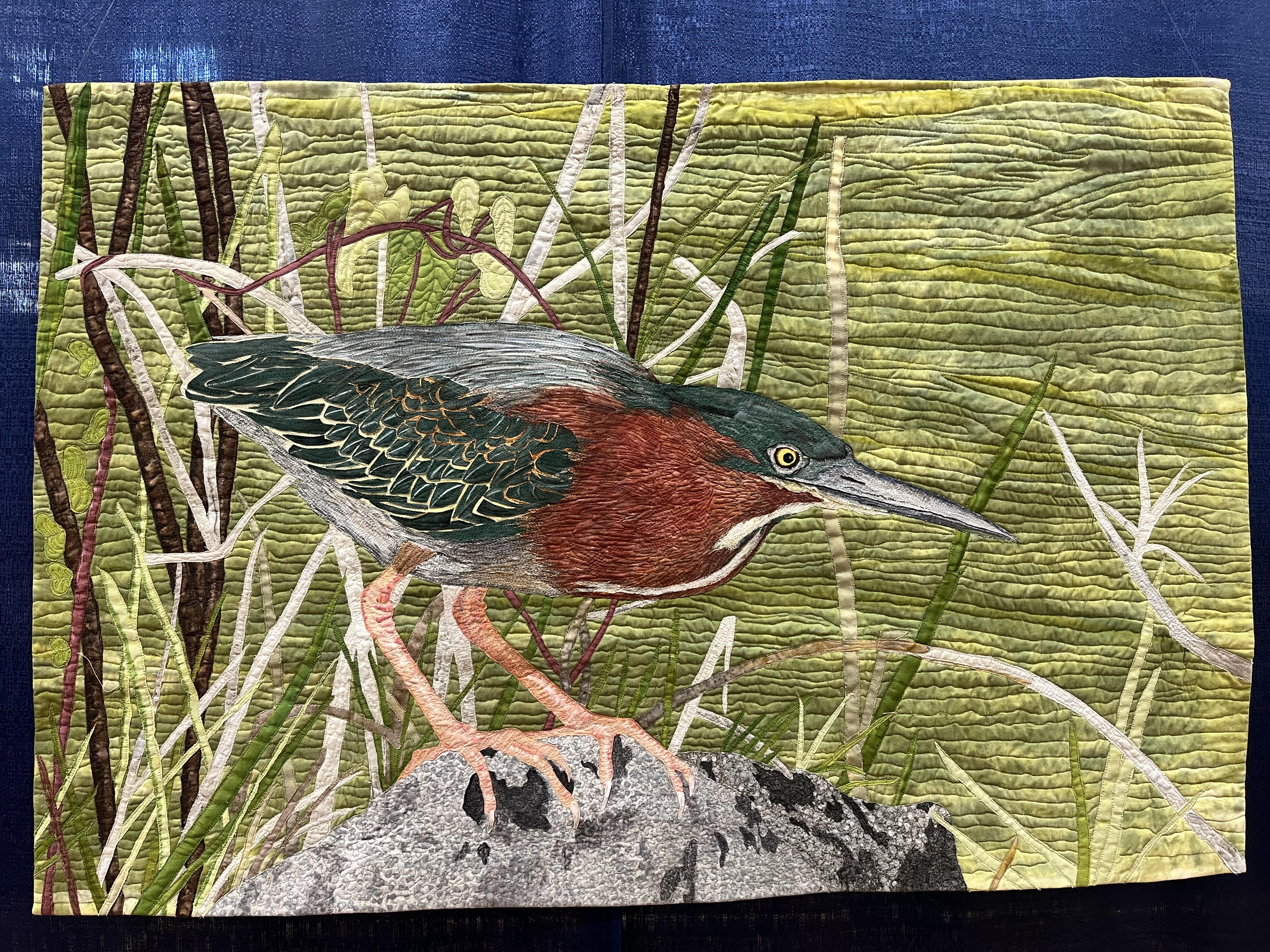
I photographed the green heron because I love herons and I liked this realistic one.

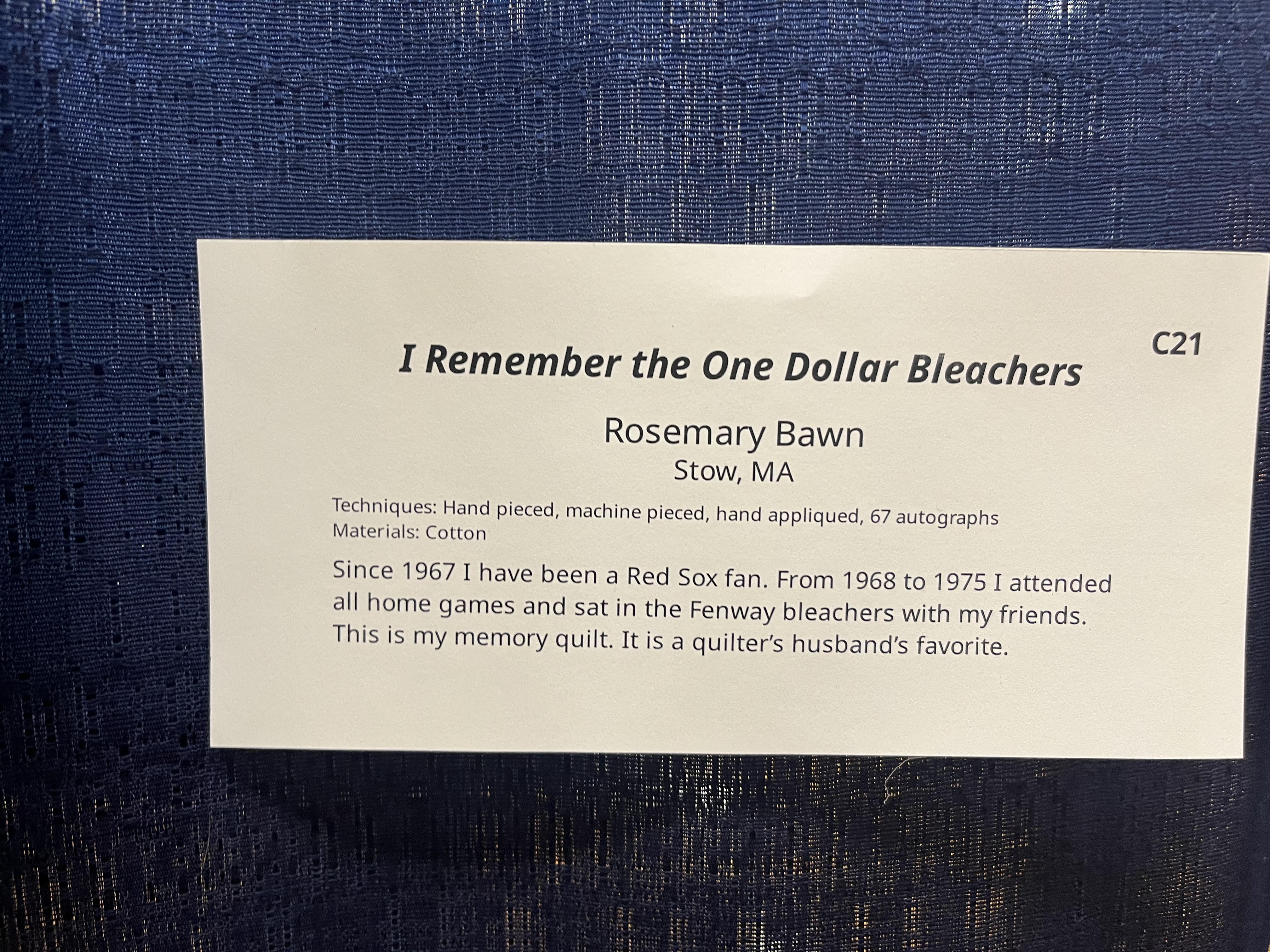
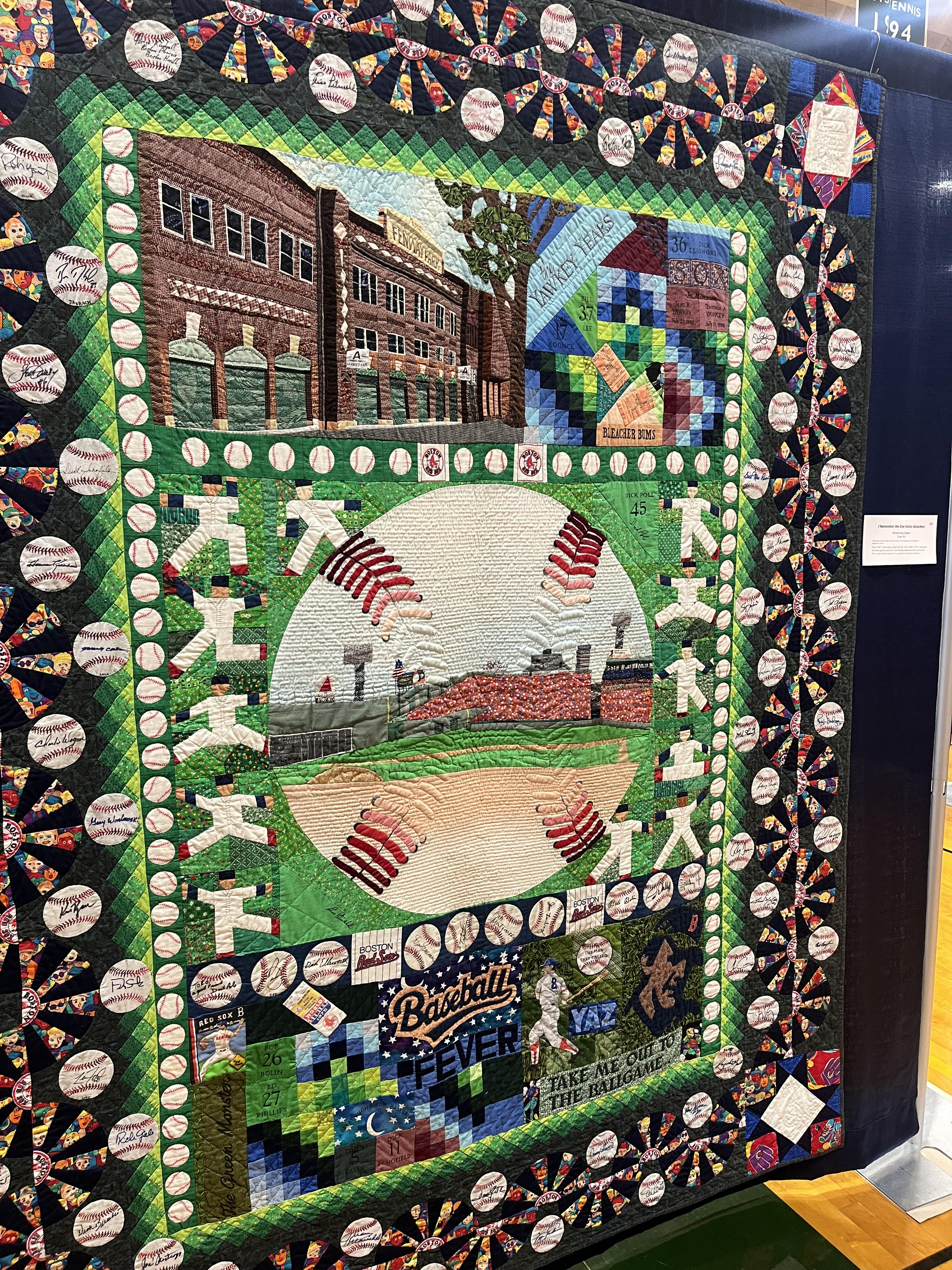
Contemporary New England cherishes its baseball team, the Red Sox, and Fenway Park, where the Sox play. Rosemary Brown, of Stow, went to town on that.

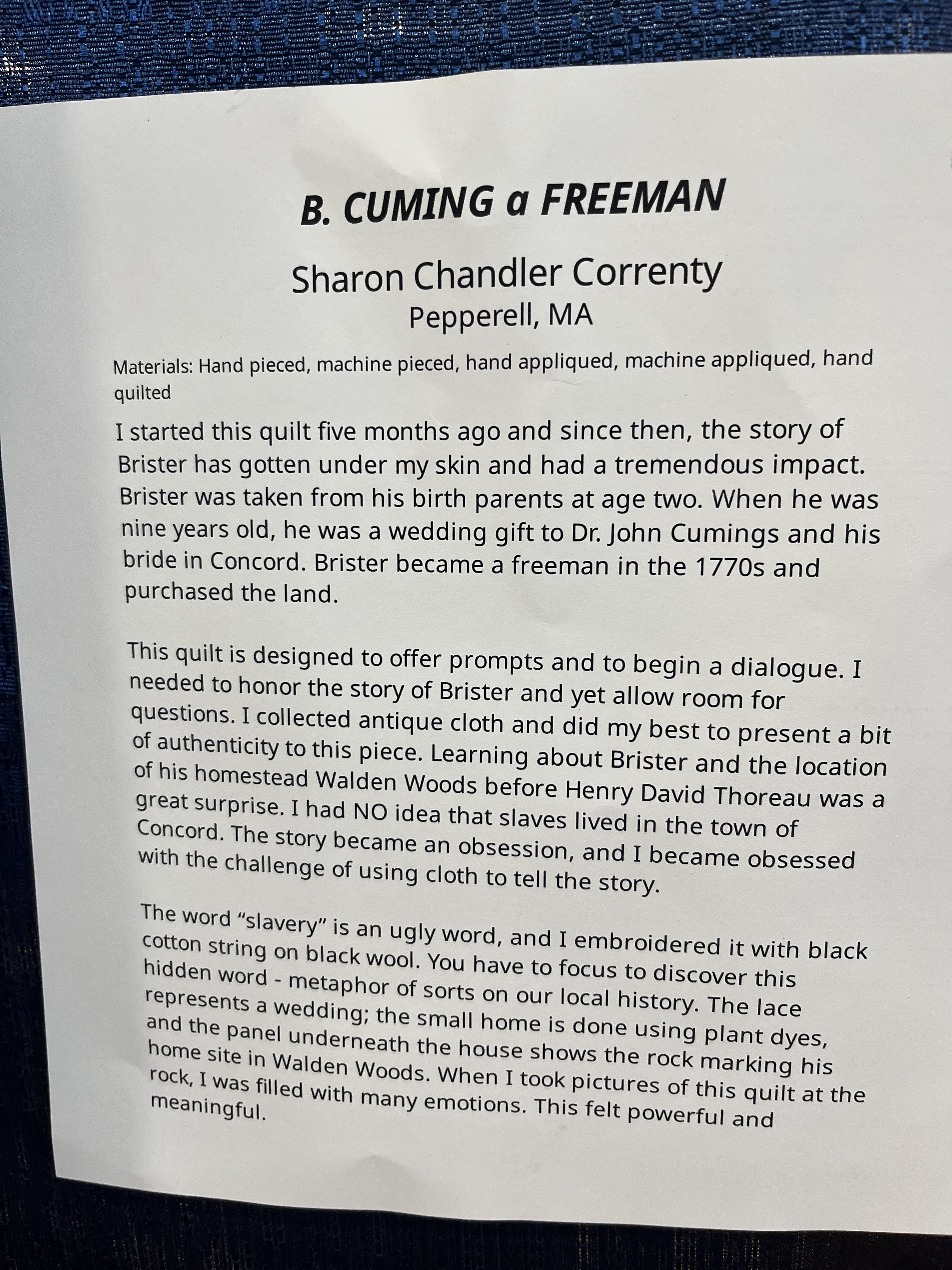
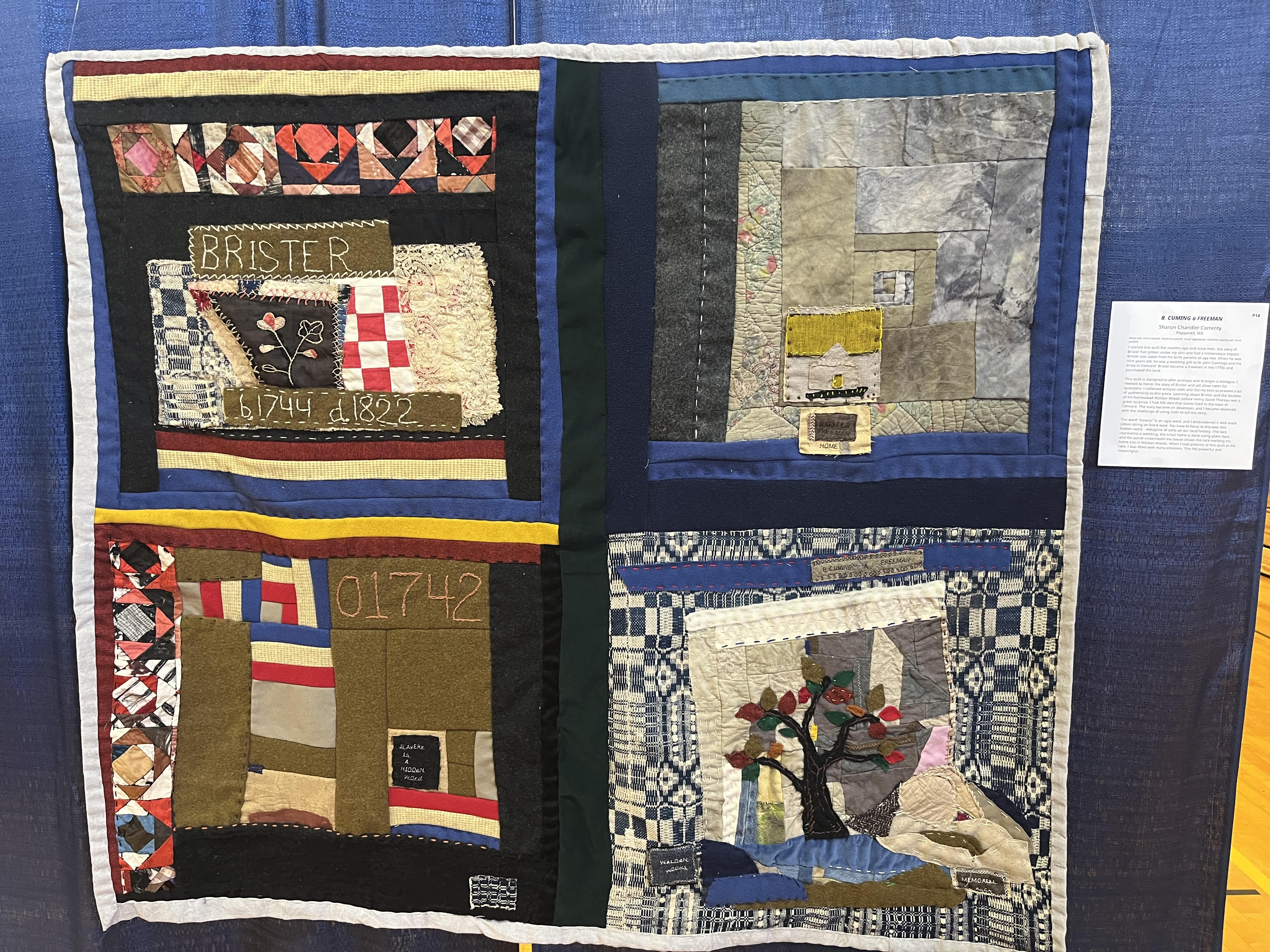
Until recently most Concordians didn’t realize there had once been slaves in our holier-than-thou town. In fact, I’m told, some slaves kept the farms going as the farmers took up their muskets. Brister Freeman is one we’ve been learning more about in recent years. He eventually gained his freedom, and he has an area of town named after him. Sharon Chandler Correnty explains her quilt below.

I was really moved by the next one, a nontraditional concept. Heartbreaking.

Below I share one thing I can do to help mend my broken heart. My thanks to the coat maker for the reminder that the country belongs to the people. We had a revolution for that.

Read Full Post »

Photo: Linda Xiao for the New York Times.
The hearty and healing Korean soup called gukbap.

Did you love Michelle Zauner’s Crying in H-Mart, her wistful, mouth-watering memoir? The Korean American emo singer wrote beautifully about her difficult relationship with her Korean mother, a relationship that couldn’t be understood without delving into the love they shared for Korean food.

If you also like Korean food, consider this hearty, aromatic soup, good for whatever ails you.

Eric Kim writes at the New York Times, “I come from water people. My mother, Jean, grew up in Jeonju, the capital of North Jeolla, a province on South Korea’s west coast known for its salt-preserved seafood, assertively seasoned cooking and clear spring water. It’s said that the same water makes the region’s bean sprouts especially sweet, germinating them, then eventually extracting their gentle flavor, as in one of the city’s signature dishes, bean-sprout soup with rice.

“In Korean cuisine, a scoop of steamed white rice nestled inside a bowl of brothy soup, or gukbap, forms a wide category of healing meals. Many things can become gukbap, like those bean sprouts and rice (kongnamul gukbap), our house brew when I was growing up; pork bones and rice (dwaeji gukbap); and beef, radish and rice (sogogi gukbap). There’s always rice, or bap, which also means meal in Korean. To some ears, then, gukbap could be translated to ‘soup meal,’ breakfast, lunch or dinner, not least because that one bowl contains protein, carbohydrates, vegetables, fat, everything.

Build a meal around soup — or build a life around it, as my family has, a pot ever-simmering on the stove — and you might slowly find yourself healed.

“Soup rice eases as it goes down. My friend Matt Rodbard, who was a writer of the cookbooks Koreaworld and Koreatown, calls gukbap a ‘utility player,’ because it can be served in the morning, ‘for fortifying a hangover or just getting you a solid foundation for the day,’ or in the evening with soju, to catch (or extend) the night’s excesses. …

“It took me until my 30s to realize how much I had taken my mother’s cumulative hours of boiling homemade stocks for granted. In the United States, standard boxed broths like chicken, beef and vegetable are much too assertive for the kinds of gentle Korean soups that nuzzle you from the inside because they’re so rich in flavor yet light on the tongue.

“There are no shortcuts to that kind of umami, but there are tricks: Sohui Kim, who wrote Korean Home Cooking, taught me to sear beef before boiling it for a stronger-tasting broth. Or if you want the kind of quiet savoriness that only vegetables can lend, turn to her ideal soup meal these days: doenjang guk, with hearty greens like spinach and radish tops. For Joanne Lee Molinaro, the author of The Korean Vegan Cookbook, her vegetarian yukgaejang fits the bill whenever she’s craving gukbap, which is often meat-based. The spicy soup’s quintessential ingredient, gosari, the new stems of the bracken fern, shreds beautifully, like meat. Caroline Choe, who wrote the cookbook Banchan, adds a little ground black pepper and scallions to gomtang, a beef-bone soup, her go-to for gukbap. Each of these cherished home soups is eaten with a scoop of rice, because on the Korean table, when there’s guk, there’s bap.

“This Kim-family gukbap, a Korean American iteration of my mother’s hometown classic, leads with beef and radish, bolstered by a hearty handful of soybean sprouts, which lend both protein and aroma. The brightest, reddest gochugaru you can find, bloomed in the beef fat, results in a tongue-tingling chile oil, pure flavor floating atop the soup.

“Ordinarily you would use a big, juicy Korean radish for this type of broth, for the edge of sweet bitterness it lends, but I prefer small red radishes, the latent Pink Power Ranger in me emerging as their carmine skins soften to a translucent fuchsia, a sign of tenderness. Where salt seasons this soup, fish sauce dials up its umami. …

“Resourcefulness is never bad when you’re cooking from scratch, especially when you remember that water, too, is a resource. In the Korean kitchen, a cook might save the starchy runoff water from rinsed rice to thicken a soup later or to germinate a bean seedling.”

More at the Times, here.

Read Full Post »

Photo: Howard LaFranchi/The Christian Science Monitor.
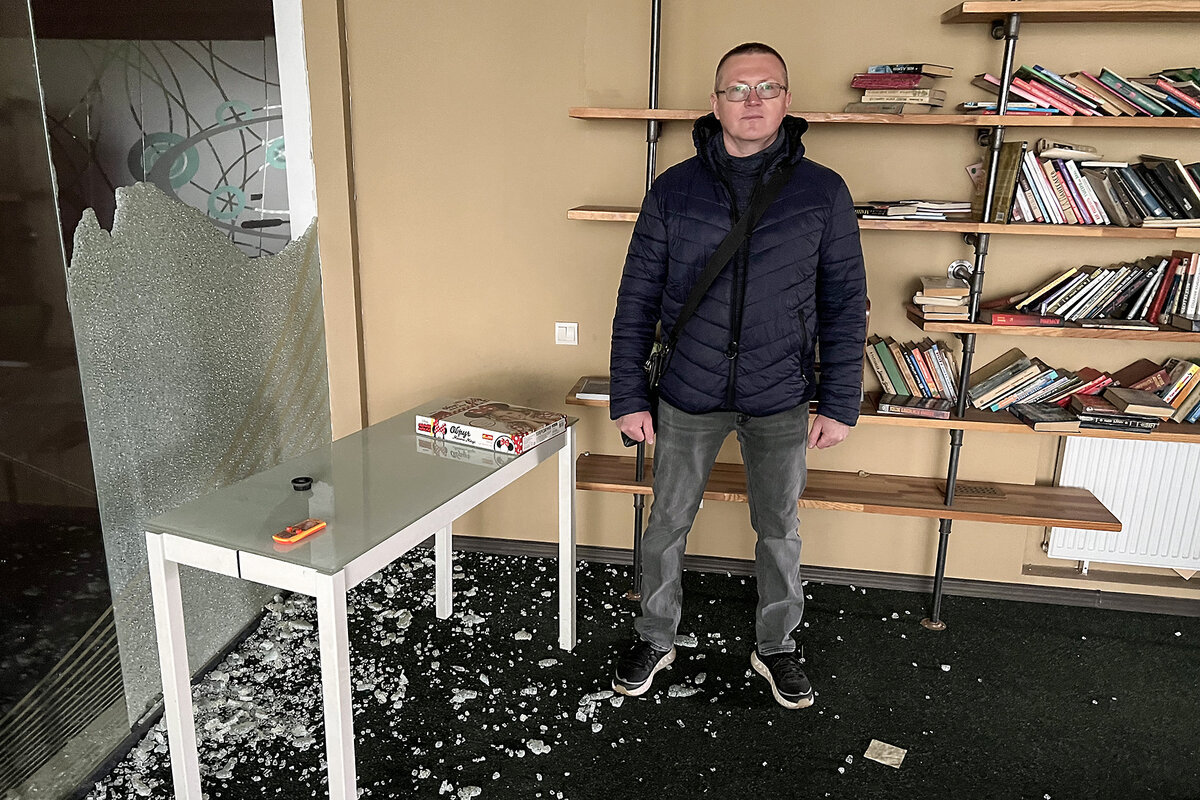
Ihor Pohorielov, commercial director of Ranok Publishing, at the company’s bomb-damaged offices, in Kharkiv, Ukraine, Nov. 4, 2024.

If ants can keep working and rebuilding after we’ve knocked over their anthill, how much more humans in war zones?

Among the many buildings damaged or destroyed by the Russian invasion in Ukraine are publishers of books. But books remain strong and Ukrainians keep reading.

Here’s a story by Howard LaFranchi at the Christian Science Monitor.

“Across Ukraine, but especially in Kharkiv, the country’s publishing capital, Russia’s war has been something of a boon to the nation’s publishing industry. More Ukrainians are seeking solace and distraction in books, and interest in Ukrainian literature and Ukrainian-language books is spiking.

“Many of the country’s publishing houses – from textbook-publishing giants to boutique operations specializing in culture – are keeping busy. And this despite the fact that Russian President Vladimir Putin has made publishing houses a key target of his war on Ukrainian culture.

“Publishers say a combination of their resolve to keep operating and a reawakened enthusiasm for books among a variety of readers is keeping the presses running.

“ ‘The war is reminding Ukrainians that books are an outlet for joy, for culture, for travel, when other outlets are closed to us,’ says Yuliia Orlova, general director of Vivat Publishing.

“ ‘We hear all the time about people rediscovering the joys of books as they spend less time on their computers and phones,’ she says. ‘People want to distract themselves from all the sad and depressing things going on around them, so they turn to fiction and fantasy. It’s their way to escape.’

“One night in November, Ihor Pohorielov was awakened by a Russian bomb blast that nearly shook him out of bed. His thoughts went to the modern offices and cavernous storage facilities where he works as the commercial director for Kharkiv’s Ranok Publishing, and which had already been the target of Russian air strikes. …

” ‘I thought of the orders we need to get out and the clients we need to serve – so I came into work’ the next day. …

“Across Ukraine, but especially in Kharkiv, the country’s publishing capital, Russia’s war has been something of a boon to the book publishing business.

“As more Ukrainians seek solace and distraction in books, and as interest in Ukrainian literature and Ukrainian-language books spikes, many of the country’s publishing houses – from textbook-publishing giants to boutique operations specializing in culture – are keeping busy.

“And this despite the fact that Russian President Vladimir Putin has made publishing and printing houses a key target of his war on Ukrainian culture.

“Kharkiv’s publishing industry was shaken to its core last May when a Russian S-300 missile struck the giant Faktor-Druk, one of Europe’s largest printing houses. The blast destroyed presses, incinerated some 100,000 books, and knocked out the three publishing companies housed there. …

“But the sense of devastation was short-lived. In a show of solidarity, several European publishers offered to print Ukrainian books for distribution to millions of Ukrainian refugees around Europe.

“An American philanthropic organization, the Howard G. Buffett Foundation, quickly agreed to pick up the tab for Faktor-Druk’s reconstruction. …

“ ‘Printing in Kharkiv is hanging on despite the almost daily attacks on the city,’ … says Yuliia Orlova, general director of Vivat Publishing, a division of the Faktor Group. …

“Ms. Orlova does not hide the fact that the war has been devastating for Ukrainian publishing in many ways, especially for the people who work in the sector. ‘The attacks and the destruction in the city have a big impact on the mental health of our workers. People don’t sleep and they are constantly worried for their families,’ she says. …

“Since 2022, the number of registered publishers in Ukraine has plummeted from about 1,600 to 150, Ms. Orlova says. …

“But Ms. Orlova cites another statistic that underscores the bright side of Ukrainian book publishing: Over the same period, the total number of books printed grew by 70%.

“The reasons for that jump are largely related to the war. Russia’s systematic destruction of Ukraine’s infrastructure has meant widespread power outages and spotty access to the internet, Ms. Orlova says. ‘We hear all the time about people rediscovering the joys of books as they spend less time on their computers and phones,’ she says. …

“Mr. Putin’s war on Ukrainian culture – targeting museums, churches, universities, and publishing houses – is feeding a renewed interest in history, language, art, and literature that confirm Ukrainian nationhood, publishers say.

” ‘Interest among Ukrainians in who we are was already starting to grow, but it was the full-scale invasion that really encouraged this desire to know more about our history and culture,’ says Oleksandr Savchuk, whose specialty Kharkiv publishing house carries his name.

“ ‘For many Ukrainians, the picture of who we are was like a puzzle with lost pieces,’ he says. ‘But now people are finding those pieces so we can complete the full picture.’

“To help nurture that process, in 2023 the philosophy professor and publisher opened a facility he calls a ‘Book Strongroom,’ a combination bookstore, event space, and neighborhood bomb shelter adjacent to his publishing operations. …

“Oleksandr Savchuk is a small player who has published about 50 titles over the last decade. … ‘For the 12 years before the invasion I was suffering to try to show people their great history and culture. It was a hard-going process,’ he says. … ‘I see now that I’m being heard.’ “

More at the Monitor, here. No firewall, reasonable subscriptions rates for a paper unusually strong in international news.

Read Full Post »

Photo: Vishal Subramanyan/California Academy of Sciences.
“High up in the Sierra Nevada,” writes the Smithsonian, “the tiny Mount Lyell shrew has been shying away from cameras since it was first identified almost 100 years ago. Then three undergraduates hit the jackpot.

I’m not sure if I regard today’s update as more about a threatened mammal or about achieving something important when you’re still an undergraduate.

Here are two takes on the story of a rarely studied shrew that is threatened by climate change. First, an interview at National Public Radio (NPR).

“Juana Summers, Host
“For more than 100 years, scientists have known about a shrew living in the mountains around Yosemite National Park. California designated it a ‘species of special concern,’ but nobody had seen it.

“Vishal Subramanyan
“There’s never actually been even a confirmed sighting of the shrew alive, just because they’re almost always found dead.

“Sacha Pfeiffer, Host
“Vishal Subramanyan is a wildlife photographer and a recent graduate of the University of California, Berkeley. Back in the fall, he and two other undergraduate student researchers, Harper Forbes and Prakrit Jain, decided to find a Mount Lyell shrew. … So they set off into the Sierra Nevada mountains with a lot of plastic cups to set traps in the ground to try to catch this elusive creature.

“Prakrit Jain
“Shrews are quite fast and not very personable, at least at first. They’re always running away. If you try to pick them up, sometimes they might try to bite.

“Summers
“Prakrit Jain is still a student at Berkeley, and he says, before you can even think about the taming of the shrew, you’ve first got to catch one alive. …

“Pfeiffer
“Once you catch one, you have to act quickly because this shrew has a very fast metabolism. That means if they don’t eat every few hours, they can die in the traps.

“Subramanyan
“It was pretty much just go, go, go, and we never really slept for more than two hours at a time. And throughout the course of the three nights and four days, we probably never slept for more than eight hours ’cause we were just constantly trapping, photographing, then trapping again.

“Summers
“Their traps caught a lot of shrews — several different species, actually — but the researchers suspected that at least five of them were the ones they were actually looking for.

“Pfeiffer
“This month, genetic testing confirmed that these undergraduate students had indeed taken the first known photographs of the Mount Lyell shrew.

“Summers
“It may seem like a lot of work to snap a photo, but Subramanyan says it’s actually really important for the world to see these furry little animals. He points to studies that show how other small mammals in the region are at risk with their habitat rapidly warming. And this shrew and its long snout help put a face to the impacts of climate change on biodiversity.

“Subramanyan
“A majority of species that are disappearing aren’t these, you know, traditionally charismatic species you hear about like lions and wolves. But it’s often these smaller, often overlooked animals that are disappearing completely under the radar with no public awareness or attention.

“Pfeiffer
“These researchers say that they dream of exploring far off and distant places. But they realize that the breakthrough they made in what was already a well-studied part of the world shows there’s still a lot to learn closer to home.”

At the Smithsonian there’s a roundup of other interviews.

“Subramanyan, who graduated from the University of California, Berkeley, last year, is a wildlife photographer. Jain and Forbes, undergraduate students at UC Berkeley and the University of Arizona, respectively, made headlines in 2022 for discovering two new scorpion species. After receiving permits from California’s Department of Fish and Wildlife, the trio headed to the Eastern Sierra. They set up 150 pitfall traps near stream and wetland habitats and checked in on them every two hours. …

“They got set up, then they waited.

“ ‘I would love to say we spent three days waiting, and the shrew finally appeared at the last second,’ says Subramanyan to Astrid Kane at the San Francisco Standard. ‘But we got the Mount Lyell within the first two hours.’

“ ‘It just shows that it’s generally an underappreciated species in an underappreciated ecosystem, that people haven’t spent the time and been able to actually bring dedicated focus to the shrews,’ he adds to Issy Ronald at CNN.

“To photograph the shrews, the team had to work quickly. They continued to trap more of the animals, following their planned sleep schedule during the nights, when temperatures dropped to 15 degrees Fahrenheit. The researchers set up a white background and a terrarium for the imaging. ‘You trap some shrews, you photograph them, you release them, and by that time there are more shrews. So it was pretty nonstop,’ Subramanyan says to SFGATE’s Timothy Karoff.

“The animals run around a lot — and bite — making it especially hard to get good photos of them. ‘For every photo that we got in focus, we must have 10 or 20 photos where the shrew is running out of the frame,’ says Jain to Sabrina Imbler at Defector.

‘The students hope their work will increase public recognition for shrews and other less charismatic animals. ‘Many, many species of shrew are known from only a single specimen, or only known from a single locality, or have not been seen in decades,’ says Jain to Katharine Gammon at the Guardian. ‘So if we struggle to find a shrew in a place like California — one of the best studied places in the world — you can only imagine how the shrew diversity of places like southeast Asia and central Africa, for instance, can just be so under-appreciated.’

“Mount Lyell shrews are also extremely threatened by climate change — 89 percent of the animal’s habitat is projected to be lost by the 2080s, according to a statement from the University of California, Berkeley. …

“ ‘If we look at the extinction crisis and the types of animals it’s impacting, a lot of animals are disappearing without any documentation,’ Subramanyan says to the Guardian. ‘An animal like the Mount Lyell shrew, if it was not photographed or researched, could have just quietly disappeared due to climate change, and we’d have no idea about it at all.’ ”

More at NPR, here., and at the Smithsonian, here.

Read Full Post »

Photo: Opera Lafayette.
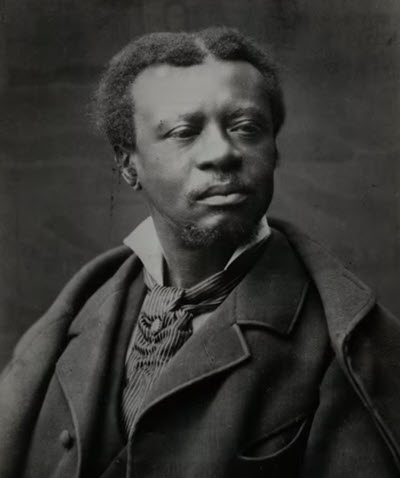
Nineteenth-century American composer Edmond Dédé at about age 50.

When I think of an African American born in pre-Civil War New Orleans studying music with the best and rising to high levels of composing, the word that comes to mind is courage.

There is so much I don’t know about the lives of others, and I am grateful to Early Music America for enlightening me about the Edmond Dédé, America’s first black opera composer. Patrick D. McCoy has the story.

“Like many artists of color with the opportunity,” writes McCoy, “Edmond Dédé fled the antebellum United States. After a time in Mexico, he eventually settled in France. … Among Dédé’s surviving works is a four-act opera, Morgiane, ou Le Sultan d’Ispahan, which was never performed or published in his lifetime.

Morgiane, a happy-ending tale inspired by Ali Baba and the Forty Thieves, was finished in 1887, making it perhaps the oldest-known complete opera by a Black composer born in the United States. …

Morgiane [received] its world premiere, fully staged, with shows in the Washington D.C. area (Feb. 3 and 7) and New York City (Feb. 5). … Patrick Dupré Quigley, artistic director-designate of Opera Lafayette, will conduct. …

” ‘I knew it was my mission to get this done,’ recalls Givonna Joseph, co-founder of OperaCreole, after receiving a digital file of the opera in 2014. ‘The world needed to know that a free Black man from New Orleans not only composed over 100 works, but also a complete French grand opera with a ballet and an extra brass section. It was never performed, so I was set on a path for restorative and transformational justice.’

“Not long after, conductor Quigley was investigating musicians of color from New Orleans and happened upon that same digitized, 550-page manuscript, which had been crammed into another composer’s score, part of a large private collection from France that ended up in Harvard’s Houghton Library. The full opera is now online and available for public view. …

“Thinking about an eventual performance, Quigley and Opera Lafayette founder Ryan Brown checked if anyone else was working on the project. They quickly found Joseph and her daughter, Aria Mason, who co-founded OperaCreole in 2011. … It was a double jackpot: Morgiane checked every box for both companies.

“And they’d all worked with a singer in common, bass-baritone (and noted composer) Jonathan Woody, who introduced them in a Zoom call in 2023. …

“Much of what’s known about the composer comes from scholarship by Candance Bailey and by Sally McKee, author of The Exile’s Song: Edmond Dédé and the Unfinished Revolutions of the Atlantic World. He was born in 1827 in New Orleans, when the city was the center of opera in America, and was educated by visiting European musicians on clarinet and violin. He was locally celebrated as a skilled violinist and composer. His earliest published music straddled the line between art song and popular tunes — an attractive mix that Joseph has called ‘an early version of the blues.’

“By the late 1850s he studied briefly at the Paris Conservatoire and built a career in Bordeaux, where he worked as a repetiteur, violinist, and assistant conductor at the prestigious Grand Théâtre. …

“Decades later, with Morgiane, he seemed to bring together his musical heritage: ‘People will be shocked that they’ve never heard of this composer,’ says Quigley. ‘The vocal writing is virtuosic, the orchestration is unbelievably colorful. He was a string player, and you hear the inner voices, it’s masterful. He combines the tunefulness of what you think of from New Orleans with the prevailing French operatic forms of the time.’

Morgiane is through-composed — everything is sung and the orchestra plays the entire time, with no spoken dialogue. … The score calls for bright, agile voices.

“Its sensational plot, with a libretto by a still-obscure poet named Louis Brunet, taps the sort of ‘exotic’ Middle Eastern locales then in vogue (think AïdaSamson et Dalila, or Thaïs). A beautiful young woman on her wedding day is kidnapped by the evil henchman of the Persian Sultan. Her family crosses the desert from Arabia to Isfahan (in Persia) and infiltrates the Sultan’s court on the day he’s planning to marry the young woman. They have disguised themselves as itinerant singers. But moments before they’re about to rescue her, disaster! They are discovered, imprisoned, and condemned to death. Just before the execution, the mother of the young woman who’s been kidnapped — the title character, Morgiane, is the mother — speaks to the Sultan with a shocking revelation.

“Spoiler alert: From under her cloak Morgiane pulls out a diamond ring, the very ring that he’d given her the day their daughter was born. ‘I was your sultana,’ she says. …

“Quigley says he was ‘taken aback at my own ignorance of just how early composers of color were an integral part of both American and European art music. In New Orleans alone, people of color were involved with the composition, performance, and production of opera from the late 18th century onward.’ …

“For now, says Quigley, there are plans to help ensure the success and longevity of Morgiane. Opera Lafayette will record the opera, and make the score and parts available to help the opera enter the repertoire. In addition, some of its most delectable music — the overture, the entr’actes, the ballet sequences, plus a few other numbers — would make a highly attractive orchestral suite.”

More at Early Music America, here.

Read Full Post »

Photo: Teagan Glenane/The Guardian.
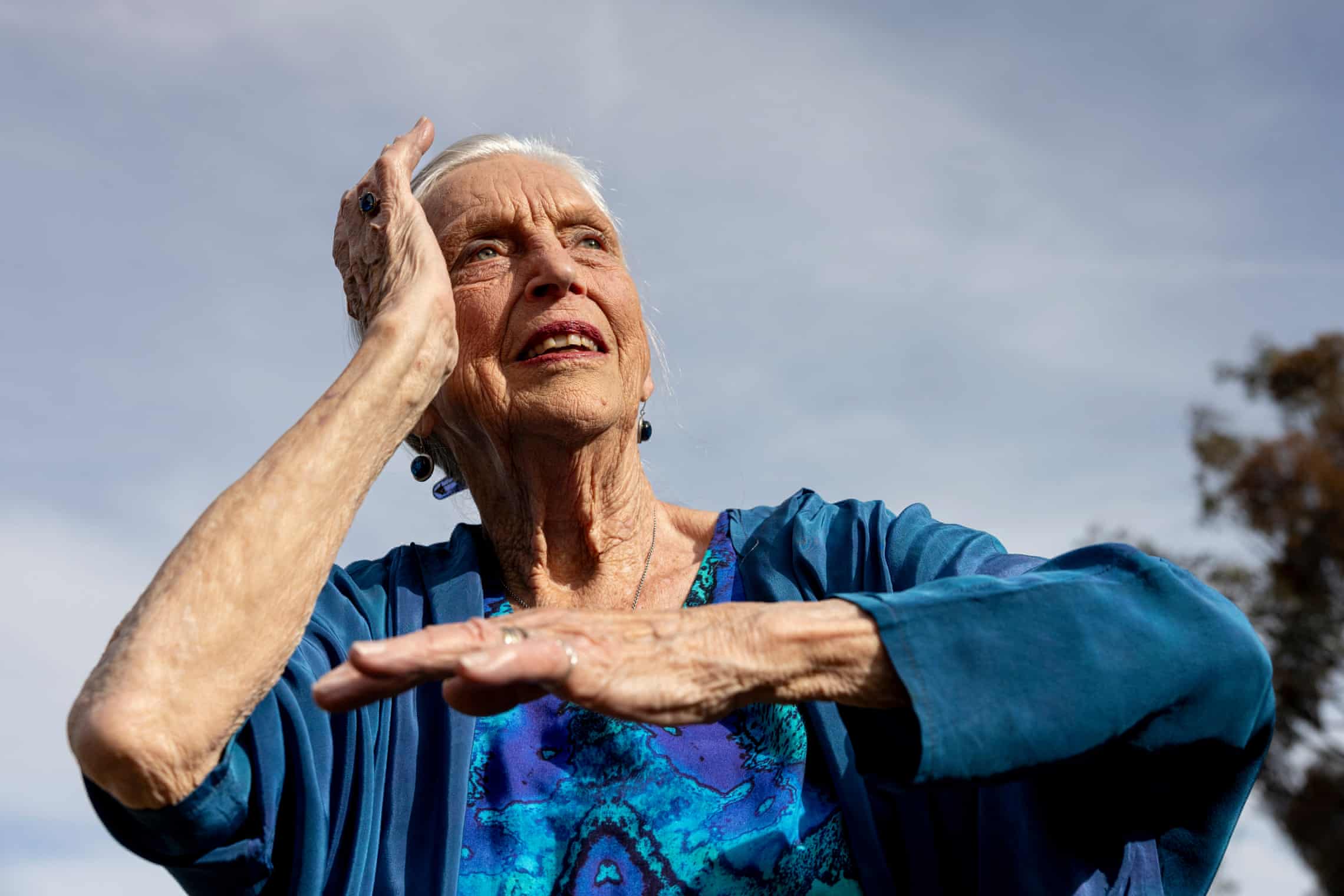
Australian choreographer Elizabeth Cameron Dalman at her property in Bungendore, just outside Canberra. “I’d always been inspired by nature, which I imagined as I was performing.”

As an older citizen who thinks backing up in a parking lot is living life on the edge, I can never resist a story about elderly people who ignore aging.

Steve Dow at the Guardian wrote recently about a dancer in Australia.

“At 91, Elizabeth Cameron Dalman dances in nature at her bushland retreat outside Canberra, Mirramu Creative Arts Centre, surrounded by writers, singers and visual artists. … ‘So many people bring up this age thing,’ she says, ‘and my reply is that in dance we are ageless.’

“A contemporary dance pioneer in Australia, Dalman has just seen the final performance of one of her ‘great inspirations’ and occasional collaborators, dancer Eileen Kramer, in a filmed component of the dance work ‘Afterworld,’ part of Sydney festival. Kramer died in November at 110. ‘I’m going to live to that age,’ Dalman chuckles.

“In Adelaide in 1965, Dalman co-created Australian Dance Theatre, running the company for a decade, confounding the era’s prejudice against modern dance and women artistic directors. …

“She [likes to] talk about what feeds longevity, pointing to medical research showing the health and mobility benefits of dancing for Alzheimer’s and Parkinson’s patients. ‘It’s not just pure exercise, you are adding creative activity,’ she says. ‘You’re engaging the left and right side of the brain.’ …

“Dalman has been consulting with ADT’s current artistic director, Daniel Riley, on the company’s 60th anniversary production ‘A Quiet Language.’ … The show, created by Riley, is billed as an examination of legacy, ‘transmuting the rebellious energy of the company’s early days into an electric new era.’

“Over the past decade, Dalman herself has graced international stages, notably touring for four years as part of the Irish choreographer Michael Keegan-Dolan’s critically acclaimed ‘Swan Lake/Loch na hEala,’ which transposed the classical ballet to the Irish midlands. When Keegan-Dolan posted an international callout for a woman aged 60 with long white hair to play the story’s cranky, arthritic matriarch, Dalman – 82 at the time – emailed saying she had the requisite long white hair. …

“Dalman has always been determined to dance. … She enrolled in dance class at three, learning both classical ballet and modern. Later, she began an arts degree at the University of Adelaide. …

“In 1957, aged 23, Dalman paid her way to London with the hope of launching a dance career. There, she saw a life-changing performance by the Mexican choreographer José Limón. ‘He touched my soul. I thought, “Oh wow, that’s how I want to dance,” ‘ she recalls. In 1960-61 she studied at the Folkwang school in Essen, Germany, where her classmates included Pina Bausch: ‘She was amazing, a technical whiz.’

“In Germany, Dalman met the Colombian American choreographer Eleo Pomare, who rose to prominence in the civil rights era. She created works with Pomare’s company from 1961 to 1963, living in Amsterdam with him and four other dancers. Pomare later remarked that Dalman danced ‘as if she swallows the heat and you feel that the heat is burning from the inside out.’ …

“Dalman returned to Australia in late 1963, and performed in the artist Stan Ostoja-Kotkowski’s experimental theatre show ‘Sound and Image’ at the 1964 Adelaide festival. It inspired her to open a dance school, and in 1965 she took her students on a regional tour, alongside dancers from Royal Ballet alumnus Leslie White’s Adelaide academy.

“Buoyed up by the tour’s success, Dalman and White set up Australian Dance Theatre, but the going was financially tough, and White left in 1967. Dalman put Australian Dance Theatre forward to perform in the 1968 Adelaide festival, but when it turned down her request for financial support she instead bought some half-price cruise ship tickets and took the troupe on its first international tour, sailing to the Netherlands, Switzerland and Italy.

“Back home, Dalman faced discrimination because of her gender: ‘I felt the battle, I had to keep proving myself. Even once we got a little bit of funding later, in 1973, and I’d been running the company since 1965, never in the red, this board member, a man, said, “Oh we have to do something about the finances, they haven’t been run correctly.” Then he took us into the red the next year.’

“Dalman remained artistic director until 1975. Then, having split with her husband, she and [their son] Andreas moved to Ventimiglia, a seaside town in northern Italy. … She founded a dance school and a youth dance theatre there in 1976, and it became ‘a place of healing.’

“In 1986, on a visit home to Australia, Dalman met another mature artist, who became an inspiration: the Japanese butoh dancer Kazuo Ohno, then almost 80. … A decade later, Dalman and Andreas visited Ohno – who was still dancing, and preparing to tour the US – at his Yokohama home. ‘He said, “Oh Elizabeth, it’s so good to talk to a senior, mature artist.” ‘ Dalman, then 60, had been contemplating ending her career. ‘When I met him, I realized I had to keep going.’

“In 1989, Dalman bought a 40-hectare property at Bungendore, near Weereewa/Lake George, outside Canberra. The bush reminded her of Italy, dancing among the olive groves or by the river. She established Mirramu Creative Arts Centre there the same year, followed by Mirramu Dance Company in 2002. …

“ ‘It was hard leaving Adelaide because that was my home, but the pull of this place, the land and the lake, is very powerful.’ “

More at the Guardian, here.

Read Full Post »

« Newer Posts - Older Posts »