Feeds:
Posts
Comments

Archive for the ‘Uncategorized’ Category

Photo: Odd Music
Croatia’s
Morske Orgulje — or, Sea Organ.

An architectural construction in Croatia enables the sea to play music as it flows in and out. I learned about it at the Huffington Post, where Carla Herreria has a report on the Morske Orgulje — or, Sea Organ.

“A 230-foot long instrument on the coast of Zadar, Croatia, that plays mesmerizing harmonies using the movements of the sea, the Sea Organ was conceived in 2005 by architect Nikola Bašić, after a new jetty was built to welcome cruise ships. …

“On its surface, the organ looks like large marble steps leading into the Adriatic Sea. Below, however, lies a series of narrow channels that connect to 35 organ pipes. Each set of steps holds five organ pipes each and is tuned to a different musical chord.

“As waves and wind push air through the channels, a song pours through the organ pipes and out onto the steps above. The sounds produced rely completely on the wave energy’s random time and space distribution.”

More at Wikipedia, here, and at the Huffington Post, here.

Read Full Post »

In an article by the “Cooperative Development News” at Mother Earth News (by way of twitter), I read about a group of Somali Bantu refugees in Maine who started a cooperative farm.

This interests me particularly because when I was at the magazine, I acquired a couple articles about Somali refugees adjusting to life in Lewiston, Maine, through farming.

Here’s the story: “A group of Somali Bantu refugees have started a cooperative farm in Maine … Thousands of miles from Somalia, on 30 acres in Maine’s second-largest city, they’ve begun to feel like they’ve come home.

“New Roots Cooperative Farm, though just recently started by four new Americans, is already a success story. Combine the complexities of farming with the uncertainty of navigating a system that is unfamiliar — and, at times, unfriendly — to newcomers and you’ll understand just a fraction of how far New Roots has already come. They’re inspired to help one another and the community, too.

“ ‘Our aim is not only to grow food and run a business ourselves but to help our community and teach them about how to run a business,’ says New Roots farmer Batula Ismail. …

“The group used to farm before being forced from their homes during Somalia’s tumultuous civil war period. … After arriving in Maine, they got back to farming at Cultivating Community’s New American Sustainable Agriculture Project at Packard-Littlefield Farm in Lisbon, Maine. The program empowers New Americans to launch independent farm businesses, to adopt new leadership roles in the community, and to attain increased economic independence for themselves and their families.

“Now, with a decade of experience at Packard-Littlefield backing them up, the group is ready to put their education to the test. When Gendron Farm, a dairy farm in Lewiston was divided into several parcels in 2015, New Roots worked with Cooperative Development Institute, Maine Farmland Trust, Land for Good, Cultivating Community, and many others to preserve 30 acres as a working farm.” More here.

I’ve been interested in Somali immigrants since living for three years in Minneapolis, where there is a large population. I was friendly with one man who worked in our apartment building, ran for mayor, and got a job as a community liaison for a US Senator. Very nice guy. I loved his stories about being a child in Somalia, soaking up geography from international radio news, and pausing for a camel to get off the field when he was playing soccer.

Photo: Jenny Nelson/Maine Farmland Trust
Bantu refugees start a cooperative farm in Maine.

Read Full Post »

In Erie, Pennsylvania, one woman had an idea that led to something big. She was a folklorist who loved collecting and sharing songs of different cultures. One day she was thinking about the refugee women in her town when light bulbs started to go off.

The first light bulb involved curiosity about the songs the women brought with them. The second light bulb was about wondering if the women would share their songs with local children. The third light bulb was about how the women might be trained for preschool jobs incorporating music.

At PRI (Public Radio International), Erika Beras reports on Kelly Armor and what she accomplished through the Power of One. The story starts with Beras visiting a class run by Sudanese refugee Marta Sam.

“Marta Sam is surrounded by really energetic 4-year-olds. She’s at St. Martin’s Day Care in Erie, Pennsylvania, guiding the kids as they sing and dance.

“Sam sings in Arabic, then English. She takes the students through a Congolese song, followed by ‘Five Little Monkeys Jumping On The Bed.’ The kids follow her cues, dancing and calling out their favorite songs. Sam is used to this.

“ ‘When they see me in the classroom they say, “Miss Marta can we do this? Miss Marta can we sing this? Miss Marta can we jump?” ‘ she says. ‘Yeah, I will jump with them and get silly like them — working with the kids you just get down in their level and just … mess with them.’

“Sam, 59, is a roving educator at St. Martin’s Day Care. She goes from room to room and sings lullabies from all over the world with the kids. Originally from South Sudan, she came to Erie 13 years ago as part of the first wave of thousands of refugees who have resettled in this small Rust Belt city.

“She worked at a plastics factory and started learning English. Then she heard she could get job training to work in day cares. In return she’d share the traditional songs she had sung to her children when they were young.

“It was just what she needed.

‘Oh, it changed my life very much. … I’m somebody now,’ she says.

“Sam works at St. Martin’s because of ‘Old Songs, New Opportunities,’ a program dreamed up by Kelly Armor, a folklorist and educator at the Erie Art Museum. Armor is from Erie, but spent time in the ’80s studying traditional song in Kenya and Tanzania. When she noticed refugees settling in Erie in recent years, she had an idea.

“ ‘Could it be that … there are refugee women [who] would love to work with small children? And could it be that they know lots of songs and they know how to use songs with kids?’ she wondered.

“It turned out they did, and in some cases the songs were all they bought to the US. That was the case for Victoria Angelo, who is also from South Sudan.

“ ‘I was not able to bring anything. No dishes, nothing, no [clothing],’ she says. ‘What I actually brought with me was the songs.’ …

More at PRI, here, where you also can listen to a lovely collection of songs.

Photo: Erika Beras
Marta Sam, who emigrated from South Sudan 13 years ago, sings with a classroom of four-year-olds.

Read Full Post »

Photo: Iñaki LL

One of my Facebook friends shared an entertaining page on “rare and strange instruments” (you have to see it to believe it), leading me to seek more information on an instrument called the txalaparta. It may not be as unusual as the piano that makes cats meow but is nevertheless worthy of investigation.

According to Wikipedia, the txalaparta is “a specialized Basque music device of wood or stone. In some regions of the Basque Country, zalaparta (with [s]) means ‘racket,’ while in others (in Navarre) txalaparta has been attested as meaning the trot of the horse, a sense closely related to the sound of the instrument. …

“During the last 150 years, txalaparta has been attested as a communication device used for funeral (hileta), celebration (jai) or the making of slaked lime (kare), or cider (sagardo). After the making of cider, the same board that pressed the apples was beaten to summon the neighbours. Then, a celebration was held and txalaparta played cheerfully, while cider was drunk. …

“Traditional txalaparta was almost extinct in the 1950s with a handful of pairs of peasants maintaining the tradition. It was then revived by folklorists, such as Jesus and Jose Antonio Artze from the group Ez dok amairu.” Now you can hear it on YouTube, below.

More at Wikipedia.

Video: The Give and Take of Wood and Stone. Oreka Tx Brings Once Threatened Basque Sounds and New Global Resonances to the U.S. in September 2010 and on Nömadak Tx.

Read Full Post »

When I was at the magazine, I often sought out authors from different regions who could write about the benefits of community gardens to low-income neighborhoods. Kai remembered that and tagged me on Facebook when he posted an article yesterday about a comprehensive farming initiative in inner-city Detroit.

Robin Runyan writes at the website Curbed Detroit, “This week, the Michigan Urban Farming Initiative (MUFI) revealed its plans for the first Sustainable Urban Agrihood in the North End.

“Wait, an agrihood? It’s an alternative neighborhood growth model, positioning agriculture as the centerpiece of a mixed-use development. There are some agrihoods around the country, but in rural areas. This is the first within a city.

“MUFI’s agrihood spans three acres on Brush Street, a few blocks up from East Grand Boulevard. MUFI runs a successful two-acre garden, a 200-tree fruit orchard, and a children’s sensory garden. They provide free produce to the neighborhood, churches, food pantries, and more.

“The big part of the announcement was the plan to renovate a three-story, 3,200-square-foot vacant building that MUFI had bought at auction years back. …

“The Community Resource Center will include office space for MUFI, event and meeting space, and two commercial kitchens on the first floor. A healthy cafe will be located on vacant land next to the CRC.

“Tyson Gersh, MUFI President and co-founder, said at the announcement that they want to be the first LEED certified platinum building in Detroit.”

The article credits Sustainable Brands, BASF, GM, and Herman Miller and Integrity Building Group for providing much-needed help on the project.

More here.

Photo: Michelle & Chris Gerard
The Michigan Urban Farming Initiative.

Read Full Post »

Chalk up another one for art and culture. According to Lisa Contag at the website Blouin Art Info, a UNESCO study has found evidence that art and culture improve safety in cities, in part by building social cohesion.

She writes, “UNESCO makes a strong case for systematically fostering culture in city planning in its new ‘Global Report, Culture: Urban Future.’ …

“In more than 100 case studies, the survey analyzes the situations, risks, and potentials for cities in a number of regional contexts, with a particular interest also in Africa and Asia, where urbanization is expected to continue increasing rapidly in the next decades.

“ ‘Culture lies at the heart of urban renewal and innovation. This report provides a wealth of insights and concrete evidence showing the power of culture as a strategic asset for creating cities that are more inclusive, creative and sustainable,’ Irina Bokova, Director-General of UNESCO noted in a statement, stressing that ‘culture gives cities social and economic power,’ especially with the help of the creative industries.

“As an example, the report refers to Shanghai, China, which has held the status of a UNESCO Creative City of Design since 2010, and is considered ‘one of the world’s major creative centers, with more than 7.4% of residents employed in the creative industries.’

“Cities in conflict and post-conflict situations, such as Samarra, Iraq, which was confronted with the destruction of a number of invaluable sites such as the Al-Askari Shrine in 2006, are also taken into consideration and seem to benefit similarly. ‘Reconstruction and rehabilitation efforts have demonstrated the ability of culture to restore social cohesion between communities and improve livelihoods, paving the way for dialogue and reconciliation,’ the authors explain.”

The authors observe that culturally diverse, safe, and thriving cities are people-centered and culture-centered and feature policy-making that builds on culture.

More here.

Photo: UNESCO
Screenshot from Reza’s UNESCO video “Culture – the Soul of Cities”

Read Full Post »

In September, Victoria Lynden tweeted about Costa Rica’s clean electricity. Although hydroelectric and geothermal approaches sometimes have issues of their own and cars in Costa Rica still use gas, two months without using fossil fuels to generate electricity sounded pretty good to me.

Brad Plumer wrote at Vox, “Costa Rica is pulling off a feat most countries just daydream about: For two straight months, the Central American country hasn’t burned any fossil fuels to generate electricity. That’s right: 100 percent renewable power.

“This isn’t a blip, either. For 300 total days last year and 150 days so far [in 2016], Costa Rica’s electricity has come entirely from renewable sources, mostly hydropower and geothermal. Heavy rains have helped four big hydroelectric dams run above their usual capacity, letting the country turn off its diesel generators.

“Now, there’s a huge, huge caveat here: Costa Rica hasn’t eschewed all fossil fuels entirely. The country still has more than 1 million cars running on old-fashioned gasoline, which is why imported oil still supplies over half its total energy needs. The country also has cement plants that burn coal.

“What Costa Rica’s doing is nevertheless impressive — and a reflection of how serious the tiny Central American country is about going green. At the same time, a closer look at the story shows just how difficult it would be for other countries to pull off something similar.

“When many people think of ‘renewables,’ they tend to think of giant wind turbines or gleaming solar panels. But that’s not what Costa Rica is relying on. For years, roughly 80 percent of the nation’s electricity has come from a technology that’s more than a century old — hydroelectric dams …

“Another 12 percent or so of Costa Rica’s electricity comes from geothermal plants, which tap heat deep in the Earth’s crust and can also run around the clock. …

“So if Costa Rica can get 100 percent of its electricity from renewable sources, why couldn’t other countries do the same? Why can’t the United States, which is far richer?

“One obstacle here is that hydropower and geothermal are very location-specific — and only a few countries are lucky enough to have such rich resources. Iceland gets nearly 100 percent of its electricity from these two sources. Paraguay gets almost all of its electricity from the massive Itaipú Dam. Brazil gets more than 75 percent of its power from hydropower. But those are exceptions. For most countries, hydropower can only satisfy a portion of their power needs.” Read on.

Seems to me that when a country wants to be greener (whether for the environment or to save money or both), it has already taken the first step to finding solutions that work for its own geography.

Chart: Observatory of Renewable Energy in Latin America and the Caribbean


Read Full Post »

Photo: Andy Hogg/Unsung Heroes
Georgetown students raised more than $5,000 for Umberto “Suru” Ripai, a cashier at the dining hall, who is now able to visit his family in South Sudan for the first time in 45 years.

On Facebook, Cousin Claire reposted a wonderful story that Cousin Nancy had shared. It describes exactly the kind of outreach I think of when I say that small acts by one person can make the world a better place.

Petula Dvorak writes at the Washington Post, “Every night, they had the same routine. The Georgetown University business student would settle in for his cram session — soda, chips, books lined up. And the janitor would come in to start his night shift — polishing each of the windows in the study room, moving amid all those books and chips and sodas. Invisible.

“ ‘There was this space, like ice separating us,’ said Oneil Batchelor, an immigrant from Jamaica. The janitor worked around the students — many of them in their 20s like him, many with entrepreneurial ambitions like him — for nearly a decade before one of them finally broke that ice last year.

“A nod one night. A hello the next.

“And within weeks, Batchelor and the student, Febin Bellamy, were having long talks about being immigrants, about wanting to be entrepreneurs, about politics and history and music. Bellamy even went to Batchelor’s church and met his 6-year-old daughter.

“After he formed that bond with the once-invisible worker, Bellamy couldn’t stop noticing the others. …

“Each of those workers has a story. Many of them are immigrants, and their collective histories of war and flight and families left behind offer a master class in geo­politics. No tuition needed.

“Bellamy understands because these are his people. His family immigrated to the United States from India when he was 5. When they got to New York, his mother worked as a nursing assistant and his father as a customer service rep while they were going to college at night and raising a family in the few hours left over.

“Bellamy started at a community college and then transferred to Georgetown as a junior. He knows the scrap and fight the folks fixing pipes and cleaning bathrooms have inside them.

“So he had a brainstorm. What if he found a way to introduce the workers to the students? And that idea went from a class project in April to a fundraiser making real change today.

“He did it in the language his peers understand: a Facebook page. He calls it Unsung Heroes, and he began posting little profiles of workers around campus. …

“The students also learned about some of the hopes percolating, as windows are washed and floors are scrubbed. And they’re helping.

“Turns out that Batchelor really is a gifted cook. Students who read about him encouraged him to hold fundraisers serving his now-famous-on-campus chicken. They raised $2,500, got him catering gigs and helped him put up his own web page, Oneil’s Famous Jerk.

“ ‘It’s like the door has cracked open in front of me,’ he said. ‘And I can smell the air coming through. The inspiration.’ ” Lots more here.

Photo: Andy Hogg/Unsung Heroes
Georgetown University business major Febin Bellamy, left, talks with janitor Oneil Batchelor, who wants to open a chicken joint. Students raised $2,500 and got him catering gigs.

Read Full Post »

The Royal Frog Ballet recently staged an outdoor event to welcome fall, but according to the lead players, it wasn’t so much a performance for strangers as a gift to new friends. The effect was surreal and entertaining.

Amelia Mason reports at WBUR, “A masked woman in an apron and kerchief jumps up on a picnic table and addresses a crowd.

“ ‘I’m your grandmother, and I’m here to help you throughout this show …  The first thing to know is that when I ring this bell it means we’re all going to move to the next thing and you’re going to have to follow my directions, OK?’

“It is the opening night of the Royal Frog Ballet’s ninth-annual ‘Surrealist Cabaret.’ Our guide — Shea Witzo, in the role of the Granny — gives us some more instructions: Watch out for holes. Stick close together. But first — wait. We pause for a moment, unsure of where to look.

“Then, 6-year-old Aiden Bairstow catches sight of something.

“ ‘Oh, I know what’s happening,’ he says. ‘I see it right behind you.’ We turn to see a band — fiddle, accordion and drums — approaching from across the field.

“The farm, it turns out, has many secrets in store. No matter where we look, something strange and surprising is bound to appear: a tall, swaying monster on stilts, for instance, or the pair of scientists who inform us that we are part of their experiment. At one point, our guide delights us with a salty parody of Bruce Springsteen’s ‘Dancing in the Dark.’ The pieces are linked loosely around a theme. …

“ ‘A lot of us are trying to make work that is like a gift, rather than a performance for [the audience],’ says Sophie Wood, one of the founders of the ‘Surrealist Cabaret.’ The project started in 2007, when Wood and a group of artist friends decided to perform some of their works-in-progress at a farm in Amherst. They mounted the production in a big barn and served the audience dinner. …

“The collective goes by the name the Royal Frog Ballet, and it has mounted weird and whimsical performances every year since its founding. … This fall, the theme is ‘hope and joy.’ …

“ ‘It feels like an old tradition,’ says Leah Sakala. … ‘It feels like we’re partaking in something, the kind of art that’s been made for a very long time, but at the same time it manages to be very relevant.’ ”

More here.

Photo: Sarah Ledbetter for WBUR
A performance of the “Surrealist Cabaret” in Essex, Mass., in October.

Read Full Post »

Photo: STR/Reuters /Landov
Prisoners at Halden in Norway have private rooms, which all have a fridge, desk and flat-screen TV. Inmates who don’t follow the rules and attend classes and counseling are sent to conventional prisons. NPR story here.

A perhaps surprising finding: In Norway, spending time in prison, where there are intensive job-training opportunities, results in 27 percent less recidivism than being sentenced to something lighter, like community service or probation.

As reported last summer in Science Newsline, “The research project ‘The Social Costs of Incarceration’ is the largest study of imprisonment and return to a normal life that has ever been conducted in Europe.

“In the study, researchers looked at prison sentences linked to recidivism. In addition, the researchers looked at the extent to which former inmates have returned to work. What makes the project unique is linking large administrative data sets to data sets from the courts.

“They have done this to measure the effect of what happens when the criminals have received different penalties for the same offense because they randomly met different judges in court with different leniency towards incarcerating. In other words: if a judge incarcerates differently for the same offense, what will be the consequences for the offender in the long term?

” ‘The results show that the Norwegian prison model with extensive use of labour training while serving time, gives surprisingly good results,’ says Professor Katrine Løken at the Department of Economics, University of Bergen (UiB), who led the research project.

“The study shows: Five years after conviction, there is a 27 per cent lower risk that convicts who have been in prison have committed new crimes, compared to those who were given more lenient penalties, like probation and community service. For the 60 per cent of inmates who had not been employed for the last five years preceding the conviction, the decline in criminal activity is even bigger. … The study is published as a Working Paper in Economics at the University of Bergen.”

Løken doesn’t necessarily think the answer is sending more people to prison; providing more job training outside of prison might be.

” ‘A relevant question is whether we should aim for full package of job-training outside prison. But research shows that work training outside of prison is more difficult to enforce. It appears that a certain element of coercion is needed to get offenders on a new track.’

“Katrine Løken stresses that the research does not take a stand on the principle of imprisonment, but simply says something about how prison is perceived for the individual, and shows the effects of different sentencing.”

Many studies show that incarceration in the United States leads to more crime, not less. Different kinds of prisons, for sure.

More here.

Read Full Post »
suzanne-john-and-mommom-and-jewelry

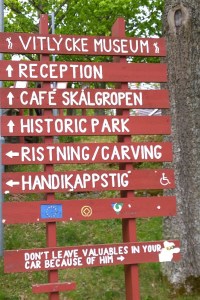
Suzanne (seen here with her paternal grandmother and John) sent this message to her customers today:

“At Luna & Stella, we make fine jewelry that celebrates our closest connections, the relationships between parents and grandparents, sons and daughters, aunts and uncles, sisters and brothers, partners and the friends that are our family.  I believe those relationships are the greatest treasures we have.

“But recently I have been thinking more about the extension of these relationships — community. Specifically, I have thinking about what the role of businesses in civil discourse is and should be, and what my role as a small business owner should be in being a part of the conversation.

“I am the first to admit I don’t have all the answers. But I think we owe it to our children and communities to start somewhere. The place we are starting is with Facing History and Ourselves.  For over 40 years, Facing History has been training educators to teach empathy, tolerance, and civic responsibility through the lens of history.

“On #givingtuesday, November 29, Luna & Stella will give 20% of all sales on our website to Facing History. 

“Thank you for your support of this important work.

“In gratitude,

“Suzanne

“P.S.  As a thank you, use code FACINGHISTORY for free shipping on your order.  If you are not able to shop on #givingtuesday, we will make a donation equal to 20% of your purchase all season long with this code.

“P.P.S. My friend and Facing History Los Angeles Director Liz Vogel interviewed me for Facing History’s website. Read the interview here.”

Read Full Post »

Art: Jean-François Millet (1814-1875)
“The Gleaners, “1857

When farmers are done harvesting their crops, or when homeowners grow fruit trees for decoration but don’t eat the fruit, an opportunity arises for gleaners. Some gleaners may scavenge for food for their own tables, but nowadays it’s become more of an activity to feed people who need extra help. I blogged about the concept in 2011, here, and 2014, here.

A recent article by Henry Schwan in WickedLocal provides an update.

He writes, “Ruth Lyddy bent over and used a sharp farm tool to take a whack out of a thick stalk of kale at Barrett’s Mill Farm in Concord. Lyddy had the look of a full-time farmer, but she’s a volunteer gleaner, which is someone rescuing crops before they are plowed over and destroyed.

“She joined other volunteers Nov. 17 at Barrett’s Mill Farm in Concord, and their leader was Dylan Frazier, who works for Boston Area Gleaners, Inc. (BAG). …

“The nonprofit formed in 2004, and is in the midst of its ’10 Tons in 10 Days’ campaign. As the name says, the goal is to gather 10 tons of food in 10 days, which is distributed to local food pantries.

“Frazier said many farms only harvest what they can sell, so BAG swoops in, takes the excess and hands it over to Food For Free in Cambridge, which distributes it to local food banks and pantries. …

“The volunteers also harvested purple-top turnips, red beets, leaks, daikon radish and Savoy cabbage, and all of it was piled into a truck, paid for with a $25,000 grant from the Harvard Pilgrim Health Care Foundation. …

“Volunteer John Pilch summed up why people give their time to BAG as he carried a box full of kale that he just cut. ‘It’s very grounding for me. I love to give back, because I’ve been so blessed in my life,’ Pilch said.”

Read Full Post »

Actor Finn Wittrock wrote recently at the New York Times about helping to start a mini Shakespeare company in the 1990s to entertain his parents and other theater professionals. He recalls with wonder his young self’s confidence of success.

“I was born in the Berkshires in Western Massachusetts. I lived there until I was 6, then moved to Evanston, Ill., and later to Los Angeles. But every summer for most of my youth, I would go back East with my brother, my mom and my dad, who most summers was acting or teaching for Shakespeare & Company. I would often be cast as a page or an altar boy in one of the professional productions.

“I went in lieu of a summer camp; I went to romp in the Berkshires, see old friends, get out of the city. But mostly I went for the Very Young Company.

“Starting at the age of 8 and until I was 16, my oldest friends and I would get together every summer: Rory, Reilly, Wolfe, and later my brother, Dylan, and Wolfe’s brother, Tiger (yes, their real names) would arrange five or six scenes from Shakespeare, rehearse them on our own time in the sun-drenched Berkshire afternoons and perform them for the adult company after one of their Mainstage shows. We began the company ourselves and it ended when we were no longer ‘very young.’

“For a kid, it was an epic undertaking; an outlet for pre- and post-adolescent energies. We were totally self-motivated; nobody told us to do it, which was in itself an incentive. We’d choose a scene based on our own criteria: Had the company done it before? Could we make fun of them for it? Could we put Reilly in a wig and have him play a girl? And, most important: Did it end in a sword fight? …

Sometimes I yearn to have the boldness of one who knows nothing, who jumps onstage for no other reason than because he is young and has a loud voice.”

Later in his essay, Wittrock recalls something the celebrated director Mike Nichols once said about his own early years: ” ‘Why was I so confident back then? I had no business being that confident.’ And yet he attributed most of his early success to that unreasonable confidence. …

“No one gave us permission to do the Very Young Company; no one ordered us to do it, and no one had to boost our confidence to do it. We just did it. We were just kids howling Shakespeare to the Berkshire trees, and our readiness was all.” More at the New York Times, here.

At one point in my  childhood, I, too, was confident. I thought, if my parents would only call the movie theater and set it up, four of us kids — the Gordons, one of my brothers, and I — would be a smashing success performing our version of “Snow White and Rose Red” before the feature. The grownups didn’t quite believe in it.

Some neighbors and I did perform an original play about a snowman for family members. One of the actors returned a copy of the pencil-scrawled script to me at my aunt’s funeral in 2002, decades later.

Photo: Lauren Lancaster for the NY Times
Finn Wittrock, right, and Rory Hammond, enacting the killing of Lady Macduff and her son in a mini-“Macbeth.” The young actors formed their own company more than 20 years ago to entertain their parents and other professionals at Shakespeare & Company in Lenox, Mass.

Read Full Post »

In Denmark, a beekeeping program is not only beneficial to the environment but a good way for refugee workers to settle in to a new culture.

Jennifer Hattam writes at Take Part about bees atop Copenhagen’s convention center that pollinate crops, produce honey, provide employment, and help flavor a local beer.

“The honey and the beer are the fruits of the innovative project Bybi, named after the Danish word for ‘city bee.’ Its mission: to use urban beekeeping to create a greener Copenhagen, connect residents with the city around them, and bring together and employ people from diverse backgrounds, including refugees and the formerly homeless.

“Syrian beekeeper Aref Haboo is among Bybi’s small staff. He kept dozens of hives back in his home village while also working as a civil servant and agricultural consultant. Like millions of refugees fleeing Syria’s civil war, Haboo made the treacherous journey to Europe, part of it smuggled in the cargo hold of a truck, leaving behind his wife and three children to find a safer place for them all to live. A year ago, he was able to reunite his family in Denmark. …

“Haboo recently helped teach a season-long apiculture course to a mixed group of around 20 Syrians, Africans, and Europeans, who produced 450 kilograms of honey from hives in a Copenhagen park. Graduates who want to continue working with bees will receive support from Bybi, and proceeds from the sale of the first course’s honey will help fund training sessions.

“ ‘A lot of our residents have difficulties getting into the Danish labor market, whether because of language issues, skills gaps, or health problems. Working with Bybi is good for them in terms of getting out to meet people and doing something constructive, something they can be proud of,’ says Simon Christopher Hansen, cultural coordinator for the Copenhagen public housing association 3B. …

“With relatively high rates of winter mortality among honeybees in Denmark, Bybi’s urban hives also help ensure that bee populations stay healthy — along with the green environment they nurture and depend on.

“In a way, [social entrepreneur Oliver Maxwell, who founded Bybi in 2010] sees the hive as a model for Bybi and for humanity. ‘We’re looking at ways we can work together that protect our communities and enrich our environment,’ he says. ‘That’s what bees do: They create bigger apples, richer strawberries; they help everything thrive.’ ”

More here.

Photo: Bybi
Beekeeping in Copenhagen helps refugees and the environment.

Read Full Post »

Photo: Prezi
Something Shakespeare didn’t have to worry about: expensive energy for productions and emissions that increase global warming.

Christy Romer over at the UK website Arts Professional recently posted on the money British arts groups are saving by cutting their energy emissions — a win for them and a win for the environment.

“Arts Council England’s National Portfolio Organisations (NPOs) have saved £8.7m by cutting greenhouse gas emissions since 2012/13, according to a major new report by environmental charity Julie’s Bicycle. …

“The report draws on data submitted via an online reporting tool, an evaluation survey and case studies, ultimately concluding environmental action is making the sector more financially resilient.

“Compared to doing nothing, the reduction in energy emissions has saved £8.7m since 2012/13. The report predicts that if the 4.5% annual decrease continues until 2019/20, emissions will be 46% lower than in 2012/13 and £54m will have been saved in energy costs.

“Alongside a fall in the overall emissions output, and a fall in the amount of electricity and gas used, there has been a 210% growth in the generation of on-site renewable energy since the project started in 2012/13. …

“Julie’s Bicycle pledges to develop Arts Council England’s (ACE) approach to environmental sustainability at the operational, planning and policy development levels. …

“Darren Henley, Chief Executive of ACE, added: ‘Our collaboration with Julie’s Bicycle is introducing us all to new ways of working. … We all believe that art and culture can make the world a better place; this programme shows how our actions can make a real difference.’ ”

More at Arts Professional, here.

Read Full Post »
« Newer Posts - Older Posts »