Feeds:
Posts
Comments

Archive for the ‘Uncategorized’ Category

I read the Anatole France short story “Le Jongleur de Notre Dame” in high school French class, and although I have retained only a fuzzy memory of the details, I have a pleasant feeling about the ending.

A poor juggler (jongleur) goes into a church wanting to show his gratitude for something to Mary but feeling he has nothing to offer. Standing before her statue, he decides to present the thing he knows best: juggling. Just when church’s clergy appear and are about to reprimand him, they see the statue bend and reach out to receive the juggler’s gift.

I have blogged recently about gifts that serve a second purpose, like TOMS shoes, which gives a pair of shoes to a needy child when you buy shoes for yourself. Now Suzanne says that Luna & Stella will donate $5 to the Homeless Prenatal Project for every purchase now through December 24. Use the code ANGEL12.

I am still looking for your suggestions about gifts that do good. I myself ordered three of Dancing Deer’s charitable gifts this year. Ten Thousand Villages is, as a fair trade retailer, pretty much all about doing good.

And if you live in Rhode Island, please consider supporting the Granola Project.

For angels only. Birthstone jewelry by Lunaandstella

Read Full Post »

The Puritan thinker Roger Williams got fed up with the rigid Puritans in the Massachusetts Bay Colony and went off to found the state of Rhode Island and advocate for freedom of religion.

Recently Lucas Mason-Brown, a Brown University math major, worked with a small group of undergraduates to crack the shorthand code Williams used while making notes.

According to Martine Powers in today’s Boston Globe, here, translation of the notes was an achievement that had resisted scholars for centuries. No major insights about Roger Williams were revealed, but some were confirmed.

For example, the notes show that Williams was against baptizing Indian children — a new example of how adamantly he opposed pressure to convince anyone of any religious belief.

In an earlier AP article in the Herald Online, Erika Niedowski writes, “College history professor emeritus J. Stanley Lemons and others at Brown started trying to unravel the so-called ‘Mystery Book’ a few years ago. But the most intense work began this year after the university opened up the challenge to undergraduates, several of whom launched an independent project.

” ‘No one had ever looked at it systematically like this in generations,’ Widmer said. ‘I think people probably looked at it and shrugged.’

“Senior math major Lucas Mason-Brown, who has done the majority of the decoding, said his first instinct was to develop a statistical tool. The 21-year-old from Belmont, Mass., used frequency analysis, which looks at the frequency of letters or groups of letters in a text, but initially didn’t get far.

“He picked up critical clues after learning Williams had been trained in shorthand as a court stenographer in London, and built his own proprietary shorthand off an existing system. Mason-Brown refined his analysis and came up with a rough key.” Read more.

AP Photograph
The preface page of the Mystery Book from Brown University’s John Carter Brown Library. Lucas Mason-Brown, a senior mathematics major, helped crack a mysterious shorthand code developed and used by religious dissident Roger Williams in the 17th century. The handwritten code surrounds the printed text on the preface page.

Read Full Post »

There are people who want to grow crops but have no land and people with arable land that lies fallow, and never the twain shall meet.

Oh, wait a minute.

“Susan and Paul Shay bought their four-acre dream spread years ago, with the idea of returning some of the land to farming,” writes Michael Prager at the Boston Globe.

“Meanwhile, when Seona Ngufor immigrated to America 10 years ago, she held onto the idea she would take up farming — as in her native Cameroon — if only she could get access to a farmable plot. …

“They were brought together by an unusual matchmaking service that uses geographic information system mapping data to pair would-be farmers with property owners who have extra land.

“The matching service is the work of the New Entry Sustainable Farming Project, a nonprofit organization in Lowell that trains farmers in organic growing and helps them find a plot to work. …

“New Entry uses GIS mapping data to screen for potential farm plots. The map sets contain a long list of criteria to distinguish individual parcels. … The system is so sophisticated it can pick out suburban homesteads with large patches of unused land, so New Entry was no longer limited to looking at obvious candidates, such as existing farms. …

“Once New Entry identifies sites, it approaches agricultural officials in the towns involved to work with landowners interested in turning over property to farmers.

“In Groton, for example, New Entry and the town’s agricultural commission hosted an information session with property owners. …

“ ‘There was a lot of information, a lot of resources,’ said Susan Shay, 63, a programmer and analyst at a medical malpractice insurer in Boston. …

Program director Rebecca Weaver “brought Ngufor, 56, who had taken the New Entry training program, to meet the Shays. …

“The Shays were so eager to see some of their land used for farming that they drove an easy bargain: rent of $1 a year, in exchange for a free go at whatever is growing.”

To see how New Entry’s maps identify potential farm space and to read the whole story, see the Globe article, here.

Photograph: Suzanne Kreiter/Globe Staff
Susan Shay (left) leased land she owns in Groton to Cameroon native Seona Ngufor for farming. Ngufor has just completed her first growing season.

Read Full Post »

Suzanne pointed me to a special story about a high school classmate, Taishana Lewis, whose gratitude to the EMTs who saved her brother’s life led to a career change.

Melissa M. Werthmann wrote about it in the Boston Globe today.

“A worried sister called her younger brother one warm June night in 2009 to see if he wanted a ride home. There was no answer.

“Taishana Lewis soon learned that Matthew Lewis-Grant had been shot five times while leaving a barbecue. Thanks to the efforts of Boston EMS responders, Lewis-Grant survived the drive-by shooting.

“Now his sister is determined to give someone else the same chance. Grateful for her brother’s rescue and inspired by the commitment of emergency responders, Lewis graduated from the Boston EMS Academy today.

“ ‘I’d like to be able to give back what was given to my family and hopefully give someone that same reward of getting their loved one back,’ Lewis said. …

“Lewis-Grant, 25, now lives in Florida, but made the trip back north to see his sister graduate as an EMT and pin the badge on her at the ceremony, she said.

“ ‘He’s excited,’ she said. ‘He’s super-proud.’ ” More.

Photograph: David L. Ryan/Globe Staff
Taishana Lewis, with son Tyler Lewis looking on, gets her badge from her brother, Matthew Lewis-Grant.

Read Full Post »

Last year around Christmas my husband visited Southeast Asia on business and came back with descriptions of Christmas trees decorated from head to toe with written words on strips of paper.

That got me thinking about a new stealth project, one I hinted at here.

I printed out the quotes below and covered the paper with sticky plastic. I will put one set of quotation strips on our Christmas tree, but the first strips are now posted here and there around town. We’ll see what happens to them.

Feel free to use the lines here for a stealth project of your own, with or without sticky plastic. Or send some other quotes that I can use. If you are really ambitious, you might put strips of poems at the bottom of a poster headed something like “Help Yourself to Poetry” so people will be encouraged to take one.

“The roses had the look of flowers that are looked at.” T.S. Eliot

“The endlessly changing qualities of natural light, in which a room is a different room every second of the day.” Louis Kahn

“God inhabits the praise of his people.”

“Flowers have their agendas.” Mark Jarman

“I’d like to have a hand in things, what’s going on behind the screen.”  Kate Colby

“I don’t know where I’m going but I’m on the way.” Carl Sandburg

OLYMPUS DIGITAL CAMERA

OLYMPUS DIGITAL CAMERA

Read Full Post »

John knows a good blog topic when he sees it. This tip he gave me is about minimally invasive education, which brings learning to the poorest of the poor.

According to wikipedia, “Dr. Sugata Mitra, Chief Scientist at NIIT, is credited with the discovery of Hole-in-the-Wall [HiWEL]. As early as 1982, he had been toying with the idea of unsupervised learning and computers.

“Finally, in 1999, he decided to test his ideas in the field. On 26th January, Dr. Mitra’s team carved a ‘hole in the wall’ that separated the NIIT premises from the adjoining slum in Kalkaji, New Delhi. Through this hole, a freely accessible computer was put up for use.

“This computer proved to be an instant hit among the slum dwellers, especially the children. With no prior experience, the children learned to use the computer on their own. This prompted Dr. Mitra to propose the following hypothesis: ‘The acquisition of basic computing skills by any set of children can be achieved through incidental learning provided the learners are given access to a suitable computing facility, with entertaining and motivating content and some minimal (human) guidance.’ ”

More at Hole-in-the-Wall.com. Also at the Christian Science Monitor.

And of course, I have to say a word about the program’s appearance in Bhutan, since Suzanne loves Bhutan.

“One of the major projects that HiWEL is in the process of executing is for the Royal Government of Bhutan. The project is part of a large Indo-Bhutan project formally known as the Chiphen Rigpel (broadly meaning ‘Enabling a society, Empowering a nation’). Chiphen Rigpel is an ambitious project designed to empower Bhutan to become a Knowledge-based society.” Read more.

Photograph: HiWEL
Playground Learning Stations in Dewathang Gewog of Samdrup Jongkhar District in Eastern Bhutan.

Read Full Post »

As we have mentioned before, Detroit is finding creative ways to deal with empty buildings and loss of population.

Jay Walljasper at Shareable adds his take.

“Stories of Detroit’s emerging comeback often highlight the city’s attraction to young hipsters. According to plentiful media reports, well-educated twenty-somethings are streaming into the Motor City to test out new ideas, explore art and music projects, or launch D-I-Y revitalization initiatives.

“You can spot a number of once-dormant corners of the city now pulsing with activity thanks to young entrepreneurs. …

“While a new, more positive narrative about Detroit is welcome, there are problems in focusing entirely on idealistic young adventurers swooping in to save the city – it reinforces the stereotype of native Detroiters as hapless, helpless, and hopeless.

“The truth is, locals have been working hard for years to uplift the common good in Detroit, which drew the interest of outsiders. And newcomers aren’t the only ones stirring up excitement around town. Good People Popcorn, for instance, was started by two sisters and a cousin, all of whom grew up here. Sarida Scott Montgomery, one of the founders who is also a lawyer and executive director of the Community Development Advocates of Detroit, says people are often surprised she grew up in the city. ‘Not in the suburbs,’ she says, ‘but in Detroit itself.’ …

“Allyson McLean, who grew up in the Detroit suburbs and has worked on brownfield redevelopment in Pittsburgh’s Urban Redevelopment Authority and on strategic planning for the Department of Homeland Security in Washington D.C, is back in town aiding real estate development in low-income communities with the Community Investment Support Fund.

“ ‘Now that I am back,’ she says, ‘it’s frustrating to hear from friends I grew up with who have no plans to ever return. … They have no idea what they’re missing in their hometown.’ ”

Read more about Detroit’s revitalization here.


Photograph: Melanie Stetson Freeman/The Christian Science Monitor
Dewayne Hurling loves Detroit and is thrilled to have renovated a beautiful old home in the Boston-Edison neighborhood of the city.


Read Full Post »

I learned something new about gratitude today.

It seems that years ago the people of Boston sent emergency aid to Nova Scotia, and now every November, Nova Scotia sends Boston a Christmas tree.

Geoffrey Agombar writes in Canada’s Annapolis County Spectator, “All Nova Scotians are familiar with the legend of Boston’s speedy and heroic support when just week’s before Christmas 1917 two ships collided in Halifax Harbour leaving 2000 dead, thousands injured, and flattening surrounding buildings. Every year since 1971, Nova Scotia has sent a big thank you card to the city in the form of a 12-16 metre tall Christmas Tree.” More.

Canada Online has a story by Susan Munroe: “For more than 40 years it’s been a Christmas tradition for the province of Nova Scotia to ship one of its biggest and best Christmas trees to Boston to thank the people of Boston for the emergency assistance they provided after the Halifax Explosion in 1917. Relief from Boston was the first to arrive the day after the horrendous explosion which killed 1,900 people and wounded another 9,000. The New Englanders were also the last to leave.

“The 2012 Christmas tree is a 70-year-old, 15-metre (50-foot) white spruce donated by Paul and Jan Hicks from Jordan Bay, Shelburne County, Nova Scotia. On November 13, hundreds of children from local elementary schools attended the Christmas tree cutting ceremony, where Nova Scotia storyteller Bruce Nunn read from his book Buddy the Bluenose Reindeer and the Boston Christmas Tree Adventure.

“The tree was loaded onto a flatbed truck and made its way to Boston. It arrived on November 16, and was escorted by the Boston Police Department to the Boston Common where it is being installed. The Christmas tree will be the focal point of the annual Boston Common Tree Lighting Event on November 29. The ceremony will be televised and is expected to draw a live crowd of about 30,000. The ceremony will feature two performances from the Nova Scotian percussion ensemble Squid, and remarks from [a representative of the ailing] Boston Mayor Thomas Menino and the Deputy Premier of Nova Scotia, Frank Corbett. The RCMP and Santa Claus will be on hand, and there will be fireworks too.”

Update 4/20/13 — After the Boston Marathon tragedy, Nova Scotia is making a $50,000 donation to Massachusetts General Hospital. Read.

Photograph: The Spectator

Read Full Post »
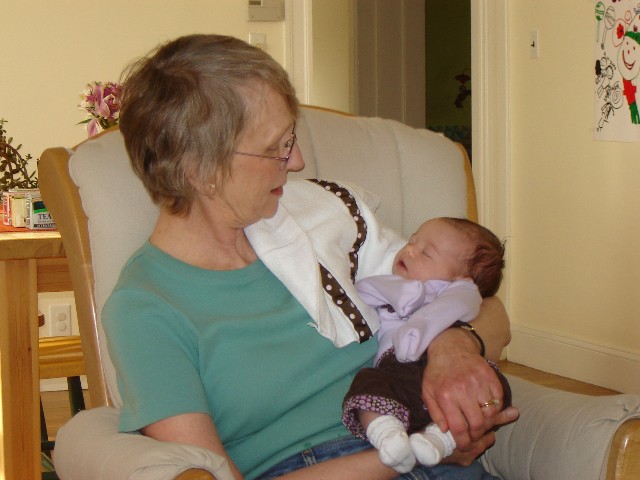
There is a new WordPress blog that hopes to create an online business benefiting an impoverished part of the world. It’s called Life Out Of The Box.

Bloggers Quinn and Jonathon write: “We left the United States in May 2012 and moved to Nicaragua to create a business that gives back to the community. Since we moved here, we’ve been traveling all over the country to find various handmade products by the people of Nicaragua and ultimately develop a line of products that we can sell overseas. Buying and selling products from these local artisans will not only help their local economy, but will also expose people overseas to the beauty of an unfamiliar culture.

“Life Out of the Box is a product for a product business. For every product that we sell overseas, we will give back a product to help educate the kids here in Nicaragua. Sell a product, give a product. One for One. We want to give the kids a useful product that will allow them to have the opportunity to live their life out of the box and pursue their own dreams. So far, these products include a variety of notebooks, agendas and pencils. We are both very connected to education and believe that it’s the best place to start in helping developing countries. It’s the root of where change can start – where kids can learn and develop their own skills to improve their country’s economy, help their families and go on to teach the next generation.

“While we’ve been traveling around the country looking for products to sell, we have also been working with various non-profit organizations to find out how we can make a difference. Overall, our journey has been very exciting and fun and we hope that you follow us in our pursuit of living Life Out of the Box.”

After Thanksgiving, the couple had a “soft launch” of their store, here, and would appreciate feedback.  My own feedback, as one who knows very little about marketing, would be to show a greater variety of products, perhaps on interesting backgrounds like sand or flowers. Also, I see a price but nothing about how to order. I realize they are just getting started.

Jonathon and Quinn could probably learn from  talking to successful social enterprises like Toms Shoes and Serrv. Toms Shoes gives footware to needy children (“with every pair you purchase, Toms will give a pair of new shoes to a child in need. One for One”).

Serrv is a nonprofit selling crafts from all over the world. They’ve been doing this for more than 60 years, so they have a long track record, and their catalog has capsule interviews and photos of the craftsmen and women — making a great personal connection! I just got myself  couple things from Serrv.

At the winter holidays, people often like some of the presents they give to serve a dual purpose and benefit those who need help most. I wish the best of luck to Jonathon and Quinn.

Photograph of Quinn with friends: Lifeoutofthebox.com

Read Full Post »

I keep a folder of things I want to check out in walking distance of the office. Today I pulled out a Boston Globe article from 2-1/2 years ago, “Depression-era mural gets a second chance to shine,” and set out.

A Stephen Etnier mural of Boston Harbor that had been rolled up and stored away in 1981 was back on display.

Etnier, as Brian Ballou wrote in the Globe, was “one of hundreds of artists across the country picked by the federal government in the late 1930s to early ’40s to depict characteristic scenes of their region in post offices. …

“In early 2005, postal employee Brian Houlihan came across the painting and alerted Dallan Wordekemper, the federal preservation officer for the United States Postal Service. The mural was sent to Parma Conservation in Chicago, which began to restore the artwork in late 2008.”

The restored painting, “Mail for New England,” was unveiled in April 2010, but it took me until today to get to the post office branch at Stuart and Clarendon.

I got an extra bonus, too, because on the way I saw a completely unexpected bit of street art by the famed Gemeos twins, whose work at the ICA and Dewey Square was described in an earlier post.

Read Full Post »

Hurricane Sandy was terrible for many communities in its path, and the devastation has given urgency to climate concerns and innovative solutions.

Henry Fountain writes about one such solution in the NY Times, “With a few dull thuds, the one-ton bag of high-strength fabric tumbled from the wall of the mock subway tunnel and onto the floor. Then it began to grow. As air flowed into it through a hose, the bundle inflated until it was crammed tight inside the 16-foot-diameter tunnel, looking like the filling in a giant concrete-and-steel cannoli.

“The three-minute procedure, conducted on a chilly morning this month in an airport hangar not far from West Virginia University, was the latest test of a device that may someday help guard real tunnels during disasters — whether a terrorist strike or a storm like Hurricane Sandy, whose wind-driven surge of water overwhelmed New York City’s subway system, shutting it down for days.

“ ‘The goal is to provide flooding protection for transportation tunnels,’ said John Fortune, who is managing the project for the federal Department of Homeland Security’s Science and Technology Directorate.

“The idea is a simple one: rather than retrofitting tunnels with metal floodgates or other expensive structures, the project aims to use a relatively cheap inflatable plug to hold back floodwaters.

“In theory, it would be like blowing up a balloon inside a tube. But in practice, developing a plug that is strong, durable, quick to install and foolproof to deploy is a difficult engineering task, one made even more challenging because of the pliable, relatively lightweight materials required.”

More.

Photograph: NY Times

Read Full Post »

For years, I’ve been a fan of Bikes Not Bombs, a local bike repair and training outfit that got its start providing donated bikes to poor people in Central America.

Now I find out that an architecture charity also likes Bikes Not Bombs — enough to donate time to renovate the shop.

The Christian Science Monitor and Cathryn J. Prince have the story.

“Inside the sleek steel and cement workshop of Bikes Not Bombs in Boston’s Jamaica Plain neighborhood, at-risk youths recondition bicycles before sending them on for use in developing countries.

“Halfway across the country at the University of Minnesota Amplatz Children’s Hospital, a ‘showcase suite’ shows how a child’s hospital room can be made less intimidating and more comfortable.

“The ‘1 percent’ built the bike-repair workshop. The ‘1 percent’ also built the hospital room.”

The 1% program of Public Architecture, based in San Francisco, “connects nonprofit groups in need of design assistance with architecture or design firms. The name for the group comes from the idea that if firms across the country donate just 1 percent of their time each year to charitable work it would equal 5 million hours. …

” ‘In a moment of ambitious insanity, I decided to start a nonprofit,’ says John Peterson, the founder and president of The 1%. …

“Most architecture and design firms, he found, were unfamiliar with the idea of doing pro bono work. Initially, holding design competitions was the only way to get firms to participate.

“ ‘But competition [projects] rarely get built,’ says Amy Ress, project manager for The 1% program. ‘We wanted to do projects that would get built.’

“Mr. Peterson launched The 1% in 2001. More than 10 years later, more than 1,000 architecture and design firms (between 3 percent and 5 percent of all American architectural firms) and 600 nonprofit organizations are participating. About 18 new firms join each month, he says.

“One of the earliest design ideas was The Station, which would serve as a gathering point for day laborers. Day laborers normally must hang out at spaces meant for other uses, such as gas stations and parking lots. Today a handful of official Day Labor centers exist across the country.”

More.

Photograph of John Peterson: The 1% program of Public Architecture

Read Full Post »

I liked a Nov. 19 editorial in the NY Times: “Day Laborers, Helping Hands.” It shows that attitudes about immigration can be affected by circumstances.

“About 50 or so people gathered outside a storm-ruined taco restaurant on Saturday morning in Coney Island, on a backstreet behind the Boardwalk near the Wonder Wheel. They were day laborers, Hispanic men and women who have been spending weekends as a volunteer brigade, helping other people chip away at the mountains of debris and accepting nothing in return except work gloves, face masks and safety information cards from the Occupational Safety and Health Administration. They came from all over the region, including a day labor hiring center in Bensonhurst, Brooklyn, that Hurricane Sandy had washed away.

“It’s not unusual to find day laborers looking for work after a disaster. What was striking was the warmth and gratitude they found. They even had an official welcome, from the local state assemblyman, Alec Brook-Krasny, and two City Council members — Domenic Recchia Jr. of Coney Island and Vincent Gentile of Bensonhurst.

“They thanked everyone for coming and pledged to get the Bensonhurst work center open again. A man from the laborers’ union gave a safety lecture. …  ‘We are all New Yorkers,’ said Mr. Recchia, who had brought a box of masks. An observer used to the anti-Latino screeds of politicians on Long Island, a few miles east, marveled at the sense of community — the feeling that after a disaster, immigration status didn’t matter, only a willingness to help.”

Although I took this photo in downtown Boston, the union mural seemed fitting, suggesting the importance of keeping fairness in mind after the crisis has passed.

Read Full Post »

Suzanne knows what sorts of stories would be good for this blog. I love one that she passed along at Thanksgiving.

It’s by Elizabeth Rau at East Side Monthly, and it’s about a charitable effort to help refugees acclimate to a new life while working.

“The holidays are upon us. What to do?” asks Rau. “You can drop a ten-spot on useless things … or you can buy a bag of granola made here in Little Rhody.

“This wholesome, mostly organic granola is irresistible: It tastes good and is lovingly whipped up by refugees trying to start over in a country that can be intimidating and tough to figure out.

“The Providence Granola Project was founded by Keith Cooper and Geoff Gordon during a deep talk one night about how to help people who come to America with nothing more than a suitcase.

“Keith, a Yale graduate and former campus minister who lives with his family on the East Side, had one of those aha moments. He’d been making granola for years in his kitchen. Why not turn his hobby into a business and mobilize refugees too? The two friends shook hands. A company was born.

“That was five years ago, and Providence Granola is still going strong. In rented space at the Amos House soup kitchen in South Providence, the company makes 1,000 pounds of granola a month.  …

“For years, Keith worked at the International Institute of Rhode Island, settling refugees here. … Keith was moved by what he saw at the institute — dignified and hard working men and women who want to succeed. With so many obstacles in their way — no money, language barriers, a different culture — you’d expect them to give up. But they don’t.”

Granola has given many of these people a new start. Read more here. And here. Read especially about Zaid Wadia, a 35-year-old Iraqi refugee, determinedly upbeat and grateful despite a very tough past life.

Photograph: image by Ryan T. Conaty

Read Full Post »

I was pushing the stroller this morning, singing the old Thanksgiving hymns (“Come Ye Thankful People,” “We Gather Together,” “We Plow the Fields and Scatter the Good Seed on the Ground”) and thinking of harvests.

So today might be a good time to blog about harvests and drought-resistant crops.

“Scientists are developing faster-maturing and drought-tolerant varieties of corn and cotton,” writes Madalitso Mwando at AlertNet, “holding out the hope of much-needed relief for thousands of farmers across Zimbabwe.

“As planting season approaches amid concerns about successive poor harvests, research into drought-resistant seeds is gaining momentum …

“Zimbabwean farmers have suffered a succession of poor harvests with yields far below what the country needs, forcing the agriculture ministry repeatedly to revise its projections for harvests.

“Farmers and their unions blame the cyclical uncertainties of their sector not only on a lack of up-to-date farming technology, but also on their inability to obtain seed varieties that can survive the low rainfall caused by climatic shifts.

“The Scientific and Industrial Research and Development Centre (SIRDC), in partnership with the University of Zimbabwe and Biotechnology Research Institute (BRI), has developed a drought-resistant variety of maize (corn) seed called Sirdamaize 113.

“Farmers have had to wait between 150 and 180 days before harvesting their traditional maize crop, but the center says the new seed takes only 136 days to mature.” Read more.

I hope a bountiful harvest was represented at your dinner table today.

With gratitude to blog readers for reading,
Suzanne’s Mom

Photograph: Philimon Bulawayo/Reuters/File
Martha Mafa, a subsistence farmer, stacks her crop of maize (corn) in Chivi, about 378km (235 miles) southeast of the Zimbabwean capital of Harare.


Read Full Post »

« Newer Posts - Older Posts »