Feeds:
Posts
Comments

Archive for the ‘Uncategorized’ Category

Steve McGonagle is a set designer whose community-theater work always amazed me back when I was a reviewer. One set that stands out in my mind was his huge train engine charging toward the audience in the Vokes Players performance of On the Twentieth Century (not to mention all the scene changes for that old-time musical).

Recently, Steve returned to school, to Boston University, to get his PhD, and he mentioned to me that he and other students were working on a BU Fringe Festival entry. (I blogged a bit about the original, 50-year-old Edinburgh Fringe Festival here.)

On Sunday my husband and I went to see the 90-minute opera in the black box space upstairs from the Huntington Theater.  It was wonderful in every way, not least because Steve designed and built a beautifully plausible Golden Gate Bridge with only a $200 budget.

The new Jake Heggie opera, Three Decembers, was based on a Terrence McNally play. The story revolves around a self-centered and overbearing stage diva. Her grown children find her maddening and hurtful but still important to them. The acting was subtle and true to life in a way that opera seldom is, for me anyway. And we were amazed at the clarity of the words sung by the cast from BU’s School of Music Opera Institute. (We got the “blond cast” and understood that there was also a “brunette cast” to give more students opportunities.)

We admired the variety of styles and moods in Heggie’s score, some of it wonderfully lyrical. Three Decembers had a libretto by Gene Scheer and was directed by Tomer Zulun. Allison Voth was music director. More here.

Read Full Post »

Have you read any of the articles in the NY Times about the Russian art collector who saved Uzbek folk art and modern Russian art from destruction by collecting thousands of pieces for his museum? The museum was long unknown to most of the world, located as it was in a remote desert area of Uzbekistan (near the dried up Aral Sea), a region called the Republic of Karakalpakstan.

The first Times story, published in January 1998, is posted here. It stunned the art world. Igor Savitsky, who died in 1984, had seen the beauty of the modern art that was considered “degenerate” by Stalin and the post-Stalin Soviet Union. He tracked down artists and artists’ relatives and squirreled the works away in the desert museum.

Savitsky was sly and often got government functionaries to pay for an acquisition without their realizing what it was exactly. Many thought his museum housed only the ancient artifacts uncovered in state-sponsored Central Asia archeological digs. The collector even got government money for devastating works by a woman who had been sent to the Gulag. He didn’t tell the authorities that the pictures detailed the horrors of the Gulag but said they were of Nazi concentration camps.

We watched “Desert of Forbidden Art” Saturday and highly recommend it. Read about the documentary in the NY Times.

Read Full Post »

Recently the Economist magazine offered a pretty comprehensive summary of efforts that government entities, nonprofits, and banks have made to get people who do not use banks (the unbanked) into the banking system. The push is not only because banks want customers. In fact, many of the new programs for reaching the unbanked require banks to make big concessions.

The bigger concern is that low-income people and immigrants  get taken advantage of by payday lenders, check cashers, and the like.

One program that is now in several U.S. cities actually started with the innovative Bank On San Francisco. Bank On San Francisco emerged to meet a need. First, a broad range of stakeholder groups evaluated why low-income people often preferred using payday lenders. Having found that the customers liked the hours, locations, and apparent clarity about costs, the groups developed a system that could meet more needs. (In New Haven the police were involved in a similar effort because too many immigrants carried all their cash on their persons, and that led to too many muggings.)

I’m interested in this issue, and so I was intrigued by a NY Times story on traveling tellers rural India.

“Swati Yashwant, a 29-year-old mother of one, is part of a growing legion of roving tellers intent on providing bank accounts to the nearly 50 percent of India’s 300 million households that do not have them. Using a laptop computer, wireless modem and fingerprint scanner, Ms. Yashwant opens accounts, takes deposits and processes money transfers for farmers and migrant workers in this small town 70 miles south of Mumbai, India’s financial capital.

“To reduce the risk of robbery or theft, no transaction by law may exceed 10,000 rupees (about $212). And in practice, many amount to no more than a dollar or two. But with the bulk of India’s population living in villages that have never had a bank branch, Ms. Yashwant, with her electronic devices, is a missionary of financial modernity.” Read more here.

The Indian idea looks like one that might be gainfully imported to the United States.

Read Full Post »

I subscribe to a listserv out of Harvard called Innovators Insights. It culls public-policy articles from all over. When you sign up, you pick general topics you want to hear about. (I can explain more if you ask.)

Today I received a link to a story about a new program in California to help foster children who have to change schools a lot. It sounds like a reasonable idea although I imagine some people might object to being in databases.

“Sacramento County, California, is now employing a database for foster youth to ensure that they can transition to new schools with fewer problems. Foster Focus tracks students’ grades, credits, course schedules, residential history, educational plans, the identity of their social worker, and other data so that students are no longer placed in the wrong grade level or in classes they have already completed when they enroll in a new school. The county has also developed another database that compiles foster home addresses, making it easier for social workers to place students in residences near their schools. Agencies across the country are soliciting the county’s advice as they seek to replicate these databases.” Read more here.

In a related story, U.S. Congressman James Langevin (Rhode Island) has been working to pass a federal law to prevent identity theft of foster youth. It is a serious issue as their personal information passes through many hands. I wonder if a database like the one in California makes this less of a problem by having everything in one place.

Read Full Post »

Yesterday’s NY Times Dining section had a delightful story about all the food being delivered to Occupy Wall Street. Donations have come from far and wide, and people have self-organized to distribute it and do the washing up. The story is here.

“Requests for food go out on Twitter and various Web sites sympathetic to the protesters. And somehow, in spontaneous waves, day after day, the food pours in. …

“Platters and utensils are washed on site. The soapy runoff slides into a gray-water system that’s said to draw impurities out through a small network of mulch-like filters. …

“Members of the [food] crew sometimes fail to show up in the morning because they were arrested the night before. (Then again, as many a chef will tell you, that happens in a lot of restaurants.)” …

“Telly Liberatos, 29, the owner of Liberatos Pizza on Cedar Street in the Financial District, said he has received orders from places like Germany, France, England, Italy and Greece, as well as every region of the United States.

“ ‘It’s been nonstop,’ he said. ‘The phones don’t stop ringing. People from California order the most at one time.’ Someone from the West Coast had called in the biggest delivery: he wanted 50 pizzas dispatched to the park.”

You might enjoy knowing that Asakiyume’s blog offers music suggestions for the 99 percent. Check it out. (I borrowed the picture from downtownmonks.blogspot.com.)

Read Full Post »

More curiosities seen on the Rose Kennedy Greenway in Boston: Waves. The first wave pictured below has a sign saying, “From the Greenway.” The second says, “From the Peabody Essex Museum, Salem, MA.”

This website helps to explain that an urban collaboration led by artists Susan Hoffman Fishman and Elena Kalman is behind this project, “The Wave: An Interactive Public Art Installation Fostering Global H20 Awareness.” I love it, but it didn’t raise my water awareness immediately because I had trouble figuring out what it was. Thank goodness for Google.

A couple weeks ago, I wrote to the Greenway people (and to the city of Boston) about bikers who were using the Greenway paths despite signs saying not to use “bicycles, skateboards, personal transportation, i.e. Segway.” I like that people bike instead of use cars, but not on footpaths. The signs cause walkers to lower their guard. I’ve seen near misses.

The city wrote me: “Thank you so much for your email. It is illegal to ride on the Greenway. We at the City of Boston are aware of this issue. We will be installing a bike lane on the road for the cyclists this season. Research shows that that bike lanes dramatically reduce sidewalk riding.”

The Greenway people wrote: ” For the safety and enjoyment of all Greenway visitors, biking is not permitted anywhere in the parks. When our horticultural and maintenance staffs witness a cyclist, they will ask them to dismount; City of Boston Police Department handles enforcement.  … The City of Boston installed five new Hubway stations along the Greenway.  This fall, the City will be installing painted bike lanes onto the street which will help alleviate the problem in the parks.”

(At the moment the Boston police are more preoccupied with Occupy Boston. They arrested 141 Occupiers early Tuesday because they had spread into the Greenway from Dewey Square. Funny how a few days can change one’s perspective. Today the concerns of the Occupiers and the concerns of the police both seem more serious than bikes on footpaths.)


Read Full Post »

At their wedding, Suzanne and Erik seated me next to Erik’s uncle on one side and Jonathan on the other. Jonathan was into literature. In fact he wrote a poem for Suzanne and Erik that he read as a toast. (You would not believe how many toasts Swedes give at weddings. It’s an awful lot of fun!)

Jonathan knew a lot about American and English poets, and I asked him to suggest a Swedish poet that I could read in translation. I figured that Google Translate might not be optimal for poetry. He recommended Tomas Tranströmer. After the wedding, I bought Tranströmer’s The Half-Finished Heaven, translated by Robert Bly. (Who knew Robert Bly translated Swedish?)

Last week, Tranströmer was awarded the 2011 Nobel Prize for Literature. Here is a short Tranströmer poem from the book, illustrated by a photo my husband took before Hurricane Earl in 2010. (The photo is called “Red Sky at Morning, Sailors Take Warning.”)

Storm, by Tomas Tranströmer

The man on a walk suddenly meets the old
giant oak like an elk turned to stone with
its enormous antlers against the dark green castle wall of the fall ocean.

Storm from the north. It’s nearly time for the
rowanberries to ripen. Awake in the night he
hears the constellations far above the oak stamping in their stalls.

Read Full Post »

Around this time last year, a young cub scout rang the bell. He was selling popcorn as a fundraiser for his den. His mother waited by the gate. While I was filling out an order form, he studied the black net over my yard and the way our leaves seemed to float.

“What do you think that’s for?” I asked.

The cub scout pondered only a moment. “When all the leaves fall down,” he said, “you roll them up in the net and dump them in a leaf pile.”

Bingo. He had put his finger on my husband’s innovation to alter and illuminate the fall leaf-raking ritual.

I looked up at the cub scout’s mother and said, “This young man is going places!”

The popcorn was good, too.

Read Full Post »

I finished Jason Elliot’s book about Iran, Mirrors of the Unseen. It was hard work but rewarding.

I bought the book because I really liked Elliot’s An Unexpected Light about the history, culture, and daily life of Afghanistan back when the mujahideen were still fighting the Soviets. (I’m reasonably sure that Tony Kushner’s prophetic play Homebody/Kabul was partially based on that book.)

Mirrors of the Unseen is a challenging read at times because it is very intellectual. It has lots of words and history and concepts that were new to me, but it also has wonderful stories about the ordinary people Elliot met. Even though he wrote it a few years before the the June 20, 2009, Green Revolution, you can get a sense of the attitudes of normal Iranians and what might have led to the unsuccessful revolt.

Elliot does not focus on politics, but rather on Persian art and architecture, which inspired him at a deep level.

I was reading a passage to my friend Claire on the train, and she said, “No wonder it has taken so long to read! It’s poetry!”

So for my last post on the book, I will give a few examples of Elliot’s style. He describes some English tourists as looking “very sad, and it seemed quite likely they had arrived in Iran by accident, like fish that are said to be swept up in hailstones and deposited hundreds of miles away.”

As he travels toward the southern part of Tehran toward the train station, “the surroundings grew steadily more decrepit, as if an old witch was being shed of her make-up.” And the train itself “had the air of a dragon straining at its leash.”

Here’s my favorite, from a discussion of whether the fascination that all religions seem to have with flame is passed from ancient cultures to modern or is something innate in humans: “Had the sanctity of flame erupted irresistibly into human consciousness as mysteriously as the hexagon into the intelligence of the bee?”

My other posts on the book are here, here, and here.

Read Full Post »

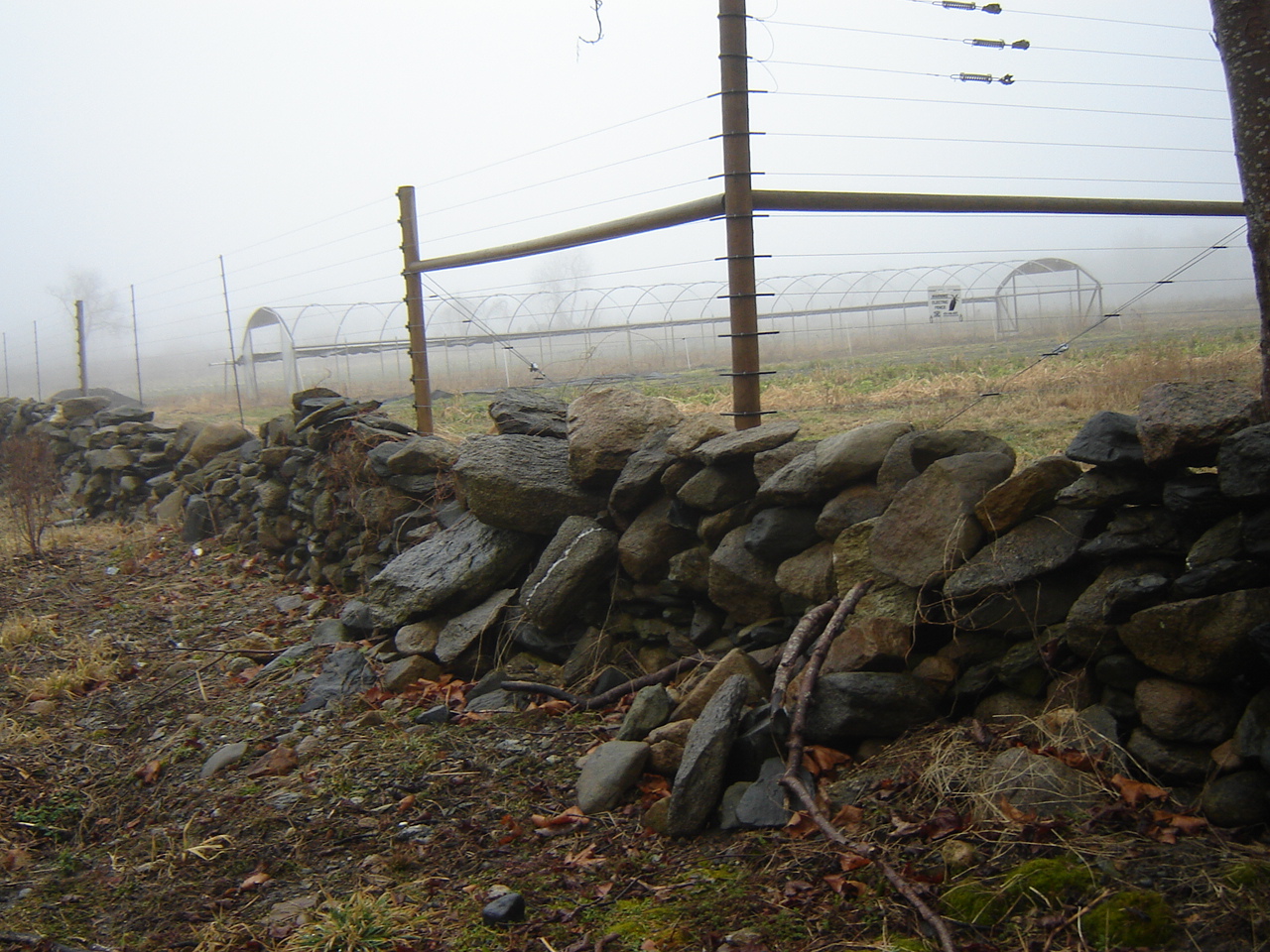
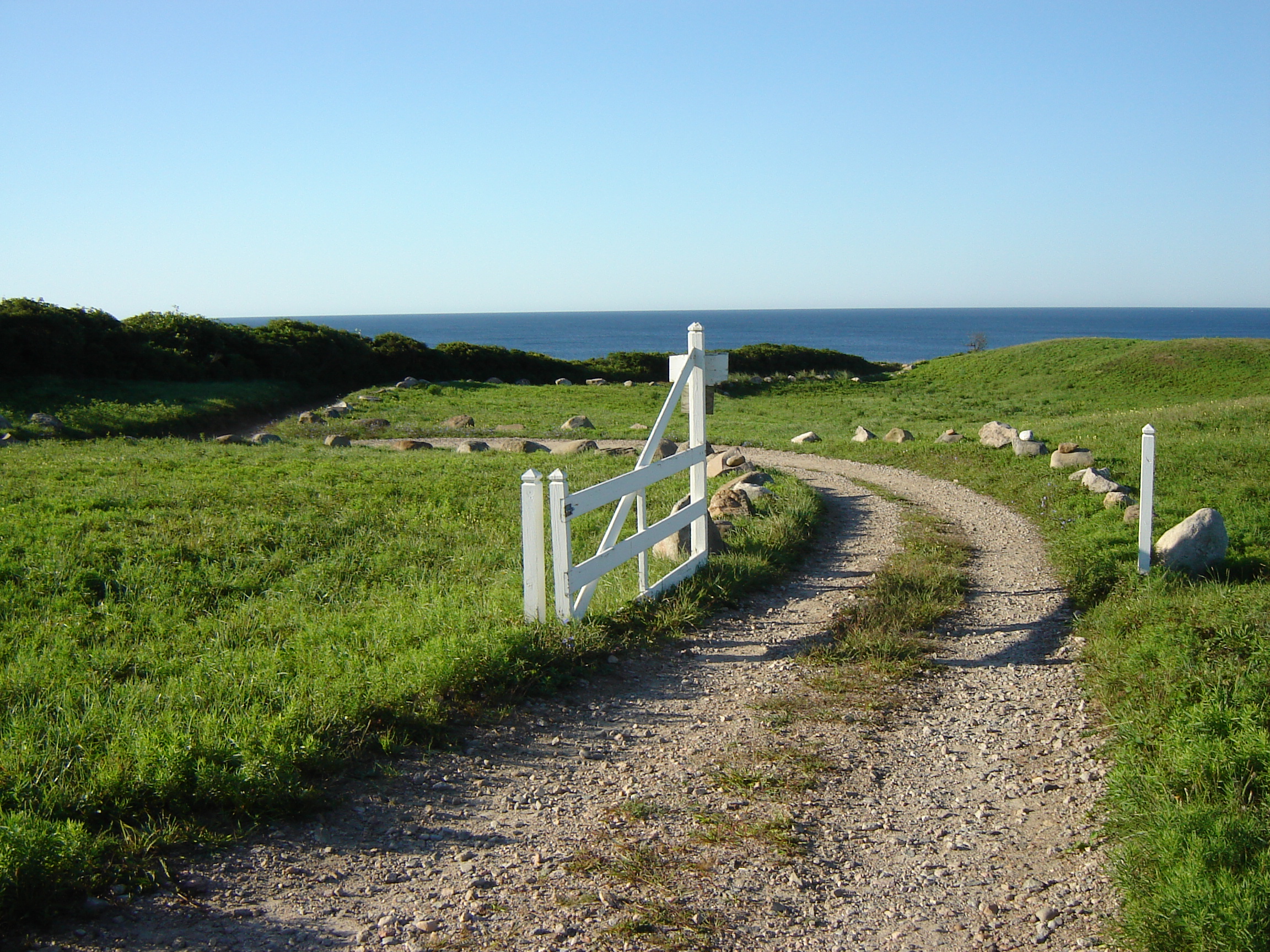
As an inveterate Easterner, currently in California for a family wedding, I’m amazed by this state. I’ve been here before, but I never can get over how different it looks from what I know!

Read Full Post »

In California, I saw a sign on a tree that was covered with lichens and surrounded by dead trees. It seemed a plea for help. But according to the Hastings Biological Field Station of the University of California, lichens can capture airborne nutrients and return them to the soil. That is considered good. Another website paints a more complex picture, suggesting lichens may sometimes be associated with the death of trees in California. Read it here.

Read Full Post »

My friend Ann Ribbens creates unique, artistic quilts and has shown her work in many places, including the Minneapolis Institute of the Arts. Here are two samples of her work.

I don’t know much about quilts, but I am always happy to see new creative energy go into old art forms.

Recently I noticed that this a local frame shop is hosting an exhibit of art quilts, featuring the work of Sophie Schulman-CahnMarjie Cahn,Kathy Connors, and Georgette Gagne.

Read Full Post »

Some years ago, the John Adams family biographer Paul Nagel introduced me to physician/poet Norbert Hirschhorn. Paul told me that Bert was on the team that helped save thousands of lives in Third World countries simply by distributing water to which sugar and electrolytes had been added. (A National Institutes of Health paper references Bert’s 1973 research on “oral glucose electrolyte solution for all children with acute gastroenteritis” here.)

A special NY Times science supplement on Sept. 27, 2011, “Small Fixes,” reminded me of Bert and the notion that small innovations can have a huge impact.

Among the great stories in the supplement. is this one about Thailand’s success fighting cervical cancer with vinegar.

It turns out that precancerous spots on the cervix turn white when brushed with vinegar. “They can then be immediately frozen off with a metal probe cooled by a tank of carbon dioxide, available from any Coca-Cola bottling plant.” The complete procedure, which can be handled by a nurse in one visit, has been used widely in Thailand, where there are a lot of nurses in rural areas.

In Brighton, Massachusetts, Harvard’s George Whitesides founded Diagnositcs for All to commercialize his inventions, including a tiny piece of paper that substitutes for a traditional blood test for liver damage. Costing less than a penny, “it requires a single drop of blood, takes 15 minutes and can be read by an untrained eye: If a round spot the size of a sesame seed on the paper changes to pink from purple, the patient is probably in danger.” Read the Times article.

Amy Smith at MIT is another one who thinks big by thinking small. Read about her Charcoal Project, which saves trees in poor countries by using vegetable waste to make briquettes for fuel.

Read Full Post »


Here is Middle America at 7 a.m. waking up in Boston’s financial district after a cold, rainy night in a tent — and wondering why its college degrees have not led to jobs. It’s not Hooverville. But I think it represents something real.

There is actually a wide array of causes represented. No obvious central theme has emerged. End the War, Tax the Rich, Socialism … .

Every day I get tweets from the Equal Exchange coffee trike. With the Occupiers of Boston, the curiosity seekers, the media, and the police, there has been a steady demand for coffee. Today’s message was  “EEFreeRange EE Free Range Cafe: So busy I can’t get a tweet in edgewise! Trikes are at Charles/MGH and Dewey Sq. Come see us!”

At the Washington Post, Ezra Klein is trying to figure out what it all means. He decided it probably does mean something after he started reading a Tumblr blog called We Are The 99 Percent. He describes the blog as all “grainy pictures of people holding handwritten signs telling their stories, one after the other.

‘I am 20K in debt and am paying out of pocket for my current tuition while I start paying back loans with two part time jobs.’

“These are not rants against the system,” Klein continues. “They’re not anarchist manifestos. They’re not calls for a revolution. They’re small stories of people who played by the rules, did what they were told, and now have nothing to show for it. Or, worse, they have tens of thousands in debt to show for it.” Read more.

In the afternoon I went over and read a few signs. Would love your comments on this one: “I couldn’t afford my own politician, so I made this sign.”

It’s 11/6/11, and I just learned about another great source of Occupy signs, at Mother Nature Network. Check out “I’ll believe corporations are people when Texas executes one” here.

Read Full Post »

I believe that people must take responsibility for their actions, that crimes should have punishments, and that every effort should be made to protect society from danger. But I don’t think society is protected if the place of punishment makes a person who committed a crime more angry and hostile than when she did it.

That’s why I like to post about the many kinds of volunteers who work with inmates to turn their hearts to better purposes. It may not always work, but it seems worth trying.

A while back, I blogged about one friend who works with ex-offenders through an organization called OWLL (On With Living and Learning: Jobs Skills for the 21st Century).

Now another friend has written about being accepted into a volunteer program at a low-level women’s prison near her home. The way this friend writes about her orientation, I can see the whole thing.

“I had a letter telling me not to bring a cell phone, smoking paraphernalia, medications, or sharp objects, and not to wear tight clothing, open-toed shoes, dangly earrings, or anything green or orange. … About half the volunteers were people of color and half were white. About a quarter spoke to one another in Spanish. More than half were middle-aged or older. One woman was in a wheelchair. So, it was a pretty diverse group. … There was lots of impressive high-tech security. There are lots of things we’re not allowed to do, like buy things for the inmates, or bring them messages. Or–and the volunteer handbook says this explicitly–help them escape or cover up an escape attempt.” (!)

Are touchy-feely prison programs all too naïve? Well, a highly skeptical prison warden at a Florida prison where there is a dance program admits that he came to see the benefit of women inmates having more-positive ways of expressing themselves:


Read Full Post »

« Newer Posts - Older Posts »