Feeds:
Posts
Comments

Archive for the ‘Uncategorized’ Category

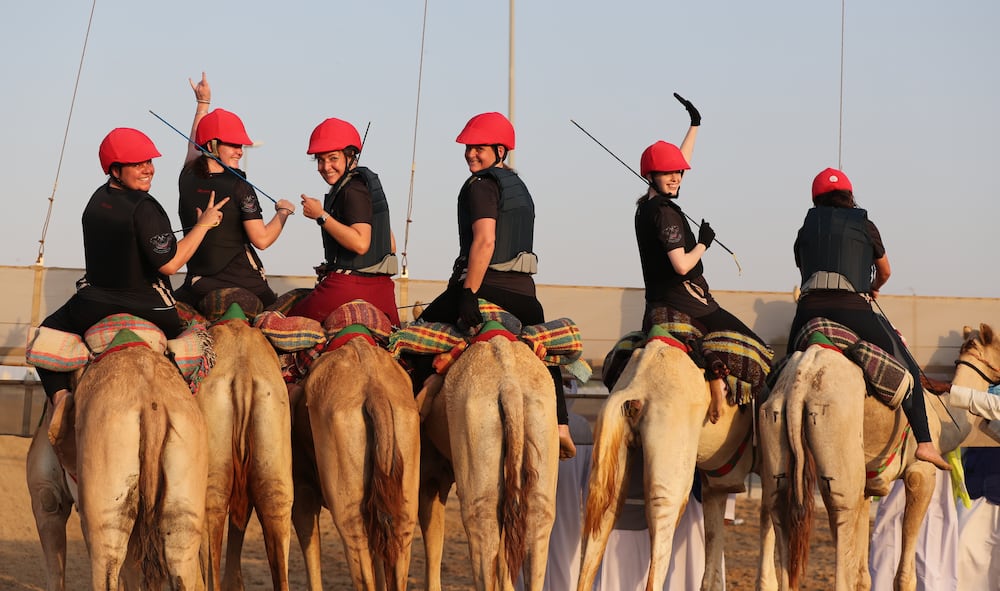
Photo: EPA/Ali Haider via the National News.
Female camel-racing event in Dubai, October 2021. Of the eight women who took part, seven were trained at the Arabian Desert Camel Riding Centre, the first in the region dedicated to teaching women to race camels.

For some reason, I’ve been hearing about camels a lot lately. Not just how long they can travel without refueling but how nutritious their milk is, how lovely their hair. Today we learn about racing camels.

Stacey Vanek Smith reports at PRI’s (Public Radio International’s)The World, “It was a scorching hot day at the Al Marmoom Camel Racing Track located just outside of Dubai in the United Arab Emirates. …

“On a typical morning, [the] arenas are packed with hundreds of enthusiastic fans placing bets on the early-morning camel races (early morning because temperatures are often in the triple digits by 10 a.m.). …

“Camel racing is an ancient sport — its roots stretch back to at least the 7th century on the Arabian Peninsula. But the races at Al Marmoom are a modernized version. Instead of riders, small robots sit atop the camels’ humps and control them with reins. The robots are controlled remotely by men who speed alongside the racetrack in cars, directing their camels. But the people gathered on this hot afternoon had come for something different but also far more traditional: The season’s first women’s race. 

“Though the crowd was undoubtedly smaller than the hundreds who regularly show up for the men’s races, the women’s team — a part of the Arabian Desert Camel Riding Center — has started to get real traction in the last few years. News outlets covered the race, and Jeep sponsored the event, along with a handful of local businesses, including Camelait, a company that sells camel milk.

” ‘It’s high in calcium,’ the emcee informed the crowd. …

“Meanwhile, the four women riders led their camels to the racetrack. One of the racers, 31-year-old Linda Krockenberger, is the reason behind the rise of women’s racing — she founded the women’s camel racing team. 

“Krockenberger came to Dubai in 2015 to work in the hospitality industry. She had raced horses back in Germany and decided to try her hand at camel riding. She was instantly hooked and was determined to learn how to race camels. The only problem was she couldn’t find anyone to train her. For years, she was told the sport was not for women. …

“But Krockenberger kept trying until she found a willing trainer, Obaid Al Falasi, a highly respected community member.  As soon as she felt comfortable with her skills, Krockenberger and Al Falasi decided to open a school. …

“Before she knew it, local and tourist women were flocking to her for lessons. Krockenberger emphasized the support she has gotten from the camel-riding community. … Still, Krockenberger added, there have been many skeptics.

“ ‘Critics sometimes say, “Oh, do we really need a German to teach us an Arabic tradition?” Of course, these comments do get to me because I don’t want to impose myself on the culture,’ she said. ‘But I try to calm these thoughts by saying, “Well if you’re such a great teacher, there’s nothing that stops you from teaching as well.” ‘

“Krockenberger’s riding school emphasizes the Bedouin camel riding tradition. The racers ride barefoot and don’t use saddles, just Bedouin blankets. 

‘Barefoot, it’s more freeing,’ racer Rawan Salah explained. ‘You feel everything. You can feel the belly of the camel. You can feel if they’re nervous. Everything.’

“ ‘The Bedouin didn’t have shoes, so we don’t have shoes,’ racer Yanna Schmiel added. …

“While the racers led their camels to the start line, a group of spectators got into their nearby cars and drove up beside the camel track where the riders mounted their camels. Spectators may watch the races from their vehicles or stand at the finish line.

“The women perched just behind the hump on their single-humped Dromedary camels, sitting on blankets. They clung to the camels with their legs, wearing riding helmets and team jerseys.

“Salah said that she feels that all-women racing is a special experience. ‘It feels empowering,’ she said.”

More at PRI’s The World, here.

Some additional fun: “Camels and Riders will be disqualified for the following reasons:

  1. “Belts used to strap rider to camel.
  2. “Electric shockers found mounted to the camel or used in whips, overusage of the whip.
  3. “External influence of camel owner on camel during race beyond vocal cheering on.
  4. “Interference with gear of competitor camels and riders
  5. “Riding gear that has not been tested and approved prior to the race.”

Read Full Post »

Photo: Fuller Craft Museum.
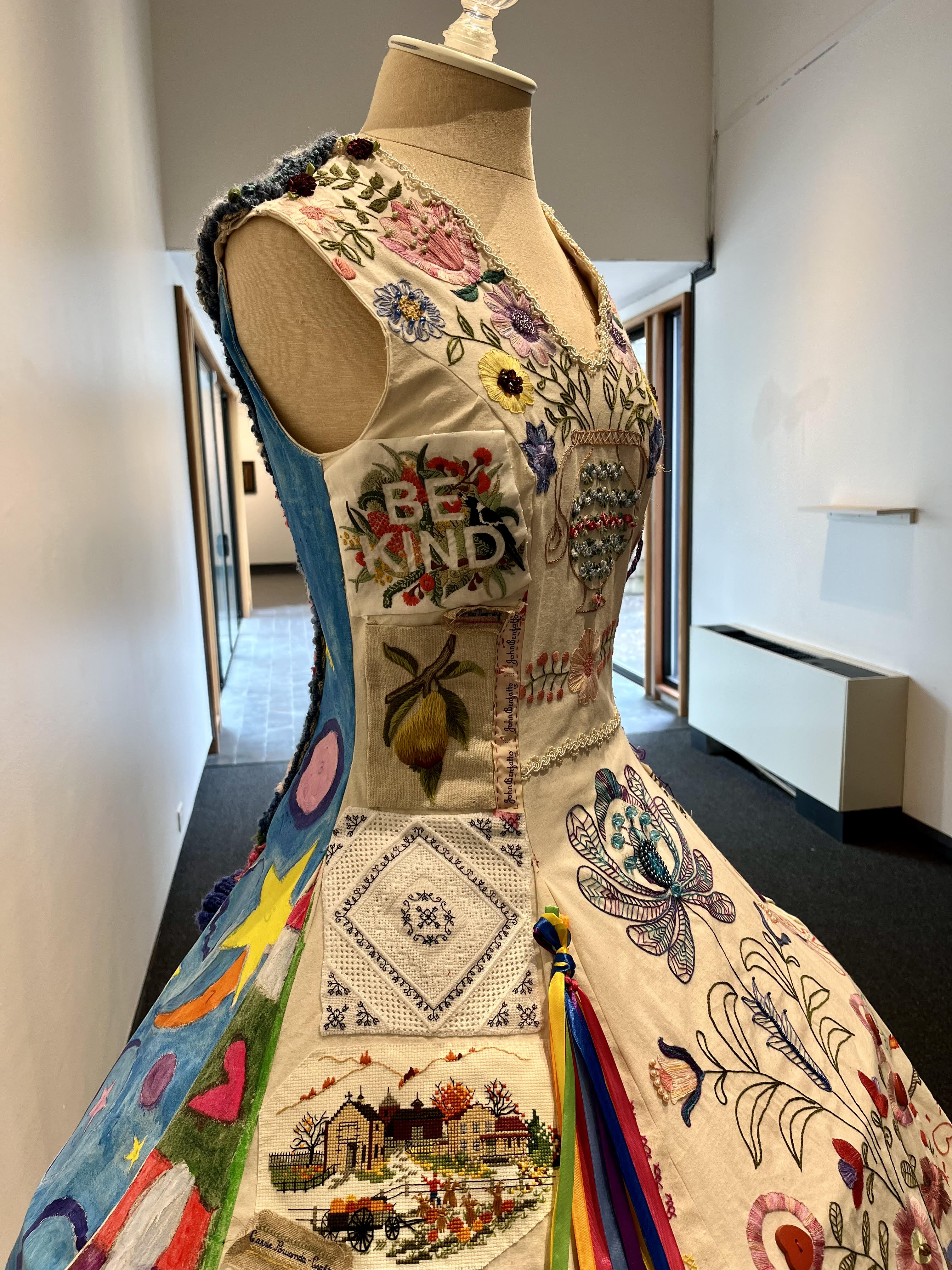
The Red Dress” is the culmination of 15 years of work by 380 embroiderers from over 50 countries, many of the contributors from impoverished, marginalized groups.

My friend Ann, a textile artist, invited me to pay a visit to the Fuller Craft Museum, a beautiful place in Brockton, Massachusetts. She was especially interested in seeing an embroidered dress that had traveled the world and uplifted many talented but marginalized women, but we got a kick out of all the exhibits.

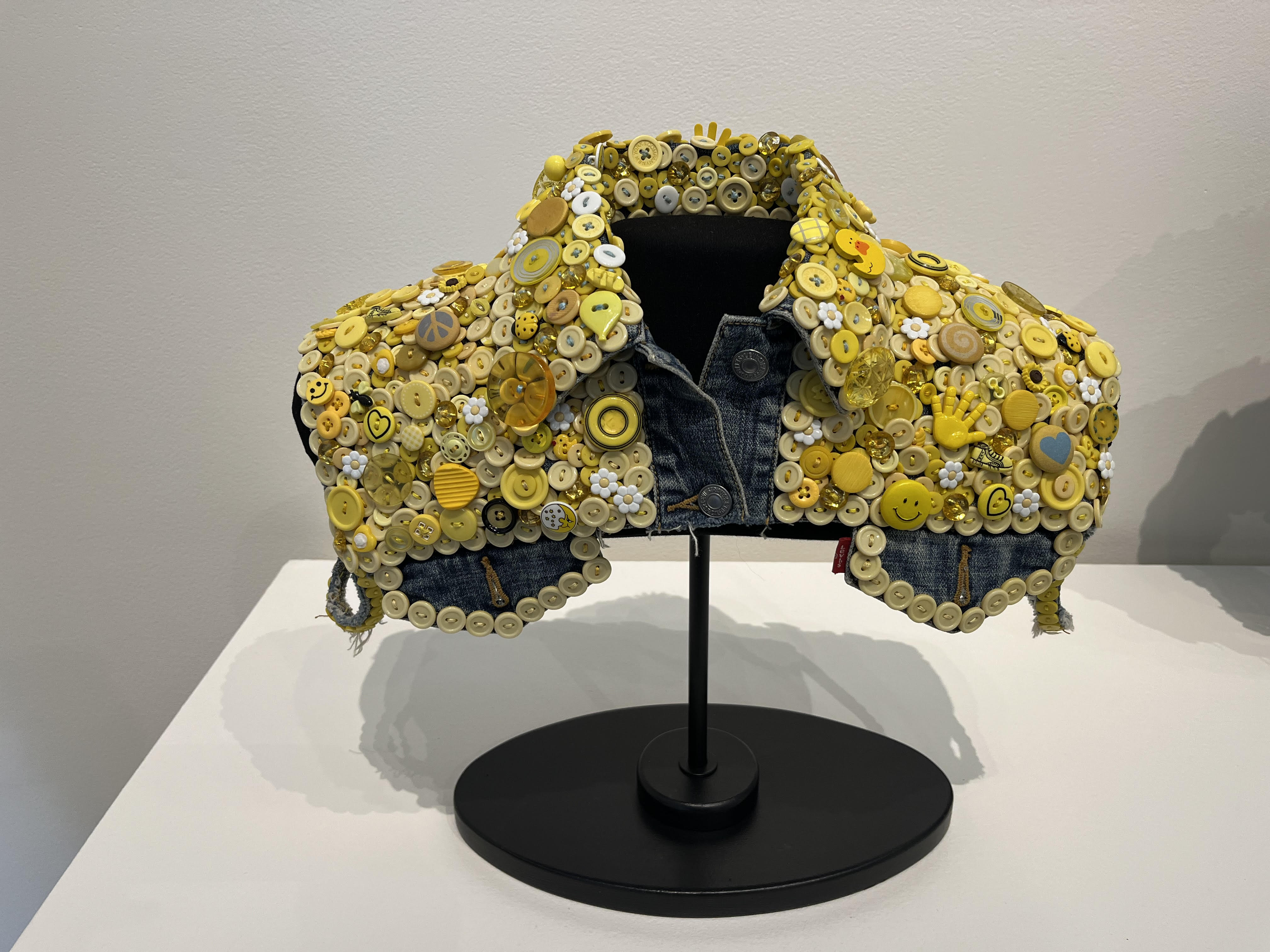
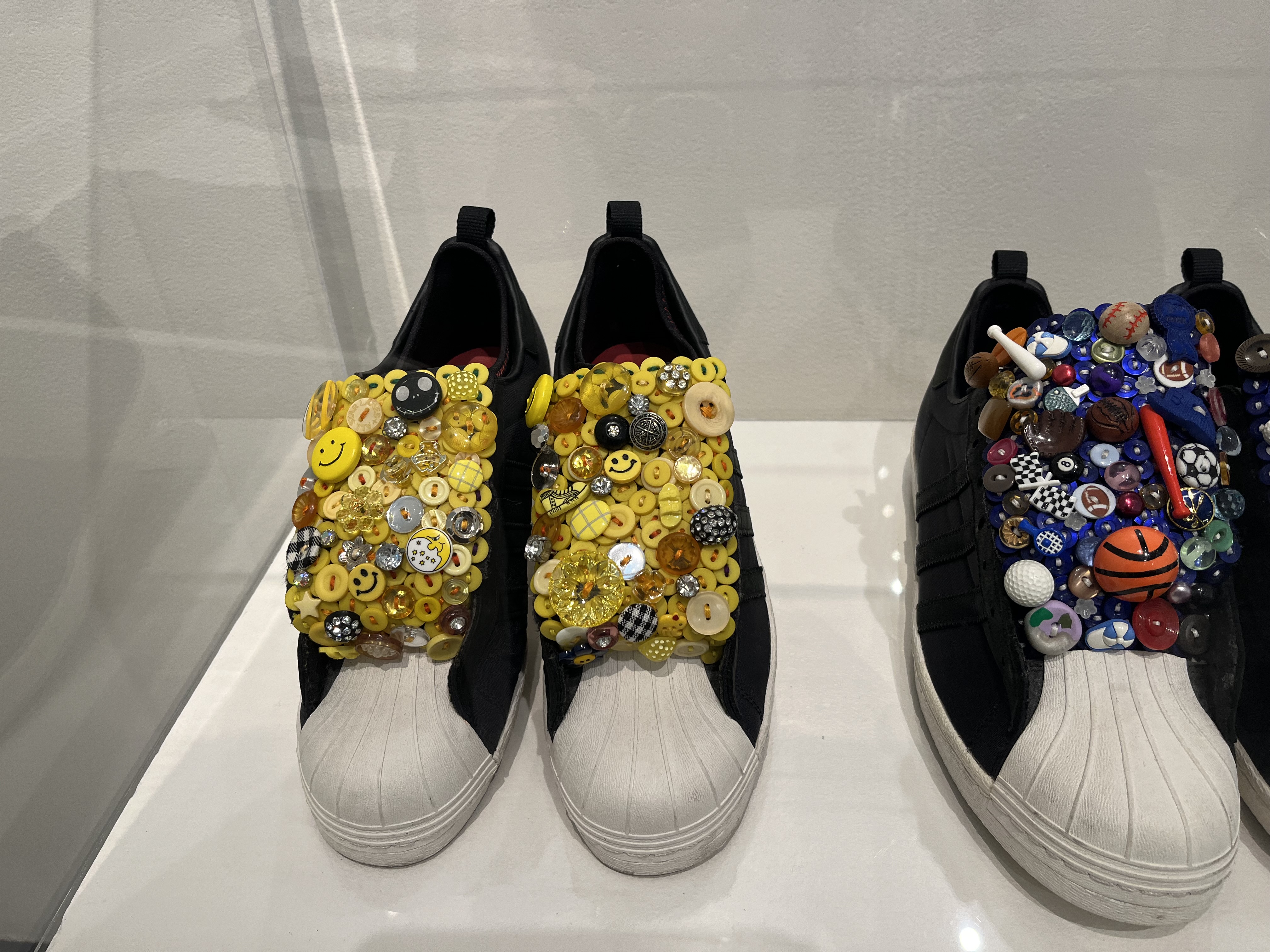
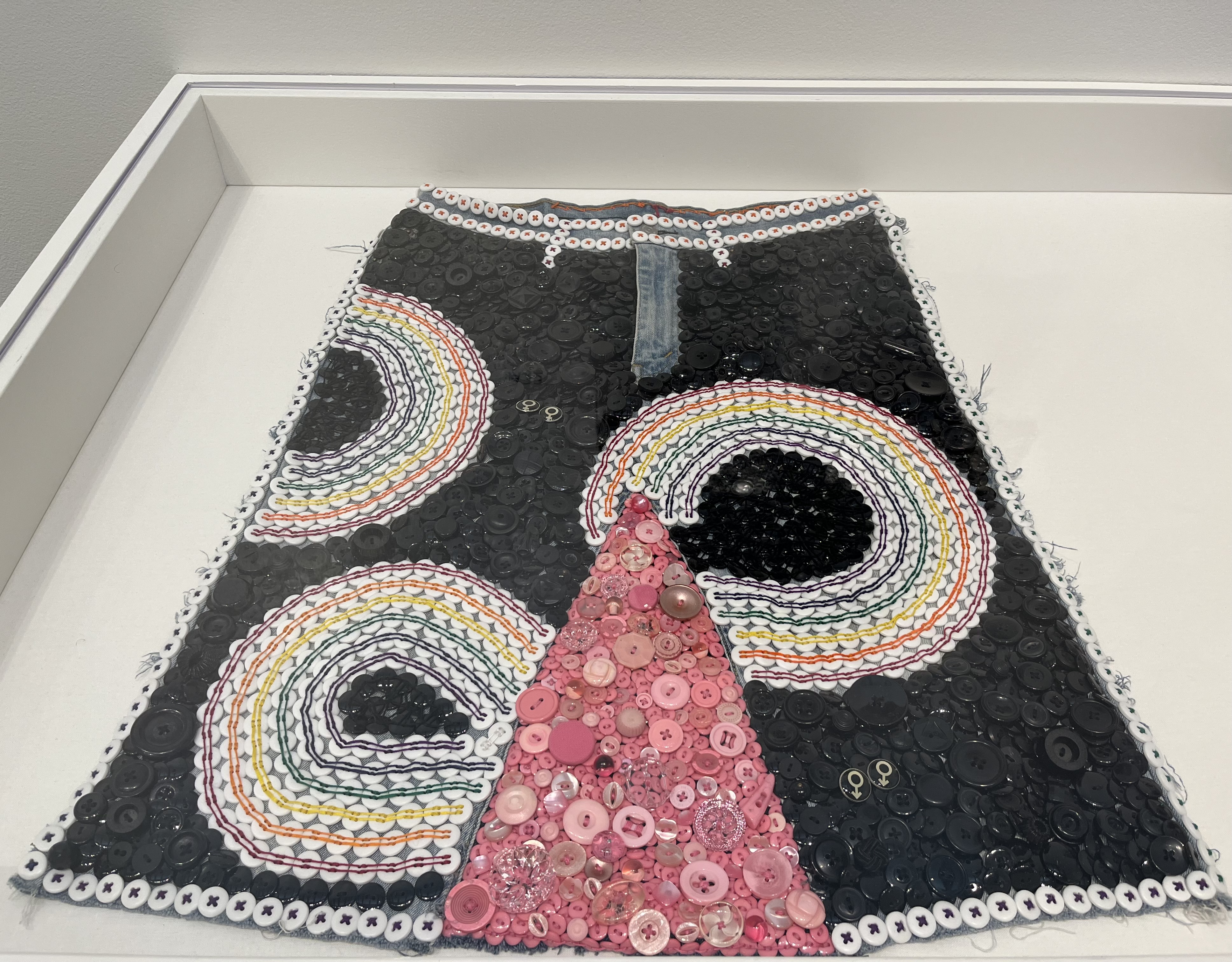
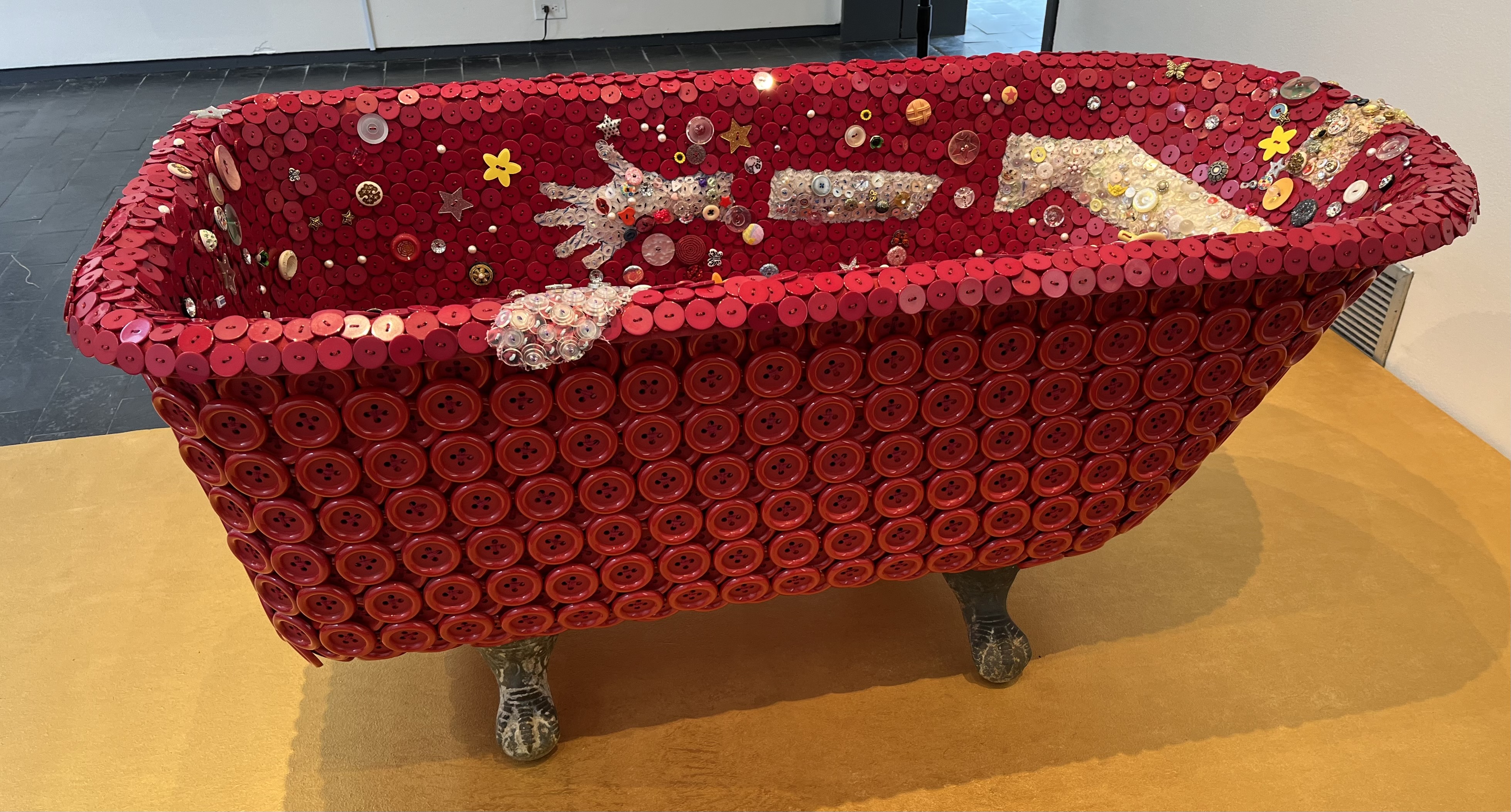
I took photos — quite a few of works by button artist Beau McCall.

The first image below is of McCall’s jeans top and the second of some sneakers — all covered with buttons. The third piece is also covered with buttons, even the black parts. The only button-free place is where the zipper would go.

The button-covered bathtub was particularly arresting. Ann says she wants to find out how McCall sources so many buttons, many of them clearly antique.

The next photo, of an embroidered dress, features the handicraft of embroiderers of all kinds around New England, a local homage to “The Red Dress.”

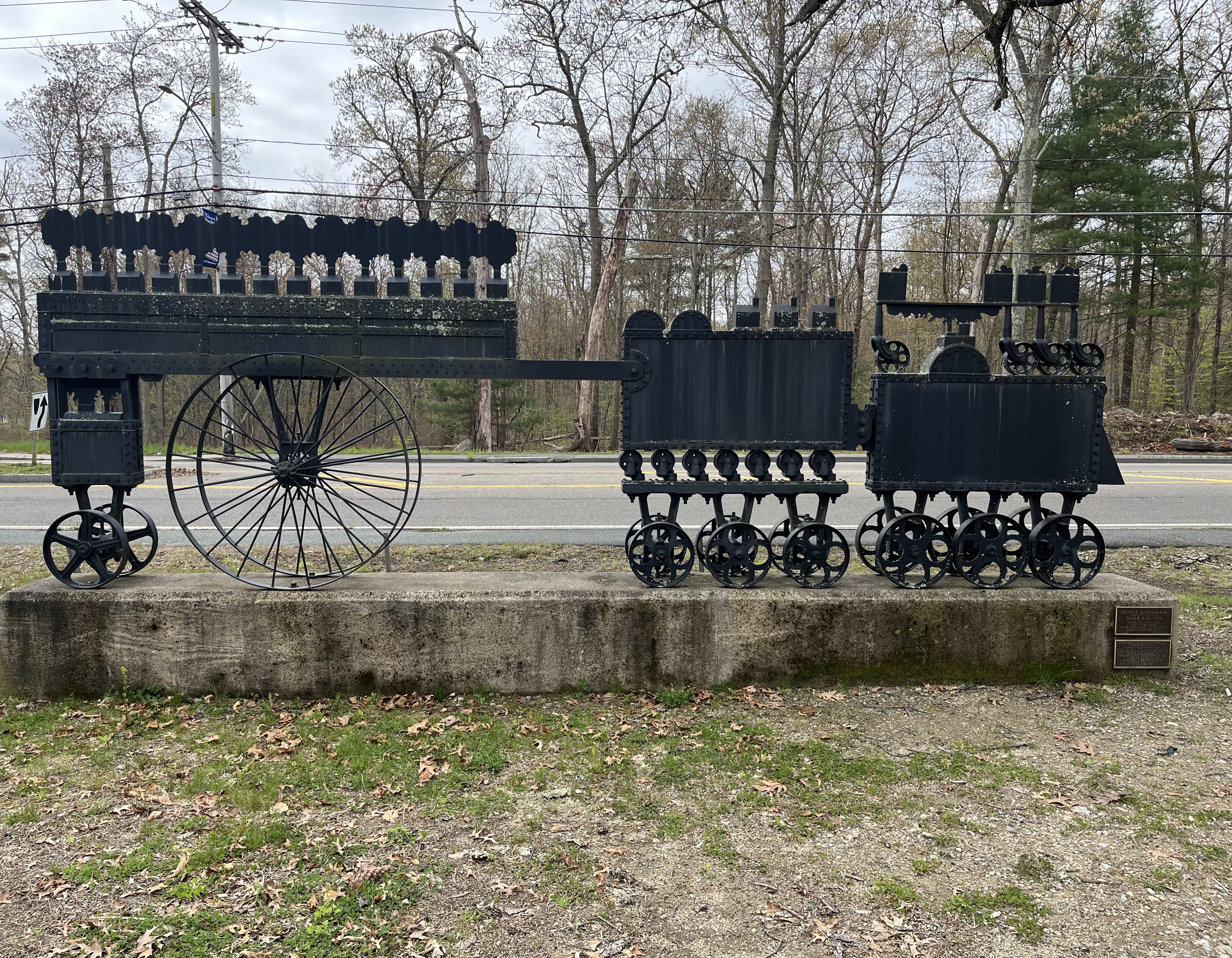
My last shot is of George Greenamyer’s steel train at the entrance to the museum, a hint that the ugly suburban highway where the museum is located has something magical behind the parking lot — a modern building with courtyards and vistas of swans sailing along serene Upper Porter Pond.

More at Fuller Craft, here.

Read Full Post »

The Arabic Sesame Street was designed especially for children in refugee camps, but it’s a delight for other children, too.

I posted about the development of a “Sesame Street” for Middle East refugees in 2016 (here) and for Bangladesh refugees in 2019 (here).

To give you the latest, I’m sharing a recent interview that National Public Radio’s Deborah Amos conducted in Beirut.

NPR Host Audie Cornish
” ‘Sesame Street’ is taking on one of the world’s biggest crises — the plight of Syrian refugee children. The Muppets are reaching out to millions of displaced children in a new program. Refugee children face special issues — losing their homes, missing time from school and frequent moves. They grapple with emotions and fears they barely understand. NPR’s Deborah Amos reports from Beirut.

Deborah Amos
“The Syrian refugees at this soccer practice are part of the target audience for ‘Ahlan Simsim’ — ‘Welcome Sesame,’ a new show on Arab TV stations and online — also for refugee kids in Jordan, Iraq and Syria. Some here are old enough to remember the war. Many more were born as refugees, raised by parents who fled violence and devastating loss and can pass on the trauma. …

Bassil Riche
“Definitely, these kids have experienced something that no kid should have to experience.

Amos
“Bassil Riche, the soccer coach, has seen the signs in these kids.

Riche
“Maybe the kid misses a shot or something. You know, you can see kind of over-the-top anger or frustration or disappointment in themselves. It’s important for them to talk about these things and not keep it inside.

Amos
“Getting those emotions out is the aim of the new program. … Produced in Amman, Jordan, the scripts are in consultation with regional educators and researchers. For 50 years, ‘Sesame Street’ has pioneered programs to address childhood challenges. The new challenge — to create a show for children who are likely to remain refugees throughout their childhood. Scott Cameron is the executive producer in New York.

Scott Cameron
“The show was developed to help children become smarter, stronger and kinder and give them skills to be — to thrive and be resilient. …

Amos
“[Grover] speaks Arabic in ‘Ahlan Simsim.’ The newcomers are Jad — bright yellow — Basma is purple. She becomes Jad’s best friend when he arrives in the neighborhood. Jad is sometimes sad because he’s had to leave everything behind, including his favorite toys. Research shows displaced children don’t have the language to identify emotions and the skills to cope, says Cameron. So that’s a key educational goal.

Cameron
” ‘Ahlan Simsim’ focusing an entire season on emotions is … a bold move that is born out of a need.

Amos
“The teaching techniques are sometimes silly. They’re always fun.

Cameron
“Debka dancers are three animated dancers whose sole function is to identify emotions and label them in a really funny way. … They pop into frame out of nowhere, sometimes. So it’s always fun to see where they’re going to come from. Sometimes, they pop up out of the bushes. They do a dance. They are a very important way for us to make sure that the children pay extra attention when we’re first introducing the vocabulary word that matches the emotion.

Amos
“Syrians are now the largest refugee population in the world. The statistics for going home are grim. Displacement lasts longer than ever before, sometimes for decades. Head writer Zaid Baqaeen says he never uses the label.

Zaid Baqaeen
“It was never put in any script that, oh, you’re labeled as a refugee or not because our focus is about welcoming. …

Amos
“The welcome is extended on the ground. In a partnership with the International Rescue Committee, the IRC is sending thousands of outreach workers to four countries and extend the lessons of the TV production and tackle some of the hardest subjects, says Cameron. … The ‘Ahlan Simsim’ project is a new way to correct the shortcomings of traditional humanitarian aid that provides for immediate needs but does little to prepare a generation to become resilient adults.”

NPR transcript and audio are here.

Read Full Post »

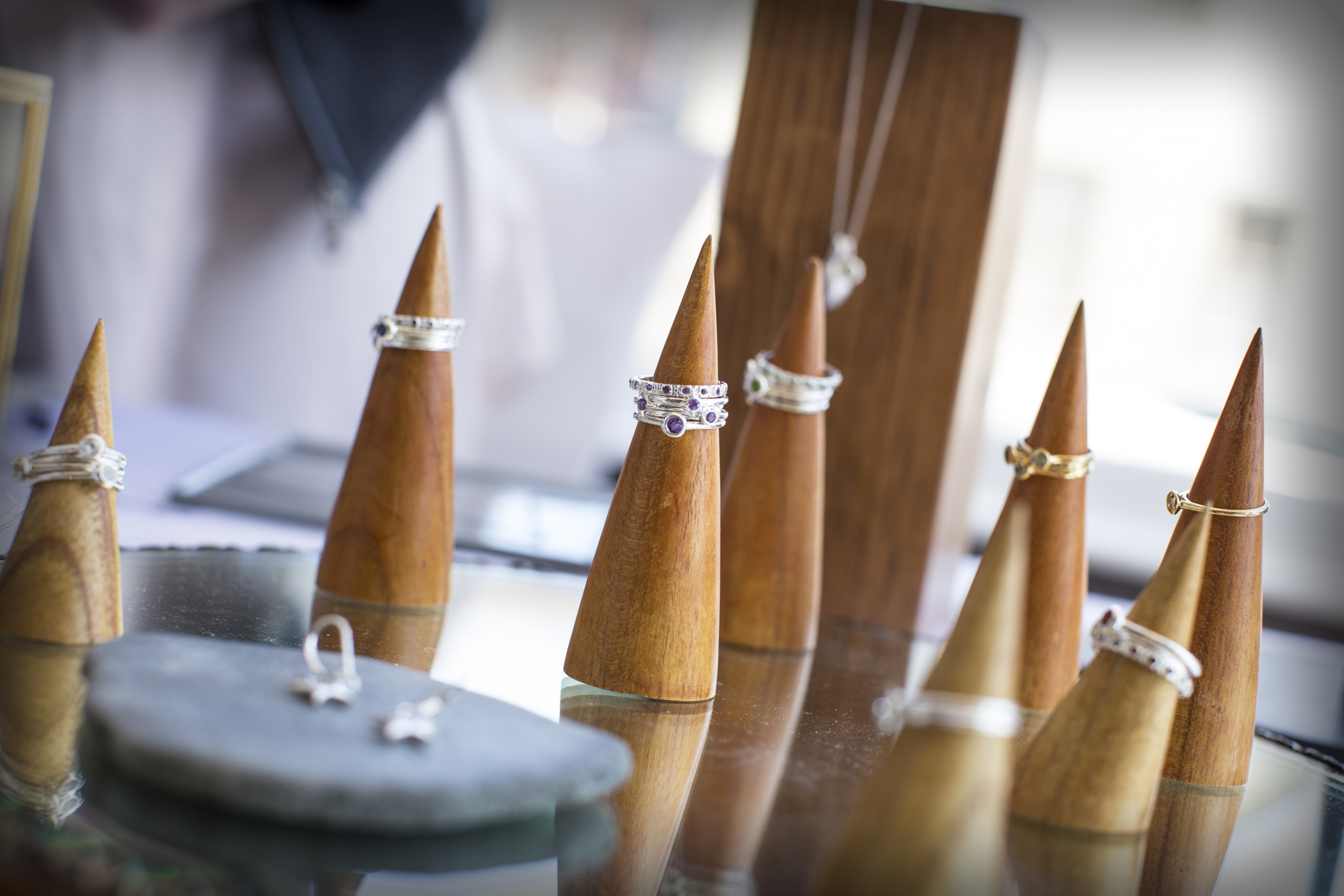
All sterling silver birthstone rings are 20% off with code RING20 at Luna & Stella this year.

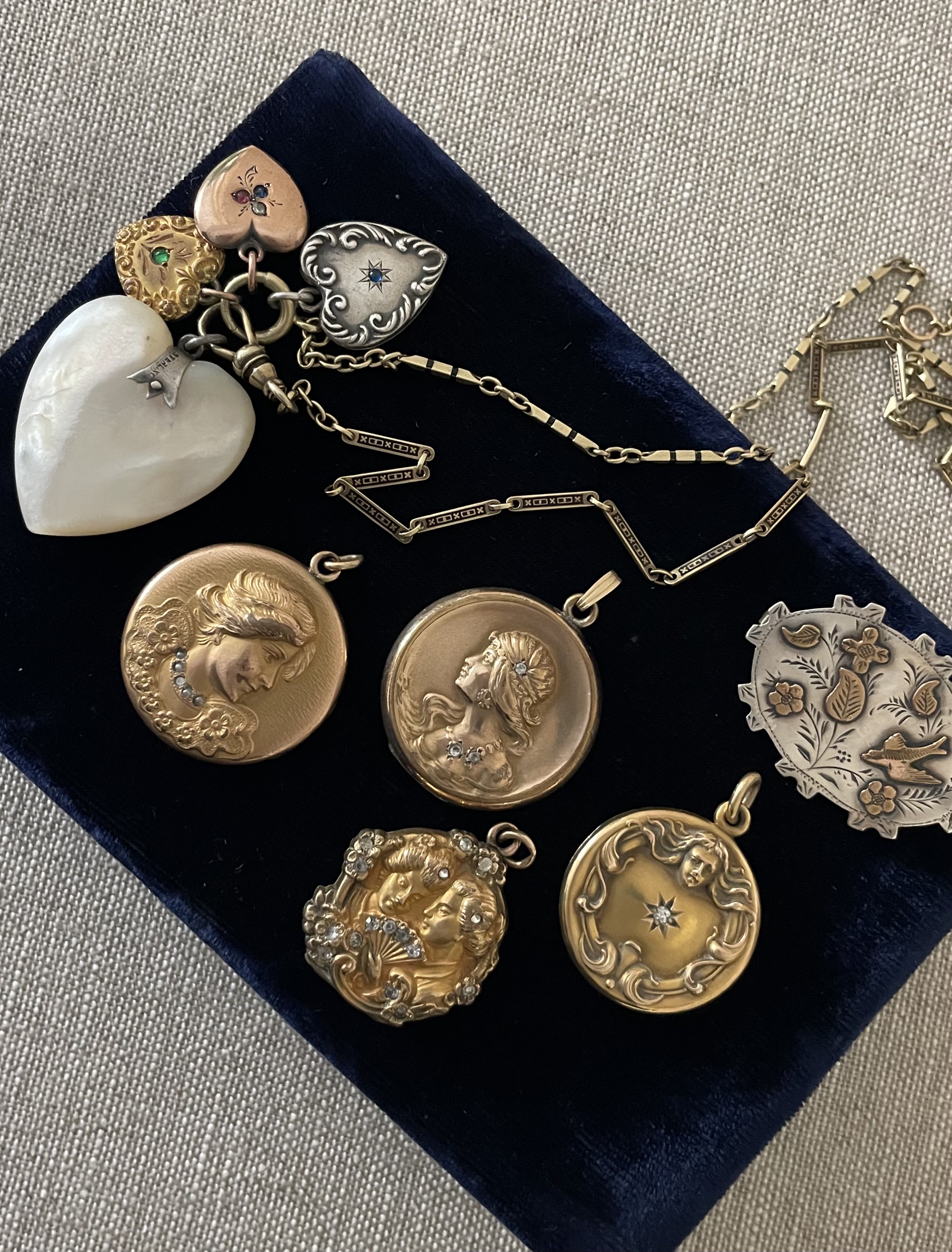
I always like to tell new readers how I got the title for this eclectic blog. My daughter’s birthstone and vintage locket company, Luna & Stella, offered to host a blog that didn’t need to be only about jewelry. Suzanne said I could write about anything that interested me, and as you have probably figured out, a lot of things interest me. So in May 2011, I was off to the races! Today I can boast 13 years of daily posting — and many fascinating blogging friends.

Occasionally, I do like to point out that Luna & Stella is an awesome place to buy jewelry and that there are often sales in May, in the lead-up to Mother’s Day. This year, Mother’s Day is May 12.

You have been thinking about what to get a certain person for Mother’s Day, haven’t you? This would be a good time to look at the sterling silver birthstone rings at Luna & Stella because they are 20% off with the code RING20. Order by Monday, May 6, with standard shipping, or Wednesday, May 8, with 2-day shipping.

And if the mother in your world prefers earrings, necklaces, vintage lockets, etc., take a look at the many other beautiful things at the Luna & Stella site. Tell your friends.

Read Full Post »

Photo: AP.
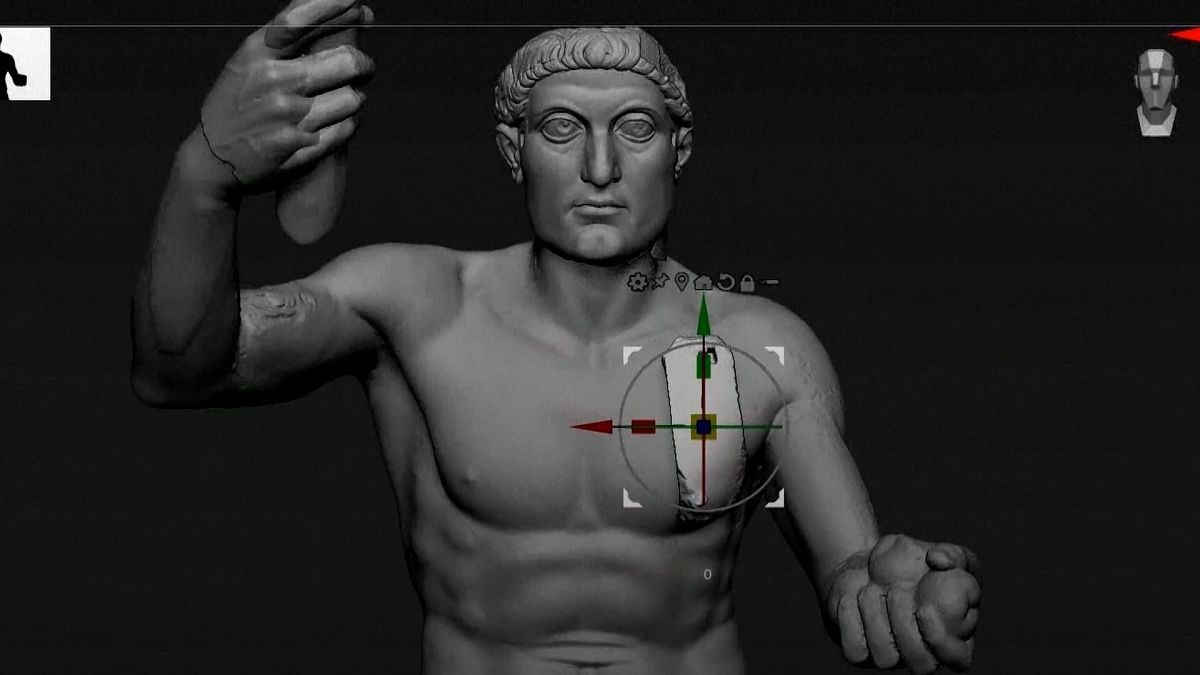
“Factum Foundation, a Madrid-based digital art group, analyzed 10 fragments from a sculpture of Constantine the Great, a fourth-century Roman emperor, to create a 1:1 replica,” says AP. See the digital scan above.

Planning to be in Rome anytime soon? Here’s a sight that’s a bit out of the ordinary — both ancient and completely modern.

Elisabetta Povoledo writes at the New York Times, “It may not be authentic, exactly, or very old at all. But the colossal statue of a fourth-century emperor, Constantine the Great, is a newly erected monument to Rome if nothing else: a homage to the ancient city’s grandeur, and of its endless capacity to remake itself. In this case, the remaking was literal.

“Towering over visitors, the 43-foot seated statue was painstakingly reconstructed by a Madrid-based digital art group, Factum Foundation, from the 10 known fragments of the original sculpture. …

“ ‘Seeing Constantine, on top of the Capitoline Hill, looking out at the whole of Rome, he feels extraordinary,’ said Adam Lowe, the founder of the Factum Foundation, which originally created the statue for a 2022 exhibit at the Prada Foundation in Milan.

“The head and most of the other fragments of the colossal statue were discovered in 1486, in the ruins of a building not far from the Colosseum. They were transferred to what eventually became the Capitoline collection, and nine of those ancient fragments — including a monumental head, feet and hand — are permanently on show at the museums.

“The fragments found fame from the moment they were excavated, said Salvatore Settis, an archaeologist and one of the curators of the Prada exhibit. ‘They have been etched by leading artists from the 15th century on,’ he said. …

“Five hundred years and many more technological advancements later, a team from the Factum Foundation spent three days using photogrammetry, a 3D scan with a camera, to record the fragments in the Capitoline courtyard. Over the course of several months, the high-resolution data became 3D prints, which were used to cast replicas, made of acrylic resin and marble powder.

“Those were then integrated with other body parts — the ones Constantine was missing — that were constructed after historical research and discussions with curators and experts.

A statue of the emperor Claudius as the god Jupiter, now at the ancient Roman altar known as the Ara Pacis, was used as a model for the pose and draping, which was originally in bronze.

“ ‘It’s through the evidence of those fragments, working rather like forensic scientists, with all the experts from different disciplines, we were able to build back something … awe inspiring,’ Mr. Lowe said, adding that new technologies were offering museums new avenues of research and dissemination. …

“Recent scholarship on the statue has suggested the statue of Constantine was itself reworked from an existing colossus, possibly depicting Jupiter. Irrefutable signs of reworking are especially present on the colossal statue’s face, according to Claudio Parisi Presicce, Rome’s top municipal art official, the director of the Capitoline Museums and an expert on the colossus.

“Indeed, some experts hypothesize that the sculpture was originally the cult statue of a temple devoted to Jupiter — the Temple of Jupiter Optimus Maximus — which would mean that the Constantine facsimile has finally returned home.

“ ‘We can’t be certain that it’s the same statue, but there is some possibility that it was,’ Mr. Settis said. Constantine, the first emperor to convert to Christianity, may have specifically selected a statue of Jupiter to transform into an icon of himself. ‘That’s one hypothesis,’ he said. ‘It would mark a passage in Western Europe, from the pagan empire to a Christian one.’

“The statue will be on show in the Capitoline garden until at least the end of 2025, officials said. Where it will go afterward, and whether it will withstand the ravages of time better than its fractured original, remain open questions.

“ ‘It’ll be as fine as anything is outside,’ Mr. Lowe said. ‘We hope. Of course, even during the opening there were pigeons sitting on its head. I’m afraid there’s not much you can do about that.’

More at the Times, here.

Read Full Post »

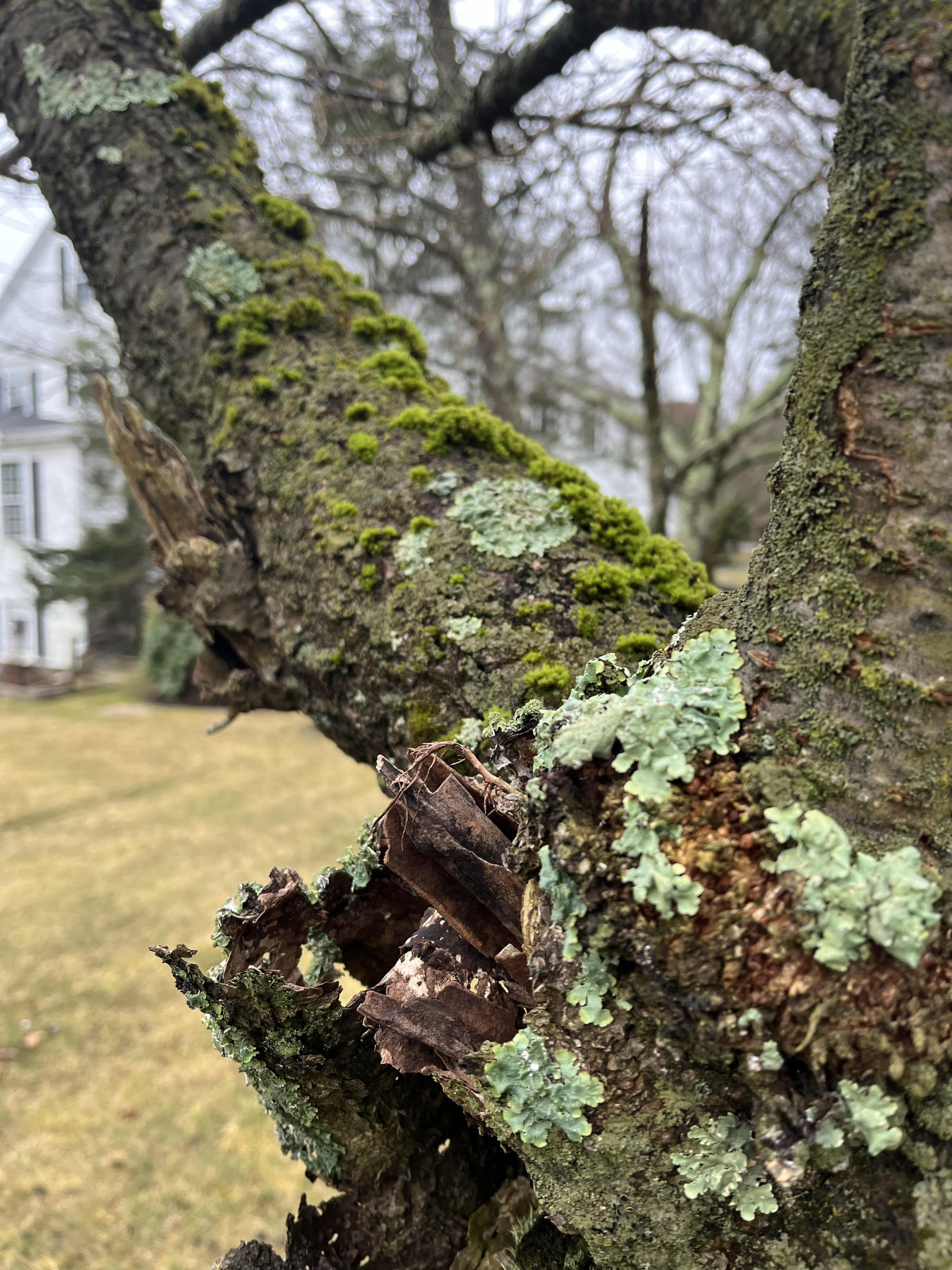
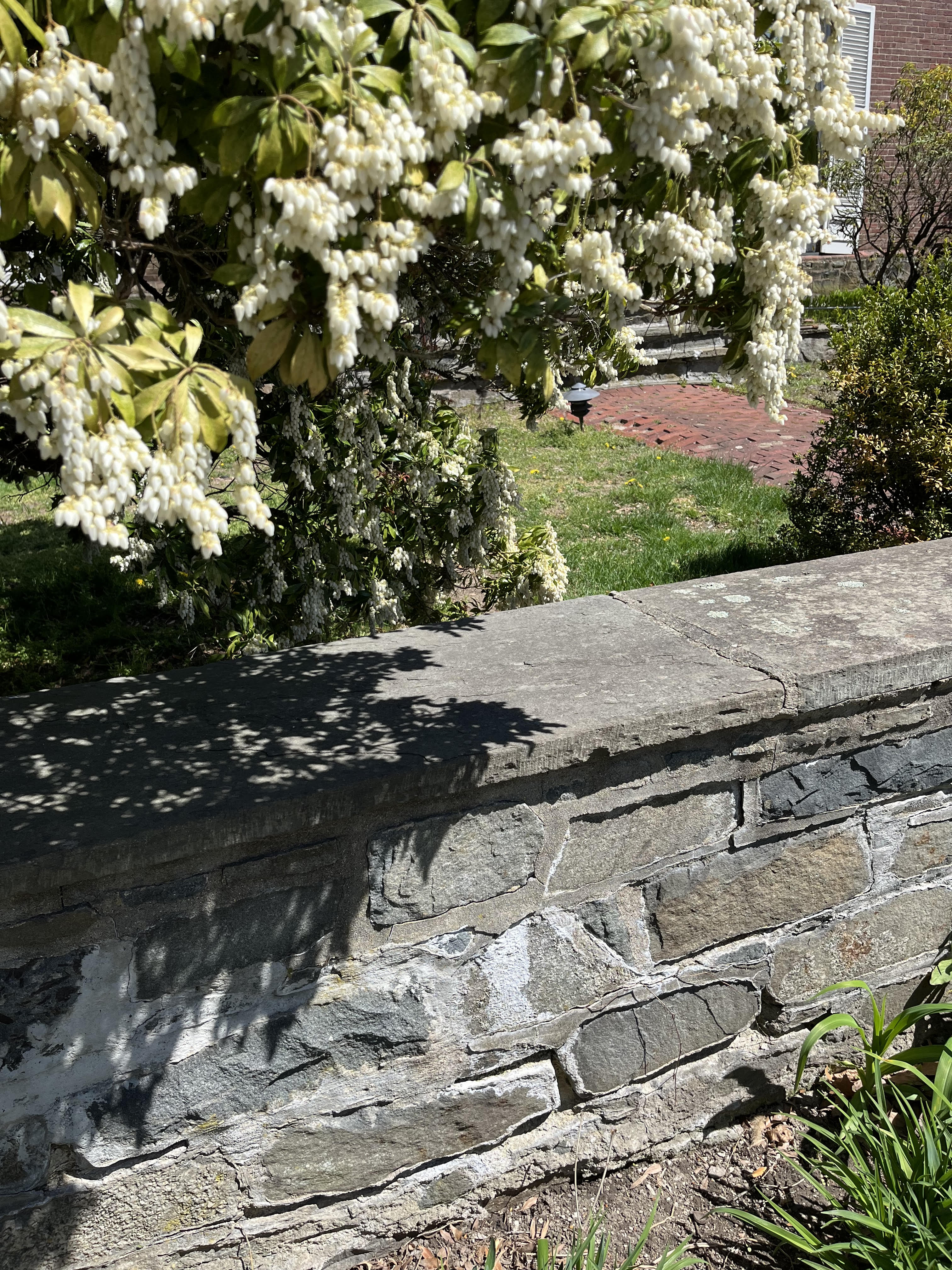
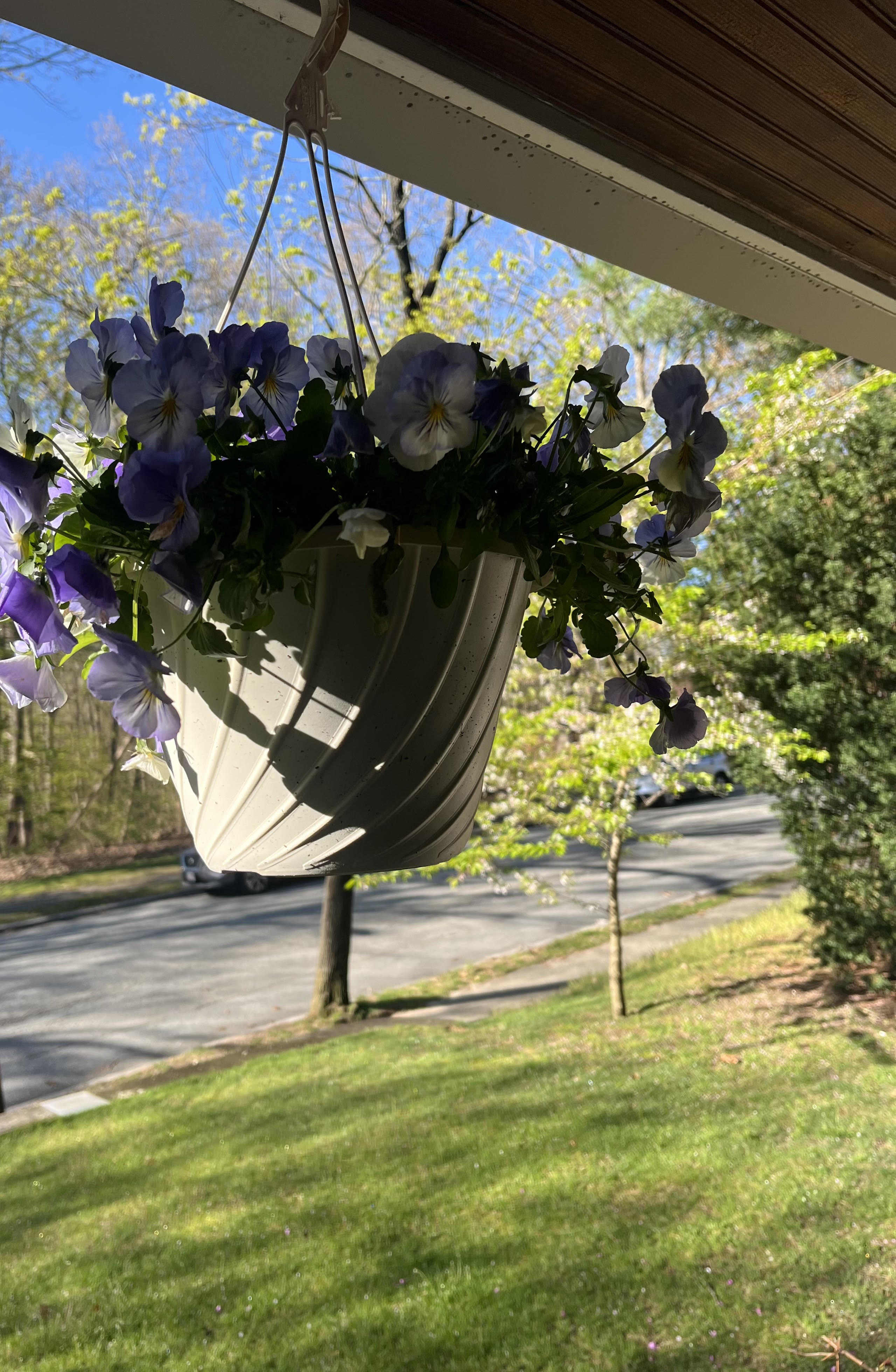
Partly, of course, spring is about the angle of sunlight, how early the sun comes up, how late it stays. I never thought I had seasonal affective disorder, wasn’t sure I believed there was such a thing. But I do find I’m cheered up by sunlight, discouraged by gray skies.

The photos today are mostly self-explanatory, but I want to point out how vibrant the moss looks in early spring. Also, the last photo is of a New England wildflower called Mayapple.

Read Full Post »

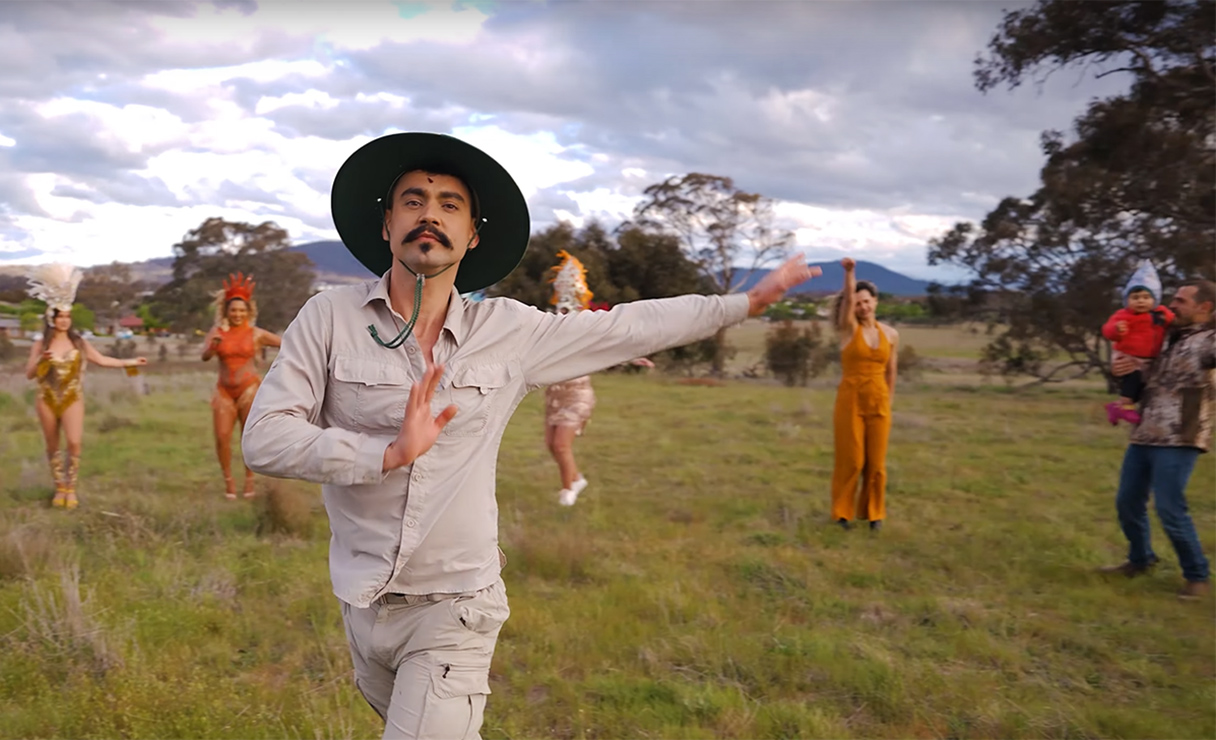
Photo: Weliton Menário Costa via Science.
Says Science magazine: “In his winning ‘Dance Your Ph.D.’ video, Weliton Menário Costa shifts his dance style to match other dancers, mimicking how kangaroos adapt their personalities to fit the group.”

This is a story about Science magazine’s annual “Dance Your PhD” competition. The winning video replicates something a researcher studied — kangaroo behavior. Runners up included dances about stream-bank erosion and moth mating.

Sean Cummings writes at Science, “In a broad grassland beneath an Australian sunset, dancers in everything from fishnets to field attire let loose an unchoreographed mishmash of steps, leaps, twirls, and twerks. There’s no unified style to the movement, but the resulting video — this year’s winner of Science’s annual ‘Dance Your Ph.D.’ contest — carries meaning nonetheless in its joyful madness. To Weliton Menário Costa, its creator, this dance mirrors the one between individuality and conformity in kangaroos — and celebrates the value of diversity in all species.

“Menário Costa, who was awarded $2750 in the annual contest now sponsored by the quantum technology-artificial intelligence (AI) company SandboxAQ, earned his ecology Ph.D. in 2021 at the Australian National University, studying eastern gray kangaroos (Macropus giganteus) living at Wilsons Promontory National Park. Even as joeys, he found, individual kangaroos seemed to have distinct personalities. Bolder animals, for instance, would approach a remote-controlled model car driven near them whereas others shied away. These personalities aren’t set in stone, however: The marsupials modify their behavior to conform with those around them, adjusting as they move between groups.

“Menário Costa, who has since transitioned from science into a career as a singer-songwriter under the name WELI, recorded an original song, Kangaroo Time, for the contest. He then recruited a score of dancer friends representing styles from urban to classical, ballet to Brazilian funk. ‘I wanted to showcase the diversity of kangaroo behavior, and the easiest way was to get the diversity of dance we already have. I didn’t choreograph them, they were just being themselves,’ Menário Costa says. The only instruction?

Do as the ’roos do. In other words, mingle with dancers of other styles and adjust your movements in response, gradually unifying into a group effort.

“The result resonated with a judging panel of artists, dancers, and scientists. ‘There was a sense of surprise and delight in it. You could tell they were having fun through the process’ … says judge Alexa Meade, a visual artist who uses optical illusions in her work. She also praised the video’s original songwriting and costumes, as well as the simplicity and accessibility with which it explained the science relating to kangaroo group dynamics.

“Besides finding a whimsical way to teach viewers about kangaroos, Menário Costa hopes to convey the message that diversity — in all its forms — should be celebrated. ‘Kangaroos are different, just like us,’ he says. ‘Differences happen in all species—.’ …

“The project also provided a way for Menário Costa to translate his academic experiences into an accessible form for friends and family in his small Brazilian hometown. Many of them didn’t fully understand what he was doing in Australia, he says — including his grandmother. ‘Once I released Kangaroo Time, she was like, “That’s my grandson! I get it now!” says Menário Costa, who [planned] to release his first EP, Yours Academically, Dr. WELI, at the beginning of March. …

“ ‘This year’s entries did a great job of incorporating art and science to [create something] greater than the sum of their parts,’ Meade says. In the past, she explains, ‘some entries have incredible research but the dance component feels like an afterthought, or we might get some incredible dance performance, but I’m not sure what it has to do with science. It has to be a blending that accentuates both.’ The entries were so strong, the judges noted, that the second-ranked dance in the social science category might have won the whole thing if not up against the kangaroos.” Click on that one: It’s pretty funny.

You can make a dance about anything — as I learned when I was 14 and had to choreograph a dance about oxygen in combustion. You couldn’t just show Antoine Lavoisier mixing chemicals but had to somehow replicate the chemicals themselves!

More at Science, here. Hat tip: ArtsJournal.com.

Read Full Post »

Photo: Josh Appel/Unsplash.
The New York City melting pot, where 700 languages are spoken — 150 of them endangered.

New York City attracts people from all over the world, so it’s perhaps not surprising that there are an extraordinary number of languages spoken — major languages and endangered languages.

Alex Carp’s impressive story at the New York Times digs into the details.

“Most people think of endangered languages as far-flung or exotic, the opposite of cosmopolitan. ‘You go to some distant mountain or island, and you collect stories,’ the linguist Ross Perlin says, describing a typical view of how such languages are studied. But of the 700 or so speakers of Seke, most of whom can be found in a cluster of villages in Nepal, more than 150 have lived in or around two apartment buildings in Brooklyn. Bishnupriya Manipuri, a minority language of Bangladesh and India, has become a minority language of Queens.

‘All told, there are more endangered languages in and around New York City than have ever existed anywhere else,’ says Perlin, who has spent 11 years trying to document them.

“And because most of the world’s languages are on a path to disappear within the next century, there will likely never be this many in any single place again.

“Language loss has been a natural part of human history for centuries, but it was typically small in scale and relatively confined. The lost language could sometimes leave traces in the language that overtook it, what linguists have called a ‘grammatical merger’ of intersecting societies.

“About 30 years ago, though, the linguists Ken Hale and Michael Krauss warned of a new, more dire form of loss in which a dominant language would ‘simply overwhelm Indigenous, local languages and cultures.’ Hundreds of languages were essentially gone, Krauss noted, and others were quickly fading. Several were spoken by as few as one or two people.

“As Perlin writes in his new book — Language City: The Fight to Preserve Endangered Mother Tongues in New York, out this month — what stands to be lost is more than mere words. ‘Languages represent thousands of natural experiments: ways of seeing, understanding and living that should rightly form a major part of any meaningful account of what it is to be human.’

“With Daniel Kaufman, also a linguist, Perlin directs the Endangered Language Alliance, in Manhattan. When E.L.A. was founded, in 2010, Perlin lived in the Chinese Himalayas, where he studied Trung, a language with no standard writing system, dictionary or codified grammar. (His work helped establish all three.) He spent most of his time in the valley where the largest group of remaining speakers lived; the only road in or out was impassable in winter.

“After three years, Perlin returned to New York City, where he had grown up. … In 2016, E.L.A. began to map the languages spoken in the city. A vast majority were not recognized by large businesses, schools or city government. Officially, Perlin said, they were simply not there. ‘None of the communities with whom we planned to partner were recorded as even existing in the census,’ Kaufman and Perlin later wrote.

“Since their project began, Perlin and Kaufman have located speakers of more than 700 languages. Of those languages, at least 150 are listed as under significant threat in at least one of three major databases for the field. …

“A language’s endangerment is not simply a function of its size but also a measure of its relationship to the societies around it. Sheer numbers ‘have always mattered less than intergenerational transmission, Perlin writes in Language City. Until recently, in many regions of the world, dozens of languages lived side by side, each with no more than a few thousand speakers. Gurr-goni, an Aboriginal Australian language, had long been stable with 70. A language survives, Perlin writes, by sharing life with those who speak it. …

“When Perlin and Kaufman document a language, they work alongside native speakers to transcribe and translate video interviews that are recorded locally and during trips to a language’s home region. …

“To document Seke, for example, Perlin works with Rasmina Gurung, a 26-year-old nurse who happens to be one of the youngest Seke speakers in the world. Most Seke speakers, about 500 people, live across five neighboring villages in northern Nepal, near Tibet. Though the villages are within walking distance, each has developed its own Seke dialect. Like many of the smaller languages of ‘traditional face-to-face societies,’ Perlin writes, Seke has no ‘formal, all-purpose hello,’ because villagers live among the same groups of people and rarely encounter a Seke-speaking stranger. Instead, a question — Where are you going? What are you doing? — would be more common. …

“As E.L.A. produced its first language maps, the institute’s work caught the eye of Thelma Carrillo, a research scientist in the city’s Health Department. Carrillo, who is part Zapotec, was working on a Latino health initiative, but the city had what Perlin and Kaufman found to be ‘no basic demographic information’ on New Yorkers from Indigenous communities in Latin America, even though they have been migrating here in large numbers since the 1990s.

“ ‘We found ourselves in this odd position of being a conduit between the Indigenous Latin Americans of the city and the city agencies, because other organizations that work with them see them as Mexican or Guatemalan,’ Kaufman says. …

“By the start of the pandemic, the city had begun official outreach in nine Indigenous languages and recorded videos in several other endangered languages. By reaching these communities in their own languages, New York City offered what is almost certainly the first official recognition that they exist.

“Still, Perlin and Kaufman are keenly aware that the corpus they are building — word by word and sometimes syllable by syllable — might someday turn out to be a kind of fossil record.

“Outside of the office, Gurung mostly speaks Seke in voice notes to elders overseas or to tell her mother a secret she doesn’t want her sister to hear. On her first trip to Nepal with E.L.A., she ended every interview with the same question: ‘Do you think our language will survive?’ ”

More at the Times, here. Terrific maps and graphics.

Read Full Post »

Photo via WDBJ7.
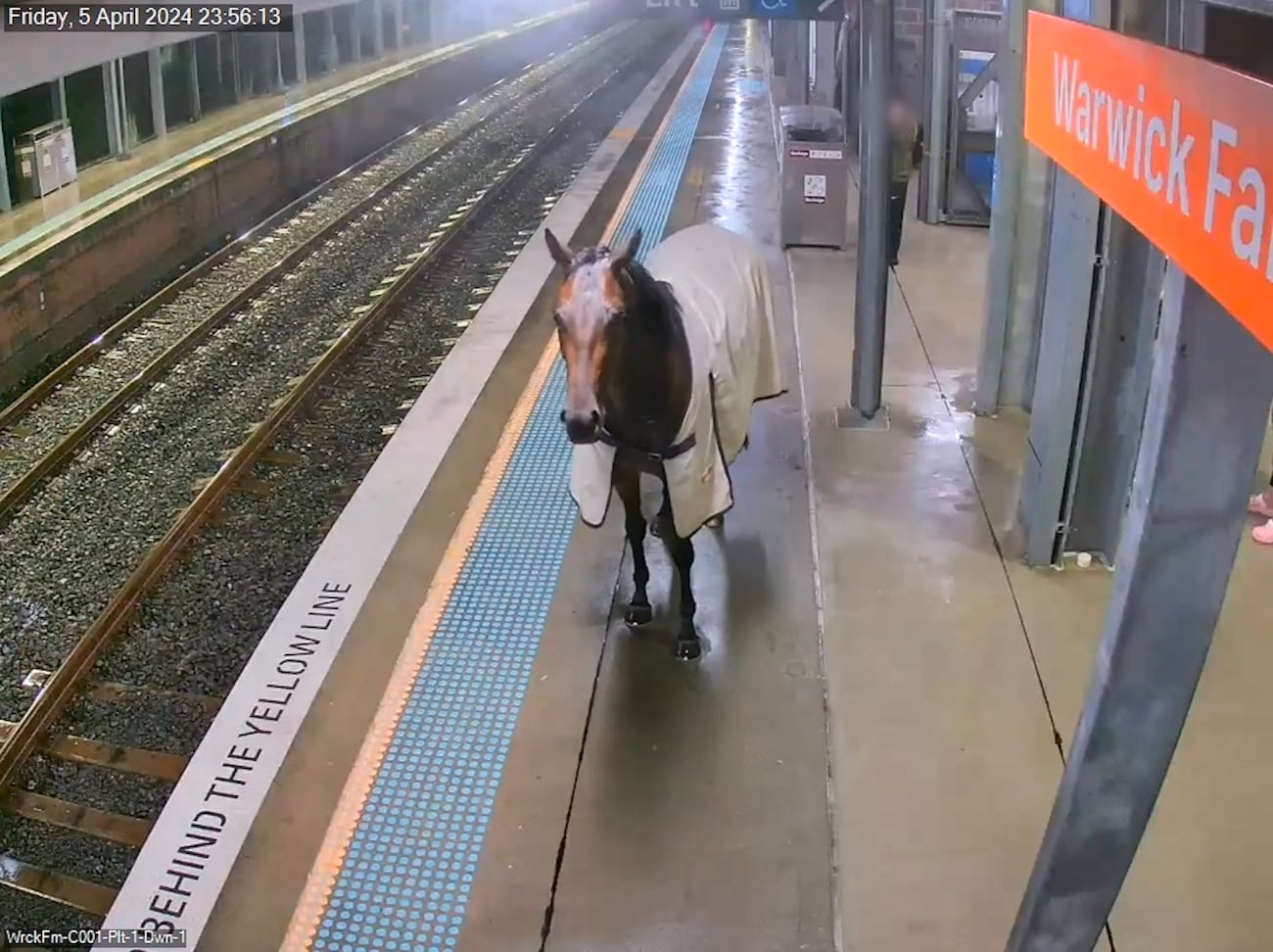
An escaped horse in Australia.

During the years that I took the commuter train to work, I saw some unusual things, but nothing as unusual as this.

Annabelle Timsit writes at the Washington Post about a thoroughbred horse in Australia who tasted a moment of freedom in an environment that to other travelers feels like anything but freedom.

“This commuter was one of the worst kinds,” writes Timsit. “Didn’t pay a fare, took up space on the platform, and caused a ruckus that slowed down trains and called security agents to the station. This particular commuter was also a horse.

“The equine traveler was captured by CCTV cameras wandering into Warwick Farm Station west of Sydney just before midnight on Friday, trotting up and down the platform, prompting other (human) commuters to jump out of its path. …

“ ‘Didn’t realize I needed to say but — horses aren’t allowed on our trains, sorry folks,’ tweeted Chris Minns, premier of Australia’s New South Wales state. …

“Footage shows that after horsing around for a while, it had a choice to make as the train pulled into the station: In or out? Yea or neigh? After staring at the train for a few seconds, the horse turned around and trotted back down the platform … or, as Transport for NSW put it: ‘The horse had planned its journey but got colt feet and decided to hoof it.’

“Security agents from Sydney Trains were alerted, ‘and trains in the vicinity were warned to run at reduced speeds,’ Transport for NSW said. …

“It later emerged that the horse had escaped from the stables of Annabel Neasham Racing, close to Warwick Farm Station, the Sydney Morning Herald reported.

“It’s not clear how it escaped, but Steve Railton, chief steward of Racing NSW, cited Annabel Neasham, a trainer and the owner of the racecourse, as saying that ‘an unknown person released three racehorses and a stable pony from one of her stables on Friday night.’

“ ‘One of the racehorses left the vicinity of the stable complex, while the others were captured,’ said Railton, according to the Herald. …

“ ‘I can confirm the horse has returned home, safe and sound,’ Minns said.

“Though it is not an everyday occurrence, ‘from time to time, we do find animals on tracks, particularly cows,’ said Sydney Trains chief executive Matt Longland, according to the Herald. … Longland said the horse may have gravitated toward the station because of its bright lighting. …

“ ‘Thankfully, we were able to warn our train drivers to look out for animals on the tracks,’ he said. ‘We were able to catch the horse not long after that.’

“Transport for NSW confirmed that the horse ‘was safely reined in and is in a “stable” condition.’ ”

Ouch! People really cannot resist terrible puns whenever there’s a quirky animal story to wrap puns around.

More at the Post, here.

Video: CityNews.
What do you suppose this taste of freedom felt like to the horse? Did it feel good? Scary?
Note the reaction to the train pulling in.

Read Full Post »

Photo: Trip.com.
The Weerdsluis lock in Utrecht, the Netherlands, has an unusual fish-friendly feature.

More often than not constructions that humans think they need really don’t work for wildlife. Some creatures adapt. Others need help.

Hannah Docter-Loeb writes at Slate magazine, “It’s a rainy Friday morning in Utrecht, a town just outside Amsterdam, and I’m looking for a boat lock. The city is full of them, but I’m looking for a very special one — the Weerdsluis lock. … (A boat lock is, for the uninitiated, basically an elevator for boats. It helps raise and lower them between areas with different water levels. There are a lot of them in the Netherlands.) There are lock attendants in a booth, waiting for boats to pass.

“But if you look closely enough, you can see a camera submerged in the water. Which from my vantage point, looks like … muddy water. But I know about 1,000 people are tuning in to the footage in real time to see what’s below the muck. They are waiting to ring the fish doorbell.

“The doorbell ‘opened’ for the season at the end of March. Fish will gather on one side, where the underwater camera keeps watch and livestreams the view on a website. People anywhere in the world can spot a fish, and press a button (the doorbell), signaling for the lock operator to open the barrier. ….

“The idea came to ecologist Mark van Heukelum in 2021. He had been studying the barriers to fish migration in Utrecht. Like many Dutch cities, the city is laden with canals, fixed channels, and boats. Although picturesque, some of these structures physically get in the way of fish that swim through the city during spawning season. One of the most troublesome barriers to fish swimming through Utrecht: the Weerdsluis lock.

” ‘One of the main issues for fish was that the boat lock is in the way,’ van Heukelum told me over Zoom, with three little decorative fish in the background. During that initial visit, he could literally see the fish queuing up at the lock — which is typically closed in the spring, and operated manually by lock operators.

“Van Heukelum, who works as an environmental consultant, thought it would take a lot of effort and bureaucracy to implement a way for the fish to get through. But the lock operator offered a simpler solution. ‘He listened to me and said, “Well I can also open the lock right now for the fish.” ‘

“In fact, the lock operator was willing to open the lock more often, as long as he knew fish were present. Within a year, van Heukelum and his team had installed a camera, livestreaming the ecosystem below the water. …

‘A camera on the water isn’t necessarily a new thing, but the fact you can actually do something and push a button and help out, that is definitely a first,’ van Heukelum said.

“The fish doorbell launched for the first time on March 29, 2021 — unfortunate timing, van Heukelum noted, as it was just a few days before April Fool’s Day. ‘We didn’t think about it,’ he recounted. ‘Media jumped on it because they thought it was so funny, it had to be a joke.’ ”

At the New York Times, Callie Holtermann adds, “Four years later, that skepticism has subsided. Mr. van Heukelum said he had been shocked by how many people had developed an obsession with his fish doorbell. He estimated that more than 6,300 fish passed through last year thanks to their efforts.

“ ‘Realizing that people from the U.S. or Australia or New Zealand are helping to get fish past a lock in the Netherlands, it’s such a strange idea,’ he said, adding, ‘I am living on a cloud right now.’ ”

Hannah Poole sent the Slate article. More at the Times, here.

Read Full Post »

Photo: Josh Miller via American Rivers.
Klamath River, California.

We have a lot of dams in this country that are now under consideration for removal, sometimes to restore land to tribes, sometimes to benefit wildlife, often for a combination of reasons.

Debra Utacia Krol of the Arizona Republic writes at AZCentral, “Tribes and environmentalists cheered last month as crews blasted out the concrete plugs holding water behind the JC Boyle and Copco I dams, the largest of four decommissioned dams on the Klamath River, allowing silt-filled water to flow down the ancient riverbed.

“Hope also flowed downstream alongside the muddy waters that the gigantic removal project supercharges the goal of restoring the environmental health of the river basin that traverses Northern California and southern Oregon.

“The water that once covered over 2,000 acres of land surrounding the river has begun to recede, revealing artifacts like old farm equipment, foundations and bridge pilings left over from pre-dam days. But local residents worry about the fate of local wildlife like deer and eagles that get stuck in the muddy grounds and mourn the loss of non-native fish that inhabited the reservoirs’ warm-water layers.

“The tribes, environmentalists and their allies celebrated the shrinking waters as an essential next step in what they say will be a decades-long process of restoring one of the West’s largest salmon fisheries and a region the size of West Virginia back to health.

“Yurok tribal member and fisheries director Barry McCovey was amazed at how fast the river and the lands surrounding the Copco dam were revealed. …

“The 6,500-member tribe’s lands span the Klamath’s final 44 miles to the Pacific Ocean, and the Yurok and other tribes that depend on the Klamath for subsistence and cultural activities have long advocated for the dams’ removal and for ecological restoration.

“Amid the largest-ever dam removal in the U.S., rumors and misunderstandings have spread through social media, in grange halls and in local establishments. In the meantime, public agencies and private firms race to correct misinformation by providing facts and real data on how the Klamath is recovering from what one official called ‘major heart surgery.’ …

“Residents and curious tourists were alarmed to see gray, sticky mud flats and masses of dead fish where the reservoirs once filled the canyons. They also were shocked to see brown, silty water running down the now-exposed river bed, miring deer in the mud. Social media feeds lamented the scene and claimed the ecosystem had been destroyed, possibly forever.

“But the people and organizations that had planned the removal had also forecast what would most likely happen after draining the reservoirs and said what looked like a gruesome scene was expected — and temporary.

” ‘Everything we’re seeing is exactly what has been predicted,’ said McCovey, adding that the large amounts of sediment moved by waters pouring out of two tunnels blasted underneath JC Boyle and Copco I dams were accounted for during the planning process. …

“The sediment now making its way to the Pacific was always destined to wind up in the ocean, he said, just as the fish convey nutrients upstream. McCovey likened the system to how the human body works.

” ‘The river is like the arteries of the earth, and the water would be the blood,'”‘ he said. And just as how a human body functions, blood transports vital elements throughout the body, McCovey added. When arteries are blocked, blood can’t convey nutrients or carry off waste, resulting in disease. ‘When you have such a blockage, you need to have surgery to have that blockage removed,’ McCovey said. …

” ‘After the river makes a full recovery, it’ll be much healthier,’ McCovey said.

“The Yurok Tribe also contracted with Resource Environmental Solutions to collect the billions of seeds from native plants needed to restore the denuded lands revealed when the waters subsided.

“The company, known to locals as RES, took a whole-ecological approach while planning the project. In addition to rehabbing about 2,200 acres of land exposed after the four shallow reservoirs finish draining, ‘we have obligations for a number of species, including eagles and Western pond turtles,’ said David Coffman, RES’ Northern California and Southern Oregon director.

“The plan included anticipating the effects removal and restoration could have on water quality and temperature, aquatic species and other species. … The company also plans to support important pollinators like native bumblebees and monarch butterflies and protect species of special concern like the willow flycatcher. And, Coffman said, removal of invasive plant species like star thistle is also underway. In some cases, he said, workers will pull any invasives out by hand if they notice them encroaching on newly planted areas.”

The long and interesting article at AZCentral, here, covers complaints by people who felt they were not in the loop and were adversely affected, what was done to compensate them and also rescue trapped wildlife, and goals for the future.

Read Full Post »

Photo: Adrian Susec/Unsplash.

Film buffs, it turns out, are not only creative about making movies, they’re creative about ways to screen movies. That’s because a different locale can lend a whole new feeling to the movie-going experience.

Bryn Stole writes at the New York Times, “Some of international cinema’s biggest names gathered on [a Tuesday in February] at the Berlin International Film Festival as the event honored Martin Scorsese with a lifetime achievement award. Before accepting his trophy, Scorsese listened as the German director Wim Wenders gave a laudatory speech to an audience including celebrities and local dignitaries.

“Just around the corner, parked in the middle of a busy thoroughfare, a group of Berlin’s taxi drivers crammed into the back of a worn-out taxi van to watch a double-feature capped by Scorsese’s 1976 movie Taxi Driver.

“Klaus Meier, who has been driving a cab in Berlin since 1985, handed out bottles of soda and beer, popping the caps with the blade of a pocketknife. Irene Jaxtheimer, who runs a taxi company, passed around homemade popcorn. A generator outside the cab powered a modest television, a DVD player and a small electric heater.

“The unconventional screening, just outside a centerpiece event for one of Europe’s most prestigious film festivals, was part of the makeshift TaxiFilmFest. Running through Sunday, it is partly a protest over the miserable state of the taxi industry these days and partly a counterfestival to celebrate the taxi cab’s iconic place in the urban cultural landscape.

“It’s also in objection to an exclusive partnership deal between the festival, known locally as the Berlinale, and the ride-hailing giant Uber to ferry filmmakers between the city’s movie theaters during the event. … Beeping horns from the busy street outside — some of them coming from sleek black Uber vehicles emblazoned with the Berlinale logo — blended with the street scenes from Taxi Driver playing on the tinny television speakers. ‘Ah, I really miss those mechanical fare boxes!’ Meier said as the fares ticked away in the onscreen cab of the movie’s unhinged antihero, Travis Bickle, who drives around mid-’70s New York with growing hatred and menace.

“The back-seat festival is showing only taxi-themed flicks, and the potential repertoire is deep. Meier polled friends and fellow taxi drivers about which films to show, and said he had received dozens of suggestions about movies in which a cab plays a starring role.

“The early feature on Tuesday was Barry Greenwald’s 1982 quirky slice-of-life documentary Taxi! about some odd characters driving cabs in Toronto. The previous evening, a small rotating crowd beat the rain to catch portions of the 1998 French action-comedy Taxi, a lighthearted flick from the director Gérard Pirès about sinister, Mercedes-driving German gangsters, hapless Marseilles cops and a lead-footed rookie cabdriver who turns out to be the only person fast enough to catch the criminals.

“An early hit at the TaxiFilmFestival, which kicked off last Thursday, was Under the Bombs, a Lebanese drama set during the 2006 conflict between Hezbollah and Israel. In the movie, a Beirut taxi driver is hired to drive a woman into the war-torn south of Lebanon in hopes of finding her sister and son. Meier described it as ‘Shakespearean’ and ‘a masterpiece,’ and Berndt said it was clearly the ‘most moving taxi film’ he’d ever seen.

“But the clear favorite among attendees was Jim Jarmusch’s Night on Earth, a quirky, episodic 1991 film about taxi drivers and passengers in five cities around the world. The selection for TaxiFilmFest’s Sunday night finale had yet to be chosen, and Meier said he remained open to suggestions. …

“The festival attendees, squeezed into the back of the van on Tuesday, also reminisced about better days for taxi driving, such as ferrying around American and British soldiers from the occupying Allies stationed in West Berlin. (The French troops, the small crowd agreed, had less cash and rarely hailed cabs.) …

“The days before the fall of the Berlin Wall were ‘blissful times, hard to even imagine anymore,’ said Stephan Berndt.” More at the Times, here.

See also my 2014 post about a theatrical production in a taxi in Iran, here.

By the way, I hated the movie Taxi Driver when I saw it around 1976 — and walked out. Still don’t get what’s to like. You?

Read Full Post »

Photo: John Labarbera.
Company 360 Dance Theatre in the show Nine.

To follow up on my recent post about deaf actors performing for general audiences, I have a related story about the use of signing in dance. I always felt that watching signing was like watching dance.

Lauren Wingenroth writes at Dance Magazine, “For Deaf audiences, watching performances with traditional sign language interpretation can feel like watching a tennis match: Their focus has to toggle between whatever is happening onstage and the interpreter, often off to the side, who might be communicating what the music sounds like or what’s being said. That’s if the performance even has an interpreter, which all too often is not the case.

“But attend a Company 360 Dance Theatre performance and the tables are turned. The Fredericksburg, Virginia–based company, led by choreographer Bailey Anne Vincent, who is Deaf, incorporates American Sign Language into all its productions. ‘If you’re a Deaf person, you’re in on the story more than a hearing person,’ says Vincent.

“For Vincent, using ASL in her choreography — which might mean incorporating a sign to emphasize an emotion a character is feeling, or to communicate what a lyric is saying — is both an artistic choice and an accessibility-related one. Though her audience is mostly hearing, ‘I still try to approach all our shows assuming there might be someone who is Deaf in the audience,’ she says. But it’s also just a natural extension of the fact that ASL is Vincent’s preferred language. ‘When I choreograph, the way that my mind thinks is in my own language,’ she says. …

“Deaf actress and dancer Alexandria Wailes feels similarly. ‘Dance and using ASL are both so embedded in who I am, as part of my identity,’ says Wailes through an interpreter. ‘I can’t really separate one from the other.’ …

“To get a sense of the deepening relationship between dance and ASL, look at choreographer and performer Brandon Kazen-Maddox’s career thus far. A GODA (grandchild of Deaf adults) and native ASL signer, Kazen-Maddox was long one of the New York City performing arts scene’s go-to interpreters, a reliable presence at performances, talkbacks, and more.

“But in 2019, choreographer Kayla Hamilton asked Kazen-Maddox to join her New York Live Arts Fresh Tracks piece not as an interpreter but as an artist. ‘She asked me to represent all sounds in sign language, and also use my body as a dancer,’ says Kazen-Maddox. ‘It was the most mind-shifting thing for me.’ …

“The experience was the beginning of a shift in Kazen-Maddox’s career, away from simply facilitating communication between­ Deaf and hearing individuals as an interpreter­ and towards an emerging genre Kazen-Maddox calls ‘American Sign Language dance theater.’ …

“Always key to this work, says Wailes: Deaf or Hard of Hearing performers who are ‘bilingual’ in dance and ASL. ‘If you’re trying to be more inclusive, great,’ she says. ‘Who are the people who are onstage? What are their lived experiences and how does this reveal itself­ in the work?’ …

“Until recently, Betsy Quillen experienced performances for Deaf audiences and hearing audiences separately. ‘It’s one or the other — it’s very isolated,’ says Quillen, who is a Hard of Hearing actor and theater director. …

“So when choreographer William Smith asked Quillen to collaborate with him on a piece for Roanoke Ballet Theatre that incorporated sign language, they had a clear goal: to make something that both Deaf and hearing audiences could understand and enjoy.

“ ‘My specific role was making sure that Deaf eyes would understand it, and that we were making our Deaf audiences feel welcomed and included and respected,’ says Quillen. ‘But we also made sure to show our hearing audience that this piece is made even more beautiful because we’ve included the Deaf audiences — that all of this ASL in every part of the production is enhancing the experience for everybody in the audience.’ “

More at Dance Magazine, here.

Read Full Post »

Photo: Shervin Lainez.
Molly Lewis, a professional whistler.

So many kinds of jobs in the world! And anyone who doesn’t see the ideal job out there can always invent one. In the case of Molly Lewis, she joined a very small elite of professional whistlers.

Shane O’Neill writes at the Washington Post, “If you’re a comedian, at some point you’ve gotten the dreaded ‘Tell me a joke!’ from a stranger. If you think that’s bad, try being a professional whistler. ‘It happens all the damn time,’ said Molly Lewis with a smile. ‘Sometimes I’ll oblige.’

“Lewis’s first album, ‘On the Lips,’ was released [in February]. She’s hoping that it can raise the profile of whistling. ‘People often don’t have a reference for whistle music apart from a jingle or a riff in a bad pop song,’ Lewis said. ‘I think it’s a beautiful instrument.’ …

“People are beginning to take notice. Her whistled cover of Billie Eilish’s ‘What Was I Made For?’ appeared in the Barbie movie, once in a scene and again during the credits. …

“Believe it or not, Lewis brings depth and nuance to a form that is usually cheerful or absent-minded. Still, she’s aware that there’s something novel and kitschy about what she does. … One of her chief inspirations was Marty & Elayne, the husband-and-wife lounge duo with a cult following in Los Angeles. ‘They played for 37 years, five nights a week, and it was this very special, beautiful thing,’ Lewis said. ‘They had great outfits.’ She bristled when this reporter implied that some people didn’t care for Marty & Elayne’s brand of camp. …

“Lewis learned to whistle when she was 4 years old. She occasionally fielded compliments from strangers, but hadn’t taken her talent seriously until she saw Pucker Up, a 2005 documentary about competitive whistling. She attended the International Whistlers Convention in Louisburg, N.C., in 2012 and has been plying her trade in music clubs ever since.

“Lewis’s whistling has brought her to a residency in Mexico and a show in Shanghai, but Los Angeles remains home.

‘To me, L.A. is a magical place where you can make a living doing wonderful, strange, creative things.’

“There, she has found a community of show people on the creative fringes, including puppeteers and theremin players.

“Starting in 2017, Lewis curated a series of shows called Café Molly at the Los Angeles music club Zebulon that drew the likes of actor John C. Reilly, Karen O of Yeah Yeah Yeahs and singer-songwriter Mac DeMarco. She also appeared at an open mic held at Canter’s, a beloved time capsule of a Jewish deli near West Hollywood. …

“On tour, she would strive to create an atmosphere of louche elegance. ‘I wanted to make a show that felt like the kind of show I would want to go to,’ she said. ‘Beautiful, lounge-y, something where you want to get dressed up to go.’ …

“Now, with ‘On the Lips,’ she wants to bring that experience home. The album comes with instructions on how to enjoy it: ‘Mood lighting is a must — the record will not play if you have bad lighting. Splayed on a chaise lounge with eyes closed works too.’ “

More at the Post, here. And speaking of whistling, check out my 2015 post on a Turkish whistling language, here.

Read Full Post »

Photo: Melanie Stetson Freeman/CMS Staff.
The Christian Science Monitor reports that the upscale Boston Back Bay neighborhood “worked with nonprofits to create affordable housing and apartments for formerly unhoused people, at 140 Clarendon.”

My friend Lillian and her siblings are among the few Black families that own their building in Boston’s upscale Back Bay. That’s because Lillian’s mother had the foresight to buy it in installments many years ago. Nowadays the area is prohibitive for most families, whatever their race. And as we know, affordable housing is usually fought tooth and nail in such communities. But …

Troy Aidan Sambajon writes at the Christian Science Monitor, “Garry Monteiro pauses and looks down, twiddling his thumbs. He contemplates the biggest change to his life last year. There’s a glint in his eye that wasn’t there before.

“ ‘To be honest with you, the refrigerator was a big deal,’ Mr. Monteiro chuckles, speaking in a community room at the 140 Clarendon building in Boston’s upscale Back Bay neighborhood. … But, he adds, the biggest change is having somewhere to call his own. Before moving into his apartment, the former mail courier spent nearly every night for two years on an assigned bunk at a men’s shelter.

“His routine was dictated by the shelter’s hours. He had to be out by 5:30 a.m. and back before 8 p.m. He spent his days looking for jobs or with his siblings. Every day, he worried about making it back by curfew. If he didn’t, he’d have to sleep outside. …

“The 140 Clarendon building is the rare story of a wealthy community finding solutions to homelessness. When private hotel plans stalled at the address in 2020, the neighborhood took charge. Community associations and developers backed a permanent supportive housing community – complete with on-site social services – in the heart of one of Boston’s most expensive neighborhoods.

“ ‘With homelessness numbers rising everywhere and the lack of affordable housing overwhelming, this project in the Back Bay is a welcome development,’ says Howard Koh, faculty chair of the Initiative on Health and Homelessness at Harvard University. Dr. Koh and his team say that 140 Clarendon is ‘highly unusual,’ because instead of worrying about property values, residents in a high-end neighborhood rolled out the welcome mat. …

“ ‘The collaboration of all the partners, public and private, to make such progress is a great example of how people can … rise to the challenge,’ Dr. Koh says of 140 Clarendon.

“The 111 studio apartments that now house Mr. Monteiro and his new neighbors also come with support services and case managers. The idea isn’t new, experts on ‘housing-first’ solutions say. Studies have shown the most cost-effective way to combat homelessness is to prioritize putting people in homes before securing other services. … What’s remarkable about 140 Clarendon is that Back Bay’s neighborhood and business associations signed letters of support, inviting the project onto their streets….

“ ‘It is one of those all-too-rare occasions when the public sector, the private sector, and nonprofits were able to come together and provide at least some relief,’ says Martyn Roetter, chair of the Neighborhood Association of the Back Bay, who signed one of the letters. …

“For nearly 100 years, 140 Clarendon has anchored the neighborhood’s educational and cultural character. The building was owned by the YWCA and, at various points, has housed the Lyric Stage Company of Boston, the Snowden International School, and a 210-unit boutique hotel.

“In 2019, the YWCA decided to sell the property. The first buyer planned to evict all tenants and face-lift the exterior to make way for a ritzy private hotel. When the pandemic sank the hotel market, a new developer – Beacon Communities – stepped in, while Pine Street Inn agreed to provide on-site services to formerly houseless tenants. ‘It checked all our boxes, and the location couldn’t be better,’ says Jan Griffin, vice president of Pine Street Inn. The 13-story brick-faced building has elevators and is easily accessible to public transit, grocery stores, the Boston Public Library, and churches. …

“The Back Bay neighborhood associations – which wanted to preserve the historic brownstone and its commercial tenants – had caught wind of the development plans. In two public letters of support, the associations advocated for affordable housing to be expedited in the neighborhood. …

“In addition to 111 apartments for people experiencing homelessness, 99 other units were made into affordable housing. All the commercial tenants supported the plan, which allowed them to remain in the building. ‘The fact that the local businesses and the neighbors wanted it is a really nice testament to how that neighborhood is leaning in to trying to end homelessness on their streets with housing rather than criminalizing people for existing in their neighborhood,’ says Ann Oliva, CEO of the National Alliance To End Homelessness.

“When Mr. Monteiro arrived at Pine Street’s shelters in 2021, his only possessions were the clothes on his back and a canvas messenger bag from his past life as a courier. … After 20 years of working, Mr. Monteiro left it all behind to take care of his parents. ‘I knew basically that once they passed away, I would have to start over,’ he says. ‘And I’d still do it again.’ “

More at the Monitor, here. No paywall. Subscriptions encouraged — and very reasonable.

Read Full Post »

« Newer Posts - Older Posts »