January 18, 2016 by suzannesmom
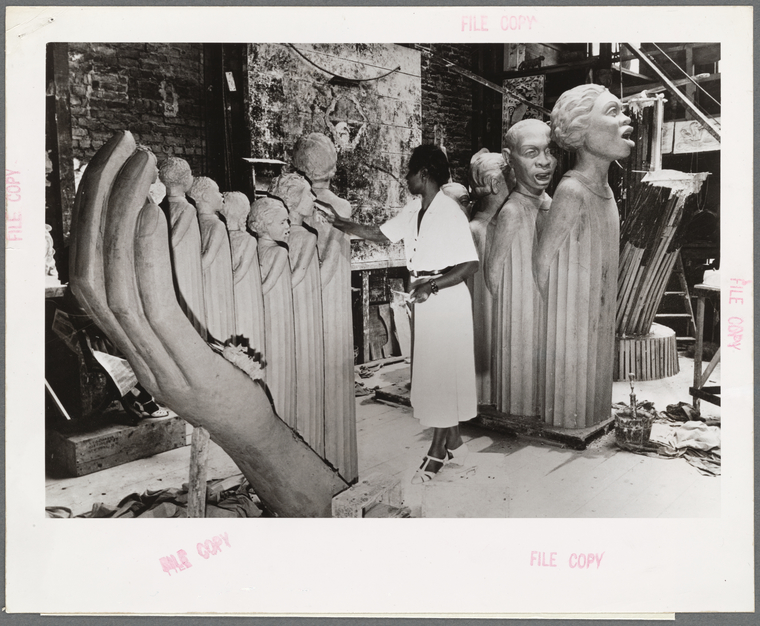
Candice Frederick, of the New York Public Library’s Schomburg Center for Research in Black Culture, recently posted research by Katherine Ellington on an African American artist who was new to me.
From Ellington notes: “Augusta Savage was among [a] group of artists who came to Harlem from the Jim Crown South in search of opportunity and where her creative expression could thrive.
“My quest for Augusta Savage (1892 –1962) sculpture led me to a first-time visit to the Art and Artifacts Division of the Schomburg Center for Research in Black Culture. … As a young girl in the early twentieth century, Savage began shaping ducks out of red clay found in the backyard of her home in Green Cove Springs, Florida. Savage’s work gained local attention when she entered and won a prize at a local county fair, which led to community support for further study.
“In 1921, she moved to Harlem after studying at State Normal College for Colored Students (now Florida A & M University). Savage later completed a four-year program in sculpture in three years at Cooper Union. …
“In 1931, Savage … opened the Savage Studio of Arts and Crafts — a fine arts training ground for over 1,500 students including many well-known Harlem Renaissance artists such as Charles Alston, Ernest Crichlow, Norman Lewis, Morgan Smith and Marvin Smith, Jacob Lawrence and Gwendolyn Knight Lawrence. …
“In 1934, Savage became the director of the newly established Harlem Community Art Center, after she was commissioned by the 1939 World’s Fair. Around that time she created “The Harp” as a series, but it was destroyed during the cleanup after the fair. …
“Savage’s art was often in response to the fight against racism. She used a variety of methods, shaping clay and plaster, casting bronze, and later years, carving marble and wood. In the Augusta Savage collection, there are works that illustrate themes such as nineteenth-century romanticism and African and Greek culture. As a trained portraitist, her busts include Marcus Garvey, W.E.B. Du Bois, James Weldon Johnson and Gwendolyn Bennett.”
More here.
Photo: The New York Public Library. Image ID: 1654255
“Harp,” by Augusta Savage
Posted in Uncategorized | Tagged african american, art, augusta savage, black, candice frederick, Cooper Union, florida, Florida A & M, Green Cove Springs, Gwendolyn Bennett, harlem, Harlem Renaissance, Jacob Lawrence, James Weldon Johnson, Katherine Ellington, Marcus Garvey, new york public library, postaday, Schomburg Center for Research in Black Culture, sculpture, State Normal College for Colored Students, W.E.B. Du Bois | 4 Comments »
January 17, 2016 by suzannesmom
A musical based on a winning 1950s Mademoiselle college-contest story, Doris Betts’s “The Ugliest Pilgrim,” is playing at the Speakeasy Stage in Boston, and it’s pretty special. My husband and I saw it yesterday.
The Violet of the title is a young woman from North Carolina who has saved up enough money to take a bus to Tulsa, Oklahoma, to beseech a television faith healer to resurrect her face, disfigured by a hatchet accident in childhood.
In spite of being an ornery character, suspicious of ridicule, she is befriended on the bus by two soldiers and an old woman, none of whom believe in the faith healer.
The group splits up, and Violet makes it to the television studio. Having first accosted the faith healer, she enlists her own belief, her carefully chosen Bible verses, and her childhood memories and fears in a dreamlike growth process that resonates on many levels.
The production’s fugue of psychology, American beauty culture, race relations — and musical numbers suggestive of the regions Violet passes through — rises to a crescendo and resolves into a satisfying ending. The show has humorous moments, moving moments, moments of insight, and memorable songs.
One of the most stirring musical numbers, “Raise Me Up,” is performed at the television station by both charlatans and true believers. The professional actors are backed by a series of Boston-area Gospel choirs, filling in at different performances.
What a great idea! I knew when I bought tickets that, if nothing else, I’d like the local choirs. As it happens I liked it all.
Jeanine Tesori wrote the music. The book and lyrics were by Brian Crawley, direction by Paul Daigneault, musical direction by Matthew Stern, and choreography by David Connolly. An earlier version of the show played Off-Broadway in the late 1990s. Speakeasy is presenting the brand-new version as the Boston premier.
Check out the review by Boston Globe critic Don Aucoin, here.

Posted in Uncategorized | Tagged brian crawley, David Connolly, don aucoin, doris betts, faith healer, Gospel choir, Jeanine Tesori, Matthew Stern, musical, Paul Daigneault, postaday, rise up, speakeasy, theater, ugliest pilgrim, violet | 2 Comments »
January 16, 2016 by suzannesmom
Our mostly warm December has turned into a chilly January, and the Samaritan with the hats may find that his or her offerings are finally in demand.
In December, Steve Annear wrote at the Boston Globe that someone had been leaving hats, scarves, and mittens prominently displayed on Boston Common with a sign encouraging whoever might need them to help themselves.
“In an act of kindness, an anonymous person this week hung winter garments on six trees on Boston Common, welcoming passersby affected by the frigid temperatures to help themselves to items of clothing to stay bundled up.
“Tied to the trunks of the trees along the path heading toward Boylston Street are mittens, gloves, scarves, ear-warmers, socks, a pair of warm-up pants, and knit hats.
“A note placed on the ground that was written with a winter-blue-colored marker reads: ‘I am not lost. If you are stuck out in the cold, please take what you need to keep warm.’
“At the bottom of the sign was a drawing of a snowflake. …
“A city spokeswoman said that the Parks and Recreation Department will leave the clothes where they are, as long as they are not damaging the trees or other property on the Common.” More here.
Photo: David L. Ryan/Globe Staff
Scarves and gloves available if you need them.

Posted in Uncategorized | Tagged boston common, david ryan, hats, mittens, postaday, scarves, steve annear, winter | 2 Comments »
January 15, 2016 by suzannesmom

Penguins by Keilan
My friend Kristina Joyce gives art lessons to a talented middle schooler who has brittle bone disease.
Henry Schwan wrote about young Keilan Hughes in the Concord Journal last April, reporting that he was “one of several students whose art [was] on display in the children’s room at the Concord Library. Joyce had them focus on nature in the Middle East, and Keilan drew a bird titled, ‘Yellow Wagtail from the Holy Land.’
“ ‘It’s relaxing, it takes my mind off things,’ Keilan said of his art.
“Keilan’s talents could take him in a number of directions. He dreams of being a doctor one day, but also has a backup plan of becoming a residential architect. …
“He was diagnosed with brittle bone disease the day he was born. ‘I don’t mind,’ Keilan said. ‘Most of the time, I forget that I even have [it].’ …
“Currently, there is no cure for brittle bone disease, but Keilan and his mom hope for a breakthrough. …
“ ‘It’s important to look at the bright side and look to the future,’ says his mother.”
Kristina tells me Keilan’s mother, who is from Trinidad, the family as a whole, and the school district have all been extremely supportive. One well-wisher made a website for Keilan to show his art. Others have given him specific requests for drawings. “Everybody loves Keilan,” she said.
More at the Concord Journal, here.
Photo: Ann Ringwood/Wicked Local Staff
Keilan Hughes is submitting yearbook cover art that his teacher said was so good she didn’t suggest a single correction.

Posted in Uncategorized | Tagged Ann Ringwood, art, brittle bone disease, henry schwan, keilan hughes, Kristina Joyce, lessons, postaday, yellow wagtail | 2 Comments »
January 14, 2016 by suzannesmom
Jan Flanagan at the Providence Journal has put together a great list of things to do on Martin Luther King Jr.’s birthday, next Monday. I’ll highlight a few to help you plan ahead, but rather than lift the whole calendar, I hope you will go to the ProJo website, here.
The Providence Public Library will feature an exhibit with photos showing the famous Selma to Montgomery March, about which a movie was made in 2014.
In case you are near Newport on the 18th, Chevette Jefferies will speak at the Thompson Middle School at 9:30 a.m.; James Gillis will keynote a lunch at the Mainstay Inn; and St. Joseph’s Church will hold a special worship service at 5 p.m.
You could also consider participating in a Day of Service at the Martin Luther King Elementary School in Providence, a collaboration with RISD (the Rhode Island School of Design) “to help children reach their full potential by engaging them in arts, crafts, special activities and conservation.” And here’s something that sounds like fun: a celebration of black storytelling, ribsfest.org.
The Institute for the Study and Practice of Nonviolence will hold a candlelight vigil in honor of Sister Ann Keefe, a longtime supporter of the Providence nonprofit, which follows in the footsteps of Martin Luther King Jr.
NeighborWorks Blackstone River Valley, will hold a memorial service and reception 11 a.m. to 2 p.m. in Woonsocket.
Finally, the Providence Children’s Museum will feature living history portrayals of civil-rights activists Ralph Abernathy, Rosa Parks and others by local actors.
Get all the details about these and other January 18 events here.
Photo: AP
The Rev. Martin Luther King Jr. speaks at the University of Rhode Island on Oct. 5, 1966.

Posted in Uncategorized | Tagged ap, birthday, blackstone river valley, candlelight vigil, institute for the study and practice of nonviolence, Jan Flanagan, martin luther king jr, mlk jr, neighborworks, newport, postaday, providence, rhode island, risd, sister ann keefe, woonsocket | Leave a Comment »
January 13, 2016 by suzannesmom
What’s not to love about undersea creatures? They are so wondrous I’m having a hard time picking just one of the photos from Susan Middleton’s 2014 book Spineless.
Maria Popova reviews the book at Brain Pickings.
“In Spineless, visual artist, educator, and explorer Susan Middleton turns her luminous lens to … the exquisite and enigmatic world of marine invertebrates, which represent 98% of the known animal species in the oceans and are thus the backbone of life on our blue planet, on which 97% of the water is ocean. …
“Using a special photographic technique she developed, Middleton captures an astounding diversity of creatures, ranging from giant squid to tiny translucent jellyfish to two species so new to science — the Kanola squat lobster and the Wanawana crab — that they have been formally named based on the very individuals in the book. Her photographs are at once austere and deeply alive — against the plain black or white background, these creatures fill the frame with striking intimacy of presence.”
(Doesn’t Popova write beautifully? She is from Bulgaria. I just mention that because one of the the best writers I worked with at my old job was Bulgarian. It can happen. We all know about late learners of English who became masters: Joseph Conrad, Vladimir Nabokov, Tom Stoppard.)
More on Susan Middleton’s book here. Marine defender Sylvia Earle wrote the foreward.
Photo: Susan Middleton
Hanging stomach jellyfish (Stomotoca atra)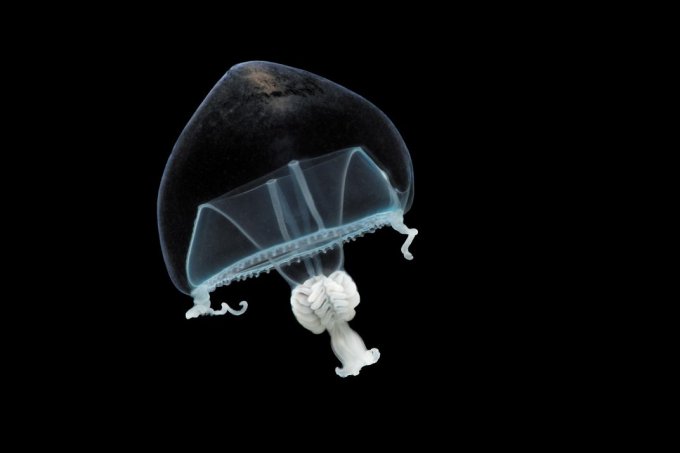
Posted in Uncategorized | Tagged ancient mariner, Hanging stomach jellyfish, maria popova, photo, photography, postaday, spineless, Stomotoca atra, susan middleton, sylvia earle, undersea | 2 Comments »
January 12, 2016 by suzannesmom
John sent a link to an Atlantic article by Rose Eveleth on how mosses and lichens are being using in building design.
“For most architects,” she writes, “moss and lichen growing up the side of a structure is a bad sign. … But a new group is trying to change all that. Instead of developing surfaces resistant to moss and lichen, the BiotA lab wants to build facades that are ‘bioreceptive.’“BiotA lab, based in University College London’s Bartlett School of Architecture, was founded last year. The lab’s architects and engineers are working on making materials that can foster the growth of cryptograms, organisms like lichens and mosses. The idea is that ultimately they’ll be able to build buildings onto which a variety of these plants can grow. Right now, they’re particularly focused on designing a type of bioreceptive concrete.
“Marcos Cruz, one of the directors of the BiotA lab, says that he has long been interested in what he sees as a conflicted way of thinking about buildings and beauty: ‘We admire mosses growing on old buildings, we identify them with our romantic past, but we don’t like them on contemporary buildings because we see them as a pathology,’ he says. …
“Richard Beckett, another director of the BiotA lab, says that he’s interested in the project flipping the usual way that buildings are designed, at least in a small way. “Traditionally architecture is a top-down process, you decide what the building will look like, and then you build it. Here we’re designing for a specific species or group of species …
” ‘Every architect you speak to talks about the skin of the building,’ says Beckett. … Instead of skin, the lab wants people to think of the exterior of a building as bark. ‘Not just a protective thing, a host; it allows other things to grow on it, it integrates as well.’ ” More here.
I love the concept, but the story left me wondering what the designers’ main motivation might be. They say it’s not about green and sustainable buildings. It seems to be about aesthetics, being “attractive.” They do want the mosses to be self-sustaining and the look to be purposeful.
Photo: Dinodia/Corbis

Posted in Uncategorized | Tagged architecture, bark, Bartlett School of Architecture, bioreceptive, BiotA lab, cryptograms, lichen, Marcos cruz, moss, postaday, richard beckett, Rose Eveleth, University College London | 6 Comments »
January 11, 2016 by suzannesmom
I’m turning to Maria Popova again as she reviews a book on classic scientific illustrations for her blog.
“Natural Histories: Extraordinary Rare Book Selections from the American Museum of Natural History Library … [spans] five centuries of anthropology, astronomy, earth science, paleontology, and zoology representing all seven continents. Each highlighted work is accompanied by a short essay exploring its significance, what makes it rare — scarcity, uniqueness, age, binding type, size, value, or nature of the illustrations — and its place in natural history. …
“What makes many of these illustrations particularly fascinating is that they represent a brief slice of history in the evolution of visual representation — after the advent of photography in the early 20th century, many of these lavish artistic illustrations were supplanted by photographic images, which shifted science to a much more aesthetically sterile approach to describing and depicting species.
“They’re also a heartening and enduring example of the magic that lies at the intersection of art and science as scientists not only sought out the best artists to illustrate their articles, but also versed themselves in drawing and produced exquisite artworks of their own.”
More at Brain Pickings. Hippos, crabs, owls, whales, monkeys, frogs, trilobites!
Illustration: Louis Renard (1678-1746)
Although there are coloration and anatomical errors in these drawings, all the specimens can be identified to genus, and some even to species. 
Posted in Uncategorized | Tagged American Museum of Natural History, anthropology, astronomy, earth science, louis renard, maria popova, paleontology, postaday, science, scientific illustration, Tom Baione, Zoology | 2 Comments »
January 10, 2016 by suzannesmom
When I think of Russia and the words “big brother” together, I don’t ordinarily picture the charitable organization that partners adults with kids who need role models. Roman Sklotskiy has altered my mental model.
Last month, Diana Kultchitskaya interviewed Sklotskiy for the Christian Science Monitor.
“Roman Sklotskiy, a former businessman and a graduate of the Moscow State Institute of International Relations, didn’t dream of having a career in charity. In the early 2000s he was a pioneer in the telecommunications industry, testing applications for mobile networks.
“But then he was invited by a friend to be the administrator of a theater for deaf actors – a charity project launched by a group of professional actors and directors. He was so inspired by the experience that he decided to pursue charitable work.
“In 2007 he learned of a nonprofit group trying to bring a United States-based mentoring program to Russia. Big Brothers Big Sisters International is a volunteer program that helps orphans and children from troubled families find mentors who provide them with a role model and help them build a healthy relationship with an adult.
“In Russia this kind of volunteering was a new idea. Mr. Sklotskiy decided to join the Big Brothers Big Sisters of Russia team and became its director, spending six years developing it. …
“The selection process for people who would like to participate in Russia’s Big Brothers Big Sisters program is strict. … Those who are selected receive training. Psychologists work with them and explain the unique demands of communicating with an orphan. …
“Alexandr Gezalov, an expert on child adoption and orphanages, says that the project is very successful.
“ ‘I’ve never seen a more effective format for communicating with an orphaned child,’ Mr. Gezalov says. The success of Big Brothers Big Sisters should be shared with other organizations, he says.
“Today Sklotskiy serves as director of charitable programs at the RVVZ Foundation. But he’s stayed involved in Big Brothers Big Sisters as chairman of the board. And he thinks it still has great potential to grow and help even more children. Currently Big Brothers Big Sisters is operating in Moscow and St. Petersburg.”
More here.
Photo: Svetlana Balashova for the Christian Science Monitor
Roman Sklotskiy longed to do charitable work, and he found his calling in developing Big Brothers Big Sisters of Russia. 
Posted in Uncategorized | Tagged adoption, Alexandr Gezalov, Big Brothers Big Sisters International, charity, Diana Kultchitskaya, mentoring, orphan, orphanage, postaday, role model, Roman Sklotskiy, russia, Svetlana Balashova, volunteer | Leave a Comment »
January 9, 2016 by suzannesmom
Today I thought I would post a few photos that other people have taken.
First, we have my great nephew at a Christmas concert. He is right up front, but I confess I can’t be sure I spotted him. My niece, a violinist, sends lots of music photos. She teaches orchestra in middle school in North Carolina. Her husband is a fine piano player. Their daughter, in college, is highly accomplished on the flute. One of their 10-year-old boys plays violin, the other plays piano but is considering taking up cello, too, in order to play in orchestra concerts like the one pictured.
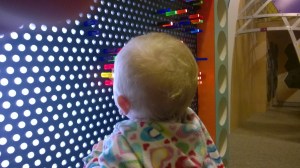
The next photo shows Erik’s niece in a Sankta Lucia service last month. She lives in Denmark. I have also included snapshots of Suzanne and Erik’s kids. My husband took some at the Children’s Museum and also at the house. Erik or Suzanne took the one of two grandparents struggling to get the ballet shoes on a young lady with a mind of her own. I’m not sure who was behind the camera as I was really concentrating on the shoes.



Posted in Uncategorized | Tagged children's museum, music, photograph, photos, postaday, santa lucia | 2 Comments »
January 8, 2016 by suzannesmom
The past couple holiday seasons, I’ve heard of acts of charity such as paying off a stranger’s layaway items. In November, a Minnesota couple deposited half a million dollars in a Salvation Army bucket.
As Lonnie Shekhtman notes at the Christian Science Monitor, “More than Black Friday or Cyber Monday, the Salvation Army’s iconic and ubiquitous red donation kettles, accompanied by bell-ringing volunteers, signify that the holiday season is upon us.
“This year, the century-old tradition got a major boost by an anonymous and unprecedented donation: a $500,000 check slipped into a kettle …
“This was the biggest single kettle donation ever deposited in a Salvation Army kettle in the Twin Cities, reported the Tribune …
“In a statement from the donors the charity provided to the Tribune, the [donors] said they made the generous donation in honor of their father, who served in World War I and was grateful to Salvation Army volunteers who brought soldiers free coffee and doughnuts.
“The two also said they were inspired by challenges earlier in their lives that forced them to collect food discarded at a grocery store to feed themselves. …
“This was the same spirit that inspired Manhattan philanthropist Carol Suchman to buy an entire toy store and donate its contents to underprivileged children earlier [in November].
“The mother of three has preferred to donate anonymously in the past, but this year agreed to go public to inspire generosity in others.
” ‘I know everyone can use a gift around the holidays,” Ms. Suchman told the NY 1 News.’ ”
More here.
Photo: Ann Hermes/Christian Science Monitor
A Salvation Army donation kettle sits outside a shop on 5th Avenue in New York.
Posted in Uncategorized | Tagged ann hermes, bell ringer, bucket, Carol Suchman, kettle, layaway, Lonnie Shekhtman, minnesota, postaday, salvation army, toy store, volunteer | 2 Comments »
January 7, 2016 by suzannesmom
In December, when the Association of Rhode Island Authors (ARIA) was having its annual expo, Erik sent me an email alert. Even though I couldn’t get there, I was curious.
I don’t think of myself as an author, and I’ve never joined a writing group despite the well-known advice from Anne Lamott. But I guess I’m an honorary author as my oldest grandchild once thought it was the same thing as being an editor. (The magazine I used to edit came to his house, and when he saw my photo in it and John explained that I helped to write the articles, he said, “Is Grandma an author?”)
I know that at least one reader of this blog is a Rhode Island author, Tracy Lee Karner.
According to the Association of Rhode Island Authors website, the December meeting was focused on memoirs.”The Lively Literati returns to The Elephant Room in Cranston’s Pawtuxet Village on Thursday, December 17, with authors Patricia Mitchell, Connie Rose Ciampanelli, and Debbie Kaiman Tillinghast. The authors will be discussing memoir writing and sharing short excerpts from their most recent works. Following the presentation, audience members are invited to share their own short writing or poetry, on any topic, at our open mic.”
Also at the website, you can read about the members and many association activities. Note that the “next regular meeting of the Association of Rhode Island Authors will take place on Thursday, January 14, in the Community Room at the Thundermist Health Center, 186 Providence Street, West Warwick. Informal networking begins at 6:30 p.m. and the meeting begins at 7:00 p.m. New authors, members and guests are always welcome.”
Photo: Association of Rhode Island Authors
ARIA member Mark Perry, who agreed to a stint as ‘Post’ Mark, the elf who works in Santa’s mail room. He fielded some surprising questions from kids.
Posted in Uncategorized | Tagged anne lamott, Association of Rhode Island Authors, author, books, Connie Rose Ciampanelli, cranston, Debbie Kaiman Tillinghast, mark perry, memoirs, Patricia Mitchell, pawtuxet village, postaday, rhode island, thundermist, west warwick | Leave a Comment »
January 6, 2016 by suzannesmom
When I was 14, I went to the big city every week to live with my aunt’s family and attend school with a younger cousin.
On winter Mondays I arose in the dark. My mother drove me to the bus station, where I got on a bus with my big suitcase and my book bag — and for a while, a clarinet.
When I disembarked at the Port Authority Bus Terminal, I took a cab to school, and later in the day, I lugged the whole kit ‘n’ kaboodle on a city bus to my aunt’s apartment. That first year there were three other kids in the apartment, with another away at school.
This past Monday, I arose in the dark, put my bags in the car, and drove about the same distance as the bus ride I took Mondays at age 14 to a new job in Providence. I’m staying a couple nights a week with Suzanne’s family, which includes two children under 4. Altogether, it’s an adventure with resonance.
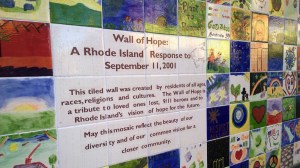
So far, I have only two photos to share: one of a 9/11 tile mural that every man woman and child in Providence seems to have worked on, and one of people ice skating in Kennedy Plaza. I hope to have lots more pictures, especially when I can take my walks outdoors. So far it has been too cold, and I have just walked in the mall, where the sights are not, shall we say, photogenic. I’ve been enjoying the new job and also answering questions from folks at the old job. Having handled a biggish transition when I was 14 makes the current transition feel familiar and rather comfortable.

Posted in Uncategorized | Tagged 9/11, ice skating, kennedy plaza, postaday, providence, tile mural, transition, walking | 6 Comments »
January 5, 2016 by suzannesmom
Get ready. National Bobblehead Day is just around the corner.
Bobbleheads? Karen Given at WBUR’s Only a Game can tell you more about the history of sports bobbleheads than you ever imagined.
She says that is 2015, the San Diego Padres were the only Major League Baseball team that didn’t offer fans a game where they handed out bobblehead figures of players. “For years, the Red Sox didn’t give away bobbleheads either.
“ ‘There was a long time actually when we felt like “maybe they’re not into bobbleheads,” ‘ says Red Sox Senior Vice President of Marketing Adam Grossman. ‘But even in Boston we know that the people love them and if they love them then we’ll provide them.’ …
“The Red Sox spend months getting the facial features and tattoos and the stance on their bobbleheads just right. …
“Bobbleheads even have, get this, their own Hall of Fame.
“ ‘We sort of thought of it this way–,’ says Phil Sklar, co-founder and CEO of the National Bobblehead Hall of Fame and Museum in Milwaukee, Wisconsin, ‘if mustard deserves its own museum, bobbleheads definitely deserve their own shrine.’
“The museum doesn’t actually exist yet. Sklar and his partners are busy accumulating thousands of bobbleheads — many from private collections.”
For “the story of a business deal that would change the course of bobblehead history, [Given turns] to Todd Goldenberg of Alexander Global Promotions. …
” ‘Malcolm Alexander, he’s our founder and former president. He’s retired now, kite skating around the world—’
“So, Alexander was trying to start a business selling promotions, and he got a meeting with the San Francisco Giants, who, you’ll remember, were trying to find a company to manufacture a promotional item that hadn’t really been made for 40 years.
“ ‘He just basically said, “What can I help you with?” and they said, “We need a bobblehead doll,” ‘ says Goldenberg. …
” ‘And Malcolm, being very cocky and very Australian said, “Yeah, sure, I’ll do it. How many do you need?” ‘ says Goldenberg. ‘And then he proceeded to leave the office and find out what a bobblehead doll was. Because even though he had just sold about a quarter of a million dollars worth of bobblehead dolls, he didn’t know what he had sold.’ ”
The rest of the story can be found at WBUR radio, here.
Photo: Karen Given/Only a Game
A Luis Tiant bobblehead doll.

Posted in Uncategorized | Tagged adam grossman, Alexander Global Promotions, baseball, bobblehead, hall of fame, karen given, milwaukee, only a game, phil sklar, postaday, red sox, san diego padres, sports, Todd Goldenberg, wbur | 2 Comments »
January 4, 2016 by suzannesmom
As Maria Popova likes to point out, J.R.R. Tolkien maintained there was no such thing as writing for children, and Maurice Sendak said much the same thing. I myself have found that the “children’s books” Popova recommends to her Brain Pickings readers work as well for me as for my grandchildren.
Here she describes a book about the beauty of imperfection: “Wabi sabi is a beautiful Japanese concept that has no direct translation in English. Both an aesthetic and a worldview, it connotes a way of living that finds beauty in imperfection and accepts the natural cycle of growth and decay. Wabi Sabi is also the title of a fantastic 2008 picture-book by Mark Reibstein, with original artwork by acclaimed Chinese children’s book illustrator Ed Young, exploring this wonderful sensibility through the story of a cat who gets lost in her hometown of Kyoto …
“A true wabi sabi story lies behind the book: When Young first received the assignment, he created a series of beautifully simple images. As he went to drop them off with his editor, he left them for a moment on the front porch of the house. But when he returned to retrieve them, they were gone. Rather than agonizing over the loss, Young resolved to recreate the images from scratch and make them better — finding growth in loss.” More here.
(Remember the mortification of John Stuart Mills when his maid mistakenly burned the manuscript of Thomas Carlyle‘s first volume of the seminal French Revolution? I like to think that Carlyle’s starting from scratch on volume one after completing volumes two and three made made volume one better, as Ed Young found with his art. It’s still painful to think about how Mills felt.)
Art: Ed Young
Illustration from Wabi Sabi by Mark Reibstein

Posted in Uncategorized | Tagged brainpickings, cat, children's book, ed young, french revolution, hobbit, japanese, john stuart mills, maria popova, mark reibstein, postaday, thomas carlyle, tolkien, wabi sabi | 2 Comments »
« Newer Posts - Older Posts »


