Feeds:
Posts
Comments

Posts Tagged ‘children’

It’s hard to read about the deprivations of refugees, especially the children and especially in winter. That’s why I appreciate hearing about any kindness extended to them. National Public Radio recently had a story on the kindness of Clowns without Borders.

Laura Secorun-Palet writes, “On a cold November morning, 300 children gather in a soccer field in Zaatari, a Jordanian village next to the country’s largest refugee camp. …

“Today the children are not lining up to collect food coupons or clothes from NGOs: They are here to watch the clowns.

“On the ‘stage’ — a space in front of a velvet curtain covering the goal — a tall, blond woman performs a handstand while doing the splits, while two other performers run around clapping and making funny faces. As the upside-down woman pretends to fall, the children burst into laughter.

“The performers are circus artists from Sweden …

“Clowns Without Borders is a global network of nonprofit organizations that, for the past 20 years, has been spreading laughter in the world’s saddest places. The group’s most recent annual report says more than 385 artists performed 1,164 shows for its chapters in 2012 in 38 countries, both in the developing world and for refugees and other disadvantaged children in Western countries.

” ‘It’s very important to give kids a chance to be kids again,’ explains Lilja Fredriksson, one of the Swedish performers.” More here.

Another way to help refugees is through the wonderful Minneapolis-based nonprofit American Refugee Committee.

Photo: Bilal Hussein/AP
Lebanese clown Sabine Choucair, a member of “Clowns Without Borders,” performs for children in June at a Syrian refugee camp in the eastern town of Chtoura, Lebanon.

Read Full Post »

I love listening to Worcester-based WICN (jazz radio). Bonnie Johnson had an especially good show yesterday, opening with Cynthia Scott and 3rd, 4th & 5th graders of PS32 in Brooklyn, NY, singing “Dream for One Bright World.”

“There is a new day dawning
“The time is now
“The world is ready for a change …

“Let’s teach out children to care
“To help one another
“And mend broken hearts
“So many children in the world
“Have never had a chance
“Their time has come …

(More lyrics here.)

You can listen to WICN online at wicn.org. Bonnie Johnson’s program is described at Colors of Jazz. “Bonnie Johnson is host of Colors of Jazz on Sunday afternoon from noon-4 pm. If you asked the Worcester native how she found jazz, she would tell you that jazz found her. As an undergraduate student at Howard University in Washington, DC, Ms. Johnson became a fan of the Quiet Storm featured on the college station WHUR-FM. …

“Ms. Johnson appreciates the diversity and the evolution of music. As a self-taught electric bassist, she has enjoyed many years of playing various types of music with her daughter and close friends in a family band. Growing up, she sang in the St. Cecilia Girl Choir at All Saints Worcester. …

“Ms. Johnson holds B.A. in Liberal Studies and M.S. in Communications and Information Management degrees from Bay Path College. She believes the future of jazz is in our children, stating, ‘Music and the arts is one area that gives young people an outlet and release of creative energy. While there are many children exposed to music through lessons and attending live performances, there are too many more that are not.’ One of Johnson’s primary goals as host at WICN is to reach youth in creative ways through community engagement.”

That’s something to think about on Martin Luther King’s birthday — and maybe to act on, too.

Bonnie Johnson, host of WICN radio’s Colors of Jazz 

Read Full Post »

It’s not always easy for low-income people to get access to food that is healthful, and once children get accustomed to salty, fatty, sugary snacks, junk food becomes comfort food and stores see little demand for better items. But if children know what would taste good and be good for them, they are on the road to better nutrition.

That is why the folks fighting childhood obesity are enlisting the support of several hip-hop artists that young people admire.

Winnie Hu at the NY Times writes, “Adrian Harris, known as Easy A.D. to his fans, has rapped about street life in the South Bronx as a member of the Cold Crush Brothers, a group that is among the pioneers of hip-hop.

“Now Mr. Harris also raps about broccoli.

“ ‘If you think you eat healthy, say ‘”me,” ‘ Mr. Harris called out over a pounding bass that shook the gym at the Future Leaders Institute, a charter school in Harlem, on a recent morning. A photo of a cart laden with fruits and vegetables filled a screen behind him. ‘Boys and girls,’ he added, ‘there are no Doritos on that cart.’

“Mr. Harris, calling himself a ‘health M.C.,’ aims to reach children who might otherwise tune out nutrition lessons. His vegetable rap is part of a growing public health campaign that has enlisted hip-hop artists such as Doug E. Fresh, Chuck D and DMC of Run-DMC to work alongside doctors and nutritionists in fighting obesity and related illnesses in poor communities. The campaign is being rolled out this year in 18 cities.” More here.

Photo: Ozier Muhammad/The New York Times
Adrian Harris, also known as Easy A.D., made a pitch for healthy eating recently at the Future Leaders Institute in Harlem.
 

Read Full Post »

serious-truck-driver


Play is important for all kinds of reasons in childhood, including testing out skills and experiencing the satisfaction of creativity.

John Poole at National Public Radio focused on the socialization aspects of play in a recent report.

He began, “Why do we humans like to play so much? Play sports, play tag, play the stock market, play duck, duck, goose? We love it all. And we’re not the only ones. Dogs, cats, bears, even birds seem to like to play. …

“The scientist who has perhaps done more research on brains at play than any other is a man named Jaak Panksepp. And he has developed a pretty good hypothesis.

“In a nutshell, he, and many others, think play is how we social animals learn the rules of being social.  …

“Play seems so deeply wired by evolution into the brains of highly social animals that it might not be a stretch to say that play is crucial to how we and they learn much of what we know that isn’t instinct. …

“Not surprisingly, Panksepp and others think the lack of play is a serious problem. Especially at younger ages. And particularly in school settings. …

” ‘It’s not just superfluous,’ says Panksepp. ‘It’s a very valuable thing for childhood development. And we as a culture have to learn to use it properly and have to make sure our kids get plenty of it.’ ” More here.

More still from Jon Hamilton, another reporter in the NPR series on play, here.

Photo: David Gilkey/NPR
Deion Jefferson, 10, and Samuel Jefferson, 7, take turns climbing and jumping off a stack of old tires at the Berkeley Adventure Playground in California. The playground is a half-acre park with a junkyard feel where kids are encouraged to “play wild.” 

Read Full Post »

I was first drawn to Joseph P. Kahn’s story about clowns in children’s hospitals by the cute pictures — and the fact  that my brother sometimes performs with a clown troupe at his church.

But what I especially appreciated learning from the article is that hospital clowning today is not just about getting a laugh out of a sick kid, important as that is. It’s also about giving children a little bit of control — to point out that the clown is doing something wrong, for example, or even to say the clown is not welcome and should go.

Kahn writes, “For hospital clowns Joyce Friedman and David Levitin, no two tours of duty are quite the same. Which is just how they like it.

“During rounds at Boston Medical Center, Friedman (a.k.a. Frizzle) and Levitin (Toodles) showed off their improv skills room by room, careful to assign an active role to each young patient they visited.

“At the bedside of 10-year old Cheyanne, the pair held a mock marriage ceremony, prompting Cheyanne to exclaim, through her oxygen mask, ‘You forgot to exchange vows!’ …

“Handed a joystick, a child might be encouraged to ‘control’ the clown as he or she chooses. Another patient, nervous or scared, might not want a visit at all. Either way, something positive comes from the encounter.

“ ‘Being empowered is really a key component of the healing process,’ says [Children’s Hospital endocrinologist Dr. Michael] Agus. ‘The more passive you are with an illness, the more challenging it is to heal.’ …

“Whatever a patient’s age or condition, said [clown Cheryl] Lekousi, she and her colleagues focus on the positive, even in the bleakest situations.

“ ‘Our message to the kids is, we’re a witness of you, of your childhood,’ said Lekousi.”

More here.

Photo: Dina Rudick/Globe Staff
Christopher reacts to the entrance of Cheryl Lekousi (a.k.a. Tic Toc).

Read Full Post »

My friend Jean Devine is always up to something interesting. A Brown U grad, with an MBA from Simmons, she used to work in investor relations but in recent years has been testing the waters of social entrepreneurship.

Her latest initiative, with Barbara Passero of Sandpiper Creative, is called meadowscaping and is intriguing on many levels.

With access to a Waltham church lawn for a summer youth program, Jean and Barbara will work with kids to convert the yard into a meadow that uses native species from Garden in the Woods and provides a habitat to the bugs and other small creatures that make a healthy environment.

From the Meadowscaping for Biodiversity website: Meadowscaping “is an outdoor, project-based, environmental education program that provides middle school youth with real-world experiences in STEAM learning (Science, Technology, Engineering, Arts and Math), while inspiring and empowering them to address challenges to the environment and our society.

“Today, few children spend time experiencing Nature and the benefits of outdoor recreation, education, and contemplation. Founder and former Director of the Children and Nature Network (C& NN) Richard Louv coined the phrase nature-deficit disorder to describe the negative effects of reduced outdoor time on children’s development. …

“Children who spend little time outdoors may value nature less than children who spend time outdoors in free play. Similarly, children who feel part of something bigger than themselves may … understand their dependence on a clean environment and know that they are responsible for caring for the Earth as their home.” More here.

The idea behind the meadowscaping summer program is that children, both at a young age and as they become adults, can actually do something about the environment.

Remember our post “The Doctor Is In” about the woman who sets up in a Providence park to listen to your worries about global warming (here)? Stop worrying and do something, say the meadowscape entrepreneurs. Give up lawn chemicals, plant a meadow, provide a home for tiny necessary critters, and work to make change.

white-iris-in-morning

Read Full Post »

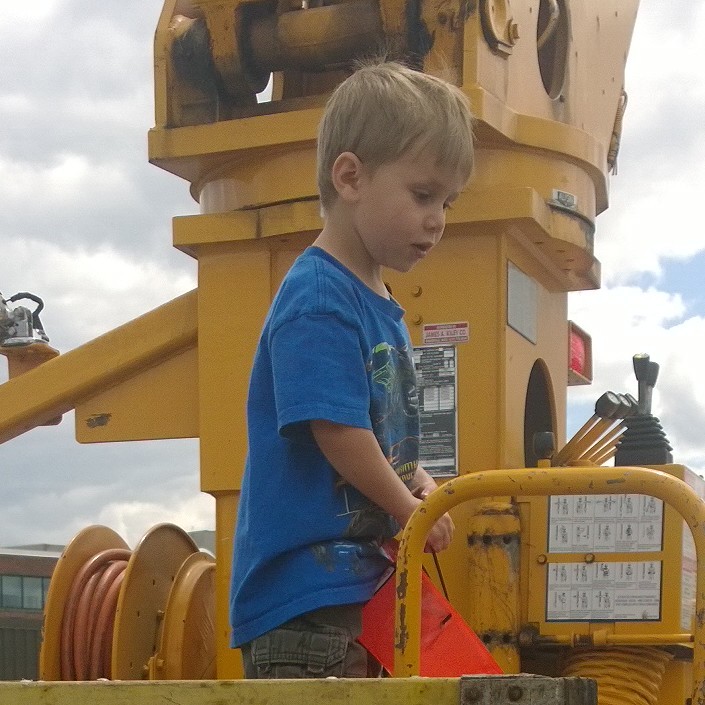
Kids ages 3 to 5 seem to have a strong compulsion to check out trucks up close. So when organizations like Concord Recreation decide to do a little fundraising by providing the opportunity, parents of preschoolers know they just have to go.

I was walking back from the store when John’s wife and son pulled up and said they were on their way to Touch a Truck. I couldn’t resist. I said we’d meet them there.

I don’t know the names of all the trucks, but I can tell you the array included an ice cream truck, a fire engine, a police van, a front loader, and a truck for drilling telephone pole holes. There was one with a bucket for raising a person up high. My husband pointed out the rubber gloves you have to wear if you’re working around high-voltage lines. He explained how many times the gloves get dipped in rubber and carefully checked during the manufacturing process.

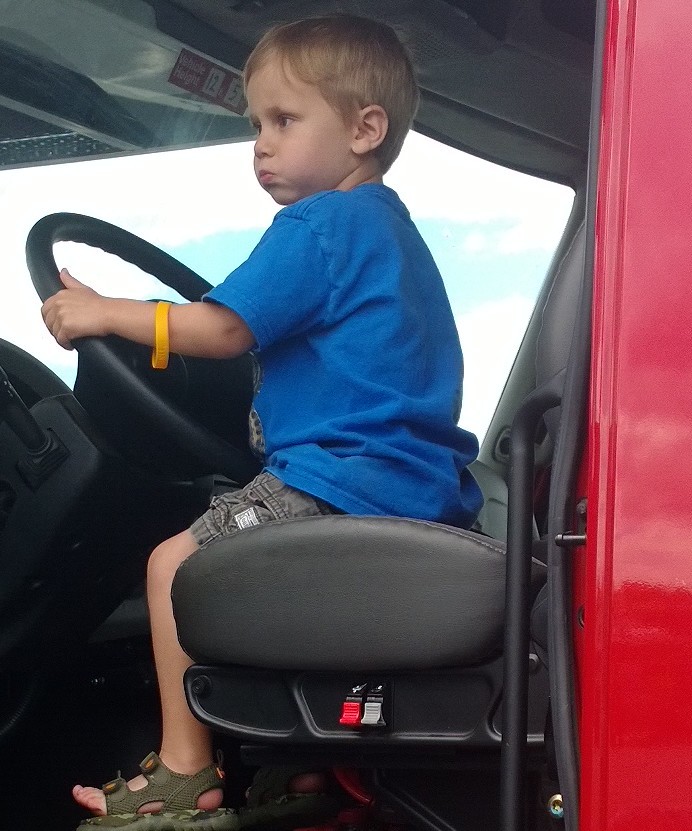
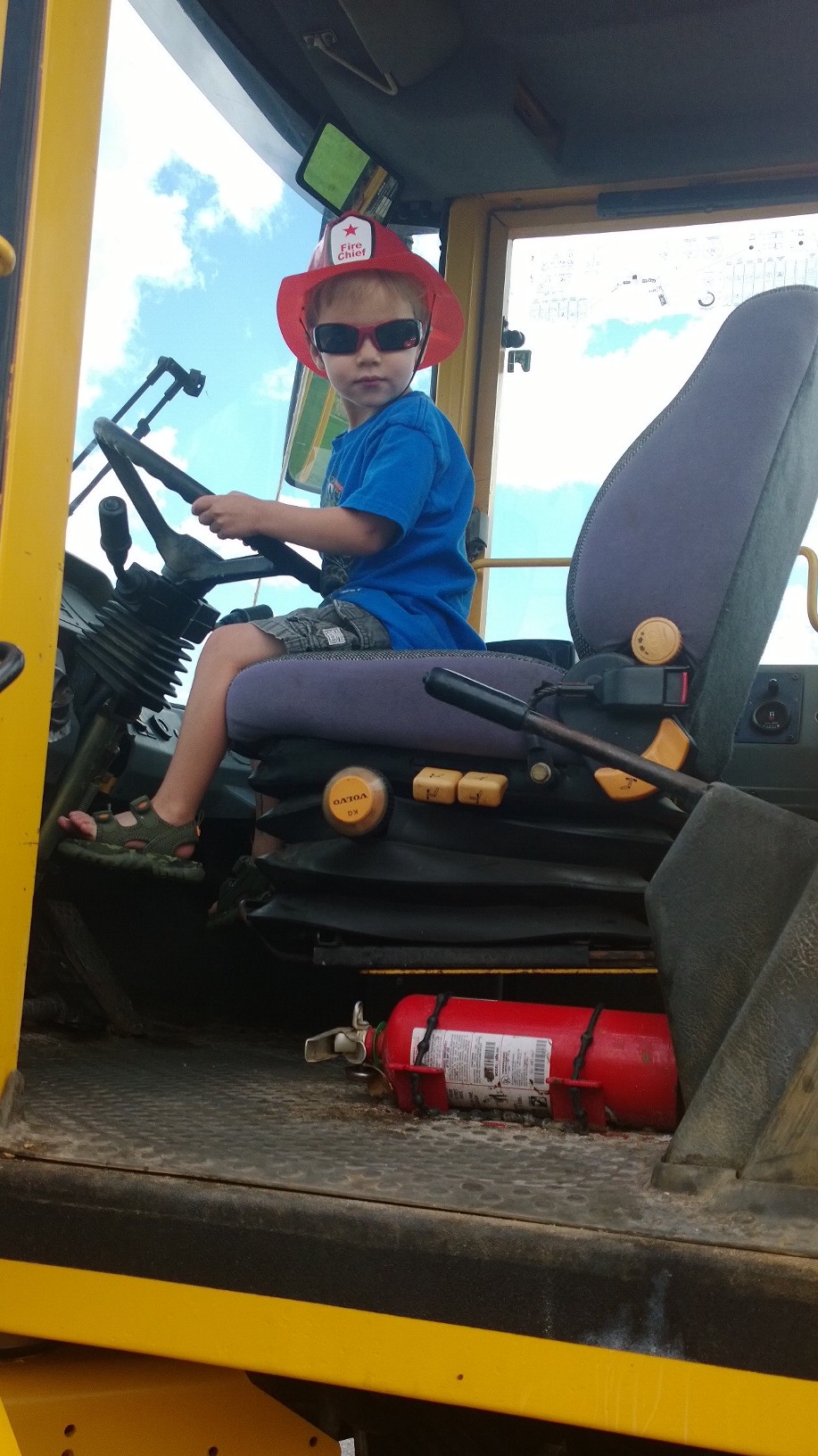
My grandson tried all the trucks. You can see that it’s fairly serious business.

051814-touch-a-truck

serious-truck-driver


checking-out-the-truck

Read Full Post »

A Syrian actor who visited a refugee camp, felt compassion for the children, and returned to help them put on a play decided to start at the top. Only the best playwright would do.

From the Zaatari refugee camp in Jordan, NY Times reporter Ben Hubbard describes the scene: “On a rocky patch of earth in this sprawling city of tents and prefab trailers, the king, dressed in dirty jeans and a homemade cape, raised his wooden scepter and announced his intention to divide his kingdom. His elder daughters, wearing paper crowns and plastic jewelry, showered him with false praise, while the youngest spoke truthfully and lost her inheritance.

“So began a recent adaptation here of King Lear. For the 100 children in the cast, it was their first brush with Shakespeare, although they were already deeply acquainted with tragedy. All were refugees who had fled the civil war in Syria. …

“ ‘The show is to bring back laughter, joy and humanity,’ said its director, Nawar Bulbul, a 40-year-old Syrian actor known at home for his role in ‘Bab al-Hara,’ an enormously popular historical drama that was broadcast throughout the Arab world.

“Last year, he and his French wife moved to Jordan, where friends invited him to help distribute aid in Zaatari. …

“Children he met in the camp made him promise to return, and he did — with a plan to show the world that the least fortunate Syrian refugees could produce the loftiest theater. …

“The mere fact that the play was performed was enough for the few hundred spectators. Families living in nearby tents brought their children, hoisting them on their shoulders so they could see. …

“The crowd burst into applause, and a number of the leading girls broke into tears. Mr. Bulbul said they were overwhelmed because it was the first time anyone had clapped for them.”

More here, at the NY Times, where you can also see a slide show and watch a video about the refugee-camp theater initiative.

Photo: Warrick Page for The New York Times

Read Full Post »

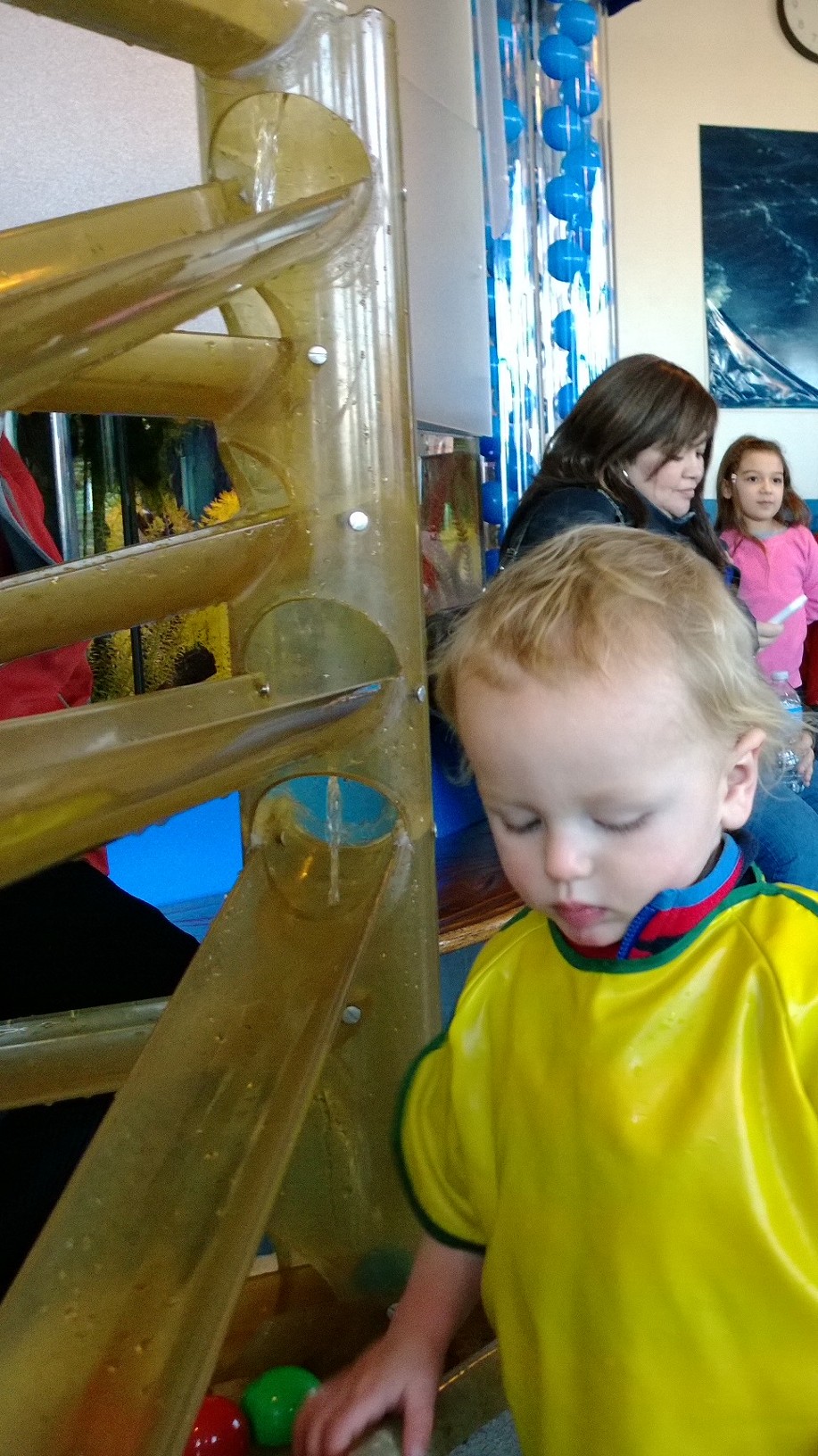
112913-children-museumWhen you take your father’s mother (Farmor) and your mother’s father and mother (Morfar and Mormor) to the Children’s Museum, you start by showing them how the fluffy balls fly through tubes and out the top, and you show them the water room, where you have to wear a smock.

Then you run up and down the ramp to the second floor, up and down, up and down, and up and down some more, laughing and turning your head back to make sure they are all following at a lively pace.

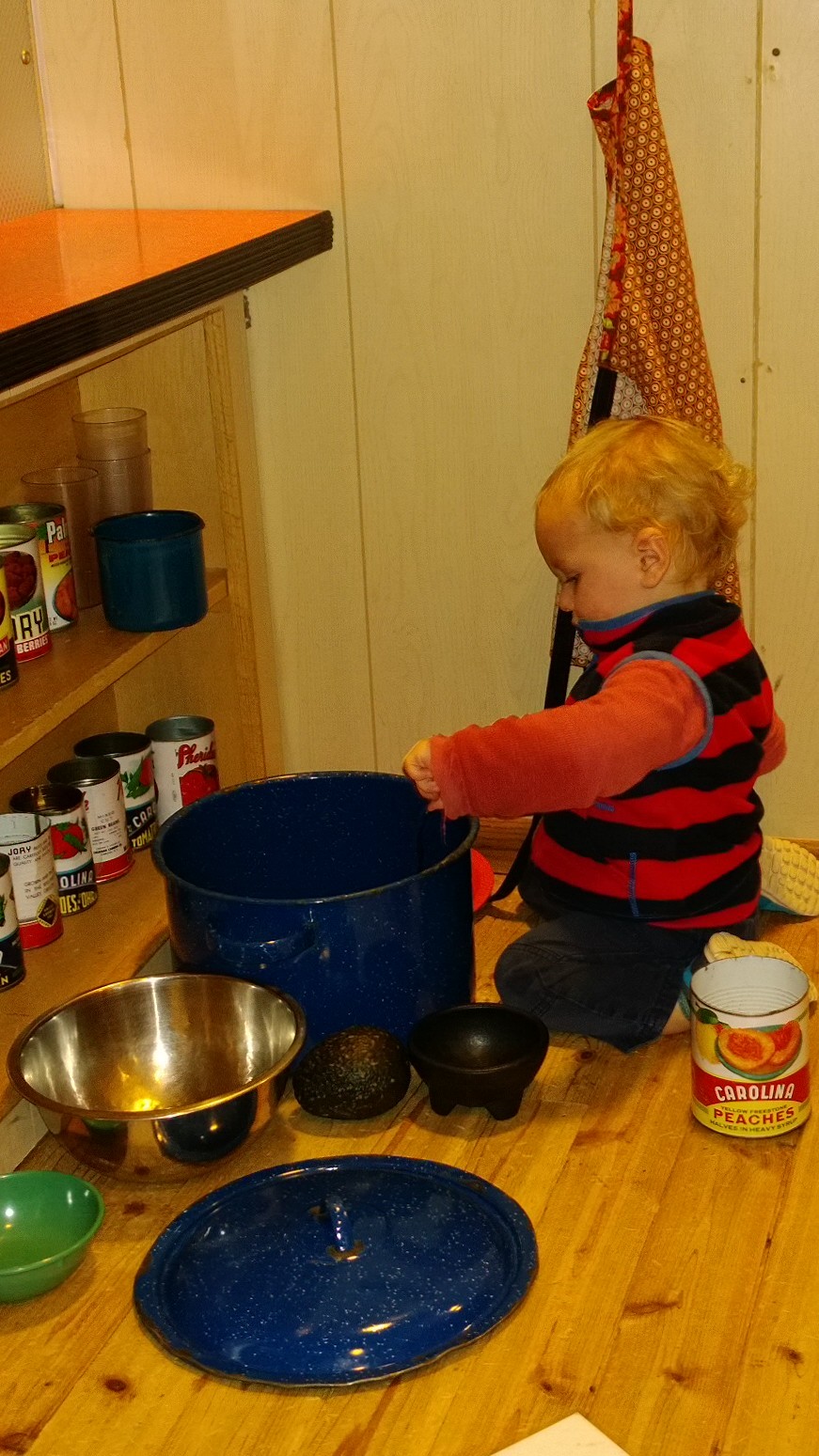
Once you are sure they will behave themselves and not go wandering off when you have work to do, you can settle into the kitchen and concentrate on putting the cheese wedge in the pot and stirring and taking it out and putting it back in and putting the lid on top and taking it out again and putting in a potato and stirring and shaking a can of tomatoes upside down until every last bit is in the pot with the potato and stirring and putting the lid on. Then, you know, you may need to take the stacked dishes and lay them all about on the floor and then restack them and put them neatly on the shelf.

It’s a lot, and you need to be sure the grandparents are sitting still and paying attention so you don’t have to worry about them for a while.

kitchen-things-you-can-touch

Read Full Post »

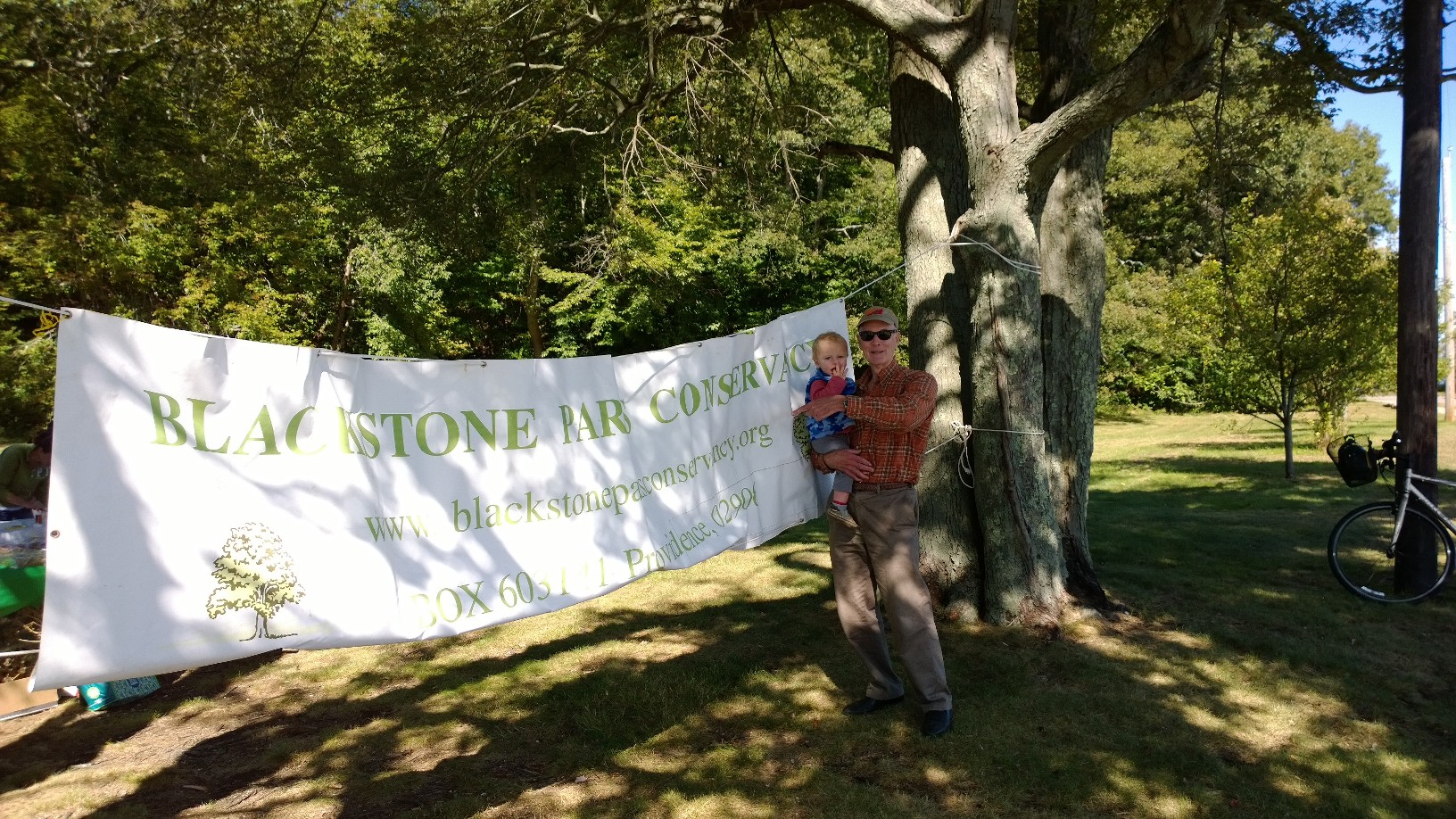
The Blackstone Parks Conservancy sent out this invitation, and we went.

“We invite you to attend the family event: Build your own Fairy House! This event was originally part of the summer series of family programs given by the Blackstone Parks Conservancy. Due to its rousing success, we are offering it again as part of Playful Providence, a citywide event organized by the Partnership for Providence Parks and the Providence Parks Department. Join us at the Field on River Road, across from the Narragansett Boat Club.”

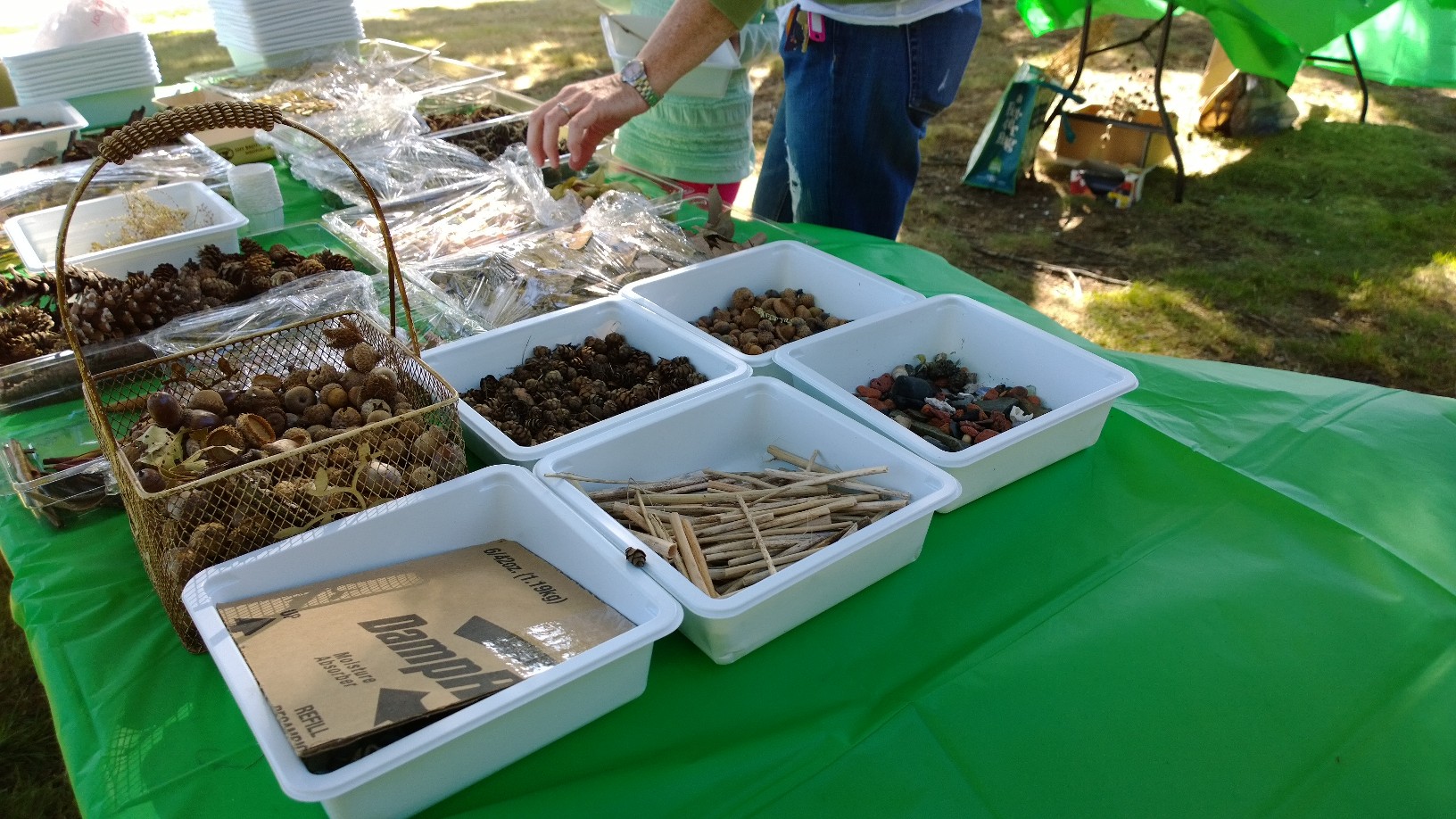
Cardboard forms that you could fold into houses were on hand. On top you could apply a layer of something like sand-colored Play-Doh, with actual sand in it. Next you could choose from a gorgeous array of seedpods, acorns, leaves, twigs, and other fruits of nature — and stick them into the “mortar” — the way a fairy would like them — before the clay dried.

Our middle grandchild was a little young for it, but he liked running around in the park and watching the rowing lessons on the Seekonk nearby.

I would like to try fairy houses again someday soon. Just collecting the pieces of nature to be used would be fun for a child.

Read about the conservancy and future events here.

blackstone-valley-fun

to-make-fairy-castles

Read Full Post »

I like to listen to a jazz radio station out of Worcester, WICN.

The other day the announcer mentioned an effort funded by TD Bank’s charitable foundation to collect old school instruments and refurbish them for a new generation.

If you live near Worcester and have been wondering what to do with those drums and violins, consider dropping them off at 50 Portland St. If you don’t live near Worcester, you might consider looking for a similar program in your town — or even starting one. Other TD Banks might help out. Banks in general can be good sources of such community support.

Here’s what the website says: “WICN 90.5, the NPR jazz station in Worcester, and Worcester Public Schools continue their collaboration called Instrumental Partners. The program collects used musical instruments from Central New England residents for the benefit of public school students. ‘We’re approaching 100 instruments donated so far!’ said WICN General Manager Gerry Weston. Instrumental Partners began in 2012.

“All instruments are accepted: brass, wind, string, percussion, acoustic, electric, etc. Worcester Public Schools Performing Arts Liaison Lisa Leach said, ‘We are very excited about this collaboration and putting instruments in the hands of young people who are unable to purchase or rent them, but still have the desire and work ethic to make music an integral part of their developing lives.’ ” More.

If you want to call first, the number is 508 752 0700.

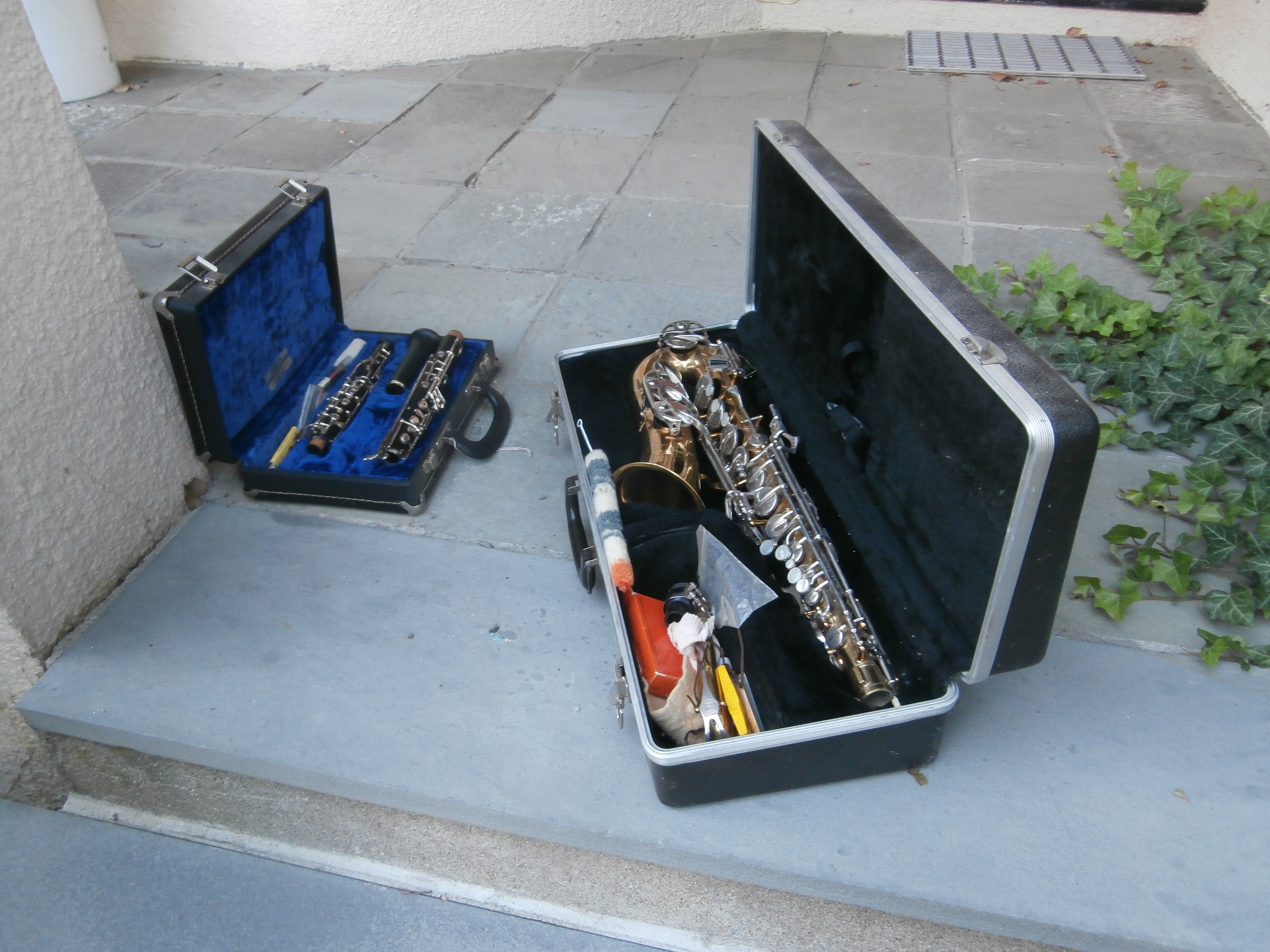
12/27/13 Update. Today I took the oboe and the alto sax below to WICN for the Worcester Public Schools music program. Now a new generation of children will play them.

school-instruments-sax=oboe

Read Full Post »

On the radio show “Living on Earth,” Bruce Gllerman interviewed Antioch education professor David Sobel recently about helping kids grow up to care about nature.

“Research shows that adults who are strong environmental stewards were allowed to explore nature unfettered as kids. …  Sobel says educators are too focused on rules and making sure that students learn correct scientific terms instead letting kids be kids. …

“SOBEL: Kids should have alone time in the woods. If it gets crazy, then there should be some adult intervention. … There needs to be a large quotient of being outdoors, in the meadows and in the woods, as well as the more didactic, pictorial experience of IMAX and National Geographic.

“GELLERMAN: So basically, take the kid kayaking.

“SOBEL: Take the kid kayaking. Take the kid berry-picking.

“GELLERMAN: Well, [with] a lot of parents — you say ‘berry-picking’ and they’ll say, ‘Oh my gosh, they’ll pick something poisonous!’ I know I take my kid mushrooming, and I tell other parents, and they look at me like ‘Oh my God, should we call the police on this guy?’

“SOBEL: Exactly. It’s fascinating how shocked and disapproving other parents are about [that] kind of behavior. … One of the things in childhood that seems to shape environmental behaviors in adulthood is parents taking their kids mushroom picking and berry picking: selecting a natural resource for consumption …

“GELLERMAN: You know, Professor, if I were asked, I could trace my environmentalism to when I was just maybe four years old. And my mother gave me a spoon, put me in the garden, and I started digging to China. Do you have a memory like that?

“SOBEL: The analogous memory that I recount is a snow day when I was about eight years old. And my friends and I decided we would play this game where they were gonna go off and I was gonna to follow them fifteen minutes later. And in the midst of tromping through waist-deep snow all by myself, my glasses were fogging up, I had one of those little epiphany moments: that I was out here, all by myself, in the snowy wilderness, and wasn’t this great! It’s a recurrent phenomenon that kids have these great moments, somewhere in early to middle childhood, that often connect them to the natural world.”

More at the website, where you also can listen to the recording of the interview.

Photo: Flickr CC/your neighborhood librarian
Walking in the woods. 

Read Full Post »

I moved from Rochester, New York, more than 30 years ago, so it was only when I went back for a visit that I got to see the storied collections of Margaret Woodbury Strong in a museum built to house them.

When one recovers from the enormity of her obsession, one feels deeply grateful for all the toys and dolls of one’s childhood so beautifully preserved.

The offerings and outreach of the museum have grown like topsy in 30 years. And today another new partnership was announced.

“The great minds of the toy industry will be honored alongside their famous creations when the Toy Industry Hall of Fame combines with the National Toy Hall of Fame under a partnership announced Tuesday.

“The 5,000-square-foot National Toy Hall of Fame gallery at the Strong museum in Rochester will undergo $4 million in renovations, with the goal of opening the combined hall in the fall of 2015.

“The Toy Industry Hall of Fame, whose inductees have included Milton Bradley, Frederick August Otto Schwarz, Walt Disney and George Lucas, has been without a physical presence for about eight years following the closure of the International Toy Center in New York City.

“Leaders of both halls have been talking for some time about combining the two as a way to raise their visibility and exposure and to promote their educational missions. …

” ‘The Strong is an ideal home for this homage to both the toys that have influenced generations of children and the innovative minds that brought them to life,’ Carter Keithley, president of the Toy Industry Association, said at a news conference at the Strong museum, where items like alphabet blocks, roller skates, the Frisbee, Lincoln Logs and the stick occupy places of honor.”

Read more at Yahoo, here. Click “like” if you believe in toys.

Photo: The Strong Museum
“The Strong’s founder, Margaret Woodbury Strong, had a particular interest in dolls and amassed one of the largest collections in the world. The National Museum of Play® at The Strong continues to refine and develop her collection, making it increasingly comprehensive and inclusive. It now includes more than 12,000 dolls and 2,800 paper dolls.”

Read Full Post »

As a scientist with young children, Gregg often tweets ideas for engaging kids in science. Recently @gfavalora tweeted about a website with instructive and fun videos. It’s called The Kid Should See This.

The site describes the video below thus:

“To celebrate World Ocean Day 2013, director and animator Akiko McQuerrey created a Papa Cloudy stop-motion music video: Overfishing Song from Papa Cloudy’s Restaurant.

Overfishing—catching fish faster than they can reproduce—is an urgent and devastating issue, and may be the single biggest threat to ocean ecosystems… The global fishing fleet is operating at 2.5 times the sustainable level—there are simply too many boats chasing a dwindling number of fish.

“What can we do to help? With more sustainable practices, our oceans can be healthy and plentiful for everyone. Recommendations from the Monterey Bay Aquarium suggest that we select sustainable fish from restaurants and stores, and diversify the kinds of fish we eat beyond just the popular choices.

“To help make these choices easier, they created a Monterey Bay Aquarium Seafood Watch pocket guide and mobile app. They even have recipes and more information about how to solve our ocean challenges.”

More videos here.

Read Full Post »
At around age 2-1/2, small people begin to be ready for friendship. My almost-three-years grandson plays with his friend now, instead of just in the same space.

They understand each other’s words. They find the same things funny — leaning way, way back on the swing, climbing back up the chute of the double slide, feeding wood chips to mitten puppets, getting ready to kick the ball down the hill when suddenly it decides to go ahead without you.

I spent a little time Saturday morning with my grandson, his friend, and her mother. I told the mother how much I love the learning-language stage. She agreed and gave me an example of how it can be confusing when one word has two meanings.

She said she had told her daughter that the new baby brother had no teeth you could see but that the teeth were in his gums. Sometime later, when her daughter asked what she was chewing and she answered that she was chewing “gum,” the little girl thought her baby brother’s teeth must be in there.

Two and a half is a time so full of strange new things, she probably didn’t think it was any stranger than anything else.

A WordPress blogger in Australia [subsequent correction: not Australia but B.C Canada in the Okanagan] has another cute story, here.

Hungry mitten puppets

get ready to kick

the ball got away

casting light, not shadow

Read Full Post »

« Newer Posts - Older Posts »