Feeds:
Posts
Comments

Posts Tagged ‘culture’

Photo: Wikipedia.

The problem with crossword puzzles is like the problem with academic entrance exams: they assume a cultural knowledge common to the creators’ identity groups. An older woman who doesn’t read Harry Potter books is not going to know what a young crossword creator is hinting about owls. Recent Latin American immigrants may never have heard of John Paul, George, and Ringo. And it may depend on your family life if you know anything about Marian Anderson, W. E. B. Du Bois, or Bayard Rustin.

Read what African American crossword puzzle creator Portia Lundie has to say about that at the Washington Post.

“I’m a Black woman who creates crossword puzzles. That’s rare, but it shouldn’t be. … Margaret Farrar, who became the founding puzzle editor of the New York Times in 1942, is credited with popularizing daily crosswords. But despite the impressive distinction, she only published the work of a handful of women.

“That’s perhaps unsurprising in a world dominated by White men; when I published my debut 15-by-15 crossword in the New York Times during Black History Month last year, I didn’t know of any crosswords constructed by Black women in America’s crossword gold standard.

“Before last year, I’d made dozens of 9-by-9 grids, or ‘midis,’ for the New York Times crossword app. I knew that my pop culture-themed puzzles were among the most popular on that platform, but I didn’t know what publishing my first crossword on a major newspaper site would be like — that it would open me up to a wave of subculture criticism.

“When it was announced that the Times would feature a week of Black constructors for Black History Month, there were myriad opinions on popular crossword blogs: ‘I prefer puzzles to be fun, not dry activist treatises that promote political ideology,’ wrote one commenter in response to the word ‘REPARATIONS’ in a puzzle by Erik Agard. …

“Yet, finally, I found some relief. ‘Must admit to knowing very little about Marcus Garvey. … Thanks to crosswords … for leading me there,’ one enthusiast said. When it came to learning the name of a horse racing champion or their jockey, I was more like this last commenter — excited that a puzzle introduced me to something new. This attitude, while seemingly compatible with a love for testing your trivial knowledge, is actually rare in the world of crossword critics.

“The experience came with other revelations. My dad worked for his uncle’s newspaper in Guyana when he was a teen, reading submissions and judging the crossword competition. But he didn’t tell me about his experience with crosswords until after mine was published in the Times. He revealed he was ’embarrassed’ that he wasn’t as good at crosswords when he immigrated to America. Turns out, I was robbed of a chance to learn about crosswords at a young age in part because crossword culture does not encourage learning — rather, it rewards already knowing.

“I ended up being introduced to crosswords in my early 20s while dating a constructor. Of course, I had attempted them before, but no one ever walked me through the rules. [For example] studying words that are used much more in crosswords than real life — words like ‘ESTOP’ and ‘STE’ and ‘ERE,’ which are usually used for their vowel placements. …

“I ultimately used practice, dictionary obsession and occasional cheating to get better. Constructing and cluing my own crosswords made me even better at recognizing the patterns — not to mention, it allowed me to assert my particular voice and trivial knowledge of 1990s cartoon characters.

“But most crosswords, I’ve found, still reflect the majority of creators. Like so many other hallmarks of culture, crosswords as we know them were standardized by a profound woman, yet the authority on language still seems to be in the hands of a few White men. In my opinion, there’s no such thing as a view from nowhere, and I’m glad to play a small role in giving crossword enthusiasts a view from someone who isn’t White, and isn’t a man.”

More at the Post, here.
Read Full Post »

Photo: Asortymenta Kimnata.
People are working ’round the clock to save Ukraine’s museum collections.

Everyone is doing their part. You have probably read about groups working to transfer zoo animals from Ukraine to a safer country. In today’s story, we learn what Ukraine’s museum workers are doing.

Lisa Korneichuk at Hyperallergic interviews the founders of Museum Crisis Center on their work to safeguard museum staff and save Ukraine’s cultural heritage.

“Many art and cultural monuments in Ukraine fall victim to Russia’s full-scale invasion along with civilians. [Russian] troops have damaged libraries, churches, and a mosque, and shelled local historical museums in Chernihiv, Okhtyrka, Ivankiv, an art museum, architectural monuments in Kharkiv, and many more. As of this writing, they dropped a 500-kilo bomb on the Donetsk Regional Drama Theatre in Mariupol, where over a thousand people were hiding from the shelling. 

While the Ukrainian governmental institutions are focused on saving the national art collections, local heritage and contemporary art remain vulnerable to the war threat.

“Moreover, museum teams in the region often risk their lives staying in the war zones to guard exhibits. To save overlooked Ukrainian heritage from vanishing, local citizens, cultural workers, and NGOs organize independent initiatives and evacuate art that has fewer chances to survive the war. 

“On March 3, Olha Honchar, director of Lviv museum ‘The Territory of Terror‘ asked on Facebook if there were any funds supporting Ukrainian artists and museums in wartime. She later updated her post: ‘Meanwhile, we start making such a fund ourselves.’ In partnership with the team of the NGO Insha Osvita, Olha launched Museum Crisis Center, a grassroots initiative aimed at helping museum workers in the emergency regions and evacuating artworks. …

“The main task of the center was the rapid financial and organizational support of museum workers, many of whom found themselves face to face with the war and without a means to support themselves. The center has to look for ways to get around long bureaucratic processes to aid those who need it immediately.

Hyperallergic spoke to the Museum Crisis Center co-founders Olha Honchar and Alyona Karavai over Zoom about the balance between legal requirements and efficiency in times of war and their critical stances on international humanitarian institutions. This interview has been edited for length and clarity.

Hyperallergic: Tell us exactly what your organization is doing?

Olha Honchar: We have offices in Ivano-Frankivsk and Lviv [cities in the west of Ukraine]. We joined our efforts and found more people to launch the Museum Crisis Center, or the Museum Emergency. I coordinate quick support for museum workers in war-torn areas that are under attack. We provide donations for basic things, like food, water, medicine. Many museum workers haven’t received salaries, their expenses increased. Our goal is to ensure that these people can survive the war. …

“We are developing an efficient algorithm for our work because within the bureaucratic Ukrainian system, it’s quite difficult to respond to people’s needs quickly. Everything is designed for a long bureaucracy. But in many regions we are working with there are no accountants, the treasury is bombed, or the culture department is not operating. Therefore, the only way to help is to send money directly on a personal card. Our task is to make it transparent and convince donors that help is received by those who need it.

“The next step will be the reconstruction of museums and infrastructure, but these are large-scale things. At the moment it is crucial to support teams and people so that there is someone to do the reconstruction later.

H: You are also involved in the evacuation of works, focusing on grassroots initiatives and art projects that will be the last to come to the attention of government agencies for cultural heritage.

Alyona Karavai: Or won’t come at all. The other day we met with the Minister of Culture and they said that they were focused on objects that are defined as being ‘of cultural value’ under Ukrainian law, i.e. objects that are 50 years old and older. Their primary mission is to save large national collections. Thus, they are unable to help even the small state museums which they have under their control. Grassroots initiatives and contemporary art are generally beyond their sphere of influence. We [NGO ‘Insha Osvita’] evacuate works from artists’ studios, private collections, and art centers. 

H: How often are you asked for help and do you carry out any selection of works?

AK: There is no selection. We help everyone we can. We’ve received 17 requests for assistance, so far we’ve fulfilled six. One request was from Mariupol, but it was clear that we could no longer help there. There are areas where we are powerless. …

OH: We help museums that we have personal contacts with. Our monitoring team includes museum workers [and] directors of centers, who call each other and gather information about needs. It is very important for us to do this through proven contacts because now there are many suspicious situations, fake news.

“People are afraid to say what they have in museum collections because it is unclear for what purpose this information can be gathered. That’s why we rely on the trusted network and work through the close contacts I have made during my career, including as the director of the ‘Territory of Terror.’ …

H: How do you evacuate artworks?

AK: We have a few volunteers on the ground. There are some people in Kyiv, in Odessa who help to evacuate artworks by buses. We’ve been looking for trucks. It takes a while to find any, we are not a transport company, we have never done that before. There were moments when we found a car and then it dropped [out] at the last minute. The situation on the roads is changing fast. So if we were able to use a route yesterday, it does not mean that we can go there tomorrow.”

More at Hyperallergic, here. No firewall.

Read Full Post »

Photo: Hyperallergic.
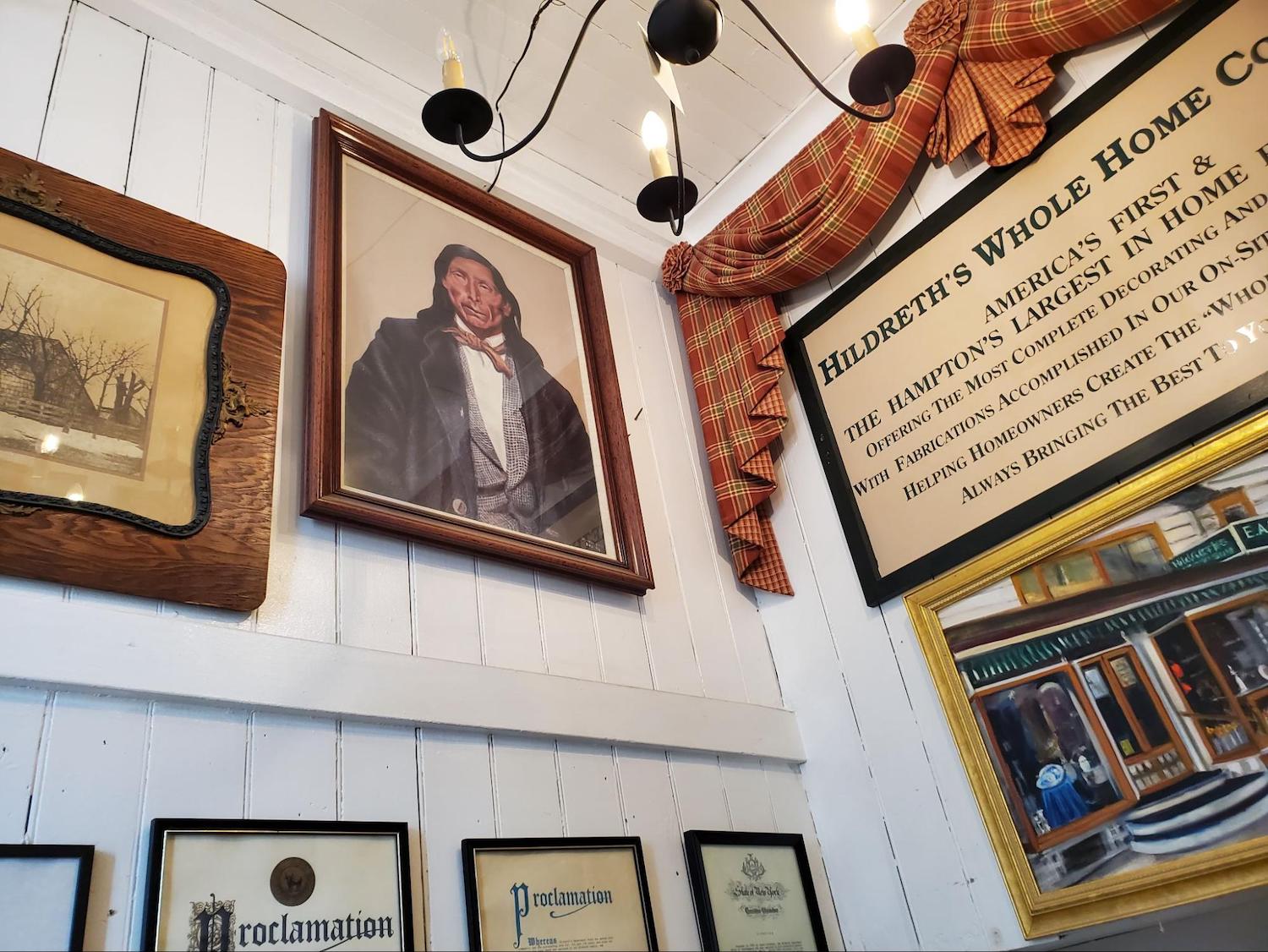
The print of Montaukett Indian Stephen Taukus (Talkhouse) is by Shinnecock artist Norman Smith. Seen here at Hildreth’s Whole Home Goods store on Main Street in Southampton, Long Island, New York.

Ever since indigenous tribes experienced First Contact with Europeans, the newcomers’ culture has run roughshod over the folks who had thousands of years of history here. The only positive thing about the way things are in the present time is that we are hearing more about it. You have to bring wrongs to light before you can start doing something better.

From Long Island, New York, Shinnecock tribal member Jeremy Dennis writes at Hyperallergic that his tribe’s “continued presence as a sovereign nation has been slowly rendered invisible by neighbors in the Hamptons.”

Wouldn’t I love to see “land recognition” statements before every Long Island party! And I know some who might be up for it.

Dennis writes, “The people of the Shinnecock Indian Nation of Eastern Long Island in New York State can trace their presence on their land back more than ten thousand years. Shinnecock’s claim is evident through Clovis Projectile Points from the Paleo-Indian Period (15,000–3,500 BCE).

“By 1000 BCE, Shinnecock people and other local tribal communities expressed themselves through clay pottery designs, wood sculptures, and wampum shell/bone beadwork. With the arrival of Europeans, Indigenous artisans incorporated richly colored cloth, glass beads, and blankets into their crafts and regalia. In the early 20th century, Shinnecock artisans loaded their wagons with baskets, caned chairs, beaded moccasins, embroidered table linens, eel traps, corn and herb mortars, duck decoys, wooden spoons, and scrub brushes, and sold them in nearby white communities.

“For thousands of years, and hundreds of years after first contact, Shinnecock artisans and other local tribal communities were best known for their wampum manufacturing and jewelry making. Wampum is manufactured by harvesting and shaping clamshells found only along saltwater sources from New Jersey to the Canadian coastline. …

“After 30 years of contact with European colonists, the demand for wampum waned, and the colonists came to value only Indigenous land and labor. By the 20th century, the historic trove of countless wampum beads, made individually by hand, were discarded — mistaken as gaudy jewelry, as Chief Harry Wallace of Unkechaug in modern-day Mastic Beach described during a public presentation at Guild Hall in 2021. …

“Walking through the East End [of the Hamptons], residents and tourists can find the only acknowledgment of Shinnecock people on Southampton’s Village Seal, which depicts a sole Indian and a mass of Europeans arriving on their boats.

“Following the first moment of contact in 1640, in which Shinnecock’s Sachem Nowedonah and other advisors greeted the English, Shinnecock people were understood as friendly neighbors and vital to European colonists’ early survival and industry. Building trust and friendship with the English quickly turned into the English swindling land from Shinnecock and other Indigenous communities on Long Island. Through deceit, insurmountable debt, threats of violence, and Shinnecock signature forgeries, the Shinnecock Nation alone illegally lost more than four thousand acres of its homeland. With the loss of land came the loss of natural resources, places to live, and means of survival. …

“Since the early 1700s, colonists recognized the real estate potential of this idyllic landscape. … This is why the arts are vital to our survival. We are defiant by sustaining our traditional storytelling, dance, beadwork, and wampum manufacturing, along with newer art forms, such as digital photography, videography, and painting, among many other mediums.

“Despite constant hardships, Shinnecock people have prioritized cultural expression through the generations. Artists such as Charles Bunn, Wickham Hunter, Norman Smith, Edward Terry, Dennis King, and Chuck Herman Quinn have found employment and opportunities as they’ve carried on carving and beadwork traditions, and their artworks and names will live on forever in those objects. Later generations of Shinnecock artists, including Denise Silva-Dennis, David Bunn Martine, and Herbert Randall, have explored self-representation in the arts as a means to challenge the stereotypes and caricatures of Shinnecock people from pre-contact times to the present.

“In recent years, Shinnecock artists have received support and recognition through programs such as the Gather series at Guild Hall and artwork acquisitions. The Parrish Art Museum, for example, now has two photos by artist and photographer Herbert Randall, though they were acquired decades after their original creation.

“For many years, Shinnecock art and cultural objects could be viewed at the Shinnecock Cultural Center & Museum, opened in 2001, on the reservation in Southampton — but the museum has been closed since 2017. … The lack of spaces showcasing Shinnecock art represents a need for new Indigenous-led art spaces and transformation in museum structures and collections to truly represent the East End community.”

More at Hyperallergic, here. No firewall.

Read Full Post »

France is experimenting with giving free money to kids to spend on culture. Most are buying media they already like, not high art, but maybe that’s OK.

Aurelien Breeden presents the controversy at the New York Times. “When the French government launched a smartphone app that gives 300 euros (about $348) to every 18-year-old in the country for cultural purchases like books and music, or exhibition and performance tickets, most young people’s impulse wasn’t to buy Proust’s greatest works or to line up and see Molière.

“Instead, France’s teenagers flocked to manga.

“ ‘It’s a really good initiative,’ said Juliette Sega, who lives in a small town in southeastern France and has used €40 (about $47) to buy Japanese comic books and ‘The Maze Runner,’ a dystopian novel. …

“As of this month, books represented over 75 percent of all purchases made through the app since it was introduced nationwide in May — and roughly two-thirds of those books were manga, according to the organization that runs the app, called the Culture Pass.

“The French news media has written of a ‘manga rush,‘ fueled by a ‘manga pass‘ — observations that came via a slightly distorted lens, since the app arrived just as theaters, cinemas and music festivals, emerging from pandemic-related restrictions, had less to offer. And manga were already wildly popular in France.

“But the focus on comic books reveals a subtle tension at the heart of the Culture Pass’s design, between the almost total freedom it affords it young users — including to buy the mass media they already love — and its architects’ aim of guiding users toward lesser-known and more highbrow arts. …

“Teenagers can buy physical goods from bookstores, record shops and arts supply or instrument stores. They can purchase tickets to movie showings, plays, concerts or museum exhibits. And they can sign up for dance, painting or drawing classes.

“Noël Corbin, a Culture Ministry official who oversees the project, said the pass gave France’s newly minted adults a way of looking up nearby cultural offerings — the app has a geolocation feature — and encouraged them to indulge their cultural passions.

“But it also uses incentives to push teenagers toward new, more challenging art forms, he said. … Those include recommendation lists curated by Culture Pass staff members and by popular artists and celebrities, as well as access to V.I.P. events, like a live-streamed concert at the Soulages Museum in southern France and a behind-the-scenes look at the Avignon theater festival. …

“Jean-Michel Tobelem, an associate professor at the University Paris 1 Panthéon-Sorbonne who specializes in the economics of culture, said that it was a laudable effort but that it would largely benefit the mainstream media. …

“There is nothing wrong with pop music or blockbusters, he stressed, acknowledging that ‘you can enter Korean culture through K-Pop and then discover that there is a whole cinema, a literature, painters and composers that go with it.’ But Tobelem said that he was unconvinced that the no-strings-attached approach of the Culture Pass would do that. …

“Naza Chiffert, who runs two independent bookstores in Paris, said the Culture Pass had already had a positive impact on her business. ‘Getting young people who read but who are more used to Amazon or big-box stores to come to us isn’t easy,’ she said, but now she has teenagers in her stores every day.

“Still, some worry that the pass will be a financial windfall for people from privileged backgrounds while doing little to help others expand their cultural horizons. …

“Opponents accuse Macron of throwing cash at young people to court their vote before next year’s presidential election and choosing an unregulated approach instead of funding existing cash-strapped outreach programs, like those run by youth community centers, that broaden access to culture in a more structured way.

“France’s Culture Ministry counters that it plans to introduce the pass to middle-school students, first in a teacher-managed classroom setting, and gradually increasing amounts of autonomy and money, until students reach 18. It also says the pass enables cultural institutions to reach young audiences, which are usually hard to attract, directly on their smartphones. …

“Gabriel Tiné, an 18-year-old osteopathy student in Paris, has spent over €200 from his pass at Citeaux Sphère, a Parisian record store, where he and a friend were thumbing through vinyls on a recent afternoon. … Tiné said he liked the idea, especially the ability to splurge on musical instruments or art classes.

“ ‘I wouldn’t say no to attending a jazz concert or something like that,’ Tiné said, although he added that the app hadn’t enticed him to buy those tickets.”

More at the Times, here.

Read Full Post »

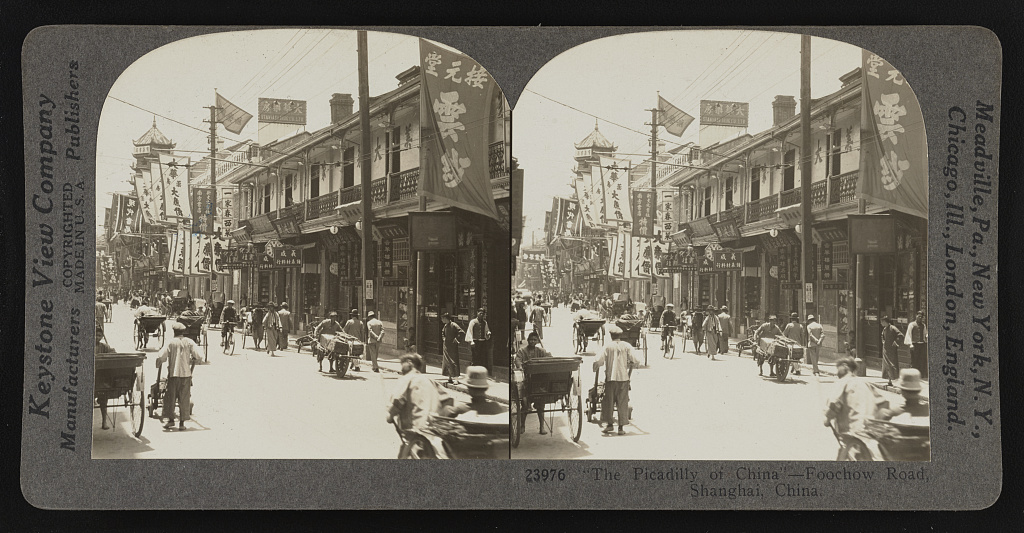
Photo: Library of Congress.
Shanghai in the 1930s.

Something worth remembering as the need for asylum in our world grows every year, is that Shanghai accepted many Jewish refugees in the 1930s, where they joined an already thriving community of Jewish immigrants from Baghdad.

And as most immigrants do, these transplants made valuable contributions to their new country. Today’s story is about one such contribution in Shanghai: an unusual ballet.

Susan Blumberg-Kason writes at the Los Angeles Review of Books, “Jews in Shanghai have been the subject of many memoirs and novels. … Kirsty Manning’s The Song of Jade Lily (2018) and Rachel DeWoskin’s Someday We Will Fly (2019) are two recent novels that tell stories of Jewish refugees who fled to the Chinese city, one of the only places in the world that didn’t require papers back then.

“Other books have told of a Jewish community in Shanghai before the refugees arrived. Taras Grescoe’s Shanghai Grand (2016) and Jonathan Kaufman’s The Last Kings of Shanghai (2020) center around Baghdadi Jewish families like the Sassoons and Kadoories, families that arrived in Shanghai a century before the onset of World War II. …

“Judaism is not a monolithic culture, as the different communities in Shanghai before and during the war show. Besides the refugees and the Baghdadi businesspeople, Shanghai was also home to Jews in the performing arts. Very little has been written about their contributions to Shanghai before the Japanese took over most of the city in 1937.

“These contributions centered around two people: Russian Jewish composer Aaron Avshalomov and American Jewish theater producer Bernardine Szold Fritz. …

“Avshalomov left Russia to study medicine in Zürich before the Bolshevik Revolution. … But by the end of the 1910s, he had decided to leave medicine and the US, and pursue a career in music. He moved to Shanghai.

“At the time, customs in this port city were not administered by Chinese officials, nor was it managed by French, British, or American authorities, all of which held local concessions. Because of these loose arrangements, Shanghai became a refuge for anyone seeking a new home. It attracted Russians fleeing the Bolshevik Revolution and Jews escaping pogroms. In Shanghai, Avshalomov worked with other Jewish musicians.

“Bernardine Szold Fritz was a Jewish actress-turned-journalist who fled three husbands before the age of 30, arriving in Shanghai in 1929 to marry her fourth husband, an American silver broker. Born in Peoria, Illinois, she had acted at Chicago’s Little Theatre before moving to New York and then Paris. …

“In Shanghai, Bernardine started a salon, bringing together Chinese and foreign writers, artists, musicians, and actors. In early 1933, she invited Avshalomov and learned that he had written a ballet, The Soul of the Ch’in, while living in Peking in 1925–’26. The ballet had been performed in Portland, Oregon, in the late ’20s, but had yet to be produced in China.

“Suddenly Bernardine envisioned a new project that inspired her to think beyond her living room. She convinced Avshalomov that the two of them together could produce his ballet right there in Shanghai. Not unfamiliar with the dance world, she was friendly with Ruth Page, the American ballerina, and her partner, Harald Kreutzberg, a German pioneer in modern dance.

“Avshalomov’s experience in China — he had already lived there for almost 15 years — and Bernardine’s theatrical background allowed the duo to bring a ballet to Shanghai that would appeal to all arts enthusiasts, both Chinese and expat. Bernardine also tapped into her connections in Shanghai’s financial, political, and artistic communities. She and Avshalomov knew members of the influential Soong family, including Madame Chiang Kai-shek (or Soong Mei-ling) and Madame Sun Yat-sen (or Soong Ching-ling), both avid patrons of the arts. The performance ran on May 21, 1933, at 9:15 p.m. at the new Grand Theatre. …

The Soul of the Ch’in was possibly the first Chinese ballet performed on a grand scale in China. … The event was even more remarkable because the cast of dancers was all Chinese, as were the set designers, dramaturge, and stage manager. In fact, the only foreigners on the crew were the costume designer and the person managing the lights.”

More at the Los Angeles Review of Books, here. There’s a full description of the ballet’s rather wild plot.

Read Full Post »

Photo: National Geographic for Disney+/Peter Kragh.
Baby beluga. Belugas are the only whale that can use their lips to form different shapes to communicate.

Many of us pay more attention to oceans in the summer as that is the time we go swimming, fishing, or boating in oceans. It’s the time we suddenly start talking about sightings of Great White Sharks or a deadly Portuguese Man-of-War. It’s when my surfer grandchildren report on huge fish they say are nibbling their feet, probably striped bass.

So today I want to share a story about ocean royalty, whales. It’s from the environmental radio show Living on Earth.

“On Earth Day 2021, National Geographic released Secrets of the Whales, a video documentary miniseries that seeks to unravel the secrets of whale behavior and understand whale cultures of orcas, humpbacks, narwhals, belugas, and sperm whales. National Geographic Explorer and wildlife photographer Brian Skerry joins host Bobby Bascomb to talk about the experience of filming this epic project and the breathtaking complexity of whale societies. …

“BASCOMB: A theme that comes up again and again in this series is culture: that whales have distinct cultures. And not just between different species of whales, but between different pods or families. …

“SKERRY: You’re absolutely right. When I created this, I saw this as a game changer that the latest and greatest science was revealing that these charismatic ocean animals are showing behaviors that are really cultures, not unlike humans. My friend, Dr. Shane Gero, who’s a sperm whale biologist, he defines it this way. He says behavior is what we do, culture is how we do it.

“So for example, most humans eat food with utensils, that would be behavior, but whether you use knives and forks or chopsticks, that is culture. So what we see in whales, you know, you might have a family of Orca that live in New Zealand, and their preference for ethnic food is stingrays. And they figured out how to eat those there. And the ones in the Norwegian Arctic, like to eat herring, and they figured out how to predate on herring. And the ones in Patagonia like seal pups, and they are the only ones in the world who have that strategy. They not only figured out this stuff, which is culture, but they pass it on to their children.

So they are not only teaching their offspring the skills that they will need to survive, but they’re teaching them their ancestral traditions, the things that matter to them.

“Whales have unique dialects. Sperm whales that Shane studies in the Eastern Caribbean, he’s identified about 24 families that all speak the same dialect or language, and they belong to a clan. But they don’t intermingle with other sperm whales that might come into those waters that speak another language. …

“BASCOMB: And during your time in New Zealand with orcas there, there was a moment in the series where you were invited to share in the spoils of their hunt. Can you tell us about that experience?

“SKERRY: I can. This was certainly one of the most extraordinary moments of my career of four decades of exploring the ocean. We worked in 24 locations collectively for this series worldwide over three years. And I had just come from six weeks in the Canadian Arctic and I had about 10 days in New Zealand. I was working with a researcher Dr. Ingrid Visser, who is the orca expert, lives in New Zealand, understands these animals. … We drove three hours to get there, got in the boat, went out, found the orca, they were hunting in shallow water. I got in the water and started swimming towards them. And lo and behold, here is this adult female swimming towards me with a stingray actually hanging out of her mouth. My mind is on overload now, I’m thinking, I can’t believe this. And then she drops it. …

“I swim down to the bottom and I knelt on the sandy floor next to the dead stingray just laying there. And then out of the corner of my right eye, I see this orca coming back, and she swings behind my back, I lose sight of her for a moment. And then she emerges on the left side of my view, she swings around directly in front of me.

“And now we’re staring at each other with a stingray between us. And she’s looking at me and looking at the ray looking at me looking at the ray as if to say, ‘Well, are you going to eat that?’ And when I don’t go for it, then she very gently just bends over, picks it up in her mouth and lifts it up in front of me. And then she turns and begins sharing her food with another member of her family. …

“BASCOMB: This series also documents the formation of a surprising cross species adoption between lost Narwhal, a youth, and a pod of beluga whales. …

“SKERRY: Yeah, that’s a really special situation. … I think it speaks to the empathy and the accepting nature of these beluga whale families. I mean, clearly, they know that that’s not one of their own. But yet they saw this narwhal that was alone, and just made it part of the family. They adopted it as one of their own. And, I mean, how wonderful is that?

“I think this is one of the messages that I’ve sort of taken away. You know, I spent three years working on this. As I’ve processed a lot of these moments that we witness in the series, it occurred to me that I’ve been reminded of things that I already knew, and that is that community matters, that family matters, that the whales make time for each other.

“A sperm whale for example, these are matrilineal societies led by the older, wiser females, they spend most of their life in the deep ocean foraging for squid. Life in the ocean is hard, but yet every day or every couple of days, they make time to come together and socialize. You see them rolling around and enjoying each other’s company, reaffirming their family bonds. And for me to reflect back on this was to be reminded of how important social creatures are, that humans and whales can’t do it alone. We need each other, we need family, we need community, and that that alone can bring us the greatest joy in life.”

Lots more whale cultures described at Living on Earth, here.

Read Full Post »


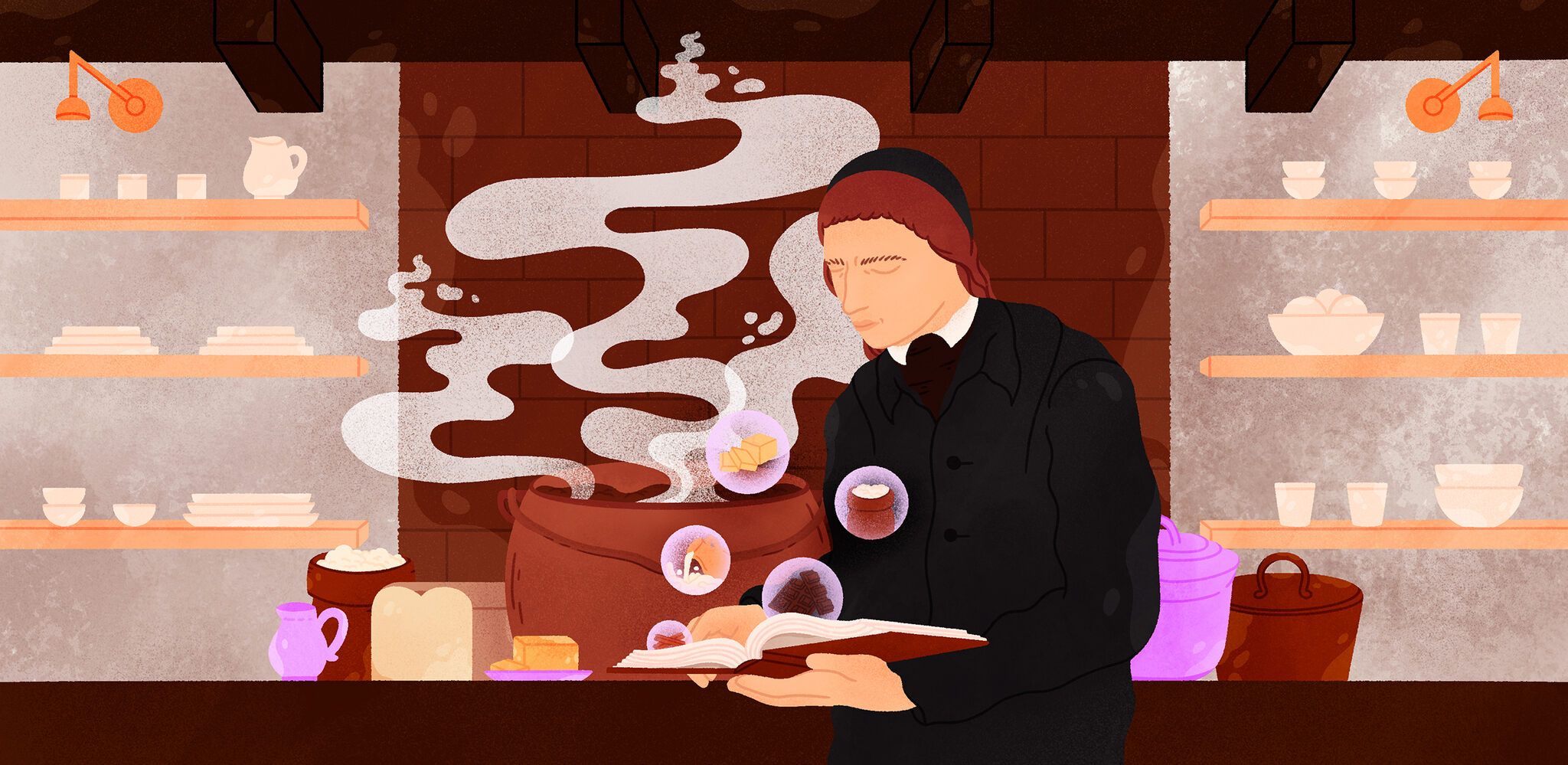
Image: Thumy Phan for
Gastro Obscura.
Among Valentin Vodnik’s efforts to build up the Slovene language in the 18th century was publishing a cookbook, though he couldn’t cook.

The need to preserve languages and cultures grows more urgent as the world becomes more interconnected. But from today’s article we learn that even before we were all connected, there were creative efforts to keep local languages from dying out.

Kaja Seruga has the report at Atlas Obscura.

“Straddling the imaginary border between the Balkans and Central Europe, Slovenia is home to two million citizens united by a common language. But this wasn’t always the case. For about six hundred years, the Slovene lands were the domain of the Habsburgs, with the occasional appearance by the French, Italians, Hungarians, and Serbs.

“The Slovene language — and with it the core of Slovene identity — should by all rights have disappeared long ago, subsumed by the much stronger languages and political powers surrounding it. The language survived thanks to the efforts of many people, from the 16th-century protestants who first wrote it down to the 18th- and 19th-century intellectuals who coaxed it out of the church and spread it among the people. Among their arsenal of weapons: a cookbook, wielded by one relentlessly determined priest.

“Valentin Vodnik was born in 1758 near Ljubljana, today the capital of Slovenia and then part of the Habsburg empire. He was a man of boundless energy, curiosity, and drive: Besides his work as a priest and later a high-school teacher and headmaster, he was fluent in half a dozen languages, wrote some of the first Slovene poetry, published the first Slovene newspaper, and began corresponding with intellectuals in Slovene. Vodnik’s mission was popularizing and elevating the reputation of the language at a time when educated Slovenes mostly spoke German, considering their native tongue to be the vernacular of poor illiterate farmers, unfit for polite society and incapable of expressing complex ideas.

“ ‘I see him as a quixotic figure, someone who didn’t let reality get in the way of his idealism,’ says Dr. Andreja Legan Ravnikar, a linguist focusing on the history of Slovene. ‘He never gave up — the newspaper almost bankrupted him, but he went on to write technical books on everything from mining to midwifery, the first grammar book in Slovene, and the first dictionary.’

“Vodnik was part of the Zois Circle, a group of intellectuals gathered around baron Žiga Zois, a central figure of the Slovene Enlightenment period who poured his wealth into the fostering of Slovene language and national identity.

“After the first book in the Slovene language, a catechism, was published in 1550, written Slovene remained bound to religious writing and was completely disconnected from the spoken language by Vodnik’s time. He saw the dominance of German and strong influences of Italian, Hungarian, and Serbian in various regions as forces that threatened to disintegrate the language into mutually intelligible dialects. …

“As compulsory public education was introduced in the Habsburg empire, the Zois Circle saw their opportunity to modernize and expand written Slovene into other genres.

They were trying to break out of a Catch-22: There was no secular writing in Slovene due to the dearth of Slovene readership, but there could be no Slovene readership until they had something to read.

“And so they wrote — everything from plays and poetry to textbooks and technical manuals — conquering new linguistic territories along the way. Much of this work fell to Vodnik, whose command of the language made him a linguistic role model for his contemporaries.

“Although he was a man of many talents, Vodnik had probably never cooked a meal in his life. Yet, in 1799, he published the first cookbook in the Slovene language, creatively titled The Cookbook. …

“ ‘There isn’t a single traditional Slovene recipe in there,’ says Dr. Janez Bogataj, a leading Slovene food ethnologist. ‘He wanted to educate people and offer them a better sort of cuisine, while also proving that the Slovene language is capable of expressing everything that other languages can.’

“The cookbook’s foreword is half a lecture on the importance of healthy food and half a linguistic manifesto. Vodnik makes an impassioned plea for finding common ground among Slovenia’s disparate dialects: ‘We must find the Slovene words scattered around the land and assemble a pure Slovene language. Experience has taught me that few things don’t have a proper Slovene name somewhere … Why beg words from others when I can find them at home? Are we never going to mend our own language?’

“Vodnik was true to his word: He was a purist, mercilessly hacking away at Germanisms that Slovenes had relied on for centuries and replacing them with local expressions collected with the help of informants from different regions. Failing that, he would turn to old Slovene expressions, or appropriate one from another Slavic language. This was not a case of making up a language — though he did also create a number of words from scratch as a last resort — but of carefully collecting and curating a vocabulary out of an abundance of dialectical words, creating a standard language that all Slovenes could understand. …

“Today, Slovenes speak around 50 local dialects. … But standard Slovene gives us shared words to fall back on, as well as a language used in politics, academia, and literary art. A long lineage of intellectuals worked through the centuries to protect and nurture the fledgling Slovene language, but few were as prolific or as prescient as Vodnik. Not one for false modesty, he signed the foreword to his cookbook, as well as other works, as Vodník, the added accent mark transforming his name to mean ‘leader.’ After his death in 1819 Vodnik became the patron saint of the Slovene language and a hero to the nascent national movement that gained momentum after the Spring of Nations swept through Europe in 1848.”

It’s true that when efforts like this increase nationalism, the results are not always peaceful. Ideally, preserving languages means that marginalized cultures existing in dominant ones can have a rich life of their own and create not friction but appreciation among others.

More at Atlas Obscura, here.

Read Full Post »

Saving a language, according to a recent article in Smithsonian magazine, involves more than learning to speak it. A language is an expression of a culture, a way of life, and speakers must appreciate all of that if the language is to survive.

Alia Wong writes about a married couple who have been putting in the work to see that both the Hawaiian language and the Hawaiian culture get passed down to new generations.

“Pelehonuamea Suganuma and Kekoa Harman were bright-eyed high schoolers in Honolulu when they first crossed paths, in the 1990s. The two were paired for a performance — a ho‘ike, as such shows are known in Hawaiian. Both teenagers had a passion for hula and mele (Hawaiian songs and chants), and they liked performing at the school they’d chosen to attend — Kamehameha High School, part of a 133-year-old private network that gave admissions preference to students of Hawaiian Polynesian ancestry. Still, one part of Hawaiian culture remained frustratingly out of reach for Pele and Kekoa: the language.

“Over many generations, the native tongue of the islands had been systematically eliminated from everyday life, and even the Kamehameha Schools weren’t able to bring it back. Part of it was a lack of interest — students seemed to prefer learning Japanese, Spanish or French. But more important, Hawaii’s educators generally hadn’t yet figured out how to teach Hawaiian vocabulary and grammar, or give eager youngsters like Pele and Kekoa opportunities to immerse themselves in Hawaiian speech.

“A few years later, Pele and Kekoa found themselves together again. Both of them enrolled in a brand-new Hawaiian language program at the University of Hawaii at Hilo. The two former schoolmates became part of a pioneering cohort that was innovating ways to bring Hawaiian back to life. They helped develop some of the first truly successful Hawaiian language programs throughout the state’s islands. Along the way, they started dating, got married and had four children, and raised them to speak fluent Hawaiian.

“Today, Pele teaches at a Hawaiian-language K-12 school and Kekoa teaches Hawaiian language and culture at the college they both attended. At home, their family speaks almost exclusively Hawaiian. The Harmans are proud of the revival they helped carry out in just one generation. But Unesco still lists the language as critically endangered, and there’s a long way to go before it’s spoken again as a part of everyday life. ‘There’s a false sense of security sometimes,’ says Pele, ‘that our language is coming back.’ …

“For centuries, Hawaiian had been an oral tongue — one steeped in mo‘olelo (story, legend, history). But after missionaries helped create a written version of the language, the local people took to it. They established more than 100 Hawaiian-language newspapers, according to some records. By 1834, more than 90 percent of Hawaiians were literate — up from virtually zero just 14 years earlier.

“Yet these strides in Hawaiian literacy were soon overtaken by efforts to erase Hawaiian culture altogether. American tycoons had also come to the islands, planting lucrative crops like sugar cane and coffee. …

“Outsiders helped to phase out the Hawaiian system of governance. They replaced traditional foods like taro with rice and imported wheat. They started issuing fines for performing hula, the ancient Hawaiian form of dance and expression. And as the 19th century was winding down, the Americans overthrew Queen Lili‘uokalani, Hawaii’s last monarch. They annexed the archipelago as a territory in 1898. By the time Hawaii became a state, in 1959, fewer than 2,000 people could speak Hawaiian fluently. …

“But there were still people left who remembered. Both Pele and Kekoa were close to their great-grandmothers — women born in the early 1900s, who spoke some Hawaiian, even though they were raised to think of their mother tongue as inferior to English. The great-grandmothers were the last members of each family to retain any fluency. …

“When Kekoa was a kid, his grandmother, who passed away a few years ago, used to take him to Hawaiian musical and hula performances. She’d make leis for tourist-targeted luaus, and he’d help her gather and string the flower garlands. ‘I loved going to those events,’ Kekoa says. …

“1997 was the year the Hawaiian legislature mandated a new program at the Hilo campus. It was called Ka Haka ‘Ula O Ke‘elikōlani, named after [a] woman from an ancient Hawaiian dynasty who was the governor of Hawaii during the mid-1800s. She was a defender of Hawaiian culture — although she came from a wealthy family and understood English, she lived in a traditional grass-roofed house and spoke only Hawaiian. The new program at Hilo had the motto O ka ‘ōlelo ke ka‘ā o ka Mauli: ‘Language is the fiber that binds us to our cultural identity.’

“Enrolling in this new program, Pele and Kekoa spoke Hawaiian as much as they could outside of class to become fluent. They ‘talked story’ with their professors in the hallways. Their teachers hosted little get-togethers every week. … At these gatherings, the students fumbled with the language over card games, with music in the background and snacks on the table. ‘That’s how we got comfortable,’ Pele says. …

“As the Harmans see it, Hawaiian will survive only if people value the culture around it. After all, Hawaiian doesn’t have the same marketing value as a massive international language like Spanish or Mandarin. Hawaiian is a language that describes local geographical features and captures an ancient worldview. … ‘Now we have a generation of Hawaiian speakers, but if we don’t also teach them [old Hawaiian] behaviors and beliefs, that fluency will only go so far,’ Kekoa says. ‘Hawaiian isn’t just a language but a way of life.’ ” More at Smithsonian, here.

And in a related article from today’s Associated Press, note that the Standing Rock Sioux tribe has prioritized Covid-19 vaccine for elderly speakers of Dakota and Lokata languages, here.

Read Full Post »


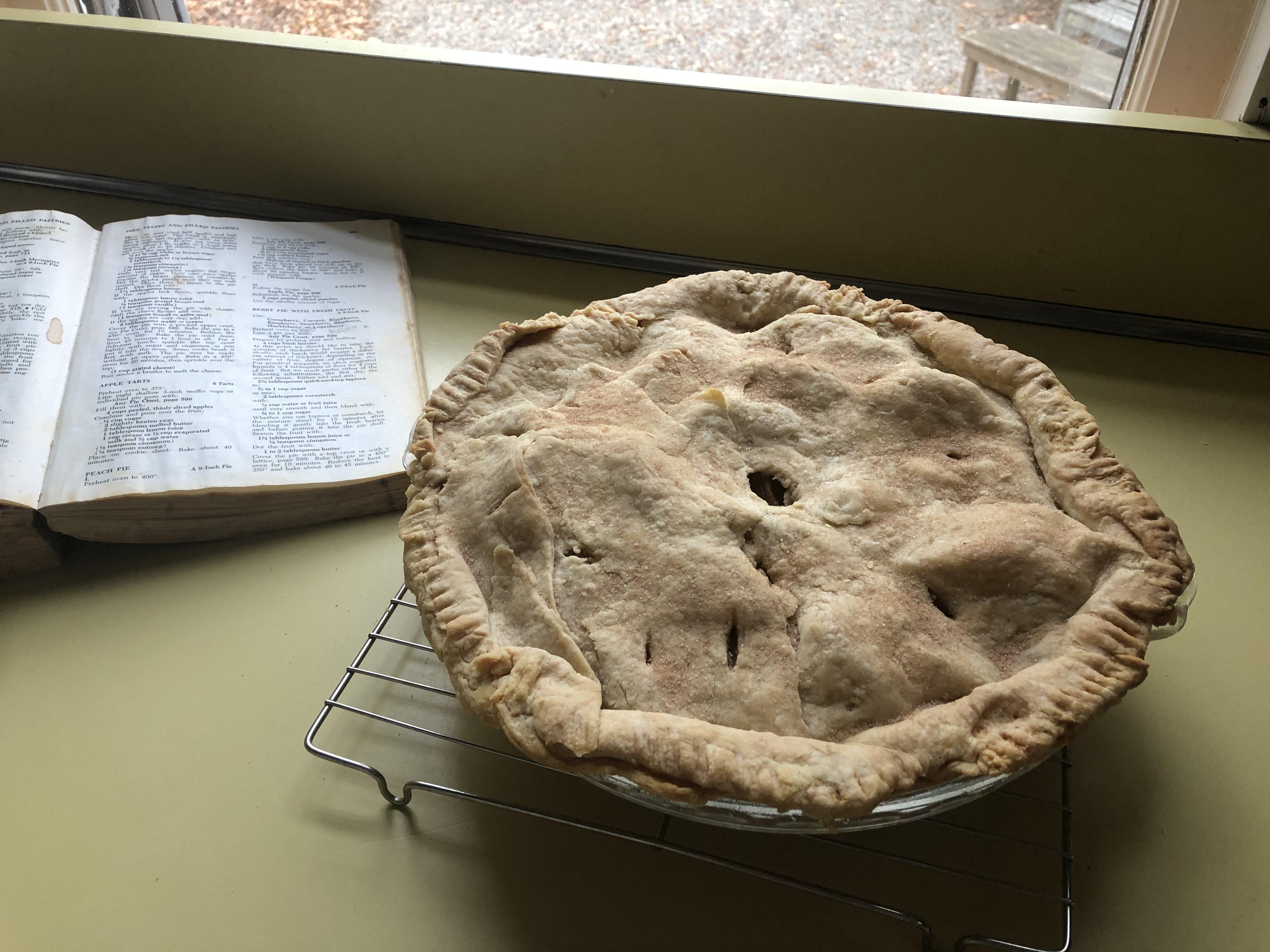
My husband and I are on our own for the first time at Thanksgiving. We ordered turkey takeout, but I did make the apple pie.

I want to avoid perpetuating any Thanksgiving mythology but at the same time write about the enduring appeal of a universal idea — people with differences breaking bread together.

We now know that our traditional Thanksgiving story is both inaccurate and hurtful to descendants of the indigenous people who first encountered the Pilgrims. As you can read at the Christian Science Monitor, here, the New York Times, here, and the Smithsonian, the story of colonial contact is considerably more heartbreaking than uplifting.

This knowledge has been discussed widely for quite a few years now, and yet there are still schools where children make feather headdresses and Facebook friends who post Pilgrims and Wampanoag chiefs holding hands. So what is the appeal, apart from the spin and wishful thinking of conquerors?

Pretty sure it’s the breaking-bread-together part.

I remember my sense of gratitude and privilege (the good kind of privilege) when I was invited to my friends’ Passover seder. How I loved hearing about the words that are said over all the traditional dishes and the history associated with them. I loved learning that I shouldn’t quiz my friend’s father on his WW II experience because “we focus on peaceful topics at Passover.” How else would a person raised Episcopalian gain this interesting knowledge about cultural differences?

Even at non-Covid Thanksgiving meals, you know, we often break bread among differences. Friends regularly say they hope they can keep distant relatives off religion and politics and just focus on things everyone enjoys in common. Because among differences, there are always commonalities.

All of which is my roundabout way of sharing my delight in some unusual combinations of dishes ESL students I know are preparing for Thanksgiving. It’s a merging of cultures.

“For Thanksgiving, I’m going to cook baked pork in sweet and sour pineapple and orange sauce, turkey, Russian salad, and Italian pasta.”

“For Thanksgiving, I plan to cook baked pork with pineapple, cranberry, and ginger sauce. Mashed potatoes and fruit salad.”

“I plan on cooking turkey, rice, pork, and Salut bacalao [Puerto Rican fish stew]. The drink will be Coquito [coconut eggnog].”

“I plan on cooking turkey, potato salad, chicken lasagna, and fruit.”

“I plan to cook turkey, rice, salad, and lasagna. For dessert we will make a brownie and three-milk cake.”

“Our plan for Thanksgiving is to cook a turkey, chicken, rice. And we are going to make a salad.”

Another student told me she usually makes the same things I think of as traditional Thanksgiving dishes but adds corn fritters. This year, she writes, she’s alone and isn’t sure what she’ll make, adding, “The smallest number of people in the home will be best for avoiding Covid-19. I think I’m in the smallest group by myself.”

Read Full Post »

Hip-Hop Auction

I don’t know much about hip-hop, or rap, but I thought it was fascinating that it’s been a part of our culture long enough for a Sotheby’s auction of “historic” memorabilia this month.

As Laird Borrelli-Persson wrote at Vogue, “Until now hip-hop, a global lingua franca, has been in use seemingly everywhere but in auction rooms. That’s set to change next week when, on September 15, Sotheby’s presents its first sale dedicated to the subject.

“The broad spectrum of items on offer — everything from teenage love letters written by Tupac Shakur to graffiti writer Buddy Esquire’s sketchbook — demonstrate that hip-hop has always been a multimedia genre. …

“Though hip-hop is an existing collectible category, it didn’t have an auction ‘home.’ Traditionally, explains [Sotheby’s Cassandra] Hatton, this world has been very focused on specific collecting categories, like cars, jewelry, books, and contemporary art. Hip-hop, she says, ‘is the sum of all of its parts, and if you take a part of it out, it’s not itself anymore.’ …

“ ‘What I think is really important here,’ says [Monica Lynch, former president of Tommy Boy Records], ‘is that the overwhelming majority of the people who are consigning to this auction are the artists and creators themselves, and that they are going to be recognized. … If this expands or brings them a new audience, … that’s a great thing.’ …

“Hip-hop’s influence on fashion is enduring. Lynch recalls being seated at a dinner across from [fashion designer] Karl Lagerfeld in the early 1990s and ‘the only thing he wanted to talk about was TLC.’

“The sale includes items designed and worn by MC Sha-Rock and, spectacularly, Salt-N-Pepa’s ‘Push It’ jackets, [also] a number of jackets that were made only for crews or for staff, as in the case of a Carharrt topper with a Shawn Stussy–designed logo made for Tommy Boy employees. …

“Lynch calls attention to the ‘DIY customization’ of many of the pieces, and also to luxury’s ‘strange history with hip-hop.’ (Note Dapper Dan’s Louis Vuitton jacket, circa 1988.)

“ ‘The hip-hop community always adapted,’ she continues. ‘They adopted and adapted. I think Carhartt was pretty shocked when it realized that a huge amount of its customer base was up in Harlem and in the Bronx. Slick Rick was always wearing Clarks Wallabees shoes. I don’t think they were marketing to a Slick Rick, but you know, the hip-hop community took brands that were known with different audiences and flipped them, turned them inside out, and they made them their own.’ …

“The sale will be an introductory experience for some, a nostalgic one for others. Hatton hopes it will be cheering for all. ‘I think something important about hip-hop is that it’s uplifting,’ she says. ‘There are some markets where money is made by making you feel like you’re not good enough, you’re not beautiful enough, or smart enough, or rich enough, or whatever, so the motivation for purchasing certain things is because it will make you look better or smarter or more sophisticated. And hip-hop is very different. It’s very much celebrating who you are and creating something great out of nowhere. That is what to me art is.’ ” More at Vogue.

Forbes reported on how the auction actually turned out, here. According to Jacqueline Schneider, “Five consignors (for lots 12, 36, 80, 81 and 118), with sales totaling $170,226, indicated their intention to donate money to various charities. Sotheby’s itself committed an undisclosed portion of its proceeds to benefit hip-hop programs at the Queens Public Library and Building Beats, a non-profit teaching young people in underserved communities tech literacy and entrepreneurial skills through DJ and music programs.”

At my September 1 post, Hannah commented, “In my anti-racism group one of our members, who studies racism as an academic discipline, has suggested listening –- really listening –- to rap.” I have been trying that.

Read Full Post »

Call me naive, but I can’t help thinking that the enmity of governments obscures what ordinary people in a country are like and the value that their cultural history holds for the people of other nations. Consider ordinary Iranians for a moment and some wondrous aspects of their ancient empire.

Eve MacDonald, a lecturer in Ancient History at Cardiff University, writes at the Conversation, “It’s simply not possible to do justice to the value of Iran’s cultural heritage – it’s a rich and noble history that has had a fundamental impact on the world through art, architecture, poetry, in science and technology, medicine, philosophy and engineering.

“The Iranian people are intensely aware – and rightly proud of – their Persian heritage. The archaeological legacy left by the civilisations of ancient and medieval Iran extend from the Mediterranean Sea to India and ranges across four millennia. …

“In the 6th century BC, Iran was home to the first world empire. The Achaemenids ruled a multicultural superpower that stretched to Egypt and Asia Minor in the west and India and Pakistan in the east. They were the power by which all other ancient empires measured themselves. Their cultural homeland was in the Fars province of modern Iran. The word Persian is the name for the Iranian people based on the home region of the Achaemenids – Pars.

“Some of the richest and most beautiful of the archaeological and historical heritage in Iran remains there. This includes Parsgardae, the first Achaemenid dynastic capital where King Cyrus (c. 590-529BC) laid down the foundations of law and the first declaration of universal rights while ruling over a vast array of citizens and cultures.

“Nearby is the magnificent site of Persepolis, the great palace of the Achaemenid kings and hub of government and administration. Architecturally stunning, it is decorated with relief sculptures that still today leave a visitor in awe.

“When the Achaemenids fell to the armies of Alexander the Great in the 4th century BC, what followed was great upheaval and also one of the most extraordinary moments in human history. The mixing of Persian and eastern Mediterranean cultures created the Hellenistic Age. …

“With new cities, religions and cultures, this melting pot encouraged the rise of a thriving connectivity that linked urban centres in Iran, Iraq, Afghanistan, Turkmenistan and Syria. … The great city of Seleucia-on-Tigris/Ctesiphon, just south of Baghdad on the Tigris river in modern Iraq, became the western capital and centre for learning, culture and power for a thousand years.

“Hellenistic rulers gave way to Parthian kings in the 2nd century BC and the … Parthian Empire witnessed growing connectivity between east and west and increasing traffic along the silk routes. Their control of this trade led to conflict with the Romans who reached east to grasp some of the resulting spoils.

“It was also a time of religious transition that not only witnessed the rise of Buddhism, but also a thriving Zoroastrian religion that intersected with Judaism and developing Christianity. In the biblical story of the birth of Christ, who were the three kings – the Magi with their gifts for Jesus – but Persian priests from Iran coming to the side of child messiah, astronomers following the comet. …

“The Sasanians ruled a massive geopolitical entity from 224-751 AD. They were builders of cities and frontiers across the empire including the enormous Gorgan wall. … The wall is a fired-brick engineering marvel with a complex network of water canals running the whole length. It once stood across the plain with more than 30 forts manned by tens of thousands of soldiers.

“The Sasanians were the final pre-Islamic dynasty of Iran. In the 7th century AD the armies of the Rashidun caliphs conquered the Sasanian empire, bringing with them Islam and absorbing much of the culture and ideas of the ancient Iranian world. This fusion led to a flowering of early medieval Islam and, of the 22 cultural heritage sites in Iran that are recognised by UNESCO, the 9th century Masjed-e Jāmé in Isfahan is one of the most stunningly beautiful and stylistically influential mosques ever built.

“This was a thriving period of scientific, artistic and literary output. Rich with poetry that told of the ancient Iranian past in medieval courts where bards sang of great deeds. These are stories that we now believe reached the far west of Europe in the early medieval period. …

“Iranian cultural heritage has no one geographic or cultural home, its roots belong to all of us and speak of the vast influence that the Iranians have had on the creation of the world we live in today. Iran’s past could never be wiped off the cultural map of the world for it is embedded in our very humanity.” More at the Conversation, here.

If you’re interested in more about the ancient culture of Iran, try Jason Elliott’s book Mirrors of the Unseen, reviewed at the Guardian, here. A related, equally fascinating, book is Destiny Disrupted, by Tamim Ansary, here. I learned a lot from those books.

P.S. An Iranian-American journalist I follow has been raising funds for healthcare workers in Iran who are dangerously short of personal protective equipment. Click here.

Read Full Post »

yrrmu5caqxytzoquciacur-650-80

Image: Sepúlveda et al/ Project INCA, OPUS Programme/ Sorbonne Université
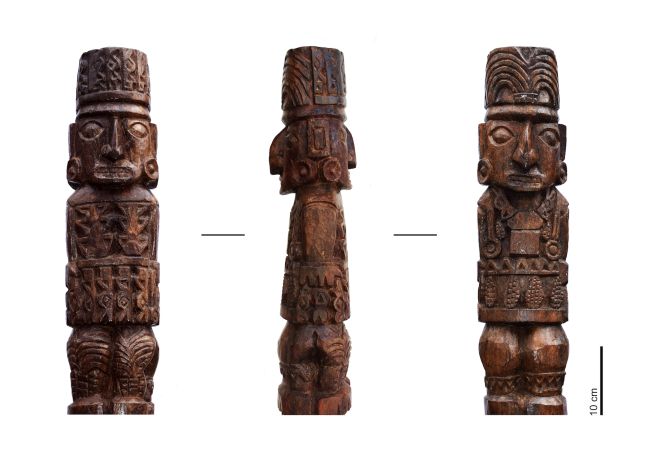
The Pachacamac idol, long thought to be destroyed by the Spanish conquistadors in 1533, was discovered in 1938.

There are those who think they can destroy whatever it is they don’t like if they have powerful weapons, and the brutal 16th century conquistador Hernando Pizarro was no exception. In this story, it was the Incan culture that supposedly needed to be destroyed. Now archaeologists are reaffirming that subjugation can never completely succeed.

Laura Geggel writes at Live Science, “A basketball-player-size wooden idol that allegedly escaped destruction by the Spanish conquistadors is real — but it may not be quite what people suspected. The statue is even older than thought, and may have been worshipped by the people who came before the Inca.

“And belying the grisly lore that surrounds it, the so-called Pachacamac idol was painted with cinnabar, not drenched in blood, the researchers found. …

“The Western world became aware of the Pachacamac idol when conquistador Hernando Pizarro ordered his followers to destroy it in 1533, asking them to ‘undo the vault where the idol was and break him in front of everyone,’ according to historical sources, the researchers wrote in the study.

“The Inca revered the idol, which was thought to possess the powers of an oracle. The Inca housed it in what is now known as the Painted Temple, located in the Pachacamac archaeological complex near Lima, Peru. In the 15th and 16th centuries, Pachacamac was an Inca sanctuary and a pilgrimage destination.

“However, it now appears that the idol survived the conquistadors. In 1938, an archaeologist found the 7.6-foot-long (2.34 meters) idol, which has a diameter of 5.1 inches (13 centimeters), at the Painted Temple. However, no one knew whether this carved wooden artifact was the idol, or something else.

“To investigate, [Marcela Sepúlveda, a research associate at Sorbonne Université in Paris,] and her colleagues did a carbon-14 analysis and found that the idol dated to about A.D. 760 to 876. … This date suggests that the Wari culture made the idol and that the Pachacamac site was important even before the Inca took over, the researchers said.

“In addition, the researchers wondered if the idol had been painted, like other artifacts from antiquity such as Greek temples and statues. One rumor from the conquistadors suggested that the idol was red, possibly from the blood of sacrifices.

“With the permission of the Pachacamac Site Museum, the researchers took the idol out of its showcase at the museum and analyzed it. …

” ‘We were excited to observe that traces of colors were preserved,’ Sepúlveda said. The idol’s teeth had once been painted white while parts of its headdress had yellow pigment, they found. The researchers also identified red, not from blood but from cinnabar, a mercury mineral. …

“Given that cinnabar isn’t found locally, it’s likely that the idol was painted red intentionally, possibly to show the culture’s economic might and political power, Sepúlveda said. …

“[Patrick Ryan Williams, a curator, professor and head of anthropology at The Field Museum in Chicago, said] ‘further analyses could help clarify the sources of these materials, but this is an excellent starting point for understanding the origins of this important idol, which was worshipped for hundreds of years before the Spanish Conquest at one of Peru’s most important early oracle sites.’ ”

The study was published online January 15 in the journal PLOS ONE. More at Live Science, here.

Read Full Post »

Photo: The Providence Journal / David DelPoio
Refugee campers line up for lunch beneath a portrait of George Washington at Camp RYSE in Providence. The camp is specifically targeted to cater to refugee children.

I work with refugees and other immigrants as a volunteer in Providence, and I thought I knew about most of the refugee initiatives there. Then along came a Providence Journal article about a summer camp for refugee kids that reminded me I am still learning.

Kevin G Andrade reports, “If you sit down with Jetu Neema in the Highland Charter School cafeteria this summer, you are likely to get a quick and enthusiastic Swahili lesson.

” ‘Jena laka nani? [What is your name?]’ she asked the Journal reporter at Camp RYSE Tuesday afternoon, before teaching him how to respond. ‘Jena langu nina etwa … [My name is…]’

“Though energetic and friendly, as children tend to be, those at RYSE — an acronym for Refugee Youth Solidarity through Education — all have one thing in common. They are refugees from war, disaster or dictatorship all over the world. …

“Tanzania — which has had a relatively stable government compared with those of its neighbors such as Mozambique, Burundi, Uganda, Rwanda and the Democratic Republic of the Congo — has hosted many refugees over the years according to Bienfait Jaigado, a 14-year-old junior camp counselor whose family came to the U.S. after escaping unrest in Burundi about 5 years ago.

” ‘I was little, I did not know why we were coming,’ Jaigado said, a common story among campers who knew only that they and their parents had to leave their homes. … ‘I was getting bullied a lot in school [when I immigrated] because of my skin color and … basically because I was new and did not know the language.’ …

“Jaigado said that when he came to the camp as a camper, it was a cathartic experience that made him want to give other refugee children the same opportunity.

‘All I know from my first days in camp is that I felt welcome,’ he said. ‘In camp, people were respectful of my race and my traditions.’ …

“Beginning in 2011 as the Brown Refugee Youth Tutoring Initiative, the RYSE program’s mission is two-fold, to provide a safe space for refugee children and to catch them up on education they may have missed out on due to the chaos of life. …

“The camp includes classes in the mornings that focus on improving literacy and mathematics skills to prepare the students for entering the next grade level. Yet the courses also make sure to incorporate folklore and history from the dozens of languages, cultures, and nations represented there. …

“RYSE also concentrated on hiring support staff from the communities where the children live to offer additional support to the campers and their families.

” ‘We work with translators from the community,’ said Donia Torabian, the camp’s director of family and community outreach. ‘We try to hire drivers from the community … It is exhausting, but it is work that fills your soul.’ ”

More here.

Read Full Post »

image

Photo: J. J. Williams/Public domain
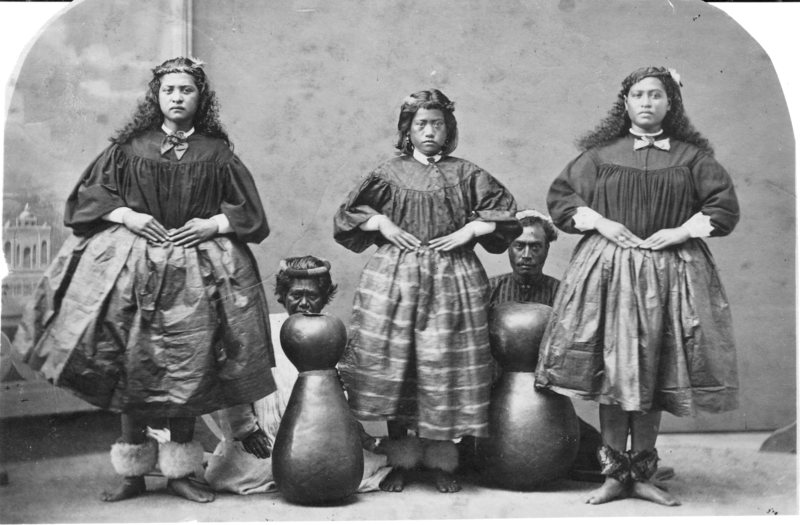
Hawaiian hula dancers photographed in J. J. Williams’s photo studio, circa 1885. The art form was suppressed for many years but is now celebrated around the world.

I was thinking recently that I’d love to learn some new dance forms. I took lots of ballet as a kid, and I keep reading that dancing is good for your health when you’re older. Essentrics, an exercise program I love, has taught me to focus on moves that are beneficial, not contorted. So what kind of dance would be good? Someone I know teaches salsa. Should I try that?

The following article got me wondering if hula might be good for me.

Ligaya Malones writes at Atlas Obscura about Hawaiʻi’s Merrie Monarch hula festival, “arguably the most prestigious event of its kind.

“Every spring, thousands of hula fans descend upon the Hawaiian town of Hilo and line the bleacher seats at Edith Kanaka’ole stadium. Thousands more across the islands — those unable to make it to Hilo themselves — watch live broadcasts on their televisions or computer screens. All these people are showing up and tuning in for the beloved Merrie Monarch Festival, sometimes referred to as ‘the Olympics of hula.’ …

“The three-day competition is part of several week-long events held throughout Hilo, home of Merrie Monarch since 1963. … Much credit is given to King Kalākaua, the last of Hawaiʻi’s kings, for reclaiming hula’s place in Hawaiian society. He was elected to the throne in the 1870s by the Hawaiian legislature, and often hosted hula-filled celebrations, including at his coronation. Merrie Monarch was Kalākaua’s endearing nickname and it is his contribution to hula that the competition honors every year.

“ ‘It’s electrifying,’ says Robert Ke’ano Ka’upu IV, who grew up in Hilo. Ka’upu has participated in the invitation-only competition for the last 30 years as a spectator, dancer, chanter, costumer, and now as kumu hula. … ‘I don’t get excited like this for any other competition,’ he says.

“During the festival, every inch of a performance is scrutinized. Dancers are evaluated and earn points for the way they enter and exit the stage, their facial expressions, posture, costume, lei, and adornment, says Ka’upu. However, the bulk of scoring is placed on the kumu’s interpretation of a song, known as a mele, and how well dancers interpret their kumu’s vision of the performance.

“To assist in deliberations, every competing group provides judges with a fact sheet that corresponds to each performance. These fact sheets, which are due before the competition, explain everything from a mele’s background to the meaning of the lei that dancers wear ‘so [the judges] get a better understanding of what each halau is doing,’ says Ka’upu. He adds that his halau will submit more than 70 pages of fact sheets to the judging panel for the competition this year. Judges bestow high scores to those who best personify technical excellence, and ultimately the expression of Hawaiian identity through chant and dance. …

“Hawaiian culture existed without the written word until western contact, so Hawaiians passed down knowledge orally and through dance. Through chant and movement, hula narrates place; honors goddesses and gods, such as Pele, goddess of fire; celebrates nature’s surroundings, from birds to waterfalls; and records genealogy and human emotion. ‘Kaulilua,’ for example, is one of Merrie Monarch’s most performed ancient hulas. The mele likens a woman to the island of Kauaʻi’s verdant Mount Waiʻaleʻale. …

“As Western influence grew and Hawaiʻi’s fate approached annexation and eventual U.S. statehood, so did the need for local manpower to fuel its new sugar economy. In 1858, missionaries with a keen interest in sugar’s profits pursued legislation to suppress hula even further, citing lethargy in sugar cane fields, promiscuity, and attrition from Sunday service. Records show a code of conduct published in 1859 required a license for ticketed, public hula performances. Yet hula persisted under the mesh of legal restrictions and moral shaming. Hawaiians still danced, particularly in more rural areas where government oversight trickled, missionary presence was scarce, and police all the more so. ‘Hula was never lost,'” says Dr. Taupouri Tangarō, director of Hawaiian culture and protocols at University of Hawaiʻi at Hilo.

For more on the competition and for more-contemporary hula photos, check out Atlas Obscura.

Read Full Post »

Photos: Niijang Xyaalas Productions
Actor Tyler York performing in
SGaawaay K’uuna. Actors had to learn a vanishing language in order to understand their lines in this film about one of Canada’s First Nations.

We’ve had a number of posts about vanishing languages, languages spoken by few people because younger generations are choosing to (or be forced to) speak a language used more widely. Nowadays it’s usually English that leads to not only the loss of a native language but the way of life it represents. As Brian Friel said in his play Translations, about the Irish language and culture, “it can happen that a civilization can be imprisoned in a linguistic contour which no longer matches the landscape of fact.”

Dalya Alberge wrote in March at the Guardian about a new film shot in a disappearing language.

“Plenty of films are somewhat incomprehensible, but a forthcoming movie is in a language that only about 20 people in the world can speak fluently. With subtitles, audiences will be able to understand a feature film titled SGaawaay K’uuna, translated as Edge of the Knife. …

“It is in two dialects of the highly endangered Haida language, the ancestral tongue of the Haida people of British Columbia. It is unrelated to any other language, and actors had to learn it to understand their lines.

“The film is playing an important role in preserving the language, its director Gwaai Edenshaw said. He told the Guardian:

‘I know that, if our language is this far gone, statistically it’s supposed to be over. But that’s not something that we’re willing to accept.’

“The Haida are an Indigenous First Nations community whose traditional territory is Haida Gwaii (formerly Queen Charlotte Islands), an archipelago of forested islands off the west coast of Canada.

“Edenshaw said most of the fluent Haida speakers were in his Haida Gwaii homeland. … He added that the community generally lives off the sea and makes dugout canoes and houses from local red cedars. Noting that their numbers were ravaged by smallpox and other diseases in the 19th century, he said a former population of tens of thousands has dwindled to a few thousand today. …

“More than 70 local people worked on the production, with Haida speakers taking incidental roles, weavers creating the costumes and other craftspeople making props. … It is part of a wider push to preserve the Haida language, including a new dictionary and recordings of local voices. …

“2019 is Unesco’s Year of Indigenous Languages, ‘to preserve, support and promote’ them worldwide. Mark Turin, associate professor of anthropology at the University of British Columbia and a specialist in endangered languages, told the Guardian that about half of up to 7,100 languages worldwide were ‘severely endangered’ and would likely cease to be used as everyday vernaculars by the end of this century unless action is taken. …

“He pointed to recent research that shows a correlation between indigenous language sustainability and decreased youth suicide within indigenous communities: ‘Speaking your indigenous language [has] public health implications.

” ‘This film – which I’ve watched and loved – has done something that I don’t think I’ve ever seen before, using a feature movie as a process of language revitalisation.’

More here.

Actors in a film based on a legend of the Haida people of British Columbia had to learn the Haida language to understand their lines. The movie has subtitles.

Read Full Post »

« Newer Posts - Older Posts »