Feeds:
Posts
Comments

Posts Tagged ‘postaday’


I had an awfully nice lunch yesterday, and I’d like to tell you about it. It involved two nonprofits — the mostly Caucasian conservation group Trustees of Reservations and the mostly African American community-outreach enterprise called Haley House.

The trustees had a really great idea recently to do meaningful art installations on a couple of their properties and chose one next to the Old Manse in Concord. The Old Manse is most often associated with 19th Century novelist Nathaniel Hawthorne, but the grandfather of Ralph Waldo Emerson was also a resident and saw the historic events unfold at the North Bridge on April 19, 1775.

Artist Sam Durant wanted to draw attention to the presence of slaves in the early days of Concord and launch a discussion, so he constructed a kind of big-tent meeting house, with a floor made of the kinds of materials that might have been in slave buildings.

The Trustees conferred with him on a series of “lyceums” that might bring races together at the site. They decided that at the first one, they would encourage races to break bread together and talk about food traditions.

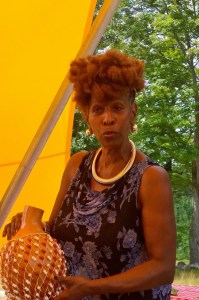
From Haley House in Roxbury, they brought in a chef, a beautiful meal, and singer/educator/retired-nurse Fulani Haynes.

I ate a vegan burger, sweet-potato mash, very spicey collard greens and wonderful corn muffins. Also available were salad and chicken.

Haynes sang a bit and talked about the origins of Haley House, how it helps low-income people and ex-offenders and local children, teaching cooking and nutrition and gardening, among other things. She invited attendees to tell food stories from their early years, and several brave spirits stood up.

That participatory aspect of the activities helped to reduce the impression that African Americans were making entertainments for a mostly white audience (art, food, music entertainments).

I loved the whole thing and learned a lot. (For example, Grandpa Emerson had slaves living upstairs, and “the embattled farmers” who “fired the shot heard ’round the world” were able to go marching off because slaves were working the farms. I really didn’t know.)

African American artifacts are on display next door at the Old Manse. The art installation will be up until the end of October 2016.

More here.

Photos: Artist Sam Durant offers the crowd a new lens on history. The chef from Haley House keeps an eye on the African American cuisine. Fulani Haynes demonstrates how a food can become an instrument.
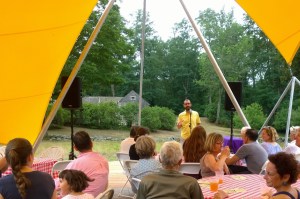
081316-artist-Sam-Durant-at-installation-picnic

081316-Fulani-Haynes-sings-in-Old-Manse-field


081316-Haley-House-chef-and-corn-muffins

Read Full Post »

Here’s a guy who didn’t just ring his hands when he learned that a magnificent butterfly species was endangered in his part of California; he decided to do something about it.

Zachary Crockett reports at Vox, “It begins its life as a tiny red egg, hatches into an enormous orange-speckled caterpillar, and then — after a gestation period of up to two years — emerges as an iridescent blue beauty. Brimming with oceanic tones, the creature’s wings are considered by collectors to be some of the most magnificent in North America.

“For centuries, the California pipevine swallowtail — or, Battus philenor hirsuta — called San Francisco home. As development increased in the early 20th century, the butterfly slowly began to disappear. Today it is a rare sight.

“But one man’s DIY efforts are starting to bring the butterfly back.”

Tim Wong, a 28-year-old aquatic biologist at the California Academy of Sciences, tells Crockett, ” ‘I first was inspired to raise butterflies when I was in elementary school … We raised painted lady butterflies in the classroom, and I was amazed at the complete metamorphosis from caterpillar to adult.’ …

“Years later, he learned about the pipevine swallowtail — which had become increasingly rare in San Francisco — and he made it his personal mission to bring the butterfly back.

“He researched the butterfly and learned that when in caterpillar form, it only feeds on one plant: the California pipevine (Aristolochia californica), an equivalently rare flora in the city.

” ‘Finally, I was able to find this plant in the San Francisco Botanical Garden [in Golden Gate Park],’ Wong says. ‘And they allowed me to take a few clippings of the plant.’

“Then in his own backyard, using self-taught techniques, he created a butterfly paradise.”

Read more here. It sure takes persistence.

Here’s hoping an elementary school project in 2016 will lead to the rescue of another endangered species down the road.

Photo: Tim Wong (@timtast1c)

Read Full Post »

I learn a lot from well-researched murder mysteries set in foreign lands. And ever since Kate’s Mystery Books got me hooked on Eliot Pattison’s The Skull Mantra, the nomads in the mountains of Tibet have intrigued me.

That is why I loved Diane Barker’s photographs at the Global Oneness Project, which creates beautiful “Stories of the Month” about endangered cultures. (Maybe you saw my post on saving a language, here.)

For the photo collection on the Dropka, Barker writes, “Tibet has the youngest and therefore some of the highest mountains on earth. Journeying there, I have found a landscape of awesome beauty with the average altitude being 14,000 feet, an extreme and savage climate. It strikes me that it takes a tough and resilient people to flourish in these conditions, and also that perhaps the vastness and solitude of the landscape has encouraged Tibetans’ natural bent for visionary mysticism and unique brand of Buddhism.

“I have been photographing Tibetans for a number of years — deeply inspired by a culture that places spirituality at the heart of life. I have been most moved by Tibet’s Drokpa, or nomads, who until recently comprised an estimated 25 percent to 40 percent of the Tibetan population. …

“On trips to Tibet from 2000 to the present, I have been privileged to stay with nomad families in Amdo and Kham in eastern Tibet, and have found myself totally smitten by their wild earthiness and independent spirit as well as their friendliness, hospitality, and sense of fun. The nomad women, particularly, have impressed me, holding life together and doing most of the work. …

“Traditionally, the Tibetan nomads were very free, forming tribal communities to protect and support each other in their harsh environment where the major threats included weather, disease, bandits, wolves, or snow leopards. But this beautiful earth-based way of life is dying …

“From 2006 on, I have seen fewer nomadic encampments and the land in many areas has an empty, abandoned feeling. … I sense that the loss of the Drokpa way of life will have impacts beyond what we can imagine. As rangeland ecologist, Daniel Miller, writes …  ‘Who will pass this indigenous knowledge of the landscape on to the next generation if nomads are settled in towns?’ ”

More explanation, plus Barker’s amazing photos here.

Photo: Dropka.org

Read Full Post »

This story has received coverage in a bunch of different venues, but I caught it on WNYC’s the Takeaway, with John Hockenberry, on my drive home from Providence today. Just had to share it.*

“General Electric’s CEO announced that all new hires, whether or not they’re working in tech, will now be required to know how to code. New York public schools are also introducing mandatory computer science classes into their curricula.

“These initiatives seem to indicate that coding is the key to getting hired and the panacea to all employment problems, and as the needs of the U.S. job market shifts, people are putting that theory to the test.

“Coal miners in particular have suffered the brunt of the changing job market. With 40 percent fewer jobs than in 2012, coal miners are seeking out second jobs to support their families, and many have turned to coding.

Amanda Laucher, co-founder of Mined Minds, a free computer coding training program in Waynesburg, Pennsylvania, is helping struggling coal miners in her area. Click on the ‘Listen’ button.”

I loved that Laucher told Hockenberry she and co-founder Jonathan Graham were “having a blast.” They didn’t feel like the free service they are self-funding was even a chore. She added that the support of the community made it all possible.

PBS had a bit more background, here:

“When tech consultant Amanda Laucher realized her brother in Greene County, Pennsylvania, the third largest coal-producing county in the country, was at risk of losing his job as a coal miner, she and her husband, Jonathan Graham, decided to help. They began driving about 500 miles from Chicago every weekend to teach him and others in the community how to code.

“Laucher and Graham said they saw an opportunity to wean Greene County off an economy that is heavily dependent on energy. They recently relocated to Waynesburg, Pennsylvania, and co-founded Mined Minds, a nonprofit that offers free coding classes to laid-off coal miners and other unemployed workers.” Oh, my. Bless their hearts!

*Update May 12, 2019: Uh-oh. Read about an unfortunate outcome, described at the New York Times, here. I still think it was a worthy effort.

Read Full Post »

080716-steep-slippery-bluffs


In order to get down to the beach for a good shot of the structures I’ll call “War of the Worlds,” I had to negotiate a very steep, very slippery path that reminded me of my age at every step.


You are old, Father William,” the young man said,
“And your hair has become very white;
And yet you incessantly stand on your head —
Do you think, at your age, it is right?”

“In my youth,” Father William replied to his son,
“I feared it might injure the brain;
But now that I’m perfectly sure I have none,
Why, I do it again and again.” …

I thought of The War of the Worlds when I took the photo of this, the first, deep-water windmill in America and its giant parent, which is assembling the next four windmills.

080716-war-of-the-worlds

080716-tower-of-beach-stones


080716-tide-pools

080716-marine-mobile


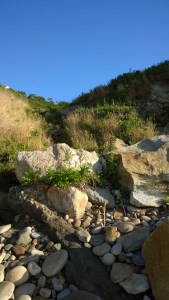
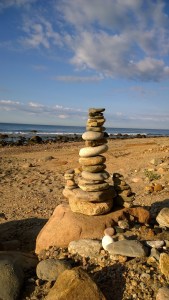
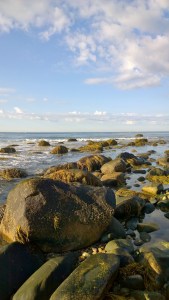
The beach on the south side of the island is beautiful, and since I don’t often scramble down there, I took photos of the tide pools and one of the many towers people build with smooth beach stones.

Moving right along, there’s a mobile of sea creatures that I made in an art class with my oldest grandchild. He made one, too: a jellyfish, a shark, a whale (he chose to make an orca) and a sea turtle.

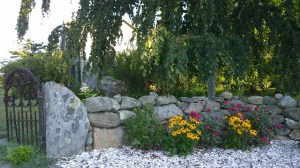
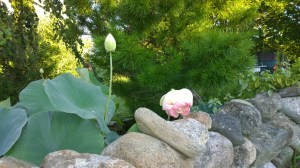
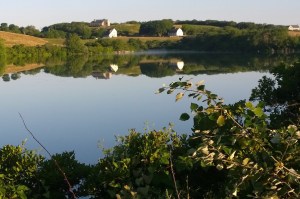
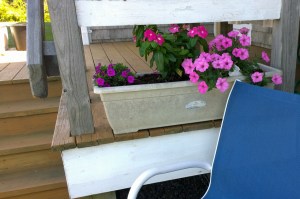
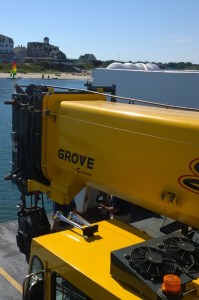
I also have shots of a quiet “tug hole” (a peat bog), reflections of houses on the far side of Fresh Pond, a lotus, flowers against a stone wall, a box of pink impatiens by the outdoor shower, a monster crane getting delivered to Paradise, and magnificent city shadows.

080616-John-E-tughole

080416-open-gate-Lakeside


080416-lotus-on-Lakeside

080416-Fresh-Pond-reflections


080416-outdoor-shower-impatiens

080316-giant-crane-sails-in


080316-building-shadows-Providence

Read Full Post »

Here’s a follow-up to a 2013 post about words and phrases that don’t have an equivalent in other languages. (“In Sweden, mangata is the word for the roadlike reflection the moon casts on the water. In Finland there’s a word for the distance reindeer can travel comfortably before taking a break: poronkusema.”)

Now Maria Popova at Brain Pickings has posted about a book that offers more on the subject. It’s Lost in Translation: An Illustrated Catalog of Beautiful Untranslatable Words from Around the World.  It’s by Ella Frances Sanders, the artist who did the illustrations that were in my original post.

“Beautifully elusive words is what writer and illustrator Ella Frances Sanders, a self-described ‘intentional’ global nomad, explores in Lost in Translation,” reports Popova. …

“From the Japanese for leaving a book unread after buying it to the … Italian for being moved to tears by a story to the Welsh for a sarcastic smile, the words Sanders illustrates dance along the entire spectrum of human experience, gently reminding us that language is what made us human.

“In addition to the charming illustrations and sheer linguistic delight, the project is also a subtle antidote to our age of rapid communication that flattens nuanced emotional expression into textual shorthand and tyrannical clichés. These words, instead, represent not only curiosities of the global lexicon but also a rich array of sentiments, emotions, moods, and cultural priorities from a diverse range of heritage.”

I’m remembering that a while back, Erik explained a few Swedish idioms to me (something about an owl in the moss?), and I tried them out on his parents when they visited. I could tell at once from their blank looks that the phrases were indeed untranslatable!

Art: Ella Frances Sanders
An illustration of an untranslatable Norwegian word.

Read Full Post »

Early last month, an unusual tribute took place at Waterloo Station, London. How I would have liked to be there and see return to life the soldiers who died in the devastating Battle of the Somme in World War I!

Charlotte Higgins at the Guardian describes what the event was like.

There “were about 20 young men, immediately conspicuous because they were dressed in the dull-green uniforms of the first world war. They were just there: not speaking, not even moving very much. Waiting, expressionless, for who knows what.

“A small crowd gathered, taking photographs. A woman caught the eye of one of the men. She tried to speak to him. Without speaking or dropping his gaze, he pulled a small card out of his pocket and handed it to her.


‘Lance Corporal John Arthur Green,’ it read. ‘1st/9th Battalion, London Regiment (Queen Victoria’s Rifles). Died at the Somme on 1 July 1916. Aged 24 years.’

“There were similar scenes across the UK. … They gathered on the steps of the Gallery of Modern Art in Glasgow. They smoked roll-ups outside Bristol Temple Meads and marched, metal-tipped boots ringing, through Manchester Piccadilly. They stood in clumps by the entrance to Queen’s University, Belfast, and sat on the market cross in Lerwick, Shetland. …

“The event, which unfolded without advance publicity, can now be revealed as a work by Jeremy Deller, the Turner prize-winning artist …

“The participants were a volunteer army of non-professional performers, including social workers, farmers, security guards, farmers, shop assistants, students, labourers, flight attendants and schoolboys. All were sworn to secrecy, and rehearsals took place across the country over the past months. Deller worked with Rufus Norris, the artistic director of the National Theatre in London, and theatres throughout the UK to train the volunteer army.” More.

Photo: Alicia Canter for the Guardian
Soldiers at Waterloo station, London. Each represents a real person who died in the Battle of the Somme.

Read Full Post »

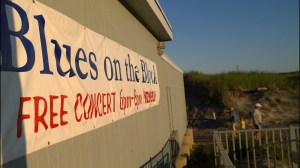
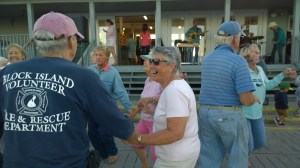
There’s just one thing you probably can’t figure out from this picture story: what the guys are singing …

“All my exes live in Texas/ It’s why I hang my hat in Tennessee.”

160803_-Blues-on-Block

080316-Truck-Stop-Troubadors


080316-crowd-at-beach-concert

080316-beach-picnic


080316-dancing-on-beach

Read Full Post »

After a father’s death, the family tries to find homes for his perfect metal miniatures.

Isaac Feldberg writes at the Boston Globe, “On any gift-giving occasion in the Megerdichian household, the most exciting presents to unwrap were always both the smallest and, funnily enough, the heaviest.

“Some boxes held metal miniature re-creations — a brass violin with horse-hair strings and a latched case; an aluminum piano music box that played ‘Raindrops Keep Falling on My Head.’ Others concealed stainless-steel jewelry, intricately detailed, immaculately formed. And others still contained children’s toys, like steel tractor-trailer sets to be nudged along the wooden floors of their Cambridge home.

“ ‘They were 14 ounces of love, 1 ounce of metal,’ says Robert Megerdichian, 63, of the tiniest pieces his late father, Abraham, bestowed upon the family throughout his lengthy career as a machinist. ‘He started off with a solid block of metal, brass, aluminum, copper, or stainless steel, and he gouged away, like a sculptor would, like an artist would, to create all of these objects.’

“Megerdichian’s description of his father as an artist has recently earned official validation, with museums across New England displaying an array of Abraham’s pieces. The Attleboro Area Museum of Industry, the Lynn Museum, and Boston’s Museum of Science all currently house some of his metal miniatures. Additional museum exhibits are set to open in the fall, including at Connecticut’s New Britain Industrial Museum. For more than half a century, however, Abraham’s creations were reserved for his loved ones. …

” ‘It was important to him to make things that made the people he cared for happy,’ ” said his son.

Read about Abraham’s history here. A great example of what the intersection of love and skill can give the world.

Photo: David L. Ryan/Globe Staff
Robert Megerdichian looks over a miniature Hoover vacuum cleaner crafted by his father.

Read Full Post »

Today, our anniversary, I’m remembering some of the novelties we encountered as we toured Scotland on our honeymoon.

For example, I found I really loved scotch eggs, having never had them before. I remember making them a few times in the deep-fat fryer when we got home. (FYI: they are hard-boiled eggs wrapped in sausage.)

Here’s a funny article by way of an environmentalist on twitter (@tveitdal) about a “scotch egg company” that “claims to have cracked the problem of eggshell waste.”

Sarah Shearman writes at inkl.com, “Leicester-based egg processing plant Just Egg hard boils and peels 1.5m eggs a week for snacks such as egg mayonnaise and Scotch eggs, creating mountains of shells to dispose of. It’s a dilemma the company’s owner, Pankaj Pancholi, has been keen to crack since he launched the business 14 years ago.

“At home, eggshells can easily be composted or sprinkled on flower beds as a slug deterrent or soil enhancer. But for industrial egg producers, shells have to be disposed of in landfill because the waste egg attached to them rots quickly, causing a smelly by-product.**

“It costs Pancholi around £50,000 a year to dispose of them, a significant sum for a company with [revenue] of £4.2m last year.

“In 2012, Pancholi teamed up with Prof Andy Abbott and scientists at Leicester University to find a cost-effective, sustainable way to recycle the shells.

“Eggshell is made of calcium carbonate, like chalk, with a hard-wearing, crystalline structure. Since chalk is often used as a filler to reinforce plastic, Abbott hatched a plan to do the same with eggshell powder.

“Abbott’s department set to work designing a plant to make this eggshell powder. Because Just Egg has to dispose of eggshells swiftly to avoid the rot, the eggshell processing plant was built as an extension to the existing factory, with the eggshells passing through on a conveyor belt to be processed.

“The eggshells are chopped up with blades and washed and treated with a water-based solution to remove any remaining egg protein. The egg membrane (the clear film lining the eggshell) is also retained, as the Leicester scientists are exploring potential uses for it, such as wound dressings. …

“Each egg produces about 15g of shell and the team has been stockpiling the powder, awaiting the first order. Abbott has been spreading the word about the product and says there has been interest from ‘hundreds’ of plastics companies.”

** Oh, my goodness. Here is where I remind you that in 7th grade I created an amazing egg-breaking machine with Joanna Pousette-Dart and left it in the science classroom, forgetting I needed to take it home. Rot was definitely an issue.

More here.

Photo: Dan Matthews
Just Egg boils and peels 1.5m eggs a week. It used to cost £50,000 a year to dispose of the shells. Now the company pulverizes the shells and expects to sell the powder to plastics companies.
 

Read Full Post »

Do you know about the “Great Animal Orchestra“? Rachel Donadio at the NY Times has the story.

“The bioacoustician and musician Bernie Krause has been recording soundscapes of the natural world since 1968, from coral reefs to elephant stamping grounds to the Amazonian rain forest.

“Now, Mr. Krause’s recordings have become part of an immersive new exhibition at the Cartier Foundation here called ‘The Great Animal Orchestra.’ Named after Mr. Krause’s 2012 book of the same title, the show opens on Saturday and runs through Jan. 8, [2017].

“At its heart is a work by the London-based collective United Visual Artists, who have transformed Mr. Krause’s recordings of the natural world into 3-D renderings. Imagine stepping into a soundproofed black-box theater whose walls spring to life with what look like overlapping electrocardiograms, representing different species’ sounds. …

“The installation includes recordings Mr. Krause made in Algonquin Park in Ontario, where he found himself caught between two packs of wolves; in the Yukon Delta, a subarctic area in Alaska, where birds from different continents converge; and in the Central African Republic, where he heard monkeys. He also captured the cacophony of the Amazon, and whales off Alaska and Hawaii. …

“Mr. Krause is a polymathic musician who performed with the folk group the Weavers and helped introduce the Moog synthesizer to pop music — including songs by the Doors and Van Morrison — and film scores. He hears natural sounds with a studio producer’s ear.”

Read more here about Krause and his efforts to get the word out on the disappearing habitats of his featured animals.

This article inspires me to pay better attention to the music of the natural world on my morning walks. So much beauty goes right over my head.

Photo: Tim Chapman
Bernie Krause on St. Vincent Island, Fla., in 2001.
 

Read Full Post »

Sometimes I get blog ideas from Facebook, which is one reason I can’t see myself pulling out despite all the irrelevant, unwanted clutter there.

Former colleague Scott G. recently posted a curious item on Facebook about turning pineapple waste into leather — real leather, not “fruit leather.” It’s much better for the environment than animal-based leathers and more appealing to sustainability-conscious consumers than petroleum-based ones.

Adele Peters at FastCoexist says that Carmen Hijosa got the idea for a new, sustainable industry on a visit to the Philippines years ago. But first she needed a PhD.

“When leather expert Carmen Hijosa visited the Philippines to consult with the leather industry there, she discovered two big problems: The leather was poor quality, and producing it was bad both for the local environment and the people involved.

“But as she traveled around the country, she had an epiphany. The Philippines grows a lot of pineapples — and ends up with a lot of wasted pineapple leaves. The leaves, she realized, had certain features that might make it possible to turn them into a plant-based leather alternative. …

“She also looked at other local plants, such as banana fibers and sisal. But only pineapple fibers were strong and flexible enough to handle the manufacturing process she had in mind.

“Hijosa left her work in the traditional leather industry and spent the next seven years at the Royal College of Art in London, developing the material into a patented product while she earned a PhD. Now running a startup — at age 63 — she’s ramping up manufacturing of her pineapple-based leather, called Piñatex. …

“Her startup, Ananas Anam, has built its production from 500 meters to 2,000 meters, and [by August], she expects the next batch to be around 8,000 meters. But as the company’s capacity grows, demand is already outpacing supply. Companies like Puma and Camper have made prototypes with the material, and others are already using it.”

What an impressive woman! More here.

Photo: FastCoexist
Because pineapple leaves would normally be wasted, turning them into leather, is an extra source of income for farmers.

Read Full Post »

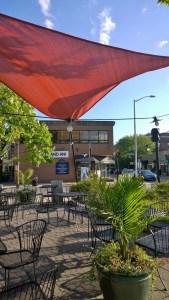
The first two photos today are from Wayland Square in Providence. My husband and I thought the shade covering at l’Artisan looked like something we could use at our house, but by the time we walked back from dinner at the Salted Slate, the pretty covering had gotten all twisted up by the wind.

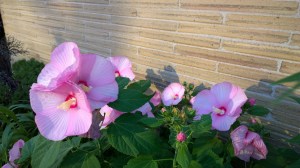
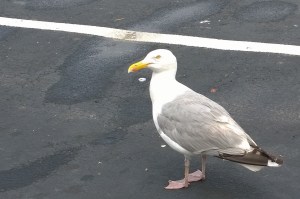
The flowers casting early shadows are Marsh Mallows. The little frog in New Shoreham also cast a long shadow. In the next photo, perhaps you can tell that the herring gull is looking for more of my sandwich.

There’s a sliver of moon above the hanging basket. Hope you can see it. Next is a sample of New Shoreham’s lovely fields and stone walls.

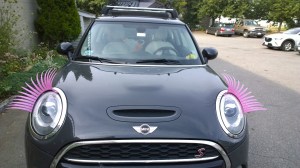
My older granddaughter wanted to know if the car with pink eyelashes was mine. No, but maybe I should think about getting eyelashes for the Fusion.

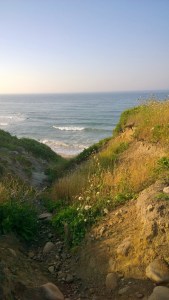
One of my favorite views is looking down the bluffs to the ocean. Often there are surfers riding the waves at this spot. Finally, see how my youngest grandchild cooks breakfast for me in the playhouse.

072716-Wayland-Square-Providence

072516-marsh-mallows-Wayland-Sq-Providence


072316-New-Shoreham-frog

072916-Pt-Judith-herring-gull


072616-moon-and-hanging-baskets

072316-stonewall


072816-car-with-pink-eyelashes

072816-playhouse-with-Mormor


072316-path-to-the-sea

Read Full Post »

Love this story by Leigh Vincola at EcoRI News.

“The Harvest Kitchen Project is one of the many arms of Farm Fresh Rhode Island that keeps local food circulating in our communities. The program takes area youth, ages 16-19, who are involved with juvenile corrections, and puts them to work making sauces, pickles and other preserves.

“The teenagers participate in a 20-week job-readiness program that prepares them for employment in the food industry. The program touches not only on kitchen skills but the on the many aspects of work in the culinary industry, from sales and customer service to local farm sourcing to teamwork and cooperation. …

“For the past several years, Harvest Kitchen has operated out of a commercial kitchen space in Pawtucket.”

But when Pawtucket Central Falls Development (PCF) “approached Farm Fresh with its rehabilitation plan for 2 Bayley St., a downtown [Pawtucket] multi-use building that would include affordable housing, retail space and job-training opportunities, the match seemed perfect.” More  at EcoRI, here.

I’ve been buying Harvest Kitchen’s applesauce at the Burnside Farmers Market, and I’m being completely honest when I say it’s the best applesauce I’ve had in years. That’s partly because I love chunks in my applesauce, but also because it’s sweet with no sugar added. If you return the empty jar, you get 25 cents back on the next jar.

Harvest Kitchen offers cranberry and strawberry applesauce, too. Other products include dried apple slices, peach slices in season, whole tomatoes, pickles with veggies, dilly beans and onion relish.

In addition to PCF, organizations that have helped to make this happen include Rhode Island Housing, RI Department of Children Youth and Families (Division of Juvenile Correction), Amgen Foundation, Fresh Sound Foundation, The Rhode Island Foundation and TriMix Foundation.

Find sales locations here.

Photo: FarmFreshRI

Read Full Post »

The Atlantic magazine says Estonia is the new Finland, meaning that it is doing a bang-up job with quality education for all. Educating the poor turns out to be a salient strength of the system.

Sarah Butrymowicz writes, “In 2012, Estonia’s 15-year-olds ranked 11th in math and reading and sixth in science out of the 65 countries that participated in an international test that compares educational systems from around the world (called the Programme for International Student Assessment, or PISA).

“In addition to beating out western nations such as France and Germany and essentially tying Finland in math and science, Estonia also had the smallest number of weak performers in all of Europe, about 10 percent in math and reading and 5 percent in science.”

In comparison, the United States hovers in the middle of the pack.

“While there is less income inequality in Estonia than in the United States—and, with 1.3 million people, the country is significantly smaller—the Baltic nation also has its share of cultural diversity.

“When it achieved independence from the Soviet Union 25 years ago, Estonian became the official language and the language of school instruction. Yet about a fifth of its students come from families that still speak Russian at home, and they have historically lagged behind their native speaking counterparts on tests such as PISA. …

“Marc Tucker, president of National Center on Education and the Economy in Washington, D.C., visited Estonia last year to find out what they’re doing right. He said that after the fall of the Iron Curtain other former Soviet satellites, such as Hungary and the Czech Republic, transitioned to a system preferentially suited to the needs of its elites. Estonia, however, kept giving equal opportunities to students of all backgrounds. …

“There are many factors that may contribute to Estonia’s success on PISA beyond their focus on equality. Education continues to be highly valued. Teacher autonomy is relatively high, which has been shown to be related to better test scores. Teachers stay with the same students in grades one to three – or sometimes even up to sixth grade – allowing deep relationships to develop.”

Maybe we could learn something from this small Baltic state. Read more here about why Estonian students are so successful on tests and whether they are happy with the system and why the country is trying to encourage more individuality and creativity without losing rigor.

Photo: Ints Kalnins / Reuters
First graders take a computer class in Tallinn, Estonia.

Read Full Post »

« Newer Posts - Older Posts »