Feeds:
Posts
Comments

Posts Tagged ‘postaday’

Ron Finley is a man of humble ambitions. He aims to save the planet, beginning with urban gardeners. I heard an interview with him on America’s Test Kitchen as I was driving home today.

From his website: “Let’s grow this seed of urban guerrilla gardening into a school of nourishment and change. Help spread his dream of edible gardens, one city at a time. …

“In part of this effort, Ron is planning to build an urban garden in South Central LA that will serve as an example of a well-balanced, fruit-and-veggie oasis – called ‘HQ.’ Inspired by the idea of turning unused space such as parkways and vacant lots into fruitful endeavors, this garden and gathering place will be a community hub, where people learn about nutrition and join together to plant, work and unwind. HQ will create a myriad of jobs for local residents, and this plot of land will be a self-sufficient ecosystem.”

It all started, according to Ron, when he “wanted a carrot without toxic ingredients I didn’t know how to spell.” He began to plant food near his house, on a strip by a road.

“The City of Los Angeles owns the ‘parkways,’ the neglected dirt areas next to roads where Ron was planting. He was cited for gardening without a permit.”

After Ron “started a petition with fellow green activists, demanding the right to garden and grow food in his neighborhood … the city backed off.” More here.

When asked on America’s Test Kitchen if his gardens were not just about obesity and healthful eating but also about making neighborhoods more livable, Ron said he wanted to do that for the whole planet.

Read Full Post »

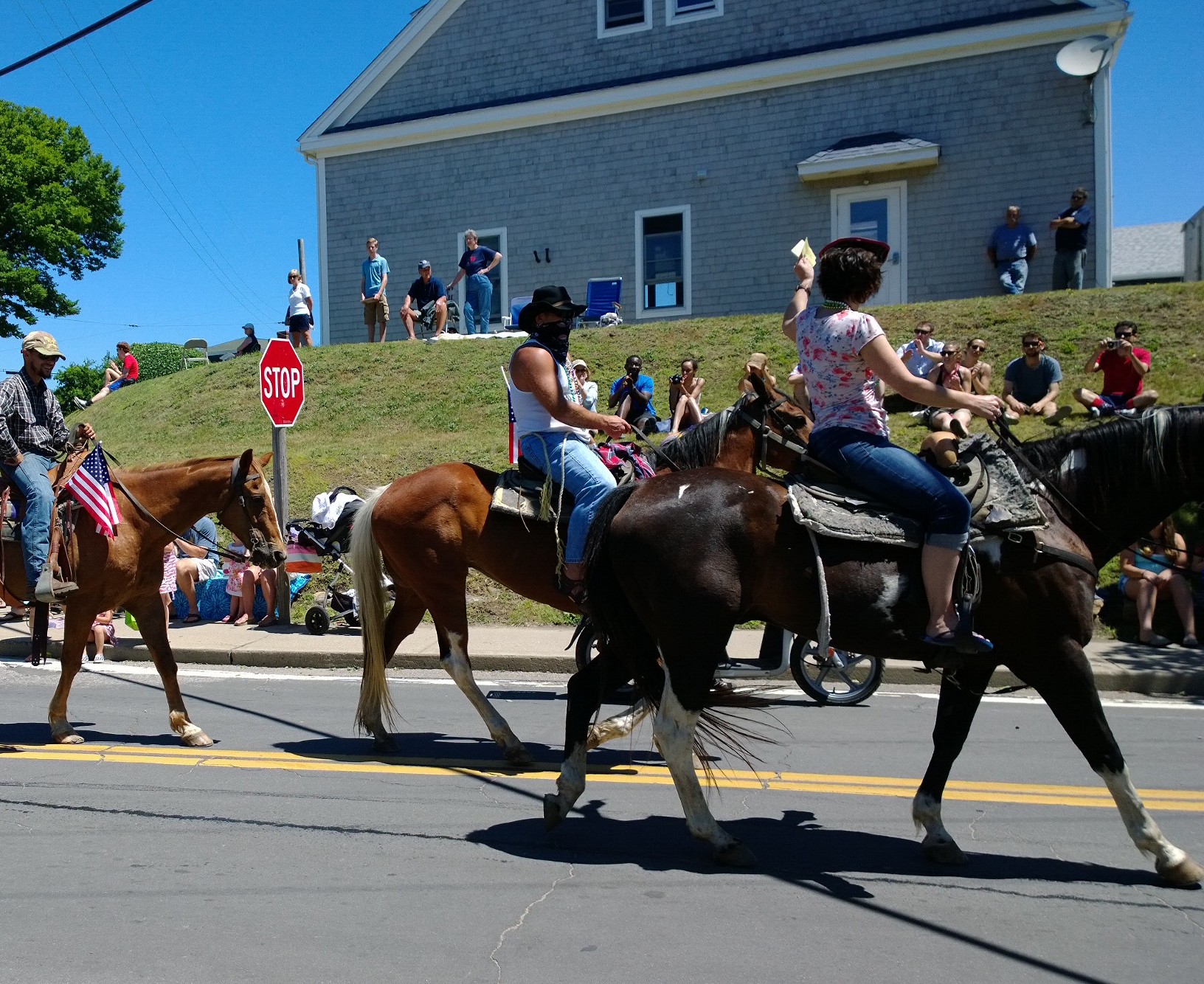
The tail of the hurricane socked us pretty hard on the Glorious Fourth, so the parade, the fire-police-and-rescue steak fry, and the fireworks were put off until the 5th.

Makes me wonder about how people felt on the 5th in 1776, realizing that they were in for it now. That it might not work.

The theme of this year’s parade was children’s books. There were at least two Cat In the Hat floats and two very differently conceived Hungry Caterpillar entries. I managed to to snap the Little Toot float — it’s always good to have a boat in an island parade.

This was Erik’s first Independence Day parade since he became a citizen, and the first that our two-year-old grandson really got into. He will need to brush his teeth especially well tonight. Only very sticky candy like Tootsie Rolls seemed to be tossed to the crowd.

watching-the-parade


fire-truck-in-parade


horses-in-the-parade


070514-fife-and-drum


Little-Toot-in-parade


Read Full Post »

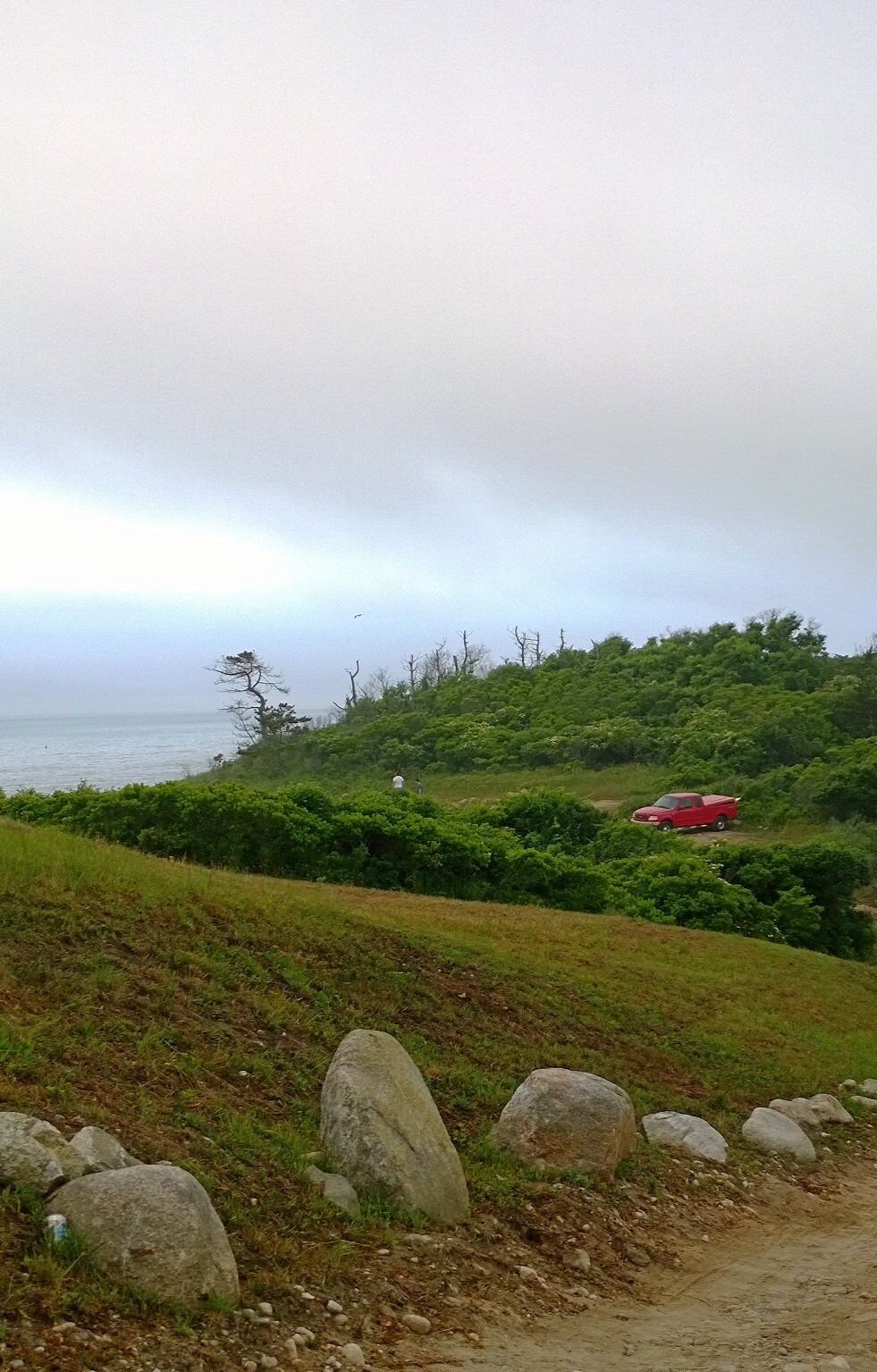
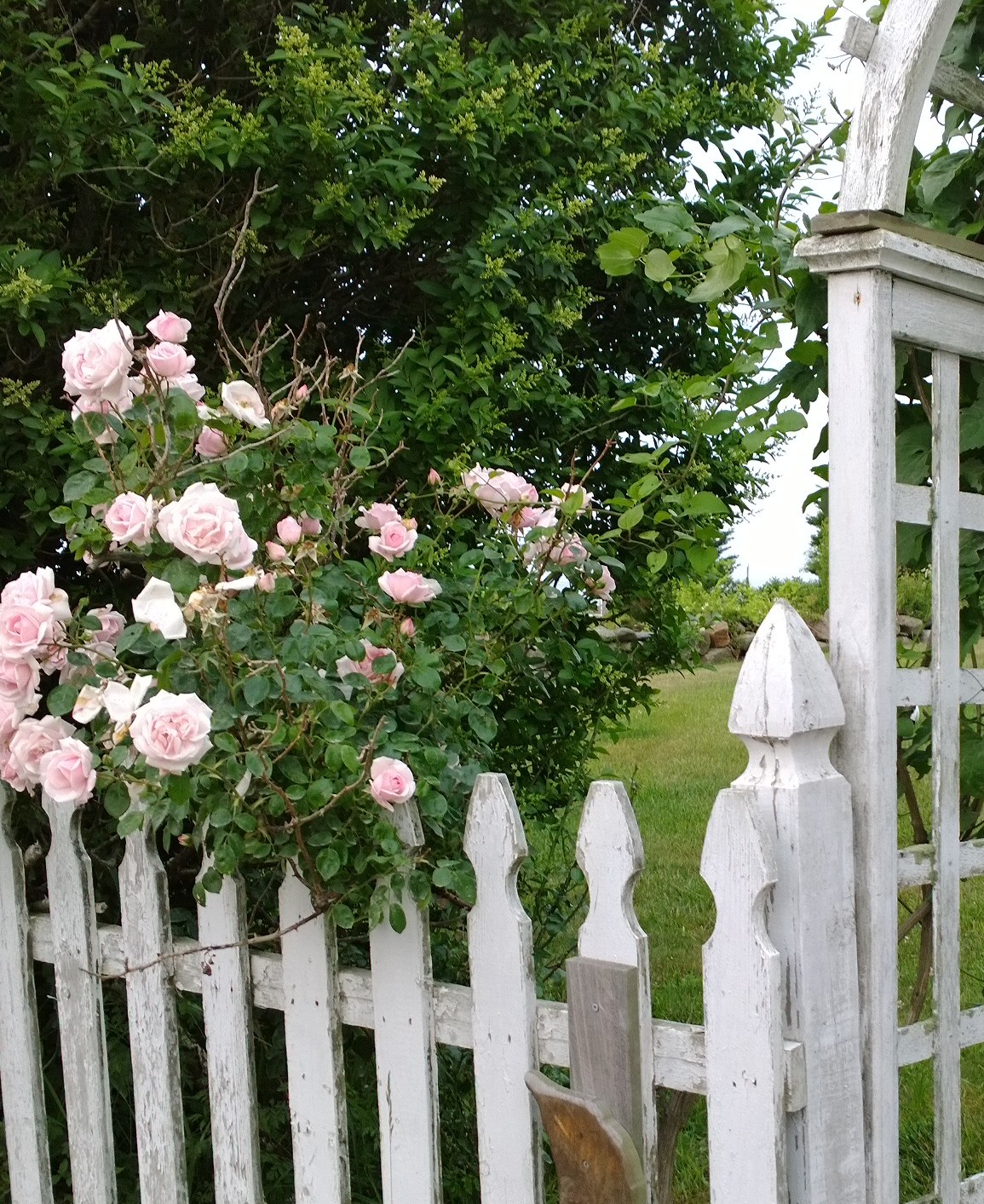
A few photographs. You’ll have to imagine the smell of honeysuckle and the bird calls.

Surfers took the red truck to the overlook to check the waves before the hurricane fringe hit, but they didn’t stay.

Can you read the sign at the garden supply store? Someone found it necessary to post under the hours, “Not open when closed.”

red-truck-of-the-serfers


honeysuckle


roses-july4-2014


many-shades-of-green


wayside-wild-pea


not-open-when-closed-sign


goose-and-garden-porch


garden-supply-store

Read Full Post »

I have decided that if Ireland ever names people as national treasures, it should include James J. Hackett of Moate.

Last night at the Kellys’ party, James clinked the glasses at the table and called everyone to attention. Then he recited Yeats’s poem “The Ballad of Father Gilligan,” preceding it with a little history and acting out all the parts.

The grandson of a man who taught Latin and Greek in a hedgerow school back in the dark days when the English forbade sending Irish children to school, James has taken it upon himself to preserve the culture. His ordinary conversation is a living history, and he is frequently dropping into poetry.

James’s book Days Gone By is written in the way he speaks when talking to friends or taking people on a tour of some ruin. Consider this sample.

“It was long past the witching hour when the poteen revellers came upon Kate resting on the puchann and in a most distressful state.* They took her along to the wake, where she related all her adventures. Great was the wonder and fear that was expressed at hearing this story, and needless to say, many a post mortem was held upon Kate Brambles’s account of the witches’ dance at the half way house in Ballylurkin Bog on the Hallow’een night that Tubbs Lanigan was waked.”

Recent chronicler of Ireland lore and customs Turtle Bunbury discovered James in Moate and has included him in one of his Vanishing Ireland books. Bunbury also features James on a Facebook page, which I hope to access as soon as Turtle accepts my friend request.

[Update: Turtle has just put my post on his page, here.]

You may recall that I blogged about James once before, here, at another time that he was visiting his Rhode Island cousin.

(*James says a “puchann” is a little hill in a bog.)

Photo: Suzanne’s Mom
James J. Hackett in New Shoreham. He made his own shillelagh of blackthorn. He also made one for John and mailed it to him with instructions on how to cure the wood.

070314-james-hackett


Read Full Post »

Here’s an update on the Wooly Pig farmers I blogged about in 2012. (See that here.) At that time, they were raising chickens in Connecticut. They have since joined forces with other young farmers and are now part of the Letterbox Farm Collective in Hudson, New York. If you have Facebook, that’s the best place to see their photos and learn what they are up to. (Click here.)

From the Letterbox Farm About page: “We are a group of people growing meals and medicine on shared land in the Hudson Valley. We take our time and listen.”

If you don’t have Facebook, you might enjoy the pictures at a Turnquist Photography post called “Young Farmers of the Hudson Valley.”

The photographer writes, “We were recently contacted by Chronogram Magazine, a tremendous monthly publication circulated in and around the Hudson Valley based out of Kingston, NY. They asked that we photograph some young farmers local to the Hudson area for an article being written for their September issue. … It was a true honor to be considered for this assignment, especially after meeting these amazing people who UNDERSTAND what it means to eat responsibly.

“My first stop was just outside of the Hudson city limits to Letterbox Farm Collective.” (Turnquist photos here.)

Letterbox farmer Nichki’s Aunt Sandra sent me a photo of a spring farmers market that the collective attended in Rhinebeck. I’m told they can hardly keep up with the demand from restaurants for duck eggs, rabbits, and quail.

Read Full Post »

In 2010, photographer Rose-Lynn Fisher published a book of remarkable images that captured the honeybee in an entirely new light. By using powerful scanning electron microscopes, she magnified a bee’s microscopic structures by hundreds or even thousands of times in size, revealing startling, abstract forms that are far too small to see with the naked eye.

Now, as part of a new project called “Topography of Tears,” she’s using microscopes to give us an unexpected view of another familiar subject: dried human tears.

Read more: http://www.smithsonianmag.com/science-nature/the-microscopic-structures-of-dried-human-tears-180947766/#UBkOIVzILZd8kaLc.99
Give the gift of Smithsonian magazine for only $12! http://bit.ly/1cGUiGv
Follow us: @SmithsonianMag on Twitter

In 2010, photographer Rose-Lynn Fisher published a book of remarkable images that captured the honeybee in an entirely new light. By using powerful scanning electron microscopes, she magnified a bee’s microscopic structures by hundreds or even thousands of times in size, revealing startling, abstract forms that are far too small to see with the naked eye.

Now, as part of a new project called “Topography of Tears,” she’s using microscopes to give us an unexpected view of another familiar subject: dried human tears.

Read more: http://www.smithsonianmag.com/science-nature/the-microscopic-structures-of-dried-human-tears-180947766/#UBkOIVzILZd8kaLc.99
Give the gift of Smithsonian magazine for only $12! http://bit.ly/1cGUiGv
Follow us: @SmithsonianMag on Twitter

A Smithsonian article by Joseph Stromberg about photographs of tears is resonant on so many levels one doesn’t know where to start.

Stromberg writes, “In 2010, photographer Rose-Lynn Fisher published a book of remarkable images that captured the honeybee in an entirely new light. By using powerful scanning electron microscopes, she magnified a bee’s microscopic structures by hundreds or even thousands of times in size, revealing startling, abstract forms that are far too small to see with the naked eye.

“Now, as part of a new project called ‘Topography of Tears,’ she’s using microscopes to give us an unexpected view of another familiar subject: dried human tears….

“Scientifically, tears are divided into three different types, based on their origin. Both tears of grief and joy are psychic tears, triggered by extreme emotions, whether positive or negative. Basal tears are released continuously in tiny quantities (on average, 0.75 to 1.1 grams over a 24-hour period) to keep the cornea lubricated. Reflex tears are secreted in response to an irritant, like dust, onion vapors or tear gas.”

Oh, but I knew that tears from different causes are different. I learned that from a fantasy I was exposed to at age 10, when the future star of stage and screen René Auberjonois, age 13, played the wicked uncle in a production of James Thurber’s The 13 Clocks.

The wicked uncle requires jewels to release his lovely niece, the Princess Saralinda, from captivity.

Although you really will get a kick out of reading the whole book, all you need to know for present purposes is from Wikipedia:  “Zorn and the Golux travel to the home of Hagga, a woman with the ability to weep jewels, only to discover that she was made to weep so much that she is no longer able to cry.

“As the realization that they have failed sets in, Hagga begins to laugh inexplicably until she cries, producing an abundance of jewels. Hagga informs them that the magic spell that let her cry tears was altered, so whereas ‘the tears of sadness shall last without measure, the tears of laughter shall give but little pleasure.’ Jewels from the tears of happiness return to the state of tears a fortnight after they were made.”

(Fortunately, that was enough time to trick the wicked uncle.)

Photo: Rose-Lynn Fisher/Craig Krull Gallery
“Tears of Timeless Reunion”

Read Full Post »
It’s not a completely new idea to put personal messages on a billboard, but I thought this iteration was especially fun.

Chris Pleasance writes at the Daily Mail, “With modern advertising boards showing video clips, messaging passersby and even interacting with viewers, it is difficult for a classic billboard to stand out.

“However, one board in Pennsylvania has been attracting attention after displaying odd slogans and messages as part of an art project.

“Jon Rubin, 50, and fellow academic Pablo Garcia contact an artist each month and ask them to write a message for their billboard, which is then displayed using heavy wooden letters.

“The notes, which have ranged from witty remarks to short poems and even two phone numbers, then stay up for a month before being replaced.

“One artist wrote the word ‘Poem’ in front of his phone number, then read verse to anyone who called or listened to poems they wanted to read to him. …

“While most of the submissions come by direct invitation from Jon or Pablo, they do occasionally take ideas via email, or directly from the internet.

“One of the most bizarre came from an 11-year-old girl who wrote: ‘Ideas for my new blog: Who invented tape, how were feelings discovered, when did “skinny” become fashionable?’ “

I especially like this one: “Think about all the hours forgotten plays were rehearsed.” I like it because I know it doesn’t matter that the plays are forgotten. It’s the rehearsing that counts.

More here.

Photo: Splash
Message by Charlie Humphrey

Read Full Post »

I need to ponder a bit before deciding how I feel about publishing books that don’t earn anything for the author and that cost the “buyer” only an unenforceable promise to make a donation to a charity.

I was discussing this with Asakiyume by e-mail this morning. She self-published the delightful Pen Pal and has often said she is more interested in getting people to read the book than in making a lot of money off it. But neither us feels that artists should be expected routinely to give away the fruits of their labors. (If they really want to, there are worthy groups like Artists for a Cause that can make it happen.)

Kathleen Burge describes the new publishing concept in today’s Globe. “When the Concord Free Press was just a radical idea with a one-title book list, founder Stona Fitch nervously pitched Wesley Brown, hoping to persuade the acclaimed author to let him publish Brown’s latest novel.

“ ‘You want me to give you this novel I’ve been writing for years,’ he recalls Brown saying. ‘You’re not going to pay me. And you’re going to give it away for free and hope that readers donate money to something else.’

“ ‘I said, “Wes, yeah, that’s pretty much it.” There’s this long pause and I’m waiting for something bad to happen. And he said, “I’m in.” ’ …

“Readers agree to give away money, in any amount: to a charity, a stranger on the street, or someone who needs it. Donations since 2008 total $409,250 — and that is just those reported back to the publisher. Readers are also asked to pass along the book once they are finished, so donations continue to multiply. …

Gregory Maguire , who wrote Wicked, the wildly popular novel that became a Broadway musical, saw a chance to free himself from his reputation as only a fantasy writer — the way he is promoted by his publisher, HarperCollins — and try a new kind of novel.

“After the book, a tragic farce titled The Next Queen of Heaven, debuted with the Concord press, his publisher paid him a very welcome advance to issue a second — much larger — edition of the work.”

More here.

I can see how this rather Utopian approach could work for an established writer who wants to try a new genre. But the big hurdle for new writers is publicity. They can’t generate their own very well. How do they get into the right hands once they are published?

Photo: Lane Turner/Globe Staff
The Concord Free Press gives away books for free to readers who will donate to a charity or person in need.

Read Full Post »

Weather like this is a reminder that simple pleasures are often the best.

A great blue heron flying over Thoreau Street. Buying three Vietnamese fresh rolls and chai tea after tai chi class. Listening to the smart Hillbilly at Harvard program in the car. Sitting on the porch dipping crackers into the famous guacamole from the shop around the corner. Reading in the bath the first Martin Beck mystery by the Swedish partners Maj Sjöwall and Per Wahlöö.

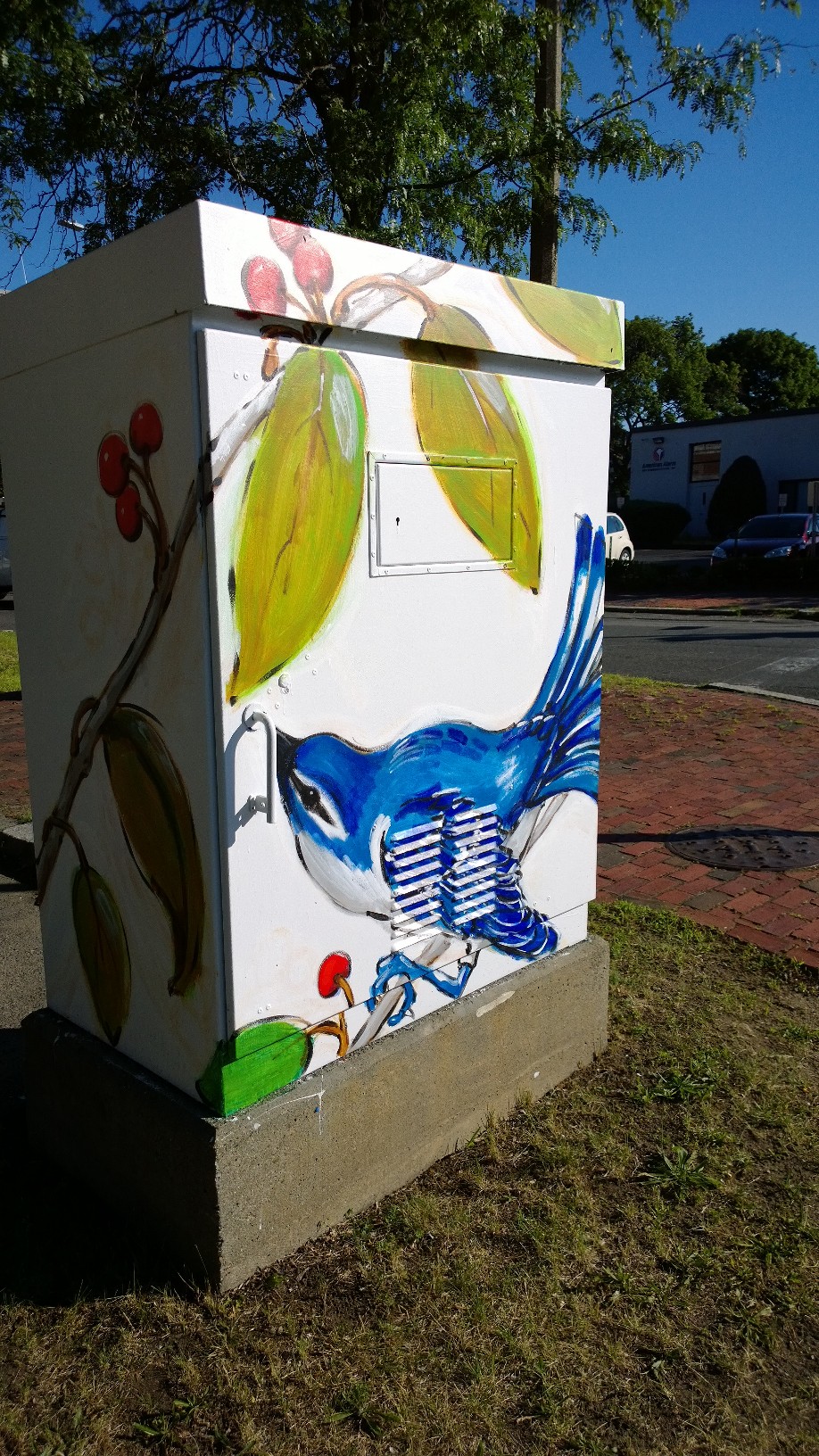
The pictures show flowers from the yard in a pitcher made by our engineer/potter friend, a bird painted on a utility box, and the garden maintained by the tai chi teacher and his youth classes. He says the care taken with the flowers is the kind of care the school devotes to students.

062714-backyard-bouquet


bird-on-utility-box


zen-ren-chuan-garden


Read Full Post »

I was first drawn to Joseph P. Kahn’s story about clowns in children’s hospitals by the cute pictures — and the fact  that my brother sometimes performs with a clown troupe at his church.

But what I especially appreciated learning from the article is that hospital clowning today is not just about getting a laugh out of a sick kid, important as that is. It’s also about giving children a little bit of control — to point out that the clown is doing something wrong, for example, or even to say the clown is not welcome and should go.

Kahn writes, “For hospital clowns Joyce Friedman and David Levitin, no two tours of duty are quite the same. Which is just how they like it.

“During rounds at Boston Medical Center, Friedman (a.k.a. Frizzle) and Levitin (Toodles) showed off their improv skills room by room, careful to assign an active role to each young patient they visited.

“At the bedside of 10-year old Cheyanne, the pair held a mock marriage ceremony, prompting Cheyanne to exclaim, through her oxygen mask, ‘You forgot to exchange vows!’ …

“Handed a joystick, a child might be encouraged to ‘control’ the clown as he or she chooses. Another patient, nervous or scared, might not want a visit at all. Either way, something positive comes from the encounter.

“ ‘Being empowered is really a key component of the healing process,’ says [Children’s Hospital endocrinologist Dr. Michael] Agus. ‘The more passive you are with an illness, the more challenging it is to heal.’ …

“Whatever a patient’s age or condition, said [clown Cheryl] Lekousi, she and her colleagues focus on the positive, even in the bleakest situations.

“ ‘Our message to the kids is, we’re a witness of you, of your childhood,’ said Lekousi.”

More here.

Photo: Dina Rudick/Globe Staff
Christopher reacts to the entrance of Cheryl Lekousi (a.k.a. Tic Toc).

Read Full Post »

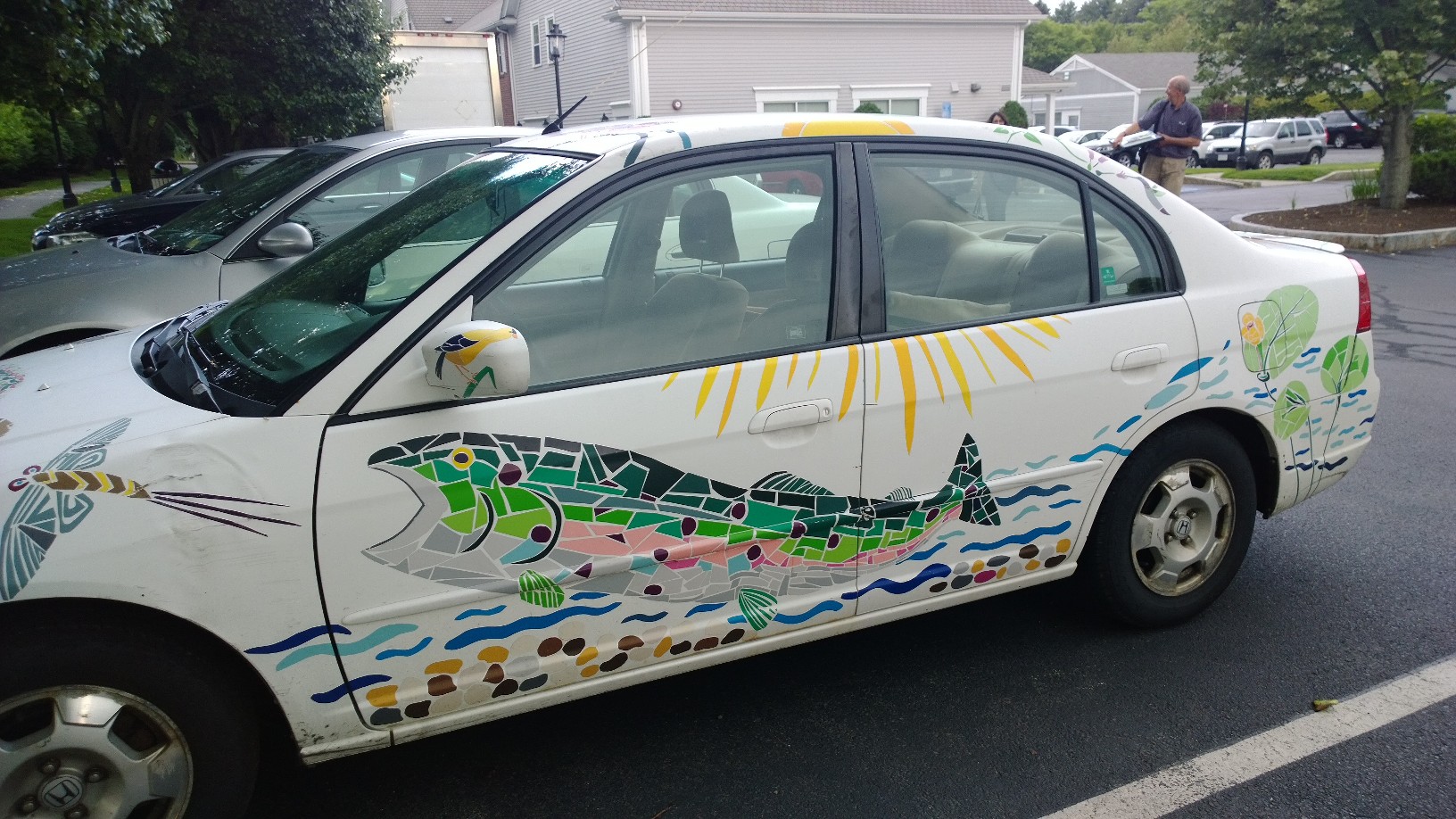
fish-car-made-with-vinyl-stickersHere are a few recent photos. The owner of the fish car showed up as I was taking the picture, so I heard the artist’s story. He threw a party and provided his friends with every shade of adhesive-backed vinyl and pairs of scissors. And they cut small pieces to create a kind of mosaic of the fish, the sea, the goldfinch on the mirror, and so on.

Next we have early morning looking over a river in Concord, then early-morning rowers on the Seekonk in Providence.

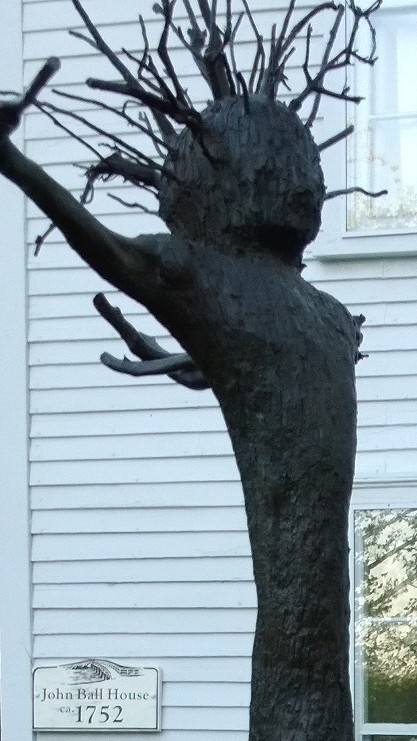
Early-morning roses follow on early-morning clematis. Modern sculpture does an early-morning stretch in front of the historic house that is now an art center.

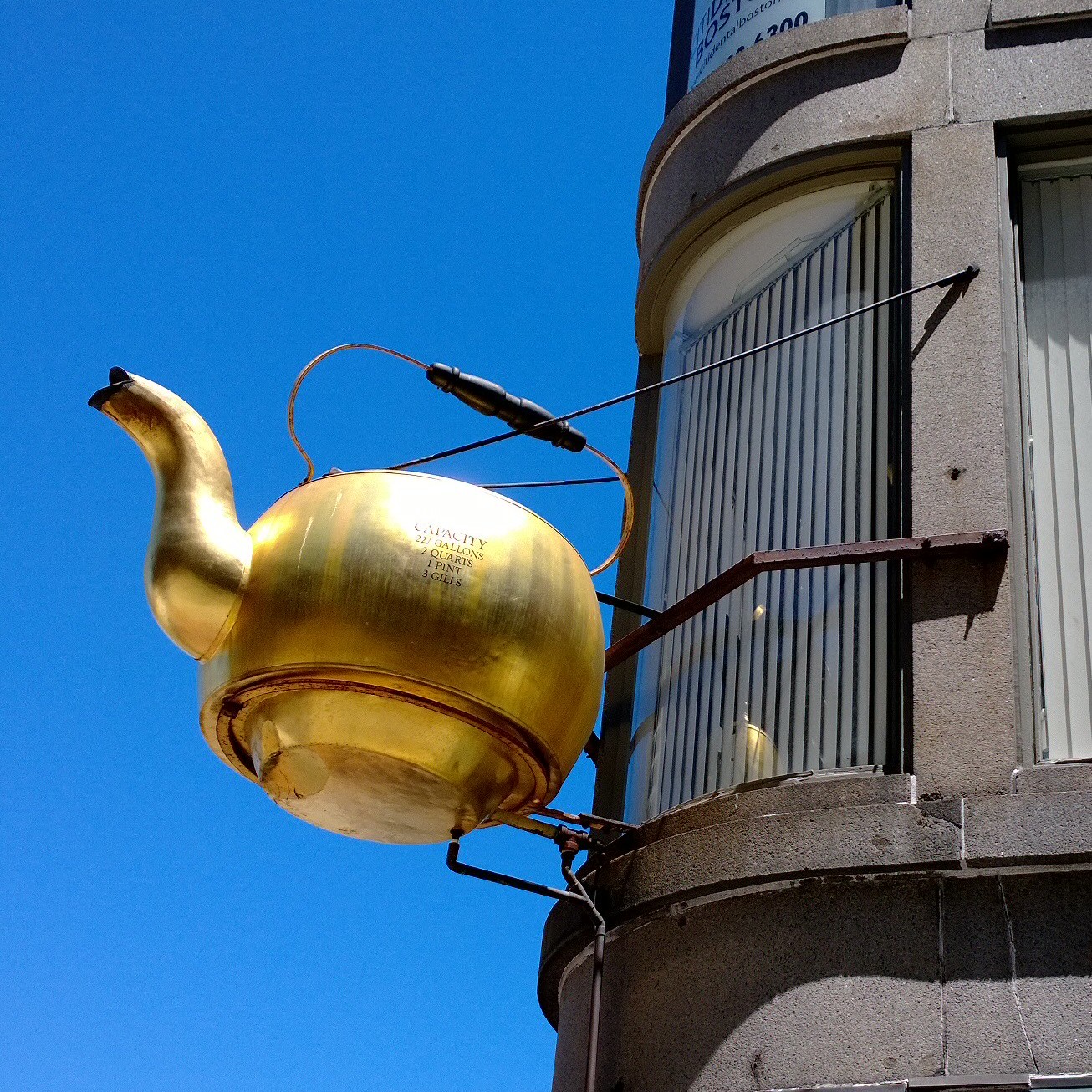
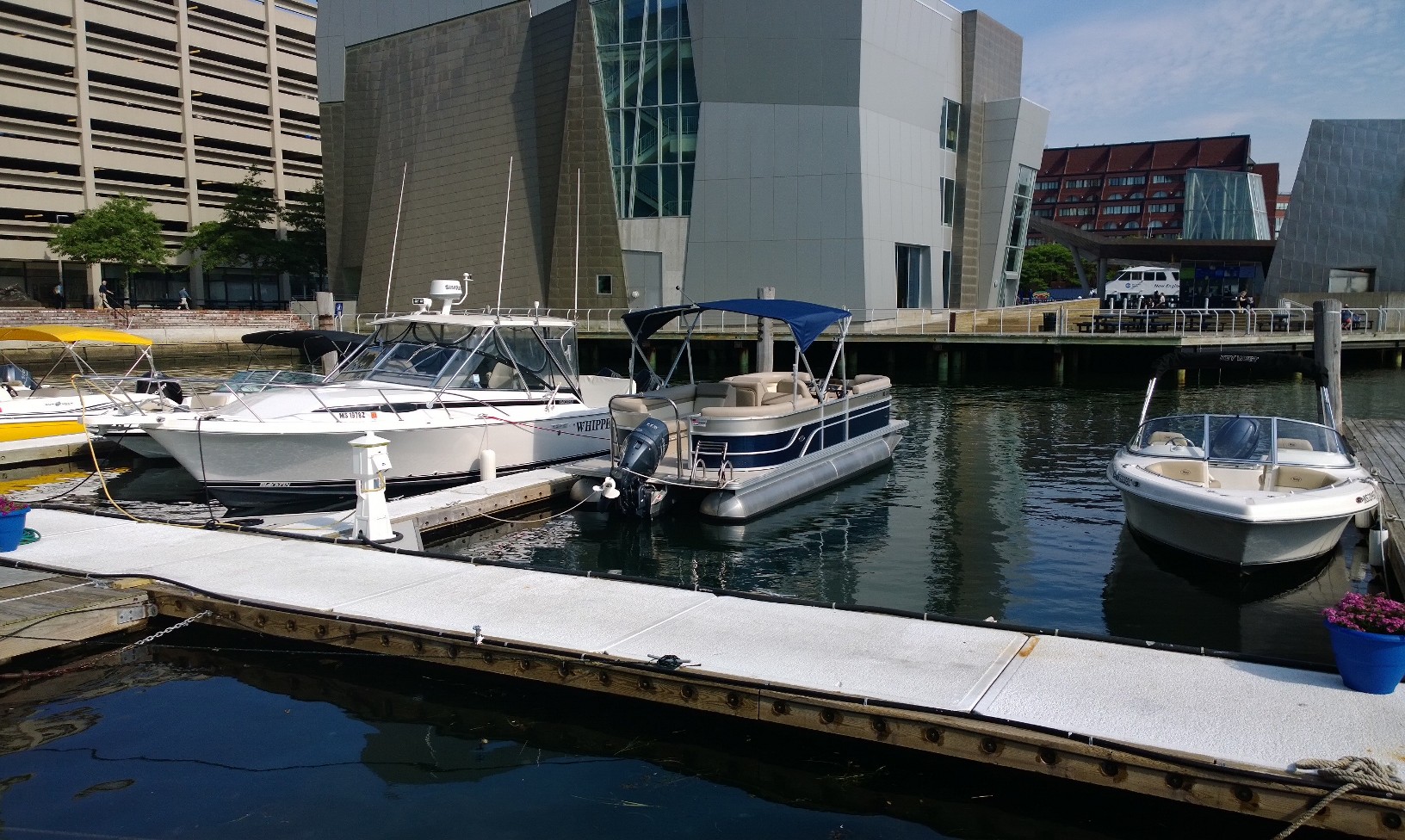
Then there is the teapot near Boston’s Government Center, private boats in Boston Harbor, and milkweed. (You’ll have to take my word for it that the milkweed was full of bees.)

061814-dawn-over-the-river


early-rowing-seekonk-river


061514-clematis

roses-on-fence


art-outside-Concord-Art-Assoc

teapot-near-govt-center-Boston


boat-dock-boston

milkweed-with-bees


Read Full Post »

Judith Ross, who also has a WordPress blog, saw a story she knew I would like. It’s about a Mass College of Art professor who got an idea for a quiet little memorial to Trayvon Martin.

Greg Cook writes at WBUR radio’s The Artery, “For about four years, Matthew Hincman had been eyeing the old stump of a lamppost at the corner of Eliot and Centre streets in Jamaica Plain’s Monument Square. It stood there, with two screws sticking pointing up, as if calling for something to go on top. …

“And he got to thinking about the granite monument tower on the other side of the square to a couple dozen West Roxbury men who died in the Civil War. …

“ ‘Who do we memorialize?’ he began to ask himself. ‘Why do we memorialize them in the public space?’

“And so it happened that a couple Wednesdays ago, right in the middle of the day, the Boston sculptor arrived with an assistant and proceeded, without permission from any official authorities, to attach a small, secret, cylindrical metal thing atop that lamppost.

“On its flat top is a low relief depicting a hoodie sweatshirt cast to the ground. … For Hincman, it’s a street art monument to Trayvon Martin.”

Read about other art projects by Hincman at The Artery, here. I like his stealth approach to many of them.

Photo: Michael Hincman
A street art monument to Trayvon Martin

Read Full Post »

Even though she lived in Paris for several years, Melita is frequently startled by how kooky and fun the French can be.

Today she told me she just learned that they’ve been making a Riviera-type beach along the Seine for the past 12 summers.

I checked out Wikipedia: “Paris-Plages … is a plan run by the office of the mayor of Paris that creates temporary artificial beaches each summer along the river Seine in the centre of Paris, and, since 2007, along the Bassin de la Villette in the northeast of Paris. Every July and August, roadways on the banks of the Seine are blocked off and host various activities, including sandy beaches and palm trees.” More here.

The mayor’s website notes, “The summer transforms Paris. The cityscape dons greenery and the riverside thoroughfares become car-free resorts. The Paris Plages (Paris Beaches) operation kicks off on or around 20 July and lasts four weeks.  …

“A Seine-side holiday. That, in a nutshell, is what Paris Plages is all about – complete with sandy beaches, deckchairs, ubiquitous ice cream sellers, and concerts for French and foreign guests. …

“The first beach [opened] in 2002. It spans three kilometres through historical Paris, and features open-air attractions (rollerblading, tai-chi, wall climbing, boules etc.). Refreshment areas, play areas and deckchairs are available for your time out unwinding by the river.” More.

Photo: Wikipedia.org. Many amusing pictures here, too.

Read Full Post »

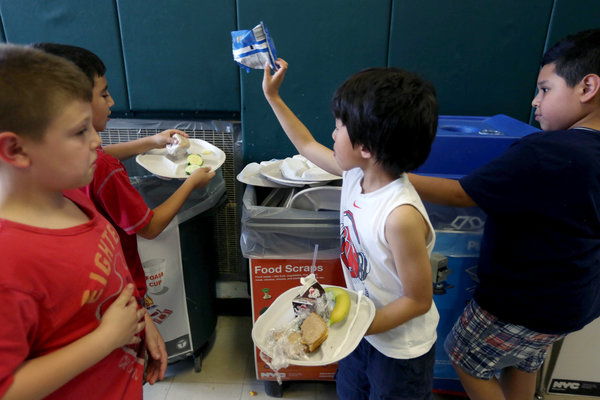
Discouraging as it is to read that many children won’t eat the healthful food schools are now providing, I take heart that at least they are learning to compost.

Al Baker writes at the NY Times, “The sad voyage of fruits and vegetables from lunch lady to landfill has frustrated parents, nutritionists and environmentalists for decades. Children are still as picky and wasteful as ever, but at least there is now a happier ending — that banana-filled bin is a composting container, part of a growing effort to shrink the mountains of perfectly good food being hauled away to trash heaps every year.

“New York City’s school composting program, kicked off just two years ago by parents on the Upper West Side, is now in 230 school buildings in Manhattan, Brooklyn and Staten Island, and is expected to more than double in size and reach all five boroughs in the fall, with an ultimate goal of encompassing all 1,300-plus school buildings. …

“The hope is that by building up composting in school, the city will help the environment, instill a sense of conservation in schoolchildren and, critically, save some money. The city paid $93 per ton in 2013 to dump in landfills, up from $68 in 2004. Composting saves the city $10 to $50 per ton, because the cost is offset by the sale of the end product, according to the Sanitation Department.” More here.

I tend to think kids will eventually eat something nourishing if that’s what’s available and they’re hungry. All I know is my kids eat everything now that they are grown-ups. (Still laughing that John came home from college and said, “How come you never told me I like mushrooms?”)

Photo: Hiroko Masuike/The New York Times

Read Full Post »

Funny how things work out.

If Suzanne hadn’t spoken to a woman speaking Swedish to her little girl after toddler music class, I probably would never have known about the Australian mining community Tom Price and the Chinese opera written about it by the Swedish woman’s American husband. But there you are.

Ben Collins, Vanessa Mills, and Hilary Smale put together a story about the opera for ABC Australia.

“It’s a contender for the most unlikely arts even of all time,” they write, “the story of a small North West Australian iron ore mining town told in Chinese operatic style.

“It’s the attention grabbing work of an American artist called Daniel Peltz, who says he aims to provoke ruptures in the socio/cultural fabric through which new ways of being may emerge. In this case that means Chinese opera in a remote Australian mining town.

” ‘I look at Chinese opera as something that’s embedded in the landscape of China, just as iron ore is embedded in the Western Australian landscape. And I think of the gesture of the piece as a way of extracting this resource from China, digging it up and bringing it to Tom Price to tell a story of the town,’ Mr Peltz says. …

“The opera follows the story of Thomas Moore Price, who is said to have died at his desk just before the deal was completed that led to the mine which the town serves.

” ‘I did find an out-of-print book on Tom Price that was produced by Kaiser Steel which confirmed that component of the narrative. But my aim is not to write historically accurate narrative, it’s actually quite the opposite… I’m really looking at extracting elements of the story of this place and sending them to China to be transformed into this opera,’ Mr Peltz says.

“In the opera, Thomas Moore Price’s only daughter, Shirley, has an encounter with the ghost of her father at the summit of Mt Nameless. A 30 minute film of the opera being performed in China will be presented at the Tom Price Community Centre.

” ‘I’ve done a lot of work to make sure that it’s well subtitled so that people can access the narrative,’ says Mr Peltz.”

Wish I had known all this when Dan and his wife (the artist Sissi Westerberg) brought their daughter to my grandson’s two-year-old birthday party a few weeks ago.

The missed opportunities of life!

Read more here and listen to a clip of the traditional-style Chinese opera.

Read Full Post »

« Newer Posts - Older Posts »