Feeds:
Posts
Comments

Posts Tagged ‘postaday’

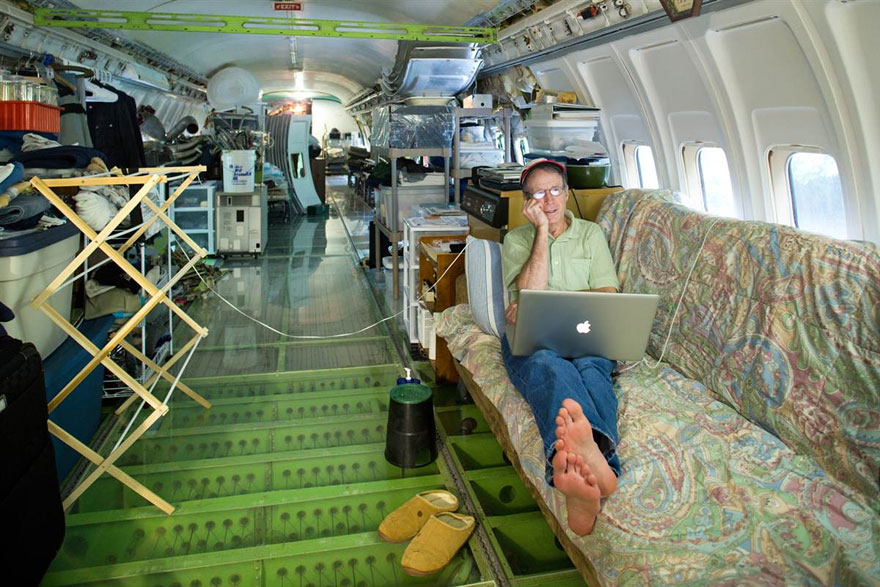
Being reminded recently that Bored Panda was a good place to look for cool stuff, I read about a guy who makes his home in an airplane.

“Bruce Campbell is an inventive engineer who bought a retired Boeing 727 aircraft fuselage and upcycled it into an unusual and innovative home. The huge 3-engine commercial airliner is propped up on concrete pillars in a suburban wooded area outside of Portland, Oregon, and has its own driveway.

“The aircraft features a makeshift shower, but he is still working to install a working lavatory and to restore some of the plane’s original interior elements, like seating and lights. Campbell lives in this plane 6 months every year, and spends the other part of the year in Japan, where he is also looking to buy and similarly re-use a retired Boeing 747 fuselage.”

More here. Lots of pictures.

Photo: John Brecher
Says plane denizen Bruce Campbell, “Shredding a beautiful and scintillating jetliner is a tragedy in waste, and a profound failure of human imagination.

Read Full Post »

An Associated Press blurb in the Globe caught my eye today.

Here it is in its entirety: “Unity Plantation, Maine. A two-year quest by Unity College students to fit a black bear with a video collar has succeeded. The Morning Sentinel said Professor George Matula and about a dozen students trekked deep into a 4,000-acre patch of woods off Route 139 Thursday to fit the collar on a trapped bear. While one student kept the angry bear’s attention, another sneaked in from behind to deliver a shot to knock it out.”

I had to find out more. The website of Unity College, “America’s Environmental College” located north of Augusta in Waldo County, explains it wasn’t a professor-assisted prank.

“With permission from the Maine Department of Inland Fisheries and Wildlife, the Unity College Bear Study team does hands-on research to provide information on a bear population in Central Maine. Students work with faculty mentor George Matula and alumna mentor Lisa Bates ’08 to tag, tattoo and radio collar bears to collect data and monitor activity.” More at Unity College, here.

But about actually collaring the bear. …

Matt Hongoltz-Hetling  writes at the Kennebec Journal/Morning Sentinel, “Once Matula gave the all-clear, the students descended on the bear, intent and serious as each performed a well-defined role. They still spoke in whispers as they took blood samples, checked its vital signs and prepared to affix the all-important video collar to its neck. …

“One student, Leon Burman, cradled the bear’s head in his lap while he pulled back its lips, using a tattoo gun to leave an identification mark on the gums.

“[Student Jonah] Gula lifted the bear’s front right paw, inspecting a raw and red line defining the previous capture’s cable. Gula speculated later that it meant the bear was pulling at its snare more aggressively than most. The team treated it with a first-aid kit.” More here.

Photo: Mark Bennett

Read Full Post »

Suzanne has always admired Madeleine Albright, an interesting woman before, during, and after her stint as U.S. Secretary of State.

One thing that appeals to me about Albright is her sense of humor, a playfulness seen in the pins she collected for special occasions and to express both diplomatic — and not so diplomatic — thoughts.

The brooches on view through July 20 at her alma mater’s Davis Museum include an eagle pin that she wore to her swearing in, the serpent pin that was a response to a hostile Saddam Hussein observation, and a bee pin with a stinger to warn Yasser Arafat she was losing patience.

Jill Radsken recently toured the collection with Albright and recorded her recollections about her pins, including a pin that went over like a lead balloon.

“She [recalled] her foreign policy pin faux pas when she wore a three-monkey ‘Hear no evil, speak no evil, see no evil’ set to a summer summit with Vladimir Putin. When the Russian leader inquired about the monkeys, Albright forcefully told him: ‘I think your policy in Chechnya is evil.’

“ ‘That was a time when I thought I’d made a mistake with my pin,’ she said.”

Read more here.

Photo: John Bigelow Taylor
Saddam Hussein published a poem calling Madeleine Albright, then ambassador to the United Nations, an “unparalleled serpent.” She decided to have fun with comment and got herself a serpent pin for her next meeting with Hussein’s officials.

Read Full Post »

Trust those Finns to come up with a crazy idea that really works.

Timon Singh writes at Inhabitat.com about a team of Finnish researchers from Aalto University and their electricity-free computer powered by water droplets.

Singh writes that the researchers “developed a new concept for computing that doesn’t require standard electric power. Instead, the team creates collisions of water droplets on a highly water-repellent (superhydrophobic) surface. The research, which was published in the journal Advanced Materials, could form the basis for tomorrow’s electricity-free computing devices.

“After a series of experiments, the team determined that the ideal conditions for rebounding water droplets on superhydrophobic surfaces required a copper surface coated with silver and chemically modified with a fluorinated compound. This allowed the surface to be so h2o repellent that water droplets rolled off when the surface was tilted slightly. Using superhydrophobic tracks, the droplets were able to be guided along designed paths.

“Using this method, the researchers demonstrated that water droplets could be used to demonstrate ‘superhydrophobic droplet logic.’ In the university’s press release, the team used the example of a memory device that was built where water droplets act as bits of digital information.”

If you aren’t deterred by the technical language, read more here.

Now I just need to know if the earth has enough water to make this green technology for computing a reality. We have an awful lot of computers.

Photo: Inhabitat.com

Read Full Post »

When a do-gooder from the nonprofit Kounkuey Design Initiative told poor farmworkers at a California trailer park she wanted to work with them to build a place to relax and play, they didn’t think much would come of it.

Patricia Leigh Brown writes at the NY Times why the community is happy to have been proved wrong.

“When Chelina Odbert, the 36-year-old co-founder of the nonprofit Kounkuey Design Initiative, based in Los Angeles, showed up two years ago and asked residents to propose ideas for a park that they might design and build collaboratively, most assumed she was yet another do-gooder bearing ‘muchas promesas’ that would come to naught.

“And yet, after more than a year of drawing, debating, hauling rocks and waiting out bureaucratic delays, the residents had a fiesta recently to celebrate the opening of the park, a public space built out of railroad ties and other simple materials. It has a playground, a community garden, an outdoor stage and a shade structure where neighbors can gather and gossip even on 110-plus-degree days.

“The park, which doubles as a zócalo, or traditional town square, exemplifies a new phase for both Kounkuey (KDI for short) and the field of public-interest design, which tries to put design tools into the hands of neighbors who can create local change. …

“Alberto Arredondo, 51, lives across from the garden and has become its keeper. … Before, he said, he would come home after a day in the fields picking grapes and collapse on the sofa. The park, he added, has ‘de-stressed the women.’

“His theory was borne out by Rosa Prado, whose commitment to the park never wavered. ‘It helps with depression,’ she said. ‘You go out your door, and you see a lady in the park and sit next to her.’ She added, ‘Then a few minutes later, you forget what you’re worried about.’ ”

More here.

Photo: Monica Almeida/The New York Times
Residents of all ages turn out for the opening of a new public space, by the Kounkuey Design Initiative, in St. Anthony’s Trailer Park, home to farmworkers east of Palm Springs, Calif. 

Read Full Post »
Remember this post on rhubarb batteries? Well, according to radio show Studio 360, there’s no need to draw the line at rhubarb. Especially if you are creative, like photographer and artist Caleb Charland.

Julia Lowrie Henderson writes. “His series Back to Light is inspired by that old science class experiment: if you stick a galvanized nail in one end of a potato and a copper wire in the other, it will become a battery. Charland generates enough electricity from the fruit to power the lights that illuminate his shots. He uses long exposures to take these photographs, but nothing is added digitally to the images.

” ‘My practice as an artist combines a scientific curiosity with a constructive approach to making pictures,’ Charland says. ‘I utilize everyday objects and fundamental forces to illustrate experiences of wonder.’ ”

From the Artist’s Statement on his website: “The way we understand the world relies so much on our ability to measure it. Given that many measurements are based on the proportions of the human body it’s clear we measure stuff to find our place amongst it all and to connect with it in some way.

“By exploring the world at hand, from the basement to the backyard, I have found a resonance in things. An energy vibrates in that space between our perceptions of the world and the potential the mind senses for our interventions within the world. …

“For me, wonder is a state of mind somewhere between knowledge and uncertainty. It is the basis of my practice and results in images that are simultaneously familiar yet strange. Each piece begins as a question of visual possibilities and develops in tandem with the natural laws of the world.”

More here. Click through the pictures. To my mind, citrus makes especially appealing batteries.

Photo:  Caleb Charland
Orange Battery, 2012

Read Full Post »

living-under-dogwood


I live under a waterfall. You can’t get to my back door this time of year without crouching under a waterfall of dogwood. It’s especially true after a rain shower.

Bob has been supportive of my random photos, taken with a Nokia Lumia 1020 phone, so I’m emboldened to post them frequently, even when I don’t have much to say.

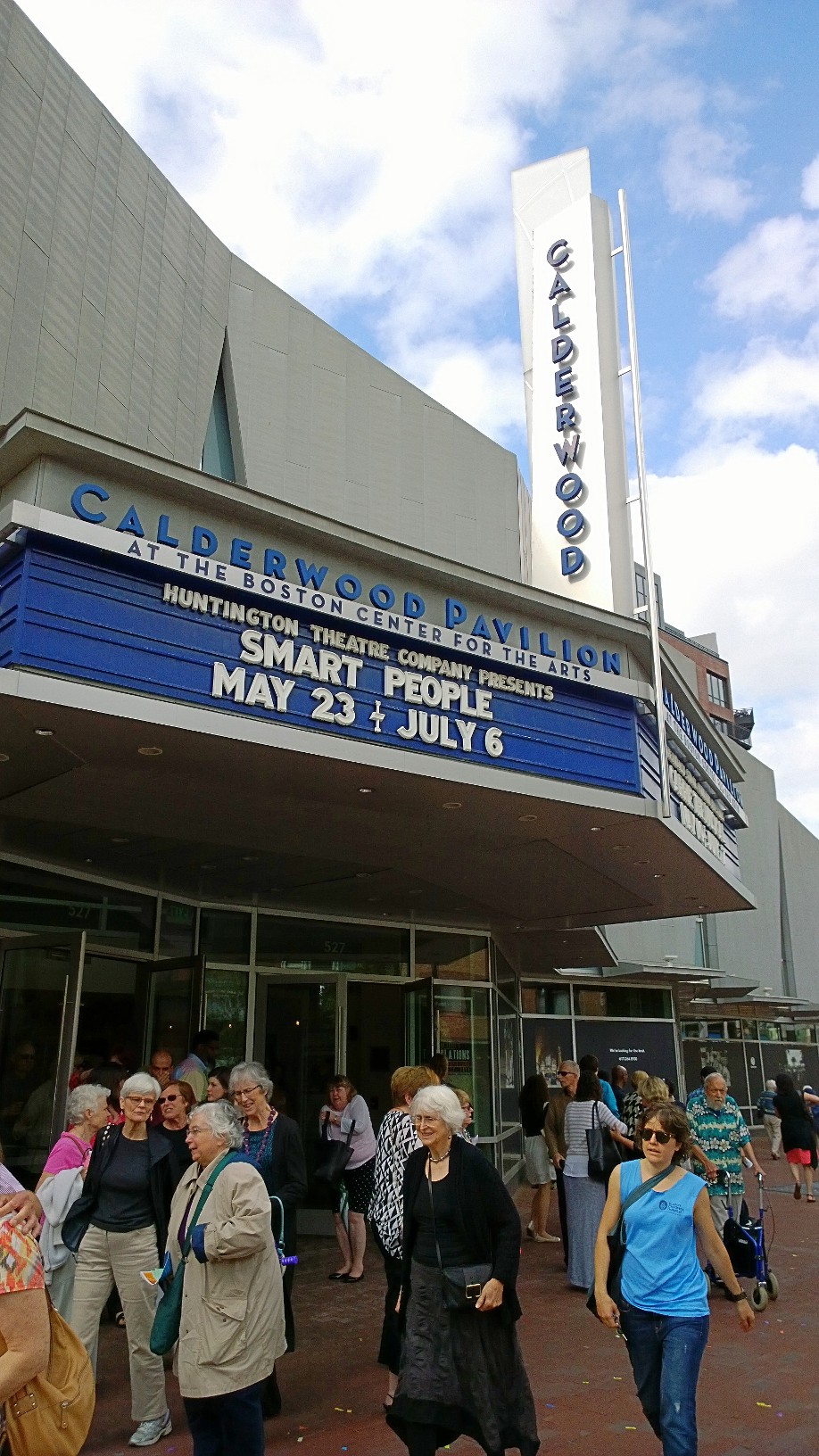
Below, you will see what else was going on in the South End yesterday when we attended a well-done play about race relations, Smart People (running through July 6).

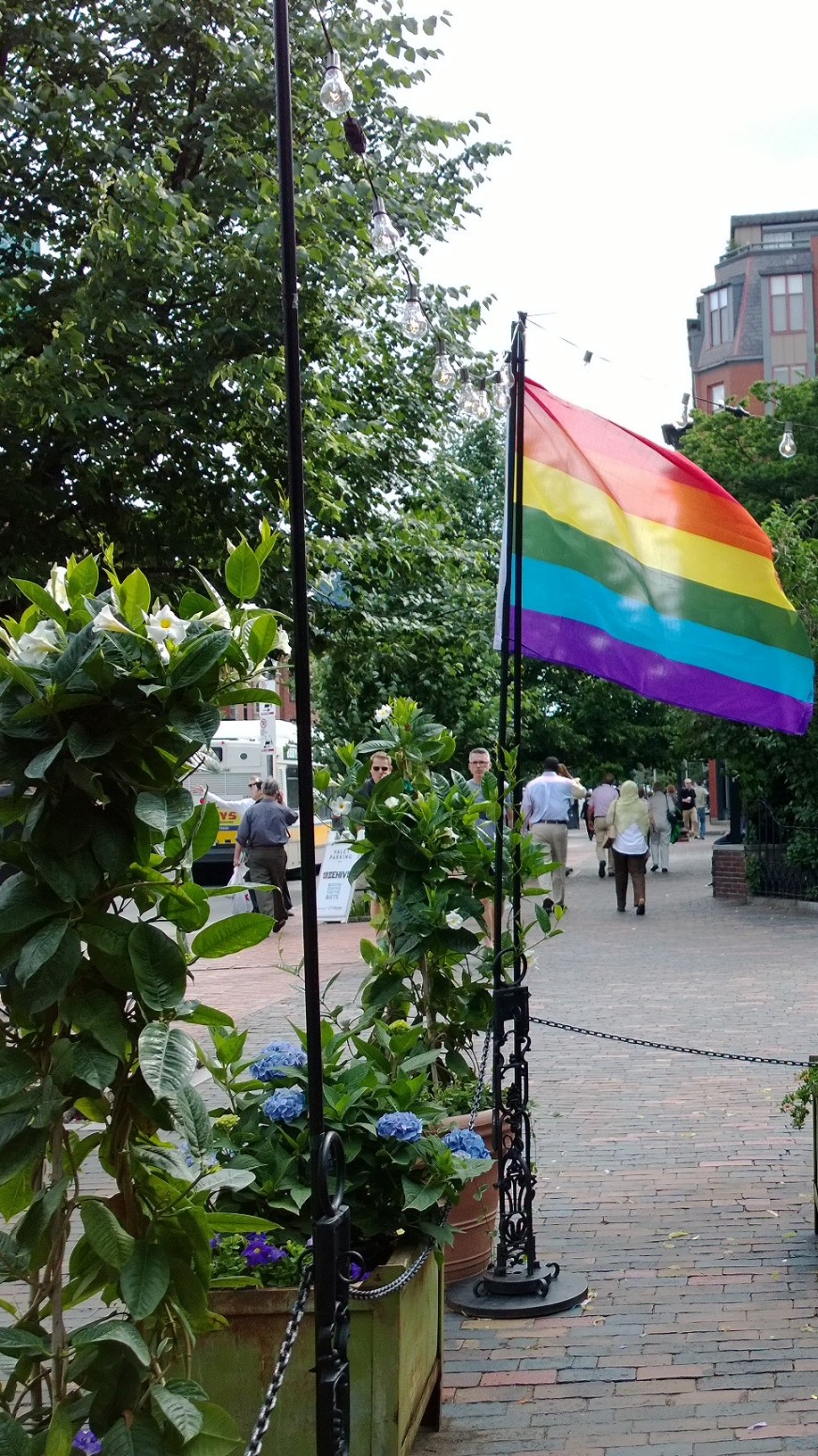
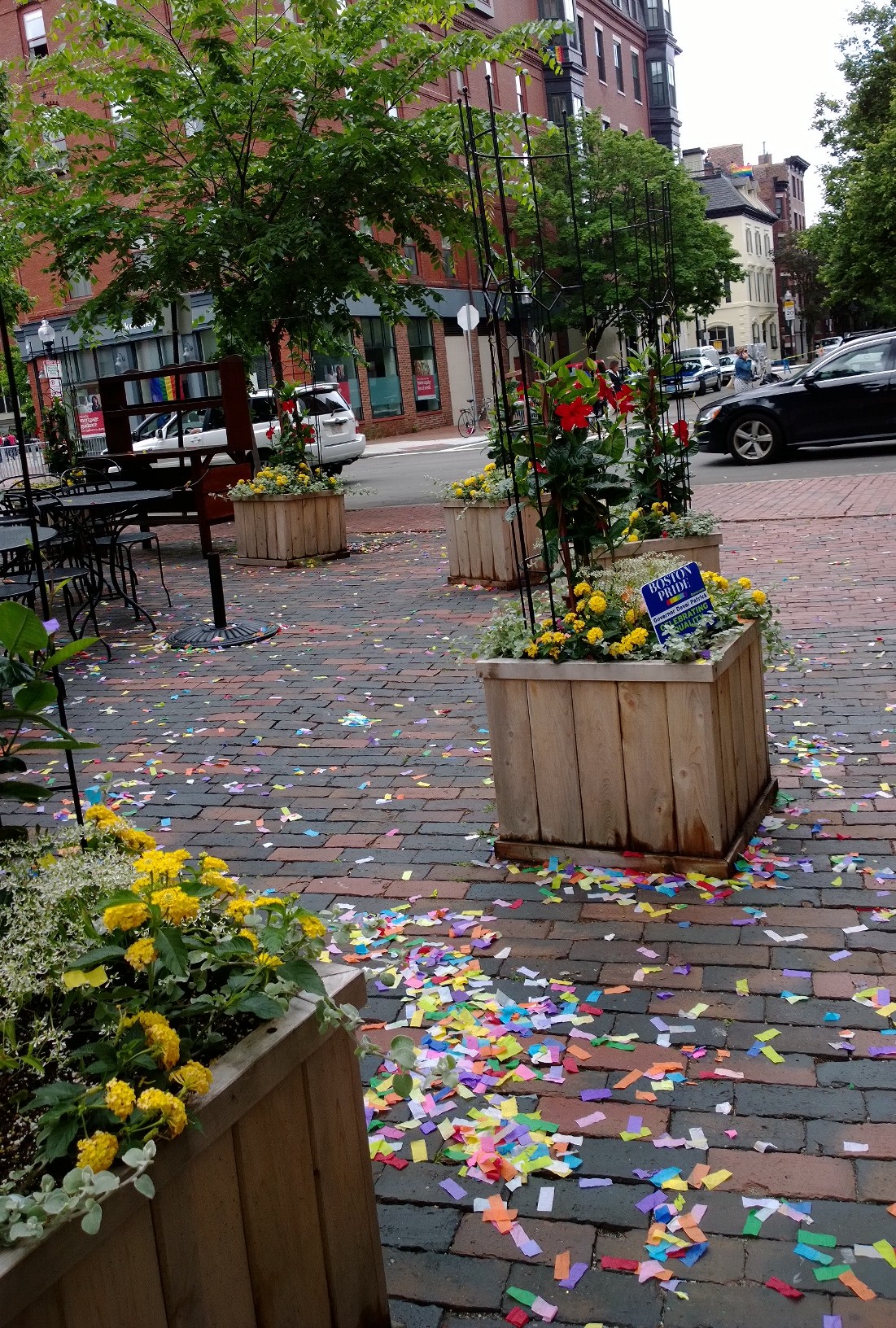
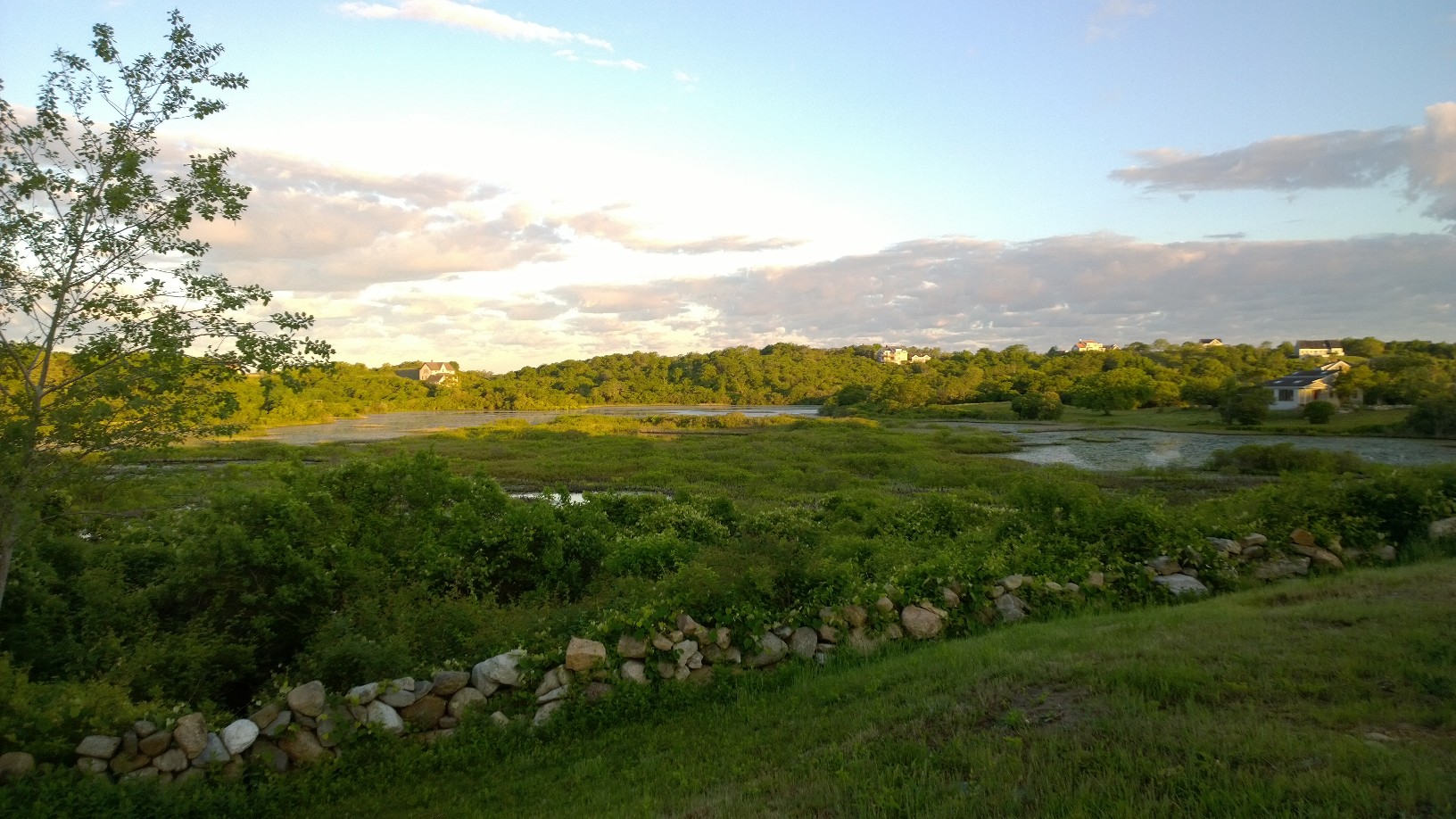
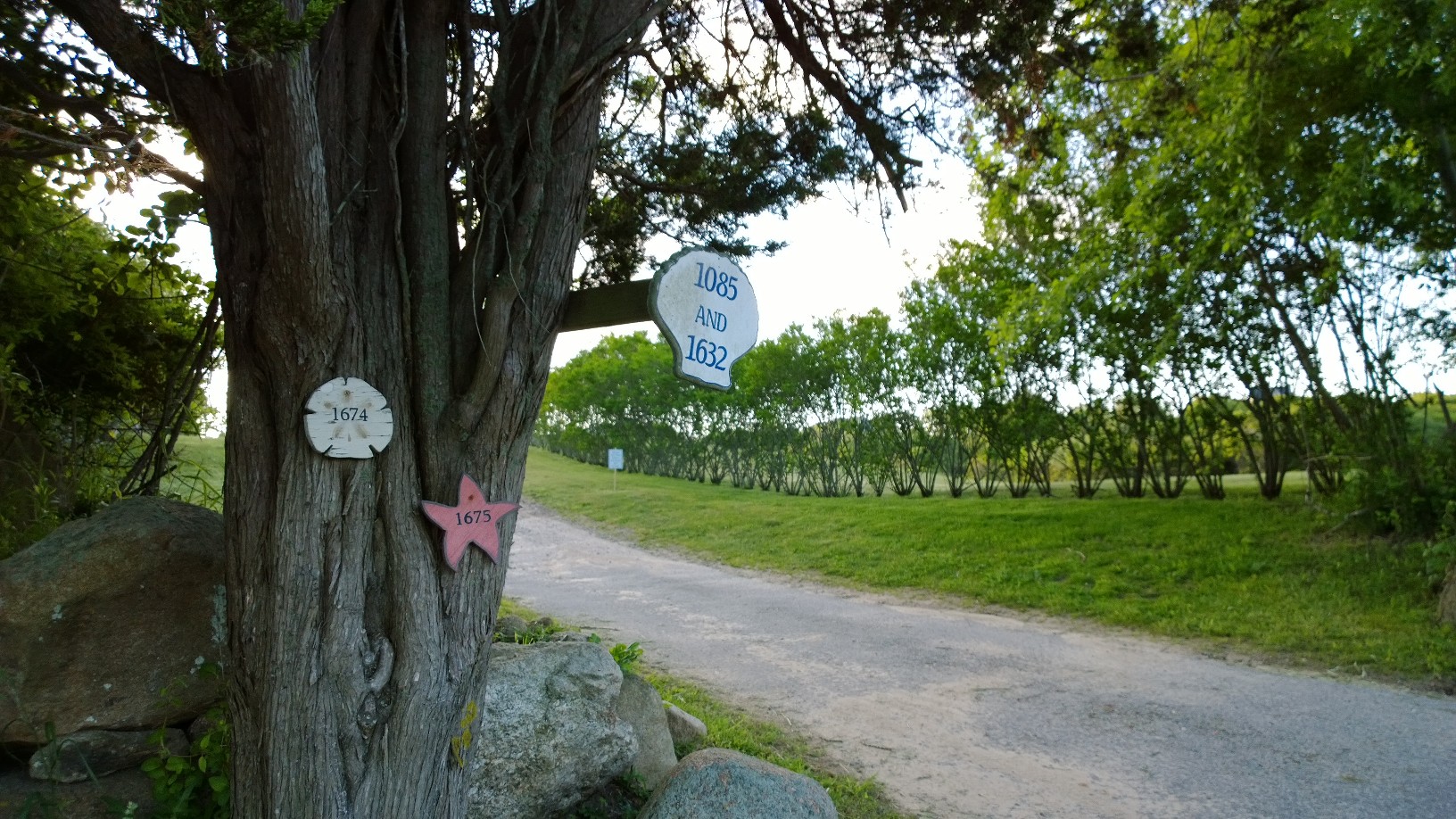
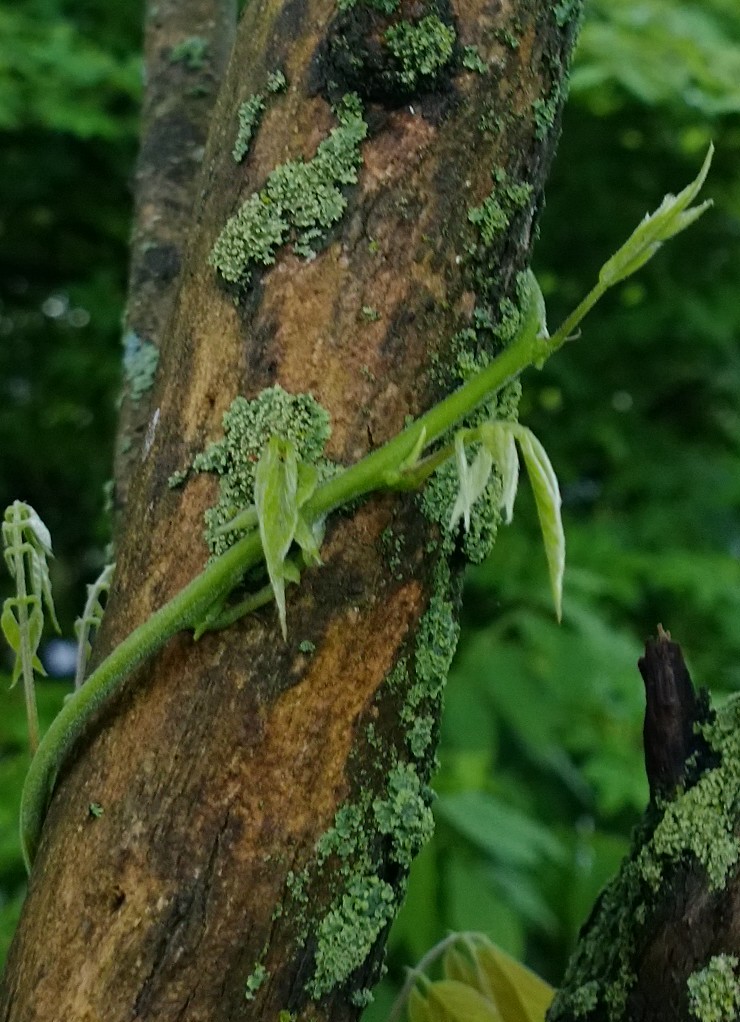
You will also note that I got interested in a climbing wisteria vine, typical Boston pedestrians in period dress, sunrise in Rhode island, and house numbers there that caught the spirit of the seashore.

smart-people-marquee


rainbow-flag-boston


rainbow-confetti-061414


early-morning-RI


marine-house-numbers


wisteria-vine


Boston-pedestrians

Read Full Post »

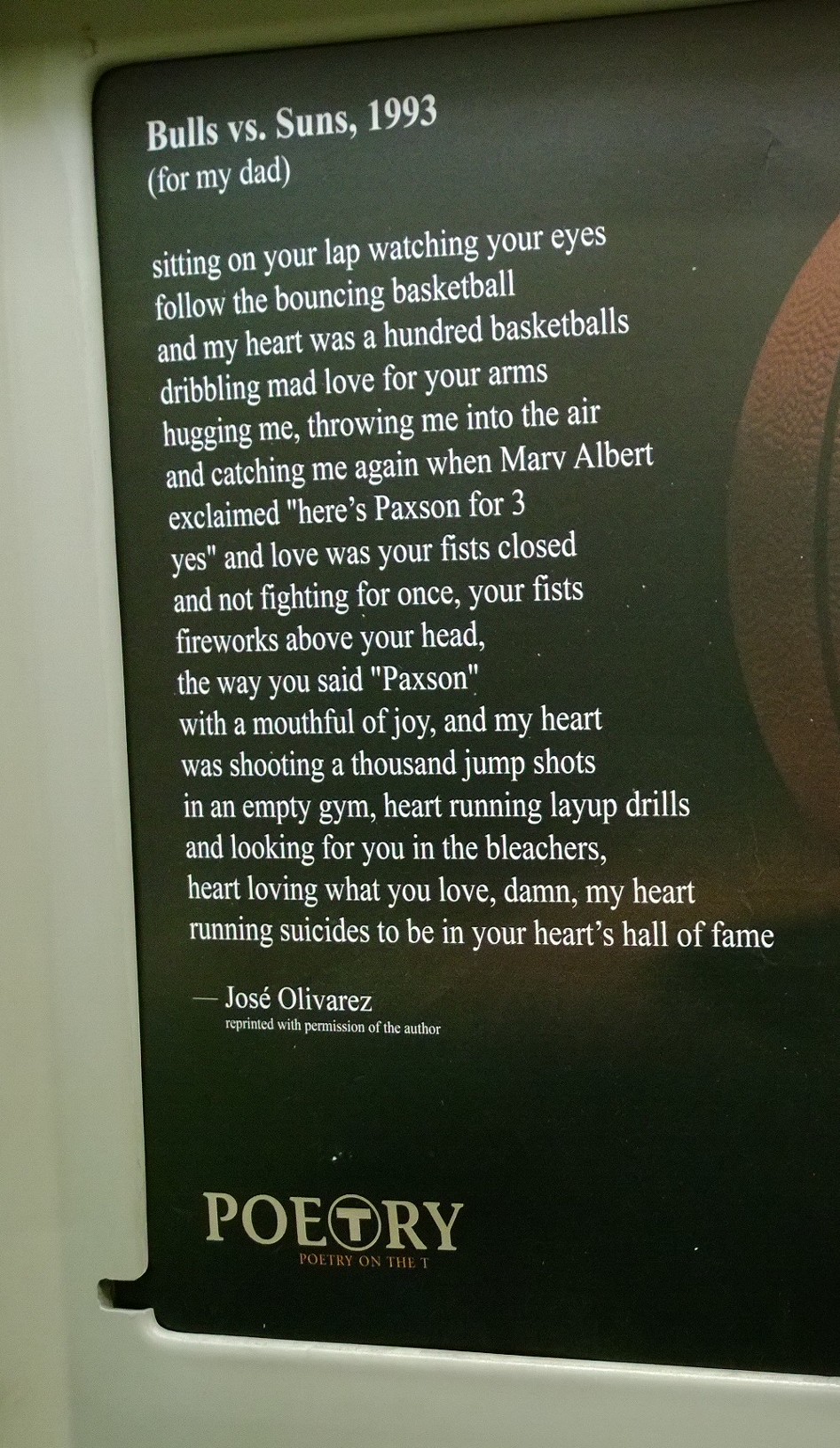
Jose-Olivarez-MBTA-poem


I was always impressed when I saw a poem in the place of an ad in the New York City subway. Now Boston has caught on.

Martine Powers wrote recently at the Boston Globe, “Finally, Bostonians will have the chance to experience the pleasures of poetry on the MBTA.

“Mass Poetry [is] bringing poems to advertisement spaces on subway cars. The initiative, dubbed PoeTry, is part of the organization’s Poetry in Public Spaces initiative, which began last year, said Mass Poetry program director Laurin Macios…

“ ‘Contemporary poetry is barely taught in schools, and often when it is, it is taught in a very scholastic sense instead of an artistic one,’ Macios said. “People often grow up without ever realizing there is poetry out there that can speak to them, or that they can speak back to. …

“Each appearance of a poem includes a tearsheet on the corner of the sign, allowing passengers to take a copy of the poem with them if the spirit strikes them.”

One poem in the series, says Powers, “What Travels,” by Joseph O. Legaspi, takes place on a subway car. “What travels beneath their secret faces? What is train but transport to other lives?” More at the Globe.

See also http://masspoetry.org.

Photo: Suzanne’s Mom
Poem: “Bulls vs. Suns, 1993,” by Jos
é Olivarez

Read Full Post »

The independent bookstore where I live is assuming the whole town knows that the publisher Hachette is fighting with Amazon. I say that because it has devoted a whole window to Hachette books, with a statement about carrying any book you want but no statement about the Amazon fight.

Amazon may finally have gone too far. People are fighting back against its absolute power. Asakiyume, for example, is practically a one-woman campaign to get its warehouse staff better working conditions.

And there are other initiatives. Jennifer Rankin writes at the Guardian, “Independent booksellers are being sent reinforcements in the battle against Amazon …

“My Independent Bookshop, a social network for book lovers from Penguin Random House, [is] an online space where anyone can review their favourite books and show off their good taste on virtual shelves.

“Crucially, readers can also buy books from the site, with a small proportion of takings going to support scores of local independent book stores. …

“A reader’s nominated home store – which doesn’t have to be geographically close – will get 5% of the revenues from every physical book they buy and 8% on an ebook. The site is a tie-up with the e-commerce website Hive, which has been offering a similar service to local shops since 2011.”

Read more at the Guardian, here. Check out the lively comments there, too.

Photo: Sarah Lee for the Guardian
The new Penguin Random House may give independent booksellers a boost in online sales. 

Read Full Post »
My friend Jean Devine is always up to something interesting. A Brown U grad, with an MBA from Simmons, she used to work in investor relations but in recent years has been testing the waters of social entrepreneurship.

Her latest initiative, with Barbara Passero of Sandpiper Creative, is called meadowscaping and is intriguing on many levels.

With access to a Waltham church lawn for a summer youth program, Jean and Barbara will work with kids to convert the yard into a meadow that uses native species from Garden in the Woods and provides a habitat to the bugs and other small creatures that make a healthy environment.

From the Meadowscaping for Biodiversity website: Meadowscaping “is an outdoor, project-based, environmental education program that provides middle school youth with real-world experiences in STEAM learning (Science, Technology, Engineering, Arts and Math), while inspiring and empowering them to address challenges to the environment and our society.

“Today, few children spend time experiencing Nature and the benefits of outdoor recreation, education, and contemplation. Founder and former Director of the Children and Nature Network (C& NN) Richard Louv coined the phrase nature-deficit disorder to describe the negative effects of reduced outdoor time on children’s development. …

“Children who spend little time outdoors may value nature less than children who spend time outdoors in free play. Similarly, children who feel part of something bigger than themselves may … understand their dependence on a clean environment and know that they are responsible for caring for the Earth as their home.” More here.

The idea behind the meadowscaping summer program is that children, both at a young age and as they become adults, can actually do something about the environment.

Remember our post “The Doctor Is In” about the woman who sets up in a Providence park to listen to your worries about global warming (here)? Stop worrying and do something, say the meadowscape entrepreneurs. Give up lawn chemicals, plant a meadow, provide a home for tiny necessary critters, and work to make change.

white-iris-in-morning

Read Full Post »
Here’s an unusual approach to art. Christopher Bollen at Interview magazine has the story.

“Since 2005, the 41-year-old [Marie] Lorenz has been navigating New York Harbor in her handmade plywood-and-fiberglass boat, taking friends, artists, and willing participants on nautical odysseys of the city’s rivers and islands.

“The project, Tide and Current Taxi … has its roots in multiple artistic practices — from traditional Romantic seascape and marine painting to more radical iterations of performance art …

“It helps that the Brooklyn-based artist, who could command a boat by the age of 6, is an adventurer at heart — the kind of avant-garde pioneer more often found on Manhattan’s dry land than in its surrounding waters. Lorenz has extensive knowledge of the city’s waterways. ‘When I got to New York, I realized that the tides were significant,’ she says. …

“Lorenz uses the tides like a motor to propel her boat, as well as the time-trusted manual labor of paddling. She usually sits at the stern, with passengers facing forward at the bow and in the middle.  …

“The boat trips themselves are often captured on video by a waterproof digital camera fixed to a metal pole jutting up from the stern. The camera’s eye is in the position of fellow traveler or a Charon-like ferryman through the derelict metropolis. Perhaps what is most arresting about her work is the way it destabilizes our usual perception of the city itself — specifically the hypnotic rocking of the Manhattan skyline.

” ‘You usually see the city on solid ground,’ Lorenz says. ‘I think when you’re floating, you see differently, your vision expands. You get to see the city from an in-between zone.’ ”

More here.

Sebastian Kim

Read Full Post »

I love reading about and sometimes seeing offbeat and experimental theater. You may recall a couple recent posts on Iranian productions, for example — one play performed in a taxi, and another featuring a script the actors aren’t allowed to see until it’s time to go on stage.

So I was intrigued by a story in the Guardian about an experiment with one-on-one productions. Lyn Gardner writes, “Earlier this year I was lucky enough to take part in Whispers, a project created by the Exeter-based Kaleider, that takes the form of a co-operative gifting chain of performance, as a story and a metal tablet pass from person to person who each take responsibility for passing it on.

“At the Brighton fringe something similar is taking place with Host, a project created by the Nightingale Theatre that takes place in one of two bathing huts. Taking the form of a short text written by Tim Crouch … it works like this: You enter the bathing hut and somebody performs the text to you, and then you perform the text – reading from the script – to the next person.

“All participants subsequently get sent a copy of the script via email. This means that they can set off their own chains of reading and receiving, which creates in effect a tree that then has branches going off from it but which are all traceable back to that first performance by Tim Crouch in Brighton. It’s like a baton being passed.” More here.

This week, I’m having dinner with three other women who have at various times been active in the Concord Players. We meet up a couple times a year to indulge in theater talk as most of our other friends are not into that. I’ll be sure to pass along some of these experiments. The Concord Players isn’t a place that indulges in avant garde, but we all like hearing about what’s going on in the wider world.

“Host,” a one-on-one play at the Brighton Fringe Festival in England, is performed in this bathing hut.

Read Full Post »

potentilla


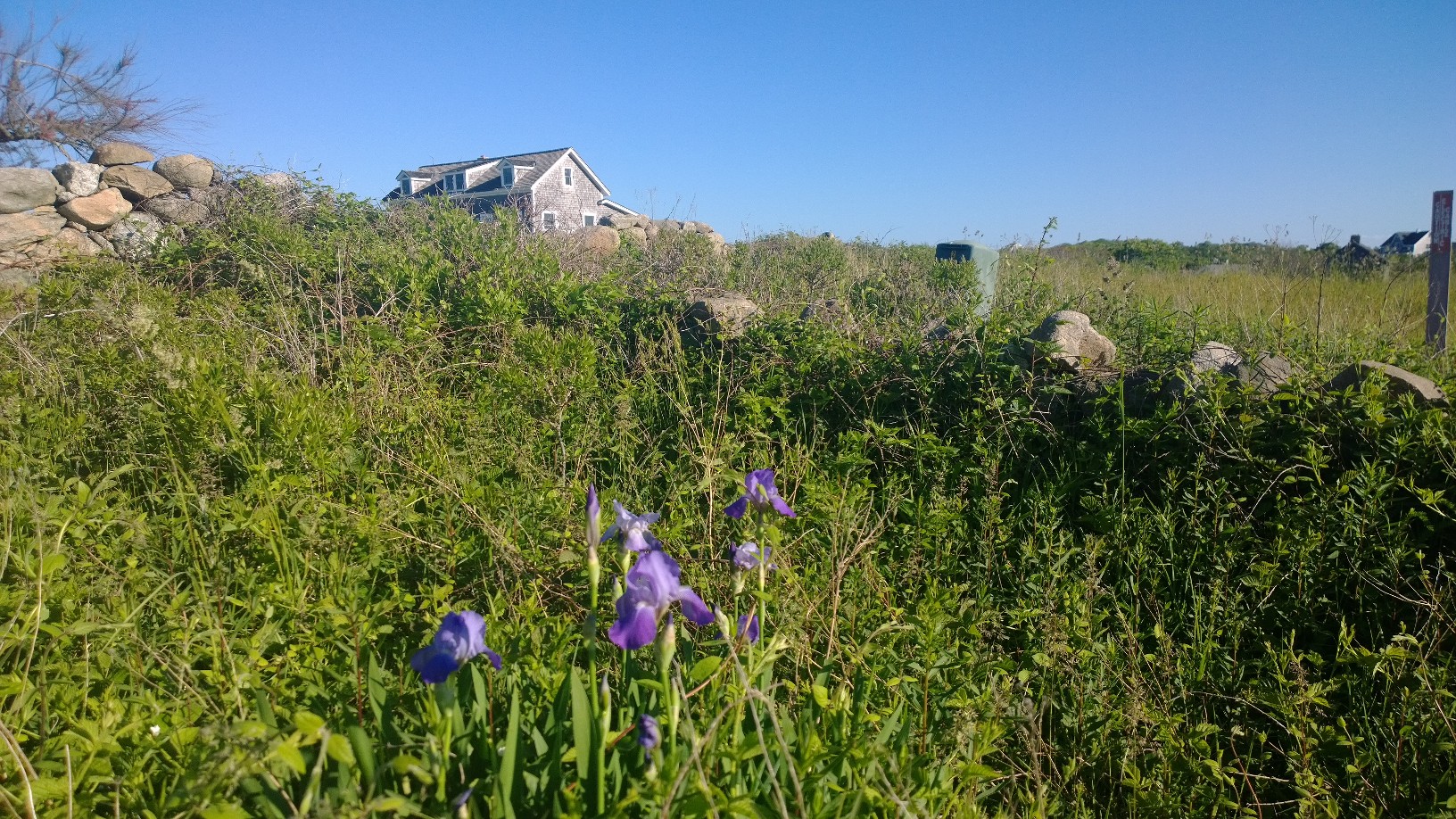
There are still some unspoiled parts of Rhode Island, and a fine day in June,  before the crowds of summer, is an ideal time to appreciate it.

Here are a few Rhode Island photographs for you.

060714-iris


sunny-RI-morning-060714

boat-hulls-blue-sky


Read Full Post »

I love the staircases from around the world that are posted at Catraca Livre. Wish I could remember where I got this link. Andrew Sullivan? Twitter? This Is Colossal? It’s been a while since I saw it.

I picked the staircase with the koi fish to show you, but there are 16 other amazing staircases at the site. The website is based in Brazil and run by Gilberto Dimenstein. I can’t read the Portuguese. If you can, let me know what it says?

“Muitas pessoas fazem o possível para fugir do esforço de subir alguns degraus. Mas para alguns artistas de rua, elas são fontes de inspiração para suas criações. O site BoredPanda listou 17 escadas ao redor do mundo que são verdadeiras obras de artes a céu aberto.”

OK. I guess the pictures originated at Bored Panda, a site we blogged about once before. You should check that, too.

More staircases here.

Photo: http://queminova.catracalivre.com

Read Full Post »

Someone has finally recognized seaweed for the artistic creation it is.

That someone is Josie Iselin, whose book An Ocean Garden: The Secret Life of Seaweed was reviewed by Dana Jennings in the NY Times Science section Tuesday.

Jennings begins, “The secret to finding unsuspected beauty, artists and naturalists will tell you, is in knowing how to slow down and really look. The writer and photographer Josie Iselin certainly knows how to do that, as she shows in her beguiling new book, An Ocean Garden.

“In her introduction Ms. Iselin … writes, ‘I fell in love with seaweed at the kitchen counter.’ (She would bring back samples and study them there.) And it vexes her that others don’t share in her tidal pool crush. …

“The 100 color photographs here, though, just might convince some people …  The book focuses on seaweeds found in Maine and California, both states she has lived in; the species names tickle the tongue in the same way that the seaweeds themselves can tingle bare feet: knotweed and bladderwrack, bull kelp and green scrap, pepper dulse and sugar kelp, Turkish towel and Irish moss.” Read more about the book, here.

We’re headed to the beach this weekend with John and his little ones. Maybe we will be able to identify some seaweeds there.

Photos: Josie Iselin
Clockwise from top left, seaweeds from Josie Iselin’s new book: Macrocystis, Ulva lobata, Calliarthron tuberculosum, Egregia menziesii, Gloiosiphonia verticillaris and coralline algae.

Read Full Post »

« Newer Posts - Older Posts »