Feeds:
Posts
Comments

Posts Tagged ‘sustainable’

Wouldn’t it be strange if China, the smog capital of the world, started assuming leadership on environmental causes like global warming, clean air, and … sustainable fish farming.

The PRI radio show Living on Earth recently explained how China was tackling the latter challenge.

“Consumer demand in both the U.S. and China for safe and healthy farmed fish is shaping aquaculture practices in the world’s most populous country. And fish farmers are using traditional Chinese medicine as well as high-tech monitoring systems as they strive to keep their fish healthy and their farming practices transparent. Jocelyn Ford reports from the Hainan Province. …

“HAN HAN: With such a huge population in China, if we didn’t have aquaculture, if we totally relied on the wild fishery. I guess we would already running out of all these wild fish, maybe 10 or 20 years ago.

“FORD: That’s Han Han, the founder of the China Blue Sustainability Institute, China’s first non-governmental, environmental organization focused on sustainable fishing and aquaculture. Today, aquaculture accounts for one of every two fish that land on the dinner table worldwide, and it’s growing faster than other sources of animal protein. China is the global aquaculture leader, and because of its expertise here, it wants to help other countries. …

“Aquaculture is expanding globally at about five percent a year, and that’s a plus for some of the Earth’s most pressing environmental issues. For example, compared to a pound of beef, a pound of fish has only about one-seventh of the carbon footprint. But large-scale aquaculture has created new problems. Naturally, farmed fish need to eat. And gone are the days when Chinese fish farms were all organic. Qi Genliu is a professor at Shanghai Ocean University.

“QI: Traditionally we used grass to culture grass carp.

“FORD: That changed with the growth of the fish feed industry and the need to feed carnivorous marine fish [and keep them disease free with antibiotics]. …

“The founder and president of The Fishin’ Company, Manish Kumar, started coming to Hainan to build a coalition for a safer, more environmentally sound and sustainable tilapia industry [using traditional herbal medicine instead of antibiotics]. His company is sponsoring trainings, and offering financial incentives to a few model farms that invest in improvements. The idea is, others will follow suit if they see it makes financial sense. …

“FORD: His ideas include increasing omega-3 levels in the tilapia, the fish oil that may help lower risk of heart disease, cancer and arthritis. To help reassure customers who are nervous about what their fish are eating, next year he’s planning a state of the art oversight system that involves cameras, QR codes, and consumer monitoring.

“KUMAR: We will now proceed to do something no one in the industry has done before. Put a camera system into the farm area. A customer buys a bag of fish. You have a QR code on the bag. Run your smartphone through our QR code on the bag, and you will have a chance to see the actual farm that raised this fish in your bag. And how it’s being raised.

“FORD: Customers can see the type of feed, and the plant where the feed was made, and the insomniacs can watch the fish grow 24/7. Manish Kumar says the extra cost will be negligible. As the largest supplier of tilapia, he expects to be able to take advantage of economies of scale.”

More at Living on Earth, here, where you can learn more about the use of Chinese herbal medicine to ensure the fish stay healthy.

Photo: Jocelyn Ford
Harvesting tilapia for export on an internationally certified farm in China.

Read Full Post »

Could food delivery by bicycle be the wave of the future? Wayne Roberts, Canadian bicycle delivery maven from grade 7 to grade 12, thinks so.  Here’s what he wrote recently at the Torontoist.

“Bicycles never used to be thought of as central to the food system, but the Internet has allowed this particular wheel to be reinvented as a prime tool for localizing food systems while reducing traffic jams, cutting global warming emissions, and providing jobs.

“This innovation comes to light on account of Uber’s recent decision to reduce the fee it provides to UberEats bicycle couriers,” which has caused  controversy.

“But there’s another issue that got revealed here, which is the transportation system best suited to strong neighbourhoods and a vibrant and resilient food system. …

“The trip that’s a real killer from a space, energy, and hassle point of view — even worse than the short trip from the local warehouse to the local retailer — is the brief car trip from the customer’s residence to the retailer and then back home again. …

“If you want to calculate the embodied energy involved in moving food, the energy to move a two-ton car four miles to bring back 10 pounds of groceries is by far the most polluting trip any grocery item from anywhere has ever been on. …

“Putting food stores and restaurants back on main streets that are walking distance from densely populated neighbourhoods could be good for many reasons: good for fitness, getting to know neighbours, and building neighbourhood cohesion, which in turn is good for child safety and local response to emergencies. …

“To be resilient, cities need to localize as many services as possible to make them independent of outside control when it comes to the basics of life. Getting access to food is one of the basics, and the means of doing that should be as localized as the food and companies that get it customer-ready.

“The last mile needs to be in the hands of the people who live there.”

More at Torontoist, here.

Photo: Kat Northern Lights Man from the Torontoist Flickr Pool

Read Full Post »

One of the things I like about twitter is being exposed to stories I probably wouldn’t read about in the New York Times. This one is from a UK website called Foodism and highlights an effort to build businesses from food leftovers that might otherwise be wasted.

“It’s 4pm at Borough Market and the gaggle of children are elated, having spent the day growing, buying and selling market produce. Now trading time is over, and it’s time for their little stall to close, there’s only one question left.

” ‘What will you do with your leftover produce?’ asks development manager David Matchett, who runs the market’s Young Marketeers project for local schools. ‘We can make it into leftovers for tomorrow,’ pipes up one kid. ‘Or we can give it to people!’ ‘We give our food to my old auntie,’ shouts another.

” ‘I’ve been running this project five years,’ Matchett tells [Foodism reporter Clare Finney], ‘and not once in that time has a child ever suggested throwing the food away.’ ”

Other uses are found, Finney writes, giving a new heat source at home as an example.

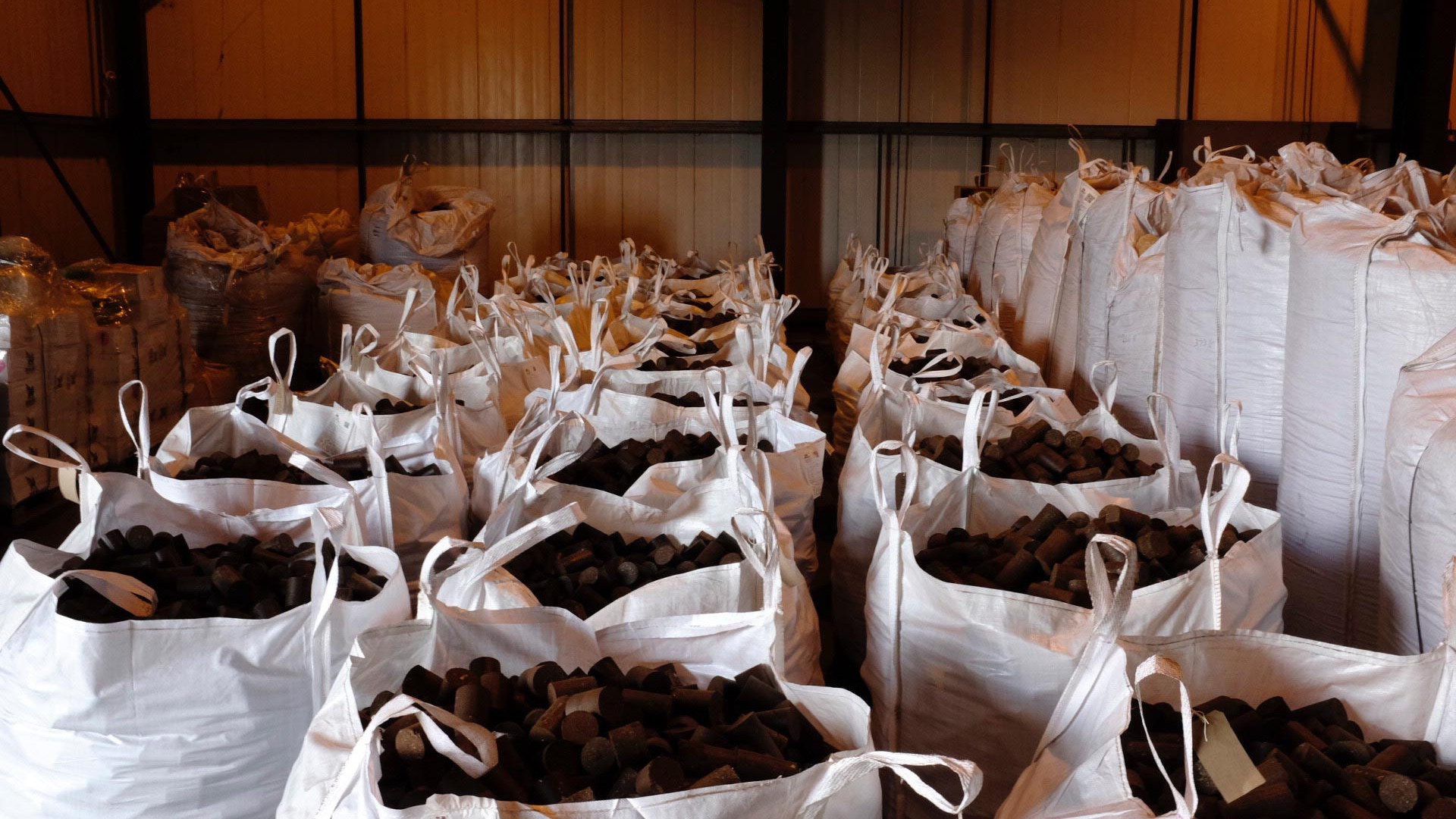
“The heat source is used coffee grounds, recycled by the innovative clean technology company Bio-bean into pellets for biomass boilers, biodiesel and briquettes for wood burners. …

“With its sharp branding, smart technology and simple but potentially revolutionary innovation, Bio-bean is irresistibly representative of the new generation of companies applying principles of modern business, as well as slick design, to an issue that can often appear stale and tasteless: wasted food. …

” ‘These are viable businesses,’ Kate Howell, director of development and communications at Borough Market, says of Bio-bean, and of those other companies turning food waste or surplus into consumables. Indeed, many of the biggest names in the world today actually started here with the market, which has provided a seedbed for sustainable businesses like Rubies in the Rubble, which makes a range of chutneys and sauces from supermarket rejects, Chegworth Valley of apple juice fame, and the street food stall selling meat from previously unwanted billy kids, Gourmet Goat.’ …

“A few months ago, [the grocery chain] Sainsbury’s launched a trial of banana breads made from bananas too bruised to sell in store, to enormous accolades. ‘Originally we estimated they would sell 1,000 loaves,’ says Paul Crew, director of sustainability at Sainsbury’s, with palpable excitement. ‘Customer feedback has been overwhelmingly positive and we’ve already sold 3,000, saving just as many bananas.’ ”

Hey, that’s what we all do with bruised bananas! Now you and I can claim to be trendy as well as thrifty.

Read the Foodism article here.

Photo: Foodism
Bio-bean turns used coffee grounds into pellets for biomass boilers, biodiesel and briquettes for wood burners.

Read Full Post »

Sometimes I get blog ideas from Facebook, which is one reason I can’t see myself pulling out despite all the irrelevant, unwanted clutter there.

Former colleague Scott G. recently posted a curious item on Facebook about turning pineapple waste into leather — real leather, not “fruit leather.” It’s much better for the environment than animal-based leathers and more appealing to sustainability-conscious consumers than petroleum-based ones.

Adele Peters at FastCoexist says that Carmen Hijosa got the idea for a new, sustainable industry on a visit to the Philippines years ago. But first she needed a PhD.

“When leather expert Carmen Hijosa visited the Philippines to consult with the leather industry there, she discovered two big problems: The leather was poor quality, and producing it was bad both for the local environment and the people involved.

“But as she traveled around the country, she had an epiphany. The Philippines grows a lot of pineapples — and ends up with a lot of wasted pineapple leaves. The leaves, she realized, had certain features that might make it possible to turn them into a plant-based leather alternative. …

“She also looked at other local plants, such as banana fibers and sisal. But only pineapple fibers were strong and flexible enough to handle the manufacturing process she had in mind.

“Hijosa left her work in the traditional leather industry and spent the next seven years at the Royal College of Art in London, developing the material into a patented product while she earned a PhD. Now running a startup — at age 63 — she’s ramping up manufacturing of her pineapple-based leather, called Piñatex. …

“Her startup, Ananas Anam, has built its production from 500 meters to 2,000 meters, and [by August], she expects the next batch to be around 8,000 meters. But as the company’s capacity grows, demand is already outpacing supply. Companies like Puma and Camper have made prototypes with the material, and others are already using it.”

What an impressive woman! More here.

Photo: FastCoexist
Because pineapple leaves would normally be wasted, turning them into leather, is an extra source of income for farmers.

Read Full Post »

Shows how far we have come from ancestors who let nothing go to waste that making clothes out of leftover fabric is a novelty. But it’s a good idea nevertheless.

Katherine Martinko at TreeHugger writes that Beru Kids is a children’s clothing company in downtown Los Angeles that makes use of textiles that would otherwise be landfilled.

“The garment workers are mostly female,” she says, “and are paid higher than minimum wage (not per-garment, as is usual in the fashion industry).

“What’s really interesting about Beru is that it repurposes deadstock fabrics to make its clothes. ‘Deadstock’ refers to surplus fabric that has not been used by other factories. In LA, it is sent to a warehouse, where Beru’s founder Sofia Melograno goes on a regular basis to purchase whatever textiles catch her eye. Beru has also begun recently incorporating organic, traceable cotton into its garments.”

Traceability means the cotton can be traced back to its original source so it’s possible to assess whether all steps in the supply chain are environmentally and ethically sound.

Martinko adds that because the fashion industry is a huge polluter, finding a use for fabric that would otherwise get thrown away is good for the planet.

More here.

Photo: Beru Kids (via Facebook)
Beru-Kids-Molly-Bee-dress

Read Full Post »

Sweet potato evangelism has won the World Food Prize. I learned about this at National Public Radio, which has a regular feature on eating and health called the Salt.

Dan Charles reports, “One summer day in 2012, on a long drive through northern Mozambique, I saw groups of men standing beside the road selling buckets filled with sweet potatoes. My translator and I pulled over to take a closer look. Many of the sweet potatoes, as I’d hoped, were orange inside. In fact, the men had cut off the tips of each root to show off that orange color. It was a selling point. …

“In Africa, that’s unusual and new. Traditionally, sweet potatoes grown in Africa have had white flesh. …

“Those orange-fleshed sweet potatoes along the road that day represented the triumph of a public health campaign to promote these varieties — which, unlike their white-fleshed counterparts, are rich in Vitamin A. [In June], that campaign got some high-level recognition at a ceremony at the U.S. State Department. Four of the main people behind it will receive the 2016 World Food Prize. This prize is billed as the foremost international recognition of efforts to promote a sustainable and nutritious food supply.

“This year’s laureates are Maria Andrade, Robert Mwanga, Jan Low and Howarth (Howdy) Bouis. Three of them — Andrade, Mwanga and Low — worked at the International Potato Center, which is based in Peru, but has satellite operations in Africa. Bouis worked at the International Food Policy Research Institute in Washington, D.C. …

“In recent years, researchers have documented health improvements among villagers in Mozambique and Uganda, simply because they chose to eat sweet potatoes with orange flesh.” More at NPR.

Don’t you love the orange truck? I call that multichannel messaging.

Photo: Dan Charles/NPR
Maria Isabel Andrade is one of four researchers honored with the World Food Prize for promoting sweet potatoes that are orange inside to combat malnutrition.

Read Full Post »

When homes are destroyed in disaster zones, the Mobile Factory can turn the rubble into Lego-like building blocks to create new housing. They snap together without mortar.

Stella Dawson of the Thomson Reuters Foundation writes, “In Amsterdam a mobile factory, the size of two shipping containers, ingests rubble at one end, liquifies it into cement, and spurts out Lego-shaped building blocks.

“Call it rubble for the people, converting the deadly debris from disasters into homes and hospitals, cheaply and quickly.

“It’s the brainchild of Gerard Steijn, a 71-year-old sustainable development consultant turned social entrepreneur, who leads the Netherlands-based project to recycle the rubble from natural disasters and wars.

“He plans to create ecologically sound and safe housing by producing 750 building blocks a day from the debris, enough for one home at a cost of less than $20,000 each.

” ‘In disasters, you have piles and piles of rubble, and the rubble is waste. If you are rich, you buy more bricks and rebuild your home,’ Steijn said in a telephone interview.

‘But what happens if you are poor? In disasters it is the poorest people who live in the weakest houses and they loose their homes first. I thought, what if you recycled the rubble to build back better homes for poor people?’

“His rubble-busting Mobile Factory has fired the imagination of a landowner in Haiti and a civil engineer at the University of Delft. They have joined forces to test Steijn’s idea and build the first rubble community in Port au Prince next year. …

“Unskilled people can build the homes with the blocks, which meet demanding Dutch construction standards to ensure they will last for many years. [Hennes de Ridder, an engineering professor at the University of Delft,] expects further stress tests he planned for Peru in a few months will show the homes can withstand temblors of at least 6 on the Richter scale.” Read more here.

Photo: The Mobile Factory
Model homes built from cement rubble are on display at an industrial park in Amsterdam. The brightly painted homes are designed for disaster zones, using technology that creates Lego-style building blocks from cement rubble.

Read Full Post »

As a coffee drinker and a fan of Dean’s Beans (whose mission is “to use high-quality specialty coffee as a vehicle for progressive change throughout the coffeelands of Asia, Africa and the Americas”), I was interested to come upon a Living on Earth radio story about the wider sustainable-coffee movement.

Steve Curwood is host of the Public Radio International show.

“CURWOOD: A cup of joe might help sustain your energy, but it may not be so sustainable for the Earth. Just 12 percent of coffee is sold under the label ‘sustainably grown.’ A new initiative called the Sustainable Coffee Challenge aims to change the way the coffee industry operates to the benefit of the Earth. Peter Seligmann is chairman, CEO, and co-founder of Conservation International. … So tell me about the sustainable coffee challenge that CI has just formed. Why did you zero in on coffee as a target for sustainability?

“SELIGMANN: Well, we started working on coffee about 15 years ago with Starbucks, and after 15 years we’ve been able to announce with Starbucks that 99 percent of all their coffee is certifiably sustainably harvested and produced. Which means that as their company has grown they have not cut a single tree, and hundreds of thousands of hectares of forests have been set aside as Starbucks has expanded its coffee business. That inspired us to think, is it possible to make coffee the first agricultural commodity that is completely and 100 percent sustainably produced. …

“The dark side of coffee growing is that coffee that is not produced under the shade of forest, [is] produced by clear-cutting forests and planting coffee. And when you clear-cut a forest, you destroy the biodiversity, you put emissions — CO2 emissions — in the atmosphere, you lose soil, and you do industrial agriculture, which maximizes pesticides and chemicals and reduces the benefits to society.

“CURWOOD: So, what’s the obstacle to growing coffee sustainably?

“SELIGMANN: It’s convincing the producers that this is in their enlightened self-interest. To go from non-sustainable coffee to sustainable coffee requires an investment of money and it requires time. Most of these growers, farmers actually work in co-ops, and the challenge is getting the co-ops to agree that this is the transition they want to make from non-sustainable to sustainable and what’s going to motivate them is there being a buyer for the coffee they grow. And so it gets back to the consumer, and the consumer says it’s what we want.” Read on.

Photo: Martin Diepeveen, Flickr CC BY-NC-ND 2.0
Coffee beans are the pits inside the fruit or “cherry” of the coffee plant.

Read Full Post »

Time for another animal story. Edie Freedman has a surprising one about elephants, African farmers, and bees at a new-to-me website called O’Reilly.

“Although elephant populations have increased since the 1970s, the human population has grown even more quickly,” she writes “cutting the elephants’ habitat up into farms and roads. The elephants’ key migratory routes have been cut off in many places. As result, they regularly break through fences, where they eat and destroy crops. When the farmers confront elephants on their property, things don’t generally end well for either party.

“Lucy King, a researcher working with Save the Elephants, has spent many years investigating the problems involved in crop protection. Her goal is to find long-term solutions that reduce the frequency of human-elephant conflicts—and that can be financed and managed by local farmers.

“As Ms. King looked into the elephants’ habits for any clues to keeping them out of fields planted with crops, she noticed that they tended to avoid acacia trees with active nests of African bees. Elephants, it so happens, are afraid of the bees, and will move away from an area and warn other elephants if they hear bees buzzing nearby.

“And so the beehive fence was invented. The fences are simple, inexpensive, and easy for the farmers to build and maintain. … The hives are hung at chest height, which makes it easy for the farmer to harvest the honey, while also making them highly visible to the elephants.

“The hives, connected by wires,  are hung every 10 meters around the perimeter of a field. The farmers leave wide pathways between their crops so elephants can move past the fences along their migratory routes. If an elephant makes contact with one of the hives or the connecting wires, the beehives all along the fence will swing and release the bees.”

More here.

What a terrific solution! Where there’s a will, there’s a way.

Photo: oreilly.com

Read Full Post »

One of the better aspects of the 2015 Massachusetts Conference for Women was hearing speakers like Candy Chang, an artist who engages ordinary people in public discourse.

At the December conference, Chang focused on Neighborland, a service co-founded with Dan and Tee Parham, that helps “residents and organizations collaborate on the future of their communities.”

This is how it works. Organizations start by posing a question. For example, they might hand out cards that say, “I want [blank] in my neighborhood,” and a resident might write in, “a night market.” Next, using Neighborland tools, ideas are collected from workshops, public installations, SMS, and Twitter. They are then discussed and voted on. The website says Neighborland has “sophisticated moderation, clustering, and de-duplication tools for organizers to aggregate all of the data from residents. Our reports make it easy for organizers to see trends in the data, make decisions, allocate resources, and keep participants involved in the fun part – making their neighborhoods better places.”

In this example, National Gardening Association’s Jenna Antonio DiMare reports on Adam Guerrero,  his Memphis, Tennessee, team of blight-busting ″Smart Mules,″ and their efforts to create a greener and more sustainable city.

“During the month of October, National Gardening Association (NGA) partnered with Neighborland to challenge Memphis residents to propose innovative projects to make their city and neighborhoods more sustainable. With a $1,000 grant awarded to the most promising project, Neighborland’s simple platform empowered local Memphis residents to ‘connect and make good things happen.’

“Despite receiving many inspiring project proposals, from founding an urban agriculture school to growing a newly established community garden, it was clear to NGA that the ‘Smart Mules’ project would have the greatest impact with the $1,000 award. …

″ ‘We are fighting [urban] blight, raising neighborhood morale, engaging our local government, and investing in a future for the neighborhood, all at the same time,’ writes the ‘Smart Mules’ team. To accomplish these goals, ‘Smart Mules’ provides work for many young, at-risk males who have been ‘largely dismissed’ or disenfranchised, according to team leader Guerrero.” More here about the work these young men are doing for sustainability.

(A couple years ago, I wrote about Candy Chang’s “Before I Die” interactive street art.)

Photo: Neighborland.com

Read Full Post »

Maria Popova linked to this story on twitter. It’s about how climate change is affecting a way of life for Fiji Islanders.

Meehan Crist writes at the blog Nautil.us, “The day that conservation biologist Joshua Drew, his two students, and I arrive in the Fijian village of Nagigi, the wind is blowing so hard that the coconut palms are bent sideways. ‘Trade winds,’ we are told. And, ‘El Nino. The villagers here also know that climate change is affecting the weather, but their more immediate problem, shared across the Pacific—and, indeed, the world—is an ocean ecosystem sorely depleted by overfishing.

“Nagigi is a village of about 240 people living in tin-roofed wooden homes strung along a sandy coastline. A single paved road runs the length of the village, parallel to the ocean, and along this road are homes clustered by family, painted in cheerful pastels, and connected by well-worn paths through the crab grass. ‘Before,’ said Avisake Nasi, a woman in her late 50s who has been fishing this reef her whole life, ‘you just go out and you find plenty fish. Now, you have to look.’ …

“If pressures mount from too many sides at once—rising ocean temperatures, acidification, pollution, overfishing—the combined pressure will be too much even for Fiji’s remarkably resilient reefs to bear. …

“Conservationists and humanitarian groups have recently united in the call for sustainable resource management, and in this trend, Nagigi is ahead of much of the Western world. Villagers have been discussing how they might use a traditional ban on fishing known as a tabu (tam-bu) to help manage their marine resources in new ways. …

“Drew presents his findings about how fish here are interconnected with other reefs, and how to best protect the species most important to the village in terms of food and income. He talks about how, for the last three years, he has been collecting baseline data about the species present on the reef so that if the village sets up a tabu, its effects can be measured.

“His audience is most interested in what Drew has to say about where to set up a tabu—include the mangroves at the left side of the village shore, because they act as fish nurseries—and for how long—three years would give crucial species enough time to mature and spawn. There has been some talk of a one-year tabu, which would be less of a hardship for villagers who will have to walk a mile or more to reach ocean where they are allowed to fish. But Drew’s data suggest this wouldn’t be long enough to make the sort of difference the village wants to see. ‘I can only offer information,’ Drew says at the end of his presentation, ‘the decision is yours.’ ”

The reporting for Crist’s  story was made possible by a grant from the Mindlin Foundation.

Try to see the related climate-change movie Revolution, which I wrote about here.

Photo: Meehan Crist
The view from Nagigi’s school to the sea, where many locals make their living

Read Full Post »

Having given myself a serious scare reviewing the film Revolution (on the planet’s race to extinction through practices such as destroying critical forests), I was happy to read about a positive forestry initiative started in India and expanded to Haiti and Kenya. The pressures are the same in those countries as in Madagascar, which was featured in Revolution, but there is also a recognition that trees are life-giving.

Gregory M. Lamb writes at the Christian Science Monitor, “Aviram Rozin was excited. He had just returned from Haiti where the 80,000 Maya nut trees that volunteers with Sadhana Forest had planted there during the past five years had started to flower. Before long each tree would be producing huge quantities of nuts high in protein and other nutrients. One tree could supply enough yearly protein for a family of five.

“The nonprofit Sadhana Forest, cofounded by Mr. Rozin and his wife, Yorit, follows three simple strategies:

“• Plant indigenous trees in arid regions that once had been forested but have become barren, useless land.

“• With few exceptions, do the work using volunteers, both local and from around the world.

“• Since trees don’t grow overnight, plan on staying around for a long, long time to see the project through.

“The Rozins started Sadhana Forest in 2003, the year after they moved to India from Aviram’s native Israel to live in Auroville, an experimental township in southeast India that emphasizes sustainable living and has attracted immigrants from all over. The couple bought 70 acres of degraded land and set about creating a community dedicated to reforestation. …

“The aim of Sadhana Forest isn’t to buy and reforest massive tracts of public land. Rather, it is to teach local people how to grow trees on their own land. Faced with the dry climate, Rozin has come up with a simple, yet innovative, way to water the trees: wick irrigation. A two-liter plastic bottle filled with water is planted up to its neck next to each sapling or tree. A piece of cotton rope fed through a tiny hole in the bottom of the bottle acts as a wick, slowly moistening the soil. Loosening or tightening the bottle’s cap can control the rate of flow. …

“Each wick bottle becomes ‘a personal watering system for each tree,’ Rozin says, yet the materials are readily available locally and cost almost nothing. …

“Rozin, who studied psychology and later worked in management for an Israeli medical device company, does not have a degree in forestry but says that may have been a blessing in disguise.

“ ‘We found out that, in a way, ignorance is bliss because we’re very open to learning,’ he says. ‘We don’t think we know everything. A lot of innovation comes from listening to people, to being open.’ ”

More here.

Photo: Sadhana Forest
Volunteer Nixon Casseus (l.) and Sadhana Forest cofounder Aviram Rozin show off the first flowering Maya nut tree in Haiti.

Read Full Post »

Sandy sent this March 20 update from the Letterbox Farm Collective in the Hudson Valley. Farmer Nichki is Sandy’s niece.

“We can see the ground! All of a sudden, our fields and beds have emerged.  We’re checking the soil daily to see if it’s thawed enough to get started.  In the meantime, we’re wrapping up a very full winter of projects, events, and olympic-level planning, and taking a deep breath before the neverending days of the growing season begin.  Its time to start seeds, take soil tests, and take stock.

“Six months ago, through lots of work, lots of luck, and the incredible support of our community, our team of farmers and land partners were able to purchase the land underneath our farm.  Farming with land security is entirely different than farming with a one-year lease …

“We’ve long been inspired by the Community Supported Agriculture model and have spent many years planning the CSA of our dreams.  We’re so proud to finally introduce our 2015 Meal Share, a ‘Full-Plate’ CSA designed to bring you a whole, compelling, and meal-based experience of eating from the ground. …

“Pigs. Now that we have land security and access to more outbuildings, we can finally bring on the larger livestock.  …

“While sometimes farming seems like a poor career choice, there are a couple things that make us feel luckier than everybody else.  The USDA Farm Service Agency’s Microloan program is one of them.  FSA Microloans are nifty little loans for up to 50k at generous interest rates, just for farmers to start or expand their operation.  …

“Inspired by the success of our September farm dinner with Momofuku Ko (the pictures are in!), we’ve officially opened up our land for weddings, parties and celebrations. … All proceeds from events go directly toward land renewal and restoration projects (this year’s projects are all about planting trees). …

“Our very own Nichki received a Farmer Grant from Northeast Sustainable Agriculture Research and Education (NESARE) to develop a comprehensive enterprise guide on raising rabbits humanely on pasture.  Watch out for ‘Pastured Rabbit for Profit’ hitting your PDF libraries and farming conferences this fall.”

It’s quite an inspiration to see these young people take on the hard work farming — learning and innovating as they go.

On a related note, New Englanders too far away to take advantage of a CSA in New York may want to check out some local community-supported-agriculture opportunities, here. The list is from EcoRI.

Photo: Letterbox Farm Collective

Read Full Post »

What would it be like to live in an earth dome? The California Institute of Earth Art and Architecture (Cal-Earth) can help you check out the concept for a day or a weekend or the 12-15 weeks it will take to teach you to build a dome home. Maybe you’d rather settle for building just a “rocket stove mass heater.” Cal-Earth can teach you to do that, too. Hesperia, California, is the place. (Although Cal-Earth’s mailing address is Claremont, near Suzanne’s alma mater.)

From the website: “Superadobe technology was designed and developed by architect Nader Khalili and Cal-Earth Institute, and engineered by P.J. Vittore. Superadobe is a patented system (U.S. patent #5,934,027) freely put at the service of humanity and the environment.”

The television station KCET has more. Reporter Kim Stringfellow says, “As a humanitarian, architect and teacher, Khalili developed the Superadobe building technique incorporating a tubular sandbagging system filled with locally sourced earth that are reinforced with a barbed wire technology and stabilized lime, cement, or asphalt that is locally produced. Dwellings can be used temporarily or may be stabilized, waterproofed, and finished with plaster to create a permanent building. Originally from Iran, Khalili’s structures and building techniques are inspired and informed by centuries of earth building found throughout the Middle East and North Africa. He also is known for his Geltaftan Earth-and-Fire construction system which as also known as Ceramic Houses. ”

Tell me this is not a hobbit house.

Photo: Geoff Lawton 

Read Full Post »

Some African communities are rediscovering the value of mud for building cool, comfortable homes — and sparing trees.

This story is from the Thomson Reuters Foundation by way of the the Christian Science Monitor feature “Change Agent.”

“Building a house in the poorest villages of southern Mali has for years involved cutting trees for timber frames and struggling to save cash for a corrugated iron roof. Now families are turning to an alternative: Nubian-style domed mud-brick homes that are cheaper, protect fast-vanishing local forests, and make homes cooler in the worsening summer heat, experts say.

“Earthen homes with vaulted brick roofs – a style adopted from Nubia in northern Sudan – are being promoted across the Sahel, including in Burkina Faso, Senegal, and Mauritania, as part of efforts to build resilience to climate change.

” ‘Most people, more than half, don’t have the decent housing they dream of because it costs too much to build. This is going to change with the Nubian vault,’ predicted Chiaka Sidibe, a mason in Massako, one of the Malian communities adopting the new building style.

” ‘You just have to make mud bricks that don’t cost money, and fellow villagers help you to build your house,” he said. …

“The local office of the Association la Voûte Nubienne, the international non-governmental organization that is promoting the Nubian vault building style, has helped train local builders in mud-brick construction techniques. The aim is to build a sustainable, self-supporting market for the homes, said Moussa Diarra, the NGO’s local coordinator.

” ‘It can take much time to reach this goal, but I’m confident the initiative will succeed,’ he said.”

More here.

Photo: UN Climate Change Secretariat

Read Full Post »

« Newer Posts - Older Posts »