Feeds:
Posts
Comments

Posts Tagged ‘theater’

Maura Judkis of the Washington Post blogged recently about an actor who wants the opportunity to perform in your home and will throw in a surprising service.

Judkis writes, “Fringe Festival audiences have opened their homes to Brian Feldman. He has met their families and friends, admired their art, eaten their food, handled their precious china. …

“The premise for Feldman’s show, ‘Dishwasher,’ is this: He will come to a person’s house, wash all of the dirty dishes, perform a monologue of the audience’s choosing and then conclude with a single question: ‘Am I a better actor or dishwasher?’ The answer can depend on the monologue that he cold-reads — and on how crusty that casserole dish in the sink has become. The show — the first Fringe show to take place in private homes — has sold out its entire run. …

“His [work] follows in the tradition of great performance artists such as Tehching Hsieh and Marina Abramovic, but it’s more playful — and in his opinion, more theatrical.

“ ‘It’s hard to define — I’m straddling the middle, and I’m always pitching it as theater,’ he said. ‘I was always more interested in theater that had a concept that was hard to define, or things that didn’t have an ending, and didn’t necessarily have a beginning.’ …

“In the week of performing the show so far, he’s dealt with messes big and small. There was the Cleveland Park home with the too-small sink.

“ ‘It was hard to wash anything,’ he said. ‘They had a door that you could enclose yourself in the kitchen. I used it to comic effect, it was almost like “Noises Off.” ‘ …

“So far, five of his hosts have told him he’s better at acting, one has said he’s better at dishwashing, and two couldn’t decide.

“ ‘I’m trying to do as good a job dishwashing as I am acting,’ he said. ‘It’s subjective, just like art.’ ”

Read how Judkis and her friends got him to read “the character of Mrs. Pringle, who is fretting about a disappointing party, from the play ‘Fourteen’ by Alice Gerstenberg. ‘This is my last dinner party — my very last — a fiasco — an utter fiasco!’ ” here.

Photo: Maura Judkis/The Washington Post
Brian Feldman performs a monologue in the writer’s home.

Read Full Post »

Wow, what an awesome job the Concord Players did with this goofy musical by the folks who brought you Monty Python!

Spamalot had so many insane costume changes, extravagant production numbers, and giddy jokes that it never allowed you a minute to think how silly it all is.

We laughed a lot. They say laughing is good for your health, and I can see why it is good for mental health at least — when you are really laughing, you can’t think about anything but the thing that is making you laugh. So you’re really “living in the moment,” as the gurus advise.

Tom was one of the trumpet players (not the one who gets shot by the conductor for playing the wrong trumpet themes in the overture), and Claire gave a party after the matinee. Wisely, she decided not to emphasize Spam for the meal (“No one would have come to the party,” she said) and instead presented a delicious spread with a Cinco de Mayo theme.

Several guests cracked out their smart phones to inform us about what Cinco de Mayo celebrates (the 1862 defeat of the French by Mexicans at Pueblo — not sure I feel much wiser, though).

Spamalot is sold out. But it was sold out today, too, and I saw a few empty seats, so take a chance — maybe a ticket holder won’t show up. The woman next to me was offended by some of the naughtiness and irreverence and left at intermission. So you could always come for the second half.

Read Full Post »

A Syrian actor who visited a refugee camp, felt compassion for the children, and returned to help them put on a play decided to start at the top. Only the best playwright would do.

From the Zaatari refugee camp in Jordan, NY Times reporter Ben Hubbard describes the scene: “On a rocky patch of earth in this sprawling city of tents and prefab trailers, the king, dressed in dirty jeans and a homemade cape, raised his wooden scepter and announced his intention to divide his kingdom. His elder daughters, wearing paper crowns and plastic jewelry, showered him with false praise, while the youngest spoke truthfully and lost her inheritance.

“So began a recent adaptation here of King Lear. For the 100 children in the cast, it was their first brush with Shakespeare, although they were already deeply acquainted with tragedy. All were refugees who had fled the civil war in Syria. …

“ ‘The show is to bring back laughter, joy and humanity,’ said its director, Nawar Bulbul, a 40-year-old Syrian actor known at home for his role in ‘Bab al-Hara,’ an enormously popular historical drama that was broadcast throughout the Arab world.

“Last year, he and his French wife moved to Jordan, where friends invited him to help distribute aid in Zaatari. …

“Children he met in the camp made him promise to return, and he did — with a plan to show the world that the least fortunate Syrian refugees could produce the loftiest theater. …

“The mere fact that the play was performed was enough for the few hundred spectators. Families living in nearby tents brought their children, hoisting them on their shoulders so they could see. …

“The crowd burst into applause, and a number of the leading girls broke into tears. Mr. Bulbul said they were overwhelmed because it was the first time anyone had clapped for them.”

More here, at the NY Times, where you can also see a slide show and watch a video about the refugee-camp theater initiative.

Photo: Warrick Page for The New York Times

Read Full Post »

A lovely, warm day for walking, grandkids, and friends.

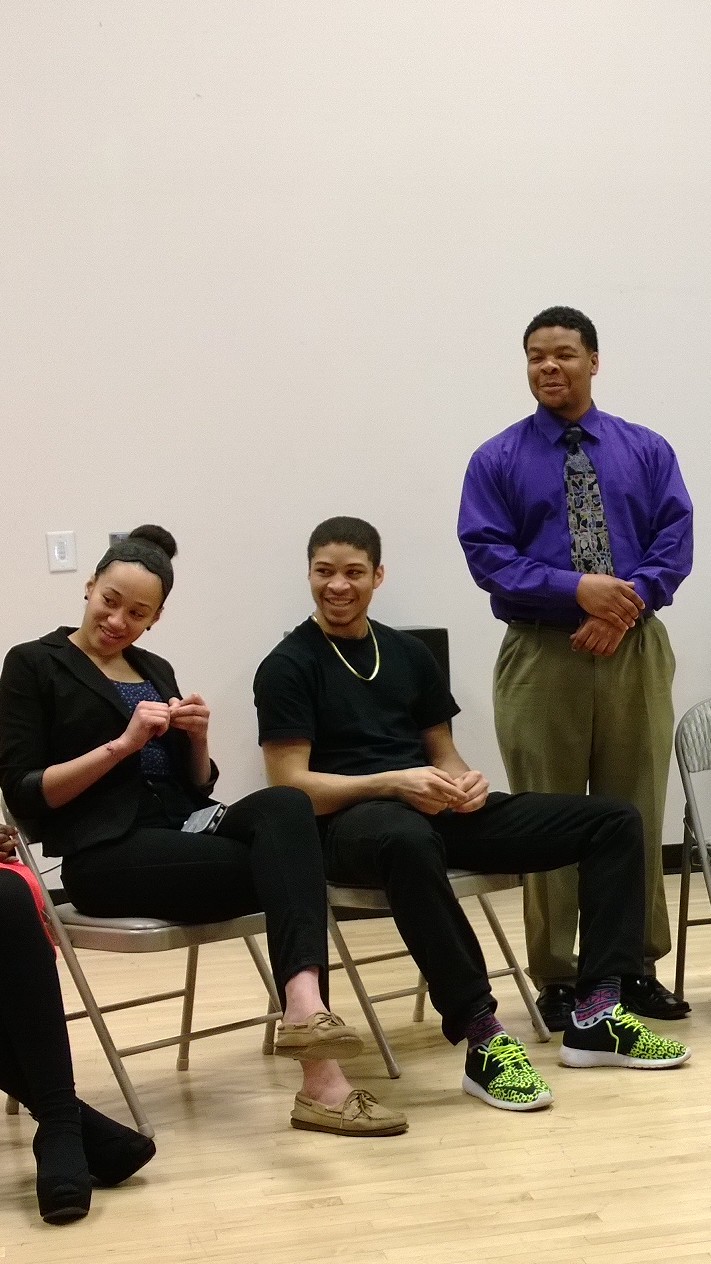
Here are a few photos, including one of director-playwright Jermaine Hamilton with cast members at Brandeis University.

I was so happy I managed to get to Jermaine’s senior-thesis play about inequality of U.S. high schools, Bridging the Gap. What a challenge to make it work for both his social sciences major and his theater minor! A great bunch of natural actors and Jermaine’s lighting and sound collaborators pushed it over the finish line, and judging from the audience comments in the talk-back, the issues that the play presented struck chords.

Jermaine has a teaching job lined up for next year, after graduation. The school is lucky to have him.

Jermaine, standing, joins his cast for a talk-back with the audience. The other pictures are walking-around shots.
Jermaine-Hamilton_with-cast

daffodils


gravestone-shadows

flower-box-april-12-14


032214-library-wndow

tree-face


Read Full Post »

Washington-Sq-is-where-I-came-inWashington Square, New York City

Random photos from my travels.

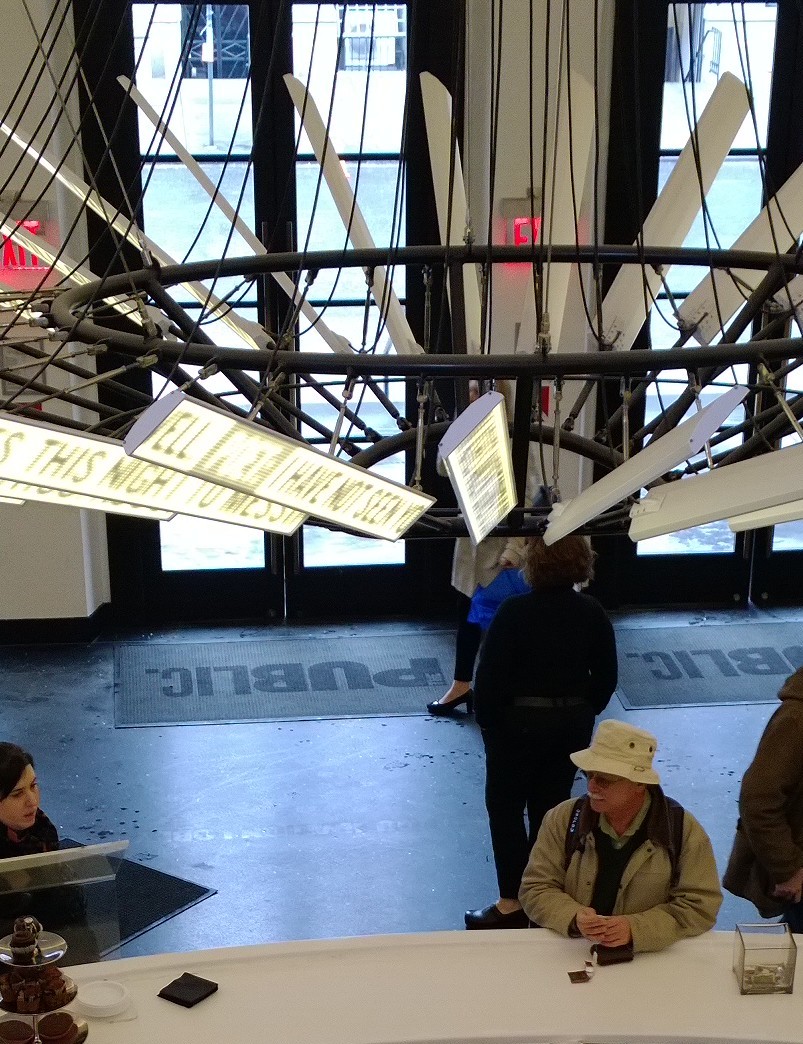
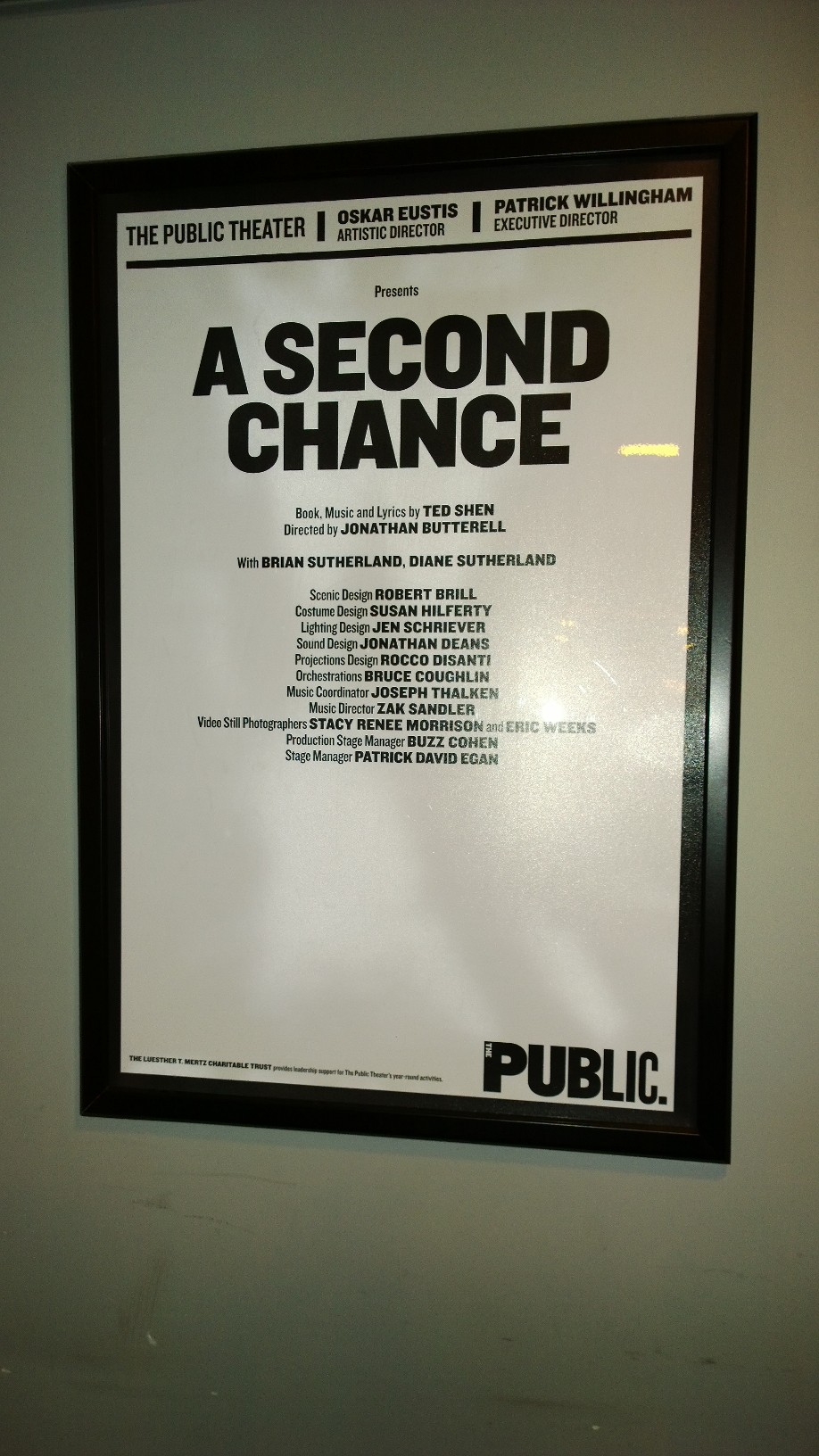
My husband going into the Public Theater to see classmate Ted Shen’s musical, A Second Chance. The Playbill for the show. A delightful chandelier at the Public, with paddles that illuminate changing phrases.

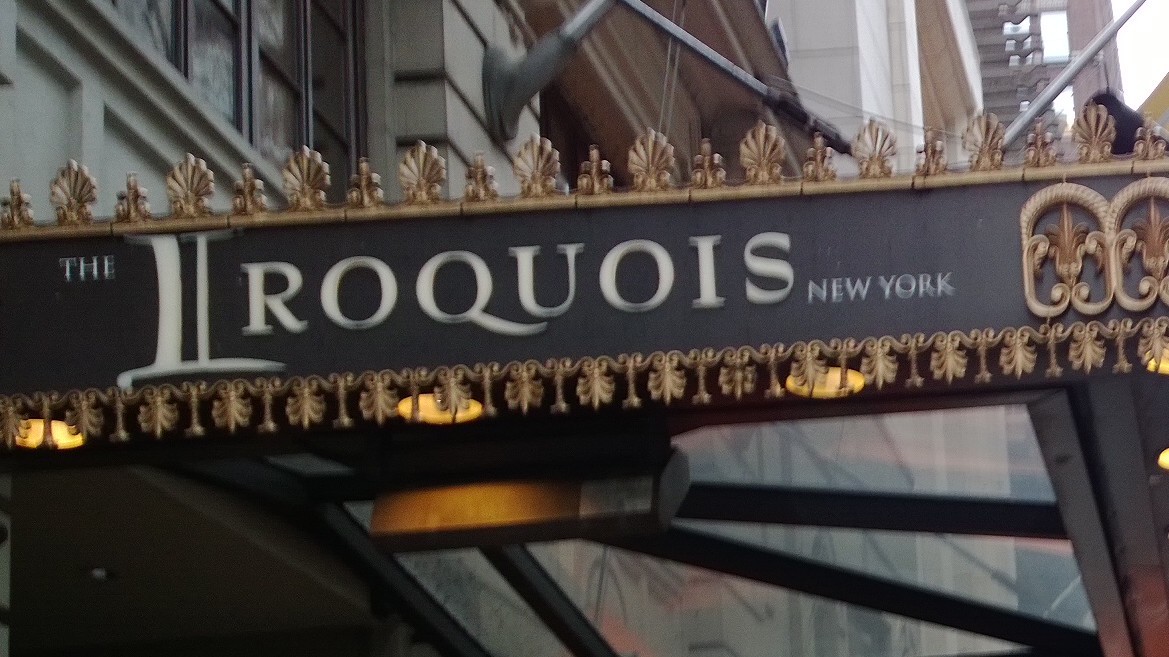
Subway buskers playing a grandson’s favorite song, “When the Saints Go Marchin’ In.” Grand Central Station. The charming Iroquois Hotel. A flower-themed mosaic in the Lexington Ave. subway.

Gertrude Stein looking like herself in Bryant Park. And the Metropolitan Museum, where we saw a great photography show with my sister and brother-in-law. More on that later.

(Be watching for the relaunch of the Luna & Stella website, where one of the family pictures is of my sister at age 3, pictured with Suzanne’s maternal grandfather. … Did I mention this is a blog for Suzanne’s birthstone-jewelry company Luna & Stella?)

Public-Theater_NYC

Ted-Shen-Second-Chance-Playbill


The-Public_has-cool-chandelier

When-the-saints-go-marching-in


Grand-Central-NYC

Iroquois-hotel-treats-guests-right


Lex-Av-Subway-NYC

Met-Museum-NYC


Gertrude-Stein-Bryant-Park


Read Full Post »

Ted-Shen-Second-Chance-at-PublicWe went down to New York this weekend to see my husband’s classmate’s new musical.

Ted Shen wrote the book, lyrics, and music to A Second Chance, a lovely little cameo about a widower and a divorcee. The title refers to new beginnings for two people, but it’s hard for my husband and me not to think of new careers, too, since Shen was an investment banker for 30 years before turning to music so seriously.

At TheaterMania, where a couple of old reviews I wrote are still archived, Shen describes how he began to develop his musical after Stephen Sondheim gave him encouragement.

And he explains his style. “In my role as composer, my preference has been to emphasize the use of ‘action songs’ that show the characters interacting with each other and conversing primarily through lyrics rather than pure spoken dialog, and to limit the use of ‘introspection songs’ that stop the action to express feelings and inner thoughts. I have attempted to create a contemporary musical ‘language’ that is jazz-inflected rather than written in today’s predominant pop-based genre.’ ” More at TheaterMania.

Oskar Eustis, the artistic director of the Public Theater, where the show is being performed, says that Shen “has written some of the most elegant and sophisticated music I have heard in theater in many a moon.”

While in New York, we also saw the musical A Gentleman’s Guide to Love and Murder (based on the movie Kind Hearts and Coronets). It was pure Broadway fun, and we laughed a lot. But A Second Chance gave us more to talk about after.

Consider checking out the site for the Shen Family Foundation, here, which “concentrates its grant-making in the area of musical theater through its funding support of works of exceptionally gifted and highly original musical theater composers.”

Photo: Suzanne‘s Dad reconnects with his classmate decades after business school and asks him to sign a Playbill.

032914-John-and-Ted-Shen-at-Public-Theater

Read Full Post »

One thinks of Iran as repressive, and having watched the doomed 2009 revolution unfold on twitter, I believe it is. But Iranian theater people seem to be managing to squeeze in some fun.

I blogged before about the Tehran production in a taxi, here. Now Studio 360 has a story on what might be called extreme improvisation. I take that back. There’s a script. But the actor doesn’t get to see it in advance.

“Actors face stage fright all the time,” says Studio 360, a radio show. “But consider this scenario: you show up to perform a one-person show, and you’ve never seen the script. You don’t know what it’s about because you promised not to do any research. It’s your first performance, and the only one you’ll ever have. The theater’s artistic director hands you a fat manila envelope with a script. And go.

“Also, the audience will decide whether you drink a glass of water that appears to have been poisoned.

“This is the premise of White Rabbit, Red Rabbit, by Iranian playwright Nassim Soleimanpour. ‘I did not know what was in front of me inside that envelope,’ says actor Gwydion Suilebhan. ‘What if this script is going to require that I disrobe? Or insult my mother? Or be rude or self-debasing?’ …

“Soleimanpour pulls his strings from afar, because — although the play has been performed in Toronto, Berlin, San Francisco, Brisbane, Edinburgh, London, and now Washington, DC — he really is in a cage. He doesn’t have a passport and can’t leave Iran, so he has never seen his play performed. ‘Nassim has given up the kind of control that is customary for playwrights,’ says Suilebhan, of working with actors and directors to realize the play. ‘At the same time, because he has put all of these restrictions on how it is to be performed, he has seized certain kinds of control that playwrights normally do not have. So he is literally embodying the ideas of control and submission and manipulation that he’s baked into his script.’ ” More.

Photo of Iranian playwright Nassim Soleimanpour found at the HuffingtonPost

Read Full Post »

Well, if you aren’t into musicals, it might not be hilarious to you, but I just love that a famous songwriter wrote this number for Great American Soup back in 1970, and a famous Broadway star performed it. Terry Teachout posted it, here, on his theater blog. His blog is called “About Last Night,” and I connect to it through ArtsJournal.

Back when I was reading the Wall Street Journal, I used to enjoy Teachout’s theater reviews. But according to his blog, reviews are just the tip of the iceberg for this Renaissance Man.

“Terry’s first play, Satchmo at the Waldorf, opens off Broadway at the Westside Theatre on Mar. 4. Previews start Feb. 15. The production is directed by Gordon Edelstein, with John Douglas Thompson appearing in the triple role of Louis Armstrong, Joe Glaser, and Miles Davis. It was seen in 2012 at Shakespeare & Company of Lenox, Mass., Long Wharf Theatre of New Haven, Conn., and Philadelphia’s Wilma Theater. For more information, go here.

“To see John Douglas Thompson on stage in Satchmo at the Waldorf, go here. To watch a Wall Street Journal-produced video interview with Terry, go here.”

Teachout also writes opera libretti. I always thought it would be fun to do that.

Below: “Great American Soup” commercial, written by Stan Freberg and starring Ann Miller.

Read Full Post »

I moonlighted as a theater reviewer for years and loved doing it. But even if I hated a particular show, I worked hard to find some aspect to praise. People had to read between the lines for the criticism. I really felt for the actors.

The critics of yore had no such scruples, and as I laugh out loud, I can’t help being a little jealous of their freedom.

Yesterday my husband dug out some reviews of the 1945 Broadway show Polonaise. He had read an obit about the star, who just died at age 99. As there are few shows he hasn’t heard of, he was stumped and went straight to the “critical quotebook” Opening Night on Broadway.

The show’s creators had decided to use the music of Chopin, a Pole, for a story about another Pole, a man who volunteered in George Washington’s army. The two Poles had nothing else in common.

Reviewer Luis Kroneberger wrote, “The best I can say for the thing as a whole is that it appalled me enough at times to keep me from being bored.”

Burton Rascoe noted, “The playbill says that the Alvin Theatre is perfumed with Prince Matchabelli’s ‘Stradivari.’ There was not enough of it used to overcome the odor of dry-rot and mothballs that emanated from the book, the lyrics, and the production of Polonaise.”

And Willela Waldorf must have been hanging out at the Algonquin with Dorothy Parker too much. She let it rip: “It is about time somebody started a League for the Defense of Dead Composers. It is disturbing that some of Chopin’s finest  works, ‘adapted’ for the occasion, should be carelessly flaunted on the Broadway stage in a futile attempt to add luster to a stupid, inept, often embarrassingly ludicrous spectacle. …  The concert pianist hired to play Chopin’s Polonaise in A-flat while the ballet stormed the Royal Palace, not only performed with vigor at the pianoforte but spoke his one line of dialogue clearly and as if he knew what it meant. Maybe what Polonaise needs is a few more concert pianists in some of the other roles.”

Today there is plenty of harsh talk in the media, but I would venture to say it lacks the literary flair of the critics of 1945.

Photo of Chopin: Bisson, c. 1849, via Wikipedia
He looks troubled. Is he foreseeing the future Broadway show
Polonaise?

Read Full Post »

I started really paying attention to Iran (and to Twitter, tops for breaking news) on June 20, 2009, when the tragic, short-lived Green Revolution erupted, fueling unrealized hopes for a more democratic country.

Then I read Jason Elliot’s Mirrors of the Unseen (and blogged about it here) about his travels in Iran, and especially about the people he met and the architecture he admired. He came up with a theory about the architecture that related to the builders’ Islamic beliefs, a love of nature, and a concept of sacred proportions. (If you should see the Nova special on how Medieval architects used the Bible to decide on ideal Gothic cathedral measurements, you will get the idea.)

Elliot loved the people he met in Iran and bemoans the way the Western media depict them. In full agreement with Elliot is the British translator of ancient Persian poetry, Dick Davis, who was on PBS NewsHour last night.

But though the Iranian people may be like people anywhere, the government is not. Residents are frequently obliged to be cautious. Which is how theatrical productions in the privacy of a taxi have come about.

Haleh Anvari of the Guardian‘s Tehran Bureau has that story.

Unpermitted Whispers is a 35-minute play that takes place in one of Tehran’s ‘Rahi’ taxis, which traverse the city along fixed, often straight-line, routes. Rahis pick up passengers at major intersections and drop them off anywhere along their set route, making for a convenient method of getting around town and one cheaper than the minicabs available in every neighbourhood of the capital.

“In contrast to the minicabs, which provide door-to-door service, the Rahi system affords passengers much more anonymity, allowing for candid and uninhibited conversation. Tehranis frequently share stories that they have overheard in these communal cabs; for many, they serve as an extension of the private sphere in which Iranians feel safe to talk about issues of the day.

Unpermitted Whispers takes advantage of this unlikely superimposition of public and private to tell the story of three passengers, all women, who are picked up by a male driver at different points along his route. …

“The play’s first scene was performed entirely on the telephone, as we eavesdropped on a conversation of a kind with which many Iranian women are familiar: a young bride wants to go to the theatre with her university friends but needs an alibi as her traditional family and jealous husband will not approve.”

More here.

Update 2/5/14: Turns out NY City has a play in a cab. It’s called “Take Me Home” and is reviewed by Neil Genzlinger, here.

Photograph: Hanna Havarinasab
Unpermitted Whispers is a play by Azadeh Ganjeh performed in a taxi.

Read Full Post »

And speaking of Korea, the culture in the south might as well be on the other side of the world from North Korea.

My husband and I, lifetime fans of Broadway musicals, may sometimes feel concerned that the audiences are mostly old folks like us, but in South Korea, musicals are cool. Young people dig them.

Patrick Healy writes for the NY Times, “The packs of young women arrived 90 minutes early for the evening’s show: Murder Ballad, a rock musical that flopped off Broadway in July and then opened here four months later in an all-Korean production.

“They wanted time to shoot smartphone video of Seoul’s newest theater, built inside a shopping mall, and start scoring autographs: of actors, sure, but lighting operators and makeup artists too.

“Or anyone, really, working on American musicals, whose head-spinning popularity here has changed the game for New York producers looking to extend the lives of their shows.

“Seoul has become a boomtown for American musicals, with Korean and Broadway producers tapping into an audience of young women raised on the bombast of Korean pop and the histrionics of television soap operas.”

Bombast and histrionics? Now, wait just a minute, here! Hmmm. I guess musicals can be bombastic, like opera. But the kind I like are more thoughtful and quirky.

Recent shows we enjoyed were Side Show, which I talked about here, and
Brian Crawley and Andrew Lippa’s take on A Little Princess, a story by the author of the Secret Garden.

Come to think of it, both Side Show and A Little Princess had moments of bombast and histrionics. I guess I don’t notice that anymore.

Photo: Lim Hoon
Korean actors in the Seoul production of
Wicked.

Read Full Post »

ArtsJournal.com is a great source of leads from around the world, which is why I sometimes come up with stories from far away places like Belarus. The ArtsJournal blog covers art, theater, film, books, dance, music, media — and interesting creativity tidbits from the world of psychology.

Recently a link to the British publication The Stage highlighted a story about UK policymakers taking steps to build the next generation of artists.

Nicola Merrifield writes that the national strategy, Building a Creative Nation, “is calling upon the UK’s 107,000 creative sector employers to each recruit a person aged 16 to 24 by 2016.

“The initiative is designed to ensure that young people are able to gain paid jobs in arts organisations. It will urge employers to join organisations such as the Royal Opera House and Ambassador Theatre Group in signing up to the Fair Access Principle, which encourages responsible recruitment practices.

“As part of the campaign, Creative and Cultural Skills, the sector’s leading body for skills development, will create 5,500 apprenticeships, paid internships and traineeships across the UK by 2016.

“This is part of CC Skills’ £15 million Creative Employment Programme launched earlier this year to combat unpaid internships in the arts sector, which aims to subsidise 6,500 training schemes for people aged 16-24. This scheme, which was financially supported by ACE, has seen employers take on 1,000 unemployed people so far.

“Industry leaders including former Royal Opera House chief executive Tony Hall, ticket provider Live Nation’s international chief operating officer Paul Latham and Dirty Dancing founding co-producer Michael Jacobsen are backing the Building a Creative Nation strategy.

“Pauline Tambling, joint chief executive of CC Skills, said: ‘We’re looking to build upon the work that our supporters have been doing to help young people into work across the creative industries, which has already achieved so much.’ ”

More.

Photo: Tristram Kenton
Laura Evelyn in “Once Upon A Christmas” by Look Left Look Right in Covent Garden Piazza

Read Full Post »

Hidden Faces of Courage, a “theater piece with music” created by Mary Driscoll in collaboration with formerly incarcerated women, is coming soon. I will write more after I have seen the production in November, but I need to alert you that if you want tickets, you might want to get them now as the performance space is rather small. Go to Fort Point Theatre Channel, here.

I met Mary in the playwriting class that I blogged about a few times. I didn’t continue with theater after the class, but Mary kept working at this play. She has a deep commitment to helping women who have been in prison, having worked with them for years at her nonprofit, OWLL (On With Living and Learning Inc.).

Mary writes: “The voices of previously incarcerated women are notably absent in the artistic world—a world that can engage a broader community in reform and foster greater understanding between the individual and diverse audiences. Sometimes in unexpected ways.”

Read more about her show at Broadway World, Boston, here.

Hidden Faces of Courage is directed by Tasia A. Jones, with music by Allyssa Jones, and runs November 8-10, 15-17,  at The Boiler Room, 50 Melcher Street, Fort Point, Boston.

Read Full Post »

I’ve blogged before about programs that use theater for healing purposes and programs that use the arts specifically to help veterans.

Now Dana Ferguson writes at The Los Angeles Times about Shakespeare getting into the act and easing vets into the job world.

“Fifteen years ago former Pfc. and military police officer Jerry Whiteside had two masks tattooed on his left bicep, one smiling, one frowning. …

“Little did he know that more than a decade later, he would be symbolically reunited with the images imprinted on his skin.

“His journey began at the end of a 30-year struggle with drugs and alcohol, he said. Whiteside, a Chicago native turned Angeleno who had served in the Marine Corps from 1972 to ’76, sought help from the Veterans Administration in Los Angeles. He completed a detoxification program in 2011 and for this summer was referred to the Shakespeare Center of Los Angeles to do various jobs on the set of A Midsummer Night’s Dream.

“Whiteside, 61, and some 30 other veterans of the Afghanistan, Iraq, Vietnam and the Gulf wars assisted in building the set and working odd jobs with the production, which continues through July 28.

“Shakespeare Center artistic director Ben Donenberg said employing veterans stemmed from another of the company’s outreach programs, Will Power to Youth, which hires young Angelenos to study and perform Shakespeare plays. After seeing alumni of the program serving in the armed services and later seeking jobs at home, Donenberg said, the company decided to extend its employment program opportunity to veterans, starting last year. …

“One of the things we want to do as a company is to ease the transition to civilian life, and part of that is on the civilians; there’s only so much the veterans can do,” [Chris Anthony, associate artistic director at the Shakespeare Center] said. “The rest of us have to see them in a different light. It’s something we need to work on as civilians.” More.

Photo: Ricardo DeAratanha / Los Angeles Times
Military veteran Jerry Whiteside passes out programs before each Shakespeare Center performance.

Read Full Post »

If you are going to London, try to see where archaeologists have recently located theaters used by Shakespeare.

Matt Trueman writes at the Guardian, “The sites of two Jacobean theatres in London, both used by William Shakespeare, could host drama once again, following planning applications for new theatres.

“The Curtain theatre in Shoreditch, once home turf for the Lord Chamberlain’s Men, was discovered last year after an extensive archeological dig. Under plans submitted to Hackney council, it would be transformed into a 250-seat open-air amphitheatre …

“Meanwhile, just around the corner, it could soon be joined by a six-storey theatre with a 235-seat auditorium, on the site of a performance space known simply as the Theatre.

“Launched a year before the Curtain, this was only the second permanent theatre built in England and hosted the Lord Chamberlain’s Men when its proprietor Richard Burbage joined the company. The Theatre’s remains were uncovered five years ago  …

“Alan Taylor of the Belvedere Trust, the organisation behind the plans, said, ‘We expect to have a Shakespearian piece to what we are offering, but it will by no means be all Shakespeare.’

“Meanwhile, planners at The Curtain, to be called The Stage, have reportedly approached Shakespeare’s Globe about jointly programming the space, but is aiming for similar plurality. Architect John Drew said: ‘It would be great if the performance space was used for all sorts of purposes, such as music as well as theatre.’ ” More.

Can’t help wondering what the characters in my favorite recent TV show, Slings and Arrows (who are completely real in my imagination), would think about adding the non-Shakespeare entertainments.

(By the way, if you rent Slings and Arrows from Netflix, skip the first episode. Not a good introduction.)

Photograph: The Guardian
Excavations at the Curtain theatre in London

Read Full Post »

« Newer Posts - Older Posts »