Feeds:
Posts
Comments

Archive for the ‘Uncategorized’ Category

Photo: Shirley Curry via Kotaku
A grandmother who plays the Skyrim video game has made more than 300 popular YouTube videos about her pastime. Her videos are said to be soothing.

File this article under “Never Too Old.” It’s a 2016 Kotaku story by Alex Walker that showed how one woman in her 80s became rather cutting edge.

“Unsurprisingly, Skyrim: Special Edition quickly became one of the most popular games on Steam over the weekend,” Walker reported. “And given that she had already established herself as a channel for older gamers and Skyrim fans, it made sense that Shirley Curry, aka Grandma Shirley, would return to Skyrim.

“Her 300th video highlights just how prolific the 80-year-old gamer has been when it comes to updating her YouTube channel. Her first Skyrim ‘Let’s Play’ was uploaded on September 18, and since then she’s received a Silver Play button from YouTube  —  a button given out to channels with more than 100,000 subscribers. …

“The Virginia-based grandmother … gained a following for [the videos’] calming, almost meditative quality.” More here.

I also saw this report from Elizabeth Tyree & Annie Andersen of WSET ABC television. They quote Grandma Shirley saying, ” ‘One of my sons gave me my first computer and he gave me a game, and he taught me how to use both and I got so addicted, I was playing that game day and night, day and night. He would say, “Mom you have to eat and sleep sometime,” Curry said.

“The Rocky Mount senior isn’t the only mature gamer. But she may be the only one with a huge cult following on YouTube.

” ‘It just went viral. I got on my email and it was like 11,000 emails and I didn’t know what to do. I sat here and cried,’ Curry said. …

“Her newfound popularity and the demand for her YouTube can be overwhelming.

” ‘Now, I just make my 30 minute recording. That’s about all I get to do. Because then I spend so much time reading comments and replying,’ Curry said.”

It’s good to have role models. I took up blogging in my 60s. It wasn’t because of the two old gals in wheelchairs who used to blog about politics in funny, unexpurgated language. But seeing them out there sure didn’t hurt. What other seniors have taken up something fun and different?

Read Full Post »

Photo: MedLinx
Some doctors find that museum visits are good for patients’ health. And now museums have started to add art therapists to their staff.

I can relate to the former colleague who often dashed out of work to look at art when he was stressed. Even if I don’t especially like the art, I always find going to museums and galleries soothing. And in recent years, I’ve started to see an increasing number of articles about the potential of art to improve health and healthcare. Last year, for example, I posted about museum visits being incorporated into medical training. (Click here.)

Now at the Hypoallergic podcast, Hrag Vartanian reports on museums hiring art therapists — and doctors actually prescribing visits.

“In Canada, an incredible new program allows doctors to prescribe museum visits to their patients. Hyperallergic’s Zachary Small visited the Montreal Museum of Fine Arts to talk with Stephen Legari, the first full-time art therapist on staff at a North American museum (he sees 1,200 patients a year), about his work in the city’s encyclopedic museum and what role art can plan in healing. …

“Zachary Small: After I saw the [Thierry Mugler] exhibition, I had the chance to meet with the museum’s art therapist on staff, Stephen Legari. … Canada is spearheading this movement. They are setting up systems where you can have a doctor prescribe you to the museum. …

“Hrag Vartanian: Weren’t they also doing that in the United Kingdom?

“ZS: Exactly. The UK actually started this movement and really innovated art as a therapy tool. That started in the mid-1990s with psychologists who found that art had some really positive effects on the brain. … A lot of other creative disciplines are doing this. Theater therapy is popular, especially with military veterans. I think the greater question we can ask is: Can art be used as a tool for therapy? When I sat down with Stephen a few weeks ago to discuss his work, I was thinking about that, and how art therapy actually functions in the room. …

Stephen Legari: The museum prescription was inspired by a movement in what’s called social prescribing. This has kind of taken off more in the UK. And in looking at the literature, we see that doctors were prescribing, in addition to things like eat better and get out there and walk more often, they were prescribing social activities within the patient’s community, with the belief that that was going to accelerate their healing and give them opportunity for more agency, that I am a participant in my healing. I’m not just waiting for something to be fixed for me. …

Art therapy is a therapeutic practice where we can explore your feelings, your memories, your desires, your thoughts about yourself and your life through making art — and then also through reflecting on it. In art therapy, we are focused on the process of making art, of being in the art-making and seeing what that feels like, and less on the product as something that we necessarily want to put a magnet on the fridge with, though many people do find that they feel good about the art that they make, and they want to keep it. …

“ZS: I’ve seen art therapy described as curative therapy. What does that mean?

“SL: That’s a charged word. I describe art therapy as a healing journey through the use of art and a therapeutic relationship. That’s maybe the shortest and best definition I’ve ever come up with. Art therapists believe in the containing power of art. So a participant like this can share something really traumatic, and the art helps to contain it. It’s not flowing out into the room and overwhelming everyone. … I don’t present art therapy as a replacement for any other kind of healthcare practice. It’s an ally. …

“HV: In the mid-1990s, Globe and Mail art critic John Bentley Mays wrote a fascinating article about how living with work by Toronto artist David Urban actually helped him with his depression. So I keep thinking about this. It’s unique that art serves all these different purposes in our lives.

“ZS: And it goes beyond illness. Stephen also works with immigrants who have just arrived in Canada, victims of violence — there’s a whole spectrum of people. That’s what makes his job really interesting and challenging; he has to figure out what artworks are going to help patients and edge them toward a deeper understanding of themselves.”

More here.

Read Full Post »

Photo: Story Hinckley
By following strict “passive house” standards, a multifamily affordable-housing complex in  Portland, Maine, slashes heating costs.
“Sometimes we turn off the heater because we feel so good,” says one resident.

The modern tendency to look at the old ways of doing things as some sort of backward stage of human development is being proved misguided again and again. In this story, heating and cooling costs are slashed by using an approach that, in part, taps the wisdom of first century BC.

Story Hinckley writes at the Christian Science Monitor, “Cities like Portland, Maine, have realized this energy-efficient design for the affordable housing sector – for residents who can really benefit from lower heating costs.

“Passive house-certified buildings are slightly more expensive to build upfront, but the heat and electricity bills are less than half of what it typically costs to heat a similar building in Portland.

“Passive house design is more than just an architectural novelty, says the team behind Bayside Anchor. It is also a necessary tool for residents or homeowners who care about long-term affordability. As the need for affordable housing grows across the United States, proponents say cities should move beyond building low-income housing as cheaply as possible. …

“Says Greg Payne, director of the Maine Affordable Housing Coalition and development officer at Avesta Housing, the nonprofit affordable housing provider that manages Bayside Anchor, ‘We have to promise that [the building] will be affordable for 45 years.’

“Before moving to Bayside Anchor two years ago, MD Islam, his wife, and their two young children lived in a home without heat.

“ ‘We had to suffer a lot,’ says Mr. Islam, who works at a local recycling plant. ‘Now my family – everybody – is happy. We feel very comfortable.’

“A high-tech ventilation system exchanges indoor air with fresh air from outside, all while retaining the temperature of the indoor air. Thick walls (with 10 inches of insulation, in Bayside Anchor’s case) and triple-pane windows keep the building airtight so very little heat escapes. Instead of a central heating system, each apartment has a small electric baseboard heater. …

“ ‘Sometimes we turn off the heater because we feel so good,’ says Mr. Islam. …

“Property manager Lucy Cayard [says] the passive house design has helped her build a deeper connection with the residents. Since much of the building takes care of itself, the building’s staff can put their time and resources elsewhere.

“ ‘We get to focus more on people’s needs and not the building’s needs,’ says Ms. Cayard. …

“The concept of passively heating and cooling a building is probably as old as architecture itself. Writing in the first century B.C., the Roman architect and military engineer Vitruvius observed that buildings in warmer climates tended to have northern exposures, with windows facing away from the sun, while those in cooler climates had southern exposures. Modern passive house techniques trace some of their history to energy-efficiency efforts in the U.S. during the OPEC oil embargo. The principles underlying Bayside Anchor’s design are further based on techniques honed by scientists in Europe in the 1980s and 1990s. …

“But with a national shortage of 3.7 million affordable rental homes, according to a recent report from the National Low Income Housing Coalition, new building approaches need to be explored. For example, says Mr. Payne, almost 600 households are currently on the waitlist for one of Bayside Anchor’s 36 affordable units.

“ ‘We are watching it happen all across the country,’ says Jesse Thompson, the Portland-based architect behind Bayside Anchor. ‘What’s different about Maine is that it’s the affordable housing folks who are the most progressive, who are moving the most quickly.’ ”

More here.

Read Full Post »

Photos: Niijang Xyaalas Productions
Actor Tyler York performing in
SGaawaay K’uuna. Actors had to learn a vanishing language in order to understand their lines in this film about one of Canada’s First Nations.

We’ve had a number of posts about vanishing languages, languages spoken by few people because younger generations are choosing to (or be forced to) speak a language used more widely. Nowadays it’s usually English that leads to not only the loss of a native language but the way of life it represents. As Brian Friel said in his play Translations, about the Irish language and culture, “it can happen that a civilization can be imprisoned in a linguistic contour which no longer matches the landscape of fact.”

Dalya Alberge wrote in March at the Guardian about a new film shot in a disappearing language.

“Plenty of films are somewhat incomprehensible, but a forthcoming movie is in a language that only about 20 people in the world can speak fluently. With subtitles, audiences will be able to understand a feature film titled SGaawaay K’uuna, translated as Edge of the Knife. …

“It is in two dialects of the highly endangered Haida language, the ancestral tongue of the Haida people of British Columbia. It is unrelated to any other language, and actors had to learn it to understand their lines.

“The film is playing an important role in preserving the language, its director Gwaai Edenshaw said. He told the Guardian:

‘I know that, if our language is this far gone, statistically it’s supposed to be over. But that’s not something that we’re willing to accept.’

“The Haida are an Indigenous First Nations community whose traditional territory is Haida Gwaii (formerly Queen Charlotte Islands), an archipelago of forested islands off the west coast of Canada.

“Edenshaw said most of the fluent Haida speakers were in his Haida Gwaii homeland. … He added that the community generally lives off the sea and makes dugout canoes and houses from local red cedars. Noting that their numbers were ravaged by smallpox and other diseases in the 19th century, he said a former population of tens of thousands has dwindled to a few thousand today. …

“More than 70 local people worked on the production, with Haida speakers taking incidental roles, weavers creating the costumes and other craftspeople making props. … It is part of a wider push to preserve the Haida language, including a new dictionary and recordings of local voices. …

“2019 is Unesco’s Year of Indigenous Languages, ‘to preserve, support and promote’ them worldwide. Mark Turin, associate professor of anthropology at the University of British Columbia and a specialist in endangered languages, told the Guardian that about half of up to 7,100 languages worldwide were ‘severely endangered’ and would likely cease to be used as everyday vernaculars by the end of this century unless action is taken. …

“He pointed to recent research that shows a correlation between indigenous language sustainability and decreased youth suicide within indigenous communities: ‘Speaking your indigenous language [has] public health implications.

” ‘This film – which I’ve watched and loved – has done something that I don’t think I’ve ever seen before, using a feature movie as a process of language revitalisation.’

More here.

Actors in a film based on a legend of the Haida people of British Columbia had to learn the Haida language to understand their lines. The movie has subtitles.

Read Full Post »

Photo: All Nippon Airways
In addition to the male Kabuki performers, there’s an onnagata (man in female role) in the in-flight safety video of a Japanese airline.

After seeing one too many airline safety videos about how to buckle a seat belt, passengers tend to tune out. That is, unless the video is really entertaining. Consider this safety video using Kabuki dancers. I know that would make me pay attention.

Andrew Bender wrote about it at Forbes. “Let’s call it like it is: those airline safety presentations have always felt a little like a kabuki dance, no? Now Japan’s largest airline, All Nippon Airways, has taken that literally, with actual kabuki performers in its newest in-flight safety video. I, for one, can’t stop watching it. …

“Supervised by a kabuki performer, the four-minute-plus production opens with an ANA flight attendant wearing a red-and-white striped kabuki mask, before the striped curtain behind her (in the traditional kabuki colors of black, deep-green and the orange-red the Japanese call persimmon) slides to reveal an airplane cabin set.

“Kabuki actors stow their elegantly lacquered bamboo boxes in the overhead bins and under the seats (not in the aisles, thank you), fasten seat belts over their elaborate kimono and dutifully turn off electronic devices displaying scenes from classic ukiyo-e woodblock prints on their screens. The same style is used to show how high heels, in this case chunky wooden geta sandals, can tear the evacuation slide.

“In another section, an actor wearing an oversized wig and robe and fearsome makeup tries on the oxygen mask, and a child in the classic pure white face makeup demonstrates the ‘brace for impact’ position. And it’s quite a sight to see an onnagata (male performer in a female role, a longstanding kabuki tradition) perform the life vest demonstration.

“Kabuki theater traces its roots to 1603, the early Edo Period, and is on the UNESCO list of the world’s Intangible Cultural Heritage. Among its unique features are stunning costumes, stylized dialogue and poses (immortalized in ukiyoe woodblock prints, kind of like iconic modern-day movie posters; see 1:38 in the video), a revolving stage and musicians who sit onstage and animate the action with music and narration. Many of the leading performers have family lineage in kabuki going back more than a dozen generations.

“At various times the safety video shows another feature of kabuki, on-stage assistants covered head to toe like ninjas. Called kurogo, they’re typically dressed in black implying that they’re not visible onstage, but in this video they’re instead in ANA’s signature blue and white. …

“ANA’s safety video debuted late last year and went worldwide on flights this January. As a bonus, a behind-the-scenes video of the production plays during deplaning.”

More at Forbes.

Read Full Post »

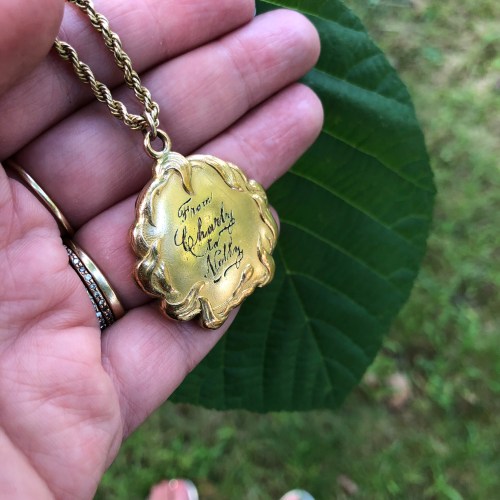
In honor of my 3,000th post today, Suzanne is offering a 20 percent discount on anything at Luna & Stella, the site for contemporary and vintage jewelry with which this blog is associated. Just use the code 3000. The offer is good for all of June 2019!

Turning now to two of my blog’s favorite themes — paying it forward and refugees — I want to tell you about England’s Dame Stephanie Shirley, a former kindertransport evacuee, who plans to donate German government compensation to modern-day refugee children.

Are you familiar with the kindertransport that rescued children from Nazi Germany and brought them to England? According to Wikipedia, “The Kindertransport (German for ‘children’s transport’) was an organised rescue effort that took place during the nine months prior to the outbreak of the Second World War. The United Kingdom took in nearly 10,000 predominantly Jewish children from Germany, Austria, Czechoslovakia, Poland, and the Free City of Danzig. The children were placed in British foster homes, hostels, schools and farms. Often they were the only members of their families who survived the Holocaust. Most importantly, the programme was supported, publicised and encouraged by the British Government, which waived some immigration requirements.”

Imagine that. The government responded to the urgency!

I like that Dame Stephanie, having grown up to be a successful entrepreneur and philanthropist, will pay her German compensation forward to help other refugee children. There is still a crisis, just for children from different countries this time.

According to the Jewish News, “Dame Stephanie Shirley, 85, who boarded a train from Vienna in 1939 aged five, founded a software company in 1962 which was later valued at over £3 billion. … She said: ‘I intend to donate my €2,500 windfall to the Safe Passage charity which supports today’s child refugees. …

“ ‘I’m trying to encourage others to donate theirs as well. There are an estimated 500 of us Kinder still in the UK, so that adds up. I’m discussing it with [Lord] Alf Dubs and [Sir] Erich Reich, how we can combine to make a really big donation. …

‘I’m ashamed of how little this country has done to save child refugees in recent years. It couldn’t be more different to the monumental effort that saved so many of us.’

Read more here and here.

P.S. Please buy something gorgeous at Luna & Stella — for yourself, or maybe a June bride — and use that 20 percent discount so my daughter knows my eclectic blog actually sends folks her way.

Dame Stephanie Shirley, a former kindertransport child, who is paying it forward to help young refugees.

Read Full Post »

Photo: NBC Boston
Project Home Again helps low-income families get on their feet again with furniture from donors such as movie companies finished with their stage sets.

I love writing about experiments that someone has thought up to help people in need. Usually the initiatives blossom and flourish, like the one I will tell you about today. But now is as good a time as any to admit that occasionally an experiment fails (consider one I wrote about helping displaced miners learn coding). I guess, for me, the bottom line is that you have to risk failure in order to move forward. No successes without failures.

In Lawrence and Andover, Mass., success seems to follow each new effort that Project Home Again tries out.

As Judith Kogan reported at WGBH, “When a film is made, sets are built and decorated to make a story seem real. And now in Massachusetts, when filming is done, those sets are having real-life impact, empowering people trying to rebuild their lives to design their own homes, free of charge. …

” ‘Say we’re decorating a dining room,’ explained Melissa Cooperman, a set decorator and buyer for films and commercials shot in Massachusetts. ‘We’ll need a table, we’ll need chairs, carpet, dishes, glasses, artwork for the wall, lighting, curtains, and window treatments.’

“When a film wraps, the producer needs to decide what to do with the accumulated stuff, often an abundance of home goods.

“Cooperman worked on the 2014 television mini-series ‘Olive Kitteridge,’ which was shot on the North Shore and Cape Ann. It had a fully-furnished house and apartment, and fully-stocked drug store.

“ ‘They said they wanted to donate everything,’ Cooperman recalled. …

“Project Home Again gets goods to where they’re most needed and wanted, partnering with about 400 social workers, founder and president Nancy Kanell said.”

Social workers ” ‘go to their clients’ homes with a checklist of everything that we stock. And they sit down with their clients and they go room by room, and decide what they need to make them feel comfortable,’ Kanell said. …

“Project Home Again serves refugees, veterans, people transitioning from halfway houses, and survivors of domestic violence.

“ ‘When they come here,’ Kanell said of the abuse survivors, ‘we roll out the red carpet.’ … Kanell remembers one particular survivor: ‘She came on a day we were closed because she was very afraid of her own shadow at that point. And she just wanted beige. She said she didn’t like color, didn’t deserve color.’

“Kanell and Cooperman found her a green chair.

“ ‘A green that people would be either very drawn to or very opposed to having in their home,’ Kanell recalled. ‘But there was something about it she liked. She sat down on it.’ …

“Kanell and Cooperman started pulling colorful rugs and a colorful table to go with the chair. …

“ ‘She was uncomfortable with it, but you could see she was starting to like it. And I made a deal with her that she could take it home, and if she didn’t like the color, I’d come and pick it up, and she could get all beige things. We even had colorful pots and pans for her! And she called about two weeks later. She said she and her son were so happy they were living in a colorful world, and it changed their outlook.’

“Project Home Again hasn’t just been changing lives. It’s changed the industry as well. Many set decorators now have Nancy Kanell on speed dial so they can get rid of their stuff as quickly as possible.” More here.

Read Full Post »

Photos: Viaggio nei Fori
Special multimedia light shows will be enriching Roman history at the forums of Caesar and Augustus until November 11 this year.

Recently, I was talking to the amazing Margaret, who was diagnosed with my sister’s horrible cancer more than eight years ago and has never had a recurrence. She had just returned from volunteering with a Jesuit refugee organization in Rome and showing her nephew the sights of the city. She described how they were given access to a special Mass in the crypt below St. Peter’s Basilica, where recent archaeological testing suggests that Peter’s bones really were buried.

I thought of Margaret and her nephew as I read this article about a initiative to bring history alive for Rome’s many visitors.

Livia Hengel has a report at Forbes. “Rome is a city filled with cultural heritage. Every building, statue and column has a story to tell, but it takes a vast amount of knowledge to piece together the city’s nearly 2,800-year-old history. … Where do you even begin? …

“From video projections cast upon ancient walls and multimedia light shows to virtual reconstructions revealed through 3D visors, technology is being used to help tell the story of Rome in a more concrete and compelling way.

“A large part of this trend can be attributed to the pioneering work of Paco Lanciano, a Rome-born physicist with a passion for cultural communication and a keen understanding of the learning process. Namely: if you make education fun, it sticks. ‘You need to strike a balance between creating something spectacular to hold an audience’s attention while also helping them learn in the process,’ Mr. Lanciano tells me. …

“Together with Piero Angela, a leading Italian television host and science journalist, Mr. Lanciano designed an immersive multimedia visit of ‘Le Domus Romane’ within Palazzo Valentini over a decade ago – the first time technology was used to enhance an archeological site in the capital. During the virtual tour, visitors can see baths, furnishings and decorations brought to life through digital projections that enhance the archeological site without compromising it. …

“After the success of Palazzo Valentini, Mr. Lanciano and Mr. Angela worked together again to create Viaggio nei Fori, two popular shows that cast the stories of Emperor Augustus and Julius Caesar onto the ancient forums each evening during the summer months. These screenings have become a mainstay of Rome’s summer entertainment and are on view this year from April 21 to November 11 2019.

“Now Mr. Lanciano has turned his attention to an even more ambitious project with Welcome to Rome, a 30-minute introduction to the city, through a stirring film and 3-dimensional models of some of the city’s major landmarks. The show begins thousands of years ago when Rome is home to a handful of tribes scattered across its seven hills and takes the viewer on a journey through the Roman Republic, the Roman Empire, the Middle Ages, the Renaissance and then finally the present day. ‘It was quite a challenge to synthesize the story of Rome, but the feedback has been very positive,’ ” says Lanciano.

More at Forbes, here.

This summer’s light shows in Rome are available in eight languages: Italian, English, French, Spanish, German, Russian, Chinese, and Japanese. (Gives you an idea of where the city expects most visitors to come from.)

Read Full Post »

Photo: Wikimedia Commons
A Wan Smolbag Theatre youth show. The Pacific islander drama company is celebrating its 30th year.

Any troupe that corners the market for theatrical productions in a particular geographical area might understandably be inclined to rest on its laurels. Not the one in this Pacific archipelago. It provides many services besides entertainment and even manages to stay humble.

Nick Awde writes at the Stage, “Wan Smolbag Theatre takes its name from ‘one small bag’ in Bislama, the South Pacific nation’s lingua franca. ‘It stems from our idea in the beginning to show that theatre could be made from what you could carry in a small suitcase,’ says artistic director Peter Walker. And for a nation spread across 70 islands, that’s a handy ethic.

“ ‘Obviously, we have to choose between being an “in-out, do a show” kind of group or working with individual communities and islands in a more detailed way over a longer period,’ adds Walker. And so the latter course was duly chosen.

“Walker, who did an East 15 postgraduate course in 1981, started the company in 1989 with partner Jo Dorras. Now, 30 years on, it is the South Pacific’s only full-time theatre group in which all the actors are Pacific Islanders. …

Based in the capital and largest town Port Vila, Wan Smolbag is also the biggest local NGO in Vanuatu. It employs more than 100 people, 40 of whom work in theatre and film, and runs other services, such as clinics, a nutrition centre and youth centres with a thriving hip hop scene. Theatre led to film-making in the mid-1990s, which brought a Pacific-wide audience. …

“For its 30th-anniversary season, Wan Smolbag is producing a play with 60 volunteer actors with some of the main group, all set in the main Port Vila market. Also participating is UK director Laurie Sansom, artistic director of Northern Broadsides, who has already made two visits to run workshops. …

“Meanwhile, there are plans for visits from New Zealand’s the Musical Island Boys and Australia’s Djuki Mala.

“How does training work? ‘Basically by doing. Over the years we’ve had occasional workshops with people from overseas in different performance styles … but the whole year is spent acting in plays from January to July and film from August to November – the dry season,’ says Walker.

“ ‘Some actors have been with the group for more than 20 years and as there are no other professional groups most are loath to leave. … We do take on new actors every three or four years. In recent years they have come through the youth centre drama club, which does a production every year, usually featuring 30 or so young people not in school who perform it for schools around Port Vila.

“ ‘There was no theatre of this kind when we started in 1989. There was an expat amdram group that did musicals or dramatisations of Fawlty Towers episodes, and local church youth groups would put on skits with the devil having all the best lines. To be honest, I’ve never thought of us as anything but a community theatre group who over time have become more professional and skilled.’ ”

More at the Stage, here. And if you are still on Facebook, you can keep up to date at the troupe’s page, here.

Read Full Post »

Photos: Sian Cain/The Guardian
Where libraries are scarce, Indonesians have risen to the challenge. Sutino ‘Kinong’ Hadi, above, runs the Bemo mobile library in a Jakarta suburb.

Books are important for children, but there are many places around the world where books are scarce. Caring adults do what they can to fill in the gaps, sometimes even going without food in order to buy more books.

Sian Cain writes at the Guardian, “With a great heave, a young man pushes the ancient, three-wheeled rickshaw down a ramp and it splutters to a start. The driver, Sutino ‘Kinong’ Hadi, laughs as he putters his tiny Bemo in a loop outside a preschool in Tanah Abang, in central Jakarta. It’s all the signal the children need; around 20 flood out to envelope the car, pulling at hangings, clambering into the front seat. It’s an exciting time: their library has arrived.

“Kinong is one of thousands of Indonesians who have opened their own library in their own communities. Estimates suggest there are thousands of such libraries in Indonesia, started by ordinary people with great initiative to address the lack of books in their area and funded by occasional donations.

“There is the Perahu Pustaka, a library boat that sails around West Sulawesi. There are libraries on the back of vegetable carts, shelves lugged around by horses in Serang and in West Papua. Across Banten, a 200-strong motorbike gang called the Komunitas Motor Literasi (Moli), brings books to homes from a box attached to their vehicles, delivered with the ease of a takeaway. …

“The persistent myth that Indonesians aren’t interested in reading still pervades; last September, Jakarta governor, Anies Baswedan, told the Jakarta Post: ‘We are challenged to improve our reading interest, particularly in an era where people are far more interested in reading WhatsApp [chats] than in reading books … People nowadays prefer to skim rather than read.’

“But civilians argue that interest isn’t the problem, it’s the lack of infrastructure. ‘Reading appetite isn’t low in Indonesia, it’s just hard to get books,’ says Laura Prinsloo, a publisher … ‘A lot of the people operating these libraries don’t have an education, which makes it hard in a place where it’s about who you know. So if you don’t know anyone, you just do it yourself.’

“Like Andri Gunawan, a wiry young man who heads up the Komunitas Motor Literasi. He never had a library in any of his schools and only became a voracious reader as an adult. ‘Contrary to what a lot of people say, it’s not that there is no interest in reading, it is that there are no books,’ he says. …

“Or Kiswanti, a 52-year-old woman who started out delivering books door-to-door for free on her bicycle. Now, her library and school Warabal, found in Parung, Java, is 21 years old and houses 15,000 books, looked after by 25 volunteers for 1,700 members. …

“ ‘My father apologised as he couldn’t send me on to further education’ she says. ‘But he told me, if I wanted to be smarter, I had to read.’ …

“When Kiswanti opened Warabal in 1997, she even began fasting 10 days each month to buy more.

‘I needed 3,000 rupiah (16p) to eat a day,’ she explains. ‘If I didn’t eat, I can save 30,000 (£1.66) in 10 days – so I could take our best students by taking them to bookshops and buy them any book they want.’ …

“ ‘Reading transports me and introduces me to new worlds – I want to give children that.’ ”

More at the Guardian, here. For similar stories on seat-of-the-pants libraries around the world, search the blog on the word “library.”

This mobile library has been running since 2013. The children are eager for books, but Hadi has found it’s not advisable to let the books go home if  he wants them back.

Read Full Post »

060819-Will-McMillan-leads-ukeleles

What is so rare as a day in June? I wish I could capture it all. With photos, one can express delight in terms of light and shadow, but how to convey the way the air feels and the breeze? Or the effect of wraparound birdsong, the smell of white pine and hemlock, warm pavement, and the spicy fragrance of verbena and lilac. So different from even a month ago.

A really fun thing that happens around here in June is the Arlington Porchfest, in which a changing array of local bands perform on residents’ front steps. Above you see the versatile Will McMillan wearing one of his many musical hats. This particular hat is as leader of a pickup ukulele band that meets every week at the library. Wonderful old-time songs. People of all ages singing along under the shade of the trees.

You can see I’m also loving the peonies of June, the poppies, the rhododendrons, and the last of the azaleas. By the way, what is that fuzzy blue star in our yard? We have it such a short time, and it always makes me smile.

The Pink Lady Slippers, one step away from endangered, collect in small groupings in the conservation woodlands. I’m always thrilled to see them as I know they require very special growing conditions and are becoming increasingly rare.

The wonderful mural of wings is in an area sometimes called Upper South Providence, near Classical High School. The colorful art really cheers things up in that neighborhood.

And speaking of art, Concord Art has an excellent retrospective on the oeuvre of Susan Maxfield, who died last month. She worked in an impressive array of media. I especially loved her peonies and teasels, but the only photo I took was of the chair with the amusing title, “Benjamin Moore Sample Paint Colors Peony Chair, 2017.”

And I shot the museum’s stairwell with its the peony arrangement at the bottom.

060819-.town-hall-peonies

060319-poppies-rhode-island

053119-Rhododendrons-Nashawtuck-Hill

060519-June-in-New-England


053019-fallen-azalea-petals-in-cemetery

060819-Pink-Lady-Slippers-ConcordMa

060419-street-art-wings-Providence

060819-Susan-Maxfield-peony-chair

060819-.peonies-in-stairwell

Read Full Post »

Photo: UNHCR
Shukria Rezaei, an Afghan Hazara refugee in the UK, with Kate Clanchy, writer-in-residence at Shukria’s school.

Years ago, my husband’s company ordered his department to move to Dallas from upstate New York. We decided not to go, which was a big no-no in the corporate world at that time. Other wives got a laugh when I said, “I don’t transplant well.” That’s probably true of many people who get used to their place. When I think of the thousands of migrants leaving home now, I know they are not doing it just for fun but because there is no other choice. Most people love their home.

The young Afghan refugee in this story longs to go home someday. In the meantime, she is learning all she can, including how to write poetry in a new language.

Caroline Brothers reports for the UN Refugee Agency (UNHCR) that a few years ago “no one, not her family, her teachers, nor any of her 900 schoolmates, was more surprised than Shukria Rezaei herself, when she was judged the best poet in her year. A shy, 15-year-old Afghan girl, who was still grappling with an adopted language.

“Oxford Spires Academy, a secondary school whose catchment area includes deprived localities, had just run a poetry competition to discover what talent might lie hidden in a student body speaking 54 different languages.

“ ‘Everyone was shocked, even myself,’ said Rezaei, now 20 and a scholarship student at the University of London, recalling the moment when Kate Clanchy, the school’s writer-in-residence and the competition’s judge, announced Rezaei had won first prize.

“Less than a year before, Rezaei and her mother – Hazara refugees – had arrived in Oxford from Quetta, Pakistan, which hosts a large population of displaced Afghans. The two were reunited in 2011 with Rezaei’s father, who had been granted asylum in the UK, after a three-year separation.

“Rezaei, for her part, was still struggling to master a language whose barest bones she had learnt at Afghan primary school and refugee school in Pakistan. As a child in the Afghan province of Ghazni, she awoke to the tap-tap of sheep trooping past on their way to the fields; a few hours later, she would set off through the mountains with a dozen other girls.

“ ‘School was two mountains away, and it snowed a lot,’ Rezaei told UNHCR, the UN Refugee Agency. ‘We went on a rocky mountain path and it took an hour and a half.’ …

“In England, in the thick purple jumper of a strange school uniform, she was struggling to keep up.

“ ‘I could only understand what was written down,’ Rezaei said of her first year. She survived, she said, by reading rather than speaking, copying everything she saw on the blackboard: ‘I just did as much as I could.’

“With the poetry prize, however, things shifted. From feeling invisible, Rezaei suddenly had an identity within the school. Clanchy, meanwhile, invited her to join a poetry group she had formed on a hunch that the quiet foreign girls at Oxford Spires might in fact have something to say.

” ‘At the beginning, I couldn’t talk,’ said Rezaei. But seated among 15 or 20 aspiring poets, she began to express herself. …

“Since then, Rezaei has had work published in Oxford Poetry, the emblematic literary journal that has showcased many of the country’s greats. She will be included in an anthology, England, to be published by Picador in June; one of her poems, ‘Homesick,’ has already been translated into German. …

“Like many children of refugees, Rezaei is acutely aware of how much hope her parents have invested in her. Even in the bleakest moments, amid profound dislocation, giving up was never an option, either for them or for her. …

“Rezaei is finding her feet in London, another major adjustment after Quetta and Oxford. Having won a scholarship to Goldsmiths College, she is studying politics, philosophy and economics, which she hopes to convert into a law degree.

“She still misses aspects of her Afghan childhood, but for now her hopes are firmly focused on England. She recently passed her driving test, and is exploring the creative writing scene.

“ ‘Afghanistan is still dear to my heart,’ she said, ‘but I have a lot more to achieve here before I go back.’ ”

Here is one poem.

I want a poem
with the texture of a colander
on the pastry

A verse
of pastry so rich
it leaves gleam on your fingertips

A poem
that stings like the splash of boiling oil
as you drop the pastry in …

I’d really like to copy the whole lovely thing, but you better click through to read it.

Hat tip: Beautiful Day on Instagram.

Read Full Post »

Photo: Cliff Grassmick
Lucy Wallace, the co-founder of Dance to Be Free, incorporates jazz, lyrical, and hip-hop into the dance classes she offers in women’s prisons.

My friend Asakiyume has been a tutor in a women’s prison for several years, where she has learned that many inmates got in trouble after suffering repeated abuse or gross failure by the educational system. Most students, she says, are grateful for any attention from outside and are determined to do better on release. I think she would like this story about a dancer serving incarcerated women in the South.

Maria Di Mento writes at the Chronicle of Philanthropy, “Lucy Wallace is a dancer who has spent a lot of time in prison. That’s because Wallace, the co-founder of Dance to Be Free, travels the country teaching dance classes to incarcerated women to help them cope with depression, despair, PTSD, and complex trauma. …

“Despite her assumption that most prisons would turn her away, not one has.

‘I’ve never had a warden say, “No, we don’t want your program,” ’ Wallace says. ‘They’re grateful to get programming, especially in rural areas that are so remote no one goes there to volunteer.’

“A former dance major who has a master’s degree in psychology, Wallace incorporates a mix of movement styles into her dance classes, including jazz, lyrical, and hip-hop, and a variety of musical genres. …

“The program involves writing exercises and group discussions that let the women talk about their lives, how they coped with their first few weeks in prison, their biggest challenges, and what they’re getting out of the classes. She provides the prisons with DVDs of the classes and has certified about 400 prisoners who can lead the courses.

“Dance to Be Free is in 13 prisons in eight states and operates on a budget of about $100,000 a year. Few prisons will pay for the programming, something Wallace would like to change. For now, the charity receives all of its funding from individual donors, raising roughly $175,000 since 2015. …

“Wallace is holding off expanding the program for the time being and is instead focusing solely on the South, especially Mississippi and Florida, where she says women’s prisons are in deep need of programs.” More here.

From the Dance to Be Free website: “Our mission is to radically improve the lives of incarcerated women through the healing power of dance. We use ‘Cathartic Choreography’ to both train the inmates and teach them a new skill. We have seen this technique help our students deal with physical and mental illness, including PTSD and complex trauma.

“During our teacher trainings inmates gain confidence as they experience leadership and responsibility, often for the first time in their lives. That sense of accomplishment flourishes as our students learn to not only express themselves through dance, but to free others to do the same.

“Throughout this transformative experience, we teach the nuts and bolts of choreography, timing and flow, and just as importantly we facilitate journaling and sharing exercises that nurture introspection and self-awareness that inmates often need.”

I found the nonprofit organization’s video very moving.

Read Full Post »

Photo: American Kennel Club
Most species respond to music, just not in the same way humans do.

Now that you have absorbed yesterday’s post on the responsiveness of cheese to music, it should come as no surprise that mammals, birds, and fish also have an affinity for music.

University of Amsterdam professor of music cognition Henkjan Honing writes at Nautilus, “We are all born with a predisposition for music, a predisposition that develops spontaneously and is refined by listening to music. Nearly everyone possesses the musical skills essential to experiencing and appreciating music. … Is musicality something uniquely human? Or do we share musicality with other animals. …

“By the beginning of the 20th century, Ivan Pavlov had discovered that dogs could remember a single tone and associate it with food. Wolves and rats also recognize members of their own species by the perfect pitch of their call and can also differentiate tones. The same applies to starlings and rhesus macaques. …

“Zebra finches turn out to focus mostly on the musical aspects of [sequences, as opposed to the order]. This does not mean they are insensitive to the order … but it is mainly the differences in pitch (intonation), duration, and dynamic accents [that] they use to differentiate the sequences. …

“Humans may share a form of musical listening with zebra finches, a form of listening in which attention is paid to the musical aspects of sound (musical prosody), not to the syntax and semantics that humans heed so closely in speech. … The research on starlings and zebra finches reveals that songbirds use the entire sound spectrum to gather information. They appear to have a capacity for listening ‘relatively,’ that is, on the basis of the contours of the timbre, intonation, and dynamic range of the sound. …

“What we know for sure is that humans, songbirds, pigeons, rats, and some fish (such as goldfish and carp) can easily distinguish between different melodies. It remains highly questionable, though, whether [animals] do so in the same way as humans do, that is, by listening to the structural features of the music.

“A North American study using koi carp — a fish species that, like goldfish, hears better than most other fish — offers an unusual example. Carp are often called ‘hearing specialists’ because of their good hearing. The sensitivity of a carp’s hearing can be compared to the way sounds might be heard over a telephone line: Though quality may be lacking in the higher and lower ranges, the carp will hear most of the sounds very clearly.

“Three koi — Beauty, Oro, and Pepi — were housed in an aquarium at Harvard University’s Rowland Institute, where they had already participated in a variety of other listening experiments. … In the discrimination experiment, the koi were exposed to compositions by Johann Sebastian Bach and the blues singer John Lee Hooker to see whether they could differentiate between the two. In the categorization experiment, the koi were tested to see if they could classify a composition as belonging to either the blues or the classical genre. In the latter experiment, they were alternately exposed to recordings of different blues singers and classical composers ranging from Vivaldi to Schubert.

“The surprising outcome was that all three koi were able to distinguish not only between compositions by John Lee Hooker and Bach, but also between the blues and classical genres in general. The fish appeared to be able to generalize, to correctly classify a new, as yet unheard piece of music based on a previously learned distinction. …

“Rock doves, too, [pigeons] can distinguish between compositions by Bach and Stravinsky. And, like carp, rock doves can also generalize what they have learned from only two pieces of music to other, unfamiliar pieces of music. They can even distinguish between compositions by contemporaries of Bach and Stravinsky. …

“These species can do all of this with no significant listening experience. … This, in itself, is an exceptional trait. Most likely it is a successful tactic to generate food. Yet it still offers no insight into the ‘perception, if not the enjoyment,’ of music. That may be one aspect of musicality that belongs to humans alone.”

More at Nautilus, here. And while we are on the subject of critters’ artistic sensibilities, be sure to read the children’s book This is a Poem that Heals Fish. Hat tip: The inestimable Brainpickings.

Read Full Post »

Photo: Foodandmore

Dear Readers, You know that you have been wondering why the taste of cheese changes depending on what music it was exposed to during the aging process. So much more agreeable than wondering who the next president will be or “why the sea is boiling hot,” to quote the prescient Lewis Carroll!

Well, wonder no more. Jason Daley at the Smithsonian has the musical cheese story covered.

The creation of good cheese involves a complex dance between milk and bacteria. In a quite literal sense, playing the right tune while this dance unfolds changes the final product’s taste, a new study shows.

“Denis Balibouse and Cecile Mantovani at Reuters report that hip-hop, for example, gave the cheese an especially funky flavor, while cheese that rocked out to Led Zeppelin or relaxed with Mozart had milder zests.

“Last September, Swiss cheesemaker Beat Wampfler [whose day job is as a veterinarian] and a team of researchers from the Bern University of Arts placed nine 22-pound wheels of Emmental cheese in individual wooden crates in Wampfler’s cheese cellar. Then, for the next six months each cheese was exposed to an endless, 24-hour loop of one song using a mini-transducer, which directed the sound waves directly into the cheese wheels.

“The ‘classical’ cheese mellowed to the sounds of Mozart’s The Magic Flute. The ‘rock’ cheese listened to Led Zeppelin’s ‘Stairway to Heaven.’ An ambient cheese listened to Yello’s ‘Monolith,’ the hip-hop cheese was exposed to A Tribe Called Quest’s ‘Jazz (We’ve Got)’ and the techno fromage raved to Vril’s ‘UV.’ A control cheese aged in silence, while three other wheels were exposed to simple high, medium and low frequency tones.

“According to a press release, the cheese was then examined by food technologists from the ZHAW Food Perception Research Group, which concluded that the cheese exposed to music had a milder flavor compared to the non-musical cheese. They also found that the hip-hop cheese had a stronger aroma and stronger flavor than other samples.

“The cheeses were then sampled by a jury of culinary experts during two rounds of a blind taste test. Their results were similar to the research group’s conclusions and the hip-hop cheese came out on top. …

“Michael Harenberg, director of the music program at Bern University of the Arts says he was skeptical of the whole project when Wampfler first approached him. ‘Then we discovered there is a field called sonochemistry that looks at the influences of sound waves, the effect of sound on solid bodies.’

“It turns out that Wampfler was rooting for the hip-hop cheese to win all along. Now, reports Reuters, he and his collaborators want to expose cheese to five to ten different types of hip-hop to see if it has similar effects.”

More here.

Read Full Post »

« Newer Posts - Older Posts »